quête:radio diaspora

Genres
Tout
  • 1
RADIO DIASPORA - NEGRO HUMOR LP

Radio Diaspora works on the concept of cultural identity, which is flexible and dynamic. This provocation is generated by referring to all African ancestry moved by the diaspora and its sonorous, vocal, polyrhythmic, and polyphonic codes - all the ancestral heritage that has spread throughout the world following expropriations, genocide, and slavery - sampling and amplifying references that become triggers of energetic approaches. A heavy core of representations and senses aims to exorcize through noise and strangeness all secular violence against people of the African diaspora. In the title song of this album, 'Negro Humor', the respected Brazilian actor Grande Otelo highlights the contradiction of the clown, which awakens joy in everyone but is a sorrowful, lonely figure, ridiculing himself and putting himself in the most embarrassing situations. Relieved, loud laughter echoes in the audience because it is not the target of ridicule. In 'Despacho', Radio Diaspora explores the dichotomy of society by introducing a speech by Brazilian lawyer Hédio Silva Júnior specialised in Afro-Brazilian religion. He questions a rule under discussion in Brazil's Congress that would prohibit the use of chickens in Candomblé and Umbanda rituals. Silva Júnior points out that everyone takes a stand to protect the rights of animals, but the same cannot be said of the defense of young black people and outlying societies. The track 'Meia-Noite' evokes a celebrated point of Umbanda, an Afro-Brazilian religious syncretic cult, permeated by free jazz and electronic atmospheres developed by the duo. The other songs on the album are divided into two parts. They feature the voices of North American icons of the black struggle for civil rights: The tracks 'A.H.M. Al-Shabazz 1 and 2', amid sonic dissonances, use extracts from speeches by the American leader Malcolm X, and in 'Muhammad Ali 1 and 2' we hear quotes from famous interviews given by the boxer and activist. Ali ironizes the questions he asked his mother as a child, why all good and positive things are associated with white. "Mother, how come is everything white? Why is Jesus white with blonde hair and blue eyes? Angels are white, the Pope, Mary, and even the angels. When we die, will we go to heaven? She said naturally we go to heaven. So, I said, what happened to all the black angels they took from the pictures." His Inquiry, however, is seen as a joke by the white audience present at the TV show, which laughs off Ali's scathing criticism. Radio Diaspora uses art as an instinctive force to reject submission to traditions and culture as taming. Music is the weapon. "The (album) sound means to exorcise racism out of our minds and make us ready to act". - Rômulo Alexis

pré-commande26.08.2022

il devrait être publié sur 26.08.2022

29,79

Last In: 2026 years ago
Various - Rumba Rules - Original Motion Picture Soundtrack

The official soundtrack of the 2021 'Rumba Rules, New genealogies' documentary movie by Congolese artist Sammy Baloji and Quebec filmmaker David Nadeau-Bernatchez. A deep dive into Kinshasa’s vibrant Rumba scene, including remastered classics by Brigade Sarbati, Werrason, Papa Wemba, Franco & le Tout Puissant O.K. Jazz

Rumba Rules, New genealogies is about contemporary rumba in Kinshasa, but this music has deep historical roots nevertheless. Born in the interstices of the colonial world and thriving during the three decades of the Mobutu era in Zaïre, Congolese rumba has been iconic and popular all over Africa for decades. The roots of Rumba are even deeper, and the many paths it evokes trigger the imagination. The story goes that this music came with the migration of the ‘Kumba’ drum and dance in previous centuries, African slaves having carried it all around the Americas and giving birth to Cuban ’Rumba’, Colombian ‘Kumbia’ and many others. With its varied rhythms, guitars and horns, through LPs and radio stations, Rumba came back to (re)conquer Africa throughout the 20th century, paving the way for new practices. One could say this music is a sort of palimpsest, a memory in itself of Atlantic migrations and histories.

Rumba is nowadays discussed all around the world, igniting many debates among the Congolese diaspora. Being the constant talk of the town sometimes overloads public debate, and many people get tired of this broken record. Thus, over the last decade, enterprising producers have worked hard to promote Kinshasa’s musical diversity and tried to emulate new sounds to reach worldwide attention. But Kin’ locals and urban dwellers will not be fooled : new shoots cannot hide the forest. Despite some difficulties to innovate, despite the pastoralist sermons and the diaspora fighters pushing for concert cancelations, rumba is still at the core of the Congo today. Talented artists such as Fally Ipupa, Ferré Gola, Brigade Sarbati and others are leading the fifth generation, and the religious world has also proven to be a nurturing environment for the cultural and economic dynamism of this music.

Focusing on the music of Brigade Sarbati and his Orchestra, this record offers a deep dive into Kinshasa’s rumba scene. Halfway between professional studios and Zoom H4 field recordings, the rumba herein is about today’s youth: dense, full of energy and breakdowns, insights and name-dropping. The cavacha rhythm, the solo and bass guitar’s playing style, the singing style and numerous dedications all resonate with the history of Rumba. In an era where digital sound is taking over, it is interesting to highlight the instrumental and live performance compositions of this music. Digital technology is indeed used during the recording and mixing phases, but Congolese rumba still relies strongly on instrumental playing. There is all that but also, many other things to hear on this record… It’s time to let it be. A big thanks to Étienne Tron for making it possible: it is on his initiative and through his patience that this album is in your hands today. (David Nadeau-Bernatchez, december 2021)

En stock

Disponible en stock et prêt pour l'expédition

17,23
hoyah חיה - Can I Get A Chayah? (TAPE)

On his second album for Bruk, hoyah חיה continues to take an unflinching look at his Jewish identity while confronted with the heinous actions of the Israeli state. Echoing the name of his Refuge Worldwide radio show, he examines the shared histories of the Jewish diaspora across the Middle East and North Africa — from Morocco to Uzbekistan and everywhere in between. Can I Get A Chayah? is an honest attempt to explore what Judaism could become at a time when the culture faces an existential crisis.

The sonic approach hoyah חיה takes on Can I Get A Chayah? is central to the album's theme, as hard-gated processing on every sound creates a disorienting effect aiming for a kind of 'functional transcendentalism'. From the opening strains of preceding single '808s n Trance Gates' the jagged stop-start intensity of the samples sets a head-spinning tone for the album. The source material comes from across the aforementioned Jewish diaspora, challenging the nationalist idea of the single Jewish state.

Balancing beauty and aggression, hoyah חיה also reaches to a strong cast of collaborators to round out his cultural explorations. Principle among these is the late David German, the US-born guitarist and songwriter behind Silver Jews, whose repeated, bewildered mantras on 'Shalom Aleichem' embody hoyah חיה's own struggles with faith in the face of current horrors. Internationally celebrated Turkish-descent German musician Derya Yıldırım graces 'Talmuds' with her haunting vocal — a tribute to ancient Jewish mysticism that gets passed through the album's unrelenting sonic framework. On 'The Lock' Muha tackles African transcendentalism, while Rael pulls no punches with the questions he poses on the barbed 'This Song Has A Different Title But It Can't Be Published Here Because Of "Reasons"'.

With further prayer recitals on 'Lekha Dodi' and 'The Nose' and videos examining the psychedelic nature of reading the talmud and repetitive prayer movement shuckling, hoyah חיה has taken his research deep into the spirituality of his heritage at a time of crisis for Jewish identity. Naturally, Can I Get A Chayah? is not an easy listening experience, but neither is it a bleak one. There is beauty, mystery, complexity and nuance woven within the stark approach — an intentional, considered statement on a culture much deeper and wider than the barbaric acts of an unrepresentative group of twisted ethno-nationalists.

pré-commande20.03.2026

il devrait être publié sur 20.03.2026

14,92

Last In: 2026 years ago
MICHIEL SEKAN - SOUNDWRITERS

MICHIEL SEKAN

SOUNDWRITERS

Books978909040730
JIWA JIWA
15.03.2026

Soundwriters maps a hidden chapter of postwar music history. Sixty two rare and overlooked releases by Indonesian diaspora artists recorded in the Netherlands and Suriname, from soul and funk to reggae and pop. Built from deep archive work and crate digging, this book traces how migration shaped sound, scenes, and record culture between 1969 and 1989.

An homage to the unsung heroes of the underground and deserved recognition for the diaspora pioneers.

Michiel Sekan (Amsterdam, 2025)

Soundwriters: The Incomplete Guide to Indonesian Diaspora Music (1969–1989) is a book and catalogue devoted to artists whose work shaped the cultural life of postcolonial Netherlands, yet rarely entered official archives.
Written by Michiel Sekan with additional research by Harry “Munir” Septiandry, the book combines historical analysis with personal reflection. Essays move between migration histories, colonial legacies, family memory, and music culture. At its core sits a catalogue of sixty two releases that document the range of sounds created by Indo-European, Moluccan, Papuan, Javanese Surinamese, Peranakan, and broader Indonesian diaspora communities.
Soul, funk, pop, reggae, rock, and protest songs appear side by side. Together they form an aural record of resistance, adaptation, and creativity across continents.
Printed in Jakarta and published by Jiwa Jiwa in three languages, Dutch, English, and Indonesian, Soundwriters positions music as both archive and testimony. It asks how sound preserves stories when written records fall short, and how listening can reconnect personal memory with shared history.

The project extends beyond the page through exhibitions, listening rooms, documentaries, and public programs in the Netherlands and Indonesia.

SHORT ABOUT THE AUTHOR
Michiel Sekan is an Amsterdam based DJ, curator, and multidisciplinary artist. Through his platform Jiwa Jiwa he researches and presents music from the Indonesian archipelago and diaspora across radio, exhibitions, publishing, and club culture. His work links record collecting with archival study and personal history. Soundwriters is his first book.

pré-commande15.03.2026

il devrait être publié sur 15.03.2026

29,37

Last In: 2026 years ago
Various - Dolores: Salsa & Guaracha From 70's French West Indies

In Guadeloupe, many people think that jazz and ka music are like a ring and a finger. To some extent, the same could be said about so called Latin music and the music played in the French West Indies.

Both aesthetics were born in the Caribbean and bear so many connections that they can easily be considered cousins. In constant dialogue, there are lots of examples of their fruitful alliance and have been for a while. The English country dance that used to be practiced in European lounges came to be called kadrille in Martinique and contradanza in Cuba. They both featured additional percussion instruments inherited from the transatlantic deportation. Drawing from shared feelings about the same traumatized identity – later to be creolized – it would be hard not to assume that they were meant to inspire each other. The golden age of the orchestras that graced the Pigalle nights during the interwar period further proves the point. As soon as the 1930s, Havana-born Don Barreto naturally mixed danzón and biguine music in a combo based at Melody's Bar. In the following decade, Félix Valvert, a conductor who was born and raised in Basse-Terre in Guadelupe, also worked wonders in Montparnasse with La Coupole, which was an orchestra made up of eclectic musicians. Afro- Caribbean performers of various origins were often hired on rhythm and brass sections in jazz bands, which used to enliven the typical French balls of the capital. In the 1930s and onwards, Rico’s Creole Band was one of them.


Martinican violinist-clarinettist Ernest Léardée, who would become the king of biguine music as well as the main figure of French Uncle Ben's TV commercials (a dark stigma of post-colonial stereotypes), had musicians from the whole Caribbean sphere play at his Bal Blomet – and they all enchanted "ces Zazous-là" (according the words of Léardée's biguine-calypso piece). In les Antilles (French for French West Indies), music history started to speed up in the 1950s, when trade expanded and radio stations grew bigger. The Guadelupean and Martiniquais youth tuned in their old galena radio sets to South American and Caribbean music. As for the women traders, les pacotilleuses, they bought and sold goods across different islands (the "passing of items through various hands" was thought to be most pleasurable) and brought back countless sounds in their luggage. Such was the case of Madame Balthazar, who once returned from Puerto Rico with the first 45rpm and 33rpm to ever enter Martinique.

Out of this adventure was created the famous Martinican label La Maison des Merengues, a music business she opened and undertook with her husband and which proved to be a major landmark. At the end of the 1950s, in Puerto Rico, Marius Cultier competed in the Piano International Contest playing a version of Monk's Round 'Midnight. He won the first prize and this distinction foreshadowed everything that was to come. Cultier, the heretic Monk of jazz, was quickly praised for writing superb melodies, always tinged with a twist that conferred a unique sound to his music. It didn't take long for the gifted self-taught musician to get to play with Los Cubanos, making a name for himself thanks to his impressive maestria on merengues.

The rest is history. Besides, in the late 1950s, Frantz Charles-Denis, born into the upper middle class in Saint-Pierre and better known by his first name Francisco, went back home after working at La Cabane Cubaine – a club located rue Fontaine where he had caught the Latin fever. Francisco's music was therefore heavily marked by his Cuban cousins' influence, which gave the combos he led a specific style and also led to renewal. Things were swinging hard in La Savane, located in the main square in Fort-de-France. He set up the Shango club close by and tested out the biguine lélé there, a new music formula spiced up with Latin rhythms. Soon afterwards, fate had him fly to Puerto Rico and Venezuela.

As for percussionist Henri Guédon (percussions were only a part of his many talents), he was born in Fort-de-France in May 22nd 1944, the day marking the celebration of the abolition of slavery. As an old man, he could remember that in " his father's Teppaz, a lot of hectic 6/8 music was constantly playing...". In the opening lines of his Lettre à Dizzy, a small illustrated collection of writings published by Del Arco, he highlighted the huge impact that cubop had on him as a teenage boy, around 1960. He eventually turned out to be the lider maximo in La Contesta, a big band steeped in Latin jazz. He was also the one who originated the word zouk to describe music which brought the sound of the New York barrio to Paris. It was the culmination of a journey that started in Sainte-Marie: "a mythical place for bélé, the equivalent of Cuban guaguancó". In the early 1960s, the tertiary economy developed to the detriment of agriculture. Yet rural life was where roots music emerged in Martinique and in Guadeloupe.

Record companies played a major part in the process of Latin versions sweeping across the islands – before reaching everywhere else. Producer Célini, boss of the great Aux Ondes label, and Marcel Mavounzy, both the head of Émeraude records - a firm which was founded in 1953 - as well as the brother of famous saxophonist Robert Mavounzy, were big names to bear in mind. Although there were many of them - all of whom are featured on this record - Henri Debs was definitely the major figure in the recording adventure. He proved to be so influential that he even got compared to Berry Gordy. In the mid 1950s, when he acquired his first Teppaz, he worked on his first compositions: a bolero and a chachacha. Then, he became the one man who made people discover Caribbean music, from calypso to merengue. He was among the first ones to rush out to San Juan, Puerto Rico, to buy records and distribute them through a store run by one of his brothers in Fort-de-France. He had members of the Fania All Star come and perform there, which he was madly proud about. He was also the first one to pay attention to Haitian music, such as compas direct and various other rhythms which would soon flood the market. As a result, many of the combos hitting his legendary studio would end up boosted by widespread "Afro-Latin" rhythms. However, he never denied his identity: gwo ka drums were given a major role, although they were instruments which had long been banned from the "official" music spheres. The present selection bears witness to such a creative swarming. Here are fourteen tracks of untimely yet unprecedented cross-fertilization: all types of music rooted in the Creole archipelago have found their way, whatsoever, to the tracklisting. Whether originating from the city or being more rural, they all go back to what Edouard Glissant, in an interview about the place of West Indian music in the Afro-American scope, called "the trace of singing, the one which got erased by slavery." "It is so in jazz, but also in reggae, calypso, biguine, salsa... This trace also manifests through the drums, whether Guadelupean, Dominican, Jamaican or Cuban... None of them being quite the same. They all point to the idea of a trace, seeking it out and connecting to each other through it. This is the hallmark of the African diaspora: its ability to create something new, in relation to itself, out of a trace. It may be the memory of a rhythm, the crafting of a drum, a means of expression which doesn't resort to an old language but to the modalities of it." The opening track features one of the emblematic orchestras of this aesthetic identity, criscrossing many music types from the archipelago. The 1974 Ray Barretto guajira – Ray Barretto was a major New York drummer influenced by Charlie Parker and Chano Pozzo – is magnificently performed by Malavoi, a legendary Fayolais group (i.e from Fort-de-France). Additionally, the compilation ends on a piece by Los Martiniqueños de Francisco. It symbolically closes the circle as it is a genuine potomitan of Martinique culture which also functions as a tireless campaigner for Afro-Caribbean music. Practicing the danmyé rounds (a kind of capoeiria) to the rhythm of the bèlè drum, it delivers a terrific Caterete, a kind of champeta of Afro- Colombian obedience which was originally composed by Colombian Fabián Ramón Veloz Fernández for the group Wgenda Kenya. The icing on the cake is Brazilian Marku Ribas, who found refuge in Martinique in the early 1970s, bringing his singing to the last trance-inducing track. These two "versions" convey the whole tone of a selection composed of rarities and classics of the tropicalized genre, swarming with tonic accents and convoluted rhythms. It is the sort of cocktail that the West Indians never failed to spice up with their own ingredients. For instance, the Los Caraïbes cover of Dónde, a famous Cuban theme composed by producer Ernesto Duarte Brito, has a typical violin and features renowned Martinique singer Joby Valente and his piquant voice.


The track used to be – or so we think – their only existing 45rpm. The meaningful Amor en chachachá by L'Ensemble Tropicana, a band which included Haitian musicians among whom was composer and leader Michel Desgrotte, also recalls how Latin music was pervasive in the tropics in the mid-1960s. They were the ones keeping people dancing at Le Cocoteraie in Guadelupe and La Bananeraie in Martinique. Around the same time, another "foreign" band, Congolese Freddy Mars N'Kounkou's Ryco Jazz, achieved some success on both islands by covering Latin jazz classics – such as their adaptation of Wachi Wara, a "soul sauce" by Dizzy Gillespie and Chano Pozo whose interweaving of strings and percussions can have anyone hit the dancefloor. How can you resist Dap Pinian indeed, a powerful guaguancó by Eugene Balthazar, performed by the Tropicana Orchestra and published by the Martinique-founded La Maison des Merengues? It also acts as a symbol of the maelstrom at work. Going by the name Paco et L'orchestre Cachunga, Roger Jaffory used to play guaguancó too: his Fania-inspired Oye mi consejo is one example of his style. Baila!!!!! Dancing was also one of the Kings' focus points. Oriza is a Puerto Rican bomba and a "classic" originally composed by Nuevayorquino trumpeter Ernie Agosto, which reserves major space for brasses, giving it a special sheen.

Emerging from the New York barrios crucible was also La Perfecta, a Martinique group originating from Trinidad, whose name directly references the totemic Eddie Palmieri figure as well as his own band, also called La Perfecta. Here they borrow Toumbadora from Colombian producer and composer Efraín Lancheros and interpret it by emphasizing percussions, which set fire to the track even more than the wind instruments. The same goes for Martinique's Super Jaguars, who use Tatalibaba – a composition by Cuban guitarist Florencio "Picolo" Santana which was made famous by Celia Cruz & La Sonora Matencera – as a pretext for sending their cadences into a frenzy. In a more typically salsa vein, the Super Combo, a famous Guadelupean orchestra from Pointe-Noire that was formed around the Desplan family and had Roger Plonquitte and Elie Bianay on board, adapt Serana, a theme by Roberto Angleró Pepín, a Puerto Rican composer, singer and musician also known for his song Soy Boricua. Here again, their vision comes close to surpassing the original. In the 1970s, L'Ensemble Abricot provided a handful of tracks of different syles, hence reaching the pinnacle of the art of achieving variety and giving pleasure. They played boleros, biguines, compas direct, guaguancó and even a good old boogaloo - the type they wanted to keep close to their hearts for ever, "pour toujours", as they sang along together in one of their songs. Léon Bertide's Martinican ensemble excelled at the boogaloo which had been composed by Puerto Rican saxophonist Hector Santos for the legendary El Gran Combo.


Three years later, in 1972, Henri Guédon, with the help of Paul Rosine on the vibraphone, tackled the Bilongo made famous by Eddie Palmieri. Such a classic!!!!! And so were the Aiglons, the band from Guadelupe: choosing to execute Pensando en tí, a composition by Dominican Aniceto Batista, on a cooler tempo than the original, they noticeably used a wonderfully (un)tuned keyboard in place of the accordion. On the high-value collectible single – the first one released by Les Aiglons under the Duli Disc label – there is a sticker classifying the track under the generic name "Afro". Now that is what we call a symbol. Jacques Denis

pas en stock

Commandez maintenant et nous commanderons l'article pour vous chez notre fournisseur.

21,43

Derniere entrée: 7 jours
BZDP - JUMP SHIP, SIT LEAN, BE STILL, STAND TALL

A collaboration between Duncan Bellamy (Portico Quartet) and Belinda Zhawi (MA.MOYO), Jump Ship, Sit Lean, Be Still, Stand Tall is a collection of sonic-poetry that sets Zhawi’s illuminating, elliptical words in dialogue with diffuse, explorative music and sound by Bellamy. Fluctuating between expansive contemporary classical arrangements and intimate layered vocal experiments, together they render these disparate forms into something distinct, melancholic and luminous.

Belinda Zhawi is a literary & sound artist based in London & Marseille, author of Small Inheritances (ignitionpress, 2018), & experiments with sound/text performance as MA.MOYO. Her work explores African diaspora research and narratives, and how art and education can be used as intersectional tools. Her literary & sound works have been featured on various platforms including The White Review, Vogue, NTS, Boiler Room & BBC Radio. She’s held residencies with Triangle-Asterides, France; Cove Park, Scotland; Serpentine Galleries; ICA London and was a Brixton House Associate Artist 2022 - 24. Belinda’s the co-founder of literary arts platform, BORN::FREE. She is working on her first full poetry collection.

Duncan Bellamy (b. Cambridge, UK, 1986) is a multidisciplinary artist based in London. His diverse practice encompasses painting, silkscreen, photography, sound and music. His work examines the shape of time, loss and our relationship to the past and present in a period of compressed transformation. He is a founding member of Mercury Prize nominated Portico Quartet, and has contributed sound work to the artist Hannah Collins audio-visual installation I Will Make Up A Song. Bellamy is working on a debut exhibition and new music.

pré-commande22.11.2024

il devrait être publié sur 22.11.2024

22,65

Last In: 2026 years ago
SHIGETO - Cherry Blossom Baby LP

„Cherry Blossom Baby“, Shigetos erstes Album seit 2017, entspringt einem kollektiven Tauwetter, ist ehrgeizig, kollaborativ und vollendet. Der in Detroit lebende, japanisch-amerikanische Musiker, DJ, Mitbegründer des Portage Garage Sounds-Labels und langjährige Ghostly International-Künstler übernimmt die Rolle des Produzenten und Komponisten. Der kühne und absichtsvoll kultivierte Sound ist eine Hommage an die Traditionen von Electronic Music, Jazz, R&B und Hip-Hop - eine Fusion, die zu seinem Markenzeichen geworden ist und heute lebendiger denn je. Zach Saginaw und eine Gruppe von Gästen und Musikern präsentieren eine Momentaufnahme, eine Feier der Selbstliebe und einen Ausdruck von Vitalität, der eindeutig in Detroit verwurzelt und von der kulturellen Geschichte seiner Familie geprägt ist. Für „Cherry Blossom Baby“ ließ sich Saginaw von den Kirschbäumen inspirieren lässt, die jeden Frühling in Hiroshima blühen - ein bleibendes Bild für Hoffnung, Widerstandsfähigkeit und Erneuerung. „Ich bin ein Kirschblütenbaby“, sagt er. „Wir alle sind Kirschblütenbabys, wir alle sind unverwüstlich, wir alle wachsen, und wir alle werden es auch weiterhin tun.“ Saginaw war auf der Suche, eine schwelende Selbstbeobachtung, die in den letzten Jahren zum Vorschein kam, als das Nachtleben pausierte und er begann, die Idee von Shigeto, dem Performer und der festen Größe in Michigan, zu hinterfragen. „Meine Identität ist etwas, mit dem ich schon immer zu kämpfen hatte: Ich werde weder als Japaner noch als Weißer angesehen. Ich glaube, Shigeto war für mich eine Möglichkeit, diese Identität zu haben, mir eine zu schaffen, an der ich mich festhalten konnte, und plötzlich gab es sie nicht mehr.“ Diese Erkenntnis veranlasste ihn, an sich selbst zu arbeiten, zu seinem Handwerk und seiner Gemeinschaft zurückzukehren, und legte damit den Grundstein für ein Album, das sich aus der Asche im übertragenen Sinne neu erhebt. Das bekräftigte Selbstbewusstsein, der Schwung und die Reifung zeigen sich darin, dass Saginaw sich hier als Songwriter und Produzent positioniert, der Ideen mit den besten Musikern Detroits arrangiert, eine physische Manifestation seiner WDET 101.9FM Radio-Show, die „zukunftsweisende Musik aus der Detroiter Diaspora“ hervorhebt. Jeder Track ist eine Kollaboration, sei es mit einem Sänger oder mehreren Instrumentalisten, die in seinen Portage Garage Studio Sessions geschmiedet wurde. Die Produktion und der Mix sind voll und zurückhaltend und verzichten auf moderne Kompression zugunsten einer geräumigeren Dynamik - eine Anspielung auf Psych- und Jazz-Platten aus den 70er und 80er Jahren.

pré-commande25.10.2024

il devrait être publié sur 25.10.2024

22,27

Last In: 2026 years ago
SHIGETO - Cherry Blossom Baby LP

„Cherry Blossom Baby“, Shigetos erstes Album seit 2017, entspringt einem kollektiven Tauwetter, ist ehrgeizig, kollaborativ und vollendet. Der in Detroit lebende, japanisch-amerikanische Musiker, DJ, Mitbegründer des Portage Garage Sounds-Labels und langjährige Ghostly International-Künstler übernimmt die Rolle des Produzenten und Komponisten. Der kühne und absichtsvoll kultivierte Sound ist eine Hommage an die Traditionen von Electronic Music, Jazz, R&B und Hip-Hop - eine Fusion, die zu seinem Markenzeichen geworden ist und heute lebendiger denn je. Zach Saginaw und eine Gruppe von Gästen und Musikern präsentieren eine Momentaufnahme, eine Feier der Selbstliebe und einen Ausdruck von Vitalität, der eindeutig in Detroit verwurzelt und von der kulturellen Geschichte seiner Familie geprägt ist. Für „Cherry Blossom Baby“ ließ sich Saginaw von den Kirschbäumen inspirieren lässt, die jeden Frühling in Hiroshima blühen - ein bleibendes Bild für Hoffnung, Widerstandsfähigkeit und Erneuerung. „Ich bin ein Kirschblütenbaby“, sagt er. „Wir alle sind Kirschblütenbabys, wir alle sind unverwüstlich, wir alle wachsen, und wir alle werden es auch weiterhin tun.“ Saginaw war auf der Suche, eine schwelende Selbstbeobachtung, die in den letzten Jahren zum Vorschein kam, als das Nachtleben pausierte und er begann, die Idee von Shigeto, dem Performer und der festen Größe in Michigan, zu hinterfragen. „Meine Identität ist etwas, mit dem ich schon immer zu kämpfen hatte: Ich werde weder als Japaner noch als Weißer angesehen. Ich glaube, Shigeto war für mich eine Möglichkeit, diese Identität zu haben, mir eine zu schaffen, an der ich mich festhalten konnte, und plötzlich gab es sie nicht mehr.“ Diese Erkenntnis veranlasste ihn, an sich selbst zu arbeiten, zu seinem Handwerk und seiner Gemeinschaft zurückzukehren, und legte damit den Grundstein für ein Album, das sich aus der Asche im übertragenen Sinne neu erhebt. Das bekräftigte Selbstbewusstsein, der Schwung und die Reifung zeigen sich darin, dass Saginaw sich hier als Songwriter und Produzent positioniert, der Ideen mit den besten Musikern Detroits arrangiert, eine physische Manifestation seiner WDET 101.9FM Radio-Show, die „zukunftsweisende Musik aus der Detroiter Diaspora“ hervorhebt. Jeder Track ist eine Kollaboration, sei es mit einem Sänger oder mehreren Instrumentalisten, die in seinen Portage Garage Studio Sessions geschmiedet wurde. Die Produktion und der Mix sind voll und zurückhaltend und verzichten auf moderne Kompression zugunsten einer geräumigeren Dynamik - eine Anspielung auf Psych- und Jazz-Platten aus den 70er und 80er Jahren.

pas en stock

Commandez maintenant et nous commanderons l'article pour vous chez notre fournisseur.

25,17

Last In: 13 months ago
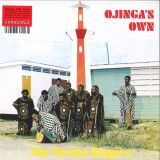
YORUBA SINGERS - OJINGA’S OWN LP

The 1974 debut album Ojinga’s Own and single Basa Bongo/Black Pepper by Guyanese Afro-Folk band The Yoruba Singers has been remastered for vinyl and digital.
The Yoruba Singers formed in Georgetown, Guyana in 1971. Despite their name they were not from Nigeria, but identified strongly with the area from which so many of the African diaspora in Guyana and neighbouring regions were originally descended.

The group started adapting Guyanese traditional folk music as well as writing their own - blending a mixture of protest, social commentary, blues, and genres inspired by the times. Beginning with about 12 people sharing vocal duties, most of the early repertoire was inspired
by folk songs that started life on plantations or in religious settings accompanied by a few sparse musical instruments.


Integral to the Yoruba Singers’ sound are echoes of Obeah traditions which are very closely related to the Santería religion of Cuba and the Orisha and Shango traditions of Trinidad and Tobago. Calypso and steel band culture from nearby Trinidad and Tobago was to some extent part of the musical DNA of the group, but they were naturally also influenced by the massive volume of rocksteady and roots-reggae coming from Jamaica.

pas en stock

Commandez maintenant et nous commanderons l'article pour vous chez notre fournisseur.

13,40

Last In: 2 years ago
Various - Reggae Collected LP 2x12
 
24

Reggae Collected is compiled from the broad world of Jamaican artists, groups and its diaspora. This brand new compilation contains early reggae by Jimmy Cliff, classics from Third World, Peter Tosh, Toots & The Maytals, Steel Pulse, Black Uhuru, lovers-rock from Dennis Brown, Linton Kwesi Johnson, Gregory Isaacs, Yellowman and the #1 hit from Althea & Donna “Uptown Top Ranking” which was championed by BBC Radio 1 DJ John Peel.

The album Reggae Collected is part of the Collected compilation series, which is a collaboration between Universal Music and Music On Vinyl. The compilations bring together the biggest and best names of its genre, combined with forgotten hits and less discovered gems, giving the listener an experience of both nostalgia, and uncovering new musical grounds at the same time.

The 2LP Reggae Collected is available as a limited edition of 2000 individually numbered copies on yellow (LP1) and light green (LP2) coloured vinyl and includes an insert.

pré-commande05.05.2023

il devrait être publié sur 05.05.2023

41,39

Last In: 2026 years ago
A.B. CRENTSIL'S AHENFO BAND - OBI BAA WIASE

A.B. Crentsil is a heavyweight of Highlife music and the main vocalist of Sweet Talks, one of the most popular Ghanaian bands of the 1970’s. In 1992, musician Charles Amoah and producer Richie Osei Kuffour offered him the opportunity to explore a new popular sound: Bürger Highlife. Little did he know these studio sessions would give birth to the biggest song of his career.
Charles Amoah, who had released his Sweet Vibrations LP in 1984 to great acclaim, extensively toured in Europe with bands such as Black Earth and Saraba, was eager to bring a new sound to Crentsil, an artist he had admired for years. Throughout the 1980’s, Highlife had been changing pretty radically, following the same evolution as Congolese Soukous, Caribbean Zouk and most popular black music
genres of that era: Heavy use of drum machines, synths and digital technology was conveniently replacing big bands and expensive
analog studios and equipments. Mostly recorded, produced or mixed in Germany, this new breed of electric Highlife dubbed ‘Bürger Highlife’ could be defined as a fusion of Disco, Jazz, Funk and Pop with the popular Highlife beats, rhythms and lyrics.
According to A.B. Crentsil, the name was a reference to the ever present American cultural influence on Ghanaian musicians. Charles
Amoah has his own take: “I initially called this particular kind of Highlife ‘Ethno Pop’. Bürger is the German word for citizen, and that’s how Ghanaian musicians living and working in Germany were calling each other”.
The music for both “Obi Baa Wiase'' and “Sika Be Ba” was entirely composed and played by Charles Amoah, using minimal equipment: a
DX7 synth, a Korg M1, a Yamaha RX5 drum machine, and an Akai 1000 sampler. A.B. Crentsil provided the lyrics for both tunes on the spot. Obi Ba Wiase’s message is one of gratitude and faith: it says we should appreciate our life way more and follow the example of people who have a lot less but still praise God all day.
Charles remembers fondly Crentsil’s larger than life personality: "A.B. slept a lot, he really loved sleeping. His lack of punctuality was easily dismissed by his wonderful sense of humour and it wasn't uncommon to find musicians rolling with laughter on the studio floor."
Charles also remembers vividly the "Obi Baa Wiase" session: he could feel the magic in the air while working on the soon to be hit, and
knew something special was happening. A.B. asked for a break in the middle of the session, which Charles adamantly refused until the song was finished and the magic fully captured.
Success was not immediate, and Charles was first a little concerned by the lack of buzz following the immediate release of the Gyae Me
Life Ma Me album. But a few months down the line, the situation took a new turn. "Obi Baa Wiase" was making its way into radio playlists,
weddings and festive celebrations. It was covered by local bands, and soon most of Ghana and its European and American diasporas were hooked. It became A.B. Crentsil’s most requested song at live events for the following decades.
As producer Richie Moore wrote on the album back cover : "A perfect integration of two musical geniuses, the result of which are the
scintillating tracks of music on this record… so all you party fans go onto the floor and dance the body music"

pas en stock

Commandez maintenant et nous commanderons l'article pour vous chez notre fournisseur.

15,92

Last In: 3 years ago
RAIZA BIZA - BYGONES

Raiza Biza

BYGONES

12inchLKS110V
Low Key Source
09.04.2021

Out on Friday 4 October, independent label Low Key Source is proud to be releasing Raiza Biza’s forthcoming album Bygones.

A hypnotic culmination of hundreds of hard drive demos, eclectic musical inspiration and collaboration, enter Bygones - a record striking the balance between the intricacies of electronic production and at times, melodic half-sung poetry, delivered with raw intensity.

The nine track record features cameo appearances from Sudanese-American rapper/producer extraordinaire Oddisee, Australia’s REMI and B Wise along with AmmoNation collaborators Blaze the Emperor, Embher, VULC, and more.

Speaking with a sense of urgency in his flowing baritone voice, Biza’s work has always carried a socially conscious heart, backed up by honest storytelling and captivating jazz/soul infused
production as the aura to his words. His new material follows a new sound arch, and with those changes comes a newly found freedom.

On Bygones, Biza found inspiration in the deeply written metaphors of the Marvin Gaye-era soul and the heart-hitting rhythms of 1970’s funk groups like Gapp Band. Binding his grounding in socially conscious thought and observational storytelling, he studies the human condition and the world around us - from his own experience.
Though this time, he admits, the record finds the balance between fun and seriousness. Rather than be ruled by the lyrics, the music plays an emotive part.

“I wanted to create space for emotional interpretation of the audience,” he reflects. “I’ve tried to find a balance between the things I’ve released in the past and the further left-sitting things on my hard drive.”

The newest generation of hip-hop has forced him to just do; and overthink less. “Being able to take that fun within the music and combine it with raw melody, you hopefully connect with people.”

He tells the angles of the human condition through high octane moments, the party life, through to the low, self-reflective moments found in tracks like ‘Stolen Youth’ and ‘Trouble’ where he teams up with Oddisee and Zenyth. Both tracks have gone onto become student radio network hits, sitting in the top 10 of the Radioscope Alternative Airplay chart in New Zealand for consecutive weeks.

A humble titan within the antipodean isles and Aotearoa’s underground scene, Biza has firmly planted roots, supporting the up-and-coming generation of local MCs and hip-hop producers. As the hearty driving force behind AmmoNation, Biza believes in the power of community and the sharing of knowledge. A voice from within the African-New Zealand diaspora, Biza has strived to bridge the gaps of understanding and preservation of his experience in New Zealand, while also supporting his fellow artists on the same mission.

“We, the African diaspora, we are no longer toddlers in the places we immigrated to. We have an identity and a growing presence.”

pré-commande09.04.2021

il devrait être publié sur 09.04.2021

28,53

Last In: 2026 years ago
JNEIRO JAREL - AFTER A THOUSAND YEARS

In 2018 Far Out Recordings signed a record deal with Brooklyn born, nomadic producer Jneiro Jarel. Having just put the finishing touches to the recordings, Jarel suffered an ischemic stroke while living and working in Costa Rica and his wife Indigo was forced to set up a crowd fund to cover special medical transport back to the states to receive treatment. The release was put on hold, but thanks to the generosity of friends and fans around the world, Jarel was able to get the care he needed and is now on the long road to recovery. We’re overjoyed to finally announce that Jneiro Jarel’s After A Thousand Years is now set for an October 2020 release.

Throughout a career that has spanned over twenty years and seen collaborations with MF DOOM, Thom Yorke, Damon Albarn, BadBadNotGood, Portishead’s Beth Gibbons, Kimbra and Khujo Goodie (Dungeon Family), Jneiro Jarel’s consistently distinctive, forward thinking productions, as well as his love for the music of Brazil, made his partnership with Far Out a perfect fit.

Recorded between New York, New Orleans, Miami and Costa Rica, After A Thousand Years features legendary multi-instrumentalist Bill Summers, famed for his work with Herbie Hancock, Quincy Jones and Eddie Henderson. The album also features Malawian-American guitarist Masauko Chipembere who has worked with the likes of RZA from Wu-Tang Clan and Ladybug Mecca from Digable Planets.

For Jarel, After A Thousand Years is “a culmination of the longstanding musical contributions of the African diaspora.” Permeating the Brazilian music and Latin jazz Jarel has loved and drawn inspiration from, as well as the stateside jazz, soul and funk Jarel grew up around, the influence of Africa and its musical history, on both North and South America, is key to the album’s sound.

On lead single “Banana Peel”, Jarel’s outernational perspective makes for a track that is almost impossible to place geographically: you can hear the swing of Jarel’s native New Orleans jazz, the vibrance of Costa Rican rainforests as well as the influence of Jarel’s vast collection of Brazilian records. “Viberian Waves 1&2” is equally nonconformist, morphing from funky baroque-flavoured instrumental hip hop into a bossa inspired, percussive jam.

Taking its inspiration from the biblical prophecies found in the books of Isaiah, Daniel, and Revelation, foretelling the fully realized, physical and spiritual restoration of the earth and mankind after the thousand year reign of the Messianic Kingdom, After A Thousand Years contemplates and celebrates a world where everlasting love, peace, and harmony abound under a sovereign, divine rulership.

After A Thousand Years will be released on Vinyl LP and CD on the 30th October 2020 via Far Out Recordings.

FEEDBACK

“great release. Really like this!” Antal (Rush Hour)
“Banana Peel is exactly what we need now. Visionary Jneiro Jerel at his finest channelling healing sounds and rhythms from Mother Earth. A much-anticipated lens through Jneiro’s third eye. Thank you!” King Britt
“Sounding real good!” Errol Anderson (Touching Bass)
“I love it!!!!!!!” Raffaele Costantino (RAI RADIO 2)
“Sounds great. Congratulations. Will play it on my radio shows.” Batida
“Will pitch album to my editors” Dean Van Nguyen
“Please send me the full album once it's finished.” Francisco Noronha (Publico PT)
“Beautiful man. So happy that he's ok” King Hippo (WLPN-LP / Worldwide FM)
“cracking tune. already lined up to add to playlist. might go into radio show too.. love it” Oli Brunetti (Collectivo Futuro / Olindo Records)
“Amazing! Ive not heard anything from JJ for a long time but a welcome return, this is a cracking track. Looking forward to hearing more new material.” Mickey Jukes (1BTN FM)
“Very vibrant, fresh release! It gets better every time I am listening to it.” Shantisan (Superfly FM Vienna)
“This is a pretty special track , unique sound but very accessible , like it a lot and will play in my show Look forward to hearing the LP” Andy Wilson (Ibiza Sonica Radio)
“So good to hear Jneiro again, loving this cut. Thanks!” Chris Knight (Astrojazz)
“sublime !!!! will definitely play !!!” Mark Milz (Radio Corax)
“I-Robots approved!” Thanks for sharing...” I-Robots

pas en stock

Commandez maintenant et nous commanderons l'article pour vous chez notre fournisseur.

19,03

Last In: 5 years ago
Gwen McCrae - Keep The Fire Burning / Funky Sensation

The 7' versions of Keep the Fire Burning and Funky Sensation by Gwen McCrae, two tracks synonymous with the soul, boogie, rare groove and modern disco scenes, are finally being reissued on Expansion Records. Keep the Fire Burning has been one of the most sought after records of the past decade, seamlessly bridging the gap between rare-groove and underground dance-music. What's more, recent price-hikes on online vinyl-distribution websites denote the way in which the market for this record has grown exponentially, a testament to its new-found popularity among the worldwide dance-music diaspora. Funky Sensation, moreover, possesses a timeless and universal groove, a song which has cemented itself as a darling of the boogie-scene, while gaining traction from the likes of Dam Funk and Nu Guinea. Furthermore, Funky Sensation is a traditionally popular record amongst the UK Soul scene, after seeing airtime on London Pirate-Radio stations during the 1980's. Keep the Fire Burning has since been sampled by Star Slimlinger, Marcus Gauntlett and the Hustlers Convention among others and has seen heavy rotation within the underground circuit, owing to its popularity among certain U.S and European DJ's such as Ron Trent, Marcellus Pittmann, and Sam Shepherd. Funky sensation is well-affiliated within the Hip-Hop scene, after providing the musical framework for songs produced by Africa Bambaata, Ghostface Killah and L.L Cool J to name a few. Original copies of this 7' single have exchanged hands for over £100.

pas en stock

Commandez maintenant et nous commanderons l'article pour vous chez notre fournisseur.

15,92

Last In: 16 months ago
Tribe - Hometown: Detroit Sessions 1990-2014

“This album will be part of the everlasting impact the Tribe collective had on our culture, on our hope and possibilities.” - Herb Boyd

Strut and Art Yard present the first compilation bringing together the modern era recordings of Tribe, Detroit’s acclaimed independent jazz collective.

Tribe began as a musical ensemble in 1971 co-founded by Saxophonist Wendell Harrison and trombonist Phil Ranelin that soon expanded into a broad amalgam including a live collective and independent record label. Ignored by the mainstream, many African American jazz artists in Detroit and across the US began creating their own small imprints and Tribe emerged alongside other cultural entities to express selfdetermination goals in the city: saxophonist Ernie Rodgers with his sessions at Rapa House; John and Leni Sinclair’s Artist Workshop; Bruce Millan’s Repertory Theater; the Hastings Jazz Experience and the Strata Corporation led by Kenny Cox. Harrison’s ideas of independence, self-determination and education were central to the Tribe ethos: “I might be possessed with a drive to get the knowledge out,” explained Harrison, “because I see this as sustaining the future of the jazz diaspora, the jazz tradition.” Tribe album releases like Harrison’s ‘An Evening With The Devil’ (1972) and Harrison and Ranelin’s ‘A Message From The Tribe’ (1973) became early ‘70s milestones in Detroit jazz.

In 1977, Harrison teamed up with pianist/composer Harold McKinney to form Rebirth Inc., aided by Detroit cultural warrior John Sinclair, a continuation of the Tribe community ethos. Musically, it formed a link with radio station WDET and began an outreach program to teach children and to publish Harrison’s jazz instruction books. Harrison continue to record extensively as a leader with his own labels, WenHa and Tribe, documenting the collective through sessions led by Phil Ranelin, Harold McKinney, Pamela Wise and more.

The ‘Hometown’ compilation places the spotlight on this later era of Tribe and Rebirth Inc., with rare and previously unreleased recordings from Harrison’s WenHa / Rebirth Studios and the SereNgeti Gallery And Cultural Center. Among many highlights, Harold McKinney and his “McKinfolk” family of musicians contribute the pulsing ‘Wide And Blue’ and dance celebration ‘Juba’; Phil Ranelin re-works his classic ‘He The One We All Knew’; Poet Mbiyu Chui (Williams Moore), pianist Pamela Wise and percussionist Djallo Djakate spark on the uncompromising ‘Ode To Black Mothers’ and the rallying cry of ‘Marcus Garvey’: “If we ever get together we will astound the world.” Harrison himself evokes the power and majesty of juju on ‘Conjure Man’.

‘Hometown’ comes as a 2LP gatefold and 1CD digipak fully remastered by Technology Works from the original session recordings. Both formats include exclusive sleeve notes by journalist Herb Boyd with rare photos from Wendell Harrison’s personal archive.

pas en stock

Commandez maintenant et nous commanderons l'article pour vous chez notre fournisseur.

22,65

Last In: 6 years ago
Actress - Splazsh LP 2x12"

Darren Cunningham's eagerly~awaited new album is an adventurous, ultramodern, thoroughly British affair, rummaging about in the inner lives of house and techno, and brilliantly elaborating the accomplishments of his debut, Hazyville.
Determinedly off~the~map and resistant to pigeonholing, Cunningham is an enigmatic and playful figure, citing Francis Bacon and Monet as inspirations longside Theo Parrish, Anthony 'Shake' Shakir, Daft Punk, 'binary codes and numeral systems', and The Avengers. He's a hard man to pin down - somehow a key player in the post~dubstep diaspora and yet not there at all - but everything comes across in his shape~shifting, richly textured music.
The South Londoner's acclaimed debut lived up to its name: a series of dreamlike sketches and ideas. For Splazsh the fog has lifted, the sounds are less submerged than before, but still sticky and close - a signature combination of exuberance and introversion, luminescence and puzzlement. Unconstrained by the formal cliches of the dance music he loves, Actress' melodies and arrangements are enthralled by their own genies. Worlds of disturbance and melancholy revolve giddyingly inside the insidious funk of tracks like Get Ohn and Lost. A range of musical influences is redrawn, from speed garage (Always Human) to grime (Wrong Potion), with none crowned king. There is a reflectiveness - the ambient drift of Futureproofing, the radiophonic judder of
Supreme Cunnilingus - in amongst the industrial, synth~wave flavours of Casanova, and the stirring, stately Maze.
Actress has quickly and justly become one of the most respected names in the UK's new dance music underground. His own label, Werk Discs, has proven itself one of the most formidable and taste~making UK independents of recent times, bringing the world extraordinary albums from Zomby, Lukid, Lone and Actress himself. In love with the mysteries of groove and repetition, Splazsh is both a culmination and a new beginning for Actress, a substantial and eccentric work from a brave and coolly individual artist.
With international press interest gathering - photo features in Dazed And Confused, and Fader in the US, and a session with Wolfgang Tillmans for the cover of the German magazine Groove - the stage is set for Actress.

pas en stock

Commandez maintenant et nous commanderons l'article pour vous chez notre fournisseur.

25,00

Last In: 6 years ago
  • 1
Articles par page:
N/ABPM
Vinyl