A fresh reinterpretation project from 20/20 Vision’s Ralph Lawson and Carl Finlow that revisits their own classic Blaze remixes for 2026.
Originally remixing ‘Lovelee Dae’ back in 1997 for German label Playhouse and ‘Wishing You Were Here’ in 1999 for Slip ‘n’ Slide, these new takes deliver stripped-back dub versions and refined edits crafted for the dancefloor.
The collection blends classic Blaze soul with deeper, groove-driven house textures—highlighting the timeless songwriting of Blaze while giving it a fresh underground perspective
Emerging producer Très Mortimer dishes out eight huge heaters on the highly-anticipated ‘M1 City’ release, a dedication to the mighty Korg M1, coming to Seth Troxler’s Slacker 85 on 25th October.
Kicking off ‘M1 City’ is the simplistic, but refined and booth-rattling ‘Work That Body’. A crisp M1 stab is the main character in this, amplified by thunderous and high energy drums.
Then there’s ‘Secrets’, a house jam inspired by the likes of MK that utilises TR-909 drums, a subtle rolling bassline, intimately whispered and soulfully sung vocal shots, and, of course, classic Korg M1 synth stabs. Together with dramatic contemporary builds, a highly danceable house smasher is formed.
‘No More’ is pure gasoline for the dancefloor. Très pairs another barrage of clean M1 stabs with a rousing vocal sample that leads into, with the help of a rolling snare, another highly effective house drop. Following the extremely saucy ‘Big Daddy’ skit, we’re dropped straight into ‘One Of Those Nights’, a show-stopping track complete with cutting, sharp stabs, a bulging bassy synth and a West Coast-esque synth sound.
‘Bitch I’m From Chicago’ feat. Gleebz is, as the title suggests, a dedication to the city where house music found its name. Batting off all the poser cities like LA and Miami in the sassy lyrics, it embodies the spirit of Chicago with hefty kick drums and weighty chord stabs.
At the tail end of the release, ‘Let Me Go’ and ‘Love’ (featuring vocalist 7000 (7K)), bring things to a rousing emotive close. Both tracks see Très put clean vocals over piano riffs, giving off differing moods – the former is euphoric, the latter melancholic. Synths bubble beneath, and each track funnels their own respective house grooves, resulting in two tracks fit for both the dancefloor and headphones.
Très Mortiner explains: “The M1 sound is classic. It automatically transports you back to those timeless house songs that never get old. For me, house music is all about connection. People experiencing a little moment of euphoria together when they hear a riff that they all know on the dance floor. That’s what it’s all about. With this project I wanted to tap into that 90s rave sound and spirit. I wanted it to sound like the OG Chicago rave scene.”
“M1 City is my first project to be released on vinyl. I think vinyl is very much alive. It’s essentially for music connoisseurs now. I don’t expect people to have a vinyl collection when all music is always available to everyone on their phones. Nevertheless, I love the idea of some random DJ finding this record in a shop in 10 years. Who knows what I’ll be producing then?”
Très Mortimer is a key figure in Chicago's house scene, steadily building a strong following with his no-nonsense, dancefloor-driven sound. Drawing inspiration from his Polish roots, Trés has signed with major labels like Mad Decent, Insomniac’s IN/Rotation, and Ministry of Sound, while also launching his own imprint, Optics Records. He made his mark with a clever rework of Zombies' 1968 hit ‘Time Of The Season’ (1M+ streams). Standout releases include his downtempo collaboration with plumpy, "BAMBU," and his latest single, "At Night I Think Of You," which was recently given a remix makeover by Seth Troxler and Nick Morgan.
Slacker 85, launched in 2023, is the record label behind ‘M1 City’. Founded by Seth Troxler, it aims to give a platform to "oddball, esoteric and diverse sounds," positioning itself as a counter to the polished, refined dance artists dominating the scene. Troxler, upon the label’s launch, declared that he wanted to create something for "the anti-hero, the kids who could have done it but didn’t care to try”—essentially, "the slacker." So far, it’s delivered a range of releases from artists like Jackmaster, Danny Daze, Dan McKie, and Andre Salmon, offering tracks rooted in house music's past but evolving within its present boundaries.
‘M1 City’, this ode to a piece of gear that consistently finds itself at the heart of house music history, highlights Très Mortimer’s respect for and knowledge of the scene and its key gear. Trè combines this admiration and inspiration of house music’s greats with a modern sensibility, resulting in eight tracks worthy of today’s dancefloors and today’s ravers.
Sometimes you just stumble upon some music randomly, fall in love with it and you quickly look to grab a copy, but only a CD was ever released of it.
So after playing it digitally for quite a while now, it was the right decision to get it pressed on Vinyl, as some of you out there prefer that format.
Here we are, after more than 2 years preparing it, finally the Vinyl release of FC Europe is ready!
A joint project made by Andy Rantzen, Anthony Maher and S. Correa, first saw the daylight back in 1999 on Air Recording Australia.
From housey tracks to the finest breaks and hints of Drum & Bass, this Album has everything for everyone out there, must have record in every collection.
Melodies Of Ancient Beats Depth or Deep, (with Dep also meaning beautiful in Indonesian) is the meaning of this newly created persona from the artist DemoDc. After many years of experimenting with music making, releasing digital eps and albums, Demo has come to an end of a cycle arriving to a mature state of craftsmanship, ready to deliver his dream onto the vinyl medium.
This is the 1st ep that kickstarts a volume of a 5 ep project. Its own kind of album type edition so to speak. Down the rabbit hole is a deeply rich exploration of the unknown, immersing oneself with faith and love into a pandora’s box type scenario to find not chaos and random violence of destruction yet a carefully arranged melodic structure of orderly tapestry, traveling through the expression of quirky acid gobbles, with a steady deep chord of drive, arriving at a climatic unwind of free moving dance type melodies and wonder. This track gives electro a fresh stroke to a well founded genre, giving it a different approach to the medium. Today’s special is a track held close to heart, made back in 2007 after a skiing incident left MOAB DEP immobilized for 2 weeks. Whilst having travelled to NZ Queenstown for the trip, it dawned on the wounded artist to make sense elsewhere with his time, using it to create a very special track, of course unknowingly at the time. Returning home to Adelaide it quickly become a favourite for many underground artists yet the track has never really been given a chance to shine, to be heard…. not until now 12 years later, 2019. All made on his laptop, no midi used ( which is to be said mostly with all tracks created at heartheartrecords studios).
Today’s Special has a certain energy and vibe that immediately calls for the listener to pay attention. From its moody beginnings with lush rhodes keys, glitch ambient sounds, followed by the groovy-type horn sounding hook, whisking the listener away into a sunsetting type mood elevating itself onto new ground each step of the way. With some subtle bass movements and emotive chord progression, we arrive at a very warm heartfelt dance track that can only leave any dedicated listener and lover of common deep house music, with a tingling effervescence of radiant glow and smiles. Today’s Special proves to be its own cult hit within the archives of tracks made in the heartheartrecords realm. Today's special celebrates the meaning of 'NOW' the present moment.
Leo was born in 1972 and at the age of 15 discovered his passion for electronic music creating his first loops thanks to his Commodore Vic 20 and 64, spreading his own sound in the city when it was impossible to find in Rome any trace of electronic beats.
Soon after he became a true collector of analogue synthesizers with a serious approach in the study of modular synthesis which led him to develop unique skills as we have recognition of them from his early works for ACV records: Attack Random, Riders Of the Future, Noise Generation, Muta, Cannibald and Aeon are still a milestones for nowadays electronic music aficionados.
1989 marked the birth of The Sound of Rome, when Leo met Lory D in a small garage bringing life to a universal and alternative music movement who diffused Techno Music in Rome and all over Italy, pushing these two wizards behind the decks playing along the like of Dave Clarke, Joey Beltram, Robert Armani and UR among others.
In 1995 Leo decided to cut his relationship with ACV records and moved to Rephlex, Aphex Twin’s record label, starting touring with the Rephlex group after the Void album.
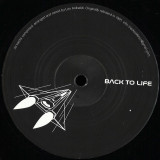
Ten years later Leo recorded his first single for a new project: Cannibald Records. Back to Life main target is to focus on house and techno classics reissue, and the mission continue with the official reissue of 1991 Leo's Noise Generation, a true special record that snaps an unforgettable highlight in the rave scene. BTL004 will be available with a special insert, black version and very limited white press to delight every serious vinyl collector.
Leo was born in 1972 and at the age of 15 discovered his passion for electronic music creating his first loops thanks to his Commodore Vic 20 and 64, spreading his own sound in the city when it was impossible to find in Rome any trace of electronic beats.
Soon after he became a true collector of analogue synthesizers with a serious approach in the study of modular synthesis which led him to develop unique skills as we have recognition of them from his early works for ACV records: Attack Random, Riders Of the Future, Noise Generation, Muta, Cannibald and Aeon are still a milestones for nowadays electronic music aficionados.
1989 marked the birth of The Sound of Rome, when Leo met Lory D in a small garage bringing life to a universal and alternative music movement who diffused Techno Music in Rome and all over Italy, pushing these two wizards behind the decks playing along the like of Dave Clarke, Joey Beltram, Robert Armani and UR among others.
In 1995 Leo decided to cut his relationship with ACV records and moved to Rephlex, Aphex Twin’s record label, starting touring with the Rephlex group after the Void album. Ten years later Leo recorded his first single for a new project: Cannibald Records. Back to Life main target is to focus on house and techno classics reissue, and the mission continue with the official reissue of 1991 Leo's Noise Generation, a true special record that snaps an unforgettable highlight in the rave scene. BTL004 will be available with a special insert, black version and very limited white press to delight every serious vinyl collector.
„Öd“ marks the long-awaited return of Institut für Feinmotorik - the Black Forest collective known for using eight prepared turntables to investigate acoustic micro-phenomena generated by everyday objects - with a new album and their first full-length release on Faitiche. It is also the return of their almost comical understatement as personal artistic principle: „making almost nothing out of almost nothing,“ compressed into the dots on an umlaut.
The Öd-nis, the wasteland, is a field that the collective has been ploughing in sound since their first release in 1997. Eight prepared turntables, four mixers, no records, six hands (give or take) merge into what they call the „Octogrammoticum“. A rotating organism of surfaces in friction, fed with the clutter from a drawer: rubber bands or tin foil, CDs, a discarded socket board. Under IFF's scrutinizing stylus, mundane almost-nothings get scratched open to reveal the acoustic density of negative space itself.
Last year’s „Adhesive Tape“ drew IFF closer together after an almost ten-year hiatus. An eponymous event series at Berlin's silent green set in motion what would become their most twistedly funky release since „Penetrans“ on Staubgold in 2002.
The only thing öd about „Öd" (meaning „barren" or „boring“ in German) may well be its title: layers of improvised play and randomized loops convolve around porous, dubby groove locks, tugging at each other in a call-and-response with howling static that cuts through bulbous ambient techno into a scrap-metal Dixieland phantasm. Stratified yet spacious, these sonic double exposures always hover on the verge of collapsing. What you think you hear might not be what you actually hear.
The album’s track titles resemble Conceptual Poetry, extending this psycho-phenomenological gesture into the realm of spoken language. Conceived by renowned poet Dagmara Kraus, they become word molecules - „stern,” „dies,” „lose“ - tilting delicately between German and English, constantly changing depending on the ear’s perspective and pointing back to the deeply unstable fabric connecting meaning and sound. Which also makes „Öd“ an unusual cross-disciplinary collaboration - at least in the field of electronic music.
PS: Since its beginnings in Bad Säckingen, IFF has always been more than the sum of its rotating parts, moving tirelessly between multimedia art, theory, solo projects and collaborations. With IFF Expanded, the collective now opens its eight-doored apparatus, inviting artists working with CDJs or samplers to join - an ambitious live format that loosens its former purity law while carrying forward a long-standing curatorial practice. The same thread also runs into the related event series Acephalic Headspace.
Institut für Feinmotorik (*1997), artist-group originating from Black Forest working in various fields. In musical context known for transforming turntables into instruments by removing the records and instead applying rubber bands, paper scraps, household materials – resulting in a vivid laboratory for the productive misuse of everyday objects. This approach is documented in record releases and performed live.
“If there is one thing you can always count on with Alex Lahey, it’s that the Melbourne-born indie singer-songwriter is going to provide fans with a hell of a good time.” – Billboard
Impressed Recordings is proud to present a world exclusive variant of Alex Lahey's original EP, 'B-Grade University'. In addition to the original EP, this repress includes brand new re-recordings of “You Don’t Think You Like People Like Me” and “Let’s Go Out,” alternate versions of “Wes Anderson” and “Let’s Go Out” taken from Lahey’s 2020 Between the Kitchen and the Living Room EP, plus a version of “You Don’t Think You Like People Like Me” recorded in 2017 live in-studio at triple j in Australia for their Like A Version series.
"I vividly remember writing this collection of songs in my childhood bedroom at my mum’s house next to a small window where I could catch glimpses of the ever expanding edges of the Melbourne city landscape in the years I lived there. I sold my trusty blue Toyota Corolla (aka the Corolls Royce) and gathered every single dollar I could from random day jobs to pay for studio time and will the project into existence.""
"I am not exaggerating when I say this EP completely changed my life. These songs found their place in the world in a way I could have never fathomed and have forged a life of their own over the last decade. They’ve taken me to corners of the world I could only have dreamed of seeing, let alone playing music in, given me the privilege of meeting so many people who have found their own stories in the songs and they have enabled me to keep making the next thing. I feel indebted to all of these songs and treat them with extra care and love whenever I play them live."
NPVR is the avant garde duo made up of the late Peter Rehberg and Nik Void. Editions Mego is proud to present their second and final release. No this is not some kind of Beatles synthetic AI that raises the dead reconstructed recordings but rather a new album made by the humans and their machines.
The initial meeting of Rehberg and Void was in London in 2016 and despite or due to their mutual awkwardness found solace and compatibility in the fact that they both had a similar electronic modular set up, along with matching cases to transport all. The idea to collaborate was an obvious and organic process as a means to connect their individual gear together and observe the outcome. The fruits of these initial experiments, recorded in London, resulted in the playful experimentation of their acclaimed 2017 release 33 33 (eMego 251).
Now in 2024 Editions Mego presents the logically titled follow up, 33 34. These sessions were recorded six months after the initial recordings at Peter’s home in Vienna. This was planned out as a mirror city release to the original London recordings. With Peter having access to his full studio set up this time around we encounter a rich audio landscape which organically folds together a variety of musical genres blurring any distinction between these forms so the resulting music hovers as a new cloud of sound. Any musical form, be it industrial, electro-acoustic, ambient, drone and techno all coexist and melt into the other as the ensuing result unveils a hypnotic swarm of divergent sounds (music). When active there were no lines or contexts with NPVR, either between sound or genre within these recordings or live where NPVR were at home playing at a techno club one night and an avant garde venue the next.
The initial session of these recordings was edited by Rehberg and sent to Void to further develop. Over time the final versions were agreed on and then shelved as other outside projects took over. The awkwardness had been surmounted and the two had become close friends. NPVR performed at a range of venues such as Tresor, Sutton House, Corsica, Blitz, Paris GRM #Focus2, LEV Festival and Rigas Skanumezs Festival. Following Rehberg’s untimely passing Void had difficulty listening back to the sessions but eventually thought it fit to complete and release this album, of which even the artwork (like 33 33, an image from Zurich photographer, Georg Gatsas) had been decided upon prior to Rehberg parting ways.
There is an unmistakable joy to these recordings. One encounters an enthralling exploration of their chosen machines which conveys the excitement of what can be randomly conjured when people speak through such devices. There is no grand statement or argument here, just the sheer thrill of creation and the recorded results of random encounters. The art of collaboration was always a mainstay of Rehberg’s practice from the advent of the MEGO adventure. Rehberg & Bauer was an initial collaboration with former business partner Ramon Bauer. Even at this stage one can hear a relaxed sense of delight in the sheer discovery of sound.
A mix made for the Wire magazine following the release of 33 33 hints at the freedom that comes with endless urge for exploration and discovery. Abstract tracks from Z'EV. Jérôme Noetinger and Jung An Tagen are included alongside British stalwarts The Fall and New Order. There were no lines between pop / academic / underground or mainstream in Rehberg’s world. All of it sat at the same table. It is just matter in the atmosphere, like the diverse exploration found in these recordings that comprise 33 34.
Towards the end of his life Rehberg was obsessing over the immense output of the German ambient musician Pete Namlook. An artist renowned for not only his sprawling catalogue of ambient masterpieces but one who often said his main inspiration was nature. This is apt with regards to the work of NPVR which also aligns with such thought as the intertwining of the two individual artists and their machines results in a natural symbiotic flow, as it happens, just like in the world around us.
out of Stock
Last delivered 9 months ago available to reorder, subject to availability
Volume 1 of this expertly curated project of 90s Italian House - put together by Don Carlos.
If Paradise was half as nice… by Fabio De Luca.
Googling “paradise house”, the first results to pop up are an endless list of European b&b’s with whitewashed lime façades, all of them promising “…an unmatched travel experience a few steps from the sea”. Next, a little further down, are the institutional websites of a few select semi-luxury retirement homes (no photos shown, but lots of stock images of smiling nurses with reassuring looks). To find the “paradise house” we’re after, we have to scroll even further down. Much further down.
It feels like yesterday, and at the same time it seems like a million years ago. The Eighties had just ended, and it was still unclear what to expect from the Nineties. Mobile phones that were not the size of a briefcase and did not cost as much as a car? A frightening economic crisis? The guitar-rock revival?! Certainly, the best place to observe that moment of transition was the dancefloor. Truly epochal transformations were happening there. From America, within a short distance one from the other, two revolutionary new musical styles had arrived: the first one sounded a bit like an “on a budget” version of the best Seventies disco-music – Philly sound made with a set of piano-bar keyboards! – the other was even more sparse, futuristic and extraterrestrial. It was a music with a quite distinct “physical” component, which at the same time, to be fully grasped, seemed to call for the knotty theories of certain French post-modern philosophers: Gilles Deleuze, Félix Guattari, Paul Virilio... Both those genres – we would learn shortly after – were born in the black communities of Chicago and Detroit, although listening to those vinyl 12” (often wrapped in generic white covers, and with little indication in the label) you could not easily guess whether behind them there was a black boy from somewhere in the Usa, or a girl from Berlin, or a pale kid from a Cornish coastal town.
Quickly, similar sounds began to show up from all corners of Europe. A thousand variations of the same intuition: leaner, less lean, happier, slightly less intoxicated, more broken, slower, faster, much faster... Boom! From the dancefloors – the London ones at least, whose chronicles we eagerly read every month in the pages of The Face and i-D – came tales of a new generation of clubbers who had completely stopped “dressing up” to go dancing; of hot tempered hooligans bursting into tears and hugging everyone under the strobe lights as the notes of Strings of Life rose up through the fumes of dry ice (certain “smiling” pills were also involved, sure). At this point, however, we must move on to Switzerland.
In Switzerland, in the quiet and diligent town of Lugano, between the 1980s and 1990s there was a club called “Morandi”. Its hot night was on Wednesdays, when the audience also came from Milan, Como, Varese and Zurich. Legend goes that, one night, none less than Prince and Sheila E were spotted hiding among the sofas, on a day-off of the Italian dates of the Nude Tour… The Wednesday resident and superstar was an Italian dj with an exotic name: Don Carlos. The soundtrack he devised was a mixture of Chicago, Detroit, the most progressive R&B and certain forgotten classics of old disco music: practically, what the Paradise Garage in New York might have sounded like had it not closed in 1987. In between, Don Carlos also managed to squeeze in some tracks he had worked on in his studio on Lago Maggiore. One in particular: a track that was rather slow compared to the BPM in fashion at the time, but which was a perfect bridge between house and R&B. The title was Alone: Don Carlos would explain years later that it had to be intended both in the English meaning of “by itself” and like the Italian word meaning “halo”. That wasn’t the only double entendre about the song, anyway. Its own very deep nature was, indeed, double. On the one hand, Alone was built around an angelic keyboard pattern and a romantic piano riff that took you straight to heaven; on the other, it showcased enough electronic squelches (plus a sax part that sounded like it had been dissolved by acid rain) to pigeonhole the tune into the “junk modernity” section, aka the hallmark of all the most innovative sounds of the time: music that sounded like it was hand-crafted from the scraps of glittering overground pop.
No one knows who was the first to call it “paradise house”, nor when it happened. Alternative definitions on the same topic one happened to hear included “ambient house”, “dream house”, “Mediterranean progressive”… but of course none were as good (and alluring) as “paradise house”. What is certain is that such inclination for sounds that were in equal measure angelic and neurotic, romantic and unaffective, quickly became the trademark of the second generation of Italian house. Music that seemed shyly equidistant from all the rhythmic and electronic revolutions that had happened up to that moment (“Music perfectly adept at going nowhere slowly” as noted by English journalist Craig McLean in a legendary field report for Blah Blah Blah magazine). Music that to a inattentive ear might have sounded as anonymous as a snapshot of a random group of passers-by at 10AM in the centre of any major city, but perfectly described the (slow) awakening in the real world after the universal love binge of the so-called Second Summer of Love.
For a brief but unforgettable season, in Italy “paradise house” was the official soundtrack of interminable weekends spent inside the car, darting from one club to another, cutting the peninsula from North to centre, from East to West coast in pursuit of the latest after-hours disco, trading kilometres per hour with beats per minute: practically, a new New Year’s Eve every Friday and Saturday night. This too was no small transformation, as well as a shock for an adult Italy that was encountering for the first time – thanks to its sons and daughters – the wild side of industrial modernity. The clubbers of the so-called “fuoriorario” scene were the balls gone mad in the pinball machine most feared by newspapers, magazines and TV pundits. What they did each and every weekend, apart from going crazy to the sound of the current white labels, was linking distant geographical points and non-places (thank you Marc Augé!) – old dance halls, farmhouses and business centres – transformed for one night into house music heaven. As Marco D’Eramo wrote in his 1995 essay on Chicago, Il maiale e il grattacielo: “Four-wheeled capitalism distorts our age-old image of the city, it allows the suburbs to be connected to each other, whereas before they were connected only by the centre (…) It makes possible a metropolitan area without a metropolis, without a city centre, without downtown. The periphery is no longer a periphery of any centre, but is self-centred”.
“Paradise house” perfectly understood all of this and turned it into a sort of cyber-blues that didn’t even need words, and unexpectedly brought back a drop of melancholic (post?)-humanity within a world that by then – as we would wholly realise in the decades to come – was fully inhuman and heartless. A world where we were all alone, and surrounded by a sinister yellowish halo, like a neon at the end of its life cycle. But, for one night at least, happy.
out of Stock
Last delivered 89 days ago available to reorder, subject to availability
Jomni and Jori is an electronic music duo that has been deeply involved in the Japanese club scene, consistently producing sounds with an emotional and spacey vibe while bringing out the gem in electronic music to create unique club experiences. The record lovers who met in Kyoto have now dispersed to Cologne, Kyoto, and Tokyo, and have started a new label influenced by old records yet dedicated to exploring fresh sounds together with Miki.
"Slips" is a captivating blend of swinging beats and retro sound, featuring lush pads, melancholic chords and the randomly pitched synths. "Naizo" includes the catchy lead synth that serves as a guiding light, encouraging acceptance and self-discovery with its unforgettable melody and infectious mid-tempo groove. "Neuk" transports listeners to a world of liberation, where shimmering pads evoke the luminous breeze beyond deep-sea caverns. Underpinned by an expansive sub-bass that conjures visions of vast landscapes, it embodies an unwavering devotion to the art of dance. "Hitoshio" unveils the pulsating stab synths project the afterimage of the body onto the dancefloor with accelerating drums and anchored by classic house vocal samples.
out of Stock
Last delivered 17 months ago available to reorder, subject to availability
Rising from the fiercely DIY Philadelphia underground, CARLY COSGROVE graft achingly vulnerable lyrics atop a bed of mathy rhythms, intricate guitar work and a penchant for indie-rock cool meets emo authenticity. Their debut album, 2022's See You In Chemistry, was the sound of figuring life out in real time, tracing personal growth through anxiety, depression, and self-actualization - heavy subjects for a band originally formed as a low-stress side-project stopgap in 2018.
The quest for the answers to life's big questions is once again front and center on the band's second album, THE CLEANEST OF HOUSES ARE EMPTY, as Naylor, bassist Helen Bars and drummer Tyler Kramer find themselves face to face with the chronic emotional struggles of life in the modern age.
From the stop-start polyrhythms of first single "You Old Dog" and garage-rock sheen of "Random Dancing" and "What Are You, A Cop," which sounds like Motion City Soundtrack filtering "Everlong" through their idiosyncratic rock tilt, The Cleanest Of Houses is the type of record Carly Cosgrove simply couldn't have made last time - not musically, and certainly not emotionally. They needed to live, through hard touring and harder life experiences.
The 1980s will forever be remembered for electropop sensations, yet few, if any, are quite as sensational as Yaz's Upstairs at Eric's. A standard-setting mélange of smoky blues singing, jazzy arrangements, disco-tinged beats, and dancefloor vibes, the smash debut fits equally as well at a late-night club as it does in a living room, where the record's complexity and exoticism takes listeners hostage. No wonder the 1982 landmark remains one of the decade's most essential albums.
This numbered edition Silver Label LP breathes with a decongested openness, textural richness, and expansive tonal palette. Alison Moyet's inimitable vocals, such a huge part of the record's appeal, are dramatically enhanced, her sensual timbre, bittersweet crooning, and knockout range now encompassing the full frequency spectrum and projecting outward in a way that traverses the flatness of the original pressings.
Indeed, her bluesy deliveries are at once elegant and exuberant, and give collaborative partner Vince Clarke free range to construct beat architectures that encompass freewheeling disco, house music, uptempo dance, and chilled-out pop. The former Depeche Mode member also layers on elegant keyboard melodies, establishing contagious hooks and electronic-laced landscapes that preceded the techno explosion and do so with a cooler elegance. Tape loops, random field-noise dialogues, and synth-stroked bass notes add to what's nothing less than a perfect collusion of moody paranoia and soulful warmth.
While a cousin to synth-pop LPs by the likes of the Eurythmics, Soft Cell, OMD, and Depeche Mode, Yaz's Upstairs at Eric's is singular for its chemistry between Moyet and Clarke – and an insouciant batch of songs high on emotion, style, and substance.
The meeting of Alieu and Randomized Coffee gives light to this new project, in which the Roman duo tackles a production that skillfully links Mediterranean influence to ancestral Africa in a patchwork woven of typical African ethnic elements to those of house and electronica in a "groovy" body that enhances the classical side of the African country in a modern musical mood and rhythm.
The story tells about the day before an arranged marriage ceremony.
Masanneh is a handsome and well-known man in his village of the Mandinka Tribe, born and raised in the village of Kudang, near the river that flows through the entire country; the Gambia. Many in the village believe him to be charismatic and generous, others believe him to be a venal materialist devoted to money. Masanneh decides to consult Cherno Jallow, a wise Marabout, to figure out how to deal with his future. He therefore moves westward to the village of Bondali, in Foni, where before practicing his work as a skilled trader he talks to Landing Sawo, the district chief, from there he hears the sound of a Kora played by Jali, while across the road he sees a beautiful woman Mariama Gomez passing by.
out of Stock
Last delivered 3 years ago available to reorder, subject to availability
Straight out of New York, the debut 7 inch by Cho and Random Impetus was presented by MENACE label and first released in the USA in 2019. Featuring the two singles "Brother Sister" and "Candlelight", the EP is a powerful call to humanity.
Previously released on vinyl, this project was directed by Japanese artist Cho and features local musicians. It was recorded in analog, giving the track a very old school vibe by utilizing jazz, funk, soul and disco melodies to create a rich 1970s-esque sound. "Brother Sister", is a feel-good modern disco that could easily pass as something from the heyday of the genre, and "Candlelight," another sure-shot tune is a funk groover with its jazzy horn harmonies and strong male vocals.
The record also caught the attention of Paris-based French DJ Hugo LX, who is very close to the MENACE collective and also a genuine funk and disco enthusiast. Offering a remix album for Cho and Random Impetus' 7-inch record seemed evident for him. He invited DJ Spinna, the renowned hip-hop and house producer from Brooklyn, as well as his long-time friend and collaborator, to join him on the project.
out of Stock
Last delivered 3 years ago available to reorder, subject to availability
With his first release as EBM outfit Voltage Control on Antler Subway in 1989, Utrecht-based Arno Peeters can easily be considered one of the Dutch Dance pioneers.
Influenced by hip hop, electro and acid house, and his uncontrollable urge to experiment, he moved on to produce techno. Disappointed by the genre s conventions, he rather suddenly stopped with dance music altogether around 1995, letting a wealth of DATs with unreleased material collect dust in his studio.
To our great pleasure, U-TRAX was allowed to pick some nuggets from these archives, resulting in this Titanic EP and an album later this year.
Arno started experimenting with sound at very young age, resulting in his first cassette releases with experimental soundscapes in 1983. In 1986 he joined the notable Centre for Electronic Music (CEM), where he was able to take his experiments to a new level in a professional studio-environment.
In his techno episode , he recorded several 12 -es and CDs as Sp@sms and The Implant, and as part of Random XS, Urban Electro, African Nightflight and The AWAX Foundation, with most of his records being released on the famous DJAX label.
After turning his back on techno, he applied himself to more experimental music again. In 1996, he created AeroSon, a 40-minute sound collage that won him the first prize in the category Composers Under 30 at a high-brow international contest for electro-acoustic music. This piece was later released on the prestigious Mille Plateaux label.
Since then, his focus has shifted away from releasing music, towards working more project-based: on remixes, compilations and interactive (installations, video, sound design), building himself a successful career as radio maker, teacher and engineer, contributing to several award-winning documentaries and podcasts.
This EP is a nice cross section of Arno s dance productions, serving you some acid, techno and electro.
Titanic V1 was originally created to be a Random XS track, the techno band he formed in 1991 with Sander Friedeman. It was performed during their live set at one of the G.U.R.U. parties, organized by U-TRAX label boss DJ White Delight and label artist P.A. Presents.
This acid track was remixed into a techno monster when Friedeman replaced the 303 with a 101 and added a ton of delay on the bass drums, resulting in the woofer destroying Titanic (Underwater Dub).
The flipside sees a rare post-1995 recording by Arno: CEM Traxx 1. As the title suggests, this melancholic electro gem was created using the intricate machinery of the CEM Studio. Originally created as one half of a two-part composition for some project in 2003, it was never released before.
The EP closes with a typical Arno brainchild, the tongue-in-cheek acid banger XD5 Acid Master, from 1994. Tracks like this happen if you leave Arno unattended with a rather un-hip machine like the Kawai XD-5: he turns it inside out and uses it for things it was never intended for. Buckle up!
All tracks have been produced by Arno Peeters and mastered by Ruud Lekx. Label art by Botterman Ontwerp.
out of Stock
Last delivered 4 years ago available to reorder, subject to availability
With his first release as EBM outfit Voltage Control on Antler Subway in 1989, Utrecht-based Arno Peeters can easily be considered one of the Dutch Dance pioneers.
Influenced by hip hop, electro and acid house, and his uncontrollable urge to experiment, he moved on to produce techno. Disappointed by the genre s conventions, he rather suddenly stopped with dance music altogether around 1995, letting a wealth of DATs with unreleased material collect dust in his studio.
To our great pleasure, U-TRAX was allowed to pick some nuggets from these archives, resulting in this Titanic EP and an album later this year.
Arno started experimenting with sound at very young age, resulting in his first cassette releases with experimental soundscapes in 1983. In 1986 he joined the notable Centre for Electronic Music (CEM), where he was able to take his experiments to a new level in a professional studio-environment.
In his techno episode , he recorded several 12 -es and CDs as Sp@sms and The Implant, and as part of Random XS, Urban Electro, African Nightflight and The AWAX Foundation, with most of his records being released on the famous DJAX label.
After turning his back on techno, he applied himself to more experimental music again. In 1996, he created AeroSon, a 40-minute sound collage that won him the first prize in the category Composers Under 30 at a high-brow international contest for electro-acoustic music. This piece was later released on the prestigious Mille Plateaux label.
Since then, his focus has shifted away from releasing music, towards working more project-based: on remixes, compilations and interactive (installations, video, sound design), building himself a successful career as radio maker, teacher and engineer, contributing to several award-winning documentaries and podcasts.
This EP is a nice cross section of Arno s dance productions, serving you some acid, techno and electro.
Titanic V1 was originally created to be a Random XS track, the techno band he formed in 1991 with Sander Friedeman. It was performed during their live set at one of the G.U.R.U. parties, organized by U-TRAX label boss DJ White Delight and label artist P.A. Presents.
This acid track was remixed into a techno monster when Friedeman replaced the 303 with a 101 and added a ton of delay on the bass drums, resulting in the woofer destroying Titanic (Underwater Dub).
The flipside sees a rare post-1995 recording by Arno: CEM Traxx 1. As the title suggests, this melancholic electro gem was created using the intricate machinery of the CEM Studio. Originally created as one half of a two-part composition for some project in 2003, it was never released before.
The EP closes with a typical Arno brainchild, the tongue-in-cheek acid banger XD5 Acid Master, from 1994. Tracks like this happen if you leave Arno unattended with a rather un-hip machine like the Kawai XD-5: he turns it inside out and uses it for things it was never intended for. Buckle up!
All tracks have been produced by Arno Peeters and mastered by Ruud Lekx. Label art by Botterman Ontwerp.
out of Stock
Last delivered 4 years ago available to reorder, subject to availability
ALBUM: I came up with the album title after watching a YouTube video by the channel "Watch Mojo" entitled "The Top Ten Dead Music Genres". In this video, they claimed that Synthpop is dead. Since everybody said I was a Synthpop artist, I was astonished to discover that the genre I play is considered "dead". It's relatively tongue in cheek because I don't believe any musical genre is dead and everything can be revisited and everything evolves. That being said, this is an album in which, at least musically, I am working within the boundaries of this genre, while at the same time starting to experiment with other, more modern sounds and concepts. Thematically, I tackle various topics: dysfunctional childhoods (Shortcut), heroic love in a dystopian nightmare (Billions of Years), self-destructive behaviour (Drink and Drive), unrequited, criminal love (House Arrest) and many others.
BIOGRAPHY: Glitter, glam and good vibes from the heart of Berlin! Stephen Paul Taylor (SPT) is a Canadian artist who went viral in David Bowie's old stomping grounds and has played hundreds of concerts, festivals and weddings all over Europe. He makes Synthpop-Art-Punk with undertones of New Order and Talking Heads.
Taylor was in Post-Art Synth-Folk duo, Trike, for five years before branching off into his solo project in 2014. Trike won a $20K award from "The Gong Show" (in Vancouver) in 2011, toured 22 countries, recorded an album in Denmark and Belgium and played hundreds of shows. Taylor then went solo and began playing all over Europe, from Denmark rooftops to weddings in East Germany. He gained a name for himself after achieving viral status and has continued to play all over Europe ever since. Well known for being a street musician, he essentially quit playing in the street in 2018 and focused exclusively on playing on the stage
His music is a blend of both old and new. A strong beat pulses beneath the catchy melodies and captivating lyrics float atop the whole ensemble. His bittersweet words often contrast the happy melodies within the music. He tackles unique subjects that reflect the 'ennui' our our current cultural climate. His newest album "Synthpop is Dead" is an ironic interpretation of the notion of musical genres actually "dying". Did Synthpop actually die or did it evolve? His new album also touches on other themes, from our dependance on fossil fuels to our addiction to self-destructive activities, like drinking and driving. The album uses healthy doses of humour to hammer down its themes
A year after going solo, SPT went viral with his song "Shi*t's F*cked" (His channel has 7.5 million views on YouTube) and appeared on many TV shows and well-known media outlets, from RBB to Arte to Comedy Central. He was also featured on Germany's "Das Supertalent" in 2016. He has 1.5 million listens on Spotify. He's been on the radio in Italy, Latvia, Canada and Australia, to name a few. He was also signed with Budde publishing and his racord label, "SPT Records" is a subsidiary of "Shitkatapult Records"
Dieter Bolle said his "80's influenced" music was "sehr geile" (very beautiful). Electric Six frontman, Dick Valentine, said he's "a firecracker".
out of Stock
Last delivered 6 years ago available to reorder, subject to availability
Glyn Bigga Bush has been producing electronic and sample-based music since the early 90s when he formed Rockers Hi Fi, going on to release numerous albums. Since the turn of the century he has produced and DJ'd as BiggaBush as well as various side projects such as Lightning Head (Sonar Kollektiv), the Dandelion Set (Buried Treasure) and the Magic Drum Orchestral (Tru Thoughts).
Bigga's latest project 'Sunken Foal Stories' represents a departure from much of his other work in that it is not primarily based on beats. Instead, his working method was to go with fascinating samples, accidental juxtapositions and irregular loops - inspired by pioneers of sound such as Faust and the audio experiments of Julian House as well as early stereo test records, soundtracks and library music.
The 21 concise tracks of Sunken Foal Stories link into two 15 minute segments on the LP. Bush explores the random elements created by overlaying disparate samples, where chimes of baroque psychedelia clash with ascending classical strings, or a haunting Eastern European folk song is looped into an eternal cadence of longing. Various voices float over the speakers, lost poets, disturbing therapists, dreaming vampires, chuckling cabaret singers. Sourced almost entirely from charity shops and carboot sales, the source material speaks of a forgotten yet relatively recent period, when stereo was something new and exciting, when home entertainment first came into its own and suburban homes thrilled to the exotic sounds of home organs, primitive beatboxes, LPs bought in unusual holiday destinations and 'glamorous' soundtracks.
The reveries begin with a simple electrical hum - a starting signal for the appearance of a vibrant array of sound, shifting before us in seemingly random motion. Before we know it, all those pulsating melodies, razor-cut hifi-house beats and drunken robot jazz ensembles start forming into patterns, secretly & perfectly designed by one Art Alfie. A long time operator in Stockholm's small but insistent underground music scene, Oscar Wedrén broke through internationally in 2012 with the Karlovak project, founded with on-off studio and dj partner Rudolf Nordström, a.k.a. Mr. Tophat. The duo's inexplicably fresh takes on classic dance music tropes is as much a result of a brilliantly odd pairing of personalities as of a defined concept and a precise method in searching for the perfect house groove. While writing Reveries Of, released early spring 2017 through Studio Barnhus, Art Alfie freed himself of all conceptual footholds, delving instead deep into his archives of old and new memories and feels, working with improptu field recordings and emotionally-guided sampling processes. He came back with an intricate and personal debut album and he didn't lose his groove on the way.
Recorded in a Bunker somewhere in the ancient basque region, Sagas of Subterranean life is a collection of 5 sagas that are heavily influenced by Scandinavian life and European culture in general. Showcasing a versatile collection of 5 bits that range from moving distorted house jams to synth blops and violating techno, ''NORSE'' is not just a collaboration between soul notes head honcho ''Kastil'' and Rotterdam based ''Gitchell Moore'', it's also a project that tends to avoid genre-restrictions and box thinking.
Odd Sequences X Violating Drum Patterns X Palindrome Titles = Sagas of Subterranean life.
SUPPORTED BY:
RODHAD, DAVE CLARKE, DEEP SPACE HELSINKI, ARNAUD LE TEXIER, STRANGER, ASAN REGAL, EXIUM, RAIZ, HECTOR OAKS, VIKTORIA, EKSERD, XHEI, GREY PEOPLE, TOM TRAGO, PAUL MAC, POSTHUMAN, PHOTONZ, JONAS KOPP, DVS1, TOMMY FOUR SEVEN, BAS MOOY, EOMAC, RUB-N-TUG, TENSNAKE, RANDOMER, EL TXEF A , FABRICE LIG, LAST WALTZ, PERTHIL, DENITE, TRUNCATE, DARKFLOOR, DEEPBASS, BLEAK, NX1, KLANKMAN, LAURENT GARNIER, MARCEL DETTMANN, HEKKLA,