Official reissue from the catalog of legendary UMM Records. Sub Authority Records is back with a true anthem of all House music lovers: ""Desafinado"" from Rhythm 3 Request.
This project draws on their unwavering knowledge of dancefloor culture and the quality of individual sounds. An ode to the legendary imprint of old school and house music, that builds infectious arrangements with ease before falling into an irresistible four-on-the-floor club sensation.
Cerca:rhythm authority
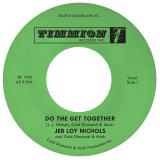
- A1: Do The Get Together
- B1: First Night Away From Home
Jeb Loy Nichols is at it again with a brand new 7” that pairs two sides of his soulful storytelling. On the A-side, the exclusive cut “Do The Get Together” makes its debut – a slow-burning southern soul dancer that gently calls people closer, both on the dancefloor and beyond it. With warmth, patience, and a steady groove, Nichols invites connection without force, offering a quiet reminder that togetherness can still feel natural and unpretentious.
Driven by Cold Diamond & Mink’s deep-pocket rhythm and understated analog textures, “Do The Get Together” unfolds with ease. The groove never rushes, allowing Jeb’s voice to guide the message with soft authority and lived-in wisdom. It’s a song that feels tailor-made for late-night spins, where movement and meaning find common ground.
On the flip, “First Night Away From Home” brings listeners back to the opening chapter of Nichols’ latest album This House is Empty Without You. Warm, melodic, and intimate, the track captures that mix of vulnerability and quiet resolve that defines Jeb’s songwriting. Together, these two sides form a perfect 7” pairing, pressed for those who value soul that speaks gently but stays with you
Walter G & Jay Caruso deliver a warm, groove-led Soulful Disco version of “From East To West”, built for DJ’s who appreciate real disco dynamics. Rolling basslines, bright piano chords and lush strings wrap around an emotive vocal, creating a timeless club-ready moment that bridges classic 70s soul-disco with modern dancefloor aesthetics. Ben Liebrand delivers a classic 12-inch reconstruction rather than a modern nu-disco vibe. It leans into Ben Liebrand’s signature extended format philosophy, letting the groove breathe. His is a rhythm-first reconstruction with crisp percussion, dynamic low-end and long instrumental sections. The vocal sits naturally within the groove, while the arrangement allows DJs space to build, ride and transition with ease. Less modern sheen, more heritage authority, a purist disco tool with timeless floor appeal.
Ashley Tindall, AKA Skeptical, returns in peak form with Blimp EP — the fourth release on his Rubi Records imprint — delivering four meticulously crafted cuts of uncompromising drum & bass.
Opening with the title track, Blimp sets the tone with a deep, steppy wobbler that nods subtly to the title track from his second Rubi Records release, Capsize EP. All the signature Skeptical hallmarks are here: hypnotic, pared-back metronomic drums and shimmy-inducing, undulating subs that demand movement. Yet this time there's a noticeable shift — warm, underlying melodic pads bring an unexpected emotional depth. It's not dreamy, but it is more introspective than we're used to, showing another layer to his sonic palette.
So Good flips the script entirely. A dark, cinematic growler, it leans into ghosted vocal fragments and a futuristic film-noir aesthetic. Tense, claustrophobic rhythms and sinister textures create an unsettling atmosphere — tailor-made for those lights-out, pressure-heavy dancefloor moments.
Third comes the undeniable monster of the EP, Technology. Trademark "stink-face" Skeppiness is in full effect from the first bar. Disjointed sci-fi stabs and eerie pads collide with clinical, almost militaristic drum programming, all anchored by a devastatingly weighty bassline. Movement isn't optional — this is pure Skeptical, uncompromising and lethal.
Closing the EP is Bad Generation, a sound system–influenced weapon that finds Skeptical operating at his dubwise best. Fusing minimal D&B with heavyweight, roots-inspired rhythms is no easy task, but here it's executed with effortless authority. It's equally suited to shelling down a rave or getting lost in a deep, eyes-closed session.
Four tracks. Four distinct moods. 100% Skeptical.
Blimp EP confirms once again that his sound continues to evolve — sharper, deeper, and more refined with every release.
Support: Ben UFO, Joy Orbison, Gilles Peterson, dBridge, Break, DLR, Doc Scott, Mefjus, Kasra, Kings of the Rollers, Alix Perez, Jubei, Dub Phizix, Flight, Tasha, Loxy, Lens.
7 Inch Vinyl in Label Generic Sleeve
A powerful two-sider from the incomparable Rhetta Hughes, whose rich vocal work includes singing backing vocals on Roberta Flack’s “Feel Like Makin’ Love.” Her version of “Light My Fire” — a rare, fiery soul cover of The Doors classic — brings raw emotion, driving rhythm, and Hughes’ unmistakable vocal authority to the forefront. Paired with the deep, dramatic “You’re Doing It With Her,” this beautifully remastered reissue returns two tracks from her album "Re-Light My Fire" and brings them to 7-inch for the first time. An essential RSD 2026 pick that highlights a remarkable voice too often overlooked and celebrates the soulful reinterpretation of a rock classic. Remastered, Redesigned Artwork.
This is hypnotic music in the purest sense: elegant, fluid, and deeply immersive, built on patience, precision, and a rare understanding of tension. Rather than forcing impact, the EP unfolds with quiet authority, drawing the listener deeper with every cycle and every subtle shift. Romanian producer Barac has long been regarded as one of the key figures in the country’s minimal and microhouse continuum, known for his hypnotic, deeply detailed sound and for shaping a distinctive artistic identity around rhythm, space, and subtle emotional tension. What makes this release so special is its balance of restraint and depth. The grooves are understated but powerful, the atmospheres weightless yet emotionally charged, and the overall flow simply brilliant. It is exactly the kind of record that shows why Barac remains such an important name in contemporary minimal and deep club music: few artists can create this level of hypnosis with such finesse. Look at the cross is a genius release, sophisticated, timeless, and absolutely captivating from start to finish.
- A1: Hurts And Noises
- A2: Wake Up
- A3: I Don't Wanna Be A Rich
- A4: Terrorist Bad Heart
- A5: Provocate
- A6: Lucifer Sam (Pink Floyd)
- B1: Happy!?
- B2: So Lazy
- B3: I Feel Down
- B4: Stupido
- B5: Guilty
- B6: Caroline Says (Loo Reed)
UILTY RAZORS, BONA FIDE PUNKS.
Writings on the topic that go off in all directions, mind-numbing lectures given by academics, and testimonies, most of them heavily doctored, from those who “lived through that era”: so many people today fantasize about the early days of punk in our country… This blessed moment when no one had yet thought of flaunting a ridiculous green mohawk, taking Sid Vicious as a hero, or – even worse – making the so-called alternative scene both festive and boorish. There was no such thing in 1976 or 1977, when it wasn’t easy to get hold of the first 45s by the Pistols or the Clash. Few people were aware of what was happening on the fringes of the fringes at the time. Malcolm McLaren was virtually unknown, and having short hair made you seem strange. Who knew then that rock music, which had taken a very bad turn since the early 1970s, would once again become an essential element of liberation? That, thanks to short and fast songs, it would once again rediscover that primitive, social side that was so hated by older generations? Who knew that, besides a few loners who read the music press (it was even better if they read it in English) and frequented the right record stores? Many of these formed bands, because it was impossible to do otherwise. We quickly went from listening to the Velvet Underground to trying to play the Stooges’ intros. It’s a somewhat collective story, even though there weren’t many people to start it.
The Guilty Razors were among those who took part in this initial upheaval in Paris. They were far from being the worst. They had something special and even released a single that was well above the national average. They also had enough songs to fill an album, the one you’re holding. In everyone’s opinion, they were definitely not among the punk impostors that followed in their wake. They were, at least, genuine and credible.
Guilty Razors, Parisian punk band (1975-1978). To understand something about their somewhat linear but very energetic sound, we might need to talk about the context in which it was born and, more broadly, recall the boredom (a theme that would become capital in punk songs) coupled with the desire to blow everything off, which were the basis for the formation of bands playing a rejuvenated rock music ; about the passion for a few records by the Kinks or the early Who, by the Stooges, by the Velvet mostly, which set you apart from the crowd.
And of course, we should remember this new wave, which was promoted by a few articles in the specialized press and some cutting-edge record stores, coming from New York or London, whose small but powerful influence could be felt in Paris and in a handful of isolated places in the provinces, lulled to sleep by so many appalling things, from Tangerine Dream to President Giscard d’Estaing...
In 1975-76, French music was, as almost always, in a sorry state ; it was still dominated by Johnny Hallyday and Sylvie Vartan. Local rock music was also rather bleak, apart from Bijou and Little Bob who tried to revive this small scene with poorly sound-engineered gigs played to almost no one.
In the working class suburbs at the time, it was mainly hard rock music played to 11 that helped people forget about their gruelling shifts at the factory. Here and there, on the outskirts of major cities, you still could find a few rockers with sideburns wearing black armbands since the death of Gene Vincent, but it wasn’t a proper mass movement, just a source of real danger to anyone they came across who wasn't like them. In August 1976, a festival unlike any other took place in Mont-de-Marsan – the First European Punk Festival as the poster said – with almost as many people on stage as in the audience. Yet, on that day, a quasi historical event happened, when, under the blazing afternoon sun, a band of unknowns called The Damned made an unprecedented noise in the arena, reminiscent of the chaotic Stooges in their early adolescence. They were the first genuine punk band to perform in our country: from then on, anything was possible, almost anything seemed permissible.
It makes sense that the four+1 members of Guilty Razors, who initially amplified acoustic guitars with crappy tape recorder microphones, would adopt punk music (pronounced paink in French) naturally and instinctively, since it combines liberating noise with speed of execution and – crucially – a very healthy sense of rebellion (the protesters of May 1968 proclaimed, and it was even a slogan, that they weren’t against old people, but against what had made them grow old. In the mid-1970s, it seemed normal and obvious that old people should now ALSO be targeted!!!).
At the time, the desire to fight back, and break down authority and apathy, was either red or black, often taking the form of leafleting, tumultuous general assemblies in the schoolyard, and massive or shabby demonstrations, most of the time overflowing with an exciting vitality that sometimes turned into fights with the riot police. Indeed, soon after the end of the Vietnam War and following Pinochet’s coup in Chile, all over France, Trotskyist and anarcho-libertarian fervour was firmly entrenched among parts of the educated youth population, who were equally rebellious and troublemakers whenever they had the chance. It should also be noted that when the single "Anarchy in the UK" was first heard, even though not many of us had access to it, both the title and its explosive sound immediately resonated with some of those troublemakers crying out for ANARCHY!!! Meanwhile, the left-wing majority still equated punks with reckless young neo-Nazis. Of course, the widely circulated photos in the mainstream press of Siouxsie Sioux with her swastikas didn’t necessarily help to win over the theorists of the Great Revolution. It took Joe Strummer to introduce The Clash as an anti-racist, anti-fascist and anti-ignorance band for the rejection of old-school revolutionaries to fade a little.
The Lycée Jean-Baptiste Say at Porte d’Auteuil, despite being located in the very posh and very exclusive 16th arrondissement of Paris, didn’t escape these "committed" upheavals, which doubled as the perfect outlet for the less timid members of this generation.
“Back then, politics were fun,” says Tristam Nada, who studied there and went on to become Guilty Razors’ frontman. “Jean-Baptiste was the leftist high-school in the neighbourhood. When the far right guys from the GUD came down there, the Communist League guys from elsewhere helped us fight them off.”
Anything that could challenge authority was fair game and of course, strikes for just about any reason would lead to increasingly frequent truancy (with a definitive farewell to education that would soon follow). Tristam Nada spent his 10th and 11th unfinished grades with José Perez, who had come from Spain, where his father, a janitor, had been sentenced to death by Franco. “José steered my tastes towards solid acts such as The Who. Like most teenagers, I had previously absorbed just about everything that came my way, from Yes to Led Zeppelin to Genesis. I was exploring… And then one day, he told me that he and his brother Carlos wanted to start a rock band.” The Perez brothers already played guitar. “Of course, they were Spanish!”, jokes their singer. “Then, somewhat reluctantly, José took up the bass and we were soon joined by Jano – who called himself Jano Homicid – who took up the rhythm guitar.” Several drummers would later join this core of not easily intimidated young guys who didn’t let adversity get the better of them.
The first rehearsals of the newly named Guilty Razors took place in the bedroom of a Perez aunt. There, the three rookies tried to cover a few standards, songs that often were an integral part of their lives. During a first, short gig, in front of a bewildered audience of tough old-school rockers, they launched into a clunky version of the Velvet Underground's “Heroin”. Challenge or recklessness? A bit of both, probably… And then, step by step, their limited repertoire expanded as they decided to write their own songs, sung in a not always very accurate or academic English, but who cared about proper grammar or the right vocabulary, since what truly mattered was to make the words sound as good as possible while playing very, very fast music? And spitting out those words in a language that left no doubt as to what it conveyed mattered as well.
Trying their hand a the kind of rock music disliked by most of the neighbourhood, making noise, being fiercely provocative: they still belonged to a tiny clique who, at this very moment, had chosen to impose this difference. And there were very few places in France or elsewhere, where one could witness the first stirrings of something that wasn’t a trend yet, let alone a movement.
In the provinces, in late 1976 or early 1977, there couldn’t be more than thirty record stores that were a bit more discerning than average, where you could hear this new kind of short-haired rock music called “punk”. The old clientele, who previously had no problem coming in to buy the latest McCartney or Aerosmith LP, now felt a little less comfortable there…
In Paris, these enlightened places were quite rare and often located nex to what would become the Forum des Halles, a big shopping mall. Between three aging sex workers, a couple of second-hand clothes shops, sellers of hippie paraphernalia and small fashion designers, the good word was loudly spread in two pioneering places – propagators of what was still only a new underground movement. Historically, the first one was the Open Market, a kind of poorly, but tastefully stocked cave. Speakers blasted out the sound of sixties garage bands from the Nuggets compilation (a crucial reference for José Perez) or the badly dressed English kids of Eddie and the Hot Rods. This black-painted den was opened a few years earlier by Marc Zermati, a character who wasn’t always in a sunny disposition, but always quite radical in his (good) choices and his opinions. He founded the independent label Skydog and was one of the promoters of the Mont-de-Marsan punk festivals. Not far from there was Harry Cover, another store more in tune with the new New York scene, which was amply covered in the house fanzine, Rock News (even though it was in it that the photos of the Sex Pistols were first published in France).
It was a favorite hang-out of the Perez brothers and Tristam Nada, as the latter explained. “It’s at Harry Cover’s that we first heard the Pistols and Clash’s 45s, and after that, we decided to start writing our first songs. If they could do it, so could we!”
The sonic shocks that were “Anarchy in the UK”, “White Riot” or the Buzzcocks’s EP, “Spiral Scratch” – which Guilty Razors' sound is reminiscent of – were soon to be amplified by an unparalleled visual shock. In April 1977, right after the release of their first LP, The Clash performed at the Palais des Glaces in Paris, during a punk night organised by Marc Zermati. For many who were there, it was the gig of a lifetime…
Of course, Guilty Razors and Tristam were in the audience: “That concert was fabulous… We Parisian punks were almost all dressed in black and white, with white shirts, skinny leather ties, bikers jackets or light jackets, etc. The Clash, on the other hand, wore colourful clothes. Well, the next day, at the Gibus, you’d spot everyone who had been at this concert, but they weren’t wearing anything black, they were all wearing colours.”
It makes sense to mention the Gibus club, as Guilty Razors often played there (sometimes in front of a hostile audience). It was also the only place in Paris that regularly scheduled new Parisian or Anglo-Saxon acts, such as Generation X, Siouxsie and the Banshees, the Slits, and Johnny Thunders who would become a kind of messed-up mascot for the venue. A little later, in 1978, the Rose Bonbon – formerly the Nashville – also attracted nightly owls in search of electric thrills… In 1977, the iconic but not necessarily excellent Asphalt Jungle often played at the Gibus, sometimes sharing the bill with Metal Urbain, the only band whose aura would later transcend the French borders (“I saw them as the French Sex Pistols,” said Geoff Travis, head of their British label Rough Trade). Already established in this small scene, Metal Urbain helped the young and restless Guilty Razors who had just arrived. Guitarist for Metal Urbain Hermann Schwartz remembers it: “They were younger than us, we were a bit like their mentors even if it’s too strong a word… At least they were credible. We thought they were good, and they had good songs which reminded of the Buzzcocks that I liked a lot. But at some point, they started hanging out with the Hells Angels. That’s when we stopped following them.”
The break-up was mutual, since, Guilty Razors, for their part, were shocked when they saw a fringe element of the audience at Metal Urbain concerts who repeatedly shouted “Sieg Heil” and gave Nazi salutes. These provocations, even still minor (the bulk of the skinhead crowd would later make their presence felt during concerts), weren’t really to the liking of the Perez brothers, whose anti-fascist convictions were firmly rooted. Some things are non-negotiable.
A few months earlier (in July 1978), Guilty Razors had nevertheless opened very successfully for Metal Urbain at the Bus Palladium, a more traditonally old-school rock night-club. But, as was sometimes the case back then, the night turned into a mass brawl when suburban rockers came to “beat up punks”.
Back then, Parisian nights weren’t always sweet and serene.
So, after opening as best as they could for The Jam (their sound having been ruined by the PA system), our local heroes were – once again – met outside by a horde of greasers out to get them. “Thankfully,” says Tristam, “we were with our roadies, motorless bikers who acted as a protective barrier. We were chased in the neighbouring streets and the whole thing ended in front of a bar, with the owner coming out with a rifle…”
Although Tristam and the Perez brothers narrowly escaped various, potentially bloody, incidents, they weren’t completely innocent of wrongdoing either. They still find amusing their mugging of two strangers in the street for example (“We were broke and we simply wanted to buy tickets for the Heartbreakers concert that night,” says Tristam). It so happened that their victims were two key figures in the rock business at the time: radio presenter Alain Manneval and music publisher Philippe Constantin. They filed a complaint and sought monetary compensation, but somehow the band’s manager, the skilful but very controversial Alexis, managed to get the complaint withdrawn and Guilty Razors ended up signing with Constantin with a substantial advance.
They also signed with Polydor and the label released in 1978 their only three-track 45, featuring “I Don't Wanna be A Rich”, “Hurts and Noises” and “Provocate” (songs that exuded perpetual rebellion and an unquenchable desire for “class” confrontation). It was a very good record, but due to a lack of promotion (radio stations didn’t play French artists singing in English), it didn’t sell very well. Only 800 copies were allegedly sold and the rest of the stock was pulped… Initially, the three tracks were to be included on a LP that never came to be, since they were dropped by Polydor (“Let’s say we sometimes caused a ruckus in their offices!” laughs Tristam.) In order to perfect the long-awaited LP, the band recorded demos of other tracks. There was a cover of Pink Floyd's “Lucifer Sam” from the Syd Barrett era – proof of an enduring love for the sixties’ greats –, “Wake Up” a hangover tale and “Bad Heart” about the Baader-Meinhof gang, whose actions had a profound impact on the era and on a generation seeking extreme dissent... On the album you’re now discovering, you can also hear five previously unreleased tracks recorded a bit later during an extended and freezing stay in Madrid, in a makeshift studio with the invaluable help of a drummer also acting as sound engineer. He was both an enthusiastic old hippie and a proper whizz at sound engineering. Here too, certain influences from the fifties and sixties (Link Wray, the Troggs) are more than obvious in the band’s music.
Shortly after a final stormy and rather barbaric (on the audience’s side) “Punk night” at the Olympia in June 1978, Tristam left the band ; his bandmates continued without him for a short while.
But like most pioneering punk bands of the era, Guilty Razors eventually split up for good after three years (besides once in Spain, they’d only played in Paris). The reason for ceasing business activities were more or less the same for everyone: there were no venues outside one’s small circuit to play this kind of rock music, which was still frightening, unknown, or of little interest to most people. The chances of recording an LP were virtually null, since major labels were only signing unoriginal but reassuring sub-Téléphone clones, and the smaller ones were only interested in progressive rock or French chanson for youth clubs. And what about self-production? No one in our small safety-pinned world had thought about it yet. There wasn’t enough money to embark on that sort of venture anyway.
So yes, the early days of punk in France were truly No Future!
" In 2022, Guts brought together his musical family for his ‘Estrellas’ album. An ambitious project that brought together musicians from: Franc, Cuba and various African countries. For a journey that was as rich artistically as it was humanly. The list of superlatives was almost endless, "Formidable", "incredible", "unforgettable" and "magical" all thrown into the pot, during these magical moments in the Dakar studio. From the seventeen tracks heard on the original album, three have been entrusted to the expert and inventive hands of four producers, who have come up with new interpretations bringing Africa and the Caribbean together for a modern dancefloor.
‘Por Que Ou Ka Fe Sa’ (Poirier Remix)
From his studio in Montreal, Canadian Poirier has opted for a strong groove and relentless bass drum to keep out intruders, putting vocalists David Walters and Brenda Navarrete in a rhythmic cocoon. Accompanied in a slightly moody bassline that adds some driving muscle to the track. The hooky guitar line eventually gives way to the saxophone that emerges from the mix to parade around the front line. The original electric piano is replaced by a synth pad that loops and spins driving the track to its conclusion.
‘Por Que Ou Ka Fe Sa’ (David Walters Remix)
Before recording this track, David Walters and Brenda Navarette didn't even know each other. So in the magic of the moment that brought them together is a genuine and sincere artistic bond. It is no longer Guts but David who is at the musical helm, and before they too can savour the connection between the two artists, the dancers will have to pass through an overheated corridor where a Caribbean rhythm resonates with percussion. Digital and woodwind swirl and clash until the vocal encounter with the artists. It's a moment of respite that's as suspended as it is life-saving, because the exit is also via the famous corridor.
‘San Lazaro’ (Bosq Remix)
On Bosq’s mix, he’s opted to maintain things focused on the dancefloor, keeping the percussion persistent for the unleashed bodies of the dancers to smile. It's once again the walking bass line rises to the forefront of the groove, softening the shocks of the relentless kick drum. Roberto Valdes's timeless piano has disappeared, while guitars float and add to the atmosphere. The track is no longer awash in cigar smoke. Under Akemis's powerful vocals the low ceiling has disappeared, and the open roof is more a brass-lit spectacle. That doesn't make things any less overheated though, this one is sweaty until the end.
‘Medewui’ (Captain Planet Remix)
Captain Planet brings the dancer’s attention to the Afrobeat flavored jam that rocked the original, highlighting the Pat Kalla & Assane Mboup duet. Despite the track remaining mid tempo, laying back is no longer the order of the day as this mix really develops. The drums are more present jolting along with the organ in the first half. Once all the storytellers have taken their microphones, the rhythmic beats are doubled and the track is carried towards a frenzy of Afro-Latin dancing. Fired up by the brass and percussion, it’s this almost switch up that takes hold of the second part of the tune, with some righteous authority and relentless piano and trumpet."
2025 Repress
SHDW & Obscure Shape invite Invexis for his first 12" in almost 20 years as the German live act and producer returns to Mutual Rytm for his impactful EP, 'Odyssey'.
With an ethos of merging the past with the present and future, harnessing classic techno influences and shaping them into the sounds of tomorrow, SHDW & Obscure Shape's Mutual Rytm imprint has become an exciting home for rising talents of note and established artists to shine a spotlight on the genre. However, the next release on the label welcomes a long-awaited return from Georg Kohler, aka Invexis. Known for releases such as 'Kalibreur' on Salpeter Records and 'Chiffre' on Planet Rhythm Records, with further releases via Compound and Kazumi, the German talent crafted and shaped his own sound within the techno landscape in the early 2000s. Returning with his first EP release in close to two decades, late December welcomes a return to Mutual Rytm, following on from the inclusion of his track 'Elektronenwind' on the label's 'Federation Of Rytm I' release, as he delivers a selection of dynamic, melodic and driving techno offerings across 'Odyssey'.
'Silhouette' opens the package with authority as spirited drums and spiralling synths take hold of a twisting and turning lead effort, with 'Non Return To Zero' building a spiralling groove via frantic yet measured percussion, sweeping melodies and funky stabs. 'Red Storm' opens the B-side with a more up-front production combining harsher metallic tones with relentless drive and crashing hats, while 'Body Impulse' utilises dubby stabs and eerie atmospherics to balance light and dark. The title track 'Odyssey' closes the vinyl offering, with a euphoric and rapturous production harnessing resonant chords, looping drum grooves and elated leads to bring things to an impressive crescendo and deliver a record that will remain in the ears of listeners for a long time. As always with the label, digital purchasers are treated to an exclusive track as Kohler combines zig-zagging grooves, refined synths and off-kilter glitches and bleeps across digital exclusive 'Transition'.
Third volume of Grant Dell’s Dis Chronicles series on Repeat!
Golden Croydon-Tech tracks produced by Dell in collaboration with Jay Tripwire
- A1: Suburban Knight - Edge Of Space
- A2: Body Mechanic - Trappin Thru The Galaxy
- A3: Erotek Ft Dick Whyte - Bottles N Bootys
- B1: B Calloway & Ray 7 - Runaway Slave
- B2: The Bs Project - Underground 313
- B3: The Vontells - No Way
- C1: Folson & Tate - Closer (I Wanna Be)
- C2: Detroit Electronic Authority - Stuck N The Future
- C3: Mr Rabbit - The Love
- D1: Spade The Specialist - The O-Village
- D2: 207737 Ft Kinesis - Enjoy This Moment
- D3: Ray 7 - Hustle Hard
Straight from the heart of the Motor City, Detroit Techno Records presents From The Basement With Love, a double-vinyl transmission from the legendary Detroit Basement, where the pulse of real techno still beats in raw electricity and sweat. This isn’t nostalgia. This is living history, a direct line from the city that invented techno to the artists who continue to keep its soul alive. Across two slabs of black wax, the pioneers and torchbearers of Detroit gather in one place: Suburban Knight, Body Mechanic, Erotek, Ray 7, The BS Project, Detroit Electronic Authority, Spade The Specialist, and more. Each cut drips with the signature elements that defined a movement, machine funk, militant rhythm, deep emotional circuitry, and that unmistakable underground grit. Curated straight out of the Detroit Basement, this compilation captures the true spirit of a city that never stopped creating, never stopped fighting, never stopped dancing. Every groove is a love letter to the origin, pressed by the hands that built the sound — not a recreation, but a continuation.
Three acid techno cuts to suit the situation, especially if the situation is a blacked out warehouse with a strobe where only the pulse of the sound system matters.
The A side: "Tech 97" weaves undulating pads through sustained tension, shadowing the acid riff until it breaks into a hypnotic workout where calculated moments of release command the floor.
The B1 "Manic Mix" pushes boundaries with an urgent buildup of the 303 and metallic high hats, culminating in pure dancefloor abandon - snares and claps cutting through the darkness.
The B2 "Calm Mix" explores deeper territory with dubbed-out vibes. The acid riff maintains its spectral presence against the rhythm, while ethereal chords spiral outward creating an almost nautical motion beneath the surface.
- Prince Of Darkness
- Pee Wee
- Masqualero
- The Sorcerer
- Limbo
- Vonetta
- Nothing Like You
Filled with aural magic and enchanting musical spells, Sorcerer is true to its name. The third of five albums by Miles Davis’ legendary Second Great Quintet — and the second record in a still-unprecedented string of eight consecutive releases within a four-year period that forever changed the face of jazz — the 1967 effort mesmerizes with instrumental colors, subdued musings, and subtle details. These crucial characteristics blossom with vibrant realism on Mobile Fidelity’s 180g 33RPM SuperVinyl LP.
Sourced from the original master tapes and pressed at Fidelity Record Pressing, this numbered-edition audiophile edition of Sorcerer joins the ranks of other essential Davis records given supreme sonic and packaging treatment by Mobile Fidelity. Longtime listeners will immediately recognize a wealth of information and depth of tonality unavailable on prior versions. The myriad shadings, interwoven textures, and relaxed nuances that tie the post-bop set’s warm compositions together are rendered with utmost realism. Credit goes to MoFi’s engineers as well as the label’s groundbreaking SuperVinyl profile that features the lowest-possible noise floor as well as sublime transparency, dead-quiet surfaces, and superb groove definition.
By any measure, this is a reference reissue. You’ll hear poetic lyricism pouring out of Wayne Shorter’s horn, the breadth and definition of the notes spreading across an enormous soundstage. Never before have drummer Tony Williams’ rim shots ricocheted with such purpose or his light percussive work mirrored that of a feather touching skin. Similarly, Herbie Hancock’s piano runs occupy their own space, where their relationship to the central rhythms and front line becomes clearer.
Prizing inflection and nuance more so than heady solos or uptempo flights, Sorcerer mesmerizes with cerebral properties and cascades of emotional interplay. Such beauty emerges in the mellow ballad “Pee Wee,” an indelible statement of restrained authority and sophisticated expression. The swirling title track unfolds as jazz shadowplay, Hancock, Shorter, and Williams mirroring one another’s moves with guile and purpose. The opening “Prince of Darkness” showcases the ensemble’s reach and communication, every musician going in seemingly different directions yet ending up on the same page.
A lasting example of Davis’ visionary insight, Sorcerer is comprised entirely of pieces written by his band mates. Indeed, save for the closing “Nothing Like You” — a brief tribute to Davis’ eventual wife, who also graces the cover, recorded in 1962 and adorned with vocals from Bob Dorough — the album represents a further maturation and refinement of a quintet that stands as one of the finest in jazz history.
MoFi SuperVinyl
Developed by NEOTECH and RTI, MoFi SuperVinyl is the most exacting-to-specification vinyl compound ever devised. Analog lovers have never seen (or heard) anything like it. Extraordinarily expensive and extremely painstaking to produce, the special proprietary compound addresses two specific areas of improvement: noise floor reduction and enhanced groove definition. The vinyl composition features a new carbonless dye (hold the disc up to the light and see) and produces the world’s quietest surfaces. This high-definition formula also allows for the creation of cleaner grooves that are virtually indistinguishable from the original lacquer. MoFi SuperVinyl provides the closest approximation of what the label’s engineers hear in the mastering lab.
Seit mehr als zwei Jahrzehnten verfolgen Dr. Dog ihre Hingabe an die Alchemie des Musikmachens. Als es an der Zeit war, ihr elftes Studioalbum aufzunehmen, wählte die aus Philadelphia stammende Band einen vielschichtigen Prozess aus, der eine tiefere Synergie zwischen den fünf Mitgliedern (Bassist Toby Leaman, Lead-Gitarrist Scott McMicken, Rhythmusgitarrist Frank McElroy, Keyboarder Zach Miller und Schlagzeuger Eric Slick) erforderte. Diese Reise begann mit einer gemeinsamen Session in einer Hütte in den Wäldern von Pennsylvania, von wo aus Dr. Dog sich nach und nach ihren Weg zu dem fröhlich-unbefangenen Psych-Rock ihrer neuen, selbstbetitelten LP bahnten. McMicken übernahm bei "Dr. Dog" zum ersten Mal in der Geschichte der ausgesprochen egalitären Band das Ruder als Produzent, abgemischt wurde das Album vom mehrfachen Grammy-Gewinner Matt Ross-Spang (Jason Isbell, Drive-By Truckers). Getreu dem eklektischen Geist, der die Band schon immer beseelt hat, wechseln die 11 Tracks auf "Dr. Dog" von Soul über Surf-Rock bis hin zu symphonischem Pop mit einer Ausgelassenheit, die durch die wiederbelebte kreative Energie beflügelt wurde. Ihr erstes komplettes Album seit "Critical Equation" von 2018 zeigt Dr. Dog als eine Band, die noch immer, nach über zwanzig Jahren ihrer Karriere, zusammenwächst und sich weiterentwickelt.
Black Vinyl[16,39 €]
Info: The soulful power of Asabi Goodman's vocals is finally on vinyl! Blunted Stylus ft. Asabi Goodman s' "Rhythm's Got Soul" has "groove and style" reminiscent of the back-to-back, wall-to-wall packed dancefloors of the fever-pitched disco era, steady spinning in at 115 BPM. The highly anticipated collaboration between the renowned singer/ songwriter Asabi Goodman, and producer/arranger Geoff Boardman A.K.A. Blunted Stylus brings authority and intrigue to the dance floor, with soul.... "Free your mind and the mirror ball will follow".
Side A "Rhythm's Got Soul bursts through the stratosphere 'all frequencies blazing!"
Treating the listener to pitched horns, filtered drums, those sultry Asabi vocals, reinforced by the everlasting bass from Andrew 'Bigfoot' Leslie.
Momentum steps up with the rhythm guitar of Dave VHS, accompanied with vamp keys and hectic percussion.
The SOULICITORS are the band on this release 'sitting in the groove', syncopated and loose after the MPC4000 sample treatment, a sort of new paradigm of band-samples soul-fusion exploration!
Side B "Rhythm's Hot" (Afro Instrumental) is a monster cut on the flip, a relentlessly persuasive percussion groove, well timed transitions spread smooth like butter, akin to Midnight Marauders chords, styled across 'A Taste Of Honey' bassline for example, on an Afrocentric trip building up to the disco-fever instrumental strut.
Asabi Goodman is an American born (Oklahoma), entertainer now calling Australia home, consistently performing in stage and screen productions, and touring with bands and Broadway musicals (Hairspray! The Musical, CHICAGO). Asabi's vocal ability effortlessly elevates from 'sweet and soulful' to 'commanding and powerful', all the while showing unmistakably that her passion for the audience, and respect for the song is at the heart of every performance.
Geoff Blunted is an Australian producer, avid record collector, and co-founder of the ground breaking sample-funk group the 'RESIN DOGS' (1996-2005) extensively touring and producing. From the early days in the 80's of cutting his teeth in mixtapes, and volunteering at community radio at 4ZZZ in 1988 (arguably the golden era of hip hop) hosting Australia's first dedicated Hip Hop show "Just2Def" that aired for 1 year. Four Jazz-funk sample albums under his belt, 'Rhythm's Got Soul' arrives cued-up ready! The track highlights Geoff's ability to blend his time proven sample ethic into a resonating dynamic disco experience.
Splatter Vinyl[18,07 €]
Info: The soulful power of Asabi Goodman's vocals is finally on vinyl! Blunted Stylus ft. Asabi Goodman s' "Rhythm's Got Soul" has "groove and style" reminiscent of the back-to-back, wall-to-wall packed dancefloors of the fever-pitched disco era, steady spinning in at 115 BPM. The highly anticipated collaboration between the renowned singer/ songwriter Asabi Goodman, and producer/arranger Geoff Boardman A.K.A. Blunted Stylus brings authority and intrigue to the dance floor, with soul.... "Free your mind and the mirror ball will follow".
Side A "Rhythm's Got Soul bursts through the stratosphere 'all frequencies blazing!"
Treating the listener to pitched horns, filtered drums, those sultry Asabi vocals, reinforced by the everlasting bass from Andrew 'Bigfoot' Leslie.
Momentum steps up with the rhythm guitar of Dave VHS, accompanied with vamp keys and hectic percussion.
The SOULICITORS are the band on this release 'sitting in the groove', syncopated and loose after the MPC4000 sample treatment, a sort of new paradigm of band-samples soul-fusion exploration!
Side B "Rhythm's Hot" (Afro Instrumental) is a monster cut on the flip, a relentlessly persuasive percussion groove, well timed transitions spread smooth like butter, akin to Midnight Marauders chords, styled across 'A Taste Of Honey' bassline for example, on an Afrocentric trip building up to the disco-fever instrumental strut.
Asabi Goodman is an American born (Oklahoma), entertainer now calling Australia home, consistently performing in stage and screen productions, and touring with bands and Broadway musicals (Hairspray! The Musical, CHICAGO). Asabi's vocal ability effortlessly elevates from 'sweet and soulful' to 'commanding and powerful', all the while showing unmistakably that her passion for the audience, and respect for the song is at the heart of every performance.
Geoff Blunted is an Australian producer, avid record collector, and co-founder of the ground breaking sample-funk group the 'RESIN DOGS' (1996-2005) extensively touring and producing. From the early days in the 80's of cutting his teeth in mixtapes, and volunteering at community radio at 4ZZZ in 1988 (arguably the golden era of hip hop) hosting Australia's first dedicated Hip Hop show "Just2Def" that aired for 1 year. Four Jazz-funk sample albums under his belt, 'Rhythm's Got Soul' arrives cued-up ready! The track highlights Geoff's ability to blend his time proven sample ethic into a resonating dynamic disco experience.
Miles Davis' A Tribute to Jack Johnson is the best jazz-rock record ever made. Equally inspired by the leader's desire to assemble the "greatest rock and roll band you have ever heard,” his adoration of Johnson, and Black Power politics, Davis created a hard-hitting set that surges with excitement, intensity, majesty, and power. Bridging the electric fusion he'd pursued on earlier efforts with a funkier, dirtier rhythmic approach, Davis zeroes in on concepts of spontaneity, freedom, and identity seldom achieved in the studio — and just as infrequently accepted by the mainstream.
Sourced from the original analog master tapes, pressed on MoFi SuperVinyl, and housed in a Stoughton jacket, Mobile Fidelity's 180g LP reissue brings it all to fore with startling realism. Benefitting from SuperVinyl’s nearly inaudible noise floor, superb groove definition, and clean, ultra-quiet surfaces, this 180g LP showcases everything — from the bold tonality of the headliner's white-hot trumpet solos to the decay of crashing cymbals, carry of wiry guitar notes, and echoes of the studio — in reference fashion.
Bristling with exuberance, Davis' high-register passages explode with authority and commanding presence. Around him, a barrage of urgent backbeats, knifing riffs, and supple bass lines emerge amidst black backgrounds. One of the most prominent differences long-time fans will notice is how much more aggressive, immediate, and vibrant the music sounds, with those aspects central to the composer's original desires.
Utilizing wah-wah and distortion, the go-to instrumentalist of the performances— guitarist John McLaughlin — attacks with a nasty edge, slashing style, and vicious streak that allows A Tribute to Jack Johnson< cross the until-then-impenetrable divide between rock and jazz. Davis puts both feet in the former camp and erases any gap. The stories of the record’s creation are nearly as legendary as the sounds within: Two sessions, multiple jams, different sets of musicians (several uncredited), and near-miraculous production perfectionism that made it all appear cohesive.
The least-well-known masterpiece of Davis' career, the 1971 record — seamlessly assembled and spliced together by producer Teo Macero — was a victim of limited record-label promotion. Audiences also didn’t immediately know what to make of its original cover art — faithfully replicated here. In addition, the powers that be at Columbia Records were directing the public’s attention to Miles at Fillmore, a completely different kind of album guided by two keyboardists. A Tribute to Jack Johnson practically lives in a different universe, one from the future. To many listeners who did manage to hear it — among them critic/musician Robert Quine, Stooges leader Iggy Pop, and renowned critic Robert Christgau — it surpassed everything that came before.
Indeed, Davis treated it as a personal manifesto: An opportunity to salute the Black championship boxer admired for his threatening image to the establishment and impeccable taste in clothes, cars, women and music. Davis explains in the liner notes his affinity for Johnson — a stance mirrored by the defiant music, which hits with a prize fighter's force and reflects the graceful elegance with which a pugilist navigates the ring — and closes the album with a Johnson quote read by Brock Peters.
Inspired not only by Johnson but by Jimi Hendrix and Sly Stone, Davis changed his approach and his band. He surrounds himself with a cadre of musicians in their 20s and, in the case of bassist Michael Henderson, a 19-year-old fresh from touring with Stevie Wonder. Henderson gives Davis what he requested: boogie-based grooves that don’t lose shape or direction. Soprano saxophonist Steve Grossman, drummer Billy Cobham, and organist Herbie Hancock adhere to a similar aesthetic that prizes brazenness, innovation, and energy.
In that vein, during a portion of “Yesternow,” Davis segues into a separate performance (which became known in its entirety as “Willie Nelson”) played by guitarists McLaughlin and Sonny Sharrock, bass clarinetist Bernie Maupin, keyboardist Chick Corea, bassist Dave Holland, and drummer Jack DeJohnette. Dig it!
Talking with jazz scholar Bill Milkowski — who himself noted how McLaughlin’s unrestrained style, decibel-forward volumes, and rapid-fire power chords engendered himself to the rock crowd at the same time that his harmonics and syncopation still definitely made him a jazz player — guitarist Henry Kaiser summed up part of the appeal of A Tribute to Jack Johnson as well as anyone, saying: “It’s a jazz record that way way more open than other jazz records at the time, but still not free jazz. McLaughlin’s rhythm guitar playing on ‘Right Off’ — the use of different chords in a rock shuffle than what anybody had used before — was revolutionary.”
And to think that’s just one aspect of a record that contains multitudes. “Never let them forget it.” Indeed.
Van Halen did more than announce to the world the earthshaking arrival of a revolutionary guitarist. Performed by an enterprising California quartet that took its name from two of its principal members, the 1978 debut ripped headlines away from punk, injected fresh energy into a then-moribund rock 'n' roll scene, reimagined how heavy music and throwback pop could coexist, and invited everyone to experience the top-down pleasures of a beach-front Saturday night every day of the week no matter where they lived. Painstakingly restored by Mobile Fidelity Sound Lab, and the first of a multi-album series in an exciting partnership between the famous reissue label and Van Halen, Van Halen delivers feel-good thrills and hormonally charged desires like never before.
Limited to 12,000 numbered copies, pressed on dead-quiet MoFi SuperVinyl at RTI, and mastered from the original analogue master tapes, Mobile Fidelity's ultra-hi-fi UltraDisc One-Step 180g 45RPM 2LP collector's edition pays tribute to the record's merit and allows fans to experience Van Halen's original blend of raw power, Hollywood flair, and vaudeville fun for generations to come. Playing with reference-setting sonics that elevate a 10-times-platinum landmark whose importance cannot be quantitatively measured, this definitive version provides a clear, clean, transparent, balanced, and turn-the-volume-up-to-11 view of an album that birthed entirely new styles. Since MoFi's unique SuperVinyl compound allows you to crank the decibels to your wildest desires without risking noise-floor interference, prepare to not only hear but feel Van Halen in your chest, no fifth-row concert seat necessary.
The premium packaging and gorgeous presentation of the UD1S Van Halen pressing befit its extremely select status. Housed in a deluxe box, it features special foil-stamped jackets and faithful-to-the-original graphics that illuminate the splendor of the recording. No expense has been spared. Aurally and visually, this UD1S reissue exists as a curatorial artefact meant to be preserved, touched, and examined. It is made for discerning listeners that prize sound quality and production, and who desire to fully immerse themselves in the art – and everything involved with the album, from the iconic cover art to the meticulous finishes and, yes, of course, Eddie Van Halen's pioneering fretwork and his brother Alex's double-bass percussion.
Indeed, could a piece of music that transformed how countless guitarists approached their instrument be more fittingly named than "Eruption"? Likely not, and in just 102 seconds, Eddie Van Halen rewrote, reimagined, and reconfigured a vocabulary last significantly updated a decade earlier by fellow six-string wizard Jimi Hendrix. Akin to the Washington State legend, Eddie Van Halen developed his own techniques and tones all the while making his seismic accomplishments seem effortless. Devoid of the pretence, ego, and showiness that infected many of his imitators, the Dutch native sticks to a straightforward approach that underlines the authority, prowess, and visionary scope of his playing and then-unheard-of finger-tapping skills. Throughout Van Halen, he establishes himself as an instant idol – a savant whose otherworldly combination of breadth, poise, feel, speed, force, and melody seems beamed in from another galaxy.
As does nearly every song on the record, whose cohesiveness and dynamic put into perspective the advanced chemistry and one-for-all spirit the youthful band had out of the gates. Having paid its dues for years in bars and clubs – going as far as recording a 24-track demo for Kiss bassist Gene Simmons at Village Recorders only to be spurned by management companies that felt its music wouldn't go anywhere – Van Halen finally got a deserved break when Warner Bros. executives signed the group in 1977. The subsequent recording sessions further testify on behalf of the band's synergy and alignment. Completed in just a few weeks with producer Ted Templeman, Van Halen was primarily cut live in the studio with minimal overdubs and edits. The explosiveness, energy, and electricity remain definitive, and as heard on this UD1S set, put the group on a private stage – humming amplifiers, Frankenstrat guitar, bright spotlights, sweaty headbands, and then some.
Van Halen yielded just one hit in the form of a Top 40 single (a breathless cover of the Kinks' "You Really Got Me") but practically every song on the revered LP has become a staple. Named the 202nd Greatest Album of All Time by Rolling Stone and considered by countless experts as one of the best debuts in history, the record displays what can happen with four distinct talents gel and strive for the same purposes. In Van Halen's case, the latter almost always involved partying, freedom, sex, and, in the immortal words of singer David Lee Roth, living "life like there's no tomorrow." The celebration manifests from the opening notes of the strutting "Runnin' with the Devil" – announced with the blare of droning car horns, Michael Anthony's robust bass line, and Alex Van Halen's thumping drumming – and continues through the conclusion of the white-hot "On Fire," goosed by Eddie Van Halen's race-track-ready lines, Roth's flamboyant deliveries, and the rhythm section's cat-like pounce.
Picking out individual highlights on Van Halen is akin to trying to count all the stars in a clear nighttime desert sky: There are far too many to identify, once you see one you notice another dozen you didn't spot before, and the cluster is best enjoyed as a whole. What's evident over repeat listens is the sheer diversity, a fact that's often overlooked: The high harmonies and background funk of "Jamie's Cryin'"; the insistent cane-and-a-tophat shuffle and doo-wop shoo-bop vocal break on "I'm the One"; the throwback acoustic blues that spreads into fast-paced, single-entendre wildfire on the Roth-led standout interpretation of John Brim's "Ice Cream Man." Like the man says, on Van Halen, all the flavours are guaranteed to satisfy.
More About Mobile Fidelity UltraDisc One-Step and Why It Is Superior
Instead of utilizing the industry-standard three-step lacquer process, Mobile Fidelity Sound Lab's new UltraDisc One-Step (UD1S) uses only one step, bypassing two processes of generational loss. While three-step processing is designed for optimum yield and efficiency, UD1S is created for the ultimate in sound quality. Just as Mobile Fidelity pioneered the UHQR (Ultra High-Quality Record) with JVC in the 1980s, UD1S again represents another state-of-the-art advance in the record-manufacturing process. MFSL engineers begin with the original master recordings, painstakingly transfer them to DSD 256, and meticulously cut a set of lacquers. These lacquers are used to create a very fragile, pristine UD1S stamper called a "convert." Delicate "converts" are then formed into the actual record stampers, producing a final product that literally and figuratively brings you closer to the music. By skipping the additional steps of pulling another positive and an additional negative, as done in the three-step process used in standard pressings, UD1S produces a final LP with the lowest noise floor possible today. The removal of the additional two steps of generational loss in the plating process reveals tremendous amounts of extra musical detail and dynamics, which are otherwise lost due to the standard copying process. Every conceivable aspect of vinyl production is optimized to produce the most perfect record album available today.
MoFi SuperVinyl
Developed by NEOTECH and RTI, MoFi SuperVinyl is the most exacting-to-specification vinyl compound ever devised. Analogue lovers have never seen (or heard) anything like it. Extraordinarily expensive and extremely painstaking to produce, the special proprietary compound addresses two specific areas of improvement: noise floor reduction and enhanced groove definition. The vinyl composition features a new carbonless dye (hold the disc up to the light and see) and produces the world's quietest surfaces. This high-definition formula also allows for the creation of cleaner grooves that are indistinguishable from the original lacquer. MoFi SuperVinyl provides the closest approximation of what the label's engineers hear in the mastering lab.
Filled with aural magic and enchanting musical spells, Sorcerer is true to its name. The third of five albums devised by Miles Davis' legendary second quintet – and the second record in a still-unprecedented string of eight consecutive releases within a four-year period that forever changed the face of jazz – the 1967 magnum opus mesmerizes with instrumental colours, subdued musings, and subtle details.
This is a reference-standard reissue. You'll hear poetic lyricism pouring out of Wayne Shorter's horn, the breadth and definition of the notes spreading across an enormous soundstage. Never before have drummer Tony Williams' rim shots ricocheted with such purpose or his light percussive work mirrored that of a feather touching skin. Similarly, Herbie Hancock's piano runs now occupy their own space, where their relationship to the central rhythms and front line becomes clearer.
Prizing inflection and nuance more so than heady solos or uptempo flights, Sorcerer mesmerizes with cerebral properties and cascades of emotional interplay. Such beauty emerges in the mellow ballad "Pee Wee," an indelible statement of restrained authority and sophisticated expression. The swirling title track unfolds as jazz shadowplay, Hancock, Shorter, and Williams mirroring one another's moves with guile and purpose. The opening "Prince of Darkness" showcases the ensemble's reach and communication, every musician going in seemingly different directions yet ending up on the same page
A lasting example of Davis' visionary insight, Sorcerer is comprised entirely of pieces written by his band mates. Indeed, save for the closing "Nothing Like You" – a brief tribute to Davis' eventual wife, who also graces the cover, recorded in 1962 and adorned with vocals from Bob Dorough, the album represents a further maturation and refinement of a quintet that stands as one of the finest in jazz history.
A resurgent Dog Meat Records is thrilled and proud to release a new album by a resurgent rock'n'roller and an old friend, PAT TODD and his band THE RANKOUTSIDERS. The seventh album by LA's finest rock'n'roll band comes some 36 years after the label's first dalliances with Pat, back when he fronted the legendary Lazy Cowgirls. The new album shows that Pat has lost none of his spark, that his voice and songwriting have only gotten stronger, and that he's got another killer band behind him, one that mixes classic '70s punk rock roots with country, blues and rock'n'roll in a manner that sits somewhere between Exile on Main Street and LAMF. The new album is highlighted as usual by Pat Todd's fantastic songs. A prolific writer with an eye on life in the margins - whether they be in small towns or the big sprawling city he has called home for 40 years - Todd routinely hits the mark where youth and the advancement of age find common ground in alienation and wilfulness. Pat knows that rock’n’roll is not necessarily a young person's game, and nor is it a glamourous one; the name he gave this band accurately points to where he and they are coming from. New originals like 'All We Have To Show', the horn-riffing rocker 'Living In A World of Hurt' and the raucous country-folk punker 'Goodbye to the World' are up there with anything he has ever written, and the Rankoutsiders play them even better than ever. Indeed, a couple of choice covers - a version of 'Hi Ho Silver Lining', sung by guitarist Nick Alexander and cut before Jeff Beck's unfortunate passing, and a version of David Johansen's old heartbreaker 'Donna' cut before word of Martin Scorsese’s Johansen documentary got out - shows by comparison to the original versions just how well these guys can crank it out. *** For over 20 years - from the early 80s to the early 00’s- Pat Todd fronted the undisputed Los Angeles roots-punk kings: THE LAZY COWGIRLS. Having landed in LA from the mid-west-meets-the south outpost of Vincennes, Indiana early in the decade, the Cowgirls sparked a new LA punk scene; their live album Radio Cowgirl was the first release on scene prime mover SFTRI -and ultimately inspired a resurgence of classic 1976 Ramones/Saints/ Heartbreakers-style punk that stretched across the US into Europe, Japan and elsewhere, inspiring bands like the New Bomb Turks, Oblivions, Teengenerate, Onyas and countless others. THE LAZY COWGIRLS were but a memory in 2006 when PAT TODD and the RANKOUTSIDERS’ 28 song double-disc debut, The Outskirts of Your Heart was released. Where most bands would have exhausted their creative gas to fumes with such an ambitious first release, this was only the beginning for the RANKOUTSIDERS. Prior to the new album Sons of the City Ditch, the RANKOUTSIDERS have released six full-length albums (yes, some are double discs) and over a dozen singles and EPs and have more releases queued up. Each and every one of them is a testament to Pat’s personal vision of raw, high energy rock’n’roll infused with elements of country and rhythm & blues, and documentary proof that the RANKOUTSIDERS are one of the hottest rock'n'roll bands on the planet. Indeed, it must be said the RANKOUTSIDERS truly are a band: energetically flanking Pat stage left is long-time guitarist and vocalist Kevin Keller; to the right is guitarist and founding member, Nick Alexander- the cool, calm and collected eye of the storm; bassist Steven Vigh holds the lower frequencies in check with steadfast authority, pushing the chorus to the next harmonic level, while drummer Walt Phelan drives the engine hard while keeping the band on the rails.
One of the most prolific and celebrated blues-rock artists in the UK,
Danny Bryant is to release a brand-new album - 'Rise' - on 29 September through Jazzhaus Records
His 13th album, it is Danny at his dynamic best - his distinctive guitar once again complementing his gravel tone vocal that exudes with the raw emotion this new body of work intended.'Rise' follows the release of his critically acclaimed 2021 album 'Rage To Survive' which Blues Matters! Magazine described as"... everything I part with money for and this will be played and played" and Classic Rock Magazine noted Danny's true blues- rock credentials by describing it as"... new songs with blues- rock provenance." Written by Danny (except for the Bob Dylan cover 'I Want You') and co- produced with Ian Dowling and mastered by Gwyn Mathias, 'Rise', like all twelve albums previous, further deepens Danny's authority as one of the leaders in British blues- rock proving his genuine authenticity.
The album opens with title track 'Rise' - 2 mins 52 of pure blues-rock with Danny's playing evolving throughout to then fade and almost blend into 'Animal In Me' which raises the tempo with its more classic blues rhythmic pattern allowing his vocal to stretch and shine before track three - 'Louise' - slows the album back down with a more solemn acoustic feel that brings anguish out in the track.
Track four - 'Hard Way To Go' - goes back to the more riff- heavy- guitar playing Danny is known for before beautifully contrasting with the toned down acoustic playing of 'Scarlett Street'. 'Into The Slipstream' moves the album into a positive optimistic direction beautifully encapsulated by a gospel vocal accompaniment that supports and builds the track throughout before once again contrasting yet blending brilliantly with track seven 'Julienne' that is more piano focused, relying on Danny's vocal to bring the emotion while still running gospel vocal through the track.
The final three tracks of the album are almost an encapsulation of the whole album. 'Silver and Gold' has a more traditional, stripped back blues feel, whilst Bob Dylan cover 'I Want You' follows a simple acoustic chord pattern and once again Danny's vocal carries the tracks passion throughout with light and shade demonstrating his vocal power before going into the final track 'Drown Jam' that as the title suggests, is Danny playing with pure feel. The album's final trio of
tracks is testament to why Danny is one of Britain's great blues-rock artists.
UK drummer and sound artist Cameron Graham dances between EDM, joyous calypso colour, cellular Glassian minimalism, and hyperrealist AI on debut album Becoming a Beach Angel, evoking a SNES world of blissful vibrancy.
Creating his dizzying, dayglo MIDI explorations with drumkit triggers, UK musician Cameron Graham conjures a multitude of soundworlds from dense compositional structures. The music of debut album Becoming a Beach Angel touches on neon, videogame digitisation, the finessed, mechanical precision of IDM, even the rhythmic intensity of gamelan, whilst retaining a thrilling and wholly singular energy. The record is an electrifying experience, full of colour.
Becoming a Beach Angel flips and trips through headspinning, hyperspeed effervescence, like an entire rave condensed into a moment. Instantly joyful, its textures - formed in wavetable synthesis triggered by live-performed percussion pads - thread and bob through hyperreal abstract space, millisecond snippets of organ chords and steel pans zooming like stars in a galaxy rocketed past at
lightspeed. “It’s about grabbing and holding a close person going through depression or self-doubt, taking them out the door,” Cameron explains. “Dance music for that moment you need only to find a way to move forward.”
Miles in the Sky reflects the intriguing curiosities and rainbow possibilities suggested by the album cover. Miles Davis' fifth and final album with his classic second quintet is kaleidoscopic in sound, forward-looking in structure, and contextually grounded in approach. As the legendary leader's first venture into what would become fusion, it's historical for containing the premier appearances of electric piano, bass, and guitar on a Davis effort.
The album's wide-open soundscapes soar. As do the fluid contributions of Davis' mates. Tony Williams' percussion, central to every composition here, transpires before your eyes. Herbie Hancock's piano hovers and fades with sublime purity. And George Benson, who sits on "Paraphernalia," blows the equivalent of smoke rings with his bluesy guitar, which here takes on brilliant tonality and definition. The acoustic material that occupies the second half of the record is equally transparent and full-bodied.
Granted enhanced production and a greater field of audible information, Miles in the Sky can finally be perceived as belonging to the same upper echelon as Davis' ubiquitously acclaimed Nefertiti and Filles de Kilimanjaro – the albums that precede and follow, respectively, this watershed title. Commonly branded a "transitional" work, Miles in the Sky showcases Davis already at ease with electric instruments and eager to venture into uncharted territories. Doubling as organized jams and bridges between jazz and rock, both the rhythmically challenging "Stuff" and frisky "Paraphernalia" glancing toward the future while keeping solid footing in the past.
Similarly, so do "Country Son" and "Black Comedy." In his original review for jazz authority Down-Beat, Larry Kart observes: "Davis takes material from his earlier days and darkens its emotional tone. His opening phrase on 'Country Son' recalls a fragment from his 'Summertime' solo on the Porgy and Bess album, but here it is delivered with a vehemence that rejects the poignancy of the earlier performance. Even on 'Black Comedy,' his most straight-ahead solo here, the orderly pattern of the past is displaced and fragmented."
Flavoured with humuor, bossa nova, country, and even ballroom phrases, the compositions on Miles in the Sky explode with creativity, purpose, and color.
On Labyrinth, Heather Woods Broderick serves as our reflective host, subverting expectations of conventional songcraft with impressionistic language and quietly relentless explorations of the human experience that's at once light and dark, more circular and less linear. "Many of us yearn for stillness and peace, as an escape from the movement all around us," she explains when asked about the themes of the album. "Yet movement is perpetual, happening all the time on some level. It's as wild as the wind, yet eternally predictable in its inevitability. It is linear in part, but infinite in its circuitry. Our lives just punctuate it." Broderick began crafting Labyrinth in March 2020, when most forms of move- ment were brought to a screeching halt. The Maine-born, Los Angeles-based songwriter _ who, in addition to her work as a solo musician, built a life playing and touring with acts such as Sharon Van Etten, Beth Orton, Damien Jurado, and Efterklang _ was suddenly forced off the road for the first time in her career. She used this disruption as an opportunity to pare down her creation process and construct the scaffolding for Labyrinth in her apartment. Employing only the most crucial tools at her disposal, Broderick found herself opening different artistic doors as she focused on sharpening her recording skills, capturing the majority of the album on her own before finishing the remainder with co-producer D. James Goodwin. For all of Broderick's sage lyricism and vocal authority, Labyrinth never provides the listener with any easy answers. If the image of the labyrinth represents the enormity of modern life and the difficulty of navigating it, Heather Woods Broder- ick provides a guide to its endless kinetic wonders _ of being present, aware, and connected despite its disconnects. She describes the texture of its walls, its indifferent rhythms, and the inherent poeticism of feeling lost amid the dead-ends and unexpected turns. At this point in our history, perhaps that's all we need to keep moving.
Grey Vinyl
On Labyrinth, Heather Woods Broderick serves as our reflective host, subverting expectations of conventional songcraft with impressionistic language and quietly relentless explorations of the human experience that's at once light and dark, more circular and less linear. "Many of us yearn for stillness and peace, as an escape from the movement all around us," she explains when asked about the themes of the album. "Yet movement is perpetual, happening all the time on some level. It's as wild as the wind, yet eternally predictable in its inevitability. It is linear in part, but infinite in its circuitry. Our lives just punctuate it." Broderick began crafting Labyrinth in March 2020, when most forms of move- ment were brought to a screeching halt. The Maine-born, Los Angeles-based songwriter _ who, in addition to her work as a solo musician, built a life playing and touring with acts such as Sharon Van Etten, Beth Orton, Damien Jurado, and Efterklang _ was suddenly forced off the road for the first time in her career. She used this disruption as an opportunity to pare down her creation process and construct the scaffolding for Labyrinth in her apartment. Employing only the most crucial tools at her disposal, Broderick found herself opening different artistic doors as she focused on sharpening her recording skills, capturing the majority of the album on her own before finishing the remainder with co-producer D. James Goodwin. For all of Broderick's sage lyricism and vocal authority, Labyrinth never provides the listener with any easy answers. If the image of the labyrinth represents the enormity of modern life and the difficulty of navigating it, Heather Woods Broder- ick provides a guide to its endless kinetic wonders _ of being present, aware, and connected despite its disconnects. She describes the texture of its walls, its indifferent rhythms, and the inherent poeticism of feeling lost amid the dead-ends and unexpected turns. At this point in our history, perhaps that's all we need to keep moving.
After living a number of years in the United States, GRAMMY® and ICMA Nominated Finnish violinist Petteri Iivonen returned to Europe where he became concertmaster of the Finnish Opera orchestra in Helsinki before moving to Paris to serve as concertmaster for the Paris Opera. Petteri's ability to play in many styles with sincerity and his natural lyrical facility with his instrument made him the ideal candidate to work with luminary conductors such as Esa-Pekka Salonen in Helsinki and now Gustavo Dudamel at Paris Opera.
Petteri commands his instrument with ease. While much of his playing is exceptionally beautiful, it is not beautiful for the sake of being pretty. I have heard few violinists with Petteri's ability to control color and timbre, and even fewer who use this ability for such musical and appropriate ends. Petteri plays a Ferdinandus Gagliano violin in this recording, built in 1767. We recorded this performance during a live concert in Alfred Newman Hall at the University of Southern California. We chose a legendary Austrian AKG C-24 stereo microphone with the original brass surround CK12 tube, Midwood vacuum tube preamplifiers and no mixer recording to Agfa-formula 468 tape. The signal path was as short as we could make it, with as few electronics between performer and final product as we could manage. We hope you enjoy the results.
The chaconne most likely originated as a dance in the New World which returned to Spain (along with much gold melted into blocks from irreplaceable Pre-Columbian art and jewelry) after the conquest of the Americas. This original chaconne offered a fast, sexy, syncopated rhythm. Composers treated this dance with increasing invention and gravity during the Baroque era. Henry Purcell wrote complex and chromatic chaconnes for violin. Bach's Chaconne, from his Partita No. 2, may represent the culmination of this genre. Petteri plays with authority and freshness in any environment, and this recording reminds me handsomely why Johann Sebastian Bach remains among my favorite composers of all time.
Lucky', the title of Nada Surf's fifth album, is at once literal and ironic. Like the songs that singer / guitarist Matthew Caws, bassist Daniel Lorca and drummer Ira Elliot crafted for their previous two albums, Let Go' (2003) and The Weight Is A Gift' (2005), Lucky is filled with images of restlessness, longing and the elusiveness of love. Yet the band counterbalances the lyrical bitter sweetness with musical buoyancy. Intimate songs become in-it-together anthems, thanks to the chiming guitars, propulsive rhythms, and the emotional candour in Caws' vocals. A song like Beautiful Beat' segues from a sparsely arranged, confessional first verse into a harmony-laden chorus and reaches multi-layered, canon-like proportions before the track fades out. If Caws is often suggesting that romance and resolution may still be an inch or two out of reach, he's also proffering immediate musical solace. Turn up the volume, hit the repeat button, and your troubles, for a blissful three minutes or so, will disappear.
The three members of Nada Surf have played together now for a dozen years. They've survived overnight major-label success and the inevitable morning-after bleariness, persevering past obstacles that would have sunk a less resilient combo, to become one of America's most truly independent and respected bands. Experience has only made their work richer, bringing gravity to the subject matter and lightness to its presentation. Keeping things honest has become a modus operandi.
Vargmal Records is an independent record label and multidisciplinary platform founded by Gent Gjonbalaj. Operating from Prishtina, Kosovo, the imprint publishes hypnotic compositions of various forms, exploring the realms of electronic music and beyond. The label's debut release marks the birth of an initiative started several years ago, reflecting on a process of growth, research and refinement.
Conceived as a foundation record, the 'Classics' EP demonstrates Vargmal's concept and overall spirit. The Italian pioneer Leo Anibaldi inaugurates the label featuring two cuts on the A-side, originally produced in the early 1990s--'Muta 5' and an as yet unheard version of 'Endurance 4'--replete with Anibaldi's signature sound programming and high-octane output. On the flip, the torch is passed to another Italian master, Donato Dozzy, who takes them to another level with his peculiar and precise remix treatment. Where Anibaldi paves the way for a possible future, Dozzy applies a modern touch to the same fundamental approach--a balancing act that shows a spectrum within the conceptual framework from two different points in the continuum, transcending any individual style or place in time.
Selected by their ability to extract the full potentiality of the sound, the tracks on this release reflect a minimalist approach that is inherently resourceful and discerning, whilst maximizing effect and impact. The efficiency of the sound can be heard in the stripped-back elements, practical arrangement and execution of the creative idea. 'Muta 5' opens the EP, a throbbing mass of pressure cooker action, continuously building tension with rippling percussion lines and syncopated beats. Ahead of its time in 1993, 'Muta 5' has a raw, driving energy and commanding authority. Dozzy reworks it into a tighter, linear forma--whilst retaining the angst of the original, he applies new synth motifs and notches the speed down for extra poise. 'Endurance 4' (Version II) is a tribal workout with hallmarks of the classic Italian deep techno sound. With arching drones, chugging rhythms and dramatic narratives, 'Endurance 4' presents an idiosyncratic style and emotive character which later became the model for this sound. Dozzy's hypnotic faculty shines through on the remix, a polished re-run that elaborates on the ominous melodic theme, and lifts the sound majestically to a gliding altitude--marking the end of this record and the beginning of Vargmal's journey.
crystal clear vinyl / limited
Vargmal Records is an independent record label and multidisciplinary platform founded by Gent Gjonbalaj. Operating from Prishtina, Kosovo, the imprint publishes hypnotic compositions of various forms, exploring the realms of electronic music and beyond. The label's debut release marks the birth of an initiative started several years ago, reflecting on a process of growth, research and refinement.
Conceived as a foundation record, the 'Classics' EP demonstrates Vargmal's concept and overall spirit. The Italian pioneer Leo Anibaldi inaugurates the label featuring two cuts on the A-side, originally produced in the early 1990s--'Muta 5' and an as yet unheard version of 'Endurance 4'--replete with Anibaldi's signature sound programming and high-octane output. On the flip, the torch is passed to another Italian master, Donato Dozzy, who takes them to another level with his peculiar and precise remix treatment. Where Anibaldi paves the way for a possible future, Dozzy applies a modern touch to the same fundamental approach--a balancing act that shows a spectrum within the conceptual framework from two different points in the continuum, transcending any individual style or place in time.
Selected by their ability to extract the full potentiality of the sound, the tracks on this release reflect a minimalist approach that is inherently resourceful and discerning, whilst maximizing effect and impact. The efficiency of the sound can be heard in the stripped-back elements, practical arrangement and execution of the creative idea. 'Muta 5' opens the EP, a throbbing mass of pressure cooker action, continuously building tension with rippling percussion lines and syncopated beats. Ahead of its time in 1993, 'Muta 5' has a raw, driving energy and commanding authority. Dozzy reworks it into a tighter, linear forma--whilst retaining the angst of the original, he applies new synth motifs and notches the speed down for extra poise. 'Endurance 4' (Version II) is a tribal workout with hallmarks of the classic Italian deep techno sound. With arching drones, chugging rhythms and dramatic narratives, 'Endurance 4' presents an idiosyncratic style and emotive character which later became the model for this sound. Dozzy's hypnotic faculty shines through on the remix, a polished re-run that elaborates on the ominous melodic theme, and lifts the sound majestically to a gliding altitude--marking the end of this record and the beginning of Vargmal's journey.
Deadletter release their new 7” single, ‘Pop
Culture Connoisseur’. Hailing from Yorkshire, the
now South London rooted band channel the droll
fury of The Fall and the lopsided rhythms of Talking
Heads into a strain of danceable post-punk,
exploring the darker side of existence through a
ens of narrative-driven levity.
Previously supporting the likes of Squid, Viagra
Boys and Pip Blom, Deadletter have emerged as a
genuinely thrilling live prospect. Experts in the field
of intensity, the band seamlessly switch from
conversational verses into a mix of unadulterated
post-punk fury and irresistible rhythm, addressing
hemes such as bureaucracy, loss of personal
dentity and modern-day consumerism.
New single, ‘Pop Culture Connoisseur’, produced
by Theo Verney (TRAAMS, Lazarus Kane, FEET),
finds singer and frontman Zac Lawrence switching
from the overt politicism of previous releases into a
more tongue-in-cheek narrative centred around the
case of PC Read, a police officer fired for stealing
doughnuts through a self-service checkout. In
addition to providing a case study into the fashion
hose in positions of authority often consider
hemselves above the law, the track also aims to
comment at the manner modern morality so often
relates to PR optics, as the cultural trope of law
enforcement eating doughnuts is played out in real
ime.
Scott Walker, PJ Harvey, Coil, Matmos, Autechre & Pan Daijing. 180g LP with inner, 12”x24”poster + DL card. The Debut Full-Length By Montréal Producer Kee Avil, The Project Led By Avant/Improv Guitarist Vicky Mettler, Also Known As A Member Of Sam Shalabi’s Land Of Kush And As Co-Founder Of Concrete Sound Montréal. Advance Single “See, My Shadow” Premiered By Mary Ann Hobbs On BBC6 And Picked Up By Music & Riots, Backseat Mafia, Aural Aggravation, Etc In Dec 2021. Kee Avil, a project led by Montréal producer and guitarist Vicky Mettler: a singular expression of fractured dream logic concretized in chiselled postpunk guitar, sinuous low-end electronics, a panoply of organic and digital samples creating alternately twitchy and propulsive rhythm, and the anxious intimacy of her finely wrought lyricism and vocals. Bound by an outstanding production sensibility throughout, Crease unfolds one oblique earworm hook after another, with compositional innovation anchored to an inscrutable and compelling voice across 10 songs of tremendous and imaginative sonic detail. Kee Avil brings a contemporary electroacoustic sensibility to bear on traditions and conventions of pop, postpunk, electronic and sound-art songwriting, where touchstones range from Scott Walker and Coil to Fiona Apple, (early) PJ Harvey and (later) Juana Molina to Eartheater, Pan Daijing and Smerz; or Grouper produced by Autechre. Her unconventional alloys also conjure the guitar-inflected deconstructions of Gastr del Sol and the crystalline micro-worlds of Bjork, Matmos and Rashad Becker. Crease is one of those debut records that excites a wide range of peerless references precisely because it's so compelling in its own idiosyncratic authority, originality and execution. Each song on Crease is its own sculpture, meticulously assembled to resemble disassembly: “each of these worlds was built without consideration for the other; it felt impossible to me, once I would enter the atmosphere of a song, to try to start another until that idea was finished.” The album nonetheless unfolds in impressive holistic integration through a palette of textures and techniques deployed in recurring but continually refracted ways. Alongside her superb austere guitar work stitched into electro-industrial, dark-ambient and minimal-techno soundworlds, it’s her voice and lyrics confidential, hermetic, implacable that provide the galvanizing, always captivating through-line. Her more compositional, exacting, (de)constructed musical identity was first unveiled with the self-titled Kee Avil EP (Black Bough Records) and further honed by pre-pandemic tours sharing stages with Pere Ubu, Marc Ribot and Bill Orcut among others. Woodshedding since then, Crease presents a quantum leap in Kee Avil's exploration of studio-based experimentation, arrangement and production, signaling the arrival of a brilliantly genre-melding, refined and assiduous new voice in avant-garde songcraft.
Belgium's Milo Spykers pays homage to his homeland with "Belgian Bass" EP, featuring four old school rave cuts set for release on his resident label,Lenske Records.
Part of the Lenske family since its inception, DJ/Producer Milo Spykers returns to Lenske Records for his fourth EP on the Belgian label. Packed with four explosive tracks, the EP marks another stand-out release for Spykers following his "Accelerator" EP last summer.
Kicking off with authority is the thunderous opening track "Stainless Steel", armed with a marching kickdrum and whompy bass. The track breaks down midwa yto give way to a weighted synth melody and flared hi hats that conjoin with a triad of melodic themes, creating an intoxicating blend of rhythm and sound. Next up and packed with explosive pairings is "Blood Hound". Taunting synths and a punching kick create a propulsive rhythm. More chaotic than its predecessor, an array of drums are used to raise the intensity. Sinister synth notes blend seamlessly with the dramatic percussion that feels custom built for dark, thumping techno basements.
On the flip is title track "Belgian Bass", a high voltage stomper with a powerful kick, jackin' rhythm and metallic textures. Siren like synths sound out amongst powerful snares and cymbals. Creating an almost cinematic feeling, the track is brilliantly hectic, broken up by a solitary clap before the chaos resumes. Lastly is "Cjax", a raucous roller that feels like a perfect peak time energy spike, ending the record on a triumphant high note. Gurgling vocal samples stir beneath a driving kick drum and syncopated hi hats,while stabbing chords cut across the soundscape, intertwined with elongated droning synth notes that echo in the distance.
- A1: Paragraph One (After The Rain)
- A2: Marshland Lullaby (Feat Kitty Whitelaw)
- A3: Partial Recall
- A4: No Words (Feat Tamar Osborn)
- A5: When The Are No Birds (Feat Tamar Osborn)
- B1: Paragraph Two
- B2: Not Now Karen
- B3: Men Bearing Lanyards (Feat Tamar Osborn)
- B4: Time To Clear Away Your Toys (Feat Tamar Osborn)
Amateur Dramatics is Awkward Corners AKA Chris Menist's second LP in the space of a year. In 2020 – a time when the global pandemic gave artists more time and space to think about their music – Chris took his collaborations and compositions to a different level. Having already collaborated remotely with Sarathy Korwar, as well as Kitty Whitelaw through Karthik from Flamingods' Isolate/Create/Collaborate community, Chris turned his thoughts towards a new project. Amateur Dramatics is influenced by the events of early 2021 and alludes to the general atmosphere of political life in the UK right now where we are chivvied along by people who seem woefully unqualified to be commanding authority. Musically, the LP builds on foundations of the meditative, devotional electronic aspects of previous LP Dislocation Songs but this time frames it more in a jazz context with significant collaborations with Collocutor and Maisha's Tamar Osborn on four tracks.Vocals (from Kitty Whitelaw) feature on an Awkward Corners track for the first time, as well as double bass provided by David Leahy.The result is a thoughtful and deep listening 40 minute listening experience.
- A1: Alton Ellis - It's True
- A2: The Heptones - You Turned Away
- A3: The Gladiators - Mr Sweet
- A4: The Jail Breakers - Work It Up
- A5: Lee Perry & The Gaylads - Run Rudie Run
- B1: The Heptones - Young Generation
- B2: Jackie Mittoo - Good Feeling
- B3: Calvin Marshall - I Need Your Loving
- B4: Alton Ellis - I'll Be Waiting
- C1: The Clarendonians - The Tables Gonna Turn
- C2: Ken Parker - When You're Gone
- C3: Sound Dimension - Traveling Home
- C4: Errol Dunkley - Get Up Now
- D1: John Holt - My Heart Is Gone
- D2: Freedom Singers & Larry Marshall - Monkey Man
- D3: The Ethiopians - Let The Light Shine
- D4: Im & David - Money Maker
- D5: The Viceroys - Lose & Gain
Soul Jazz Records' new Studio One release Rocksteady Got Soul is a collection of uplifting and superb rocksteady and soulful reggae from the late 1960s and early 1970s. Studio One is the number one label in the history of reggae and he album features - as ever with Studio One - an impeccable and unbeatable line-up of reggae superstars, all soaring at the height of their creative powers. Alton Ellis, John Holt, The Heptones, Jackie Mittoo, The Ethiopians, Lee Perry and more. The album is a mix of classic tunes and rhythms alongside super-rarities that were released in a dazzlingly complex web of Studio One labels and issues, deftly navigated with new sleevenotes from author and Studio One authority Rob Chapman. But enough with the chatter, just spin the platter - these tunes rule the town, hands down! This Soul Jazz/Studio One album is released as deluxe gatefold double-vinyl + house inners + download code. Also as jewel case CD housed in card slipcase. Both formats come with full sleeve notes/discography and exclusive photography.
Disco Reggae Funk & Punk sensibilities are effortlessly fused in these classic recordings from the undisputed masters of rhythm - Sly & Robbie.
These Compass Point recordings became the bed for some iconic songs, however the backing tracks themselves were missing in action.
Washed up on a distant shore, the original tapes have revealed these previously unheard Instrumentals, showcasing the talents of Shakespeare, Dunbar, Badarou & crew.
Catch these legendary heavyweight grooves on 180g 12" Vinyl Limited Edition EP.
From Tromso to Oyafestivalen, to Roskilde Festival, moving to Oslo and now with new label Fysisk Format onboard, Heave Blood & Die is ready to follow up their 2018 effort "Vol. II", with "Post People". A mournful panoramic rock piece that brings to mind the inward explosions of The Cure, Smashing Pumpkins and Killing Joke. Given life through the mix by Graham Walsh (Holy Fuck, METZ, Viet Cong) and master by Paul Gold (Angel Olsen, Preoccupations, Beach House). Post People started as a concept we talked about together as a group, the more we discussed the topic, the more it turned out to it could possibly be so many different things: A fictional universe deprived of an established society, a post-apocalyptic universe of sorts, which the concept Post People very much is. It would be humankind as a whole transcending modern society, leaving capitalism behind, laying waste to non-justified authority, achieving the climate neutral goal, equality for all and ending the war on drugs. Post People is very much an activist piece of art, a critical view on how things are, and always has been, put into rhythm and sounds sequenced in an order that makes melodies that some find pleasant.
- A1: Samba Negra - Eberebijara
- A2: King Somalie - Monkey 'S Dance
- A3: El Grupo Folclórico - Tamba
- A4: Los Viajeros Siderales - El Campanero
- A5: Rio Latino - Ayu
- B1: Aníbal Velásquez - La Mazamorra Del Diablo
- B2: La Francachela - Mosquita Muerta
- B3: El Grupo Folclórico - Juipiti
- B4: King Somalie - Le Mongui
- C1: El Grupo Folclórico - El Tornillito
- C2: Samba Negra - Long Life Africa
- C3: La Banda Africana - Te Clavo La... Mano
- C4: Myrian Makenwa - El Platano
- D1: El Grupo Folclórico - Tucutru
- D2: Grupo Bola Roja - Caracol
- D3: El Grupo D'abelard - Otro Perro Con Ese Hueso
- D4: Conjunto Barbacoa - Wabali
La Locura de Machuca is the story of one man’s bizarre odyssey into Colombia’s coastal music underground, and the wild, hypnotic sounds he helped bring up to the surface.
One night in 1975, a successful tax lawyer named Rafael Machuca had his mind blown in Barranquilla’s ‘Plaza de los Musicos’. Overnight he went from a high ranking position in the Columbian revenue authority to visionary production guru of the newly formed record label that bore his name, Discos Machuca, and for the next six years he devoted his life to releasing some of the strangest, most experimental Afro Psychedelia Cumbias ever produced. La Locura de Machuca is the story of one man’s bizarre odyssey into Colombia’s coastal music underground, and the wild, hypnotic sounds he helped bring up to the surface.
The Colombian music industry was thriving in the mid-seventies, but while homegrown bolero and vallenato tunes were doing well on the charts, it was imported African records that were setting crowds on fire at the picos – the sound-systems that fuelled neighbourhood parties – and wherever those records were played there were always a handful of groups who were inspired to plug traditional Cumbia directly into the electric currents coming from across the Atlantic.
It was these obscure bands, who fused Colombian and African rhythms with the swirling organs and psychedelic guitars of underground rock, that fired Machuca’s imagination. While the label made its money releasing popular hits by legends such as Alejandro Durán and Aníbal Velásquez, that money was poured back into a unique run of experimental releases by fringe artists such as La Banda Africana, King Somalie, Conjunto Barbacoa, and Abelardo Carbono, one of the godfathers of Champeta Criolla.
When Machuca couldn’t find groups to realise his particular vision, he simply created them himself. Drawing on a fearsome roster of musicians associated with the label, he assembled bands that lasted only as long as it took to record an album ,and unleashed the results – complete with arrestingly unusual album covers – under a series of different names such as Samba Negra or El Grupo Folclórico. This unorthodox approach led his longtime recording engineer, Eduardo Dávila, to describes Machuca’s productions as the “B-Movies of Colombian music.”
The story of Doctor Machuca and his eccentric exploits tells of one of Colombia’s most atypical and peculiar record companies; a defining pillar of Afro-Caribbean psychedelia. His productions have come to represent the roots of Champeta and set the pedigree standards for Afro and Costeño avant-garde. The seventeen tracks on La Locura de Machuca, harvested from the darkest, strangest corners of the Discos Machuca catalogue, sound like little else recorded before or since.
In ancient Rome, Consuls held two strategic roles: exercising authority over all the public affairs of the city and accompanying the legions in their military campaigns.
Lykos Records gave this role to Artist Laertes, born Gianluca Meloni. Ambassador of the sound of Rome, Laertes has been one of the pioneers of the deep-techno genre. After establishing in Italy as producer, live performer and mastering engineer, he exported his aesthetics all around the world.
"Titanomachia" is the title of Laertes' new work inspired by Hesiod's Theogony. The artist tells through aggressive and groovy sounds one of the bloodiest wars in Greek mythology, Zeus leading the Olympian gods versus Chronos and the Titans.
"Chaos" throws us into the swirl of battle. The repetitive sound of the synth bass sequence alludes to the sound of spears broken on shields, while pads and strings charge the entire track with tension. The narration continues in a daring succession of loops and hypnotic rhythms, with the second track "The Immortal". Strident bleeps and incessant percussions and rhythmic patterns characterize the progressive crescendo.
The description of the battle changes with Worg, who proposes his version of "Chaos". The story of the battle is entrusted to the evolution of lashing metallic effects that recall the lightning of the father of all Gods.
Psyk closes the chronicle of the epic battle with an adaptation of "The Immortal". The kick recalls war drums that galvanize the troops on battlefields. The artist evokes the heroic spirit with powerful and thunderous sounds.