On Stock and ready to ship
Search:ribé
Ribe & Roll Dann serve up potent techno on Mutual Rytm with 'Virtus Occulta'.
Built around concepts of unacknowledged work and enduring merit, the release marks their first EP on SHDW's widely
respected label.
Based in Toledo and Madrid, Ribe & Roll Dann are exciting residents at Laster Madrid and Lanna Club, two of Spain's leading venues. Emerging as driving forces in their national techno scene, they have also made an impact on the global landscape, making wider moves through collaborative releases on Klockworks, and individual outings on a number of other influential labels. Having previously featured in the label's Federation of Rytm IV compilation, the pair make their full EP label on SHDW's Mutual Rytm imprint to open March with a deep dive into their expansive sound.
Opener 'Sub Terra' is a pure club tool that is direct, physical and rooted in the underground with a seriously heavy low end. 'Extra Lumen' is more restrained but still built on a steady, forceful rhythm with controlled energy that prefers to operate in the shadows. 'Ars Non Placens' stays true to the idea that music is not made to please, but to exist on its own terms with hunched drums and dubby undercurrents. Next, 'Meritum Negatum' fizzes with static electrical charge and minimal drum funk and is a direct reflection on overlooked skill and unacknowledged work, before closer 'Virtus Persistens' delivers a continuity and a steady pulse rather than an explosive ending, keeping you locked throughout.
In addition, three digital bonus cuts come alongside the vinyl package. 'Labor Inauditus' speaks to hours of technique, production and booth experience that remain invisible. Next come the taught, rubbery rhythms and unrelenting atmosphere of 'Silentium Testium', while 'Sine Aplausu' - which means without applause - brings a ghostly late night vibe that you will never want to end.
On Stock and ready to ship
2024 Repress
Alberto Pascual, also known as Ribe is a well seasoned veteran in the Spanish scene. An expert synthesist and modular weirdo, his sound palette is amazing. If you have been so fortunate to enjoy his live PA before these turbulent times, you've got the precision and hypnosis he always provides.
This release has a physical side and a digital one, with four and seven tracks respectively, including two Oscar Mulero remixes.
"Palette" opens the release, a lone kick drum squashed in reverb sets the pace on the first bars while abstract details appear randomly and a continuous sequence grows from below. The tension is kept all over the arrangement, not additional percussive elements, just the few principal elements going back and forth.
"Shapes" has a Basic Channel approach soundwise, texturized techno as its best, exploring the dark corners of sound design, and again all relaying on a linear and mental arrangement.
"Ad Infinitum" is remixed by Oscar Mulero in his first remake, transforming the formerly broken and abstract Ad Infinitum is a danceable intelligent weapon.
Original version of "Ad Infinitum" follows, providing the experimental slice of the EP. Broken rhythms, shuffled components and low rated tempos.
On Stock and ready to ship
Madrileans Ribé & Roll Dann debut on Klockworks with a massive four-tracker ready for the dance floor. After leaving their signature on labels such as Semantica, Soma and Mord the duo now delivers a sublime collaborative EP of fast paced yet truly minimalistic techno on Berlin’s legendary imprint.
On A-Side ‘Preludio’ is an effortless frenetic groover, offering mighty drops to stir any dance floor and it has been Ben Klock’s secret weapon for a reason. It is followed by the classy, moody cut ‘El Vinculo’ which showcases Ribé & Roll Dann’s connection and their production chemistry. On the flip side ‘Pugna’ is a raw and elegant, atmospheric cut, while ‘Delirio’ delivers precisely what the title promises.
On Stock and ready to ship
Following their debut on Klockworks in 2023, Spanish duo Ribé & Roll Dann return on Ben Klock’s celebrated imprint with ‘Klockworks 40’, delivering a pure driving techno four-tracker sure to be heard on dancefloors and festivals across the globe.
From the kinetic groove of opener ‘Interludio’ to the sharp-edged energy of ‘Tregua’, the A-side captures the duo’s command of movement and space on the dancefloor. The flip side pushes further with ‘Demencia’ hauntigly rolling in with a darker, hypnotic mood and ‘El Nexo’ showcases yet again immersive sound design and wonky corrosive rhythms.
Order now and we will order the item for you at our supplier.
Last In: 8 months ago
After his acclaimed album for us released recently, Ribe comes again into the mothership with this modular madness EP, proving again his mastery of intelligent techno and sound design.
La penumbra is the first track, as the title suggests, darkness and shadows come immediately to mind when listening to it. A solitary bass drum joined by several drones and ambiences interleaving and mutating over the arrangement.
El Metodo follows, electric and sharp, with repetitive modular bleeps floating over a bass heavy groove. The only additional elements are percussive and come into the track progressively until the hypnotic climax.
Flipping the record, Las Raices introduce distortion and roughness on the equation, relying on a powerful groove soon accompanied by high pitched drones and electric synthetic washes.
Last Tune is Bajo el Olivo, liquid and elastic, with resonant bubbles going asymmetrically on top of the rhythm with occasional percussive details going on the back. A sci-fi sequence appears in the middle of the track adding additional sound hypnosis.
No doubt that Ribe has his own trademark sound and we are really proud of having him onboard.
Order now and we will order the item for you at our supplier.
Last In: 41 days ago
Order now and we will order the item for you at our supplier.
Last In: 13 months ago
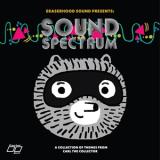
- 1: Carl The Collector Theme Song
- 2: Club Collector's Watch
- 3: World Record, Here
- 4: The Bark Banquet
- 5: Cruisin' On The Block
- 6: Forrest Fever
- 7: Carl Without Sheldon
- 8: Fela Robotics
- 9: Fuzzemon
- 10: Museum Blues
- 11: Meet Paolo
- 12: Dylan Rolls Up
- 13: On The Porch
- 14: Rainbow Platform Boots
- 15: Synesthesia
- 6: Spectrum
- 17: Cosmic Sheldon
- 18: Forrest Freakout
- 19: Fuzzytown Fall Fest
- 20: Synapse Junction
- 21: Show And Tell
- 22: The Super Moon
- 23: Trippy Breakfast
- 24: Soup Breathing
- 25: Sheldon Went Home
- 26: Atlantis
- 27: It's Dough Time
- 28: Library Friends
- 29: The First Garden
- 30: Fly Over The Horizon
- 31: Passing The Time
- 32: The Tree Fort
- 33: Tell The Truth
- 34: Talkin' With Mama
Genieße jetzt die Musik aus der Emmy-nominierten PBS-Kids-Serie ,Carl The Collector"! ,Sound Spectrum: A Collection of Themes From Carl The Collector" präsentiert die einzigartige Musik von Eraserhood Sound aus Philadelphia. Auf 34 Titeln, darunter der unvergessliche Titelsong der Serie, bekommst du einen Vorgeschmack auf Funk, Soul, Rare Groove, Jazz, Samba, R&B, New Wave und mehr - alles im typischen Synth-&-Soul-Stil von Eraserhood Sound. Die bahnbrechende Serie, die Carl, einen autistischen Waschbären, und seine Freunde begleitet, ist eine der ersten großen Serien, in denen Figuren mit Autismus vorkommen. Serienschöpfer Zachariah OHora wusste, dass er eine einzigartige Musikkomposition brauchte, um das Potenzial der Serie voll auszuschöpfen. Er wandte sich an Eraserhood Sound aufgrund ihres italienischen Library-Music-Albums ,Ribelle Di Mare" und bat um einen ähnlichen Synth-&-Soul-Ansatz. OHora sagt: ,Ich wollte keine typische Kindermusik. Ich wollte nuancierte, emotional reichhaltige Musik, die von und für Plattenliebhaber gemacht wurde." Die Musik, die vollständig von Vincent John und Maxwell Perla komponiert, produziert und eingespielt wurde, fängt die raffinierte Soulfulness von Vince Guaraldis klassischen Peanuts-Soundtracks ein und klingt dabei dennoch absolut frisch und modern. Jeder Song auf dem Album stammt direkt aus Episoden der unvergesslichen ersten Staffel von Carl The Collector. Von funkigen Fuzz-Freakouts bis hin zu düsteren, introspektiven Balladen - genieße einige von Vincents und Maxwells liebsten musikalischen Momenten aus der Serie.
expected to be published on 29.05.2026
- 1: Las Noches Que Dormimos En Sillas
- 2: Hiriku
- 3: Derivar
- 4: La Rata Modesta
- 5: Perquisor
- 64: Km Dentro De Un Tnel
- 7: Viene El Viento
- 8: Jardn
- 9: No Me
- 10: Tunuwame
Diles Que No Me Maten sind eine fünfköpfige Band aus Mexiko-Stadt, deren vom Krautrock beeinflusster Art-Rock sich zu etwas wirklich Einzigartigem entwickelt hat - drahtig, poetisch und voller Improvisationslust. Ihr viertes Album ,Escrito en Agua" (Geschrieben im Wasser), ist ihr bisher fokussiertestes und zugänglichstes Werk, aufgenommen in einem provisorischen Studio in Santa María La Ribera mit Produzent Sebastián Rojas. Aufgebaut um zurückhaltendes Schlagzeugspiel, bewusste Pausen und die spirituelle Schwere der Begräbnismusik aus Oaxaca, bewegt sich das Album mit einer gemächlichen Selbstsicherheit, die sich hart erkämpft anfühlt. Thematisch ist ,Escrito en Agua" ein Album über Präsenz, Umherirren und Widerstandskraft - Songs, die mit Mehrdeutigkeit leben, anstatt sie aufzulösen. Die Lead-Single ,Hiriku" gibt den Ton an und verbindet frenetischen Krautrock mit Zeilen aus José Vicente Anayas visionärem Gedicht ,Híkuri", während der herausragende Track ,No me" ein Mantra der Selbstsicherheit in etwas weitaus emotional Komplexeres verwandelt. Gewidmet sowohl dem indigenen Morgenstern Tunuwame als auch dem palästinensischen Dichter Mahmoud Darwish, endet das Album so, wie es beginnt: still und transzendent, mit achtsamer Aufmerksamkeit für die kleinsten Details dessen, was es bedeutet, lebendig zu sein.
expected to be published on 12.06.2026
- A1: Los Mirlos - Sonido Amazonico
- A2: Juaneco Y Su Combo - Linda Nena
- A3: Los Hijos Del Sol - Carinito
- A4: Los Destellos - Patricia
- A5: Los Diablos Rojos - Sacalo Sacalo
- A6: Los Riberenos - Silbando
- B1: Compay Quinto - Diablo
- B2: Los Destellos - Elsa
- B3: Ranil Y Su Conjunto Tropical - Mala Mujer
- B4: Manzanita Y Su Conjunto - Agua
- B5: Los Destellos - Para Elisa
- B6: Juaneco Y Su Combo - Ya Se Ha Muerto Mi Abuelo
- C1: Los Ilusionistas - Colegiala
- C2: Los Diablos Rojos - El Guapo
- C3: Manzanita Y Su Conjunto - El Hueleguiso
- C4: Juaneco Y Su Combo - Vacilando Con Ayahuasca
- C5: Los Hijos Del Sol - Linda Munequita
- D1: Grupo Celeste - Como Un Ave
- D2: Los Destellos - Constelacion
- D3: Los Wembler's De Iquitos - La Danza Del Petrolero
- D4: Chacalon Y La Nueva Crema - A Trabajar
- D5: Los Shapis - El Aguajal
- D6: Los Mirlos - La Danza De Los Mirlos
The Roots of Chicha, compiled by Barbès Records, was originally released in 2007 and became the first recording to popularize psychedelic cumbia around the world.
From the late 60's through the 80's, Peruvians invented a new popular musical hybrid inspired by music from the Americas. In 1968, Enrique Delgado released his first record on Odeon with his new group, Los Destellos, single-handedly creating Peruvian cumbia. He codified the genre early on by using the electric guitar as the primary melodic instrument, and mixing cumbia rhythms with folkloric huaynos, criollo voicings, Cuban guarachas and guajiras, rock, boogaloo, surf, psychedelia, oriental music, classical music, and bits and pieces from Brazil, France, Chile... All Peruvian cumbia bands for the next thirty years would end up drawing from the exact same sources (Grupo Celeste, Los Mirlos, Juaneco Y Su Combo, Manzanita Y Su Conjunto...).
This new wave of Peruvian cumbia came to be known as chicha. Chicha is originally the name of an alcoholic drink, made of fermented maize, which the Incas were especially fond of. In the past thirty years, however, the word has taken on a pejorative connotation. Peruvian cumbia started being called chicha in the late 70s, around the same time that the music came to be viewed as the expression of the slums – the pueblos jovenes. Little by little, the word became an adjective, and people now talk of chicha culture, chicha press, chicha architecture, even of a chicha president, and none if it – you guessed right – is meant as a compliment. Chicha suggests corruption, shady deals, and cholos – a derogatory term for a person of Andean heritage that, of late, is being reclaimed and worn as a badge of honor by the very cholos it was supposed to demean in the first place.
On Stock and ready to ship
PHYR003 - REACTIONS VA is the second vinyl release of Pyramidal Decode's imprint.
This Various Artist opens with a dancefloor-oriented track by the label boss himself called Fiammata.
On the A2 we find Overdose, a raw and warm 909 exercise by the Dutch legend Dimi Angelis.
The B side starts with 'Las Cenizas', a proper spanish groove by the Techno-expert Ribe.
Closing the release we have 'Therma', a great hypnotic track crafted by the Japanese pioneer Takaaki Itoh.
On Stock and ready to ship
The Rising Wave marks the debut collaboration between singer-songwriter Marlene Ribeiro (of psychedelic band GNOD) and electronic producer Shackleton under the name Light Space Modulator. The album will be released via AD 93.
On Stock and ready to ship
5-track vinyl-only release by Basse-cour label boss Decoq, delivering a raw, unapologetic slice of hard techno. Drawing light inspiration from the early '90s rave scene, this EP channels the gritty energy of industrial warehouses and the euphoria of underground dance floors. Thunderous kicks, gritty textures, hypnotic rhythms, haunting synths, and relentless grooves collide in a collection that pays homage to the roots of rave while keeping its sights firmly set on the future: this is a must-have for selectors who thrive on pure, unadulterated energy.
A visceral journey into the heart of techno’s rebellious roots and a pure dance floor ammunition for true heads.
Vinyl- Only Ep in 5 tracce firmato da Decoq, boss e anima dell’etichetta Basse-cour, che offre una cruda e inarrestabile dose di hard techno. Vagamente ispirato alla scena rave dei primi anni '90, questo EP incanala l’energia ruvida dei magazzini industriali e l’euforia delle piste da ballo underground. Casse martellanti, texture grezze, ritmi ipnotici, sintetizzatori inquietanti e groove implacabili si fondono in una raccolta che rende omaggio alle radici del rave, guardando al contempo verso il futuro.
Un must-have per i selector che vivono di energia pura e incontaminata: un viaggio viscerale nel cuore ribelle del techno e una vera arma da dance floor per gli intenditori.
On Stock and ready to ship
- A1: Loradeniz - Tegenlicht
- A2: Loradeniz - Tegenlicht
- A3: Loradeniz - Tegenlicht
- A4: Loradeniz - Tegenlicht
- A5: Loradeniz - Tegenlicht
- B1: Kems Kriol - Rotterdam In De Jaren 90
- B2: Kems Kriol - Rotterdam In De Jaren 90
- B3: Kems Kriol - Rotterdam In De Jaren 90
- B4: Kems Kriol - Rotterdam In De Jaren 90
- B5: Kems Kriol - Rotterdam In De Jaren 90
Nous'klaer Audio and Sound & Vision's RE:VIVE initiative have teamed up for the third and final LP in their film scoring trilogy. Capping off with a soundtrack made for a progressive, angular take on a color-soaked, geometric educational archival film. Combined with a soundtrack for a film that is a personal intensifier to the city of Rotterdam, which is the home of Nous'klaer Audio. The collaboration invites two musicians to compose for these archival films from the collection of Sound & Vision, the national media archive of the Netherlands. This final instalment features through and through Rotterdammer, Kems Kriol and the Amsterdam based Turkish composer, pianist and DJ Loradeniz. Kems Kriol accompanies the amateur documentary collage film "Rotterdam in de Jaren 90", a dark period of strife, economic and social crisis for the now booming metropolis, with the compassion and empathy of someone who experienced those years first-hand but with enough time removed to reflect with heart. Loradeniz angularly and precisely moves her way through the delicate film "Tegenlicht", a surprisingly colorful and fluid educational film about painting, a bold juxtaposition that propels the film into the 2020s. Extended info: Side A, Tegenlicht (English: back lit) is a 1969 education film by Ton Gramsbergen. The short meditative film, follows stained glass artist Leo Hofman through his entire workflow to create beautifully abstract stained glass window panes. Loradeniz?angularly and precisely moves her way through the delicate Tegenlicht creating a bold juxtaposition that propels the film into the 2020s. Employing processed vocal work, deep dry kicks, and jarring percussion-- reminiscent of scratching glass-- Loradeniz's haunting modernization suits the cinema and the club equally, a testament to the rising composer's fluid versatility and creative prowess as a musical pantomath. Side B, Rotterdam in de Jaren 90 directly contrasts the zoomed in artistry of Tegenlicht. The amateur documentary Super 8 footage captures Rotterdam in one of its most tumultuous times from police brutality, poverty, drugs, violence, racism and the city's ongoing architectural modernization. Kems Kriol, who lived in Rotterdam during this time period, brings a deeply emotional weight to the Ed Millecam amateur documentation, as an artist with the compassion and empathy of who experienced those years first-hand but with enough time removed to reflect with heart. Kems Kriol's influences from modern and avant garde composers, jazz, acid bass lines and field recording Kems Kriol made at different locations featured in the film equate to a musical collage wholly comparable to the city's diverse population. The prior installments in this series featured Nous'klaer Audio staples, Ranie Ribeiro, Mattheis, Thessa Torsing (upsamy) and Tammo Hesselink.
On Stock and ready to ship
Reissue of Elizio De Buzios's "Tamanquiro". Remastered and pressed on 45 RPM!
Sitting a good 90-minute drive away from Rio de Janeiro’s crowded beaches and packed tourist hot-spots, Campo Grande is not a neighbourhood that attracts travellers from around the World. Traditionally it is home to the city’s lower middle-class, whose aspirations of moving up the social ladder were played out in a suburb that has always been solidly working-class.
Campo Grande is home to Elizio De Buzios, a Brazilian musician who started playing music in the late 1970s and early 1980s. De Buzios began as a drummer, before learning to play guitar and starting to compose and sing his own music. When he turned 18, De Buzios joined a local band formed by some of his friends and other like-minded local musicians: Sol da Terra. The band mostly played samba in neighbourhood bars and small venues around Camp Grande, but De Buzios was interested in more than just samba. While he naturally admired great samba composers such as Cartola and Beth Carvalho, his musical pass went far beyond Brazil’s national music. He also loved MPB and bossa-nova and at home he listed to Joäo Bosco, Milton Nascimento, Luis Melodia, Tom Jobim, and many bossa-nova singers.
In 1980 De Buzios was noticed by a local representative of international major label Polygram, who gave him the opportunity to record two songs. He was excited, so started searching for inspiration for the songs he would eventually lay down. He found that inspiration close to home while passing a neighbourhood shop which made and sold clogs. After noticing a display of then fashionable Portuguese clogs outside the store, De Buzios popped inside to talk to the owner. It turned out that he was a tamanqueiro – as clog-makers are traditionally called in his native Portugal – and was as passionate about music as he was about the footwear he made. Thus inspired, De Buzios returned home to work more on the lyrics and music.
The next day, he headed into the studio to record the song, with Vale Ribeiro, who later went on to produce tracks for Marcos Valle, behind the desk. With Ribeiro’s assistance, De Buzios managed to record two songs in one day: ‘Tamanqueiro’ and ‘Sou Um Louco’, a ballad with English lyrics blended into the mostly Portuguese text. From the start, it was clear that ‘Tamanqueiro’ would be the single’s A-side. Incredibly catchy and funky, with some subtle disco elements, the song remained distinctively Brazilian thanks to the use of the cuíca. Listening back all these years on, De Buzios’ lyrics seem almost spontaneous, carry the track forward, and make it almost impossible not to sing along. Its infectiousness and funkiness made it an instant hit with the first few people to hear it.
When it was released, responses to the song were enthusiastic, even if it never became the Brazil-wide smash it should have been. It resonated well in the local clubs and on the radio, but unfortunately the marketing was handled by an inexperienced Polygram employee who failed to adequately promote the track. As a result, the record sank without trace and De Buzios’ dreams of stardom evaporated. Having just started a family, he realized he could not live off the uncertainty of being a musician. Instead, he got a job at city hall as a civil servant, a role he continued until his retirement a few years ago. ‘Tamanqueiro’ and ‘Sou Um Louco’ remain the only two songs he ever recorded.
In the early 2000s, with the rise of diggers’ culture, ‘Tamanqueiro’ slowly surfaced again. It became a sought after, hard to find seven-inch single, finding its way onto the airwaves once more and into the ears of a new generation of listeners. Some started appreciating the song so much that it was referred to as the “best-Jorge-Ben-song-Jorge-Ben-never-recorded”. And they are right: ‘Tamanqueiro’ does have that Jorge Ben-straight-forwardness. It’s a completely honest song that’s almost impossible not to fall in love with. Thanks to this remastered reissue on Rush Hour, De Buzios may now get the props his sole record so richly deserves.
Now for the good news: De Buzios is still singing in local bars and clubs in and around Campo Grande. He is surprised, but also incredibly proud, that the record he had almost forgotten about is appreciated so much by a group of music lovers he didn’t even know existed. But above all, he is happy that more than 40 years after the recording session, the record lives on – not only on this re-release, but also in his weekend sets in the bars of Campo Grande.

On Stock and ready to ship
Comprised of double bassist Julian Tjon Sack Kie, drummer/percussionist Mill Voyance, and harpist Ranie Ribeiro, this marks their debut 7" release as Sons of Jumira. Recorded live at NOIIS in Zurich, Switzerland. Taking inspiration from the West African Mandinka concept of Jaliya, the practice and art form of the Jali (griot), as well as the Mandinka tuning Tomora. These elements converge in a sound rooted in storytelling and musical expression.

expected to be published on 18.05.2026
- 1: Joao Gilberto - Chega De Saudade
- 2: Stan Getz - Bim Bom
- 3: Carlos Lyra - Ciúme
- 4: Baden Powell - Improviso Em Bossa Nova
- 5: Silvia Telles - Se É Tarde Me Perdoa
- 6: Quincy Jones - Soul Bossa Nova
- 7: Antônio Carlos Jobim - A Felicidade
- 8: Charlie Byrd - Meditacao
- 9: Ella Fitzgerald - Desafinado
- 10: Joao Donato E Seu Trio - Muito A Vontade
- 11: Maysa - O Barquinho
- 12: Pery Ribeiro - Garota De Ipanema
- 13: Orlandivo - Onde Anda O Meu Amor
- 14: Grant Green - Brazil
- 15: Laura Villa - Corcovado
- 16: Luiz Bonfa - Luzes Do Rio
Mit der neuen Ausgabe der Vintage Sounds Vinyl Collection kehrt ein echter musikalischer Schatz zurück - diesmal ganz im Zeichen der Bossa Nova. Diese liebevoll kuratierte Zusammenstellung präsentiert 16 zeitlose Klassiker, die den unverwechselbaren Klang Brasiliens geprägt haben und bis heute weltweit für entspannten Groove und federleichte Eleganz stehen. Auf dem Album versammeln sich die wichtigsten Künstler einer Ära, die Musikgeschichte geschrieben hat: Joao Gilberto, Baden Powell, Silvia Telles, Quincy Jones und natürlich Antônio Carlos Jobim, dessen Kompositionen bis heute als Herzstück des Genres gelten. Freuen Sie sich auf unvergängliche Perlen wie "Chega De Saudade", "Garota De Ipanema", "Desafinado", "Corcovado", "A Felicidade", "Soul Bossa Nova", "O Barquinho" oder "Meditaçao" - alle sorgfältig ausgewählt und auf hochwertigem Vinyl neu erlebbar gemacht.
expected to be published on 27.03.2026