
Сделать предзаказ29.02.2024
он должен быть опубликован на 29.02.2024
35,25 €
он должен быть опубликован на 29.02.2024
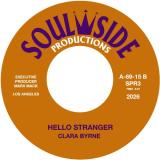
Clara is the lead singer of Dakka Skanks, a Ska Punk band based in Brighton UK. Here she delivers two incredible new versions of Reggae classics from Brown Sugar & Rita Marley.
"I really like Clara’s voice, & this is the first of a series of releases from her on Soulside Productions. She is like my little sister; a strong woman who effortlessly captures the sound of the classic female vocalists from 60s & 70s Reggae" Marv Mack, Soulside Productions
он должен быть опубликован на 09.10.2026

2025 Repress
When people think of Tough Gong they usually think of Bob Marley and rightly so, as he was nicknamed and often called Tough Gong and from this his early releases which came out on the Tough Gong label. But Tough Gong was also the name of a recording complex named after Bob Marley hat included a top level recording studio, pressing plant and distribution centre that would allow reggae music to carry on many years after his sad and too early demise.
Bob Marley had take over the former residence of Island Records boss Chris Blackwell the Island House, 56 Hope Road around 1974. Just before the 'Smile Jamaica' concert on 03rd December the same year the house was ambushed by gunmen. Bob's manager Don Taylor was hit 5 times AND Bob was shot in the arm and his wife Rita Marley was hit in the head by a stray bullet. How no one was fatally injured is staggering. Immediately after the concert Bob Marley started his self imposed exile from Jamaica, settling in London, England. This would lead to the aptly named exodus album being recorded there in the summer of 1977. It would not be until the 'One Love' peace concert in Kingston's national arena on the 22nd April 1978 that would see Bob's return to the island. Marley felt is was important to show his commitment to the people of Jamaica and on his return to 56 Hope Road he began construction of his own recording studio with the help of music mogul Tommy Cowen. Unfortunately Bob Marley's short life would end on the 11th May 1981 from cancer which originated form a football injury. His passing would lead to 56 Hope Road being turned into a museum to the legend of reggae music.
A new location would have to be found to carry on Bob's work which was 220 Marcus Garvey Drive, Kingston 11. The buyer would be Rita Marley and the Tough Gong International Organisation.
Engineers working at the new facility included Errol Browne who had worked at Treasure Isle studios and Hopeton Overton Browne known as 'Scientist', named by the great producer Bunny 'Striker' Lee who worked with him previously at King Tubbie's and Channel One's studios described his ground breaking style as being like that of a scientist.
We focus for this release on the work carried out by the great Scientist on the songs of the Black Solidarity Label run by Ossie Thomas (aka Joe The Boss) recorded at Tough Gong studios. One of the foremost recording, pressing and distribution facilities on the Jamaican island set up from the work of Bob Marley to carry forward reggae music. Hope you enjoy this set......
Есть у нас в наличии и готов к отправке

Studio One Sound is the classic Studio One collection from Soul Jazz Records. Described as ‘The University of Reggae’ by Chris Blackwell, Studio One, and founder Clement ‘Sir Coxsone’ Dodd are by far the most-important names in the history of reggae music. Originally released in 2012 this album has been out of print for many years, making it one of the most-collectible of Soul Jazz Records’ Studio One Series. This is the first ever colour vinyl edition of this classic album.
The album features some of the most in-demand and collectible Studio One tracks from over its fifty-year history and includes incredible legendary reggae artists such as The Heptones, Ken Boothe, The Skatalites, Johnny Osbourne and Wailing Souls. All these artists (and hundreds more) launched their careers at Studio One under the guidance of Clement 'Sir Coxsone' Dodd. The Studio One Sound collection features everything from classic ska and rocksteady to the deepest roots, heaviest dub and dancehall roots. Sleevenotes are by Rob Chapman, author of the celebrated books about Studio One Records, 'Never Grow Old' and 'Downbeat the Ruler'. The exact reproduction of the original artwork features the classic image of Dennis Brown on the cover. This album is newly fully remastered for vinyl by Jason Goz at Transition. Exclusive one-off pressing on heavyweight double transparent green vinyl.
он должен быть опубликован на 18.04.2026

Celebrated session guitarist, Willie Lindo, steps from behind the scenes and into the spotlight to deliver some top class original compositions and sublime cover versions.
A sumptuous piece of gourmet music. Timeless dub, executed to perfection. The B-Side sees Lindo cover Al Green and Bobby Womack, converting their slow jams into stoney instrumental masterpieces, a sort of precursor to the hip-hop way of sampling and reinterpreting our collective heritage.
Far & Distant was recorded at 220 Marcus Garvey Drive, eight years prior to Rita Marley relocating Tuff Gong International to that address.
A relic from an era where being “in the studio” actually meant something.
он должен быть опубликован на 18.07.2025

Released in 1982 by Rita Marley Music, the label owned by Bob Marley's wife, Rita Marley, CASUAL-T's "Prescriptions For Love" is a record shrouded in mystery. Its mellow feeling, charming visuals, and extreme rarity due to limited pressing make it a coveted item among diggers, representing modern soul and rare groove.
The album is packed with the essence of early '80s US modern soul and disco, starting with the invigorating opening number "Don't Play With Sparks" (M1), reminiscent of EW&F with its horn and chorus work. Other highlights include the disco-infused groove of "Hands Off" (M2), the breezy "All Out Of Breath" (M3), and the urban soul track "Thank You For Your Love" (M7) with its quintessential '80s synthesizer work. The only reggae-style track from Rita Marley Music, "I Want You Here With Me" (M8), features sophisticated chorus work, leading into the sweet soul tracks "Let's Hold On" (M9) and "You Never Walk Alone" (M10) that conclude the album.
Закажите сейчас, и мы закажем товар для вас у нашего поставщика.

Diving deeper into the story of Japanese reggae pop, Tokyo Riddim Vol. 2 explores an electronic, new wave and often experimental sound unlike anything Japan or Jamaica had ever heard before.
The first time Ryuichi Sakamoto left Japan, he did not go to the United States or Europe - he went to Jamaica. It was 1978, YMO were about to release their debut album, but Sakamoto was in Kingston, invited to play synths for Japanese idol singer Teresa Noda at Dynamic Sound Studios in a band alongside Neville Hinds and none other than Rita Marley. It’s not a story many know, but one which would spark Sakamoto’s fascination with dub and mark a new chapter in the ongoing Japanese love affair with reggae.
The Teresa Noda tracks they cut - ‘Tropical Love’ and ‘Yellow Moon’ - bookend this second volume of Time Capsule’s Tokyo Riddim compilation, which tells the wider story of how a fascination with Jamrock swept Japan, adding a dash of lime to that sweet city pop sound, embracing a globalised musical palette and creating a whole new genre in the process.
For some, like Sakamoto, a diversion into reggae was part of broader fascination with new sounds and styles, tipped into the global disco of homage and appropriation that made Japanese music of the late ‘70s and early ‘80s some of the most creative and undefinable in the world.
You had iconic shape-shifter Yosui Inoue, who toyed with reggae, afro-beat and electro-Balearic, (and whose For Life Records released several tracks on this comp), and Kay Ishiguro, who enlisted J-reggae originator Pecker on the ambitious Stevie Wonder-esque ‘Red Drip’.
Then there were the Compass Point devotees - producers and musicians alike who were enthralled by the sound of the Bahamas studio and drew on the detached cool of Grace Jones - as heard in the music of Juicy Fruits, and the disco noir of Casablanca-signed femme fatale Yuki Nakayamate. Sometimes, as was the case with Risa Minami, the J-reggae influence said more about Japan than it did about Jamaica.
But where Tokyo Riddim Vol. 1 focused on the city pop sound, this compilation goes further, digging out the more experimental collaborations and hybrids exemplified by Tomoko Aran, who in working with Yusuaki Shimizu and Mariah emphasised just how far reggae had travelled to be recast into something entirely new on the other side of the world.
Perhaps more than anything, in connecting the dots between Tokyo and Kingston, between Jamaica and Japan, the Japanese reggae was building a musical language that existed outside of the paradigms of US and European cultural hegemony - an encounter shaped by commerce, capital and creativity that is now being recognised more broadly for the first time.
Закажите сейчас, и мы закажем товар для вас у нашего поставщика.

This is the very first reissue of the much in demand double sided killer single released in 1970 on the Upsetter label. Both tracks were produced by Lee Perry.
The A side is a beautiful yet wicked cover of LET IT BE by the Beatles, produced by Lee Perry and performed by the Soulettes.
The B side is BIG DOG BLOXIE, an even whackier version of the A side by Lee Perry.
ABOUT THE SOULETTES:
The Soulettes initially comprised Alpharita Anderson, born in Cuba, her male cousin Constantine Walker and her school friend Marlene Gifford and started recording as backing vocalists at Studio One from 1964 including the first Wailing Wailers’ hit “Simmer Down”. They also backed Lee Perry on a series of dirty songs such as ‘Rub & Squeeze’ and ‘Doctor Dick’. Under their own name The Soulettes were moderately successful have a string of minor hits such as ‘Opportunity Knocks’ and the lovely ‘Friends And Lovers’. Alpharita married Marley in in 1966 and the Soulettes disbanded. In 1969, Rita Marley re-formed the Soulettes with Nora Dean (later replaced by Hortense Lewis) and Cecile Campbell, Cornel’s sister.
The new line-up with Nora Dean and Cecile Cornell started working Lee Scratch Perry for a couple of songs including the outstanding cover of the Beatles’ ‘Let It Be’ which became their main hit in 1970. Following the group’s demise around 1973, Rita joined Marcia Griffiths and Judy Mowatt to form the I-Threes whom became the de facto female backing trio for Bob Marley…
он должен быть опубликован на 10.10.2024

Remastered edition on 180 grams double vinyl of 'Euskal Herria Jamaika Clash', released by Talka Records & Films in 2006. To the 12 tracks that appeared in the original CD edition we have added 5 remixes made by producers as renowned as Xabi Pery, Rob Smith, Neil Perch, Peter Rose or Nebukhednezzar and Daniel Díaz. DESCRIPTION "On the wall of the toilet a freshly made graffiti, "Get out of the ghetto, organize the hate", reminded me of the rage we owe to this society. However, I was also at ease, savoring our Original Soundtrack: "ROOTS, ROCK, RAP, REGGAE". This phrase belongs to the song "B.S.O." from the album "Gure Jarrera" by Negu Gorriak. For music fans, the real ones, the ones who spend their fingers searching for rare vinyls in second-hand shops, there are records that have a special meaning. That record has special meaning for me for several reasons, but one of them is singular: it has helped me to discover a multitude of music. It turns out that the credits of that album were full of fundamental names in rock, hardcore, funk, Hip Hop, soul, ska, Latin music... a good guide for the young man of musical discoveries that I was fifteen years ago. But there was also that song, "B.S.O.", with the word "REGGAE" at the end of the chorus. A genre that I had never paid much attention to and that since then, slowly, I have been tasting... from classic figures to new trends, from Jamaican reference records to admirable peninsular formations (Basque Dub Foundation, Lone Ark or The Starlites). A few years ago I had the opportunity to interview Fermín Muguruza and in one of his answers he said: "It's clear that the basis of reggae is going to remain firm, because it's been a constant since Kortatu's first album. Reggae will be there in any of its expressions or derivations, of which there are already many". And it's true. Going through Fermín Muguruza's discography, and his groups, forwards or backwards, we come across reggae in different doses, proportions and orientations, but it has been present in all his albums. And in his "solo" stage, in a more prominent way. Now he releases "Euskal Herria Jamaica Clash", a coherent link in his chain of albums, where he accentuates that proportion of reggae, looking more than ever at the classic conception of the genre, but with some mestizo nuances present (rock strength, some Hip Hop drums or the sound of the trikitixa). The album has been recorded in Jamaica and has featured some renowned figures from those lands: U-Roy, Luciano, Lisa Dainjah, Masta Blasta, Yacine, Toots and the I-Threes (the usual female vocal trio in Bob Marley's albums, to which Rita Marley belongs). The new album offers twelve tracks, where, apart from reggae, one can also feel the optimism of the new lights that illuminate the future of the Basque Country ("Euskal Herria Jamaika Clash")... an optimism that is intertwined with descriptions of local customs ("Azoka Eguna"), rebellious spirit ("Mongolian Barbecue", "Basque Xamuraia", "La Fille Du Quartier Populaire"), songs of hope ("Yalah Yalah Ramallah"), a snapshot of a symbolic triumph ("Beamon Jauzia"), criticisms of alienation ("Askatasun Parabolika"), to the dictatorship of the empire ("Plastic Turkey"), a poetic air of rest on music and feelings ("Baxua eta Lurra"), a final instrumental ("Le Mouv Dub") and a luminous and hopeful revision in reggae key of an old song by Kortatu ("La línea del frente"). "Euskal Herria Jamaika Clash. The soundtrack of the present: DREAMS, HOPE, ROOTS, REGGAE." FM-Hop (2006)
он должен быть опубликован на 12.07.2024

Studio One was founded by Clement "Coxsone" Dodd1 in 1954, and the first recordings were cut in 1963 on Brentford Road in Kingston.1[2] Amongst its earliest records were "Easy Snappin" by Theophilus Beckford, backed by Clue J & His Blues Blasters, and "This Man is Back" by trombonist Don Drummond. Dodd had previously issued music on a series of other labels, including World Disc, and had run Sir Coxsone the Downbeat, one of the largest and most reputable sound systems in the Kingston ghettos.
In the early 1960s, the house band providing backing for the vocalists were the Skatalites[3] (1964–65), whose members (including Roland Alphonso, Don Drummond, Tommy McCook, Jackie Mittoo, Lester Sterling and Lloyd Brevett) were recruited from the Kingston jazz scene by Dodd. The Skatalites split up in 1965 after Drummond was jailed for murder, and Dodd formed new house band the Soul Brothers (1965–66), later named the Soul Vendors (1967) and Sound Dimension (1967-). From 1965 to 1968 they played 9 a.m. to 5 p.m., 5 days a week, 12 rhythms a day (about 60 rhythms a week) with Jackie Mittoo as music director, Brian Atkinson (1965–1968) on bass, Hux Brown on guitar, Harry Haughton (guitar), Joe Isaacs on drums (1966–1968), Denzel Laing on percussion, and on horns (some initially and some throughout): Roland Alphonso, Dennis 'Ska' Campbell, Bobby Ellis, Lester Sterling, among others on horns during the era of Rock Steady. Headley Bennett, Ernest Ranglin, Vin Gordon and Leroy Sibbles were included among a fluid line-up, to record tracks directed by Jackie Mittoo at Studio One from 1966-1968.
During the night hours at Studio One from 1965-1968, singers like Bob Marley, Burning Spear, The Heptones, The Ethiopians, Ken Boothe, Rita Marley, Marcia Griffiths, Judy Mowatt, Alton Ellis, Delroy Wilson, Bunny Wailer[4] and Johnny Nash, among others, would put on headphones to sing lyrics to original tracks recorded by the Soul Brothers earlier each day. These seminal recordings included "Real Rock" (by Sound Dimension), "Heavy Rock", "Jamaica Underground", "Wakie Wakie", "Lemon Tree", "Hot Shot", "I'm Still In Love With You", "Dancing Mood", and "Creation Rebel".
Jackie Mittoo, Joe Isaacs, and Brian Atkinson left Studio One in 1968, recorded drums and bass for Desmond Dekker's and Toots' biggest hits at other Kingston studios, then moved to Canada. Hux Brown stayed in Jamaica to record on the soundtrack The Harder They Come, The Harder They Fall, and toured in Nigeria with Toots and the Maytals and Fela Kuti. The Soul Brothers (a.k.a. Sound Dimension) formed the basis of reggae music in the late 1960s, being versioned and re-versioned time after time over decades by musicians like Shaggy, Sean Paul, Snoop Lion, The Clash, String Cheese Incident, UB40, Sublime, and countless other Billboard originals and remakes trying to emulate their original Rock Steady sound at Coxsone's Studio One.
The label and studio were closed when Dodd relocated to New York City in the 1980s.
он должен быть опубликован на 26.01.2024

Studio One was founded by Clement "Coxsone" Dodd1 in 1954, and the first recordings were cut in 1963 on Brentford Road in Kingston.1[2] Amongst its earliest records were "Easy Snappin" by Theophilus Beckford, backed by Clue J & His Blues Blasters, and "This Man is Back" by trombonist Don Drummond. Dodd had previously issued music on a series of other labels, including World Disc, and had run Sir Coxsone the Downbeat, one of the largest and most reputable sound systems in the Kingston ghettos.
In the early 1960s, the house band providing backing for the vocalists were the Skatalites[3] (1964–65), whose members (including Roland Alphonso, Don Drummond, Tommy McCook, Jackie Mittoo, Lester Sterling and Lloyd Brevett) were recruited from the Kingston jazz scene by Dodd. The Skatalites split up in 1965 after Drummond was jailed for murder, and Dodd formed new house band the Soul Brothers (1965–66), later named the Soul Vendors (1967) and Sound Dimension (1967-). From 1965 to 1968 they played 9 a.m. to 5 p.m., 5 days a week, 12 rhythms a day (about 60 rhythms a week) with Jackie Mittoo as music director, Brian Atkinson (1965–1968) on bass, Hux Brown on guitar, Harry Haughton (guitar), Joe Isaacs on drums (1966–1968), Denzel Laing on percussion, and on horns (some initially and some throughout): Roland Alphonso, Dennis 'Ska' Campbell, Bobby Ellis, Lester Sterling, among others on horns during the era of Rock Steady. Headley Bennett, Ernest Ranglin, Vin Gordon and Leroy Sibbles were included among a fluid line-up, to record tracks directed by Jackie Mittoo at Studio One from 1966-1968.
During the night hours at Studio One from 1965-1968, singers like Bob Marley, Burning Spear, The Heptones, The Ethiopians, Ken Boothe, Rita Marley, Marcia Griffiths, Judy Mowatt, Alton Ellis, Delroy Wilson, Bunny Wailer[4] and Johnny Nash, among others, would put on headphones to sing lyrics to original tracks recorded by the Soul Brothers earlier each day. These seminal recordings included "Real Rock" (by Sound Dimension), "Heavy Rock", "Jamaica Underground", "Wakie Wakie", "Lemon Tree", "Hot Shot", "I'm Still In Love With You", "Dancing Mood", and "Creation Rebel".
Jackie Mittoo, Joe Isaacs, and Brian Atkinson left Studio One in 1968, recorded drums and bass for Desmond Dekker's and Toots' biggest hits at other Kingston studios, then moved to Canada. Hux Brown stayed in Jamaica to record on the soundtrack The Harder They Come, The Harder They Fall, and toured in Nigeria with Toots and the Maytals and Fela Kuti. The Soul Brothers (a.k.a. Sound Dimension) formed the basis of reggae music in the late 1960s, being versioned and re-versioned time after time over decades by musicians like Shaggy, Sean Paul, Snoop Lion, The Clash, String Cheese Incident, UB40, Sublime, and countless other Billboard originals and remakes trying to emulate their original Rock Steady sound at Coxsone's Studio One.
The label and studio were closed when Dodd relocated to New York City in the 1980s.
он должен быть опубликован на 26.01.2024

Death Is Not The End sub-label 333 turns up the gold again with this repro of the much in-demand Flames cut of Nairobi Sisters' Promised Land. Sampled by Q-Tip for "Whateva Will Be" (appearing on ATCQ's final long-player) and on a range of earlier 90s boom-bap era productions, it is not at all hard to figure out why it's a coveted record. That break is as low-slung and funky as it gets, and best showcased on the superbly stripped-back dub on the flip.
The Nairobi Sisters were singers Terrie Nairobi and Judy Mowatt (later of the I-Threes, alongside Rita Marley & Marcia Griffiths). Promised Land was originally recorded together with The Gaytones for Sonia Pottinger's Gay Feet label, with this later version cut for Winston Jones' Brooklyn-based Flames Records. It is issued here under license from producer and songwriter Jones - the original singer and composer of Stop That Train (later made world-famous by Keith & Tex's version) with his Spanishtonians in the early 1960s - who later moved from JA to NYC where he established and ran the Flames label, a core imprint in Brooklyn's reggae scene from the mid-1970s until the early 1990s. 333 has licensed a range of Flames-era productions from the now Texas-based Jones, so keep and eye out for more as it comes... but for now, jump on this before it's gone!
Закажите сейчас, и мы закажем товар для вас у нашего поставщика.

Heels & Souls Recordings step back to 1988 for their sixth reissue, relicensing and remastering Flair's anthemic soul number 'Chasin' The Rain.' For the uninitiated, strap yourself in for six blissful minutes of heavy bass licks, soaring vocals, and infectious synth lines.
Consisting of Janet Rose (aka UK Soul queen JB Rose), Joe Matz, Peter Bielig, and Peter Shindler, Flair was a predominantly German affair, with Rose being the only UK band member and Bieling living in London during the late '80s. This is a curious detail considering 'Chasin' The Rain' is often lauded today as a UK Soul classic - partially due to its release on the prolific UK label Champion. However, it's squeaky-clean production values, and the fact it was mixed and mastered at the famous Jankowski studio in Stuttgart by three Germans, reveals a somewhat different story.
The track has that UK street soul heavy low-end, but with a synth-pop flavour sprinkled in the mix - swinging synth lines and gated snares aplenty. Yet from chatting to Peter Bielig, who's been instrumental in getting this record reissued, the sounds sweeping across the Atlantic from the likes of Jam and Lewis, who blended R&B, funk, soul and pop, were clearly a big influence too.
Those were heady days for four young twenty-something musicians, with Peter recalling cherished memories these tracks bring back, telling of his and JB's PA sessions at London's Gulliver's nightclub. However, while 'Chasin' The Rain' had all the hallmarks of a chart-breaking hit, Champion prioritised other projects and the record never broke. Sadly the group disbanded after only two releases, and this musical gem was consigned to the crates of those in the know. Soon after, Peter Bielig went to Jamaica to work at Tough Gong Studios, working on albums for Rita Marley Music. He now lives in Brazil, producing local artists in his studio in Salvador.
Unfortunately, the master tapes were nowhere to be found, so we had the maestro, Sean P, rip and restore a mint copy of the record, with award-winning mastering engineer Cicely Balston working her studio magic for that added punch.
Закажите сейчас, и мы закажем товар для вас у нашего поставщика.

Repress!
Ska, rocksteady, funky reggae, roots, dub mixes, disco mixes, they're all here from the queens of the Jamaican music scene - Studio One Women features a wide mix of classics and obscurities from the finest female voices in reggae.
Until now most of these tracks have only ever been available as extremely hard to find Jamaican 7" and 12" singles and even if you were lucky enough to find them they'd cost you a small fortune
Marcia Griffiths and Rita Marley (here with her first group The Soulettes) are two of Jamaica's most famous female singers hugely popular today. Both these artists became internationally famous as The I – Threes (along with Judy Mowatt), Bob Marley's backing singers alongside The Wailers. Also featured are Hortense Ellis, sister of Alton who cut many smash hits on the island, and Jennifer Lara, a lady who had a long career with Studio One, singing on countless sides.
Studio One is the greatest label in the history of reggae and is the foundation of all reggae music. It's where virtually every world renowned Jamaican superstar started out, Bob Marley and The Wailers included. Under the guidance of the legendary Clement Coxsone Dodd the musicians at Studio One recorded hundreds of instrumental rhythms which still provide the backbone for many of the records made in Jamaica today.
Закажите сейчас, и мы закажем товар для вас у нашего поставщика.

Studio One was founded by Clement "Coxsone" Dodd1 in 1954, and the first recordings were cut in 1963 on Brentford Road in Kingston.12 Amongst its earliest records were "Easy Snappin" by Theophilus Beckford, backed by Clue J & His Blues Blasters, and "This Man is Back" by trombonist Don Drummond. Dodd had previously issued music on a series of other labels, including World Disc, and had run Sir Coxsone the Downbeat, one of the largest and most reputable sound systems in the Kingston ghettos.
In the early 1960s, the house band providing backing for the vocalists were the Skatalites[3] (1964–65), whose members (including Roland Alphonso, Don Drummond, Tommy McCook, Jackie Mittoo, Lester Sterling and Lloyd Brevett) were recruited from the Kingston jazz scene by Dodd. The Skatalites split up in 1965 after Drummond was jailed for murder, and Dodd formed new house band the Soul Brothers (1965–66), later named the Soul Vendors (1967) and Sound Dimension (1967-). From 1965 to 1968 they played 9 a.m. to 5 p.m., 5 days a week, 12 rhythms a day (about 60 rhythms a week) with Jackie Mittoo as music director, Brian Atkinson (1965–1968) on bass, Hux Brown on guitar, Harry Haughton (guitar), Joe Isaacs on drums (1966–1968), Denzel Laing on percussion, and on horns (some initially and some throughout): Roland Alphonso, Dennis 'Ska' Campbell, Bobby Ellis, Lester Sterling, among others on horns during the era of Rock Steady. Headley Bennett, Ernest Ranglin, Vin Gordon and Leroy Sibbles were included among a fluid line-up, to record tracks directed by Jackie Mittoo at Studio One from 1966-1968.
During the night hours at Studio One from 1965-1968, singers like Bob Marley, Burning Spear, The Heptones, The Ethiopians, Ken Boothe, Rita Marley, Marcia Griffiths, Judy Mowatt, Alton Ellis, Delroy Wilson, Bunny Wailer[4] and Johnny Nash, among others, would put on headphones to sing lyrics to original tracks recorded by the Soul Brothers earlier each day. These seminal recordings included "Real Rock" (by Sound Dimension), "Heavy Rock", "Jamaica Underground", "Wakie Wakie", "Lemon Tree", "Hot Shot", "I'm Still In Love With You", "Dancing Mood", and "Creation Rebel".
Jackie Mittoo, Joe Isaacs, and Brian Atkinson left Studio One in 1968, recorded drums and bass for Desmond Dekker's and Toots' biggest hits at other Kingston studios, then moved to Canada. Hux Brown stayed in Jamaica to record on the soundtrack The Harder They Come, The Harder They Fall, and toured in Nigeria with Toots and the Maytals and Fela Kuti. The Soul Brothers (a.k.a. Sound Dimension) formed the basis of reggae music in the late 1960s, being versioned and re-versioned time after time over decades by musicians like Shaggy, Sean Paul, Snoop Lion, The Clash, String Cheese Incident, UB40, Sublime, and countless other Billboard originals and remakes trying to emulate their original Rock Steady sound at Coxsone's Studio One.
The label and studio were closed when Dodd relocated to New York City in the 1980s.
он должен быть опубликован на 17.02.2023

Studio One was founded by Clement "Coxsone" Dodd1 in 1954, and the first recordings were cut in 1963 on Brentford Road in Kingston.[1][2] Amongst its earliest records were "Easy Snappin" by Theophilus Beckford, backed by Clue J & His Blues Blasters, and "This Man is Back" by trombonist Don Drummond. Dodd had previously issued music on a series of other labels, including World Disc, and had run Sir Coxsone the Downbeat, one
of the largest and most reputable sound systems in the Kingston ghettos.
In the early 1960s, the house band providing backing for the vocalists were the Skatalites[3] (1964–65), whose members (including Roland Alphonso, Don Drummond, Tommy McCook, Jackie Mittoo, Lester Sterling and Lloyd Brevett) were recruited from the Kingston jazz scene by Dodd. The Skatalites split up in 1965 after Drummond was jailed for murder, and Dodd formed new house band the Soul Brothers (1965–66), later named the Soul Vendors (1967) and Sound Dimension (1967-). From 1965 to 1968 they played 9 a.m. to 5 p.m., 5 days a week, 12 rhythms a day (about 60 rhythms a week) with Jackie Mittoo as music director, Brian Atkinson (1965–1968) on bass, Hux Brown on guitar, Harry Haughton (guitar), Joe Isaacs on drums (1966–1968), Denzel Laing on percussion, and on horns (some initially and some throughout): Roland Alphonso, Dennis 'Ska' Campbell, Bobby Ellis, Lester Sterling, among others on horns during the era of Rock Steady. Headley Bennett, Ernest Ranglin, Vin Gordon and Leroy Sibbles were included among a fluid line-up, to record tracks directed by Jackie Mittoo at Studio One from 1966-1968.
During the night hours at Studio One from 1965-1968, singers like Bob Marley, Burning Spear, The Heptones, The Ethiopians, Ken Boothe, Rita Marley, Marcia Griffiths, Judy Mowatt, Alton Ellis, Delroy Wilson, Bunny Wailer[4] and Johnny Nash, among others, would put on headphones to sing lyrics to original tracks recorded by the Soul Brothers earlier each day. These seminal recordings included "Real Rock" (by Sound Dimension), "Heavy Rock", "Jamaica Underground", "Wakie Wakie", "Lemon Tree", "Hot Shot", "I'm Still In Love With You", "Dancing Mood", and "Creation Rebel".
Jackie Mittoo, Joe Isaacs, and Brian Atkinson left Studio One in 1968, recorded drums and bass for Desmond Dekker's and Toots' biggest hits at other Kingston studios, then moved to Canada. Hux Brown stayed in Jamaica to record on the soundtrack The Harder They Come, The Harder They Fall, and toured in Nigeria with Toots and the Maytals and Fela Kuti. The Soul Brothers (a.k.a. Sound Dimension) formed the basis of reggae music in the late 1960s, being versioned and re-versioned time after time over decades by musicians like Shaggy, Sean Paul, Snoop Lion, The Clash, String Cheese Incident, UB40, Sublime, and countless other Billboard originals and remakes trying to emulate their original Rock Steady sound at Coxsone's Studio One.
он должен быть опубликован на 10.02.2023

Soul Jazz Records follows up one its most popular Studio One releases with a brand new selection of rare and classic releases by women in reggae. Featuring legendary artists such as Marcia Griffiths, Rita Marley and Hortense Ellis (with a guest appearance by her brother Alton), alongside a host of rarities from lesser known names such as Nina Soul, Nana Mclean, Denise Darlington, Myrna Hague and also Doreen Schaeffer, a vocalist who was a founding member of The Skatalites.
There are notable covers (from Tyrone Davis’ soul classic Can I Change My Mind to the Band’s 60s psychedelic classic Turn Turn Turn in a rub-a-dub style!). Doreen Schaeffer reversions Alton Ellis’s seminal I’m Still in Love with You, Nina Soul reversions the slack rocksteady anthem Barb Wire. A number of these tracks are almost impossible to find and many have never been issued ever since their initial release.
The music on the album is of course 100% killer and features backing from all of the seminal groups at 13 Brentford Road including The Skatalites, Sound Dimension, Soul Brothers and the Brentford All Stars, and ranges from ska, rocksteady, roots, lovers and more from the 60s, 70s and 80s. All produced by Clement ‘Sir Coxsone’ Dodd at Studio One Records, the number one sound in reggae music.
The album is released on Soul Jazz Records as a double-vinyl with gatefold sleeve, download code, the CD comes in slipcase and both come with extensive sleevenotes.
Закажите сейчас, и мы закажем товар для вас у нашего поставщика.

Lee Perry's time at WIRL Records, later to be renamed Dynamic Sounds Studios, was a very productive time
in his career. A run of great singles and the shaping of a new sound, the beginning of what we know today as
Reggae .
Lee Perry (b. Rainford Hugh Perry, 28 March 1936, Hanover,Jamaica) began his entry into the music business at
the age of 16.Moving up to Kingston Town and working around various Sound Systems, before finding
employment at Coxonne Dodd's Studio One set up, in the late 50's early 1960's. Perry started out as a record
scout, organising sessions and supervising auditions at Dodd's record shop on Orange Street. Helping to make
hits for Delroy Wilson ( 'Joe Liges','Spit In The Sky') and the Maytals, which would lead to his own vocal records
released through Studio One.The musical backing for which, came from legendary Studio One house band The
Skatalites. Another important relationship for Perry, his first recordings with Bob Marley came in the form of
the Wailers, also providing backing, alongside the Soulettes who featured Rita Marley. Cutting such tunes as
'Chicken Scratch' around 1965/1966. This tune was also to provide him with one of his future nicknames
'Scratch'. A dispute over credits and money saw Perry leave Studio One and work with various producers
including Clancy Eccles and J. J. Johnson, before arriving at the door of producer Joe Gibbs in 1967. Here he
would write songs and produce hits for artists such as, Errol Dunkley and the Pioneers. A tune cut during his
time with Gibbs, voiced a snipe at fellow employee Dodd, a trademark that would become an outlet for his
frustrations in the business.This particular tune 'The Upsetter' would also provide another moniker and a name
for his label 'Upsetter'. Again lack of musical credit and financial reward saw Perry move on this time to WIRL
(West Indies Records Limited) Records, working alongside manager Clifford Rae, who would provide studio
time and pay for pressings in return for helping to promote and distribute WIRL product, which Perry would
carry out on his trusted Honda 50 motorcycle around Kingston town.
This period at WIRL saw some inspired work from Perry. 'Run For Cover' was another musical blow to a
previous employer, Coxonne Dodd and featured the Sensations on backing vocals and Lynn Taitt's guitar
picking skills. 'People Funny Boy' was a massive hit for Perry going on to sell over 60,000 copies. Joe Gibbs
would be at the end of this musical attack. Perry had felt Joe Gibbs had turned his back on him, after he had
provided hits for groups like, The Pioneers amongst others. The song would be one of the first records to
feature a New Beat (Reggae) inspired by the sounds coming out of a Pocomania Church, Perry had heard one
night.The congregation inside, wailed in a more slower way than the current musical style of the time Ska!. Perry
worked up this new style with Clancy Eccles, who would come under attack himself in 'You Crummy'. Their
closeness, which as detailed in that song would find them, 'Even shared the same Gal' but 'Now it's plain to see we
reached the end'. 'Set Them Free' was an answer record to Prince Buster's 'Judge Dread' (which had
featured Perry on it) a plea to the Judges in Jamaica that handed out extremely harsh sentences to the young
offenders of the time. The track was cut on the same rhythm as 'Run For Cover' . 'Django Shoots First'
inspired by the Spaghetti Western film of the same name, features Sir Lord Comic. One of the early DJ's who
used a jive talking style over rhythms. 'Night Doctor' was a hit instrumental that featured the organ talents
of Ansel Collins, that really push the tune along. 'Something You Got' was a cover of an USA R& B track by
Chris Kenner and 'Wind Up Girl' was cut at the same session. 'Water Pump' was a rude style track that
was cut later and originally released in 1974.As was 'People Sokup Boy' a later version of 'People Funny Boy'.
'Labrish' which means idol talk and gossip, was one of the first great talk over tunes that features Lee Perry
and producer Bunny 'Striker' Lee talking about the Political situation in Jamaica at the time and their own
financial situation and stories of various comrades.The track was originally released in 1973.
Bunny Lee would play a major part in lee Perry's career around this time and they were very close, often
sharing sessions and rhythms. Ironically it would be Bunny Lee that took over Perry's roll at WIRL and become
responsible for the labels products in years to come. Clifford Rae who give control to Bunny for a lot of the
WIRL product and even gave him his shop 101 Orange Street. So here we have a collection of music born out
of a time spent at WIRL Records and providing an important chapter in Lee Perry's career and indeed to the
story of Reggae itself.
Hope you enjoy the set.
Закажите сейчас, и мы закажем товар для вас у нашего поставщика.
