Analog Fingerprints Vol. 0 is a compilation bringing together the early 2000s works of Marco Passarani under his Analog Fingerprints alias, collecting key tracks originally released on Rome’s Plasmek and Pigna labels.
For Numbers, the story starts long before the label itself. In their formative years, digging in Glasgow’s Rubadub, Passarani’s records felt like dispatches from a future city. Releases on his own Nature Records and on labels such as Generator and Interr-Ference Communications were mind blowing: rooted in Detroit techno, Chicago house and electro, yet pushing somewhere new. Much like fellow travellers Autechre, who would remix him in 2001, Passarani’s music balanced machine funk with restless experimentation.
Information was scarce, and you would hear these records first on the dancefloor or at listening stations in shops like Rubadub. Print fanzines like Ear and early web outposts such as Forcefield offered only fragments. But there was a palpable axis forming between Detroit techno and a new European wave of record labels including Skam, Rephlex, Clone, Viewlexx and Nature itself. It was the sound that defined Saturday nights at Rubadub’s ‘69’ parties in Paisley, just outside of Glasgow.
Passarani’s records, in particular, were instrumental in bringing together the future Numbers co-founders. Richard had already booked him pre-Numbers; meanwhile Calum (Spencer) and Jack (Jackmaster), then 16/17 year olds working alternate Saturdays in Rubadub, were so enamoured with the Roman sound that they travelled to Rome for the Bitz Festival in 2003 to seek out Passarani and Lory D at their source.
The first Analog Fingerprints release landed as a 12” on Plasmek in 2001, following the fractured, IDM-leaning 6 Katun material. For Passarani, the project marked a recalibration. A DJ first and foremost, he had moved into production via early computer setups, from a Commodore Amiga through primitive PC audio, Cubase and Logic, later experimenting with Ableton. The IDM scene had offered a playground for trial and error, but there was always a tension between abstraction and the dancefloor. Analog Fingerprints became the bridge: still intelligent, but with more dance than distance. After years of broken beats and complex arrangements, he wanted directness without surrendering identity.
Working closely with Francesco de Bellis and Mario Pierro in the Pigneto district, the trio formed Pigna as a vehicle for reclaiming a more accessible dance sound, deliberately steering away from the minimal wave beginning to dominate Europe. Sessions were fast, instinctive, often stretching late into the night with friends dropping by. It was a studio as social space, production as collective energy.
“In that constant search for balance, Analog Fingerprints was my way of expressing something closer to the classic dance floor. The track 'Tribute' - a tribute to my favourite early Detroit techno track of all time, 'First Bass' by Separate Minds - came after I realised I had almost lost my connection with the dance floor. The simplest step was to take inspiration from early Chicago and Detroit and twist it in our Roman ‘Pigna’ way. My goal was to create more accessible dancefloor tracks by mixing my unconscious Italo roots with my teenage love for that early US sound, ensuring the result was as far as possible from the minimal sound that was starting to dominate everywhere.” - Marco Passarani
Technically, the Analog Fingerprints tracks span a transitional era: Roland TR-909, SH-101 and Alpha Juno hardware met early software experiments. A Novation Drumstation rack stood in for the unattainable TR-808, syncing with TB-303 and TR-606. Yet the true secret weapon was Jeskola Buzz, a tracker-style modular environment that allowed step-by-step parameter control and strange melodic constructions, later exported into the audio sequencer. Even the lead on ‘Tribute’ came from an early PPG Wave-style plugin. It was hybrid thinking at a moment when digital tools still felt unstable but full of possibility for technologists like Passarani.
Behind the music sat Finalfrontier, a loose Roman collective orbiting Nature and Plasmek. Distribution and production were intertwined; importing obscure records into Italy built connections with like-minded outsiders across Europe and the US. Expensive phone bills and fax machines forged an “electronix network” that linked Rome to Clone, Viewlexx, Skam, Rephlex, Rubadub and Detroit’s Underground Resistance. There was a shared sense of survival and resistance, of operating against commercial systems.
Passarani recalls “The first time I found a sheet of paper inside an Underground Resistance 12” with info about upcoming releases... and a huge picture of Spock on the back. Imagine that: you love the music, you love Star Trek, and there’s someone on the other side of the ocean sharing those same values and sounds. It was the perfect match. We even gave our original company the suffix ‘Finalfrontier’: that says it all.”
Feedback in that era arrived physically: distributor faxes, conversations with visiting DJs, the experience of playing abroad and meeting kids who had connected with the records. Glasgow became a key node in a scattered outlier network. Passarani personally brought the first two Nature releases to Fat Cat in London, playing them in-store. Shortly after, a fax arrived from Rubadub in Glasgow requesting copies.
“I still remember that phone buzz and the fax paper slowly sliding out, with someone I didn’t know saying they wanted 75 copies of Nature 001. Or like the time we got a fax from the Rephlex crew just saying, “Hello Nature Records, Keep up the good work.” That was how we knew the message was getting through. It was a fantastic feeling; just one piece of thermal fax paper as an analog notification - the mood for the entire week would change.” - Passarani
The connection to Glasgow has since stretched across generations. As Passarani reflects, links often fracture as scenes renew themselves, but in Glasgow something different happened. New and old mixed seamlessly. There was a visible trust in what came before, and a willingness to carry it forward rather than discard it. Observed from Rome, it was deeply encouraging.
Analog Fingerprints Vol. 0 captures that moment of exchange: Rome to Glasgow, Detroit to Europe, experiment to dancefloor. It documents an artist recalibrating his sound and a network of scenes discovering one another in real time, connected by vinyl, faxes and shared intent.
quête:saturday sessions
- A1: Out Of Town
- A2: See It Coming
- A3: Torn Up
- A4: Save Me Saturday (Feat Kat Ott)
- A5: Drifting (Feat Lucy Kruger)
- A6: Ain't No Love In The Heart Of The City
- B1: Born To Lose (Feat Jesper Munk)
- B2: Sweet Remedy (Feat Aydo Abay)
- B3: Your Heroes (Feat Jesper Munk)
- B4: Under The Sea
- B5: Pierdete
- B6: Sad But True
- B7: Vertigo (Feat Aydo Abay)
- B8: Veil
SHIFTING - The brandnew album by FRANK POPP ENSEMBLE, the first since 2005! It has been quiet during the last years, apart from an album as „Frank Popp“ called „Receiver“ in 2009 on his own label TV Eye Records. Frank Popp was always busy tho, working as a producer for other bands (Odd Couple, Sun And The Wolf, etc), designing hundreds of posters and booking top notch concerts in Berlin (The Jesus And Mary Chain, Billy Childish or 60s legends The Pretty Things, just to name a few. Once a month Mr. Popp runs several dance partys since many years. Now he is back at his desk for his own musical project FRANK POPP ENSEMBLE! And again he got help from many wonderful special guests lending this project their voices, such as Jesper Munk, Aydo Abay, Lucy Kruger, Kat Ott from 24/7 Diva Heaven, Anna Glahn and classic FPE singer Sam Leigh-Brown. Mr. Popp wrote, recorded, produced and mixed „Shifting" in Spain between january and march 2021, accompanied by Jascha Kreft (Odd Couple) for the songwriting sessions. The 16-song heavyweight takes us on a colourful journey through vintage soul scorchers, psychedelic soundtrack scapes, spector-esque sound walls, bootboy glamrock and even a riviera space-disco tune can be found on the new longplayer. Of course lotsa things changed in that many years. Many lyrics are written by Popp himself, out for trouble in impertinent phrasing here and there. The music has become mature and deeper and his voice can be heard on two songs, the first time ever. It sure is a remarkable piece of high quality music, that’s been delivered here. Watch out, world!
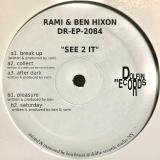
Ben Hixon heads up the Dolfin label, but it operates more as a collective of musicians with him at the centre orchestrating sessions, mixing, mastering and producing both solo and in collaboration with pals. For this one he has again linked with Rami for an immersive EP that traverses various tempos and rhythms. There's whimsical downtempo on 'Break Up', sparse soundscaping on 'Collect' and hurried deep house on 'After Dark' that burns with real late night intensity. 'Pleasure' gets more playful and extroverted in its rugged swing and 'Saturday' is a laidback soother. Another timeless EP.
- 1: Amsterdam Blues
- 2: Unrequited
- 3: E.s.p
- 4: Old Folks
- 5: Pent-Up House
- 1: Simone's Dance
- 2: Everything Happens To Me
- 3: Satellite
- 4: Malida
Live at Smoke captures master drummer Al Foster in peak form during his final birthday celebration—a weekend of inspired performances at NYC’s Smoke Jazz Club in January 2025. Joined by an all-star quartet featuring Chris Potter, Brad Mehldau, and Joe Martin, Foster leads a group full of fire, grace, and deep swing. Drawn entirely from Saturday and Sunday night sets, this double LP-length live recording is both a celebration and a moving farewell from one of jazz’s great rhythmic voices.
- Giovanni Lami - A La Noche : A La Selva : En La Sombre
- Giovanni Lami - A La Lluvia
- Hannibal Chew Ii - La Guagua Transamazónica
- Hannibal Chew Ii - Dos Leyendas De Una Fauna Perdida
- Bardo Todol Radios Húmedas
- Bardo Todol - Mercados De Insectos Vibrantes
Three part journey into an imaginary Amazon from three artists working on the fringes of field recording.
Stories del Tiburón Llorón del Amazonas picks up where the previous, Stories of the Indian Dotted Whale trilogy left us. This time, the same three artists, Giovanni Lami, Hannibal Chew II aka Gonçalo F Cardoso and Bardo Todol aka Pablo Picco return to riff on an imaginary crying shark, known to swim in the amazon river. The sad and melancholic shark has never been seen but its weep and sob can be heard all over the region. Here are three works of sympathetic howls for a lonely and misunderstood creature.
First part from Giovanni Lami is made of ghost recordings made during 2020 in Iquitos, Perú, in the amazon forest during the film shoot of “Tras el Barco de Fitzcarraldo”. Second part from Hannibal Chew II is a collection of re-assembled recordings and jams gathered from a trip through the Amazon in late 2017 to early 2018. Later assembled during various improvised recording sessions during the long hot summer of 2023 in Tenerife, Canary Islands. The third and final part comes from Bardo Todol and features abrasive tape and digital field recordings manipulation made by Picco in Iquitos in 2020 during the shooting of “Tras el barco de Fitzcaraldo”.
All three feature sounds of: people talking, static radios, saturday night churches, river people, shawi people, dolphin people, shark people, market people, vibrating insects, zombie insects, giant insects, giant motors and of course various weeps of a crying shark.
Bangs and Talbot get back to business with a stonking new 45 for 2025, their take on the instrumental classic ‘K Jee’.
Originally by US band the Nite Liters (an instrumental precursor to soul act New Birth), this classic track has been a club favourite for decades. It was later covered by MFSB and included in the Saturday Night Fever soundtrack.
Taken from their forthcoming album on Acid Jazz, this latin disco funk flavoured jam is written by Motown hit producer Harvey Fuqua and Charles Hearndon. It features Mick Talbot on Wurlitzer, organ and piano, ably assisted by German funk guitarist Felix Fraenkel, Italy’s Donato Greco on flute, brass from California’s Dan C, and drums, percussion, and bass from original Acid Jazz DJ/producer Chris Bangs.
On the flip is a Mick Talbot-original ‘Re-Micks’ from the ‘Back to Business’ sessions, which gets a heavy-duty live boom bap rework by hip hop pioneer DJ Premier Inn.
Presented on black vinyl in a new colour version of the current Acid Jazz house-bag, with labels reminiscent of the classic RCA design for an authentic ’70s touch…
- 1: Mayfair - St Sound Techniques Session – March 968
- 2: Time Has Told Me - 1St Sound Techniques Session – March 1968
- 3: Man In A Shed- 1St Sound Techniques Session – March 1968
- 4: Fruit Tree - 1St Sound Techniques Session – March 1968
- 5: Saturday Sun - 1St Sound Techniques Session – March 1968
- 6: Strange Face - 1St Sound Techniques Session – March 198
- 7: Strange Face – Rough Mix With Guide Vocal – September 1968
- 8: Day Is Done – Take 5 – April 196
- 9: Day Is Done – Take 2 – November 168
- 10: Day Is Done – Take 7 – April 1969
- 11: Man In A Shed – Take 1 – May 1968
- 12: My Love Left With The Rain – Cambridge, Lent Term 1968
- 1: Blossom – Cambridge, Lent Term 968
- 2: Instrumental – Cambridge, Lent Term 1968
- 3: Made To Love Magic – Cambridge, Lent Term 1968
- 4: Mickey’s Tune – Cambridge, Lent Term 1968
- 5: The Thoughts Of Mary Jane – Cambridge, Lent Term 1968
- 6: Day Is Done – Cambridge, Lent Term 198
- 7: Time Has Told Me – Cambridge, Lent Term 1968
- 8: Three Hours – Take 2 – November 196
- 9: Time Has Told Me – Take 4 – November 168
- 10: Strange Face – Take 1 – November 1968
- 11: Saturday Sun – Take 1 – November 1968
- 12: Fruit Tree – Take 4 – November 1968
- 3: Mayfair – Take 5 – January 1969
- 4: River Man – Take 1 – January 1969
- 5: Way To Blue – Cambridge – Winter 1968
- 6: The Thoughts Of Mary Jane – Take 2 – April 199
- 7: Saturday Sun – Take 1 Into Take 2 – April 1969
- 8: River Man – Take 2 – April 1969
- 1: Time Has Told Me
- 2: River Man
- 3: Three Hours
- 4: Way To Blue
- 5: Day Is Done
- 6: Cello Song
- 7: The Thoughts Of Mary Jane
- 8: Man In A Shed
- 9: Fruit Tree
- 10: Saturday Sun
- 1: Time Of No Reply – Take 3 Into Take 4 – December 968
- 2: Cello Song – Take 4 – January 1969
The Making Of Five Leaves Left tells the story of how Nick Drake’s debut album ‘Five Leaves Left’ came to be released in 1969. This Nick Drake Estate authorised 4LP edition comprises over 30 previously unheard outtakes from the sessions, compiled across three discs. The final disc to complete the package is the original Joe Boyd produced album. The whole set has been mastered by John Wood. Accompanied by a 60 page book printed on special textured paper stock, written by Neil Storey in collaboration with Richard Morton-Jack, complete with full track recording details, charts and recording history. This Nick Drake Estate authorised 4CD edition comprises over 30 previously unheard outtakes from the sessions, compiled across three discs. The final disc to complete the package is the original Joe Boyd produced album. The whole set has been mastered by John Wood.
Accompanied by a 60 page book printed on special textured paper stock, written by Neil Storey in collaboration with Richard Morton-Jack, complete with full track recording details, charts and recording history.
- A1: Making Money
- A2: The Sweetest Thing (Richard Hawley Remix)
- A3: Break It To You Gently (The Wild Honey Pie Buzzsession)
- A4: Tougher Than The Rest, Written-By – Bruce Springsteen
- A5: The Nights Are Cold, Written-By – Richard Willis Hawley*
- A6: I'm Not In Love (The Dermot O'leary Saturday Sessions Show), Written-By – Eric Stewart, Graham Gouldman
- B1: French Navy (Jim Noir Remix)
- B2: The World Is Full Of Strangers
- B3: Do It Again (The Wild Honey Pie Buzzsession)
- B4: Swallows
- B5: You're The Only Star In My Blue Heaven, Written-By – Gene Autry
- B6: The Blizzard
I must admit to being a sucker for two-guitar bands. Ok, Hendrix pulled off a trio. But I don’t care what anybody says: The Yardbirds were a better band than anything that came out of them (Ok, maybe not Zep. But Cream?).
Maybe the reason I go back so far in my references is that, within the two-guitar band format, original new roles are difficult and rare. There’s the classic (socially problematic and often boring) “rhythm/lead” solution. There’s the JB’s or Nile Rodgers’ chicken pickin’ vs comping solution (which avoids chordal clashes by relegating one of the guitars to the role of single-note percussion instrument). There’s Ornette’s Prime Time division between Bern Nix’s rolled-off “jazz” tone and Charles Ellerbee’s trebly wah. Almost everything else is a variation on one of these.
In Ches Smith’s record Clone Row, each piece is built around a different concept for guitar interaction. The delightful and gifted weirdness of Mary Halvorson’s playing is counterpointed, contrasted, unisoned with, played off, juxtaposed (that is to say, enters every relationship possible) with Liberty Ellman’s equally amazing sound palette, chops, and imagination. This definitely ain’t your father’s guitar band.
The overall vibe of the record—despite Halvorson’s occasional noise outbursts or Ellman’s distorted guitar lines (see Mixed Fridge) is neither punk/funk, nor Zorn-ish metal—and certainly not the looser parameters of Ornette’s improvised harmolodics. Smith’s vibraphone playing, Halvorson’s guitar tone (whammy pedal squiggles aside), the brilliant electronics, and (most of all) the compositions themselves are somehow strangely West Coast cool. It’s as if I’m hearing a Jim Hall concert in which one of us did a lot of mushrooms, or (dare I write this?) some post-punk post-Dave Brubeck post-trip-hop experiment with classical form.
This recording is, most of all, about Ches as composer. He’s picked up a lot on his long, strange trip of the last few decades. The Haitian funkiness of his work with We All Break is audible—but deeply buried, encoded in the polyrhythms (check out Heart Breakthrough). His long-running side musician collaborations with John Zorn and Tim Berne are also evident but sublimated here into something new.
Not that improvising is absent. Check out the compelling collective statements in Sustained Nightmare and Ready Beat. Check out the brilliant interplay and bass soloing on Abrade With Me (a Weather Report for the age of extreme weather?) Nick Dunston is my favorite bassist of the new generation, and he plays brilliantly throughout. And Ches’ drumming here has all the groove, energy, and incredible range that have kept him in demand from Saturday night Vodou services to jazz and new music recording sessions (…the thinking man’s rock barbarian?).
The sus chords in Abrade With Me do build, for a moment, towards a fusion type of climax...but just at the moment I was gritting my teeth in anticipated defense against some horrible synth solo, the drums drop out, and we’re transported to the ambient lounge at the rave, and we suddenly understand we’re in the hands of a composer with the power to transport us just about anywhere.
So, this is a composer’s record most of all; a composer’s record performed by musicians who happen to be great improvisers. Ches Smith builds here on his reputation as a gifted new voice with an important vision, while showcasing some of the most creative musicians of our time.
- A1: Soul Man
- A2: Summertime
- A3: You Don't Know What You Mean To Me
- A4: When Something Is Wrong With My Baby
- A5: You Send Me
- B1: Hold On I'm Coming
- B2: Wonderful World
- B3: Said I Wouldn't Tell Nobody
- B4: Cupid
- B5: I Thank You
- C1: Soul Sister Brown Sugar
- C2: Dock Of The Bay
- C3: You Got Me Hummin
- C4: Don't Pull Your Love Out On Me Baby
- C5: Soothe Me
- D1: Gimme Some Lovin
- D2: Bring It On Home
- D3: Another Saturday Night
- D4: You Don't Know Like I Know
- D5: Can't You Find Another Way Of Doing It Baby
Alternative Tentacles Records is thrilled to announce the first-ever vinyl release of two long-awaited tracks, previously available only in digital format. This highly anticipated split 7" features Jello Biafra & The Guantanamo School of Medicine and The November 3, with two explosive songs: "Blunder Blubber" and "IFAR." "Blunder Blubber," originally released as a digital single to mark Rush Limbaugh's passing and was recorded during the TEA PARTY REVENGE PORN recording sessions, highlights everything iconic about Jello Biafra & The Guantanamo School of Medicine. The song critiques the rise of right-wing extremism, tracing its roots back to Rush Limbaugh's influence and the repeal of the Fairness Doctrine under President Reagan in 1987—a policy change that allowed one-sided political commentary on public airwaves. Biafra argues that this set the stage for the toxic media landscape, fueling figures like Limbaugh and the current wave of ""MAGA"" rhetoric. Reflecting on the political climate, Biafra notes, "I wrote the song back when Clinton was president, seeing the writing on the wall. I was hoping never to use it, but we had no choice but to update and perform it now." On the flip side, The November 3 delivers "IFAR," a fiery debut track that first dropped during the 2020 Republican National Convention. Blending punk rock energy with raw political outrage, lead vocalist Billie O' Rights unleashes a bold, biting rant, backed by Tom Pain’s searing guitars. Pat Triotte and Justice Ferrall add their creative touches to this electrifying anthem, capturing the chaotic spirit of the times. "IFAR," is a raucous, tongue-in-cheek commentary on partisan divides, clocking in at just two minutes of catchy, irreverent fun. Interestingly, the song was reportedly conceived during a mundane moment: Pat Triotte was baking blueberry muffins one Saturday afternoon when the idea hit, and within hours, the track was recorded— and the muffins were supposedly amazing. Despite the humorous and often provocative tone of both songs, the core message of this release is clear: a call to action to vote. With this limited 7" vinyl, Alternative Tentacles Records urges everyone to make their voices heard in the 2024 election and beyond! Don't forget to VOTE!
- Wonderful World (Radio Sessions)
- Jelousy (Radio Sessions)
- One Law For Them (Radio Sessions)
- Evil (Radio Sessions)
- Yesterdays Heroes (Radio Sessions)
- Norman (Unreleased 45)
- Seems To Me (Unreleased 45)
- Clockwork Skinhead (Bumper Sessions
- Evil (Bumper Sessions)
- A.c.a.b (Bumper Sessions)
- I Don’t Wanna Die (Bumper Sessions)
- Yesterdays Heroes (Bumper Sessions)
- Saturday (Demo)
Containing the hits that were only deemed misses by the critics that condemned Oi! as some kind of subcultural fad that favoured football and violence way above the bloody good tunes that should by rights occupy the higher rank, 4 Skins, The Unreleased Radio & Studio Sessions encapsulates that energy at its finest. From formidable swarms of police brutality and political injustice, the underlying (and unyielding) socio-political messages experienced from the streets that resonated with every estranged clockwork skinhead of the day are bound to be ticked on every track. After the atmospheric crash of One Law for Them, dropped in amongst the Radio and blistering Bumper Sessions with Evil sitting squarely in its unpolished centre is the ska-inflected gallop of Seems To Me, an unreleased tune reinforcing the notion that there was more to Oi! than meets the laces.
2024 Repress
Three emotional years in the making, Be With and Efficient Space finally present Steve Hiett’s Girls In The Grass. Pressed alongside the long awaited reissue of his one-shot masterpiece Down On The Road By The Beach, these ten balearic soul instrumentals are of equal necessity; unrivalled beauty rescued from the fashion photographer-guitarist’s Paris Tapes (1986-1997).
While recordings unintended for release should often be approached with caution, this is a rare case of unheard material being assembled as an indispensable and coherent piece. Girls In The Grass is something super special. The light and shadow that defines Hiett’s music is arguably more compelling here. It speaks to us in a language that feels profound, yet entirely comforting and familiar.
Girls In The Grass reintroduces Hiett’s languid electric blues boogie, crafted on Saturday afternoons with fellow art director Simon Kentish. Kentish would cook, pour some wine and then utilise his arsenal of technology. He’d dial up a chugging rhythm, together with some ambient pads or keyboard textures, and anchor the weightless gauze of Hiett’s six-stringed touch.
Hiett’s guitar sings with the same clean, crisp tone as Down On The Road, animated by a carefree weekend groove. Unlike his defining album which was boiled under pressure, these subsequent sessions have all the time in the world. The naïve melodies chart a missing link between Vini Reilly’s ventures into electronica and Booker T, sounding like sun-warped takes on wordless, fractured non-hits from his heroes The Beach Boys.
Remastered for public pleasure by Simon Francis, these private moments are adorned with Hiett’s singular photography and feature typically idiosyncratic liner notes from Mikey IQ Jones
- Mar Vista - Visions Part 1 Her Eyes Are Closed
- Kennlisch - Kennlisch
- Crystal Eyes - Crystalzed
- Warlus - Girl Like You
- Gerard Alfonsi - Fana Stickle
- Geoffroy - Viking
- Amphyrite - Symphonie Pour 3 Oeufs Brouilles
- Eole - Friendship
- Capucine - Les Elephants
- Rictus - Flashes
- Inscir Transit Express
- Polaris - Polaris
- Joel Boutolleau - Force
- Spotch Forcey - Frustre
- Demon Wizard - Black Witch
- Temple Sun - Voyage Sans Retour
- Chantal Weber - Ballade Aux Chataignes Tombees
- Jean-Claude Zemour - X Kmh
- Rhodes Co - Baoum
- Guidon Edmond Et Clafoutis - Stormy Sunday
"For a long time, I'd come across these discs without really understanding what connected them, apart from a button and that famous logo designed by René Dessirier. Then, with a little more digging, I discovered the "self-production" link. For choirs, schools, folk singers, young pop groups, popular homes and even great composers who engraved unique copies of certain recording sessions...
The French equivalent of the English "Derby Service", the Kiosque d'Orphée, formerly at 7 Rue Grégoire de Tours in the 6th arrondissement, was taken over by Georges Batard in 1967 and moved to 20 Rue des Tournelles in the 4th arrondissement of Paris. The adventure lasted until 1991. Georges Batard was a sound engineer who used a Neumann tube engraver to engrave acetates from the tapes he received, before printing the precious vinyls in the press factories of the day, where he was able to produce very small runs of between 50 and 500 copies.
Of course, there were other structures for releasing his records, such as Voxigrave or, later, FLVM, but none of them had so many records in their catalog. Le Kiosque d'Orphée was neither a label nor a publisher, but a structure that allowed you to press your own vinyl, at a time when it was quite an adventure to get your first 45 rpm or 33 rpm album released!
Georges Batard was described as passionate and conscientious. His son, bassist Didier Batard, wrote of him:
"Georges was passionate about recording and reproducing the stereo sound of his great passion, music. He paid close attention to distortion rates, signal-to-noise ratios, response curves, rise times and other damping factors in audio equipment. He was looking for the exact reproduction of concert hall sound in his living room (with the same sound level, if possible...). In the late '50s/early '60s, he found other sound enthusiasts in AFDERS (Association Française pour le Développement de l'Enregistrement et de la Reproduction Sonores). He became its honorary president. Every Saturday afternoon, its members met to test au- dio equipment. Their opinions were published in the monthly Revue du Son.
All you had to do was send in your tapes and choose the number of record copies you'd like to take home with you, so you could finally share your creations and, in a way, exist. You could opt for a generic sleeve, available in several colors, directly customizable with your name and credits, or you could design your dream sleeve yourself in your living room or at a printer's.
This "Do It Yourself" temple gave birth to some superb pouches. Stencilled, hand-written, illustrated with paintings, drawings, illustrations by friends or girlfriends of the time, photo prints hastily stuck in the middle of a blank, white sleeve, on which the traces of time would leave their imprints, so that collectors and the curious would come and buy them decades later, with the promise of a musical discovery, unfortunately not always fulfilled...
What most of these records have in common is the youth of their songwriters, whether or not they've had a career. Stories of buddies, of getting by and dreams of glory made up this catalog. Most of them were amateur productions, both in terms of the level of the musicians and the quality of the recordings, made on a two-track or, the ultimate luxury, a 4-track in a teenager's bedroom or parents' living room.
It was the beginning of the home studio, thanks to the advent of the Revox portable tape recorder. A bit of a shaky DIY system, but, in return, the luxury of setting no limits: one-sided tracks, no outside censorship, no artistic director, no manager, no Barclay or EMI/Pathé Marconi logos...
When you finally had your own record, you could give it away or sell it to friends, family or after concerts. You could also drop it off at the nearest record shop, with undisguised pride.
It was also a calling card that could be sent to radio stations or music labels, in the hope of launching a career...
Many of the protagonists in this story tried to sign with labels, but in those days, bridges were not so easy to build between one's hometown, or even one's village, and the major or more specialized label that might have released these records. At the time, the advertisements published in the press by the Kiosque d'Orphée opened up the field of possibilities for provincial composers. It was now possible to make their own record, without having to go through the process of signing with a label.
Some of the composers who have gone on to make a career have used this channel to release their first record or parallel projects (Claude Engel, Dominique A, Andy Emler, Michel Deneuve, Claude Mairet, Mick Piellard, Tristan Mu- rail...) and sometimes even single or very limited pressings of work or promotional copies (Bernard Parmegiani, Jef Gilson...).
This album is the conclusion of a long investigation, begun six years ago. It took a long time to find the records, scattered all over the place, in the homes of collectors and sometimes the musicians themselves, and then to listen to them, sometimes painstakingly, to unearth these moments of grace.
From this work, 23 tracks remain, but there are dozens of others that could have been included, so we had to choose, and the choice had to be as universal as possible. This selection is obviously not objective, but I hope you'll like it.
Today's music is raw, touching and powerful. "
Jean-Baptiste Guillot - Born Bad Records
Previously Unreleased Album. In the Fall of 1993, between contracts with Capitol and RCA, The Smithereens ventured into Crystal Sound Studios NYC to write and record a new album for their own label. The results of those one month marathon recording sessions is this album, unheard by the outside world until now, and appropriately titled “Lost Album”. The Smithereens’ take no prisoners sound, reflecting their Garden State roots, has resonated with fans worldwide over the course of 17 albums and 2500+ live shows. They've also inspired generations of musicians, including Kurt Cobain, who counted The Smithereens as a major influence. Founded in New Jersey in 1980, The Smithereens have been creating electrifying, original rock’n’roll for 41 years. Jim Babjak (guitar) Dennis Diken (drums) and Mike Mesaros (bass) grew up together in Carteret and lead singer, the late Pat DiNizio, hailed from Scotch Plains. The Smithereens’ fame escalated, they were in heavy rotation on MTV and appeared on The Tonight Show, Conan O'Brien, and Saturday Night Live.
Van Halen did more than announce to the world the earthshaking arrival of a revolutionary guitarist. Performed by an enterprising California quartet that took its name from two of its principal members, the 1978 debut ripped headlines away from punk, injected fresh energy into a then-moribund rock 'n' roll scene, reimagined how heavy music and throwback pop could coexist, and invited everyone to experience the top-down pleasures of a beach-front Saturday night every day of the week no matter where they lived. Painstakingly restored by Mobile Fidelity Sound Lab, and the first of a multi-album series in an exciting partnership between the famous reissue label and Van Halen, Van Halen delivers feel-good thrills and hormonally charged desires like never before.
Limited to 12,000 numbered copies, pressed on dead-quiet MoFi SuperVinyl at RTI, and mastered from the original analogue master tapes, Mobile Fidelity's ultra-hi-fi UltraDisc One-Step 180g 45RPM 2LP collector's edition pays tribute to the record's merit and allows fans to experience Van Halen's original blend of raw power, Hollywood flair, and vaudeville fun for generations to come. Playing with reference-setting sonics that elevate a 10-times-platinum landmark whose importance cannot be quantitatively measured, this definitive version provides a clear, clean, transparent, balanced, and turn-the-volume-up-to-11 view of an album that birthed entirely new styles. Since MoFi's unique SuperVinyl compound allows you to crank the decibels to your wildest desires without risking noise-floor interference, prepare to not only hear but feel Van Halen in your chest, no fifth-row concert seat necessary.
The premium packaging and gorgeous presentation of the UD1S Van Halen pressing befit its extremely select status. Housed in a deluxe box, it features special foil-stamped jackets and faithful-to-the-original graphics that illuminate the splendor of the recording. No expense has been spared. Aurally and visually, this UD1S reissue exists as a curatorial artefact meant to be preserved, touched, and examined. It is made for discerning listeners that prize sound quality and production, and who desire to fully immerse themselves in the art – and everything involved with the album, from the iconic cover art to the meticulous finishes and, yes, of course, Eddie Van Halen's pioneering fretwork and his brother Alex's double-bass percussion.
Indeed, could a piece of music that transformed how countless guitarists approached their instrument be more fittingly named than "Eruption"? Likely not, and in just 102 seconds, Eddie Van Halen rewrote, reimagined, and reconfigured a vocabulary last significantly updated a decade earlier by fellow six-string wizard Jimi Hendrix. Akin to the Washington State legend, Eddie Van Halen developed his own techniques and tones all the while making his seismic accomplishments seem effortless. Devoid of the pretence, ego, and showiness that infected many of his imitators, the Dutch native sticks to a straightforward approach that underlines the authority, prowess, and visionary scope of his playing and then-unheard-of finger-tapping skills. Throughout Van Halen, he establishes himself as an instant idol – a savant whose otherworldly combination of breadth, poise, feel, speed, force, and melody seems beamed in from another galaxy.
As does nearly every song on the record, whose cohesiveness and dynamic put into perspective the advanced chemistry and one-for-all spirit the youthful band had out of the gates. Having paid its dues for years in bars and clubs – going as far as recording a 24-track demo for Kiss bassist Gene Simmons at Village Recorders only to be spurned by management companies that felt its music wouldn't go anywhere – Van Halen finally got a deserved break when Warner Bros. executives signed the group in 1977. The subsequent recording sessions further testify on behalf of the band's synergy and alignment. Completed in just a few weeks with producer Ted Templeman, Van Halen was primarily cut live in the studio with minimal overdubs and edits. The explosiveness, energy, and electricity remain definitive, and as heard on this UD1S set, put the group on a private stage – humming amplifiers, Frankenstrat guitar, bright spotlights, sweaty headbands, and then some.
Van Halen yielded just one hit in the form of a Top 40 single (a breathless cover of the Kinks' "You Really Got Me") but practically every song on the revered LP has become a staple. Named the 202nd Greatest Album of All Time by Rolling Stone and considered by countless experts as one of the best debuts in history, the record displays what can happen with four distinct talents gel and strive for the same purposes. In Van Halen's case, the latter almost always involved partying, freedom, sex, and, in the immortal words of singer David Lee Roth, living "life like there's no tomorrow." The celebration manifests from the opening notes of the strutting "Runnin' with the Devil" – announced with the blare of droning car horns, Michael Anthony's robust bass line, and Alex Van Halen's thumping drumming – and continues through the conclusion of the white-hot "On Fire," goosed by Eddie Van Halen's race-track-ready lines, Roth's flamboyant deliveries, and the rhythm section's cat-like pounce.
Picking out individual highlights on Van Halen is akin to trying to count all the stars in a clear nighttime desert sky: There are far too many to identify, once you see one you notice another dozen you didn't spot before, and the cluster is best enjoyed as a whole. What's evident over repeat listens is the sheer diversity, a fact that's often overlooked: The high harmonies and background funk of "Jamie's Cryin'"; the insistent cane-and-a-tophat shuffle and doo-wop shoo-bop vocal break on "I'm the One"; the throwback acoustic blues that spreads into fast-paced, single-entendre wildfire on the Roth-led standout interpretation of John Brim's "Ice Cream Man." Like the man says, on Van Halen, all the flavours are guaranteed to satisfy.
More About Mobile Fidelity UltraDisc One-Step and Why It Is Superior
Instead of utilizing the industry-standard three-step lacquer process, Mobile Fidelity Sound Lab's new UltraDisc One-Step (UD1S) uses only one step, bypassing two processes of generational loss. While three-step processing is designed for optimum yield and efficiency, UD1S is created for the ultimate in sound quality. Just as Mobile Fidelity pioneered the UHQR (Ultra High-Quality Record) with JVC in the 1980s, UD1S again represents another state-of-the-art advance in the record-manufacturing process. MFSL engineers begin with the original master recordings, painstakingly transfer them to DSD 256, and meticulously cut a set of lacquers. These lacquers are used to create a very fragile, pristine UD1S stamper called a "convert." Delicate "converts" are then formed into the actual record stampers, producing a final product that literally and figuratively brings you closer to the music. By skipping the additional steps of pulling another positive and an additional negative, as done in the three-step process used in standard pressings, UD1S produces a final LP with the lowest noise floor possible today. The removal of the additional two steps of generational loss in the plating process reveals tremendous amounts of extra musical detail and dynamics, which are otherwise lost due to the standard copying process. Every conceivable aspect of vinyl production is optimized to produce the most perfect record album available today.
MoFi SuperVinyl
Developed by NEOTECH and RTI, MoFi SuperVinyl is the most exacting-to-specification vinyl compound ever devised. Analogue lovers have never seen (or heard) anything like it. Extraordinarily expensive and extremely painstaking to produce, the special proprietary compound addresses two specific areas of improvement: noise floor reduction and enhanced groove definition. The vinyl composition features a new carbonless dye (hold the disc up to the light and see) and produces the world's quietest surfaces. This high-definition formula also allows for the creation of cleaner grooves that are indistinguishable from the original lacquer. MoFi SuperVinyl provides the closest approximation of what the label's engineers hear in the mastering lab.
Summer is now upon us, and with it one of our dearest dancefloor artillerymen returns to Timedance.
Ploy's « For when we haven’t slept » stands as a mission statement for the party athlete, it is a celebration of weekends ran like both a sprint and a marathon and its three tracks narrates the spirally craze that keeps you out and makes the dancers forget the sole existence of their beds.
Starting with the first hits of strobe lights on a Saturday night, as the energy rises and the dancefloor manically comes together (Crazy BB), it then moves on to a welcome and slightly hectic high octane after-party (Rose) before rolling all the way through to the sheer moments of lustful euphoria that defines the best Sunday sessions (Finally).
Bass pressure and intoxicating techno collide seamlessly without falling into the traps of forced seriousness, while hints of hook-laden house music keep the groove at peak levels, so the bodies can keep moving, beyond sleep and exhaustion and into the final stages of pure frenzy, for when we haven’t slept.
- A1: Never Seen A Girl Like Me
- A2: Sugar Town
- A3: Alright
- A4: Two Motorbikes
- A5: Tropics
- A6: On A Saturday Night At Home
- B1: Likagurl
- B2: Fish At Sea, Right?
- B3: Gettin
- B4: Mad
- B5: Fat-Mad-N-Gone
- B6: I Wanna Go To La
Yellow Vinyl[30,46 €]
ShitKid is the project of 24-year- old Åsa Söderqvist who made her debut last spring with a self-titled debut EP, which quickly propelled her into being one of the most talked about new acts in Sweden. The three-track ShitKid EP was released via the Stockholm based label PNKSLM Recordings in the spring of 2016 to great acclaim, reaching far beyond its lo-fi confines to find fans at the likes of The FADER, Pigeons & Planes and SPIN internationally, while her debut single "Oh Please Be A Cocky Cool Kid" appeared on national TV in Sweden the morning after it was released. An expanded version of the debut EP was released in the summer of 2016, which saw ShitKid playing several Swedish festivals before making her debut international appearances in the fall, alternating between playing to full houses in London and monthly shows in her new hometown Stockholm. Now ShitKid is ready to announce her long-awaited debut lp - titled "Fish" it's due for release on June 2 via PNKSLM Recordings on vinyl, cd and digitally. Recorded during the same sessions as "EP 2"it's another step on ShitKid's musical journey - offering up a sound that's clearer than the lo-fi murkiness of the debut EP but still very much the opposite to the slick pop dominating the musical landscape today. ShitKid will be doing select festival shows during the spring, leading up to a UK and EU tour around The Great Escape ahead of the album before spending the summer on the road with slots at ex Roskilde Festival announced already, with a lot more UK and EU dates TBA. Fish is written, recorded, performed and produced by Åsa Söderqvist and mixed by Simon Skeleton.
Before he co-founded the legendary Sunday afternoon event Body & Soul with fellow New York DJs Danny Krivit and Francois Kevorkian in 1996, Joaquin "Joe" Claussell was the driving force behind Instant House, an eclectic production outift who released a series of uplifting deep house records, several of which were spun by David Mancuso at the 90s iteration of his influential Loft parties.
In 1993, Instant House released their deepest single, Lost Horizons, through Jungle Sounds Recordings. The A-side, ‘Lost Horizons (The Mind Travel Saturday Night Sunday Morning Mix)’ is a seventeen-minute and twenty-second sojourn into the vibrant club sounds of early 90s NYC. Driven by a Latin-accented man-machine beat that marches into infinity, it comes backed by two shorter mixes, ‘Lost Horizons’ and ‘Lost Horizons (Percussion Bonus)’. Twenty-nine years later, Isle of Jura presents an official vinyl and digital reissue of this slow-burning deep cut.
The Instant House story begins in the late 80s at Dance Tracks, an East Village record store established by the businessman, DJ, and graphic designer Stan Hatzakis. Patronised by New York trendsetters like Frankie Knuckles and Larry Levan, Dance Tracks was considered one of the world's best underground dance music retailers.
During the winter of 1991, Stan got together with one of his best customers, Tony Confusione, to make music. A wall street guy by day and a keyboardist by night, Tony was also a serious DJ. Not long after their first recording sessions, they invited another Dance Tracks fixture, Joaquin "Joe" Claussell, to join them in Tony’s state-of-the-art home studio in Long Island. He brought a vibrant, percussive edge to the sample-based tracks Stan and Tony were cooking up. Emboldened, the three DJs began recording together as Instant House. That year, they released the Dance Trax EP.
In 1992, after Instant House had dropped two certified classics, 'Over' and 'Awade', for Jungle Sounds Records, Stan exited the group and sold Dance Tracks to Joe and his business partner, Stefan Prescott. Following Stan's departure, Joe and Tony headed into the studio for a special recording session. “I just remember how powerful the connection was while we were making that record,” explains Joe, recalling the creation of ‘Lost Horizons (The Mind Travel Saturday Night Sunday Morning Mix)’. “It was a very spiritual encounter in the studio.”
While laying out the drum patterns, sound effects, and arrangement, Joe explained the vibe to Tony, who played the lush cosmic chords and an effortless keyboard saxophone line over the top. “That was Tony completely feeling himself,” Joe reflects. “He performed majestically.”
After the release of the Lost Horizons 12”, Joe received a phone call from Cisco International Corp. A plane flight later, he was sitting in their label offices in Tokyo, talking to a senior record executive who wanted to introduce Lost Horizons to Japan. “What they were primarily doing at the time was pressing classical records - we’re talking thousand dollar plus classical reissues - and they wanted to license and distribute Lost Horizons,” Joe remembers. Three years later, Joe and Tony released 'Asking Forgiveness', their final 12” as Instant House, before parting ways with full hearts.
In the context of his career as a DJ, remixer, and producer, Joe is known for long songs and compositions. As Lost Horizons illustrates, he’s carried that impulse with him since his foundational days. “When I produce, I don’t believe in the beginning or endpoint of anything,” Joe explains. “I really despise the rules. To me, that’s not true to the art of creation. I just believe there is a flow in creation. When we were making music in the 90s, we were restricted by format, but that record could have gone on forever.”
The 12” is housed in a full sleeve jacket by Bradley Pinkerton based on the original release design.
GRAMMY® Award winning duo Twenty One Pilots released their new album, Scaled And Icy, earlier this year and it reached #3 in the UK Official Album Chart. They are now releasing the album on vinyl for the first time, set for release on 19th November. Scaled And Icy is Twenty One Pilots’ first studio album in three years and follows their RIAA Platinum certified LP, Trench.
Written and largely produced by Joseph in isolation over the course of the past year at his home studio, with Dun engineering the album’s drums from across the country, Scaled And Icy is the product of long-distance virtual sessions and finds the duo processing their upended routines along with the prevailing emotions of 2020 - anxiety, loneliness, boredom, and doubt. The duo had to forgo their normal studio sessions but reached a new of level of introspection in the process, adopting a more imaginative and bold approach to their songwriting. The result is a collection of songs that push forward through setbacks and focus on the possibilities worth remembering.
In 2020, Twenty One Pilots surprised fans with standalone singles “Level of Concern” and “Christmas Saves The Year.” “Christmas Saves The Year” arrived at the tail end of 2020 and debuted on Billboard’s “Alternative Airplay” chart becoming the first holiday-themed song to make the list since 2012.
Furthermore, Twenty One Pilots scored one final accolade in the final moments of 2020, officially breaking the GUINNESS WORLD RECORD™ for the longest music video with their history-making regenerative visual for “Level of Concern.” Besting the previous record holder, Pharrell and his 24-hour long video for “Happy,” Twenty One Pilots’ ‘Never-Ending Music Video’ for “Level of Concern” broadcasted for 177 days straight with a total run time of 4,264 hours, 10 mins, 25 seconds.
Twenty One Pilots’ 2018 LP Trench ushered in a new era for the duo from Ohio. A true global phenomenon having surpassed two billion streams worldwide, Trench is highlighted by the alternative hits “The Hype,” “Chlorine,” and “Jumpsuit.” “Jumpsuit” stands as the decade’s fastest rising song to reach #1 on Billboard’s “Alternative Songs” chart and earned the duo their fourth GRAMMY® nomination (Best Rock Song).