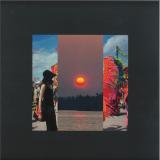
Tel Aviv-based producer Roy Rosenfeld is excited to announce the release of his latest EP, Simi.
Showcasing Rosenfeld’s unique blend of melodic house music, the three-track EP is sure to captivate listeners with its intricate rhythms and ethereal sound.
On Simi, Roy Rosenfeld seamlessly blends melodic and atmospheric sounds to create a transcendent listening experience. From the groovy and energetic title track opener ‘Simi’ to the hypnotic and calmer ‘Sansi’ and closing with the darker, heavenly ‘Moonshine’, this EP showcases Rosenfeld’s exceptional range, and ability to craft music that goes beyond the dancefloor.
Suche:simi
Systematic Recordings celebrates its tenth anniversary and decided to release only special vinyl pressings during this year. The already second part of Marc Romboy´s series is therefor also a collector´s item and comes along in form of a coloured vinyl. Both tracks, the melodic - Simi and the tracky - Bylgja have been featured at Romboy´s and Bodzin´s buzz causing Be-At-TV show at Village Underground in London last December!
After a relatively quiet year - by his standards at least - Glyne Braithwaite aka Risk Assessment is back with three more simultaneously released EPs. This one, number eight in the long-serving producer's ongoing series, boasts four more happy-go-lucky, party-friendly workouts. Check first 'Love Music Part 1', where disco samples from a cover of an O'Jays classic (including the familiar piano refrain) rise above a typically thickset house groove, before admiring the more urgent, excitable and musically detailed disco-house rush of 'Son of a Gun'. The fun continues on the flipside, where 'Want You Back (Kitchen Disco mix)' - all shuffling beats, lovely Clavinet licks and female vocalisations - is joined by the similarly celebratory 70s soul-goes-disco-house goodness of 'Welcome (Remix)'.
Back in 2022, Is It Balearic? Recordings founders Coyote (AKA long-serving producers Richard Hampson aka Ampo and Timm Sure) took time out from releasing music on their own labels to deliver a near perfect mini-album on Phil Cooper’s similarly mind-ed NuNorthern Soul imprint, Everything Moves, Nothing Rests.
A superb exploration of their trademark sound, where gentle downtempo rhythms and nods to dub came cloaked in colourful ambient chords, sun-bright melodic motifs, organic instrumenta-tion and quirky spoken word samples, Everything Moves, Nothing Rests deserved a sequel. So, three and a half years on, the duo has delivered just that: a fine six-track EP that offers an even deeper and more atmospheric exploration of their signature sound.
It is a sonic approach that should now be familiar to Balearic en-thusiasts the world over. Aside from delivering a steady stream of singles, albums and remixes on their own imprint, Hampson and Sure have also showcased their skills and loved-up musical mis-sives on International Feel, Music For Dreams, Needwant, MM Discos and Citizens of Vice.
The Higher The Sky, The Deeper The Ocean, their hotly anticipated NuNorthern Soul return, is named in honour of a quote from Ped-ro Alonso’s documentary series On the Ship of Enchantment, an extended voyage in which the Money Heist movie star meets healers and masters of ancestral medicine across his native Mexi-co.
There’s naturally a meditative and slightly psychedelic sound to much of The Higher The Sky, The Deeper The Ocean, which offers a subtly varied exploration of Coyote’s style and influence. Yearning, soft-focus opener ‘Muted Beauty’ – the kind of immersive, effects-laden and sample-sporting ambient bliss found nestling on Fila Brazillia albums of the mid 1990s – is followed by the similarly gentle ‘Go All The Way’, where delay-laden acoustic guitars, spo-ken word snippets and gaseous chords stretch out atop a languid, slow-motion groove.
‘A Drop in the Ocean’ picks up the pace a little via a glorious hat-tip to turn of the 90s ambient house – all dub-wise bass, heady deep house sonics, spaced-out chords and half-buried references to sunrise-ready Balearic synth-pop records of the late 1980s. Late psychedelic guru Terrence McKenna appears in sampled form on ‘Dolce Far Niente’, a tabla-driven drift and musical hallucination which conjures mental images of lying in the Mexican desert, gazing intently at a starry sky.
In contrast, ‘Riviera Sound’ is a chunkier, brighter and more sun-splashed affair – all deep, dubby bass, sustained piano parts, punchy downtempo breaks and the duo’s trademark ambient pads – while superb closing cut ‘No Coincidences’ fixes jazzy double bass samples, twinkling keyboard motifs, subtle acid lines and Latin-laced percussion to a street soul-adjacent beat.
Heady, impeccably crafted and thoroughly enveloping, The Higher The Sky, The Deeper The Ocean is Coyote at their dazzling best. It marks another significant chapter in their ever-evolving musical journey.
“One foot out the door, another in the otherworld…”
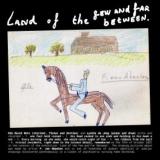
So begins Hannah Lew’s debut, self-titled solo record, soaked in imperious, wide-eyed pop songwriting and a girl-group/post punk aesthetic that belies the artist’s history in the U.S. underground. A towering, hook-laden album, it’s infused with an optimism and surrealism that conversely deals with the times we find ourselves in.
Recorded at home in Richmond, CA and in The Best House studio with Maryam Qudus in Oakland CA, with the assistance of a crack team of West Coast musicians, this album sees Hannah Lew stepping out from behind the legacy of her two groups Grass Widow and Cold Beat. While musically bearing similarities with her previous work, “Hannah Lew” is a bold leap into direct pop territory, making ample use of a vocal style that teases out the inherent melancholy in her melodies. Mastered by Sarah Register, each song is a perfectly honed nugget that frequently pulls the heart in two directions at once.
Themes of change, breaking up, shattering old ways of being are shot through the record. For the front cover, a photograph of the artist’s face was printed, ripped up and re-assembled, resembling the creative process embarked upon by Lew for her first “solo” material. The album feels instinctual, almost dream-like in its assemblage of sweeping synths and pulsating, propulsive drum machine beat patterns with Lew’s vocal performances sensitive and caressing over the top. Increasingly relying on the subconscious and dreams to guide her creative process, Hannah Lew frequently abandons literal interpretations or linear narratives, the songs seeming to exist in a swooning, effortless flow-state while remaining emotionally hard hitting.
On an album where every song could be a single, there are kaleidoscopic shades and varying emotional tones in abundance. First single Another Twilight is carried along a pumping, Italo-disco-style 4/4 beat and mono-synth bass line, the low end pulling at the heart and body. Lew’s vocal melody teases the track before swan-diving into a gorgeous chorus as she sings “it’s all over baby and I don’t mind… in decline, I take my time…” The album is suffused with moments like this. On slow builder Damaged Melody, an arpeggiated synth elongates the verse before a cascading synth showers down melodic glitter. The stunning Replica uses dual swirling synth patterns before a driving, synthpop chorus for the ages carries Hannah Lew’s vocal into the stereo field, sailing in on a high register singed with the embers of a break up.
In a departure from previous groups, her solo songs are guided by dreams and free association inspired by Dada and the Surrealist movement and sculpted afterwards. As such, the songs reveal themselves on repeated listens, revealing traces of heartbreak inspired by both personal and global elements - Hannah Lew regards the album “a wartime album.” On Move In Silence, Lew intones “there’s a war outside, just out of view,” revealing the dichotomy at play throughout. With the songs evolving naturally and in a flow state, the pressures and sadnesses of the modern age bleed through, mixed in with Lew’s inherent love, sensitivity and fractured-but-intact optimism. On the swooning, sublime Sunday layers of Numanoid synths open up for the commanding vocal performance pontificating on grief, love, pain as she “feels the ache on Sunday…” As the chorus builds and Lew’s call-and-response vocal adds to the emotional tension, it almost feels like too much to take.
Elsewhere, there are echoes of Hannah Lew’s previous work. On Time Wasted a bass guitar comes in with a heavy, punk attack before the synths and vocal harmonies reminiscent of later Cold Beat elevate everything. The glassy, sweetly resigned closer The Clock sounds like so classic it could be cover, a sweetened Jesus & Mary Chain tune perhaps, before it erupts into volcanic chorus that could only come from Hannah Lew in 2026.
XKatedral Anthology I is the first in a series of archival releases dedicated to presenting music by XKatedral affiliated composers working within the realm of slowly evolving harmonic and timbral music. This double-vinyl set contains an array of pieces dating from 2010 - 2020. Four of the works included here were originally released on cassette tape early on in the label's history, while the two remaining pieces are presented by the label for the first time.
"The works Ir Himinn, Grooenn by Kristoffer Svensson, Disquiet (Heart) by Marta Forsberg and Lamé by Isak Edberg were first released on the compilation XKatedral Volume II in 2016. Svenssons piece from 2014 combines justly tuned gamelan percussion and prepared piano intricately interwoven in a way that obscures the boundaries between the two instrument groups. Forsberg and Edbergs pieces both use a monolithic form to explore the timbral and harmonic spaces provided by the Düben Baroque organ situated in Tyska Kyrkan in the oldest part of Stockholm. While similar in terms of instrumentation the two works differ formally - Edbergs Lamé composed in 2010 uses the registers of the organ to articulate a seamless spectral transformation while Forsbergs Disquiet (Heart) from 2014 deals in blocks of sound with a varying degree of opacity, saturation and intensity.
Glory for two electric guitars by Caterina Barbieri and Kali Malone was composed and recorded in Tempo Reale in Florence, Italy, and was originally released on the cassette compilation XKatedral Volume III in 2016. This music takes the form of an ever-evolving hypnotic pattern shared by the two instruments articulated through an additive and subtractive canon. Dissolving Ceremony, composed in 2012 by Edberg/Erlandsson/Lisinski, was first presented publicly on the self-released record Stratum. The music contained in that release was formed from a collection of gamelan percussion instruments augmented by two sets of live-electronic instruments tuned to the harmonic framework formed by the partials of the metal percussion. Originally positioned in the center of the record running order between two long monolithic process-based pieces, Dissolving Ceremony now stands on its own as a memory of a time and methodology from the not so distant past.
The newest piece in this set is Shipwrecks by Daniel M Karlsson. While this work is a recent one Karlsson should be considered one of the forerunners of the musical expression contained within this record set. Active within new music for two decades his strongly articulated musical ideas and constantly evolving craftsmanship has resulted in an enormous body of work, and has served as an inspiration for many of his fellow composers. This piece is a celebration of transposition and its immense capacity for timbral transformation using a vast array of instruments performed, recorded and electronically treated by the composer to form a liquid uncanny topography where a deeply personal harmonic language constantly shifts, slides and shivers."
- A1: Me Pega
- A2: Tem Carnaval
- A3: Sexy Doce
- B1: Coeur
- B2: Então Tá Bem
- B3: Para Ser Feliz
- B4: Tô Nem Aí
Fresh from releasing projects on Method 808 and Future Classic, landing a huge collaboration with Chloé Caillet, and delivering an official remix for Fatboy Slim, PPJ are entering a new chapter in full force. Their expansive take on global street sounds, ranging from neoperreo to Miami bass, gets a cool re-coating.
Led by the magnetic vocalist Páula, with production from Povoa (individually supported by Four Tet, Ben UFO, and Barry Can't Swim, with recent releases on Live From Earth), the duo operates in maximalist mode: playful, sensual, and slightly unhinged.PPJ’s new era, JOKER, embraces a figure that appears everywhere from card decks to carnival culture as a symbol that mirrors their own DNA: funny, eerie, seductive, unpredictable. The EP leans further into club territory, but rather than polishing their edges, PPJ amplify them.
At the emotional core of the record sits “Coeur,” co-produced with Chloé Caillet. It begins with an MPB-tinged foundation flirting with bossa nova. It’s unmistakably Brazilian, bathed in sunset hues before being sped up and twisted into a dance-floor-ready electronic form. The groove shimmers with tension: warm percussion, elastic basslines, and Páula’s voice hovering between intimacy and tease. It feels like a remix of itself, romantic, but slightly untrustworthy.
If “Coeur” glows, “To Nem Ai” is a slow burner. A very deep and downtempo house cut, it unfolds slowly, almost luxuriously, guided by sensual vocals that feel whispered directly into the ear of the listener. A hypnotizing piano sample that feels like a late-night confession. It’s the kind of record that transforms a dancefloor into something tactile.
Elsewhere, “Me Pega” is a high-energy reinterpretation of the tech-house sounds from Santa Catarina, one of southern Brazil’s most feverish party states, twisted and accelerated for ferocious impact. Drawing direct inspiration from Sarro, a raw and vibrant Brazilian street dance, the track captures physical intensity in its purest form: sweat, bass pressure, collective release.
Its counterpart, “Tem Carnaval” channels Páula’s vivid storytelling into a thunderous ode to Rio’s carnival spirit, euphoric, chaotic, cinematic landed just in time for this year’s celebrations.
On “Sexy Doce,” rugged electroclash melodies collide with unexpected references. “It was inspired by Budots, which is dance music from the streets in the Philippines,” Povoa explains. “Then we mixed it with Páula’s Brazilian vocals. Baile funk is similarly from the streets, so there is a connection.” The result is raw yet futuristic, a cross-continental flirtation that feels both underground and explosive.
With this new EP, PPJ make music like they’re tuning into a dozen pirate frequencies at once. Pirate radio from Rio to Berlin to Manila intercepting fragments of street culture, sensuality, and chaos, and stitching them into something deliriously cohesive.
JOKER doesn’t just nod to club culture. It challenges it, twists expectation and leaves a lasting impression.
- A1: Miami
- A2: Lullaby
- A3: Dryer
- A4: Dazzle
- A5: Green Eyes
- B1: Born Again
- B2: Did A Dj Ever Save Your Life
- B3: It Stopped Raining
- B4: The Walk
- B5: Seq24
- B6: Summers Almost Gone
- C1: Intro
- C2: St Nazaire
- C3: Open Window
- C4: Cemetary
- C5: Hot Day
- C6: Rome
- C7: 5Am
- D1: Too Tired To Sleep (Awake)
- D2: 12 Hours
- D3: Peace
- D4: Wildly Oscillating
- D5: Sugar Plums
- D6: Still
- D7: My Lovely
Once I Was Young and The Airplane Album find the producer taking yet another sonic right turn. "These records were made in the same year with a very similar creative process. I moved almost completely away from sampling, experimented more than ever with ambient and techno elements and used the album format as a way to tell a story about moments in my life." Once I Was Young is a storytelling work that journeys through analogue synth-pop, modulated techno and raw, dusty drums with otherworldly melodies. Moments of beauty come through escapist, naturalistic ambient tracks and fusions of Kraftwerkian sequencing with more classical piano, while stark, clubready grooves keep things moving. Airplane contrasts similar shades of light and dark, synthetic and organic, rough and smooth. Glitchy, imperfect analogue sounds, knackered drum machine grooves and eerie synth phrasing evoke a post-human world with icy atmospheres. Elsewhere, warmth comes from bittersweet melodies and loose, funky drums that ooze retro-future charm.
Once I Was Young and The Airplane Album show a diff erent side to Escobar, one that embraces introspection and experimentation while exploring a whole other world of meaningful machine soul
Continuing his inspired path into fractalised micro-dub-techno, John Howes lands his Paperclip Minimiser project amongst kindred spirits on Blank Mind. Crooked rhythms and tender machine hums hang in crisply defined virtual space — a gallery of science and soul that follows a natural lineage from the breakthrough years of the clicks n' cuts era by way of UK bass permutations.
Operating out of the UK's North West, Howes has been incubating a singular sound through his ongoing development of intuitive production and performance tools under the Cong Burn banner. The sometime record label and software stamp has a long-standing friendship with Blank Mind—the affinity is easy to hear in their shared exploration of modernist broken techno. Having just released a second album under his Paperclip Minimiser alias for similarly spirited West Coast US lodestar Peak Oil, Topology Transform extends the project's sound world with three tracks carved from the same period of studio orienteering. Free of the constraints of the LP format, these three tracks open up broader possibilities from Howes' customised systems, navigating the outer edges of the Paperclip paradox.
The A side opens on a 150BPM cascade of crunchy percussion and pin-prick ripples, driven by twitchy kinesis while maintaining a light-footed dexterity. If the first track finds its locomotion through double-time intensity, the second track celebrates the space that opens up around half-time pacing — two sides of the same tempo that radiate distinct energies. Conversely, the B side stretches out into an extended ambient repose. The consistency between this beatless excursion and the more propulsive A side speaks to the clarity of Howes' craft—a shimmering, blue-hued pool of advanced sonic treatment from a producer in command of a truly personal studio practice.
Follow up to Goodge's 2023 album Echoes Of Yesterday. Previous releases found on Hip Dozer and Cascade Records. Tracks found on the popular Spotify Mellow Beats playlist. 11th in 'Jet Set' Cold Busted series. Designed and manufactured similar to the vintage 60's style rice paper sleeves. In his latest EP, Sunday Soul, Goodge takes listeners on a four-track journey through the heart of funk, masterfully blending elements of R&B, jazz, and chilled lo-fi. Released as part of Cold Busted's Jet Set series, this four-song offering follows Goodge's 2023 album Echoes Of Yesterday and showcases his dedication to crafting timeless music. "Lights Out" kicks off the EP with heavy funk and stirring breakbeats, accompanied by a scratchy guitar that summons the revolutionary spirit of the '70s. Horns serve as a call to action, while a rollicking bass line and chunky electric piano might inspire listeners to go out and fight crime. "Promised Land" follows, featuring a formidable funk bass guitar and lead guitar chords that rhythmically play off the delightfully busy drums, creating an atmosphere reminiscent of the city's bustle. The title track, "Sunday Soul," is a rowdy affair with a speech-over-beats leading to crispy snare rolls and chiming electric piano. Shaker magic, staccato horn bleats, and spiral flute bits combine to create a swirling vintage-hued photograph of sound. The EP concludes with "Within Myself," a spacier sonic experience that could serve as the soundtrack for chasing someone across rooftops. It's funk spelled with a capital K. Sunday Soul is a must-listen for fans of of the heavier side of funk, solidifying Goodge's position as a master of his craft, creating a nostalgic yet fresh soundscape that keeps listeners grooving back for more.
- Thursday's Bells
- 2: X1
- Fog (You Just Don't Know)
- X Says
- 1898:
- Sparrows Hill
- Sister
- Halb Leib I
- Brain Pan Farmer
- Purple Born
- Atahualpa
- Pugilist
Red Vinyl[18,45 €]
In this post Sounds world, the boundaries of Post Punk have not only broadened but splintered. And over the course of (now) four releases, Index For Working Musik have seen to using the sprawling boundaries to great effect, flexing a polyglot of styles to convey the language of the moment. On Which Direction Goes The Beam, the murky, distant ambience that was 2023's Indexé has been fleshed out, incorporating everything from the Brian Aldiss laced, ground lightning shudder of Dome, to the chamber-like arrangements of This Kind Of Punishment. There's even a candle flickering in the window for Think Fellers Union Local 282 that warmed these ears. And if you're a fan of the great Dutch band, Trespassers W (who isn't?), the collective consciousness IFWM enunciates on here is a similar testament of a band growing more sure footed in the pursuit of not only knowing all the ways in, but carving a few of their own on the way out. And it's discerning releases like Which Direction Goes The Beam that keep us in the hunt. Long may they forge. - Tom Lax. RIYL: Brian Jonestown Massacre, Velvet Underground, TOY, John Cale, Wire, Dome
Skymark is back with a new album recorded in 2025 with his electric pianos and analog synthetisers. The vibes is very similar to his previous albums, a fusion of Spiritual Jazz, Soul, Brazilian music and Disco. As always influenced by his 70´s and 80´s favorite musicians but with a touch of contemporary soulful music. This is a very limited vinyl edition mastered by Jose Rico (Madrid) and pressed by Mad Vinyl music (Madrid).
Saithara were a leading traditional Lanna music group in the Chiang Mai area, led by Chansom Saithara who was named a National Artist in 1996.
Chansom's son, Thepthara Panyamana, fronted the related Saithara "Combo", who explored a range of international pop styles to craft their light-hearted parody tracks in the local "kam mueang" dialect. The lead single here, from 1985, makes use of a well-known German synth-pop song which had become a surprise smash a few years earlier, while the b-side snags a similarly notable power-pop tune from the USA.
Thepthara was also a songwriter and instructor for the child musical group Nok Lae, a Chiang Mai area youth band who became mainstream crossover stars nation-wide. Thepthara passed away in 2017, and Baa Records has teamed with his brother Komsan to license this re-issue in his memory.
Call it soulful dream pop, proto-trip hop or downtempo jazz - "Tender Rain" is the follow-up LP to the successful "This Is" album and continues to deliver Ghia's unmistakable sonic magic. On this release, the band shares a selection of previously unreleased vocal songs alongside instrumental pieces, all carried by their trademark chilled and almost meditative atmosphere. Most of the recordings date from the early 1990s, while early demo versions of "New Love" and "Teardrops in Your Eyes" may reach back as far as the late 1980s.
The album opens with the title track "Tender Rain," where smooth vocal jazz harmonies merge effortlessly with soulful pop elements. The track originally appeared only on CD in 1993 on the small Mikado label run by renowned German guitarist Ulli Bögershausen. The band recalls that the piece was first pre-recorded using MIDI equipment and a Tascam 16-track recorder before being completed in the studio with drums by legendary drummer Mickie Stickdorn (Carsten Bohn's Bandstand, Cyklus, Elephant, Lake), percussion by Corinna Ludzuweit, and the final touch-Lisa Ohm's remarkable vocals.
At the time, Mikado was also looking for instrumental material for radio and synchronization use. They selected the track "Tropfstein" for a sampler CD and requested more pieces. In response, "und recken ihre schlanken Glieder" (roughly translated as "and stretching their slender limbs") was composed especially for the project, as Frank Simon remembers. Both tracks appeared on the now rare Mikado sampler CD under the alias z. Zt., short for "zur Zeit" ("at present" or "these days").
Several further pieces in a similar vein were created during this period, including the previously unissued "Auf unserm grünen Sofa," "Reise bei Nacht," and "Was ich Dir noch sagen wollte." These tracks are beautifully crafted downtempo pieces featuring smooth, jazzy piano lines combined with touches of ambient and New Age aesthetics. "Auf unserm grünen Sofa" stands out in particular and will likely resonate with all downtempo enthusiasts. Lutz Boberg recalls that many of these recordings were captured during a single afternoon in the studio, fueled by spontaneous ideas and creative momentum.
On tracks such as "Teardrops in Your Eyes," "New Love," and the haunting Dark Spirits Mix of Ghia's song "What's Your Voodoo?", singer Lisa Ohm delivers soulful pop performances with her clear and captivating voice. "Change Your Sex," the third track previously featured on the Mikado sampler, leans more toward late-1980s funk and was aimed at radio and DJs at the time. Its subject matter was relatively daring for the period, telling the story of someone contemplating a change of sex "to get rid of the troubles."
Together with "This Is" and "Curacao Blue", "Tender Rain" forms another essential chapter in the rediscovery of the band's work. More than thirty years after their creation, these recordings still sound strikingly fresh, reflecting a unique style that in many ways anticipated the rise of trip-hop in the early to mid-1990s.
Music From Memory presents 'Spacious Heart', the debut solo album from Los Angeles-based musician Anthony Calonico. Known for his work as part of the trio Total Blue, Calonico steps forward here with a collection of songs and instrumentals that invite the listener into his lush, expansive yet intimate world.
Written and recorded gradually between 2020 and 2024, 'Spacious Heart' emerged through a slow and open process, allowing the music to develop without rigid expectations. The album’s sonic landscape sits in a somewhat similar zone to Total Blue, with warm keys, synthesizers and rich production creating spacious environments where melodies and textures unfold naturally. Drawing together influences that move fluidly between spiritual jazz, synthesizer-driven explorations and ambient textures, the record balances harmonic richness with a gentle sense of openness. Where it diverges from Total Blue is through the presence of Calonico’s voice, the emotional anchor of the record. Smooth, luminous and quietly expressive, his singing carries a sense of earnestness and vulnerability while remaining delicately restrained.
‘Spacious Heart’ unfolds as a gentle conversation between song and atmosphere, where vocal pieces drift in and out of focus, intimate and reflective. The surrounding instrumentals open up space for these emotions to breathe, settle and expand, creating a quiet, reflective world where feeling, texture and restraint move softly together.
Sleeve art and design by Michael Willis.
'We Fell In Turn' is the solo debut from Brooklyn-based trombonist, composer, and quartet leader Kalia Vandever. Vandever, who plays with Harry Styles and Japanese Breakfast, “sculpts her trombone’s golden tones into dazzling compositions” (Pitchfork), writing music that tends to “dip you into a feeling or a pattern or a breathing speed, and keep you there” (The New York Times). In 2022, Vandever released Regrowth, an album that “features the ecstatic, brilliant melodies that have become Vandever’s signature sound” (Bandcamp). This spring, Vandever brings contemplative reflection to We Fell in Turn, a brave and understated work from an ascending voice in American jazz.
Recorded over three days in upstate New York, 'We Fell In Turn' is improvisational — a stark palate of solo trombone, voice, effects, and little more. “My solo process has always been heavily rooted in improvisation,” says Vandever. “I wanted the process to feel similar to the way I perform. Lee Meadvin, who engineered and produced the album, had a heavy hand in the creative process as well. He would dictate prompts before I started improvising and those pieces ended up shaping a lot of the imagery that comes up throughout the record.”
Connecting the dots between Jeff Parker’s 'Forfolks', and early releases from Grouper, 'We Fell In Turn' is a study of space and patience, embracing vulnerability in its sparse adornment. At times, the album is reminiscent of Patrick Shiroishi’s 'Hidemi', both in its familial inspiration and solo instrument study, while sharing the ineffable feel of William Basinski’s 'The Disintegration Loops' — the traces of her trombone folding in on themselves in an organic loop. Emotionally generous throughout, Vandever acts as a torchbearer for jazz’s historical yearning for connection.
On 'We Fell in Turn' Vandever draws inspiration from childhood memories — events that shaped her approach to love, community, and partnership, and her maternal homeland of Hawaii. “We were exploring childhood memories, earliest experiences with disappointment and pain, and my Hawaiian roots,” says Vandever. “We Fell In Turn came after I titled the track "We Wept In Turn". Both come from the intangible feeling of waking up from vivid dreams, particularly the experience of falling right before waking up or waking up in tears.”
Through this exploration into her heritage, Vandever also found guidance. “In Hawaiian mythology, ‘aumākua are known as ancestral spiritual guides that manifest in different forms, whether physical or intangible,” says Vandever. “My ‘aumākua visits me in my dreams, usually with a reassuring hug or a reminder of my past. Memories and early experiences seem to escape me, but find their way back in dreams.” And now they’ve found their way into 'We Fell in Turn', Kalia Vandever’s stunning solo debut.
"In 1910, the illustrator George Herriman created the Krazy Kat comic strip. Ignatz, a vicious mouse, was Krazy Kat’s arch enemy, and his favourite pastime was to throw bricks at Krazy Kat’s head (who misinterpreted the mouse’s actions as declarations of love)
"Ignatz is the alter-ego of Belgian musician Bram Devens. Since 2005, he has released around 20 albums accompanied by guitar, in LP, CD or cassette formats, on labels such as (K-RAA-K)³, Ultra Eczema, Fonal, Mortaux vaches, Okraïna, among others. Ignatz has toured all over the world: Belgium, Germany, the Netherlands, France, Great Britain, Italy, Finland, Greece, Switzerland, Portugal, Lithuania, the United States, Japan, etc.
"Since the beginning of his journey as a singer-songwriter, Ignatz has played wonderfully and mysteriously with the combination of the similar and the unfamiliar, between the repetition and permanent reinvention with slight shift in accents... Now For two decades, when discovering his new songs, whether on record or in concert, his expressive and sonic universe can be recognized in seconds, and at the same time, he surprises every time. This is clearly also the case with ‘I Don't Know’, an album for which (after the cassette ‘Coffee, No Cigarettes’, Taping Policies 2017) he trades his guitar for the piano.
"In the mid-2010s, Ignatz inherited the family piano. As a self-taught musician, he explored the instrument and gave a piano concert in the small Flemish town of Geel, which was filmed by Jef Mertens (who also released the aforementioned cassette) and attended by Beata Szparagowska and Philippe Delvosalle from the label By the Bluest of Seas. After some years, it was in his home in Landen that Bram Devens recorded this haunted piano album, which is unlike any other piano record."
Frizzell & Duque's A Sorrow Unrequited moves with suspended patience, each LP piece built from simple melodic figures, each of which eventually thicken out to quiet overwhelm. Working outside their Zake/City of Dawn aliases, the pair realise a more diaristic exposure here, drawing their inspiration and track titles from Julia Frizzell's poems of the same name. 'We Once Believed We Owned The Sky' tone-sets the vibe with long, tidal swells of strings and synth, dissonances sparing but weighted, while 'Closer, Always Closer' moves in similarly tidal cycles, with momentary swellings and torn cellos fissuring through the overall sadness.
- 1: Spinning
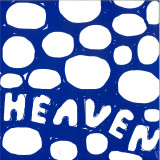
- 2: Heaven
- 3: Backseat
- 4: Tear
- 5: Lamp
- 6: Heart Breaks
- 7: Visual
- 8: In The Sky
- 9: Dreams For Somebody Else
- 10: Thinking Of You
Preston duo White Flowers announce new album, Dreams For Somebody Else - due for release 1st May 2026 via The state51 Conspiracy.
White Flowers, the long-running collaboration between Joey Cobb and Katie Drew, exists within what they call “the realm” – a shared creative space, wherein time, rather than being a restrictive force, is fluid and boundless, and music exists as an endless conversation with their past and present selves. Adopting what the band describe as a “sketchbook” approach to writing, White Flowers is the product of a decade’s worth of recordings - snippets nestled away on hard drives, only to truly make sense years later.
On Dreams For Somebody Else, the band expand upon the dark-hued dream pop of their debut, channeling the catharsis of dance music via repetitive structures and “sad, euphoric sounds”. Working alongside LCD Soundsystem and Hot Chip’s Al Doyle on production, the album maps out a mosaic of soaring choruses that swirl around imposing arrays of synths, guitars, and percussion.
Through this new lens, the band explore themes of isolation, dissociation and identity - drawing inspiration from Annie Ernaux’s The Years. “Whilst recording the songs for ‘Dreams For Somebody Else’, we really connected with the concept of Annie Ernaux’s book, ‘The Years’ - a ‘collective autobiography’ pieced together from mismatched fragments from her past, conjuring the effect that she’s merely an observer of her own life. This concept merges into the White Flowers world, where time, rather than being restrictive, is fluid and boundless, with our music existing as an endless conversation with versions of ourselves at different stages of our lives.”
“The album has that same feeling of disassociating from your own life, because you’re just blending into everyone else”, the band explains. “There’s a sadness there, because it’s as if you’re looking back on things that happened to you, and they feel like they don’t belong to you anymore”. It’s the dull ache of nostalgia intertwined with a sense of wonder at what could lie ahead - the hopeful optimism and endless loss that defines the human experience. “It’s this idea of identity not being a fixed thing, but something that’s always changing. It’s a fluid thing, similar to time. Things aren’t really fixed, but rather in a constant state of change. It’s important to remember that we’re all going through that.”
- 1: Urn Burial
- 2: The Redness In The West
- 3: The Third Migration
- 4: They Came Like Swallows
- 5: The Living Theater
- 6: The Oceans Are Crying
- 7: Insight
Black Vinyl[30,67 €]
They Came Like Swallows is the first album-length collaboration between Thurston Moore and Kramer (now officially Bonner Kramer), two giants of alternative/ experimental music. The accomplishments and influence of these two artists in the world of independent music cannot be overstated and the result of their artistic union is a startlingly cohesive statement that burns through landscapes of primitive outsider rock, avant-garde composition, progressive ambient and further locales boldly and beautifully unnamable. “Kramer and I reconnected in Miami, Florida, a few years back, many many years after each of us had departed NYC on separate life adventures. It was only a matter of time before Kramer and I started making plans to record together and with his irrepressible due diligence he quickly set up a mobile recording contraption in the pad I was decamped in, the Florida sunshine flowing through the palm leaves, lithe lizards skittering across the windowsills, and we just went for it.

Kramer had the idea to cover a Joy Division tune, a left turn from the improvisations we had been tracking, though wholly in keeping with both our sensibilities of light and dark unifying in transcendent songwriting, both of us devotees of 'the song' as well as 'the freedom.’ What transpired is They Came Like Swallows, a session we immediately felt should exist as a prayer to the war-torn souls of the families of Palestine continually decimated by the brutality of genocide. We agreed beyond words to offer our music as a sonic activism and as a beneficent energy. This album is our duo exchange for human dignity, it is our soul music for any semblance of a peaceful planet.” ~ Thurston Moore “For the first time in our nearly 45 years of friendship, we had identical time windows open to make a record together,” recounts Kramer. After all this time not a moment is wasted as the duo immediately taps into the heightened core of improvisational tension across these seven offerings. Volcanic opener “Urn Burial” notches a similar historic union (John Cale and Terry Riley) to meet the circumstances of the moment, with swirling mists of organ and pounding toms over guitar that thickens the atmosphere with jagged, grimy dissonance.
Solemn strings open the second track, “The Redness In The West,” with Kramer’s cello and viola in dueling bow beneath the high tension drive and sustain of Thurston’s electric guitar, tapping out a Morse code of tension that mounts endlessly into a fog of inevitable war by the end. Moore and Kramer’s sense of experimentalism is in free and full grandeur throughout They Came Like Swallows, though the duo keep a strong and constant sideways eye on melody, composition and architecture, to the ends that any strict lines between song and improvisation are blurred beyond qualification.
As if to punctuate this point, Swallows closes with a nightwork cover of Joy Division’s “Insight,” a doleful coda that breathes out with a solemn inner grace under Thurston’s instantly stylistically recognizable guitar melodies as they weave into he and Kramer’s unison voices. As the lone vocal piece and only traditional ‘song’ form on the album, “Insight” is unique to this set and as a closing statement draws connective lines back to the kind of dynamic, electrified melodicism that wove deep, melancholy patterns into the untamed fire of Sonic Youth’s Sister and Daydream Nation. In the album’s final moments, the two voices repeat the lyric “I’m not afraid anymore” as mantra, underscoring the heavy, unsettled themes and methods that preceded it. Kramer describes the creative process of They Came Like Swallows: “I had composed and recorded a few pieces at my home studio over the course of a couple weeks. Thurston was spending the winter in South Florida, so I flew down and spent a few days recording his guitar parts in his home there. Watching him spontaneously compose his parts was pretty astonishing, to say the least. Once we'd finished working on those pieces, we began improvising and following wherever the music pointed us, and another few pieces were born. We got straight to it, without anything driving us other than the joy of finally working together.
My personal goal was to remain present and catch as many surprises as I could from Thurston's guitar work, and there were plenty during those few days. We had a fucking blast.” Thurston’s contributions here will be readily familiar to any acolytes of his other works, the through-line between his inspired playing, cradled in Kramer’s meticulous, solid arrangements. “If I had to make this record again, I'd do it all exactly the same way,” Kramer says. “It’s like jazz, you don't think about it. You just do it. It was miraculous, and you don't fuck with a miracle.”