Spettro (SPETTRO LIBRARY) News

  • 1
Godblesscomputers - Solchi

Just as magnified record grooves reveal dust constellations and lunar landscapes, so too does Godblesscomputers' third album. 'Solchi' is a deep search into previous moments in Lorenzo Nada's lifetime, influenced by the presence and power of music. His process began with the recovery of some old cassettes, mixtapes nearly forgotten, audio recording of voices from his childhood, and lots of dusty jazz, soul, and hip-hop records. As the starting point of this travel merge with its end, past and present combine to form GBC's current sound. Warm electronic production rooted by grooving bass lines form the core of a kaleidoscope of sixteen tracks, colored by synthesizers, guitar echoes, scratches, samples, fading voices and kalimba. The album is a collection of sixteen stories, sixteen soundscapes; each of them GBC's tribute to the path taken thus far, an homage to his love for music. The recording and studio work took place over a year, with the adding and subtracting of many elements.

nicht am Lager

Bestelle jetzt und wir bestellen den Artikel für dich beim Lieferanten.

28,53

Last In: vor 8 Jahren
The Astral Dimension - Galassia M81

Fabio Borgazzi - aka Fabio Fabor - played literally every known style of music, from baroque to 'satanic' electronic, in his library music albums released during his career which lasted almost seven decades. Born in Milan in 1920, Fabor was one of the great artisans of post-war Italian popular music. Author, arranger and conductor with a classical background, he started writing songs (in the 1950's and 1960's) for popstars such as Nilla Pizzi, Johnny Dorelli and Milva; he then turned to music for theatre, cinema and tv, to which he dedicated the rest of his career. In 1981, when he released 'Galassia M81, Fabor was a veteran in the scene of library music, both as an author and an editor. It was the so-called golden age for the genre, just a moment before the advent of MIDI - which made everything easier, but flatter too, putting an end to the 'Italian Touch". The tracks featured here (credited to the fictional combo The Astral Dimension: Fabor together with his friend Antonio Arena) still have a definite Seventies taste, reminding the wave of German kosmische musik (especially the Darmstad school), but they also reflect the Moog-mania raging in pop music after the big success of Walter/Wendy Carlos with the 'Switched On' series. Avant-garde and kitsch hand in hand, ambient for documentaries and background music for horoscopes... all in sequence, with the only purpose of being used and generating royalties.

vorbestellen24.04.2017

erscheint voraussichtlich am 24.04.2017

26,77

Last In: vor 2026 Jahren
Fabio Fabor / Antonio Arena - Superman

1983, in the history of synths, is a key year. During the January edition of NAMM (the most important music fair in the US), indeed, MIDI - the standard protocol for electronic instruments interaction - was introduced to the world. Until then, programming and making synths work together was something practiced by a restricted elite of 'wizards", explorers armed with cables and analog patches, who could create new sonic worlds - but totally temporary, not replicable. Real superheroes of sonic synthesis, scientists of filters who, nowadays, are highly considered by musicians all over the world, after decades of forced exile. In Italy, the seeds of this tradition were planted in RAI's Laboratory of Phonology (in Milan), in the middle of the 1950's; later, pioneers like Piero Umiliani, Federico Monti Arduini (aka Il Guardiano Del Faro), Marcello Giombini, Giampiero Boneschi and Fabio Borgazzi (Fabio Fabor) introduced electronic music in pop. Fabor (together with Antonio Arena) is the protagonist of 'Superman", an album of library music released by the World label (owned by Minstrel group) in 1984. Borgazzi, born in 1920, lived through the whole saga of Italian easy listening music (from big orchestras to the digital revolution), always keeping up with the latest styles and trends. So it's not a surprise, here, to see him using a LinnDrum and the first Japanes synths; and it's perfectly natural to find some electro-funk touches

vorbestellen24.04.2017

erscheint voraussichtlich am 24.04.2017

25,76

Last In: vor 2026 Jahren
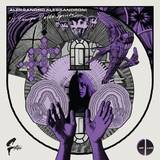
Alessandro Alessandroni - Il Tempo Dello Spirito

Amongst the first bunch of this new label releases, we couldn't miss a tribute to one of the greatest masters of libraries recordings, Alessandro Alessandroni, born in 1925. In his long career Alessandroni has published lots of soundtracks - and we mean lots of - and for this he's considered a real star of Italian music. As a friend, and close collaborator of Ennio Morricone, he's remembered as "the whistle man" for his fundamental contribution to the immortal scores of Sergio Leone's movies. His class allowed him to range between genres and atmospheres, from beat to avant-garde, from funky to abstract compositions, always reaching and keeping the highest quality. This is immediately clear in "Il Tempo Dello Spirito", originally published in 1971 for the meritorious Flirt label. It's an album full of sacred music, gospel and spiritual, yet capable of personal flashes that make it interesting, particular and unique. Simple church songs In some cases it may seems so - titles as Ave Maria, Gloria In Excelsis Deo, Pellegrinaggio or Messa Solenne do not leave much room for doubt and interpretations - but Alessandroni is able to astonish even in extreme cases like this.

vorbestellen07.11.2016

erscheint voraussichtlich am 07.11.2016

27,69

Last In: vor 2026 Jahren
Catalano, Ducros E Casa - Idee 1,

If we talk about ideas, we surely talk about "Idee 1", one of the best collaborations between Massimo Catalano and Remigio Ducros - together with "La fatica", that will be reprint in a while - with contributions from the amazing Daniela Casa. Daniela is one of the few women in the "Italian libraries" scene, but she's more talented than some of her better known male colleagues. If Daniela, and so her husband Ducros, are names linked to a tiny niche of soundtracks' lovers, Catalano has instead worked for television, being a well-known composer for the audience. His great technique and composition, combined with those of his 2 colleagues, is one of the strong points of "Idee 1", published (but never released) by Team on February 1972, fulfilled with experimental sparks (Astrazione per Flauto, Astrazione per Piano, Filanda, La Fonderia), staggering orchestrations, breakbeat and funky (Lunedì ore 7:45, Ducros), mournful atmospheres (Venerdì ore 20:30, by Casa; Ripensandoci by Catalano) and world music influences (Tibetano, Catalano). If we have to explain this record with just one track, this would be the fourth one, Creatività (Creativity): unrestrained, with no limits or filters, this song is ready to get heavy rotation on your record player.

vorbestellen07.11.2016

erscheint voraussichtlich am 07.11.2016

27,69

Last In: vor 2026 Jahren
  • 1
Artikel pro Seite:
N/ABPM
Vinyl