Поиск:sul brothers band

Стили
Все
  • 1
The Capprells & Sul Brothers Band - The Inner Thumb

Brand new label, Psychedelic Breaks & Beats, aims to uncover the rarest of rare breaks and beats and kicks off with two absolute diamonds. The pick for side A was inspired by DJ Bee, cutting up doubles of the original on Twitch, “Close Your Eyes” by The Capprells & Sul Brothers Band is a drum heavy funk banger – original copies on the Bano label go for £200+ Flip to side B for the eclectic “Soul Submarine” by The Inner Thumb aka DJMeDJYou lifted from the soundtrack "Soul Ecstasy” or should I say fake soundtrack, as the movie never existed! As played by Kenny Dope in one of his funk mixes – this label is gonna produce some collectable 45s don’t sleep! Original label art by graffiti artist, OPIUM, from Italy.

нет на складе

Закажите сейчас, и мы закажем товар для вас у нашего поставщика.

11,72

Последний логин: 3 г. назад
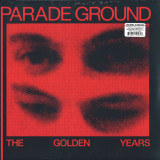
Parade Ground - The Golden Years (2025 Remaster)

Parade Ground has always been the duo of brothers Jean-Marc and Pierre Pauly from Brussels, Belgium formed in 1981. Taking cues from Post-Punk, Coldwave, Dada and Surrealism, Parade Ground channeled suffering, tension and rage through pulsing synthesizers, skeletal guitar, severe bass and Jean-Marc’s expressive vocals as the most melodic and emotional instrument. The Golden Years is an 11-song, career-spanning collection of Parade Ground’s long out-of-print 7” and 12” singles as well as rare compilation tracks from the pioneers of electronic body music created during 1982-1988.

Parade Ground first appeared on the Nationale Rockmeeting LP in 1982, striking straight to the heart with the passionate plea “I Shut My Eyes.” Later that year the brothers met Daniel B. and Patrick Codenys of Front 242 beginning a collaborative partnership that continues to present day. In 1983 they released their debut 3-song 7” EP Moan On The Sly on the New Dance label, musically a hybrid of Joy Division and Fad Gadget. 1984 brought further explorations into the world of electronic body music with the 3-song Man In A Trance EP and 2 tracks on the live concert compilation Mask Promotion both records released on Front 242's Mask Music label. The following year the single Took Advantage/Moral Support 12” was released incorporating then, state-of-the-art modular synthesizers programmed by Daniel B. and back-up vocals from Flo Sullivan (A Formal Sigh, Shiny Two Shiny). Then in 1987 the brothers collaborated with Colin Newman of British post-punk band Wire, who produced and lent his vocals, guitars and keyboards to two songs ("Moans"/"Action Replay") while Daniel B. produced flipside "Gold Rush" on the Dual Perspective EP that stands alongside 80s anthems from Tears for Fears, Modern English, Echo & The Bunnymen. Finally in 1988 their debut album Cut Up was released on Play It Again Sam Records and featured the singles Strange World and Hollywood. In 1993 the brothers wrote and composed the vocals on two Front 242 albums Up Evil and Off. After 15 years of silence the boys released their second album Rosary in 2007 and continue to write new material and tour with their extensive catalog of dark dance classics. Each LP includes a 6-page press kit with lyrics, discography, photos and liner notes by Daniel B. of Front 242. The history of Belgian electronic music would not be complete without a trip through “The Golden Years” of Parade Ground.

В наличии на складе

Есть у нас в наличии и готов к отправке

20,59
Herandu - Ocher Red LP 2x12"

"Once again it's quite difficult to pin down exactly what's going on through Herandu's debut album, Ocher Red, but its a little bit like Metalheadz meets Weather Report out on the Siberian steppes...

Herandu are brothers Evgeny and Mikhail Gavrilov from Novosibirsk in Siberia. Mikhail and his brother have played music together since they were very young eventually forming the band FPRF together in the mid 2000's. Eventually the group split as the members dispersed around Russia, but Evgeny and Mikhail continued to make music, Evgeny under the alias Dyad and Mikhail under the name Misha Sultan (some of you may remember his excellent cassette, Roots, which came out on Hive Mind in 2022).

Herandu was born in 2022 during several studio sessions they managed to grab whilst both visiting Siberia. They both quickly realised that together they were making music that didn't quite sound like either of their solo projects but which was influenced by the music of their formative years. Their friend Vladimir Luchansky was invited in to add saxophone and the result is an 'urban music' that's as influenced by the gritty cityscapes of '70s TV cop thrillers as it is by 21st Century urbanism.

The paintings on the album cover are by Italian artist Mauro Reggio, who kindly allowed us to use his work, and whose paintings seem to convey something of the mood of Herandu..."

В наличии на складе

Есть у нас в наличии и готов к отправке

19,29
Death Cult - Paradise Now LP 2x12"
  • 83: Rd Dream
  • Christians
  • Gods Zoo (These Times)
  • Brothers Grimm
  • Ghost Dance
  • Butterflies
  • A Flower In The Desert
  • Resurrection Joe
  • Horse Nation
  • Go West
  • Hollow Man
  • Dreamtime
  • Spiritwalker
  • Rain
  • Moya
  • She Sells Sanctuary

Vier Jahrzehnte nach ihrer Gründung schreiben Ian Astbury und Billy Duffy ein neues Kapitel in der Geschichte von The Cult. Gemeinsam mit John Tempesta (Bass) und Charlie Jones (Schlagzeug) ließen sie 2023 ihre legendäre Frühphase Death Cult für eine exklusive Konzertreihe wieder aufleben - eine Hommage an die Ursprünge einer der einflussreichsten britischen Rockbands der 1980er-Jahre. Das Ergebnis dieser intensiven Rückkehr erscheint am 16. Januar 2026 unter dem Titel "PARADISE LIVE" - ein 16 Songs starkes Live-Album, aufgenommen am 18. November 2023 in der ehrwürdigen Albert Hall in Duffys Heimatstadt Manchester. "PARADISE LIVE" erscheint als Doppel-LP im exklusiven "Black on White"-Splatter-Design, auf CD sowie digital. Das edle Artwork zeigt ein schwarz auf schwarz geprägtes Schmetterlingsmotiv - entworfen von Ian Astbury und kunstvoll neu interpretiert von Carter O"Sullivan (Beggars Art Department). Die Black-Splatter-Edition ist ausschließlich über den Band-Webshop erhältlich, während die White-Splatter-Edition im regulären Handel erscheint. Der Weg von The Cult begann 1981 mit Southern Death Cult, deren gleichnamiges Album posthum 1983 erschien. Noch im selben Jahr gründeten Astbury und Duffy Death Cult - der Beginn einer kreativen Partnerschaft, die seit über 40 Jahren Bestand hat. Bereits 1984 entwickelte sich daraus The Cult, die im selben Jahr ihr gefeiertes Debüt "Dreamtime" veröffentlichten. Mit "PARADISE LIVE" schließen Astbury und Duffy den Kreis - ein intensives, authentisches Live-Dokument, das Vergangenheit, Gegenwart und Zukunft einer außergewöhnlichen Band miteinander verbindet.

Сделать предзаказ16.01.2026

он должен быть опубликован на 16.01.2026

40,55

Последний логин: 2026 г. назад
Faux Real - Faux Ever LP

Faux Real

Faux Ever LP

12inchSLANG50578LP
CITY SLANG
11.10.2024

Visionary art-pop duo Faux Real (a.k.a. Los Angeles-based Franco-American brothers Virgile and Elliott Arndt) release their debut album "Faux Ever" on City Slang.

Faux Real’s long-awaited debut album "Faux Ever" is a self-described “11-piece symphony for head-banging and longing,” the album sees the fraternal duo continuing to play on the outskirts of language and sound, exploring themes of heartbreak, labor, and the home with harmonies and humor, playful beats, and en franglais. Recorded between Paris, New York, London, Los Angeles, and Provence, "Faux Ever" thrusts Faux Real’s sultry, surreal, and unclassifiable sound towards a glossier pop horizon, an existential sonic pastiche with a glistening digital sheen. "Faux Ever" also includes such certified bangers as the bold, glitchy, and infectious “Rent Free” and the acclaimed “Faux Maux,” both available everywhere already alongside self-directed official music videos streaming now on YouTube. Known far and wide for their DIY, Iggy Pop-meets-Eurodance live performances, Faux Real are building anticipation for "Faux Ever" with international shows in the UK/EU and US.

Format: 140g Crystal Clear Vinyl

About Faux Real:
Elliott and Virgile Arndt founded Faux Real in 2018, blending post-punk, glam rock, and a taste for pop grandeur, fashioning a truly inimitable musical experience. From their increasingly accomplished studio output to mesmerizing, unprecedented live performances, Faux Real invite the audience to join them an enthralling post-realist expedition through contemporary pop culture with razor-edged satire, inspired boy band choreography, and a charged sensuality that has fast earned them a fervent fan following that includes among their number such iconic stars as Duran Duran, Beck, Paramore, Metronomy, and Wet Leg. Now, with the imminent arrival of Faux Ever, Faux Real continue to gleefully ignore boundaries and barriers, assuring the journey is as exhilarating as the ultimate destination.

нет на складе

Закажите сейчас, и мы закажем товар для вас у нашего поставщика.

24,16

Последний логин: 17 мес. назад
RUSSIAN CIRCLES - STATION LP
 
6
также имеющийся в продаже

Blue Vinyl[34,41 €]


2023er LP Nachpressung auf schwarzem Vinyl! Nach eigenen Angaben verbrachten Gitarrist Mike Sullivan und Drummer Daniel Turncrantz eine gewisse Zeit in amerikanischen Nationalparks und fuhren durch Berglandschaften, als sie "Station" aufnahmen. Ihr Album klingt auch entsprechend episch, monumental und besitzt eine unglaubliche Tiefe. Sullivan und Turncrantz bekamen prominente Unterstützung vom THESE ARMS ARE SNAKES/BOTCH Bassisten Brian Cook, während sich Morgan Henderson von den BLOOD BROTHERS (R.I.P.) auf "Xavii" dem Kontrabass annimmt. Aufgenommen in Seattle von Mastermind Matt Bayles (ISIS, MASTODON, MINUS THE BEAR), verpasste er der Band diesen intensiven und beeindruckenden Klang und achtete gleichzeitig darauf, dass "Station" den Namen Album auch wirklich verdiente: ein kohärentes Werk, vom ersten Lied Campaign bis zum letzten Lied mit Double Bass Xavii. Insgesamt sechs Stücke befinden sich auf "Station" und es ist ohne Untertreibung instrumentaler Postrock at its best! Ein echtes Kunstwerk. Gegründet 2004 haben RUSSIAN CIRCLES von Anfang an mit Versatzstücken des Metal, Elementen des Minimal Jazz und kryptischen Riffs, die so klangen, als sei ein Komet in einer Großstadt eingeschlagen, verwirrt, polarisiert und unendlich verzückt. Ihre Musik verwebt einen Teppich aus intensivsten cinematischen Eindrücken, der einem auf der einen Seite mit seiner Härte den Boden unter den Füßen wegzieht, es auf der anderen Seite aber auch versteht, den Aufprall zu bremsen und für Kopfkino ohne Gleichen sorgt. "Enter", ihr Debüt von 2006, bescherte RUSSIAN CIRCLES Shows mit Größen wie TOOL, DALEK, DAUGHTERS und PELICAN. RUSSIAN CIRCLES setzen mit "Station" genau dort an, wo sie mit "Enter" aufhörten, erschließen sich aber gleichzeitig einen neuen Weg in die musikalische Tundra, um Kopf und Körper mitzuziehen und nicht nur dem Jahre 2008, sondern der ganzen Musikgeschichte ihren Stempel aufzudrücken.

Сделать предзаказ03.07.2023

он должен быть опубликован на 03.07.2023

33,15

Последний логин: 2026 г. назад
RUSSIAN CIRCLES - STATION LP
 
6
также имеющийся в продаже

Black Vinyl[33,15 €]


2023er LP Nachpressung auf schwarzem Vinyl! Nach eigenen Angaben verbrachten Gitarrist Mike Sullivan und Drummer Daniel Turncrantz eine gewisse Zeit in amerikanischen Nationalparks und fuhren durch Berglandschaften, als sie "Station" aufnahmen. Ihr Album klingt auch entsprechend episch, monumental und besitzt eine unglaubliche Tiefe. Sullivan und Turncrantz bekamen prominente Unterstützung vom THESE ARMS ARE SNAKES/BOTCH Bassisten Brian Cook, während sich Morgan Henderson von den BLOOD BROTHERS (R.I.P.) auf "Xavii" dem Kontrabass annimmt. Aufgenommen in Seattle von Mastermind Matt Bayles (ISIS, MASTODON, MINUS THE BEAR), verpasste er der Band diesen intensiven und beeindruckenden Klang und achtete gleichzeitig darauf, dass "Station" den Namen Album auch wirklich verdiente: ein kohärentes Werk, vom ersten Lied Campaign bis zum letzten Lied mit Double Bass Xavii. Insgesamt sechs Stücke befinden sich auf "Station" und es ist ohne Untertreibung instrumentaler Postrock at its best! Ein echtes Kunstwerk. Gegründet 2004 haben RUSSIAN CIRCLES von Anfang an mit Versatzstücken des Metal, Elementen des Minimal Jazz und kryptischen Riffs, die so klangen, als sei ein Komet in einer Großstadt eingeschlagen, verwirrt, polarisiert und unendlich verzückt. Ihre Musik verwebt einen Teppich aus intensivsten cinematischen Eindrücken, der einem auf der einen Seite mit seiner Härte den Boden unter den Füßen wegzieht, es auf der anderen Seite aber auch versteht, den Aufprall zu bremsen und für Kopfkino ohne Gleichen sorgt. "Enter", ihr Debüt von 2006, bescherte RUSSIAN CIRCLES Shows mit Größen wie TOOL, DALEK, DAUGHTERS und PELICAN. RUSSIAN CIRCLES setzen mit "Station" genau dort an, wo sie mit "Enter" aufhörten, erschließen sich aber gleichzeitig einen neuen Weg in die musikalische Tundra, um Kopf und Körper mitzuziehen und nicht nur dem Jahre 2008, sondern der ganzen Musikgeschichte ihren Stempel aufzudrücken.

Сделать предзаказ03.07.2023

он должен быть опубликован на 03.07.2023

34,41

Последний логин: 2026 г. назад
Lee Tracy & Isaac Manning - Is it What You Want

As the sun sets on a quaint East Nashville house, a young man bares a piece of his soul. Facing the camera, sporting a silky suit jacket/shirt/slacks/fingerless gloves ensemble that announces "singer" before he's even opened his mouth, Lee Tracy Johnson settles onto his stage, the front yard. He sways to the dirge-like drum machine pulse of a synth-soaked slow jam, extends his arms as if gaining his balance, and croons in affecting, fragile earnest, "I need your love… oh baby…"

Dogs in the yard next door begin barking. A mysterious cardboard robot figure, beamed in from galaxies unknown and affixed to a tree, is less vocal. Lee doesn't acknowledge either's presence. He's busy feeling it, arms and hands gesticulating. His voice rises in falsetto over the now-quiet dogs, over the ambient noise from the street that seeps into the handheld camcorder's microphone, over the recording of his own voice played back from a boombox off-camera. After six minutes the single, continuous shot ends. In this intimate creative universe there are no re-takes. There are many more music videos to shoot, and as Lee later puts it, "The first time you do it is actually the best. Because you can never get that again. You expressing yourself from within."

"I Need Your Love" dates from a lost heyday. From some time in the '80s or early '90s, when Lee Tracy (as he was known in performance) and his music partner/producer/manager Isaac Manning committed hours upon hours of their sonic and visual ideas to tape. Embracing drum machines and synthesizers – electronics that made their personal futurism palpable – they recorded exclusively at home, live in a room into a simple cassette deck. Soul, funk, electro and new wave informed their songs, yet Lee and Isaac eschewed the confinement of conventional categories and genres, preferring to let experimentation guide them.

"Anytime somebody put out a new record they had the same instruments or the same sound," explains Isaac. "So I basically wanted to find something that's really gonna stand out away from all of the rest of 'em." Their ethos meant that every idea they came up with was at least worth trying: echoed out half-rapped exhortations over frantic techno-style beats, gospel synth soul, modal electro-funk, oddball pop reinterpretations, emo AOR balladry, nods to Prince and the Fat Boys, or arrangements that might collapse mid-song into a mess of arcade game-ish blips before rallying to reach the finish line. All of it conjoined by consistent tape hiss, and most vitally, Lee's chameleonic voice, which managed to wildly shape shift and still evoke something sincere – whether toggling between falsetto and tenor exalting Jesus's return, or punctuating a melismatic romantic adlib with a succinct, "We all know how it feels to be alone."

"People think we went to a studio," says Isaac derisively. "We never went to no studio. We didn't have the money to go to no studio! We did this stuff at home. I shot videos in my front yard with whatever we could to get things together." Sometimes Isaac would just put on an instrumental record, be it "Planet Rock" or "Don't Cry For Me Argentina" (from Evita), press "record," and let Lee improvise over it, yielding peculiar love songs, would-be patriotic anthems, or Elvis Presley or Marilyn Monroe tributes. Technical limitations and a lack of professional polish never dissuaded them. They believed they were onto something.

"That struggle," Isaac says, "made that sound sound good to me."

In the parlance of modern music criticism Lee and Isaac's dizzying DIY efforts would inevitably be described as "outsider." But "outsider" carries the burden of untold additional layers of meaning if you're Black and from the South, creating on a budget, and trying to get someone, anyone within the country music capital of the world to take your vision seriously. "What category should we put it in?" Isaac asks rhetorically. "I don't know. All I know is feeling. I ain't gonna name it nothing. It's music. If it grabs your soul and touch your heart that's what it basically is supposed to do."

=

Born in 1963, the baby boy of nine siblings, Lee Tracy spent his earliest years living amidst the shotgun houses on Nashville's south side. "We was poor, man!" he says, recalling the outhouse his family used for a bathroom and the blocks of ice they kept in the kitchen to chill perishables. "But I actually don't think I really realized I was in poverty until I got grown and started thinking about it." Lee's mom worked at the Holiday Inn; his dad did whatever he had to do, from selling fruit from a horse drawn cart to bootlegging. "We didn't have much," Lee continues, "but my mother and my father got us the things we needed, the clothes on our back." By the end of the decade with the city's urban renewal programs razing entire neighborhoods to accommodate construction of the Interstate, the family moved to Edgehill Projects. Lee remembers music and art as a constant source of inspiration for he and his brothers and sisters – especially after seeing the Jackson 5 perform on Ed Sullivan. "As a small child I just knew that was what I wanted to do."

His older brother Don began musically mentoring him, introducing Lee to a variety of instruments and sounds. "He would never play one particular type of music, like R&B," says Lee. "I was surrounded by jazz, hard rock and roll, easy listening, gospel, reggae, country music; I mean I was a sponge absorbing all of that." Lee taught himself to play drums by beating on cardboard boxes, gaining a rep around the way for his timekeeping, and his singing voice. Emulating his favorites, Earth Wind & Fire and Cameo, he formed groups with other kids with era-evocative band names like Concept and TNT Connection, and emerged as the leader of disciplined rehearsals. "I made them practice," says Lee. "We practiced and practiced and practiced. Because I wanted that perfection." By high school the most accomplished of these bands would take top prize in a prominent local talent show. It was a big moment for Lee, and he felt ready to take things to the next level. But his band-mates had other ideas.

"I don't know what happened," he says, still miffed at the memory. "It must have blew they mind after we won and people started showing notice, because it's like everybody quit! I was like, where the hell did everybody go?" Lee had always made a point of interrogating prospective musicians about their intentions before joining his groups: were they really serious or just looking for a way to pick up girls? Now he understood even more the importance of finding a collaborator just as committed to the music as he was.

=

Isaac Manning had spent much of his life immersed in music and the arts – singing in the church choir with his family on Nashville's north side, writing, painting, dancing, and working various gigs within the entertainment industry. After serving in the armed forces, in the early '70s he ran The Teenage Place, a music and performance venue that catered to the local youth. But he was forced out of town when word of one of his recreational routines created a stir beyond the safe haven of his bohemian circles.

"I was growing marijuana," Isaac explains. "It wasn't no business, I was smoking it myself… I would put marijuana in scrambled eggs, cornbread and stuff." His weed use originated as a form of self-medication to combat severe tooth pain. But when he began sharing it with some of the other young people he hung out with, some of who just so happened to be the kids of Nashville politicians, the cops came calling. "When I got busted," he remembers, "they were talking about how they were gonna get rid of me because they didn't want me saying nothing about they children because of the politics and stuff. So I got my family, took two raggedy cars, and left Nashville and went to Vegas."

Out in the desert, Isaac happened to meet Chubby Checker of "The Twist" fame while the singer was gigging at The Flamingo. Impressed by Isaac's zeal, Checker invited him to go on the road with him as his tour manager/roadie/valet. The experience gave Isaac a window into a part of the entertainment world he'd never encountered – a glimpse of what a true pop act's audience looked like. "Chubby Checker, none of his shows were played for Black folks," he remembers. "All his gigs were done at high-class white people areas." Returning home after a few years with Chubby, Isaac was properly motivated to make it in Music City. He began writing songs and scouting around Nashville for local talent anywhere he could find it with an expressed goal: "Find someone who can deliver your songs the way you want 'em delivered and make people feel what you want them to feel."

One day while walking through Edgehill Projects Isaac heard someone playing the drums in a way that made him stop and take notice. "The music was so tight, just the drums made me feel like, oh I'm-a find this person," he recalls. "So I circled through the projects until I found who it was.

"That's how I met him – Lee Tracy. When I found him and he started singing and stuff, I said, ohhh, this is somebody different."

=

Theirs was a true complementary partnership: young Lee possessed the raw talent, the older Isaac the belief. "He's really the only one besides my brother and my family that really seen the potential in me," says Lee. "He made me see that I could do it."

Isaac long being a night owl, his house also made for a fertile collaborative environment – a space where there always seemed to be a new piece of his visual art on display: paintings, illustrations, and dolls and figures (including an enigmatic cardboard robot). Lee and Issac would hang out together and talk, listen to music, conjure ideas, and smoke the herb Isaac had resumed growing in his yard. "It got to where I could trust him, he could trust me," Isaac says of their bond. They also worked together for hours on drawings, spreading larges rolls of paper on the walls and sketching faces with abstract patterns and imagery: alien-like beings, tri-horned horse heads, inverted Janus-like characters where one visage blurred into the other.

Soon it became apparent that they didn't need other collaborators; self-sufficiency was the natural way forward. At Isaac's behest Lee, already fed up with dealing with band musicians, began playing around with a poly-sonic Yamaha keyboard at the local music store. "It had everything on it – trumpet, bass, drums, organ," remembers Lee. "And that's when I started recording my own stuff."

The technology afforded Lee the flexibility and independence he craved, setting him on a path other bedroom musicians and producers around the world were simultaneously following through the '80s into the early '90s. Saving up money from day jobs, he eventually supplemented the Yamaha Isaac had gotten him with Roland and Casio drum machines and a Moog. Lee was living in an apartment in Hillside at that point caring for his dad, who'd been partially paralyzed since early in life. In the evenings up in his second floor room, the music put him in a zone where he could tune out everything and lose himself in his ideas.

"Oh I loved it," he recalls. "I would really experiment with the instruments and use a lot of different sound effects. I was looking for something nobody else had. I wanted something totally different. And once I found the sound I was looking for, I would just smoke me a good joint and just let it go, hit the record button." More potent a creative stimulant than even Isaac's weed was the holistic flow and spontaneity of recording. Between sessions at Isaac's place and Lee's apartment, their volume of output quickly ballooned.

"We was always recording," says Lee. "That's why we have so much music. Even when I went to Isaac's and we start creating, I get home, my mind is racing, I gotta start creating, creating, creating. I remember there were times when I took a 90-minute tape from front to back and just filled it up."

"We never practiced," says Isaac. "See, that was just so odd about the whole thing. I could relate to him, and tell him about the songs I had ideas for and everything and stuff. And then he would bring it back or whatever, and we'd get together and put it down." Once the taskmaster hell bent on rehearsing, Lee had flipped a full 180. Perfection was no longer an aspiration, but the enemy of inspiration.

"I seen where practicing and practicing got me," says Lee. "A lot of musicians you get to playing and they gotta stop, they have to analyze the music. But while you analyzing you losing a lot of the greatness of what you creating. Stop analyzing what you play, just play! And it'll all take shape."

=

"I hope you understood the beginning of the record because this was invented from a dream I had today… (You tell me, I'll tell you, we'll figure it out together)" – Lee Tracy and Isaac Manning, "Hope You Understand"

Lee lets loose a maniacal cackle when he acknowledges that the material that he and Isaac recorded was by anyone's estimation pretty out there. It's the same laugh that commences "Hope You Understand" – a chaotic transmission that encapsulates the duality at the heart of their music: a stated desire to reach people and a compulsion to go as leftfield as they saw fit.

"We just did it," says Lee. "We cut the music on and cut loose. I don't sit around and write. I do it by listening, get a feeling, play the music, and the lyrics and stuff just come out of me."

The approach proved adaptable to interpreting other artists' material. While recording a cover of Whitney Houston's pop ballad "Saving All My Love For You," Lee played Whitney's version in his headphones as he laid down his own vocals – partially following the lyrics, partially using them as a departure point. The end result is barely recognizable compared with the original, Lee and Isaac having switched up the time signature and reinvented the melody along the way towards morphing a slick mainstream radio standard into something that sounds solely their own.

"I really used that song to get me started," says Lee. "Then I said, well I need something else, something is missing. Something just came over me. That's when I came up with 'Is It What You Want.'"

The song would become the centerpiece of Lee and Isaac's repertoire. Pushed along by a percolating metronomic Rhythm King style beat somewhere between a military march and a samba, "Is It What You Want" finds Lee pleading the sincerity of his commitment to a potential love interest embellished by vocal tics and hiccups subtlely reminiscent of his childhood hero MJ. Absent chord changes, only synth riffs gliding in and out like apparitions, the song achieves a lingering lo-fi power that leaves you feeling like it's still playing, somewhere, even after the fade out.

"I don't know, it's like a real spiritual song," Lee reflects. "But it's not just spiritual. To me the more I listen to it it's like about everything that you do in your everyday life, period. Is it what you want? Do you want a car or you don't want a car? Do you want Jesus or do you want the Devil? It's basically asking you the question. Can't nobody answer the question but you yourself."

In 1989 Lee won a lawsuit stemming from injuries sustained from a fight he'd gotten into. He took part of the settlement money and with Isaac pressed up "Saving All My Love For You" b/w "Is It What You Want" as a 45 single. Isaac christened the label One Chance Records. "Because that's all we wanted," he says with a laugh, "one chance."

Isaac sent the record out to radio stations and major labels, hoping for it to make enough noise to get picked up nationally. But the response he and Lee were hoping for never materialized. According to Isaac the closest the single got to getting played on the radio is when a disk jock from a local station made a highly unusual announcement on air: "The dude said on the radio, 107.5 – 'We are not gonna play 'Is It What You Want.' We cracked up! Wow, that's deep.

"It was a whole racist thing that was going on," he reflects. "So we just looked over and kept on going. That was it. That was about the way it goes… If you were Black and you were living in Nashville and stuff, that's the way you got treated." Isaac already knew as much from all the times he'd brought he and Lee's tapes (even their cache of country music tunes) over to Music Row to try to drum up interest to no avail.

"Isaac, he really worked his ass off," says Lee. "He probably been to every record place down on Music Row." Nashville's famed recording and music business corridor wasn't but a few blocks from where Lee grew up. Close enough, he remembers, for him to ride his bike along its back alleys and stumble upon the occasional random treasure, like a discarded box of harmonicas. Getting in through the front door, however, still felt a world away.

"I just don't think at the time our music fell into a category for them," he concedes. "It was before its time."

=

Lee stopped making music some time in the latter part of the '90s, around the time his mom passed away and life became increasingly tough to manage. "When my mother died I had a nervous breakdown," he says, "So I shut down for a long time. I was in such a sadness frame of mind. That's why nobody seen me. I had just disappeared off the map." He fell out of touch with Isaac, and in an indication of just how bad things had gotten for him, lost track of all the recordings they'd made together. Music became a distant memory.

Fortunately, Isaac kept the faith. In a self-published collection of his poetry – paeans to some of his favorite entertainment and public figures entitled Friends and Dick Clark – he'd written that he believed "music has a life of its own." But his prescience and presence of mind were truly manifested in the fact that he kept an archive of he and Lee's work. As perfectly imperfect as "Is It What You Want" now sounds in a post-Personal Space world, Lee and Isaac's lone official release was in fact just a taste. The bulk of the Is It What You Want album is culled from the pair's essentially unheard home recordings – complete songs, half-realized experiments, Isaac's blue monologues and pronouncements et al – compiled, mixed and programmed in the loose and impulsive creative spirit of their regular get-togethers from decades ago. The rest of us, it seems, may have finally caught up to them.

On the prospect of at long last reaching a wider audience, Isaac says simply, "I been trying for a long time, it feels good." Ever the survivor, he adds, "The only way I know how to make it to the top is to keep climbing. If one leg break on the ladder, hey, you gotta fix it and keep on going… That's where I be at. I'll kill death to make it out there."

For Lee it all feels akin to a personal resurrection: "It's like I was in a tomb and the tomb was opened and I'm back… Man, it feels so great. I feel like I'm gonna jump out of my skin." Success at this stage of his life, he realizes, probably means something different than what it did back when he was singing and dancing in Isaac's front yard. "What I really mean by 'making it,'" he explains isn't just the music being heard but, "the story being told."

Occasionally Lee will pull up "Is It What You Want" on YouTube on his phone, put on his headphones, and listen. He remembers the first time he heard his recorded voice. How surreal it was, how he thought to himself, "Is that really me?" What would he say to that younger version of himself now?

"I would probably tell myself, hang in there, don't give up. Keep striving for the goal. And everything will work out."

Despite what's printed on the record label, sometimes you do get more than one chance.

нет на складе

Закажите сейчас, и мы закажем товар для вас у нашего поставщика.

11,72

Последний логин: 3 г. назад
Los Cotopla Boyz - Mamarron Vol. 1 (Remastered)

Los Cotopla Boyz: Millennial Cumbia For The End Of The World. The newest psychedelic space ranger Cumbia band from Bogotá's infamous DIY scene have been sent to earth to save the party! Los Cotopla Boyz make the walls sweat, they set fire to your feet on the dance floor. It all started in Bogotá, which you might say is the tropicanibal venue par excellence, a place that has brought life to acts like Frente Cumbiero, Los Meridian Brothers, Romperayo, Chúpame el dedo, Dub de Gaita, Los Pirañas, Onda trópica and León Pardo, among other eccentricities that have taken the world and stand out not only for their virtuosity but also the connection that lives between that salvaging of traditional folklore and lysergic futurism that expands hypnotically around the world. From this musical hotbed that emerged in the second decade of the new millennium, there is now a new generation to continue the tropicanibal scene, with groups such as La Sonora Mazurén, La Tromba Bacalao, Los Yoryis, El Conjunto Media Luna and, of course, Los Cotopla Boyz, a five-piece that formed in Bogotá in 2018 but inhabit a post-pandemic dystopian multiverse where their mission is to save the party. So their live performances have that illusion of frantic Power Rangers singing about their adventures, as if these were epic chants, except instead of heroic feats they sing with humor about their everyday lives, like the drama “N’sync” about that chat where they leave you on read, or “Me Malviajé con las Ganlletas” about the hallucinogenic experimentation of ingesting cannabis and flipping out. These experiences also lead to songs like the clumsy love lost of “Dama tu Wasap,” the cathartic “Tren de Cotopla” and the ode to excess that is “Raspafiestas,” that moment in your life when the night seems eternal and you only want to go from one party to the next until the world ends. These songs, together with “Plankton (Abanico Sanyo)” and “El Peruanito” are part of Mamarron, Vol. 1, a compilation of seven millennial cannon shots inspired by Los Mirlos, Los Hechizeros Band, Anan, Wendy Sulca, La Sonora Cordobesa, Bad Bunny, Yandel and Los Corraleros de Majagual, tracks laid down on their debut record that saw the light in 2020 in the middle of the pandemic and will be re-released in 2022 by AYA records (ZZK Records imprint.) As well as being pressed on vinyl the album will include the bonus track “El Peruanito” remixed by Colombian producer Santiago Navas and taken from Mamarrón, Vol. 2, their album of remixes by figures such as Frente Cumbiero, Cerrero, Prendida, Sonido Confirmación, DJ Rata Piano and Felipe Orjuela, local producers and musicians with a global scope and vision who expand the raspafiesta universe to the limits of the world. Los Cotopla Boyz are a sweaty, schizophrenic cumbia experience that has been witnessed by emerging Bogotá clubs like Matik-Matik, Boogaloop, El Chamán, Tejo Turmequé, Videoclub and the festival Hermoso Ruido, providing nights of wild abandon to the beat of an outrageous big cumbia sound, a ritual of release giving those present a maximum catharsis that has no compare, not even the most animalistic moves of any metaller shaking his powerful mane. Los Cotopla make the walls sweat, they set fire to your feet on the dancefloor, drawing amorphous moves from their fans on exquisite nights. Tracks SIDE A: 1. Plankton (Abanico Sanyo) 2. El Peruanito 3. Dame tu Wasap 4. N’sync SIDE B: 1. Tren de Cotopla 2. Me Malviaje con Ganlletas 3. Raspafiestas 4. El Peruanito (Santiago Navas Remix)

Сделать предзаказ29.09.2022

он должен быть опубликован на 29.09.2022

25,63

Последний логин: 2026 г. назад
Lee Tracy & Isaac Manning - Is it What You Want LP

As the sun sets on a quaint East Nashville house, a young man bares a piece of his soul. Facing the camera, sporting a silky suit jacket/shirt/slacks/fingerless gloves ensemble that announces "singer" before he's even opened his mouth, Lee Tracy Johnson settles onto his stage, the front yard. He sways to the dirge-like drum machine pulse of a synth-soaked slow jam, extends his arms as if gaining his balance, and croons in affecting, fragile earnest, "I need your love… oh baby…"

Dogs in the yard next door begin barking. A mysterious cardboard robot figure, beamed in from galaxies unknown and affixed to a tree, is less vocal. Lee doesn't acknowledge either's presence. He's busy feeling it, arms and hands gesticulating. His voice rises in falsetto over the now-quiet dogs, over the ambient noise from the street that seeps into the handheld camcorder's microphone, over the recording of his own voice played back from a boombox off-camera. After six minutes the single, continuous shot ends. In this intimate creative universe there are no re-takes. There are many more music videos to shoot, and as Lee later puts it, "The first time you do it is actually the best. Because you can never get that again. You expressing yourself from within."

"I Need Your Love" dates from a lost heyday. From some time in the '80s or early '90s, when Lee Tracy (as he was known in performance) and his music partner/producer/manager Isaac Manning committed hours upon hours of their sonic and visual ideas to tape. Embracing drum machines and synthesizers – electronics that made their personal futurism palpable – they recorded exclusively at home, live in a room into a simple cassette deck. Soul, funk, electro and new wave informed their songs, yet Lee and Isaac eschewed the confinement of conventional categories and genres, preferring to let experimentation guide them.

"Anytime somebody put out a new record they had the same instruments or the same sound," explains Isaac. "So I basically wanted to find something that's really gonna stand out away from all of the rest of 'em." Their ethos meant that every idea they came up with was at least worth trying: echoed out half-rapped exhortations over frantic techno-style beats, gospel synth soul, modal electro-funk, oddball pop reinterpretations, emo AOR balladry, nods to Prince and the Fat Boys, or arrangements that might collapse mid-song into a mess of arcade game-ish blips before rallying to reach the finish line. All of it conjoined by consistent tape hiss, and most vitally, Lee's chameleonic voice, which managed to wildly shape shift and still evoke something sincere – whether toggling between falsetto and tenor exalting Jesus's return, or punctuating a melismatic romantic adlib with a succinct, "We all know how it feels to be alone."

"People think we went to a studio," says Isaac derisively. "We never went to no studio. We didn't have the money to go to no studio! We did this stuff at home. I shot videos in my front yard with whatever we could to get things together." Sometimes Isaac would just put on an instrumental record, be it "Planet Rock" or "Don't Cry For Me Argentina" (from Evita), press "record," and let Lee improvise over it, yielding peculiar love songs, would-be patriotic anthems, or Elvis Presley or Marilyn Monroe tributes. Technical limitations and a lack of professional polish never dissuaded them. They believed they were onto something.

"That struggle," Isaac says, "made that sound sound good to me."

In the parlance of modern music criticism Lee and Isaac's dizzying DIY efforts would inevitably be described as "outsider." But "outsider" carries the burden of untold additional layers of meaning if you're Black and from the South, creating on a budget, and trying to get someone, anyone within the country music capital of the world to take your vision seriously. "What category should we put it in?" Isaac asks rhetorically. "I don't know. All I know is feeling. I ain't gonna name it nothing. It's music. If it grabs your soul and touch your heart that's what it basically is supposed to do."

=

Born in 1963, the baby boy of nine siblings, Lee Tracy spent his earliest years living amidst the shotgun houses on Nashville's south side. "We was poor, man!" he says, recalling the outhouse his family used for a bathroom and the blocks of ice they kept in the kitchen to chill perishables. "But I actually don't think I really realized I was in poverty until I got grown and started thinking about it." Lee's mom worked at the Holiday Inn; his dad did whatever he had to do, from selling fruit from a horse drawn cart to bootlegging. "We didn't have much," Lee continues, "but my mother and my father got us the things we needed, the clothes on our back." By the end of the decade with the city's urban renewal programs razing entire neighborhoods to accommodate construction of the Interstate, the family moved to Edgehill Projects. Lee remembers music and art as a constant source of inspiration for he and his brothers and sisters – especially after seeing the Jackson 5 perform on Ed Sullivan. "As a small child I just knew that was what I wanted to do."

His older brother Don began musically mentoring him, introducing Lee to a variety of instruments and sounds. "He would never play one particular type of music, like R&B," says Lee. "I was surrounded by jazz, hard rock and roll, easy listening, gospel, reggae, country music; I mean I was a sponge absorbing all of that." Lee taught himself to play drums by beating on cardboard boxes, gaining a rep around the way for his timekeeping, and his singing voice. Emulating his favorites, Earth Wind & Fire and Cameo, he formed groups with other kids with era-evocative band names like Concept and TNT Connection, and emerged as the leader of disciplined rehearsals. "I made them practice," says Lee. "We practiced and practiced and practiced. Because I wanted that perfection." By high school the most accomplished of these bands would take top prize in a prominent local talent show. It was a big moment for Lee, and he felt ready to take things to the next level. But his band-mates had other ideas.

"I don't know what happened," he says, still miffed at the memory. "It must have blew they mind after we won and people started showing notice, because it's like everybody quit! I was like, where the hell did everybody go?" Lee had always made a point of interrogating prospective musicians about their intentions before joining his groups: were they really serious or just looking for a way to pick up girls? Now he understood even more the importance of finding a collaborator just as committed to the music as he was.

=

Isaac Manning had spent much of his life immersed in music and the arts – singing in the church choir with his family on Nashville's north side, writing, painting, dancing, and working various gigs within the entertainment industry. After serving in the armed forces, in the early '70s he ran The Teenage Place, a music and performance venue that catered to the local youth. But he was forced out of town when word of one of his recreational routines created a stir beyond the safe haven of his bohemian circles.

"I was growing marijuana," Isaac explains. "It wasn't no business, I was smoking it myself… I would put marijuana in scrambled eggs, cornbread and stuff." His weed use originated as a form of self-medication to combat severe tooth pain. But when he began sharing it with some of the other young people he hung out with, some of who just so happened to be the kids of Nashville politicians, the cops came calling. "When I got busted," he remembers, "they were talking about how they were gonna get rid of me because they didn't want me saying nothing about they children because of the politics and stuff. So I got my family, took two raggedy cars, and left Nashville and went to Vegas."

Out in the desert, Isaac happened to meet Chubby Checker of "The Twist" fame while the singer was gigging at The Flamingo. Impressed by Isaac's zeal, Checker invited him to go on the road with him as his tour manager/roadie/valet. The experience gave Isaac a window into a part of the entertainment world he'd never encountered – a glimpse of what a true pop act's audience looked like. "Chubby Checker, none of his shows were played for Black folks," he remembers. "All his gigs were done at high-class white people areas." Returning home after a few years with Chubby, Isaac was properly motivated to make it in Music City. He began writing songs and scouting around Nashville for local talent anywhere he could find it with an expressed goal: "Find someone who can deliver your songs the way you want 'em delivered and make people feel what you want them to feel."

One day while walking through Edgehill Projects Isaac heard someone playing the drums in a way that made him stop and take notice. "The music was so tight, just the drums made me feel like, oh I'm-a find this person," he recalls. "So I circled through the projects until I found who it was.

"That's how I met him – Lee Tracy. When I found him and he started singing and stuff, I said, ohhh, this is somebody different."

=

Theirs was a true complementary partnership: young Lee possessed the raw talent, the older Isaac the belief. "He's really the only one besides my brother and my family that really seen the potential in me," says Lee. "He made me see that I could do it."

Isaac long being a night owl, his house also made for a fertile collaborative environment – a space where there always seemed to be a new piece of his visual art on display: paintings, illustrations, and dolls and figures (including an enigmatic cardboard robot). Lee and Issac would hang out together and talk, listen to music, conjure ideas, and smoke the herb Isaac had resumed growing in his yard. "It got to where I could trust him, he could trust me," Isaac says of their bond. They also worked together for hours on drawings, spreading larges rolls of paper on the walls and sketching faces with abstract patterns and imagery: alien-like beings, tri-horned horse heads, inverted Janus-like characters where one visage blurred into the other.

Soon it became apparent that they didn't need other collaborators; self-sufficiency was the natural way forward. At Isaac's behest Lee, already fed up with dealing with band musicians, began playing around with a poly-sonic Yamaha keyboard at the local music store. "It had everything on it – trumpet, bass, drums, organ," remembers Lee. "And that's when I started recording my own stuff."

The technology afforded Lee the flexibility and independence he craved, setting him on a path other bedroom musicians and producers around the world were simultaneously following through the '80s into the early '90s. Saving up money from day jobs, he eventually supplemented the Yamaha Isaac had gotten him with Roland and Casio drum machines and a Moog. Lee was living in an apartment in Hillside at that point caring for his dad, who'd been partially paralyzed since early in life. In the evenings up in his second floor room, the music put him in a zone where he could tune out everything and lose himself in his ideas.

"Oh I loved it," he recalls. "I would really experiment with the instruments and use a lot of different sound effects. I was looking for something nobody else had. I wanted something totally different. And once I found the sound I was looking for, I would just smoke me a good joint and just let it go, hit the record button." More potent a creative stimulant than even Isaac's weed was the holistic flow and spontaneity of recording. Between sessions at Isaac's place and Lee's apartment, their volume of output quickly ballooned.

"We was always recording," says Lee. "That's why we have so much music. Even when I went to Isaac's and we start creating, I get home, my mind is racing, I gotta start creating, creating, creating. I remember there were times when I took a 90-minute tape from front to back and just filled it up."

"We never practiced," says Isaac. "See, that was just so odd about the whole thing. I could relate to him, and tell him about the songs I had ideas for and everything and stuff. And then he would bring it back or whatever, and we'd get together and put it down." Once the taskmaster hell bent on rehearsing, Lee had flipped a full 180. Perfection was no longer an aspiration, but the enemy of inspiration.

"I seen where practicing and practicing got me," says Lee. "A lot of musicians you get to playing and they gotta stop, they have to analyze the music. But while you analyzing you losing a lot of the greatness of what you creating. Stop analyzing what you play, just play! And it'll all take shape."

=

"I hope you understood the beginning of the record because this was invented from a dream I had today… (You tell me, I'll tell you, we'll figure it out together)" – Lee Tracy and Isaac Manning, "Hope You Understand"

Lee lets loose a maniacal cackle when he acknowledges that the material that he and Isaac recorded was by anyone's estimation pretty out there. It's the same laugh that commences "Hope You Understand" – a chaotic transmission that encapsulates the duality at the heart of their music: a stated desire to reach people and a compulsion to go as leftfield as they saw fit.

"We just did it," says Lee. "We cut the music on and cut loose. I don't sit around and write. I do it by listening, get a feeling, play the music, and the lyrics and stuff just come out of me."

The approach proved adaptable to interpreting other artists' material. While recording a cover of Whitney Houston's pop ballad "Saving All My Love For You," Lee played Whitney's version in his headphones as he laid down his own vocals – partially following the lyrics, partially using them as a departure point. The end result is barely recognizable compared with the original, Lee and Isaac having switched up the time signature and reinvented the melody along the way towards morphing a slick mainstream radio standard into something that sounds solely their own.

"I really used that song to get me started," says Lee. "Then I said, well I need something else, something is missing. Something just came over me. That's when I came up with 'Is It What You Want.'"

The song would become the centerpiece of Lee and Isaac's repertoire. Pushed along by a percolating metronomic Rhythm King style beat somewhere between a military march and a samba, "Is It What You Want" finds Lee pleading the sincerity of his commitment to a potential love interest embellished by vocal tics and hiccups subtlely reminiscent of his childhood hero MJ. Absent chord changes, only synth riffs gliding in and out like apparitions, the song achieves a lingering lo-fi power that leaves you feeling like it's still playing, somewhere, even after the fade out.

"I don't know, it's like a real spiritual song," Lee reflects. "But it's not just spiritual. To me the more I listen to it it's like about everything that you do in your everyday life, period. Is it what you want? Do you want a car or you don't want a car? Do you want Jesus or do you want the Devil? It's basically asking you the question. Can't nobody answer the question but you yourself."

In 1989 Lee won a lawsuit stemming from injuries sustained from a fight he'd gotten into. He took part of the settlement money and with Isaac pressed up "Saving All My Love For You" b/w "Is It What You Want" as a 45 single. Isaac christened the label One Chance Records. "Because that's all we wanted," he says with a laugh, "one chance."

Isaac sent the record out to radio stations and major labels, hoping for it to make enough noise to get picked up nationally. But the response he and Lee were hoping for never materialized. According to Isaac the closest the single got to getting played on the radio is when a disk jock from a local station made a highly unusual announcement on air: "The dude said on the radio, 107.5 – 'We are not gonna play 'Is It What You Want.' We cracked up! Wow, that's deep.

"It was a whole racist thing that was going on," he reflects. "So we just looked over and kept on going. That was it. That was about the way it goes… If you were Black and you were living in Nashville and stuff, that's the way you got treated." Isaac already knew as much from all the times he'd brought he and Lee's tapes (even their cache of country music tunes) over to Music Row to try to drum up interest to no avail.

"Isaac, he really worked his ass off," says Lee. "He probably been to every record place down on Music Row." Nashville's famed recording and music business corridor wasn't but a few blocks from where Lee grew up. Close enough, he remembers, for him to ride his bike along its back alleys and stumble upon the occasional random treasure, like a discarded box of harmonicas. Getting in through the front door, however, still felt a world away.

"I just don't think at the time our music fell into a category for them," he concedes. "It was before its time."

=

Lee stopped making music some time in the latter part of the '90s, around the time his mom passed away and life became increasingly tough to manage. "When my mother died I had a nervous breakdown," he says, "So I shut down for a long time. I was in such a sadness frame of mind. That's why nobody seen me. I had just disappeared off the map." He fell out of touch with Isaac, and in an indication of just how bad things had gotten for him, lost track of all the recordings they'd made together. Music became a distant memory.

Fortunately, Isaac kept the faith. In a self-published collection of his poetry – paeans to some of his favorite entertainment and public figures entitled Friends and Dick Clark – he'd written that he believed "music has a life of its own." But his prescience and presence of mind were truly manifested in the fact that he kept an archive of he and Lee's work. As perfectly imperfect as "Is It What You Want" now sounds in a post-Personal Space world, Lee and Isaac's lone official release was in fact just a taste. The bulk of the Is It What You Want album is culled from the pair's essentially unheard home recordings – complete songs, half-realized experiments, Isaac's blue monologues and pronouncements et al – compiled, mixed and programmed in the loose and impulsive creative spirit of their regular get-togethers from decades ago. The rest of us, it seems, may have finally caught up to them.

On the prospect of at long last reaching a wider audience, Isaac says simply, "I been trying for a long time, it feels good." Ever the survivor, he adds, "The only way I know how to make it to the top is to keep climbing. If one leg break on the ladder, hey, you gotta fix it and keep on going… That's where I be at. I'll kill death to make it out there."

For Lee it all feels akin to a personal resurrection: "It's like I was in a tomb and the tomb was opened and I'm back… Man, it feels so great. I feel like I'm gonna jump out of my skin." Success at this stage of his life, he realizes, probably means something different than what it did back when he was singing and dancing in Isaac's front yard. "What I really mean by 'making it,'" he explains isn't just the music being heard but, "the story being told."

Occasionally Lee will pull up "Is It What You Want" on YouTube on his phone, put on his headphones, and listen. He remembers the first time he heard his recorded voice. How surreal it was, how he thought to himself, "Is that really me?" What would he say to that younger version of himself now?

"I would probably tell myself, hang in there, don't give up. Keep striving for the goal. And everything will work out."

Despite what's printed on the record label, sometimes you do get more than one chance.

нет на складе

Закажите сейчас, и мы закажем товар для вас у нашего поставщика.

23,49

Последний логин: 3 г. назад
LOS COTOPLA BOYZ - MAMARRON VOL. 1

The newest psychedelic space ranger Cumbia band from Bogotá's infamous DIY scene have been sent to earth to save the party! Los Cotopla Boyz make the walls sweat, they set fire to your feet on the dance floor. It all started in Bogotá, which you might say is the tropicanibal venue par excellence, a place that has brought life to acts like Frente Cumbiero, Los Meridian Brothers, Romperayo, Chúpame el dedo, Dub de Gaita, Los Pirañas, Onda trópica and León Pardo, among other eccentricities that have taken the world and stand out not only for their virtuosity but also the connection that lives between that salvaging of traditional folklore and lysergic futurism that expands hypnotically around the world. From this musical hotbed that emerged in the second decade of the new millennium, there is now a new generation to continue the tropicanibal scene, with groups such as La Sonora Mazurén, La Tromba Bacalao, Los Yoryis, El Conjunto Media Luna and, of course, Los Cotopla Boyz, a five-piece that formed in Bogotá in 2018 but inhabit a post-pandemic dystopian multiverse where their mission is to save the party. So their live performances have that illusion of frantic Power Rangers singing about their adventures, as if these were epic chants, except instead of heroic feats they sing with humor about their everyday lives. Mamarron, Vol. 1 consists of seven millennial cannon shots inspired by Los Mirlos, Los Hechizeros Band, Anan, Wendy Sulca, La Sonora Cordobesa, Bad Bunny, Yandel and Los Corraleros de Majagual. The tracks were laid down on their debut record that saw the light in 2020 in the middle of the pandemic and are now re-released in 2022 by ZZK Records imprint AYA records and being pressed on vinyl. The vinyl album also will include the bonus track "El Peruanito" remixed by Colombian producer Santiago Navas. Los Cotopla Boyz are a sweaty, schizophrenic cumbia experience that has been witnessed by emerging Bogotá clubs like Matik-Matik, Boogaloop, El Chamán, Tejo Turmequé, Videoclub and the festival Hermoso Ruido, providing nights of wild abandon to the beat of an outrageous big cumbia sound, a ritual of release giving those present a maximum catharsis that has no compare, not even the most animalistic moves of any metaller shaking his powerful mane. Los Cotopla make the walls sweat, they set fire to your feet on the dancefloor, drawing amorphous moves from their fans on exquisite nights.

Сделать предзаказ26.08.2022

он должен быть опубликован на 26.08.2022

22,48

Последний логин: 2026 г. назад
Bria - Cuntry Covers Vol. 1

Bria

Cuntry Covers Vol. 1

12inchSP1456
Sub Pop
10.12.2021

Bria is an intimate and incisive labour of love from multi-instrumentalists Bria Salmena
and Duncan Hay Jennings. Catapulted by a deep sense of dread and confusion in the
depths of 2020, Salmena decided to forgo writing her own music. “I wanted to listen for
what might reflect my life back to me,” she says, “six tracks that could be my mirror.” The
result is a pointillistic knockout of a release that weaves a landscape both luscious and a
little rogue; showing us exactly what good songs can do.
 Bria’s internal turbulence seemed to mirror last year’s external instability. When Jennings
and back-up singer Jaime McCuaig moved to The Outside Inn, a hobby farm in Hockley
Hills, Ontario, Bria soon joined. The farm’s living-room-turned-studio proved an ideal
setting for the long-time friends to compile a record of handpicked country covers. They
went searching for songs that could speak to our everyday loneliness, outside and in.
‘Cuntry Covers’ houses it all: well-worn favourites and lesser-known gems.
 The record opens with ‘Green Rocky Road’, as performed by Greenwich Village legend
Karen Dalton. Jennings’ twangy guitar carries Bria’s original inflection and richly textured
vocals, complete with dreamy overlay. ‘Dreaming My Dreams With You’, a rendition of the
Waylon Jennings hit, is followed by John Cale’s ‘Buffalo Ballet’, a lyrical journey through
Abilene, Texas, the endpoint of the Chisholm Trail.
 Engineered and mixed by Duncan Hay Jennings, each song brings desire and sexuality
front and centre, with all the swagger you’d expect – and more. Bria hopes the record will
be understood as a small contribution to the subversion of a genre with deep patriarchal
roots. Mistress Mary’s ‘I Don’t Wanna Love Ya Now’, from the 1969 album ‘Housewife’,
served as the original inspiration. “It was the first song Duncan and I worked on,” Bria
notes. “It definitely set the tone for the other tracks we picked.”
 Bria’s voice - described as wavering between “sultry and howitzer” - shines on ‘Fruits Of
My Labour’, written and performed by country great, Lucinda Williams. The Walker
Brothers’ ‘The Sun Ain’t Gonna Shine Anymore’ is a harmonic (and hypnotic) standout. A
musical explorer who moves fluidly between styles, Bria doesn’t consider herself a
country artist: “I feel as though I’m a visitor here, paying respect to a style that has
informed a part of my musical identity. Country music, as much as any other art form,
should be an arena for representation, expression and provocation. I have a ton of
reverence for artists who came before me and challenged the primarily whiteheterosexual status quo.”
 Salmena and Jennings have toured for years as members of Toronto four-piece FRIGS,
whose 2018 debut ‘Basic Behaviour’ was long-listed for the Polaris Music Prize. Making a
mark in diverse genres from country to punk, both play as permanent members of Orville
Peck’s band.
 ‘Cuntry Covers’ was recorded on the territories of the Anishnaabe, the Haudenosaunee,
the Wendat and the Mississaugas of the Credit. The release also features contributions
from FRIGS drummer Kris Bowering and vocals by Ali Jennings.
 LP pressed on opaque breeze blue vinyl.

Сделать предзаказ10.12.2021

он должен быть опубликован на 10.12.2021

25,17

Последний логин: 2026 г. назад
Bria - Cuntry Covers Vol. 1

Bria

Cuntry Covers Vol. 1

CassetteSPCS1456
Sub Pop
10.12.2021

Bria is an intimate and incisive labour of love from multi-instrumentalists Bria Salmena
and Duncan Hay Jennings. Catapulted by a deep sense of dread and confusion in the
depths of 2020, Salmena decided to forgo writing her own music. “I wanted to listen for
what might reflect my life back to me,” she says, “six tracks that could be my mirror.” The
result is a pointillistic knockout of a release that weaves a landscape both luscious and a
little rogue; showing us exactly what good songs can do.
 Bria’s internal turbulence seemed to mirror last year’s external instability. When Jennings
and back-up singer Jaime McCuaig moved to The Outside Inn, a hobby farm in Hockley
Hills, Ontario, Bria soon joined. The farm’s living-room-turned-studio proved an ideal
setting for the long-time friends to compile a record of handpicked country covers. They
went searching for songs that could speak to our everyday loneliness, outside and in.
‘Cuntry Covers’ houses it all: well-worn favourites and lesser-known gems.
 The record opens with ‘Green Rocky Road’, as performed by Greenwich Village legend
Karen Dalton. Jennings’ twangy guitar carries Bria’s original inflection and richly textured
vocals, complete with dreamy overlay. ‘Dreaming My Dreams With You’, a rendition of the
Waylon Jennings hit, is followed by John Cale’s ‘Buffalo Ballet’, a lyrical journey through
Abilene, Texas, the endpoint of the Chisholm Trail.
 Engineered and mixed by Duncan Hay Jennings, each song brings desire and sexuality
front and centre, with all the swagger you’d expect – and more. Bria hopes the record will
be understood as a small contribution to the subversion of a genre with deep patriarchal
roots. Mistress Mary’s ‘I Don’t Wanna Love Ya Now’, from the 1969 album ‘Housewife’,
served as the original inspiration. “It was the first song Duncan and I worked on,” Bria
notes. “It definitely set the tone for the other tracks we picked.”
 Bria’s voice - described as wavering between “sultry and howitzer” - shines on ‘Fruits Of
My Labour’, written and performed by country great, Lucinda Williams. The Walker
Brothers’ ‘The Sun Ain’t Gonna Shine Anymore’ is a harmonic (and hypnotic) standout. A
musical explorer who moves fluidly between styles, Bria doesn’t consider herself a
country artist: “I feel as though I’m a visitor here, paying respect to a style that has
informed a part of my musical identity. Country music, as much as any other art form,
should be an arena for representation, expression and provocation. I have a ton of
reverence for artists who came before me and challenged the primarily whiteheterosexual status quo.”
 Salmena and Jennings have toured for years as members of Toronto four-piece FRIGS,
whose 2018 debut ‘Basic Behaviour’ was long-listed for the Polaris Music Prize. Making a
mark in diverse genres from country to punk, both play as permanent members of Orville
Peck’s band.
 ‘Cuntry Covers’ was recorded on the territories of the Anishnaabe, the Haudenosaunee,
the Wendat and the Mississaugas of the Credit. The release also features contributions
from FRIGS drummer Kris Bowering and vocals by Ali Jennings.
 LP pressed on opaque breeze blue vinyl.

Сделать предзаказ10.12.2021

он должен быть опубликован на 10.12.2021

11,13

Последний логин: 2026 г. назад
MORCHEEBA - BLACKEST BLUE

Morcheeba

BLACKEST BLUE

12inchFAR009LP
Fly Agaric
14.05.2021

Pioneers of the British music scene, ‘Blackest Blue’ will be the band's 10th studio album in a discography that spans three decades. 2020 saw Morcheeba unable to tour or perform live, which gave Skye Edwards & Ross Godfrey “time to write songs and really get to hone them,” as Godfrey puts it. “There weren’t so many pressures so we could really take our time getting the songs right,” adds Edwards.

The result of this time is a refined 10 track album that fuses previous incarnations and sound of the band - such as downbeat, chill, electro-pop & soul - into one cohesive record that dives deep into the soul of the band’s genre-mashing musical heritage. As usual, the band didn’t approach the album with any pre-conceptions, and instead created an organic journey that represents everything great about Morcheeba.

Edwards’ lyrics are primarily focused on positivity and overcoming personal adversity that lies within. ‘Sounds Of Blue’, is a stunning cut that puts Skye Edward's sultry vocals to the forefront, floating high above an ethereal backdrop.

The album includes features with Duke Garwood (known for his work with Mark Lanegan, amongst others) and Brad Barr (The Slip, The Barr Brothers). “

Morcheeba’s global reach is impressive, taking them to every corner of the world . Their signature chilled electronic/organic sound has been border-hopping ever since the London-based band emerged as a household name. The past year has been one of introspection for the duo, as they take stock of their renewed global fan base and look forward to being able to play the new album live in the not too distant future. “This was the first time since I was a teenager that I’d spent a year off the road and I enjoyed the tranquility, although I missed playing my guitar in far off lands,” says Godfrey.

Сделать предзаказ14.05.2021

он должен быть опубликован на 14.05.2021

20,97

Последний логин: 2026 г. назад
Green Day - Greatest Hits: Godÿs Favorite Band
  • 1: 2000 Light Years Away
  • 2: Longview
  • 3: Welcome To Paradise
  • 4: Basket Case
  • 5: When I Come Around
  • 6: She
  • 7: Brain Stew
  • 8: Hitching A Ride
  • 9: Good Riddance
  • 10: Minority
  • 11: Warning
  • 12: American Idiot
  • 13: Holiday
  • 14: Boulevard Of Broken Dreams
  • 15: Wake Me Up When September Ends
  • 16: Know Your Enemy
  • 17: 21 Guns
  • 18: Oh Love
  • 19: Bang Bang
  • 20: Still Breathing
  • 21: Ordinary World Feat. Miranda Lambert
  • 22: Back In The Usa

Grammy® Award-winning Rock and Roll Hall of Fame inductees Green Day will release Greatest Hits: God's Favorite Band on 17th November. The playlist includes 20 hits spanning the band's prolific 21 years as a band, plus a brand new song called Back In The USA' and a new duet with award-winning Country Music superstar Miranda Lambert on Ordinary World.' Green Day frontman Billie Joe Armstrong previously collaborated with Lambert at the 56th annual Grammy® Awards in 2014 for a live duet in tribute of the late Phil Everly of The Everly Brothers.

On 22nd March, God miraculously came down to the Ed Sullivan Theatre to introduce Green Day as God's Favorite Band' on The Late Show with Stephen Colbert. When God speaks people listen, and he granted Green Day the title: Greatest Hits: God's Favorite Band. The collection chronicles the sonic journey of one of the most essential and dynamic rock bands in recent history. Formed in 1986 in Berkeley, CA, Green Day achieved breakout success with 1994's Dookie which has sold over 10 million copies to date in the U.S. alone. Widely credited with popularizing and reviving mainstream interest in punk rock, Green Day would go on to release Insomniac (1995), Nimrod (1997), and Warning (2000). In 2004, Green Day released the rock opera American Idiot which captured the nation's attention and sold more than six million copies in the U.S. Mojo declared It's exhilarating stuff, the kind of record that sets new parameters as to what is possible from a punk rock'n'roll band in the 21st century.' In 2010, a stage adaptation of American Idiot debuted on Broadway. The band went on to release the critically acclaimed 21st Century Breakdown (2009) and the album trilogy Green Day ¡Uno!, Green Day ¡Dos!, and Green Day ¡Tré (2012).

Green Day is one of the world's best-selling bands of all time, having sold more than 75 million records worldwide. The group has won five Grammy Awards. On April 18, 2015, the band was inducted into the Rock and Roll Hall of Fame as a part of the 2015 class in what was their first year of eligibility for induction. Green Day's 12th studio album Revolution Radio was released on 7th October, 2016 and debuted at No. 1 on the UK Official Album Chart. Upon its release, People proclaimed: The punk vets still have a tattooed finger on the national pulse.'

Сделать предзаказ17.11.2017

он должен быть опубликован на 17.11.2017

36,09

Последний логин: 2026 г. назад
Incarnations - With All Due Respect

Traversing with an understated technical assuredness, the ambitious shapes of Steely Dan, the popping lounge funk of McDonald era Doobie Brothers, the sweet mourning of the Stylistics and Delfonics, and the exquisite song-craft and flawless harmonising of CSNY, Daniel Collas (The Phenomenal Handclap Band), Bart Davenport and Quinn Luke aka Bing Ji Ling have recorded an absolute darling of an album under the name Incarnations. They are three friends with enough musical guises, side-projects, collaborations and production jobs to fill the annual itinerary of your average musician twice over. When three CVs like these get together on a regular basis, it's only logical they speculate and hypothecate on the possibility of an album together. But, how to make those congested diaries synchronise? Bart lives in Oakland and Quinn and Daniel are in New York, all three of them are on tour for the better part of the year. One sunny day in Madrid, Spain, a plan was hatched and a proposal was made. Lovemonk, a small, eclectic and affable Spanish label, dangled the carrot that clinched the deal; 'find two weeks between gigs/productions/recordings and head down to this little place we know in Tarifa, Southern Spain'. A family-run studio, in a house 5 minutes from a wild beach and a short ferry ride from the coast of Africa; the perfect ambience for the fleeting melody and sultry grooves of the Incarnations debut album, "With All Due Respect". Arriving with bits and bobs of half-songs, grooves and melodies, Daniel, Quinn and Bart, sketched and improvised their way to the most intensely evocative songs you'll hear this year. Punctuated by a day trip across the water to Tangiers, all 9 songs were written and recorded inside a fortnight in October 2009 and laid to rest while our protagonists jetted off to their respective diary appointments. Whether it was the beach, the soft weather, the fact that you can smell Africa from the studio, the home cooked Spanish food or the relaxed environment of the recording room, when the band returned to the songs at a New York studio earlier this year, they found an album as fresh and resonant as the moment it came into being. Quickly mixed down with no over-dubs or re-records, "With All Due Respect" captures the combined gifts of Tarifa and the three very talented friends that paid a visit. Incarnations are: Daniel Collas: DJ, drummer, organist, and one half of production team Embassy Sound Productions, the minds behind The Phenomenal Handclap Band. Plays - drums, percussion, organ and synthesizers. Bart Davenport: Collaborator with Greyboy, General Elektriks and The Phenomenal Handclap Band; Singer-songwriter with The Loved Ones, The Kinetics and Honeycut, and most recently a touring member of the Kings Of Convenience. Plays - guitar, bass and vocals. Quinn Luke a.ka. Bing Ji Ling: Part of The Phenomenal Handclap Band, one half of DFA recording artists Q&A and long time member of Tommy Guerrero's band; Solo artist on labels Ubiquity and Lovemonk among others. Plays - guitars, keyboards, vocals The band are named after Encarnacion "Nini" Sagrista, owner of the recording studio in Tarifa, who housed and fed them during their stay.

нет на складе

Закажите сейчас, и мы закажем товар для вас у нашего поставщика.

15,92

Последний логин: 5 г. назад
  • 1
Продуктов на странице:
N/ABPM
Vinyl