“Come, Sweet Death” alternates between brutality and winding single string melodies that brings you back to the golden age of Swedish Death Metal! They say that the more things change the more they stay the same. If there’s one thing that has remained stable despite living in 2023 is that we love Swedish Death Metal. The style has become a favorite of ours over the past 35 years. Something about the guitar tone just makes you want to devour any release that can be described as “Inspired by early Entombed and Dismember”. The good thing is that there’s an incredible wealth of bands that draw from that well. The bad thing is that said wealth leads to a lot of bands becoming indistinguishable due to how same they are. Thankfully, Imperishable’s “Come, Sweet Death” manages to stand out from the pack, in no small part due to breaking away from the genre’s usual trappings. And in a way this is no surprise since the band members were or are involved in Vampire, Portrait, Nominon and Dr. Living Dead! As you might have already gathered, the band draws a lot from the Stockholm scene, more specifically Dismember, that is undeniable. What’s really interesting though is that they draw from their later, and more melodic influenced era as much as from the early days. Imperishable, like their peers effortlessly blends the aggressive buzzsaw riffing with leads brimming with melody, which most modern bands in the style avoid in favor of pure aggression. Said blend can be seen throughout their debut album, though it can be felt more on the longer tracks, like “Teeth of the Hydra” and “Fangs”, where the band has more room to develop their ideas and mix grinding Death Metal with NWOBHM-inspired leads and riffs. In short: Imperishable has great songs, great melodies, well-arranged structures and still is brutal, just like the great old bands were. And the production is spot on for this release. It is good to hear a band experiment beyond the confines of the original old school Swedish Death Metal sound. “Come, Sweet Death” is an extremely promising release, and a small breath of fresh air in an otherwise stale scene. Imperishable’s love for the more melodic aspects of the style make them worth keeping an eye on now and in future.
Search:sweet death
"Come, Sweet Death" wechselt zwischen Brutalität und sich windenden Single-String-Melodien, die einen in die goldenen Zeiten des schwedischen Death Metal zurückversetzen!
Man sagt, dass je mehr sich die Dinge ändern, desto mehr bleiben sie gleich. Wenn es eine Sache gibt, die stabil geblieben ist, obwohl wir im Jahr 2023 leben, dann ist es, dass wir schwedischen Death Metal lieben. Dieser Stil hat sich in den letzten 35 Jahren zu einem unsererFavoriten entwickelt.
Irgendetwas am Gitarrensound macht einfach Lust, jede Veröffentlichung zu verschlingen, die als "inspiriert von frühen Entombed und Dismember" beschrieben werden kann. Das Gute daran ist, dass es eine unglaubliche Fülle von Bands gibt, die aus dieser Quelle schöpfen. Das Schlechte ist, dass dieser Reichtum dazu führt, dass viele Bands nicht mehr zu unterscheiden sind, weil sie sich so sehr ähneln.
Glücklicherweise gelingt es lmperishable mit "Come, Sweet Death", aus der Masse herauszustechen, was nicht zuletzt daran liegt, dass sie sich von den üblichen Merkmalen des Genres lösen. Und in gewisser Weise ist das keine Überraschung, denn die Bandmitglieder waren oder sind an Vampire, Portrait, Nominon und Dr. Living Dead beteiligt! Wie Sie vielleicht schon gemerkt haben, hat die Band vieleEinflüsse aus der Stockholmer Szene, insbesondere von Dismember, was nicht zu leugnen ist
The long-awaited second album from John Heckle.
- 01: The London Jazz Quartet - Autumn In Cuba
- 02: Shake Keane Quintet - Fidel
- 03: Eddie Thompson - Body &Amp; Soul
- 04: Jimmy Deuchar Quartet - Dancing In The Dark
- 05: Tubby Hayes - Blues For Those Who Thus Desire
- 06: Ronnie Scott&Apos;S Quintet - Nemo
- 07: Wilton Gaynair - Rhythm
- 08: Stan Tracey Trio - Free
- 09: Jimmy Deuchar–Victor Feldman Quintet - Wail
- 10: The Pat Smythe Trio &Amp; Shake Keane - Old Devil Moon
- 11: Dizzy Reece Quintet - Sweet &Amp; Lovely
- 12: The Tony Kinsey Quartet &Amp; Joe Harriott - Fascinating Rhythm
The second volume in a survey of the modern jazz & hard-bop scenes that emerged in the new cultural melting pot of post war London, with recordings from the end of the 1940s through to the early 1960s.
Featuring representations from players whose roots lay in the East-End's jewish community alongside a wealth of talent of Caribbean and African descent playing and recording in post war London during this period.
Made in partnership with the Barbican to coincide with the exhibition Postwar Modern: New Art in Britain 1945-1965.
- 1: Talk To The Lord
- 2: Paint The Rain
- 3: The Gallows
- 4: Shine Your Light On Me
- 5: Your Love Is My Shelter
- 6: I Will Praise You
- 7: I'm Going Home
- 8: He Will Lift You Up Higher
- 9: Sweet Mary
- 10: Home At Last
- 11: You Make My World Go Round
- 12: Last Farewell
Release week Focus Track: Paint the Rain RELEASE TIMELINE 12/10 - TMR signs Natalie Bergman Announcement with video on Youtube: I Will Praise You (Live) 01/27 - Announce w/ PreSave/PreOrder IG1: Talk to the Lord + (music video) 02/24 - IG2: Shine Your Light On Me + (music video) 03/24 - IG3: I Will Praise You (album version) 04/21 - IG4: I’m Going Home Potential Video Asset - Live set of all the IG tracks released 05/05 - IG5 and Official Music Video: Paint the Rain 05/07 - STREET DATE w/ Focus Track: Paint the Rain Mercy is Natalie Bergman's debut, a self-produced solo album recorded in the strangest of times, during a personal period of profound sadness and reinvention. It's startling, and often beautiful — a rush to the edge of the cliff, with an unflinching look below Recorded at her brother's home studio in Los Angeles, CA, Bergman has already had a lengthy, successful career as one half of the brother-sister duo Wild Belle, but this is the first time she wrote and played all the material. This record absolutely pulses with redemptive power; it is replenishing and original, and deeply cathartic. And before we go any further, you should know that this is kind of a gospel record. It should also be said -- Natalie made this record because she absolutely had to. The music of Mercy began to germinate a few months after she lost her father in a wrong-way, head-on collision. He and her step-mother were killed by a drunk driver. Shortly after, Natalie visited a monastery in the southwestern desert, and there she began to embark on this album. "The first song I wrote on Mercy was 'Home At Last,'" she says. "It is the best song I have ever written. I sing a lot about home on this record. Believing in that place has been my greatest consolation. I had an urgency and desperation to know that my father was there. His sudden death was a whirling chaos that assaulted my mind. This album provided me with my only hope for coming back to life myself. Gospel music brings hope. It is the good news; it’s exemplary. It can bring you truth. It can keep you alive. These songs have kind of written themselves, and they rely on me to sing them.” Natalie Bergman made one of the first great albums of 2021.
- A1: Hurts And Noises
- A2: Wake Up
- A3: I Don't Wanna Be A Rich
- A4: Terrorist Bad Heart
- A5: Provocate
- A6: Lucifer Sam (Pink Floyd)
- B1: Happy!?
- B2: So Lazy
- B3: I Feel Down
- B4: Stupido
- B5: Guilty
- B6: Caroline Says (Loo Reed)
UILTY RAZORS, BONA FIDE PUNKS.
Writings on the topic that go off in all directions, mind-numbing lectures given by academics, and testimonies, most of them heavily doctored, from those who “lived through that era”: so many people today fantasize about the early days of punk in our country… This blessed moment when no one had yet thought of flaunting a ridiculous green mohawk, taking Sid Vicious as a hero, or – even worse – making the so-called alternative scene both festive and boorish. There was no such thing in 1976 or 1977, when it wasn’t easy to get hold of the first 45s by the Pistols or the Clash. Few people were aware of what was happening on the fringes of the fringes at the time. Malcolm McLaren was virtually unknown, and having short hair made you seem strange. Who knew then that rock music, which had taken a very bad turn since the early 1970s, would once again become an essential element of liberation? That, thanks to short and fast songs, it would once again rediscover that primitive, social side that was so hated by older generations? Who knew that, besides a few loners who read the music press (it was even better if they read it in English) and frequented the right record stores? Many of these formed bands, because it was impossible to do otherwise. We quickly went from listening to the Velvet Underground to trying to play the Stooges’ intros. It’s a somewhat collective story, even though there weren’t many people to start it.
The Guilty Razors were among those who took part in this initial upheaval in Paris. They were far from being the worst. They had something special and even released a single that was well above the national average. They also had enough songs to fill an album, the one you’re holding. In everyone’s opinion, they were definitely not among the punk impostors that followed in their wake. They were, at least, genuine and credible.
Guilty Razors, Parisian punk band (1975-1978). To understand something about their somewhat linear but very energetic sound, we might need to talk about the context in which it was born and, more broadly, recall the boredom (a theme that would become capital in punk songs) coupled with the desire to blow everything off, which were the basis for the formation of bands playing a rejuvenated rock music ; about the passion for a few records by the Kinks or the early Who, by the Stooges, by the Velvet mostly, which set you apart from the crowd.
And of course, we should remember this new wave, which was promoted by a few articles in the specialized press and some cutting-edge record stores, coming from New York or London, whose small but powerful influence could be felt in Paris and in a handful of isolated places in the provinces, lulled to sleep by so many appalling things, from Tangerine Dream to President Giscard d’Estaing...
In 1975-76, French music was, as almost always, in a sorry state ; it was still dominated by Johnny Hallyday and Sylvie Vartan. Local rock music was also rather bleak, apart from Bijou and Little Bob who tried to revive this small scene with poorly sound-engineered gigs played to almost no one.
In the working class suburbs at the time, it was mainly hard rock music played to 11 that helped people forget about their gruelling shifts at the factory. Here and there, on the outskirts of major cities, you still could find a few rockers with sideburns wearing black armbands since the death of Gene Vincent, but it wasn’t a proper mass movement, just a source of real danger to anyone they came across who wasn't like them. In August 1976, a festival unlike any other took place in Mont-de-Marsan – the First European Punk Festival as the poster said – with almost as many people on stage as in the audience. Yet, on that day, a quasi historical event happened, when, under the blazing afternoon sun, a band of unknowns called The Damned made an unprecedented noise in the arena, reminiscent of the chaotic Stooges in their early adolescence. They were the first genuine punk band to perform in our country: from then on, anything was possible, almost anything seemed permissible.
It makes sense that the four+1 members of Guilty Razors, who initially amplified acoustic guitars with crappy tape recorder microphones, would adopt punk music (pronounced paink in French) naturally and instinctively, since it combines liberating noise with speed of execution and – crucially – a very healthy sense of rebellion (the protesters of May 1968 proclaimed, and it was even a slogan, that they weren’t against old people, but against what had made them grow old. In the mid-1970s, it seemed normal and obvious that old people should now ALSO be targeted!!!).
At the time, the desire to fight back, and break down authority and apathy, was either red or black, often taking the form of leafleting, tumultuous general assemblies in the schoolyard, and massive or shabby demonstrations, most of the time overflowing with an exciting vitality that sometimes turned into fights with the riot police. Indeed, soon after the end of the Vietnam War and following Pinochet’s coup in Chile, all over France, Trotskyist and anarcho-libertarian fervour was firmly entrenched among parts of the educated youth population, who were equally rebellious and troublemakers whenever they had the chance. It should also be noted that when the single "Anarchy in the UK" was first heard, even though not many of us had access to it, both the title and its explosive sound immediately resonated with some of those troublemakers crying out for ANARCHY!!! Meanwhile, the left-wing majority still equated punks with reckless young neo-Nazis. Of course, the widely circulated photos in the mainstream press of Siouxsie Sioux with her swastikas didn’t necessarily help to win over the theorists of the Great Revolution. It took Joe Strummer to introduce The Clash as an anti-racist, anti-fascist and anti-ignorance band for the rejection of old-school revolutionaries to fade a little.
The Lycée Jean-Baptiste Say at Porte d’Auteuil, despite being located in the very posh and very exclusive 16th arrondissement of Paris, didn’t escape these "committed" upheavals, which doubled as the perfect outlet for the less timid members of this generation.
“Back then, politics were fun,” says Tristam Nada, who studied there and went on to become Guilty Razors’ frontman. “Jean-Baptiste was the leftist high-school in the neighbourhood. When the far right guys from the GUD came down there, the Communist League guys from elsewhere helped us fight them off.”
Anything that could challenge authority was fair game and of course, strikes for just about any reason would lead to increasingly frequent truancy (with a definitive farewell to education that would soon follow). Tristam Nada spent his 10th and 11th unfinished grades with José Perez, who had come from Spain, where his father, a janitor, had been sentenced to death by Franco. “José steered my tastes towards solid acts such as The Who. Like most teenagers, I had previously absorbed just about everything that came my way, from Yes to Led Zeppelin to Genesis. I was exploring… And then one day, he told me that he and his brother Carlos wanted to start a rock band.” The Perez brothers already played guitar. “Of course, they were Spanish!”, jokes their singer. “Then, somewhat reluctantly, José took up the bass and we were soon joined by Jano – who called himself Jano Homicid – who took up the rhythm guitar.” Several drummers would later join this core of not easily intimidated young guys who didn’t let adversity get the better of them.
The first rehearsals of the newly named Guilty Razors took place in the bedroom of a Perez aunt. There, the three rookies tried to cover a few standards, songs that often were an integral part of their lives. During a first, short gig, in front of a bewildered audience of tough old-school rockers, they launched into a clunky version of the Velvet Underground's “Heroin”. Challenge or recklessness? A bit of both, probably… And then, step by step, their limited repertoire expanded as they decided to write their own songs, sung in a not always very accurate or academic English, but who cared about proper grammar or the right vocabulary, since what truly mattered was to make the words sound as good as possible while playing very, very fast music? And spitting out those words in a language that left no doubt as to what it conveyed mattered as well.
Trying their hand a the kind of rock music disliked by most of the neighbourhood, making noise, being fiercely provocative: they still belonged to a tiny clique who, at this very moment, had chosen to impose this difference. And there were very few places in France or elsewhere, where one could witness the first stirrings of something that wasn’t a trend yet, let alone a movement.
In the provinces, in late 1976 or early 1977, there couldn’t be more than thirty record stores that were a bit more discerning than average, where you could hear this new kind of short-haired rock music called “punk”. The old clientele, who previously had no problem coming in to buy the latest McCartney or Aerosmith LP, now felt a little less comfortable there…
In Paris, these enlightened places were quite rare and often located nex to what would become the Forum des Halles, a big shopping mall. Between three aging sex workers, a couple of second-hand clothes shops, sellers of hippie paraphernalia and small fashion designers, the good word was loudly spread in two pioneering places – propagators of what was still only a new underground movement. Historically, the first one was the Open Market, a kind of poorly, but tastefully stocked cave. Speakers blasted out the sound of sixties garage bands from the Nuggets compilation (a crucial reference for José Perez) or the badly dressed English kids of Eddie and the Hot Rods. This black-painted den was opened a few years earlier by Marc Zermati, a character who wasn’t always in a sunny disposition, but always quite radical in his (good) choices and his opinions. He founded the independent label Skydog and was one of the promoters of the Mont-de-Marsan punk festivals. Not far from there was Harry Cover, another store more in tune with the new New York scene, which was amply covered in the house fanzine, Rock News (even though it was in it that the photos of the Sex Pistols were first published in France).
It was a favorite hang-out of the Perez brothers and Tristam Nada, as the latter explained. “It’s at Harry Cover’s that we first heard the Pistols and Clash’s 45s, and after that, we decided to start writing our first songs. If they could do it, so could we!”
The sonic shocks that were “Anarchy in the UK”, “White Riot” or the Buzzcocks’s EP, “Spiral Scratch” – which Guilty Razors' sound is reminiscent of – were soon to be amplified by an unparalleled visual shock. In April 1977, right after the release of their first LP, The Clash performed at the Palais des Glaces in Paris, during a punk night organised by Marc Zermati. For many who were there, it was the gig of a lifetime…
Of course, Guilty Razors and Tristam were in the audience: “That concert was fabulous… We Parisian punks were almost all dressed in black and white, with white shirts, skinny leather ties, bikers jackets or light jackets, etc. The Clash, on the other hand, wore colourful clothes. Well, the next day, at the Gibus, you’d spot everyone who had been at this concert, but they weren’t wearing anything black, they were all wearing colours.”
It makes sense to mention the Gibus club, as Guilty Razors often played there (sometimes in front of a hostile audience). It was also the only place in Paris that regularly scheduled new Parisian or Anglo-Saxon acts, such as Generation X, Siouxsie and the Banshees, the Slits, and Johnny Thunders who would become a kind of messed-up mascot for the venue. A little later, in 1978, the Rose Bonbon – formerly the Nashville – also attracted nightly owls in search of electric thrills… In 1977, the iconic but not necessarily excellent Asphalt Jungle often played at the Gibus, sometimes sharing the bill with Metal Urbain, the only band whose aura would later transcend the French borders (“I saw them as the French Sex Pistols,” said Geoff Travis, head of their British label Rough Trade). Already established in this small scene, Metal Urbain helped the young and restless Guilty Razors who had just arrived. Guitarist for Metal Urbain Hermann Schwartz remembers it: “They were younger than us, we were a bit like their mentors even if it’s too strong a word… At least they were credible. We thought they were good, and they had good songs which reminded of the Buzzcocks that I liked a lot. But at some point, they started hanging out with the Hells Angels. That’s when we stopped following them.”
The break-up was mutual, since, Guilty Razors, for their part, were shocked when they saw a fringe element of the audience at Metal Urbain concerts who repeatedly shouted “Sieg Heil” and gave Nazi salutes. These provocations, even still minor (the bulk of the skinhead crowd would later make their presence felt during concerts), weren’t really to the liking of the Perez brothers, whose anti-fascist convictions were firmly rooted. Some things are non-negotiable.
A few months earlier (in July 1978), Guilty Razors had nevertheless opened very successfully for Metal Urbain at the Bus Palladium, a more traditonally old-school rock night-club. But, as was sometimes the case back then, the night turned into a mass brawl when suburban rockers came to “beat up punks”.
Back then, Parisian nights weren’t always sweet and serene.
So, after opening as best as they could for The Jam (their sound having been ruined by the PA system), our local heroes were – once again – met outside by a horde of greasers out to get them. “Thankfully,” says Tristam, “we were with our roadies, motorless bikers who acted as a protective barrier. We were chased in the neighbouring streets and the whole thing ended in front of a bar, with the owner coming out with a rifle…”
Although Tristam and the Perez brothers narrowly escaped various, potentially bloody, incidents, they weren’t completely innocent of wrongdoing either. They still find amusing their mugging of two strangers in the street for example (“We were broke and we simply wanted to buy tickets for the Heartbreakers concert that night,” says Tristam). It so happened that their victims were two key figures in the rock business at the time: radio presenter Alain Manneval and music publisher Philippe Constantin. They filed a complaint and sought monetary compensation, but somehow the band’s manager, the skilful but very controversial Alexis, managed to get the complaint withdrawn and Guilty Razors ended up signing with Constantin with a substantial advance.
They also signed with Polydor and the label released in 1978 their only three-track 45, featuring “I Don't Wanna be A Rich”, “Hurts and Noises” and “Provocate” (songs that exuded perpetual rebellion and an unquenchable desire for “class” confrontation). It was a very good record, but due to a lack of promotion (radio stations didn’t play French artists singing in English), it didn’t sell very well. Only 800 copies were allegedly sold and the rest of the stock was pulped… Initially, the three tracks were to be included on a LP that never came to be, since they were dropped by Polydor (“Let’s say we sometimes caused a ruckus in their offices!” laughs Tristam.) In order to perfect the long-awaited LP, the band recorded demos of other tracks. There was a cover of Pink Floyd's “Lucifer Sam” from the Syd Barrett era – proof of an enduring love for the sixties’ greats –, “Wake Up” a hangover tale and “Bad Heart” about the Baader-Meinhof gang, whose actions had a profound impact on the era and on a generation seeking extreme dissent... On the album you’re now discovering, you can also hear five previously unreleased tracks recorded a bit later during an extended and freezing stay in Madrid, in a makeshift studio with the invaluable help of a drummer also acting as sound engineer. He was both an enthusiastic old hippie and a proper whizz at sound engineering. Here too, certain influences from the fifties and sixties (Link Wray, the Troggs) are more than obvious in the band’s music.
Shortly after a final stormy and rather barbaric (on the audience’s side) “Punk night” at the Olympia in June 1978, Tristam left the band ; his bandmates continued without him for a short while.
But like most pioneering punk bands of the era, Guilty Razors eventually split up for good after three years (besides once in Spain, they’d only played in Paris). The reason for ceasing business activities were more or less the same for everyone: there were no venues outside one’s small circuit to play this kind of rock music, which was still frightening, unknown, or of little interest to most people. The chances of recording an LP were virtually null, since major labels were only signing unoriginal but reassuring sub-Téléphone clones, and the smaller ones were only interested in progressive rock or French chanson for youth clubs. And what about self-production? No one in our small safety-pinned world had thought about it yet. There wasn’t enough money to embark on that sort of venture anyway.
So yes, the early days of punk in France were truly No Future!
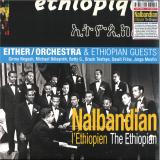
The Éthiopiques series returns! Essential archive recordings from an extremely fruitful period in Ethiopian music.
Before “Swinging Addis” took over the world, there was Moussié Nerses Nalbandian — the Armenian-born composer who shaped modern Ethiopian music. Mentor, arranger, and pioneer, he laid the foundations of Ethio-jazz.
This Éthiopiques volume revives his forgotten legacy, recorded live by Either/ Orchestra First issue ever with new exclusive photos and in depth liner 8-page insert.
“Ethiopian jazzmen are the best musicians that we have seen so far in Africa.
They really are promising handlers of jazz instruments.”
Wilbur De Paris
(1959, after a concert in Addis Ababa)
አዲስ፡ዘመን። *Addis zèmèn* **A new era.**
The time is the mid-1950s and early 1960s, just before "Swinging Addis" bloomed – or rather boomed – onto the scene. Brass instruments are still dominant, but the advent of the electric guitar, and the very first electronic organs, are just around the corner. Rock’n'Roll, R’n’B, Soul and the Twist have not yet barged their way in. Addis Ababa is steeped in the big band atmosphere of the post-war era, with Glenn Miller's *In the* *Mood* as its world-wide theme song, neck and neck with the Latin craze that was in vogue at the same period. Life has become enjoyable once again, with the return of peace after the terrible Italian Fascist invasion of Ethiopia (1935-1941). The redeployment of modern music is part and parcel of the postwar reconstruction. *Addis zèmèn* – a new era – is the watchword of the postwar period, just as it was all across war-torn Europe.
The generation who were the young parents of baby boomers** were the first to enjoy this musical renaissance, before the baby boomers themselves took over and forever super-charged the soundtrack of the final days of imperial reign. Music is Ethiopia's most popular art form, and very often serves as the best barometer for the upsurge of energy that is critical for reconstruction. Whether it be jazz in Saint-Germain-des-Prés or the *zazous* who revolutionised both jazz and French *chanson* after the *Libération*, be it Madrid's post-Franco Movida, or Dada, the Surrealists and *les années folles* that followed World War I, the periods just after mourning and hardship always give rise to brighter and more tuneful tomorrows. Addis Ababa, as the country's capital, and the epicentre of change, was no exception to this vital rule.
**Two generations of Nalbandian musicians**
Nersès Nalbandian belonged to a family of Armenian exiles, who had moved to Ethiopia in the mid-1920s. The uncle Kevork arrived along with the fabled "*Arba Lidjotch*", the** "*40 Kids*", young Armenian orphans and musicians that the Ras Tafari had recruited when he visited Jerusalem in 1924, intending to turn their brass band into the official imperial band. If Kevork Nalbandian was the one who first opened the way of modernism, pushing innovation so far as to invent musical theatre, it was his nephew Nersès who would go on to become, from the 1940s and until his death in 1977, a pivotal figure of modern Ethiopian music and of the heights it. Going all the way back to the 1950s. Nothing less. And it is Nersès who is largely to thank for the brassy colours that so greatly contributed to the international renown of Ethiopian groove. While the younger generations today venture timidly into the genealogy of their country's modern music, often losing their way amidst a distinctly xenophobic historiographical complacency, many survivors of the imperial period are still around to bear witness and pay tribute to the essential role that "Moussié Nersès" played in the rise of Abyssinia's musical modernity.
Given the year of his birth (15 March 1915), no one knows for sure if Nersès Nalbandian was born in Aintab, today Gaziantep (Turkiye/former Ottoman Empire) or on the other side of the border in Alep, Syria... What is certain is that his family, like the entire Armenian community, was amongst the victims of the genocide perpetrated by the Turks. Alep, the place of safety – today in ruins.
Before Nersès then, there was uncle Kevork (1887-1963). For a quarter of a century, he was a whirlwind of activity in music teaching and theatrical innovation. *Guèbrè Mariam le Gondaré* (የጎንደሬ ገብረ ማርያም አጥቶ ማግኘት, 1926 EC=1934) is his most famous creation. This play included "ten Ethiopian songs" — a totally innovative approach. According to his autobiographical notes, preserved by the Nalbandian family, Kevork indicates that he composed some 50 such pieces over the course of his career. This shows just how much he understood, very early on, the critical importance of song as Ethiopia's crowning artistic form. Indeed, for Ethiopian listeners, the most important thing is the lyrics, with all their multifarious mischief, far more than a strong melody, sophisticated arrangements or even an exceptional voice. (This is also why Ethiopians by and large, and beginning with the artists and producers themselves, believed for a long time — and wrongly — that their music could not possibly be exported, and could never win over audiences abroad, who did not speak the country's languages).
Last but not least, one of Kevork's major contributions remains composing Ethiopia's first national anthem – with lyrics by Yoftahé Negussié.
Nersès Nalbandian moved to Ethiopia at the end of the 1930s, at the behest of his ground-breaking uncle. Proficient in many instruments (pretty much everything but the drums), conductor, choir director, composer, arranger, adapter, creator, piano tuner, purveyor of rented pianos,... he was above all an energetic and influential teacher. From 1946 onwards, thanks to Kevork's connexion, Nersès was appointed musical director of the Addis Ababa Municipality Band. In just a few years, Nersès transformed it into the first truly modern ensemble, thanks to the quality of his teaching, his choice of repertoire, and the sophistication of his arrangements. It was this group that would go on to become the orchestra of the Haile Selassie Theatre shortly after its inauguration in 1955, which was a major celebration of the Emperor's jubilee, marking the 25th anniversary of his on-again-off-again reign.
At some point or other in his long career, Nersès Nalbandian had a hand in the creation of just about every institutional band (Municipality Band, Police Orchestra, Imperial Bodyguard Band, Army Band, Yared Music School…), but it was with the Haile Selassie Theatre – today the National Theatre – that his abilities were most on display, up until his death in 1977. To this must be added the development of choral singing in Ethiopia, hitherto unknown, and a sort of secret garden dedicated to the memory of Armenian sacred music, and brought together in two thick, unpublished volumes. Shortly before his death (November 13, 1977), he was appointed to lead the impressive Ethiopian delegation at Festac in Lagos, Nigeria (January-February 1977).
His status as a stateless foreigner regularly excluded him from the most senior positions, in spite of the respect he commanded (and commands to this day) from the musicians of his era. Naturally gifted and largely self-taught, Nerses was tirelessly curious about new musical developments, drawing inspiration from the very first imported records, and especially from listening intensely to the musical programmes broadcast over short-wave radio – BBC *First*. A prolific composer and arranger, he was constantly mindful of formalising and integrating Ethiopian parameters (specific “musical modes”, pentatonic scale, and the dominance of ternary rhythms) into his “modernisation” of the musical culture, rather than trying to over-westernise it. It even seems very probable that *Moussié* Nerses made a decisive contribution to the development of tighter music-teaching methods, in order to revitalise musical education during this period of prodigious cultural ferment. Flying in the face of all the historiographical and musicological evidence, it is taken as sacrosanct dogma that the four musical modes or chords officially recognised today, the *qǝñǝt* or *qiñit* (ቅኝት), are every bit as millennial as Ethiopia itself. It would appear however that some streamlining of these chords actually took place in around 1960. It was only from this time onward that music teaching was structured around these four fundamental musical modes and chords: *Ambassel*, *Bati*, *Tezeta* and *Antchi Hoyé*. A historical and musical “details” that is, apparently, difficult to swallow, especially if that should honour a *foreigner*. Modern Ethiopian music has Nersès to thank for many of its standards and, to this day, it is not unusual for the National Radio to broadcast thunderous oldies that bear unmistakable traces of his outrageously groovy touch.
The year is 1989 and it's the peak of the Belgium New Beat craze. Not limited to records and clubs, the New Beat lifestyle was marketed to death with all sorts of fashion items, a plethora of accessories, and at least one erotic movie.
Fast forward a few decades. In the middle of nowhere, Switzerland, tucked inside a long-forgotten video store that closed its doors in 1999 and sat untouched for 20 years, we stumbled upon a strange treasure amongst tons of VHS hidden in the adult section. A mysterious VHS labeled "Erotiques New Beat."
What we found was pure 1989 Belgian erotica-low budget, fog-drenched, and neon-soaked. Minimalist sets. Girls in PVC. Flashing lights. Mirrors. Fog machines. Loud colors. It was erotic, sure-but also oddly sweet, almost innocent in its surreal, lo-fi dreaminess.
And then came the soundtrack.
That's what really floored us. A collection of New Beat gems, raw, simple, irresistible. Somehow, it captured the full spectrum of the genre: 100-110 bpm grooves with shades of EBM, sleazy coldwave rhythms, sensual synths, proto-Goa pulses, monk choirs, oriental melodies, and a healthy dose of movie samples. It felt alive. Timeless. Utterly perfect.
We had to know more. We dug, tracked down the source, and in 2020, reissued the soundtrack on vinyl. It sold out fast. Now, five years later, we thought about pressing one final batch. A special edition on picture disc, featuring the original smileys from the VHS.
- A1: Lost Blocks F. Elucid Produced By Messiah Musik
- A2: The Big Nothing Produced By Messiah Musik
- A3: Flatlands Produced By Messiah Musik
- A4: Woodhull Produced By Willie Green
- A5: U-Boats F. Elucid Produced By Driver For Raygunomics & Aesop Rock
- A6: Zulu Tolstoy Produced By Willie Green
- A7: Warmachines Produced By Messiah Musik
- A8: Carpetbagger F. Elucid Produced By Brother Hall
- B1: Born Yesterday Produced By Messiah Musik
- B2: Sleep Produced By Willie Green
- B3: Scales F. L’wren Produced By Messiah Musik
- B4: Poor Company F. Elucid & Henry Canyons Produced By Elucid & Messiah Musik
- B5: Dreams Come True Produced By Messiah Musik
- C1: Bicycles F. Henry Canyons Produced By Blockhead
- C2: African Dodger F. Elucid Produced By Dosg4W
- C3: Lambs Produced By Messiah Musik
- C4: Slow Week Produced By Dosg4W
- C5: Weeper F. Curly Castro Produced By Messiah Musik
- C6: Rpms Produced By Messiah Musik
- D1: Dark Woods Produced By Steel Tipped Dove
- D2: True Stories Produced By Blockhead
- D3: Borrowed Time Produced By Junclassic
- D4: Benediction Produced By Elucid
- D5: Good Night Produced By Blockhead
When billy woods released Today, I Wrote Nothing ten years ago, it was an unexpected departure from a rapper who was just starting to make waves in the indie rap scene. After spending the earlier part of his career in the wilderness, woods had managed to crawl out of obscurity with the minor success of 2012’s History Will Absolve Me. Dour Candy, 2013’s collaboration with underground legend Blockhead drew accolades, which only increased with Armand Hammer’s debut Race Music.
Then, woods dropped out of sight for two years before returning with Today, I Wrote Nothing, a record that deviated significantly from what had come before. Where Dour Candy had been concise and focused, TIWN was a sprawling 24 tracks. Where History Will Absolve Me was anchored by hard-hitting beats, anthemic songs, and a couple high powered features, TIWN was comprised of short vignettes, quietly eclectic production, and the only guests were his Backwoodz label-mates. Only one video was released; the claustrophobic “Flatlands”, shot on a shoestring budget in a Brooklyn housing project. Reviewers didn’t know quite what to make of the record, and in many cases, neither did fans.
As is often the case for woods’ albums, many perspectives shifted as the years passed. Listeners came to see the sad, quiet beauty of Today, I Wrote Nothing; a road trip album that doubles as a meditation on life’s journeys and death’s hiding places. The album’s power is in it’s intimacy, it’s insistence on holding your hand through the darkness. Now, TIWN is considered one of the more unique and vital records in woods catalogue. The dynamic woods created with TIWN vis-a-vis History Will Absolve Me and Dour Candy is one that would come to define his ouerve; constant experimentation, a refusal to be pigeonholed, and an unwavering search for the emotional heart of his subject. For us at Backwoodz, being able to repress this album on it’s ten year anniversary is especially sweet, because we remember how long it took us to sell that original run of 500. To everyone who copped one of those and helped us keep the lights on, this is for you too, we couldn’t have gotten here otherwise.
Limited 2024 Black Vinyl Repress
Osaka based psych-rock three piece Hibushibire return after a long break, with a new line up and a stunning third album. Produced by Acid Mothers Temple/Mainliner guru Makoto Kawabata who also guests on the album.
Following the successes of their debut album 'Freak Out Orgasm!' (2017), the follow up ‘Turn On, Tune In, Freak Out’ (2019) and two very well received UK tours. The band headed home to Osaka, Japan and then, the pandemic hit.
During this downtime, guitarist/vocalist Changchang decided to create a new power trio. Enter Tetsuji Toyoda (Bass/Vocals) & Aoi Hama (Drums/Vocals). The new trio have spent the last three years writing new music, playing live and honing their sound in Japan, and a short well received tour of Taiwan with Riot Season labelmates Dope Purple. And now finally, Hibushibire mark 2 is born properly.
“Hibushibire has returned after a change of members. A psychedelic, progressive work, suitable for a new beginning"
Entering the studio with Acid Mothers Temple/Mainliner guru Makoto Kawabata in the producer chair (and also as a guest musician) once again, the band recorded album number three, 'Magical Metamorphosis Third Eye’. Makoto also adds some of his own trademark guitar howls throughout the album, perfectly complimenting Changchang’s own growing prowess.
Here the band have taken their trademark psych-rock blasts and blended them perfectly with some more trippy, dare I say sweet progressive psychedelic sounds.
“The idea of this album is based on the theme of "occultism and mysticism". But it's not a serious thing, it's about the things we like (UFOs, pyramids, psychic phenomena, shamanism etc) and we all had fun while making it. In terms of what makes it different from the previous Hibushibire albums, it’s where AOI HAMA's vocals are present. I had wanted to use a female vocalist for a long time, so it was a good feeling!”
Like the band's first two albums, 'Magical Metamorphosis Third Eye’ is very much an album of two halves. Side one again is full of killer shorter tracks, while side two is reserved for a blinding majestic 20 minute epic ‘Ayahuasca Witch Abduction’. Perhaps the biggest musical surprise here though is probably track two, the beautifully mellow tripped out ‘We Won't Go Back To The Past’, which sounds like it’s been beamed straight out of the late 60s/early 70s.
The band also tip a nod to the Beatles psychedelic classic ‘Tomorrow Never Ever Knows’, but with their own twist of course.
It’s clear with the line up changes, Changchang has decided to expand the band's musical pathway, and he’s achieved stunning results.
The band plan to return to the UK and Europe in 2024 to see friends old and new.
Celebrating the 30th anniversary of Jhelisa's classic debut album 'Galactica Rush' the album has been remastered at Abbey Road by Miles Showell, who mastered the original version, and remixed in Dolby Atmos/Spatial Audio by Jimmy Douglass.
Remastered from the original 1/2" tape, the album will be available in Hi Res digital and re pressed on Vinyl.
'An album of exquiste quality and class from one of the UK's finest Soul singers' Music Week Oct 8 1994
Multi-talented, Ghana-born, UK-based sonic shaman K.O.G (Kweku of Ghana - the professional name of vocalist, composer and visionary Kweku Sackey) presents his third album on Pura Vida, the imprint of respected French label Heavenly Sweetness spearheaded by much-loved French DJ and producer GUTS.
Born and raised in Ghana, but having spent much of his adult life in the UK, for K.O.G this record can be seen as the culmination of a lifetime spent absorbing, combining and refining the diverse influences that have shaped his music and his character.
Kweku explains: This album is a very personal journey. I speak about three things: the soul of my community, where I found my inspiration. The roots, highlife, soul, going to church, being around traditional ceremonial setups. Taking people to the very origin of my voice, my soul, my impulses, my community, my culture.
And the next phase is cross-culture: living half of my life in UK and half of my life in Ghana. Putting myself at this crossroads to see the effect of the sonic consciousness, how awake I am with the music from Ghana, and also how living here, having children and family here has also influenced my music.
And thirdly, it’s mirroring my personal journey. Starting in Ghana, with my band in Ghana, and my roots, then moving up to UK, Going from Zone 6 all the way to Europe. Highlife - the syncopated fusion of local music and jazz which is at the core of Ghanaian music, and which from the 1930s spread like wildfire across anglophone West Africa - is one of the core building blocks of this album. But don’t be fooled by the catchy melodies and bright sonics. K.O.G is using it to speak about some topics that are anything but bright.
Highlife is absolutely dark. Most of the places you hear real highlife music, it’s funerals! And it’s part of the culture. Death is part of life. Seeds die for life to germinate. Art is just an emotive expression, when you can cause an emotion in somebody, and it’s not always happiness.
This theme of self-expression and vulnerability is a consistent one throughout the record. With special guests Pat Thomas, Dizraeli, Fameye, Ogunskele.
- A1: Slowdive - Slomo
- A2: Chapterhouse - Pearl (Edit)
- A3: Ride - Vapour Trail
- A4: Blind Mr Jones - Henna & Swayed
- A5: The Telescopes - Flying
- B1: Lush - Sweetness & Light
- B2: Spirea X - Chlorine Dream
- B3: Kitchens Of Distinction - The 3Rd Time We Opened The Capsule
- B4: Pale Saints - Sight Of You
- B5: Lowtide - Alibi
- B6: Ringo Deathstarr - Kaleidoscope
- C1: Horsegirl - Billy
- C2: Air Formation - Daylight Storms
- C3: Diiv - Taker
- C4: Bdrmm - A Reason To Celebrate
- C5: Flyying Colours - Long Holiday
- C6: Echo Ladies - Overrated (Robin Guthrie Version)
- D1: Beach House - Lazuli
- D2: Mogwai - Kids Will Be Skeletons
- D3: Fleeting Joys - Go & Come Back
- D4: Ultra Vivid Scene - Mercy Seat
- D5: Galaxie 500 - Ceremony
Red Vinyl[36,93 €]
Waves of Distortion (The Best of Shoegaze 1990-2022) is a superbly curated trip through the genre from the good folks at Two_piers, who have served up similarly excellent collections focussed on everything from French psychedelic pop to garage psych. This serves as both a fine intro and a great retrospective for existing fans that will take you down a rabbit hole and leave you wanting more. Some of the scene's original pioneers feature and there are many a timeless tune here that help to document the subtle evolution of the genre throughout the decades.
- A1: Garbage Day #3
- A2: Get-U-Now
- A3: What A N*Gga Know?
- B1: Sweet Premium Wine
- B2: Plumskinzz (Loose Hoe, God & Cupid)
- B3: Smokin’ That S*#%
- C1: Contact Blitt
- C2: Gimme
- C3: Black Bastards!
- D1: It Sounded Like A Roc
- D2: Plumskinzz (Oh No I Don’t Believe It!)
- D3: Constipated Monkey
- D4: F*#@ Wit’ Ya Head
- D5: Suspended Animation
Black Vinyl[30,67 €]
Before MF DOOM donned his mask and became one of the most prolific MC-producers of modern Hip-Hop, he was a member of KMD, an early ‘90s rap group whose work still goes criminally under-appreciated to this day.
Following their 1991 debut album, Mr. Hood, the former trio shed one member leaving only two remaining – Subroc and his brother, Zev Love X (better known today as MF DOOM). Originally scheduled for release in 1994, their sophomore album Black Bastards showed clear progression from their debut. It was a truly amazing record, both sonically and lyrically, full of youthful creativity and tinged with the stresses of growing up as Black men in urban America. Songs like the lead single “What A N*gga Know”, the slippery, bass-driven “Get U Now”, and the album’s title track explore Black consciousness viewed through young-but-experienced eyes. Musically alternating between bouncy and raw – many times both, concurrently – the tracks gave the MC’s the springboard they needed to express themselves clearly.
Sadly, Subroc would face a sudden and untimely death in 1993, just as the duo were finishing the album. Grief-stricken, his brother Zev Love X – now the sole remaining member of the group – was determined to carry the legacy of KMD onward, but Elektra Records unceremoniously shelved the project in the eleventh hour, due to controversy surrounding the album’s provocative cover art. Following the fallout with Elektra, Zev tried for years to release the album on other labels, but he was continually met with dead ends. Struggling through the pain of losing his brother, coupled with the inability to release their final project together, a discouraged Zev Love X quietly withdrew from the scene and began quietly plotting his revenge on an industry that had broken him spiritually. Thus, in order to understand the true origin story of the super-villain, MF DOOM, one must recognize and appreciate the evolution of his former group, KMD, and the backstory of their pivotal album, Black Bastards.
As the artwork on the EP depicts, "Darkest hour before dawn" is a dusky scenario representing the Dutch environment known as "the polder" in the lower lands. It questions all kinds of actions taken or not taken to protect, restore, conserve, innovate, or modestly leave the landscape to its own more murky outcome. The darkest hour, full of gloom, will be available around the spring equinox?
Portrait of tracks separately:
"Darkest Hour before dawn"
Is this piece supposed to be an ode to the ancient Dutch hardcore movement, that once and probably only then would be experienced to such intensity or is this still maybe just a little near reminder of it? Anyway starts this unlit track slowly and remains that way but maintains a fat-pumping pulse, possibly reminding of a soldier walking a death march. Settling up those launch pads further down the piece, near the bridge for shooting off some drum-fire 909 snares as if it rocketed. Then, suddenly, the extended delay of that snare turns into a psychedelic drone beside, attending to, or paranoidly chasing comrades soul in his journey throughout and above like a trustful partner?
Arp's LFO that is out of sync with the beat and is being outpaced by it seems to slow everything down even more; meantime creating a pulling, buggy-like effect to the due of all this.
The ascending and descending ghost-pad drawing into the grid of the (tone) key, thereafter parking in them for a while and cycling out again, creating a spatial flow of disturbance and anxiety.
Finishes it with a mountain-big reverberation of organized destruction and chaos. What at first sight seems like simply an innocent route appears to actually be a bit more complex one.
"Lovely memories"
The quite monotonous structure of Lovely memories catchy and groovy song is scanning through your brain files; revisiting, memorizing, and purposely lacking these few "dots above the I" that in some cases you'd gladly be feeling like to square fit it in yourself, of course, when necessary. Connecting the puzzling, dazzling flashbacks together to finally wrap up and perpetuate the pictured events for good, leaving traces of melancholy, loveliness, and perhaps even faith to it.
"24 hours"
Dinginess of 24 hours supposes to be felt in the guts.
The beat, steady with that snare on the 4 & 12, might not be one of the greatest inventions. However, the TR-08's drum line here lays a solid and fertile foundation for a reasonable house track.
Slightly detuned synths weave a scarf pattern around your upper body, and the lower layers carry a warm blanket for the underbelly, providing you with that cozy sense of consolation. Acidy pokes wring itself sneaky and penetrable around, slicing through the song's already solid flesh. Therefore, balancing its bitter sweetness throughout with these soft-hard saw-tooth drops of sourness.
"24 hours" conveys a dispatch or intercommunication that there is little time left to take actions/charge to fix and restore. Something big is about to come if it hasn't arrived already...
"At night"
This remarkable story is a bit out of ordinary.
At night appeared in the artist's dream just the night before his sick father was raised from death in the hospital and got just another year to live before actually passing away completely and anyway. ; ))
And thus also dedicated to the man.
Death Is Not The End's 333 sub-label follows the reissue of Devon Russell's Darker Than Blue LP late last year with a first-time reissue of a veritable reggae-dancehall holy grail - Robert Ffrench's 1985 LP 'Wondering'.
Pioneering artist and producer (and cousin of the late, great Pat Kelly) Robert Ffrench was born in central Kingston in 1962, recording his first records in 1979 at the age of 17. Coming out off the back of a slew of roots & early dancehall-style 45s cut with a wide range of producers thoughout the early '80s, the Wondering LP followed closely after two acclaimed LP sets ('Showcase' produced with Lord Koos & 'The Favourite' for Ossie Thomas' Black Solidarity label - plus a split showcase LP with Anthony "Gunshot" Johnson for Jah Thomas' Midnight Rock label).
Ffrench would write and produce the Wondering LP himself in it's entirity, laying down the tracks at Herman Chin-Loy's Aquarius & Michael Carroll's Creative Sounds studios with the help of engineer Christopher Daley. Representing the sound of an artist first confidently sriking out on his own, the album elegantly mixes a classic rub-a-dub & lovers rock-inspired sound with nascent digi-esque flourishes. It boasts an enviable list of contributors too, incl. Sly & Robbie, Dwight Pinkney, Robbie Lyn, Nelson Miller (Burning Spear) and Ronald "Nambo" Robinson among others, with Beres Hammond also providing backing vocals in places.
Following the release of Wondering, Ffrench would continue to write and produce, soon after releasing two further self-produced LPs for Edgar White's Parish label - and founded his own 'France' label in the late 80s, through which his productions would start to hit big, most notably alongside Courtney Melody on 'Modern Girl', and with US rapper Heavy D on the track 'More Love'. Robert's productions released through later label 'Ffrench' would go on to boast the cream of the crop of dancehall artists throughout the 90s and early 2000s, and he is often credited with discovering Buju Banton (producing his first single "Ruler" on the Stamina riddim). Ffrench is still actively producing music of his own to this day, having released singles 'Everyday of My Life' and 'Black Is a Colour' in late 2022 and Feb 2023 respectively, available through all digital platforms now.
333, under exclusive license from Robert Ffrench.
Hot on the heels of this year’s ‘Dyslexia Sound System’ album, Touch Sensitive is thrilled to share a three-track companion piece from Autumns - 'DSS Dubplate'. Autumns is the solo project of Derry’s Christian Donaghey. With a relentless release rate that mirrors the energy and intensity of his live shows, Donaghey has submitted a selection of skewed star turns for the likes of iDEAL, Death & Leisure, and Opal Tapes since his debut on Regis' Downwards label in 2014. Much like it's companion LP, 'DSS Dubplate' is heavily inspired by the On-U Sound label, the productions of Adrian Sherwood, and that cultural and musical sweet spot when the rockers met the post-punk crowd. Donaghey’s whip-crack beats, heavily effected vocals, shredded no-wave guitar, and clarinet squalls are shaped and shifted further into the endless expanse by his dubwise techniques on the board. As always with Donaghey's productions - these rhythms grip tight and don't let loose until the needle is on the run-out groove. Full-throttle! Autumns non-stop!
- Osmos
- Peace Of The Unsaid
- Cloudmachine
- Skin Dress
- Unleash
- Jeanne De Rien
- Kiss The Lion's Tongue
- Throw Ashes!
- Samadhi
- Hora Et Devoura
Devotional music most often gets distilled into earthy chants and ancient folklore, it doesn't always ascend to the sky like Julinko’s ‘Naebula’ an album that from the first organ note clearly trades in terrestrial dreams for ethereal visions. A feverish quality permeates the whole record, as if a ritualistic performance was being captured from start to finish, a collection of hallucinatory doom, synthetic neo-folk hymns and ghostly art-rock.
Julinko, stage name for Giulia Parin Zecchin, has long been one of the best kept secrets of the experimental community in North-East Italy, with three records that helped define her unique blend of heavy psychedelia, slowcore and dark ambient. On ‘Naebula’ what really stands out is how powerful and soaring her voice is, a weapon of undeniable force that can transform into a vessel of raw fervour or glide effortlessly as a delicate lament. Her unconventional approach shines through on tracks like ‘Jeanne De Rien’, where a marching pulse acts as a pillar for an extended mantra, almost verging into powwow territory. ‘Peace Of The Unsaid’ uses its arrhythmical structure to create space, a crepuscular night ode that reaches the heights of Sinead O’Connor’s most intimate force-fulness while retaining a sweet composure. Whether it’s glacial murderous shrieks or gospel-esque vitality, songs like ‘Cloudmachine’ or ‘Kiss The Lion’s Tongue’ seem to draw as much from a tradition of European minimalism, the use of drones and repetition, to the tradition of folksongs as hymns, where modal harmonies make way for an apparent stasis. Another key element in Julinko’s songwriting is the seamless blend of her minimalistic approach with these dense textures borrowed from a distant outsider metal heritage, Lynchean noir on steroids or wordless exorcisms with deep undercurrents.
- 1: The Dog Dies In The End
- 2: Goldstar
- 3: Blitzed Again
- 4: Sweat
- 5: House
- 6: Sweetiepie
- 7: Death In The Family
- 8: A Sympathetic Person
- 9: They Told Me Jump, I Said How High
- 10: I'm Your Fiend
TRANSPARENT RED VINYL[23,32 €]
"The Sophs sind quasi aus dem Nichts aufgetaucht", sagen Rough-Trade-Mitgründer Geoff Travis und Jeannette Lee über ihr neuestes Signing: eine sechsköpfige Band aus L.A. mit dem feinsinnigen Namen The Sophs. Die kompromisslose Ehrlichkeit und der weite Soundkosmos der Band überzeugten sofort. Als Sänger Ethan Ramon ein Demo an seine Lieblingslabels schickte, rechnete er nicht mit einer Reaktion - doch schon am nächsten Tag meldete sich Rough Trade mit der Bitte um ein Gespräch. In den frühen Songs hörte das Label genau jene Kreativität, Vielseitigkeit und den draufgängerischen "Don"t expect me to act pretty"-Spirit, den The Sophs auf jede Bühne bringen: Ethan Ramon (Gesang), Sam Yuh (Keyboards), Austin Parker Jones (E-Gitarre), Seth Smades (Akustikgitarre), Devin Russ (Drums) und Cole Bobbitt (Bass). Die fünf Demo-Tracks bildeten die Blaupause für ihr Debütalbum "GOLDSTAR". Musikalisch bewegen sich The Sophs im Zickzack: Pop-Punk trifft auf Funk, Delta Blues auf ZZ Top. Ramons warme, kraftvolle Stimme wandert dabei wie ein vokales Chamäleon durch die Genres. "Wir versuchen nie, so vielseitig zu sein, wie wir am Ende klingen", sagt Ramon. Songwriting verstehen sie als Pop Art - ein spielerisches Zitieren, Verformen und Neuerschaffen. Oft entstehen Songs aus spontanen Ideen, die im Bandprozess eine völlig neue Richtung nehmen. Der Track "THE DOG DIES IN THE END" erinnert an 2000er-Pop-Punk, getragen von düsteren Gedankenspiralen und Akkordeon. "DEATH IN THE FAMILY" kombiniert sonnigen Rock mit bitterem Humor und der Sehnsucht nach Mitleid als Schutz vor Verantwortung. "GOLDSTAR" stellt dabei einfache, aber unbequeme Fragen nach Anerkennung und Moral. Weitere Highlights wie "SWEETIEPIE" und "BLITZED AGAIN" zeigen die Band zwischen Selbstentlarvung und euphorischer Energie - roh, lebendig und kompromisslos kreativ.
APORIAMOR noun 1. The death of love’s contradiction.
| “Embody APORIAMOR”
Etymology
aporia-: an irresolvable internal contradiction or logical disjunction in a text, argument, or theory. from Greek aporos ‘impassable’, from a- ‘without’ + poros ‘passage’
-amor: love. Sentimiento intenso del ser humano que, partiendo de su propia insuficiencia, necesita y busca el encuentro y unión con otro ser. Del latín amor.
-mor: latin for death.
APORIAMOR explores the affective ontological and organic processes of love and lust in the turmoil of an urban existence, through the female lens. It expresses the process of strengthening through heartbreak in its various forms.
With her debut EP The Art of the Concrete, elsas knew that by giving that name to a record which was ironically expansive and experimental, she would be calling for a distilled and clearer path further down the line. This is what she’s been incorporating into the sonic world of this new EP, APORIAMOR, signifying the birth of a more matured and distilled version of herself as an artist.
With APORIAMOR (“the death of love’s contradiction”) elsas conveys a personal process of healing in the romantic space. Through different experiences of heartbreak, elsas builds a language - a coping mechanism attached to its subsequent artistic expression – that isn’t founded on hardness or a closing-off, but instead, on a playful but profound reckoning, and learning of self-worth.
APORIAMOR embraces the complexities of being a lover-girl: of moving through life with an open heart. It celebrates the clarity, sweet hindsight, and detachment that come from processing emotion. APORIAMOR is both an affirmation and a release.
elsas makes canonical blends with a forward boundary-bending vision. Her sound in this record is naturally referential of both her Mediterranean heritage and UK alternative music — intrinsic parts of her lived experience. She has had the opportunity to collaborate with artists she deeply admires, each exchange enriching her creative world.
The experience of working hand-in-hand with Sampha for the last 3 years and ongoingly has been a core of her evolution as an artist. She has also collaborated in many forms with artists like Florence + the Machine, Little Simz, Jordan Rakei, Jockstrap, Obongjayar, Black Country New Road, Genevieve Artadi (KNOWER) and Duval Timothy. Additionally, her ongoing work with the Idrîsî Ensemble, of which she is a core member, continues to inform her artistic depth.
The making of this largely self-produced record unfolded over four years — “it’s a well-kneaded dough,” she says. These songs evolved through exposure to multiple environments: from early writing sessions in her childhood home in the Spanish countryside, to stages across the U.S. while on tour supporting Sampha.
Experimentation and modulation are an intrinsic part of elsas’ method, conceiving songs as organisms that respond to their surroundings. Collaborators on this collection of songs include Shrink, Will Lister, Gabriel Gifford, Ethan P. Flynn and more. The record was mixed by David Wrench (a long-time supporter of elsas’) and Nathan Boddy, and mastered by Matt Colton.
With APORIAMOR, elsas creates a visual world from the fabulation of the past, as an act of playful historical revisionism in which she embeds herself as both subject and storyteller. The songs function like an archive of her experiences across various years, each one unearthed and presented as some sort of archaeological artifact. Through this body of work, elsas begins to conceptualize herself as a legacy artist: one who honors the archive of her own becoming while emerging as a distinct and resonant voice in today’s musical landscape.
- A1: Ann Sexton – You’ve Been Gone Too Long
- A2: Psychodelic Frankie – Putting You Out Of My Life
- A3: The Sweet Vandals - Papa’s Got A Brand New Bag
- A4: The Tom – Emmanuel And Ron Experience – When You Lose Your Groove
- A5: Sharon Jones & The Dap-Kings - What Have You Done For Me Lately (Part 1)
- A6: Tony & Tandy – Two Can Make It Together
- B1: The T.s.u. Toronadoes – What Good Am I?
- B2: Coke Escovedo – I Wouldn't Change A Thing
- B3: Maxine – A Love I Believe In
- B4: Carl Carlton – I Can Feel It
- B5: Al Supersonic & The Teenagers – Paint Yourself In The Corner
- B6: Esther Phillips – Just Say Goodbye
- B7: Joe Valentine – I Lost The Only Love I Had
LP with printed Innersleeve with Linernotes by Eddie Piller (Acid Jazz) The compilation series “DJ's Choice” was launched in 2008 and has already enjoyed the participation of several high-profile curators, such as Keb Darge, Marc Hype, and DJ Suspect. A few years before the death of Unique Label founder Henry Storch in 2018, a DJ's Choice edition was created with his long-time friend and fellow DJ Eddie Piller. Unfortunately, it never came to fruition—as is so often the case, life had other plans, and sadly not all of them were pleasant. However, the idea was never completely forgotten, and with the help of Eddie and Henry's DJ partner in crime Sandra (Frollein Taube), a list of tracks that were on Henry's quick-select list for his sets was finally compiled.
Swan Song
The vinyl LP at the heart of this éthiopiques 31 tracks 2 to 11 was one of the very last vinyl records ever released in Ethiopia. But above all it represents, we felt, the absolute masterpiece of the Ethiopian Groove – the Swan Song of Swinging Addis. The album leaves a clear idea for posterity of the level of sophistication and mastery that modern Ethiopian music had achieved, before being crushed under the Stalino-military heel of the Derg – as the bloody revolution that was unfolding came to be called.
Ethiopia1976.
The Revolution that broke out in February 1974 rolled on in a ruthless march. The whole of Ethiopian society was utterly stunned. The bouquets of flowers handed joyfully to the first tanks of the coup d'état were to wilt very rapidly. From September 1976 to February 1978, 18 months of Red Terror (the name given by the junta itself) spilled blood throughout the country. This fratricidal conflict took its heaviest toll among students and youth. The shift from feudalism to a cruel and primitive Stalinism left the country's citizens deeply traumatised, and snuffed out any pretence of activism, whatever the sector of society. This ice age was to last for seventeen long years.
ሙሉቀን፡መለሰ Mulukèn Mellèssè Muluqän Mälläsä
It was three tracks by Muluken that served as the opener for éthiopiques-1 more than 25 years ago. Seven more tracks appeared on éthiopiques-3 and 13, all accompanied by The Equators, which was soon to become the Dahlak Band.
The first track, Hédètch alu, also the very first piece that Muluken ever recorded, left audiences both unsettled and amazed. Reflecting the singer's extremely young age (he was just 17 at the time), this angelic voice mystified many, who thought they were in fact listening to a feminine voice. He was not yet 22 when he released his last vinyl record in 1976 with Kaifa Records (KF 39LP), one of the very last to be issued in Ethiopia, before the cassette tape became the dominant medium for music distribution – and before the new revolutionary regime put a stop to all independent musical life, via an unspeakable barrage of prohibitions and other persecutions.
Mulu qèn, literally, “A well filled day”. This tender maternal intention wasn't enough to ward off the cruelty of fate. His mother's premature death drove Muluken to leave his native Godjam, in northeast Ethiopia, to live with an uncle in Addis Ababa. Born Muluken Tamer, he took his uncle's last name – Mèllèssè.
The spelling Muluken appeared in his administrative records. Transcription of Amharic to the Latin alphabet, both in Ethiopia and for scholars, gives rise to controversies and quibbles that can never be neatly settled. French allows for a closer approximation of the original pronunciation, thanks to its battery of accent marks, confusing as they may be to anglophones.
Between rather accommodating administrative record-keepers and the various versions that pop up in interviews given by the artist, Muluken's year of birth oscillates between 1953 and 1955…
1954? One thing is certain: the artist's talent made itself known very early indeed, because he got his start in 1966-67, at the age of 13 or 14. Photos from the period attest to his extreme youth. It's a strange sort of initiation for a very young teenager to become a sensation in the heart of Addis's nightlife at the time, Woubé Bèrèha – the Wilds of Woubé. And what's more, in the club of the Queen of the Night, the Godjamé Assègèdètch Alamrèw herself, the very same that was portrayed by Sebhat Guèbrè-Egziabhér in his novel-memoir Les Nuits d’Addis Abeba2… The legendary female club owner who is remembered to this day by the capital's ageing boomers.
Muluken first tried his hand at the drums, before he grabbed the microphone. He emigrated briefly to the Zula Club, across the street from the old Addis Post Office, one of the ground-breaking bars of the burgeoning musical scene, before joining the Second Police Band in 1968, for around three years. He spent a few months with the short-lived Blue Nile Band founded by saxophonist Besrat Tammènè. As the musical scene grew increasingly successful, and pulled slowly but decisively away from its institutional ties, Muluken released his first 45rpm single in February 1972 (Amha Records AE 440). It was included in two LP Ethiopian Hit Parade compilation albums in September of the same year. All in all, Muluken released eight two-track 45s and the same number of original cassette tapes between February 1972 and 1984, the year that he departed for permanent exile in the USA. After converting to Pentecostalism in 1980, Muluken gradually abandoned all secular musical activity. In 1985, at the end of a concert in Philadelphia, he decided to quit concerts and recording for good. Mèlakè Gèbré, the historic bass player from the Walias band who was playing with him that night, recalls that everything appeared so irredeemably diabolical in Muluken's eyes, that it was to be the end of his contribution to Ethiopian Groove.
The end of the story, the beginning of a legend.
Dahlak Band, forgotten by History
Aside from his personal history and vocal talents, it must be remembered that Muluken Mèllèssè was one of the biggest names in the musical innovations that marked the end of the imperial period. These éthiopiques aim to convince those who are just discovering this hidden gem... As for Ethiopians themselves, they are to this day captivated by this singular and atypical figure in the Abyssinian pop landscape – even though he withdrew from public life some 40 years ago. Incorrigible devotees of poetic twists, of more or less hidden meanings, Ethiopians appreciate above all the care Muluken took in choosing his lyrics and the writers who penned them, such as Feqerte Haylou, Alemtsehay Wodajo and, here, Shewalul Mengistu (1944-1977). Love songs, written by women, a far cry from the conventional drivel that pleases sappy sentimentalists.
Muluken is equally acclaimed for his perfectionism when it came to music, the opposite of the overly casual approach that is all too common. He remained a faithful partner of musicians who came from a lineage that borrowed from several inventive and pioneering bands (Venus, Equators, Dahlak). Amongst them were certain artists who began their musical lives with Nersès Nalbandian at the Haile Sellassie Theatre and who come of age in around 1973 – at just the wrong time, you might say. Among them were the pillars Shimèlis Bèyènè (trumpet), Dawit Yifru (keyboards) and Tilayé Gèbrè (sax & flute). Most notably Tilayé Gèbrè, certainly one of the most important musicians, composers and arrangers of his generation, of the end of the imperial era, and of the early years of the Derg.
It was only in 1981 that a miraculous opportunity arose for Tilayé to escape the Stalinist paradise of the dictator Menguistou Haylè-Maryam. Once again it was Amha Eshèté (1946-2021) who provided a solution. The spirited and courageous producer, who had been in exile in Washington since 1975, succeeded, thanks to his incredible perseverence, in bringing the Walias Band to the USA. It was, in fact an extended Walias Band comprising ten musicians3, six of whom chose to slip away after a few concerts and the recording of an LP (The Best of Walias, WRS 100). Tilayé Gèbrè was one of these. He has been living in the USA ever since. There he joined the then-nascent Ethiopian diaspora, which lived largely unto itself, and was making only very modest headway in the American musical market. It seems unfair that Tilayé Gèbrè and the Dahlak Band were not able to benefit earlier from the public recognition that they do deserve.
A similar draining away of the top-rate talents would lead to the reorganization of the major groups of the “Derg Time”. The remaining artists spread themselves around between Ibex Band (renamed Roha Band), Ethio Star Band and a remodeled Walias Band. That spelled the end of the Dahlak Band.
With this record, produced by the essential Ali Abdella Kaifa a.k.a. Ali Tango, we can appreciate everything that the Derg not only destroyed, but also prevented from flourishing. This gem of Ethiopian-style afrobeat came out in 1976 (and, by way of a parenthesis, before the FESTAC 1977 in Lagos, which was attended by an impressive delegation of Ethiopian musicians — although Fela was already personna non grata in his own country). Despite everything that might distinguish this ethio-groove from Fela’s music – no colonial axe to grind, no question of political confrontation with the authorities, no claims to negritude or Africanism for the Ethiopian musicians, and less extrovertion! –, this LP fits beautifully into the saga of intense and electrified soul of the new “African” groove that Fela and Manu Dibango embodied so well from that point onwards.
In restoring this record to its place in the afrobeat epic, it can be seen that, if nothing else, the timeline bestows a legitimate pedigree and a historical primacy to works that had no international impact when they were originally released.
Warning! Masterpiece!
- Ceremonie Du Piment Piment
- Les Mains Dor Ek Bernard Lavilliers
- Demerd Azot With That Ek Maya Kamaty
- Gourmandises Amoureuses
- Melancolie Ek Rosemary Standley
- Les Promesses
- Fais Bouger Ton Boule Ek Rene Lacaille Mouss Hakim Amokrane
- Labsence Ek Rosemary Standley
- Epopee Meteque
- Afrodiziak
- Testosterone Ek Fixi Dje Baleti
- Apparu Ek Nellyla
Bonbon Vodou’s third album (Épopée métèque), created by Oriane Lacaille and JereM Boucris, follows the paths of exile with lush orchestration and lyrics in French, Creole, and Gascon.
The bonbon piment (a spicy Réunionese fritter) is deceptive. Beneath its harmless appearance lies a fiery kick that can jolt you into clarity. Bonbon Vodou operates the same way. While the duo's musical influences sway between the Indian Ocean and the Mediterranean Sea, a sharp edge cuts through the tenderness of their graceful songs, often carried by the rhythms of maloya. This contrast gives depth to their third album, Épopée métèque, which takes us on journeys of exile—both across land and sea.
Oriane Lacaille is the daughter of accordionist René Lacaille, a key figure in the revival of Réunionese music in the 1970s, who has lived in mainland France for five decades. JereM Boucris’s father, from a Tunisian Jewish family, was 14 when he arrived in France at the end of the colonial protectorate. Their lives are interwoven with these paternal exiles, which they continue to explore and unravel, alongside the broader, universal stories of migrants fleeing poverty, persecution, and war.
The duo is now joined by a vibrant trio—Piment Piment (Juliette Minvielle, Roland Seilhes, and Yann-Lou Bertrand)—bringing a rich orchestration featuring guitars, flutes, brass, roulèr, kayamb, jaw harp… all set to lyrics in French, Creole, and Gascon. Their voices are joined by numerous guests, including Mouss and Hakim, Rosemary Standley, and Bernard Lavilliers. This playful yet poignant album explores themes of life and death—radiant but aware—seemingly echoing Camus: “There is no sun without shadow, and one must know the night.”
- 1: The End Of A New Beginning
- 2: Sweet Freedom
- 3: Home
- 4: The End Of The World
- 5: Mine
- 6: All Around Me
- 7: I Should Have Said
- 8: So Soon
- 9: Last Words
- 10: True Love Will Find You In The End
Home is the new collaborative album from Xan Tyler & Dusty Stray -
Released in Autumn 2025 on pink vinyl, the album is released by Stereogram
Recordings in partnership with Last Night From Glasgow
Xan Tyler is an English vocalist and songwriter, her voice has been described as
crystalline" by Pitchfork and "extraordinary" by Uncut - Xan has had an extensive
career after getting her start as backing vocalist for Death Bang Party as a teenager.
She went on to be half of electro pop duo Technique signed to Creation Records. She
has collaborated with the likes of Timo Mass, Martin Buttrich and Mad Professor. Her
first solo album Holding Up Half The Sky was released by Last Night From Glasgow in
May 2024. Dusty Stray is Amsterdam-based, US-raised alt-folk songwriter Jonathan
Brown. He has released six albums as Dusty Stray starting in 2009. His latest solo
album is Fire Place, released in 2023. Big Takeover described the album as "brave"
and "authentic".
- Swing Low Sweet Chariot
- Double-Barrel Prayer
- Let's Not Chat About Despair
- Birds Of Death
- You Must Be Certain Of The Devil
- Let My People Go
- Malediction
- The Lord Is My Sheperd
Riding in on an eviscerating vocal alarm call and originally released in 1988 as the final installment of her Masque of the Red Death trilogy, Diamanda Galás" You Must Be Certain of the Devil is as unflinching now as it was on release in 1988. It remains a swaggering, furious fuck-you to those who might cast aside the sick and dying in the name of faith and scripture. Often misunderstood as simply dark for its subject matter, You Must Be Certain of the Devil in fact shines a light of such total exposure it leaves nowhere to hide, forensically unmasking the fury and pain of real grief and the vast spectrum of emotions rendered by the AIDS epidemic. It is an album that looks you square in the eye, pins you against a wall and makes you look at and feel the horror the virus visited upon a person, the knowledge of certain death in a hostile environment, and the hypocrisy of those who claim to be Samaritans or protectors.
- A1: Death & Love Pt. 1 - Track Listing American Dream
- A2: Like You Did Before
- A3: We Made It
- A4: Le Bateau
- A5: Hold It Steady
- A6: Let's Leave Together
- A7: Blue Damselfly
- A8: Everything Changed
- A9: Bad Guys Always Win
- B1: Death & Love Pt. 2 - Track Listing . Lost In The Fire
- B2: Stick Around
- B3: Cherrybomb
- B4: Ten Outta Ten
- B5: Love Me For The Weekend
- B6: Sunbeams
- B7: Old Balloons
- B8: Sweet Simple Thing
- B9: Wave Goodbye
Bluepink Vinyl[36,93 €]
- A1: Death & Love Pt. 1 - Track Listing American Dream
- A2: Like You Did Before
- A3: We Made It
- A4: Le Bateau
- A5: Hold It Steady
- A6: Let's Leave Together
- A7: Blue Damselfly
- A8: Everything Changed
- A9: Bad Guys Always Win
- B1: Death & Love Pt. 2 - Track Listing . Lost In The Fire
- B2: Stick Around
- B3: Cherrybomb
- B4: Ten Outta Ten
- B5: Love Me For The Weekend
- B6: Sunbeams
- B7: Old Balloons
- B8: Sweet Simple Thing
- B9: Wave Goodbye
Black Vinyl[34,03 €]
- A1: Shadows Main Theme
- A2: Welcome To Kyoto
- A3: The Long Shadow Of Oda Nobunaga
- A4: The Fujibayashi Legacy
- A5: Morning Training
- A6: Auntie Matsu
- A7: Becoming A Shadow
- A8: What's Been Hidden
- B1: Tomiko
- B2: Steel And Shadows
- B3: Into The Shadows
- B4: Naoe Attacks
- B5: Death Of A Legend
- B6: An Assembly Of Enemies
- B7: Rise Of Yasuke
- C1: An Oath Fulfilled
- C2: Master Sorin
- C3: Sacred Ground
- C4: A Song Of Remembrance
- C5: Bamboo Grove
- C6: Masked Enemies
- C7: The Incident
- D1: Busy Streets
- D2: Code Of The Sword
- D3: A Moment Of Sweetness
- D4: Chasing Demons
- D5: Akechi Mitsuhide
- D6: Matters Of The Heart
- D7: Yasuke's Past
- 29 Tracks aus dem Open-World-RPG-Actionspiel von 2025
- Artwork von Ubisoft
Ubisoft und Laced Records haben ihre Zusammenarbeit erneuert, um die Musik von Assassin's Creed Shadows auf Vinyl zu veröffentlichen.
"Assassin's Creed Shadows" entführt die Spieler:innen in die reiche Kulisse des feudalen Japans und wird von einem Soundtrack untermalt, der traditionelle Instrumente mit verspielten, modernen Techniken verbindet.
Das Komponistenduo The Flight (Joe Henson und Alexis Smith) kehrt zur Assassin's-Creed-Reihe zurück und liefert einen Soundtrack, der traditionelle Instrumente mit zeitgenössischen orchestralen und elektronischen Elementen verbindet. So entsteht ein unverwechselbares Gefühl für Zeit und Ort, während spielerisch auf die Science-Fiction-Themen der Serie angespielt wird.
Die beiden Protagonisten von "Assassin's Creed Shadows" werden mit unterschiedlichen Instrumenten und musikalischen Ansätzen dargestellt: Die verstohlene Shinobi-Adeptin Naoe wird mit dem Instrument ihrer Wahl, der Tonflöte (Tsuchibue), und dem körperlosen Flüstern während der Stealth-Momente dargestellt. Der legendäre Samurai Yasuke wird mit den schärferen Klängen der Shamisen und rhythmischer Intensität dargestellt.
Für die Darbietung der japanischen Instrumente hat The Flight auf Meisterspieler wie Keiko Kitamura (Koto) und Hibiki Ichikawa (Shamisen) zurückgegriffen. Weitere Interpreten sind die Sängerin Akari Mochizuki, die Flötisten Kristin Naigus, Oriol Singh und Andy Findon sowie Michael Georgiades, der musikalische Mitarbeiter von The Flight bei Assassin's Creed Odyssey.
The Flight & TEKE::TEKE & Thunderdrum feat. Tiggs
Assassin's Creed Shadows - Soundtrack Collection LP 4x12"
- A1: Assassin's Creed Shadows - Original Score Von The Flight - Shadows Main Theme
- A2: Welcome To Kyoto
- A3: The Long Shadow Of Oda Nobunaga
- A4: The Fujibayashi Legacy
- A5: Morning Training
- A6: Auntie Matsu
- A7: Becoming A Shadow
- A8: What's Been Hidden
- B1: Tomiko
- B2: Steel And Shadows
- B3: Into The Shadows
- B4: Naoe Attacks
- B5: Death Of A Legend
- B6: An Assembly Of Enemies
- B7: Rise Of Yasuke
- C1: An Oath Fulfilled
- C2: Master Sorin
- C3: Sacred Ground
- C4: A Song Of Remembrance
- C5: Bamboo Grove
- C6: Masked Enemies
- C7: The Incident
- D1: Busy Streets
- D2: Code Of The Sword
- D3: A Moment Of Sweetness
- D4: Chasing Demons
- D5: Akechi Mitsuhide
- D6: Matters Of The Heart
- D7: Yasuke's Past
- E1: Assassin's Creed Shadows - Kage No Iro Von Teke::teke - Ezio's Family Shadows Version
- E2: Kurutta Hono
- E3: Mienai Iro
- E4: Toku
- F1: Kage No Koe
- F2: Michi
- F3: Mizukagami
- G1: Assassin's Creed Shadows - Ukombozi Von Thunderdrum Ft. Tiggs Da Author - Nguvu Ni Umoja (Shadow's Theme)
- G2: Mwanajeshi
- G3: Ukombozi - Part I
- G4: Ukombozi - Part Ii
- H1: Hadithi
- H2: Chinja
- H3: Jenga Jenga
- H4: Ukombozi - Gameversion
- 44 Tracks aus dem Open-World-RPG-Actionspiel von 2025
- Enthält drei Alben, die auch separat erhältlich sind:
Original Score (2LP) von The Flight
Kage No Iro (1LP) von TEKE::TEKE
UKOMBOZI (1LP) von Thunderdrum ft. Tiggs Da Author
- Artwork von Ubisoft, Maya Kuroki und Nathan Sam Long
Ubisoft und Laced Records haben ihre Zusammenarbeit erneuert, um die Musik von Assassin's Creed Shadows auf Vinyl zu veröffentlichen.
In Assassin's Creed Shadows werden die Spieler:innen in die reiche Kulisse des feudalen Japans versetzt. Der Soundtrack verwendet sowohl traditionelle Instrumente als auch verspielte moderne Produktionstechniken, die auf die Zeitperiode und die Sci-Fi-Themen der auf Zeitreisen basierenden Serie verweisen.
Das Komponisten-Duo The Flight (Joe Henson und Alexis Smith) kehrt zur Assassin's-Creed-Reihe zurück, um die düstere Originalmusik für das Spiel zu liefern. Das Duo hat mit japanischen Meisterspielern zusammengearbeitet, um eine subtile und suggestive Musik zu schaffen, die von weitläufigen Aussichten bis hin zu nervenzerreißender Spannung und explosiver Action reicht.
Die Spieler erleben die Geschichte durch zwei Charaktere: die Shinobi-Assassine Naoe und den Samurai Yasuke. Um der Geschichte jedes Charakters eine eigene klangliche Handschrift zu verleihen, hat Ubisoft mit einigen außergewöhnlichen Künstlern zusammengearbeitet.
So verleiht die japanisch-kanadische Band TEKE::TEKE der verstohlenen Naoe ihre eindrucksvollen "Needle Drop"-Momente und liefert außerdem eine einzigartige Interpretation von Jesper Kyds kultigem Serienthema "Ezio's Family". Ihre Surf- und Psych-Rock-Einflüsse erinnern an kultige Tarantino-Soundtracks.
Das Produktionsteam Thunderdrum (Alex Cameron Ward, Félix Rebaud-Sauer und Hugo Brijs) arbeitete mit dem britisch-tansanischen Sänger Tiggs Da Author zusammen, um die Geschichte des Samurai Yasuke zum Leben zu erwecken. Dabei verschmelzen Morricone-Gitarren, ostafrikanische Rhythmen und japanische Flöten mit Texten in Suaheli.
- A1: Skank On Dub
- A2: Way Out Rockers
- A3: Pablo's Express
- A4: Pablo's Happy Feeling
- A5: Soldier Man Dub
- A6: Well Frozen Dub
- A7: Sweet Cassava Dub
- B1: Talking Dub
- B2: Pablo's Connection
- B3: Skanking With Pablo
- B4: Pablo's Delight
- B5: Death Trap Dub
- B6: Rockers Downtown
- B7: New Train Dub
2024 Repress
If anyone in the reggae circles could be described as having their own sound it would have to be Mr Augustus Pablo, born Horace Swaby 1954 St Andrew Jamaica. He took the humble melodica a wind blown mouth keyboard and made it shine.
His musical journey started one sunny day in 1969. Walking into Herman Chin- loy's Aquarius Records shop and on playing his melodica so impressed its owner that he was taken off to Randy's Studio 17, the very next day to cut his first record 'Iggy Iggy'. But it was his second tune under the guidance of Clive Chin again cut at Randy's, the seminal 'Java ' that put the young Augustus Pablo on the map. Clive Chin continued his work producing Pablo's debut album 'THIS IS AUGUSTUS PABLO' . An instrumental affair on which the neo-mystical ''Far East'' sound synonymous with Pablo's work emerged.
Having worked with most of the top producers of the time,Lee Perry,Keith Hudson, Bunny Lee, Augustus decided to set up his own label "Rockers", named after his brothers sound system. Where many of his tunes would first be heard.The label came to define a new and exciting chapter in reggae history.Even when versioning acknowledged classic Studio One rhythms there was a precious maturity and depth to Pablo's productions that kept him at the top throughout the late 1970s and into the 1980s. His 'King Tubby meets the Rockers Uptown' set which featured some of these rhythms reworked; Swing EasySkanking Easy, Frozen SoulFrozen Dub, stands as one of the true dub classic albums of any reggae education.
This set of dubs are taken from his classic 70's period.All rare dubs straight from the masters. You may have heard the tune, but not these versions. So sit back and enjoy the Original Rocker..... STILL SOUNDS SWEET.
RESPECT....JAH FLOYD.
- A1: The Rap
- A2: Tooling For Anus
- A3: 1 Down 3 To Go
- A4: Snuff 'Em
- A5: Becoming A Man / Freud Was Wrong
- A6: I'm Glad I'm Not A Girl
- A7: Dumping Ground
- B1: Mr Tapeworm
- B2: Meatmen Stomp (Live)
- B3: Orgy Of One (Live)
- B4: One Down Three To Go
- B5: I Sin For A Living (Live)
- B6: Crippled Children Suck (Live)
- B7: Meat Crimes
- B8: Buttocks
- B9: Mystery Track
- B10: Middle Aged Youth
"We're The Meatmen.And You Still Suck" wurde 1988 "live" aufgenommen und war zur Zeit ihres Releases das definitive MEATMEN Album. Unglaublich gut in der Qualität, wenn man bedenkt, dass es sich hier (hust, hust) um ein reines Livealbum handelt, ist "We're The Meatmen." der Sound der Band wie sie immer klingen sollte. Ohne sich auch nur einen Deut zurückzuhalten, ist dies hier aufgedrehter Punk/Metal mit dem männlichsten Mann aller Zeiten, Tesco Veer als Zeremonienmeister der Apokalypse. Die Songs sind ganz vorn mit dabei, wo die Originale "Tooling For Anus," "One Down Three To Go," "Lesbian Death Dirge" und so weiter mit fabulösen Coverversionen von "Razamanaz" von NAZARETH und "Rebel Rouser" von SWEET. Fünf Bonustracks geben dem Ganzen den letzten Schliff, der auch noch Material von 1986 mit Lyle Preslar (MINOR THREAT) in den Topf wirft.
- Trophy Girlfriend
- K-Klass Kisschase
- Space Manatee
- Ben Sherman
- By The Way
- Cut Off
- Nous Ne Sommes Pas Des Anges
- Mark Angel
- Fat Lenny
- Snail Trail
- Pet
For most members of the band it's the best album. But, tragically, the release of Operation Heavenly in 1996 was overshadowed by the sudden death of drummer Mathew Fletcher. The promotional tour was cancelled, the surviving members of the band went into emotional hibernation and no-one could bring themselves to celebrate these vibrant, upbeat songs. So, this release by Skep Wax Records, nearly thirty years on, is more like an album launch than a re-issue. Time has healed most wounds, and the songs on Operation Heavenly feel like they can finally emerge onto the stage, with Mathew's spirit very much alive: his effervescent witty drumming sounding as fresh now as it did then. These tracks are gleeful, melodic, sophisticated and knowing. The tough riot grrrl edge that Heavenly had developed a year before with seminal singles P.U.N.K. Girl and Atta Girl, has been blended with a deliberate quantity of Britpop styling. Heavenly were clearly listening to what was going on, liked the energy, but didn't necessarily feel the need to join in. Some of the tracks (eg Ben Sherman) are as jaunty as early Blur, but the lyrics, mocking a narcissistic boyfriend for his obsession with hair, clothes and his own erections, show that Heavenly didn't need or want to be part of the la - or even ladette - herd. Operation Heavenly was the band's first release on a label other than Sarah Records. Matt Haynes and Clare Wadd had brought that exceptional label to a deliberate and dramatic end. The liaison with US punk label K Records continued - as did the duets with Calvin Johnson: Pet Monkey is a moving duet between a growling Calvin Johnson and a sweet-voiced Cathy Rogers, as they dramatize another complex, maybe doomed relationship, with another self-centred boy finding himself frustrated by a girl who won't take any shit. But in the UK, Heavenly needed to find a new home - and Wiija Records were welcoming hosts, ushering the band into a brasher, less cloistered world: the production on this album is brighter than before, the artwork is colourful and upbeat. With tracks as catchy and as complete as Fat Lenny, Trophy Girlfriend and Space Manatee there was an expectation that Heavenly might finally emerge from the indiepop shadows and trouble the charts. And who knows if this might have happened. Mathew was lost before the album was released, and the band had no choice but to bring things to an end. This reissue also contains two tracks that appeared on the B side of the 7" single of Space Manatee. They are both cover versions, and along with Serge Gainsbourg's Nous Ne Sommes Pas Des Anges on the main album, these vivacious assaults on Art School by The Jam and You Tore Me Down by The Flamin' Groovies show that the band, briefly in its prime, could happily embrace any variant of pop music and make it something Heavenly.
- The Big E
- The Queen
- What's Wrong
- The Jackhammer
- Another World
- No
- Something Sweet
- Real Fire
- Flesh Debt
- Slight Return
Editrix is a Massachusetts-rooted trio known for their wild, gnarly take on experimental rock. Blending jagged guitar riffs, unpredictable rhythms, and bursts of cartoonish eccentricity, the band creates a sound that's both chaotic and compelling. Composed of singer and guitarist Wendy Eisenberg, drummer Josh Daniel, and bassist Steve Cameron, Editrix thrives on musical risk-taking, often veering into noise-rock territory with a playful edge. On their latest release, The Big E, Editrix unleashes their fangs, resulting in a demonic wall of scuzz. But for as intense as Editrix sounds, the act is convivial and easygoing _ ingrained in deep friendships and speedy, yet jovial recording sessions. Editrix's most pummeling moments seem to be founded on a heartfelt connection, adding emotional resonance to their most feral noise. In the three years since their second LP Editrix II, Eisenberg, Daniel, and Cameron have thrived in individual states of motion _ in and away from music. New York City-based Eisenberg is an accomplished solo artist in the avant-garde realm, receiving recent acclaim for their album Viewfinder (released by American Dreams in 2024). They are also a prolific collaborator, performing in a handful of projects alongside the likes of romantic partner more eaze, Bill Orcutt, David Grubbs, and others. Cameron relocated from Massachusetts to New York City around the same time Editrix II came out, taking a slight step away from music to return to school. Daniel is the only member of Editrix left living in Massachusetts, and performs with the eclectic bands Landowner, Hot Dirt, and The Leafies. Due to Editrix being scattered, the band's new album, The Big E, found them toying with a fresh process. Editrix was quick to write off the idea of collaborating remotely, as the act relishes the warmth of happy accidents that only happen in person. The Big E sparked with Eisenberg, Daniel, and Cameron compiling a list of albums they each admire to establish a self-professed "vibe" up front. King Crimson, My Disco, and Horse Lords were a few key touchstones that shine through, their grounded grooviness balancing erraticism. Eisenberg also found themself infatuated with `70s outlaw country and Van Dyke Parks production. The Big E is titled after a comedic bit between band members, sharing its name with a prominent regional fair in Western Massachusetts, although the title-track aptly features massive E chords. When held up alongside Editrix II _ which found the act toying with Finnish death metal and harsh noise _ The Big E feels settled in its skin. Editrix recorded The Big E with legendary tech death producer Colin Marston (Krallice, Behold_, Dysrhythmia) at his soon-to-be-shuttered studio in Queens. Though these tracks sound toiled over and technical, they are very spontaneous. The majority of The Big E was captured live, with a handful of overdubs added after the fact and came to life over the course of four focused, but rewarding days. Eisenberg uses zen words like "meditative" and "evocative" to describe Editrix's methods, but the end result is crunchy, intricate, and impressively baffling. Easygoing as the band's operation may be, The Big E is a strong jump forward for Editrix inching them towards the center of the avant-rock constellation.
- Diabolical Influence
- Death Lurks At Every Turn
- The Witchfinder Comes
- Be My Witch
- Annihilation
- Theme From Cyclops
- Lord Of The Flies
- Aradia
- Sacrifice
Purple vinyl, limited to 150 copies. Born from the murky industrial depths of Birmingham, UK, Margarita Witch Cult's self-titled debut studio album is a tour-de-force in classic metal, hard rock, doom, and mind-melting psych. A thunderous drum fill propels you into opener 'Diabolical Influence'- a lurching behemoth of a tune that makes easy bedfellows of crushing stoner riffs, Latin incantations, and a simply humongous chorus. The pace quickens with the frantic 'Death Lurks at Every Turn'- a hair-raising thrasher of breakneck snare rolls and unruly guitar solos. 'The Witchfinder Comes' only furthers the sense of foreboding, as tales of torture and pleas for exile fall on the ever-deafening ears of the listener. 'Be My Witch' comes in hot and heavy as a grungy ode to the forbidden, and the blistering 'Annihilation' concludes side A with speed-freak ferocity. The more adventurous and immersive side B is kick-started with 'Theme From Cyclops' - the deft chops of all 3 members being undeniable as we gallop into the ambitious, face-melting journey that is 'Lord Of The Flies'-a belting doom groover that culminates in a classic guitar & bass dual to rival even the most virtuosic of axe-wielders. As we near the end of our perilous sonic expedition, 'Aradia' serves up an instrumental serving of pure downtuned filth, with sleazy swagger and tasteful shredding that give extra provenance to its author's deep bag of tricks. The killer blow comes in the shape of the simply savage 'Sacrifice'- an unholy exhibition of undeniable force. The duality of the track makes for an experience that leaves our sweet listener reeling- the bludgeoning weight of its monstrous main-riff giving way to razor-sharp verses and a tripped-out, mind-bending psych jam- only to come crashing back to crushing reality as the final, fatal notes ring out. With their debut LP, Margarita Witch Cult have crafted a timeless, merciless beast- one that will chew you up and spit you out, yet somehow keep you crawling back for more.
- A: Oasis V Blur
- B: Pacio’r Fan
2025 is a special Britpop anniversary year, and Swansea Sound are keen to celebrate this summer’s coming together of every single music-lover in the UK with the release of their new single Oasis v Blur.
The song probably sounds more like The Fall getting into bed with The Sweet, but that’s just the way it turned out.
The B side, Pacio’r Fan, is about a journey back to a remembered teenage time, when idealism still burned and the world was full of potential. It is a wistful song, but it’s hopeful too: the idealistic flame is still there if you seek it out.
The release date of Oasis v Blur coincides with Swansea Sound’s live performance at the reasonably-priced Skep Wax Weekender, alongside label-mates including Sassyhiya, The Gentle Spring, Jeanines and Heavenly.
Swansea Sound have released two albums, several singles and have recorded live radio sessions for BBC6Music and WFMU (New York). They are Hue Williams and Amelia Fletcher (who both sang in The Pooh Sticks), Rob Pursey (in Heavenly with Amelia), Bob Collins (of The Dentists), Ian Button (The Night Mail, Papernut Cambridge, Death In Vegas ) and artist Catrin James (The Loves).
2023 Repress
It's the quiet ones we should watch, they always say. Which is particularly astute advice right now, when loud, constant self-declaration and saturated 'brand' visibility have become the norm. But above the babble and brightness, some voices will always speak quiet volumes - with calm eloquence and the kind of certitude that comes from valuing the playing out, not just the prize.
Sweden's José González is just such a voice. He first charmed his way into the UK's earshot via the murmurous and elegant, classically finger-picked folk pop of his 2005 album, Veneer, which has since sold over a staggering 430, 000 copies in UK alone. Two years later came In Our Nature, a further exploration of José's influences (Argentinian Folklore, the '60s US folk tradition and the British pastoral folk-pop style of the same era), on which he resisted the temptation to beef up his alluringly introvert aesthetic. The albums made the UK Top 10 and Top 20 respectively.
Conceived as the natural third part in an acoustic trilogy, Vestiges & Claws is a(nother) hushed and delicate solo set that forefronts the artist and guitarist's compellingly intimate vocal style and intricate playing technique, but it's often strikingly rhythmic in nature and cohere's perfectly, with hand claps and taps on the body of his instrument underlining the songs' mantric rise-and-fall pattern, while elsewhere, over-dubbed guitar parts and multi-tracked vocal harmonies entwine to sweetly immersive effect.
The title refers to both cultural practices and biological features that survive despite having lost their original function, and to currently useful tools, ie the 'claws' of modern life.
Vestiges & Claws was recorded almost entirely by José and self-produced, mostly in his Gothenburg home, using computer plug-ins to achieve a warm, analogue sound. He prefers working alone, mainly for artistic reasons. 'There were a couple of things that enabled me to complete this record: one was curiosity, to be able to play percussion and do a lot of harmonies and also to produce and mix the album; the other was aesthetics. I love to listen to Arthur Russell and Shuggie Otis, to music that has been done mostly by one person in their solitary state.'
As José sees it, the record is his personal, 'zoomed-out eye on humanity on a small, pale blue dot in a cold, sparse and unfriendly space. The amazing fact that we are all here, an attempt at encouraging us to understand ourselves and to make the best of the one life we know we have - after birth and before death.
- A1: Paprika
- A2: Be Sweet
- A3: Kokomo, In
- A4: Slide Tackle
- A5: Posing In Bondage
- B1: Sit
- B2: Savage Good Boy
- B3: In Hell
- B4: Tactics
- B5: Posing For Cars
From the moment she began writing her new album, Japanese Breakfast’s Michelle Zauner knew that she wanted to call it Jubilee. After all, a jubilee is a celebration of the passage of time—a festival to usher in the hope of a new era in brilliant technicolor. Zauner’s first two albums garnered acclaim for the way they grappled with anguish; Psychopomp was written as her mother underwent cancer treatment, while Soft Sounds From Another Planet took the grief she held from her mother‘s death and used it as a conduit to explore the cosmos. Now, at the start of a new decade, Japanese Breakfast is ready to fight for happiness, an all-too-scarce resource in our seemingly crumbling world.
Jubilee finds Michelle Zauner embracing ambition and, with it, her boldest ideas and songs yet. Inspired by records like Bjork’s Homogenic, Zauner delivers bigness throughout - big ideas, big textures, colours, sounds and feelings. At a time when virtually everything feels extreme, Jubilee sets its sights on maximal joy, imagination, and exhilaration. It is, in Michelle Zauner’s words, “a record about fighting to feel. I wanted to re-experience the pure, unadulterated joy of creation...The songs are about recalling the optimism of youth and applying it to adulthood. They’re about making difficult choices, fighting ignominious impulses and honouring commitments, confronting the constant struggle we have with ourselves to be better people.”
Throughout Jubilee, Zauner pours her own life into the universe of each song to tell real stories, and allowing those universes, in turn, to fill in the details. Joy, change, evolution - these things take real time, and real effort. And Japanese Breakfast is here for it.
Krystal Klear returns to Running Back with another batch of purpose-built dance floor tracks. The name? Personal. It means something, but that bit stays off the press sheet.
Written during a particularly charged stretch of inspiration, these tracks aim to soundtrack every hour of the night: from the hopeful haze of doors open to the bitter-sweet buzz of lights on.
Crafted as quiet tributes to nights out and DJ booths in Germany, Scotland, and London, places where sweat meets sub, and the USB never quite ejects.
The formula? Unchanged and undefeated: heavy drums, melodic inflections, more ARPs than strictly necessary, and something emo stirred in for good measure. Dance music for dancers. Or at least for the idea of them.
From the moment she began writing her new album, Japanese
Breakfast’s Michelle Zauner knew that she wanted to call it
‘Jubilee’. After all, a jubilee is a celebration of the passage of time
- a festival to usher in the hope of a new era in brilliant technicolor.
Zauner’s first two albums garnered acclaim for the way they
grappled with anguish; ‘Psychopomp’ was written as her mother
underwent cancer treatment, while ‘Soft Sounds From Another
Planet’ took the grief she held from her mother’s death and used it
as a conduit to explore the cosmos.
Now, at the start of a new decade, Japanese Breakfast is ready to
fight for happiness, an all-too-scarce resource in our seemingly
crumbling world.
‘Jubilee’ finds Michelle Zauner embracing ambition and, with it, her
boldest ideas and songs yet. Inspired by records like Bjork’s
‘Homogenic’, Zauner delivers bigness throughout - big ideas, big
textures, colours, sounds and feelings. At a time when virtually
everything feels extreme, ‘Jubilee’ sets its sights on maximal joy,
imagination and exhilaration. It is, in Michelle Zauner’s words, “a
record about fighting to feel. I wanted to re-experience the pure,
unadulterated joy of creation… The songs are about recalling the
optimism of youth and applying it to adulthood. They’re about
making difficult choices, fighting ignominious impulses and
honoring commitments, confronting the constant struggle we have
with ourselves to be better people.”
Throughout ‘Jubilee’, Zauner pours her own life into the universe
of each song to tell real stories and allowing those universes, in
turn, to fill in the details. Joy, change, evolution - these things take
real time and real effort. And Japanese Breakfast is here for it.
Available on clear with yellow swirl coloured vinyl.