
HouseDeepElectronicaTechVinyl Only
Quality Vibe presents 4 House tracks by the new Italian DJ/Producer Paolo Tocci, great work from him
and of course its Vinyl Only
In StockReady to ship
Ready to ship
8,36 €
HouseDeepElectronicaTechVinyl Only
Quality Vibe presents 4 House tracks by the new Italian DJ/Producer Paolo Tocci, great work from him
and of course its Vinyl Only
Ready to ship

expected to be published on 05 Dec 2025

10 Jahre Swiss & die Andern!
Kaum eine Band hat in den letzten Jahren so einen brutalen Aufstieg hingelegt, wie Swiss & Die Andern. Was 2014 in einem kleinen Punkschuppen vor 70 Leuten begann, feiert nun 10 jähriges Jubiläum.
Nachdem sie im letzten Jahr mit ihrem Album "Erstmal zu Penny" die #1 in den deutschen Albumcharts gewinnen konnten, legen sie zu ihrem Geburtstag mit einem Best of Album nach, das seinesgleichen sucht.
expected to be published on 16 Aug 2024

expected to be published on 15 Mar 2024

With its cinematic mood and compelling groove, “Bona Fide" is a fitting title track for the debut album from the duo Michael Leonhart (producer/multi- instrumentalist) & JSWISS (emcee). The high level of lyricism and dynamic feel are key characteristics of the work they create together. "Bona Fide" is defined as “genuine"and “real", an apt description of the partnership. Leonhart & JSWISS come together from two different musical worlds, organically intersecting at a place where their outlooks and backgrounds create genre-bending music. It's the type of record that's gold for a pure hip-hop head, but also has an energy and groove that anyone with a heartbeat can get into. The Side B “Instrumental” showcases the rock-solid swagger of Nicholas Movshon (drums), Elizabeth Pupo-Walker (congas) and Leonhart (bass) with flourishes of harpsichord and upright piano along with dusty choir and strings courtesy of Leonhart’s mellotron. TRACKLIST: 1. Bona Fide 2. Bona Fide (Instrumental)
Last delivered 3 years ago
available to reorder, subject to availability

expected to be published on 19 May 2023

expected to be published on 02 Sep 2022

expected to be published on 15 Jul 2022

expected to be published on 15 Jul 2022

Das Debutalbum endlich wieder als LP Version erhältlich!
Last delivered 6 years ago
available to reorder, subject to availability

Rich NxT returns to FUSE to open June with his latest EP, ‘The Swish Cheese’.
A quintessential member of the FUSE family since its formation, longstanding resident label favourite Rich NxT may well currently be in one of his finest periods of musical output to date. With recent releases and remixes via the likes of Moxy Muzik, S .A.S.H. and his own NxT Records, and fresh from his stand out remix of Planetary Notions head honcho Joe Rolét on Infuse, the London-
based DJ, producer and label boss now returns to his home imprint of FUSE in emphatic fashion to deliver three fresh original productions in the form of his ‘The Swish Cheese’ EP.
A-side and title cut ‘Swish Cheese’ is a low-slung effort that layers rumbling sub-bass and squelchy stabs beneath icy snares to reveal a twisting and hypnotic opener, whilst on the flip ‘Your Time’ welcomes rich organic percussion arrangements, soft chords amongst tripped-out vocal snippets and further warping basslines. To close, the slick ‘Heaven Base’ shapes up the package with authority as swinging drum grooves meet soaring vocals and arpeggiated synths lines, offering up yet more trademark no-nonsense Rich NxT sonics via the ever-impressing London imprint.
Last delivered 3 years ago
available to reorder, subject to availability

Hip-HopReggaeReggae-DubPopJazzWorld Music
Tradition futuristic Cumbia travelsound through Caraibs, Africa, Andines, Spain, India, ... Superb open minded compilatio nbringing loads of bloody good tune... and a pure spirit :! ENJOY !
Available to reorder, subject to availability

Available to reorder, subject to availability
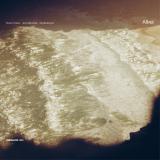
ALLVEI (pronounced AHL-vay) is an ambient-jazz trio featuring Norwegian guitarist Eivind J. Vullum (HMD,Vibrasjon), Polish saxophonist Jerzy Mączyński (Polish Jazz, UHF) and Swiss drummer Nicolas Stocker (ECM, Nik Bärtsch’s Mobile). With its roots and meaning coming from a specific region on the North-Westcoast of Norway, ALLVEI describes an eternity in time, and the endlessness in space. It’s a musical and physical journey that begins deep in the mountains of Norway via Warsaw, Zürich and ends in Kristiania. It’s a fitting name for the trio’s musical experiments, operating in a continuous evolving sonic space. The five compositions act as a visual site-map of the first cycle of the ALLVEI project. From the subtle minimalism of ‘Almberg’ and unruffled sounds of ‘Driva,’ an enchanting web of rhythmical structures and ethereal sounds unfold, centred around subtle polyrhythms and free improvisation. ‘Mariensztat’ brims with exotic textures and tasteful arrangements, while understated explosions and quietly composed atmospheres dictate the pace of ‘Züri,’ before the album climaxes with the surging ‘Kristiania,’ awash with Stocker’s shuffling drumbeats.
expected to be published on 23 Oct

Los Orioles, the already legendary Biel/Bienne based, psyche-rock tropical sound group, has signed on with Creaked for their latest release, Vacances à Mer. The seven-piece Swiss band are known and loved for their inimitable blend of Latin rhythms, psychedelic rock, French lyrics and furiously rocking live shows, complete with transcendental dance routines. With this new 4-track EP, Los Orioles expands their rep...
expected to be published on 23 Oct
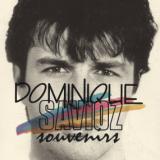
*Import Exclusive*
Discover the world of Swiss artist Dominique Savioz. An anthology of self-released rarities, made between 1984 and 1997, that blend funk, synth-pop, and balearic vibes.
Limited pressing, comes with insert - carefully remastered, fully licensed, and including previously unreleased tracks.
A1, A3 Originally released on Jambo and Evasion Disques « Jambo » (EB 100 129)
A2 - Originally released on Dominique Savioz’s record «Intime»
A4 - Originally released on Dominique Savioz’s record «Nous sommes du soleil»
B1, B2, B3 - Previously unreleased
Ready to ship
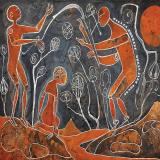
Swiss saxophonist Gilles Torrent may have been initially smitten by the sounds of US jazz giants like Coltrane, Shepp and Sanders, but as he’s developed and matured he’s cast his creative net much wider. After teaching himself the sax at 21 he spent the next 11 years studying the concepts and innovations of Coltrane before moving on to take the next logical step - exploring and soaking up the many styles music from around the world, and incorporating them into his Coltranesque vision of jazz.
Atestament to that workis the opening theme,‘La Longue Traversée Du Désert’whereTorrent directs an impressive ensemble of musicians – known collectively as World Jazz Sound - on a global trip from the plains of Africa to the pastures of England and even the mountains of his homeland Switzerland. Tracks like ‘Osso Varourn Ta Sidhera’, which pairs Beuna Vista-style Cuban rhythms with Grappelli-esque violin, or the transcendental calm of ‘Fridhia Mou’, complete with dainty harp and sultry Indian female vocal part, see the ensemble immersing themselves in the traditions and atmospheres of a panorama of different cultures, joining the dots between them all and gathering them up into one cohesive whole.
From the ancient and traditional – their effortlessly swung take on ‘Scarborough Fair’ for example – to the inspired but unconventional use of yodelling on ‘Chant des Alpes’, eventually giving way to a sensational modalworkout, this is an album full of widescreen freshness, surprises and, above all, the joy of discovery and experimentation. Originally released onCD in 2010, the sheer overwhelming beauty of the music withinhas compelled us at Jazzman to deliver these sanctified sounds onaudiophile standard 180g vinyl, for all to enjoy.
2x180g LPs featuring 8 tracks in total, housed in a single sleeve + download code.
expected to be published on 06 Nov
»Breathing Soil« is the third full-length album by Swiss musician and performance artist Elischa Heller. As a member of groups such as Film 2, Beurre, or 222Rn as well as in his live practice as a solo artist and his performances, notions of physical and temporal presence have always informed his multi-genre approach. These two side-long compositions centre around drone music and are both intended as an invitation to listen deeply as they are a product of deep listening itself. Drawing on Heller’s live practice, which aims to create shared social experiences, this music mediates between matter and metaphysics.
»If we recognise that we and the world around us are nothing but vibrations and oscillations, drone music can get in touch with a profound aspect of our ways of being,« says Heller. »It enables us to get in tune with our surroundings and each other.« Hence, resonance serves as the guiding principle of his work. As Heller explains, the title »Breathing Soil« can be read in two ways: As a description of how one breathes in the soil and gets in touch with the Earth through the sound, or that it is the soil itself that resonance, with sound serving as the connective tissue between different forms of being.
»Breathing Soil« relies on radical forms of reduction that treat sound as raw form—as vibrations and oscillations whose subtle acceleration and deceleration can have wide-reaching consequences. Meant to be played on speakers, the subtle shifts in dynamics, timbre, and volume of these two pieces are supposed to resonate with the rooms in which they are played. This music aims to make the things sing.
expected to be published on 06 Nov

BLACK VINYL[26,01 €]
Red Vinyl. Swiss quintet Sunday, June present " Cinema ", their second album, recorded at the legendary Chapel Studios in Lincolnshire, England. Produced by Andy Savours (My Bloody Valentine, Arctic Monkeys, The Killers), " Cinema " is a luminous record with deep emotional layers, traversing psychedelic rock, dream pop, and indie rock, an album steeped in nostalgia, self-discovery, the redemptive power of beauty, and the profound joy of playing together. " Cinema " moves in the space where memory and desire blur into one. Drawing its central metaphor from the moving image, the album frames love, nostalgic, imagined, never quite realized, as a succession of interior scenes, each a fragment of an unfinished film.
expected to be published on 06 Nov
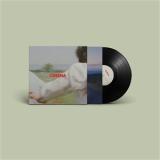
Swiss quintet Sunday, June present " Cinema ", their second album, recorded at the legendary Chapel Studios in Lincolnshire, England. Produced by Andy Savours (My Bloody Valentine, Arctic Monkeys, The Killers), " Cinema " is a luminous record with deep emotional layers, traversing psychedelic rock, dream pop, and indie rock, an album steeped in nostalgia, self-discovery, the redemptive power of beauty, and the profound joy of playing together. " Cinema " moves in the space where memory and desire blur into one. Drawing its central metaphor from the moving image, the album frames love, nostalgic, imagined, never quite realized, as a succession of interior scenes, each a fragment of an unfinished film.
expected to be published on 06 Nov
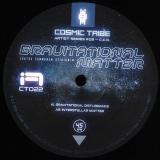
For CT022, Cosmic Tribe presents the third edition of the Artist Series featuring C.C.O. (Contra Communem Opinionem), the project of Swiss artist Florian Büchel.
The original material selected here explores a more direct and linear side of his music, combining atmospheric structures, subtle acid elements and elegant melodic progression.
On Side B, both reinterpretations move the material toward more dancefloor-oriented territory. Raakel Bloody Raakel reshapes Gravitational Disturbance into a recognizable acid-electro interpretation with increased groove and syncopation, while Romphea takes Interstellar Matter into heavier and darker contemporary electro-breaks territory with increased low-end weight and a more direct club approach.
The result creates a clear contrast across both sides: progression and musical development on Side A, followed by two alternative perspectives built around movement and dancefloor energy.
Class & Energy in a limited edition of 150 copies
Ready to ship

2026 Repress
Coming in hot on Berlin's Toy Tonics label: a new EP by the talented duo ALMA NEGRA!
Founded in 2013, Alma Negra is a Swiss collective centered around the brother duo Dersu and Diego Figueira, whose diverse roots in Switzerland and Cape Verde inform their sound. The project was launched with the ambitious vision to explore the world's diverse rhythms and drive musical innovation by mixing different styles. Their work is anchored in a process of digging and sampling, skillfully blending traditional sounds-from Fela Kuti-influenced Nigerian afrobeat and Angolan Lamento to Caribbean Zouk and the Maloya sound of Réunion-into a contemporary dance music context.
The Figueira brothers' eclectic DJ sets embody this ethos, peppering disco and house with salsa, samba, jazz, and Afro-Caribbean carnival rhythms, all under their guiding motto: "As long as it's Funky."
Since 2014, Alma Negra has made an important contribution to intercultural exchange in their hometown of Basel. Their international presence began in 2015 with their first shows abroad in countries like France, the Netherlands, and Portugal. From 2016 to 2019, their reach expanded significantly, with performances in major hubs like London, Paris, and Berlin, as well as Istanbul, Tel Aviv, and Tunisia. Highlights from this period include sets at the Montreux Jazz Festival, Dimensions Croatia, and Fuse Club in Brussels. Their standing is further cemented by releases on respected labels like Heist Recordings, Sofrito, and Basic Fingers, alongside remixes from an elite group of peers, including Soulphiction, Kuniyuki, and Yuksek.
Parallel to their studio and DJ work, the project expanded into the Alma Negra Live Band, formed with jazz musicians from Basel. While the band is currently on hiatus, this collaboration made live instrumentation increasingly central to their productions, creating a dynamic they feel is essential for any dancefloor. The live band has performed in cities like London and Hamburg and has led to collaborations with artists such as French singer Pat Kalla and jazz trumpeter Bodo Maier.
expected to be published on 20 Nov
![Various - [QR]V.324.SDD.26](https://www.deejay.de/images/l/1/1/1270011.jpg)
Following the release of Electric Rescue's new album, "Different Horizons", Laurent Garnier's COD3 QR returns to its signature various artists format for a new vinyl-only release featuring six new tracks, by WheelUP, Rapson & Kathy Brown, Mirko Loko, Costello, Jules Wells, Rod20 and James Warburton.
WheelUP is West London producer and DJ Danny Wheeler who's released music on CoOperation Records, Jamz Supernova’s Future Bounce and his long-time home Tru Thoughts. After appearing on COD3 QR in July with a track alongside Blu James, he now teams up with regular collaborator, music producer, DJ and keys player, Rapson, alongside acclaimed US vocalist Kathy Brown for the intensely soulful "Music".
Mirko Loko is a prominent Swiss talent, known for his work as resident DJ at Couleur 3 and Loft Electroclub, artistic director of Polaris festival and releases on Planet E, Border Community, Cocoon and Visionquest returns once again to COD3 QR with the Detroit-influenced "Silent Failure".
French electronic DJ and music producer, Costello returns for his sixth track on COD3 QR, having also released on Solomun's Diynamic, Chloé's Lumière Noire and most recently Maceo Plex's Ellum Audio. His bright Techno groover, "Cocotte" closes the A-side.
Another COD3 QR regular, Jules Wells opens the B-side. Influenced by the Motor City, Jules has released on labels like Electrofunk, Submerge, Twilight 76, KMS, Planet E, Brique Rouge and Logos. Here, he takes the EP into atmospheric territory with "The Rooster".
Benny Rodrigues has previously delivered tracks for COD3 QR as The Lost Souldancer. But now he reprises his Rod20 alias with "Stars Of Bethlehem". Rod20 is the dedicated hardware-only techno project he began in 2020, which prior to its standalone vinyl imprint, launched with a self-released compilation, followed by a dual-part album on Jeff Mills' legendary Axis Records.
To close the EP is the experimental ambient work of "You Are Carried On Waves Of Endless Love" by James Warburton. James is a composer and multi-instrumentalist whose work has appeared on TV and film including Netflix’s "Squid Games", HBO’s "Succession", the title music for Channel 4’s "Manhunt" and the original score for Endemolshine/Banijay’s hit TV series "Murdertown" and NBC Universal’s "Faceless" podcast.
expected to be published on 20 Nov
A DJ, producer and significant figure in contemporary electronic music, Marcel Dettmann steps forward to contribute to Running Back’s ongoing Mastermix series. Whereas previous editions of Mastermix have taken an ear to the sound of lapsed, legendary clubs such as Wild Pitch and Front, Dettmann’s curation deftly captures the man himself in ongoing perpetual motion, raiding the vault for his own precision-tooled edits, long-employed on dancefloors to devastating effect. Alongside a continuous mix, this release arrives as a 3LP gatefold, and as a limited edition cassette.
Closely associated with Berlin’s techno landscape, Dettmann was born and raised in the former GDR, then later immersed in the bleary-eyed counter cultural landscape of post-unification Berlin. Initially oriented by post-punk, industrial and new-wave music, Dettmann has been DJing since 1993, always expanding and perfecting his repertoire. He later began working behind the counter at the city’s tastemaking rave boutique Hard Wax, and a decade after he first dropped a needle, became (and remains) resident at notable local nightspot Berghain/Panorama Bar, where his instincts have helped sculpt the signature sound of both main dancefloors.
Of course, you’re probably not asking, “Who is Marcel Dettmann?” More importantly, you might want to know; just what treats has he gifted us here? The trip begins with a simple pitch-shift skywards, transforming Identified Patient’s creeping ‘The Female Medical College of Pennsylvania’ into a peak-time freakout, before an alternate take on Toctronic’s ‘Bis uns das Licht vertreibt’ emerges from the vaults for the first time. Dating from 1995, and one of Dettmann’s all-time favourites, Cristian Vogel’s ‘Untitled’ clambers back into the box with respectable cuts, while John Bender’s ‘Victims of A Victimless Crime’ kicks off the flip sporting a new arrangement, transporting us back to the foundations of a confident, stripped-back sound.
A few subtle edits to Clark’s perilously funky ‘Dirty Pixie’ takes us to Dettmann’s remix of Junior Boys. Produced in 2010, it transposes the Canadian duo’s sophisticated pop with our curator in his minimal prime, and has since become an irresistible prize for high-minded diggers. The same can be said for Experimental Products’ explosive proto-electro anthem ‘Who Is Kip Jones?’, empowered from pricey Discogs purgatory with just the slightest of tweaks. It’s deservedly sandwiched between the guiding influences of Chicago and Detroit in the form of Mutant Beat Dance’s raw ‘The Human Factor’ and a shimmering new version of previous solo production ‘Water’, featuring close friend and Ostgut Ton ally, Ryan Elliot.
The second half of the Mastermix seamlessly connects the mechanical past and digital present of EBM and industrial in the dance, with Dettmann’s instincts as a guiding hand. Severed Heads’ iconic ‘We Have Come To Bless This House’ emerges with mere nips and tucks, while Nitzer Ebb’s ‘Shame’ is significantly reimagined as a highwire act of rhythm and tension, setting up a sensual second take on a 2017 remix of ‘Limbo’ from Swiss synth heroes, Yello.
Core musical memories are shaken and stirred with a context-shifting take on Frank Duval’s emotional classic ‘Ogon’, while Ian North’s ‘Sex Lust You’ and Ford Proco’s notable Coil collaboration ‘Expansion Naranja’ effectively throb with only minor adjustments, respectfully imagined as “shadow versions”. Meanwhile, a simple breakbeat lifts Albert Kuningas’s ‘Astraalprojektio’ in the direction of wide-eyed dancefloors, while a fresh take on K-Alexi Shelby’s ‘Season of The Real’ inexplicably emerges somehow even funkier than before.
The conclusion of the compilation leads back to Das Tier from the prolific experimentalist Conrad Schnitzler, whose swirling synths and hypnotic vocals are duly tightened by Dettmann, but only as he puts it, “in conversation with the original.” Concluding three discs and thirty years of commitment to the dancefloor, this Mastermix not only offers us the opportunity to eavesdrop on this endless exchange, but to gain some sought-after material for our own record collections.
Ready to ship
A seasoned DJ and producer with a long-standing presence in New York’s underground dance community, Olive T has steadily built a reputation through her genre-fluid sets, productions and affiliations with key institutions like The Lot Radio and Nowadays. With past releases on labels like Nervous Records, 2MR and Permanent Vacation, her sound is deeply rooted in classic house traditions while consistently pushing forward with contemporary flair.
Following her contribution to Creaked’s 20th Anniversary compilation in 2024 with the hypnotic track "Salt Reflection", New York-born, Geneva-relocated artist Olive T makes a full return to the label with a proper debut release, Light On. This 4-track EP encapsulates her deep understanding of house music’s rich lineage while illuminating fresh sonic perspectives, complete with a standout remix from Swiss luminary producer Deetron.
Ready to ship
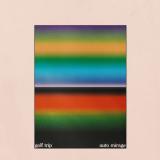
Auto-Mirage is the result of an artistic exploration built around the idea of escape.
Many different settings could be associated with this album, without ever having to choose just one. It can feel like a carefree van trip with no particular destination, the start of a relaxed summer evening with friends or even a sleepless night filled with introspection.
Its alternative identity flows between indie and surf pop, with touches of jazz and soul influences. The arrangements are meticulously crafted, adding depth to the compositions as well as authenticity to the voice.
Auto-Mirage brings together recognized talents such as Olefonken (Hubbabubbaklubb) for the mixing part, Brian “Big Bass” Gardner for the mastering, the captivating voice of Swiss singer Sreya and the striking flights of UK harpist Rachel Kitchlew. This album blends visions and influences to create a project that can accompany anyone, in any situation, as long as it brings that sense of escape.
expected to be published on 27 Nov

Al Wahem (“The Illusion”) is the new full-length release by PRAED, the Swiss–Lebanese duo of Raed Yassin and Paed Conca. Recorded between Beirut and Berlin, the album returns to the group’s central aesthetic: a rhythm-driven weave of Egyptian shaabi, electronics, improvisation and the gritty pulse of street-level sound. Nearly twenty years into the project, PRAED have distilled their approach into four pieces that subtly shift the listener’s bearings, reordering grooves and fragments until familiar elements take on new identities.
The twenty-minute title track sets the tone. A tightly interlocking two-drum foundation from Pascal Semerdjian and Ayman Zebdawi shapes a structure that expands steadily: synth figures branch outward, clarinet and bass lines act as internal guideposts, and brief vocal calls from Yassin and guest singer Mayssa Jallad sit inside the texture rather than leading it. PRAED’s shaabi keyboard language is present, but the duo stretch it outward, building tension and movement through patient accumulation.
“Al Hathayan,” at 4:46, tightens the focus. Conca’s clarinet moves between melodic arcs and clipped rhythmic gestures, threading through electronic loops that surface and disappear. Zebdawi’s percussion adds a raw, tactile quality, placing acoustic patterns and electronics in direct conversation. The piece acts as a bridge between the album’s two long-form compositions.
Side B begins with “Al Maraya,” a thirteen-minute piece that relies on electronic, bass and clarinet interplay. The atmosphere nods to the breadth of PRAED Orchestra!, but remains anchored in the duo’s rhythmic foundations. Rather than building mass, the layering creates a sense of depth, as if new spaces were opening inside the groove.
The album closes with “Assarab,” featuring keyboardist Amr Said. Semerdjian and Zebdawi again form a dual percussive axis, while synths hover between melody and pulse, and themes recur in widening circles rather than building vertically. The porous boundary between electronic and acoustic sources — processed clarinet mistaken for a sequencer, rhythmic figures springing from live drums — is where the album’s theme of “illusion” shows itself most clearly.
Al Wahem follows a long arc: early releases on Annihaya, a key appearance on Ruptured Sessions Vol. 5 – Live at Radio Lebanon (2013), later albums on Akuphone, and the large-scale PRAED Orchestra! documented on Morphine Records. This new Ruptured/Annihaya co-release brings the duo back to a concentrated format, reorganizing their familiar materials with renewed clarity and intent.
Ready to ship

Get ready to dive into the vibrant sounds of the summer with Neighborhood Music’s second vinyl sampler!
Building on the success of their inaugural release, this new collection features a stellar lineup of artists that embody the essence of house music, ideal for sun-soaked days and dance-filled nights.
1. Lazaro Casanova (Miami, USA) - Return (Original Mix)
Born and raised in the heart of Miami, Lazaro brings his unique flair and infectious energy to the sampler, ensuring grooves that will resonate on dance floors around the world.
2. Ordonez (Cuenca, Ecuador) - Trukmpaholic (Original Mix)
A rising star from Ecuador, Ordonez infuses his tracks with a deep understanding of house rhythms, delivering a sound that is both captivating and invigorating.
3. De La Maso (Zurich, Switzerland) - Stand Up
Known as the Swiss lucky charmer, De La Maso combines hypnotic percussion and melodic hooks to create a Balearic atmosphere perfect for sunset sessions by the beach.
4. Hotswing (Florence, Italy) - Samba
The young gun from Italy, Hotswing brings a fresh perspective to house music, seamlessly blending modern elements with classic grooves that keep the hips swinging.
This vinyl sampler is all about*percussion, groove, and swing, It embodies the spirit of Balearic style, where sun, beach, and fun intersect, making it the perfect soundtrack for your summer escapades. Each track is designed to uplift and energize, whether you're lounging on the beach, hosting a backyard BBQ, or hitting the club.
Massive support by Harry Romero, Paco Osuna, Joeski, The Deepshakerz, Tom&Collins, Alaia&Gallo, Animal Trainer, Tube&Berger and many more.
Ready to ship
Indulge in a delicious audiophile preview with this Appetizer 12" from the upcoming 2024 compilation by Swiss DJ Princess P. This musical amuse-bouche offers a taste of her eclectic sound, in anticipation of her full, richly curated collection.
Swiss DJ Princess P, known for her eclectic sound, has been a dynamic presence in the electronic scene since the 90s. From her early days exploring house music to working at Plattfon Records, she's honed a genre-defying style. Her sets, a blend of savory house with indie and techno, are renowned at clubs and festivals alike, showcasing her deep musical knowledge and innovative spirit.
Half Speed Cutting and mastering by Sidney Meyer @ EBS Berlin Studios (formerly Deutsche Grammophon).
Liner notes by Kirk Degiorgio
Pre-order now

The first release on Spirito del Tempo, Voices of the Past by Das Firmament, explores a sound deeply rooted in the practice of its creators, representing a shared vision that shapes the foundation of the young Swiss imprint.
Pre-order now
Californian deep house stable Seasons Recordings welcomes Shaka for the first time, with the long-serving Swiss label-hopper popping up on the imprint's 'Limited' vinyl offshoot with a typically strong three-tracker. In keeping with his work for the likes of Local Talk, Yore, Housewax and Vibes & Grooves, we get high-quality deep house warmth peppered with flashes of jazzy instrumentation. This is particularly noticeable on slow-building opener 'Coming Storm', where jammed-out electric piano motifs and dreamy chords ride jazz-flecked house beats and a warm, smooth bassline. Elsewhere, 'Smooth Move' is an even smoother and classier slab of summery deep house headiness, while 'Ticklish Issue' is an ultra-deep, percussion-splashed beatdown shuffler.
expected to be published on 11 Jan 2027

For the label's tenth physical release, Swiss artist Orphia joins the Flight Mode catalog with a four-track EP. Inspired by the pioneers of electro, the release carries a precise energy, a strong sense of purpose, and a touch of nostalgia.
Ready to ship

“LET IT SHINE” IS A MIX OF EXPLORATION, LIGHTNESS AND CREATIVE CONNECTION.
THE TITLE “ LET IT SHINE” HOLDS THE ESSENCE OF THE WHOLE PROJECT. IT’S ABOUT TRUSTING YOUR INSTINCTS, BEING OPEN, AND LETTING YOUR OWN SPARK COME THROUGH
NO MATTER WHAT FORM IT TAKES. IT’S AN INVITATION TO LET YOUR TRUE COLORS SHOW TO EXPRESS YOUR ENERGY AND LIGHT WITHOUT HOLDING BACK.
IN A WAY, IT’S A REMINDER TO STOP HIDING BEHIND WHAT’S EXPECTED AND INSTEAD LET WHAT’S TRUE SHINE THROUGH.
Rahaan has become a Chicago legend, a DJ who is widely recognised for his exceptional skills behind the decks and his exquisite taste in music. Lately he has also been earning plaudits for his production skills with some truly outstanding releases. Rahaan has collaborated on a very special release featuring Swiss-born and Italy-raised, Kihmy is an artist and producer who creates nocturnal soul music, where electronic textures and trip-hop atmospheres converge. Her sound lives in the shadows, intimate and cinematic, characterized by a deep and expressive voice and emotionally engaging lyrics.
"Let it Shine" EP released on Soulistic 360 (April 2026). Grab the limited edition vinyl before it's gone!
Ready to ship

Fantastic Friends Recordings proudly presents a new vinyl journey through deep, minimal and underground electronic sounds, bringing together four distinctive artists from across the scene.
A1 – Nicolas Duvoisin & Kim Kemi
Swiss underground veteran Nicolas Duvoisin joins forces with Danish selector and producer Kim Kemi, known for his close connection with intimate dancefloors and hypnotic grooves. Their collaboration delivers a refined blend of driving rhythms and atmospheric textures, perfectly setting the tone for the record.
A2 – Mike D.
Hailing from Chihuahua, Mexico, Mike D. is part of the new generation of minimal and underground house producers. Recognized for his sophisticated productions and support from respected international DJs, he brings a groove-focused and highly effective club cut to the release.
B1 – Guedes & Kid Moss
Longtime collaborators and regular contributors to the Fantastic Friends universe, Guedes & Kid Mosscombine infectious basslines, rolling percussion and playful melodic elements. Their productions are known for balancing dancefloor energy with a distinctive underground character.
B2 – Isaac Elejalde
From the Berlin scene, Isaac Elejalde delivers a deep and elegant interpretation of the label's signature sound, blending precision, groove and subtle emotional depth into a timeless late-night track.
A carefully curated four-track vinyl release designed for selectors, collectors and dancefloor explorers alike, continuing Fantastic Friends Recordings' commitment to forward-thinking underground electronic music.
Order now. Collecting orders for repress.

Balancing glitch-pop and contemporary piano, the Belgian pianist explores the edges of her voice, language and twisted electronica
The Belgian pianist and producer maya dhondt releases a new album titled 'wow, x', marking her debut solo album under her own name. Navigating between bedroom glitch-pop and contemporary piano, she presents sounds of alienating beauty.
The album ‘wow, x’ will be released on September 13 on vinyl and all digital platforms via VIERNULVIER Records.
“I find beauty in the uncomfortable and disorienting" - maya dhont
The first single, 'desire,' is a mutated synth-pop track that gets under the skin. The song centralizes longing for something you don't know (yet). Perhaps it's the smell of damp earth, which can be both pleasant and unsettling? The single is now available on all streaming platforms and comes with a schizophrenic video by Sakis Brönnimann.
The first release show is scheduled for Saturday, October 5, at De Koer, Ghent.
More shows will be announced soon.
A postmodern cramp, that's how one could describe the music of pianist and producer maya dhondt. Her music is an intuitive and a never ending exploration that has the potential to be and become a multitude of things at once.
On her first solo album under her own name, 'wow, x,' she presents 10 varied tracks in which she creates equally idiosyncratic sound worlds. She takes the liberty to endlessly experiment with vocals, piano, and a mix of distorted lo-fi electronic sounds with an open mind. The result is sometimes synthetic and weird, sometimes compellingly beautiful, and always captivating, drawing you into its underlying melody. These intelligently crafted productions are connected by a penchant for alienating beauty: like a warm, but damp cave where it’s pleasant to linger just a little longer. Her original sound moves within a sonic spectrum reminiscent of contemporary artists such as Lolina, Astrid Sonne, claire rousay, aya or Carla Dal Forno.
"What I create never stands alone, it can be many things at once"
If the world were a sculpture garden, maya dhondt eagerly picks from it to draw inspiration from both visual and literary passages as well as personal experiences. Her highly personal bedroom productions are grounded firmly in the world due to philosophical references and politically charged messages. And the world she lives in is being questioned on 'wow, x', as the title refers to "What Or Why?". This is evident in the single 'desire': "What is the thing that matters / to exist / or to know you’re existing?" What does one choose in life: to live in the moment or to live to remember that moment?
In the lyrics on 'wow, x', maya dhondt plays - at times childishly - with language and its boundaries. On 'tip toe tip,' banal wordplay leads to an unexpected confession, and the seemingly simple phrases in 'untitled' conceal hidden life lessons. dhondt's world of words is multilayered and multilingual: Dutch ('kleine cijfers, groot verlies'), English ('desire'), and French ('untitled') are at her disposal. And on the fierce track that is 'minimalinvasiv,' not only she turns to hardstyle, but also to German - a language dear to her due to her Swiss heritage.
Ready to ship
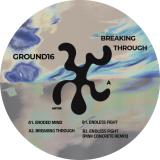
Ground16 proves his genre-bending talent with his latest release on A.2AUM, the new sublabel from SEVEB. The “Breaking Through” EP is like a Swiss Army Knife: Highly versatile, broken beats on the A-side and 4×4 on the flipside.
A DJ must-have, suitable for every occasion, whether opening slots, early-morning closings or the afters. Ranging from electro to deep house and broken beats, plus an uplifting techno remix by Turkish delight Pink Concrete, the record carries an overall dreamy, texture-rich sound aesthetic.
Ready to ship

Active for more than a decade within the Geneva scene, DJ Laxxiste A. has established himself as one of the key figures of the local club culture. A DJ digger, musician, producer and experimenter, he moves between rave culture, dub and adventurous electronic music. As one half of Oram Modular, a project that left a mark on Geneva's house and techno landscape, and through several live projects, he has long navigated between soundsystem culture, the dancefloor and free party. This new release, composed of five original tracks and two remixes, offers a synthesis of Laxxiste's musical obsessions. Jungle, acid, breakbeat and dub collide in a dense, textured universe shaped by a distinctly dub-driven mix. The tracks were first tested in a hardware live set, where machines, FX and samples were pushed and reshaped in real time before being refined into finished pieces. The result is an organic and sometimes raw sound, combining lo-fi textures, twisted samples and deep basslines designed for adventurous dancefloors.
The record also features two collaborations. Lateena, a key voice of the Swiss dancehall scene, appears on one track, bringing a distinctive vocal presence. Another piece unfolds through a double transformation, with a remix by Bony Fly later extended into a dub version by dubmaster Androo.
Ready to ship

Sirens" resonate a lot in 2026. "Sirens" are everywhere right now, in the many fields of the human reign, sounding at its highest level ever... Pioneering Swiss DJ and electronic music producer Ripperton joins forces with Berlin-based singer, composer and passionate aural storyteller Joy Frempong (OY) to create a beautiful and deeply moving piece of electronic music. And after three years in the making, “Sirens” finally emerges. The roots of this collaboration however reach back more than a decade. Around 2010, Ripperton first encountered Joy’s first album with Oy after hearing it on Swiss national radio Couleur 3. Shortly after, he saw her playing live — a moment he describes as pure magic. So inspired, Ripperton approached her label with a request to remix her music. The label agreed, and in exchange, Joy promised to feature on one of his future productions. What began as a mutual artistic gesture quietly planted a seed and eventually, pretty much fifteen years later, that seed has fully grown. “Sirens” began as one of Ripperton’s nocturnal modular jams — exploring and playing around with pulsating sequences, pure analogue sound textures and fluid, hypnotic structures. The track was then elevated to an entirely new level by Joy Frempong’s deep, evocative lyrics and her celestial voice, transforming the song into something haunting and profoundly human. The song also grew on a shared work ethos rooted in patience, trust and refinement. A slow process, shaped by intuition and feeling rather than pressure. Listening over noise. The result is an emotionally charged composition that blurs the line between inner reflection and collective awareness — a sonic response to the sirens of our time.
Quotes: Laurent Garnier: “This is lovelyyyyy * “ Aera: “Love it! A brooding masterpiece. Simple yet multilayered, the real action is happening beyond the surface.” Acid Pauli: "This is really special. Like it a lot." Kalabrese: "Wonderful collaboration between two outstanding artists. Fresh sounds, deeper rauschen, beautiful vocals, hypnotic tribe. a bliss!” Vladimir Ivcovic: "Das ist so gut, aufrichtig, rein und kommt zum richtigen Zeitpunkt. Die Abwesenheit von Hysterie. Ich liebe es. Downcast Euphoria of the highest order und gerade. In der Tat wunderschön. Besonders Clouds Mix, gerade."
Ready to ship

The Spoiled is an Italian post-punk project led by Giovanni Santolla, blending electronic beats, distorted synths, and reverb-soaked guitars into a dark, romantic, and nostalgic sound.
In 2024, the project self-released the debut EP Time distributed by Manic Depression, followed in 2025 by the full-length Living Ghosts via Swiss Dark Nights—an album that firmly established The Spoiled within the contemporary post-punk scene. Following the album’s release, Giovanni collaborated with international acts including This Eternal Decay, Darkways, Corlyx, Chaos International, and Hinfort, while maintaining a dense touring schedule across Europe and sharing the stage with artists such as Traitrs, Hinfort, Darkways, and Ductape.
The new album When It Rains, set for release on Avant! Records on April 17, 2026, expands The Spoiled’s artistic vision with a focus on intense, romantic soundscapes that delve deeply into human intimacy and interpersonal relationships. Embracing a warmer and more personal sonic direction, the record blends elements of indie rock and electrogaze music that enrich and revitalize the dark, melancholic palette that has defined the project’s earlier works.
Still playing homage to the forefathers of the genre such as Clan of Xymox, The Sound and Pink Turns Blue, When It Rains opens the path of The Spoiled to new soundscapes, exploring broader emotional territories while preserving the atmospheric depth and introspective tone that have become its signature.
FFO: Twin Tribes, Clan of Xymox, She Past Away, Mareux, The Soft Moon, Pink Turns Blue.
Ready to ship

With Ackermann's latest EP for SEVEN, he delivers classic house, just a little bit faster, centered around powerful, uplifting vocals. On the B-side, we invited scene heavyweights Cinthie from Berlin and Swiss Deetron, both connected to the label from its early days.
Ready to ship