Recorded about a year after Scenery, his second album retains the delicacy and emotional depth of his playing, but adds a new strength that gives the world Fukui paints a clearer contour and striking dimensionality. From the bittersweet, heart-stirring melody of “Mellow Dream” to the vibrant, exhilarating drive of “Horizon”, the album is filled with performances that shine brilliantly. It is also notable that the number of original compositions only one on the debut—has increased to three here, allowing listeners to appreciate Fukui’s musicality even more fully. Considering its maturity and the richness of its content, it may even be fair to say that this work surpasses his first album. Ryo Fukui, who sadly passed away...
THREE BLIND MICE News
- 1
- A1: It Could Happen To You
- A2: I Want To Talk About You
- A3: Early Summer
- B1: Willow Weep For Me
- B2: Autumn Leaves
- B3: Scenery
His fresh, delicate playing has captivated countless listeners, and his debut album Scenery has come to be highly acclaimed around the world. Fukui, who began playing the piano at the age of 22, recorded this album when he was just 28. The earnest passion of his youth resonates throughout the music, gently stirring the emotions of those who listen. The spacious, confident swing of “It Could Happen To You”, the refreshing joy radiating from “Early Summer”, the late autumn coolness imbued in the title track “Scenery” each embodies the uniquely expansive yet nuanced “Hokkaido sensibility” that flowed naturally from Fukui’s artistry.
Within this album, the beautiful landscapes that Ryo Fukui crafted his Scenery continue to breathe eternally.
text by Yusuke Ogawa (UNIVERSOUNDS / DEEP JAZZ REALITY)
- A1: Froggy Day
- A2: These Things
- A3: Hi Beck
- A4: Palo Alto
- B1: Higashi 32-Chome 317-Ban-Chi
- B2: Subconsciously
- B3: My New Frame
- B4: Lennie's Pennies
YOSHIO OTOMO QUARTET WITH TSUYOSHI YAMAMOTO
MOON RAY (1977) LP
- A1: Eclypso
- A2: Relaxin' At Camarillo
- B1: Come Sunday
- B2: He's A Real Gone Guy
- C1: Stella By Starlight
- D1: Juju
- D2: Harlem Blues
This is joy beyond expectation the arrival of a new Ryo Fukui recording. Captured on June 26, 2004, this live session documents the ninth anniversary concert of Slowboat, the jazz club Fukui founded and considered his musical home. The trio features Ryo Fukui on piano, Benisuke Sakai on bass, and Yoshihito Eto on drums. Fukui was 56 years old at the time, and his playing is powerful and expansive, yet still marked by delicacy and razor sharp precision. In terms of energy, stamina, and technique, he was entering a true period of artistic maturity. He delivers the music of his beloved Phineas Newborn Jr. and Tommy Flanagan with depth and elegance, and approaches the works of Wayne Shorter—an early-life influence—with thrilling intensity. The performance captures Fukui at a moment of profound fulfillment, offering a truly compelling glimpse into his late career brilliance.
- A1: Sonora
- A2: Stella By Starlight
- A3: Speak Low
- A4: Nobody Knows The Trouble I've Seen
- B1: Old Country
- B2: Soultrane
- B3: Chasin' The Bird
- B4: Be My Love
Ryo Fukui, the renowned pianist from Hokkaido who sadly passed away in 2016, has earned global recognition among jazz listeners through his highly praised early works Scenery and Mellow Dream. A Letter From Slowboat, recorded in 2015, marked his first leader album in sixteen years. The sessions took place at Slowboat his musical home together with two young musicians whose talent Fukui himself deeply trusted. The lyricism that seeps through “Sonora”, the poetic warmth enveloping “Stella By Starlight,” the vibrant energy coursing through “Speak Low” each performance is filled with life. His touch grew more forceful, his emotions more profound, his musical fragrance even more luxuriant.
Ryo Fukui, who passed away in 2016 after releasing only five albums, recorded this fourth work in 1999. Featuring bassist Lyle Atkinson and drummer Leroy Williams—the longtime rhythm section of Barry Harris this New York-recorded album captures the full appeal of Fukui as a bebop pianist. Centered around standards, the track selection, structure, and of course the performances all radiate intent and vitality. His assured and weighty touch, the firm yet elastic swing, and the emotion and lyricism that permeate his dynamic phrasing everything here conveys Fukui’s breath, will, and presence in vivid form. The re-performance of his signature piece “Mellow Dream” is also a welcome highlight.
This third album by Ryo Fukui arrived a full 17 years after Mellow Dream, marking his first and only solo piano recording. Alongside signature pieces like “Scenery” and “Mellow Dream”, the album includes “Voyage” and “Nord”, both written during a trip toward the northern regions, as well as “Nobody’s”, a piece imbued with Fukui’s deep respect for his mentor Barry Harris. The selection is nothing short of a delight for fans.
Here, the depth and weight Fukui cultivated as a bebop pianist blend seamlessly with the profound “Hokkaido sensibility” that had always resided within him. It is a masterpiece that truly deserves to be passed down through time.
Who could have imagined that Ryo Fukui had left behind a recording like this? Captured on June 8, 1977, this previously unreleased live session was recorded at the Sapporo jazz club Vidro by Masataka Ito, the producer behind Fukui’s albums Scenery and Mellow Dream. It is unmistakably the Ryo Fukui Trio of that era, yet the performance possesses an overwhelming intensity and freshness that far surpass any studio recording—excitement in its purest form.
The 16-minute, searing performance of “Mellow Dream” is just the beginning. The propulsive energy of “Speak Low”, the beautifully woven lyricism of “Body & Soul,” the blistering drive of “Love For Sale”, the weighty depth of “Mr. P.C.”, and the crystalline fragility of “My Foolish Heart”—each track is delivered with feverish brilliance. It was this very live recording, excerpts of which were evaluated at the Trio Records headquarters at the time, that ultimately led to the production of Fukui’s second album Mellow Dream. In every sense, this is an extraordinarily precious document.
- A1: Sakura Sakura
- A2: Yosakoi Bushi
- A3: Yamanaka Bushi
- B1: Matsuri No Genzo
- B2: Alone, Alone And Alone
- B3: Suwa
A standout drummer in the Japanese jazz scene of the 1950s and 1960s, Hideo Shiraki recorded this album in Berlin in 1965. The album, featuring a new arrangement of the classic "Matsuri no Genzo" and the original composition "Alone, Alone and Alone" by the young Terumasa Hino, is now set to be reissued in the "Spin This Now!" series.
Hideo Shiraki (ds)
Terumasa Hino (tp)
Takeshi Muraoka (ts)
Yuzuru Sera (p)
Hachiro Kurita (b)
Kinuko Shirane (koto)
Keiko Nosaka (koto)
Sachiko Miyamoto (koto)
- A1: Mickey's Samba
- A2: Funky Wave
- A3: Moon Stone
- A4: Space Coaster
- B1: Let's Get Together
- B2: Vibration #1
- B3: Keep On Loving
At the time, Mikio Masuda was frequently mentioned as a Japanese jazz musician on par with the soft-and-mellow crossover sound of artists like Bob James and Ramsey Lewis. With a supple sensibility that moves effortlessly between jazz and rock, he stands as one of the defining figures of the 1970s. Now, one of his essential masterpieces, "Moon Stone", has been confirmed for reissue as the fifth installment from SPIN THIS NOW!
Electric Piano, Organ, Clavinet, Synthesizer - Mikio Masuda
Drums - Hideo Yamaki
Electric Bass - Motohiko Hamase
Electric Guitar - Kazumi Watanabe
Electric Guitar, Vocals - Kazumasa Akiyama
This is the long-awaited reissue of Mukai’s first release on the Better Days label, bringing together jazz dynamism and fusion’s vivid flair. With a spirituality reminiscent of his early works, bossa nova touches that hint at what would come later, plus tropical and rock beats and plenty of funk, it’s a crossover gem packed with diverse appeal.
Masao Yagi’s memorable first leader date, by a musician active since the dawn of Japanese jazz and also known as a devoted Monk scholar. This album features Monk’s compositions throughout, including classics such as "’Round Midnight", "Straight, No Chaser", and "Blue Monk".
Masao Yagi (p)
Sadao Watanabe (as)
Akira Nakano (tp)
Masanaga Harada (b)
Teiichi Tabata (dr)
KIMIKO KASAI WITH KOSUKE MINE QUARTET
YELLOW CARCASS IN THE BLUE (1971) LP
- A1: Morning Flight
- A2: Imagination Sakuhin 1-Ban
- B1: Winter Song
- B2: Cousin Mary
- B3: Ame No Naka No Heitai
- A1: Green Sleeves
- A2: Nardis
- B1: If I Were A Bell
- B2: Obstruction
Recorded live at 'Ginparis', Ginza, Tokyo on June 26, 1963.
This is the monumental first album by Tsuyoshi Yamamoto, who later became one of the two major artists on the TBM label along with Isao Suzuki. A groovy and heartwarming popular disc by the Japanese piano trio
Limited Edition Three Blind Mice Premium Re-issue Collection
180g vinyl LP with obi and insert
Remastered and cut by Bernie Grundman
Pressed and printed in Japan
Orig. Rel.:1970
This is the first album by Takao Uematsu, who played in the George Otsuka Group.
His blackness of blowing, spirit and technique, which are directly descended from Joe Henderson, set him apart from other Japanese players.
- A1: Step Right Up To The Bottom 11:23
- A2: One For Trane 12:22
- B1: A New Shade Of Blue 7:30
- B2: Where Do They Go? 6:00
- B3: Sweet Georgia Blues 6:05
Limited Edition Three Blind Mice Premium Re-issue Collection
180g vinyl LP with obi and insert
Remastered and cut by Bernie Grundman
Pressed and printed in Japan
Orig. Rel.: 1973
A memorable first album by the very accomplished yet restrained artist, Naosuke Miyamoto. Thrilling straight-ahead jazz with Takashi Furuya and other Kansai-based members!
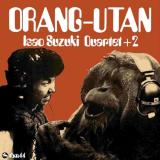
Previous album, "Brow Up," which made it known to the jazz world, this is Isao Suzuki's second album. You can enjoy the interplay with the Watanabe Kazumi, ...etc. This is a masterpiece of one creature.
At the age of 14, Ayako Hosokawa was already performing in the American military clubs in Japan, picking up the English language by singing international pop songs of that time. Now, she represents feeling and soul within her songs, no matter whether she sings in English or Japanese. After her marriage, she moved to the United States and was discovered and sponsored by Earl "Fatha" Hines. She found enthusiastic fans touring San Francisco, Las Vegas, Montreal and lots of places in California, performing in the clubs, local radio stations or on TV. In the '80s, she started a roving life between the United States and Japan. Due to her recordings for TBM and performances for radio stations and on TV, she became one of the best-known pop and jazz singers throughout her country.
Backed by a terrific band, Ayako tackles some of the most memorable jazz standards of all time on the 1977 release To Mr. Wonderful. Couple this with spectacular sonics for a memorable and beautiful album.
- A1: Lullaby For The Girl
- A2: Darkness
- B1: Blues
- B2: When Sunny Gets Blue
- B3: Old Song Blues
Discover the deeply personal work of Japanese saxophonist Hidefumi Toki through his 1975 masterpiece, "Toki". Accompanied by a quartet featuring Kazumi Watanabe on guitar, Nobuyoshi Ino on bass, and Steve Jackson on drums, Toki's expressive alto and soprano saxophone fill the space with gentle, raspy tones. The album's laidback and mellow atmosphere, highlighted by original compositions like "Darkness" and "Lullaby For The Girl," as well as soulful renditions of classics such as "When Sunny Gets Blue" and Ornette Coleman's "Blues," creates a captivating listening experience.
Recorded May 17, 1975 at AOI Studio, Tokyo.
- A1: Ryuhyo - Sailing Ice (Motohiko Hino)
- A2: Soul Trane (Tadd Dameron)
- B1: New Moon (Steve Grossman)
- 1