
pré-commande06.12.2021
il devrait être publié sur 06.12.2021
27,69 €
il devrait être publié sur 06.12.2021

Formed by Cream lyricist Pete Brown, The Battered Ornaments were a mixture of English jazz, blues, and psych rock in the late 60s. By the time they got around to recording their sophomore album Mantle-Piece, Brown was out of the band, yet they recorded his songs and sang his parts. The album was a critical and commercial disaster. It was later rediscovered by hip hop crate diggers for its raw funky production and open grooves especially on the track "The Crosswords And The Safety Pins".
il devrait être publié sur 06.12.2021

Recorded in London in the summer of 1971 by Austrian singer/songwriter Bobby Haumer and an English pick-up band, Zakarrias was issued on the highly collectable Deram label. However, Deram withdrew the album almost immediately when they discovered that Haumer didn't have a work permit. Mysteriously sounding heavy progressive with sensitive folk-psych moments. Great dynamics with contrasting guitar leads. The results have been compared to outtakes from the third Led Zeppelin album, but while the lead vocals are certainly reminiscent at times of Robert Plant, the overall sound and general air of quiet pretension is probably closer to Van der Graaf Generator leader Peter Hammill's early solo work.
il devrait être publié sur 06.12.2021

Fools Meeting is an album by Carol Grimes with the British blues/progressive rock band Delivery, founded in the late 1968. The band was one of the wellsprings of the progressive rock Canterbury scene.
"Delivery was formed during the British blues boom of the late '60s. However, its sound is jazzier and more progressive than most of the music that emanated from that era. Rhythm & blues serves as a springboard for forward-looking tracks like "Blind to Your Light" and "Harry Lucky." Singer Carol Grimes is frequently compared to Janis Joplin. While Grimes has a powerful voice, she does not reach the level of histrionics that were a showcase of Joplin's. It should come as no surprise that Delivery members joined Canterbury related bands upon Delivery's demise. The reissue CD of Fools Meeting features several live bonus tracks, as well as a post-breakup demo recording featuring Caravan bassist Richard Sinclair. That demo session, one of the highlights of the collection, spurred the musicians to form Hatfield and the North. Fools Meeting is an essential part of any Canterbury collection, and should also appeal to progressive jazz fans." (Jim Powers / All Music Guide)
il devrait être publié sur 06.12.2021
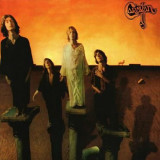
For their first album, Caravan was surprisingly strong. While steeped in the same British psychedelia that informed bands such as Love Children, Pink Floyd, and Tomorrow, Caravan relates a freedom of spirit and mischief along the lines of Giles, Giles & Fripp or Gong. The band's roots can be traced to a British blue-eyed soul combo called the Wilde Flowers. Among the luminaries to have passed through this Caravan precursor were Robert Wyatt, Kevin Ayers, and Hugh Hopper and Brian Hopper (pre-Soft Machine, naturally). The Caravan album never sold in serious numbers, and for much of 1968 and early 1969, the members were barely able to survive -- at one point they were literally living in tents. Suddenly, Caravan was an up-and-coming success on the college concert circuit, even making an appearance on British television's Top of the Pops. With national exposure and a growing audience, the group was at a make-or-break moment in their history. They rose to the occasion with their second Decca LP, In the Land of Grey and Pink, which showed off a keen melodic sense, a subtly droll wit, and a seductively smooth mix of hard rock, folk, classical, and jazz, intermingled with elements of Tolkien-esque fantasy.
il devrait être publié sur 06.12.2021

This was the first album released on Decca's progressive Nova label. Co-produced by Peter Sherter and Ian Sippin, much of the album bares an uncanny resemblance to early Spooky Tooth. Propelled by Bailey's hoarse vocal growl and the band's penchant for screaming guitars, this comparison is reinforced on tracks such as Going Home, Take These Chains and Out Of Us Two. Elsewhere Bailey sounds like Joe Cocker on Practically Never Happens, while Bob Weston's Slightly Country sounds like it was stolen from the early Steve Winwood and Traffic catalogue. With the exception of the pedestrian blues number Backlash Blues the album, but including the extended Darkness, is worth hearing.
il devrait être publié sur 06.12.2021
