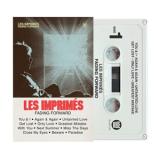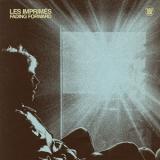
With Dispersion, Loom & Thread return to the volatile architecture of the expanded piano trio - and quietly fracture it from within.
Daniel Klein (drums), Tobias Fröhlich (double bass) and Tom Schneider (keys, sampler) remain the sole agents on stage and in the final recording. The triangle holds. And yet, the field has expanded. For their second studio album, the trio fed their improvisations with the timbral signatures of guest saxophone and vibraphone players - not just as additional voices to be featured, but also as material to be absorbed, atomized and redistributed. The result is not augmentation but thorough refraction.
Where the debut album explored the recursive labyrinth of Schneider's live sampling of his own piano, Dispersion introduces an external grain into the feedback system. Breath and metal. Reed turbulence and struck resonance. The trio sampled extended improvisations by saxophone and vibes players: Victor Fox, Asger Nissen, Volker Heuken, and L&T's own Daniel Klein; dissected their attacks, overtones and decay curves, and integrated these fragments into the trio's internal circuitry. What emerges is a play of presences without bodies - instrumental ghosts circulating through the dense weave of rhythm and keys.
At first, one might hear the familiar relational tension: Klein's polyrhythmic elasticity interlocking with Fröhlich's tensile double bass figurations, Schneider poised at the hinge between tonal field and percussive impulse. But soon, the surface splinters - again. A vibraphone shimmer appears, yet no mallets are visible. A reed multiphonic surges through the texture, bending space between bass and drums. These events are neither quotations nor overlays; they are redistributed energies, dispersed across the trio's grammar. A digital multidimensional interplay ensues.
If the first album unfolded as a two-tiered game - live phrase and sampled reflection - Dispersion adds a further axis. The sampled materials from other improvisers are stripped of their erstwhile two-way interaction and reconstituted as malleable particles. Signifier detached from origin, resonance detached from gesture. The trio navigates a constantly shifting topology in which acoustic memory and electronic manipulation are indistinguishable.
Crucially, the album never abandons the physical urgency of three musicians reacting in real time. The additional timbral layers do not thicken the texture into opacity; rather, they introduce stark points and arrows of diffraction. Density opens into prismatic clarity. Lines splinter and regroup. What seems like a quartet or quintet collapses back into three bodies negotiating an expanded field.
Dispersion is not about addition but about distribution - of agency, of timbre, of temporal perspective. It is an album in which the trio setting becomes a site of multiplicity without surrendering its immediacy. A dissolution not only of the divide between present experience and memory, but between inside and outside, self and other.
Three musicians. Countless vectors. A music that fractures in order to cohere.
CREDITS:
Tom Schneider: piano & sampler
Tobi Fröhlich: double bass
Daniel Klein: drums & percussion
sample sources:
Victor Fox: tenor saxophone
Asger Nissen: alto saxophone
Volker Heuken: vibes
Daniel Klein: vibes
Recorded by Martin Dressler at Bauer Studios, Ludwigsburg.
Mixed & mastered by Martin Ruch.
Artwork by Viet Hoa Le.
quête:tempo o nei
- A1: Somewhere Else
- A2: Nada Não
- A3: Tom De Voz
- A4: Novas Idéias
- A5: Harvest Moon
- A6: Tudo
- B1: Saudade Vem Correndo
- B2: Areia
- B3: Tout Est Bleu
- B4: Lonely In My Heart
- B5: Vivo Sonhando
- B6: Inspiração
Tudo is an album by world renowned Grammy-nominated singer/songwriter Bebel Gilberto, originally released in 2014.
Gilberto, daughter of bossa nova immortal João Gilberto, is one of the most internationally famous and beloved of Brazilian musicians. Tudo, which means "everything" in English, showcases Bebel's ethereal vocals and wistful, dreamy song writing in each of the 12 tracks.
Bebel reunites with Mario Caldato Jr., who produced her first landmark album Tanto Tempo.
With Bebel singing in French, English, and Portuguese, Tudo is a shimmering, sweet summery collection that includes original songs along with songs by João Gilberto, Antonio Carlos Jobim and Neil Young, as well as soulful duet with Seu Jorge.
The gorgeous melodies are shaped by touches of electronica and Bebel's intimate vocals hint at a fantastical Rio de Janeiro, a style that has earned her a devoted fanbase worldwide.
Tudo is available on black vinyl and includes a 4-page booklet with pictures and lyrics.
Munich's machine enthusiasts 9ms return to Squama with their third album 'Lunch'.
More heterogenic than its predecessors, the album incorporates Dub-infused IDM, cinematic slow jams and off-kilter drum workouts giving the daring DJ plenty of material to treat dancefloors and listening rooms alike.
On their previous albums Pleats (2021) and II (2023) Florian König and Simon Popp mapped out the musical symbiosis between man and machine, using motion sensors to translate their bodies' movement while playing drums into sound. On Lunch the conceptual centerpiece is the pendulum. Neither man, nor machine, its steady movement is converted into analog voltage with what's called a gyroscope, allowing it to trigger and control any parameter in the duo's setup.
The album was conceived over the course of a year in weekly morning sessions that had to be wrapped up by lunch due to family obligations. The temporal limits, as paradoxically is often the case, turned out to be quite liberating and resulted in a more playful and fearless process.
"We worked pretty efficiently, but since there was no deadline for the album to be finished, the whole process felt very light". The duo also freed themselves from the limitations of having a recording setup that's reproducible for touring.
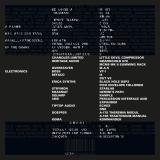
"We didn't think about the live aspect at all this time." So for every session they would choose from a wide array of instruments and machines, an abundance that has inspired the record's artwork, overflowing with words from the list of gear used on the record.
Sonically, 9ms keep on forging their own niche with thick, compressed drums set against wide stereo-processed soundscapes and a genuine curiosity that's pleasantly contagious.
Peach’s Soak Vol. 1 is a cross-Canadian link-up with Mood Hut that moves through slower, deeper waters.
The mini-LP was written after a tour through Asia that opened up something new in how Peach approaches making music. The turning point, as she tells it, came during a visit to a neighbourhood sento in Tokyo, while surrounded by steam rising in suspended time, something clicked about the relationship between the body and the sounds she wanted to make.
She’d been learning about cycle synching and working out with the phases of her hormonal cycle, respecting energy fluctuations throughout the course of a month, and decided to apply the approach to writing music. She allowed shifts in energy to guide tempo, density, and emotional tone rather than strictly answering to the floor.
Soak came out of this exploration, sketched and layered with field recordings from her trips to Vietnam and the Philippines during a challenging time in her life. Fragments of heat, air, and shoreline are absorbed into the music itself. Vapourous pads, low-end weight, fractured percussion, and melodies hover at the edge of dissolution. Water runs structurally through the record in surges, in tidal pacing, in the slow accumulation of texture.
Wherever this music finds you, please enjoy the Soak.
Irish drone-doom-folk act One Leg One Eye, the project of founding Lankum member Ian Lynch and veteran noise monger George Brennan, announce their new album, CRONE, out on 1 May on AD 93.
Today the group share the first track on the album, ‘Many are my Names Besides’, on which they are joined by the elemental force that is legendary actor, performer, writer and director Olwen Fouéré (Operating Theatre) contributing vocals.
Olwen Fouéré comments:
“When Ian and George first approached me to work with them, they were already creating the Crone album as a sonic invocation of the ‘sovereignty goddess’, who personifies the land and the legitimacy to rule it, in her darkest and most terrifying form. As we spoke, the triple goddess figure of the Morrigan entered my mind, reinforced by a marked presence of crows every time we met. The Morrigan is essentially a war goddess, frequently appearing as a crow in a battlefield, a death prophet, a guardian of sovereignty, and a very powerful figure in Irish Mythology.
So I invoked her energy as a starting point, using text extracts that Ian sent me from the Ulster Cycle and other sources. The voice recording was done in one day, improvising the source material while the already composed music occupied my psyche through headphones.
Listening back, at this time in our world, I can only wonder at how much blood and war the Crone/ Crow of sovereignty is preparing to unleash now. Watch out.”
CRONE is the second album from Lynch and Brennan, following on from 2022’s slowburn slab of ambient grit, …And Take The Black Worm With Me. Bewildering, psychedelic and ultimately transcendental, the four tracks of One Leg One Eye’s CRONE shapeshift and morph endlessly in a coarse miasma. Traditional song structures and vocal melody are eschewed, instead the trio directly channel energies from the rich seams of mythological significance submerged below the Irish psyche. The anger, rage and beauty of the sovereignty goddess burn a consistent and deliberate line through the album in the form of obscure incantations and dire pronouncements, the gnarled sinews that bind it all together.
Just as the subject matter of the tracks delve deeper into Irish myth and the remote past, the temporal reality of the album reaches back into the bands prehistory, with the majority of it the material being recorded by Lynch and Brennan in 2021 before One Leg One Eye was conceived of as an entity with Brennan working on the CRONE project while Lynch worked on …And Take The Black Worm With Me.
When they were there they saw a lone woman coming to the door of the Hostel, after sunset, and seeking to be let in. As long as a weaver’s beam was each of her two shins, and they were as dark as the back of a stag-beetle. A greyish, wooly mantle she wore. Her lower hair used to reach as far as her knee. Her lips were on one side of her head.
She came and put one of her shoulders against the door-post of the house, casting the evil eye on the king and the youths who surrounded him in the Hostel. He himself addressed her from within.
"Well, O woman," says Conaire, "if thou art a wizard, what seest thou for us?"
"Truly I see for thee," she answers, "that neither fell nor flesh of thine shall escape from the place into which thou hast come, save what birds will bear away in their claws."
"It was not an evil omen we foreboded, O woman," saith he: "it is not thou that always augurs for us. What is thy name, O woman?"
"Calib," she answers.
"That is not much of a name," says Conaire.
"Lo, many are my names besides."
"Which be they?" asks Conaire.
"Easy to say," quoth she. "Samon, Sinand, Seisclend, Sodb, Caill, Coll, Díchóem, Dichiúil, Díthím, Díchuimne, Dichruidne, Dairne, Dáríne, Déruaine, Egem, Agam, Ethamne, Gním, Cluiche, Cethardam, Níth, Némain, Nóennen, Badb, Blosc, Bloár, Huae, óe Aife la Sruth, Mache, Médé, Mod."
On one foot, and holding up one hand, and breathing one breath she sang all that to them from the door of the house.
"Carol Maia & Jeremy Gustin’s haunting collaborative album is the result of a long distance partnership during which tracks were traded back and forth across thousands of miles, Jeremy working from his home studio in Brooklyn and Carol from hers in Rio De Janeiro. Later they enlisted support from a number of key players in the Rio scene, Frederico Heliodoro, Paulo Emmery, Ricardo Dias Gomes, and from Brooklyn’s musical community, Will Graefe and Ryan Dugre, to shape this understated masterpiece of sophisticated global pop and quiet experimentalism.
"It's hard to describe what Carol, Jeremy and their guests have achieved on 'it's nice to see a lake in your eyes', a kind of pop music that stands outside of time and is neither Brazilian, American or of any other recognisable place. Maybe it's risen out of the lake they imagined into being? Maybe it's formed like rain in the thousands of miles of air between Rio and New York? Whatever happened was certainly alchemical as you will hear.
"Carol told me her writing on this record was greatly influenced by her reading of Marcelo Ariel's poetry book A água veio do sol, disse o breu so maybe the best thing to do to describe this music is to let you read one of his poems:
A luz do ser é como a água
também veio do Sol
onde todos os planetas querem entrar
Dentro do Sol
O ser é imóvel
como a gratuidade de um êxtase
parecido com a respiração
Fora do Sol
o ser é móvel
Tempo eternidade
e tempo cronológico
The light of being is like water
it also came from the Sun
where all the planets want to enter
Within the Sun
Being is immobile
like the gratuitousness of an ecstasy
similar to breathing
Outside the Sun
Being is mobile
Time eternal
and chronological time
"Jeremy Gustin is an unorthodox drummer, percussionist and songwriter who has toured and recorded with Joan as Policewoman, Iggy Pop, David Byrne, Marc Ribot, Delicate Steve, and Norah Jones. If you follow Hive Mind then you probably know him best from his amazing work on Ricardo Dias Gomes' Muito Sol. Jeremy is also in the experimental pop bands Star Rover and Blurry the Explorer.
"Carol Maia is one of Rio's new generation of singers and musicians currently lighting up the city's vibrant music scene. She also featured heavily on Wolfgang Pérez's album Só Ouço, which was released on Hive Mind in 2025."
Hidden away amidst the bustle of Rio de Janeiro’s Catete neighbourhood is a small alleyway behind a cast iron gate. At its end is Bairro Saavedra, the courtyard surrounded by Neo-colonial houses where Brazilian guitar virtuoso Fabiano do Nascimento spent much of his childhood. Built in 1928, this secluded neighbourhood with its wooden shutters, tiled floors and tranquil benches, provides the inspiration for the title of Do Nascimento’s new album VILA, a collaborative project with a sixteen piece orchestra led by trombonist and arranger Vittor Santos.
Recorded between Rio de Janeiro and Los Angeles, VILA is grand, tender, warm, playful and nostalgic. On this stunningly ambitious work, the delicate compositions led by Nascimento's guitar, which sits central in the mix, are surrounded by Santos’ breathtaking orchestral arrangements which swirl in all directions: complimenting, questioning, responding; in constant conversation.
Like the eclecticism of the architecture Do Nascimento grew up surrounded by, his music straddles many worlds at once. He is known as a Brazilian acoustic guitar master and as such has collaborated with Arthur Verocai, Airto Moreira and Itibere Zwarg. But equally at home in Los Angeles's jazz and experimental music scenes, Do Nascimento is also known for his work with artists like Sam Gendel and Carlos Nino.
Vittor Santos is an arranger and Trombonist who has worked extensively with many of the greats of Brazilian music, including João Donato, Marcos Valle, Toninho Horta, and Elza Soares.
=====================================
Credits:
Fabiano do Nascimento – 6, 7 and soprano guitars.
All orchestral arrangements and production by Vitor Santos.
Recorded at Electro-Sound studio, Los Angeles and Estúdio Fibra, Rio de Janeiro
Engineered by Jason Hiller and Garbiel Lucchini
Mastered by Mike Bozzi
Oboe – Francisco Gonçalves
Contrabaixo – Rodrigo Villa
Drums – Márcio Bahia
Violino - Ricardo Amado
Violino – Thiago Teixeira
Violin – Daniel Albuquerque
Violin – Márcio Sanches
Viola – Ivan Zandonade
Viola – Dhyan Toffolo
Cello - Hugo Pilger
Cello – Janaína Salles
Double Bass – Rômulo Gomes
Clarinet – José Batista
French Horn – Philip Doyle
Trombones - Vittor Santos
Violin – Daniel Guedes
In 1978 a newly formed Augusta, Georgia group Marshall, Donovan and Broomfield chose to record cover versions of two songs previously recorded in 1973 and 1974 respectively by Florida siblings group Cornelius Brothers and Sister Rose. These Eddie Cornelius penned songs “Let me Down Easy” and “Since I Found My Baby” would form both sides of Marshall, Donovan and Broomfield’s first 45 single, released on group founder John Marshall’s own Augusta label. The flipside “Since I Found My Baby” would eventually gain popularity across the pond with aficionados of the UK modern soul scene of the early 1980’s and beyond.
John Marshall began his musical career in a high school group called The Fabulous Gardenias who recorded the doowop ballad “It’s You, You, You” backed with the up-tempo R n B mover “What’s The Matter With Me” released on Tommy Brown’s local Liz label (named after his wife future Motown recording artist, Liz Lands) in 1961.The Fabulous Gardenias featured John Marshall, the late Atlanta alumni Calvin Arnold, “Little” Joe Jones Jr (later of the Tams) and a fourth guy only remembered as Harold. John Marshall later sang with another Atlanta group The Tams of “Hey Girl Don’t Bother Me” fame from 1970 through to 1978.
Later in 1978, John Marshall having relocated to Augusta, GA the previous year was casually emptying the contents of his mailbox outside his home when a car suddenly pulled up. The driver called out “Hey I recognize you, you’re John Marshall you used to be with the Tams!” The driver continued to introduce himself as John Donovan stating that he too was a singer, followed by an impromptu performance, and hey! sure enough he could sing! A later introduction to Charles Broomfield (John Marshall’s next-door neighbour at that time) would lead to the formation of the group Marshall, Donovan, Broomfield with the addition of Mary Marshall and Pat Donavan (the then, two John’s respective wives) as backing vocalists. The previously mentioned group’s first release the John Donovan led “Let Me Down Easy/Since I Found My Baby” was recorded at the now defunct Jam Studio’s in Atlanta. Upon release, the “Let Me Down Easy “side received considerable local radio play but only led to the group performing a handful of local shows. On the strength of the group’s first release a second 45 release followed in 1980 “Let’s Dance/That’s Love” both sides of this 45 were penned by Charlston, South Carolina native, Harold Thomas who John Marshall knew from his time with the Tams, Thomas having once been part of Bill Pinkney &the Original Drifters and later the Tams management teams. This second 45 never gained the same local attention of “Let Me Down Easy” and after three years together the Marshall’s, Donovan’s and Charles Broomfield went their separate ways. John Marshall lost contact altogether with his former group members and left the music business taking up employment at International Paper Mill until his retirement in 2013.
Due to the current resurgence in popularity of “Since I Found My Baby” with copies regularly selling for four figure sums, Soul Junction have reacquainted ourselves with John Marshall to you bring you “Since I Found My Baby” backed with “Let Me Down Easy” with the addition of the excellent and lesser, known stepper “That’ Love” making this an excellent value 45 release.
The second instalment of SCHNRZ formed by LI & ZOL gathers resources from the thermal baths of Budapest. Exquisite blend of field recordings, floating dub athmospheres and fullfilling bass-adventures balanced out on mid-tempo minimalism. Shapeshifting series of releases by the two local heroes under the flag of Budapest-based SCHNRZ, that refers to Schonherz, the name of the neighbour dormitory of their basement studio - forged by Berlin-like mid-tempo minimalism with a pinch of Balkan, developed to the next level by dub carpets of the north.
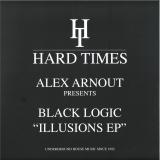
Hard Times welcomes back Alex Arnout and his BLACK LOGIC project, following their recent ‘Pull Up’ EP with a second installment of new music from collective - The Illusions EP.
Hailing from West Yorkshire, Arnout spent his formative years on the Hard Times dancefloors, absorbing the beats and vibes that would later shape his own productions. His journey with the label reignited when he was invited to remix Michael Watford’s classic 'Love Change Over' and Steve Silk Hurley’s fresh hit 'All I Need'. Now, he returns with something truly special.
“Black Logic was born out of the pandemic,” says Arnout. “I wanted to move away from drum machines and synths, getting back to sampling jazz and the deep house sounds of the ‘90s - taking inspiration from artists like Bugs in the Attic, Jazzanova, and Ernest Saint Laurent.”
What began as a solo project soon evolved into a collective effort. Bassist and guitarist Alan Riggs, a former member of Delta 5, joined the sessions, bringing warmth and groove to the productions. Vocalists Tempo O’Neil, Anthony Beckford, Mariana Orsho, and Sophie Barker added their distinct voices, completing the vision
Across four tracks, The Illusions EP pulls us deeper into Black Logic’s rich, live-wired universe. The title track pairs Tempo O’Neil’s vocal with a grooving, low-slung bassline, whilst “Dusty” drifts in on brushed snares and ghostly Rhodes, its saxophone lines curling through the mix like smoke. “Chasing Daze,” analog synth shimmer and Tempo’s velvet tones, is a track suspended between head-nod groove and astral lift.
The curtain falls with “Disco Down,” a jubilant ensemble of Hammond organ, flute, guitar, bongos, and horns locking into joyous conversation.
"Bassland Prophecy" was a collection of Southern California musicians, including Alex Xenophon (Deep Squared), Stuart Breidenstein (formerly of Skylab 2000), Alissa Kueker (vocals), and Maxx Vaxx (Euterpre, Butterfly Garden).
The act nourished and grew the emerging LA scene and was a renegade force in live electronic improvisation. Rather than composing full tracks, Breidenstein stated over email that they built musical "ingredients" on the fly, syncing DOS and hardware sequencers mid-performance. Their unpredictable sets, from illegal raves to makeshift desert parties, resulted in electrifying, unforgettable sonic trips.
Recalling 90s LA, Breidenstein said: “Before the internet, finding a rave was an adventure. You’d get a flyer with a phone number, call it the night of the event, then drive—sometimes 100 miles or more from a map point to the actual party. The scene was raw and underground, built by music obsessives hunting for the freshest sounds.”
Two standout tracks from 1996—“Nine / Deeper” and “Blue and Purple Starship of Trust”—perfectly represent their unique genre-bending concoctions. Against all odds, the recordings survived and have been given new life, remastered and reissued on Bristol-based *Sex Tapes From Mars*. To produce the wizardry, their setup included a Juno 106, Yamaha FB-01, a Roland S330 sampler, and a Sequential Circuits Pro-One mono synth with external MIDI, and some guitar effects pedals.
“Nine / Deeper,” born from one of their many spontaneous studio sessions, became eerily intertwined with recurring appearances of the number 9 and black cats. So much was the frequency of apophenia episodes that paranoia began to take over the artists. Recorded in a makeshift living room studio, the 14-minute excursion traverses genres and tempos, beginning quick and hypnotic, and climaxing chuggy and drenched in adlibbed acid lines, culminating in a surreal and legendary live performance in Hollywood. The piece captures the raw spontaneity of their sets, crafted with vintage gear, cassette tape recordings, and, as always, a DIY ethos. Breidenstein states, “While improvised sessions often failed, when it succeeded, it was definitely a kind of infectious magic the listener would recognize.”
“The Blue and Purple Starship of Trust” is a deeply personal piece, named after when Breidenstein saw a heavenly blue morning glory on a walk around his neighborhood, and emerged from heartbreak and the following deep depression entrenching his life at the time. Recorded in a single take onto cassette tape, blending piano, guitar, and heart-rending vocals into an emotional, dreamlike journey. The track starts with a lush, cascading synth sound, bolstered up by rolling, reverbing downtempo drums. Using Sequential Circuits Pro-One throughout, the rippling synths and off-key piano licks act like pipetted droplets of water, all elements bleeding into each other in some kind of hallucinogenic swelling, reflecting Breidenstein’s fading relationship. The guitar part is a nod to Bill Withers’ “Ain’t No Sunshine,” and Breidenstein recalls just “bawling as the guitar line was recorded.”
Created in a time of artistic struggle, living in an old school bus, surviving on instant noodles while hauling their gear from venue to venue, and scraping by on gig money, these recordings act as rare artifacts of a movement that thrived on passion and perseverance, standing as a poignant testament to resilience. Though they released a handful of tracks, ranging from deep house to ambient to techno, their true legacy lay in their high-energy, genre-blurring live shows, which are powerfully encapsulated within these recordings and leave a lasting impact on underground electronic music today.
Hard Times proudly welcomes a new release from an artist deeply connected to the label’s storied past. Alex Arnout presents BLACK LOGIC with their debut EP, ‘Pull Up’, a project born from passion, collaboration, and a return to House music's soulful roots
Hailing from West Yorkshire, Arnout spent his formative years on the Hard Times dancefloors, absorbing the beats and vibes that would later shape his own productions. His journey with the label reignited when he was invited to remix Michael Watford’s classic 'Love Change Over' and Steve Silk Hurley’s fresh hit 'All I Need'. Now, he returns with something truly special
“Black Logic was born out of the pandemic,” says Arnout. “I wanted to move away from drum machines and synths, getting back to sampling jazz and the deep house sounds of the ‘90s - taking inspiration from artists like Bugs in the Attic, Jazzanova, and Ernest Saint Laurent.
What began as a solo project soon evolved into a collective effort. Bassist and guitarist Alan Riggs, a former member of Delta 5, joined the sessions, bringing warmth and groove to the productions. Vocalists Tempo O’Neil, Anthony Beckford, Mariana Orsho, and Sophie Barker added their distinct voices, completing the vision.
The ‘Pull Up’ EP is the first of a debut double-header from Black Logic, delivering five stunning tracks that blend jazzy keys, deep grooves, and rich, soulful vocals. From the warm basslines to the celestial closing moments, this EP is a statement of intent - a wonderfully fresh, yet nostalgic take on deep house from a collective of masterful musicians.
Balanced out analog dub-house sessions at the intersection of ice and fire. Born in a Budapest basement, forged by Berlin-like mid-tempo minimalism with a pinch of Balkan, developed to the next level by dub carpets of the north. Hungarian local heroes LI and ZOL debut record opens a new chapter with four shapeshifting trakkers under the flag of SCHNRZ, that refers to Schonherz, the name of the neighbour dormitory of their basement studio. Mastered by Stefan Betke at scape mastering.
After Dull Boy Johnny's previous release, a double EP with a tropical A-side and an erotic B-side, this time the three gentlemen are out on the dance floor. After all, the neighbours decided as much.
Unlike the recordings of their previous work that took place abroad, this time they stayed in a steamy attic room in Belgium, where guitarist and producer Jan built a studio. Unable to record at night because of neighbours who did not (yet) appreciate Dull Boy Johnny's music, they dove into Antwerp's nightlife.
The group's previous work took you on a cinematic journey where every musical nuance takes you to a specific setting. Be it an erotic seventies scene, a beach party in the Bahamas, or a blood-curdling chase in the Wild West, Dull Boy Johnny covers it all. Nard Houdmeyers, Rik De Bal and Jan found each other in a shared interest in film genres such as blaxploitation, neo-noir and spaghetti westerns. And therefore also the artists inherent to these genres such as Isaac Hayes, Curtis Mayfield and Ennio Morricone. Dull Boy Johnny's conceptual approach to music can be traced back to this passion for cinema.
For the new EP, however, they traded that cosy movie-watching for turbulent nightlife (the angry neighbours, you know). Besides, it was about time to get their inspiration in the flesh. Dull Boy Johnny immersed himself in the pulses, flashes and swell of downtown Antwerp. Thunder chasing crept under their skin and then into their guitars. In grandfatherly fashion, they then turned to composing, first with just bass, guitar and vocals. In that small lineup and with the sounds of the night still reverberating in their minds, the first pieces of the puzzle were laid out. After that, the sound was opened up and a solid rhythm boost was added. This defined the catchy, up-tempo nature of the upcoming EP that centres on themes of dancing, flirting and partying. Expect rousing riffs, catchy hooks and swinging rhythms. Details were meticulously laid out and bricked into the songs with delicate grouting. The fine polishing of the songs was done with patient finesse and a constant attitude to serve the song. With songs like Suspicion, She Can Groove and Dynamite, it is immediately clear that the gentlemen got their mustard from the club: action, party and spunk! All without losing their typical sensuality.
Despite the different working methods for the third EP, there are a lot of recurring elements that define Johnny's fresh sound. The essence? Catchy high vocals contrasted with a sensual baritone voice, carried by a groovy bass and rhythm section. Around it, the details that give the songs the right atmosphere swirl.
Dull Boy Johnny's music prefers to function as a soundtrack to your own imagination. As you listen, you are invited to wander through the various landscapes of their musical world, regularly giving a nod to the more lustful side of your brain. The songs have already been praised for their compelling melodies and irresistible energy.
With this release, Dull Boy Johnny proves their ability to create timeless music that both touches the soul and moves the body. So surrender to Dull Boy Johnny's punchy grooves and dance the night away. Long live the neighbours!
2024 Repress
Mastered from the original analog tapes for the very first time, SHARP-FLAT brings you the WITCH DISCO SINGLES as you’ve never heard them before. WIT 4 carries a single edit of 'My Desire' backed with 'You Are My Sunshine' from the group's classic 'Movin’ On' LP from 1980.
By the end of the 1970s, WITCH was a Zambian music institution. Active since 1972, they had survived the Zamrock years and left an impressivegarage, psych and prog discography in their wake. But at the outset of the 1980s, the band was ready to embrace the modern sounds of a new era. Undertaking personnel changes and relocating to Zimbabwe, they were primed by the independence celebrations of their neighboring country to undertake their mythical transformation into an African disco powerhouse.
With access to a state of the art recording studio in Harare, WITCH produced two exquisite albums in the early 1980s. Appearing in 1980,Movin’ On was preceded by the single “My Desire,” which featured new member Christine Jackson on lead vocals. With an upfront funky bass-line, falsetto backing vocals, swirling synths and tight horns, it was a searing hot disco offering that made no bones about the fact that the WITCH was ready to get down. Composer/vocalist Stanford Tembo’s mid-tempo burner “You Are My Sunshine" was the perfect fit for
the flip.
Documenting the band’s drift from disco into boogie, WITCH’s final album Kuomboka was released in 1984 without an accompanying single. New lead vocalist Patrick Chisembele injected youthful energy and a modern soul edge, most notably on “Erotic Delight” with its crisp drums, slinky keys and intoxicating bass groove. Pop reggae was alson within the album’s stylistic purview by way of the closer “Jah Let the Sunshine” as well as “Change of a Feeling,” the flip side of a recently discovered single that wasn’t originally released.
2024 Repress
Mastered from the original analog tapes for the very first time, SHARP-FLAT brings you the WITCH DISCO SINGLES as you’ve never heard them before. WIT 5 hosts a single edit of “Erotic Delight” from the band's 1984 album Kuomboka backed with “Change of a Feeling,” an unheard WITCH track released for the very first time.
By the end of the 1970s, WITCH was a Zambian music institution. Active since 1972, they had survived the Zamrock years and left an impressive garage, psych and prog discography in their wake. But at the outset of the 1980s, the band was ready to embrace the modern sounds of a newera. Undertaking personnel changes and relocating to Zimbabwe, they were primed by the independence celebrations of their neighbouring country to undertake their mythical transformation into an African disco powerhouse.
With access to a state of the art recording studio in Harare, WITCH produced two exquisite albums in the early 1980s. Appearing in 1980,Movin’ On was preceded by the single “My Desire,” which featured new member Christine Jackson on lead vocals. With an upfront funky bass-line, falsetto backing vocals, swirling synths and tight horns, it was a searing hot disco offering that made no bones about the fact that the WITCH was ready to get down. Composer/vocalist Stanford Tembo’s mid-tempo burner “You Are My Sunshine" was the perfect fit for the flip.
Documenting the band’s drift from disco into boogie, WITCH’s final album Kuomboka was released in 1984 without an accompanying single. New lead vocalist Patrick Chisembele injected youthful energy and a modern soul edge, most notably on “Erotic Delight” with its crisp drums, slinky keys and intoxicating bass groove. Pop reggae was also within the album’s stylistic purview by way of the closer “Jah Let the Sunshine” as well as “Change of a Feeling,” the flip side of a recently discovered single that wasn’t originally released.
Halbert kicks off "OUR STORY“ EP with no fear and no compromises to his sound legacy. It has been produced during the last year in the neighborhood of Santa Catalina - where everything is happening - under the experience and influence of local parties such as private villas and small sweaty clubs.
A1 "OLEEVA" features a weird half-tempo break, grooving along a 4x4 kick and Bmore loop style. The "Spanish" trumpets act as an irresistible hook, leaving a long lasting impression. A fusion of folklore and timeless sounds, "Oleeva" is a true party anthem that defies genres. Continuing the journey, A2 "WHAT IS IT?" is a playful cocktail-Molotov made of fat FM rolling bassline, slap bass guitar, arabic strings, and other mind-bending surprises. Get ready to let loose and immerse yourself in this freaky gem.
On the flip, B1 "SECRET PATH" delivers a functional old catchy house jam with a non-directional arrangement where organic meets dark electronic synth sound. An ideal companion for a pool party or daytime vibes. Wrapping up the EP, B2 ”POWER UP!" shines as a high energy breakbeat tune influenced by Plank Records sound. Featuring an evolving big guitar synth stab, lively percussion, uplifting trancy synths and robust old school bass.
Mixed by Halbert and Hamid at MariaDiaz Studio. Mastered by Marco Pellegrino at AnalogCutMastering Berlin.
Angelo is an LP, named after a car, featuring nine songs Brijean have crafted and carried with them through a period of profound change, loss, and relocation. It finds percussionist/singer Brijean Murphy and multi-instrumentalist/producer Doug Stuart processing the impossible the only way they know how: through rhythm and movement. The months surrounding the acclaimed release of Feelings, their full-length Ghostly International debut in 2021 which celebrated tender self-reflection and new possibilities, rang bittersweet with the absence of touring and the sudden passing of Murphy’s father and both of Stuart’s parents. In a haze of heartache, the duo left the
Bay Area to be near family, resetting in four cities in under two years. Their to-go rig became their traveling studio and these tracks, along with Angelo, became their few constants. Whereas Feelings formed over collaborative jams with friends, Angelo’s sessions presented Murphy and Stuart a chance to record at their most intimate, “to get us out of our grief and into our bodies,” says Murphy. They explored new moods and styles, reaching for effervescent dance tempos and technicolor backdrops, vibrant hues in contrast to their more somber human experiences. Angelo beams with positivity and creative renewal — a resourceful, collective answer to “what happens now?”
Angelo the car is a 1981 Toyota Celica they got off Craigslist during their first stint in Los Angeles, where Murphy and Stuart have since settled. “Such a bro-y, ‘80s dude car, it’s been super fun to drive around in a new town,” Murphy says. “He’s older than us, he’s a classic, he’s got a story.” It is a spiritual vehicle with a cinematic appeal, first dropping them off in an alleyway for the scene-setting intro, “Which Way To The Club.” The question is quickly resolved by “Take A Trip” as a cruising bassline mingles with crowd sounds, hand-claps, cuíca hiccups, whip-cracks, even a horse neigh. Brijean have found some club on this cross-dimensional trip — the kind of
imagined space or chamber within one’s self capable of “shifting a fraction of who you are,” says Murphy. They wrote the track with the simple intention to be “as free as we could be,” adds Stuart, likening the flip on the B section to a realm unlocked: ”What if the world changed completely? You open the door to a new room.”
Next is “Shy Guy,” a motivational anthem for the wallflowers among us. Murphy sets up the daydream: “We are in junior high, we’re on the dance floor, what’s going down, who is dancing, who is not, how are we gonna make them dance?” The narrator, the MC, hypes up the room as conga-driven rhythms bounce between languid synth and guitar lines. “Show me how to move...I feel something...I know you feel it too,” Murphy sings sweetly, calling back to the opening lines of Feelings, and this time the audience chants it back. It is easy to picture Brijean performing this one — something they only got to do a handful of times until more recently, opening shows for Khruangbin and Washed Out, an experience they found informative. Murphy explains, “It was inspiring to be out there and let loose more. To see how people can expand their expression on stage gave me more liberty with how I viewed my musicianship. My role for so long was to be a backup percussionist, so why would I ever leave the drums, you know? But then after playing all these runs, you see these artists and realize you can, you have permission.”
“Angelo” and “Ooo La La” deliver the danciest stretch in Brijean’s catalog to date. The title track adopts a deep house pulse replete with strings, hi-hats, and kicks. The latter opts for a funkier groove that foregoes verses in favor of warbled hums and extended breakdowns. What follows is perhaps the duo’s dreamiest run, a comedown initiated with the honey-hued interlude “Colors” drifting into “Where Do We Go?”, a tropicália reverie where Murphy contemplates the passage of time and space.
It all culminates in “Caldwell’s Way,” a fond farewell to their Bay Area community — “a part of my life that I knew couldn’t come back,” says Murphy. Above shimmering organ sounds, lush strings, and the birdcall of their former neighborhood, she wistfully articulates the uncertainty of moving on by remembering the characters dear to them. There’s the wisdom of their neighbor, Santos, who refused payment when helping them move out: “I’d rather have 100 friends than 100 dollars.” And the song’s namesake, Benjamin Caldwell Brown, a friend and club night cohort for many years. “I’m only miles away, maybe I’m just feeling lonely,” the line resigns to warm nostalgia, and “Nostalgia” runs the closing credits to this healing and transportive collection.
repressed !
From samba and bossa nova through to baile funk, with carioca expressions of jazz, rock and hip hop in between, the sound of Rio de Janeiro, while continually evolving, has always held an unnameable quality which reflects the magic and mystique of the city itself. Multi-instrumentalist and arranger Antonio Neves is the city’s newest trailblazer: the enfant-terrible of Rio’s music scene, leading a vital and diverse constellation of both emerging and well-known artists advancing the city’s musical legacy.
“It all started one sleepless night, after watching a Quincy Jones documentary”. Inspired by the legendary music magnate, Neves began writing a list of artists residing in Rio de Janeiro “people that I admire, that I consider geniuses of their instruments, who share with me affinities, anxieties and projects.” The list included some of Brazil’s most revered living musicians who Neves has worked with in recent years: Hamilton de Holanda, Leo Gandelman and Dorival Caymmi. Neves also called on some of Brazil's most exciting emerging talents including Alice Cayymii and Ana Frango Eletrico.
A Pegada Agora É Essa (The Sway Now) is Neves’ second album: a vibrant portrait of the current Brazilian music scene. From the regional to universal, popular to erudite, samba to rap, Latin rhythms to jazz, MPB and pop to good old rock'n'roll, Neves walks with fluency and mastery amongst all the musical genres that Brazil has to offer.
“My offer to the musicians was complete freedom to express themselves through the songs I proposed – classics like “Summertime”, “Luz Negra” and “Noite de Temporal”, and compositions of my own – creating a space of authorship for the band and the guests. A space for inventions, purges, delusions, laughter. The idea was to bring the freedom of jazz crossed by Brazilian rhythms, such as the traditionals Partido Alto (A Pegada Agora É Essa) and Jongo (Jongo no Feudo and Luz Negra); rhythms of African-Brazilian religions like Candomblé (Noite de Temporal) and Umbanda (Forte Apache); and a tribute to newest Rio de Janeiro’s contribution to Brazilian music, the Funk Carioca (Simba)”.
Coming from a musical family, Antonio’s father, Eduardo Neves, was a renowned conductor and a professor at Juilliard School of Music and the California Jazz Conservatory. In the bohemian neighbourhood of Lapa, aged 14, Antonio began his career as a drummer, before experimenting with brass. He would soon become a skilled trombonist and arranger achieving the recognition of his teachers and peers. It wasn’t long before he would be playing with some of the biggest names in Brazilian music, such as Hamilton de Holanda, Leo Gandelman, Moreno Veloso, Kassin and Elza Soares.
His debut album as a trombonist was PA7 (2017, Rock It), released at the same time he was travelling the world playing with artists like Moreno Veloso, Kassin and Leo Gandelman, and recording the albums Jobim, Orquestra e Convidados (2017, Biscoito Fino), with Mário Adnet and Paulo Jobim; and Elza Soares Canta e Chora Lupi (2017, Coqueiro Verde Records). More recently, Neves was the arranger for the acclaimed Little Electric Chicken Heart album, by Ana Frango Elétrico, which has been nominated for a Latin Grammy and voted 2019’s ‘Brazilian Music Revelation’ by The Art Critics Association of São Paulo.
Eight releases in, Leonidas & Hobbes have honed a mutual love of soundtracks, disco, jazz, house, techno, acid, psychedelic, African and dub sounds.
Web Of Intrigue is one part tribute to lost 70s soundtracks, when music was created on the finest analogue hardware, featuring full bands, session players and lush orchestrations, one part tribute to 70s disco gods Nile Rodgers and Bernard Edwards (Chic) and one part mid-tempo but nonetheless cosmic house. The three parts fuse to form an instrumental track sounding as fresh as a whole meadow of daisies in 2017 and one that's been going down extremely well with international DJs who have road-tested the material.
Heavy Weather flips the script for a deeper workout in a 3/4 time signature - more of a cosmic waltz. Taking its main cue from 70s jazz fusion heroes Weather Report and The Doors' Ray Manzarek, it incorporates rich African percussion, spaced-out flourishes exhibiting the duo's love for the dubs of Lee Perry, King Tubby et al, and a good old fashioned arpeggio of an acid line - definitely a more esoteric number, all told.
The 'Dawn' and 'Acid Rain' mixes push different buttons for the heads, as suits the mood. It all adds up to a very Balearic confection, fitting snugly in with the burgeoning revival for this somewhat ineffable sound - a trend that seems to be getting stronger/bigger every year, popping up every time the sun gets his hat on and we all remember how to party like the lucky residents of that infamous White Isle....
MORE INFO
London/Edinburgh analogue electronic duo Leonidas & Hobbes released debut EP "Machines, Tapes & Electronic Setups" via the Hobbes Music label back in May 2013, picking up plaudits and support from the likes of Resident Advisor, Mixmag, Erol Alkan, Ashley Beedle, Alan Braxe, Shadow Child, Jimpster, Nick Warren, M.A.N.D.Y., Leftside Wobble, Mr G, Auntie Flo, Sasha, John Digweed and many more... The duo were consequently commissioned to remix the Pet Shop Boys.
Second EP "Mo' Machines" came out on the label in April 2014 and received equally high praise, with i-D Magazine inviting the duo to record a DJ mix which has to date chalked up a whole lot of love on Soundcloud.
Leonidas has released two other collaborative EPs with London-based Japanese DJ/producer Kay Suzuki via his Round In Motion imprint, equally winning fans worldwide, with a track now forthcoming on new label YAM Records' You And Music Volume 1 EP plus much more in the pipeline for 2017. Leonidas also has his own lovetoparty label, releasing edits of much-loved disco tunes on limited edition 12" vinyl format and free download. Previously, Leonidas made a name for throwing word-of-mouth parties around east London on his audiophile 'lovetoparty' sound system (providing some of the inspiration for much-admired late-night watering hole Brilliant Corners).
Equally, Hobbes ran the widely acclaimed Trouble nights for ten years in Edinburgh/Scotland, working with the great and the good from across the soul/jazz/dance spectrum since '02, and championed up-and-coming live talent via his Limbo 'gig-in-a-club' nights at The Voodoo Rooms for nine years since '07. Hobbes has toured his DJing style to the various corners of the dancing planet, including gigs in the Far East, much of Europe and across the UK. The Hobbes Music label has otherwise featured artists as diverse as Auntie Flo, JD Twitch (Optimo), Neil Landstrumm, Craig Smith (6th Borough Project), Ali Renault, iO Sounds, Joe Howe, Debukas, Fudge Fingas, Marco Bernardi, Dimitri Veimar, Mick Wills and Nightwave, with further support from Ben UFO, Justin Robertson, Motor City Drum Ensemble, KiNK, The Revenge, T.E.E.D, Kiki, Groove Armada, Maceo Plex, OOFT!, Domenic Capello (Sub Club), XDB, Ben Mono, Masa Sutela, Bawrut/Scuola Furano, Numbers, John Heckle and many more...