quête:the danish radio jazz group

Genres
Tout
  • 1
Sahib Shihab & The Danish Radio Jazz Group - OKTAV
  • A1: Di-Da (Sahib Shihab) 5’10
  • A2: Dance Of The Fakowees (Sahib Shihab) 4’14
  • A3: Not Yet (Sahib Shihab) 3’25
  • A4: Tenth Lament (Sahib Shihab) 6’20
  • B1: Mai Ding (Sahib Shihab) 4’50
  • B2: Harvey’s Tune (Sahib Shihab) 3’07
  • B3: No Time For Cries (Sahib Shihab) 3’52
  • B4: The Crosseyed Cat (Sahib Shihab) 3’34
  • B5: Little French Girl (Sahib Shihab) 2’35”

Recorded August, 1965, Copenhagen, Denmark.

Original LP issue: OKTAV – OKLP 111


Sahib Shihab (Edmund Gregory) played with many of jazz’s finest musicians. Shortly after he became one of the first jazz players to change their names due to an Islamic conversion, he joined Thelonious Monk for his Blue Note sessions. He also played with Art Blakey, Dizzy Gillespie, Oscar Pettiforn and Quincy Jones. A unique musician, he was at home in every musical style, from the experimentalism of Thelonious Monk to the more direct hard bop of Art Blakey. Sahib Shihab’s distinctive sound was rooted in his modernist compositions and arrangements, complemented by an intense, soulful playing style.


In 1959 he toured Europe with Quincy Jones after getting fed up with racial politics in USA and ultimately settled in Scandinavia. He worked for Copenhagen Polytechnic and wrote scores for television, cinema and theatre. He remained there until 1973. During this period, he recorded several albums as leader for European labels such as Vogue, Storyville and Futura.


In 1961 he joined The Kenny Clarke-Francy Boland Big Band and remained a key figure in the band for the 12 years it ran. He married a Danish lady and raised a family in Europe, although he remained a conscious African-American still sensitive to racial issues.


This record, on the Danish Oktav label, his second as a leader and also his rarest is a true masterpiece !!!


Personnel :

Sahib Shihab (Baritone saxophone, Flute, Cowbell)

Poul Hindberg (Alto saxophone, Clarinet)

Ib Renard (Baritone saxophone)

Bent Nielsen (Baritone saxophone, Flute, Clarinet)

Niels-Henning Ørsted Pedersen (NHOP) (Bass)

Alex Riel (Drums)

Allan Botschinsky (Trumpet)

Fritz von Bülow (Guitar)

Bent Axen (Piano)

Bent Jædig (Tenor saxophone, Flute)

Niels Husum (Tenor saxophone)

Svend Åge Nielsen (Trombone, Bass trombone)

Torolf Mølgaard (Trombone, Euphonium)

Palle Bolvig (Trumpet)

Palle Mikkelborg (Trumpet)

Poul Kjældgård (Tuba)

Louis Hjulmand (Vibraphone)

pré-commande13.06.2025

il devrait être publié sur 13.06.2025

30,88 €
Sahib Shihab & The Danish Radio Jazz Group - OKTAV LP

Recorded August, 1965, Copenhagen, Denmark.

Original LP issue: OKTAV – OKLP 111

Sahib Shihab (Edmund Gregory) played with many of jazz’s finest musicians. Shortly after he became one of the first jazz players to change their names due to an Islamic conversion, he joined Thelonious Monk for his Blue Note sessions. He also played with Art Blakey, Dizzy Gillespie, Oscar Pettiforn and Quincy Jones. A unique musician, he was at home in every musical style, from the experimentalism of Thelonious Monk to the more direct hard bop of Art Blakey. Sahib Shihab’s distinctive sound was rooted in his modernist compositions and arrangements, complemented by an intense, soulful playing style.

In 1959 he toured Europe with Quincy Jones after getting fed up with racial politics in USA and ultimately settled in Scandinavia. He worked for Copenhagen Polytechnic and wrote scores for television, cinema and theatre. He remained there until 1973. During this period, he recorded several albums as leader for European labels such as Vogue, Storyville and Futura.

In 1961 he joined The Kenny Clarke-Francy Boland Big Band and remained a key figure in the band for the 12 years it ran. He married a Danish lady and raised a family in Europe, although he remained a conscious African-American still sensitive to racial issues.

This record, on the Danish Oktav label, his second as a leader and also his rarest is a true masterpiece !!!

pré-commande15.12.2023

il devrait être publié sur 15.12.2023

32,98 €
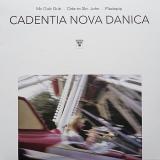
Cadentia Nova Danica - Mc Gub Gub / Ode To Skt. John / Pladepip

John Tchicai (1936 – 2012) was one of the most important free improvising saxophonists of the 20th Century: an artist of rare vision and aptitude whose lines soared and stood out even in the most hallowed company, and whose body of work as a leader / composer is among the most singular and distinct within the entire canon of that music. But Tchicai’s importance doesn’t end there. Born in Copenhagen, Denmark, to a Danish mother and a Congolese father, his life and career represent a crucial bridge between the European and American traditions of free jazz. Initially trained on violin as a child, Tchicai shifted his focus to the clarinet and alto saxophone during his mid-teens, and began touring Europe as a professional musician by his early 20s, which landed him at a socialist youth festival in Helsinki, Finland, where he met the trumpeter Bill Dixon and saxophonist Archie Shepp. Impressed by what they heard, Dixon and Shepp encouraged the young saxophonist to move to New York, and in so doing changed the history of jazz forever.

Tchicai’s arrival in New York marks the rare occurrence of a European player joining the intimate circle that was first wave of American free jazz. Following his landing in the city in November of 1962, in addition to regularly sitting in with Don Cherry’s group, Tchicai began playing with Bill Dixon's band alongside Archie Shepp and Roswell Rudd, forming the nucleus of the foundation of the New York Contemporary Five - one of the most important groups of the era - which counted Tchicai, Shepp, Cherry, Don Moore, and J. C. Moses as its members. From the ashes of this group, Tchicai would go on to found the legendary ensemble, New York Art Quartet, with Roswell Rudd, Milford Graves, and Lewis Worrell, as well as working within Albert Ayler's band, recording “New York Eye and Ear Control”, Shepp’s band, recording “Four for Trane”, the ensemble that recorded John Coltrane's “Ascension”, and the Jazz Composer's “Orchestra”.

By the time he decided to return to Denmark in 1966, had Tchicai chosen to record little else, his legacy within the history of music would have been ensured. Incredibly ambitious, his arrival home marked the beginning of an incredible period of activity which saw him radically expanding his creative explorations, which by the end of the decade would include becoming a founding member of Amsterdam's Instant Composers Pool and helping to record John Lennon and Yoko Ono's “Unfinished Music No.2: Life with the Lions”. This, however, was proceeded the formation of a new orchestra, Cadentia Nova Danica, led by Tchicai, dedicated to radical cross-disciplinary exploration. Remaining together between 1966 and 1971, the group and its shifting membership regularly fell into collaboration with artists and composers, notably Musica Elettronica Viva, who existed beyond the realms of jazz, as well as participating within multi-media events that incorporated the visual realms.

Cadentia Nova Danica’s only two LPs - “Cadentia Nova Danica” (Polydor, 1968), and “Afrodisiaca” (MPS, 1969) - are effectively Tchicai recorded efforts as a leader, and are legendary. There’s little mystery, once heard, why the later landed on Thurston Moore’s iconic “Top Ten from the Free Jazz Underground”, published by Grand Royal in 1996. Sadly, despite playing extensively during their five year run, with exception of a CD documenting a performance at Jazzhus Montmartre, in 1966, until now there has been no other publicly available recordings that allow us to capture a glimpse of this astounding band at work. Alga Marghen / Formalibera’s vinyl pressing of a never before released body of recordings, made in Copenhagen between 1969 and 1970, changes that in the most exciting of ways.

Comprising three pieces - “Mc Gub Gub, (I–VIII)”; “Ode to Skt. John”; and “Pladepip” - the material on this stunning LP comes from two specific events. The first, which encompasses the first side, “Mc Gub Gub, (I–VIII)” was recorded by Cadentia Nova Danica - in this instance, Tchicai, Sune Weimar, Theo Rahbek, Christian Kyhl, Niels Holt, Jørgen Thorup, Michael Schou, Morgens Bollerup, Allan Gregersen, Ole Matthiessen, Pierre Dørge, Willy Jaegert, Anthony Barnett, and Jon Finsen - on May 29th, 1969, at the ABC-Theatre in Copenhagen. Penned by Tchicai, the piece is a sprawling, evolutionary composition at the outer reaches of free jazz, rooted in large blocks of colliding tonality and rhythm - a sound only accessible to larger ensembles - that push territories explored by Charles Mingus to previously unimagined heights, threaded by moments of hard blown fire. Writhing like a stormy sea - skronking and devilish - “Mc Gub Gub, (I–VIII)” is a work of profound complexity that singlehandedly illuminates not only Tchicai’s singular vision as a composer, but also the power and uniqueness of Cadentia Nova Danica during the band’s most vital period.

The two pieces - “Ode to Skt. John” and “Pladepip” - taking up the flip side, were recorded on February 21st, 1970, at the Danish Broadcasting Corporation’s Radio House, and are the outcome of Cadentia Nova Danica’s extended residency there between 1969 and 1970. In many ways, these two recordings offer some of the best insights into the broad collaborative approaches that defined the band, in this case encountering them working with Danish experimental composer, Svend Erik Werner, who was among the earliest in his country to embrace stylistic pluralism and the use historical forms within a modern context. “Ode to Skt. John” - based on aspects of Gregorian music - was penned by Werner, incorporating heady improvisation by the members of Cadentia Nova Danica, this time made up by Tchicai, Sune Weimar, Hugh Steinmetz, Theo Rahbek, Christian Kyhl, Michael Schou, Morgens Bollerup, Ole Kühl, Torben Enghoff, Mauritz Tchikai, Kjeld Ipsen, Willy Jaegert, Ole Matthiessen, Ole Thilo, Pierre Dørge, Steffen Andersen, Jon Finse, and Clause Bøje. The piece is a fascinating binary of the composed and improvised, utilising the band’s large scale to introduce a remarkable sound within its slow progressions and furious, driving free moments, in this incredible meeting of worlds.

The album’s final piece, “Pladepip”, is arguably its most historically significant: an entirely singular piece, unlike anything in Tchicai’s recorded canon as his foray into musique concréte. Drawing upon two recordings of full-band improvisations by Cadentia Nova Danica, for its creation Tchicai also gouged the surfaces of 78rpm records in his collection to skip and create repeated phrases and patterns, creating a stunning sound collage of hard angles and abrupt phrase, that creates a striking counterpoint to the band’s flowing improvisations that bookend those passages. The result is an engrossing listen and easily one of the most unique and culturally important gestures in the entire history of musique concréte.

Truly incredible, Alga Marghen / Formalibera’s vinyl pressing of this never before released body of recordings, made by John Tchicai’s Cadentia Nova Danica, in Copenhagen between 1969 and 1970, offers an unprecedented window into one of the most important groups working in Europe during that period, significantly expanding their rare and slim discography to date. Accompanied by extensive exploratory liner notes by veteran jazz writer, Ed Hazell, this is easily one of the most historically important archival releases of the year and is impossible to recommend enough. Absolutely essential on every count.

pré-commande28.08.2026

il devrait être publié sur 28.08.2026

28,15 €
HOLM-SVENDSEN, CHRISTIAN WITH DANIEL SOMMER & MARIUSZ PRASNIEWSKI - TOTEM

Beginning in the 60"s, the small chamber group ensemble became increasingly important in the advancement of jazz, enabling horn players including Sonny Rollins, Joe Henderson, and Ornette Coleman to seek uncharted sonic territories and achieve new levels of freedom without the support of chordal instruments. With a mature, cohesive ensemble sound, the young trio juxtaposes tranquility and space with energy and tenacity across nine original compositions showcasing their stylistic breadth. From the swinging waltz "December" with a melodic contour reminiscent of a jazz standard, the soothing folk-influenced simplicity of "Vent", the intimate lyrical interplay between bass and clarinet in "Duo", to the heavy, propulsive power of the title track, the trio demonstrates fearlessness, listening, and spontaneity in a raw and personal recording that puts each of their distinctive voices in the spotlight. Christian Holm-Svendsen, currently resides in New York, studying for a master of music at Manhattan School of Music. In Denmark he played with, among others, The Danish Radio Big Band, Copenhagen Jazz Orchestra, Odense Jazz Orchestra, Jesper Zeuthen, and Regnfang. Daniel Sommer is an award-winning artist and sought-after drummer on the international jazz scene. Known for crossing the borders of different musical landscapes with a distinctive musical approach, Sommer currently performs with Karmen Roivassepp Quartet, Foyn/Hess/AC/Sommer and recently released the trio album "From Within" with Arild Andersen and Rob Luft on April Records. Mariusz Prasniewski is a Polish double bass player, residing in Copenhagen. A part of the Danish and European jazz scene for more than a decade, the bassist has worked with musicians like Tomasz Dabrowski, Anders Mogensen, and Gilad Hekselman.

pré-commande26.07.2024

il devrait être publié sur 26.07.2024

22,90 €
KROGH, RASMUS OPPENHAGEN - WHEREABOUTS LP

Merging the simple with the complex. Whereabouts will be the second release from Danish guitarist/composer Rasmus Oppenhagen Krogh and compared to Krogh's critically acclaimed debut album, Distill, from 2017, this album marks new artistic directions for Krogh, both in terms of exploring the spheric versus the rhythmic dimensions, in the meeting between organic and manipulated sound sources and through its special focus on percussion. Whereabouts explores the intersection between improvisation/composition and simplicity/complexity, the relation between time and space and the sonic qualities of the musicians gathered in unity. The group consists of some of the leading voices of the contemporary Danish jazz scene, who have all worked across genres and borders, and are known for their work with internationally acclaimed bands/artists such as Girls in Airports, Jakob Bro, Paul Motian and IRAH among others. Krogh's debut album Distill was released by Centrifuga/Gateway in 2017 to positive reviews. The album was selected as album of the week by Danish Radio P8 Jazz and was highlighted as one of the ten best Danish jazz releases that year by the acclaimed Danish jazz blog Jazznyt. Besides his work as a composer and as a bandleader, Krogh has worked, as a guitarist, with artists such as Takykardia, Kentaur, Guldimund, Schultz and Forever, Jesper Zeuthen and many more.

pré-commande30.09.2022

il devrait être publié sur 30.09.2022

24,33 €
  • 1
Articles par page:

Language

N/ABPM
Vinyl