Search:the emotional carpenters

Styles
All
  • 1
The Emotional Carpenters - Just a closer walk with thee

Saga: Ólafur Stephensen 01.02.1936 – 28.04.2016 Wife: Klara Stephensen Children: Ingibjörg “Día” Ambonguilat Stephensen, Stephan Stephensen, Magnús Stephensen & Ólafur Björn Stephensen

Ólafur was born in Reykjavik. His parents were Stephan Stephensen, a shopkeeper at Verðandi, and Ingibjörg Stephensen, a housewife.


Ólafur graduated from The Commercial College of Iceland on June 16, 1956 and then studied public relations as well as marketing and propaganda at Columbia University in New York where he graduated in 1962.

Ólafur was a pioneer in the advertising services in Iceland which with him turned away from being solely a profession of illustrators to a new era of marketing. Ólafur touched on many subjects through his career. Alongside his study Ólafur worked for NBC News and META educational TV. He reported for UN Radio and Voice of America as well as for AFRTS under the pen name of Sonny Greco. Ólafur was the managing director of The Icelandic Red Cross, a jazz pianist in Harlem, the spokesperson for the media center of the NATO ministerial summit in Reykjavík in 1968 and hosted a program on the Icelandic National Television. Ólafur was the first Scandinavian citizen to become a member of the Advertising Club of New York, the first president of the Reykjavik chapter of JC as well as the first vice-president of JC International, the host of a jazz program on Icelandic National Radio, a judge for the American Advertising Awards and an active Freemason in Iceland as well as Portugal. Ólafur was awarded a Badge of Honour by the Finnish Red Cross in 1967.

Ólafur founded both ÓSA advertising agency and later Gott Fólk and was the first elected president of the Icelandic Advertising Association. He wrote a large number of published newspaper and magazine articles on his trade of advertising and marketing and released a book on the subject, “New and Better”, in 1987. Ólafur Stephensen released three jazz albums with his jazz trio named Tríó Óla Steph, played music both in Iceland as well as internationally with various jazz combos and was a big fencing enthusiast.

out of Stock

Order now and we will order the item for you at our supplier.

16,60

Last In: 5 years ago
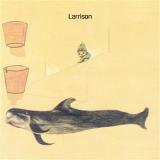
LARRISON - CONNECTERS VOL. 1: ORIGINAL RECORDINGS, 1992-1999
  • Ripples
  • Driving To Austin
  • Rewind
  • Waiting For Sleep
  • Fancy Free
  • Water Montage
  • Wake / The City / Sleep
  • On Glass Ii
  • In Motion
  • Fancy Finish
  • A Late Start
  • Leaving Again
  • Dazzling Showroom / Future City
  • Winter Wave
  • Swarm
  • On Glass I
  • Dap
  • Ice Planet (Alt)
  • Song From A Bedroom In Podunk Indiana
  • Exiting
  • Hi And Lo
  • Sea Level
  • Sequencer Sway
  • Moonplay
  • Aquarium

Connecters Vol. 1: Original Recordings, 1992-1999 ist die erste Veröffentlichung von Larrison, dem Pseudonym des bildenden Künstlers und Musikers Larrison Seidle aus dem Mittleren Westen. Larrison komponierte, programmierte und nahm alles komplett auf einem Casio CZ-5000 auf, während der guten alten Zeit der selbstgemachten Experimente und Entdeckungen in den frühen 90ern. Er lebte in einer Traumwelt, die er selbst erfunden hatte, mit Soundtracks aus Space-Age-Pop-Vignetten, gespickt mit hypnotischen, überschwänglichen, vielschichtigen Synthesizer-Melodien. Mit 26 Tracks, die alle neu restauriert und aus den Originalquellen gemastert wurden, erfindet sich Connecters Vol. 1 Song für Song neu, überwindet die Zeit und trotzt der vorbestimmten Vergessenheit dieser brillanten, diskreten Musik, die vor drei Jahrzehnten entstanden ist. Larrison Seidle wuchs in den 70er und 80er Jahren in Greenwood, Indiana, einem Arbeitervorort von Indianapolis, auf. Er stammte nicht aus einer Musikerfamilie, aber aus einem Haushalt, in dem Musikalität gefördert wurde. Sein Vater kaufte eine elektrische Orgel, in der Hoffnung, dass Larrison und sein älterer Bruder das Instrument lernen würden. ,Am Ende saß mein Vater einige Abende an der Orgel, improvisierte und spielte immer wieder dieses eine Lied, von dem ich mich noch an die ersten Takte erinnern kann", erinnert sich Larrison. Möglicherweise war es in diesem Moment, in dem es zwar keine formale Ausbildung gab, aber viel Ermutigung und Entdeckungsfreude, dass der Künstler seine ersten musikalischen Experimente machte. Diese Erlaubnis, sich auszuprobieren, sollte seine kreative Arbeit in den folgenden Jahren deutlich prägen. Während in Larrisons Elternhaus klassische Rockplatten leicht zugänglich waren, lieh sich sein Vater 35-mm-Dokumentarfilme aus der Bibliothek aus, um sie im Wohnzimmer zu zeigen, die alle mit skurrilen Instrumentalstücken unterlegt waren. Als Teenager nahm er John Carpenters und Alan Howarths Endthema aus ,Die Klapperschlange" mit einem kleinen Kassettenrekorder neben dem Fernsehlautsprecher auf und liebte Tangerine Dreams Beiträge zu Ridley Scotts düsterer Fantasy ,Legend". Seine Faszination für diese weitgehend textlosen, synthesizerbasierten Kompositionen führte zu einem eigenwilligen Verständnis davon, wie Musik nicht nur das ergänzt, was wir vor uns sehen, sondern auch das, was wir in den Tiefen unseres Bewusstseins erleben. 1985, als er dreizehn Jahre alt war, überzeugte Larrison seinen Vater, ihm ein Casio CZ-5000-Keyboard zu kaufen. Wie zuvor die Orgel war auch dieses Instrument eine Neuheit im Haushalt der Seidles. Erst nach seinem Highschool-Abschluss 1991 und dem Beginn seines Studiums an der Herron School of Art in Indianapolis entdeckte er den in das Casio integrierten Sequenzer und begann, seine Kompositionen auf Band aufzunehmen. ,Das CZ-5000 und sein 8-Spur-Sequenzer sind die einzigen Musikinstrumente, die ich benutzt habe. Es hat eine fast unbegrenzte Funktion zur Erzeugung neuer Klänge", erklärte Seidle. Während seiner Zeit an der Herron School of Art freundete sich Larrison mit seinem Kommilitonen und Klangkünstler Michael Northam an, den er bei einem Konzert auf dem Campus kennengelernt hatte. Nachdem Northam Larrison für die Musik von Severed Heads, Throbbing Gristle und Roger Doyle begeistert und damit seine Zuneigung und sein Vertrauen gewonnen hatte, überredete er ihn, nach Austin, Texas, zu ziehen, das in den frühen 90er Jahren für seine lebendige Kunst- und Musikszene bekannt war. Die beiden wohnten zunächst bei Northams Freund Daniel Plunkett, dem Herausgeber und Verleger von ND, einem einflussreichen Magazin, das sich von 1982 bis 1999 mit DIY-Musik und Tape-Trading beschäftigte. In seiner Blütezeit hatte ND Tausende von Lesern, und Plunkett verschickte die Ausgaben weltweit. In den letzten Monaten des Jahres 1993 und Anfang 1994 schrieb und nahm Larrison mit begrenzten Mitteln und grenzenloser Intuition eine Reihe von Songs mit seinem CZ-5000 in einer kleinen Wohnung nördlich der Innenstadt von Austin auf, bastelte eine farbenfrohe, illustrierte Beilage, in der einige Songtitel durch Linien oder Pfeile dargestellt waren, und gab sie an Plunkett weiter, damit er sie für ND rezensieren konnte. Diese einzelne Kassette mit dem Titel Connecters sic war eine von 1200, die im Laufe des Bestehens der Publikation bei ND eingereicht wurden und die Jed Bindeman, Mitbegründer von Freedom To Spend, 2020 erworben und fast wie durch ein Wunder entdeckt hat. ,Ich hatte große Schwierigkeiten, mir die Kassetten in dieser Sammlung anzuhören", gibt Bindeman zu. ,Aber dann legte ich Larrisons Connecters ein und dachte sofort: ,Wow! Was höre ich da?' Die Kassette war von Anfang bis Ende einfach fantastisch." Mit Musik von genau dieser Kassette und anderen Aufnahmen aus Larrisons Experimenten in den 90er Jahren ist Connecters eine Übersicht über Instrumentalmusik, die sowohl durch vielfältige konzeptionelle Strategien als auch durch spielerische Neugierde geprägt ist. Seidle arbeitete unter Bedingungen, die viele Musiker als Einschränkung empfinden würden, und entwickelte technisch innovative Ansätze, um die Klänge und integrierten Effekte des CZ-5000 zu modifizieren. Das Gerät ermöglichte es ihm, die Wellenform, die Hüllkurve und die Tonart von Klängen mithilfe der Phasenverzerrungssynthese zu verändern und so im Grunde genommen Instrumente zu schaffen, während er Songs komponierte. Die Tracks zeichnen sich durch eine durchdachte impressionistische Vielfalt aus, die mal lo-fi, mal symphonisch klingt. Inmitten der Zerlegung und Verstärkung der Fähigkeiten des CZ-5000 gibt es auch einen geschmackvollen Rückgriff auf eine kindliche Interaktion und Erfahrung von Klang. Vielleicht ist es diese Erfahrungsqualität, die es so schwierig macht, Larrisons Projekt einfach als Ambient oder Elektronik zu verstehen. Sein Wille, die ihm zur Verfügung stehenden Werkzeuge zu transformieren, hebt die daraus resultierenden Kompositionen auf eine persönliche Ebene und verleiht der Musik einen bezaubernden Sinn für Mystik. Connecters ist ein Beweis für eine künstlerische Vision, die sich nicht durch Grenzen einschränken lässt und keine Angst vor Informalität hat. Diese Aufnahmen, die dreißig Jahre nach ihrer Dokumentation auf magische Weise an die Oberfläche kommen, zeigen, wie personalisierte Produktionsmittel die Zeit ausdehnen und verkürzen können. Larrison lädt die Zuhörer ein, sich auf die Wunder der auditiven Vorstellungskraft einzulassen - eine Brücke zwischen visueller Erinnerung, emotionaler Resonanz und der grenzenlosen Möglichkeit, mit den uns zur Verfügung stehenden Mitteln Musik zu machen. Larrison's Connecters Vol. 1: Original Recordings, 1992-1999 wird am 3. April 2026 von Freedom To Spend als Vinyl- und Digitalausgabe veröffentlicht.

pre-order now

This item has not yet been released. You can pre-order the product now.

22,27
Locust - Morning Light LP 2x12"

Locust

Morning Light LP 2x12"

2x12inchAMBLP7942
Apollo
19.03.2026

Apollo Records proudly present the vinyl reissue of ‘Morning Light’, the acclaimed 1997 album from Mark Van Hoen’s Locust project; a work that blurred the boundaries between ambient electronics, trip-hop, and dream-pop with an emotional precision few have matched since.

Originally issued during the label’s pioneering late-’90s era, ‘Morning Light’ marked a bold evolution for Van Hoen, best known at the time for his dark, abstract ambient work under Locust and as a member of Seefeel. Seeking to create something more human and melodic, Van Hoen assembled a rotating cast of collaborators, including Zoe Niblett, Craig Bethell, Neil Halstead (Slowdive/Mojave 3), and Wendy Roberts, blending fractured dance rhythms, live instrumentation, and intimate vocal performances into something both deeply personal and effortlessly cinematic.

From the haunting reimagining of The Carpenters’ ‘No-One In The World’ to the slow blooming emotional arcs of ‘All Your Own Way,’ ‘Folie’, and ‘The Girl With The Fairytale Dream’, the album’s 13 tracks form a widescreen narrative of melancholy and beauty. Reviewers at the time hailed it as “a subtle delight” and “sheer God-given genius”, comparing its mood and texture to Massive Attack, This Mortal Coil, and Portishead, yet noting its entirely singular voice.

This reissue restores Morning Light to vinyl for the first time in over two decades. A crucial artefact from the fertile intersection of experimental electronica and ethereal pop, ‘Morning Light’ stands today as one of the label’s most quietly influential releases.

out of Stock

Order now and we will order the item for you at our supplier.

26,68

Last In: 58 days ago
JOHN CARPENTER - LOST THEMES IV: NOIR LP

It's been a decade since John Carpenter recorded the material that would become Lost Themes, his debut album of non-film music and the opening salvo in one of Hollywood's great second acts. Those vibrant, synth-driven songs, made in collaboration with his son Cody Carpenter and godson Daniel Davies, kickstarted a musical renaissance for the pioneering composer and director. In the years since, Carpenter, Carpenter, and Davies have released close to a dozen musical projects, including a growing library of studio albums and the scores for David Gordon Green's trilogy of Halloween reboots. With Lost Themes IV: Noir, they've struck gold again, this time mining the rich history of the film noir genre for inspiration. Since the first Lost Themes, John has referred to these compositions as "soundtracks for the movies in your mind." On the fourth installment in the series, those movies are noirs. Like the film genre they were influenced by, what makes these songs "noirish" is sometimes slippery and hard to define, and not merely reducible to a collection of tropes. The scores for the great American noir pictures were largely orchestral, while the Carpenters and Davies work off a sturdy synth-and-guitar backbone. The noir quality, then, is something you understand instinctively when you hear it, as in connected in an emotional way. The trio's free-flowing chemistry means Lost Themes IV: Noir runs like a well-oiled machine_the 1951 Jaguar XK120 Roadster from Kiss Me Deadly, perhaps, or the 1958 Plymouth Fury from John's own Christine. It's a chemistry that's helped power one of the most productive stretches of John's creative life, and Noir proves that it's nowhere near done yielding brilliant results.

pre-order now03.05.2024

expected to be published on 03.05.2024

24,79
JOHN CARPENTER - LOST THEMES IV: NOIR LP

It's been a decade since John Carpenter recorded the material that would become Lost Themes, his debut album of non-film music and the opening salvo in one of Hollywood's great second acts. Those vibrant, synth-driven songs, made in collaboration with his son Cody Carpenter and godson Daniel Davies, kickstarted a musical renaissance for the pioneering composer and director. In the years since, Carpenter, Carpenter, and Davies have released close to a dozen musical projects, including a growing library of studio albums and the scores for David Gordon Green's trilogy of Halloween reboots. With Lost Themes IV: Noir, they've struck gold again, this time mining the rich history of the film noir genre for inspiration. Since the first Lost Themes, John has referred to these compositions as "soundtracks for the movies in your mind." On the fourth installment in the series, those movies are noirs. Like the film genre they were influenced by, what makes these songs "noirish" is sometimes slippery and hard to define, and not merely reducible to a collection of tropes. The scores for the great American noir pictures were largely orchestral, while the Carpenters and Davies work off a sturdy synth-and-guitar backbone. The noir quality, then, is something you understand instinctively when you hear it, as in connected in an emotional way. The trio's free-flowing chemistry means Lost Themes IV: Noir runs like a well-oiled machine_the 1951 Jaguar XK120 Roadster from Kiss Me Deadly, perhaps, or the 1958 Plymouth Fury from John's own Christine. It's a chemistry that's helped power one of the most productive stretches of John's creative life, and Noir proves that it's nowhere near done yielding brilliant results.

pre-order now03.05.2024

expected to be published on 03.05.2024

26,26
JOHN CARPENTER - LOST THEMES IV: NOIR LP

It's been a decade since John Carpenter recorded the material that would become Lost Themes, his debut album of non-film music and the opening salvo in one of Hollywood's great second acts. Those vibrant, synth-driven songs, made in collaboration with his son Cody Carpenter and godson Daniel Davies, kickstarted a musical renaissance for the pioneering composer and director. In the years since, Carpenter, Carpenter, and Davies have released close to a dozen musical projects, including a growing library of studio albums and the scores for David Gordon Green's trilogy of Halloween reboots. With Lost Themes IV: Noir, they've struck gold again, this time mining the rich history of the film noir genre for inspiration. Since the first Lost Themes, John has referred to these compositions as "soundtracks for the movies in your mind." On the fourth installment in the series, those movies are noirs. Like the film genre they were influenced by, what makes these songs "noirish" is sometimes slippery and hard to define, and not merely reducible to a collection of tropes. The scores for the great American noir pictures were largely orchestral, while the Carpenters and Davies work off a sturdy synth-and-guitar backbone. The noir quality, then, is something you understand instinctively when you hear it, as in connected in an emotional way. The trio's free-flowing chemistry means Lost Themes IV: Noir runs like a well-oiled machine_the 1951 Jaguar XK120 Roadster from Kiss Me Deadly, perhaps, or the 1958 Plymouth Fury from John's own Christine. It's a chemistry that's helped power one of the most productive stretches of John's creative life, and Noir proves that it's nowhere near done yielding brilliant results.

pre-order now03.05.2024

expected to be published on 03.05.2024

28,36
JOHN CARPENTER - LOST THEMES IV: NOIR

It's been a decade since John Carpenter recorded the material that would become Lost Themes, his debut album of non-film music and the opening salvo in one of Hollywood's great second acts. Those vibrant, synth-driven songs, made in collaboration with his son Cody Carpenter and godson Daniel Davies, kickstarted a musical renaissance for the pioneering composer and director. In the years since, Carpenter, Carpenter, and Davies have released close to a dozen musical projects, including a growing library of studio albums and the scores for David Gordon Green's trilogy of Halloween reboots. With Lost Themes IV: Noir, they've struck gold again, this time mining the rich history of the film noir genre for inspiration. Since the first Lost Themes, John has referred to these compositions as "soundtracks for the movies in your mind." On the fourth installment in the series, those movies are noirs. Like the film genre they were influenced by, what makes these songs "noirish" is sometimes slippery and hard to define, and not merely reducible to a collection of tropes. The scores for the great American noir pictures were largely orchestral, while the Carpenters and Davies work off a sturdy synth-and-guitar backbone. The noir quality, then, is something you understand instinctively when you hear it, as in connected in an emotional way. The trio's free-flowing chemistry means Lost Themes IV: Noir runs like a well-oiled machine_the 1951 Jaguar XK120 Roadster from Kiss Me Deadly, perhaps, or the 1958 Plymouth Fury from John's own Christine. It's a chemistry that's helped power one of the most productive stretches of John's creative life, and Noir proves that it's nowhere near done yielding brilliant results.

pre-order now03.05.2024

expected to be published on 03.05.2024

14,50
Carole King - Music

Released on the heels of her breakthrough album Tapestry, Carole King's Music is every bit the equal of its more famous predecessor: a No. 1 smash that features impeccable songwriting, beautiful melodies, and extraordinary piano playing. In short, everything that's made King an institution. After of years of being overshadowed, this 1971 singer-songwriter classic has been given the audiophile treatment it's long deserved.

Sourced from the original master tapes and pressed on dead-quiet vinyl at RTI, Mobile Fidelity's numbered-edition 180g LP of King's second solo masterpiece is rife with intimacy, transparency, soulfulness, and you-are-there sound. Never before remastered, Music seems like a brand-new album as King's familiar voice, intelligent arrangements, and ace support band presented on a deep, three-dimensional soundstage. Your appreciation for and understanding of the depth of King's inspirational lyrics and performances will doubtlessly increase — this reissue brings you that much closer.

Accompanied by percussionist Bobbye Hall, drummer Russ Kinkel, guitarist/vocalist James Taylor, and a multitude of other professional wind musicians, King delves further into R&B and jazz-derived pop. Warm and cohesive, songs echo with simplicity and honesty. And as is typical of much of King's work, several of tunes here were later covered by other artists, including "It's Going To Take Some Time" (the Carpenters). Yet the originals trump the later renditions, and King's rendition of the standard "Some Kind of Wonderful" stands among the best ever recorded.

With Taylor lending more of a hand on Music than he does on Tapestry, King expands her reach on the piano and peppers the songs with graceful touches of saxophone, flute, pedal-steel guitar, and woodwinds. Ballads sway ("Surely"), gospel raises spirits ("Brighter"), and backup vocals float amid pop arrangements like clouds ("Song of Long Ago"). The most irresistible aspect? King's voice, infused with fondness, concern, joy, and a quiet power that parallels the delicacy and deliberate nature that define Music.

Mobile Fidelity's 180g LP is free of the limiting artifacts that have helped keep this record in the dark for the better part of the 80s, 90s, and early 2000s. Acoustic guitars, subtle brass elements, and soft percussion contribute to the enjoyment of the songs, and King's voice —pleasant, assuring, emotional — comes through with incredible clarity and inflection. The brilliance of Lou Adler's original production is restored to its full glory.

Aptly named, this companion to Tapestry is an aural and sonic delight.

pre-order now16.12.2022

expected to be published on 16.12.2022

59,20
Corvair - Corvair

Corvair is what happens when you trap two Scorpio songwriters in a house together. Comprised of a Portland-based husband / wife duo of two seasoned musicians (Brian Naubert and Heather Larimer), Corvair’s debut album charts a starcrossed love story over three decades, five cities, and six continents. Spanning from atmospheric pop to jangly confessional, 70s AM to 90s FM, this work is laden with stunning turns of phrase and prodigious melodies, two voices leaping to meet in the ether. Corvair’s debut album was largely created during the COVID pandemic shut-down of Spring 2020. It includes work with drummer Eric Eagle (Jesse Sykes, Wayne Horvitz) and Engineer Martin Feveyear (Brandi Carlile, Mark Lanegan, Mudhoney), who also mixed the record. Larimer explains, “Being stuck in a house together with very little outside influence made us more emotionally raw, definitely weirder, and also more patient and intricate in developing the songs. And because we were in a bubble, cooking dinners from paranoidly-disinfected groceries and listening to old records, really disparate references from some of our favorite music ended up colliding in odd ways--an emotional Judas Priest bridge, an anthemic Pixies outro, a spacey keyboard sound from Steve Miller, Jeff Lynne's acoustic guitar tone, a Carpenters-style lush harmony. I think it's a wonderfully weird record, but also very in-your-face pop because what else are you going to do when the world feels like it's ending?" Separately, Naubert and Larimer have created or appeared on more than 20 records. Heather’s musical mainstay was the garage pop band Eux Autres, broadly hailed as a “veritable cult classic” band, radio-debuted by the legendary John Peel, and featured in many shows, movies and commercials. Brian is a longtime fixture of the Northwest rock community, having played in vital bands such as Tube Top, Pop Sickle, and the critically-lauded Ruston Mire, since 1993. More recently, Brian released his first solo record, Hoffabus and a record with the NW Supergroup, The Service Providers. Naubert and Larimer’s decades of separate music making have finally combined, culminating in this tour de force from two formidable songwriters. Corvair sounds like nothing you’ve ever heard and everything you’ve always loved.
Press quotes: “Smart, infectious, jangly pop.” Everett True // “An irresistible set of bouncy indie-pop tinged with surf music and ‘60s girl groups, contrasted with the band’s often-biting lyrics.” KEXP.org // “One of the more exciting independent releases of the year...a veritable cult classic.” Under The Radar // “Three chord garage pop that hangs on a raunchy guitar line and crisp production from Janet Weiss (Sleater-Kinney, Quasi).” MAGNET Magazine // Brian Naubert - vocals, guitars, bass, keyboards, percussion. Heather Larimer - vocals, keyboards, percussion.

pre-order now05.03.2021

expected to be published on 05.03.2021

21,81
  • 1
Items per Page:
N/ABPM
Vinyl