Old time something come back again! Victor Axelrod at the controls, taking an early Daptone classic from the Lee Fields & Sugarman 3 repertoire into the world of 60s ska – featuring a new singer we think everyone will be talking about once they hear this simply because... this man is on FIRE! We present to you Leon Dinero. Some might recognize the flash of his gold tooth glimmering in the dark dances between Jamaica and Brooklyn and now we have him on record with more to come!
The vocal “Lover Like Me,” snake-charms you into what could easily fool some to be an unreleased Alton Ellis cut that was long lost in Prince Buster’s tapes. Leon gives nods to Lee’s original vocals while taking the vibes to another island. The flip “Conscience is Heavy,” has The Inversions capturing the powerful Blue Beat kick-drum punch and organ bubble that is sure to keep a dancefloor shuffling and the know-it-alls guessing.
Cerca:the inversions
- 1
With The Ever-growing Demand For Victor "ticklah" Axelrod Productions It Is Our Profound Pleasure To Present His Latest Masterpiece - Whatcha Doing (to Me) B/w Strike Three. Originally A Stand-out Album Track From Charles Bradley's "changes" Long Player - Then Titled "you Think I Don't Know (but I Know)" - Axelrod And Co. Artfully Transform The Soul Groover Into An Early Reggae Stroller, Ala 1970 Bunny Lee. Charles' Signature Plaintive Vocals Provide A Beautiful Juxtaposition To The Lighthearted Bounce Of The Inversion's Island Beat. On The Flip You'll Find The Dub Version Titled Strike Three, That's Sure To Make Our Beloved Dj Demographic Select The Number 2 In The Ol' Order Box. Thankfully Cb Was Able To Hear This Version Before He Passed, To Which He Said "ooooooo! I Love It!" We Think You Will Too!
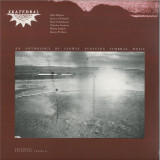
XKatedral Anthology Series II (An Anthology Of Slowly Evolving Timbral Music), featuring exclusive music from Kali Malone, Jessica Ekomane, Mats Erlandsson, Theodor Kentros, Wilma Hultén, and Maria W Horn.
"XKatedral Anthology II is the second instalment in a series of archival releases dedicated to presenting music by composers affiliated with XKatedral working within the realm of slowly evolving harmonic and timbral music. This double-vinyl set contains an array of pieces dating from 2018 - 2020. This collection of pieces focuses on the use of synthetic sound and algorithmic composition languages as tools for precise work within the realm of spectral exploration. In addition to this, the electronic instrumentation in many of the pieces is augmented by acoustic instruments.
The first piece on side A is Kali Malone’s Music for Low Quartet. This piece is an adaptation of the composition “Rose Wreath Crown” originally released on The Sacrificial Code in 2019. In this iteration, the music is scored for two double basses played by Vilhelm Bromander and Zach Rowden, and sine tone electronics performed by Malone herself. The recording of this piece was made at EMS in 2019.
Closing side A is Jessica Ekomane’s ‘First Light’. This computer music piece focuses exclusively on digital sound, layering razor sharp synthetic textures into an otherworldly dynamic weave. The music heard here is a reworked version of a piece originally commissioned by Semibreve in 2020.
Side B contains the work ‘Hands Melt In The Sun’ by Mats Erlandsson. This composition is built from electronically processed tuned zithers and synthetically generated tones arranged in a series of chordal inversions over a sustained fundamental tone. This music, written as a love-letter to the localized drone tradition of Stockholm in the years 2008-2012, was composed and recorded in seven days while in residence at Ställbergs Gruva in Bergslagen, in the summer of 2018.
Opening the second half of the collection is Rough Draft v.7 by Theodor Kentros. Kentros’ compositional practice usually combines acoustic and electronic source material and in this piece he molds the sound of the Buchla 200 and a collection of recorded wind instruments into a molten mass of sound. In its original form, this music was presented as a multichannel immersive work and even in the current stereo configuration it retains some of that enveloping sense of depth.
The second piece on side B, Inertia, is by Wilma Hultén, who makes her debut on record here. An exclusively synthetic piece, Inertia utilizes internal digital feedback in a sealed synthetic system to manifest a harmonic field that swells and abates throughout the length of the piece, interspersed by small gestural elements.
Closing Anthology II is Maria W Horn's work ‘Dies Irae’ for female vocal quartet, pitched glass and synthesis. ‘Dies Irae’ uses a modified form of traditional tonal harmonic language to invoke an uncanny and restless middle ground between the classical western polyphonic vocal tradition and contemporary electronic music. The version heard here is a live recording from Eric Ericssonhallen in Stockholm on May 30th 2020. Performing the piece here are the vocalists Katarina Henryson, Lisa Holmgren, Vilma Ogenblad and Paula Wegmann, as well as Maria herself on glass and electronics."
We met Volen through a tip from our friends at Cyclone as a Los Angeles-based DJ who was also a natural with production. In 2021 we released Volen's Distortion mini-album on Rhizome Forms. Those heady productions stuck with us and we knew a vinyl would soon be ready. Four years later, with countless hours spent in his Arizona desert sound lab, we present four acidic dancefloor interventions on wax.
“Validation” is immediately lively with a cascading acid groove. Spinning through inversions, the vocal refrains frame the kaleidoscopic dance floor energy of the title track.
The record's a-side finds completeness with the twisted anthem “I've Got to Shower".
Wobbly chords simmer under that famous sample while a slick breakbeat delivers the rhythm.
Side-b arrives with swagger as "Left & Right” rolls in with a mental acid and breakbeat powerplant of a groove.The track's breakdown billows atmosphere while the lower frequencies growl.
Volen saves the starry ecstasy for the final track. “Pump Their Dump” is an upbeat and dreamy acid house journey evolving into a collage of ear candy samples that'll satisfy dancers looking for that positive vibration release.
Berlin club and party-starters Sameheads return to black wax on April 10th with “ZEUG!”, a 4-track EP from various celebrated artists, who join forces in new and unheard ways for a stack of outernational and spaced-out dancefloor jams for creative dance floors worldwide and beyond.
Berlin-based CROSSLUCID, AKA Sylwana Zybura and Tomas C. Toth, have delivered another stunning example of their perception-bending otherworldly viewpoint with the artwork for the release. A purely analog production, fusing clever lighting tricks, hand-made props, and a healthy dose of shaving foam and dry ice… This “Cult of the Cosmic Swamp” chimes with the weird tribal rhythms contained on the record.
First up is Mameen 3 (a side-project from Brussels selector DJ Sofa) & Romanian pioneer Rodion G.A with ‘Planet Cluj’, a suitably off-world excursion through a fun-packed disco hall in some far-off colony where layered synths are stacked, elements seeping through one another to form a mesh of groove.
Anatolian Weapons’ cosmic fireside ritual, ‘Chant 3’, heats up the A2 with vibrant and punchy percussion loops woven together with a worldwide chorus of chanters. Building continuously, the tough workout is dosed up with a bassline saturated in attitude for a high-energy finish.
Picking up on the B side are KRENG (a morphic form composed of Don’t DJ and Dane Close), who slow the pace down with a latticed beatwork combining robust dance formulas and blasting syncopation. Letting the rhythm do the legwork for the first half of the track, the pair then pour out a sludged mess of grime-infused bass over the percussive chaos.
Silvia Kastel and Wilted Woman close proceedings as SHAKEY with a dubwise workout that straddles b-side house obscurity and stoned live dub improvisation: steel drums patter at the windows of Paradise Garage as Larry Levan fights off the vampires alongside Scientist.
The release is celebrated at Sameheads on April 10th with an extremely rare live show from Rodion G. A., an appearance from INVERSIONS label owner Milo Smee, and a b2b from Don’t Dj & Dane Close. Limited to 300 pieces, this record will find a home in the stacks of DJ’s willing to step outside genre and convention.
- A1: A Bureaucratic Desire For Revenge Part 1 (Black Noi$E Inversion)
- A2: A Bureaucratic Desire For Revenge Part 2 (Black Noi$E Inversion)
- B1: Ouroboros Is Broken (Black Noi$E Inversion)
- C1: Geometry Of Murder (Black Noi$E Inversion)
- C2: German Dental Work (Black Noi$E Inversion)
- D1: Divine And Bright (Black Noi$E Inversion)
- D2: Dissolution I (Black Noi$E Inversion)
New “Inversions” of drone rock pioneers Earth’s debut release. A collaboration between Dylan Carlson and Black Noi$e (Armand Hammer, Danny Brown, Earl Sweatshirt) formed in mutual respect and appreciation for one another. Both artists were intrigued by the creation of vast musical landscapes and the connection of music, with its ability to transport the listener. The music of Earth was recognised and celebrated for moving at a glacial pace and yet this new collaboration surprisingly saw Black Noi$e slowing things down even further.
The debut, which originally came out in 1991, notably featured Kelly Canary and Kurt Cobain on vocals on the tracks “A Bureaucratic Desire for Revenge Part 2” and “Divine and Bright”. Black Noi$e reimagines the original recordings with his experimental sensibility and innovative multi-instrumental, cross genre exploration. Applying contemporary electronics to the heavy droning bass and guitars and languid rhythms, this inversion oscillates and reverberates with a different kind of energy whilst simultaneously highlighting the much loved low slow and distorted properties of the original.
‘Extra Capsular Extraction’ was the first music Dylan made with Earth and his first time in a recording studio, which he recalls at the time as being “terribly exciting”. It also marked the first time collaborating with others and seeing it reified into a tangible object or product, a spirit that Dylan has carried through to the present. The original album is a document of a specific period and Dylan’s creative development. These inversions of Extra Capsular Extraction are, to quote Dylan, “an exciting way to reintegrate them into the present time and with my more expanded conceptions of musical endeavours”.
"Doom-metal innovators" Pitchfork.
"With guitars ramped up to the nth degree, but tuned to gut-wrenchingly low frequencies, Earth carved out a veritable canyon of pure molten drone, one which would have a profound influence on modern metal music." The Quietus
- Garbage Dream House
- Bugland
- Bits
- Save The Lobsters
- My Crud Princess
- Bather In The Bloodcells
- I Hate That I Forget What You Look
- Jelly Meadow Bright (Feat. Fire-Toolz)
Since first arriving on the scene in 2009 with blistering inversions of shoegaze, Montreal's No Joy has always found formidable ways to reinvent itself. Now solely composed of musician Jasamine White-Gluz, No Joy has evolved over four studio albums and five EPs, defying expectation and genre, and cementing itself as something rare: a band without a category. Clearly sympatico at the time of collaborating, Fire-Toolz and No Joy (Jasamine White-Gluz) had both resituated to secluded woodsy milieus prior to the "Bugland seshies", as I now name the historic pairing. Together, they created an aural equivalent of a late 1980 I-d magazine front and back cover, with a non-problematic National Geographic hiding within. Fire-Toolz sums it up: "The collaboration really felt limitless. I didn't have to adhere to a certain vision in a way that made me feel like I couldn't be Fire-Toolz. I could easily relate to this album because Jasamine and I liked a lot of the same music, and I was able to be creative in ways that were freeing as if I was making my own album. " Both spent days driving through on empty rural highways listening to the mixes, and it reflects in the final product. With an open ear, many "influence eggs" can be detected by the listener. Garbage Dream House is Zooropian without any of U2's ego baggage. Seven-minute closing track Jelly Meadow Bright even manages to meld Stooges' Fun House out of control saxophone with the chill buoyancy of a high-end spa. Touching on respected, familiar genres and sounds while attempting to advance one's own isn't easy but Bugland manages to. What genre is it anyway? Is it even shoegaze when it could live happily on a shelf next to Boards of Canada and Autechre? The right answer is `yes'. What a lovely shelf `twould be as well. A marble shelf, with cyberpunk elements. Bugland`s a testament to White-Gluz's evolution and her ability to channel a wide variety of tastes into something cohesive that can descend into fine-tuned chaos, then out of that chaos with ease.
The hypnagogic haze of purling, refractive dub is strong on Sleepdial’s debut for West Mineral, introducing a crafty new name to the scene after a teasing preview on that Peak Oil x NWAQ radio show, delivering a heavy-lidded dose of tattered ambient dub inversions.
Sleepdial chases a frayed thread of thought thru the fractal echo chambers of ‘RV Lights’, only their 2nd full-length under this alias, and first on vinyl. The 9-part album is optimised for getting smudged on sunny daze with its pursuit of elusive dub sprites that connote subaquatic or vaporous etheric themes in their elemental diffusions and world-building ecologies.
In equilibrium of ambient and dub-as-method, they tenderly tease the senses with a fine grasp of deferred gratification, oscillating abstract spatial navigations and ephemeral moments of heart-in-mouth euphoria. Where sometimes this stuff can err to a pleasant mess, the dub ballast here anchors proceedings in a rugged groove that really pushes the right buttons and elevates the whole thing in its own air.
Blessed with a compelling sensuality, tracks follow a course from the compressed contrails of ‘Purview’ to the helical shapes of ‘Dovetailing’ and thru beautifully pill-bellied sensations on ‘Icarus Rising’, into ruggeder, insectoid dub in ‘Blue August’ to short circuit agitated and soothing feels. That fractured sort of duality manifests at its most anxious yet enchanted in the unpicked strings and astral scree of ‘Lightplay’, and in the title and feel of ‘Lean Angst’, gently keeping heads on toes into the swirling pressure system of album sign-off ‘Airtank’.
Leon Dinero returns with "One Way Love", another magical rendition from the James Hunter catalogue. Dinero, along with the Inversions and produced by Victor Axelrod, transforms the uptempo R&B classic into a rocksteady mover whose relaxed groove and soulful vocal give the track an authenticity that may have folks scratching their head as to which version came first. A testament to the incomparable songwriting savvy of Mr Hunter, "One Way Love" is a track that defies the constraints of genre labelling with unfettered elegance and lyrical prowess.
Onimikìg Algonquin: (n. an.)- thunder Timothy Archambault's unaccompanied flute pieces for this album have been inspired by Indigenous brontomancy (divination by thunder). Each piece highlights a different extended flute technique metaphorically related to types of thunder sounds: claps, peals, rolls, rumbles, inversions, and CG (cloud-to-ground). An important document of new music meets contemporary musicological research via Stephen O'Malley of SUNN O)))'s Ideologic Organ. The Indigenous flute used in this recording is made of cedar respective to the traditional woods used by the Kichesipirini and other tribes who live along the Ottawa & Saint Lawrence Rivers. To the Algonquin the flute (Pibigwan) is the wind maker or essence of the wind. Unlike other tribal nations whom the majority used the flute as a courting instrument, the Algonquin generally utilized the flute for more contemplative singular usage to mimic the sounds of nature or as a signaling device during times of conflict. When love songs were required, they were usually more plaintive in character expressing sadness, loneliness, or concerning the departure of a lover. The album intro begins with the shaking of a necklace of otter penis bone, fish spine, bear claw, elk teeth and deer hide, gifted from Algonquin Elder Ajawajawesi. It is meant to focus the listener's attention before the flute pieces begin. The warble or multi-phonic oscillation prevalent in all the pieces traditionally represented the "throat rattling" vocalization of the tonic note, sometimes known as the horizon of which the melody floats from. Due to the repetition of multi-phonic oscillation the performer will breathe erratically creating an altered state correlating with similar traditional ceremonial practices.
Reggae and Jamaican music have long embraced a symbiotic relationship with the movies. Rooting back to the island's golden era, countless arrangements have either been direct covers, or inspired by, the musicality and mood found in both cinema and television. These reinterpretations would become part of the backbone of the instrumental sound that accompanied the Jamaican record industry's acceleration from the mid-60s and beyond. Talented young musicians, rising from Alpha Boys School and the early studios of Coxsone, Duke Reid and others, found a showcase for their unique playing style on hundreds of different recordings, while appealing to the country's own love affair with Westerns, James Bond canon, and other rebellious themes and motifs that were projected from Hollywood during this time.
In this same tradition, in a new interval, arrives the debut release of Anant Pradhan and Larry McDonald, the latter a master percussionist with direct participation in some of Jamaica's earliest recordings. McDonald, although often uncredited, was a legitimate influence in helping to bridge the Afro-Caribbean sound from calypso into ska and later reggae with his iconic style on hand drums and percussion. A kindred spirit of McDonald, despite 50 years separating them, Anant Pradhan is a bonafide member of the next generation. Although this is his first "solo" record, the talented saxophonist has already played on dozens of incredible sessions for the likes of Victor Axelrod, The Inversions, Andy Bassford, Channel Tubes, Ralph Weeks and Combo Lulo. As an official member of the current touring group of the legendary Skatalites, Pradhan has honed his musicianship under some of the greats of reggae music. His particular soulful, instrumental arrangements are an homage to that influential era of Jamaican music. Pradhan and his band's performance retain the skill and innovation of the old vanguard, and like the generations before, capture a magic that may only be possible when cinema goes reggae.
A cult favorite from A Nightmare Before Christmas, Danny Elfman's "Sally's Song" was immortalized in Tim Burton's 1993 classic stop-motion film. It's immediately recognizable in all its haunting charm, and now, Pradhan and McDonald have managed to transform it into an irrefutable reggae classic, reinvented with its melancholic lead sax and bombastic percussion. The prolific Henry Mancini is already entrenched in the Jamaican canon, yet nobody has knowingly attempted to recreate one of his most magical numbers, "Meglio Stasera" aka "It Had Better Be Tonight," that of the riveting one-take scene in 1963's The Pink Panther. The galloping percussion of the original is transposed through a cloud of smoke, slow and low in a roots style at the hands of McDonald. Pradhan's sax leads the way over the locked-in rhythm section, both deep and cheeky all at once. These first two productions of Anant Pradhan and Larry McDonald are a deserving entry into the canon of reggae covers, and are equally adept to be heard on the screen and or at the dance alike.
Nick Leon, Swimful, DJ Znobia. One of the first artists from outside of Africa to sign to Hakuna Kulala, WULFFLUW XCIV brings his borderless productions to the label's ongoing Whitelabel series following a slew of dancefloor agitations from T5UMT5UMU, Menzi & Scratchclart, and others. "Toxica EP" builds on the mutant fusion of 2020's acclaimed "Ngoma Injection", stripping back the woozy psychedelia and chromium ambience and replacing it with pure soundsystem pressure. 'Take a Ride' bends acid techno machinery around rubbery East African rhythms, anchoring block party hedonism with a 4/4 bump that wouldn't be out of place in Kreuzberg and vocal shakes straight from São Paulo. But this isn't a mindless mashup of aesthetics, its a conversation with the world's fringe agitators, using stylistic and rhythmic strokes to highlight commonality, not exclusivity. Hakuna Kulala's own Chrisman appears on 'Tetemeka', and the two producers adapt the syrupy tarraxinha inversions the Congolese engineer perfected on last year's "Makila" full-length. Low, resonant gqom atmospheres underpin the entire track, but WULFFLUW XCIV's squeaky toy synths prevent it from slipping into darkness. Elsewhere 'Kluck' distorts the timeline completely, wedging flute-led Latin American tribal sounds into a riddim vs. trap superstructure, and 'Exp' sublimes speed dembow into delirious trance and minimal techno vapors. The boundaries between dance subgenres are slowly dissolving, and WULFFLUW XCIV's digital-era intermixture sounds like the cyberpunk carnival we're all desperately in need of
- 1: One Step Ahead Sugar Minott
- 2: If You Ask Me To Leon Dinero
- 3: Whatcha Doing (To Me) Charles Bradley
- 4: Icanbecool • Bob & Gene
- 5: Lover Like Me Binky Griptite
- 6: I’d Rather Go Blind The Frightnrs
- 7: I Can’t Stand These Lonely Nights Bob & Gene
- 8: It’s Not What You Know (It’s Who You Know) Bob & Gene
- 9: How Long Do I Have To Wait For You Sharon Jones
- 10: Conscience Is Heavy The Inversions
If youʼre a fan of Daptone Records, chances are youʼve read or heard the name Victor Axelrod, and even if you havenʼt, youʼve heard music from his hand. As a producer, arranger, recording and mixing engineer, and keyboardist, his creativity has extended across more than two decades of the labelʼs releases, even dating to its prehistory with Desco Records.
If You Ask Me To..., the first LP under his name for the label, is a collection of singles released between 2007-2023 as well as unreleased tracks from Sugar Minott and Binky Griptite. The genesis of which came via an 11th hour request from Daptone for a Sharon Jones remix (2007) that resulted in the reggae version of “How Long Do I Have To Wait For You?” found here.
This opened the door to additional explorations of reggae/soul synergies within the catalog, affirming the musical and cultural link between Daptoneʼs core soul sound and Axelrodʼs passion for Jamaican music. While previous projects like Ticklah Vs. Axelrod and Roots Combination (produced under the alias Ticklah) were inspired by the Jamaica of the 1970s and 80s, this set specifically channels an earlier period in the 1960s when Jamaica was both strikingly original in its continuum of genres but also closely and empathetically attuned to Black American music.
Through Axelrodʼs exceptional taste and the notable contributions of guitarist To
- A1: Daytime Tv (Rainy Miller Remix)
- A2: It’s Hard To Get To Know You (Space Afrika Ambiv)
- B1: Pigeon Flesh (Mobbs' Butcher Mix)
- B2: Love Like An Abscess (Aho Ssan Remix)
- C1: Nervous Energy (Teresa Winter Remix)
- C2: I Was Born By The Sea (Morgane Polanski Remix)
- D1: I Was Born By The Sea (Fila Brazillia Remix)
- D2: Dream About Yourself (Bonus)
Richie Culver had been waiting his whole life to record I was born by the sea. His debut album immediately and messily inscribed the artist into the canon of outsider music and experimental electronics, serving both as an arresting statement of intent and a painful reckoning with the difficult path that lead up to it, stealing one last glance back at a place he always knew he had to escape. Between grim lamentations, faded memories and anxiety attacks, all told with searing honesty and disarming openness, I was born by the sea excavates a space for hope, finding Culver digging through Humberside silt to find a world weary optimism, the raw material from which his visual and sound art is shaped. For this collection of expansions and inversions, Culver invites a collection of kindred spirits, contemporary inspirations and old heroes to wade into the salt water of his formative years spent living for impromptu raves and afterparties, connecting vivid memories of his birth place of Withernsea to artists hailing from as nearby as Preston and Bridlington, further afield, from Manchester and London, Berlin and Paris, before returning back to Hull, to where it all began.
For some, responding to I was born by the sea means diving even deeper into the record’s furthest reaches. Space Afrika clear away the pummelling loops of noise from ‘It’s hard to get to know you,’ revealing a cool and cavernous expanse in its wake. Distant chatter, previously heard as though through thin, plasterboard walls, now echoes from outside the maddening claustrophobia of the original’s Sisyphean sonics, illuminated as a dense storm cloud suspended amidst a more open scene, washed clean by a lighter rain, allowing the tender heart of the track to beat clear. London producer MOBBS stretches out ‘Pigeon Flesh’ into an epic, 10-minute, cold-sweat spiral, strung-out tension wrung from disconnected phone tones twisted in unexpected directions, snatches of Culver’s voice turned inside-out and deep fried bass threatening to tip the track over into oblivion, the build-and-release of a nervous breakdown experienced in real time. In an act of subversive self-reflection, Morgane Polanski switches one kind of ennui for another in her adaption of ‘I was born by the sea,’ swapping the sea for the city, English seaside towns in January for summer evenings in Paris and flashing lighthouses and sparkling oil rigs for the Eiffel Tower and the traffic around L’Arc de Triomphe. Even Culver finds time to revisit ‘Dream About Yourself,’ a track taken from his EP Post Traumatic Fantasy, breathing new words into its glacial drift, the half-remembered testimony of a shut-in: Woke up in the evening / Pray for me / Don’t trust anyone / Pray for algorithm. Reframed in a more melancholy light, the track’s reverberant keys even more clearly evoke a mournful nostalgia, fresh pain felt in old wounds.
Others find a parallel universe in Culver’s visceral world building. Rainy Miller flips the script with a scorched, avant-drill rework of ‘Daytime TV’, threading puncturing hi-hats and queasy low-end surge through the track’s steady ambient cascade, invoking the irresistible Preston beat magic of Miller’s own essential debut album, Desquamation. Aho Ssan melts away the crystalline textures of ‘Love Like an Abscess’ with the ominous crackle of a nascent fire, building through swathes of organic Max/MSP squelch and brittle, nails-down-chalkboard scrape, swelling and metastasising the original to spill over Culver’s desperate hymn to corporeal desire, at once flesh and not. Teresa Winter transports us an hour up the coast from Withernsea to her native Bridlington, replacing the sea wall of synthesis on ‘Nervous Energy’ with muffled ASMR murk and fever dream whispers, transforming Culver’s unflinching observations into a haunting call-and-response, filling in the blanks with her own eerie utterances, a fleeting conversation with a ghost. In a touching victory lap, Fila Brazillia, eccentric stalwarts of beloved ‘90s trip hop imprint Pork Recordings, whose performances at Hull institution The Lamp convinced a young Culver of the necessity to make his mark on club culture, resurface for their first remix in 20 years. Steve Cobby and David McSherry lead a low-slung, heartfelt stroll back through a suite of tracks from I was born by the sea, tracing a full circle saunter from Culver’s origins to his current musical practice, the sounds of his present repurposed by the sound of his youth. In a gesture that reflects the emotional complexity of the project, Fila Brazillia find joy at the end of Culver’s troubled reflection, picking out an undeniable groove in the stasis of feeling trapped in your hometown. Underlining Hull’s vital musical legacy, from Baby Mammoth to Throbbing Gristle, Cobby and McSherry demonstrate that, though there are certainly storms, by the sea there is also sun and through the fog, if you listen, you can hear a singular sound, a sound now carried by Richie Culver.
Participant is a record label and creative studio run by William Markarian-Martin and Richie Culver
Swedish drone alchemist Mats Erlandsson is sitting in a fictional room on ‘Gyttjans Topografi’, imagining a virtual chamber orchestra using zithers, tapes, double bass, harmonium, organ, and various synthesisers to draft a treatise on alternative tuning and non-normative harmonic structures. Transcendent material.
“The music on this recording is performed by a kind of fictitious chamber ensemble situated in an imaginary room outlined by textures that alternate between gestural foreground and passive landscape. The three pieces contained within this release are tied together by sharing similar harmonic material and instrumentation and could ideally be perceived as parts of one long performance stretching through the two sides of the record. The textural room in which this musical performance operates is unreliable, unstable, constantly shifting in size and activity from sparse and open to dense and claustrophobic. Inside this non-euclidean performance space a chamber ensemble made up of zithers expanded through analog tape transposition, harmonium and organ, double bass, digital FM, feedback-convolution and Serge modular synthesizer perform a music made from justly tuned intervals arranged in a way that blurs the distinction between traditional minor and major tonal harmony in favour of harmonic progression within an essentially modal framework.
‘Oxidationstabell för Hytta A’ unfolds the harmonic material slowly in three sections where individual lines move independently initiated by the attack of the zither while the textural properties of the room shifts and shimmers. ‘Törnar’ forms a dense harmonic counterpoint where lines built from the same intervallic relationships gradually shift the balance from one spectral focal point to the next while the textural-spatial elements move under pressure and permeate the harmonic layers. The double bass heard on this piece was performed by Yair Elazar Glotman.
The whole of Side B is made up of one piece - ‘Sänka’, using a series of chords made from harmonic inversions of a single set of intervals as an anchor, or synchronisation point, for voices gliding towards, or away, from their designated goal as parts of the harmonic structure of the piece. In addition to the harmonic and textural layers previously present, a third percussive voice is present here whose rhythmic material is intimately tied to the intervallic relationships present throughout the record.
The material used to make these pieces included non-harmonic sounds and contaminated field-recordings that have gone through a sort of feedback process between digital and analog, or acoustic, processing where the recordings were edited, processed and re-amplified and recorded again in acoustic spaces to shape their character and imprint acoustic identities on the recordings. The tonal instruments were treated in a process analogous to this - harmonic material built from recordings and digitally generated synthesis recorded, transcribed, rearranged and overdubbed again with additional electronic or acoustic instruments to form a composite electroacoustic instrumental sound.
Mats Erlandsson is a composer and musician, part of the vibrantly reemerging field of drone music in Stockholm, Sweden, associated with practices characterised by the extensive use of sustained sound. Erlandsson presents his work both as a solo artist and in collaborations, most notably together with Yair Elazar Glotman and Maria W Horn.
"Music gives us the illusion that time is not time, but space. It is then that the music transforms from process to object, which I find a very interesting thought; a materialisation of the sound process. Sound is matter." - Noémi Büchi
Noémi Büchi's debut album 'Matter' captures the tension between growth and decay, consonance and dissonance, mirroring Büchi's own catharsis through music. Her most personal material to date, 'Matter' is an opus of refined, sculpted beauty, one that aims to blur the distinction between ephemerality and physicality. Inspired by late romantic classical music and early 20th century contemporary music, 'Matter' is driven by the compositional methodologies of Igor Stravinsky, Alexander Skrjabin, Gustav Mahler and György Ligeti to modern sound forms, adapting and expanding upon their ideas in an awe-inspiring exploration of cutting-edge potency and tactility.
Büchi structures the electronic works that constitute 'Matter' in movements, stratifying myriad instrumental parts like the constituent sections of an orchestra. During her work on the album, Büchi engaged in extensive research, obsessively studying specific chords and progressions, and searching for transcendent intonations with resonant properties; complexions of sound with the ability to connect with the listener's body. Transforming our inner worlds into zones of suspension and levitation, Büchi exposes the listener to intoxicating slipstreams of sound. Prominent voices ascend, tectonic disturbances threaten the foundations, perception and sensation becomes subject to elemental countercurrents and inversions. 'Matter' illustrates the fraught pursuit of momentary equilibrium, and makes the fragility of euphoria tangible.
Composer & sound artist Noémi Büchi creates electronic, symphonic maximalism. Her music is defined by delicate electronic-orchestral forms and textural rhythms. She strives for a combination of harmonic and dissonant sonorities, to evoke both intellectual and emotional euphoria. Büchi has appeared on the Light of Other Days and Visible Dinner labels, and is now an affiliate of -OUS, releasing 'Hyle' her debut EP on the label in spring 2022. As well as her solo output, Noémi Büchi is currently working with Feldermelder on their collaborative project Musique Infinie. Their debut album will also be released via -OUS in the near future.
Very Limited yellow vinyl LP. By popular demand, we are proud to present Ekundayo Inversions (Instrumentals). Liam Bailey released his debut album Ekundayo on the label at the end of 2020, then in the Summer of 2021 El Michels Affair took the tapes from that and did a dub version of the album in his own style aptly titled Ekundayo Inversions. Both of these releases quickly became cult classics in their own right. The chemistry between Liam and producer Leon Michels is undeniable, each pushing the other to new places in their sounds. Here we take the vocals out of the mix and focus on the production and the players pulling instrumentals versions from both the Ekundayo album and the Ekundayo Inversions album. This is a limited one time pressing of 1000 pieces.
For those only familiar with her previous releases, aya sinclair’s ‘im hole’ will be a dramatic revelation. Under the LOFT pseudonym, she attracted global acclaim for her fwd-thinking club inversions that juxtaposed the British addiction to breaks 'n bass with critical, self-sluicing logic and untethered abstraction, tearing down dance music's hallowed pillars of respectability while winking knowingly to voyeuristic onlookers. On ‘im hole’ this routine has evolved; aya has distilled the incisive sonic experimentation of her earlier releases, the tongue-in-cheek giggles of her DJ sets and edits, and the identity-fluxing lyricism of her live shows. Contorting language, dialect, gender and sexuality between intermittently controlled bursts of rhythm, noise and aural goop, she has sculpted a set of autobiographical vignettes that challenge established norms, question supposed truths and affirm a spectrum of interlocking experiences. But while it's wide open and personal, ‘im hole’ also challenges queer art's tendency to veer towards repetitive solipsism, the music fragmenting familiar sounds and twinning them with familiar words, assembled in unfamiliar ways. Stories are muddled with phonetics just as dubstep is macrodosed with microtonal drone.The anxious, explorative personality that made aya’s past releases so magnetic is magnified here, and her sense of humour is completely naked. It's a Gregg Araki animated biopic of Burial. It's Shakespeare with hoop earrings and a busted skateboard. ‘im hole’ will physically manifest as a hardback cloth-bound book of lyrics, poems and photographs, designed in collaboration with Oliver Van Der Lugt, with single-use download code included.01. somewhere between the 8th and 9th floor 02. what if i should fall asleep and slipp under 03. once wen’t west 04. dis yacky 05. OoBrosThesis 06. the only solution i have found is to simply jump higher 07. still i taste the air 08. Emley lights us moor (ft Iceboy Violet) 09. Tailwind 10. If redacted Thinks He's Having This As A Remix He Can Frankly Do One 11. Backsliding
There has always been a Reggae inuence in the music of El Michels Affair. From their cover of "Hung Up On My Baby" done in a Reggae style, to the general sound and approach that permeates Leon's production style. While recording Bailey's 2020 Ekundayo album, they did some straight forward reggae tunes inspired by different eras alongside some modern R&B tracks that would t more comfortably next to Frank Ocean than Jacob Miller. It is this same notion that old and new can live so comfortably together that birthed the idea of Ekundayo Inversions. Traditional dub came out of reggae in the late 60s and early 70s when pioneers like King Tubby and Lee Perry started taking the multi track recordings of songs and running them back through the board adding effects and additional instrumentation. These recordings are called "dubs" or "versions" and are typically instrumentals with ourishes of vocals from the original tracks. El Michels decided to use the blueprints left behind and make something using the inuences of today. He wound up straying so far from the traditional format that it didn't seem right to use the word `Dub', hence Ekundayo Inversions. All the songs are tied together by WhatsApp messages between Leon and Liam that perfectly narrate the story of this record and their working relationship. One of the highlights on Ekundayo Inversions is a guest appearance from the legendary Lee "Scratch" Perry on the "Ugly Truth" version. L$P switches between singing and talking, proclaiming his powers one minute and playing with the track's title the next. On "Awkward take. 2" Leon takes one of the most experimental songs from Ekundayo and actually straightens it out. A track that once seemed to be oating in space has now been anchored by the addition of drums and bass. "Faded", a version of "Paper Tiger", is given the full EMA treatment with the addition of emotive horns over an uncomfortably sparse rhythm track peppered with Liam's voice drenched in delay and echo. "Champions" features a verse from Black Thought of The Roots and halfway through, El Michels sends the rhythm section 50 years back. At the end of the day, Ekundayo Inversions is a testament to how strong the original songs are. Whether they're in a R&B style, reggae style, stripped down to their bare bones, or loaded with production, the songs will move you.
- 1