Analog Fingerprints Vol. 0 is a compilation bringing together the early 2000s works of Marco Passarani under his Analog Fingerprints alias, collecting key tracks originally released on Rome’s Plasmek and Pigna labels.
For Numbers, the story starts long before the label itself. In their formative years, digging in Glasgow’s Rubadub, Passarani’s records felt like dispatches from a future city. Releases on his own Nature Records and on labels such as Generator and Interr-Ference Communications were mind blowing: rooted in Detroit techno, Chicago house and electro, yet pushing somewhere new. Much like fellow travellers Autechre, who would remix him in 2001, Passarani’s music balanced machine funk with restless experimentation.
Information was scarce, and you would hear these records first on the dancefloor or at listening stations in shops like Rubadub. Print fanzines like Ear and early web outposts such as Forcefield offered only fragments. But there was a palpable axis forming between Detroit techno and a new European wave of record labels including Skam, Rephlex, Clone, Viewlexx and Nature itself. It was the sound that defined Saturday nights at Rubadub’s ‘69’ parties in Paisley, just outside of Glasgow.
Passarani’s records, in particular, were instrumental in bringing together the future Numbers co-founders. Richard had already booked him pre-Numbers; meanwhile Calum (Spencer) and Jack (Jackmaster), then 16/17 year olds working alternate Saturdays in Rubadub, were so enamoured with the Roman sound that they travelled to Rome for the Bitz Festival in 2003 to seek out Passarani and Lory D at their source.
The first Analog Fingerprints release landed as a 12” on Plasmek in 2001, following the fractured, IDM-leaning 6 Katun material. For Passarani, the project marked a recalibration. A DJ first and foremost, he had moved into production via early computer setups, from a Commodore Amiga through primitive PC audio, Cubase and Logic, later experimenting with Ableton. The IDM scene had offered a playground for trial and error, but there was always a tension between abstraction and the dancefloor. Analog Fingerprints became the bridge: still intelligent, but with more dance than distance. After years of broken beats and complex arrangements, he wanted directness without surrendering identity.
Working closely with Francesco de Bellis and Mario Pierro in the Pigneto district, the trio formed Pigna as a vehicle for reclaiming a more accessible dance sound, deliberately steering away from the minimal wave beginning to dominate Europe. Sessions were fast, instinctive, often stretching late into the night with friends dropping by. It was a studio as social space, production as collective energy.
“In that constant search for balance, Analog Fingerprints was my way of expressing something closer to the classic dance floor. The track 'Tribute' - a tribute to my favourite early Detroit techno track of all time, 'First Bass' by Separate Minds - came after I realised I had almost lost my connection with the dance floor. The simplest step was to take inspiration from early Chicago and Detroit and twist it in our Roman ‘Pigna’ way. My goal was to create more accessible dancefloor tracks by mixing my unconscious Italo roots with my teenage love for that early US sound, ensuring the result was as far as possible from the minimal sound that was starting to dominate everywhere.” - Marco Passarani
Technically, the Analog Fingerprints tracks span a transitional era: Roland TR-909, SH-101 and Alpha Juno hardware met early software experiments. A Novation Drumstation rack stood in for the unattainable TR-808, syncing with TB-303 and TR-606. Yet the true secret weapon was Jeskola Buzz, a tracker-style modular environment that allowed step-by-step parameter control and strange melodic constructions, later exported into the audio sequencer. Even the lead on ‘Tribute’ came from an early PPG Wave-style plugin. It was hybrid thinking at a moment when digital tools still felt unstable but full of possibility for technologists like Passarani.
Behind the music sat Finalfrontier, a loose Roman collective orbiting Nature and Plasmek. Distribution and production were intertwined; importing obscure records into Italy built connections with like-minded outsiders across Europe and the US. Expensive phone bills and fax machines forged an “electronix network” that linked Rome to Clone, Viewlexx, Skam, Rephlex, Rubadub and Detroit’s Underground Resistance. There was a shared sense of survival and resistance, of operating against commercial systems.
Passarani recalls “The first time I found a sheet of paper inside an Underground Resistance 12” with info about upcoming releases... and a huge picture of Spock on the back. Imagine that: you love the music, you love Star Trek, and there’s someone on the other side of the ocean sharing those same values and sounds. It was the perfect match. We even gave our original company the suffix ‘Finalfrontier’: that says it all.”
Feedback in that era arrived physically: distributor faxes, conversations with visiting DJs, the experience of playing abroad and meeting kids who had connected with the records. Glasgow became a key node in a scattered outlier network. Passarani personally brought the first two Nature releases to Fat Cat in London, playing them in-store. Shortly after, a fax arrived from Rubadub in Glasgow requesting copies.
“I still remember that phone buzz and the fax paper slowly sliding out, with someone I didn’t know saying they wanted 75 copies of Nature 001. Or like the time we got a fax from the Rephlex crew just saying, “Hello Nature Records, Keep up the good work.” That was how we knew the message was getting through. It was a fantastic feeling; just one piece of thermal fax paper as an analog notification - the mood for the entire week would change.” - Passarani
The connection to Glasgow has since stretched across generations. As Passarani reflects, links often fracture as scenes renew themselves, but in Glasgow something different happened. New and old mixed seamlessly. There was a visible trust in what came before, and a willingness to carry it forward rather than discard it. Observed from Rome, it was deeply encouraging.
Analog Fingerprints Vol. 0 captures that moment of exchange: Rome to Glasgow, Detroit to Europe, experiment to dancefloor. It documents an artist recalibrating his sound and a network of scenes discovering one another in real time, connected by vinyl, faxes and shared intent.
quête:the real kids
The process of making this mini-album “anaiis & Grupo Cosmo” was truly life-altering for me. It changed my approach to making music and really brought me back to the roots of what creation is about. I went to Salvador for a month-long artist residency in February 2020 and during that time, I not only fell in love with Brasil’s culture and music, but I also wrote “Toda Cor” with the wonderful Luedji Luna. A few years later, I reached out Biel who’d co-produced “Estrela Acesa” with Sessa to see if they’d be interested in re-developing “Toda Cor” with me. They were enthusiastic and we fully reproduced the record in December, remotely. The connection between us all was electric and it felt like there was a collective enthusiasm for creating more together so I flew out to Brasil in April 2023 to continue this exploration. The beauty behind this record really lies in the experience of making it. We all stayed together in Biel’s house in Ilhabela for a week with Cabral, who co-produced the record with us and plays bass. We would go to the beach, eat communally, share stories, be around the kids, but then spend most of the days creating and jamming together. Each day we would record our songs live to tape, not a computer in the room. By the end of the week we had this album. It was refreshing to make music in this way. The music and approach really held us in that moment and gave us a chance to create freely, in a big moment of transition in our lives in a way that truly embraces imperfection, spontaneity, just very human.
- A1: Dj Ski's Intro
- A2: Nineteen Seventy Something
- A3: Son Of Yvonne
- B1: Da' Pro
- B2: Store Frontin
- B3: Me & My Gang
- B4: Crush Hour (Feat Pav Bundy)
- C1: Think I Am (Feat Big Daddy Kane & Mf Doom)
- C2: Fresh Fest Reggie B
- C3: Hoe-Tel-Leftovers
- C4: Slow Down
- D1: Home Sweet Home (Feat Pav Bundy)
- D2: Dedication
- D3: I Did It
- D4: Outtakes
Repress incoming!
Following the success of two collaborative releases (EMC “The Show”/2008 and Ace & Edo G “Arts & Entertainment” /2009), Masta Ace joins forces with the metal faced MF Doom for Son of Yvonne, a highly personal concept album that celebrates the life and legacy of Ace’s recently departed Mother. Like his 2004 landmark Disposable Arts, Son of Yvonne is meticulously constructed with stories, settings, and characters that resonate with flesh and bone humanity. Interstitial vignettes provide a thematic backbone to the experience, and each track complements and completes the previous to form a narrative whole: a sometimes visceral, sometimes nostalgic slice of Ace’s young life in Brownsville, Brooklyn. Entirely underscored by MF Doom’s iconic Special Herbs instrumentals, Son of Yvonne features the Juice Crew general Big Daddy Kane, new comers Pav Bundy (The Bundies), Reggie B and even MF Doom on the mic. It’s Masta Ace’s no frills flow, however, that looms largest above the dusty samples and digger loops that define Doom’s production. Ace’s photo-realistic rhymes about stick-up kids, spraycan artists and wack emcees add extra gravity to his already celebrated reputation as “truly an under-appreciated rap veteran and underground luminary” (Allmusic Guide). Like Eminem recalls in his 2008 autobiography The Way I Am, “Masta Ace had amazing storytelling skills. His thoughts were so vivid.” TRACKLIST: A1. DJ Ski's Intro A2. Ninteen Seventy Something A3. Son Of Yvonne B1. Da Pro B2. Store Frontin B3. Me & My Gang B4. Crush Hour feat Pav Bundy C1. Think I Am feat Big Daddy Kane & Mf Doom C2. Fresh Fest Reggie B C3. Hoe-Tel-leftovers C4. Slow Down D1. Home Sweet Home feat Pav Bundy D2. Dedication D3. I Did It D4. In Da Spot feat Milani The Artis D5. Outtakes
- 1: The Real Damage
- 2: Nashville Tennessee
- 3: This Town Ain't Big Enough For The One Of Me
- 4: Thatcher Fucked The Kids
- 5: Casanova Lament
- 6: I Really Don't Care What You Did On Your Gap Year
- 7: The Ballad Of Me And My Friends
- 8: Nashville Tennessee (Live 2006)
- 9: Thatcher Fucked The Kids (Live 2006)
- 10: Casanova Lament (Live 2006)
- 11: I Really Don't Care What You Did On Your Gap Year (Live 2006)
- 12: Sunshine State (Live 2006)
- 13: The Real Damage (Live 2006)
Transparent Yellow Vinyl[26,68 €]
Celebrating 20 years of Frank Turner’s solo debut EP ‘Campfire Punkrock’, Xtra Mile Recordings are excited to release a special anniversary extended edition of the seminal release. Featuring the original EP with two added songs (The Real Damage and The Ballad Of Me & My Friends, both of which were included on the US version in 2007), plus 7 further live tracks recorded from Frank’s 50th solo gig in London 2006 - taking listeners right back to where it all began at the very early days of Frank’s incredible solo career. The 12” LP features new reworked artwork with shiny gold campfire on matt black cover plus coloured vinyl.
The original EP was recorded by Frank's guitarist Ben Lloyd at the Oxford home of Turner's bass player Tarrant Anderson and mixed by Tristan Ivemy. If features fan favourites ‘Nashville Tennessee’, ‘The Real Damage’ and ‘Ballad Of Me And My Friends’. Throughout April, Frank will tour UK performing tracks from Campfire Punkrock and the early years of his solo career. All dates are sold out including two nights at London’s Scala.
- A1: Point To A Point Blank
- A2: Automatic Teller
- A3: End Of The Great Credibility Race
- A4: Too Much
- A5: Killer's Kiss
- A6: Continental Cats
- A7: Instrumental Bonus Track
- B1: Spanish Fly By Night
- B2: The Roof
- B3: Your Beaten Heart
- B4: Turning Tricks
- B5: Wine & Depression
- B6: Quarter To Four
Back in 1990 the New Bomb Turks got together as four Ohio State University students who just wanted to rock. 10 years later they are already on their 7th studio album: Nightmare Scenario.
New Bomb Turks return to their snaggle-toothed first mistress — hard-driving, no-holds-barred American punk rock. With the guitar jive of Chuck Berry, the blinding ferocity of Motörhead and the snot of The Dead Boys, singer Eric Davidson and his backing trio fire off a dozen grenades of authentic old-school three-chord riff-rock in little over a half-hour, with nary a pause for breath between tracks. You can’t quibble with the four-on-the-floor intensity of tunes like opening salvo Point To A Point Blank. It was recorded over four days and nights, the only break being a jaunt over to a bar to see a reunited Real Kids, their first show in years, which floored the band and only added more mezcal to the fire.
Nightmare Scenario is available as a limited edition of 500 individually numbered copies on violet vinyl and includes an insert.
- A1: Hurts And Noises
- A2: Wake Up
- A3: I Don't Wanna Be A Rich
- A4: Terrorist Bad Heart
- A5: Provocate
- A6: Lucifer Sam (Pink Floyd)
- B1: Happy!?
- B2: So Lazy
- B3: I Feel Down
- B4: Stupido
- B5: Guilty
- B6: Caroline Says (Loo Reed)
UILTY RAZORS, BONA FIDE PUNKS.
Writings on the topic that go off in all directions, mind-numbing lectures given by academics, and testimonies, most of them heavily doctored, from those who “lived through that era”: so many people today fantasize about the early days of punk in our country… This blessed moment when no one had yet thought of flaunting a ridiculous green mohawk, taking Sid Vicious as a hero, or – even worse – making the so-called alternative scene both festive and boorish. There was no such thing in 1976 or 1977, when it wasn’t easy to get hold of the first 45s by the Pistols or the Clash. Few people were aware of what was happening on the fringes of the fringes at the time. Malcolm McLaren was virtually unknown, and having short hair made you seem strange. Who knew then that rock music, which had taken a very bad turn since the early 1970s, would once again become an essential element of liberation? That, thanks to short and fast songs, it would once again rediscover that primitive, social side that was so hated by older generations? Who knew that, besides a few loners who read the music press (it was even better if they read it in English) and frequented the right record stores? Many of these formed bands, because it was impossible to do otherwise. We quickly went from listening to the Velvet Underground to trying to play the Stooges’ intros. It’s a somewhat collective story, even though there weren’t many people to start it.
The Guilty Razors were among those who took part in this initial upheaval in Paris. They were far from being the worst. They had something special and even released a single that was well above the national average. They also had enough songs to fill an album, the one you’re holding. In everyone’s opinion, they were definitely not among the punk impostors that followed in their wake. They were, at least, genuine and credible.
Guilty Razors, Parisian punk band (1975-1978). To understand something about their somewhat linear but very energetic sound, we might need to talk about the context in which it was born and, more broadly, recall the boredom (a theme that would become capital in punk songs) coupled with the desire to blow everything off, which were the basis for the formation of bands playing a rejuvenated rock music ; about the passion for a few records by the Kinks or the early Who, by the Stooges, by the Velvet mostly, which set you apart from the crowd.
And of course, we should remember this new wave, which was promoted by a few articles in the specialized press and some cutting-edge record stores, coming from New York or London, whose small but powerful influence could be felt in Paris and in a handful of isolated places in the provinces, lulled to sleep by so many appalling things, from Tangerine Dream to President Giscard d’Estaing...
In 1975-76, French music was, as almost always, in a sorry state ; it was still dominated by Johnny Hallyday and Sylvie Vartan. Local rock music was also rather bleak, apart from Bijou and Little Bob who tried to revive this small scene with poorly sound-engineered gigs played to almost no one.
In the working class suburbs at the time, it was mainly hard rock music played to 11 that helped people forget about their gruelling shifts at the factory. Here and there, on the outskirts of major cities, you still could find a few rockers with sideburns wearing black armbands since the death of Gene Vincent, but it wasn’t a proper mass movement, just a source of real danger to anyone they came across who wasn't like them. In August 1976, a festival unlike any other took place in Mont-de-Marsan – the First European Punk Festival as the poster said – with almost as many people on stage as in the audience. Yet, on that day, a quasi historical event happened, when, under the blazing afternoon sun, a band of unknowns called The Damned made an unprecedented noise in the arena, reminiscent of the chaotic Stooges in their early adolescence. They were the first genuine punk band to perform in our country: from then on, anything was possible, almost anything seemed permissible.
It makes sense that the four+1 members of Guilty Razors, who initially amplified acoustic guitars with crappy tape recorder microphones, would adopt punk music (pronounced paink in French) naturally and instinctively, since it combines liberating noise with speed of execution and – crucially – a very healthy sense of rebellion (the protesters of May 1968 proclaimed, and it was even a slogan, that they weren’t against old people, but against what had made them grow old. In the mid-1970s, it seemed normal and obvious that old people should now ALSO be targeted!!!).
At the time, the desire to fight back, and break down authority and apathy, was either red or black, often taking the form of leafleting, tumultuous general assemblies in the schoolyard, and massive or shabby demonstrations, most of the time overflowing with an exciting vitality that sometimes turned into fights with the riot police. Indeed, soon after the end of the Vietnam War and following Pinochet’s coup in Chile, all over France, Trotskyist and anarcho-libertarian fervour was firmly entrenched among parts of the educated youth population, who were equally rebellious and troublemakers whenever they had the chance. It should also be noted that when the single "Anarchy in the UK" was first heard, even though not many of us had access to it, both the title and its explosive sound immediately resonated with some of those troublemakers crying out for ANARCHY!!! Meanwhile, the left-wing majority still equated punks with reckless young neo-Nazis. Of course, the widely circulated photos in the mainstream press of Siouxsie Sioux with her swastikas didn’t necessarily help to win over the theorists of the Great Revolution. It took Joe Strummer to introduce The Clash as an anti-racist, anti-fascist and anti-ignorance band for the rejection of old-school revolutionaries to fade a little.
The Lycée Jean-Baptiste Say at Porte d’Auteuil, despite being located in the very posh and very exclusive 16th arrondissement of Paris, didn’t escape these "committed" upheavals, which doubled as the perfect outlet for the less timid members of this generation.
“Back then, politics were fun,” says Tristam Nada, who studied there and went on to become Guilty Razors’ frontman. “Jean-Baptiste was the leftist high-school in the neighbourhood. When the far right guys from the GUD came down there, the Communist League guys from elsewhere helped us fight them off.”
Anything that could challenge authority was fair game and of course, strikes for just about any reason would lead to increasingly frequent truancy (with a definitive farewell to education that would soon follow). Tristam Nada spent his 10th and 11th unfinished grades with José Perez, who had come from Spain, where his father, a janitor, had been sentenced to death by Franco. “José steered my tastes towards solid acts such as The Who. Like most teenagers, I had previously absorbed just about everything that came my way, from Yes to Led Zeppelin to Genesis. I was exploring… And then one day, he told me that he and his brother Carlos wanted to start a rock band.” The Perez brothers already played guitar. “Of course, they were Spanish!”, jokes their singer. “Then, somewhat reluctantly, José took up the bass and we were soon joined by Jano – who called himself Jano Homicid – who took up the rhythm guitar.” Several drummers would later join this core of not easily intimidated young guys who didn’t let adversity get the better of them.
The first rehearsals of the newly named Guilty Razors took place in the bedroom of a Perez aunt. There, the three rookies tried to cover a few standards, songs that often were an integral part of their lives. During a first, short gig, in front of a bewildered audience of tough old-school rockers, they launched into a clunky version of the Velvet Underground's “Heroin”. Challenge or recklessness? A bit of both, probably… And then, step by step, their limited repertoire expanded as they decided to write their own songs, sung in a not always very accurate or academic English, but who cared about proper grammar or the right vocabulary, since what truly mattered was to make the words sound as good as possible while playing very, very fast music? And spitting out those words in a language that left no doubt as to what it conveyed mattered as well.
Trying their hand a the kind of rock music disliked by most of the neighbourhood, making noise, being fiercely provocative: they still belonged to a tiny clique who, at this very moment, had chosen to impose this difference. And there were very few places in France or elsewhere, where one could witness the first stirrings of something that wasn’t a trend yet, let alone a movement.
In the provinces, in late 1976 or early 1977, there couldn’t be more than thirty record stores that were a bit more discerning than average, where you could hear this new kind of short-haired rock music called “punk”. The old clientele, who previously had no problem coming in to buy the latest McCartney or Aerosmith LP, now felt a little less comfortable there…
In Paris, these enlightened places were quite rare and often located nex to what would become the Forum des Halles, a big shopping mall. Between three aging sex workers, a couple of second-hand clothes shops, sellers of hippie paraphernalia and small fashion designers, the good word was loudly spread in two pioneering places – propagators of what was still only a new underground movement. Historically, the first one was the Open Market, a kind of poorly, but tastefully stocked cave. Speakers blasted out the sound of sixties garage bands from the Nuggets compilation (a crucial reference for José Perez) or the badly dressed English kids of Eddie and the Hot Rods. This black-painted den was opened a few years earlier by Marc Zermati, a character who wasn’t always in a sunny disposition, but always quite radical in his (good) choices and his opinions. He founded the independent label Skydog and was one of the promoters of the Mont-de-Marsan punk festivals. Not far from there was Harry Cover, another store more in tune with the new New York scene, which was amply covered in the house fanzine, Rock News (even though it was in it that the photos of the Sex Pistols were first published in France).
It was a favorite hang-out of the Perez brothers and Tristam Nada, as the latter explained. “It’s at Harry Cover’s that we first heard the Pistols and Clash’s 45s, and after that, we decided to start writing our first songs. If they could do it, so could we!”
The sonic shocks that were “Anarchy in the UK”, “White Riot” or the Buzzcocks’s EP, “Spiral Scratch” – which Guilty Razors' sound is reminiscent of – were soon to be amplified by an unparalleled visual shock. In April 1977, right after the release of their first LP, The Clash performed at the Palais des Glaces in Paris, during a punk night organised by Marc Zermati. For many who were there, it was the gig of a lifetime…
Of course, Guilty Razors and Tristam were in the audience: “That concert was fabulous… We Parisian punks were almost all dressed in black and white, with white shirts, skinny leather ties, bikers jackets or light jackets, etc. The Clash, on the other hand, wore colourful clothes. Well, the next day, at the Gibus, you’d spot everyone who had been at this concert, but they weren’t wearing anything black, they were all wearing colours.”
It makes sense to mention the Gibus club, as Guilty Razors often played there (sometimes in front of a hostile audience). It was also the only place in Paris that regularly scheduled new Parisian or Anglo-Saxon acts, such as Generation X, Siouxsie and the Banshees, the Slits, and Johnny Thunders who would become a kind of messed-up mascot for the venue. A little later, in 1978, the Rose Bonbon – formerly the Nashville – also attracted nightly owls in search of electric thrills… In 1977, the iconic but not necessarily excellent Asphalt Jungle often played at the Gibus, sometimes sharing the bill with Metal Urbain, the only band whose aura would later transcend the French borders (“I saw them as the French Sex Pistols,” said Geoff Travis, head of their British label Rough Trade). Already established in this small scene, Metal Urbain helped the young and restless Guilty Razors who had just arrived. Guitarist for Metal Urbain Hermann Schwartz remembers it: “They were younger than us, we were a bit like their mentors even if it’s too strong a word… At least they were credible. We thought they were good, and they had good songs which reminded of the Buzzcocks that I liked a lot. But at some point, they started hanging out with the Hells Angels. That’s when we stopped following them.”
The break-up was mutual, since, Guilty Razors, for their part, were shocked when they saw a fringe element of the audience at Metal Urbain concerts who repeatedly shouted “Sieg Heil” and gave Nazi salutes. These provocations, even still minor (the bulk of the skinhead crowd would later make their presence felt during concerts), weren’t really to the liking of the Perez brothers, whose anti-fascist convictions were firmly rooted. Some things are non-negotiable.
A few months earlier (in July 1978), Guilty Razors had nevertheless opened very successfully for Metal Urbain at the Bus Palladium, a more traditonally old-school rock night-club. But, as was sometimes the case back then, the night turned into a mass brawl when suburban rockers came to “beat up punks”.
Back then, Parisian nights weren’t always sweet and serene.
So, after opening as best as they could for The Jam (their sound having been ruined by the PA system), our local heroes were – once again – met outside by a horde of greasers out to get them. “Thankfully,” says Tristam, “we were with our roadies, motorless bikers who acted as a protective barrier. We were chased in the neighbouring streets and the whole thing ended in front of a bar, with the owner coming out with a rifle…”
Although Tristam and the Perez brothers narrowly escaped various, potentially bloody, incidents, they weren’t completely innocent of wrongdoing either. They still find amusing their mugging of two strangers in the street for example (“We were broke and we simply wanted to buy tickets for the Heartbreakers concert that night,” says Tristam). It so happened that their victims were two key figures in the rock business at the time: radio presenter Alain Manneval and music publisher Philippe Constantin. They filed a complaint and sought monetary compensation, but somehow the band’s manager, the skilful but very controversial Alexis, managed to get the complaint withdrawn and Guilty Razors ended up signing with Constantin with a substantial advance.
They also signed with Polydor and the label released in 1978 their only three-track 45, featuring “I Don't Wanna be A Rich”, “Hurts and Noises” and “Provocate” (songs that exuded perpetual rebellion and an unquenchable desire for “class” confrontation). It was a very good record, but due to a lack of promotion (radio stations didn’t play French artists singing in English), it didn’t sell very well. Only 800 copies were allegedly sold and the rest of the stock was pulped… Initially, the three tracks were to be included on a LP that never came to be, since they were dropped by Polydor (“Let’s say we sometimes caused a ruckus in their offices!” laughs Tristam.) In order to perfect the long-awaited LP, the band recorded demos of other tracks. There was a cover of Pink Floyd's “Lucifer Sam” from the Syd Barrett era – proof of an enduring love for the sixties’ greats –, “Wake Up” a hangover tale and “Bad Heart” about the Baader-Meinhof gang, whose actions had a profound impact on the era and on a generation seeking extreme dissent... On the album you’re now discovering, you can also hear five previously unreleased tracks recorded a bit later during an extended and freezing stay in Madrid, in a makeshift studio with the invaluable help of a drummer also acting as sound engineer. He was both an enthusiastic old hippie and a proper whizz at sound engineering. Here too, certain influences from the fifties and sixties (Link Wray, the Troggs) are more than obvious in the band’s music.
Shortly after a final stormy and rather barbaric (on the audience’s side) “Punk night” at the Olympia in June 1978, Tristam left the band ; his bandmates continued without him for a short while.
But like most pioneering punk bands of the era, Guilty Razors eventually split up for good after three years (besides once in Spain, they’d only played in Paris). The reason for ceasing business activities were more or less the same for everyone: there were no venues outside one’s small circuit to play this kind of rock music, which was still frightening, unknown, or of little interest to most people. The chances of recording an LP were virtually null, since major labels were only signing unoriginal but reassuring sub-Téléphone clones, and the smaller ones were only interested in progressive rock or French chanson for youth clubs. And what about self-production? No one in our small safety-pinned world had thought about it yet. There wasn’t enough money to embark on that sort of venture anyway.
So yes, the early days of punk in France were truly No Future!
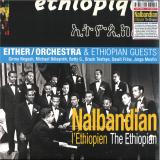
The Éthiopiques series returns! Essential archive recordings from an extremely fruitful period in Ethiopian music.
Before “Swinging Addis” took over the world, there was Moussié Nerses Nalbandian — the Armenian-born composer who shaped modern Ethiopian music. Mentor, arranger, and pioneer, he laid the foundations of Ethio-jazz.
This Éthiopiques volume revives his forgotten legacy, recorded live by Either/ Orchestra First issue ever with new exclusive photos and in depth liner 8-page insert.
“Ethiopian jazzmen are the best musicians that we have seen so far in Africa.
They really are promising handlers of jazz instruments.”
Wilbur De Paris
(1959, after a concert in Addis Ababa)
አዲስ፡ዘመን። *Addis zèmèn* **A new era.**
The time is the mid-1950s and early 1960s, just before "Swinging Addis" bloomed – or rather boomed – onto the scene. Brass instruments are still dominant, but the advent of the electric guitar, and the very first electronic organs, are just around the corner. Rock’n'Roll, R’n’B, Soul and the Twist have not yet barged their way in. Addis Ababa is steeped in the big band atmosphere of the post-war era, with Glenn Miller's *In the* *Mood* as its world-wide theme song, neck and neck with the Latin craze that was in vogue at the same period. Life has become enjoyable once again, with the return of peace after the terrible Italian Fascist invasion of Ethiopia (1935-1941). The redeployment of modern music is part and parcel of the postwar reconstruction. *Addis zèmèn* – a new era – is the watchword of the postwar period, just as it was all across war-torn Europe.
The generation who were the young parents of baby boomers** were the first to enjoy this musical renaissance, before the baby boomers themselves took over and forever super-charged the soundtrack of the final days of imperial reign. Music is Ethiopia's most popular art form, and very often serves as the best barometer for the upsurge of energy that is critical for reconstruction. Whether it be jazz in Saint-Germain-des-Prés or the *zazous* who revolutionised both jazz and French *chanson* after the *Libération*, be it Madrid's post-Franco Movida, or Dada, the Surrealists and *les années folles* that followed World War I, the periods just after mourning and hardship always give rise to brighter and more tuneful tomorrows. Addis Ababa, as the country's capital, and the epicentre of change, was no exception to this vital rule.
**Two generations of Nalbandian musicians**
Nersès Nalbandian belonged to a family of Armenian exiles, who had moved to Ethiopia in the mid-1920s. The uncle Kevork arrived along with the fabled "*Arba Lidjotch*", the** "*40 Kids*", young Armenian orphans and musicians that the Ras Tafari had recruited when he visited Jerusalem in 1924, intending to turn their brass band into the official imperial band. If Kevork Nalbandian was the one who first opened the way of modernism, pushing innovation so far as to invent musical theatre, it was his nephew Nersès who would go on to become, from the 1940s and until his death in 1977, a pivotal figure of modern Ethiopian music and of the heights it. Going all the way back to the 1950s. Nothing less. And it is Nersès who is largely to thank for the brassy colours that so greatly contributed to the international renown of Ethiopian groove. While the younger generations today venture timidly into the genealogy of their country's modern music, often losing their way amidst a distinctly xenophobic historiographical complacency, many survivors of the imperial period are still around to bear witness and pay tribute to the essential role that "Moussié Nersès" played in the rise of Abyssinia's musical modernity.
Given the year of his birth (15 March 1915), no one knows for sure if Nersès Nalbandian was born in Aintab, today Gaziantep (Turkiye/former Ottoman Empire) or on the other side of the border in Alep, Syria... What is certain is that his family, like the entire Armenian community, was amongst the victims of the genocide perpetrated by the Turks. Alep, the place of safety – today in ruins.
Before Nersès then, there was uncle Kevork (1887-1963). For a quarter of a century, he was a whirlwind of activity in music teaching and theatrical innovation. *Guèbrè Mariam le Gondaré* (የጎንደሬ ገብረ ማርያም አጥቶ ማግኘት, 1926 EC=1934) is his most famous creation. This play included "ten Ethiopian songs" — a totally innovative approach. According to his autobiographical notes, preserved by the Nalbandian family, Kevork indicates that he composed some 50 such pieces over the course of his career. This shows just how much he understood, very early on, the critical importance of song as Ethiopia's crowning artistic form. Indeed, for Ethiopian listeners, the most important thing is the lyrics, with all their multifarious mischief, far more than a strong melody, sophisticated arrangements or even an exceptional voice. (This is also why Ethiopians by and large, and beginning with the artists and producers themselves, believed for a long time — and wrongly — that their music could not possibly be exported, and could never win over audiences abroad, who did not speak the country's languages).
Last but not least, one of Kevork's major contributions remains composing Ethiopia's first national anthem – with lyrics by Yoftahé Negussié.
Nersès Nalbandian moved to Ethiopia at the end of the 1930s, at the behest of his ground-breaking uncle. Proficient in many instruments (pretty much everything but the drums), conductor, choir director, composer, arranger, adapter, creator, piano tuner, purveyor of rented pianos,... he was above all an energetic and influential teacher. From 1946 onwards, thanks to Kevork's connexion, Nersès was appointed musical director of the Addis Ababa Municipality Band. In just a few years, Nersès transformed it into the first truly modern ensemble, thanks to the quality of his teaching, his choice of repertoire, and the sophistication of his arrangements. It was this group that would go on to become the orchestra of the Haile Selassie Theatre shortly after its inauguration in 1955, which was a major celebration of the Emperor's jubilee, marking the 25th anniversary of his on-again-off-again reign.
At some point or other in his long career, Nersès Nalbandian had a hand in the creation of just about every institutional band (Municipality Band, Police Orchestra, Imperial Bodyguard Band, Army Band, Yared Music School…), but it was with the Haile Selassie Theatre – today the National Theatre – that his abilities were most on display, up until his death in 1977. To this must be added the development of choral singing in Ethiopia, hitherto unknown, and a sort of secret garden dedicated to the memory of Armenian sacred music, and brought together in two thick, unpublished volumes. Shortly before his death (November 13, 1977), he was appointed to lead the impressive Ethiopian delegation at Festac in Lagos, Nigeria (January-February 1977).
His status as a stateless foreigner regularly excluded him from the most senior positions, in spite of the respect he commanded (and commands to this day) from the musicians of his era. Naturally gifted and largely self-taught, Nerses was tirelessly curious about new musical developments, drawing inspiration from the very first imported records, and especially from listening intensely to the musical programmes broadcast over short-wave radio – BBC *First*. A prolific composer and arranger, he was constantly mindful of formalising and integrating Ethiopian parameters (specific “musical modes”, pentatonic scale, and the dominance of ternary rhythms) into his “modernisation” of the musical culture, rather than trying to over-westernise it. It even seems very probable that *Moussié* Nerses made a decisive contribution to the development of tighter music-teaching methods, in order to revitalise musical education during this period of prodigious cultural ferment. Flying in the face of all the historiographical and musicological evidence, it is taken as sacrosanct dogma that the four musical modes or chords officially recognised today, the *qǝñǝt* or *qiñit* (ቅኝት), are every bit as millennial as Ethiopia itself. It would appear however that some streamlining of these chords actually took place in around 1960. It was only from this time onward that music teaching was structured around these four fundamental musical modes and chords: *Ambassel*, *Bati*, *Tezeta* and *Antchi Hoyé*. A historical and musical “details” that is, apparently, difficult to swallow, especially if that should honour a *foreigner*. Modern Ethiopian music has Nersès to thank for many of its standards and, to this day, it is not unusual for the National Radio to broadcast thunderous oldies that bear unmistakable traces of his outrageously groovy touch.
This is a tribute & was made during a place of sadness & grief for two amazing humans we lost last years, Rob Maguire on 18 december 2023 & Lea-Rose Besson aka Radical Softness on 15 February 2024.
They were the most unconditional loving persons I ever met, sharing love, breathing love, teaching us so much about being better everyday, leaving us as their mission on Earth were completed.
Still, the ones who stay, stand still. With only our memories to remember their souls, being infused by their aura of life forever. Its from those people when you feel instantly good around, making you feel comfortable, loving yourself more, accepting yourself & being vulnerable while powerful.
From all over the world and especially in Berlin, many of us where impacted so much by their kindness and souls, offering us a space to be heard & seen, when so many of us couldn't. We all know that it was such a privilege to knew them & shared wisdom with and timeless experiences, being kids around old souls, teaching us how to love beyond time & space.
Its from this place that most of the tracks of this EP were created, fighting for resilience through dark times. I felt the need to make them this tribute while healing from pain to find love in myself and others. Being grateful for everything that happens in life even if it never last.
Gaman, from the Japanese means, perseverance. That illustrate never giving up on ourselves, our dreams, our life, keep shining one day after the other, because being alive is the most unique privilege we will ever have.
While everything is temporary, music still belong, making them heard a little bit longer through vibrations.
My dear Rob, my dear Lea, may you rest in peace, may we see us again in another realm. We love you.
"Passion, an unquenchable thirst for music new and old and an unrelenting drive to make people dance, that’s Lefto Early Bird and Red D for you. Two music heads with huge respect for each other and a common love found in original sounds and classic music scenes. When they come together behind the booth it’s no holds and no genres barred, two kids in each other’s musical candy store.
A first step to expanding their collaboration to releasing music was made when Lefto Early Bird provided beats for a track on Red D’s debut album ‘Fantasize Then Realize’. Now out of nowhere here’s a split release between the two of them. A one-off? The start of a series? Your guess is as good as theirs! But what we do know is that you are getting the best of both of them with Red D bringing some Detroit meets UK rave/bass madness and Lefto Early Bird bringing some jazzed-up cheeky house rawness. Aimed straight at the floor and your booty!"
Appart … long time ne see on vinyl... And again a superb album, trippy and thin... very rich of many influences and ambiances... From Klez to jazz... Breakbeat Fanfare for everyone ! This is a real high level musician from the underground since years ! Don't miss !!
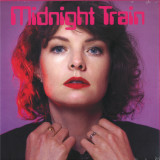
Jorja Chalmers enjoys a quiet life. The Australian born mother of two lives in Margate, the Kent coastal town that is turning into something of a cultural hub. Yet there’s another, shadow version of Jorja Chalmers, one that resides in a liminal realm; a saxophonist & composer, a brooding, vampiric, twilight soul who yearns for some sense of aesthetic transformation.
New album ‘Midnight Train’ comes close to severing the two. Constructed during the long winter lockdown, Jorja would put her kids to bed before closing the door in the spare room, building lengthy, undulating passages of cinematic terror, patching together European art-pop glamour with outsider electronics. It’s composed, intense, & challenging – but it’s also utterly exhilarating.
“I feel incredibly proud of this album,” she says. “It feels like a life’s work squeezed into one space. It feels like I’m saying something.”
Last May, Hard Times captivated us with The Lost D.A.T.S (Part One)—a remarkable collection of unreleased and freshly unearthed gems from the vaults of NYC legend DJ Romain. But the story didn’t end there. To our surprise and delight, Romain had delivered an even larger treasure trove of beats—too many to reveal all at once.
Now, Hard Times is proud to present the next chapter: DJ Romain – The Lost D.A.T.S (Part Two).
"1996-97? Yeah, that’s when New York was still NEW YORK!
That was around the time we really started to get hold of exotic herbs. Copper Haze, hydroponic! The vibes in the studio were always lovely. I had hair at the time! Dread-Locs down to my shoulders... I was still rockin’ the Wallabees, or British Walkers as we called them - representing for Brooklyn and my West Indian roots!
There was no social media, no supervision, nobody all up in our business… It was classic "mind your own business" NYC Vibes! I was DJing at a lot of the hot clubs and THE hottest afterhours in the city. There were nights when I saw Micheal Douglas roll into the afters with Grace Jones - they were there to party and unwind and I was there dropping the dope tracks for the people.
When it was studio time, with my homie Matt Echols...I was probably setting things off with some quality herbage, a big ass bag of Funyuns and my trusty SP-1200, lol. I had picked up some tips and tricks from Todd Terry and by '96-'97 I was a Shaolin with it myself! This was around the time tracks like "Flowers" and "Only Love Can Break Your Heart (Dub)" were tearing up the clubs. I wanted to be able to get my ideas out with no problem, and by then I had a lot of confidence...
Being able to Dj in some of the hottest NY hot spots at the time, I was able to really see what worked and what didn't on the dancefloor. The best House Dancers from around the world and around the Tri-State area would be at my jams. I'm talking Ejoe, Voodoo Ray, maybe kids from the Mop-Top Crew... I was definitely taking note of the kind of rhythms and sounds that would make them go crazy on the dancefloor!
And that's how we went about it - I laid down the rhythms that made it happen in my sets and translated the vibes I was picking up from NYC itself. Matt threw down musically and we were just being as creative and inventive as possible! But we always kept in mind that our job was to make the people on the dancefloor jump!
A lot of the jams from those days got signed to various record labels, we dropped a lot of them on our own label...and some of them ended up in the archives - until now!"
You’re NEXUS 21, central to the dizzy zeitgeist of the 1991 adrenaline rammed UK House Music juggernaut, and you have just recorded a masterpiece of an album MIND MACHINES.
DON’T DO IT LIKE THAT - somehow even though your record label love the album it does not get released.
DO IT LIKE THIS - it finally gets issued now.
When Mark Archer and Chris Peat flew back from a seminal recording session at Kevin Saunderson’s KMS Studio in Detroit there was a palpable feel of excitement. Instead of merely paying homage to their Techno forerunners, they were now creating their own just as innovative waveforms.
In the can was a gem - DON’T DO IT LIKE THIS, DO IT LIKE THAT. Motor City songstress Donna Black had unconsciously seemed to add Ma to the start of her name and her recorded in the dark vocals helped conjure up an almost Madonna and a drum machine meets Techno hybrid. This it was agreed could be a huge breakthrough single which - preceded by strategically released set up tracks - would build up Nexus 21’s surely inevitable rise to glory. And the release of the MIND MACHINES album. But it never happened. Instead one day Mark and Chris burst into Network’s Birmingham office excitedly brandishing no less than 8 new recordings infused with a propulsive Rave energy flash compared to their more cerebral Nexus 21 work. The label agreed that the new tracks should be released under a new artist name and an initial suggestion. Alien 8 replaced by Altern 8. What was planned as temporary dalliance became a long term relationship. You all know the score - Altern 8 became surf riders supreme on the rave tsunami, not just music makers but myth creators. The plan has been to run Nexus 21 and Altern 8 parallel, a kind of schizophrenic experiment by two men, a drum machine and a mad for it record company. History shows that Altern 8 became too DOMIN 8 and the lovingly recorded Nexus 21 album was left on the proverbial shelf (actually a box in Birmingham)
So now MIND MACHINES finally meets the World. First thing that screams out that it hasn’t half aged well. Obviously it is a wet dream for the anoraks of electronica, that goes without saying. But above and beyond the history lesson of how 2 young UK techno mad kids got the dots from Detroit and deconstructed them to create something very British the music they created, sometimes naive but frequently knowledgeable, sounds .. well just great.
The four Detroit recordings - NEXODUS, TOGETHER, DON’T DO IT LIKE THAT, DO IT LIKE THIS and EVERYTHING (NO STATUES) - variously feature contributions from Motor City luminaries Marc Kinchen and Anthony Shakir.
Only two of the twelve recordings were properly released in 1990/1991 with two more making it on a withdrawn white label 12 inch at the time. Three of the tracks, including a live recording at London’s Brain Club that has been retrieved from a DAT that was thought to have disappeared, are previously unreleased. And as well as two previously unreleased much altered versions of Nexus 21 gems there is the legendary much tougher mix of the duo’s signature techno treasure Self Hypnosis.
NEXUS 21
LOST AND NOW FOUND
- A1: 黒色エレジー*– 花粉犯罪
- A2: Surrealistic Men– "覚醒期
- A3: Bárbara - Can! Can! Can!
- A4: Anemone - 鋳物工?
- A5: Rap - 空間のあなた
- A6: Real - Kids
- A7: Oxz - Fall Into Night
- A8: Still - Just A Song
- B1: Allergy - インポテンツ
- B2: Inu - 305
- B3: Suicide - Celebration
- B4: Gara - Karyatide
- B5: Böhm - Possessed Love
- B6: 餓鬼道 - 赤い?
- B7: Unknown Artist - Unknown Song
- B8: Desertshore - 栄光製造機
- B9: Dark Mine Fields - Why
PT II[16,77 €]
DINTE presents a cassette-only two-part Japanese post-punk, goth & new wave mixtape, the first in a tranche of regionally-focused mixes produced in partnership with Philadelphia's punk archivists World Gone Mad.
- A1: The Meditation Singers - Let Them Talk
- A2: Charlie Brown - The Whole World Is Watching
- A3: Martha Bass - Since I've Been Born Again
- A4: The Williams Singers - So Good To Be Alive
- A5: The Faithful Wonders - Ol' John (Behold Thy Mother)
- A6: The Salem Travelers - Crying Pity And A Shame
- B1: The East St Louis Gospelettes - Soon I Will Be Done
- B2: Power And Light Choral Ensemble - Stand Up America, Don't Be Afraid
- B3: The Masonic Wonders - Just To Behold His Face
- B4: The Majestic Choir & The Soul Stirrers - Why Am I Treated So Bad
- B5: The Jordan Singers - My Life Will Be Sweeter
- B6: Lucy Rodgers - I'm Fighting For My Rights
- C1: The East St Louis Gospelettes - I'll Take Care Of You
- C2: The Williams Singers - Don't Give Up
- C3: The Soul Stirrers - Don’t You Worry
- C4: The Meditation Singers - I've Done Wrong
- C5: The Jordan Singers - Lord Have Mercy
- C6: The Kindly Shepherds - Lend Me Your Hand
- C7: The Violinaires - Groovin' With Jesus
- D1: Cleo Jackson Randle - Life In Heaven Is Free
- D2: The Violinaires - Mother’s Last Prayer
- D3: The Inspirational Singers - Bless Me
- D4: The Bells Of Joy - Give An Account At The Judgement
- D5: Stevie Hawkins - Same Old Bag
- D6: The Soul Stirrers - Striving
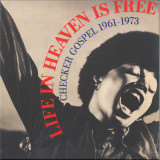
Gospel melts into Soul in this dazzling collection of sides originally released by the Chess subsidiary.
Devised by the same team supporting the likes of Muddy Waters and Etta James at Chess, the vintage of Checker Gospel celebrated here is distinguished by its expertly raw, rugged, live feel — thumping bass and pounding drums, bluesy guitar and horns — and its keen engagement with contemporary realities and politics, with an underlying, unwavering commitment to the Civil Rights movement. Not forgetting its sheer, startling, richly diverse soulfulness.
Key architects of the Chicago Sound and Motown are amongst the scores of contributors: Charles Stepney, Gene Barge, Eddie Kendricks, and Leonard Caston Jr. are in the house… Morris Jennings, drummer on Curtis’ Superfly and Terry Callier’s What Color Is Love… Louis Satterfield from The Pharaohs and Earth Wind & Fire… Ramsey Lewis’ guitarist Byron Gregory… Phil Upchurch… Laura Lee…
Producer Monk Higgins joined Checker in 1967, bringing his experience of R&B and Gospel hit-making for the labels One-derful and Satellite, together with a loyal cohort of musicians. A protege of Willie Dixon, engineer Malcolm Chisholm set up the Ter Mar studio as if preparing for a live gig, carefully teasing measures of bleed into the microphones. With Ralph Bass from King Records running A&R, they knew exactly what they were after. ‘I’m using horns and an R&B sound in gospel recordings,’ said Bass. ‘We have no charts. All the musicians are given the chord changes. I want the cats to think when we’re cutting. I want spontaneity, and that’s what we’re getting.’ And: ‘There is more to gospel than just finding solace in the church. This follows the same message of Martin King, who was fighting for a new way of life. Kids are tired of hearing Jesus Give Us Help. They want a positive message.’
Focussed on the late sixties and early seventies, the twenty-five recordings here are all killer no filler, but try these four, random entry points: the heavy funk ostinato of the Violinaires’ Groovin’ With Jesus, working itself up into a post-James-Brown brass frenzy, sure to knock your socks off; Cleo Jackson Randle’s title track, for those who like their Gospel straight-up and hard-core; Eddie Kendricks’ achingly timely choral call-to-arms, Stand Up America, Don’t Be Afraid; the East St Louis Gospelettes’ heart-stopping, fathoms-deep rendition of Bobby Bland’s I’ll Take Care Of You.
A beautiful gatefold sleeve; a full-colour booklet with excellent notes by Robert Marovich; top-notch sound. Another knockout selection by Greg Belson and David Hill.
A shoo-in for soul compilation of the year.
On his latest full-length, Low End Activist swerves towards weightless grime and suspended hardcore miniatures to tell a very personal story. The UK-rooted producer continues his habit of zeroing in on a distinct approach for each release, leaving a logical breadcrumb trail of soundsystem science in his wake as he channels decades of bass absorption into 14 atmospheric cuts that prize patience and precision over obvious club functionality.
Municipal Dreams plays out as a semi-autobiographical tour through the Blackbird Leys estate that the Activist grew up on. It’s a lived reflection on inequality and the ripple effect it has in working class communities, using the sonic palette to set the mood and scattering pointed samples throughout to spell out the story.
In sampling the exhaust of a stolen Subaru Impreza, ‘TWOC’ looks back to the recreational car theft which was standard entertainment for the kids in his community. There’s an underlying idea that this ‘council estate sport’ wouldn’t have been so prevalent if there were public services and opportunities presented to the scores of disaffected youth looking for somewhere to direct their energy and frustration.
In ‘Just A Number (Institutionalised)’ LEA alludes to the shattered juvenile detention system, growing up seeing friends and family members locked up at ease with little to no support on being released back into society, just meant that the same cycles of behaviour would play out over and over.
‘Violence’ samples from a short film shot by the drama division of the Blackbird Leys Youth Club to evoke the physical threat which formed a background hum to life on the estate. The industrial mechanics of the local car factory, which served an integral role as a workplace for many in the community, gets sampled in ‘They Only Come Out At Night’ while the ‘Everyone I look up to are either junkies or criminals’ sample in ‘Broke’ looks to a lack of positive role models.
Municipal Dreams isn’t a one-note indictment of life on the estate, ‘Innocence’ captures the simplicity of a child at birth before their environment has time to shape them. The Hope interludes cut through the grim honesty of the longer tracks while a subtle thread of wry humour finds its way into some of the talking heads cutting through the signature LEA murk.
But honesty is the operative word here, and the message feels all the more meaningful at a time when the UK’s social divisions are laid bare in the wake of a devastating stretch of austerity. Returning to Blackbird Leys to shoot images for the photo-zine and album cover, the Activist found the local community centre being demolished. The local pub stands derelict, its faded Welcome sign a grimly ironic portent of the options facing children of the estate in the wider world.
Funnelling his memories, hopes and fears into a singular twist on the bass weight tradition, LEA captures evocative scenes that land somewhere between kitchen sink realism and rave futurism.
The second instalment of Brownswood Recordings’ Remix Editions series features two dancefloor hitters; one from new kids on the block IZCO & Reek0 and the other from sub-bass heavyweight Coki. Each producer turns in a remix of a track from oreglo’s debut EP, Not Real People, which dropped in July 2024. Like the first instalment, these 12”s are super limited to only 500 units. No reissues, no represses. Once they’re gone they’re gone.
Side 1 features IZCO & Reek0’s twist on ‘levels’. Known for their concoction of UK bass, garage, broken beat, reggae and more, they transform the languorous instrumental into an upbeat, balmy tune with Reek0’s trademark playful cadence and lyricism that paints a picture of summertime in London.
The flipside is a thunderous reworking of EP favourite ‘opedge’ that fuses the band’s multi-genre melting pot of influences with club-ready dub sonics, courtesy of South London dubstep legend Coki.
Voted DJ Mag’s Underground Hero in 2022, DJ & producer Lauren Flax has been a fixture in Brooklyn’s electronic scene for two decades. On her latest project Liz & Lauren EP, she teams up with Liz Wight of shoegaze techno duo Pale Blue, whose sultry vocals explore questions of love and isolation to the tune of Detroit house and acidic techno.
Flax and Wight became fast friends in 2021 after being introduced by Pale Blue member & 2MR co-founder Mike Simonetti, who’d enlisted Flax to remix Pale Blue’s “Breathe.” Naturally, when Flax needed a vocalist for some tracks she was working on shortly after, she knew just who to call. “I was in my last year of grad school doing an internship in community mental health helping kids cope with the trauma of the pandemic,” Wight says of the time. She channelled this experience as she wrote and recorded the lyrics to Liz & Lauren EP from her home in Los Angeles.
As a result, the lyrics on Liz & Lauren EP are open-ended musings on connection, isolation, and convention. Lead single “Fix Everything” can be read both as an indictment of the trappings of marriage or, on Flax’s view, a rousing call to action, applicable to issues ranging from the degradation of the environment to the attack on LGBTQ+ rights in America. As the EP progresses, Wight’s airy vocals consider the pitfalls of love, from the destructive power of infatuation to the pain of outgrowing a relationship.
Sonically, Liz & Lauren EP feels like a natural progression from Flax’s first release on 2MR, 2021’s Out Of Reality, which saw her exploring a more minimalist production style for the first time in her work. “I Don’t Want To Hurt You” and “Fix Everything” pulse with bright, dynamic production, while slow burner “Return To Love” takes a sparser approach, anchored by a muted drumbeat and a simple, earworm synth refrain. “I’d Risk It All To Be With You” is a masterful balance of both; it even gets the club treatment on the EP’s closing remix, courtesy of Flax’s friends Mark Archer and Simon Neale (Shadow Child) of MASC.
Liz & Lauren EP is an impassioned collection that showcases both Flax and Wight’s artistry in equal measure. For both artists, it’s a testament to stepping outside the norm (DJing for Flax, performing in Pale Blue for Wight) and collaborating with others, the fruits of which are sure to be felt on the dancefloor for years to come.
Driving anywhere in Texas can cost you half a day, easy. For example, it'll take you over four hours just to get from R&B singer Leon Bridges' hometown of Fort Worth down to Houston, where the psychedelic wanderers in Khruangbin hail from. The state is vast, crisscrossed with rugged expanses of road flanked by limestone cliffs and granite mountains, forests of pine and mesquite, miles of desert or acres of sprawling grassland, all depending on what part you're in. And it's all baking under the Texas Sun that lends its name to Bridges and Khruangbin's new collaborative EP. "Big sky country, that's what they call Texas," Khruangbin bassist Laura Lee says. "The horizon line goes all the way from one side to another without interruption. There's something really comforting about that." On Texas Sun, these two members of the state's musical vanguard meet up somewhere in the middle of that scene, in the mythical nexus of Texas' past, present, and future-a dreamy badlands where genres blur as seamlessly as the terrain. It calls equally to the cowboys boot-scooting at Billy Bob's in Fort Worth, the chopped-and-screwed hip-hop fans rattling slabs on the southside of Houston, the art-school kids dropping acid in Austin, the cross-cultural progeny who grew up on listening to both mariachi and post-hardcore out on the Mexican borders of El Paso. All of these things, overlapping in a multicolored melange, purple hues as vivid and unpredictable as one of the state's rightfully celebrated sunsets. A journey through homesick reminiscences, backseat romances, and late-night contemplations, the kind of record made for listening with the windows down and the road humming softly beneath you. Like the highways that inspired it, Texas Sun is guaranteed to get you where you're going-especially if you're in no particular hurry to get there.
When we started Ilian Tape 10 years ago in 2007, we were both basically kids at the ages of 23 (Dario) and 18 (Marco). There was no plan behind it, no concept, no promotion campaign or any budget, but just an early vision of where it could go. We wanted to build something that lasts. After a few years of playing at parties and producing music, it was the next logical step to start a label. You can clearly see us growing up through the label in terms of artwork, compiling the records and handling things. We made some mistakes along the way and there are surely things we could have done better, but looking back after 10 years now it all makes sense as it was a natural and human development with all its ups and downs.It was always a very personal project, never about making money, but about creating a platform for music we believe in and building relationships with artists in a transparent and fair way. We really appreciate that we were able to work with so many great artists, who shared the same vision and trusted in us, over all the years. A while ago we moved away from the ordinary release info write ups, because in general writing about music is tricky and who isn't tired of the typical, full of praise for every detail of a record, release textsBut this might be starting to get boring for you too, so just buy this lovely triple vinyl package including a poster and download code, light one up and turn up the volume!One last thing though - we want to deeply thank our parents for teaching us to live our dreams and find out who we really are, our friends for the vibes and honesty, all the artists releasing on the label, all the supporters & fans for buying vinyl and files, all the DJ's playing out the stuff, all the diggers selling the stuff overpriced on Discogs, all the dancers working out on the dancefloors & all the clubs doing label nights over all the years.
- A1: First Instrument
- A2: Mona Lisa Left Eye
- A3: Bebe Kids
- A4: Push Me Around Ft. Zack Fox
- A5: Hypnagogia
- A6: Nda Ft. Paris Texas
- A7: Fuck Cigarettes
- A8: Broke Ass Hoes
- B1: Opposite Sex
- B2: Describe
- B3: I Mac
- B4: Shrooms
- B5: Take Me Im Drugs
- B6: Lebanon James
- B7: Art Of Seduction
- B8: Play W Your Pride
Emerging from the vivid chaos of Detroit’s underground, ZelooperZ returns with Dali Ain’t Dead — a surreal yet deeply grounded statement from one of rap’s most singular voices. Following his recent collaborative exploration Dear Psilocybin (with Real Bad Man) — which found him moving through a “stream of psychosis” just before sobriety. (Pitchfork) — ZelooperZ enters this new chapter not simply as the same intricate-flows rapper, but as a rising cult-figure in underground hip-hop who’s forged an identity both enigmatic and quietly unstoppable.
On Dali Ain’t Dead, ZelooperZ channels the spirit of the surreal — the album’s title a nod to the iconic surrealist artist Salvador Dalí — as he reframes his world post-substance, post-chaos, yet still dripping with vivid imagination. Reviews highlight that the album finds him in a more focused mode: one critic writes that “ZelooperZ seems to have adopted a similar outlook to Dalí… embracing sobriety and allowing his art to exist as the psychotropic fuel for his mind.” (Album of the Year) Production (courtesy of Dilip) is inventive and cohesive, blending experimental hip-hop, trap, cloud-rap and drumless textures to mirror Ze’s newly clear-eyed vantage point and trademark eccentricity. (Legends Will Never Die)
Tracks like “Mona Lisa Left Eye” and “Push Me Around” (featuring Zack Fox) carry Z’s jagged humor and restless energy, while deeper cuts like “Shrooms” and “Take Me I’m Drugs” trace his evolving relationship with psychedelia and the legacy of his past. (Legends Will Never Die) In doing so, the record positions itself as the sound of a freak-icon in transition — still wild, still weird, but sharpened, matured, operating with a purpose and increasingly commanding the attention of fans who relish the underground unusual.
ZelooperZ’s trajectory continues to rise. From his roots in the Bruiser Brigade collective in Detroit to the present moment as a cult figure whose every release feels like a mission statement, Dali Ain’t Dead confirms that he’s no longer just the oddball off-to-the-side: he’s the weirdo that others are quietly watching. This album isn’t just for the longtime disciples of his left-field aesthetic — it’s an invitation to anyone curious about hip-hop bending, breaking, and rebuilding itself from the fringes inward.
Inspired by a look back to futuristic tracks from the early 90's to the 50's in the US and the impact now of artificial intelligence on life today is the theme of this ep.
tags: electronic. techno and variations
Android Blaze : Looking at a future apocalypse. Referencing George
Orwell's 1984 and Blade Runner.
pre-mastered by DJ Sotofett. Mixing by Robotron . Mastered by
Manmade Mastering.
Kids and Batteries :Virtual kids searching for their souls online.
Real Synthetic Life : Referencing the 50's science fiction movie Forbidden
Planet.
- A1: I'm 9 Today (2019 Remaster)
- A2: Smell Memory (2019 Remaster)
- B1: There Is A Number Of Small Things (2019 Remaster)
- B2: Random Summer (2019 Remaster)
- B3: Asleep On A Train (2019 Remaster)
- C1: Awake On A Train (2019 Remaster)
- C2: The Ballað Of The Broken Birdie Records (2019 Remaster)
- C3: The Ballað Of The Broken String (2019 Remaster)
- D1: Sunday Night Just Keeps On Rolling (2019 Remaster)
- D2: Slow Bicycle (2019 Remaster)
- E1: The Ballað Of The Broken Birdie Records (Ruxpin Remix Ii)
- E2: Smell Memory (Bix Remix)
- E3: There Is A Number Of Small Things & The Ballað Of The Broken Birdie Records (Μ-Ziq Straight Mix)
- E4: The Ballað Of The Broken Birdie Records (Biogen Mix)
- F1: Smell Memory Kronos Quartet
- F2: Random Summer Hauschka
- F3: The Ballað Of The Broken String Sóley
In 1999, on December 23 to be precise, the electronic music landscape changed forever. On that day, the now legendary Icelandic band múm released their debut album “Yesterday Was Dramatic – Today Is OK”. The thing is though, back in the day, hardly anybody realized. It was Christmas after all, people were busy with potentially more important things and didn’t pay attention to some kids selling records on Reykjavík’s high street. Little did those shoppers know.
Thankfully, those 10 tracks weren’t overlooked for long. On the contrary: the album went on to become one of the most influential building blocks of what back then was called electronica and today is considered an art form playing a crucial and important role in shaping and defining the rich electronic music culture of the 21st century. Now, 20 years after the record dropped onto planet Earth, Morr Music is re-issuing the remastered album with its original artwork, adding newly commissioned re-works: A note-for-note representation of “Smell Memory“ by Kronos Quartet (with additional drums by múm’s Samuli Kosminen), a gentle reinterpretation of “Random Summer” by acclaimed pianist and composer Hauschka and an otherworldly new version of “Ballad Of The Broken String” recorded by label mate Sóley. Additionally, four remixes produced in the early 2000s are made available for the first time ever on vinyl here.
In 1999, electronic music was in full bloom. The dance floors were thriving worldwide.Yet the concept of using electronic sounds in acoustic-based productions (or vice versa) was still in its infancy. Many producers were trying, most of them failed. The results felt often forced, fabricated, unimaginative, random and forgettable. New ideas require new mindsets after all. With “Yesterday Was Dramatic – Today Is OK”, múm established a new approach in music production. Instead of setting a fixed agenda and working with a distinct hierarchy for their sonic palette, Gyða Valtýsdóttir, Kristín Anna Valtýsdóttir, Gunnar Örn Tynes and Örvar Smárason let each instrument and sound source be true to itself, creating an ever-evolving universe of sonic bliss. Listening to the album in 2019 still makes every music lover’s heart jump. Combining Drill-and-Bass-inspired beat-chopping, future-informed DSP-programming, ethereal vocal work, indie rock’s boominess, folk music’s soulful brittleness and a lofty feeling for melody and arrangement, the album is a rare example of musical transcendence and remains impossible to categorize.
Many of the ideas formulated and recorded for the album quickly became an integral part of the canonical self-conception musicians around the world were and still are aspiring to. How these ideas really came about, though, is not known – the dynamics, the struggles, the qualms, the sudden realization of having achieved something which might actually stick. Maybe that is a good thing. Örvar Smárason remembers that most of the album “was recorded in a tiny, sweaty room in the summer of 1999 with carpenters banging nails around us, but sometimes we put on headphones so we couldn’t hear them.” It is a good thing they did. As is often the case with classics, all one can do is listen closely and let the magic sink in – again and again.
In his own time, in his own tone and in his own company.
‘Win and lose without losing oneself’’ This line from French rapper Oxmo Puccino greatly accompanied David Walters while composing his fourth studio album. Over the eleven tracks on ‘Ti Love’, David took his time to find the right tone and in turn, tell his truth.
‘Ti Love’, is a French-Creole abbreviation for “petite love”, meaning ‘little love’, evoking that sweet fondness found in those small gestures and little acts of kindness.
Think of things like young kids' brotherly love or a stranger lending you a helping hand, while expecting nothing in return. It’s these motions that allow this album to feel full of real life, carried by beating drums that also pull at our heart strings.
Basing himself in a small village in Martinique, where David had not long since scattered the ashes of his late mother, the multi-instrumentalist decided to remain there and let the writing of Ti Love pour out from deep inside him. Taking influence from around the island, the energy from his makeshift studio set up in Fort de France, allowing a resilient yet grieving man to recount, let go and come to terms with his recent loss.
So embracing these new circumstances, on the rugged coastal Caribbean island of Martinique, David took up an artist’s residency in the island’s capital Fort de France, located near the town’s port is the ‘Manoir des Artistes’, a bustling recording studio space. A place where the walls shake as the latest sounds being created are blasted by locals and visitors alike. Most studio doors are wide open; as music here is a huge part of everyday life, feedback from encouraging neighbouring musicians is on hand and welcomed. A contrast to the isolation often assumed with working in more traditional music studios.
It was here in this stimulating environment that David recorded Ti Love’s initial demos.
With his first collaborator onboard, Neeweed, a 25-year-old producer and gospel expert who David met at the Martinique Jazz Festival.
Of the album’s initial versions of the record David recollects: ‘It took me three years to write it, then I rewrote it, reworked it. In the end I'm really glad I stepped back and listened to myself.’ I found a great ally in GUTS, who ended up being the artistic director of the record”
David surrounded himself with the right people who helped him express himself in the best possible way. He called on other friends and musical comrades; album opener and title track, ‘Ti Love’ features the incomparable Fatoumata Diawara (World Circuit Records / Africa Express) and further along additional production came in from; Izem, Art Of Tones, and GUTS himself, who all added just the right amount of ‘little love’ to this
project. Further helping hands came from Californian producer and DJ Captain Planet, who David was introduced to a few years ago. Closer to home, here in Europe, the German producer Bluestaeb appears on two tracks: the very catchy disco funk ‘Mr Maraboo’ and ‘Kite Koule’, the latter being the first single lifted from the album, where David invited Nigerian guitarist Keziah Jones.
Elsewhere on the album, fellow Heavenly Sweetness recording artist Blundetto contributed two tracks; the reggae ‘Voodoo Love’, which is David's tribute to Studio One, and the very sweet and resilient ‘Bon Voyage’, which closes the album... "It's gold, it doesn't need anything changing.” remarked David - ‘Bon Voyage’ is a goodbye to his mother, whose voice called him from the bottom of the sea one night while he was surfing during the full Moon.
Released almost 20 years after his debut album ‘AWA’ released on French imprint Ya Basta, home to Gotan Project and many others, David boasts a long list of radio supporters including; Gilles Peterson, Cerys Matthews and Don Letts at the BBC, while further field Cosmo Radio in Germany, and KCRW in Los Angeles.
On this new record, David has shown sincerity and vulnerability, while still honouring the infectious groove that he is known for the world over. Despite the upsets, a little love can indeed go a long way.
CREDITS:
Produced by Bluestaeb / Blundetto / Captain Planet / Izem / Art of Tones
A&R : Guts
Mixed by Mr Gib @ Onetwopassit
Except "Bon Voyage” and "Voodoo Love" mixed by Jerome “Blackjoy” Carron
Mastered by Benjamin Joubert @ Biduloscope
Art by Elliott Walters
- 1: Take Me Back
- 2: Nothing Seems Impossible
- 3: Boss Love Maker
- 4: It’s Been Fun
- 5: Love Ain’t Easy Onesided
- 6: Blind Alley
- 7: Show Me How
- 8: If You Think It (You May As Well Do It)
- 9: Love Is The Hardest Thing To Find
- 10: Tricks Are Made For Kids
- 11: Boy. I Need You
CLEARWATER BLUE VINYL[32,14 €]
Girl group greatness, courtesy of the Chicago-based Hutchinson Sisters (with Theresa Davis on this record) and co-producers Isaac Hayes, David Porter and Ronnie Williams! Recording at Muscle Shoals and Stax studios seems to have added a little grit to The Emotions' sound, too; this 1971 classic on the Volt label offers the perfect blend of sweet and sassy. ''Show Me How'' was the hit, but it's ''Blind Alley'' that made Untouched one of the most collectible albums of its kind: that track's one of the most sampled in all of pop and hip hop, most notably by Big Daddy Kane (''Ain't No Half-Steppin''') and Mariah Carey (''Dreamlover''). Pressed in black and clearwater blue vinyl editions, and cut ALL-ANALOG from the original two-track master!
A1. Take Me Back A2. Nothing Seems Impossible A3. Boss Love Maker A4. It's Been Fun A5. Love Ain't Easy Onesided B1. Blind Alley B2. Show Me How B3. If You Think It (You May as Well Do It) B4. Love Is the Hardest Thing to Find B5. Tricks Are Made for Kids B6. Boy. I Need You
- 1: Take Me Back
- 2: Nothing Seems Impossible
- 3: Boss Love Maker
- 4: It’s Been Fun
- 5: Love Ain’t Easy Onesided
- 6: Blind Alley
- 7: Show Me How
- 8: If You Think It (You May As Well Do It)
- 9: Love Is The Hardest Thing To Find
- 10: Tricks Are Made For Kids
- 11: Boy. I Need You
black vinyl[32,14 €]
Girl group greatness, courtesy of the Chicago-based Hutchinson Sisters (with Theresa Davis on this record) and co-producers Isaac Hayes, David Porter and Ronnie Williams! Recording at Muscle Shoals and Stax studios seems to have added a little grit to The Emotions' sound, too; this 1971 classic on the Volt label offers the perfect blend of sweet and sassy. ''Show Me How'' was the hit, but it's ''Blind Alley'' that made Untouched one of the most collectible albums of its kind: that track's one of the most sampled in all of pop and hip hop, most notably by Big Daddy Kane (''Ain't No Half-Steppin''') and Mariah Carey (''Dreamlover''). Pressed in black and clearwater blue vinyl editions, and cut ALL-ANALOG from the original two-track master!
A1. Take Me Back A2. Nothing Seems Impossible A3. Boss Love Maker A4. It's Been Fun A5. Love Ain't Easy Onesided B1. Blind Alley B2. Show Me How B3. If You Think It (You May as Well Do It) B4. Love Is the Hardest Thing to Find B5. Tricks Are Made for Kids B6. Boy. I Need You
- Mighty Idy #1
- Bad Attitude
- Baby Boom
- Out Of Our Tree
- From Home
- Shirt Loop (Not Recorded For Sire Lp)
- Boy From Nowhere (Not Recorded For Sire Lp)
- When I Get Off (Not Recorded For Sire Lp)/Destroyer
- He's Waitin' (Not Recorded For Sire Lp)
- Do Not Enter
- I Don't Know When To Stop (Not Recorded For Sire Lp)
- Mighty Idy #2
*13 ripping songs totalling 33 minutes from the original 20-song 65 minute master reel tapes, recorded in early February 1978 for producers Flo & Eddie, the night before DMZ (the raw-assed pre-Lyres outfit that never made it!) spent 3 days trapped by a blizzard recording their Sire album. **4 page insert with info, pics and Rick Coraccio's ultra-detailed journal on how it all went down! ***LP includes DOWNLOAD CODE Kapital Ink zine: "In the annals of R&R history, as far as local American rock'n'roll scenes go, Boston is hardly ever looked upon in the same shining light as, say, NY, Detroit, San Francisco or even Austin or Seattle. Unlike those other towns, there's never even been a definitive book about the scene. Maybe it's because Boston is a perennial hard-luck place (just witness the Red Sox) with a serious New York inferiority complex hanging over its head. Boston is ignored by the industry at large, despite the fact that the city has spawned countless heavyweights in both a commercial (Aerosmith, Boston, the Cars) and aesthetic (Modern Lovers, Real Kids, Mission Of Burma) (Crypt editor note: and DMZ!! and LYRES!!) sense. Boston was the first US city to directly reflect the influence of the Velvet Underground, as epitomized by the Modern Lovers, who've proven to be almost as influential in their own right. Fast forward to the days of hardcore, and Boston was one of the pre-eminent strongholds of shave-head mania, shoring up its rep as an angry, intolerant New England outpost. Naturally the town has produced more than its share of local legends: Willie Alexander (who actually was in the Velvet Underground, albeit when the band was on its Lou Reed-less last legs); Jonathan Richman (geekus supremus no small thing considering the subsequent indie hordes, to whom he's a savior); and most of all, the great Real Kids, (Crypt editor note: and DMZ!! and LYRES!!) who could've been the equivalent of the MC5, Stooges or Flamin' Groovies in the annals of American rock if it hadn't been for a series of bad breaks but let's not get into that because it'll only reinforce Boston's eternal self-pitying plight. The fact is, the scene in Boston was more or less built by a string of bands who are so organically-interconnected that it seems like an act of God."
Announcing Perseverance Flow, the latest album from acclaimed Chicago-based ensemble Natural Information Society (NIS), release date 2024-10-24. After a trilogy of double LPs by expanded manifestations of the band that began in 2018 with Mandatory Reality & continued through Since Time Is Gravity (a Pitchfork Best Jazz & Experimental Album of the Year selection & Mojo’s #1 Underground Album of 2023), NIS returns to its core formation of Lisa Alvarado on harmonium, Mikel Patrick Avery on drums, Jason Stein on bass clarinet, & composer/multi-instrumentalist Joshua Abrams on guimbri for one continuous 37 minute composition across a single LP. As the rocket boosters on spaceship earth sputter closer to burnout, lower your stylus into a soundfield that grows stronger the deeper you travel into it; a dose of the medicine many of us look to music to deliver awaits you inside.
One of the deep contemplations of this natural information (thanks Bill Callahan) is the wide range of source materials Abrams draws from over the band’s more than 15 year history: Ideas from minimalism, modal jazz & traditional musics are regularly reimagined in these compositions. The 2021 double LP descension (Out of Our Constrictions), with guest soloist Evan Parker, reflected aspects of Abrams’ love of party music, Chicago house, & John Coltrane. *But even veteran travelers with the NIS best brace themselves for the Perseverance Flow.
Speaking to the history & the inspirations behind the album, Abrams offers: “We played the piece for a year in concert before the recording. At Electrical (Audio Studios, Chicago) we went in at 11 & were done in time to pick our kids up from school.” Abrams continues: "In a reference world, I imagine Perseverance Flow like a live extended realization of a Jaylib lost instrumental as remixed by Kevin Shields. Or vice versa. I also think it has sympathies to some of the more rhythmically intricate dance musics out of Chicago & Lisbon.”
The core NIS ensemble heard on Perseverance Flow always address Abrams’ writing with the discipline of orchestra musicians & the creativity of improvisers. But this time around, instead of inviting living legend status musicians Evan or William Parker or Ari Brown as honored guests to solo freely over the composed materials, Abrams’ invited guest collaborator was the medium of the recording studio itself. Situated at the board with engineer Greg Norman, Abrams pushed post production techniques found only sporadically on earlier NIS records deep into the heart of the music, distorting & reshaping instruments to subtly &, at times, aggressively mutate timbre & texture, color & time.
Refracting the band’s signature mesmerizing chains of overlapping rhythmic patterns through the sonic funhouse of dub makes Perseverance Flow the most formally experimental NIS album to date. Now a soundworld fully unique to itself is listening to itself, consoling & humoring itself, & consoling & humoring you. A destruction myth & a creation myth of a soundworld together at once —”energetically nutritious” (October 2025 Issue 500 The Wire) supernatural information society.
“Perseverance Flow is skipping rope in slo-mo. A dance of co-operation to rally guts & humors & keep marching through pouring tears” (Abrams).
- A1: Disco Mania
- A2: Miniminiminiminijupe
- A3: Noise Boys
- A4: Hungriges Afrika
- B1: One Second Too Late
- B2: Sweet Jane
- B3: Ping Pong Lied
2025 Reissue.
Münchenbuchsee, a suburb of Bern, Switzerland. Stephan Eicher is the youngest of three children. His father, a radio and TV repairman, is also a jazz violinist and a sound tinkerer in his spare time. In the family home's converted fallout shelter turned studio, Mr. Eicher experiments with homemade sequencers, tortures handcrafted drum machines, and abuses reel-to-reel tape recorders—all under the fascinated gaze of young Stephan.
The boy quickly develops a musical curiosity, exploring sound through various experiments and wanderings. Alongside his younger brother Martin, Stephan crafts audio plays on a homemade multi-track recorder (essentially several cassette decks hooked together!), which they write, record, add sound effects to, and perform for family and friends. Just a couple of nice kids, really...
Then comes 1972, and Lou Reed's Transformer album changes everything for the Eicher kids. For 13-year-old Stephan, it's a revelation—especially "Vicious", the opening track, which he plays on repeat for months. He convinces his father to buy him an electric guitar. Not stopping there, his father also builds him a tube amp using an old radio.
Then comes adolescence. A rough one. Stephan leaves home at 16 and moves to Zurich. With obvious artistic talent, he persuades his art teacher to help him get into F+F, a radical, alternative art school—despite his young age. Accepted, he starts learning video techniques, determined to become a filmmaker.
At F+F, Stephan organizes Dada-style happenings and concerts with a group of friends known as the Noise Boys. Among them: one of his teachers on bass, Veit Stauffer on drums (who would later found ReR/Recommended Records), his girlfriend Sacha on vocals, and Stephan on guitar. In one of their early performances, they release a remote-controlled mouse covered in dull razor blades into the audience to create panic and chaos. Keeping with this aggressive, confrontational spirit, they once played a concert while wearing headphones blasting Tristan and Isolde, trying to perform their own songs simultaneously—to maximize the cacophony. The goal was always the same: clear the room.
Their “songs,” if you can call them that, followed suit. Take "Hungeriges Afrika", for instance—performed entirely with power drills and some drum feedback.
To make ends meet, Stephan returns to Bern on weekends to work as a waiter at the Spex Club, the city’s main punk venue. On September 16, 1980, during a show by proto-electro group Starter, the police raid the club and arrest everyone. Stephan, who manages to avoid arrest, seizes the opportunity to “borrow” Starter’s gear left behind. He suddenly finds himself in possession of a Roland Promars synth, a Korg MS20, and a gorgeous CR78 drum machine, which he runs through a Big Muff distortion pedal to get that perfect gritty sound.
He then sets out to reinterpret some Noise Boys tracks, reworking them during impromptu sessions recorded on a dictaphone (yes, a dictaphone—now the lo-fi sound makes more sense, doesn’t it?). He ironically titles the resulting cassette "Stephan Eicher spielt Noise Boys" ("Stephan Eicher plays Noise Boys"). This gem features seven tracks, which are the ones reissued here.
Back in Zurich, he visits his friends Andrew Moore and Robert Vogel, who have a DIY cassette duplication setup. They make 25 copies of Stephan Eicher spielt Noise Boys for Stephan and his friends. Robert encourages him to visit Urs Steiger of Off Course Records and play him the tape.
Without much hope, Stephan shows up at Urs’s office. But Urs is instantly hooked and suggests releasing a 7” single. Due to space constraints, they reluctantly drop two of the seven tracks ("Hungeriges Afrika" and "One Second"). As for the musical score featured on the cover—it was randomly chosen and remains a mystery to this day. Calling all music theory nerds!
The 7-inch is pressed in 750 copies and released in the first week of December 1980—a date Stephan remembers well, as it’s the same week John Lennon was killed. Smartly, Urs sends a promo copy to François Murner, Switzerland’s answer to John Peel, who hosts a show on alternative station Sounds. Murner falls in love with the record and starts giving it airtime. To Stephan’s surprise, sales follow—and people actually seem interested in his music.
Even this modest underground success scares Stephan a bit. He stops making music for a year and moves to Bologna, where he works as a programmer at Radio Città, a feminist radio station.
Meanwhile, Stephan’s younger brother Martin, who’s also involved in the punk scene, joins the band Glueams as a singer and guitarist. Glueams, named after the fanzine run by two of its members (drummer Marco Repetto and bassist GT), eventually rebrands as Grauzone. Stephan is invited to their shows to project hacked Super 8 visuals live on stage.
Urs Steiger, now working on a compilation titled Swiss Wave – The Album, asks Grauzone to contribute alongside bands like Liliput, Jack and the Rippers, The Sick, and Ladyshave (Fall 1980).
For the album, Martin tasks Stephan with producing their recording sessions. Under Stephan's artistic direction, two tracks emerge: "Raum" and "Eisbär". During "Eisbär", Martin plays a minimalist bass line borrowed from post-punk band The Feelies (just an open string). Drummer Marco Repetto struggles to keep time. Later that evening, unhappy with the takes, Stephan builds a four-bar drum loop from a ¼-inch tape and uses it instead of the flawed original. He then adds bleepy synths and wind sounds to complete the track’s icy vibe before handing it over to Urs.
The Swiss Wave – The Album compilation is released quietly at first, but things snowball thanks to "Eisbär", which eventually becomes a smash hit—selling over 600,000 singles.
Meanwhile, Stephan plays in a rockabilly band called SMUV (named after Switzerland’s social security agency) and begins producing artists, including the debut album of Starter (1981), which includes a more pop-oriented version of "Minijupe".
By early 1982, Stephan starts spending time with the post-punk girl band Liliput (formerly Kleenex). They’re older than him, and he happily drives them around in his Renault Major, acting as their roadie.
By 1983, Grauzone—signed to the major label EMI, which turned out to be a misstep—is falling apart. Stephan begins to pivot toward a more mainstream pop sound with his debut solo album Les Chansons Bleues.
But that... is already another story.
- Fabulist
- Just Don't Know (How To Be You)
- October
- Vera
- Doubt It's Gonna Change
- You
- Bo's New Haircut
- I'm Not Sad
- Yes It's True
- Weird Feeling
- Done With You
- Rather Not Stay
- When You Said Goodbye
Comprising of sisters Eva and Grace Tedeschi, The Cords are the brightest new indiepop band from Scotland and this is theri debut. They started playing drums when they were little kids and later found that they liked 80s and 90s indie music more than their peers did, and so formed a band, just the two of them, with Grace on drums and Eva on guitar - and the songs started to flow. With only a cassette and a flexi single released so far (both of which sold out in a matter of hours), Eva and Grace honed their skills by playing a whole series of gigs with some of the biggest names in Scottish pop. Their first show was with The Vaselines, and since then they have played with Camera Obscura, Belle and Sebastian, BMX Bandits and others, while also sharing stages with the new generation of indiepop stars: the Umbrellas, Chime School, Lightheaded. Like all great pop bands, The Cords have taken familiar ingredients and created something utterly fresh. Older indie fans will hear echoes of The Shop Assistants, The Primitives, Tiger Trap and Talulah Gosh, but they will hear something else too: a yearning, dreamy melodic power that takes the songs into darker, stranger places. Younger pop fans won't care about these old reference points: what they will hear is the sound of two young women doing something utterly exciting: playing loud guitar and loud drums, taking analogue instruments and hitting them hard in the service of immediate and infectious pop tunes, and not giving a second thought about the digital world that wants to own everything we do. The Cords sound free: they remind us that pop music, played right, is expressive, liberating, joyful and deeply personal. First single `Fabulist' is a sweet and catchy pop song that races along, so headlong and hooky that, on first listen, you could miss the fact that it's a wholehearted take-down of people who lie for a living. And the album is a fun rollercoaster ride from that point onwards, with the real stars of this record being Eva's sinuous guitar and silky vocals, and Grace's clattering, expressive sing-song drums. It's the sound of two sisters having an intense musical conversation with each other, pushing each other on to greater heights, exhilarated by the set of perfect pop songs they have magicked up. DIGIPAK CD, LP on BABY BLUE VINYL.
- I Hate Children
- Who Is Who
- Wrecking Crew
- L.a. Girl
- Self Destruct
- Kids Of The Black Hole
- No Way
- Amoeba
- Word Attack
- Rip It Up
- Democracy
- No Friends
- Creatures
Known to fans simply as The Blue Album, Adolescents' self-titled debut album captured the raw pulse of Southern California's teenage rebellion at a time when hardcore was beginning to take shape yet still holding onto the infectious urgency of punk's first wave. Few records from the American punk underground have echoed as far and wide-or as enduringly-as the Adolescents' self-titled debut, first released by Frontier Records in 1981. Formed in Fullerton, California, Adolescents brought together members of earlier OC punk outfits like Social Distortion and Agent Orange, fusing their varied influences into something uniquely their own. With songs like 'Amoeba,' 'Kids of the Black Hole,' and 'No Way,' the album offered more than just speed and volume-it spoke directly to suburban alienation, youthful frustration, and the search for identity in a world that felt increasingly hostile and conformist. This new edition offers longtime listeners and new fans alike a chance to revisit-or discover-an album that helped define the West Coast punk sound. From its striking blue cover to its mix of melody, defiance, and urgency, "Adolescents" remains a vital listen, as relevant today as it was over four decades ago. It's an album that didn't just reflect its moment-it shaped what punk could be: loud, smart, emotional, and unflinchingly real. Reissued with care and respect for its original spirit, The Blue Album stands not only as a milestone in punk history, but as a testament to the enduring power of youth in revolt. This reissue includes a repro of the original insert and poster.
Moving freely through time and space via experimental DIY recordings since 2009, Joasihno return with their fourth album "Spots".
“Find your spot in the shade,” a truly laid-back and incredibly soft-spoken MC once advised, yet in a world that seems to get shadier every day, it’s probably time to finally get out and face the sun. Southern German experimental pop duo Joasihno – initial solo founder Cico Beck (The Notwist, Aloa Input, Spirit Fest) and drummer/composer Nico Sierig (Instrument, Fehler Kuti) – seem to know exactly when it’s time to shine. Idiosyncratic genre tweakers since day one, they have been operating at their own pace, mostly staying in their own shady corner. Yet, almost a decade after their most recent “Meshes” (an album that came with a whole legion of tiny music robots), it’s high time for them to take over more corners, to reclaim even more spots between lo-fi and sci-fi, retro electronica and contemporary classic. Drawing upon influences as varied as Reich, Riley, and Ryuichi, múm, Meek, and Moondog, while also nodding to other experimental twosomes (e.g. The Books), the duo’s fourth full-length “Spots” is set to arrive via Alien Transistor in late 2025.
Leaving soulless automation and all things artificial to others, Joasihno launch the latest record on “2 Squares” that feel like a peaceful, almost bucolic version of retro space age: lights blink ever so softly as easy-going bass tones point at today’s introspective flight arc. Electronic shapes align and things lift off – with a majestic 8-bit sunrise soon appearing right in front of us. Whereas playful title song “Spots” is a miniature Rube Goldberg kind of device, with quirky plucked strings and glitches setting off more and more contraption layers, “Crackleboom” is uncharted energy, an open landscape, an expanding bonfire that leads to a long-forgotten piano, all dust-covered in some kind of saloon. Space might be only noise to others, here, it’s foreboding screeches (“Dizzle Whistle”) that make room for A-side center piece “Forest Lights”: a steady beat that lures us to a clearance in the woods. Things break and shatter in the distance, but this spot right here is for hypnosis, dancing, sylvan spirits. And yeah, it’s surprisingly hot down here in the undergrowth…
Opening side B with a fun banger that takes the unhinged dancing to the playground – “Characa Orb.” feels like French kids on swings going crazy, a tipsy, tongue-in-cheek electro blow-out between Oizo and Orbis Tertius –, things get even more cinematic throughout the second half. Even the cheapest, lo-fiest gear is sufficient to make “The Slow Hour” glow like true, timeless pop royalty. In fact, the very same pop spirits roam and celebrate freely in the chirpy coves of mesmerizing “Detune Lagoon” – more hand-crafted sci-fi/lo-fi loops you’ll only find after facing the ghosts of Lynch or Sakamoto on those night-time trails under the “Deep Moon”. It’s all DIY spots, spots that leave room to dream or dangle, drape yourself over or dive into. Returning to the leafy bower on a melancholy post rock tip, we eventually learn that “Death Is Real” – and so we’re left with a laterna magica that turns and turns and turns. It’s a beautiful spot where light and shadows keep on dancing, just like they’ve always done, ever since the dawn of this madcap universe.
- A1: Rlgn & Sasha Kustov - Pillars
- A2: Iskrit - Moskva
- A3: Turbosh - French Trax 7000
- A4: Magnum Opus - Li (Prod By Nacaratt)
- B1: Лучший Друг - God Of Sexual Desire
- B2: Dj Yesyes - Run
- B3: Boris Redwall - Project 2000
- C1: Lipelis - Double Mcgem Deluxe
- C2: Maksimovna - Dobryi Trek
- C3: Kito Jempere - Karagod
- D1: Dominique Mara - Pepupape
- D2: Qarti - Pure
- D3: Mo?Se? - Alaska
Part 2[18,95 €]
As a label, we are specialists in musical diversity. With our newest installment of the annual System 108 compilation we present you two parts of hand picked creative output by our friends, residents and dearest guests. Curated by the artist Ira Bespalova, the concept of both parts is simple and deep: the good, the calm, the kind is part 1 and all anti-heroes, filthy electro-armored jams is part 2. All together - another twist of the planet, another beat of our big heart, that became shelter and home home for a whole new tribe. It pumps, it creates, unites and warms up, kicks it real hard, no matter how tough it is. Part 1 is densely populated by our new kids on the block! Isktrit, TURBOSH, BORIS REDWALL, DJ Yesyes, Dominique Mara have been releasing singles, EP's and album during 2023 and became an integral part of the collective. Here you will also find good old friends Maksimovna, Lipelis, Kito Jempere. Very special Siberian inspired trippy workout by RLGN and Sasha Kustov, Luchshiy Drug. And a super special guest appearance starring Magnus Opus and mo?se?. The running order is curated as a narrative, as an album that takes you on a journey. But separately, it all works as singles, DJ tracks and tools. Welcome to Nine Years Of Love!
In the two years since Parallel Minds’ Juno-Award-winning 5th release Homesick by label co-founder Ciel, we have taken our time reassessing our next moves as the larger dance music scene experienced a paradigm shift. What does it mean to release music made by underground artists from lesser-known scenes like Toronto at a time when bookers and A&Rs are taking fewer risks than ever before? How do we truly celebrate the musical diversity of electronic music when the bottom line threatens to reduce any and all forms of risk-taking?
You just do it, of course.
In truth, few artists have come to represent the music scene in the Big Smoke more than Phèdre, and having seen the duo’s progression from indie weirdo-pop to live hardware act to breakbeat wunderkind in the last decade has been nothing short of amazing. It’s really artists like these that inspired us to start the label in 2018, and we are super elated to usher in PM006 with their long-awaited album, Liquid Constancy.
On its face, Liquid Constancy is a breakbeat record. There are housier joints, to more bassy Baltimore club bangers, to breakneck footwork and jungle steeped in sunshine. All of them share a distinctly syncopated, dubwise rhythm that grounds the album’s tracks. With some having been developed as early as seven years ago, these tracks had their genesis in Phèdre’s mostly improvised live hardware sets from some of Toronto’s most notorious warehouse raves. Primarily powered by two Korg Electribe ESX-1s and the semi-modular Moog Mother-32, the jams found new life in the studio when the duo began recording them as tracks, which demanded a mindfulness of their permanence that Daniel Lee and apè Aliermo at first found intimidating.
Over time, the pair developed a synergistic workflow that pulls from Daniel’s background in drums and apè’s keen ear for texture and movement. They sourced samples featuring voices of BIPOC and feminist icons, drew from their shared love of sci-fi and kung fu movies, and from their Filipino, Chinese, German, and Surinamese backgrounds. Samples were manipulated via techniques like lowering bit rates and adjusting speed to maximize usage due to the Electribe’s limited sample time, which was a subtle way of injecting their interests into their music without being too on the nose. Growing up in the melting pot of the GTA, going to raves as teens, bumping post-punk, industrial, electro, hip-hop and 90s R&B — these experiences all had an undeniable influence on Liquid Constancy. As kids of immigrant parents, equally informed by both their adopted and native cultures, Phèdre makes music informed by sampling and defined by cultural hybridity. In times like these, what is more feel-good than believing in music as a universal language that brings our different backgrounds together?
- A1: Riot Radio
- A2: A Different Age
- A3: Train To Nowhere
- A4: Red Light
- A5: We Get Low
- A6: Ghostfaced Killer
- B1: Loaded Gun
- B2: Control This
- B3: Soul Survivor
- B4: Nationwide
- B5: Horizontal
- B6: The Last Resort
- B7: You're Not The Law
- C1: Too Much Tv Dub
- C2: Invader Dub
- C3: D-60 Fights The Evil Force
- C4: No Control Dub
- C5: Tower Block Dub
- D1: Cns Lazer Attack D-60
- D2: Police Radio Dub
- D3: Flight Mission Dub
- D4: No Good Town Dub
- D5: Game Over
The Dead 60s seminal self-titled album gets a timely Deluxe edition reissue on Vinyl for its 20th Anniversary, on Deltasonic Records
“Back in the day, punk and dub weren’t just sharing space—they were smashing into each other headfirst. Late '70s Britain was a pressure cooker, and for kids like me, growing up between Brixton’s bass bins and the chaos of King’s Road, that collision was everything. Jamaican sound system culture met punk’s raw spirit in a haze of smoke, sweat, and feedback. It wasn’t about genre—it was about energy. Identity. Defiance. so when The Dead 60s came along, post-Britpop and post-bullshit, it felt like someone had dusted off the blueprint and run it through a battered old tape echo. These weren’t just lads with good taste—they understood the assignment. They took the DNA of two rebel cultures and mutated it into something that could stand tall in the 21st century. Dub-soaked, punk-fuelled, dripping with that Liverpool attitude. I remember first hearing them and thinking—yeah, here we go again. Not in a retro way, but in a real way. Guitars that cut like sirens in the night. Basslines fat and warm, straight out the Channel One playbook. Lyrics that painted the grey corners of Britain like CCTV poetry. It was the sound of youth under pressure. The sound of not fitting in—and not wanting to.
Their debut album dropped in 2005, and it hit like a flare in the dark. “Riot Radio” was a pirate broadcast from the concrete frontlines. “Control This” swaggered with menace and reverb. It was like someone opened a time capsule from the punky-reggae party and rewired it for a new generation.
Now, with this 20th anniversary vinyl reissue—complete with the full dub companion produced by Central Nervous System—we get to hear the bones and blood of it all. The dub versions pull the tracks apart and let the ghosts speak. Reverb, delay, space—it’s not just production, it’s meditation. Revolution slowed down to a heartbeat. It’s music that makes you move and think. What they’ve done here is more than remix a record—they’ve revealed its soul. That’s what dub does when it’s done right. And The Dead 60s, they got that. They weren’t tourists in the culture—they were students of it, shaped by it, and ultimately, contributors to the legacy. Liverpool’s long had a love affair with Jamaican music—you can hear it in the streets if you’re really listening. The Dead 60s tapped into that lineage, but they brought their own thing to the table. Punk's fire. Dub’s depth. Ska’s bounce. All filtered through a Northern lens and blasted out like protest graffiti. This 20th anniversary reissue ain’t about nostalgia. It’s a reminder. A celebration. A call to arms. Music like this doesn’t belong in a museum—it belongs on a system, shaking walls and waking minds. Crate diggers, completists, young punks, old heads—this one's for all of you.
So put it on and turn it up. Let the punk edge sharpen your thoughts, and the dub shake your bones ‘cos this isn’t just a reissue - it’s resistance on wax.....”
As a label, we are specialists in musical diversity. With our newest installment of the annual System 108 compilation we present you two parts of hand picked creative output by our friends, residents and dearest guests. Curated by the artist Ira Bespalova, the concept of both parts is simple and deep: the good, the calm, the kind is part 1 and all anti-heroes, filthy electro-armored jams is part 2. All together - another twist of the planet, another beat of our big heart, that became shelter and home home for a whole new tribe. It pumps, it creates, unites and warms up, kicks it real hard, no matter how tough it is. Part 1 is densely populated by our new kids on the block! Isktrit, TURBOSH, BORIS REDWALL, DJ Yesyes, Dominique Mara have been releasing singles, EP's and album during 2023 and became an integral part of the collective. Here you will also find good old friends Maksimovna, Lipelis, Kito Jempere. Very special Siberian inspired trippy workout by RLGN and Sasha Kustov, Luchshiy Drug. And a super special guest appearance starring Magnus Opus and mo?se?. The running order is curated as a narrative, as an album that takes you on a journey. But separately, it all works as singles, DJ tracks and tools. Welcome to Nine Years Of Love!
Young Gun Silver Fox are the captains of AM Waves, setting sail towards an isle where melodies soak the shoreline and grooves sway like palm trees. Their route traces a natural progression fromWest End Coast, an album that cast Andy Platts (Young Gun) and Shawn Lee (Silver Fox) as musical virtuosos of SoCal-infused pop. AM Waves does more than duplicate the perfection of West End Coast. It improves it.
Recorded at The Shop in London and Roffey Hall in the English countryside, AM Waves burnishes the blend between the duo's modern aesthetic and their sumptuously crafted homage to '70s-styled pop, rock, and soul. "This music hits a certain spot for me personally that nothing else quite does," says Shawn, who produced the album amidst his projects for Saint Etienne, Shawn Lee's Ping Pong Orchestra, and several other acts. "It's real high-caliber music. It's easy and breezy to listen to but it's really hard to make. Every aspect is A game."
The A game behind AM Waves fuels 43 minutes of Young Gun Silver Fox in peak form. "AM Waves is much more instinctive," says Andy, whose penchant for writing irresistible hooks and melodies also shapes his role as lead singer and lyricist/composer for the band Mamas Gun. "It's more vivid. You can see the clarity to the colors of AM Waves whereas West End Coast is slightly more impressionist, as it were."
Originally issued as a single in September 2017, "Midnight in Richmond" is the anchor of AM Waves. "I hit one chord, which I'd never played before, and the song sort of wrote itself," notes Shawn. "It was intuitive. In many ways, the primary function of what I'm doing is trying to find that chord that opens a door and takes you someplace else. Those chords have magic." Andy embellishes the song's appeal by nimbly juxtaposing wistful emotions with a sun-kissed melody, his voice evoking richly drawn memories. The qualities that make "Midnight in Richmond" an instant classic abound throughout the album.
"Lenny" and "Take It or Leave It" spotlight Andy's versatility as a songwriter. The former was inspired by a dream he had where Lenny Kravitz owned a bar. "It was surreal," he says. "He was polishing the glasses and just serving me hit after hit." Like swimming through moonshine, Andy languorously savors every syllable in the song. "Take It or Leave It" is pure pop bliss. "That was one of those songs that fell out in half an hour," he says. "I had everything and it was done." Shawn adds, "It's such a perfect song in itself. When I listen to it, it's like you've created a record that already existed."
Young Gun Silver Fox introduce a five-piece horn section on "Underdog" that literally trumpets the song's protagonist. Shawn affectionately dubbed them the "Seaweed Horns" in honor of the Seawind Horns, an LA-based unit that recorded with powerhouses like Michael Jackson,Rufus & Chaka Khan,and Earth, Wind & Fire during the late-'70s. Andy explains, "The horns grab another hue of the west coast sound, which is the starting point, but it's also maybe the point where we're injecting a little bit more of ourselves and some outside colors into the familiar west coast palette."
A bounty of treasures course through AM Waves' ebb and flow. "Mojo Rising," which the duo penned with Rob Johnson, is a veritable retreat to paradise. "Sky-bound, heaven sent / Way above the clouds watching shootingstars descend," Andy sings, mirroring the music's celestial undertones. Sensuality contours the notes on "Just a Man," a song that basks in the allure of a woman who leaves "footprints on the water" while "Love Guarantee" is festooned with the Seaweed Horns. "I wanted to bring more of that R&B slickness into the mix," Shawn notes about the latter track. "We hadn't done a tune with that sort of groove." Similar to his work on "Underdog," Nichol Thomson's intricate horn arrangement on "LoveGuarantee"exemplifies another distinction between AM Waves and its predecessor.
"Caroline" occupies a special place on AM Waves, beyond spawning the album title. It tells the story of Radio Caroline, a pirate radio station that broadcast from an offshore vessel during the '60s and '70s. "They played the music that kids wanted to hear, whether it was the old stuff or cutting edge stuff," says Andy. "'Caroline' is about Radio Caroline's eventual capture." Complementing Andy Platts' deft wordplay, which draws parallels between radio airwaves and the station's literal home on the ocean, Shawn Lee layers nearly a dozen different parts on "Caroline," showcasing the vastness of his musicality. "I loved that track as soon as I heard it," Andy continues. "It's a beautiful fusion of me and Shawn."
The Seaweed Horns joinYoung Gun Silver Foxas they detour to the dance floor on "Kingston Boogie." Shawn explains the track's genesis, "I was thinking, what have we not done yet We definitely should get an AOR disco thing happening. I quite like disco. The beat is so metronomic that it allows you to be really sophisticated on top. 'Kingston Boogie' just laid itself out. I call it 'midnight disco.'" With a nod to "Lenny," Andy Platts sets "Kingston Boogie" back at Lenny's Bar, this time revealing a detail or two about its mysterious proprietor as he pours sweet wine and moonshine.
In a sense, AM Waves ends with the beginning. Even before there was Young Gun Silver Fox, there was "Lolita," the first song Andy Platts and Shawn Lee wrote together and a crowd-pleasing staple of the duo's live sets. The tale of a femme fatale who harbors a secret was recorded for West End Coast but instead furnished the B-side to "Long Way Back" as well as a bonus track on the North American edition of the album. Despite the song's checkered trajectory, its infectious chorus sparked the brighter, more buoyant orientation of AM Waves.
Like the moon pulling the tide, Young Gun Silver Fox are a magnet for good songs. "We're both so obsessed and constantly interested in music-making," says Andy. "We're both thinking about it all the time. When you know you have an accomplice with you that's the same as you, it's very liberating. Suddenly, worlds of color start to appear." Indeed, AM Waves is elemental in its power to induce pleasure. Dive right in.
Christian John Wikane
(New York City / February 2018)
- A1: This Is A Never Ending Story (You Just Need To Close It)
- A2: Hidden Road (For Yoo Jae-Ha)
- A3: It Must've Been The Sunset (That Altered My Memory From That Day)
- A4: Good Morning, Harrison, It's Time To Go
- A5: Let's Walk Down To The Swamp Together
- B1: Rainy Night Ride With Roy
- B2: Crows Over My Shoulder (Take Me)
- B3: Spiral Dance (Up Or Down, I'm Not Too Sure)
- B4: Dear Oddie, Today Rainbows Are Falling From The Sky
- B5: Lying Here Half Awake, I Hear Kids Outside Laughing With Their Hearts
Unlike anything we have heard from her before, Okkyung Lee returns to Shelter Press with "Just Like Any Other Day: Background Music For Your Mundane Activities", a deeply intimate body of recordings at the juncture of ambient music, minimalism, and the baroque, that stands as radical intervention with what experimental music can be, and the place that organisations of sound occupy in our lives. For more than two decades, Okkyung Lee has stood at the forefront of the most radical trajectories of experimental music: a virtuosic cellist and improviser, renowned for her creative rigour and emotive depth. Particularly noteworthy for her range, dexterity, and adaptability, over the last five years Lee's output has revealed unexpected shifts and developments that move far afield from the realms of free improvisation for which she is most well known. 2020's "Yeo - Neun", a heart-wrenching, ambient chamber work - drawing inspiration from the Korean popular music of her youth - was issued by Shelter Press to great critical response, followed closely by "Teum (The Silvery Slit)" - one of a series engrossing electroacoustic works created at Groupe de Recherches Musicales in Paris - on Portraits GRM, and then "Na-Reul" in 2021, regarded by Lee as a closing statement of more than two decades living in New York, which set the precedent of her allowing her emotions to fully occupy the forefront of the music for the first time. Marking her return to Shelter press, "Just Like Any Other Day": Background Music For Your Mundane Activities", encounters Lee upturning the apple cart once again, weaving a profoundly intimate artistic statement on completely unexpected terms. Like its three aforementioned predecessors, "Just Like Any Other Day" belongs to broadening shift in Lee's approach to composing that roughly aligns with her return to her native South Korea, having lived in the United States since her late teens. Infused with a deep reengagement with her own culture and relationship to memory, it is equally a response to those critical challenges and questions provoked by significant life change. Worked on in isolation, and continuously returned to, over the course of four years, the album's nine pieces began with a simple recognition that experimental music is not always what we imagine it to be. It is a practice and a pursuit - a music for which, at its inception, the outcome is unknown - rather than an idiom defined by certain syntaxes, approaches, and qualities of structure and sound. From this departure point, Lee began to inquire after the utility of music itself: what is it for, what does it do, and what place does it (or can it) occupy in our lives? This solitary and durational journey, each composition gradually moving through different phases and evolutions over years, led Lee toward uncharted ground: a music that is not only playful, introspective, and seductive, but also intended to provoke a relationship to experimental music beyond its normative expectations. Rather active or deep listening, it pursues passive listening. Rather than a grand statement, it is discreet. Rather than virtuosity, it embraces the elegant and direct. Even more strikingly, for the first time, the music of "Just Like Any Other Day" encounters Lee leaving the cello entirely behind. Created at home on keyboard, computer, and an inexpensive cassette recorder, "Just Like Any Other Day" presents a remarkable form of ambient music - organisations of sound that become their own environment, to be occupied - intended, as the album's subheading infers, as Background Music For Your Mundane Activities. An expansion of the creative pathways opened by the Korean pop imbued compositions of Yeo - Neun, aspects of electronic process explored by "Teum (The Silvery Slit)", and the emotive foregrounding of "Na-Reul", each of the pieces presented across the two sides of "Just Like Any Other Day" implies something far greater than the limits of its own temporarily: a mood, provocations of memory and place, mirrors for the solitude within which it was made, and palpable emotion lingering just out of grasp. For Lee, each of the album's compositions could be continued or looped for an indeterminate duration: straddling a ground between the minimal and the baroque, enveloping the listener in endless cycles of appreciating, repetitive and rhythmical notes, flirting with the melodic and implying a disembodied imagism that borders on the profound. Remarkably beautiful and direct, Okkyung Lee's "Just Like Any Other Day: Background Music For Your Mundane Activities" - issued by Shelter Press on vinyl - represents a radical reconfiguration of experiential music, stripped to its bare essence in defiance of the widely presumed aesthetic signifiers. Unlike anything we've heard from her before, this immersive body of intimate recordings not only reveals new dimensions of Lee's striking range as an artist, but also of how we might regard and occupy music itself: an ambience to lived and felt like a second skin.
- Pusher Dub
- Early Dub (High Mix)
- Drongo Dub
- Dub Fever
- U-Man Bass (High Mix)
- Early Dub (Impro Mix)
- U-Man Bass (Impro Mix)
- Keep On Fire
- Dirty Eight
- Dub Fever (Obf Remix)
This studio collaboration between the French Dub pioneers and the famous Dub kids from Lyon seems to have been really prolific in terms of quality and quantity. All along these tracks, you can hear a successful hybridization between two major dub bands. The steppa rythms are mixing themselves with the ethnic ambiances of scratches, synths and drum rolls so precious for High Tone. Try to recognise which sound comes from which band on this album made of improvisations with electronic breaks and floating atmosphere.. To make it short, an awesome meeting displaying its devastating effects.