Поиск:the youth for christ choir

Стили
Все
  • 1
PASTOR T.L. BARRETT & THE YOUTH FOR CHRIST CHOIR - DO NOT PASS ME BY VOL. 1

The final album in Pastor T.L. Barrett's 1970s four-part suite of gospel funk LPs, Do Not Pass Me By finds the fiery preacher getting spaced out on God's love. Accompanied by his Youth For Christ Choir, the eight-song record is buoyed by the sevenminute opus "Father Stretch My Hands," later sampled by Kanye West on 2016's The Life of Pablo.

Сделать предзаказ19.04.2024

он должен быть опубликован на 19.04.2024

24,33
PASTOR T.L. BARRETT & THE YOUTH FOR CHRIST CHOIR - LIKE A SHIP (WITHOUT A SAIL)

Recorded in 1971 by a 27-year-old pastor and an after school program choir, Like A Ship is a stirring and powerful meditation on the wayward aftermath of the Civil Rights Movement. Tracked with the help of Chess/Cadet maestros Gene Barge, Phil Upchurch, and Richard Evans, the album is a mix of euphoric gospel and Mayfieldesque political soul, with sleigh bells, hand claps, and jazzy piano stabs. Sampled by T.I., Kanye, and Khaled, Barrett created a rapturous, crossover gospel classic that's still wildly r elevant.

Сделать предзаказ12.04.2024

он должен быть опубликован на 12.04.2024

26,26
PASTOR T.L. BARRETT & THE YOUTH FOR CHRIST CHOIR - LIKE A SHIP (WITHOUT A SAIL) LP

Recorded in 1971 by a 27-year-old pastor and an after school program choir, Like A Ship is a stirring and powerful meditation on the wayward aftermath of the Civil Rights Movement. Tracked with the help of Chess/Cadet maestros Gene Barge, Phil Upchurch, and Richard Evans, the album is a mix of euphoric gospel and Mayfield-esque political soul, with sleigh bells, hand claps, and jazzy piano stabs. Sampled by T.I., Kanye, and Khaled, Barrett created a rapturous, crossover gospel classic that's still wildly relevant.

Сделать предзаказ09.09.2022

он должен быть опубликован на 09.09.2022

22,48
PASTOR T.L. BARRETT & THE YOUTH FOR CHRIST CHOIR - LIKE A SHIP...(WITHOUT A SAIL)

Der Klassiker des einstigen Pfarrers und Kreuzzügler des Allgemeinwohls PASTOR T. L. BARRETT & THE YOUTH OF CHRIST CHOIR von 1971 gilt bis heute als der heilige Gral des Gospel-Soul. Mit dem seinerzeit selbst veröffentlichten Werk des JESSE JACKSON JR.-Mitstreiters demonstrierte BARRETT seine Leidenschaft für die Musik, seine wilde Entschlossenheit, Kinder vor der Straße zu bewahren und sein Talent für mitreißende Predigten (die nebenbei Künstler wie EARTH, WIND & FIRE und DONNY HATHAWAY dazu brachten, seine Kirche zu besuchen) mit einem Album, das vom Chess Records Saxophon Helden Gene Barge und einer Reihe von Musikern wie Richard Evans, Phil Upchurch und dem stürmischen Gesang des YOUTH FOR CHRIST CHOIRs profitiert. Heilige Grooves, Breaks, Beats und Lobpreisungen mit eingängigen Refrains. Chicago pastor and activist T.L. Barrett's rare gospel soul classic Like A Ship. (Without A Sail) is one of the holy grails of gospel soul. Self-released in 1971, Like A Ship was the result of Barrett channeling his passion for music, a determination to keep children off the streets, and his charismatic preaching (which attracted the likes of Earth, Wind & Fire and Donny Hathaway to his sermons at Mount Zion Baptist Church) into the production of the album, a project bolstered by the saxophonist and arranger Gene Barge of the famed Chess Records, and backed by a cast of players that included Richard Evans, Phil Upchurch and the rapturous vocals of the Youth For Christ Choir. Like A Ship... is filled with sanctified grooves and spiritual praise delivered with a righteous, infectious chorus.

нет на складе

Закажите сейчас, и мы закажем товар для вас у нашего поставщика.

23,91

Последний логин: 4 г. назад
Pastor T.L. Barrett And The Youth For Christ Choir - I Shall Wear A Crown
 
49

A Civil Rights activist who marched alongside Jesse Jackson, preacher for Earth Wind & Fire, Stax recording artist, “Family Feud” contestant, Stephen Curry soundtracker, high school drop out, and Kanye samplee, Pastor T. L. Barrett stuffed a dozen lives into one. His signature 1971 spiritual soul jam “Like A Ship” has transcended its humble South Side Chicago beginnings, rediscovered by Leon Bridges and Beck and described by Radioheadʼs Colin Greenwood as “The most euphoric celebratory music that makes you want to jump around the house and explode with joy.” This box is the definitive statement on Barrettʼs two decades of recordings, 49 tracks spread across five LPs, including Like A Ship, Do Not Pass Me By Volume 1 & 2, I Found The Answer, plus a bonus album of singles and sermons, a 10,000 word blow-by-blow, and illustrated discography.

Сделать предзаказ24.09.2021

он должен быть опубликован на 24.09.2021

94,50
Pastor T.l Barrett And The Youth For Christ Choir - Like A Ship (without A Sail)

Recorded in 1971 by a 27-year-old pastor and an after school program choir,

Like A Ship is a stirring and powerful meditation on the wayward aftermath of the Civil Rights Movement. Tracked with the help of Chess/Cadet maestros Gene Barge, Phil Upchurch, and Richard Evans, the album is a mix of euphoric gospel and Mayfield esque political soul, with sleigh bells, hand claps, and jazzy piano stabs. Sampled by T.I., Kanye, and Khaled, Barrett created a rapturous, crossover gospel classic that's still wildly relevant.

нет на складе

Закажите сейчас, и мы закажем товар для вас у нашего поставщика.

22,65

Последний логин: 5 г. назад
Various - Sinners (Original Motion Picture Soundtrack) (2x12")
  • A1: Miles Caton, Lynette Williams, Dc6 Singers Collective & Pleasant Valley Youth Choir Of New Orleans - This Little Light Of Mine
  • A2: Ludwig Goransson & Don Toliver - Flames Of Fortune
  • A3: Cedric Burnside, Sharde Thomas Mallory & Tierinii Jackson - Wang Dang Doodle
  • A4: Miles Caton - Travelin
  • A5: Bobby Rush & Miles Caton - Juke
  • A6: James Blake & Ludwig Goransson - Seance
  • A7: Hailee Steinfeld - Dangerous
  • B1: Miles Caton - I Lied To You
  • B2: Jack O'connell, Lola Kirke & Peter Dreams - Pick Poor Robin Clean
  • B3: Cedric Burnside & Tierinii Jackson - Can’t Win For Losin
  • B4: Rhiannon Giddens & Justin Robinson - Old Corn Liquor
  • B5: Lola Kirke, Peter Dreams, Brian Dunphy, Darren Holden & Jack O'connell - Will Ye Go, Lassie, Go?
  • C1: Jayme Lawson - Pale, Pale Moon
  • C2: Jack O’connell, Brian Dunphy & Darren Holden - Rocky Road To Dublin
  • C3: Jerry Cantrell & Ludwig Goransson - In Moonlight
  • C4: Buddy Guy - Travelin
  • C5: Alice Smith & Miles Caton - Last Time (I Seen The Sun)
  • D1: Rod Wave - Sinners
  • D2: Og Dayv & Uncle James - Troubled Waters
  • D3: Brittany Howard - Pale, Pale Moon
  • D4: Miles Caton - I Lied To You (Radio Edit)
  • D5: Geechie Wiley - Pick Poor Robin Clean

Mutant, in partnership with Sony Masterworks, is proud to present the soundtrack to this spring's runaway sensation - the Various Artists soundtrack to Ryan Coogler's SINNERS

The album is executive produced by the film’s composer Ludwig Göransson (who also serves as an executive producer on the movie), Coogler & Serena Göransson and features original songs and recordings by Miles Caton, Rod Wave, James Blake, Don Toliver, Brittany Howard, Raphael Saadiq, Hailee Steinfeld, Rhiannon Giddens, Buddy Guy, Cedric Burnside, Eric Gales, Christone “Kingfish” Ingram, Jerry Cantrell, Iarla Ó Lionáird, Lola Kirke, Bobby Rush, Peter Dreams, OG DAYV, Jack O’Connell, Sharde Thomas-Mallory & others. 

The soundtrack is available digitally from Sony Masterworks (visit Amazon or any other major digital music services to stream/download). 

Mutant, and Sony Classical will also release a second album featuring original score by Academy Award® winning composer Ludwig Göransson.

SINNERS is written and directed by Coogler and stars Michael B. Jordan, Hailee Steinfeld, O’Connell, Wunmi Mosaku, Omar Benson Miller, Jayme Lawson and Delroy Lindo. The Proximity Media production will be released in theaters nationwide on April 18 by Warner Bros. Pictures.

нет на складе

Закажите сейчас, и мы закажем товар для вас у нашего поставщика.

61,30

Последний логин: 5 мес. назад
Essential Logic - Logically Yours LP 5x12"

Exclusive to INDIE STORES: Hiss and Shake Records to release ‘Logically Yours’ – a limited edition, 5 x LP boxset of 50 essential recordings from seminal post-punk icon Lora Logic including 2 classic Essential Logic albums, early single releases, EPs, B-sides, rarities, vinyl exclusives + first new Essential Logic studio album in 43 years! Includes the classic Rough Trade Records releases ‘Beat Rhythm News (Waddle Ya Play?) + ‘Pedigree Charm’ + 2 retrospective compilations of early single releases, EPs, B-sides, rarities + vinyl exclusives ‘Aerosol Burns & Other Misdemeanours’ + ‘No More Fiction’ + new studio album ‘Land of Kali’ (first in 43 years) + 20 page booklet with introduction from Celeste Bell + Lora Logic Q+A. Susan Whitby, aka Lora Logic was one of the most distinctive talents from the post-punk era known for her intoxicating, rough-around-the-edges, yet exhilarating sax playing and haywire vocal style. Her offbeat, occasionally arresting lyrics tackled alienation, sexism, poverty and urban isolation, and with a complete disregard for convention, she carved her own path not only in her short-lived music career but also personal life. She was still in her teens when she answered an ad in Melody Maker “Looking for young punks,” and in 1976, with her friend Marion Elliot (aka Poly Styrene), she formed the punk band X-Ray Spex and acquired the pseudonym, Lora Logic. The duo soon achieved notoriety with the irresistible feminist protest single, ‘Oh Bondage Up Yours’ (1977) – Logic arguably stealing the show with her thrilling punk sax. “X-Ray Spex was my first band, I happened to be accepted, It happened to work, I happened to get famous overnight. I’d been playing sax in a cupboard in my room; I thought I better do something.” However, just prior to recording 'Germ Free Adolescents' (1978), X-Ray Spex's debut album, she found herself unexpectedly ousted from the band. With abundant enthusiasm and encouragement from Geoff Travis, founding director of Rough Trade Records, she went on to form Essential Logic, creating some of the most liberating and exciting music of the early post-punk era, not only as Essential Logic, but also as a solo artist. Hiss and Shake Records are pleased to present a limited edition boxset of 50 essential recordings from the irresistibly engaging Lora Logic archive, allowing for a new generation to become aware of her incredible creative output. Across 5 LPs, ‘Logically Yours’ includes in their entirety, the classic Rough Trade Records releases ‘Beat Rhythm News (Waddle Ya Play?) (1979) – Essential Logic’s sole studio album, and Lora’s solo album, ‘Pedigree Charm’ (1982) – her last studio album before turning her back on the music business, sad and disillusioned and fighting drug addiction, which saw her turn to a Hare Krishna lifestyle, alongside Poly Styrene, embracing a fresh new chapter. This totally absorbing and definitive collection also includes two retrospective compilations; ‘Essential Logic – ‘Aerosol Burns & Other Misdemeanours’, which comprises early single releases, B-sides and oddities including the gloriously chaotic ‘Aerosol Burns’, the essential punk/disco ‘Music Is A Better Noise’, and ‘Fanfare In the Garden’, showcasing Lora at her most pop. In addition, ‘Essential Logic – ‘No More Fiction’; contains 10 vinyl exclusives, including ‘Do You Believe in Christmas?’, recorded with the Krishna Kids Choir in 1985, alongside tracks recorded circa 1997, with Martin Muscatt, Dave Farren (Bad Manners) and Gary Valentine (Blondie), forming the basis of what would have been Essential Logic’s third studio album, ‘No More Fiction’. Having recently returned to the studio refreshed and rejuvenated, ‘Logically Yours’ also includes ‘The Land of Kali’ (co-produced by Youth), the first new Essential Logic studio album in 43 years, and features the forthcoming new single ‘Prayer for Peace’, a re-imagining of the X-Ray Spex track from the tragically overlooked album, ‘Conscious Consumer’ (1995) on which Lora also played sax. “Poly Styrene and I were living in a Krishna community in Worcestershire in the early 80s. We came together for the first time musically after X-Ray Spex to record the original version of this song. In 2019, I decided to record my own take as a tribute to the special times we shared. I hope Poly likes this new version too.” Further tracks penned for release from the album include the dystopian, lockdown-inspired ‘Alien Boys’ and ‘Sky Rocket’, written with daughter Malini, about the fairground of life. Despite her short-lived career in the music business, Lora still managed to perform and appear on releases with many artists including US experimental rock band Red Crayola between 1978 and 1981, and also appeared on recordings by The Stranglers, The Raincoats, Kollaa Kestää, Dennis Bovell, Swell Maps and later, Boy George. Undoubtedly an iconic figure of the UK post-punk scene, Lora Logic’s boldness, adventurousness and sense of fun can be seen as an influence on numerous female artists today including Karen O from Yeah Yeah Yeahs, Peaches and St. Vincent among others. Tracklisting: Essential Logic ‘Beat Rhythm News (Waddle Ya Play?)’ (1979). A1 ‘Quality Crayon Wax OK’ A2 ‘The Order Form’ A3 ‘Shabby Abbott’ A4 ‘World Friction’ B1 ‘Wake Up’ B2 ‘Albert’ B3 ‘Alkaline Loaf in the Area’ B4 ‘Collecting Dust’ B5 ‘Pop Corn Boy (Waddle Ya Do?)’…… Lora Logic – ‘Pedigree Charm’ (1982). A1 ‘Brute Fury’ A2 ‘Horrible Party’ A3 ‘Stop Halt’ A4 ‘Wonderful Offer’ A5 ‘Martian Man’ B1 ‘Hiss and Shake’ B2 ‘Pedigree Charm’B3 ‘Rat Allé’ B4 ‘Crystal Gazing’…..Essential Logic – ‘Aerosol Burns & Other Misdemeanours’. A1 ‘Aerosol Burns’ (1978) – Debut single A2 ‘World Friction’ (1978) – ‘Aerosol Burns’ B-side A3 ‘Eugene’ (1981) – Single A4 ‘Tame the Neighbours’ (1981) – ‘Eugene’ B-side A5 ‘Music Is A Better Noise’ (1981) – Single A6 ‘Moontown’ (1981) – ‘Music Is A Better Noise’ B-side B1 ‘Fanfare In the Garden’ (1981) – Single B2 ‘Stereo’ (1982) – ‘Wonderful Offer’ single B-side B3 ‘Rather Than Repeat’ (1981) – ‘Wonderful Offer’ single B-side B4 ‘The Captain’ (1979) – ‘Fanfare In The Garden’ B-side B5 ‘Soul’ (1983) – Previously unreleased on vinyl B6 ‘Stay High’ – Previously unreleased on vinyl….. Essential Logic – ‘No More Fiction’. A1 ‘Essential Logic’ (1991) – Vinyl exclusive A2 ‘On The Internet’ (1998) – Vinyl exclusive A3 ‘Under The Great City’ (1997) – Vinyl exclusive A4 ‘No More Fiction’ (1998) – Vinyl exclusive A5 ‘Love Eternal’ (1997) – Vinyl exclusive B1 ‘Barbie Be Happy’ (1998) – Vinyl exclusive B2 ‘Not Me’ (1998) – Vinyl exclusive B3 ‘The Beautiful and the Damned’ (1997) – Vinyl exclusive B4 ‘Marika’ (1997) – Vinyl exclusive B5 ‘Do You Believe in Christmas?’ (1985) with the Krishna Kids Choir – Vinyl exclusive……Essential Logic – ‘Land of Kali’ (2022). A1 ‘Prayer For Peace’ A2 ‘Alien Boys’ A3 ‘Mother Earth’ A4 ‘Never Know’ A5 ‘Charming Every Cupid’ B1 ‘Sky Rocket’ B2 ‘Serious’ B3 ‘Fallible Soldiers’ B4 ‘Land of Kali’ B5 ‘Beyond’

Сделать предзаказ25.11.2022

он должен быть опубликован на 25.11.2022

134,41
Lee Tracy & Isaac Manning - Is it What You Want

As the sun sets on a quaint East Nashville house, a young man bares a piece of his soul. Facing the camera, sporting a silky suit jacket/shirt/slacks/fingerless gloves ensemble that announces "singer" before he's even opened his mouth, Lee Tracy Johnson settles onto his stage, the front yard. He sways to the dirge-like drum machine pulse of a synth-soaked slow jam, extends his arms as if gaining his balance, and croons in affecting, fragile earnest, "I need your love… oh baby…"

Dogs in the yard next door begin barking. A mysterious cardboard robot figure, beamed in from galaxies unknown and affixed to a tree, is less vocal. Lee doesn't acknowledge either's presence. He's busy feeling it, arms and hands gesticulating. His voice rises in falsetto over the now-quiet dogs, over the ambient noise from the street that seeps into the handheld camcorder's microphone, over the recording of his own voice played back from a boombox off-camera. After six minutes the single, continuous shot ends. In this intimate creative universe there are no re-takes. There are many more music videos to shoot, and as Lee later puts it, "The first time you do it is actually the best. Because you can never get that again. You expressing yourself from within."

"I Need Your Love" dates from a lost heyday. From some time in the '80s or early '90s, when Lee Tracy (as he was known in performance) and his music partner/producer/manager Isaac Manning committed hours upon hours of their sonic and visual ideas to tape. Embracing drum machines and synthesizers – electronics that made their personal futurism palpable – they recorded exclusively at home, live in a room into a simple cassette deck. Soul, funk, electro and new wave informed their songs, yet Lee and Isaac eschewed the confinement of conventional categories and genres, preferring to let experimentation guide them.

"Anytime somebody put out a new record they had the same instruments or the same sound," explains Isaac. "So I basically wanted to find something that's really gonna stand out away from all of the rest of 'em." Their ethos meant that every idea they came up with was at least worth trying: echoed out half-rapped exhortations over frantic techno-style beats, gospel synth soul, modal electro-funk, oddball pop reinterpretations, emo AOR balladry, nods to Prince and the Fat Boys, or arrangements that might collapse mid-song into a mess of arcade game-ish blips before rallying to reach the finish line. All of it conjoined by consistent tape hiss, and most vitally, Lee's chameleonic voice, which managed to wildly shape shift and still evoke something sincere – whether toggling between falsetto and tenor exalting Jesus's return, or punctuating a melismatic romantic adlib with a succinct, "We all know how it feels to be alone."

"People think we went to a studio," says Isaac derisively. "We never went to no studio. We didn't have the money to go to no studio! We did this stuff at home. I shot videos in my front yard with whatever we could to get things together." Sometimes Isaac would just put on an instrumental record, be it "Planet Rock" or "Don't Cry For Me Argentina" (from Evita), press "record," and let Lee improvise over it, yielding peculiar love songs, would-be patriotic anthems, or Elvis Presley or Marilyn Monroe tributes. Technical limitations and a lack of professional polish never dissuaded them. They believed they were onto something.

"That struggle," Isaac says, "made that sound sound good to me."

In the parlance of modern music criticism Lee and Isaac's dizzying DIY efforts would inevitably be described as "outsider." But "outsider" carries the burden of untold additional layers of meaning if you're Black and from the South, creating on a budget, and trying to get someone, anyone within the country music capital of the world to take your vision seriously. "What category should we put it in?" Isaac asks rhetorically. "I don't know. All I know is feeling. I ain't gonna name it nothing. It's music. If it grabs your soul and touch your heart that's what it basically is supposed to do."

=

Born in 1963, the baby boy of nine siblings, Lee Tracy spent his earliest years living amidst the shotgun houses on Nashville's south side. "We was poor, man!" he says, recalling the outhouse his family used for a bathroom and the blocks of ice they kept in the kitchen to chill perishables. "But I actually don't think I really realized I was in poverty until I got grown and started thinking about it." Lee's mom worked at the Holiday Inn; his dad did whatever he had to do, from selling fruit from a horse drawn cart to bootlegging. "We didn't have much," Lee continues, "but my mother and my father got us the things we needed, the clothes on our back." By the end of the decade with the city's urban renewal programs razing entire neighborhoods to accommodate construction of the Interstate, the family moved to Edgehill Projects. Lee remembers music and art as a constant source of inspiration for he and his brothers and sisters – especially after seeing the Jackson 5 perform on Ed Sullivan. "As a small child I just knew that was what I wanted to do."

His older brother Don began musically mentoring him, introducing Lee to a variety of instruments and sounds. "He would never play one particular type of music, like R&B," says Lee. "I was surrounded by jazz, hard rock and roll, easy listening, gospel, reggae, country music; I mean I was a sponge absorbing all of that." Lee taught himself to play drums by beating on cardboard boxes, gaining a rep around the way for his timekeeping, and his singing voice. Emulating his favorites, Earth Wind & Fire and Cameo, he formed groups with other kids with era-evocative band names like Concept and TNT Connection, and emerged as the leader of disciplined rehearsals. "I made them practice," says Lee. "We practiced and practiced and practiced. Because I wanted that perfection." By high school the most accomplished of these bands would take top prize in a prominent local talent show. It was a big moment for Lee, and he felt ready to take things to the next level. But his band-mates had other ideas.

"I don't know what happened," he says, still miffed at the memory. "It must have blew they mind after we won and people started showing notice, because it's like everybody quit! I was like, where the hell did everybody go?" Lee had always made a point of interrogating prospective musicians about their intentions before joining his groups: were they really serious or just looking for a way to pick up girls? Now he understood even more the importance of finding a collaborator just as committed to the music as he was.

=

Isaac Manning had spent much of his life immersed in music and the arts – singing in the church choir with his family on Nashville's north side, writing, painting, dancing, and working various gigs within the entertainment industry. After serving in the armed forces, in the early '70s he ran The Teenage Place, a music and performance venue that catered to the local youth. But he was forced out of town when word of one of his recreational routines created a stir beyond the safe haven of his bohemian circles.

"I was growing marijuana," Isaac explains. "It wasn't no business, I was smoking it myself… I would put marijuana in scrambled eggs, cornbread and stuff." His weed use originated as a form of self-medication to combat severe tooth pain. But when he began sharing it with some of the other young people he hung out with, some of who just so happened to be the kids of Nashville politicians, the cops came calling. "When I got busted," he remembers, "they were talking about how they were gonna get rid of me because they didn't want me saying nothing about they children because of the politics and stuff. So I got my family, took two raggedy cars, and left Nashville and went to Vegas."

Out in the desert, Isaac happened to meet Chubby Checker of "The Twist" fame while the singer was gigging at The Flamingo. Impressed by Isaac's zeal, Checker invited him to go on the road with him as his tour manager/roadie/valet. The experience gave Isaac a window into a part of the entertainment world he'd never encountered – a glimpse of what a true pop act's audience looked like. "Chubby Checker, none of his shows were played for Black folks," he remembers. "All his gigs were done at high-class white people areas." Returning home after a few years with Chubby, Isaac was properly motivated to make it in Music City. He began writing songs and scouting around Nashville for local talent anywhere he could find it with an expressed goal: "Find someone who can deliver your songs the way you want 'em delivered and make people feel what you want them to feel."

One day while walking through Edgehill Projects Isaac heard someone playing the drums in a way that made him stop and take notice. "The music was so tight, just the drums made me feel like, oh I'm-a find this person," he recalls. "So I circled through the projects until I found who it was.

"That's how I met him – Lee Tracy. When I found him and he started singing and stuff, I said, ohhh, this is somebody different."

=

Theirs was a true complementary partnership: young Lee possessed the raw talent, the older Isaac the belief. "He's really the only one besides my brother and my family that really seen the potential in me," says Lee. "He made me see that I could do it."

Isaac long being a night owl, his house also made for a fertile collaborative environment – a space where there always seemed to be a new piece of his visual art on display: paintings, illustrations, and dolls and figures (including an enigmatic cardboard robot). Lee and Issac would hang out together and talk, listen to music, conjure ideas, and smoke the herb Isaac had resumed growing in his yard. "It got to where I could trust him, he could trust me," Isaac says of their bond. They also worked together for hours on drawings, spreading larges rolls of paper on the walls and sketching faces with abstract patterns and imagery: alien-like beings, tri-horned horse heads, inverted Janus-like characters where one visage blurred into the other.

Soon it became apparent that they didn't need other collaborators; self-sufficiency was the natural way forward. At Isaac's behest Lee, already fed up with dealing with band musicians, began playing around with a poly-sonic Yamaha keyboard at the local music store. "It had everything on it – trumpet, bass, drums, organ," remembers Lee. "And that's when I started recording my own stuff."

The technology afforded Lee the flexibility and independence he craved, setting him on a path other bedroom musicians and producers around the world were simultaneously following through the '80s into the early '90s. Saving up money from day jobs, he eventually supplemented the Yamaha Isaac had gotten him with Roland and Casio drum machines and a Moog. Lee was living in an apartment in Hillside at that point caring for his dad, who'd been partially paralyzed since early in life. In the evenings up in his second floor room, the music put him in a zone where he could tune out everything and lose himself in his ideas.

"Oh I loved it," he recalls. "I would really experiment with the instruments and use a lot of different sound effects. I was looking for something nobody else had. I wanted something totally different. And once I found the sound I was looking for, I would just smoke me a good joint and just let it go, hit the record button." More potent a creative stimulant than even Isaac's weed was the holistic flow and spontaneity of recording. Between sessions at Isaac's place and Lee's apartment, their volume of output quickly ballooned.

"We was always recording," says Lee. "That's why we have so much music. Even when I went to Isaac's and we start creating, I get home, my mind is racing, I gotta start creating, creating, creating. I remember there were times when I took a 90-minute tape from front to back and just filled it up."

"We never practiced," says Isaac. "See, that was just so odd about the whole thing. I could relate to him, and tell him about the songs I had ideas for and everything and stuff. And then he would bring it back or whatever, and we'd get together and put it down." Once the taskmaster hell bent on rehearsing, Lee had flipped a full 180. Perfection was no longer an aspiration, but the enemy of inspiration.

"I seen where practicing and practicing got me," says Lee. "A lot of musicians you get to playing and they gotta stop, they have to analyze the music. But while you analyzing you losing a lot of the greatness of what you creating. Stop analyzing what you play, just play! And it'll all take shape."

=

"I hope you understood the beginning of the record because this was invented from a dream I had today… (You tell me, I'll tell you, we'll figure it out together)" – Lee Tracy and Isaac Manning, "Hope You Understand"

Lee lets loose a maniacal cackle when he acknowledges that the material that he and Isaac recorded was by anyone's estimation pretty out there. It's the same laugh that commences "Hope You Understand" – a chaotic transmission that encapsulates the duality at the heart of their music: a stated desire to reach people and a compulsion to go as leftfield as they saw fit.

"We just did it," says Lee. "We cut the music on and cut loose. I don't sit around and write. I do it by listening, get a feeling, play the music, and the lyrics and stuff just come out of me."

The approach proved adaptable to interpreting other artists' material. While recording a cover of Whitney Houston's pop ballad "Saving All My Love For You," Lee played Whitney's version in his headphones as he laid down his own vocals – partially following the lyrics, partially using them as a departure point. The end result is barely recognizable compared with the original, Lee and Isaac having switched up the time signature and reinvented the melody along the way towards morphing a slick mainstream radio standard into something that sounds solely their own.

"I really used that song to get me started," says Lee. "Then I said, well I need something else, something is missing. Something just came over me. That's when I came up with 'Is It What You Want.'"

The song would become the centerpiece of Lee and Isaac's repertoire. Pushed along by a percolating metronomic Rhythm King style beat somewhere between a military march and a samba, "Is It What You Want" finds Lee pleading the sincerity of his commitment to a potential love interest embellished by vocal tics and hiccups subtlely reminiscent of his childhood hero MJ. Absent chord changes, only synth riffs gliding in and out like apparitions, the song achieves a lingering lo-fi power that leaves you feeling like it's still playing, somewhere, even after the fade out.

"I don't know, it's like a real spiritual song," Lee reflects. "But it's not just spiritual. To me the more I listen to it it's like about everything that you do in your everyday life, period. Is it what you want? Do you want a car or you don't want a car? Do you want Jesus or do you want the Devil? It's basically asking you the question. Can't nobody answer the question but you yourself."

In 1989 Lee won a lawsuit stemming from injuries sustained from a fight he'd gotten into. He took part of the settlement money and with Isaac pressed up "Saving All My Love For You" b/w "Is It What You Want" as a 45 single. Isaac christened the label One Chance Records. "Because that's all we wanted," he says with a laugh, "one chance."

Isaac sent the record out to radio stations and major labels, hoping for it to make enough noise to get picked up nationally. But the response he and Lee were hoping for never materialized. According to Isaac the closest the single got to getting played on the radio is when a disk jock from a local station made a highly unusual announcement on air: "The dude said on the radio, 107.5 – 'We are not gonna play 'Is It What You Want.' We cracked up! Wow, that's deep.

"It was a whole racist thing that was going on," he reflects. "So we just looked over and kept on going. That was it. That was about the way it goes… If you were Black and you were living in Nashville and stuff, that's the way you got treated." Isaac already knew as much from all the times he'd brought he and Lee's tapes (even their cache of country music tunes) over to Music Row to try to drum up interest to no avail.

"Isaac, he really worked his ass off," says Lee. "He probably been to every record place down on Music Row." Nashville's famed recording and music business corridor wasn't but a few blocks from where Lee grew up. Close enough, he remembers, for him to ride his bike along its back alleys and stumble upon the occasional random treasure, like a discarded box of harmonicas. Getting in through the front door, however, still felt a world away.

"I just don't think at the time our music fell into a category for them," he concedes. "It was before its time."

=

Lee stopped making music some time in the latter part of the '90s, around the time his mom passed away and life became increasingly tough to manage. "When my mother died I had a nervous breakdown," he says, "So I shut down for a long time. I was in such a sadness frame of mind. That's why nobody seen me. I had just disappeared off the map." He fell out of touch with Isaac, and in an indication of just how bad things had gotten for him, lost track of all the recordings they'd made together. Music became a distant memory.

Fortunately, Isaac kept the faith. In a self-published collection of his poetry – paeans to some of his favorite entertainment and public figures entitled Friends and Dick Clark – he'd written that he believed "music has a life of its own." But his prescience and presence of mind were truly manifested in the fact that he kept an archive of he and Lee's work. As perfectly imperfect as "Is It What You Want" now sounds in a post-Personal Space world, Lee and Isaac's lone official release was in fact just a taste. The bulk of the Is It What You Want album is culled from the pair's essentially unheard home recordings – complete songs, half-realized experiments, Isaac's blue monologues and pronouncements et al – compiled, mixed and programmed in the loose and impulsive creative spirit of their regular get-togethers from decades ago. The rest of us, it seems, may have finally caught up to them.

On the prospect of at long last reaching a wider audience, Isaac says simply, "I been trying for a long time, it feels good." Ever the survivor, he adds, "The only way I know how to make it to the top is to keep climbing. If one leg break on the ladder, hey, you gotta fix it and keep on going… That's where I be at. I'll kill death to make it out there."

For Lee it all feels akin to a personal resurrection: "It's like I was in a tomb and the tomb was opened and I'm back… Man, it feels so great. I feel like I'm gonna jump out of my skin." Success at this stage of his life, he realizes, probably means something different than what it did back when he was singing and dancing in Isaac's front yard. "What I really mean by 'making it,'" he explains isn't just the music being heard but, "the story being told."

Occasionally Lee will pull up "Is It What You Want" on YouTube on his phone, put on his headphones, and listen. He remembers the first time he heard his recorded voice. How surreal it was, how he thought to himself, "Is that really me?" What would he say to that younger version of himself now?

"I would probably tell myself, hang in there, don't give up. Keep striving for the goal. And everything will work out."

Despite what's printed on the record label, sometimes you do get more than one chance.

нет на складе

Закажите сейчас, и мы закажем товар для вас у нашего поставщика.

11,72

Последний логин: 3 г. назад
Lee Tracy & Isaac Manning - Is it What You Want LP

As the sun sets on a quaint East Nashville house, a young man bares a piece of his soul. Facing the camera, sporting a silky suit jacket/shirt/slacks/fingerless gloves ensemble that announces "singer" before he's even opened his mouth, Lee Tracy Johnson settles onto his stage, the front yard. He sways to the dirge-like drum machine pulse of a synth-soaked slow jam, extends his arms as if gaining his balance, and croons in affecting, fragile earnest, "I need your love… oh baby…"

Dogs in the yard next door begin barking. A mysterious cardboard robot figure, beamed in from galaxies unknown and affixed to a tree, is less vocal. Lee doesn't acknowledge either's presence. He's busy feeling it, arms and hands gesticulating. His voice rises in falsetto over the now-quiet dogs, over the ambient noise from the street that seeps into the handheld camcorder's microphone, over the recording of his own voice played back from a boombox off-camera. After six minutes the single, continuous shot ends. In this intimate creative universe there are no re-takes. There are many more music videos to shoot, and as Lee later puts it, "The first time you do it is actually the best. Because you can never get that again. You expressing yourself from within."

"I Need Your Love" dates from a lost heyday. From some time in the '80s or early '90s, when Lee Tracy (as he was known in performance) and his music partner/producer/manager Isaac Manning committed hours upon hours of their sonic and visual ideas to tape. Embracing drum machines and synthesizers – electronics that made their personal futurism palpable – they recorded exclusively at home, live in a room into a simple cassette deck. Soul, funk, electro and new wave informed their songs, yet Lee and Isaac eschewed the confinement of conventional categories and genres, preferring to let experimentation guide them.

"Anytime somebody put out a new record they had the same instruments or the same sound," explains Isaac. "So I basically wanted to find something that's really gonna stand out away from all of the rest of 'em." Their ethos meant that every idea they came up with was at least worth trying: echoed out half-rapped exhortations over frantic techno-style beats, gospel synth soul, modal electro-funk, oddball pop reinterpretations, emo AOR balladry, nods to Prince and the Fat Boys, or arrangements that might collapse mid-song into a mess of arcade game-ish blips before rallying to reach the finish line. All of it conjoined by consistent tape hiss, and most vitally, Lee's chameleonic voice, which managed to wildly shape shift and still evoke something sincere – whether toggling between falsetto and tenor exalting Jesus's return, or punctuating a melismatic romantic adlib with a succinct, "We all know how it feels to be alone."

"People think we went to a studio," says Isaac derisively. "We never went to no studio. We didn't have the money to go to no studio! We did this stuff at home. I shot videos in my front yard with whatever we could to get things together." Sometimes Isaac would just put on an instrumental record, be it "Planet Rock" or "Don't Cry For Me Argentina" (from Evita), press "record," and let Lee improvise over it, yielding peculiar love songs, would-be patriotic anthems, or Elvis Presley or Marilyn Monroe tributes. Technical limitations and a lack of professional polish never dissuaded them. They believed they were onto something.

"That struggle," Isaac says, "made that sound sound good to me."

In the parlance of modern music criticism Lee and Isaac's dizzying DIY efforts would inevitably be described as "outsider." But "outsider" carries the burden of untold additional layers of meaning if you're Black and from the South, creating on a budget, and trying to get someone, anyone within the country music capital of the world to take your vision seriously. "What category should we put it in?" Isaac asks rhetorically. "I don't know. All I know is feeling. I ain't gonna name it nothing. It's music. If it grabs your soul and touch your heart that's what it basically is supposed to do."

=

Born in 1963, the baby boy of nine siblings, Lee Tracy spent his earliest years living amidst the shotgun houses on Nashville's south side. "We was poor, man!" he says, recalling the outhouse his family used for a bathroom and the blocks of ice they kept in the kitchen to chill perishables. "But I actually don't think I really realized I was in poverty until I got grown and started thinking about it." Lee's mom worked at the Holiday Inn; his dad did whatever he had to do, from selling fruit from a horse drawn cart to bootlegging. "We didn't have much," Lee continues, "but my mother and my father got us the things we needed, the clothes on our back." By the end of the decade with the city's urban renewal programs razing entire neighborhoods to accommodate construction of the Interstate, the family moved to Edgehill Projects. Lee remembers music and art as a constant source of inspiration for he and his brothers and sisters – especially after seeing the Jackson 5 perform on Ed Sullivan. "As a small child I just knew that was what I wanted to do."

His older brother Don began musically mentoring him, introducing Lee to a variety of instruments and sounds. "He would never play one particular type of music, like R&B," says Lee. "I was surrounded by jazz, hard rock and roll, easy listening, gospel, reggae, country music; I mean I was a sponge absorbing all of that." Lee taught himself to play drums by beating on cardboard boxes, gaining a rep around the way for his timekeeping, and his singing voice. Emulating his favorites, Earth Wind & Fire and Cameo, he formed groups with other kids with era-evocative band names like Concept and TNT Connection, and emerged as the leader of disciplined rehearsals. "I made them practice," says Lee. "We practiced and practiced and practiced. Because I wanted that perfection." By high school the most accomplished of these bands would take top prize in a prominent local talent show. It was a big moment for Lee, and he felt ready to take things to the next level. But his band-mates had other ideas.

"I don't know what happened," he says, still miffed at the memory. "It must have blew they mind after we won and people started showing notice, because it's like everybody quit! I was like, where the hell did everybody go?" Lee had always made a point of interrogating prospective musicians about their intentions before joining his groups: were they really serious or just looking for a way to pick up girls? Now he understood even more the importance of finding a collaborator just as committed to the music as he was.

=

Isaac Manning had spent much of his life immersed in music and the arts – singing in the church choir with his family on Nashville's north side, writing, painting, dancing, and working various gigs within the entertainment industry. After serving in the armed forces, in the early '70s he ran The Teenage Place, a music and performance venue that catered to the local youth. But he was forced out of town when word of one of his recreational routines created a stir beyond the safe haven of his bohemian circles.

"I was growing marijuana," Isaac explains. "It wasn't no business, I was smoking it myself… I would put marijuana in scrambled eggs, cornbread and stuff." His weed use originated as a form of self-medication to combat severe tooth pain. But when he began sharing it with some of the other young people he hung out with, some of who just so happened to be the kids of Nashville politicians, the cops came calling. "When I got busted," he remembers, "they were talking about how they were gonna get rid of me because they didn't want me saying nothing about they children because of the politics and stuff. So I got my family, took two raggedy cars, and left Nashville and went to Vegas."

Out in the desert, Isaac happened to meet Chubby Checker of "The Twist" fame while the singer was gigging at The Flamingo. Impressed by Isaac's zeal, Checker invited him to go on the road with him as his tour manager/roadie/valet. The experience gave Isaac a window into a part of the entertainment world he'd never encountered – a glimpse of what a true pop act's audience looked like. "Chubby Checker, none of his shows were played for Black folks," he remembers. "All his gigs were done at high-class white people areas." Returning home after a few years with Chubby, Isaac was properly motivated to make it in Music City. He began writing songs and scouting around Nashville for local talent anywhere he could find it with an expressed goal: "Find someone who can deliver your songs the way you want 'em delivered and make people feel what you want them to feel."

One day while walking through Edgehill Projects Isaac heard someone playing the drums in a way that made him stop and take notice. "The music was so tight, just the drums made me feel like, oh I'm-a find this person," he recalls. "So I circled through the projects until I found who it was.

"That's how I met him – Lee Tracy. When I found him and he started singing and stuff, I said, ohhh, this is somebody different."

=

Theirs was a true complementary partnership: young Lee possessed the raw talent, the older Isaac the belief. "He's really the only one besides my brother and my family that really seen the potential in me," says Lee. "He made me see that I could do it."

Isaac long being a night owl, his house also made for a fertile collaborative environment – a space where there always seemed to be a new piece of his visual art on display: paintings, illustrations, and dolls and figures (including an enigmatic cardboard robot). Lee and Issac would hang out together and talk, listen to music, conjure ideas, and smoke the herb Isaac had resumed growing in his yard. "It got to where I could trust him, he could trust me," Isaac says of their bond. They also worked together for hours on drawings, spreading larges rolls of paper on the walls and sketching faces with abstract patterns and imagery: alien-like beings, tri-horned horse heads, inverted Janus-like characters where one visage blurred into the other.

Soon it became apparent that they didn't need other collaborators; self-sufficiency was the natural way forward. At Isaac's behest Lee, already fed up with dealing with band musicians, began playing around with a poly-sonic Yamaha keyboard at the local music store. "It had everything on it – trumpet, bass, drums, organ," remembers Lee. "And that's when I started recording my own stuff."

The technology afforded Lee the flexibility and independence he craved, setting him on a path other bedroom musicians and producers around the world were simultaneously following through the '80s into the early '90s. Saving up money from day jobs, he eventually supplemented the Yamaha Isaac had gotten him with Roland and Casio drum machines and a Moog. Lee was living in an apartment in Hillside at that point caring for his dad, who'd been partially paralyzed since early in life. In the evenings up in his second floor room, the music put him in a zone where he could tune out everything and lose himself in his ideas.

"Oh I loved it," he recalls. "I would really experiment with the instruments and use a lot of different sound effects. I was looking for something nobody else had. I wanted something totally different. And once I found the sound I was looking for, I would just smoke me a good joint and just let it go, hit the record button." More potent a creative stimulant than even Isaac's weed was the holistic flow and spontaneity of recording. Between sessions at Isaac's place and Lee's apartment, their volume of output quickly ballooned.

"We was always recording," says Lee. "That's why we have so much music. Even when I went to Isaac's and we start creating, I get home, my mind is racing, I gotta start creating, creating, creating. I remember there were times when I took a 90-minute tape from front to back and just filled it up."

"We never practiced," says Isaac. "See, that was just so odd about the whole thing. I could relate to him, and tell him about the songs I had ideas for and everything and stuff. And then he would bring it back or whatever, and we'd get together and put it down." Once the taskmaster hell bent on rehearsing, Lee had flipped a full 180. Perfection was no longer an aspiration, but the enemy of inspiration.

"I seen where practicing and practicing got me," says Lee. "A lot of musicians you get to playing and they gotta stop, they have to analyze the music. But while you analyzing you losing a lot of the greatness of what you creating. Stop analyzing what you play, just play! And it'll all take shape."

=

"I hope you understood the beginning of the record because this was invented from a dream I had today… (You tell me, I'll tell you, we'll figure it out together)" – Lee Tracy and Isaac Manning, "Hope You Understand"

Lee lets loose a maniacal cackle when he acknowledges that the material that he and Isaac recorded was by anyone's estimation pretty out there. It's the same laugh that commences "Hope You Understand" – a chaotic transmission that encapsulates the duality at the heart of their music: a stated desire to reach people and a compulsion to go as leftfield as they saw fit.

"We just did it," says Lee. "We cut the music on and cut loose. I don't sit around and write. I do it by listening, get a feeling, play the music, and the lyrics and stuff just come out of me."

The approach proved adaptable to interpreting other artists' material. While recording a cover of Whitney Houston's pop ballad "Saving All My Love For You," Lee played Whitney's version in his headphones as he laid down his own vocals – partially following the lyrics, partially using them as a departure point. The end result is barely recognizable compared with the original, Lee and Isaac having switched up the time signature and reinvented the melody along the way towards morphing a slick mainstream radio standard into something that sounds solely their own.

"I really used that song to get me started," says Lee. "Then I said, well I need something else, something is missing. Something just came over me. That's when I came up with 'Is It What You Want.'"

The song would become the centerpiece of Lee and Isaac's repertoire. Pushed along by a percolating metronomic Rhythm King style beat somewhere between a military march and a samba, "Is It What You Want" finds Lee pleading the sincerity of his commitment to a potential love interest embellished by vocal tics and hiccups subtlely reminiscent of his childhood hero MJ. Absent chord changes, only synth riffs gliding in and out like apparitions, the song achieves a lingering lo-fi power that leaves you feeling like it's still playing, somewhere, even after the fade out.

"I don't know, it's like a real spiritual song," Lee reflects. "But it's not just spiritual. To me the more I listen to it it's like about everything that you do in your everyday life, period. Is it what you want? Do you want a car or you don't want a car? Do you want Jesus or do you want the Devil? It's basically asking you the question. Can't nobody answer the question but you yourself."

In 1989 Lee won a lawsuit stemming from injuries sustained from a fight he'd gotten into. He took part of the settlement money and with Isaac pressed up "Saving All My Love For You" b/w "Is It What You Want" as a 45 single. Isaac christened the label One Chance Records. "Because that's all we wanted," he says with a laugh, "one chance."

Isaac sent the record out to radio stations and major labels, hoping for it to make enough noise to get picked up nationally. But the response he and Lee were hoping for never materialized. According to Isaac the closest the single got to getting played on the radio is when a disk jock from a local station made a highly unusual announcement on air: "The dude said on the radio, 107.5 – 'We are not gonna play 'Is It What You Want.' We cracked up! Wow, that's deep.

"It was a whole racist thing that was going on," he reflects. "So we just looked over and kept on going. That was it. That was about the way it goes… If you were Black and you were living in Nashville and stuff, that's the way you got treated." Isaac already knew as much from all the times he'd brought he and Lee's tapes (even their cache of country music tunes) over to Music Row to try to drum up interest to no avail.

"Isaac, he really worked his ass off," says Lee. "He probably been to every record place down on Music Row." Nashville's famed recording and music business corridor wasn't but a few blocks from where Lee grew up. Close enough, he remembers, for him to ride his bike along its back alleys and stumble upon the occasional random treasure, like a discarded box of harmonicas. Getting in through the front door, however, still felt a world away.

"I just don't think at the time our music fell into a category for them," he concedes. "It was before its time."

=

Lee stopped making music some time in the latter part of the '90s, around the time his mom passed away and life became increasingly tough to manage. "When my mother died I had a nervous breakdown," he says, "So I shut down for a long time. I was in such a sadness frame of mind. That's why nobody seen me. I had just disappeared off the map." He fell out of touch with Isaac, and in an indication of just how bad things had gotten for him, lost track of all the recordings they'd made together. Music became a distant memory.

Fortunately, Isaac kept the faith. In a self-published collection of his poetry – paeans to some of his favorite entertainment and public figures entitled Friends and Dick Clark – he'd written that he believed "music has a life of its own." But his prescience and presence of mind were truly manifested in the fact that he kept an archive of he and Lee's work. As perfectly imperfect as "Is It What You Want" now sounds in a post-Personal Space world, Lee and Isaac's lone official release was in fact just a taste. The bulk of the Is It What You Want album is culled from the pair's essentially unheard home recordings – complete songs, half-realized experiments, Isaac's blue monologues and pronouncements et al – compiled, mixed and programmed in the loose and impulsive creative spirit of their regular get-togethers from decades ago. The rest of us, it seems, may have finally caught up to them.

On the prospect of at long last reaching a wider audience, Isaac says simply, "I been trying for a long time, it feels good." Ever the survivor, he adds, "The only way I know how to make it to the top is to keep climbing. If one leg break on the ladder, hey, you gotta fix it and keep on going… That's where I be at. I'll kill death to make it out there."

For Lee it all feels akin to a personal resurrection: "It's like I was in a tomb and the tomb was opened and I'm back… Man, it feels so great. I feel like I'm gonna jump out of my skin." Success at this stage of his life, he realizes, probably means something different than what it did back when he was singing and dancing in Isaac's front yard. "What I really mean by 'making it,'" he explains isn't just the music being heard but, "the story being told."

Occasionally Lee will pull up "Is It What You Want" on YouTube on his phone, put on his headphones, and listen. He remembers the first time he heard his recorded voice. How surreal it was, how he thought to himself, "Is that really me?" What would he say to that younger version of himself now?

"I would probably tell myself, hang in there, don't give up. Keep striving for the goal. And everything will work out."

Despite what's printed on the record label, sometimes you do get more than one chance.

нет на складе

Закажите сейчас, и мы закажем товар для вас у нашего поставщика.

23,49

Последний логин: 3 г. назад
Pastor T.L Barrett And The Youth Fpr Christ Choir - Do Not Pass Me Be Vol.1

The final album in Pastor T.L. Barrett’s 1970s four-part suite of gospel funk LPs, Do Not Pass Me By finds the fiery preacher getting spaced out on God’s love. Accompanied by his Youth For Christ Choir, the eight-song record is buoyed by the seven- minute opus “Father Stretch My Hands,” later sampled by Kanye West on 2016’s The Life of Pablo.

Сделать предзаказ11.06.2021

он должен быть опубликован на 11.06.2021

23,40
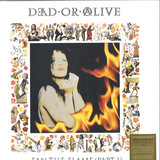
DEAD OR ALIVE - FAN THE FLAME (PART 1)

Dead Or Alive have sold more than 30 million albums and 25 million singles worldwide and gave Stock Aitken Waterman their first #1
single. Their first three albums, which the band wrote, all reached the UK Top 30, with ‘Youthquake’ reaching the Top 10. In the 1980s, they charted seven unique singles in the UK Top 40, with two further re-entries this century, with a remix and original version of ‘You Spin Me Round (Like A Record)’. Respected US magazine Billboard, ranked them in their all-time Top 100 most successful ‘dance artists’ chart.
‘Fan The Flame (Part 1)’ is their fifth studio album and was only released in Japan in 1990, where it reached #27, until a re-worked
version was included within the ‘Sophisticated Boom Box MMXVI’ box set in 2016. ‘Fan The Flame (Part 1)’ contains the singles ‘Your Sweetness (Is Your Weakness)’ (Japan #3), ‘Unhappy Birthday’ (Japan #14) and ‘Gone 2 Long’ (Japan #18). Renowned and in-demand singer, Tracy Ackerman performed all backing vocal duties, with Londonbeat and the London Community Gospel Choir appearing on ‘Total Stranger’ and ‘Unhappy Birthday’, respectively. Also featured is Billy Currie, better known for his work with Ultravox, Visage and Gary Numan. This special 30th Anniversary Edition of ‘Fan The Flame (Part 1)’, is the first time that the album has been commercially released on
vinyl in its original configuration, with original playing durations and will be pressed on 180g heavyweight white colour vinyl.

нет на складе

Закажите сейчас, и мы закажем товар для вас у нашего поставщика.

19,71

Последний логин: 5 г. назад
  • 1
Продуктов на странице:
N/ABPM
Vinyl