Suche:theatre west

Styles
Alle
THEATRE WEST - BOW TO THE PEOPLE

Theatre West

BOW TO THE PEOPLE

2x12inchSTRUTLP252
STRUT
30.06.2021

Strut presents one of the most in-demand and significant albums from the archives of Jimmy Gray's Black Fire Records, 'Bow To The People' (1976 )by theatre collective Theatre West, based out of Dayton, Ohio. Recorded at Arrest studios in Washington in '76, 'Bow To The People' brought together songs from several of Theatre West's best known plays including Bow To The People, The System and Black Love and unflinchingly explored serious issues around drug addiction, mental health and cultural awareness. "The whole idea of Bow To The People was to honour our black forefathers," explains Dillard. "It was important to do that for the kids that didn't know." Shelved following the original recording, the Bow To The People album eventually surfaced on a limited CD on Black Fire in 1993. Now receivingits first full international release, the album features the previously unreleased tracks 'Man Of Many Means' and 'I Don't Know Much About Love'

nicht am Lager

Bestelle jetzt und wir bestellen den Artikel für dich beim Lieferanten.

23,49

Last In: vor 4 Jahren
THEATRE WEST - Limited EP

First time on vinyl. Recorded for DC's Black Fire Records in 1976, Theatre West's music never made record until now. Selected works taken from the master tapes of James "Plunky" Branch (Oneness of JuJu, Experience Unlimited etc). Hailing from Ohio and resident in DC, Theatre West was made up of musicians from Slave, Gil Scott Heron's Midnight Band, The Fabulous Originals, Malone & Barnes and others. Serious jazz-funk-soul selections via the vaults of Plunky and Black Fire Records.

nicht am Lager

Bestelle jetzt und wir bestellen den Artikel für dich beim Lieferanten.

15,08

Last In: vor 5 Jahren
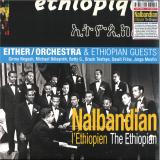
NALBANDIAN THE ETHIOPIAN & EITHER/ORCHESTRA - NALBANDIAN THE ETHIOPIAN (ETHIOPIQUES)

The Éthiopiques series returns! Essential archive recordings from an extremely fruitful period in Ethiopian music.

Before “Swinging Addis” took over the world, there was Moussié Nerses Nalbandian — the Armenian-born composer who shaped modern Ethiopian music. Mentor, arranger, and pioneer, he laid the foundations of Ethio-jazz.

This Éthiopiques volume revives his forgotten legacy, recorded live by Either/ Orchestra First issue ever with new exclusive photos and in depth liner 8-page insert.

“Ethiopian jazzmen are the best musicians that we have seen so far in Africa.
They really are promising handlers of jazz instruments.”

Wilbur De Paris
(1959, after a concert in Addis Ababa)

አዲስ፡ዘመን። *Addis zèmèn* **A new era.**
The time is the mid-1950s and early 1960s, just before "Swinging Addis" bloomed – or rather boomed – onto the scene. Brass instruments are still dominant, but the advent of the electric guitar, and the very first electronic organs, are just around the corner. Rock’n'Roll, R’n’B, Soul and the Twist have not yet barged their way in. Addis Ababa is steeped in the big band atmosphere of the post-war era, with Glenn Miller's *In the* *Mood* as its world-wide theme song, neck and neck with the Latin craze that was in vogue at the same period. Life has become enjoyable once again, with the return of peace after the terrible Italian Fascist invasion of Ethiopia (1935-1941). The redeployment of modern music is part and parcel of the postwar reconstruction. *Addis zèmèn* – a new era – is the watchword of the postwar period, just as it was all across war-torn Europe.
The generation who were the young parents of baby boomers** were the first to enjoy this musical renaissance, before the baby boomers themselves took over and forever super-charged the soundtrack of the final days of imperial reign. Music is Ethiopia's most popular art form, and very often serves as the best barometer for the upsurge of energy that is critical for reconstruction. Whether it be jazz in Saint-Germain-des-Prés or the *zazous* who revolutionised both jazz and French *chanson* after the *Libération*, be it Madrid's post-Franco Movida, or Dada, the Surrealists and *les années folles* that followed World War I, the periods just after mourning and hardship always give rise to brighter and more tuneful tomorrows. Addis Ababa, as the country's capital, and the epicentre of change, was no exception to this vital rule.

**Two generations of Nalbandian musicians**
Nersès Nalbandian belonged to a family of Armenian exiles, who had moved to Ethiopia in the mid-1920s. The uncle Kevork arrived along with the fabled "*Arba Lidjotch*", the** "*40 Kids*", young Armenian orphans and musicians that the Ras Tafari had recruited when he visited Jerusalem in 1924, intending to turn their brass band into the official imperial band. If Kevork Nalbandian was the one who first opened the way of modernism, pushing innovation so far as to invent musical theatre, it was his nephew Nersès who would go on to become, from the 1940s and until his death in 1977, a pivotal figure of modern Ethiopian music and of the heights it. Going all the way back to the 1950s. Nothing less. And it is Nersès who is largely to thank for the brassy colours that so greatly contributed to the international renown of Ethiopian groove. While the younger generations today venture timidly into the genealogy of their country's modern music, often losing their way amidst a distinctly xenophobic historiographical complacency, many survivors of the imperial period are still around to bear witness and pay tribute to the essential role that "Moussié Nersès" played in the rise of Abyssinia's musical modernity.
Given the year of his birth (15 March 1915), no one knows for sure if Nersès Nalbandian was born in Aintab, today Gaziantep (Turkiye/former Ottoman Empire) or on the other side of the border in Alep, Syria... What is certain is that his family, like the entire Armenian community, was amongst the victims of the genocide perpetrated by the Turks. Alep, the place of safety – today in ruins.
Before Nersès then, there was uncle Kevork (1887-1963). For a quarter of a century, he was a whirlwind of activity in music teaching and theatrical innovation. *Guèbrè Mariam le Gondaré* (የጎንደሬ ገብረ ማርያም አጥቶ ማግኘት, 1926 EC=1934) is his most famous creation. This play included "ten Ethiopian songs" — a totally innovative approach. According to his autobiographical notes, preserved by the Nalbandian family, Kevork indicates that he composed some 50 such pieces over the course of his career. This shows just how much he understood, very early on, the critical importance of song as Ethiopia's crowning artistic form. Indeed, for Ethiopian listeners, the most important thing is the lyrics, with all their multifarious mischief, far more than a strong melody, sophisticated arrangements or even an exceptional voice. (This is also why Ethiopians by and large, and beginning with the artists and producers themselves, believed for a long time — and wrongly — that their music could not possibly be exported, and could never win over audiences abroad, who did not speak the country's languages).

Last but not least, one of Kevork's major contributions remains composing Ethiopia's first national anthem – with lyrics by Yoftahé Negussié.
Nersès Nalbandian moved to Ethiopia at the end of the 1930s, at the behest of his ground-breaking uncle. Proficient in many instruments (pretty much everything but the drums), conductor, choir director, composer, arranger, adapter, creator, piano tuner, purveyor of rented pianos,... he was above all an energetic and influential teacher. From 1946 onwards, thanks to Kevork's connexion, Nersès was appointed musical director of the Addis Ababa Municipality Band. In just a few years, Nersès transformed it into the first truly modern ensemble, thanks to the quality of his teaching, his choice of repertoire, and the sophistication of his arrangements. It was this group that would go on to become the orchestra of the Haile Selassie Theatre shortly after its inauguration in 1955, which was a major celebration of the Emperor's jubilee, marking the 25th anniversary of his on-again-off-again reign.

At some point or other in his long career, Nersès Nalbandian had a hand in the creation of just about every institutional band (Municipality Band, Police Orchestra, Imperial Bodyguard Band, Army Band, Yared Music School…), but it was with the Haile Selassie Theatre – today the National Theatre – that his abilities were most on display, up until his death in 1977. To this must be added the development of choral singing in Ethiopia, hitherto unknown, and a sort of secret garden dedicated to the memory of Armenian sacred music, and brought together in two thick, unpublished volumes. Shortly before his death (November 13, 1977), he was appointed to lead the impressive Ethiopian delegation at Festac in Lagos, Nigeria (January-February 1977).

His status as a stateless foreigner regularly excluded him from the most senior positions, in spite of the respect he commanded (and commands to this day) from the musicians of his era. Naturally gifted and largely self-taught, Nerses was tirelessly curious about new musical developments, drawing inspiration from the very first imported records, and especially from listening intensely to the musical programmes broadcast over short-wave radio – BBC *First*. A prolific composer and arranger, he was constantly mindful of formalising and integrating Ethiopian parameters (specific “musical modes”, pentatonic scale, and the dominance of ternary rhythms) into his “modernisation” of the musical culture, rather than trying to over-westernise it. It even seems very probable that *Moussié* Nerses made a decisive contribution to the development of tighter music-teaching methods, in order to revitalise musical education during this period of prodigious cultural ferment. Flying in the face of all the historiographical and musicological evidence, it is taken as sacrosanct dogma that the four musical modes or chords officially recognised today, the *qǝñǝt* or *qiñit* (ቅኝት), are every bit as millennial as Ethiopia itself. It would appear however that some streamlining of these chords actually took place in around 1960. It was only from this time onward that music teaching was structured around these four fundamental musical modes and chords: *Ambassel*, *Bati*, *Tezeta* and *Antchi Hoyé*. A historical and musical “details” that is, apparently, difficult to swallow, especially if that should honour a *foreigner*. Modern Ethiopian music has Nersès to thank for many of its standards and, to this day, it is not unusual for the National Radio to broadcast thunderous oldies that bear unmistakable traces of his outrageously groovy touch.

Auf Lager

Bei uns am Lager und sofort versandfertig

22,06
Mario Migliardi - Matalo! (Colonna Sonora Originale) LP 2x12"

Calling all fans of cult soundtracks and genre-bending scores! Four Flies is thrilled to present a limited edition gatefold beauty containing the premiere vinyl release of the complete score to Matalo!, one of the most captivatingly unique Spaghetti soundtracks ever.

Matalo! is a 1970 'western crépusculaire' by Milanese director Cesare Canevari, known for his visually striking genre films, starring Swedish enfant terrible Lou Castel and Italian theatre actor Corrado Pani. Canevari adopts an experimental, atmospheric approach, relying heavily on out-of-focus effects and framing his shots unconventionally. This gives a dark and atmospheric turn to thewestern genre, with the typical dusty plains transformed into a windswept ghost town, while action sequences replace dialogues almost entirely, leaving actors with very little to say – and, therefore, putting the music center stage.

Composer Mario Migliardi – who was also a conductor, pianist, and Hammond organist – throws out the rulebook for Italian Westerns. Prepare for a wild ride of psych-rock textures, swirling electronic filters, haunting reverbs, and concrete sounds – a sonic tapestry that seamlessly blends influences ranging from Jimi Hendrix to Luciano Berio.

Migliardi masterfully combines traditional folk instruments like acoustic guitars and percussion withnon-canonical electronic processing, creating an electro-acoustic alchemy thatfeels both fresh and timeless today, probably way more than it did in the1970s. In particular, the Leslie filter, a hallmarkin the Hammond organs popular at the time, is applied to the entire soundtrack, resulting in a very distinctive and dynamic phaser effect.

The soundtrack's highlight is probably the rock song featuring vocals from Giano Ton, aka Giacomo Tosti, the only track to have found its way on vinyl prior to this LP (it wasthe B-side ofa forty-five released by RCA Italy at the time). Its 9-minute extended version, previously unavailable on vinyl, is a fantastichard-blues-rock jam à la Hendrix.

This limited-edition double vinyl LP comes in a stunning gatefold jacket with artwork by Eric Adrien Lee, who drew inspiration from the film's original posters and promo materials.

Definitely a must-have for collectors of unique soundtracks and adventurous music!


a Matalo! (Theme Song) feat. Giano Ton


h Matalo! (Theme Song) Instrumental


n Matalo! (Theme Song) [Single Version]


[s] Matalo! (Hey Gente) [feat. Corrado Pani]

[a] Matalo! (Theme Song) [feat. Giano Ton]


[h] Matalo! (Theme Song) [Instrumental]


[n] Matalo! (Theme Song) [Single Version]


[feat. Corrado Pani]

Auf Lager

Bei uns am Lager und sofort versandfertig

32,56
Hayseed Dixie - Rockgrass Outlaws LP
  • A1: – Mama Tried (2:21)
  • A2: – The Whiskey Ain’t Working (2:25)
  • A3: – I’m The Only Hell (Mama Ever Raised) (3:02)
  • A4: – 14 Carat Mind (2:28)
  • A5: – Carrie Brown (3:51)
  • A6: – Good Ones And Bad Ones (3:08)
  • B1: – Two Doors Down (3:04)
  • B2: – Slide Off Your Satin Sheets (2:31)
  • B3: – The Running Kind (3:04)
  • B4: She Got The Goldmine (I Got The Shaft) (3:12)
  • B5: – Old Dogs And Children And Watermelon Wine (4:15)
  • B6: – It’s All In Your Head (5:15)

The Lost Highway of Hank Williams and the Highway To Hell of AC/DC are indeed the same damn road. Featuring 12 classic outlaw country songs done in their own inimitable style, the album was recorded completely live in the studio. The bad are supporting the release of the album as well as their 25th Anniversary with extensive live touring and festival throughout the UK, Ireland, and Western Europe throughout 2026. Full UK Tour starting FEB 11 Nerve Centre Londonderry. 12th Whelan's Dublin. 13th The Empire Music Hall Belfast. 14th Liquid Room Edinburgh. 15th PJ Molloys Dunfermline. 17th The Georgian Theatre Stockton-on-tees. 18th Docks Academy Grimsby. 19th Pocklington Arts Centre. 20th The Hairy Dog Derby, 21st Picturedrome Holmfirth. 22nd The Drill Lincoln. 24th 53 Degrees Preston. 25th Queens Hall Narberth, 26th HAYSEED DIXIE Cardiff. 27th Sin City Swansea. 28th Crickhowell. MAR 1st HAYSEED DIXIE Merthyr Tydfil. 3rd The Fleece Bristol, 4th Roadmender Northampton. 5th The Factory Live Worthing. 6th The Harlington Fleet. 7th MK11 Milton Keynes. 8th Hertford Corn Exchange.

vorbestellen20.03.2026

erscheint voraussichtlich am 20.03.2026

23,74

Last In: vor 2026 Jahren
Jasmine Guffond - Microphone Permission

Editions Mego is proud to release the new album by Australian producer Jasmine Guffond. Developed over a two year period, Microphone Permission is an unsettling musical journey utilising contemporary tools of communication to display Guffond's ongoing research into online surveillance and sound as a method of investigation.

Source material on Microphone Permission are from various projects Guffond has been working on; a commission to sonify the data of the city of Melbourne, a dance performance about the future sounds of an extinct forest, an installation that sonifies Twitter meta data in real time, a job as a composer for a theatre work about music and feminism by five young female identifying performers in Western Sydney and a site specific installation at the Linachtalsperre dam that employed the harmonic frequencies of electric currents.

The results are a stark, brooding, disorientating journey into a paranoid musical field that sits somewhere between ambient club music and a dystopian soundtrack. Elements of techno, classical music and sound art form a dark intriguing masterwork that questions the nature of invasive, algorithmic and computational listening practices.

For example Microphone Permission refers to the consent we routinely give when installing various apps. onto our smart devices. Inspired by a 2018 scandal in which fans of Spain's most popular soccer team were effectively turned into unwitting spies by granting the La Liga application microphone permission. No matter which make or model, all smart devices are built with a microphone that is by default, forever listening. Listening in these situations often takes on an algorithmic form that enables tech developers to bypass public response to what is intuitively considered invasive practice, that is, traditional modes of eavesdropping such as using the microphone to listen and record audio.

nicht am Lager

Bestelle jetzt und wir bestellen den Artikel für dich beim Lieferanten.

18,45

Last In: vor 69 Tagen
Alex Marker & Ben Reed - Impostor Syndrome LP
  • 1: Impostor Syndrome
  • 2: Revolutions
  • 3: Trouble In Store
  • 4: The Empire's Eye
  • 5: Crossing The Line
  • 6: Night Blues
  • 7: Distance
  • 8: Brief Encounter
  • 9: Midnight Moment
  • 10: Floating Downstream
  • 11: Mutineers
  • 12: The Next Step

What if fate had followed a different path? Alex Marker and Ben Reed were childhood friends who made music together before pursuing different careers, with Ben becoming a professional musician while Alex followed a career in stage design.

Originally a drummer, Alex set himself a challenge of writing a song for his wife for their wedding day. One song led to another and collaborating for the first time since they were very young Alex and Ben soon found they had a whole album's worth. Influenced by Alex's career in drama each track on Impostor Syndrome aims to tell a tale or paint a portrait encapsulating a moment of change or release. Ben brings a wider palette of musical styles and arrangements to augment a series of songs which draw from a wide range of musical influences including: singer/ songwriter, British prog, folk and rock. Ben Reed is a multi instrumentalist whose playing credits include bass duties on Frank Ocean's albums Endless and Blond as well as work with David Byrne, Sampha, Mustafa, Frank Dukes, Nilufer Yanya, Hayden Thorpe, FKA Twigs and many others.

He has previously released four full length albums of his own; Tall Story, Who Dreams of Hyssop, Station Masters, Loft, Bandaged and most recently You Do You. Alex Marker is a critically acclaimed theatre set and costume designer who has designed over 150 productions for a wide variety of venues including The West End, tours, regional theatres and the fringe. Further back he used to play drums in pit bands for productions and has occasionally been seen on stage too. The album features guests including: organist Ross Stanley (Steve Howe Trio), flautist R achel Hayter ( Alvorada ), bassoonist Philip Dale ( Orchestra of the Age of Enlightenment) and Matt Weeks who plays brass alongside mixing duties.

vorbestellen05.12.2025

erscheint voraussichtlich am 05.12.2025

21,64

Last In: vor 2026 Jahren
MARC AND THE MAMBAS - THREE BLACK NIGHTS OF LITTLE BLACK BITES LP 2x12"
  • My Former Self
  • Your Aura
  • The Animal In You
  • Black Heart
  • Narcissus
  • Gloomy Sunday
  • Vision
  • In My Room
  • The Bulls
  • Près Des Ramparts De Sévill
  • Catch A Fallen Star
  • Your Love Is A Lesion
  • Torment
  • Empty Eyes
  • Untitled
  • Angels
  • Caroline Says
  • First Time
  • Jacky

The complete recordings of the legendary Marc And The Mambas run of three live performances given at The Duke Of York's Theatre in London's West End in 1983. Restored from the original VHS tape recordings made by the late Peter 'Sleazy' Christopherson (Throbbing Gristle, Coil), these remain the only recordings that exist of Marc And The Mambas performing live. Originally released in 2012 on Marc Almond's (Soft Cell) own Strike Force Entertainment label as a CD/DVD set (long sold out), this edition, presented on vinyl for the first time, contains the 17 tracks from the SFE CD release, expanded to include the two bonus DVD-only tracks: 'Près Des Ramparts De Séville' and 'Jacky'. Completely remastered for vinyl by Martin Bowes (The Cage Studios). A combination of the chanson and torch songs which he still sings today, over piano, strings and woodwind-accompanied compositions. "It's quite a spectacle, especially when Almond hits his sweet spot of sinister lyrics, declared pompously over a droned string arrangement... Early signs of the full-on showtune and classical rearrangements that make up Almond's current albums are evident"(Record Collector). Presented on heavyweight double vinyl in a deluxe glossy gatefold sleeve featuring the extensive reminiscence by Marc Almond himself from the 2012 release. Also included is a reproduction of the 16-page programme printed for the three concerts in 1983. The stunning cover painting by Val Denham is exclusive to this release.

vorbestellen05.12.2025

erscheint voraussichtlich am 05.12.2025

43,49

Last In: vor 2026 Jahren
Various - Stars from Another Sky Pt. 1: Film Songs from the Subcontinent Before the World Was Torn Asunder, 19

"It may surprise some that, after two decades of silent films, when Alam Ara broke the silence in 1931, it and every South Asian talkie that followed was what we in the West think of as a "musical." Music had been integral to the culture's staged drama going back to the Gupta Dynasty — sometime between the 4 th and 6 th Century CE. Since its inception, South Asian cinema drew heavily from Marathi, Parsi, and Bengali musical theatre and silent film screenings were often accompanied by live music to mimic a live staged experience.

When sound films arrived, actors with serious singing skills became the next wave of stars. Songs were performed live while shooting, with musicians hidden off-camera, to the side or sometimes even in trees. Playback singing — the practice of dubbing a real singer's voice over a lip-syncing actor — didn't become standard until the 1940s.

Thus, the biggest stars of the 1930s were also the greatest singers, with some, like Govindrao Tembe and Pankaj Mullick, excelling as both composers and vocalists. None, however, were more beloved than K.L. Saigal, whose emotional, untrained crooning captivated audiences across the subcontinent. Saigal's voice inspired a young Lata Mangeshkar, who vowed to become India's greatest filmi singer to win his heart. Sadly, Saigal grew increasingly addicted to alcohol, unable to perform without it, and passed away at age 42, seven months before the Partition. Lata never married.

This collection features some of the earliest songs from South Asian cinema, sourced from CDs and LPs found in Jackson Heights, Queens, Coney Island Avenue in Brooklyn, Lexington Avenue in Manhattan, and Oak Tree Road in Iselin, New Jersey — areas home to vibrant immigrant communities. South Asian immigration to New York and New Jersey surged after the 1965 Immigration and Nationality Act, which lifted non-European quotas. By the 1990s and 2000s, the region's Indian, Pakistani, and Bangladeshi media outlets flourished, especially in Jackson Heights, where such stores outnumbered the total number of regular record shops throughout the five boroughs.

The nascent period of sound film featured a limited palette of musical styles, predominantly Marathi Bhagveet, like the Ghazal, but with greater flexibility of subject matter and rhythm, and Rabindra Sangeet, the approximately 2,000 songs and poems composed by Bengali Nobel laureate Rabindranath Tagore. But there was some evolution as well, with the success of South Asian cinema's first woman composer, the classically trained Saraswati Devi, and the introduction of Western instruments including the piano and Hawaiian guitar.

While much of the music was dark and brooding, perhaps exemplified best by Devika Rani's interpretation of Saraswati Devi's "Udi Hawa Mein" from 1936's Achhut Kannya (Untouchable Maiden), there were moments of brightness, such as R.C. Boral's "Lachhmi Murat Daras Dikhaye" sung by Kanan Devi in Street Singer, an otherwise thoroughly depressing film from 1938 that cemented Devi's and co-star K.L. Saigal's superstardom.

This selection was chosen to emphasise a range of expressivity, instrumentation and style achieved even within the decade's relatively limited scope, setting the listener up for the relative explosion of possibility in the 1940s, to be covered in the next installment of this series."

nicht am Lager

Bestelle jetzt und wir bestellen den Artikel für dich beim Lieferanten.

16,18

Last In: vor 4 Monaten
ROLAND - A TUNE FOR YOU (1971)
  • A1: A Tune For You
  • A2: 18 Strings And A Harp
  • A3: Impact House Carpenter Song
  • A4: A Leslie In My Head
  • A5: Budy Is Holly, I’m Going Insane
  • A6: Lonely Summertime
  • A7: Interview
  • A8: Train Song
  • A9: That’s Alright Mama
  • A10: East West
  • B1: Kathy’s Tune
  • B2: Cinderella In The Streets
  • B3: Pretty Girl &The Freaks
  • B4: Suite For The Lost Peace
  • B5: It Keeps Raining
  • B6: It Keeps Raining
  • B7: Flute Song
  • B8: No Woman Blues

Roland Van Campenhout is for sure one of the most unique Belgian artists. Active since the 60’s of the past century Roland built up an extensive and eclectic discography. More than 20 albums on which folk, blues, rock, world music, movie- and theatre soundtracks … all celebrate together, creating a new musical dimension defining the true free musical spirit Roland really is. He received multiple Awards, toured the world with Rory Gallagher and played with Tim Hardin, Leo Kottke, Ian Anderson and the entire Belgian scene.

vorbestellen12.09.2025

erscheint voraussichtlich am 12.09.2025

23,95

Last In: vor 2026 Jahren
Various - Friday Night In San Fransisco LP
  • A1: Mediterranean Sundance / Rio Ancho
  • A2: Short Tales Of The Black Forest
  • B1: Frevo Rasgado
  • B2: Fantasia Suite
  • B3: Guardian Angel

Friday Night in San Francisco is a live album by Al Di Meola, John McLaughlin, and Paco de Lucía.

It was recorded live at the Warfield Theatre in San Francisco,

on December 5 in 1980. The album is considered an iconic recording and was described by jazz author Walter Kolosky as
"a musical event that could be compared to the Benny Goodman Band's performance at Carnegie Hall in 1938...
it may be considered the most influential of all live acoustic guitar albums."

Al Di Meola is an acclaimed Italian American jazz fusion and Latin jazz guitarist, composer, and record producer.
He experienced a celebrated career that has spanned four decades and earned him critical accolades,
three gold albums and more than six million record sales worldwide.
Di Meola has amassed over 20 albums as a leader while collaborating on a dozen or so others.


John McLaughlin, also known as Mahavishnu, is an English guitarist, bandleader, and composer.
He is a pioneer of jazz fusion, combining elements of jazz with rock, world music,
Indian classical music, Western classical music, flamenco, and blues. He received multiple "Guitarist of the Year"
and "Best Jazz Guitarist" Awards from magazines such as Downbeat and Guitar Player and was ranked 49th in Rolling Stone
magazine's list of "100 Greatest Guitarists of All Time". Jeff Beck called him "the best guitarist alive".

Paco de Lucía was a Spanish virtuoso flamenco guitarist, composer, and record producer.
He was one of the first flamenco guitarists to branch into classical and jazz. De Lucía was noted for his fast and fluent fingerstyle runs
and gained popularity outside Spain after collaborating with McLaughlin and Di Meola. Richard Chapman and
Eric Clapton described de Lucía as a "titanic figure in the world of flamenco guitar."


Friday Night in San Francisco is available as a limited edition of 1000 individually numbered copies on purple coloured vinyl and includes an insert.

vorbestellen05.09.2025

erscheint voraussichtlich am 05.09.2025

31,30

Last In: vor 2026 Jahren
MARC AND THE MAMBAS - THREE BLACK NIGHTS OF LITTLE BLACK BITES LP 2x12"
  • My Former Self
  • Your Aura
  • The Animal In You
  • Black Heart
  • Narcissus
  • Gloomy Sunday
  • Vision
  • In My Room
  • The Bulls
  • Près Des Ramparts De Sévill
  • Catch A Fallen Star
  • Your Love Is A Lesion
  • Torment
  • Empty Eyes
  • Untitled
  • Angels
  • Caroline Says
  • First Time
  • Jacky

The complete recordings of the legendary Marc And The Mambas run of three live performances given at The Duke Of York's Theatre in London's West End in 1983. Restored from the original VHS tape recordings made by the late Peter 'Sleazy' Christopherson (Throbbing Gristle, Coil), these remain the only recordings that exist of Marc And The Mambas performing live.

vorbestellen15.08.2025

erscheint voraussichtlich am 15.08.2025

39,71

Last In: vor 2026 Jahren
Giorgi Koberidze - Forests, Tales, Cities, Forests

Award-winning producer and composer Giorgi Koberidze offers up a head-spinning debut of Georgian modern classical music shot through with 360° electroacoustic textures.

Giorgi Koberidze is an electronic and classical music composer from Georgia. He currently serves as a professor of music at Tbilisi State Conservatoire, as well as at Ilia State University, and the private music school "303 Herz". Giorgi's work is rooted in the Georgian musical tradition, cross-pollinating indigenous instrumentation with electronic and western classical timbres. He recently won first prize in the Tbilisi Conservatoire Composers Awards, and received Georgia's most prestigious cultural gong, the Tsinandali Award.
The Album was premiered in Georgia at the Kutaisi Film Festival, and later showcased at the Tbilisi Film Festival. Working from graphic scores, Giorgi's ensemble includes strings, woodwind and traditional instruments from the Caucasus (doli, chuniri). Fleeting voices, field recordings and skittering percussion converge to paint a storied map of Tbilisi, and its surrounding terrain of forested polyphony and microtonal peaks and crags.

Each listen of the album is projectively rich, like a dizzying series of sonic inkblot images. The piece is designed to be absorbed in the surround sound of darkened movie theatres, conjuring a multiverse of narratives in the half-light of sensory acuity. At home, Giorgi invites listeners to set aside time to experience the record in a dark, comfortable space absent of external stimuli.

This album was made with the support of the Tbilisi State Conservatoire. The recordings were funded by Nicolas Jaar. Thank you. We are beyond proud to present this incredible project.

Recommended for fans of Pierre Bastien, Roméo Poirier, Jan Jelinek.

vorbestellen25.07.2025

erscheint voraussichtlich am 25.07.2025

20,97

Last In: vor 2026 Jahren
DANA SCHECHTER & PAUL WALLFISCH - THE HEART OF A WHALE

DANA SCHECHTER & PAUL WALLFISCH

THE HEART OF A WHALE

12inchTRLP261
Trost
18.07.2025

Dana Schechter: Lap Steel Guitar, Bass, Electronics. - Paul Wallfisch: Piano, Organ, SOMA Pipe, Guitaret. Music from the Vienna Volkstheater production of Wolfram Lotz's play "Die Politiker" directed by Kay Voges; performed live in the theatre, spring 2022. These 2 beautiful exiles travel limbic landscapes and underwater dreams with a map that disintegrates instantly when viewed. Their fractured sounds dissolve and reconfigure endlessly in our cochlea and infest our imaginations with spiked armies of ultra-vivid, sentient and carnivorous coral predators, atavistically intent on devouring the sweet meat hiding deep in the center of the amygdala. Michael Gira (SWANS). Wallfisch has played in bands like Firewater and Little Annie, while Schechter has logged time with American Music Club, Angels of Light and her own Insect Ark, among others; both spent time touring and recording with SWANS. They've been friends since meeting in New York in the 1990s. Years later they forged a stronger connection as bandmates in Botanica. They renewed their artistic partnership in 2021, when Paul invited Dana to Vienna to develop the music for a theatrical spectacle called Die Politiker written by Kleist prize winner Wolfram Lotz. The music from the production provides the foundation for the duo's first album, The Heart of A Whale. Across its six intense tracks one can detect a subtle homage to storied Berlin musical traditions, as the pair puts a raw, often brutal veneer on songs steeped in Weimar cabaret (a la Tom Waits) but updated with a visceral mixture of noise, post-punk, and industrial elements. Performed on a panoply of instruments from bass, organ and lap steel to SOMA Synths, Guitaret, a variety of electronics and a grand piano hammered with a shoe, the music reflects the New York- Berlin nexus they've both been part of for decades. Echoes of Swans, Einstürzende Neubauten and The Birthday Party, but also hints of Throbbing Gristle, Eno and even William Basinski and Michael Gordon. The music can't be contained by any single tradition, with a decidedly experimental bent that ruptures the fixed rhythm of rock for something more theatrical and emotionally harrowing.

vorbestellen18.07.2025

erscheint voraussichtlich am 18.07.2025

24,33

Last In: vor 2026 Jahren
Westberg, Udupa & Mazurkiewicz - Everyday Life Activities

Norman Westberg (guitar), Giridhar Udupa (ghatam, konnakol, khanjira, percussion) and Jacek Mazurkiewicz (double bass, electronics)An extraordinary meeting of three artists from three different musical worlds and three different continents. Norman Westberg (ex-Swans) and Jacek Mazurkiewicz have already released one album together "First Man In The Moon" in 2021 (published by the Swiss label Hallow Ground).In the new project, they are accompanied by Giridhar Udupa, an Indian master of ghatam (a clay percussion instrument that looks like a jug). The album will feature 3 long trance compositions, referring to ambient, krautrock, free jazz and Indian music.Jacek Mazurkiewicz describes the creation of this album as follows:"I met Norman Westberg while supporting the Swans tour in Poland as 3FoNIA. A few years later, during Norman's tour with Gira, we recorded a duet.The trio session took place similarly to the previous duet session during Norman's solo concert in Warsaw on the Swans tour.Recorded with Adam Toczko, a quick meeting on a day off from work.I invited Giridhar Udupa to the trio, whom I had met earlier during the period when I co-founded the band Limboski. I once invited Wacek Zimpel to play a few concerts with Giridhar. Wacek later created Saagara and I was wondering about some unusual musical context in which I would find myself with Giridhar. I was looking for an interesting sound configuration, but also a cultural one, with a different approach to creating music. I got the impression that for both Norman and Giridhar it was a fairly fresh meeting, not obvious. And on the other hand, ordinary - everyone did their own thing."Detroit guitarist Norman Westberg moved to New York in 1980 and became a part of the experimental music scene that was experiencing its golden age. Westberg himself became a permanent fixture when he joined the iconic avant-rock band Swans in 1983, and was the only member other than frontman Michael Gira to play with them for most of the band's run, both until their 1997 disbandment and his return in 2010. Westberg has also been involved with other legendary New York noise-rock acts, including Jim Thirlwell's Foetus and the post-Swans Heroine Sheiks, in which he played with Cows frontman Shannon Selberg; and in 2014, he joined the noise-rock supergroup Hidden Rifles, whose members included Mike Watt of Minutemen and Mark Shippy of U.S. Maple. Westberg's solo compositions, most often for solo guitar and a set of effects, draw on drone and post-minimalism, bringing to mind dark ambient passages from Swans albums.Giridhar Udupa is an extremely valued teacher and world-renowned artist, an Indian master of ghatam (a clay percussion instrument that looks like a jug). He was born into a family with long musical traditions. He began learning to play at the age of four, guided by his father. At the age of twelve, he already had his first performances behind him. He currently gives concerts alongside the greatest masters. He has received many prestigious awards. He performs in the USA, Spain, Canada, France, Switzerland, Germany, Oman and Kuwait. Giridhar Udupa is a member of the band of the Indian vocalist Bombay Jayashri, nominated for an Oscar for the best song for the film Life of Pi. He is one of the founders of the Layatharanga band. He also plays virtuoso other traditional instruments of South India, such as mridangam and kanjira, and is excellent at using the konnakol technique (a type of rhythmic vocalization).For three decades, the artist has been a global ambassador and icon of Carnatic music. He is the founder of The Udupa Foundation, a charity organization established in 2015 to promote Indian music, performing arts and culture. He has participated in recording dozens of albums. He is also well-known in our country thanks to his cooperation with Polish performers, which resulted in excellent artistic effects, such as the famous Indialucia - Michał Czachowski's group / project or the Saagara formation, led by Wacław Zimpel. Udupa also played on the album Lechoechoplexita, released by Leszek Hefi Wiśniewski, and on the album of the band Layatharanga, released in our country.Jacek Mazurkiewicz is interested in music in the broad sense. He puts his sounds together based on emotional impressions and pulse. Combining acoustics with electronics, he is constantly looking for a new sound. Solo as 3FoNIA, in a duet with Mikołaj Trzaska or Tomek Dąbrowski, the JMB trio with Wojtek Jachna and Jacek Buhl, in the Modular String Trio quartet, the Afrobeat quintet Faso Tamala are just some of his musical incarnations. With Patryk Zakrocki, as part of an audio mission, he massaged hundreds of pairs of ears in the Inner Ear Massage Office. He also deals with sound design, composing and producing music for films and theatre performances. He collaborated with many Polish and foreign artists.

vorbestellen25.04.2025

erscheint voraussichtlich am 25.04.2025

21,43

Last In: vor 2026 Jahren
ASA HORVITZ - GHOST

After his father and other close relatives died in a short period, singer, composer and multi-instrumentalist Asa Horvitz wanted a musical language to evoke our metaphysical and tangible experiences with loss. Horvitz and a team of friends assembled a dataset of over 150 texts from throughout history that dealt with grief and fed them through a custom Natural Language Processing AI system. Based on the cryptic text that resulted, they created a music-theatre production which toured in Europe and is presented here as a series of standout recordings from the project’s long genesis. GHOST’s compositions started as vocal improvisations led by Horvitz and bassist/singer-songwriter Carmen Quill, accompanied by Ariadne Randall and Bryan West (processing, synths, viola da gamba, etc). Later, Horvitz’s uncle—esteemed pianist and composer Wayne Horvitz—interpolated additional passages. Recalling (at turns) Robert Ashley’s spoken-word operas, Arthur Russell’s vaporous pop song, medieval music, outre hip-hop, and the undulations of Einstein on the Beach, the music remains soulful despite its partially systematized means of production. GHOST derives its strength from its empathetic perspective, tracking the tidal patterns that underpin our grief without attempting to fabricate their logic.

– Winston Cook Wilson

vorbestellen05.03.2025

erscheint voraussichtlich am 05.03.2025

21,81

Last In: vor 2026 Jahren
RHOMA IRAMA - BEGADANG: SONETA GROUP BEST SONGS 1975-1980

(Limited edition to 500 copies, remastered audio, pressed and printed in Indonesia) The 13 tracks contained in this compilation “Begadang: Soneta Group Best Songs, 1975-1980” are some the most innovative music that came out of Indonesia’s music scene in the 1970s, tunes that has cemented Rhoma Irama’s status as the king of the genre.


Dangdut is the biggest musical genre in Indonesia. Dangdut, onomatopoetic name from the sound of hand drums used in this type of music, is what reggae to Jamaicans, country to Americans or skiffle to mid 20th century British people. And in this genre of dang dut, the name Rhoma Irama looms large. He is until today the undisputable king of dangdut and his role as pioneer of the music is already in the history book. In fact, there's one book documenting the outsized role of Rhoma in establishing dangdut as the father of this music. The book is aptly titled Dangdut Story, written by Pittsburgh University music professor Andrew N. Weintraub.


Among Indonesian fans of dangdut, there’s this one misconceptions that dangdut music is that it is an indigenous art form from Indonesia and that it constitutes an amalgamation of local, traditional music of this Southeast Asian nation, with Malay music being the most prominent feature in the mix.


Dangdut pioneer Rhoma Irama is among the first to reject this assertion. “Dangdut music may have originated in Deli (in North Sumatra) but then got the influences from the West and India”, he said.


Indeed, most of Rhoma’s well-known compositions may have been influenced by Indian tunes but some of his best quality works owed much to the West.


Rhoma had long found home in Western pop music. In the early 1960s, after honing his guitar playing skill, Rhoma set up his first band Gayhand to play the tunes of The Beatles, Paul Anka and Tom Jones. In 1972, Rhoma won best singer title in a Southeast Asia singing competition in Singapore playing Tom Jones “I Who Have Nothing.”


Yet, nothing changed Rhoma’s fortune in the music industry, to a point where he decided to leave pop and switched to playing Orkes Melayu (Malay Orchestra) music, first with Orkes Melayu Purnama and later with Soneta Group.


His career soon took off with Soneta, especially after he introduced what ethnomusicologist William H. Frederick considered as “theatre”, through which Rhoma borrows many elements from stage performances of British and American rock bands. These elements, kitsch and pomp, he liberally adopted and became an inseparable part of dangdut itself; tight pants, long hair, platform shoes, glitter and glamour which would not be out of place in Elton John and David Bowie stage show.


And this is actually the contradiction of Rhoma’s brand of Malay music. “One might legitimately ask how imaginative, not to say bizarre, costuming and dancing with abandon could be related to some of the objectives of Rhoma has set for himself and soneta group”, Frederick wrote on his seminal work on the singer, Rhoma Irama and the Dangdut Style: Aspects of Contemporary Indonesian Popular Culture, published in 1982.


From technical point of view, Rhoma not only replaced the acoustic elements from Melayu Music with electric instruments but also created new synthetic sounds that has never been attempted before in Indonesia’s music industry.


Detractors like to point out how much he was indebted to Deep Purple, but a closer inspection reveals how he in fact had mined his influences even deeper.


Notice how Rhoma reproduced funk, which is all the rage in early 1970s, in the song “Santai” (Relax), this album’s closer or “Credit Title (Instrumentalia)” which opens this Darah Muda (Young Blood) soundtrack. The rubbery bass lines that open both songs can easily find home in any Sly and the Family Stone’s or Isaac Hayes’ tunes from that era. Other highlights of the song is the funky guitar licks and the droning Hammond a la George Clinton that stabs deep in the record groove. In the guitar solo, you can also hear the bark of George Harrison’s licks from “Taxman”.


The 13 tracks contained in this compilation “Begadang: Soneta Group Best Songs, 1975-1980” are some the most innovative music that came out of Indonesia’s music scene in the 1970s, tunes that has cemented Rhoma Irama’s status as the king of the genre. Only 500 copies were pressed for this compilation.

vorbestellen28.02.2025

erscheint voraussichtlich am 28.02.2025

21,22

Last In: vor 2026 Jahren
Angus MacRae - Vivarium LP 2x12"

Blending influences from classical, film and electronic music, Angus MacRae's extensive musical output encompasses solo albums, concert performances, and award-winning scores for theatre, film, ballet, television and contemporary dance. His has scored internationally touring dance productions, Olivier Award winning shows heard across London's West End and on Broadway, and acclaimed films screened at international festivals. Drawing on themes of memory and imagination, his immersive solo work transcends its classical roots to create transportive, elegiac compositions of unflinching emotional honesty. Spanning three albums and a number of EPs, his work has reached a global audience.

Vivarium, his third full length studio album, is an otherworldly journey through the lost worlds of childhood imagination. A blend of intimate piano, soaring strings, ethereal voices and haunting electronic textures, Vivarium evokes what the artist describes as "a series of bell jars to be traveled between." Reflecting on the album's genesis, MacRae shares: "I spent years trying to capture the emotional resonance of my childhood imagination. As a child, the world felt as magical, mysterious, and boundless as my dreams. In time, fragments of music emerged that seemed to recapture that feeling—a glimmer in the dark, an echo of the magic, fear, and mystery of those early memories. Through Vivarium, I hope to offer a portal back into those worlds."

This exclusive double vinyl release also includes Bell Jar, an evocative bonus track on Side D, featuring a collaboration with acclaimed New York clarinetist Michael Winograd. In this new composition, MacRae reimagines themes from the album, weaving in Winograd's improvised melodies to create a fresh, expressive piece that brings a touch of Klezmer soul to Vivarium's ethereal soundscape.

vorbestellen07.02.2025

erscheint voraussichtlich am 07.02.2025

29,37

Last In: vor 2026 Jahren
Sussan Deyhim & Richard Horowitz - The Invisible Road: Original Recordings, 1985–1990 LP

The Invisible Road: Original Recordings, 1985–1990 compiles an unheard, previously unreleased body of recordings by Sussan Deyhim and Richard Horowitz, dissidents from diametric backgrounds who met during the heady days of Downtown New York in the 1980s. This collection reveals the creative and life partners’ radical shared vision of avant-garde pop in all of its boundary pushing freedom, combining Deyhim’s singular approach to vocalization, Horowitz’s invention of new musical languages, and touchstones of traditional music from around the world, creating a new music that ultimately retains a voice entirely its own. Despite their difference in backgrounds and respective journeys, at the time of their meeting in the early 1980s in New York City, Sussan Deyhim and Richard Horowitz were both products of the search for freedom and understanding (and resultant awakenings) that swept the globe and helped culturally define the late 1960s and 70s. Deyhim, born and raised in Tehran, spent her teens dancing with Iran’s Pars National Ballet company, performing weekly on Iranian national television, and travelling her home country studying with master folk musicians and dancers, before relocating to Belgium and joining Maurice Béjart’s prestigious Béjart Ballet of the 20th Century. Horowitz, born and raised in Buffalo, New York, had spent much of the decade before abroad, first departing for Paris under the shadows of the Vietnam War, where he studied piano, Eastern philosophy, and became entrenched the city’s free jazz scene, playing with the likes of Steve Lacy, Anthony Braxton, and Alan Silva, before embarking south to Morocco where his friendship with Paul Bowles helped cultivate a deep passion for the country’s musical traditions and a shift in his musical practice.


The pair met by chance sometime in 1981 at Noise New York, a small studio on West 34th Street founded by the musician and recording engineer, Frank Eaton, as a utopian creative laboratory that beckoned artists and bands like Arthur Russell, Christian Marclay, Liquid Liquid and Butthole Surfers into its orbit. Both artists had recently relocated to the city, Horowitz having recently released his debut album, Oblique Sequences (Solo Nai Improvisations), on the legendary Paris based imprint Shandar, and fallen in with members of New York avant-garde like La Monte Young, Jon Hassell, David Byrne, and Brian Eno, and Deyhim having begun to more actively incorporate singing into her practice, notably recording a vocal score for choreography she was doing at La MaMa Experimental Theatre.


Initially bonding over a cassette tape of field recordings made by Paul Bowles that had been given to mutual friend and writer Brian Cullman (seeking answers for Ornette Coleman’s question “what is the sound of sound”), their earliest collaboration was documented on Horowitz’s 1981 album, Eros In Arabia, with Deyhim contributing vocals to the track “Queen Of Saba.” Over the coming years, their deep connection would routinely gravitate them into the studio, culminating in the body of recordings that would appear on their 1986 album for Crammed Discs, Desert Equations: Azax Attra. Unknown to nearly all but the artists, laying in wait over the decades on numerous multi-track and stereo reels, DAT tapes, and reference cassettes, were a vast array of recordings made by Deyhim and Horowitz bookending Desert Equations. The 13 pieces represented on The Invisible Road: Original Recordings, 1985–1990 were recorded largely between Noise New York and Daylight Studio in Brussels, during a period that Deyhim describes the partnership between herself and Horowitz’s as seeking a music “free of any specific cultural reference, with a personal musical signature,” blossoming into a body of sonority that embraced the energy of contemporary boundary pushing pop and the avant garde, filtered through their mutual love and study of various musical traditions from across the globe and deep engagement with the ideas and tactics of experimental music.


Undeniably rooted in Horowitz’s study of the North Africa ney and the music of the Berber and Gnawa cultures during his time in Morocco, Deyhim’s deep engagement with the folk traditions of Iran, and the couple’s immersion in the interconnected Downtown underground music scenes, each piece on The Invisible Road offers its own vision creative and cultural hybridity. Deyhim sings in both English and Farsi, as well as a composite tongue that she developed by drawing upon numerous indigenous vocal techniques from around the world, intuitively responding to Horowitz’s simultaneous sound syntax forming and combining a wide range synthetic and acoustic instrumentation, and experimental tape techniques, within a visionary series of free-standing expressions.

nicht am Lager

Bestelle jetzt und wir bestellen den Artikel für dich beim Lieferanten.

23,49

Last In: vor 12 Monaten
Arctis - Arctis

Arctis

Arctis

12inch810155660727
Napalm Records
01.11.2024

Die finnische Modern Metal-Band ARCTIS veröffentlicht ihr selbstbetiteltes Debütalbum Arctis über Napalm Records.
ARCTIS ziehen Inspiration aus der mythischen Natur des Nordens und ihren extremen Jahreszeiten, die sie in futuristisches Szenario übertragen. Einen
ebenso großen Spagat machen sie auf der Soundebene, wenn sie Modern Metal gekonnt mit Pop kombinieren und so ein episches und originelles
Klanguniversum erzeugen. Produziert wurde das Debüt von dem mehrfach mit Platin ausgezeichneten Jimmy Westerlund (Sturm und Drang), gemixt
von Stefan Glaumann (Rammstein) und gemastert von dem zweimal Grammy-nominierten Svante Forsbäck (Rammstein).
Mit dieser geballten Expertise als Rückenwind verspricht Arctis die Szene mit frischem Wind aufzuwirbeln, was sie unmittelbar im Anschluss an die
Veröffentlichung auf den Bühnen Europas beweisen werden. Denn ARCTIS haben die Ehre die legendären Metal Cellisten von Apocalyptica auf ihrer
Tour zu begleiten, was ihren Status als Senkrechtstarter unterstreicht.

vorbestellen01.11.2024

erscheint voraussichtlich am 01.11.2024

25,17

Last In: vor 2026 Jahren
PJ Morton - Cape Town To Cairo LP

Pj Morton

Cape Town To Cairo LP

12inchERE1032
EMPIRE
27.09.2024

From Cape Town to Cairo, and now to fans, stages and screens around the world, PJ Morton shares his newest album, fully made in the motherland. Cape Town to Cairo is a collection of songs that he created in 30 days throughout 4 countries in Africa — South Africa, Nigeria, Ghana and Egypt. Described as the best trip of his life, this transformative journey began as just the seed of an idea last fall, but instantly grew into his most sonically-sprawling and immediately-inspired record to date. With no music, lyrics or preconceptions, he stepped foot onto the continent with two thoughts: a wild dream to write and record his next LP in less than a month, and a mission to immerse himself in as many different cultures, stories and communities as he could.

Surrounded by featured collaborators like Fireboy DML, Mádé Kuti, Asa, Ndabo Zulu, and Soweto Spiritual Singers, as well as additional producers including P.Priime and The Cavemen., his own live band and local musicians, PJ Morton used music as his common language. Always his greatest way of communicating, he expressed his feelings and experiences of Africa through songs he and others were forming together on the spot, side-by-side in different studios, cities and towns for the very first time. None of the tracks were written before he arrived or after he left, and the arrangements showcase both the countries’ native genres as well as the innate, stylistic instincts that have made Morton a 5x GRAMMY-winner and 20x GRAMMY-nominee, whether it be his soul, R&B and gospel roots, or the pop prowess he has further honed as a member of Maroon 5.

“When you’ve been in music as long as I have, you’re constantly looking for inspiration,” says PJ Morton. “And you’re looking for the things that made you want to do it in the first place. I’ve made albums every type of way you can think, so I wanted to try something I hadn’t done before. As a Black American who had never been to South or West Africa, I knew there was something there waiting for me. So I put a little pressure on myself to make a full record in a month, but I also said, ‘If I’m gonna go to Africa, I want to see Africa.’ We made music, but we also formed connections. We made new friends, and this is just the start.”

ESSENCE adds, "This trip is not just a physical move, it's a spiritual return…The soul of Africa pulses through every note he plays and every word he sings,” and VIBE adds that “the multi-faceted artist is fully embracing a new phase in his life.” Cape Town to Cairo marks PJ Morton’s first album since 2022’s Watch The Sun, which featured collaborations with Stevie Wonder, Nas, JoJo, Wale, Jill Scott, Alex Isley and more. Since then, Morton has become the first Black composer to write an original song for a Disney attraction, having just finished making the music for Tiana's Bayou Adventure, opening on June 28th, 2024 at Disney World and Fall 2024 at Disneyland. He also won his latest GRAMMY earlier this year, worked with Samara Joy on “Why I’m Here” for Regina King’s Netflix film Shirley, and landed a cover of his song “Don’t Let Go” as the soundtrack to Apple’s iPhone 15 commercial.

PJ Morton recently returned from headlining his debut shows in Asia, New Zealand and Australia, and announced an extensive Cape Town to Cairo Tour for North America summer and fall 2024. Following iconic performances at New Orleans Jazz Fest, The Kennedy Center, Roots Picnic and Newport Jazz Fest, Morton will embark on a run of more than 25 dates across the country, including New York City’s Beacon Theatre, Chicago’s Chicago Theatre, Nashville’s Ryman Auditorium, Los Angeles’ The Wiltern, and dozens of others.

On the heels of his headline tour and Maroon 5’s Las Vegas residency, PJ Morton will publish a life-spanning new book titled Saturday Night, Sunday Morning. The memoir sees him recounting and reflecting upon a trailblazing path that continues to defy expectations and straddle the tensions of music and faith, race and culture, expression and identity. As the son of two pastors and gospel artists, Morton grew up grounded by the sound of the Church, but soon found himself drawn to R&B, pop and soul, writing songs that the industry, his family and community struggled to understand. In the face of mounting pressure, rejection and constant miscategorization, he committed himself to a steadfast path of independence: making music on his own terms, launching his own record label, joining one of the biggest bands in the world while staying true to his New Orleans roots. The risks he took paid off, and through his transformation from preacher's kid to the busiest man in showbiz – performing everywhere from his local congregation to the Super Bowl, collaborating with everyone from his father to Stevie Wonder, Erykah Badu, Jon Batiste and Lil Wayne – he hopes to encourage readers and listeners to overcome obstacles as they seek their dreams.

vorbestellen27.09.2024

erscheint voraussichtlich am 27.09.2024

21,64

Last In: vor 2026 Jahren
Jeffrey Lewis & Los Bolts - Manhattan LP

Jeffrey Lewis’s 2015 masterpiece ‘Manhattan’ in random-colour reground vinyl. “Lewis’s catchiest and finest album” - (Grade: A) Vice. Blang Records are thrilled to announce they’ll be bringing the wild streets of Manhattan to the UK and Europe this autumn with the vinyl re-release of Jeffrey Lewis’s 2015 masterpiece ‘Manhattan’. The LP sold out of its first pressing and has been impossible to buy anywhere for years…until now. Out on exclusive Random Mix Colour Reground EcoVinyl in record shops from 20th September. Blang Records and Jeffrey Lewis have history: before Blang was a label, it started life as a live night at the 12 Bar Club in Denmark Street, hosting many a set of the NY Antifolk artists over on UK shores, including Jeffrey Lewis. Now 20+ years since Jeffrey first played Blang, it feels fitting that tour support comes from UK antifolk linchpins, Blang Records mainstay, and arguably one of the UKs most criminally underrated bands, David Cronenberg’s Wife (“A mix of 80’s fall and the Velvet Underground” - NME). Native New Yorker Jeffrey Lewis is a comic book writer/artist and a musician. A cult hero birthed from the now infamous antifolk movement that sprung up on Manhattan’s Lower East Side in the 90s, Jeffrey has released dozens of albums showcasing his unique blend of bleakly witty observations, scratchy, lo-fi punk and croaky folk/anti-folk, all firmly rooted in a strong DIY sensibility. Jeffrey and his band have toured the world multiple times over, released albums on Rough Trade, Moshi Moshi and Don GIovanni Records, and have been featured by NPR, The History Channel, The NY Times and more. ‘Manhattan’ was mixed by John Agnello (Dinosaur Jr., Phosphorescent, War On Drugs) and recorded by Brian Speaker at SpeakerSonic Studios NY, produced by Brian Speaker and Jeffrey Lewis. “We’ve been fans of Jeffrey Lewis since seeing him at the Sidewalk Cafe in 2001, so we’re really really pleased to be really-re-releasing the excellent album ‘Manhattan’ just in time for his September UK Tour. This all started when Jeffrey asked for help looking after his merch after his UK tour finished last year and we said we’d help him press some records in Europe from a UK address as the postage costs from the US were way too much. This ultimately led to us re-releasing his classic album (and respectful nod to Lou Reed's New York) ‘Manhattan’. It's beyond a dream come true. Blang is the home of fantastic lyricists and that's exactly what Jeffrey is - this is a perfect fit.” - Blang Records. “Jeffrey Lewis is an amazing musician, and if you don’t know his songs you probably have a hole in your heart that can only be filled by his words… I did!” – Regina Spektor. “Jeffrey is the best pure songwriter I know of… ‘Sad Screaming Old Man’… is one of my favourite songs ever written.” – David Berman, Silver Jews. Tour Dates: Jeffrey Lewis & The Voltage, w/ support from David Cronenberg’s Wife - Aug 29th Hertford – Corn Exchange, 30th Coventry – The Tin Music & Arts, Sept 1st Stockton-on-Tees – Georgian Theatre, 2nd York – The Crescent, 3rd Stirling, Scotland – The Tolbooth, 4th Birkenhead – Future Yard, 5th !SOLD OUT! – Halifax – The Grayston Unity, 6th Norwich – Norwich Arts Centre, 7th Northampton – The Black Prince, 8th Carmarthen – CWRW, 9th Nottingham – The Old Cold Store, 10th Southampton – The Joiners Arms, 11th Hastings – The Pig // Jeffrey Lewis solo: 12th London – West Hampstead Arts Center, 13th London – West Hampstead Arts Center

vorbestellen20.09.2024

erscheint voraussichtlich am 20.09.2024

27,31

Last In: vor 2026 Jahren
Various - Schwartz Songs

Various

Schwartz Songs

12inchWWMV003
WESTWAY
09.08.2024

Schwartz Songs is a collection of brand new recordings from the iconic
writer & composer Stephen Schwartz's greatest songs performed by the
West End's finest artists! Stephens career has spanned over 5 decades
and he is the recipient of x3 Grammy Awards, x3 Academy Awards, a
Golden Globe Award, x6 Tony Awards and an Olivier Award
This new album includes spectacular new recordings of songs including DELIVER
US and WHEN YOU BELIEVE (Prince of Egypt), CORNER OF THE SKY (Pippin), LET
THERE BE (Children of Eden), THE WIZARD AND I and DEFYING GRAVITY
(Wicked), COLOURS OF THE WIND (Pocahontas), BEAUTIFUL CITY (Godspell) and
much more.
The opening track Defying Gravity from Wicked, is stunningly performed by four
of the West End's leading ladies who have all played the role of Elphaba in the
West End production: Kerry Ellis, Rachel Tucker, Lucie Jones and Alice Fearn. The
spectacular version will be released as a single on 21st June.
Featuring a fantastic array of West End stars including MARISHA WALLACE,
TREVOR DION NICHOLAS, SAMANTHA BARKS, JAMIE MUSCATO, LUCIE JONES,
LOUISE DEARMAN, KERRY ELLIS, RACHEL TUCKER, BILLY LUKE NEVERS, JOHN
OWEN- JONES, OLIVER TOMPSETT, ROB HOUCHEN, HIBA ELCHIKHE, ALICE
FEARN, RACHEL JOHN, PETER JOoBACK, JAMIE LAMBERT, JORDAN LUKE GAGE
and EMMA KINGSTON
With the first part of the eagerly awaited film adaptation of Schwartz' Wicked
coming out this Autumn, this is a fantastic time to be celebrating so much of his
work, sung by the absolute best in musical theatre.

vorbestellen09.08.2024

erscheint voraussichtlich am 09.08.2024

37,27

Last In: vor 2026 Jahren
Alessandro Alessandroni - Music from Red Light Films 1976-1980 (5 x 7") Vol.2

Boxed set of five 7-inch vinyl records, 300 copies limited edition. Artwork poster included.

All tracks remastered from the original master tapes.

Alessandro Alessandroni is no longer remembered simply as 'the whistler' in Morricone's spaghetti western soundtracks – and rightly so, since he was the key figure behind much of Italian 'secret music' from the 60s and 70s, always there in the studio during recording sessions, whether as a multi-instrumentalist or as the leader of session vocal group I Cantori Moderni di Alessandroni. Today his pervasive presence and important role has been finally recognized by music professionals and enthusiasts alike, so much so that he is now considered the true father of Italian library music – a genre whose sound he shaped since 1968.


As a film composer, Alessandroni often worked for small productions that had very limited (and often regional-only) distribution, and whose budgets were worlds apart from those in the 'top league' where friends and colleagues like Morricone, Bacalov, Trovajoli or Piccioni thrived. Rarely released as a soundtrack, this music ended up, at best, forgotten inside dusty ¼-inch reels or, at worst, disappearing into thin air.

After a string of releases that have brought back to life forgotten or lost works by Alessandroni (Sangue di Sbirro, Afro Discoteca, Lost and Found, etc.), it was pretty natural for us at Four Flies to start delving into a little investigated area of his filmography: his scores for erotic films, the last genre to gain popularity in the flourishing Italian film industry of the 60s and 70s, and perhaps the most extreme too, the one that, by pushing things too far, eventually put an end to that industry and its genres.

So, we're now very proud to present Alessandroni Proibito, an exclusive boxed set of five 7-inch records. It contains a total of 14 previously unreleased tracks from the soundtracks of 4 soft-core erotic films that included hard-core sequences and, therefore, fell somewhere in-between normal commercial distribution and the underground scene of adult movie theatres.

Taking an artisanal approach to his musical craft, Alessandroni was not afraid of having to deal with spicy subject matter, wobbly productions, implausible plots, improvised actors, or cinematographers who were clearly no disciples of Storaro. And he was so good at making a virtue out of necessity, at turning budget constraints into creative advantages, that he created soundtracks that far surpass the films' quality, with music that at once captures and elevates the spirit of the erotic genre as if into a condensed symbol.

More specifically, the maestro recorded many of the pieces in a DIY fashion at home, using a 4-track Teac tape machine to arrange his compositions. The Teac allowed him to play different instruments on each track, which meant he could basically put an entire soundtrack together all by himself, or almost all by himself.

These recordings often feature drum machines – which provide that retro, early electronic music vibe – as well as funk guitars and exotic-sounding percussion in the rhythm tracks. In addition, there is an extensive, almost bewildering use of synthesizers to replace solo instruments that would have required a paid session player. On top this minimalist arrangement, Alessandroni layered what he could: some piano chords, a little flute and, most importantly, his signature 12-string guitar phrasing.

The result is just stunning: a unique mixture of electronic music and acoustic instruments, in a style that stops short of kitsch and ranges from cinematic ambient pieces like "Tensione erotica" to disco-funk tracks like "Snake Disco" and "One Sunday Morning", both of which feature vocals by Alessandroni himself.

Alessandroni Proibito comes with artwork by Eric Adrien Lee and a matching 30x70cm folded poster inspired to the insert-size posters which used to be hung outside movie theatres to attract cinema-goers.

The boxed set is being released in a limited edition of just 300 copies and will never be reissued. First come, first served.

nicht am Lager

Bestelle jetzt und wir bestellen den Artikel für dich beim Lieferanten.

94,92

Last In: vor 20 Monaten
Something Weird - The Best Of David F. Friedman LP

The Mighty Monarch of Exploitation Cinema! These audacious adults-only radio adverts and trailers showcase all original counter-culture compositions from Friedman’s freaky frontal lobe! Includes a DVD!

Always a carny at heart, Friedman gravitated towards the sleazy independent film world, where he started a new company and ushered in a decade of his greatest films. Always brimming with bodaciously bare beauties and copious carnality – which became his tawdry trademark. From 1964-1975, he wrote and produced roughies, historical costume dramas (based on literary classics), counter culture time capsules, wild wanton westerns, various soft-X sizzlers, an elaborate jungle epic and perhaps the worst sci-fi movie ever committed to celluloid.

But what ties all of these films together is the ballyhoo. Friedman sure knew how to craft an auditory advertising campaign to got ‘em in the theatres. He was the king of alliteration and catchy taglines and his coming attractions were among the best and most entertaining of their time. Many of the trailers and radio spots utilized all-original compositions and scores from Billy Allen – a composer/conductor Friedman enlisted to set his films apart from all the other smut peddlers.

As “adults only” films were getting more explicit in the ‘70s, Friedman longed for the good old days of sin and skin. He only dabbled in the XXX world for a short time before retiring. So, listen up and get ready to have your ears spanked hard!

vorbestellen12.07.2024

erscheint voraussichtlich am 12.07.2024

34,41

Last In: vor 2026 Jahren
Anaïs Mitchell - Hadestown LP 2x12"

"After an acclaimed run of performances at the National Theatre in 2018, Hadestown returned to London in February 2024 for its long-awaited West End premiere at the Lyric Theatre, Shaftesbury Avenue.

This Grammy award winning recording represents the Broadway show in its entirety. It features vocal performances by Reeve Carney (Spider-Man: Turn Off the Dark); Tony nominees Eva Noblezada (Miss Saigon), Patrick Page (Spring Awakening), and Amber Gray (Natasha, Pierre and the Great Comet of 1812); and Tony winner André De Shields (The Wiz).

Following two intertwining love stories - that of young dreamers Orpheus and Eurydice, and that of King Hades and his wife Persephone - Hadestown, the 8x Tony-winning musical (including Best Score and Best Musical) by celebrated singer-songwriter Anaïs Mitchell, invites audiences on a hell-raising journey to the underworld and back.

Mitchell's beguiling melodies and innovative director and Tony Award nominee Rachel Chavkin's poetic imagination pit industry against nature, doubt against faith, and fear against love.

Performed by a vibrant ensemble of actors, dancers, and singers, Hadestown delivers a deeply resonant and defiantly hopeful theatrical experience. This album was produced by Grammy® winner David Lai (the 2009 West Side Story Cast Album) alongside Todd Sickafoose and Anaïs Mitchell, who also collaborated on Mitchell’s celebrated modern folk album Young Man in America. This is a new 2LP version in standard packaging making it cheaper than previous deluxe versions. 2 x 140g discs in a gatefold sleeve"

vorbestellen24.05.2024

erscheint voraussichtlich am 24.05.2024

28,99

Last In: vor 2026 Jahren
Adult Jazz - So Sorry, So Slow 2x12"

London-based four-piece Adult Jazz announce their first full-length album in a decade, So Sorry So Slow, out 26 April 2024 via Spare Thought. Alongside the announcement comes lovesick new single ‘Suffer One’ featuring Owen Pallett, a cautious excavation of self and sexuality, clambering across a gorgeously shapeshifting, filmic five-minutes.

Containing some of the band’s most abrasive but gentle, beautiful and melismatic work to date, So Sorry So Slow has many defining characteristics: romance, panic, devotion and remorse, threaded together by an intentionally laser-focused love. It’s deeply personal, bruised and candid in its expressions of tenderness, and deeply pained in its concurrent reflections of ecological regret. Across its hour-long runtime, a delicate, frenetic energy and glacial heaviness coexist, the band pitting those paces against one another. In their richly experimental timbre, dancing strings and fluttering falsettos prang against a bed of brass drones like a wounded bird.

“We started writing in 2017 and began recording in 2018,” says vocalist Harry Burgess. “We genuinely thought it might be finished in 2018! But things kept developing and, having resolutely not struck while the iron was hot, there was no real external push to rush things after that, so we just kept letting things shift and unfold until it felt right. Listening back to my voice notes it’s nice to notice that there are fragments of ideas from the whole period 2017-2023 which have shaped the record.”

Recorded in bursts at studios across London and in the band members’ flats, at Konk, on the Isle of Wight and in Sussex, So Sorry is unambiguous in its evolution. Sonically, there are sparks of the arrhythmic brightness that afforded the band’s critically acclaimed debut album Gist Is its cult adoration, for fans of Arthur Russell and Meredith Monk, but with a blossoming, melancholic darkness often overhead. Piano sprees and luscious string sections appear like low-hanging stars on a night-time drive, whilst plunging vocal distortions and humming brass loops resurrect heavy limbs in a bad dream.

“I usually have objects as kind of totems for ideas,” explains Burgess. “The album initially started out to do with performance… the totem was a head mic, one of the subtle skin-tone ones, discreet on the forehead of a West End star. A number of the first songs in their original forms were almost musical theatre piano ballads. I think that was really a device to write about my life as the ‘main character’ (pre internet-speak reframing): regrets about romance, relationships - unsustainable relationships with the self and others.”

“However, once we started writing, the ideas about unsustainable personal relationships, loving unevenly and heartbreak conflated with a more expressly ecological regret. Like contending with big feelings of loss, endings, beauty, desolation, and with how much joy the earth contains in it. Feeling so much gratitude bound up in waves of sadness. Maybe witnessing a slow-motion goodbye to all that, or its last gasps. I love the earth and the life it supports so much. I love how ecosystems fit together - even the brutal stuff. It may be basic to say, but now is the time to be laser focused on that love. I was thinking about human centrality on earth, us as the ‘main character’, the way that is served by faith and romanticism, and the subsequent disingenuous understandings of our position in the ecosystem, as only stewards somehow, rather than subjects. The totems at this point: a herald’s horn, lorry inner tubes, archaeological tools. I guess from doom, industry, history respectively.”

“Now I would say the record is about gripping. Totems being: crampons, rope, drips, desalination equipment, accruing various survival tech. I think gripping sums up both of the threads. There’s the emotionally correct clinging to the earth that is the substrate of everything we value, or the delusional clinging to our imagined dominant position. But also the practical, technological aspects of creating a sustainable relationship, of remaining here. Then I think of romance again.”

So Sorry So Slow comes out 26th April 2024 on Spare Thought, mixed by Fabian Prynn at 4AD Studios and mastered by Alex Wharton at Abbey Road.

Adult Jazz is Harry Burgess, Tim Slater, Steven Wells and Tom Howe.

nicht am Lager

Bestelle jetzt und wir bestellen den Artikel für dich beim Lieferanten.

26,01

Last In: vor 22 Monaten
Kiran Leonard - Real Home LP

Cathartic avant-rock, literate DIY folk & experimental composition exploring displacement, love, climate change, belonging & the places we call home - RIYL Jim O’Rourke, Richard Youngs, This Heat, Richard Dawson, Flying Nun. ‘Real Home’ is the new album by the Manchester-born, London-based artist Kiran Leonard. His sixth album proper (not including innumerable tour-only CD-Rs and short-run cassettes), since his precocious debut in 2013, ‘Real Home’ finds Leonard invigorated by inspiration and experience, making passionate, literate, and mercurial music that explores displacement, love, memory, climate change, connections to home and more. Encompassing songs recorded after moving to South London, ‘Real Home’ reflects on ideas of belonging and domesticity through folkloric, stream-of-consciousness songwriting. Across nine tracks, Leonard traces lived impressions of the household and the city, expressing sentiments of dislocation, alienation and stasis, but contentment too. Infusing the avant-rock effervescence, terraced dynamics and visionary lyricism of his music with what he defines as a greater sense of openness, Leonard is as versatile, fervent and imaginative as ever on ‘Real Home’, yet his music is somehow more intimate, affecting, and acutely expressive. Shaped by dual considerations of simplicity and formalism, ‘Real Home’ is by turns beautiful, allusive, and ruminative, an album on which Leonard considers what his songs have resembled in the past and what they mean now. In recent years, Leonard has crafted eloquent chamber music inspired by the likes of James Joyce and Clarice Lispector (‘Derevaun Seraun’), responded to contemporary politics and communication breakdown in the digital age (‘Western Culture’), and compiled solo works and ensemble recordings for a longform ode to Jonas Mekas and to one of Leonard’s enduring themes; home (‘Trespass On Foot’). On ‘Real Home’, Leonard reiterates this abiding thematic focus yet ascends to new, different heights, in music of cathartic delicacy and dissonance where all the myriad dimensions of his work to date seem to crystallize. There are sinuous songs about struggle and defying the pace of city life through drift and diversion (‘Pass Between Houses’), stirring songs of intense feeling and crescendo, described as a form of speculative detective fiction (‘Theatre for Change’). There are touching solo piano ballads (the title track), symbolic contentions with carbon capture and climate change (‘Utopia of Bog’), modes of experimental minimalism (‘Void Attentive’), and other profuse feats of compositional range, embroidered with wild tendrils of narrative and lyrical depth. A record to pore over, and get lost in. Exemplifying the vast aesthetic scope of Leonard’s music, lead single ‘My Love, Let’s Take The Stage Tonight’ is inspired by country lodestar Hank Williams, Russian poetry and a late period love poem by William Carlos Williams. Yet for Leonard, the song signals a sense of accessible materiality, and is the product of a more linear approach to writing songs: “My imitation of the great Hank Williams, in spirit if not in substance…This is one of the best efforts on Real Home at a song-as-object. Looking at it now I realise I was trying to write a song that made itself known as a song to the listener, and I wonder whether that’s crucial if you want a song to transcend its context. And that this is either accomplished through a total openness – by being inviting, by laying the tricks of the song out plain to see, as Williams and his many ghostwriters did so well – or by adopting a knowing aloofness, positioning oneself against the listener but letting it be known that that’s what it’s doing. In this song I try both, but mostly the former: as in, I wanted to write a song where every line follows on from the next.” Imbuing the endlessly elaborate and inventive qualities of his music with a newfound streak of candid, clear-cut melodicism, Leonard has reached a special place in his artistry, on a record that feels familial, and expresses closeness. Assembled with affiliates including Lauren Auder, Otto Willberg, Jasper Llewellyn (caroline), Tom Hardwick-Allan (Shovel Dance Collective), Magda McLean (caroline, The Umlauts), Alex Mckenzie (caroline, Shovel Dance Collective), Isabelle Thorn (Dear Laika) & more, the recording process had a significant influence on the subject matter of ‘Real Home’, in sessions defined by close-knit camaraderie and artistic eccentricity: “The theme of the home obviously recurs throughout the record; the album was mostly recorded in domestic spaces with friends, and the name of the album is Real Home. I like the qualifier ‘real’, like you’re getting past the cloak of the word and towards the thing-itself…also nearly all the percussion in this record was recorded on items from my dad’s shed (jam jars, sandpaper, blocks of wood, etc). Real home record!” ‘Real Home’, like anything by Kiran Leonard, is a record of dazzling multiplicity. Yet it’s a companionable prospect with a central premise; a collection of songs where listeners old and new can find a home. An album led by a scene; of Leonard standing at the threshold, ready to welcome you inside. “Exceptional songs that linger” - The Guardian // “An autodidact of amazing talent & energy” – Pitchfork // “A ridiculous amount of talent…confrontational, celebratory, provocative or perverse – he manages all of these emotions & more” - The Quietus /

vorbestellen05.05.2024

erscheint voraussichtlich am 05.05.2024

25,00

Last In: vor 2026 Jahren
Richard Teitelbaum - Asparagus

Black Truffle is thrilled to announce a major archival release from legendary American composer and live electronics innovator Richard Teitelbaum, centred around his soundtrack for Suzan Pitt’s cult 1978 animation Asparagus. Best known to some listeners for introducing Europe to the Moog synthesizer as a founding member of Musica Elettronica Viva in Rome, Teitelbaum’s extensive and radically experimental body of work includes collaborative recordings with master improvisers like Anthony Braxton, Andrew Cyrille and George Lewis, intercultural experiments combining electronics with non-Western instruments such as the shakuhachi, works for computer controlled piano, and large-scale multi-media operas. Recorded at York University, Toronto in 1975–1976, ‘Asparagus (European Version)’ sprawls across both sides of the first LP. Discovered by composer Matt Sargent in Teitelbaum’s tape archive, this is a previously unheard major work for Moog modular and Polymoog synthesizers, unique in Teitelbaum’s oeuvre for its lushness and gently melodic quality. The music unfolds slowly, submerging lyrical melodies and burbling arpeggios into uneasy, glacially shifting harmonic swells, the luscious texture thickened with subtle changes of modulation and phase, calling up the shifting layers of Costin Miereanu’s classic Derives or the kosmische Musik tradition more than any academic synthesizer exercise. Teitelbaum incorporated much of this material into his soundtrack for Suzan Pitt’s Asparagus, which receives its first official release here. Asparagus, famously paired with David Lynch’s Eraserhead for a two-year run of midnight screenings at New York’s Waverly Theatre, uses hand-drawn and stop animation to unfurl an oneiric succession of images, beginning with a sequence in which the female protagonist defecates two stalks of asparagus, which multiply and float out of the toilet bowl to form the letters of the title. Teitelbaum’s soundtrack interweaves delicate drifting tones from the ‘European Version’ with contributions from Steve Lacy and Steve Potts on saxophones, George Lewis on trombone and Takehisa Kosugi on violin. Edited closely to the film, even without images the soundtrack proposes a surreal journey through floating synth tones, squealing horns, propulsive arpeggios, distant chatter, and an old-timey waltz. The final side of the set presents a new realisation of Teitelbaum’s text score ‘Threshold Music’, performed at a memorial concert at Roulette, New York in 2022 by Leila Bourreuil (cello), Alvin Curran (sampler and objects), Daniel Fishkin (daxophone), Miguel Frasconi (glass objects) and Matt Sargent (lap steel). The piece asks musicians to match their instrumental volume to that of the sounds of the environment in which they play, sometimes with the addition of recorded environmental sounds, reinforcing frequencies they encounter in listening deeply to their surroundings. Here the players use a field recording taken at Teitelbaum’s home in Bearsville, New York, their long tones and shimmering, glassy textures delicately emerging from the white noise of the location recording. Released with the full approval of both Richard Teitelbaum and Suzan Pitt’s estates, Asparagus is illustrated with striking images from Pitt’s film and accompanied by detailed liner notes by Francis Plagne. These previously unheard pieces shed new light on the work of a key composer in the American experimental tradition, offering up some of Teitelbaum’s most beautiful and engaging music.

nicht am Lager

Bestelle jetzt und wir bestellen den Artikel für dich beim Lieferanten.

33,07

Last In: vor 23 Monaten
Kronos Quartet - Kronos Quartet Performs Philip Glass LP 2x12"
  • A1: String Quartet No. 5 I
  • A2: String Quartet No. 5 Ii
  • A3: String Quartet No. 5 Iii
  • A4: String Quartet No. 5 Iv
  • A5: String Quartet No. 5 V
  • B1: String Quartet No. 4 (Buczak) I
  • B2: String Quartet No. 4 (Buczak) Ii
  • B3: String Quartet No. 4 (Buczak) Iii
  • C1: String Quartet No. 2 (Company) I
  • C2: String Quartet No. 2 (Company) Ii
  • C3: String Quartet No. 2 (Company) Iii
  • C4: String Quartet No. 2 (Company) Iv
  • D1: String Quartet No. 3 (Mishima) 1957 – Award Montage
  • D2: String Quartet No. 3 (Mishima) November 25 – Ichigaya
  • D3: String Quartet No. 3 (Mishima) 1934 – Grandmother And Kimitake
  • D4: String Quartet No. 3 (Mishima) 1962 – Body Building
  • D5: String Quartet No. 3 (Mishima) Blood Oath
  • D6: String Quartet No. 3 (Mishima) Mishima/Closing

When Kronos plays a piece, they become fellow composers, true collaborators. Without them, we wouldn’t have the kind of string quartet playing that we find around us today. There are two kinds of string quartet playing: the ‘Before Kronos’ and the ‘After Kronos’.” – Philip Glass

‘Kronos Quartet has broken the boundaries of what string quartets can do.’ – New York Times

Nonesuch releases Kronos Quartet’s acclaimed album Kronos Quartet Performs Philip Glass on vinyl for the first time to coincide with Kronos Quartet: Five Decades, a year-long celebration marking the quartet’s 50th anniversary. Originally released in 1995, the album features David Harrington (violin), John Sherba, (violin), Hank Dutt (viola) and Joan Jeanrenaud (cello) performing Quartet No. 2 (Company) (1983), No. 3 (Mishima) (1985), No. 4 (Buczak) (1990), and No. 5 (1991), the first piece Glass wrote especially for Kronos. Recorded at Skywalker Sound in California, the album was produced by Judith Sherman, Kurt Munkacsi and Philip Glass. The cover art features Francesco Clemente’s painting The Four Corners (1985). At the time of the album’s release, the New York Times said, ‘It contains some of Glass's best music since Koyaanisqatsi. His ear for sumptuous string sonorities is undeniable,’ while the Washington Post called it ‘An ideal combination of composer and performers.’ It was a top 10 hit on Billboard’s Top Classical Albums, and spent 12 weeks on Billboard’s Classical chart.


In his original liner note, critic Mark Swed wrote, ‘Glass’ string quartets may contain his most intimate music. They are works through which a very public composer, perhaps the most important opera reformer of our age and a longstanding collaborator in large-scale music theater, holds up a mirror to himself and his way of composing. “In an odd way,” Glass explains, “string quartets have always functioned like that for composers. I don’t really know why, but it’s almost impossible to get away from it. It’s the way composers of the past have thought and that’s no less true for me. It’s almost as if we say we’re going to write a string quartet, we take a deep breath, and we wade in to try to write the most serious, significant piece that we can.” Glass says that as he sat down to write String Quartet No. 5, he had discovered that perhaps not taking a serious tone might be the most serious way to deal with it. “I was thinking that I had really gone beyond the need to write a serious string quartet and that I could write a quartet that is about musicality, which in a certain way is the most serious subject.”’


Glass’ first numbered quartet was written in 1966; however, he did not return to the string quartet medium until 1983, when he provided incidental music for a dramatization of Samuel Beckett’s prose poem, Company. During those 17 years, Glass had formed an ensemble and developed his style in a series of increasingly elaborate pieces for it. String Quartet No. 3 is also adapted to dramatic music, this time from his score to the 1985 Paul Schrader film, Mishima. It was with the music of Mishima that Kronos became associated with Glass, recording the string quartet sections of the soundtrack and subsequently working extensively with the composer on all five of his numbered quartets. Kronos also gave the first concert performances of Company and Mishima. String Quartet No. 4 was composed in remembrance of the artist Brian Buczak, who died of AIDS in 1988.


As Kronos’ anniversary season continues with further concerts around the world, Nonesuch will reissue Black Angels on vinyl on February 16. First released in 1990, the award-winning album includes George Crumb’s title piece, which inspired David Harrington to found the quartet. Called ‘an unusually elevated and searing Vietnam War protest’ by the New York Times, it sets a dark, powerful tone for this collection, which addresses the political/physical/spiritual consequences of war. Also featured are works by Charles Ives, István Márta, Thomas Tallis, and Dmitri Shostakovich. ‘Stylishly packaged, intelligently programmed, superbly recorded and brilliantly performed,’ proclaimed Gramophone. ‘In short, very much the sort of disc we’ve come to expect from the talented and imaginative Kronos Quartet.’ The Evening Standard included it among its ‘100 Definitive Classical Albums of the 20th Century’.


Born in Baltimore, Maryland, in 1937, Philip Glass is a graduate of the University of Chicago and the Juilliard School. By 1974, he had created a large collection of music for The Philip Glass Ensemble. The period culminated in the landmark opera, Einstein on the Beach. Since Einstein, Glass’s repertoire has grown to include music for opera, dance, theatre, orchestra, and film. His scores have received Academy Award nominations (including Kundun and The Hours, as well as Notes on a Scandal) and a Golden Globe (The Truman Show). Recent works include his memoir, Words Without Music, his first Piano Sonata, opera Circus Days and Nights, and Symphony No. 14. Glass received the Praemium Imperiale in 2012, the US National Medal of the Arts from President Barack Obama in 2016, and 41st Kennedy Center Honors in 2018.


Nonesuch’s relationship with Glass began in 1985, with the release of the score for Paul Schrader’s Mishima featuring Kronos Quartet. Over the years other Glass works on Nonesuch have included Einstein on the Beach (1993), Kronos Quartet Performs Philip Glass (1995), Music in Twelve Parts (1996), Glass Box (2008), as well as the soundtracks for Powaqqatsi (1988), Kundun (1997), Koyaanisqatsi (1998), and The Hours (2002), amongst others.


For 50 years, San Francisco’s Kronos Quartet – David Harrington (violin), John Sherba (violin), Hank Dutt (viola), and Paul Wiancko (cello) – has challenged and reimagined what a string quartet can be. Founded at a time when the form was largely centred on long-established, Western European traditions, Kronos has been at the forefront of revolutionizing the string quartet into a living art form that responds to the people and issues of our time. In the process, Kronos has become one of the most celebrated and influential groups of our era, performing thousands of concerts worldwide, releasing more than 70 recordings of extraordinary breadth and creativity, and collaborating with many of the world’s most accomplished composers and performers. Through its nonprofit organization, Kronos Performing Arts Association, Kronos has commissioned more than 1,000 works and arrangements for string quartet – including the Kronos Fifty for the Future library of free, educational repertoire. Kronos has received more than 40 awards, including three Grammy Awards and the Polar Music, Avery Fisher, and Edison Klassiek Oeuvre Prizes.


Kronos is prolific and wide-ranging on recordings. The ensemble’s expansive discography on Nonesuch includes three Grammy-winning albums: Terry Riley’s Sun Rings (2019), Landfall with Laurie Anderson (2018), and Alban Berg’s Lyric Suite featuring soprano Dawn Upshaw (2003); the 40th-anniversary boxed set Kronos Explorer Series; Nuevo (2002), a Grammy- and Latin Grammy–nominated celebration of Mexican culture; Pieces of Africa (1992), a showcase of African-born composers that simultaneously topped Billboard’s Classical and World Music charts; and Folk Songs (2017), Nonesuch’s 50th album with Kronos, which featured Sam Amidon, Olivia Chaney, Rhiannon Giddens, and Natalie Merchant singing traditional folk songs.

nicht am Lager

Bestelle jetzt und wir bestellen den Artikel für dich beim Lieferanten.

39,45

Last In: vor 2 Jahren
Dire Straits - Live 1978-1992 LP 12x12

Die weltberühmte britische Rock-Band Dire Straits veröffentlicht „Dire Straits - Live 1978-1992“. Dieses 12-LP bzw. 8-CD-Box-Set umfasst neu gemasterte Versionen der Live-Auftritte der Dire Straits, inklusive bisher unveröffentlichte Liverversionen. Ihr ausgefeilter rockiger Sound, verbunden mit wortgewandten Geschichten und erzählenden Texten prägte die späten 70er und frühen 80er Jahre mit großen Hits wie ”Sultans Of Swing”, ”Romeo And Juliet”, ”Money For Nothing” und ”Walk Of Life”.

„Dire Straits - Live 1978-1992“ enthält neu gemasterte Versionen der klassischen Dire-Straits-Live-Alben „Alchemy“ und „On The Night“, der „Encores-EP“, des „Live At The BBC“ Albums und der bisher unveröffentlichten „Live From The Rainbow Theatre-Show“. Diese Zusammenstellung fängt den mitreißenden Heartland-Rock der Band ein - von den ersten Live-Aufnahmen bei der BBC ’78 bis zu ihren letzten Shows in „On The Night“ ’92. Außerdem gehört ein brandneues Booklet dazu, welches einen neuen Essay des Journalisten Paul Sexton umfasst – „Making Milestones: The Momentous Road Years Of Dire Straits“.

vorbestellen03.11.2023

erscheint voraussichtlich am 03.11.2023

205,84

Last In: vor 2026 Jahren
Attarazat Addahabia & Faradjallah - Al Hadaoui LP

Attarazat Addahabia & Faradjallah's album came to us as quite a mystery. Our friends from Radio Martiko got access to the studio archive of the Boussiphone label and a reel labeled “Faradjallah” was among the items they had found there. After listening to the selection of reels they borrowed, Radio Martiko felt it was not a fit for their label and helped us licensing it from Mr. Boussiphone instead. We knew nothing about the band. We just had the reel with the music but very little information. What we knew was that the music was incredible and very unique. Gnawa sounds were combined with funky electronic guitars, very dense layers of percussions and female backing vocals more reminiscent of musical styles further south than Morocco. We started asking around whether anyone knew the band with no immediate success until we asked Tony Day, a musician from Morocco who helped us during our search for Fadoul’s family. His sharp memory came through once again, remembering all the names of the Attarazat Addahabia band members and even how to contact the bands singer and leader Abdelakabir Faradjallah. After visiting him at his home in Casablanca with our Moroccan colleague Sabrina multiple times, he shared his personal story. His father arrived in Casablanca from Aqqa at the age of six and his mother came from Essaouira. Abdelakabir was born in the neighbourhood of Benjdia in 1942. Abdelakabir Faradjallah studied fine arts in Casablanca, graduating in 1962. He also played soccer in the second team of "Jeunesse Societe One". His brother-in-law Ibrahim Sadr worked for one of the biggest football teams of the time in Morocco called "Moroco Sportive Union", which allowed him to travel to France occasionally. While Ibrahim was never part of the band he brought along a few instruments from trips.


Yet the majority of the instruments they could not afford to buy were build by Faradjallah and Abderrazak, Faradjallah's brother who passed away early. For instance they had built a Spanish guitar and a drum made of wood barrel and sheepskin by themselves.During the 1950s Faradjallah was booked as a singer for surprise parties with friends. He started to write his first songs including "L’gnawi" in 1967 and wanted to make people discover Gnawa culture, or maybe rather his take on the culture to be more exact. Faradjallah recalls his first interaction with the genre in the streets of the Dern neighbourhood, where he used to go to elementary school. Gnawa is one of the essential musical genres of Morocco. It combines ritual poetry with traditional dances and music linked with a spiritual foundation. Musically a lot of influences originated from West Africa as well as Sudan. Gnawa is usually played by a selection of specific instruments such as the qaraqab (large iron castanets centrally associated with the music), the hajhouj (a three string lute), guembri loudaâ (a three stringed bass instrument) and the tbel (large drums). People would put shells on their clothes and instruments and use incense at their parties. "Sidi darbo lalla - lala derbo khadem..." came from Gnawa verses Faradjallah used to sing when he was 14. The lyrics tackle a global (im)balance of power and the question of social status in this course. The band Attarazat Addahabia was formed in 1968. The original line-up included 14 members, all from the same family. They played their first small concerts here and there starting in 1969. Later in 1973 they performed bigger shows for instance at the Municipal Theatre followed by the "Al Massira Show" at Velodrome Stadium in downtown Casablanca. Their first album "Al Hadaoui" (the one you are listening to) was recorded at Boussiphone studios in 1972 and was never released before. Nobody seems to remember the exact reason why Boussiphone ended up deciding not to put the album out. The album's title track also served as the basis for Fadoul's "Maktoub Lah", who frequented the same circles as the band for some time.

Their shows sometimes could go as long as 12 hours, starting at 5pm in the afternoon, with an occasional break here and there. In the 1980s the band took a brief break. Faradjallah recalled the reason for that break like this: "Zaki, the bands drummer, had fallen in love with a young girl from Mohammedia. Soon after, he fell very ill. The group members were convinced that the girl had given him ‘s'hor’ (a kind of local Moroccan version of "black magic"). For four years, the whole group stopped playing. It was unthinkable to find another drummer to replace Zaki, even temporarily." So they waited four years for Zaki to "get back on his feet" before going back on stage. Apart from very few gigs here and there Faradjallah stopped playing music in the mid 1990s. Some members from the younger generations formed a new band and still play frequently to this day. Faradjallah runs a television repair shop coupled offerings beverages and snacks in the Belevedere /Ains Sbaa district of Casablanca. While Faradjallah was primarily a musician, he would work for the local cinema and paint their posters for new movies by hand and he designed all artworks and cover posters of the band.

And this eventually led to him participating actively in our first exhibition dealing with Habibi Funk’s work in Dubai 2018. He helped us by creating calligraphic complementations on large photo prints for that show.

nicht am Lager

Bestelle jetzt und wir bestellen den Artikel für dich beim Lieferanten.

22,06

Last In: vor 6 Jahren
Bjarte Eike & Barokksolistene - The Playhouse Sessions LP 2x12"

From Alehouse to Playhouse Bjarte Eike and his barnstorming Barokksolistene capture the vital spark of Restoration London’s entertainment scene with a captivating new recording for Rubicon Classics! The Playhouse Sessions will be released on 23 September 2022 to coincide with Barokksolistene’s concert double-bill at London’s Southbank Centre.

‘A smattering of Purcell, dances from Playford’s Dancing Master, shanties, reels and ballads succumb to a nine-piece ensemble drawing on Baroque, jazz and folk styles for a no holds barred hooley of riotous improvisatory give and take,’ (BBC Music Magazine review of The Alehouse Sessions, August 2019)

London’s musicians, pushed in the 1650s, to the margins of society by order of Oliver Cromwell, found room for new forms of entertainment in city-centre taverns and alehouses. They remained there long after the restoration of the monarchy, performing sets of dances, theatre songs and bawdy ballads to audiences glad to be free from Puritan constraints on pleasure.

Norwegian violinist Bjarte Eike and his Barokksolistene have restored the spirit and substance of those long-forgotten performances with their Alehouse Sessions, hailed by The Times as ‘irresistible’ and ‘fabulously unrestrained’ by The Guardian. Five years ago the Norwegian violinist and his band scored a best-selling album with The Alehouse Sessions on Rubicon Classics. They return to the label with another compelling collection of music and words of the kind on offer more than three centuries ago at Henry Purcell’s favourite Westminster watering holes. The Playhouse Sessions, set for release on Rubicon Classics on 23 September 2022, reflects the uplifting energy and engaging emotional contrasts of Barokksolistene’s Alehouse performances.

“The album contains a sort of inner narrative that runs through the recording,” says Bjarte Eike. “It has become like a play in its own right, with each track being a small tale within a larger story.” The recording’s tracklist includes Eike’s beguiling arrangements of music from Purcell’s semi-opera The Fairy Queen and his own original compositions on words from the play on which it is based, Shakespeare’s A Midsummer Night’s Dream; popular songs and ballads such as ‘The Irish Washerwoman’, ‘I often for my Jenny strove’ and ‘The Three Ravens’; tunes from Purcell’s welcome odes and stage shows, Come ye sons of art and Dido and Aeneas among them; the ‘Willow Song’ from Shakespeare’s Othello; Eike’s own voice in Puck’s monologue from Act 5 of A Midsummer Night’s Dream; and John Dowland’s sublime air ‘Can she excuse my wrongs’.

London’s theatres were closed at the start of the English Civil War in 1642 and remained shut until the Restoration. Alehouses offered redundant musicians, actors and dancers a place to scrape a precarious living and soon became their creative refuge. “Although a few surviving theatres reopened in 1660 with the return of Charles II, there was little money around to rebuild those that had been demolished,” observes Bjarte Eike. “And a generation of musicians had already found an audience in places like the Black Horse in Aldersgate Street. So popular were their alehouse sessions that Cromwell tried to abolish them! But they outlived him and became part of Restoration musical life.” The form of a Barokksolistene Alehouse, he adds, is like a creative room. “Within its framework I can frequently refurbish the show with new contents. The Playhouse project is likewise an extension of the ever-evolving Alehouse Sessions. Together they tell the story of music and theatre in London during Cromwell’s time and after the Restoration. Of course there’s an historical context to what we do. But there’s also the practical context – which is even more important to me – of connecting with a contemporary twenty-first century audience. An Alehouse / Playhouse performance is not something for the museum; it's about music made in the present moment, just as it was in the London alehouses of Purcell’s day -- with their playhouses annexed to the rear of the beer-drinking saloons. The encounter of musicians onstage and the audience in the hall is the real magic of it. We have to fuse the audience into the action of our performance!”

The Playhouse Sessions will be launched on Friday 23 September with a late-night concert at the Purcell Room and a post-concert Alehouse Session in the foyer of the Queen Elizabeth Hall. Soprano Mary Bevan is set to join Eike and his Alehouse Boys for the first half of their Southbank Centre double-bill, offering unique interpretations of songs from Purcell shows and other hits from the late seventeenth-century London stage. “The Southbank Centre is a direct descendant of concerts given in the 1650s in the alehouses of London,” notes Eike. “These alehouses after all staged some of the world’s first public concerts. Later, after the Restoration, it became common for promoters to advertise alehouse concerts in the press and offer subscription tickets. Purcell and his fellow musicians were thus just as at home performing there as they were in the chambers of the royal court or in London’s new theatres.”

Bjarte Eike launched his Alehouse Sessions in company with like-minded musicians 15 years ago. The ensemble comprises a core of regular performers, all of whom have committed to memory a huge setlist of up to four hours of music. Typically they meet a day or so before a concert tour to share a meal and make music together; then next day, re-grouping thirty minutes before the show, they discover Eike’s select-menu for the evening. “That ensures that every show is fresh,” he notes. “I make sure we never repeat the same programme twice. It’s therefore essential to work with people who share my outlook and dare to adventure. We’re into a high-risk sport, with lots of traps and places where the unexpected appears - for good or for ill. And so the audience knows we’re vulnerable. But our skill is seen in how we re-act on the hoof to the unpredictable. That’s authenticity and honesty - and above all it’s a performance that’s genuine.”

Armed with a classical training and a background in folk music and improvisation, Bjarte Eike was drawn naturally to Early Music in all its stylistic variety. “I never really felt at home with only one genre,” he recalls. “Early Music allowed me to study profound, complicated compositions, but performing it has also opened up the chance of rebellion and uproar! Early music offers wide, multi-faceted areas of musical exploration for me. You find, for instance, links to different types of music wherever you look in seventeenth-century English repertoire. And I am fascinated by all these connections. They offer a foundation for the Alehouse Sessions and for all Barokksolistene performance more generally. Every member of the group plays, sings, dances and improvises without limitation. We’re all interested in the many different fields of being a stage performer and pushing hard at the ‘normal’ boundaries of what it means to be a classical musician.”

vorbestellen30.06.2023

erscheint voraussichtlich am 30.06.2023

32,98

Last In: vor 2026 Jahren
Sean Barna - An Evening At Macri Park

A self- described "semi- professional" musician since he was 14, Barna played drums for Deaf West Theatre's Los Angeles production of Spring Awakening and on the national Broadway tour for The Producers, but it took a trip to Berlin's Club Legarré, and its English-speaking open mic, to find his own voice as a songwriter and performer. His new album is a collection of stories, vulnerable and
openhearted, of his New York. In his words, "It's a character study of the bar itself.

It's a safe space, but there's alcohol, drugs, sadness, and your own demons."

Recorded in Rochester, Seán wrote late into the night as producer (producer!) and his kids slept. Moving fast, Macri Park became the center of a song cycle documenting giddiness, grief, history, and everything in- between. He enlisted friends, including Counting Crows' Adam Duritz and David Immerglück, harpist and songwriter Mikaela Davis, Danielle Ponder, and Maria Taylor, to bring his world to life.

vorbestellen26.05.2023

erscheint voraussichtlich am 26.05.2023

31,30

Last In: vor 2026 Jahren
Tvtm aka The Valley & The Mountain / Jo Rad Silver - Immersion Obscura

Josh Dahlberg is The Valley and the Mountain aka TVTM and is an artist who has made a big move recently from the deep westside of Detroit all the way across to the far reaches of the Pacific Northwest. He he arrives on Central Scientific for its inaugural release with Detroit-based producer and Akka & BeepBeep founder, Jo Rad Silver, taking care of the flip. Next to an array of hardware, there is plenty of improvisation with guitars in this EP - 'Experiment Obscura' is a widescreen and dramatic ambient cut with a meditative feel and 'Immersion Theatre III' is another empty but inviting piece with curlicues, wispy pads, distant guitar echoes and moodiness to spare.

vorbestellen15.05.2023

erscheint voraussichtlich am 15.05.2023

10,88

Last In: vor 2026 Jahren
ZONDERWERK - Babel LP

Zonderwerk

Babel LP

12inchDAUWLP28
Dauw
21.04.2023

Dauw presents 'babel', the debut album from Belgian duo ZONDERWERK. The duo’s name means ‘’without work’’, but it also comes from “bijzonder werk”, where bijzonder is particular, special, unique. They like to work with images/paintings that are “bijzondere werken”, odd works.

babel is an ambitious exercise in translating images into sound. babel was initially created for the eponymous theatre piece by architect and artist Steve Salembier. Inspired by the biblical legend, Salembier envisions the legendary city as an abstract, sprawling modern metropolis in continuous flux. Its steel and glass skeleton is a representation of both an accumulation of overlapping contemporary cityscapes and a metaphor for the anonymous repetitiveness of our daily routines mirrored by the architecture. Subway lines, sky scrapers and whirling highways converge into a megalopolis of monstrous proportions. Despite the composition’s initial context as soundtrack for a theatre play, for the band this album is seen as a standalone work, whose complex sonic material can be appreciated without having seen the piece.

Their score focuses on fleshing out the imposing imaginary universe both in terms of scale and meaning. One of their biggest inspirations were Michael Woolf’s photographs, which served as the basis for the original theatre piece. His use of grey and repetition is translated into looped harmonies and fine-grained drones that progressively open up like blooming ice flowers.

With sounds of bells and metal as their primary materials, Carrijn and Sanders build soundscapes that are at once seductive and unsettling. The atmosphere on tracks like “DreamArp4Kort4” make for majestic, mysterious synths conjuring otherworldly visions, while the angelic glockenspiel set against subtle explosions in “VuurFeest” suggest a serene yet potentially dangerous place. Other tracks like “RoomCarousselTapeLoop5” create multi- layered textured drones through the process of tape decay, a commentary on the cannibalistic nature of the city.

Resulting from an arduous improvisational processusingold samplers with elements such as the Beam harp, a self-made metal instrument with piano strings, reel to reel tape recorders, field recordings and violin, babel perfectly captures the oxymoron of the man-made concrete jungle that is at once inhospitable yet endlessly awe-inducing.

ZONDERWERK is a duo consisting of Linde Carrijn and Dijf Sanders who started this project during the pandemic as a way of exploring their relationship as creative partners. Carrijn has a background in acting but recently came more to the fore as composer/performer with original scores for theatre and her other band Brik Tu-Tok founded with multi-disciplinary artist Maxim Storms. Sanders is a composer and gear enthusiast, more well-known for his eclectic works that draw from a wide-array of non-Western music. His milestone-album Moonlit Planetarium paved to way to a broader audience and recognition from major press in Belgium. In 2021, his work as a producer was recognized with a nomination at the Music Industry Awards.

vorbestellen21.04.2023

erscheint voraussichtlich am 21.04.2023

26,01

Last In: vor 2026 Jahren
Philip Catherine & Nicolas Fiszman - Live at the Berlin Jazzbühne Festival 1982

Check point Catherine

“In the afternoon we performed in a rather austere theatre in East Berlin. Then I remember we crossed Checkpoint Charlie that evening to play in a club in West Berlin. The atmosphere was completely different. I felt as though we were living in a black and white spy movie.” Nicolas Fiszman recalls that chaotic day of 13 June 1982. Two outstanding guitarists, Philip Catherine and Nicolas Fiszman, who at the time was only seventeen years old, were taken from one side of Berlin to the other in pouring rain to perform to unlikely audiences. At both concerts, they played the same programme of seven pieces written by Philip, with the exception of “Crystal Bells”, composed by Charlie Mariano. The pair were not master and student. Rather, Philip remembers Nicolas like a young brother he might have taken to the beach. After the 1960s, Philip became a major figure on the jazz scene, working with the greatest: Charles Mingus, Chet Baker, Stéphane Grapelli, Dexter Gordon, to name only a few. Nicolas has played with Charles Aznavour, Vanessa Paradis, Francis Cabrel and Eric Serra, and travels the world with Sting.

On that gloomy afternoon, the two guitarists, alone on stage, decided to brighten up the morosity that reigned. The pieces they played bore titles such as “Janet”, “Babel” and “Petit Nicolas”. It is hard to believe that this varied, well-constructed, polyphonic music was not entirely written down on paper. Philip says, “Nothing is written from beginning to end. I compose the themes and some harmonic bridges. Then we have a chord chart … and that’s it.” The foundations are written; inspiration, taste, fantasy and friendship do the rest. We feel as though we are taking a nonchalant walk through Rio or Miami. The concert is punctuated by thunderous applause.

For these brief minutes in that year 1982, the East Berliners were able to fly over their tightly closed borders.

We are privileged to have unearthed this unique concert where two outstanding artists bring together two cultures to create an intense blaze of happiness.

Philip Catherine, Guitar
Nicolas Fiszman, Guitar & Bass
With the kind authorization of the Artists

vorbestellen06.01.2023

erscheint voraussichtlich am 06.01.2023

51,68

Last In: vor 2026 Jahren
The Jive Aces - Diggin’ The Roots Vol 1 & 2 (2x12")

The Jive Aces are the UK's top jive and swing band and are renowned for their high-energy jump jive and spectacular stage show in their hallmark yellow suits. The band’s repertoire stretches from the timeless tunes of the swing era to the glitz of the Rat Pack, with a dash of rhythm & blues, swinging jazz and the roots of Rock ‘n’ Roll and Elvis.
Originally forming in London the band gained steady success year by year and are the first live band to reach the semi-finals of "Britain’s Got Talent" famously putting grumpy Simon Cowell “in a good mood”. This was followed by a performance to the late Her Majesty The Queen as part of her Diamond Jubilee celebrations. They are unquestionably the UK’s finest band in their genre.
They performed at hundreds of festivals including Glastonbury, Montreux Jazz Festival and The Hop Farm Festival to name a few. They also headlined and sold out the first ever swing dance at the Royal Albert Hall. By popular demand the band will be featuring in their own show in London’s West End at the Aldwych Theatre this December.
During the pandemic, the band performed consecutively for over 500 days with free concerts on line to cheer people up and help get through the tough times.The band has a one month US tour scheduled for 2023 and diary full of shows throughout UK and Europe. They are in constant demand.

FIRST VINYL (VOL. 1)
SIDE 1:
1. I’m Gonna Sit Right Down And Write Myself A Letter
2. On A Slow Boat To China
3. Sweet Sue, Just You
4. On The Sunny Side Of The Street
5. Jeepers Creepers
6. It’s Been A Long, Long Time
SIDE 2:
7. I Can’t Give You Anything But Love
8. It Had To Be You
9. Wrap Your Troubles in Dreams
10. Ain’t She Sweet
11. I’m Confessin’ That I Love You/ It’s Only A Paper Moon
12. Ain’t Misbehavin’

SECOND VINYL (VOL. 2)
SIDE 3:
1. Rock ’n’ Roll Movie Star
2. Feeling Happy
3. Mama, He Treats Your Daughter Mean
4. No. 13 (Fruit Boots)
5. Choo Choo Ch’Boogie
6. Giddy Up A Ding Dong
SIDE 4:
7. Bad News
8. Alright, OK, You Win
9. I Want You to Be My Baby
10. Rock ’n’ Roll Boogie
11. Ain’t Nobody Here But Us Chickens
12. Jump, Jive and Wail

vorbestellen18.11.2022

erscheint voraussichtlich am 18.11.2022

39,08

Last In: vor 2026 Jahren
Artikel pro Seite:
N/ABPM
Vinyl