This striking and thought-provoking album, born from the encounter between a towering jazz personality and youthful sensibilities, captures the direction of Japanese jazz in the 1980s. It will be reissued as the fourth release in the "Spin This Now!" series.
Double Bass, Acoustic Piccolo Bass, Percussion: Isao Suzuki
Drums, Congas, Percussion: Keiyu Hirayama
Electric Guitar: Takayuki Kato
Piano, Electric Piano, Synthesizer: Masayoshi Yoneda
Trumpet, Flugelhorn: Shuji Miyake
VICTOR ENTERTAINMENT JAPAN Новости
- 1
- A1: Nica's Dream
- A2: Avenue
- B1: Greensleeves
- B2: Lamento
- B3: Sheila's Song
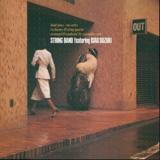
This album was recorded by Isao Suzuki with an international string band lineup featuring Hank Jones, Roy Haynes, and Ron Carter. Widely supported by jazz fans both in Japan and abroad, it remains highly sought after and continues to command strong popularity on the used market.
Bass (Piccolo Bass): Isao Suzuki
Bass: Ron Carter
Piano: Hank Jones
Drums: Roy Haynes
Originally released in 1978, "But Not for Me" is a masterpiece that fuses African polyrhythms with spiritual jazz, created by the singular jazz pianist Masabumi Kikuchi. The album is now set to be reissued by "Spin This Now!".
Piano: Masabumi Kikuchi
Bass: Gary Peacock
Bells: Alyrio Roy, Azzedin Weston
Berimbau: Alyrio Lima
Congas: Azzedin Weston
Drums: Al Foster
Percussion: Al Foster, Gary Peacock, Masabumi Kikuchi
- A1: Wave
- A2: Solitude
- A3: A Child Is Born
- A4: Killing Me Softly With Her Song
- B1: Black Is The Color Of My True Love's Hair
- B2: Good Morning Heartache
- B3: What Are You Doing The Rest Of Your Life
Acoustic Bass: Nobuyoshi Ino
Acoustic Piccolo Bass: Isao Suzuki
Alto Saxophone: Sadao Watanabe
Arranged, Conducted, and Piano: Masahiko Satoh
Drums: Motohiko Hino
Guitar: Sadanori Nakamure
The beautiful new world that master bassist Isao Suzuki built with the support of a diverse group of musicians finally returns to life after nearly 50 years!
With his deep musical insight and collaboration among some of Japan’s finest jazz artists, Isao Suzuki created a work of timeless beauty that now resonates
once again in the modern era.
- A1: Cadillac Woman
- A2: Bamboo
- B1: For All We Know
- B2: Blue Road
- B3: Going Home
Bass: Sam Jones
Cello, Bass: Isao Suzuki
Drums: Billy Higgins
Electric Guitar: Kazumi Watanabe, Kazumasa Akiyama
Recording & Remix Engineer: Yoshikane Okada
Executive Producer: Toshinari Koinuma
Piano, Electric Piano, Fender Rhodes: Cedar Walton
A gem of a crossover album from Isao Suzuki, who has continued to lead the Japanese jazz scene as a bassist.
Capturing the vibrant energy of the 1970s, this record has been rediscovered by club music aficionados and rare groove collectors alike.
The album fuses Van Morrison–like bluesy grooves with deep funk and jazz sensibilities, along with a uniquely Japanese melodic sense.
- A1: Simulation (Club Mix)
- A2: No No No (Flipper’s +Hf Mix)
- A3: Drive (London Drive Mix)
- B1: Sexy Heaven (King Street Sound Club Mix)
- B2: Les Vacances De Mademoiselle Kyon2 (Rapino In Kabuki 12” Mix)
- B3: Josei Joi Banzai(Female Funk Up Mix)
- C1: Love Bara (Love-Ballad)
- C2: When Will I See You (Massive Sounds Club Mix)
- C3: Drive (Gota Re-Mix)
- D1: La La La... (Flipper’s + Hf Mix)
- D2: La La La... (Extended Version)
- D3: Fade Out (Moodys Strings Mix)
KOIZUMIX PRODUCTION, a collaborative project between Kyoko Koizumi who worked under a different name in the 1990s and club culture artists and creators,
is finally being released in analog format. These two works, now difficult to obtain, are making their long awaited debut on vinyl.
The release is a complete analog version of the 1998 CD, which could be considered a KOIZUMIX PRODUCTION remix best-of.
It includes all tracks from the original CD, plus additional remixes that were previously available only on vinyl, compiled into a 2-disc set titled “89–99 COLLECTION”.
- A1: Thirsty
- A2: Self-Contradiction
- A3: Daguri
- B1: Expectation
- B2: Spin Drift
The representative work of Khsuke Mine, the powerful album "Daguri," originally released in 1973, is reborn in January 2026!
Kosuke Mine, having gained recognition in the Masabumi Kikuchi Group, recorded this work with his regular ensemble. Featuring emerging musicians including
Fumio Itabashi,
the performances are both weighty and vibrant, with a momentum and clarity that suggest the dawn of a new age. During this period influenced by Coltrane, Mine’s
playing brims with insight and scale, delivering transcendent melodies in tracks like "Thirsty" and "Daguri." With its combination of dynamism, lyricism, and exoticism,
this is truly a work worthy of being called one of Mine’s masterpieces. All tracks are composed by Mine himself. Recorded in 1973.
- A1: Send Me Your Feelings/Terumasa Hino(1979)
- A2: Virginity/Natsuko Kyono(1986)
- A3: Transparency/Issei Noro(1985)
- A4: Aqua Blue/Kangaroo(1983
- A5: Akaimichi Ga Hashirukuni/Nobuo Yagi(1979)
- B1: Misty Morning/Keiichi Oku(1981)
- B2: Hunt Up Wind/Hiroshi Hukumura(1978)
- B3: Shining Guitar/Kazumasa Akiyama(1978)
- B4: Southern Dream/You & Explosion Band(1983)
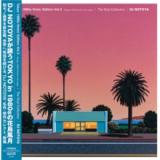
Focusing on tracks released between the late 1970s and 1980s, the selection spans from major artists beloved by music fans—such as Terumasa Hino and Sadao Watanabe—to hidden gems.
Carefully curated not by fame or signature songs, but with an emphasis on "fresh-sounding tracks to rediscover now," it’s a collection tailor-made for fans of city pop and DJs digging into Japanese grooves.
The jacket design was specially illustrated by STEREOTENNIS, known for their popular 1980s-inspired graphics.
- A1: Highway No Kage ~ Daiichi No Giwaku
- A2: Matteita Onna ~ Daiichi No Wana
- A3: Highway No Kage ~ Main Theme
- A4: Nazo No Onna ~ Wana!?
- A5: Matteita Onna ~ Main Theme
- A6: Highway No Kage ~ Wana E No Chosen
- B1: Sachiusu No Onna ~ Namiko No Tsuioku
- B2: Nazo No Onna ~ Main Theme
- B3: Highway No Kage ~ Teki Wo Motomete
- B4: Sachiusu No Onna ~ Main Theme
- B5: Matteita Onna ~ Variations
- B6: Highway No Kage ~ Kanashii Ketsumatsu
Composed, Arranged, and Conducted by: Norio Maeda
Has there ever been a soundtrack so thrilling and beautiful? This is the pinnacle of cine-jazz, crafted by the master Norio Maeda.
Released in 1971, Shadow Of The Highway is a suspense-action film produced and starring Jiro Tamiya, and directed by Jun Fukuda.
True to its tagline—“A sports car tearing vertically through Japan, from Kagoshima to Hokkaido”—the film features a Mitsubishi Galant GTO racing
across the country. Often compared to the American New Cinema classic Vanishing Point, it stands as a Japanese road movie gem.
The music was composed by the legendary Norio Maeda. His piano corners with elegance, the vibraphone dashes forward with flair, the bass charges
ahead with power, and the drums shift gears with precision. Motion and stillness, obsession and desire, joy and sorrow—thrilling performances and
beautiful melodies elevate the film to new heights.
As a soundtrack, it is exceptional. But even more, it represents an extraordinary level of quality for Japanese jazz in 1971. The performances are so
remarkable that it’s unfortunate the exact personnel remain unidentified. However, it has long been rumored that the musicians may have been associated
with Takeshi Inomata’s Sound Limited—or possibly The Third.
Text by Yusuke Ogawa (UNIVERSOUNDS / DEEP JAZZ REALITY)
- A1: Tokai No Ichinichi
- A2: Nostalgia
- A3: Megalopolis
- B1: Serenade
- B2: Tokai No Iradachi
1969 was the year of release of this one and only album by Japanese jazz pianist Hideo Ichikawa, vibraphonist Hiroshi Matsumoto, bassist Kunimitsu Inaba and drummer Motohiko Hino, all in collaboration. A one-off coming-together, it centred on the valerian vibes of Matsumoto, whose star instrument, the vibraphone, was bound to take centre stage for its comparative novelty, not to mention the fact that Matsumoto himself had been practicing before the others. An honorary work, this urbane masterpiece hears tasteful vibraphonic panning in full stereo, as blue passing notes collide with expert steel brushings and untied chord playing, resulting in a unique but salubrious listen.
- 1