Buscar:violence fog

Estilos
Todo
  • 1
VIOLENCE FOG - VIOLENCE FOG
  • New One
  • Rolli Zink
  • Leisure
  • Town Child Baby
  • Brother Where Are You

180 Gramm schweres schwarzes Vinyl. Violence Fog, eine sehr kurzlebige, aber kraftvolle Psychedelic-Rock-Band aus Baden-Baden, wurde 1969 gegründet. Die Besetzung umfasste Wolfgang Höfer (Gesang/Flöte), Karl-Heinz Höfer (Gitarre/Flöte/Gesang), Enno Dernov (Gitarre), Hilmar Beine (Bass) und Herbert Brandmeier (Schlagzeug). Ihre Musik mischte rohe, verzerrte Gitarrenklänge und britisch/amerikanisch beeinflusste bluesige Soli zu einem Sound, der von energiegeladenen Riffs bis zu stimmungsvollen und hypnotischen Psych-Jams reichte. Die Band baute sich schnell eine treue lokale Fangemeinde auf und spielte oft in Jugendzentren, Musikclubs und sogar bei Filmpremieren, wo ihre trippige psychedelische Lichtshow ihre Live-Auftritte begleitete. Ihr Repertoire umfasste sowohl Eigenkompositionen als auch Coverversionen von Songs wie ,Paint It Black". Violence Fog wurden bekannter, als sie am 23. April 1971 im Studio Ul des SWF-Radios in Baden-Baden fünf Titel aufnahmen, die ihr energiegeladenes Zusammenspiel aus schwindelerregenden Dual-Lead-Gitarren, Lautstärkedynamik und einer stimmungsvollen Rhythmusgruppe dokumentierten. Trotz ihres Talents und ihrer wachsenden Bekanntheit löste sich Violence Fog kurz nach Abschluss der SWF-Aufnahmen auf, was vor allem auf andere berufliche Verpflichtungen zurückzuführen war. Obwohl ihre gemeinsame Zeit nur von kurzer Dauer war, bleibt Violence Fog ein faszinierendes Kapitel in der lebendigen Psychedelic-Rock-Geschichte Deutschlands. Das Archiv-Plattenlabel Ancient Grease Records hat sich auf die Veröffentlichung seltener Heavy-Rock- und Psych-Musik aus den 1970er Jahren aus aller Welt spezialisiert. Begleitet wird das remasterte Audiomaterial von reichhaltigen visuellen Elementen und ausführlichen Liner Notes, um die unbekannte Musik dieser Ära für Sammler und neue Fans gleichermaßen wiederzubeleben und zu feiern.

Reservar24.10.2025

debe ser publicado en 24.10.2025

32,35

Ültimo hace: 2026 Años
Ran - Gelassenheit 2

Ran

Gelassenheit 2

12inchGELASSENHEIT2
Gelassenheit
09.03.2026

The name Ran is a new one to us and seemingly remains, for now at least, cloaked in secrecy, but when we see their influences range from Loefah, Photek and Carrier to Source Direct, Regis and Mika Vainio, we were instantly hooked. To this new EP on Gelassenheit, then, which speaks to a producer with a rough and tough analogue sound and love of bass-driven techno. 'Violence' is gritty and heavy as it pounds out a groove with eerie pads in the distance, 'Minus' has punchy broken beats that come at you through a murky fog, and 'Closure ' then ducks and dives with a post-dubstep nimbleness as spooky background details suggest there is an oncoming threat. 'Manoeuvres' is a sparse, heavyweight and soot-black dub with crispy hits that demand a physical response. Early support from Carrier!

Disponible

En el almacen y preparando para el envío

20,13
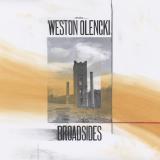
Weston Olencki - Broadsides

'In 2023, sound artist and composer Weston Olencki toured across the American South. Beginning in their hometown in South Carolina, they snaked a circuitous path from the mountains of West Virginia to the banks of the Mississippi River. As the miles accumulated, so did the initial seeds of new work.
'Instruments and artifacts they acquired hitched a ride in the backseat, while songs and sounds filled their portable recorder: water in its various states, the familiar insectoid buzz of those summer nights, trains cutting through the landscape, the traditional music that lived alongside the communities that kept it. Olencki took it all in, and over time, found ways that these experiences coalesced into a bramble-like perspective of time, where past, present, and future intersect in ways both barbed and beautiful.
'Broadsides, Olencki’s newest solo full-length is the multilayered result of this journey. The album follows their landmark release Old Time Music from 2022, which presented radical interpretations of traditional tunes from Appalachia and throughout the South alongside original compositions that drew significantly on archival recordings. On Broadsides, Olencki rejects delineations between the unmoored avant-garde and the rootedness of one’s cultural heritage, revealing their porous and intertwined nature. “My mother was a quilter. Her mother before that,” they write in the album’s liner notes. “Quilting, like music, is a practice of embedding knowledge and remembrance into the very core of the thing you are making. It’s not just about the materials, but how they’re reassembled, recontextualized, stitched, woven to form new patterns - the minutiae of craft holding significance to those looking to find it. Stories woven from stories, never told the same way twice.”
'Like all great road trips, Broadsides unfolds slowly and continuously, with moments of dramatic reverie punctuating the endless melt of highway in the rearview. We’re immediately confronted by the uncanniness of revisiting old haunts, as Southern storms break through the initial churn of the freight locomotives of Alabama. Olencki’s interpretation of the bluegrass standard “Foggy Mountain Breakdown” captures the euphoria of melancholy in motion. The permutational plucks of banjo are bounced around the frame by a computer, its pitches determined within algorithmic sequences and transcriptions of classic three-finger licks. The tonalities of old-time are smeared and stretched until all that’s audible is the insistence that Heaven might be real.
'In the album’s second half, “Omie Wise,” a murder ballad made famous by Doc Watson, follows an interlude recorded on the river in North Carolina in which the titular character’s body was laid. Ghostly echoes of a dozen other renditions float through the substrata as Tongue Depressor’s Henry Birdsey accompanies them on the pedal steel guitar. The album’s central composition, “all my father’s clocks,” is a profound meditation on entropy and impermanence. The sound of their father’s extensive clock collection ticks away as Olencki pulls a bow across the length of an autoharp sourced from a rural strip mall. The instrument was left as detuned as it was found, the resonance of its deep bass drone and clanging high-end the result of years of neglect and the warping effects of Southern humidity.
'Historically, broadsides were an early form of broadcasting, an often- musicalized telling of current news pasted in the public square. The name was later taken up by Sis Cunningham and Gordon Friesen in the 1960s, whose Broadside magazine published songs and social commentary when American folk music resurfaced as an urgent way of communicating the multifaceted politics of its time.
'Olencki borrows the phrase to recall both this old form of songmaking and that later prominent reexamination of traditional music’s role in modern life, but also to draw attention to the fragmented and machine- mediated way heritage is diffused in this very different, but no less pivotal, moment.
'As a sanitized past is used as justification for current violence and domination, we can turn to these artifacts to better understand the history of ourselves, but only if they are consciously pushed to evolve. Broadsides represents one personal, striking vision of what far-flung futurisms could be respun from = these high, lonesome sounds: a reflection of the unbridled joy and deep sorrow inherent to living together through time, and a desire to push further into the untold and unknown.'

Reservar30.01.2026

debe ser publicado en 30.01.2026

24,16

Ültimo hace: 2026 Años
Maston - Foreign Affairs LP

Maston

Foreign Affairs LP

12inchBEWITH009SEVEN
Be With Records
07.11.2025

The perfect accompaniment to that deep fall feeling, Frank Maston's beloved 2025 single finally gets its long overdue vinyl release! As our friends New Commute articulated beautifully, "Foreign Affairs" drifts through London fog and Paris shimmer, its avant-lounge glow wrapping each melody in a wistful ache. On B-side "Liaison," ghostly strings and a solitary piano paint a deserted twilight shoreline, Pacôme Henry's distinct 16mm cinematography hovering nearby." We've pressed just 500 of these gorgeous records so, be quick, Maston always flies.

Originally written for a film Maston was scoring in 2024, he decided to keep it aside for himself. And, well, us all. The song has a vibe Maston has previously flirted with; he wanted to dive in...all the way: "The arrangement is huge, definitely the biggest I've written, and it merited live musicians playing together. Also another experiment, to do it with all live musicians playing my arrangements. I wanted to make something that you'd want to put on when you bring a date back to your place. It's on the edge of sappy but that's sort of the point. I decided to give myself an unlimited budget - just spend whatever was necessary to get the right musicians and record it the best way possible."

It's this dedication to sonic perfection which Maston is rightly lauded for. We couldn't not put this on a cute wee 7" when we heard it.

The A side, "Foreign Affairs", is a brilliant, Bacharach-esque romp with a bit of that unapologetically romantic Morricone angle. Says Frank: "I was trying to synthesize that sort of jazzy/sexy/classy/romantic mature sound, where the edginess is in these surprising chord changes and subtle arrangement cues."

A wonderful complement, the flipside "Liaison", evokes Martin Denny, but Eden's Island was in Frank's head, too. He wanted to take a deep dive into that exotica sound - a genre he'd referenced a bit but never fully committed to - so the piece is lavished with those big sighing strings and a pretty lush arrangement. Happily, it all sounds super rich. Also, "Umiliani is always a reference for this sort of thing (Il Corpo etc.), That almost mechanical arrangement of things moving together and a simple melody over it (something I nicked from Ennio)".

The two songs were recorded in Paris and London in the summer of 2024. Aside from the rhythm section and piano, there's vibraphone, a full string section, trombones and alto and concert flutes. "Liaison" boasts strings, vibraphone, a female choir and tenor sax. Maston played piano and acoustic guitar but that's it (as opposed to playing basically everything on Tulips). His friend Oscar Sholto Robertson played drums and percussion whilst Maston mainstay Elie Ghersinu (formerly of L'Eclair) played bass.

The theme for a lot of Maston's titles is that they have two meanings. So "Foreign Affairs" is both a reference to him living abroad and the idea of constant cultural diplomacy and then there's this sexy/cheeky interpretation of foreign affairs in a literal way - "an affair abroad, ooh la la!". The artwork for this 7" single has Roman campaign flags, referencing the foreign affairs in sort of a sassy way. There's a violence implied. But then if you look from a bit of a distance it looks like a bouquet of flowers. So Frank thought it went with the spirit of the title. Also, he's used a lot of roman motifs now so he kept that theme going, even with the terracotta cover.

This is a vitally important project for our Frank. He explains why, here: "For whatever reason, these songs really resonated with me. I feel like they are either the end of a stylistic era for me or the beginning of a new one. They're sonically the culmination of what I'd been working towards and trying to get better at since I started. If I heard this when I was making Tulips I would have said "YES! *This* is what I want to be doing!". So that's the essence of it. It's a statement and the intended reaction is "This is really good, but why now?". Like the edge to it is the context of someone making this sort of thing in 2025, which I think is a huge strength. The real heads will get it. My music always has like a 2-3 year latency until people really catch onto it, and these ones will have a nice payoff I think."

We couldn't put it better ourselves. So we haven't.

Reservar07.11.2025

debe ser publicado en 07.11.2025

15,92

Ültimo hace: 2026 Años
Civilistjävel! x Mayssa Jallad - Marjaa: The Battle of the Hotels (Versions)

Civilistjävel! x Mayssa Jallad’s ‘Marjaa: The Battle of the Hotels (Versions)’ is a radical response to Mayssa Jallad’s 2023 original LP, a lyrical account of epochal events in Beirut at the dawn of Lebanon's civil war. ‘…(Versions)’ sees Civilistjävel! (aka Swedish producer Tomas Bodén) apply a stripped, dub methodology to Mayssa's rich stems, refracting the Arabic source through the hazy prism of Northern European electronica. Retaining ‘Marjaa…’s deep spatial framing and vaporous, shifting nature, traces are lifted and set down in a new landscape: a ghost of a ghost. Informed by Tomas' singular strand of ambient, minimalist, dub techno, ‘… (Versions)’ recalls the reductive, shimmering pulse of pioneering Berlin-based practitioners Basic Channel/Chain Reaction, but with the parameters stretched into the ether. Where versions typically focus on a rhythm, here the anchor is the tone and texture of Mayssa’s voice, around which a new world has been constructed. Disembodied and liminal, it conjures an eerie panorama that feels like a postscript to the original, further emphasizing the geopolitical events that have had such devastating effect in Mayssa’s homeland of Lebanon since that record’s release. ‘Marjaa…’ (tr. ‘reference’) combined Mayssa Jallad’s two main vocations: music and urban research/architectural history. The album was co-written with Fadi Tabbal and based on Mayssa's Historic Preservation master's thesis (‘Beirut’s Civil War Hotel District: Preserving the World’s First High-Rise Urban Battlefield’). The thesis examined a 5-month conflict that took place within Beirut's skyscraper-laden luxury hotel district of Minet El Husn near the start of the Lebanese Civil War. Addressing a post-war generation who have never been taught this difficult history, ‘Marjaa…’ was an attempt to process trauma, and “a call to protest for the renewal, rather than the recycling of the political class that once destroyed the country and holds us, to this day, hostage of its violence.” Often perceived as a mysterious, shadowy presence, Civilistjävel! has come increasingly to the fore in recent years through a consistently dazzling stream of records, released both anonymously and via Fergus Jones’ FELT imprint, often appearing with scant information and tracks for the most part untitled. Having featured tracks from ‘Marjaa…’ on mixes, and included the album in his picks of 2023, in early 2024 Tomas asked Mayssa to provide vocals for a track on his album ‘Brödföda’. Mayssa remembers, “Tomas asked me to choose one of the tracks he was working on. I was in Boston at the time, so I took a walk and chose a track. I wrote the lyrics at the public park, wondering if I was the only one around that was losing sleep over the genocide in Palestine and the war in South Lebanon. I went back to the apartment and recorded the vocals on my phone, while listening to the track on headphones. Tomas reworked it with the voice and sent it back. I liked it immediately.” Despite the geographical distance from Beirut to Uppsala, Sweden, where Tomas resides, Mayssa’s contribution sounds very much at home in Civilistjävel!’s atmospheric, contemplative sound-world. Tomas’ request was reciprocated by Mayssa soon after, resulting in the spectral, glassy ambience of ‘Etel, Kharita (Version)’. This was followed by an invitation to work on more tracks, which Tomas immediately embraced, intensively jamming out versions live to two-track tape in downtime between travelling. If not entirely dissimilar to his regular working practice, the immediacy of it was unusual. Much was improvised live with just a keyboard (not tethered to a grid), and a restricted set-up that largely forbade later edits - only the rhythm tracks are programmed. A sharp conceptual thinker and composer, Tomas takes creative liberties with Mayssa’s songs in a way that is deeply felt and sympathetically aligned, whilst unashamedly outside of the original context of the record. The voice is leaned into as an instrument, without the clear, specific details of language, and this axis provides an uncertain, amorphous footing - structure is often suggested or hinted at, before disappearing or collapsing into fog, and folding back into the message within the song. A somewhat unprecedented source for an album of versions, even those familiar with ‘Marjaa: The Battle of the Hotels’ may at points struggle to hear the songs these versions are rebuilt from, despite the vocal narratives remaining virtually intact. The light has shifted; eroded buildings are foregrounded; fragments of memories appear in chiaroscuro. Signs and signifiers have been replaced. Shorn of the original's warm guitar, ‘Baynana (Version)’ feels like an ominous visitation, the sun no longer visible. ‘Holiday Inn (March 21 to 29) (Version)’ is a molten, clattering invocation. The beat-less tracks nod towards the cold, otherworldly sound-scaping of late '90s isolationism. More propulsive and embodied, ‘Holiday Inn (January to March) (Version)’ and ‘Kharita (Dub)’ are strobing, iridescent techno - lithe, shifting and mutating with almost implausible finesse. A stunning addition to Civilistjävel!’s growing catalogue, ‘…(Versions)’ is a luminous counterpoint to ‘Marjaa…’, and a welcome reminder of how incredible that record remains.

No en stock

Haga su pedido ahora y le encargaremos el artículo en nuestro proveedor.

25,17

Ültimo hace: 8 Meses
OH SEES - ORC (2025 REISSUE) LP 2x12"
  • The Static God
  • Nite Expo
  • Animated Violence
  • Keys To The Castle
  • Jettisoned
  • Cadaver Dog
  • Paranoise
  • Cooling Tower
  • Drowned Beast
  • Raw Optics

The Oh Sees wasted no time in racing headlong into nightmarish battle with the mighty Orc, clawing even farther up the ghastly peak stormed so satisfyingly by their previous A Weird Exits. The band is in tour-greased, anvil-on-a-balance beam, gut-pleasingly heavy form, nimbly braining—with equal dashes of abandon and menace—on this fresh batch of bruisers and brooders, hypnotically stirred into to the cauldron of chaos you’ve come to expect. On Orc, fresh blood Paul Quattrone joins Dan Rincon to form a phalanx of interlocking double drums, alternately propelling and fleet-footing shifting ground to pinion John Dwyer’s cliff-face guitars to the boogie. Tim Hellman keeps it swinging like a battle-axe to the eyebrows. The tunes veer toward the violence of their live shows, with a few tasty swerves into other lanes: heavy to lush, groovy to stately. Throughout, it remains sinister in its swaggering skulk, manic in its fuzz-fried fugues. They hit all the sweet spots the heads foggily remember, and there’s plenty to sweat over if you just hopped into the sauna. More evil…more complex…more narcotic…more screech… more blare…more whisper…there’s even more Brigid. Less “Thee,” but more of everything else.

Reservar09.05.2025

debe ser publicado en 09.05.2025

50,84

Ültimo hace: 2026 Años
Geld - Currency Castration LP

"If you’ve ever wondered what Catharsis covering The 13th Floor Elevators might sound like, wonder no longer—and that’s only the start!" - Decibel Magazine GELD make their Relapse Records debut with their third full length, Currency // Castration! The Australian band distills a despairingly hellish vision of the world into a thundering crack to the temple through an unsparing fusion of hardcore’s bleakest violence with metal’s ruthless strength-through-conviction. GELD's abrasive take on the genre is distorted through a lense of fuzzed out psych soundscapes; vocals truly sound like unhinged barks, while guitars, bass, and drums crash against one another frenetically, each track burning brighter and brighter. Every moment of Currency // Castration is urgent. Tracks such as “Chained to a Gate” edge and scratch at a relief that is ultimately denied, toying with the nightmarish promise of a breakdown that never comes. Elsewhere, "Cut You Down" pulses with frantically itching riffs that stream forth. "Fog of War" snaps and snarls; while "Secret Prison" evinces the honed physique of Japanese hardcore fed through the broken brain of someone on a years-long Rrröööaaarrr-era Voivod spin-out. Despite the band's innovative approach to the genre, GELD makes no pretensions at being “interesting” for interesting’s sake - As vocalist Al Smith puts it, “One of the most boring things people can do is try to dress up what someone else has already contributed to a genre and make it ‘clever’… We’re more interested in finding our own position.” With Currency // Castration, GELD offers no promise of a higher purpose or resolve. Rather, they lean into dissociation, finding truth and meaning in the transcendental joy of simply escaping, surviving, existing.

Reservar09.06.2023

debe ser publicado en 09.06.2023

23,11

Ültimo hace: 2026 Años
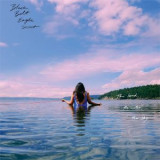
Black Belt Eagle Scout - The Land. The Water, The Sky

This land runs through Katherine Paul’s blood. And it called to her. In dreams she saw the river, her ancestors, and her home. When the land calls, you listen. And KP found herself far from her ancestral lands during a time of collective trauma, when the world was wounded and in need of healing. In 2020 she made the journey from Portland back to the Skagit River, back to the cedar
trees that stand tall and shrouded in fog, back to the tide flats and the mountains, back to Swinomish.

It is a powerful thing to return to our ancestral lands and often times the journey is not easy. Like the salmon through the currents, like the tide as it crawls to shore this is a story of return. It is the call and response. It is the outstretched arms of the people who came before, welcoming her home. The Land, The Water, The Sky is a celebration of lineage and strength. Even in its deepest moments of loneliness and grief, of frustration over a world wrought with colonial violence and pain, the songs remind us that if we slow down, if we listen to the waves and the wind through the trees, we will remember to breathe.

There is a throughline of story in every song, a remembrance of knowledge and teachings, a gratitude of wisdom passed down and carried. There is a reimagining of Sedna who was offered to the sea, and a beautiful rumination on sacrifice and humanity, and what it means to hold the stories that work to teach us something.

Chord progressions born out of moments of sadness and solitude transform into the islands that sit blue along the horizon. The Salish Sea curves along her homelands, and when the singer is close to this water she is reminded of her grandmother, how she looked out at these same islands, and she’s held by spirit and memory.

The Land, The Water, The Sky rises and falls, in darkness and in light, but even in its most melancholy moments it is never despairing. That is the beauty of returning home. When you stand on ancestral lands it is impossible to be alone. You feel the arms and hands that hold you up, unwilling to let you fall into sorrow or abandonment. In her songs Katherine Paul has channeled that feeling of being held. In every note she has written a love letter to indigenous strength and healing.

There is a joy present here, a fierce blissfulness that comes with walking the trails along the river, feeling the sand and th stones beneath her feet. It is the pride and the certainty that comes with knowing her ancestors walked along the same land, dipped their hands into the water, and ran their fingertips along the same bark of cedar trees.

This is a story of hope, as it details the joy of returning. Katherine Paul’s journey home wasn’t made alone, and the songs are crowded with loved ones and relatives, like a really good party. And as the songs walk us through the land it is important we hover over the images and the beauty, the moments that mark this album as site specific. The power of this land is woven throughout, telling the story of narrow waterways, brush strokes, salmon stinta, and above all healing.

Let it take you. Move through the story and see the land through her eyes, because it is a gift, a welcomed sʔabadəb.*

*The word “gift” in Lushootseed, the language of the Coast Salish people“

Reservar10.02.2023

debe ser publicado en 10.02.2023

26,01

Ültimo hace: 2026 Años
Sonic Youth - Evol

Sonic Youth

Evol

CassetteGOO019CS
Goofin’
10.06.2022

"Released in May 1986 on SST Records and Blast First! in the UK, EVOL was the third studio album by Sonic Youth and showed the first signs of the band transforming their No Wave past into a greater alt-rock sensibility. “EVOL … marks the true departure point of Sonic Youth’s musical evolution,” noted Pitchfork, “In measured increments, Thurston Moore and Lee Ranaldo … bring form to the formless, tune to the tuneless, and with the help of Steve Shelley’s drums…, impose melody and composition on their trademark dissonance.” ""If Daydream Nation is Sonic Youth’s opus, EVOL was crucial research. There’s a directness that makes everything feel close. It is pure tension with little release. The entire record is a shadow." Stereogum likewise praised the album as one, “full of suspense…, the cornerstone [Nico-evoking] monotone [by Kim Gordon]. ‘In The Kingdom #19,’ featuring Mike Watt on bass and … vocals [by Ranaldo]…, is a harrowing story of a highway wreck over a suitably edgy instrumental backing punctuated by … live firecrackers in the vocal booth.” For Popstache, “EVOL slithers into the unconscious. Once the....detuned melodies and haunting riffs and final whispers of feedback depart from the speakers… the music [leaves] a faded footprint, forever reeling the listener back for another strange trip.” // “The seeds of greatness…” Pitchfork (who placed the album #31 of the Top 100 Albums of The 1980s) // “A near-masterpiece.” Trouser Press // “A stunningly fluent mixture of avant-garde instrumentation and subversions of rock’n’roll.” All Music Guide"

Reservar10.06.2022

debe ser publicado en 10.06.2022

19,29

Ültimo hace: 2026 Años
OSEES - PROTEAN THREAT

Osees

PROTEAN THREAT

12inchCF129
Castle Face
26.11.2021

Witness the ever-changing, ever-mutating threat that is reality.
Perception is under duress; sensibility is bending everyday
under the barrage of nonsense. One must make note of whom
one is and what one has become: look into the mirror of the
planet-killers—psychic cannibals infiltrate and contaminate
once familiar and seemingly secure territories… formidable
foes indeed! What powers these beasts? What fuels discord
and hatred? The behemoth of a “civil” society? What are the
weapons at one’s disposal? Generosity is the aegis against greed,
empathy is the armor to deflect apathy, love is the club to abate
hate…the fog is lifting and humans are opening their eyes.
And so Castle Face offers this field recording, the Osees
Protean Threat, from the pits as a quick booster between protein
pills and recycled sweat beverage anthems to assist the listener
to not worship at the altar of violence and greed, to not offer
oneself up for free, to stand up and be vigilant! Truth will not
be found in the speeches and photo ops of the overlords— stand
strong and together under the gaze of the oppressors.
Stand vigilant, united with those who don’t have the same
privileges. Demand respect and a peaceful life for all.
This recording is at the apogee of scuzz—punk anthem
amulets for the ears and heart, a battery for one’s core. Be
strong. Be human. Be love.

Reservar26.11.2021

debe ser publicado en 26.11.2021

26,85

Ültimo hace: 2026 Años
Ada Lea - One Hand On The Steering Wheel The Other Sewing A Garden

one hand on the steering wheel the other sewing a garden is the name of the second album by Canadian songwriter Alexandra Levy, publicly known by the moniker Ada Lea. On one hand, it’s a collection of walking-paced, cathartic pop/folk songs, on the other it’s a

book of heart-twisting, rear-view stories of city life. Ada Lea has followed up the creative, indie-rock songcraft of her debut what we say in private with surprising arrangements and new perspectives. The album is set in Montreal and each song exists as a dot on a personal history map of the city where Levy grew up. Due on September 24th from Saddle Creek and Next Door Records in Canada, the physical record will be released alongside a map of song locations and a songbook with chords and lyrics, inspired by Levy’s love of real book standards.

Levy penned and demoed this batch of songs in an artist residency in Banff, Alberta. After sorting and editing she made her way to Los Angeles to record with producer/engineer Marshall Vore (Phoebe Bridgers) who had previously worked on 2020’s woman, here E.P. After a long walk to the studio each morning, Levy spent her session days diving into the arrangements, playfully letting everything fall in place with complete trust for her collaborators. She notes “Marshall’s expertise and experience with drumming and songwriting was the perfect blend for what the songs needed. He was able to support me in a harmonic, lyrical, and rhythmic sense.” Other contributors that left a notable fingerprint on the soundscape include drummer Tasy Hudson, guitarist Harrison Whitford (of Phoebe Bridgers band), and mixing engineer Burke Reid (Courtney Barnett). Many songs came together with a blend of studio tracks and elements from the pre-recorded demos.

The resulting sounds range from classic, soft-rock beauty to intimate finger-picked folk passages and night-drive art-pop. And the textures are frequently surprising due to the collage of lo-fi and hi-fi sounds that tastefully decorate the album without ever clouding the heart-center of the song. Tracks like “damn” and “oranges” feel timeless with their AM gold groove and 70’s studio sheen, while songs like “my love 4 u is real '', “salt spring” and “can’t stop me from dying” sound completely modern in their use of electronics, sound effects, and pitched vocals. In their subtle, sonic variety, all of the album’s songs flow together with ease into one big, romantic dream for Levy’s silken vocals to float above.

Inspired by personal experience, daydreams, and Elena Ferrante’s Neapolitan novels, the lyrics of one hand... center storytelling on a bigger scale. The experience and emotions of a year are communicated through Levy’s vignettes of city life. Her prose is centered in its setting of the St Denis area of Montreal as it draws up memories from local haunts like Fameux, La Rockette, and Quai des Brumes in rearview reverie. Levy creates a balance through the album’s year by splitting her songs evenly into four seasons. Opening track “damn”, as a song of winter, kicks off the narrative with the events of a cursed New Year’s Eve party. Immediately this timeline becomes jumbled into a Proustian haziness. The listener is then led through the heat-stricken, brain fog of Summer song, “can’t stop me from dying” and then into the autumnal romanticism of “oranges” before returning back to New Year’s on “partner,” which Levy describes as “a woozy late-night taxi blues reflection on moments when timing can be so right, yet so wrong…”. These collected stories as a whole chart the unavoidable growth that comes with experience. “All is forgiven in time. All is forgotten in time. And when the music stopped, I heard an answer” (from “my love 4 u is real”).

Whether to consider these songs fiction or memoir remains unknown. On one hand, Levy says “Why would I try to write a story that’s not my own? What good would that do?” but on the other hand, she is quick to note the ways that language fails to describe reality, and how difficult this makes it to tell an actually true story. The poetic misuse of the word “sewing” in the album’s title serves as a nod to the limitations words provide. What does it mean to sew the garden? And how can we appreciate its carefully knit blooms when the rearview mirror is so full of car exhaust?

Reservar24.09.2021

debe ser publicado en 24.09.2021

25,17

Ültimo hace: 2026 Años
Ada Lea - One Hand On The Steering Wheel The Other Sewing A Garden

one hand on the steering wheel the other sewing a garden is the name of the second album by Canadian songwriter Alexandra Levy, publicly known by the moniker Ada Lea. On one hand, it’s a collection of walking-paced, cathartic pop/folk songs, on the other it’s a

book of heart-twisting, rear-view stories of city life. Ada Lea has followed up the creative, indie-rock songcraft of her debut what we say in private with surprising arrangements and new perspectives. The album is set in Montreal and each song exists as a dot on a personal history map of the city where Levy grew up. Due on September 24th from Saddle Creek and Next Door Records in Canada, the physical record will be released alongside a map of song locations and a songbook with chords and lyrics, inspired by Levy’s love of real book standards.

Levy penned and demoed this batch of songs in an artist residency in Banff, Alberta. After sorting and editing she made her way to Los Angeles to record with producer/engineer Marshall Vore (Phoebe Bridgers) who had previously worked on 2020’s woman, here E.P. After a long walk to the studio each morning, Levy spent her session days diving into the arrangements, playfully letting everything fall in place with complete trust for her collaborators. She notes “Marshall’s expertise and experience with drumming and songwriting was the perfect blend for what the songs needed. He was able to support me in a harmonic, lyrical, and rhythmic sense.” Other contributors that left a notable fingerprint on the soundscape include drummer Tasy Hudson, guitarist Harrison Whitford (of Phoebe Bridgers band), and mixing engineer Burke Reid (Courtney Barnett). Many songs came together with a blend of studio tracks and elements from the pre-recorded demos.

The resulting sounds range from classic, soft-rock beauty to intimate finger-picked folk passages and night-drive art-pop. And the textures are frequently surprising due to the collage of lo-fi and hi-fi sounds that tastefully decorate the album without ever clouding the heart-center of the song. Tracks like “damn” and “oranges” feel timeless with their AM gold groove and 70’s studio sheen, while songs like “my love 4 u is real '', “salt spring” and “can’t stop me from dying” sound completely modern in their use of electronics, sound effects, and pitched vocals. In their subtle, sonic variety, all of the album’s songs flow together with ease into one big, romantic dream for Levy’s silken vocals to float above.

Inspired by personal experience, daydreams, and Elena Ferrante’s Neapolitan novels, the lyrics of one hand... center storytelling on a bigger scale. The experience and emotions of a year are communicated through Levy’s vignettes of city life. Her prose is centered in its setting of the St Denis area of Montreal as it draws up memories from local haunts like Fameux, La Rockette, and Quai des Brumes in rearview reverie. Levy creates a balance through the album’s year by splitting her songs evenly into four seasons. Opening track “damn”, as a song of winter, kicks off the narrative with the events of a cursed New Year’s Eve party. Immediately this timeline becomes jumbled into a Proustian haziness. The listener is then led through the heat-stricken, brain fog of Summer song, “can’t stop me from dying” and then into the autumnal romanticism of “oranges” before returning back to New Year’s on “partner,” which Levy describes as “a woozy late-night taxi blues reflection on moments when timing can be so right, yet so wrong…”. These collected stories as a whole chart the unavoidable growth that comes with experience. “All is forgiven in time. All is forgotten in time. And when the music stopped, I heard an answer” (from “my love 4 u is real”).

Whether to consider these songs fiction or memoir remains unknown. On one hand, Levy says “Why would I try to write a story that’s not my own? What good would that do?” but on the other hand, she is quick to note the ways that language fails to describe reality, and how difficult this makes it to tell an actually true story. The poetic misuse of the word “sewing” in the album’s title serves as a nod to the limitations words provide. What does it mean to sew the garden? And how can we appreciate its carefully knit blooms when the rearview mirror is so full of car exhaust?

Reservar24.09.2021

debe ser publicado en 24.09.2021

25,17

Ültimo hace: 2026 Años
Dalhous - The Composite Moods Collection Vol.2: Point Blank Range 2x12"

Dalhous end the 5-year silence with the long awaited follow up to 2016's House Number 44, presenting the second volume of The Composite Moods Collection. "Point Blank Range" reinterprets the established narrative with an inverse look at the proceedings. Taking the “point of view of the disease", the perspective is now turned inside out, revealing an alternate account from the eyes of the photographed subject of House Number 44. If Vol.1 was a documented presentation of another person's condition, Vol.2 takes the listener behind the facade.

From the outset, the album offers a narratively uncooperative stance, weaving together layers of anxiety and painful specificity that often overtly manifests the psychotic protagonist's stormy interior state. A clearly subjective assault, which is made evident right from opening track 'Transceivers' through to the imploding nature of 'Intramuscular Administration’, to the vulnerable, psychedelic mania of 'Open As A Glade Unfolding'. Continuing to work within the framework of a soundtrack-like structure, Dalhous ramps things up to provide the aural equivalent of sound and picture, manifesting an almost quasi-visual experience.

The entire record can be listened to as a continuous piece, each track seamlessly linked together as though part of an interconnecting nervous system. Where House Number 44 offered airy, widescreen soundscapes of detached detail, Point Blank Range presents an altogether different form. Creating airtight vacuums of agitated twitching feeling, tracks are pulled to the forefront of the stereo field, continually mutating their densely painted neurochemical hallucinations with a breadth of sound previously unheard on previous releases.

Listeners will be able to decipher nods to long standing soundtrack influences from composers such as Fabio Frizzi, with his use of strikingly bold and haunting melodies, to Tangerine Dream’s distinctively foggy atmospheres of The Keep. There are moments that evoke the nihilistic drones of Brian Gascoigne’s soundtrack to Phase IV, and the more horrific passages of metal clanging ambience from the likes of Chu Ishikawa with his scores for Shinya Tsukamoto.

After their former record label Blackest Ever Black disbanded, Dalhous found themselves out on a limb. It took 5 years to find a new home with Denovali. Given the unusually extended period between records, Dalhous had the time to dive deeper into the material, rendering a level of experimentation previously unavailable to them. Over 4 hours of material was created, a total of 1TB of data. Countless revisions to the track listing ensued with some of the unused material being reutilised in the making of the final chapter in the trilogy to form a direct companion piece.

Reservar07.05.2021

debe ser publicado en 07.05.2021

26,43

Ültimo hace: 2026 Años
Sonae - I Started Wearing Black

"The kind of melancholia I'm talking about, by contrast, consists not in giving up on desire, but in refusing to yield. It consists, that is to say, in a refusal to adjust to what current conditions call 'reality' - even if the cost of that refusal is that you feel like an outcast in your own time." (Mark Fisher, Ghosts Of My Life, Zero Books 2014, p. 24) In Ghosts of My Life: Writings on Depression, Hauntology and Lost Futures', the author Mark Fisher outlines - to put it in a big way - a resistant melancholy. This stands in contrast to leftist melancholy resignation', as well as something which Fisher does not talk about: its common masculine counterpart, habitual post-left cynicism - as in seen it all before'. Fisher calls this hauntological melancholy. Haunting, spooks, ghosts and apparitions are an almost constant presence on I Started Wearing Black', the second album by the Cologne-based artist Sonae (pronounced so-nah'). The term hauntology shares a fate with retro-futurism when it comes to inflationary overuse and abuse. It's a conceptual container that looks good and can hold a lot, indeed, too much. Furthermore, hauntology has its peak season behind it, a term on the threshold of its expiration date. Nevertheless, I would like to rehabilitate hauntology and use it properly to characterize I Started Wearing Black', because the term is rarely as compelling to describe music as is the case here. The most recent other example could be Asiatisch' by Fatma Al Qadiri, but with a completely different frame of reference. What are the ghosts of this music It rustles, crackles, ruffles, crunches, rattles, scrapes, sometimes a beat emerges from the constant noise, sometimes an obscure voice mumbles incomprehensibly, sometimes a melancholy piano figure is prevented by this noise from coming too much to the foreground. It definitely is eerie - to bring into play another term used by Fisher in the title of his latest book, The Weird and the Eerie'. In British pop-jargon, eerie first occurred to me more often when referring to particularly leftfield, spooky and... well... ghostly dub, a bass-heavy, echoing noise, from Augustus Pablo to Creation Rebel to Burial. Unlike the Wald & Wagner records by Wolfgang Voigt, Sonae is not a kind of neo-romantic veiling with a tendency for escapist nebula. It is more a noise of latency. The noise signals a latent - not necessarily acute - threat, a latent uneasiness about... yes... about what About a System Immanent Value Defect' That's the name of a track on I Started Wearing Black' where something that sounds like a French Horn (or a foghorn) battles for attention through or against the background noise. An email from Sonae: The piece 'System Immanent Value Defect' should actually be called 'I See Turkey'. I wrote it for my fellow student Elif - she is a pianist and Gezi Park activist from Istanbul. Through her I witnessed the inner conflict and agitation that political circumstances can create: her feelings of guilt when there was an attack, with her safe in Germany as a student, watching the events from afar. It was horrible. When her mother begged her not to come home because she feared for her safety, I felt a cold shiver run down my spine. I started with the piece from this mood, beginning with the piano, then the noise (modulated sinusoidal curves), which reminded me of waves and the then heatedly discussed Mediterranean sea: atmospheric, melancholy motifs. In contrast is the anger, the pressure, represented in corresponding sounds - hopefully audible! - During this time I started to think about world views as they can be found around the globe, in how far they held by societies and their political representation. I realized that I know of no political system that is actually about the people and what would do them good. It's always about positions, power, money. I thought that was a lot more frightening on a global scale than merely viewing Turkey in isolation. That's why the piece is called "System Immanent Value Defect", because our world suffers from precisely that. Everywhere, it's all about the wrong things.' Between the wrong things there are happy moments. In the title track, after 184 seconds of rattling and hissing, a beat is unleashed, like an arrow released from a spanned bow, a beatific relief, if there is such a thing. White Trash Rouge Noir' first meanders along spookily, then after 144 seconds it transforms itself into a distant cousin of Einstu¨rzende Neubauten's Yu¨ Gung', but there is no Big Male Ego to be fed here, and the black in the album title is a completely different type of black from that of the Neubauten. Furthermore, I Started Wearing Black' was finished long before the black dresses were worn at the Golden Globes as a sign of protest against sexual violence. Sonae writes that she herself started wearing black some time ago. Her reasons are so-called personal ones: ... resulting from an individual situation (lovesickness), I started to wear black (gaining weight and feeling ugly).' The political dimension of gaining weight, feeling ugly and therefore dressing in black in I Started Wearing Black' lurks within the noise and never becomes explicit and only rarely manifest - or a manifesto. Sonae writes about the track We Are Here': A piece for minorities... in this case, considering the current pop-feminist discourse, explicitly for women. Female artists have long been saying loud and clear that 'we are here' and 'electronic music is not a boys club!' But this pop-feminist moment should only be seen as one part of the dedication of the piece. It is for minorities, for the oppressed, who didn't belong enough.'

Klaus Walter

No en stock

Haga su pedido ahora y le encargaremos el artículo en nuestro proveedor.

17,19

Ültimo hace: 7 Años
  • 1
Artículos por página
N/ABPM
Vinyl