Buscar:wake the way i feel

Estilos
Todo
Ibibio Sound Machine - Doko Mien

Eno Williams, frontwoman of Ibibio Sound Machine, uses both English and the Nigerian language from which her band's name is derived for the dazzling new album Doko Mien. Long lauded for jubilant, explosive live shows, Ibibio Sound Machine fully capture that energy on Doko Mien, the followup to their Merge debut Uyai.
In a glowing piece in the New York Times, those songs were praised for following 'in the tradition of much African music, [making] themselves the conscience of a community.' By pulsing the mystic shapes of Williams' lines through further inventive, glittering collages of genre, Ibibio Sound Machine crack apart the horizon separating cultures, between nature and technology, between joy and pain, between tradition and future. That propensity for duality and paradox seems common in people whose lives span continents.

Williams was born in the UK, but grew up in Nigeria, always steeped in her family heritage. She obsessed over West African electronic music, highlife, and the like, but was equally empowered by Western genres such as post-punk, disco, and funk. The London octet have enveloped themselves in that maximalist quilt proudly since their 2013 formation. Though it can often bring with it news of stress and uncertainty, the modern world further brings all these disparate traditions into connection.
'Everyone has everything now,' says multi-instrumentalist Max Grunhard. 'Everyone has immediate access to every genre, picking things up from everywhere—like magpies.' And while they haven't suddenly left their African roots behind, Doko Mien does find increased representation of English lyrics in the ratio. By sharing more directly with more universal lyrics, the record feels more anthemic, reaching for grander heights.
'We wanted to give people a reason to sing along, to find their soundtrack every day,' Williams says. 'We wanted everyone to feel as if they're part of the music as well.'

Late album highlight 'Guess We Found a Way' addresses the change with a coy smile. 'Guess we found a way to speak to you/ Guess we found a way to say what's true/ To say what's real,' Williams coos over glistening chains of reverberant synth and diamond dust percussion, before returning to Ibibio in the chorus. Perhaps the best example of the group's ability to convey meaning across language and tradition, to blend past and future into a singular present comes on 'She Work Very Hard'. The traditional Ibibio folk tale bobs over the waves of tuned percussion, chunky synth, and pinprick highlife-esque guitar, while Jose Joyette's drums and Derrick McIntyre's bass funk groove bring everyone to the dance floor. 'These stories won't be forgotten. Feel the music: it speaks to everybody,' Williams says. 'We can travel back in time together, while convening on a futuristic, present tense. We hope that we can give people that reason to wake up, that one song to sing and dance and be happy.'

Doko Mien: Tell me everything. On their new album, Ibibio Sound Machine provide the perfect companion, ready to digest as much as possible and then further unfurl beauty and hope. They remember and honor the past and charge forward toward the future, all while intensely expanding the present.

No en stock

Haga su pedido ahora y le encargaremos el artículo en nuestro proveedor.

19,29

Ültimo hace: 7 Años
MONAQEE & VANIS - Robo Wars + Bonus EP

Monaqee are multi instrumentalist / pianist Bencze Molnar and producer Jules Hiero.
Vanis is a bassist based in Budapest, deeply rooted in the city’s vibrant underground culture.
Bencze and Vanis are members of the jazz fusion group Jazzbois.
Being rooted in the underground hip hop and jazz scenes,the artists started this project to create a distinct sound, blending jazz, hip hop and lofi elements in a sophisticated way, that stands out from the crowd.
The only feature on the Album is from Domenico Lancellotti, a pioneer of Brazilian beat culture.

Robo Wars is a project born from three years of spontaneous sessions in Budapest. Over this time, the trio captured their best moments, weaving them into a smooth tapestry that blends jazztronica, hip-hop, and lofi beats into an analogue experience. Driven by electric bass, drum machines, and an arsenal of synthesizers including the Prophet, Juno, Moog, and the new UDO designs, Robo Wars feels alive, raw, and deeply musical.
Each track breathes improvisation:
Most of the material was captured live during jam sessions, with only minimal overdubs. The result is a project that preserves the spirit of freestyle creativity, much like a true jazz performance, later sculpted into structured songs by Jules Hiero.

Reservar12.06.2026

debe ser publicado en 12.06.2026

25,00
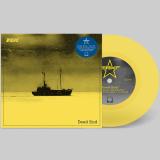
FEX - Dead End 7"

FEX

Dead End 7"

7"-VinylEDGE-039
The Outer Edge
06.02.2026

Were FEX the Wildest & Weirdest German New Wave Band in 1984?

Few cult mysteries in modern music have captured the internet's imagination quite like "The Most Mysterious Song on the Internet." Eventually identified as "Subways of Your Mind" by the elusive German band FEX, the track became a viral sensation decades after its creation-and even made its way into a recent Hollywood blockbuster (Black Phone 2).

Now, two more lost FEX recordings have emerged from an old demo cassette: "Dead End" and "Sarah." And they're every bit as electrifying as the legend suggests.

On both songs, guitarist and main songwriter Ture Rückwardt joins forces on lead vocals with his former wife and musical partner Ilona Rückwardt, forming a vocal pairing that channels raw energy and eerie chemistry. What they deliver are two of the most urgent, adrenaline-fueled post-punk artifacts you're likely to hear this year-even if they were recorded more than forty years ago.

Opening with a sharp, melodic guitar solo, "Dead End" bursts forward with uptempo drive-catchy, fierce, and full of momentum. Apparently inspired by Orwell's 1984, its lyrics depict urban desolation-loneliness, homelessness, hopelessness-yet still shimmer with defiance in lines like, "Truth is amazing - hoping is like waiting."

The second track, "Sarah," dives even deeper into darkness. Mixing post-punk intensity with psychedelic textures, Rückwardt tells an imaginary story of a couple lost in drugs and spiraling through a bad trip, only to wake and realize that sobriety offers little comfort-the real world itself can be just as brutal and offers no easy escape.

Neither song makes the slightest concession to commercial trends. Instead, they feel utterly uncompromising-wild, strange, and defiantly timeless. In a world obsessed with polish and playlists, "Dead End" and "Sarah" sound like transmissions from a different planet.

Both tracks were originally recorded as demos in 1984 in the band's rehearsal room, with Hase engineering. The newly restored versions preserve the raw spirit of the original tapes while adding subtle layers to enhance their atmosphere without losing the authentic 1980s sound. FEX hint that the untouched demo versions might surface later, possibly on a second volume of their archival

Disponible

En el almacen y preparando para el envío

19,75
Tony Morris & Isa Gordon - Wake Up Baby

Isa Gordon and Tony Morris were first brought together through their individual releases on Optimo Music, which established mutual respect within the label’s community. While they had not previously performed live together, they were invited to take part in a fundraiser hosted by Queen’s Park Arena in support of Glasgow NW Foodbank and later for JD Twitch’s end-of-life care. Tony asked Isa to contribute guitar and backing vocals to his set, including a track then called Last Night I Had a Dream. That performance became the seed for their collaboration.

The first phase of fleshing it out, recalls Tony: “Somebody said Isa sang like Shania Twain. That got me thinking about country music and call and response, prompting me to come up with alternative lyrics.” Isa remembers: “I cycled over to Tony’s house with my guitar, and we spoke about what the tune meant. It was about him being wrapped up in dreamland, luxuriating in his subconscious, while my character — impatient and trapped in her own routines — barely had time to remember her own dreams.” Tony continues: “Brilliantly I realised that I could never collaborate with anyone in situ and so I sat in the garden for two hours watching my wife tend to plants. Every now and again I would creep up the stairs and put my ear to the door. I could hear Isa warbling away and so would resume my garden watch. After two hours I went back upstairs to see how she was getting on, only to find that she had written one of the greatest songs I’d ever heard. I still think that.” Tony adds: “My overwhelming sentiment about Wake Up Baby is pride. I can honestly say that I’m more proud of it than anything else I have done. It ticks a whole load of boxes. Isa’s singing in various Scottish modes is unique. The way her electric guitar adorns the dance beat makes it a rock song as well as a dance and a C&W song — truly multi-genre.”

The B-side of the 12” release, Syringe Moustache, is a surreal, darkly playful counterpart to Wake Up Baby. The track was inspired by a dream Tony had: “I was in a shopping mall, in a two-level shoe shop, and my attention was taken by a little girl with a syringe taped beneath her nose like a moustache. She went about her business trying on shoes, confident and wise beyond her years. In the dream, I imagined her as the daughter of cultured, intelligent parents determined to raise her independently. I was struck by my own feelings of inadequacy — I knew I could never have coped with such a contraption myself.” Isa’s take on the meaning of this song somewhat differs: “Tony sent me the tune over Instagram months before I met him, and I was spooked — as far as I knew, he didn’t know anything about me, but the story felt like it was written about me as a little girl, growing up around heroin addiction. The syringe beneath the girl’s nose became a symbol of the inescapable constraints of that environment, literally written on her face, yet something you just have to carry on through. On a buzz from the serendipity, I added a full instrumental backing to this most bizarre of works.”

The result is absurd, unsettling, and strangely empowering, staking out its own surreal, cinematic space. The 12” dance single is a format Tony had long wanted to explore — a tangible artefact to leave for family, a medium that celebrates the physicality of sound and the ritual of listening. It allowed the artists to maximise the format’s potential: a strong, multi-genre A-side, a surreal B-side, and remixes that expanded the record’s sonic world. Glasgow music staples Auntie Flo and 100% Positive Feedback were invited to reinterpret the tracks, bringing their distinctive touch — Auntie Flo transforming the A-side into a luscious, dancefloor-ready meditation, and 100% Positive Feedback twisting Syringe Moustache into absurd, playful shapes with false-start drops and over-the-top vocal editing.

The cover photograph, taken at the University Café by Harrison Reid, captures Isa and Tony embodying the characters they brought to life in the songs — a visual reflection of the record’s narrative and emotional stakes. The Café also holds personal significance: it’s where all of Isa’s meetings with Keith McIvor took place, where she first remembers visiting Glasgow as a child, and a place Tony fondly likes to go to drip egg yolk down his tie and watch the world go by. Together, the 12” format, the remixes, and the artwork create a cohesive, tactile experience, amplifying the duality, theatricality, and emotional breadth of the collaboration.

Disponible

En el almacen y preparando para el envío

15,92
Various - Rawbeats Extrasensorial 003

COLLECTING ORDERS FOR 2026 REPRESS

Night falls, the lights dim, and the Extrasensorial Catalog presents its third chapter—an eclectic VA built for late hour mind-bending moments on the dancefloor.

On the A side, we open with Dani Labb and his explosive contribution "Rin Raje", a raw, hypnotic roller designed to twist minds and bodies alike. Saturated grooves, razor-sharp percussion and just the right amount of darkness make this an undeniable peak-time must.

A2 features the Italian craftsman Niki IL B with "Monte Moggio", a mystical excursion into deep, textured terrain. This track feels like wandering through fog-covered hills at dawn—delicate, groovy, and haunting in the best possible way.

Flip to the B side, and Ludovic wastes no time with "Vitesse, Argent, Sexe (5am Mix)", a late-night anthem soaked in tension and sweat. Pulsating basslines and seductive rhythms carry you into a euphoric state where the rules no longer apply.

Closing things off is Kebab Traume with "Mindlock", a cerebral journey that merges dreamy pads, off-kilter drumwork and warped melodies—like stepping into a lucid dream you never want to wake up from. An ideal closer for those deep after-hours rituals.

Reservar

El artículo no se ha publicado. Tú puedes reservar ahora el artículo y después de ser pagado se te será enviado.

13,40

Ültimo hace: 7 Meses
Life Moves Pretty Fast - The John Hughes Mixtapes (6x12")
 
43
También disponible

2LP Edition[87,35 €]


Demon Music group in conjunction with the Hughes family are proud to present the first official compilation of music
from the movies of legendary filmmaker John Hughes, covering the classic eighties period 1983 – 1989.
For anyone growing up in the 1980s, the films of John Hughes are some of the most iconic of the decade and have
created a lasting cultural impact still felt and referenced across TV, film and music. As well as the characters and
stories created in these iconic movies, what made John Hughes’ movies different from the rest was the symbiotic
relationship between scene and music. Whether Cameron Frye staring at the painting in Ferris Bueller’s Day Off set to
The Dream Academy’s “Please, Please, Please Let Me Get What I Want (Instrumental)”, Duckie and Andie from Pretty
In Pink at prom set to Orchestral Manoeuvres In The Dark’s “If You Leave”, or even Neal and Del’s classic “Those aren’t
pillows” scene from Planes, Trains and Automobiles set to Emmylou Harris’ “Back In Baby’s Arms”.
“Music was a huge part of filmmaking for him, it was a thing he seemed to like the most.” Matthew Broderick
Curated by John Hughes’ music supervisor Tarquin Gotch, this 6LP vinyl boxset includes 73 tracks from the movies
National Lampoon’s Vacation, Sixteen Candles, The Breakfast Club, Weird Science, Pretty In Pink, Ferris Bueller’s Day
Off, Some Kind Of Wonderful, Planes, Trains And Automobiles, She’s Having A Baby, The Great Outdoors and Uncle
Buck.
“Back when we were working on these movie soundtracks, the best way to send music around the world was the
cassette, by Fedex. We sent John cassettes of newly released music, of demos, of just finished mixes (and in return he
would send VHS videos of the scenes that needed music).” Tarquin Gotch
The films of John Hughes spawned many classic tracks, some licensed for the films, some commission specifically, and
many going on to become huge international hits from acts such as Simple Minds, Kate Bush, Furniture, Yello, and
The Psychedelic Furs.
“It serves as a reminder not just to the musicians he championed in the 1980s, but to how intensely his search for
music expanded beyond this era. Until his final days, he was still collecting outrageous amounts of music from around
the world, galaxies removed from the New Romantic and new wave sounds that, to many, still define him.” James
Hughes
Also includes an extensive 24-page booklet including memories from Matthew Broderick, James Hughes, Tarquin
Gotch, Ron Payne, plus track-by-track sleeve notes.
“John said he only made movies so he could choose what music to put in them, so as his success at the Box Office
grew, and thus his power with the studios, the number of tracks in his films, by up and coming UK bands, steadily
grew.” Tarquin Gotch


Billy Idol - "Catch My Fall" (From The 1987 Movie 'Some Kind Of Wonderful')
The Association - "Cherish" (From The 1986 Movie 'Pretty In Pink')
Penguin Cafe Orchestra - "Music For A Found Harmonium" (From The 1988 Movie 'She's Having A Baby')
Zapp - "Radio People" (From The 1986 Movie 'Ferris Bueller's Day Off')
Blue Room - "Cry Like This" (From The 1987 Movie 'Some Kind Of Wonderful')
Ray Charles - "Mess Around" (From The 1987 Movie 'Planes, Trains & Automobiles')
Joe Turner - "Lipstick, Powder & Paint" (From The 1989 Movie 'Uncle Buck')
Darlene Love - " (Today I Met) The Boy I'm Gonna Marry" (From The 1984 Movie 'Sixteen Candles')
Marvin Gaye - "How Sweet It Is (To Be Loved By You)" (From The 1988 Movie 'She's Having A Baby')
Perry Como/Mitchell Ayres & His Orchestra/The Ray Charles Singers - "Juke Box Baby" (From The 1989 Movie 'Uncle Buck')
The Chordettes - "Mr Sandman" (From The 1989 Movie 'Uncle Buck')
Ray Anthony & His Orchestra - "The Peter Gunn Theme" (From The 1984 Movie 'Sixteen Candles')
Lindsey Buckingham - "Holiday Road" (From The 1983 Movie 'National Lampoon's Vacation')
Emmylou Harris - "Back In Baby's Arms" (From The 1987 Movie 'Planes, Trains & Automobiles')
Hugh Harris - "Rhythm Of Life" (From The 1989 Movie 'Uncle Buck')
Spandau Ballet - "True" (From The 1984 Movie 'Sixteen Candles')
Propaganda - "Abuse" (From The 1987 Movie 'Some Kind Of Wonderful')
The Dream Academy - "The Edge Of Forever" (From The 1986 Movie 'Ferris Bueller's Day Off')
Yello - "Lost Again" (From The 1987 Movie 'Planes, Trains & Automobiles')
Bryan Ferry - "Crazy Love" (From The 1988 Movie 'She's Having A Baby')
The Rave-Ups - "Positively Lost Me" (From The 1986 Movie 'Pretty In Pink')
Los Lobos - "Don't Worry Baby" (From The 1985 Movie 'Weird Science')
Steve Earle - "Continental Trailways Blues" (From The 1987 Movie 'Planes, Trains & Automobiles')
The Revillos - "Rev Up" (From The 1984 Movie 'Sixteen Candles')
Boston - "More Than A Feeling" (From The 1988 Movie 'She's Having A Baby')
Balaam & The Angel - "I'll Show You Something Special" (From The 1987 Movie 'Planes, Trains & Automobiles')
The Rave-Ups - "Rave Up/Shut Up" (From The 1986 Movie 'Pretty In Pink')
Pop Will Eat Itself - "Beaver Patrol" (From The 1988 Movie 'The Great Outdoors')
The Vapors - "Turning Japanese" (From The 1984 Movie 'Sixteen Candles')
Silicon Teens - "Red River Rock" (From The 1987 Movie 'Planes, Trains & Automobiles')
out

Disponible

En el almacen y preparando para el envío

79,79
Marco Passarani - Studiomaster Megamix Vol. 1  (MC)

Studiomaster was born from an experiment I ran for a little over a year, releasing tracks exclusively on Bandcamp. I wanted to see how far music could travel without the institutional machinery of a label, without physical products, and without relying on mainstream platforms. The experiment worked so well that Studiomaster has now evolved into a label with physical vinyl releases. Throughout this journey, I found myself missing the physicality of music. So, to celebrate it, I decided to release something in a format I had never used before: the cassette tape. What better occasion to bring together a collection of previously unreleased tracks in the physical world and craft a mix the old-school way? Get your tape quickly, it's limited!
ps: The tape unlocks download for all the tracks featured in the mix!

Disponible

En el almacen y preparando para el envío

15,92
D.D. MIRAGE - EXOTIC ILLUSIONS

180G vinyl pressing

After releasing their well-received 7” and 12” singles ‘Night Time’ and ‘Feel It / So Hot’, Isle of Jura is pleased to present Exotic Illusions, the debut album from D.D. Mirage, the Sydney-based duo of Josh Dives and Disky Dee.

Having first played music together during the mid-2010s in the indie-psyche and punky-shoegaze bands King Colour and SCK CHX, the two Australian musicians/DJs came up in the warehouse party scene that fermented in the wake of the Sydney lockout laws. While organising mixed media events under the Yeah Nah Yeah brand, they discovered the joys of disco, dance-punk and the Balearic beat through Pender St Steppers’ DJ mixes and reissue releases and found themselves changing direction in response.

Written and recorded with a range of vintage keyboards and preamps, instruments and digital studio software, Exotic Illusions is a cosmopolitan love letter to the immaculate blend of Italo disco, Neopolitan funk, Nigerian boogie, cosmic house, synth-pop, UK street soul and lovers rock sounds that have inspired D.D. Mirage since they began this iteration of their ever-evolving musical relationship.

“The name Exotic Illusions refers to our fascination with all of this music made in other parts of the world,” they explain. “During lockdown and thereafter, we indulged in these exotic sounds as an antidote to our lack of travel. This fascination continued as the world opened up again, and we started working on tunes together. It’s also a way of acknowledging that we feel like tourists partaking in these styles and established sounds. They aren’t ours and weren’t born out of the place we’re from, but we hope we’ve been able to add something unique to them.”

In recognition of this, rather than just reinterpreting genre motifs through an antipodean lens, D.D. Mirage opened up lines of communication with some of their favourite musicians from the Neapolitan scene, bassist Daniel Monaco (Rush Hour, Periodica Records) and drummer Andrea De Fazio (Parbleu/ Nu Genea), who recorded the rhythm section for ‘So Hot’. They also wrote to the Manchester-based singer/producer Private Joy, who graced ‘Night Time’ with a smoother-than-silk street soul vocal that helped the single secure crucial plays on NTS and BBC Radio 6.

Opening with the tropical melodies, post-disco machine beats and jilted art-punk singalong chants of the title track, Exotic Illusions unfolds as a series of sturdy, internationally-minded dancefloor excursions. ‘Piranesi’ is boogie with a South American shuffle. ‘So Hot’ is Neapolitan funk with a Leichhardt strut, and ‘Antenna’ (featuring Jofi) is D.D. Mirage’s love letter to ‘80s drum machine bossa nova from Brussels.

On ‘Feel It’, the duo hit a sparking groove that reaches into an eternal sunset of the mind before throwing out a bubbly disco-not disco spoken word bounce on ‘Cat’s Cradle’, featuring psychedelic-pop singer Jermango Dreaming. From there, D.D. Mirage bring it home with a cheeky Aussie drawl on ‘Living Upside Down’ and the nocturnal excellence of ‘Night Time’, making a case for themselves as a significant new force from Australian music to the world.
full sleeve artwork from Bradley Pinkerton.

Disponible

En el almacen y preparando para el envío

20,59
Matthew Dear - Black City LP

Matthew Dear's Black City Can't Be Found On Any Map. It's A Composite, An Imaginary Metropolis Peopled By Desperate Cases, Lovelorn Souls, And Amoral Motives. Like Most Literary Gothams, Black City Is A Place To Love And Hate, As Seedy As A Nightclub's Back Room And As Seductive As The Promise Of Power. Matthew Dear, The Musician, May Live In New York City, But The Matthew Dear Of Black City Inhabits A Sound-world Unlike Any Other: A Monument To The Shadowy Side Of Urban Life That Bumps And Creaks, Shudders And Wakes Up Screaming In The Middle Of The Night. Black City Is Matthew Dear's Third Album On Ghostly International, And It's His Darkest And Most Engrossing Work To Date.

From The rst Notes Of Album Opener "honey", It's Clear That The Love-obsessed Matthew Dear Of 2007's Asa Breed Has Given Way To A More Existentially Paranoid Entity, As Creeping Tempos Dominate, Cavernous Atmospherics Envelop The Listener, And Strange Distortions Crackle On The Horizon. In Black City, Nothing Is At It Seems: Leadoff Single "little People (black City)" Is A Nine-and-a-half Minute Disco odyssey, subverting its gleaming electronic lead with eerily giddy backing vocals and cryptic, ominous lyrics ("a frozen wasted heart / has died", "love me like a clown"); "You Put a Smell on Me" is a sordid sex romp set to hysterically chattering percussion and a serrated synth line that will set your teeth on edge; "More Surgery" at rst recalls the barely-there Krautrock of Harmonia in its burbling minimalism, until Dear's chanted chorus of "Alter genetics / to make my body glow / I need more surgery / there's so much more to know" sends the track hurtling into a dystopian future.

And yet, for all the foreboding moods on Black City, it's the album's sweeter moments that illustrate Matthew Dear's growing maturity as a songwriter. "Slowdance" is a futuristic lullaby in which Dear articulates a lover's helplessness ("I can't be the one to tell you everything's wrong") over breathy, Arthur Russell-esque cello swishes; the album-closing "Gem" is an achingly simple, reverb-drenched piano ballad that ends with a long, slow fade. Even in Matthew Dear's Black City, there is hope.

Disponible

En el almacen y preparando para el envío

28,53
Low End Activist - Municipal Dreams LP 2x12"

On his latest full-length, Low End Activist swerves towards weightless grime and suspended hardcore miniatures to tell a very personal story. The UK-rooted producer continues his habit of zeroing in on a distinct approach for each release, leaving a logical breadcrumb trail of soundsystem science in his wake as he channels decades of bass absorption into 14 atmospheric cuts that prize patience and precision over obvious club functionality.

Municipal Dreams plays out as a semi-autobiographical tour through the Blackbird Leys estate that the Activist grew up on. It’s a lived reflection on inequality and the ripple effect it has in working class communities, using the sonic palette to set the mood and scattering pointed samples throughout to spell out the story.

In sampling the exhaust of a stolen Subaru Impreza, ‘TWOC’ looks back to the recreational car theft which was standard entertainment for the kids in his community. There’s an underlying idea that this ‘council estate sport’ wouldn’t have been so prevalent if there were public services and opportunities presented to the scores of disaffected youth looking for somewhere to direct their energy and frustration.

In ‘Just A Number (Institutionalised)’ LEA alludes to the shattered juvenile detention system, growing up seeing friends and family members locked up at ease with little to no support on being released back into society, just meant that the same cycles of behaviour would play out over and over.

‘Violence’ samples from a short film shot by the drama division of the Blackbird Leys Youth Club to evoke the physical threat which formed a background hum to life on the estate. The industrial mechanics of the local car factory, which served an integral role as a workplace for many in the community, gets sampled in ‘They Only Come Out At Night’ while the ‘Everyone I look up to are either junkies or criminals’ sample in ‘Broke’ looks to a lack of positive role models.

Municipal Dreams isn’t a one-note indictment of life on the estate, ‘Innocence’ captures the simplicity of a child at birth before their environment has time to shape them. The Hope interludes cut through the grim honesty of the longer tracks while a subtle thread of wry humour finds its way into some of the talking heads cutting through the signature LEA murk.

But honesty is the operative word here, and the message feels all the more meaningful at a time when the UK’s social divisions are laid bare in the wake of a devastating stretch of austerity. Returning to Blackbird Leys to shoot images for the photo-zine and album cover, the Activist found the local community centre being demolished. The local pub stands derelict, its faded Welcome sign a grimly ironic portent of the options facing children of the estate in the wider world.

Funnelling his memories, hopes and fears into a singular twist on the bass weight tradition, LEA captures evocative scenes that land somewhere between kitchen sink realism and rave futurism.

Disponible

En el almacen y preparando para el envío

26,68
WITCH - EROTIC DELIGHT / CHANGE OF A FEELING

2024 Repress

Mastered from the original analog tapes for the very first time, SHARP-FLAT brings you the WITCH DISCO SINGLES as you’ve never heard them before. WIT 5 hosts a single edit of “Erotic Delight” from the band's 1984 album Kuomboka backed with “Change of a Feeling,” an unheard WITCH track released for the very first time.

By the end of the 1970s, WITCH was a Zambian music institution. Active since 1972, they had survived the Zamrock years and left an impressive garage, psych and prog discography in their wake. But at the outset of the 1980s, the band was ready to embrace the modern sounds of a newera. Undertaking personnel changes and relocating to Zimbabwe, they were primed by the independence celebrations of their neighbouring country to undertake their mythical transformation into an African disco powerhouse.

With access to a state of the art recording studio in Harare, WITCH produced two exquisite albums in the early 1980s. Appearing in 1980,Movin’ On was preceded by the single “My Desire,” which featured new member Christine Jackson on lead vocals. With an upfront funky bass-line, falsetto backing vocals, swirling synths and tight horns, it was a searing hot disco offering that made no bones about the fact that the WITCH was ready to get down. Composer/vocalist Stanford Tembo’s mid-tempo burner “You Are My Sunshine" was the perfect fit for the flip.

Documenting the band’s drift from disco into boogie, WITCH’s final album Kuomboka was released in 1984 without an accompanying single. New lead vocalist Patrick Chisembele injected youthful energy and a modern soul edge, most notably on “Erotic Delight” with its crisp drums, slinky keys and intoxicating bass groove. Pop reggae was also within the album’s stylistic purview by way of the closer “Jah Let the Sunshine” as well as “Change of a Feeling,” the flip side of a recently discovered single that wasn’t originally released.

Disponible

En el almacen y preparando para el envío

17,86
WITCH - MY DESIRE / YOU ARE MY SUNSHINE

2024 Repress

Mastered from the original analog tapes for the very first time, SHARP-FLAT brings you the WITCH DISCO SINGLES as you’ve never heard them before. WIT 4 carries a single edit of 'My Desire' backed with 'You Are My Sunshine' from the group's classic 'Movin’ On' LP from 1980.

By the end of the 1970s, WITCH was a Zambian music institution. Active since 1972, they had survived the Zamrock years and left an impressivegarage, psych and prog discography in their wake. But at the outset of the 1980s, the band was ready to embrace the modern sounds of a new era. Undertaking personnel changes and relocating to Zimbabwe, they were primed by the independence celebrations of their neighboring country to undertake their mythical transformation into an African disco powerhouse.

With access to a state of the art recording studio in Harare, WITCH produced two exquisite albums in the early 1980s. Appearing in 1980,Movin’ On was preceded by the single “My Desire,” which featured new member Christine Jackson on lead vocals. With an upfront funky bass-line, falsetto backing vocals, swirling synths and tight horns, it was a searing hot disco offering that made no bones about the fact that the WITCH was ready to get down. Composer/vocalist Stanford Tembo’s mid-tempo burner “You Are My Sunshine" was the perfect fit for
the flip.

Documenting the band’s drift from disco into boogie, WITCH’s final album Kuomboka was released in 1984 without an accompanying single. New lead vocalist Patrick Chisembele injected youthful energy and a modern soul edge, most notably on “Erotic Delight” with its crisp drums, slinky keys and intoxicating bass groove. Pop reggae was alson within the album’s stylistic purview by way of the closer “Jah Let the Sunshine” as well as “Change of a Feeling,” the flip side of a recently discovered single that wasn’t originally released.

Disponible

En el almacen y preparando para el envío

17,86
JJ Whitefield & Forced Meditation - The Infinity of Nothingness LP

Having plied his trade around the world for more than three decades, German guitarist, bandleader and musical explorer Jan Whitefield has always instilled in his craft a natural aesthetic of authenticity, a key component which has seen him amass a sizeable and varied catalogue of material which has remained timeless where some of his contemporaries have faded away.

In the early 90s, as various UK bands were signed up by sizeable labels and enjoyed even mainstream chart success in the Acid Jazz and rare groove boom, Jan and his brother Max formed the Poets Of Rhythm, self-releasing their own uncompromisingly hard-edged take on 70s street funk on the then completely unfashionable 7" single format, forerunning the Deep Funk scene by almost a decade. 30 years on, in spite of a legion of retro-focused bands having followed in their wake, few have yet to come close to matching the energy and spirit of those early Poets 45s.

Since then, Jan has applied himself to all manner of new incarnations and innovative side-projects, releasing further funk surveys as the Whitefield Brothers before leading his own band under the pseudonym Karl Hector, with releases on labels such as Stones Throw, Daptone, Ninja Tune, Mo'Wax, Strut and more. An avid music lover, explorer and record collector extraordinaire, Whitefield's music has effortlessly absorbed his expanding interests along the way, particularly drawing influence from Ethiopian Jazz and West African funk and highlife, as well as Kraut-rock and ambient via his Rodinia alter-ego.

More recently, Whitefield has begun to venture into the astral planes of what's now commonly referred to as 'spiritual jazz', and this is very much where we find him manifesting on 'The Infinity Of Nothingness'. A set of mature, delicate and meditative orchestrations, like much of Whitefield's best work the album is studiously true to its key influences - and in this instance the twin figureheads of Sun Ra and Pharoah Sanders are particularly preeminent - but also completely avoids falling into a trap of mere tribute or facsimile. With subtle yet diverse accents of Hip Hop, Library and the Avant Garde appearing wholly unobtrusively, the album is unified by a marked trance-like feel, beginning with the sparse, processional opener 'Nothingness' through to the 3 part 'Infinity Suite' of 'Time', 'Space' and 'Energy'.

As he did as a schoolboy with the Poets of Rhythm, with 'The Infinity Of Nothingness' Whitefield achieves that exceptionally rare feat of creating music that is not only worthy of sitting alongside that of his overarching influences, but will also stand up with it against the tests of time.

Disponible

En el almacen y preparando para el envío

25,63
Weval - The Weight  2x12"

Weval

The Weight 2x12"

2x12inchKOM396
Kompakt
04.06.2024

2024 Repress

Straight in the wake of their eponymous debut LP released on the label back in 2016, Weval return to Kompakt this year with their sophomore album, 'The Weight', breaking their pop-mellow, nostalgia-friendly facet further out in the open as they arrive "at this place again were everything felt spontaneous, new and exciting, like we had in the beginning". Orbiting around that ever luminous yet wistful melodic halo that surrounds their music, this second full-length effort sweeps an extra-wide and languidly woven palette of emotions and moods, making for a uniquely ambitious and generously coloured mosaic of sound. If the recording sessions "often started grumpy and emotionless" by Harm and Merijn's own admission, the pair was "surprised by the joy it gave us, which can be compared to the emotions we felt back in the first days of making music together"; subsequently reconnecting with that fresh, naïve feeling of "absolute creative freedom" they were after. The album is also the fruit of a whole new working process for them - more playful and unpredictable - which saw them switch from "guitars lying around to piano, onto our own synths and the most cheap quirky toys synths you can imagine", and involved "recording all of our own samples, voice and almost every instrument out of the box - which for us was a totally new way of working". "We've always wanted a narrative for the album, and finding the right order perhaps took the most effort" they explain; "we felt anxious, felt insanely positive, felt heartbroken again, felt in love again, and there was death, and even suicide around us. It was quite chaotic. As a whole, 'The Weight' breathes with that transformative richness, free of limits and rules, except perhaps to "do quick and not think too much". Amidst this collection of songs and instrumentals that live by Weval's singularly positive take on music - one that can "lift you up, and make you feel hopeful without being necessarily straight out 'happy'" as they define it, the title-track and lead single stays true to the duo's dynamic approach, putting on a fine balance of floor and dream inducing adaptability that sound engineer David Wrench (Frank Ocean, The XX, FKA Twigs, Caribou… etc.) subtly made palpable. There's heavy showers of funk drops pouring from endless bars of thunderstorm clouds and laid-back riffs beating a restrained poolside-party kind of pulse, but also sensual vocals rising from beneath the sheets and rueful polaroid-filtered ambiences to soundtrack all possible moments in life - from the most euphoric to those when music seems the only viable healing potion. More on the post-KLF, BoC-inflected electronica side of things, 'Are You Even Real' takes its listener for a round-trip across the star-studded dome and beyond, before songs like 'Someday' and 'Same Little Thing' head back down to a state of pulsating, earthly organicity, tense and mercurial as get. An arpeggiated slice of piano-strewn kosmische, 'Heaven' is another invitation to an epic-scale odyssey from the inner-spheres into the distant fringes of the outer-world. Weightless and airy, yet texturally dense and widely magnetic overall, Weval second LP is a synthesis of the duo's multi-angle take on electronics: blissed-out, heartening and infinitely free.
Nur zweieinhalb Jahre nach der Veröffentlichung ihres selbstbetitelten Debutalbums finden sich WEVAL zurück "an jenem Ort, an dem sich alles spontan, neu und aufregend anfühlt - so wie als wir anfingen zusammen Musik zu schreiben". An diesem Ort entstand "The Weight", ihr zweiter Longplayer, auf dem Weval sich ganz den Pop-verliebten, Nostalgie-freundlichen Facetten ihres Sounds öffnen. Stetig um den sehnsuchtsvollen Strahlenkranz ihrer Melodien tanzend, legt diese Platte noch vielschichtigere, mit feinster Präzision gewobene Gefühlswelten frei.

Obwohl die Aufnahmesessions nach eigenem Bekunden oftmals "miesepetrig und emotionsarm" begannen, so war das Duo überrascht darüber, wie schnell sich bei der Arbeit jene Freude einstellte, die sie aus ihren künstlerischen Anfangstagen kannten, eine Woge des frischen, naiven Gefühls der "absoluten kreativen Freiheit". Dieses Album ist die Frucht eines verspielteren und unvorhersehbareren Arbeitsprozesses innerhalb der Band, in welchem alles zum Einsatz kam, was ihnen in die Finger kam - von der ollen Gitarre, die in der Studioecke stand, über ein Piano und den bandeigenen Sythesizern und den sonderbarsten Spielzeuginstrumenten, die man sich vorstellen kann. All dies sowie zahlreiche Vocalaufnahmen dienten als alleinige Samplequelle - "was für uns eine völlig neue Arbeitsweise war". "Es war uns wichtig für das Album den perfekten Erzählbogen zu spannen. Die richtige Reihenfolge zu finden war ein extrem aufwendiger Vorgang", erklären Harm und Merjin. "Uns war bange, wir fühlten uns total selbstsicher, uns zerbrach das Herz und wir verliebten uns erneut. Wir waren sogar von Tod und Selbstmord umgeben. Alles war Chaos. Insgesamt atmet "The Weight" die Reichhaltigkeit dieser sich ständig verändernden Gefühlslagen, frei von Einschränkungen und Regeln - außer vielleicht "mach es schnell und zerdenke die Dinge nicht." Inmitten dieser Ansammlung von Songs und Instrumentals, die aus Wevals einzigartiger, von Zuversicht geprägter Herangehensweise entstanden sind - "Musik, die dich hochzieht und Hoffnung spendet, ohne dich notwendigerweise happy zu machen. Der Titeltrack "The Weight" steht exemplarisch für Wevals ambivalenten Ansatz, die feine Balance zwischen Dancefloor und Traumzuständen, perfekt in Szene gesetzt von Soundengineer David Wrench (Frank Ocean, The XX, FKA Twigs, Caribou… etc.).

Der schwer aus gewaltigen Gewitterwolken tropfende Funk, die eine verhaltene Poolparty suggerierenden Riffs, die sinnlichen, geisterhaften Vocals und ein verwaschenes Ambiente, das wie ein Album alter Polaroidaufnahmen alle erdenklichen Momente des Lebens festhält - von den euphorischsten bis hin zu jenen, in denen Musik der einzige Trank ist, der Linderung verheißt. Das post-KLF und Boards of Canada evozierende "Are You Even Real" führt den Hörer auf einen imaginären Flug ins Sternenzelt, während organisch-klingende Songs wie "Someday" oder "Same Little Thing" wie Quecksilber am Boden haften. "Heaven" ist eines jener "kosmische" Stücke mit wilden Arpeggios und Pianosprengseln, die Weval in den vergangenen zwei Jahren zu einer Live-Sensation werden liessen. Wevals Musik ist schwerelos und luftig, aber gleichermassen von dichter Struktur und von einer magnetischen Anziehungskraft. Ihr zweites Album "The Weight" ist eine Synthese aus dem multi-perspektivischem, kaleidoskopischen Verständnis von elektronischer Musik: Herzerwärmend, alles umschmeichelnd und unendlich frei.

Disponible

En el almacen y preparando para el envío

22,65
22 Beaches - Dust: Recordings 1980-1984 LP

Glasgow based Seated Records return with more 1980s Scottish Post-Punk / New Wave material. In this 8-track mini compilation the label introduces the work of Stirling band 22 Beaches, offering a deep dive into music recorded between 1980-1984 - the majority of which has never seen the light of day!

22 Beaches formed in Stirling in the late 1970s as an evolution of the short lived group ‘Alone at Last’ - drummer Fred Parson’s and guitarist Stephen Hunter being the two who spanned the divide. Out of the six members of 22 Beaches, many were school friends, and the rest naturally fell together. The band toured extensively and played at a truly diverse set of venues across the UK: from a local swimming pool boiler room, to small nightclubs and university parties, to several fundraisers for the miners strike. Maybe most notably of all, drummer Fred Parsons described playing at what he calls “the Grangemouth International”, organised by local promoter Brian Guthrie and which featured an all-star lineup of 22 Beaches, The Exploited and the first incarnation of The Cocteau Twins. A coach was hired to ship the audience to Grangemouth from Stirling, the cost of which was included in the ticket. The gig then paused halfway through for a 'help yourself' buffet. Young promoters take heed. This is how it's done!

Over the course of the 80s the band released music on three different, and now sought after, various artists compilation cassettes. “What Day Is It?” and “Sadie When She Died” were released on a compilation of local Stirling artists 'The A.N.K.L.E File'. The track from which the current record takes its namesake - “Dust” - was initially released on a compilation-tape for the fanzine 'Another Spark'. And ‘‘Zoo” (also featured on this record) was first released on Glasgow label Pleasantly Surprised via compilation, 'An Hour Of Eloquent Sounds', where 22 Beaches rubbed shoulders with early music from Scottish names Primal Scream, Cocteau Twins, The Wake and Sunset Gun. Unfortunately, 22 Beaches never met the same level of commercial success as these others and decided to retire the project in 1984 - leaving their recordings and demos to gather dust (hehe)…until now!

This compilation, “Dust: recordings 1980-1984” follows the band's journey and the changes in their sound over the years. It moves from the raw, punk energy of early DIY recordings through to the A Certain Ratio style Balearica of their later pieces. The record's opener and title track “Dust” is perhaps the most shining example of the latter. Characterised by the plenitude of sonic space in the mix, “Dust” has an almost dub sensibility that is communicated through centrality of Parsons’ drums, McChord’s percussion, and Fildes’ Bass while the harmonising vocals of Sharkey and McGregor chant over the top to give the track its distinctive psychedelic edge. This is an atmosphere only exacerbated by the lofi quality of the recording which sits the vocals in the same aural realm as much 1960s psych-folk. On “Cartoon Boy”, the band strips things down further. A droning bass line persists through the tape fuzz and is accompanied by the sounds of a sole looping guitar chord sequence and McGregor and Sharkey’s vocals - respectively and carefully dancing around one another before harmonising in the most beautiful way. The result is a haunting and abstract Marine Girls style heartbreaker. ‘That Girl’ again delivers a dub adjacent rhythm section similar to that of “Dust”. However, on this instance crisp guitar chords, a distant, phased organ and blue-eyed soul vocal delivery, produce a track that could easily have been a lost Orange Juice recording from their sessions with Dennis Bovel. On “Somebody Got It Wrong” and “One Of Us” the band employ a more macro approach where a jangling guitar with an almost highlife-influenced tone, vocal ad-libs and syncopated percussion give the music a Talking Heads-esque swagger.

Taken together these tracks illustrate a clear trajectory in the band's sound, moving from from the high energy no-wave quality of early recordings towards a more dub influenced, and stripped-back sound - a sonic trajectory followed by so many bands of the time, not least those emerging from the diaspora of Manchester’s Factory Records.

On “Breathing’’ we hear the beginning of this transition, with the strong influence of the oddball NYC disco styles of Was (Not Was) and ZE records. All of this is meshed together with the residual punk rock energy of 1980s UK. This combination is employed to excellent effect with the addition of the distinctly Scottish (and what the band confirmed to me to be spontaneous) vocal delivery of: “Do you love me? Do you want me?” “Aye!” “Do you love me? Do you need me?” “Naw!”.

On the record’s closing tracks, “Zoo” and “Talent Show”, we hear early examples of the band’s work, playing with their rawest all-in-one-take live energy where Hunter’s spiralling guitar riffs and McGregor's distorted vocal exclamations lead the charge. The band recalls that these initial-forays did not always translate so well into multitrack recording and overdubbing: “the deconstruction took away some of the band's natural feel”. On “Talent Show” the record ends with Sharkey delivering an almost unintelligible spoken word section over the top of the track, making for one final, disorientating, almost manic slice of post-punk.

These tracks from 1980-1984 chart the progress of a unique contribution to the world of Scottish Post-Punk and New Wave, encapsulating not only the musical trajectory of 22 Beaches but also echoing the broader sonic landscape of 1980s UK, a testament to the adaptability and creativity of the UK’s underground music of the time.

Disponible

En el almacen y preparando para el envío

18,91
Antoine Kiim - Land Down Under EP

It’s approximately been a year since Antoine lost what would have been his debut album, ironically dubbed ‘Humour. Positivity & Affection’. In its wake, stemmed the idea for the producer to reform his conceptually based project (Mise En Place) into a vinyl only label.

The Land Down Dunder EP being the first, of hopefully, many releases throughout this new imprint. The label head feels there is no better way to start this campaign, than with a body of work, entirely inspired by the modern, timeless TV Sitcom - The Office (US).


The opener ‘Australian Reds’ looks to bridge the gap between Progressive House and Antoine interpretation of Minimal. Matched with Ghanian inherited grooves of course.

‘Colombian Whites’ as suggested by its title, widens the eyes and warms the soul with its textbook, 90’s House inspired Kicks, Hi’s and Baseline. Synthy melodies run throughout the mid(s) of the track to marry the ensemble together. Fitting for all terrains, but would be highly favoured in the Summer.

The B-Side flips the script in tone, tempo and texture - pulling on Antoine’s repertoire for groove laden Techno - ‘Cafe Disco (AK’s Rare Groove Dub)’ brings you to the after hours of any setting with it’s full bodied percussive rhythms, beautifully automated soundscapes and highly persuasive swing. Lastly, the EP is capped off by ‘Threat Level Midnight’. A nod to Antoine’s versatility within the realms of House and Techno. An incredibly versatile track, structurally inspired by the producers love of Hip-Hop. A cacophony of ethereal chord progressions run throughout the track alongside one moody baseline, as well as solemn drum patterns which progress in both body-feel and stature.

Disponible

En el almacen y preparando para el envío

13,87
AMAS - FACE II

Amas

FACE II

12inchAMAS004
Amas_Studio
11.08.2023

The EP FACE II is a continuation of the Faces EP series, of which the first EP was released in october 2022. The basis here is also a literary fixpoint with KAFKAS VER- WANDLUNG.

the examination of the urban modern man has its origin in the album JAHRE and is now explored in more detail here. What happens to us in a time of digital transparency as a glass human of the city and night.

It starts with THE VOID, which was originally intended as a poem about being lost. We go out into the night, some to search, some to forget and some to never come back as the same again. On our journey we often take substances that we expect to make this journey easier and faster. the escape from ourselves and from our relationships to the environment and humans can‘t just be skipped. a fast way is always a dangerous way and often leads to an even bigger EMPTINESS.

In THE GHOST something appears to us late at night, it is like a shadow of the previous hours, something that has followed us on the streets and accompanied us un- discovered until we reached our home. We wake up and at first it is unclear whether we are dreaming.

In half-sleep the dimensions blur together and the whole polyva- lence of the different existences gapes open. We blink into the DARKNESS and try to recognize something, the light remains far away and yet we hear this piercing sound, which in the end leaves us only with ourselves. we are the spirit of the night, trapped on an old tape in the chest of nothing.

The next section THE MOON shows us the light in the darkness. The shadows and ghosts give way for a moment and the light flows through our veins and molecules. The poem describes our unspoken longing to follow the light, in the light our fears disappear and everything blurs into an unknown familiarity. We stagger back and forget the encounters with our inner DAWN.

In the light the ghosts disappear like childhood memories left behind.
The last chapter is written by THE DAWN, a stanza from the poem of the same name as a spoken reconciliation with the world. In spite of everything, we seek harmony and connectedness. No one wants to become an exile, even if we can‘t always bring it about ourselves. We love LIFE and we hear and feel everything around us, if we let ourselves ...

ALL LOVE
AMAS_DHE / AMAS_PHI

Disponible

En el almacen y preparando para el envío

15,08
Tara Clerkin Trio - Somewhere Good  LP

If – in some parallel universe (or perhaps a not-so-distant-future version of the one we’re already sentenced to living in) – the evil overloads of artificial intelligence were actually successful in their attempts to create convincingly enjoyable “original music,” more specifically tasked with wholly encapsulating my own personal tastes by data-chugging some cocktail of – oh, I don’t know – the posters on my wall, the records in my “most listened to” pile, the mixtapes I made for others, intensive physical scans of my auditory cortex, amygdala, hippocampus, heart strings, whatever else they have splayed out on their autopsy table with the intention of generating one all-encompassing “perfect band” based on the fruitful sum of their findings – that band, for me, would be (or would at least sound exactly like) the Tara Clerkin Trio. It is, quite simply, without exception, the music I wish to hear.

Formed in Bristol UK (where none of them are from yet all of whom are deeply engrained) in 2020, the Tara Clerkin Trio – as it somewhat democratically exists today, despite the singular authority implied by its name – consists of the titular Tara Clerkin, her partner Sunny Joe Paradisos, and Sunny’s brother, Patrick Benjamin. I’ll confess, I don’t know what their respective roles are within the operation and there’s only a very small part of me that cares to learn, as one of my favorite qualities in an objective listening experience is the mystery of who is playing what, which sounds are “authentic” versus synthesized, which chunks are performed “live” in a room together versus meticulously Frankenstein’ed from measure to measure, or how exactly the overall sound is so (seemingly) effortlessly achieved. Though, I suspect, if and when I do witness a live performance by this band at any point, my enjoyment of the music will not be lost in my better understanding of it.

With two extraordinary mini-albums – In Spring (2021) and On The Turning Ground (2023) – making a splash on London’s formidable World of Echo label in wake of their self-titled 2020 debut, this upcoming Somewhere Good LP is, in many ways, the band’s most realised work. In running their usual gauntlet of idiosyncratic (*an overused adjective for which here there is regrettably no sufficient alternative) approaches, Clerkin & co. colour in and outside of compositional lines over the course of 40+ celebratory minutes - never wallowing, despite inherently somber subject matters of self-defeat, disease, displacement, restlessness, gentrification - allowing their arrangements and improvisations ample space and time to situate, stretch out, breathe, cross-pollinate, and ultimately take deeper hold on the listener’s imagination – all while somehow sounding more like themselves than ever before.

Of course, there are traceable influences herein, if one felt that such comparisons were necessary to properly examine and enjoy this music (they aren’t)… Being the big dumb American from the small boring town that I am, cornfed on ‘90s alternative radio with the enchantingly exotic sounds of Maxinquaye and Mezzanine emanating from my chunky tube television, I can’t help but to make a blatantly obvious reference to a “Bristol sound”, ie the whole trip-hop trip, the pastoral crooning over the suggestive urban grime of cracked electro/piano treatments, the digitally-yet-primitively reconstructed James Bond soundtrack string-beats, etc.. But the Tara Clerkin Trio is so infinitely much more than that. There are elements of avant-pop, modern classical, kraut-folk, audio verité, dare I say indie rock (and not of the beer guzzling, masturbatory fuzz-flex variety but perhaps more like a Trish Keenan-fronted Faust, Adrian Sherwood at the mixing desk of If You’re Feeling Sinister, or – in expanding on our alternate reality – a world in which High Llamas cut a full-length for Warp Records with Andrew Weatherall on coffee duty).

The hazy, unmappable skyline-mirage of droning harmonium, upright bass, peculiarly accentuated wind instruments, acoustic guitar, hushed yet literally mighty keys combine to hypnotizing effect. The band may make underlying nods to jazz, sure, but it’s not appropriation, it’s that they have the actual chops to build it out. Beneath the janky samples and oddball percussive embellishment lies actually great drumming. Beyond the manipulated vocal witchery and woefully reflective plain-spoke moments are Tara’s subtly inspired melodies, sung with what might honestly be the glue to the whole crazy equation. A calming consistency throughout the otherwise unpredictably dynamic, boldly intuitive, uniquely British exploration of this (their own) universe in song. – Ryan Davis (Chicago, February 2026)

No en stock

Haga su pedido ahora y le encargaremos el artículo en nuestro proveedor.

24,16
Guilty Razors - Complete Recordings 1977 - 1978

UILTY RAZORS, BONA FIDE PUNKS.


Writings on the topic that go off in all directions, mind-numbing lectures given by academics, and testimonies, most of them heavily doctored, from those who “lived through that era”: so many people today fantasize about the early days of punk in our country… This blessed moment when no one had yet thought of flaunting a ridiculous green mohawk, taking Sid Vicious as a hero, or – even worse – making the so-called alternative scene both festive and boorish. There was no such thing in 1976 or 1977, when it wasn’t easy to get hold of the first 45s by the Pistols or the Clash. Few people were aware of what was happening on the fringes of the fringes at the time. Malcolm McLaren was virtually unknown, and having short hair made you seem strange. Who knew then that rock music, which had taken a very bad turn since the early 1970s, would once again become an essential element of liberation? That, thanks to short and fast songs, it would once again rediscover that primitive, social side that was so hated by older generations? Who knew that, besides a few loners who read the music press (it was even better if they read it in English) and frequented the right record stores? Many of these formed bands, because it was impossible to do otherwise. We quickly went from listening to the Velvet Underground to trying to play the Stooges’ intros. It’s a somewhat collective story, even though there weren’t many people to start it.
The Guilty Razors were among those who took part in this initial upheaval in Paris. They were far from being the worst. They had something special and even released a single that was well above the national average. They also had enough songs to fill an album, the one you’re holding. In everyone’s opinion, they were definitely not among the punk impostors that followed in their wake. They were, at least, genuine and credible.

Guilty Razors, Parisian punk band (1975-1978). To understand something about their somewhat linear but very energetic sound, we might need to talk about the context in which it was born and, more broadly, recall the boredom (a theme that would become capital in punk songs) coupled with the desire to blow everything off, which were the basis for the formation of bands playing a rejuvenated rock music ; about the passion for a few records by the Kinks or the early Who, by the Stooges, by the Velvet mostly, which set you apart from the crowd.
And of course, we should remember this new wave, which was promoted by a few articles in the specialized press and some cutting-edge record stores, coming from New York or London, whose small but powerful influence could be felt in Paris and in a handful of isolated places in the provinces, lulled to sleep by so many appalling things, from Tangerine Dream to President Giscard d’Estaing...
In 1975-76, French music was, as almost always, in a sorry state ; it was still dominated by Johnny Hallyday and Sylvie Vartan. Local rock music was also rather bleak, apart from Bijou and Little Bob who tried to revive this small scene with poorly sound-engineered gigs played to almost no one.
In the working class suburbs at the time, it was mainly hard rock music played to 11 that helped people forget about their gruelling shifts at the factory. Here and there, on the outskirts of major cities, you still could find a few rockers with sideburns wearing black armbands since the death of Gene Vincent, but it wasn’t a proper mass movement, just a source of real danger to anyone they came across who wasn't like them. In August 1976, a festival unlike any other took place in Mont-de-Marsan – the First European Punk Festival as the poster said – with almost as many people on stage as in the audience. Yet, on that day, a quasi historical event happened, when, under the blazing afternoon sun, a band of unknowns called The Damned made an unprecedented noise in the arena, reminiscent of the chaotic Stooges in their early adolescence. They were the first genuine punk band to perform in our country: from then on, anything was possible, almost anything seemed permissible.

It makes sense that the four+1 members of Guilty Razors, who initially amplified acoustic guitars with crappy tape recorder microphones, would adopt punk music (pronounced paink in French) naturally and instinctively, since it combines liberating noise with speed of execution and – crucially – a very healthy sense of rebellion (the protesters of May 1968 proclaimed, and it was even a slogan, that they weren’t against old people, but against what had made them grow old. In the mid-1970s, it seemed normal and obvious that old people should now ALSO be targeted!!!).
At the time, the desire to fight back, and break down authority and apathy, was either red or black, often taking the form of leafleting, tumultuous general assemblies in the schoolyard, and massive or shabby demonstrations, most of the time overflowing with an exciting vitality that sometimes turned into fights with the riot police. Indeed, soon after the end of the Vietnam War and following Pinochet’s coup in Chile, all over France, Trotskyist and anarcho-libertarian fervour was firmly entrenched among parts of the educated youth population, who were equally rebellious and troublemakers whenever they had the chance. It should also be noted that when the single "Anarchy in the UK" was first heard, even though not many of us had access to it, both the title and its explosive sound immediately resonated with some of those troublemakers crying out for ANARCHY!!! Meanwhile, the left-wing majority still equated punks with reckless young neo-Nazis. Of course, the widely circulated photos in the mainstream press of Siouxsie Sioux with her swastikas didn’t necessarily help to win over the theorists of the Great Revolution. It took Joe Strummer to introduce The Clash as an anti-racist, anti-fascist and anti-ignorance band for the rejection of old-school revolutionaries to fade a little.

The Lycée Jean-Baptiste Say at Porte d’Auteuil, despite being located in the very posh and very exclusive 16th arrondissement of Paris, didn’t escape these "committed" upheavals, which doubled as the perfect outlet for the less timid members of this generation.
“Back then, politics were fun,” says Tristam Nada, who studied there and went on to become Guilty Razors’ frontman. “Jean-Baptiste was the leftist high-school in the neighbourhood. When the far right guys from the GUD came down there, the Communist League guys from elsewhere helped us fight them off.”
Anything that could challenge authority was fair game and of course, strikes for just about any reason would lead to increasingly frequent truancy (with a definitive farewell to education that would soon follow). Tristam Nada spent his 10th and 11th unfinished grades with José Perez, who had come from Spain, where his father, a janitor, had been sentenced to death by Franco. “José steered my tastes towards solid acts such as The Who. Like most teenagers, I had previously absorbed just about everything that came my way, from Yes to Led Zeppelin to Genesis. I was exploring… And then one day, he told me that he and his brother Carlos wanted to start a rock band.” The Perez brothers already played guitar. “Of course, they were Spanish!”, jokes their singer. “Then, somewhat reluctantly, José took up the bass and we were soon joined by Jano – who called himself Jano Homicid – who took up the rhythm guitar.” Several drummers would later join this core of not easily intimidated young guys who didn’t let adversity get the better of them.

The first rehearsals of the newly named Guilty Razors took place in the bedroom of a Perez aunt. There, the three rookies tried to cover a few standards, songs that often were an integral part of their lives. During a first, short gig, in front of a bewildered audience of tough old-school rockers, they launched into a clunky version of the Velvet Underground's “Heroin”. Challenge or recklessness? A bit of both, probably… And then, step by step, their limited repertoire expanded as they decided to write their own songs, sung in a not always very accurate or academic English, but who cared about proper grammar or the right vocabulary, since what truly mattered was to make the words sound as good as possible while playing very, very fast music? And spitting out those words in a language that left no doubt as to what it conveyed mattered as well.
Trying their hand a the kind of rock music disliked by most of the neighbourhood, making noise, being fiercely provocative: they still belonged to a tiny clique who, at this very moment, had chosen to impose this difference. And there were very few places in France or elsewhere, where one could witness the first stirrings of something that wasn’t a trend yet, let alone a movement.

In the provinces, in late 1976 or early 1977, there couldn’t be more than thirty record stores that were a bit more discerning than average, where you could hear this new kind of short-haired rock music called “punk”. The old clientele, who previously had no problem coming in to buy the latest McCartney or Aerosmith LP, now felt a little less comfortable there…
In Paris, these enlightened places were quite rare and often located nex to what would become the Forum des Halles, a big shopping mall. Between three aging sex workers, a couple of second-hand clothes shops, sellers of hippie paraphernalia and small fashion designers, the good word was loudly spread in two pioneering places – propagators of what was still only a new underground movement. Historically, the first one was the Open Market, a kind of poorly, but tastefully stocked cave. Speakers blasted out the sound of sixties garage bands from the Nuggets compilation (a crucial reference for José Perez) or the badly dressed English kids of Eddie and the Hot Rods. This black-painted den was opened a few years earlier by Marc Zermati, a character who wasn’t always in a sunny disposition, but always quite radical in his (good) choices and his opinions. He founded the independent label Skydog and was one of the promoters of the Mont-de-Marsan punk festivals. Not far from there was Harry Cover, another store more in tune with the new New York scene, which was amply covered in the house fanzine, Rock News (even though it was in it that the photos of the Sex Pistols were first published in France).
It was a favorite hang-out of the Perez brothers and Tristam Nada, as the latter explained. “It’s at Harry Cover’s that we first heard the Pistols and Clash’s 45s, and after that, we decided to start writing our first songs. If they could do it, so could we!”
The sonic shocks that were “Anarchy in the UK”, “White Riot” or the Buzzcocks’s EP, “Spiral Scratch” – which Guilty Razors' sound is reminiscent of – were soon to be amplified by an unparalleled visual shock. In April 1977, right after the release of their first LP, The Clash performed at the Palais des Glaces in Paris, during a punk night organised by Marc Zermati. For many who were there, it was the gig of a lifetime…
Of course, Guilty Razors and Tristam were in the audience: “That concert was fabulous… We Parisian punks were almost all dressed in black and white, with white shirts, skinny leather ties, bikers jackets or light jackets, etc. The Clash, on the other hand, wore colourful clothes. Well, the next day, at the Gibus, you’d spot everyone who had been at this concert, but they weren’t wearing anything black, they were all wearing colours.”

It makes sense to mention the Gibus club, as Guilty Razors often played there (sometimes in front of a hostile audience). It was also the only place in Paris that regularly scheduled new Parisian or Anglo-Saxon acts, such as Generation X, Siouxsie and the Banshees, the Slits, and Johnny Thunders who would become a kind of messed-up mascot for the venue. A little later, in 1978, the Rose Bonbon – formerly the Nashville – also attracted nightly owls in search of electric thrills… In 1977, the iconic but not necessarily excellent Asphalt Jungle often played at the Gibus, sometimes sharing the bill with Metal Urbain, the only band whose aura would later transcend the French borders (“I saw them as the French Sex Pistols,” said Geoff Travis, head of their British label Rough Trade). Already established in this small scene, Metal Urbain helped the young and restless Guilty Razors who had just arrived. Guitarist for Metal Urbain Hermann Schwartz remembers it: “They were younger than us, we were a bit like their mentors even if it’s too strong a word… At least they were credible. We thought they were good, and they had good songs which reminded of the Buzzcocks that I liked a lot. But at some point, they started hanging out with the Hells Angels. That’s when we stopped following them.”

The break-up was mutual, since, Guilty Razors, for their part, were shocked when they saw a fringe element of the audience at Metal Urbain concerts who repeatedly shouted “Sieg Heil” and gave Nazi salutes. These provocations, even still minor (the bulk of the skinhead crowd would later make their presence felt during concerts), weren’t really to the liking of the Perez brothers, whose anti-fascist convictions were firmly rooted. Some things are non-negotiable.
A few months earlier (in July 1978), Guilty Razors had nevertheless opened very successfully for Metal Urbain at the Bus Palladium, a more traditonally old-school rock night-club. But, as was sometimes the case back then, the night turned into a mass brawl when suburban rockers came to “beat up punks”.

Back then, Parisian nights weren’t always sweet and serene.

So, after opening as best as they could for The Jam (their sound having been ruined by the PA system), our local heroes were – once again – met outside by a horde of greasers out to get them. “Thankfully,” says Tristam, “we were with our roadies, motorless bikers who acted as a protective barrier. We were chased in the neighbouring streets and the whole thing ended in front of a bar, with the owner coming out with a rifle…”
Although Tristam and the Perez brothers narrowly escaped various, potentially bloody, incidents, they weren’t completely innocent of wrongdoing either. They still find amusing their mugging of two strangers in the street for example (“We were broke and we simply wanted to buy tickets for the Heartbreakers concert that night,” says Tristam). It so happened that their victims were two key figures in the rock business at the time: radio presenter Alain Manneval and music publisher Philippe Constantin. They filed a complaint and sought monetary compensation, but somehow the band’s manager, the skilful but very controversial Alexis, managed to get the complaint withdrawn and Guilty Razors ended up signing with Constantin with a substantial advance.

They also signed with Polydor and the label released in 1978 their only three-track 45, featuring “I Don't Wanna be A Rich”, “Hurts and Noises” and “Provocate” (songs that exuded perpetual rebellion and an unquenchable desire for “class” confrontation). It was a very good record, but due to a lack of promotion (radio stations didn’t play French artists singing in English), it didn’t sell very well. Only 800 copies were allegedly sold and the rest of the stock was pulped… Initially, the three tracks were to be included on a LP that never came to be, since they were dropped by Polydor (“Let’s say we sometimes caused a ruckus in their offices!” laughs Tristam.) In order to perfect the long-awaited LP, the band recorded demos of other tracks. There was a cover of Pink Floyd's “Lucifer Sam” from the Syd Barrett era – proof of an enduring love for the sixties’ greats –, “Wake Up” a hangover tale and “Bad Heart” about the Baader-Meinhof gang, whose actions had a profound impact on the era and on a generation seeking extreme dissent... On the album you’re now discovering, you can also hear five previously unreleased tracks recorded a bit later during an extended and freezing stay in Madrid, in a makeshift studio with the invaluable help of a drummer also acting as sound engineer. He was both an enthusiastic old hippie and a proper whizz at sound engineering. Here too, certain influences from the fifties and sixties (Link Wray, the Troggs) are more than obvious in the band’s music.

Shortly after a final stormy and rather barbaric (on the audience’s side) “Punk night” at the Olympia in June 1978, Tristam left the band ; his bandmates continued without him for a short while.

But like most pioneering punk bands of the era, Guilty Razors eventually split up for good after three years (besides once in Spain, they’d only played in Paris). The reason for ceasing business activities were more or less the same for everyone: there were no venues outside one’s small circuit to play this kind of rock music, which was still frightening, unknown, or of little interest to most people. The chances of recording an LP were virtually null, since major labels were only signing unoriginal but reassuring sub-Téléphone clones, and the smaller ones were only interested in progressive rock or French chanson for youth clubs. And what about self-production? No one in our small safety-pinned world had thought about it yet. There wasn’t enough money to embark on that sort of venture anyway.

So yes, the early days of punk in France were truly No Future!

No en stock

Haga su pedido ahora y le encargaremos el artículo en nuestro proveedor.

21,43

Ültimo hace: 62 Días
Lisa Decker - Soliloquise LP

2026 Repress

Lisa Decker returned with her second studio album "Soliloquise" one year after her debut album "Serendipity" in 2021 with Japanese Jazz trio Nautilus from Tokyo and a superb single remix of "Everytime" by Pat Van Dyke featuring rapper John Robinson.

For this project she worked on eight new songs. Half of the album is arranged by Nautilus and the other half is produced by SaturnVybz who is known for his works with/and projects like Slick Walk, The Ruff Cats and Jazzanova.

Getting a step forward and conceptually a bit different this release gets the "Oonops Drops" FLIP SERIES treatment which means: Side A and Side B are made by different artists or differentiate from each other like the first volume with Nautilus X Anna Sato & Toshiyuki Sasaki (OD006LP).

Songs like "Free", "Let's Wake Up" and "Summer Child" with their feel warm note of groovy, jazzy pop and the more swing-jazz tune "Rimy Whitewater" meet guitar-electronic touched songs like "Love And Hope", "On My Way" and "True Blue" or her dreamt away track "Stay With Me" with smooth bouncy beats and with an atmosphere for being the perfect soundtrack for a night ride on deserted streets.

Lisa is careful about the artwork and after working together with renowned artist Lindsey Kustusch from San Francisco on her first album she collaborates with local artist Sebastian Maria Otto who is known for his signature art style and exhibitions from Germany to Japan.

Lisa will perform live in Hanover, the 20th May at roof top of the Historical Museum together with Nautilus. Japan meets Germany. Lucky coincidence or: "Serendipity".

No en stock

Haga su pedido ahora y le encargaremos el artículo en nuestro proveedor.

20,59

Ültimo hace: 3 Años
Artículos por página
N/ABPM
Vinyl