
12
12 track Album from Horace Andy, Wayne Jarrett & The Wailers released by Dub Store Records
non in magazzino
Ordina ora e ordineremo l'articolo per te presso il nostro fornitore.
20,55 €
12 track Album from Horace Andy, Wayne Jarrett & The Wailers released by Dub Store Records
Ordina ora e ordineremo l'articolo per te presso il nostro fornitore.

This Is The Second Installment Of Deep Roots Rastafarian Reggae At Studio One And Features Classic Music From Some Of The Most Important Figures In Reggae Music - Alton Ellis, The Heptones, Jackie Mittoo, The Gladiators - Alongside A Host Of Rarities And Little-known Recordings, Such As A Truly Rare Mystic Revelation Of Rastafari Seven-inch Single, Willie William's First Ever Recording 'calling' And Horace Andy's Righteous (and Equally Rare) Masterpiece 'illiteracy. Black Man's Pride 2 Extends The Legacy Of Studio One's Ground-breaking Path In Roots Reggae Which Began At The End Of The 1960s And Continued Throughout The 1970s. The Album Tells The Story Of How The Rise Of Studio One Records And The Rastafari Movement Were Interconnected, Through The Adoption Of The Rastafari Faith By Key Reggae Artists - Everyone From The Skatalites And Wailers In The 1960s, Major Singers Such As Alton Ellis And Horace Andy At The End Of The Decade, Through To Major Roots Artists Such As The Gladiators In The 1970s - And How Clement Dodd Consistently Recorded This Heavyweight Roots Music Throughout Studio One's History.
The Sleeve-notes To This Album Also Discuss The Links Between Rastafari And Studio One In Time And Place, Noting How Both The Religion And Clement Dodd's Musical Empire Had Their Roots In The Intense Period Of Pre-independence Jamaica In Kingston, Expanded In The 1960s Following The Visit Of Haile Selassie In 1966, And How Roots Music Then Came To Dominate Reggae Music In The Early 1970s. Also Discussed Is How The Outsider Stance Of Both Reggae Music And The Rastafari Movement Relate Back Many Hundreds Of Years To The Original Rebel Stance Of The Maroons, Escaped Slaves Who Set Up Self-sufficient Enclaves In The Hills Of The Jamaican Countryside.
Ordina ora e ordineremo l'articolo per te presso il nostro fornitore.
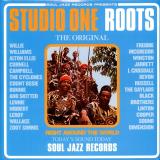
Soul Jazz Records celebrate 25 years of working in partnership with Studio One with brand new editions of FIVE of their bestselling CLASSIC Studio One collections all released on limitededition one-off pressing coloured double vinyl. Also available in new limited-edition card wallet CD editions. The new edition featured albums are Studio One Funk, Studio One Dub, Studio One Ska, Studio One Roots and Studio One Classics. Studio One Roots set the standard for Soul Jazz Records’ long-standing series and features many of the classic artists from Clement 'Sir Coxsone’ Dodd’s mighty roster of reggae. This album includes Freddie McGregor, Willie Williams, Cornell Campbell, Alton Ellis, Devon Russell alongside some of the defining in-house groups of Jamaican reggae history - The Sound Dimension, Brentford All-Stars, The Skatalites, New Establishment and more. The album is filled with a mixture of seminal cuts and super-rarities from the vast vaults of 13 Brentford Road.
Stand-out tracks include Alton Ellis’s ‘Blackish White’, a surreal and powerful Afro-centric dream, Count Ossie’s Rastafarian drummers’ genre-defying interpretation of Booker T and The MGs ‘Meditation’, Willie Williams aweinspiring versioning of the Skatalites' seminal Rastafari anthem ‘Addis Ababa’ and many, many more. Original sleevenotes by Lloyd Bradley (author of When Reggae Was King), compiled by Mark Ainley (Honest Jons), high-quality Soul Jazz mastering, wicked images of Count Ossie and the Mystic Revelation of Rastafari on the cover, and a rare image of Clement Dodd and musicians inside the studio at Studio One on the full colour inner sleeves. “There isn't a weak number across these 16 tracks, from the Gaylads’ ode to ‘Africa’ and Devon Russell's version of the heavyweight ‘Drum Song’ rhythm, to stunning instrumentals such as Jackie Mittoo and the Cyclones with nyahbinghi drummer Count Ossie on ‘Meditation’, Lenny Hibbert’s sparkling vibe work over Mittoo's ‘Ghetto Organ’ and The Sound Dimension’s ‘Congo Rock.” Pitchfork “The music of this compilation is of a rare, rare beauty and is essential to anyone's reggae collection.” All Music
dovrebbe essere pubblicato su 05.06.2026

This is the new 20th anniversary edition of one of Soul Jazz Records’ classic Studio One releases, now available as a one-off special blue vinyl very limited-edition pressing (2000 copies worldwide).
Studio One Roots set the standard for Soul Jazz Records’ long-standing series of Studio One collections and features many of the classic artists from Clement 'Sir Coxsone’ Dodd’s mighty roster of reggae. This album includes Freddie McGregor, Willie Williams, Cornell Campbell, Alton Ellis, Devon Russell alongside some of the defining crack-session men groups of Jamaican reggae history – The Sound Dimension, Brentford All-Stars, The Skatalites, New Establishment and more. As ever the album is filled with a mixture of
seminal cuts and super-rarities from the vast vaults of 13 Brentford Road.
Stand-out tracks include Alton Ellis’s Blackish White, a surreal and powerful Afro-centric dream, Count Ossie Nyabinghi and Rastafarian drummers genre-defying interpretation of Booker
T and The MGs ‘Meditation’, Willie Williams awe-inspiring versioning of the Skatalites seminal Rastafari anthem Addis Ababa and many, many more.
This album has been fully digitally remastered, analog cut and packaged complete with the following: Original sleevenotes by Lloyd Bradley (author of When Reggae Was King),
compiled by Mark Ainley (Hones Jons), high-quality Soul Jazz mastering, wicked images of Count Ossie and the Mystic Revelation of Rastafari on the cover, and a rare image of Clement Dodd and musicians inside the studio at Studio One on the full colour inner
sleeves.
“The music of this compilation is of a rare, rare beauty and is essential to anyone's reggae collection” All Music
dovrebbe essere pubblicato su 01.02.2024

Studio One was founded by Clement "Coxsone" Dodd1 in 1954, and the first recordings were cut in 1963 on Brentford Road in Kingston.12 Amongst its earliest records were "Easy Snappin" by Theophilus Beckford, backed by Clue J & His Blues Blasters, and "This Man is Back" by trombonist Don Drummond. Dodd had previously issued music on a series of other labels, including World Disc, and had run Sir Coxsone the Downbeat, one of the largest and most reputable sound systems in the Kingston ghettos.
In the early 1960s, the house band providing backing for the vocalists were the Skatalites[3] (1964–65), whose members (including Roland Alphonso, Don Drummond, Tommy McCook, Jackie Mittoo, Lester Sterling and Lloyd Brevett) were recruited from the Kingston jazz scene by Dodd. The Skatalites split up in 1965 after Drummond was jailed for murder, and Dodd formed new house band the Soul Brothers (1965–66), later named the Soul Vendors (1967) and Sound Dimension (1967-). From 1965 to 1968 they played 9 a.m. to 5 p.m., 5 days a week, 12 rhythms a day (about 60 rhythms a week) with Jackie Mittoo as music director, Brian Atkinson (1965–1968) on bass, Hux Brown on guitar, Harry Haughton (guitar), Joe Isaacs on drums (1966–1968), Denzel Laing on percussion, and on horns (some initially and some throughout): Roland Alphonso, Dennis 'Ska' Campbell, Bobby Ellis, Lester Sterling, among others on horns during the era of Rock Steady. Headley Bennett, Ernest Ranglin, Vin Gordon and Leroy Sibbles were included among a fluid line-up, to record tracks directed by Jackie Mittoo at Studio One from 1966-1968.
During the night hours at Studio One from 1965-1968, singers like Bob Marley, Burning Spear, The Heptones, The Ethiopians, Ken Boothe, Rita Marley, Marcia Griffiths, Judy Mowatt, Alton Ellis, Delroy Wilson, Bunny Wailer[4] and Johnny Nash, among others, would put on headphones to sing lyrics to original tracks recorded by the Soul Brothers earlier each day. These seminal recordings included "Real Rock" (by Sound Dimension), "Heavy Rock", "Jamaica Underground", "Wakie Wakie", "Lemon Tree", "Hot Shot", "I'm Still In Love With You", "Dancing Mood", and "Creation Rebel".
Jackie Mittoo, Joe Isaacs, and Brian Atkinson left Studio One in 1968, recorded drums and bass for Desmond Dekker's and Toots' biggest hits at other Kingston studios, then moved to Canada. Hux Brown stayed in Jamaica to record on the soundtrack The Harder They Come, The Harder They Fall, and toured in Nigeria with Toots and the Maytals and Fela Kuti. The Soul Brothers (a.k.a. Sound Dimension) formed the basis of reggae music in the late 1960s, being versioned and re-versioned time after time over decades by musicians like Shaggy, Sean Paul, Snoop Lion, The Clash, String Cheese Incident, UB40, Sublime, and countless other Billboard originals and remakes trying to emulate their original Rock Steady sound at Coxsone's Studio One.
The label and studio were closed when Dodd relocated to New York City in the 1980s.
dovrebbe essere pubblicato su 17.02.2023

The Flames started life as a backing unit for Alton Ellis but recorded under a variety of names The Crashers, The Hurricanes, The Invaders.
Winston Jarrett was usually in the mix as the one constant member. Difficult to say who takes the lead vocalist is on this Nyabingi infused number.
Most likely its Danny Clarke.
dovrebbe essere pubblicato su 08.07.2016
