
vorbestellen17.10.2025
erscheint voraussichtlich am 17.10.2025
59,24 €
erscheint voraussichtlich am 17.10.2025

2020 PRESS
The original orchestral/electronic score from Karel Kachyna’s 1976 Czech film adaptation of Hans C. Anderson’s The Little Mermaid, composed by Zdenek Liska (The Cremator / Fruits of Paradise) featuring Lenka Korinkova. Available for the first time since being originally pressed in 2011 as part of the ongoing Finders Keepers’ 15th anniversary retrospective. Check!
Liska's legacy in the history of European cinema is huge in volume but relatively modest in it’s celebrity. Having already composed nine scores for Kachyna’s films to add to his 1976 filmography of 150 completed soundtracks.
Back in 2005, five years before Finders Keepers Records released Zdenek Liška’s soundtrack to Malá morská víla for the first time, folklore and fairy tale fanatics around the globe celebrated the 200 year anniversary of the birth of one of the world’s most celebrated children’s authors of the published era. This Danish born writer’s stories have been translated into over 150 languages and have continued to enchant and inspire children and adults, arts and crafts, film and theatre, providing a creative binding substance in modern society’s social fibre. With a life story that entwines equal measures of tragedy, mystery, intensity and majesty to that of his own written work, Hans Christian Andersen’s early years balancing contradictory roles as a weaver’s apprentice, a soprano singer, a fledgling poet and an abused grammar school pupil with speculative links to the monarchy, manifested themselves in his written world of fantasy and fiction. His running themes of mutation, metamorphosis, rebirth, prejudice and class distinction are none more prevalent than in what are perhaps his two best known tales The Ugly Duckling, first published 11th November 1843, and the bittersweet surrealist tale of The Little Mermaid, printed in the third booklet of the first volume of Eventyr, Fortalte For Børn (Tales, Told For Children) in 1837.
One of the most idiosyncratic and haunting undiscovered scores in the annals of European cinematic history, Liska’s forward thinking score has all the hallmarks of a Broadcast record, some 20 years before the band first committed sound to vinyl..
Beautifully remastered with updated liner notes including rare photos ith the full cooperation of the seminal Barrandov studios in Prague.
Bestelle jetzt und wir bestellen den Artikel für dich beim Lieferanten.

Liška, the Czechoslovakian word for fox. Beguiling in its beauty, cunning in it's charm. Said to be one of the most intelligent animals on the planet its global family consists of thirty-seven varieties; all of them recognised, respected and feared for their persuasive, creative, resourceful and elusive nature. The Liška we will talk about today is no exception to these hereditary rules and within the grooves of this record Finders Keepers present an 'elusive' musical artefact that best exemplifies every facet of this composer's animal namesake.
Had he not been born in the small Bohemian town of Smecno in the early 1920s the story of The Fantastic Mr. Liška might have well taken a different course. Alternatively, fettered by the hampers of communism, this lifelong resident of Czechoslovakia would never quite find his seat at the same table as the likes of John Barry, Ennio Morricone, Michael Nyman and Stanley Myers, nor drop enough phonographic breadcrumbs to track his legacy. But having waited patiently behind the borders of the wider landscapes of international cinema, Liška's musical brood, spanning multiple stylistic decades and generations, has now started to walk proudly amongst his would-be, latter-day compeers. In an era where music lovers have almost become immune to adjectives like 'lost', 'rare' and 'unreleased' in a climate where previously lesser-known off-kilter master composers such as Vannier, Kirchin and Axelrod have become widely revered, it is perhaps the perfect time for discerning listeners to advance above the feeding trough and seek out this truly pioneering and revolutionary Eastern European composer. Rivalled only by the likes of Krzysztof Komeda and Andrzej Korzynski in Poland, alongside Alexandr Gradsky in Russia, and often splitting workloads with fellow Czech composers like Luboš Fišer, Zdenek Liska's filmography of over almost 300 fully formed movie scores virtually eclipses the achievements of these socialist era luminaries. Respected unanimously in both Czech and Slovakian by studio bosses, producers, directors and actors alike Liška is widely known for his ability to take the existing energy in a reel of film and literally change the polarity to suit his own interpretation while maintaining the full support from his 'client' who would in-turn end up working under this composer's creative direction. Not only was Liška a genius of emotive orchestral and coral composition, his grasp on small group arrangements and intimate, minimal scores set him above the competition. By utilising primitive sample techniques by 'looping' a films existing ambient noise, or rearranging found sounds and dialog into subtle melodic arrangements, Liška would independently develop his own techniques which had simultaneously become known in Paris as musique concre`te. It is a direct extension of these experiments that saw Liška also draw parallels with Walter Branchi (Ennio Morricone's main electronic sidekick) in Italy as well as Daphne Oram in the UK, making Liška a relatively untravelled pioneer of early electronic composition and sound design due to his unlikely global environment. Imprisoned, preserved or reserved; time has been kind to Liška's music.
Bestelle jetzt und wir bestellen den Artikel für dich beim Lieferanten.

On the cover: Keiji Haino. Inside: Shamica Ruddock, Seppuku Pistols, Jabu, Gregory TS Walker, Viktar Siamaška, The Primer: John Butcher, Invisible Jukebox: Wolfgang Voigt, Epiphanies: Mark Webber on Spaceman 3, The Inner Sleeve: Céline Gillain on Leonard Cohen, Global Ear: Nicosia, Unlimited Editions: Nashazphone, and in the reviews sections: Wendy Eisenberg, Ivo Perelman, Yellow Swans, Meshell Ndegeocello, Tristwch Y Fenywod, Byard Lancaster, Zdeněk Liška, Dr John, Supernormal, Heroines Of Sound, and much more.
Bei uns am Lager und sofort versandfertig

Twenty-two rare and unreleased vintage tracks from the secret vaults of one of the most enigmatic composers in 60s/70s/80s European cinema. Originally recorded in the best studios in Poland, Italy and France for experimental film, political allegories, lost television shows, sound libraries and radio – these tracks have been hidden behind the Iron Curtain on lost master tapes and film reels until now! »Secret Enigma«, the first ever dedicated anthology of this great composer’s work, is now back in print.
Originally released exactly 30 years ag In artistic cinema Andrzej Korzyński’s unique experiments with jazz, pop, rock, orchestral and electronic music make his name synonymous with the most praised (Andrzej Wajda) and the most provocative (Andrzej Żuławski) Polish filmmakers (counting many more in between). As an early patron of the Polish New Wave and a key exponent of the development of conceptual Polish pop music his expansive portfolio has remained commercially unreleased and untravelled (like many of the original socialist era Polish made films) and has yet to find its deserved place next to the work of Ennio Morricone, François de Roubaix and John Barry. Now enhanced by a renewed interest in vintage art house film and a subculture of open minded music collectors many Easter European artists, such as Krzysztof Komeda (Poland), Zdeněk Liška (Czechoslovakia) and now Andrzej Korzynski,have finally begun to earn their place alongside their Central European peers.
For lovers of film music and experimental pop this debut anthology and appraisal of Andrzej Korzyński.
erscheint voraussichtlich am 29.09.2023
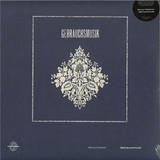
Marcus Fjellström's second album Gebrauchsmusik, initially released a decade and a half ago, is a bizarre sound document that deserves a closer look. Listening back to it now only re-confirms the unique mind of the Swedish composer, who sadly died in September 2017, only 37 years old.
"Gebrauchsmusik" is German for 'Utility Music', and his second excursion into post-classical experimentation is exactly that; thirteen tracks with each one written to suit a certain theme. War, art, festivity, sadness, death and resurrection are all interpreted by Fjellström in his unique style, taking a classical framework and distorting, confusing and manipulating them into far fetching scenarios that is only limited by ones own imagination.
Marcus worked with the Swedish Royal Ballet, the Scottish Chamber Orchestra and Sinfonietta Cracovia as well as numerous other orchestras, ensembles and soloists, artists and filmmakers. He spent the last half year of his life scoring the AMC series The Terror. In his works, Marcus often aimed to combine opposites so that they don’t contradict each other, but rather fuse into a natural, third element - “High” and “low” culture, the naïve and the sophisticated, good and bad taste. These are all elements that comfortably blend together in his works. Musical influences range from electronic acts such as Aphex Twin and Autechre to 20th century composers such as György Ligeti and John Cage. Further influences include impressionist composers Maurice Ravel and Claude Debussy as well as film music composers Bernard Herrmann, Angelo Badalamenti and Zdeněk Liška.
Vinyl edition ltd. to 300 copies, incl. 8-page 12" booklet with drawings by Marcus Fjellström.
Bestelle jetzt und wir bestellen den Artikel für dich beim Lieferanten.
