Search:a band of brothers

Styles
All
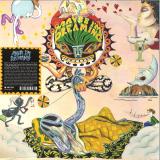
Kashmir - Aftermath (2x12")

Kashmir

Aftermath (2x12")

2x12inchMOVLP3866
Music On Vinyl
19.09.2025
  • A1: Intro/Melpomene
  • A2: Rocket Brothers
  • A3: Petite Machine
  • A4: Make It Grand
  • B1: Miss You
  • B2: In The Sand
  • B3: Big Fresh
  • B4: Mom In Love, Daddy In Space
  • C1: The Aftermath
  • C2: Surfing The Warm Industry
  • C3: Lampshade
  • D1: Cinnamon Girl
  • D2: Small Poem Of Old Friend
  • D3: Cellophane

Released in 2005, The Aftermath is a compelling live album by Danish alternative rock band Kashmir.
The album includes live versions of tracks like Surfing the Warm Industry, Rocket Brothers, and selections from No Balance Palace, highlighting the band’s musical evolution and stage presence.
The Aftermath is available on black vinyl.

pre-order now19.09.2025

expected to be published on 19.09.2025

42,44
Kyoto Jazz Massive - KJM EOANDO LP

In 2024, Kyoto Jazz Massive released their third album as a digital-only project, 30 years after their debut. It now receives the honor of a special vinyl edition, featuring brand-new exclusive mixes by Young Pulse—elevating these already great tracks to even greater heights, for both your ears and your feet.
This marks the first and exclusive collaboration between KJM and Echoes Of A New Dawn Orchestra (aka Jéroboam), the unique Parisian band that has been performing live with KJM across Europe for the past three years. On this occasion, KJM recorded four new tracks with EOANDO, including three original songs ("Power", "Love Wars", and "Impulsive Procession") and a new rendition of “Stand Up”, a previously released composition. To complete the album, you'll also find a stunning cover of KJM’s iconic track "Substream" by EOANDO, as well as their signature piece, “EOANDO's Theme”.
"Power" and "Stand Up" were recorded with Vanessa Freeman, while "Love Wars" features Bembe Segue. This London-based duo has been singing live with KJM since 2004.
"Power" is a crossover anthem, blending jazz-funk and French disco with a gospel touch. Vanessa Freeman’s uplifting lyrics call for collective awareness and energize audiences. "Love Wars" is a live-band interpretation of broken beat with a boogie spirit, enhanced by Bembe Segue’s sharp and spiritual vocals. “EOANDO’s Theme” was specially composed by Echoes Of A New Dawn Orchestra for KJM, capturing the Okino Brothers' love for boogie-funk jams with Brazilian and Balearic influences reminiscent of Azymuth.
“Impulsive Procession” fuses Afro, funk, jazz, fusion, soul, rock, house, and techno—drawing inspiration from several of KJM’s most respected musical heroes. A brand-new version of “Stand Up”, originally released in 2008, was re-recorded live in the studio with EOANDO and fresh vocals by Vanessa Freeman.
The album closes with a reimagined version of “Substream”, one of KJM’s most beloved tracks, covered by EOANDO for the official Tokyo Crossover/Jazz Festival 2023 compilation. This new version was recorded as an organic disco interpretation at Danilo Plessow’s studio in Paris.

out of Stock

Order now and we will order the item for you at our supplier.

18,91

Last In: 4 months ago
The Hanging Stars - Over The Silvery Lake LP
  • A1: Floodbound
  • A2: Cure Your Ills
  • A3: ? | I'm No Good Without You
  • A4: For A While
  • A5: Golden Vanity
  • A6: Rainmaker, Sunseeker
  • B1: The House On The Hill
  • B2: Ruby Red
  • B3: She Never Sleeps
  • B4: The Hanging Stars
  • B5: Hang Me High
  • B6: Crippled Shining Blues
  • B7: Running Waters Wide

*Long overdue reissue of the first album by The Hanging Stars to coincide with their tour support slot with Edwyn Collins – initial 300 copies come with 12 x 12 print*

“In late-Sixties California, the Byrds and Flying Burrito Brothers combined traditional country music with hippy rock to great success. The influence lingered and whatever cultural relevance it has this is a delightful, transporting listen” – The Times 4/5

London-based psych-folk outfit The Hanging Stars re-release their much-loved debut album Over the Silvery Lake on Crimson Crow. Blending folk pastoralism with swampy 60s Americana, they sound like the missing link between the California desert sun and the grey skies of London Town. The album was recorded between LA, Nashville and Walthamstow, with each of these vastly different places leaving an indelible mark on the songs.

Now signed to the Loose Records label and fronted by London-based songwriter, singer and guitarist Richard Olson (The See See, Eighteenth Day of May), The Hanging Stars are essentially a loose collective of people who weave together a blissed-out psychedelic tapestry. The rest of the core band is made up of Sam Ferman on bass and Paulie Cobra on drums, Horse on pedal steel and Patrick Ralla on banjo, guitar. They jam rather than write and hang out rather than rehearse, harnessing a kind of tipsy euphoria resplendent with luscious arrangements and glorious vocal harmonies.

During 2015, prior to this album’s original release the band released two critically acclaimed singles via The Great Pop Supplement (both of which also appear on the album). “Golden Vanity” was premiered by The Line of Best Fit who said; “you'd be forgiven for thinking you'd just unearthed a rare deep cut from the late 60s/early 70s boom of psychedelia infused Americana” and “The House on The Hill” was described by The Guardian as; "a hazy, desert-dream of a song, nicely sharpened with steely-eyed guitars, Mersey-laced harmonies and just a whiff of the Gun Club”.

There are a number of allusions to nature and the weather on the album, borne in part out of the contrasting surroundings in which it was produced. The band’s fascination with Americana led them to record some of the material Stateside, laying down some of the parts at Battle Tapes Studios in Nashville (Lambchop, Paperhead), as well as at Vision Quest Studios in Los Angeles with Rob Campanella. His work with The Quarter After, The Brian Jonestown Massacre, Beachwood Sparks The Tyde, and GospelbeacH was a perfect match to capture their sound and they even had San Franciscan legend Chrystof Certik step in on lead guitar for a couple of tracks.

Following the LA recordings, a trip to the Californian desert provided the core notion of what they wanted to produce - a shard of light that they clung on to whilst recording the rest of the album in the significantly more rain-soaked atmosphere of Walthamstow, London, under the watchful eye of Brian O'Shaughnessy at Bark Studios (The Clientele, Comet Gain). As the band explained at the time: “Ultimately we hope you can hear both the sand and the rain in this record.”

The Hanging Stars place themselves firmly as part of a long folk tradition encompassing European and North American influences – as a continuation rather than a pastiche of these styles. This is the sound of a band really coming in to their own, fully formed and in no doubt of their vision. With Over the Silvery Lake they succeeded in producing a record, which has the country, blues and folk traditions at its heart.

pre-order now12.09.2025

expected to be published on 12.09.2025

14,96
Various - Dolores: Salsa & Guaracha From 70's French West Indies

In Guadeloupe, many people think that jazz and ka music are like a ring and a finger. To some extent, the same could be said about so called Latin music and the music played in the French West Indies.

Both aesthetics were born in the Caribbean and bear so many connections that they can easily be considered cousins. In constant dialogue, there are lots of examples of their fruitful alliance and have been for a while. The English country dance that used to be practiced in European lounges came to be called kadrille in Martinique and contradanza in Cuba. They both featured additional percussion instruments inherited from the transatlantic deportation. Drawing from shared feelings about the same traumatized identity – later to be creolized – it would be hard not to assume that they were meant to inspire each other. The golden age of the orchestras that graced the Pigalle nights during the interwar period further proves the point. As soon as the 1930s, Havana-born Don Barreto naturally mixed danzón and biguine music in a combo based at Melody's Bar. In the following decade, Félix Valvert, a conductor who was born and raised in Basse-Terre in Guadelupe, also worked wonders in Montparnasse with La Coupole, which was an orchestra made up of eclectic musicians. Afro- Caribbean performers of various origins were often hired on rhythm and brass sections in jazz bands, which used to enliven the typical French balls of the capital. In the 1930s and onwards, Rico’s Creole Band was one of them.


Martinican violinist-clarinettist Ernest Léardée, who would become the king of biguine music as well as the main figure of French Uncle Ben's TV commercials (a dark stigma of post-colonial stereotypes), had musicians from the whole Caribbean sphere play at his Bal Blomet – and they all enchanted "ces Zazous-là" (according the words of Léardée's biguine-calypso piece). In les Antilles (French for French West Indies), music history started to speed up in the 1950s, when trade expanded and radio stations grew bigger. The Guadelupean and Martiniquais youth tuned in their old galena radio sets to South American and Caribbean music. As for the women traders, les pacotilleuses, they bought and sold goods across different islands (the "passing of items through various hands" was thought to be most pleasurable) and brought back countless sounds in their luggage. Such was the case of Madame Balthazar, who once returned from Puerto Rico with the first 45rpm and 33rpm to ever enter Martinique.

Out of this adventure was created the famous Martinican label La Maison des Merengues, a music business she opened and undertook with her husband and which proved to be a major landmark. At the end of the 1950s, in Puerto Rico, Marius Cultier competed in the Piano International Contest playing a version of Monk's Round 'Midnight. He won the first prize and this distinction foreshadowed everything that was to come. Cultier, the heretic Monk of jazz, was quickly praised for writing superb melodies, always tinged with a twist that conferred a unique sound to his music. It didn't take long for the gifted self-taught musician to get to play with Los Cubanos, making a name for himself thanks to his impressive maestria on merengues.

The rest is history. Besides, in the late 1950s, Frantz Charles-Denis, born into the upper middle class in Saint-Pierre and better known by his first name Francisco, went back home after working at La Cabane Cubaine – a club located rue Fontaine where he had caught the Latin fever. Francisco's music was therefore heavily marked by his Cuban cousins' influence, which gave the combos he led a specific style and also led to renewal. Things were swinging hard in La Savane, located in the main square in Fort-de-France. He set up the Shango club close by and tested out the biguine lélé there, a new music formula spiced up with Latin rhythms. Soon afterwards, fate had him fly to Puerto Rico and Venezuela.

As for percussionist Henri Guédon (percussions were only a part of his many talents), he was born in Fort-de-France in May 22nd 1944, the day marking the celebration of the abolition of slavery. As an old man, he could remember that in " his father's Teppaz, a lot of hectic 6/8 music was constantly playing...". In the opening lines of his Lettre à Dizzy, a small illustrated collection of writings published by Del Arco, he highlighted the huge impact that cubop had on him as a teenage boy, around 1960. He eventually turned out to be the lider maximo in La Contesta, a big band steeped in Latin jazz. He was also the one who originated the word zouk to describe music which brought the sound of the New York barrio to Paris. It was the culmination of a journey that started in Sainte-Marie: "a mythical place for bélé, the equivalent of Cuban guaguancó". In the early 1960s, the tertiary economy developed to the detriment of agriculture. Yet rural life was where roots music emerged in Martinique and in Guadeloupe.

Record companies played a major part in the process of Latin versions sweeping across the islands – before reaching everywhere else. Producer Célini, boss of the great Aux Ondes label, and Marcel Mavounzy, both the head of Émeraude records - a firm which was founded in 1953 - as well as the brother of famous saxophonist Robert Mavounzy, were big names to bear in mind. Although there were many of them - all of whom are featured on this record - Henri Debs was definitely the major figure in the recording adventure. He proved to be so influential that he even got compared to Berry Gordy. In the mid 1950s, when he acquired his first Teppaz, he worked on his first compositions: a bolero and a chachacha. Then, he became the one man who made people discover Caribbean music, from calypso to merengue. He was among the first ones to rush out to San Juan, Puerto Rico, to buy records and distribute them through a store run by one of his brothers in Fort-de-France. He had members of the Fania All Star come and perform there, which he was madly proud about. He was also the first one to pay attention to Haitian music, such as compas direct and various other rhythms which would soon flood the market. As a result, many of the combos hitting his legendary studio would end up boosted by widespread "Afro-Latin" rhythms. However, he never denied his identity: gwo ka drums were given a major role, although they were instruments which had long been banned from the "official" music spheres. The present selection bears witness to such a creative swarming. Here are fourteen tracks of untimely yet unprecedented cross-fertilization: all types of music rooted in the Creole archipelago have found their way, whatsoever, to the tracklisting. Whether originating from the city or being more rural, they all go back to what Edouard Glissant, in an interview about the place of West Indian music in the Afro-American scope, called "the trace of singing, the one which got erased by slavery." "It is so in jazz, but also in reggae, calypso, biguine, salsa... This trace also manifests through the drums, whether Guadelupean, Dominican, Jamaican or Cuban... None of them being quite the same. They all point to the idea of a trace, seeking it out and connecting to each other through it. This is the hallmark of the African diaspora: its ability to create something new, in relation to itself, out of a trace. It may be the memory of a rhythm, the crafting of a drum, a means of expression which doesn't resort to an old language but to the modalities of it." The opening track features one of the emblematic orchestras of this aesthetic identity, criscrossing many music types from the archipelago. The 1974 Ray Barretto guajira – Ray Barretto was a major New York drummer influenced by Charlie Parker and Chano Pozzo – is magnificently performed by Malavoi, a legendary Fayolais group (i.e from Fort-de-France). Additionally, the compilation ends on a piece by Los Martiniqueños de Francisco. It symbolically closes the circle as it is a genuine potomitan of Martinique culture which also functions as a tireless campaigner for Afro-Caribbean music. Practicing the danmyé rounds (a kind of capoeiria) to the rhythm of the bèlè drum, it delivers a terrific Caterete, a kind of champeta of Afro- Colombian obedience which was originally composed by Colombian Fabián Ramón Veloz Fernández for the group Wgenda Kenya. The icing on the cake is Brazilian Marku Ribas, who found refuge in Martinique in the early 1970s, bringing his singing to the last trance-inducing track. These two "versions" convey the whole tone of a selection composed of rarities and classics of the tropicalized genre, swarming with tonic accents and convoluted rhythms. It is the sort of cocktail that the West Indians never failed to spice up with their own ingredients. For instance, the Los Caraïbes cover of Dónde, a famous Cuban theme composed by producer Ernesto Duarte Brito, has a typical violin and features renowned Martinique singer Joby Valente and his piquant voice.


The track used to be – or so we think – their only existing 45rpm. The meaningful Amor en chachachá by L'Ensemble Tropicana, a band which included Haitian musicians among whom was composer and leader Michel Desgrotte, also recalls how Latin music was pervasive in the tropics in the mid-1960s. They were the ones keeping people dancing at Le Cocoteraie in Guadelupe and La Bananeraie in Martinique. Around the same time, another "foreign" band, Congolese Freddy Mars N'Kounkou's Ryco Jazz, achieved some success on both islands by covering Latin jazz classics – such as their adaptation of Wachi Wara, a "soul sauce" by Dizzy Gillespie and Chano Pozo whose interweaving of strings and percussions can have anyone hit the dancefloor. How can you resist Dap Pinian indeed, a powerful guaguancó by Eugene Balthazar, performed by the Tropicana Orchestra and published by the Martinique-founded La Maison des Merengues? It also acts as a symbol of the maelstrom at work. Going by the name Paco et L'orchestre Cachunga, Roger Jaffory used to play guaguancó too: his Fania-inspired Oye mi consejo is one example of his style. Baila!!!!! Dancing was also one of the Kings' focus points. Oriza is a Puerto Rican bomba and a "classic" originally composed by Nuevayorquino trumpeter Ernie Agosto, which reserves major space for brasses, giving it a special sheen.

Emerging from the New York barrios crucible was also La Perfecta, a Martinique group originating from Trinidad, whose name directly references the totemic Eddie Palmieri figure as well as his own band, also called La Perfecta. Here they borrow Toumbadora from Colombian producer and composer Efraín Lancheros and interpret it by emphasizing percussions, which set fire to the track even more than the wind instruments. The same goes for Martinique's Super Jaguars, who use Tatalibaba – a composition by Cuban guitarist Florencio "Picolo" Santana which was made famous by Celia Cruz & La Sonora Matencera – as a pretext for sending their cadences into a frenzy. In a more typically salsa vein, the Super Combo, a famous Guadelupean orchestra from Pointe-Noire that was formed around the Desplan family and had Roger Plonquitte and Elie Bianay on board, adapt Serana, a theme by Roberto Angleró Pepín, a Puerto Rican composer, singer and musician also known for his song Soy Boricua. Here again, their vision comes close to surpassing the original. In the 1970s, L'Ensemble Abricot provided a handful of tracks of different syles, hence reaching the pinnacle of the art of achieving variety and giving pleasure. They played boleros, biguines, compas direct, guaguancó and even a good old boogaloo - the type they wanted to keep close to their hearts for ever, "pour toujours", as they sang along together in one of their songs. Léon Bertide's Martinican ensemble excelled at the boogaloo which had been composed by Puerto Rican saxophonist Hector Santos for the legendary El Gran Combo.


Three years later, in 1972, Henri Guédon, with the help of Paul Rosine on the vibraphone, tackled the Bilongo made famous by Eddie Palmieri. Such a classic!!!!! And so were the Aiglons, the band from Guadelupe: choosing to execute Pensando en tí, a composition by Dominican Aniceto Batista, on a cooler tempo than the original, they noticeably used a wonderfully (un)tuned keyboard in place of the accordion. On the high-value collectible single – the first one released by Les Aiglons under the Duli Disc label – there is a sticker classifying the track under the generic name "Afro". Now that is what we call a symbol. Jacques Denis

out of Stock

Order now and we will order the item for you at our supplier.

21,43

Last In: 58 days ago
Various - NOW - Yearbook 1976 (3x12")
 
47

next instalment in our ongoing ‘Yearbook’ series – pressed in lovely-lime-green vinyl on a 3-LP set packed with 47 stellar tracks celebrating a brilliant year of pop singles. NOW – Yearbook 1976.


LP1: Kicking off in magnificent style with signature songs from legendary artists: A #2 in 1976, Queen’s ‘Somebody To Love’ is first up, followed by Electric Light Orchestra with ‘Livin’ Thing’, Fleetwood Mac with ‘Say You Love Me’, and 10cc with ‘I’m Mandy Fly Me’. Dr. Hook had a huge hit with ‘A Little Bit More’, and Chicago hit #1 with their all-time classic ballad ‘If You Leave Me Now’, while the side closes with Eric Carmen’s enduringly popular ‘All By Myself’. Flip the LP over for huge hits from the year – including 4 #1s: 14 years after making their UK chart debut, Frankie Valli & The Four Seasons enjoyed their first chart-topper with ‘December 1963 (Oh What a Night)’, whilst Leo Sayer reached #2 in the UK, and #1 in the US with ‘You Make Me Feel Like Dancing’. Pop gems follow from David Dundas, Bryan Ferry, Sailor, Smokie – and Slik, featuring a pre-Ultravox Midge Ure reached the top with ‘Forever And Ever’. Showaddywaddy celebrated their biggest hit and their first #1 with ‘Under The Moon Of Love’, and the UK won at Eurovision, with the winner ‘Save Your Kisses For Me’ by Brotherhood Of Man not only hitting the #1 spot but also becoming 1976’s biggest seller and bringing the first LP to a close.


LP2: Opening with a stellar run of pure-pop classics. Elton John celebrated his first UK #1 single, in a duet with Kiki Dee on ‘Don’t Go Breaking My Heart’, and Cliff Richard with ‘Devil Woman’, ahead of dance-floor favourites – and both #1s in ’76: Tina Charles with ‘I Love To Love’ and The Real Thing with ‘You To Me Are Everything’. More pop nuggets follow from Billy Ocean and Dana, before the side finishes with R&J Stone with ‘We Do It’ and the sublime ‘Midnight Train To Georgia’ from Gladys Knight & The Pips. Over on the second side, ‘Silly Love Songs’ gave Wings a UK #2 and became ‘76’s biggest seller in the US and opens a run of great vocalists; Neil Diamond, Daryl Hall & John Oates with ‘She’s Gone’, Paul Simon’s ’50 Ways To Leave Your Lover’ and a trio of the year’s classic rock smashes: ‘The Boys Are Back In Town’ from Thin Lizzy, ‘Squeeze Box’ from The Who, and closing with the epic ‘Music’ from John Miles.


LP3: Celebrating ‘76’s dancefloor with a stunning collection of disco and soul gold: First up, Donna Summer with her debut smash ‘Love To Love You Baby’ before ‘More More More’ from Andrea True Connection and Candi Staton’s timeless ‘Young Hearts Run Free’. Melba Moore with ‘This Is It’ comes ahead of Diana Ross with the genre-defining ‘Love Hangover’, and the side is completed with huge floor-fillers from Tavares and Barry White ahead of The Isley Brothers with the soul standard ‘Harvest For The World’ and over on the final side country music is represented with Dolly Parton making her UK singles chart debut with ‘Jolene’ three years after it was a hit in the US, but it was a Dutch band, Pussycat, who hit the top with their country-pop track ‘Mississippi’. Bonnie Tyler made her chart debut with ‘Lost In France’, and ‘Forever And Ever’ gave Demis Roussos a ’76 chart topper, and an easy-listening classic, whilst Guys N Dolls had a second Top 5 hit with their cover of ‘You Don’t Have To Say You Love Me’. The LP ends with a trio of the year’s most beautiful ballads: Gallagher And Lyle with ‘Heart On My Sleeve’, ‘Love And Affection’ the stunning singles chart debut for Joan Armatrading, and finishing with a second peerless single on this collection from Elton John with ‘Sorry Seems To Be The Hardest Word’.


NOW – Yearbook 1976 – a celebration of the diversity and wonderful creativity of a truly fabulous year in pop.

out of Stock

Order now and we will order the item for you at our supplier.

37,19

Last In: 4 months ago
NEGATIVE APPROACH - TIED DOWN

NEGATIVE APPROACH

TIED DOWN

12inchTGLPC33
Touch & Go
15.08.2025
  • Tied Down
  • Hypocrite
  • Evacuate
  • Said And Done
  • Nothing
  • Your Mistake
  • Live Your Life
  • Friend Or Foe
  • Dead Stop
  • I'll Survive

Born in 1981 in Detroit, MI, Negative Approach were the undisputed champs of Midwestern hardcore in the early to mid-'80s. Led by John Brannon's hoarse wail, with OP Moore on drums and brothers Rob and Graham McCulloch playing guitar and bass respectively, the band concocted an extreme sound devoid of frills. This was first documented on their 10 Song 7" released on Touch and Go Records in 1982. The band released the more metallic-sounding Tied Down in 1983. After disbanding Negative Approach in 1985, John Brannon went on to form Laughing Hyenas. For over three decades, Negative Approach's minimalist and aggressive brand of punk has inspired countless hardcore bands around the globe. Their classic LP, Tied Down, is still considered paramount by most hardcore fans new and old.

pre-order now15.08.2025

expected to be published on 15.08.2025

26,01
Various - Afrocolombia Remix Vol 3

The third volume of the AfroColombia Remix series merges African and Colombian sounds with contemporary electronica. It's a collaboration between Colombian labels Galletas Calientes and Palenque Records that celebrates Palenque's 20+ years of activism and Galletas Calientes' two-decade legacy while honouring the late Abelardo Carbono with a remix of his track 'La PiNa Madura' by Voilaaa - it's a standout here with hints of funk, soul and disco all bringing the sunshine. The compilation also reinterprets Nigerian Igbo Highlife and Ekobe music thanks to producers Captain Planet, Uproot Andy and Caribombo. They bring new, funky energy to timeless classics while preserving the original cultural essence.

out of Stock

Order now and we will order the item for you at our supplier.

17,61

Last In: 5 months ago
Various - Maybe I'm Dreaming LP 2x12"

‘Maybe I’m Dreaming’ is the latest collection selected by Mikey Young (Total Control, EddyCurrent Suppression Ring) and Keith Abrahamsson (Founder and Head of A&R at AnthologyRecordings), the mangled minds behind the beloved ‘Follow the Sun’, ‘Sad About the Times’,and ‘…Still Sad’ compilations. The twenty tracks of ‘Maybe I’m Dreaming’ make a conscious(and unconscious) detour from its predecessors, sourced entirely from private press releases,spanning new decades and production modes within homespun folk, soft rock and otherwise70s and 80s FM radio adjacent music.  The magic of ‘Maybe I’m Dreaming’ is the untold story of the artists behind these songs; thosewho missed the big time, but whose song craft and unrequited care hit the right notes, bothhigh and low.
Where ‘Follow the Sun’ and ‘Sad About the Times’ introduced us to the fame chasing, ambitioncrashing crooners who missed their shot in the mainstream, ‘Maybe I’m Dreaming’ delvesdeeper into the isolated wilds - a private world where production quirks, late-night tape hiss andone-man studio dreams were not necessarily a choice but the hand that was dealt.
With the parameters set to ‘private press only’, Young and Abrahamsson follow a circuitous trailof invention and emotion, documenting a spirit that’s more homespun, sometimes lonelier andoften a little weirder. The guitars still strum, but the keyboards’ hum is more prevalent andprecious; wistful harmonies brush up against lo-fi drum machines; a bittersweet fog lingeringover even the brightest melodies.
As with their previous collaborations, Young and Abrahamsson weren’t interested inconstructing a museum or drafting a historical survey. ‘Maybe I’m Dreaming’ is a sentimentalmixtape, assembled late at night when the mind wanders and old memories blur with imaginedfutures, those within reach and those far too mysterious to ever encounter. Songs wereunearthed in personal collections, deep YouTube burrows, dilapidated web archives and thedim corners of Discogs, with many selections tied not only to intuition but to personalconnection.  Some tracks arrived via friends - Kelley Stoltz, a frequent guide for Young, tipped him off toboth Peter Kraemer’s lost gem ‘Let the Light Slip’ and Awakening’s revelatory closer - addingan unseen but deeply felt thread of camaraderie to the compilation.
The journey takes in a wide, strange sweep: The Watson Brothers Band’s ‘Just Whistle’ opensthe collection with a sigh and a shrug, a song that feels like it’s been waiting for decades to beheard again. Jim Huxley’s ‘Tessa on a Magazine’, rediscovered after a long and winding searchby Young, shimmers with a distinctly Australian melancholia. The heartbreak of Rick Penta’s‘My Story Changes’ and Twice As Nice’s delicate ‘Thoughts of You’ float easily alongside themore buoyant, radio-dream sheen of Barracuda’s ‘Baby I Love You’ and MAK’s sunshinedappled ‘That’s Life’.
Widening the aperture to the late 1970s and early 1980s allows for a deeper exploration intoevolving production techniques and musical technologies. The Squad’s ‘D.L.M.H.I.M.A.’ andChristoph Spendel Group’s ‘Forever’ crackle with the kind of bedroom synth warmth that couldonly come from the analogue age, while the soulful, yearning undercurrent of Awakening’s‘Gotta Do Somethin / Might As Well Cultivate’ caps the collection with a call for action - ormaybe just acceptance - in an accidental Brian Eno ‘Here Come the Warm Jets’ parroting.
While ‘Maybe I’m Dreaming’ moves away from the ‘sad man with guitar’ archetype that hoveredover its predecessors, it remains tethered to a familiar emotional gravity - a balance of longingand lightness that defines this corner of the musical universe. Each track shuffles gentlybetween resignation and hope, sadness and serenity, as if the artists themselves were chasinga dream just beyond reach, recording not for fame but for the simple act of getting it, thatprimal, creative itch, out into the world.
Available on CD and 2LP, featuring the third eye-opening artwork of Dang Wayne Olsen. Thedouble LP set arrives in an outrageous double-wide spine jacket with printed inners and adream journal entry by Pacific Northwest artifactual authority Josh Lewellen.

out of Stock

Order now and we will order the item for you at our supplier.

27,86

Last In: 9 months ago
MAJESTIC ARROWS - THE MAGIC OF THE MAJESTIC ARROWS
  • 01: One More Time Around (Vocal)
  • 02: Love Is All I Need
  • 03: Doing It For Us
  • 04: Going To Make A Time Machine (Vocal)
  • 05: Going To Make A Time Machine (Instrumental)
  • 06: Ladies And Wonderful Girls (Arranged By Arrow Brown)
  • 07: I'll Never Cry For Another Boy
  • 08: We Love Together
  • 09: Another Day
  • 10: The Magic Of Your Love
  • 11: One More Time Around (Instrumental)
  • 12: If I Had A Little Love (Rehearsal Take)
also available

OPAQUE SKY Vinyl[27,94 €]


Die seltenste Chicagoer Sweet-Soul-LP, zum ersten Mal seit einem halben Jahrhundert wieder im Druck. Arrow Browns unvergleichliches Album "The Magic of The Majestic Arrows" entstand im Keller seines Harems/Hauptquartiers in Bronzeville und war das Ergebnis jahrelanger Arbeit am Rande von Chicagos berühmter Record Row. Die auf seinem eigenen Bandit-Imprint erschienene LP ist eine mit Streichern besetzte Fantasie, die sich zwischen dem Doo-Wop der 50er Jahre und dem Studioexzess der 1970er bewegt. Unterstützt von den Chosen Few und den Scott Brothers, arrangiert von Benjamin Wright, gesungen von Browns 17-jähriger Tochter Tridia und dem marokkanischen Falsettisten Larry Brown und gezeichnet von Eugene Phillips von The Wind, ist das Album ein Außenseiter-D.I.Y.-Soul-Genie, das darauf wartet, dass die Reibung einer Phononadel seine unsterbliche Magie offenbart.

pre-order now08.08.2025

expected to be published on 08.08.2025

26,68
MAJESTIC ARROWS - THE MAGIC OF THE MAJESTIC ARROWS

Die seltenste Chicagoer Sweet-Soul-LP, zum ersten Mal seit einem halben Jahrhundert wieder im Druck. Arrow Browns unvergleichliches Album "The Magic of The Majestic Arrows" entstand im Keller seines Harems/Hauptquartiers in Bronzeville und war das Ergebnis jahrelanger Arbeit am Rande von Chicagos berühmter Record Row. Die auf seinem eigenen Bandit-Imprint erschienene LP ist eine mit Streichern besetzte Fantasie, die sich zwischen dem Doo-Wop der 50er Jahre und dem Studioexzess der 1970er bewegt. Unterstützt von den Chosen Few und den Scott Brothers, arrangiert von Benjamin Wright, gesungen von Browns 17-jähriger Tochter Tridia und dem marokkanischen Falsettisten Larry Brown und gezeichnet von Eugene Phillips von The Wind, ist das Album ein Außenseiter-D.I.Y.-Soul-Genie, das darauf wartet, dass die Reibung einer Phononadel seine unsterbliche Magie offenbart.

pre-order now08.08.2025

expected to be published on 08.08.2025

27,94
Marcellus Pittman - I'm Gonna Be The Everything (Japanese Import Edition)

Detroit's Marcellus Pittman is one of house music's most unpredictable characters. He was a key member of the legendary 3 Chairs collective but his solo work is arguably even more essential. Here he delivers a standout track from the long sold-out 'The Eastside' EP on Adeen Records. 'I'm Gonna Be the Everything' captures the essence of Detroit deep house with its sparse, driving drums and a thumping bassline and it is rightly given a whole side here for maximum volume. Flip it over for Adeen's in-house live jazz ensemble, A Band of Brothers, rework with lush vibraphone layers and soothing saxophone melodies.

out of Stock

Order now and we will order the item for you at our supplier.

19,96

Last In: 9 months ago
Various - Maybe I'm Dreaming (LP 2x12")
  • The Watson Brothers Band - Just Whistle
  • Jim Huxley - Tessa On A Magazine
  • Rick Penta - My Story Changes
  • Mak - That's Life
  • Palm Pizazz! - Silent Letter
  • Twice As Nice - Thoughts Of You
  • Barracuda - Baby I Love You
  • Elderberry Jak - Forrest On The Mountain
  • Dennis - Walk With Me
  • Jim Ware - Green Eyed Gypsy
  • John Lyle - Oh My Wind
  • Peter Kraemer - Let The Light Slip
  • Brian Freel - Nightrider
  • Michael Moore - Holland
  • Clete Stallbaumer - John's Song
  • Ronnie White - The Jump
  • David Owens - Take Off Your Armour
  • The Squad - D.l.m.h.i.m.a
  • Christoph Spendel Group - Forever
  • Awakening - Gotta Do Somethin / Might As Well Cultivate

'Maybe I'm Dreaming' ist die neueste Sammlung von Mikey Young (Total Control, Eddy Current Suppression Ring) und Keith Abrahamsson (Gründer und Leiter A&R bei Anthology Recordings) - den Köpfen hinter den beliebten Kompilationen 'Follow the Sun', 'Sad About the Times' und '...Still Sad'. Die zwanzig Tracks von 'Maybe I'm Dreaming' weichen von ihren Vorgängern ab. Sie stammen vollständig aus privaten Pressungen und umspannen neue Jahrzehnte und Produktionsmodi innerhalb der Genres Homepunk-Folk, Softrock und sonstiger FM-Radio-Musik der 70er und 80er Jahre. Die Magie von 'Maybe I'm Dreaming' liegt in den unerzählten Geschichten der Künstler:innen, die hinter diesen Liedern stehen - diejenigen, die den großen Durchbruch verpasst haben, deren Songhandwerk und unerwiderte Sorgfalt aber die richtigen Töne treffen.

'Maybe I'm Dreaming' taucht tief in die isolierte Wildnis ein - eine private Welt, in der Produktionsmacken, nächtliches Bandrauschen und Ein-Mann-Studio-Träume keine Wahl waren, sondern das ausgeteilte Blatt.

Die Songs wurden in persönlichen Sammlungen, in den Tiefen von YouTube, in verfallenen Webarchiven und in den düsteren Ecken von Discogs ausgegraben. Die Auswahl vieler Stücke basiert dabei nicht nur auf Intuition, sondern auch auf persönlichen Verbindungen. Einige Tracks wurden über Freunde entdeckt und fügen der Zusammenstellung einen unsichtbaren, aber tief empfundenen Faden der Kameradschaft hinzu.

Zwar entfernt sich 'Maybe I'm Dreaming' vom Archetyp des „traurigen Mannes mit Gitarre“, der über den Vorgängern schwebte, aber die vertraute emotionale Schwere bleibt erhalten - eine Balance aus Sehnsucht und Leichtigkeit, die diese Ecke des musikalischen Universums definiert. Jeder Track schwankt sanft zwischen Resignation und Hoffnung, Traurigkeit und Gelassenheit, als würden die Künstler selbst einem unerreichbaren Traum hinterherjagen und die Aufnahmen nicht wegen des Ruhmes, sondern aus dem einfachen Bedürfnis heraus machen, diesen ursprünglichen, kreativen Drang in die Welt hinauszutragen.

'Maybe I'm Dreaming' ist eine Einladung, noch ein wenig länger mit halb geschlossenen Augen im Grenzbereich zwischen Erinnerung und Vorstellung zu schweben. Vielleicht träumst du. Vielleicht bist du wach. Vielleicht spielt es keine Rolle.

- 2LP: (Das Doppel-LP-Set mit dem Artwork von Dang Wayne Olsen wird in einer breiten Kartontasche mit bedruckten Innenhüllen geliefert. Zudem enthält es einen Traumtagebucheintrag von Josh Lewellen, dem Experten für Artefakte aus dem pazifischen Nordwesten.)

pre-order now01.08.2025

expected to be published on 01.08.2025

27,69
Dog Trumpet - Live Forever

Dog Trumpet

Live Forever

12inchDEMREC1300
Demon Records
14.07.2025
  • 1: Veil Of Rain
  • 2: Live Forever
  • 3: High On The Rocks
  • 4: Space And Time
  • 5: Nobody Knows
  • 6: Waltz Of The Wind
  • 7: Marianne
  • 8: Ding Dong Butterfly
  • 9: Eileen
  • 10: Under Water
  • 11: Ancestral Ireland

Fronted by brothers Peter O'Doherty and Reg Mombassa , Dog Trumpet have been playing, writing and recording their music since the early 90s. Reg and Pete were founding members of iconic Australian band Mental As Anything, who hit the charts around the world with “Live It Up”. The band made a mark with their left field mix of music, art, video and humour and leading eventually to ARIA awards and induction into the Hall of Fame in 2009.

Dog Trumpet’s new album Live Forever is the result of 2 years in the studio.

For this, their ninth album , the song writing brothers Peter and Reg have brought Peter’s multi instrumentalist son Declan in on drums, production and mixing duties, enhancing and expanding their sonic palette.

At times psychedelic and ethereal, the album weaves together Dog Trumpet’s signature acoustic and electric guitar and bass driven sound with melodic drums, synthesisers, mandolin, saxophone and added backing vocals by their touring bass player Bernie Hayes.

pre-order now14.07.2025

expected to be published on 14.07.2025

39,92
Collage - Motel d'amour LP

Collage

Motel d'amour LP

12inchEDGE-032BL
The Outer Edge
14.07.2025

Motel d'amour - A Lost Electro-Funk Gem from the NDW Era Resurfaces

When we first collaborated with Collage member Markus Kammann on the EP project "Mit den Puppen tanzen" at the end of last year, we never imagined what would follow: Kammann approached us with a completely unreleased full-length album by his former band. Upon receiving the first three preview tracks, we were floored. One of them was "Nachtcafé" - a track that kicks off with a funky bassline layered over the punchy rhythm of a Roland TR-808. Add shimmering synths and Katrin A. Kunze's sharp, distinctive vocals, and we instantly knew we were hearing something special.

For a label dedicated to rediscovering lost treasures, this was exactly what we'd been searching for. The next two tracks - "Rendezvous" and "Casanova" - were just as compelling. When Kammann sent us the full album, we realized we were holding an electro-funk grail from the late golden days of the German Neue Deutsche Welle (NDW). We were listening to "Motel d'amour".

"Motel d'amour" is a concept album, offering a sharp, vibrant perspective from a confident, intelligent, and radiant young woman eager to experience nightlife, love, and music. Kunze's lyrics paint vivid scenes of flirtation ("Nachtcafé", "Rendezvous"), encounters with men ("Casanova"), the pulse of nightlife ("Die Nacht ist noch jung"), love ("Rotes Licht für rote Liebe"), one-night stands ("Motel d'amour"), and more. Rarely has a German album from that era captured emotional nuance and social dynamics so insightfully. Without veering into the overly personal, Kunze's direct, daring lyrical style was groundbreaking at the time - and remains refreshingly bold today.

While German listeners will fully appreciate the lyrical depth, the music speaks volumes on its own. Kunze's words are masterfully complemented by the production of Markus Kammann and Jürgen Grah. As heard on the in-demand "Mit den Puppen tanzen", their creativity seemed boundless. Each track is tightly composed, catchy, and full of character. While many German bands at the time leaned into rock, Kammann drew from the deep grooves of Earth, Wind & Fire, The Isley Brothers, Brothers Johnson, The Commodores, and the electro-futurism of Afrika Bambaataa's "Planet Rock" and "Looking for the Perfect Beat". The result: tracks with unmistakable electro-funk flair, powered by the classic 808 drum sound.

Though primarily rooted in funk and electro, the album retains flashes of NDW aesthetics - "Wir haben getanzt heut' Nacht" being a prime example. The instrumentation is a dream list for vintage gear lovers: Yamaha keyboards, Roland Juno-60, vocoder, Micromoog, Hohner D6 Clavinet, Fender bass, and a Telecaster guitar all feature prominently.
Recorded in 1985 at the high-profile Delta Studio by Richard Rossbach, the album attracted interest from Polydor. However, the label proposed using the compositions for a solo project with singer Inga Humpe (of Neonbabies), who was already signed to their roster. This would have required replacing Kunze as the vocalist, an idea the group firmly rejected. As a result, "Motel d'amour" was shelved, and Kammann, Grah, and Kunze moved on to form Cold End.
The album cover features a rare archival photo of Katrin A. Kunze - rediscovered by Kammann and now finally seeing the light of day, 40 years later.

We believe Motel d'amour deserves recognition alongside cult German classics like P!OFF?, 1. Futurologischer Congress' "Wer spricht?", Ami Marie's "Verrückt nach Glück", the funkier cuts of Cosa Rosa, or Piet Klocke's groove classic "Heute ist nicht sonst". It's a record that fits into adventurous DJ sets but also rewards a full, start-to-finish listen.

A note on audio quality: Sadly, the original master tapes were lost. The tracks were restored from a vintage TDK cassette. Thanks to modern digital tools, we were able to remaster them to a high standard - but in some songs light distortions remain. We appreciate your understanding and hope you enjoy this lost and undiscovered gem.

out of Stock

Order now and we will order the item for you at our supplier.

21,81

Last In: 10 months ago
Collage - Motel d'amour LP

Collage

Motel d'amour LP

12inchEDGE-032R
The Outer Edge
14.07.2025

Motel d'amour - A Lost Electro-Funk Gem from the NDW Era Resurfaces

When we first collaborated with Collage member Markus Kammann on the EP project "Mit den Puppen tanzen" at the end of last year, we never imagined what would follow: Kammann approached us with a completely unreleased full-length album by his former band. Upon receiving the first three preview tracks, we were floored. One of them was "Nachtcafé" - a track that kicks off with a funky bassline layered over the punchy rhythm of a Roland TR-808. Add shimmering synths and Katrin A. Kunze's sharp, distinctive vocals, and we instantly knew we were hearing something special.

For a label dedicated to rediscovering lost treasures, this was exactly what we'd been searching for. The next two tracks - "Rendezvous" and "Casanova" - were just as compelling. When Kammann sent us the full album, we realized we were holding an electro-funk grail from the late golden days of the German Neue Deutsche Welle (NDW). We were listening to "Motel d'amour".

"Motel d'amour" is a concept album, offering a sharp, vibrant perspective from a confident, intelligent, and radiant young woman eager to experience nightlife, love, and music. Kunze's lyrics paint vivid scenes of flirtation ("Nachtcafé", "Rendezvous"), encounters with men ("Casanova"), the pulse of nightlife ("Die Nacht ist noch jung"), love ("Rotes Licht für rote Liebe"), one-night stands ("Motel d'amour"), and more. Rarely has a German album from that era captured emotional nuance and social dynamics so insightfully. Without veering into the overly personal, Kunze's direct, daring lyrical style was groundbreaking at the time - and remains refreshingly bold today.

While German listeners will fully appreciate the lyrical depth, the music speaks volumes on its own. Kunze's words are masterfully complemented by the production of Markus Kammann and Jürgen Grah. As heard on the in-demand "Mit den Puppen tanzen", their creativity seemed boundless. Each track is tightly composed, catchy, and full of character. While many German bands at the time leaned into rock, Kammann drew from the deep grooves of Earth, Wind & Fire, The Isley Brothers, Brothers Johnson, The Commodores, and the electro-futurism of Afrika Bambaataa's "Planet Rock" and "Looking for the Perfect Beat". The result: tracks with unmistakable electro-funk flair, powered by the classic 808 drum sound.

Though primarily rooted in funk and electro, the album retains flashes of NDW aesthetics - "Wir haben getanzt heut' Nacht" being a prime example. The instrumentation is a dream list for vintage gear lovers: Yamaha keyboards, Roland Juno-60, vocoder, Micromoog, Hohner D6 Clavinet, Fender bass, and a Telecaster guitar all feature prominently.
Recorded in 1985 at the high-profile Delta Studio by Richard Rossbach, the album attracted interest from Polydor. However, the label proposed using the compositions for a solo project with singer Inga Humpe (of Neonbabies), who was already signed to their roster. This would have required replacing Kunze as the vocalist, an idea the group firmly rejected. As a result, "Motel d'amour" was shelved, and Kammann, Grah, and Kunze moved on to form Cold End.
The album cover features a rare archival photo of Katrin A. Kunze - rediscovered by Kammann and now finally seeing the light of day, 40 years later.

We believe Motel d'amour deserves recognition alongside cult German classics like P!OFF?, 1. Futurologischer Congress' "Wer spricht?", Ami Marie's "Verrückt nach Glück", the funkier cuts of Cosa Rosa, or Piet Klocke's groove classic "Heute ist nicht sonst". It's a record that fits into adventurous DJ sets but also rewards a full, start-to-finish listen.

A note on audio quality: Sadly, the original master tapes were lost. The tracks were restored from a vintage TDK cassette. Thanks to modern digital tools, we were able to remaster them to a high standard - but in some songs light distortions remain. We appreciate your understanding and hope you enjoy this lost and undiscovered gem.

out of Stock

Order now and we will order the item for you at our supplier.

23,49

Last In: 10 months ago
PELICAN - FLICKERING RESONANCE LP 2x12"
  • Gulch
  • Evergreen
  • Indelible
  • Specific Resonance
  • Cascading Crescent
  • Pining For Ever
  • Flickering Stillness
  • Wantering Mind
also available

ORANGE VINYL[31,05 €]

LTD. BLUE MARBLE VINYL[32,35 €]


Pelican has always been a band that's not just from Chicago, but distinctly of Chicago. Formed in 2000 by guitarists Trevor Shelley de Brauw and Laurent Schroeder-Lebec alongside brothers Bryan and Larry Herweg on bass and drums respectively, Pelican's foundation was built upon the rule-free, genre-agnostic scene synonymous with the Fireside Bowl. "The `90s in Chicago was a free-for-all. Everyone was just coming from a place of pure creativity," says Shelley de Brauw. With Schroeder-Lebec returning to the band following Dallas Thomas' departure in 2022, this reunified version of Pelican allowed the band to tap back into the spirit of their formative era and build something distinctly new with Flickering Resonance. While longtime Pelican fans will recognize the album as an update to the band's ethos_one that's been constantly evolving since their very first EP_their new partnership with Run For Cover Records emphasizes something that's always been implicit to the Pelican formula. These songs take as much inspiration from titanic `90s post-hardcore, space-rock, and emo as they do traditional metal, showing that though Godflesh and Goatsnake records occupied the shelves of Pelican's songwriters, so too did Quicksand, Christie Front Drive, and Hum. "A lot of people didn't hear it at first," says Schroeder-Lebec. "I was like, well, I guess the metal world is where we fit. But now, we're more willing to acknowledge all the suits we're wearing."On Flickering Resonance, Pelican doesn't attempt to reinvent itself as much as emphasize the elements that were so often overlooked. Though Pelican's thick sonic backbone remains intact, the songs on Flickering Resonance show a more humanistic side of the band. Tracks like "Evergreen" and "Indelible" tease Pelican's doom-metal roots, but these songs feel equally, ebullient and truthful, playing like Texas Is The Reason songs transmuted into a post-rock landscape. Recorded with longtime musical compatriot Sanford Parker, who recorded their first EP, Pelican begins this new chapter of their career with an album that's neither full reinvention nor back-to-roots revivalism. After so much time apart, and with so much life having been lived between the original Pelican lineup's last recording sessions together, the band approached it with renewed vigor and a more communal spirit."There was more room for openness and critique with the understanding that we're all trying to craft the best song possible and that every suggestion is valid until it's proven invalid," says Shelley de Brauw. That process allowed everyone to embrace the material with a shared vision. "We didn't move forward unless we all wanted to move forward, and that felt like real community building," says Schroeder-Lebec of this unified approach. "I went from seeing it as my art and my craft to our craft that we were shaping together."In doing so, Pelican allowed themselves to look at their music less as a means of hard-earned catharsis and more as an appreciation for the glimmers of joy that occur even in the bleakest landscapes. Songs like "Cascading Crescent" and "Indelible" don't languish in what's been lost, these tracks see the band embracing what remains in their hands instead of lamenting what's slipped through their fingers. It's a concept that's mirrored in the artwork of Christian Degn that graces the cover of Flickering Resonance. It's a piece built off the concept of flame meditation, and how the smallest flames can often bring about the biggest transformations. A song like "Flickering Stillness" exemplifies this feeling through its sonic expanse, putting the band's sonic density and hyper-focused clarity on display, but with an emphasis on the profound human connections that have kept Pelican going all these years. "When Laurent left and we were able to carry it through, there became a real sense of gratitude for the fact we still have this artistic outlet and a community of people who want to be a part of it" That feeling of deep, grounded appreciation isn't just one that's within the band members, it's expressed in every track on Flickering Resonance. Because at the very core of Pelican, are four individuals who have grown both separately and together, and always will.Like a distant light faintly glowing in the darkest night, Flickering Resonance is a reminder of all that has passed us by, but also all that is still to come.

pre-order now11.07.2025

expected to be published on 11.07.2025

31,64
PROHIBITION - COBWEB-DAY (REVISITED)

In 1995, when Cobweb-day was released, Fabrice Laureau was 24, Nicolas Laureau 21, Ludovic Morillon 22, and Quentin Rollet, who had just joined them on this new album, was 21. Prohibition, founded in 1989, had already released two albums: Turtle in 1993 and Nobodinside in 1994, on the Distorsion label. Cobweb-day, literally "Spider-web Day," is poetic, satirical, and libertarian. A title conceived by Nicolas to express all the feelings and themes explored on the album, this neologism also echoes the artwork on the cover. The lyrics describe, in vitriolic poetry and with a touch of self-deprecation, a world based on the powers of commodification and order, on submission to modern Molochs. Thirty years ago, it addressed themes such as the trade in minds and bodies, Kafkaesque justice, state violence, and Western blindness. Is this a coincidence that might raise a smile? Fabrice and Nicolas were both conscientious objectors at the time the album was written. The deceptively childish drawing that adorns the cover was created by Fabrice in 1989. It evokes African art and the skyscraper where the brothers grew up. Its title? "Glances on the Horizon." Yet, in these naive eyes, locked in a rhizomic matrix, there is the disturbing sensation of being observed, scrutinized, or perhaps imprisoned. This is Cobweb-day. During this period, the band spent its entire life touring with the British post-punk trio Headcleaner and the furious Lyon-based Condense. Their correspondence, followed by a meeting in 1994 with Guy Picciotto, singer-guitarist in Fugazi, led to a series of concerts with the Washington, DC quartet, around the time of the album's release in the spring of 1995. Quentin Rollet gradually joined the band, first on stage and then on the records. The concerts of this era often ended with long improvisations featuring saxophone, sitar, bass, and drums. Prohibition had emerged from the shadows, but chose to continue evolving underground, with the Laureau brothers creating their label Prohibited Records. Cobweb-day serves as the first reference. Thirty years ago, then. The album was recorded at Ark Studios near Paris in January 1995, along with eight other previously unreleased tracks. This new mix was created at Black Box Studios by Peter Deimel and Nicolas from 24-track analog tapes in August 1998, shortly before the release of 14 Ups & Downs, Prohibition's fifth and final album, and their US tour. All tracks were remastered by Fabrice and Nicolas Laureau in March/April 2025.

pre-order now11.07.2025

expected to be published on 11.07.2025

24,33
Poor Creature - All Smiles Tonight LP
  • Adieu Lovely Erin
  • Bury Me Not
  • The Whole Town Knows
  • Lorene
  • An Draighnean Donn
  • All Smiles Tonight
  • Hicks' Farewell
  • Willie-O

Poor Creature is comprised of Ruth Clinton, Cormac MacDiarmada and John Dermody, all three are members of other bands (Landless and Lankum respectively) who have built a large following on re-interpreting songs from the past Songs that have existed for centuries can seem immutable and anchored to time. A new generation of Irish musicians are keen to acknowledge that musical legacy, while reimagining the songs within a contemporary context. Poor Creature's sound - particularly in the context of contemporary Irish folk - offers something unique. There's the gauzy, underwater, almost psychedelic seams of 'Bury Me Not' and 'Adieu Lovely Erin'. 'All Smiles Tonight' and 'Hicks' Farewell' nod to the influence of American folk/bluegrass acts like Doc Watson and the Louvin Brothers. These shifting sounds are made possible by producer John 'Spud' Murphy, who has produced all of Lankum's albums, and worked with Junior Brother, OXN, Pretty Happy, Ye Vagabonds as as well as the final two albums by The Jimmy Cake, with whom John has played for over 20 years. "There's something about the everyday and the fantastical, being entangled, which I think Irish music does so well." This also sums up All Smiles Tonight, moving through stories and loss and history to create an otherworldly and timeless album for the ages.

pre-order now11.07.2025

expected to be published on 11.07.2025

27,10
Skyfactor - Master Plan

Skyfactor

Master Plan

12inchDEKO50431
Deko Entertainment
20.06.2025
  • 1: Help You Believe
  • 2: Something Good
  • 3: There Will Be Us
  • 4: Under The Stars
  • 5: Streets Of New York
  • 6: Energy Over Me
  • 7: Master Plan
  • 8: Set Out North
  • 9: Airport
  • 10: Down The Road

Formed on a rooftop in the East Village of New York City over a decade ago,
SKYFACTOR was born when the musical paths of longtime friends Bob
Ziegler and Jason Taylor (formerly of Michigan's Brother Rabbit) and brothers
Jon Rubin and Cliff Rubin (formerly of NYC's Sky Blues) finally crossed. Almost instantly the songs started flowing, and they knew they were on to something.
Their debut album Daydreams received much critical acclaim and notice, including that of MTV's hit show Teen Mom, who chose the track "OK" as their
season 2 finale theme, resulting in thousands of downloads and streams from around the world. The band then honed its musical chemistry and style for
Signal Strength, which further spotlighted personal, insightful lyrics backed by a big acoustic guitar and one very powerful rhythm section. The guys even
had a song from the album prominently (and humorously) featured on
Adult Swim's Eric Andre Show, resulting in even more buzz for the band.
Cut to 20 25 and just one listen to Master Plan proves these guys know how to craft memorable and powerful songs that grab you from the get-go-and
won't let go.

pre-order now20.06.2025

expected to be published on 20.06.2025

27,31
Items per Page:
N/ABPM
Vinyl