
non in magazzino
Ordina ora e ordineremo l'articolo per te presso il nostro fornitore.
Last In: 23 months ago
20,97 €
Ordina ora e ordineremo l'articolo per te presso il nostro fornitore.

Kicking off proceedings on new label, Scene Unseen is Yorkshire’s finest, Jinjé a.k.a. Lee J Malcolm.
Scene Unseen will focus on exploring and showcasing scenes from around the world (some seen or some maybe unseen), as well as releasing music from artists who incorporate sounds from across the globe within a music style that's closer to home. This is where Jinjé steps in, delivering an EP of Afro-funk and Afro-tech. He draws upon his usual duties as a fine Techno, House and Electronica producer and combines them with rhythms inspired by African and Indian music, using instruments (played and recorded live by Jinjé) and field recordings from both regions.
Jinjé (Lee J Malcolm) has released on labels such as Messrs. Kicks & Drums, EPM Music, Mesh and Ostgut Ton. He was also a founding member and mainstay in the Leeds band, Vessels (Different Recordings), until leaving a couple of years ago to concentrate on solo projects.
The track names tell all, as Jinjé gives a clear nod to the Africanism is his music. First track, 'Ngoma' is a name used across Africa to describe certain drums and percussive instruments, which can be heard here, like Djembes from the Conga region, as well as live and acoustic components, blended with modular and other electronic sounds.
'Burkina Faso' takes us west and hits the ground running with a vocal sample of Tribal women from the area, singing praise and joy to engineers who have come to provide fresh water to the village: "Praise God for they have come to build us a well." The progression of the track is based around this joy and develops nicely alongside some intense bass and drums.
'Dusk' is inspired by thoughts of the Serengeti planes at night fall, all built around Jinjé's live M'bira plugged into a modular synth, grouped with live flute and field recordings from India which provide additional percussion.
'Ya Maji' is a collection of high energy rhythms from a Moroccan frame drum, congas, clapping, live bass, distorted marimba and the mighty Korg Ms20 playing the lead synth lines.
Last up is 'Jara', a nod to Steve Reich and his six marimbas, as well as drawing inspiration from Fela Kuti. Vocal samples bring in more of the field recordings Jinjé made in India, as well as the clapping elements. Acoustic and electronic sounds intertwine to great effect and sum up the EP as a whole.
Look out for more from Jinjé in this musical direction as he seeks to bring these tracks and future ones to a live band setup.
Ordina ora e ordineremo l'articolo per te presso il nostro fornitore.
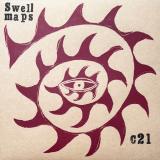
One of the first punk bands to set up an "indie" label, they were also pioneers of "alternative" music, mixing punk with experimental sounds. Swell Maps released four singles and two albums in a brief but eventful career, in partnership with Rough Trade, topping UK indie charts and influencing acts including Sonic Youth, Nirvana, Stereolab, and Blur. The original line-up split in 1980, but still their studio albums, A Trip to Marineville and Jane From Occupied Europe, attract new generations of enthusiasts. In 2021, Jowe organised performances
with ten musicians to play a diverse selection of Maps material over two consecutive nights at London's Cafe Oto, and did it again at the Rough Trade launch for Jowe's book on Swell Maps in 2022. Concerts followed across the UK and Europe, with more planned. This ongoing project has resulted in a new studio album, C21, released through Tiny Global Productions. The material was composed at various times between 1979 and the present, including older songs never recorded professionally, a remake of Soundtracks' astonishing Jelly Babies and plenty of surprises. C21 offers memorable melodies, wild riffs with super hooks, yet never veers from their adventurous spirit, radical ideas and eccentric musical shapes. The current collective of musicians features: Jowe Head, David Callahan of Wolfhounds / Moonshake / solo fame, Jeff Bloom out from Television Personalities, Alternative TV's Lee McFadden, Lucie Rejchrtova (Crazy World Of Arthur Brown), Chloe Herington from chamber rock faves Chrome Hoof, and Luke Haines, who led Auteurs and Black Box Recorder and plays with REM's Peter Buck. SWELL MAPS will be performing throughout 2026 across the UK and Europe and are proud to present this stellar document, which maintains the group's devotion to D-I-Y ideals and impulses. The vinyl album covers were hand-screened and stamped by a feminist cooperative in Valencia, Spain and are offered in three randomly picked variants. The Guardian is going to run a 1400-word piece on the release.
dovrebbe essere pubblicato su 03.04.2026

Everyone knows the story of American disco.
But few are aware that, between the late 1960s and the late 1980s, Italy wrote a parallel one — spontaneous, surprising, and incredibly creative.
It is a story that spans two distinct seasons: the Italian disco of the 1970s — melodic, handmade, sometimes naïve yet always original — and the emerging Italo Disco of the 1980s, electronic, futuristic, and lightheartedly projected toward the future.
Two different languages, yet both driven by the same desire for freedom and modernity. Discoteca Sound — Italian Discoteca Underground 1975–1986 brings together 18 rare tracks — including two previously unreleased — that tell this story of transition: from the orchestral and sentimental disco of Italian dance halls to the synthetic and visionary sound of the first drum machines.
A journey through private archives, local labels, regional studios, and forgotten voices — the sonic map of a country that has always danced, but to its own rhythm. From Mediterranean disco to the first Italo Disco, from the dim lights of provincial dance halls to the early home synthesizers, each track opens a window onto an Italy that dreamed of the dance floor as a universal language of connection during the brief season of revolutionary utopias.
This compilation celebrates ten years of work by Disco Segreta — a decade dedicated to the research, recovery, and appreciation of Italian disco and electronic culture. An act of justice owed to all those artists who had their moment yet were never remembered by history — bringing back to light an essential, still too little known part of our musical heritage.
Because dancing today remains, more than ever, a living act of memory.
Limited edition 2LP, features 2 previously unreleased tracks and a new 2025 version of Coscarella & Polimeno – Station to Station.
f Grazia Vitale – Poi (1975) Previously Unreleased
q Daniel Sentacruz Ensemble – Vivo Solo Con Te (1982) Previously Unreleased
f Grazia Vitale – Poi (1975) Previously Unreleased
q Daniel Sentacruz Ensemble – Vivo Solo Con Te (1982) Previously Unreleased
f B2. Grazia Vitale – Poi (1975) Previously Unreleased
q D4. Daniel Sentacruz Ensemble – Vivo Solo Con Te (1982) [Previously Unreleased]
[f] B2. Grazia Vitale – Poi (1975) [Previously Unreleased]
[q] D4. Daniel Sentacruz Ensemble – Vivo Solo Con Te (1982) [Previously Unreleased]
[f] B2. Grazia Vitale – Poi (1975) [Previously Unreleased]
[q] D4. Daniel Sentacruz Ensemble – Vivo Solo Con Te (1982) [Previously Unreleased]
Ordina ora e ordineremo l'articolo per te presso il nostro fornitore.

Iori Wakasa, one of the leading lights of the Tokyo club scene is set to release his second 12” from his own label, “BOTANICA” which he established to express his own primal sensibilities.
The Concept of the Label:
Tokyo-based DJ/producer, Iori Wakasa launched BOTANICA to assert that his label’s activities in itself is art and a palette for his creative, self-expression. It is also based on 2 main concepts: To integrate the sensibilities of both "nature" and “artificial and human activities" and to “contribute music that presents a scenery from the listener's point of view”.
For Iori, his label is an interface of some sort and is also a symbol of his own personal musical expectations.
Iori produced these 2 new tracks during the recent pandemic when the world was under severe restrictions. While taking into account and focusing on both 'his current outlook' and returning to “the roots of his own production aesthetic', he strived to produce something that would substitute it and as a result, created these two new tracks and the artwork that are presented in the label's second release, 'The Party Is Here EP’.
In this EP, he also attempts to express the sentiment that 'the experience that music provides to people is invaluably infinite' and that 'if you truly want to go out and party, it will happen, then and there!’.
About the tracks:
For the track, ’Bedroom Disco’, Iori tries to express his memories of 'a virtual night of partying’ that he experienced during Covid and created this track while being ‘in a state of wanting to break free from oppression’ and reminiscing about a party in a bedroom at night.
He also wanted to express the idea that no matter what situation or environment you are in, you can go to anywhere you want if you really want to and with that sentiment, he wanted to express a scenerio that transcends it and at the same time, he also wanted to convey his feelings of nostalgia for the past, rebellion against the environment and his feelings of desire.
For this track, Iori did not use any sampled voices or field recordings and created it by layering pure sonic imagery repeatedly folded and desolved which triggered the creation of new developments while imagining the thought that “a party actually begins when you step out” and the swaying of emotions that take place from it.
’Tropica' is a track that Iori produced by heavily mixing a utopian feel that people have inside of them with his own sensuality and is designed to ‘guide you to a tropical seaside', regardless of what the listener may have experienced in the past.
Unlike 'Bedroom Disco', this track uses a variety of samples and envisages "many elements intertwining with each other, working together to create this sound structure”. And it also expresses that equal opportunity exists for anyone who wants to visit an imaginary tropical land as well as the hope that even a brief break of the mind can be created by yourself and those close to you, if one pursues it.
About the artwork:
The cover of this new EP, the concept text 'Is your window open?', and the label's logo was designed by illustrator, HILOSHI SHINOZAKI who also worked on the first release, BOTANICA EP. For over 10 years, he has been a regular visitor of Hawaii, where he tries to cultivate his "true way of life” in his art.
And, artwork for the cover and label design of the EP is complemented by the label design and art direction of the record by hiro, a graphic designer who has been his partner and best friend since the first Botanica EP.
hiro expresses Bedroom Disco track's shifting compositional changes and its complex series of sound waves by creating an intricately multi-layered design that is a perfect representation of the way he sees it.
Also initially inspired by the fluctuations of waves, islands, sun, rays, sky and time, the artwork of Tropica also found inspiration from a drawing that made by Iori’s daughter who drew a picture of a scenery when she listened to the track. So through this design, one of the label’s concept of “the label’s activities is in itself art” was realised via the surprising contribution coming from his own family.
Ordina ora e ordineremo l'articolo per te presso il nostro fornitore.

Black Truffle is thrilled to present the first vinyl reissue of David Rosenboom’s unique Future Travel, originally released on the short-lived Detroit label Street Records in 1981 and here presented in an expanded edition with an additional LP of wild, previously unheard live and studio material from the same period.
Future Travel emerged from the confluence of two important streams in Rosenboom’s work at this time. First, his exploration of ‘propositional music’, defined as ‘complete cognitive models of music’ that start from the radical question, ‘What is music?’ In this case, the music belongs to the universe of Rosenboom’s In the Beginning (1978-1981), in which proportional relationships determine the material available to the composer in all musical parameters (harmonic relationships, melodic shapes, rhythmic subdivisions, dynamics, and so on). Second, the work documents a key moment in Rosenboom’s long collaboration with synthesizer pioneer Don Buchla. Having played a role in developing concepts for some of the modules of the Buchla 300 Series Electric Music Box (an innovative analogue modular system controlled by micro-processors), Rosenboom went on to write the software for Buchla’s hybrid analogue-digital keyboard synthesiser, the Touché, the instrument heard most prominently here.
In a way that no purely analogue synthesizer could, the 300 Series and Touché allowed Rosenboom to work with the In the Beginning algorithms in real time, the synthesizers becoming ‘intelligent instruments’ that actively collaborate with the performer. Developing the open structures of the electronic pieces from In the Beginning, Future Travel explored the possibilities of simply ‘playing the system’, recording live at Francis Ford Coppola’s Zoetrope studio in San Francisco. Working from loose sketches, Rosenboom added acoustic instruments to the electronic sounds and, on some pieces, the processed voice of Jacqueline Humbert. Like Rosenboom’s collaboration with Humbert on the abstracted synth-chanson of Daytime Viewing, this music set out deliberately to challenge the ‘stratified and illusorily coagulated identities in the musical culture of the time,’ refusing distinctions between ‘serious’ and popular music. But where Daytime Viewing achieves this in part through genre references, Future Travel is bracingly sui generis, existing in a unique universe where radical formalisation à la Xenakis spontaneously gives rise to expressive jazz harmonies and old-timey folk melodies.
The crystalline quality of many of the Touché sounds gives Future Travel a sparkling, immediately enticing surface, its layers of shifting ostinato patterns pulsating outside conventional meter, rippling like waves on the surface of water. On opener ‘Station Oaxaca’, ping-ponging synth arpeggios and hand percussion accompany a sentimental violin melody, abruptly overtaken by layered keyboard runs, before the entry of tinkling marimba-like sounds reframe the scene as sci-fi Martin Denny exotica. ‘Time Arroyo’ begins as an austere study in staccato synth sounds in multiple overlapping tempi, reminiscent of Ligeti’s famous ‘clock’ rhythmic effects. Before long, it opens up into a melodic passage with the gentle heroism of classic Roedelius, which proves to be only a brief interlude before the layers of rhythmically distinct synthesiser patterns begin to build and accelerate into an increasingly dense cacophony. The wildest twists and turns are saved for the epic closer ‘Nova Wind’, where the arrangement focuses on Rosenboom’s virtuoso piano playing, perfectly embodying the project’s radical disregard of stylistic orthodoxies as he moves from hyperactive pointillistic flurries to a kind of space-age gospel.
At several points throughout the record, the distinctive voice of Jacqueline Humbert is heard reading passages from the text component of In the Beginning, a dialogue between The Double (an embodiment of humanity’s timeless desire to replicate itself in spiritual and technological copies) and two Spirit Characters. Fittingly, as all are conceived as embodiments of a future form of techno-human collective consciousness, distinctions between the three characters are not immediately evident in Humbert’s delivery, just as the music blurs the boundaries between intelligent computing and human spontaneity. Adorned with a striking retro-futurist cover (and here accompanied by extensive new liner notes and archival images), Future Travel is a time capsule of radical imaginings at the birth of our digital age, reminding us of utopian possibilities of which our own present seems so often to fall short.
Ordina ora e ordineremo l'articolo per te presso il nostro fornitore.

The Search for God is a wake-up call for a troubled world that’s still worth saving, animated by a belief in the power of small connections to add up to big changes. At 10 songs delivered in a brief 15 minutes, Jimmy Whispers’ long-awaited sophomore album feels present in a way that feels brand new for the cult auteur. Like many of us, Jimmy has been affected by the pressure of the past few years. After embracing sobriety in 2019, and now as a filmmaker sharing the stories of lesser known Los Angeles community members, he’s brought his dreaming down to earth, while turning its direction even further out.
Recorded with his longtime friend Ziyad Asrar of the band Whitney (and re-recorded after a hard drive incident destroyed the original files), The Search for God was created in the wake of Jimmy’s COVID isolation, and returns to some teen influences that are out of step with the chill/lo-fi LA indie rock scene he’s found himself lumped in with. Created mostly with two vintage synths, a single Roland CR5000 drum machine, and a busted karaoke machine, it channels Midwestern emo, the Beach Boys’ Smile, subtle nods at hyper-pop production, and forgotten jewel-box era college radio of the early aughts into a pure pop sound that transcends easy categorization.
The album’s standout single—and its statement of purpose—is “Hellscape,” which packs more into a minute and 40 seconds than you’d think possible: multiple immediately-unforgettable hooks, kaleidoscopic keyboards, and a bracing reminder that even the most transcendent moments are rooted in a world full of suffering. “This is a fucking hellscape,” Jimmy sings. “This is real life / this is happening.”
That may sound like punk nihilism, but The Search for God is anything but. Every lyrical acknowledgment of how fucked things are right now comes with a promise that we can still make positive changes. Jimmy calls it “God”; you might call it Love or Peace or A Place In the Universe That Makes Some Kind of Sense.
Will The Search for God deliver whatever that is to you? Of course not. At its heart, it’s still just a really good pop album. But maybe that’s enough. For a minute or two at a time, Jimmy’s music cracks open a space where the divine can enter our lives. The utopia we’ve all been dreaming of is already here if we’re just willing to build it. Jimmy Whispers is there, ready to add his voice, whenever we want to reach out.
dovrebbe essere pubblicato su 23.06.2023

WRWTFWW Records is beaucoup happy to announce the official reissue of Pierre Barouh's hard-to-describe-but-easy-to-enjoy French flair meets Japanese avant-garde lost treasure of experimental-electronic-chanson-pop with a new-wave-minimal-bossa touch, Le Pollen. Originally recorded July 1982 at Nippon Columbia Studio in Tokyo and composed, arranged, and played by a who's who of Japan's most groundbreaking musicians of the 80s, the album comes as a LP with bonus 7inch, housed in a heavy sleeve displaying two immaculate photos of Barouh and holding a printed lyrics insert.
A free-spirited world traveler with an incredible ear for music, Paris-born singer and activist Pierre Barouh introduced the sounds of Brazil (and more) to Europe and pushed the envelope with his pio-neering label Saravah, home of adventurous innovators Brigitte Fontaine, Areski, Jacques Higelin, Naná Vasconcelos, and Roland Bocquet's Catharsis among many others. His bohemian border-free vision of modern chanson, blending musical tradition from various parts of the globe with forward-looking artistry, resonated particularly well in Japan, where the scene spearheaded by Yellow Magic Orchestra fell in love with everything Barouh.
And so one day in 1981, Pierre Barouh received an invitation from a Japanese label to come record an album in Tokyo. Not one to turn down an escapade around the world, the French visionary jumped on a plane and landed in a studio surrounded with a dream line-up of musicians: Yukihiro Takahashi (who had named his solo debut Saravah! after Barouh's imprint) and Ryuichi Sakamoto of YMO, Yasuaki Shimizu and his Mariah bandmates Masanori Sasaji and Hideo Yamaki, members of the Moonriders, Motohiko Hamase, Mitsuru Sawamura of Interior, Kazuhiko Katoh and the list goes on. Also participating in the making of the album were longtime collaborator Francis Laï and the mys-terious and beautiful David Sylvian.
The result is Le Pollen, a sincere and affectionate mix of nouveau chanson, techno-pop, post-punk, jazz, bossa, ambient, and minimalism. And probably something else entirely. Honestly impossible to classify in a particular genre, Pierre Barouh's fascinating cosmopolitan music melting pot is, above all, a reassuring ode to humanity, where friendship, exchange, and collaborative creativity breeze freely. Making music together. It's all love.
Pierre Barouh sadly passed away in December 2016, leaving behind a monumental legacy of music and art for us to cherish, and a life philosophy that's well worth considering:
La vie, qu'elle soit longue ou brève
Moi, tous mes rêves
Je les prends toujours au sérieux
Quand l'utopie brise les chaînes
C'est l'oxygène,
De ceux qui sont restés curieux
Life, be it long or brief
Me, all my dreams
I always take them seriously
When utopia breaks the chains
It's the oxygen,
Of those who've remained curious
From the song "L'Autre Rive" on Le Pollen.
Ordina ora e ordineremo l'articolo per te presso il nostro fornitore.
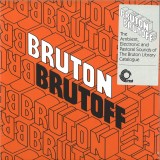
Rare musical magic from the Bruton library catalogue – ambient, spacey, pastoral and electronic. Music by John Cameron, Alan Hawkshaw, Fran-cis Monkman, Brian Bennett and more – all total masters of the scene. All very cool. All very now. All will sell very fast.
Over the last three decades Jonny Trunk has collected and written about library music. But he’s never had a great deal of luck with the Bruton catalogue. By this he means that he’s never stumbled across a massive stash, or lucked-out buying a huge run for practically nothing –that’s the kind of thing that used to happen in the 1990s and the early noughties if you were out there looking hard for library music. But he did manage to get about 25 in one hit about 20 years ago when the BBC shut down their “TV Training Department” near Lime Grove and also when a box of Brutons ended up being dumped at a hospital radio, and they didn’t want the records, so Jonny got a call.
There are lots of Bruton albums in existence – over 330 LPs in the vinyl catalogue, issued between 1978 and 1985. That’s a lot of music to wade through if you are looking for sublime modern day sounds. For many years now the “trophies” from the Bruton catalogue have been the beat or action driven LPs – the two Drama Montage albums (BRJ2 and BRJ8) have always been the big hitters, and others such as High Adventure (BRK2) too.
But Jonny has always found himself drawn to the lime green LPs, the pastoral, peaceful albums (The BRDs), which were full of the kind of gentle, lovely music that would turn up in Take Hart as Tony was paint-ing a woodpecker or a badger or an Autumn tree. The other Brutons he likes are the orange ones (The BRIs) simply because they are full of ex-perimental futuristic electronics and would remind him of 1980s ITV backgrounds. This LP series includes Brian Bennett’s cosmic classic Fantasia (BRI 10). Jonny has been knows to refer to this style of library music as “Krypton Factor library”, because it’s exactly what that strange but successful 1980s TV quiz show sounded like.
In recent years as interest in library music has expanded, we’ve watched
the price of a handful of Brutons really going through the roof - not the just the action and drama ones, but the more esoteric and experimental LPs too – like the BRDs and the BRIs. Jonny gets the vibe that people fi-nally want to hear this other more interesting and experimental side of the Bruton catalogue. So what better time than now to put together a compilation of such sublime period sounds.
Not only does this album bring together a set of fabulous cues that would cost the average man in the street a month’s wages (if the origi-nals were all wanted and if you could even track them all down), but it also chops out the need to listen to other tracks on library albums that are nowhere near as good.
The cues here all date from between 1978 and 1984. They come from the BRD, BRI, BRH, BRJ, BRM, BRR and BRs catalogues.
The composers are all legends within the genre, and here, were doing what great library composers do best – fulfilling a brief and utilising modern studio equipment to both commercial and beguiling effect.
Ordina ora e ordineremo l'articolo per te presso il nostro fornitore.

After releases on the Ninja Tune-backed label R'COUP'D, the mysterious Prequel Tapes surfaces with an EP for Midnight Shift. Composed of 3 tracks and 2 locked grooves, SHIFT LTD 003 fossilises transient moments in between gridlocks of tight grooves. Like a scan of light sweeping surreptitiously across a dungeon of darkness or a blinking throb pulsating from the corner of one's eye, these are the brief but blinding moments of illumination that capture time suspended on the edge of two worlds. Memory capsules slow-releasing an industrial mythos back into the clubbing consciousness. Prequel Tapes is a work of deep synthesis. Teenage recordings orchestrated into densely layered tapestries; a deeply emotional study on a life characterised by a shifting relationship to electronics. The pieces serve as a chronology of desire and reflection, reconciling a nascent passion for industrial music with a history in the club. There is a temptation to draw comparisons to Mark Leckey's excavation of UK rave culture, Lee Gamble's junglist memories or the hauntological approach of the Ghost Box label, however this is clearly a personal trajectory aesthetically distant from an English past. Oscillating between utopian to claustrophobic, the evolving synth work, deep techno atmospheres and traces of the clangorous energy of early European ambient and industrial tell a distinctly German tale, forged between the forest and the autobahn.
Ordina ora e ordineremo l'articolo per te presso il nostro fornitore.
