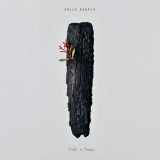
The Lunar Effect lift up cosmic spirits with "Sounds of Green & Blue" album, out in April via Svart Records The Lunar Effect, sonic architects known for their gravitational pull of fuzzy, snarling riffs and psychedelic visions, proudly announce the release of their latest album, "Sounds of Green & Blue," available to pre-order now through Svart Records. “Sounds of Green & Blue” is a galactic journey through sound that showcases The Lunar Effect’s evolution and marks a pivotal chapter in their musical odyssey. Formed in 2016, The Lunar Effect burst onto the scene with a distinct blend of grunge and retro hard rock. With a flair for hair and a penchant for barbed and growling riff work, the London-based quartet quickly garnered attention for their dynamic sound and Blues rock reverence. In 2019, they crash-landed onto the Stoner Rock scene with their debut album, "Calm Before the Calm,” firmly establishing themselves as a force to be reckoned with. "Sounds of Green & Blue" sees The Lunar Effect expanding their sonic scope and bending all the elements and eras of Classic Rock into their own unique mold. The album is a testament to their musical growth and willingness to explore new territories while maintaining the brooding vintage sound that defines them. Each track is propelled into orbit by the low-end buzz of distorted chords, powerful enough to blow the moon-dust off your amp. The first single from the album, "Pulling Daisies," is a bristling sojourn that encapsulates the band's celestial rock influences. The track combines classic Blues tones, fuzzy guitars, swirling ethereal vocals, and a dusty, hypnotic rhythm that transports listeners from the past into a screaming, paisley, future wonderland. "Pulling Daisies" sets the controls for the heart of the moon, showcasing The Lunar Effect's ability to craft immersive and soul side musical experiences. From the heyday of The Beatles, Floyd, Zeppelin and Sabbath to newer artists like Graveyard, Radio Moscow and Red Fang, The Lunar Effect have created a masterclass in Psychedelic Rock that takes you firmly by the collar. With a palette that also includes shades of the 90s Grunge scene like Nirvana and Soundgarden into their heady mix, The Lunar Effect paint their own trippy world, where genres blur into their unique brew of heart-felt space rock. "Sounds of Green & Blue" by The Lunar Effect is proudly released by Svart Records, a label known for its commitment to uncovering high-quality, diverse, and boundary-pushing music. Svart Records continues to be a platform for artists who defy conventions, push the boundaries of their respective genres, and break out of the underground.
Cerca:a crash
Black Vinyl[24,79 €]
The Lunar Effect lift up cosmic spirits with "Sounds of Green & Blue" album, out in April via Svart Records The Lunar Effect, sonic architects known for their gravitational pull of fuzzy, snarling riffs and psychedelic visions, proudly announce the release of their latest album, "Sounds of Green & Blue," available to pre-order now through Svart Records. “Sounds of Green & Blue” is a galactic journey through sound that showcases The Lunar Effect’s evolution and marks a pivotal chapter in their musical odyssey. Formed in 2016, The Lunar Effect burst onto the scene with a distinct blend of grunge and retro hard rock. With a flair for hair and a penchant for barbed and growling riff work, the London-based quartet quickly garnered attention for their dynamic sound and Blues rock reverence. In 2019, they crash-landed onto the Stoner Rock scene with their debut album, "Calm Before the Calm,” firmly establishing themselves as a force to be reckoned with. "Sounds of Green & Blue" sees The Lunar Effect expanding their sonic scope and bending all the elements and eras of Classic Rock into their own unique mold. The album is a testament to their musical growth and willingness to explore new territories while maintaining the brooding vintage sound that defines them. Each track is propelled into orbit by the low-end buzz of distorted chords, powerful enough to blow the moon-dust off your amp. The first single from the album, "Pulling Daisies," is a bristling sojourn that encapsulates the band's celestial rock influences. The track combines classic Blues tones, fuzzy guitars, swirling ethereal vocals, and a dusty, hypnotic rhythm that transports listeners from the past into a screaming, paisley, future wonderland. "Pulling Daisies" sets the controls for the heart of the moon, showcasing The Lunar Effect's ability to craft immersive and soul side musical experiences. From the heyday of The Beatles, Floyd, Zeppelin and Sabbath to newer artists like Graveyard, Radio Moscow and Red Fang, The Lunar Effect have created a masterclass in Psychedelic Rock that takes you firmly by the collar. With a palette that also includes shades of the 90s Grunge scene like Nirvana and Soundgarden into their heady mix, The Lunar Effect paint their own trippy world, where genres blur into their unique brew of heart-felt space rock. "Sounds of Green & Blue" by The Lunar Effect is proudly released by Svart Records, a label known for its commitment to uncovering high-quality, diverse, and boundary-pushing music. Svart Records continues to be a platform for artists who defy conventions, push the boundaries of their respective genres, and break out of the underground.
Emotional Rescue dives back into one of its specialties, the formative years of Post Punk and Dub influenced music, presenting the, to date, unheralded Skinbat Scramble. The rarity of the unknown, the discovery of rich, lost music, it is a delight to release a compilation of the band's previously unreleased recordings. A snapshot of time, a journey that covers several decades of friendship but is concentrated here on the fertile 80's scene.
Forged around the friendship of Mark Eason and Fergus Crockford, but with ever changing line-ups, flowing in and out during misspent youths, self-taught playing, falling in and out of bands, travelling that well-worn journey from Home Counties boredom to the excitement of a rough edged London, taking in as music as possible, from Motown on to the The Velvet Underground, The Rolling Stones, Bowie, Pink Floyd, Gong and Fripp & Eno, before Dr Feelgood, Eddie & The Hotrods and a dose of John Peel led to discovering Dub and Punk and witnessing that short-lived burst of creativity at the Roxy Club, Marquee or Vortex and exploring back to early Rock'n'Roll, Rockabilly and old Surf'n'Soul, alongside the likes of Wire and Suicide.
As the Post-Punk sounds mixed simultaneously with Two-Tone, local Art College gave way to university and the early struggles of finding a way in the late 70s / early 80s of Thatcher's Britain. Music was central, Skinbat Scramble finally appearing, morphing from numerous teen bands, early studio excursions of tape loops and effects leading to the first recording sessions in 1981.
The slower tempos, introspection, open structures, and shimmering experimentation of Post Punk were pivotal. John Foxx's early Ultravox, Siouxsies' "Lord's Prayer" period and The Electric Chairs seminal "So Many Ways", influenced to a freer future. PIL, ACR, Section 25 and Pink Military let imaginations briefly roam.
'Far out and weird', those first recordings made at Leeds Uni's Fine Arts Dept utilized Revoxes, Tandberg, MiniMoog and even a borrowed drummer. This was followed up with completed sessions at Elephant Studios in London, forming the basis of this compilation.
The tight scattergun rhythms on opener Submit, in both Vocal and short Dub mix, bely an unreleased band. Taught and crisp, it's like a song you've heard propelling open-minded, leftfield dancefloors for years.
The writing, musicianship and studio mastery displayed on North By Northwest and Skiddadle should not be music unreleased for almost 40 years. In North Dub and closer, Pixie Boot Dub their understanding of the opportunities of dub Reggae are clearly apparent, ethereal music wormholes for late night smokers.
However, it is in Basement Voltaire that the band step out time. Recorded in 1986 this is a 9-minute proto-techno wonder that mixes all their psychedelic meets punk youth in a crescendo of crashing claps and rolling toms that is of a time and so far ahead of its time.
And that was that, after 6 gigs, including a couple at the infamous St Martins, to an audience total you can fit on one hand, the band's first incantation closed and the master tapes were stored for several decades, waiting for "The Psychedelic Pirates" to finally surface.
Das 1997 mit der Veröffentlichung von "Solid" eingeleitete neue Kapitel in der Geschichte von U.D.O. setzte sich 2004 mit den ersten Veröffentlichungen unter dem Dach von AFM-Records fort. In dieser Ära veröffentlichte U.D.O. viele seiner Heavy Metal-Meilensteine und All-Time-Fan-Favoriten. Jetzt, 20 Jahre später, werden diese Klassiker endlich wiederveröffentlicht. Am 5. April werden vier weitere Alben dieser Serie - teilweise zum ersten Mal - auf Vinyl veröffentlicht. Eile ist geboten, um diese Eckpfeiler des Heavy Metal nicht zu verpassen!
- A1: Operation Overlord
- A2: Rage
- A3: Kill Ratio
- A4: March Of The Stroggs
- A5: The Underworld
- B1: Quad Machine
- B2: Big Gun
- B3: Descent Into Cerberon
- B4: Climb (Composed By Jer Sypult)
- C1: Gravity Well
- C2: Counter Attack
- C3: Stealth Frag
- C4: Crashed Up Again
- C5: Adrenaline Junkie
- D1: Etf
- D2: Complex 13
- D3: Pressure Point I
- D4: Pressure Point Ii
- D5: Ground Zero
Laced Records, id Software and Bethesda proudly present the music of seminal 1997 first-person shooter Quake II on vinyl.
19 specially remastered tracks by Sonic Mayhem and Jer Sypult will be pressed onto heavyweight discs. Sleeve artwork is by id Software, with Jason Williford providing character illustrations.
The bulk of the soundtrack was created by Sascha Dikiciyan aka Sonic Mayhem — his first game project among an enviably long credits list. Having caught id Software’s ear with an unofficial Quake album (alongside production partner Dave Valencia), Sonic Mayhem and id Software went on to develop Quake II’s trademark aggro-industrial metal sound, inspired in part by Metallica. The killer riffs, repeated for effect, urge players forward through the Strogg city and beyond, a trail of gibs in their wake. Jer Sypult’s “Climb” complements the selection with its driving industrial groove.
French producer Panthera steps up to Melodize with a pair of Italo inspired cuts that come remixed by the legendary Lauer and Endrik Schroeder.
Panthera prefers to remain secretive about his identity, but his music has plenty of people talking. It has come out on labels such as Bordello A Parigi, Polaris and Correspondant so far and contains a distinct, synth-heavy, euphoric sound.
This is evident from the beginning with ‘Hustle’, a colourful and cosmic cut with rich melodies, occasional vocal touches and shimmering arps. They bring sugary rushes of joy to the mid-tempo nu-disco drums and will douse dance floors in subtle euphoria. Remixing this one is the underground stalwart Lauer, who always brings his retro style to his disco and house on labels such as Permanent Vacation and Running Back. His version is faster and more direct, though still packed with starry melodies and subtle synth motifs that bring it to life.
Panthera’s ‘Western Union’ then brings more raw percussion and slapping drums but again takes flight through the cosmos on sleek synth lines with hints of 80s nostalgia. It’s a track that is always on the rise and full of bright, irresistible melodic suspense. Remixer Endrik Schroeder also hails from France and is a fast-rising talent with credits on the taste-making Bordello A Parigi, Ritmo Fatale, and Roam Recordings. He flips the original into a more propulsive and urgent nu-disco weapon with crashing drums and synth loops spiralling around the track as extra melodies fall like stardust to light up the groove.
There is real quality as well as plenty of feel-good energy to these four shiny, synth-heavy tracks.
'Mei Semones' sweetly evocative blend of jazz, bossa nova and math-y indie rock is notonly a way for her to find solace in her favorite genres, but is an intuitive means ofcatharsis. "Blending everything that I like together and trying to make something new -that's what feels most natural to me," says the 23-year-old Brooklyn-based singer-songwriter and guitarist. "It's what feels most true to who I am as an artist." Plinking guitar tones and asymmetrical time signatures exemplify her forays intoangular indie rock more now than ever before, especially on her debut Bayonet Recordssingle "Wakare no Kotoba"_its wide-interval arpeggios in odd meters being some ofthe most technically difficult guitar work Mei has ever implemented in her songwriting.Translated to "parting words'' in English, the self-described "anti-love song" serves as afarewell to a toxic friendship, complete with orchestral swells and crashing guitars. Originally from Ann Arbor, Michigan, Semones began playing music at a young age,starting out on piano at age four before moving to electric guitar at age eleven. Afterplaying jazz guitar in high school, she went on to study guitar performance with a jazzfocus at Berklee College of Music. College is where she met her current bandmates,including string players Noah Leong and Claudius Agrippa, whose respective viola andviolin add softness and multidimensionality to Mei's intricate guitar work. After releasinga slew of singles and an EP in 2022, coinciding with her move to New York City, Mei andher band have since gone on to collaborate with post-bossa balladeer John Roseboroand embark on their first-ever tour with the melodic rock outfit Raavi. Semones chronicles infatuation, devotion, and vulnerability in her songs, complete withsweeping strings, virtuosic guitar-playing and heartfelt lyrics sung in both English andJapanese, that have all become part of her sonic trademark: ornately catchy, genre-fusing compositions serving as the backdrop to tender lyrics touching on theuniversalities of human emotion.
The fourth leg on the early emo table of Rites of Spring, Moss Icon, and Cap'n Jazz, Indian Summer's Giving Birth To Thunder compiles their complete discography. Emo's second wave crashed into the Bay Area in the summer of 1994 in a rage-filled capsule of quiet and loud, octave chords, angry sons, Spock haircuts, and screaming. At the eye of this pissed-for-the-hell-of-it storm were Indian Summer. In the quartet's 12-month existence they wrote ten songs, appeared on a dozen singles and comps, and played over 100 gigs across the U.S. and Canada before burning out, passing out, and moving out of their Blue House in Oakland. Their hand-screened aesthetic is replicated in alarming detail in the accompanying by 24- page book with detailed liner notes, flyers, and miscellaneous propaganda.
Le jazz homme is the 2nd album of Black To Comm related entity Mouchoir Ètanche. This time heavily influenced by French Jazz (?) as well as the usual suspects: Nurse With Wound, Luc Ferrari, JG Ballard, Surrealism. The human entity has finally been replaced.
"Program music, instrumental music that carries some extramusical meaning, some “program” of literary idea, legend, scenic description, or personal drama. It is contrasted with so-called absolute, or abstract, music, in which artistic interest is supposedly confined to abstract constructions in sound. It has been stated that the concept of program music does not represent a genre in itself but rather is present in varying degrees in different works of music." (Encyclopædia Britannica)
Prompt 1: Pascal Comelade's toy piano falling down the stairs , Hector Zazou pushing from behind, laughing
Prompt 2: Cool jazz played on antique mellotron, low in fidelity, and sad, Glenn Miller‘s grandma crying silently
Prompt 3: A hippie commune version of jazz as played by a cheap computer fed by Chat GPT with medieval buisine fanfare information and samples, trained on the entire Amon Düül II history, heavily looped yet unsynchronized
Prompt: 4: Same, but flutes and synths and trance and chants
Prompt 5: French female artist philosophizes about Shirley Temple, mysterious atmosphere, insensitive homme laughing nervously, heavily looped, hynotic 18th century orgue de salon underneath
Prompt 6: Cool jazz, Echoplex, strange rhythm, Blue Note daydreaming
Prompt 7: Hammond jazz with fake Cyro Baptista loop, Madagascar indri indri lemurs chanting fake sax solos in Malagasy language, electronic bells
Prompt 8: German jazz and artificial prayers, and Shirley Temple returning, with defect Publison recorded at GRM, destroying the voice recording
Prompt 9: Andrei Tarkovsky's moustache meets Johann Sebastian Bach's wig, a well gently lapping in the background, fifths, car crashing into a poor violent onsen geisha
Marc Richter records as Black To Comm for Thrill Jockey and under the Mouchoir Ètanche and Jemh Circs monikers (and solo) for his own Cellule 75 imprint. He collaborated with visual artists such as Ho Tzu Nyen, Jan van Hasselt and Mike Kelley. He also produces soundtracks and acousmatic multichannel installations for institutions such as INA GRM Paris, ZKM Karlsruhe and Kunstverein Hamburg.
Miles Davis' A Tribute to Jack Johnson is the best jazz-rock record ever made. Equally inspired by the leader's desire to assemble the "greatest rock and roll band you have ever heard,” his adoration of Johnson, and Black Power politics, Davis created a hard-hitting set that surges with excitement, intensity, majesty, and power. Bridging the electric fusion he'd pursued on earlier efforts with a funkier, dirtier rhythmic approach, Davis zeroes in on concepts of spontaneity, freedom, and identity seldom achieved in the studio — and just as infrequently accepted by the mainstream.
Sourced from the original analog master tapes, pressed on MoFi SuperVinyl, and housed in a Stoughton jacket, Mobile Fidelity's 180g LP reissue brings it all to fore with startling realism. Benefitting from SuperVinyl’s nearly inaudible noise floor, superb groove definition, and clean, ultra-quiet surfaces, this 180g LP showcases everything — from the bold tonality of the headliner's white-hot trumpet solos to the decay of crashing cymbals, carry of wiry guitar notes, and echoes of the studio — in reference fashion.
Bristling with exuberance, Davis' high-register passages explode with authority and commanding presence. Around him, a barrage of urgent backbeats, knifing riffs, and supple bass lines emerge amidst black backgrounds. One of the most prominent differences long-time fans will notice is how much more aggressive, immediate, and vibrant the music sounds, with those aspects central to the composer's original desires.
Utilizing wah-wah and distortion, the go-to instrumentalist of the performances— guitarist John McLaughlin — attacks with a nasty edge, slashing style, and vicious streak that allows A Tribute to Jack Johnson< cross the until-then-impenetrable divide between rock and jazz. Davis puts both feet in the former camp and erases any gap. The stories of the record’s creation are nearly as legendary as the sounds within: Two sessions, multiple jams, different sets of musicians (several uncredited), and near-miraculous production perfectionism that made it all appear cohesive.
The least-well-known masterpiece of Davis' career, the 1971 record — seamlessly assembled and spliced together by producer Teo Macero — was a victim of limited record-label promotion. Audiences also didn’t immediately know what to make of its original cover art — faithfully replicated here. In addition, the powers that be at Columbia Records were directing the public’s attention to Miles at Fillmore, a completely different kind of album guided by two keyboardists. A Tribute to Jack Johnson practically lives in a different universe, one from the future. To many listeners who did manage to hear it — among them critic/musician Robert Quine, Stooges leader Iggy Pop, and renowned critic Robert Christgau — it surpassed everything that came before.
Indeed, Davis treated it as a personal manifesto: An opportunity to salute the Black championship boxer admired for his threatening image to the establishment and impeccable taste in clothes, cars, women and music. Davis explains in the liner notes his affinity for Johnson — a stance mirrored by the defiant music, which hits with a prize fighter's force and reflects the graceful elegance with which a pugilist navigates the ring — and closes the album with a Johnson quote read by Brock Peters.
Inspired not only by Johnson but by Jimi Hendrix and Sly Stone, Davis changed his approach and his band. He surrounds himself with a cadre of musicians in their 20s and, in the case of bassist Michael Henderson, a 19-year-old fresh from touring with Stevie Wonder. Henderson gives Davis what he requested: boogie-based grooves that don’t lose shape or direction. Soprano saxophonist Steve Grossman, drummer Billy Cobham, and organist Herbie Hancock adhere to a similar aesthetic that prizes brazenness, innovation, and energy.
In that vein, during a portion of “Yesternow,” Davis segues into a separate performance (which became known in its entirety as “Willie Nelson”) played by guitarists McLaughlin and Sonny Sharrock, bass clarinetist Bernie Maupin, keyboardist Chick Corea, bassist Dave Holland, and drummer Jack DeJohnette. Dig it!
Talking with jazz scholar Bill Milkowski — who himself noted how McLaughlin’s unrestrained style, decibel-forward volumes, and rapid-fire power chords engendered himself to the rock crowd at the same time that his harmonics and syncopation still definitely made him a jazz player — guitarist Henry Kaiser summed up part of the appeal of A Tribute to Jack Johnson as well as anyone, saying: “It’s a jazz record that way way more open than other jazz records at the time, but still not free jazz. McLaughlin’s rhythm guitar playing on ‘Right Off’ — the use of different chords in a rock shuffle than what anybody had used before — was revolutionary.”
And to think that’s just one aspect of a record that contains multitudes. “Never let them forget it.” Indeed.
Random Color Vinyl. Beach Fossils' sophomore album, Clash the Truth, is modern post-punk triumph that's left a lasting impression on the music scene it was born out of. After releasing their self titled debut and the beloved EP, What a Pleasure, songwriter and composer Dustin Payseur began recording dissonant and introspective demos reflecting on his southern upbringing and young adulthood in New York. The tracks that would eventually make up Clash the Truth involved Payseur taking his songwriting in a new direction, employing jagged instrumentals, existential lyrics, and socially conscious subject matter. The darker themes of Clash the Truth still come out vibrant through bright guitar tones, locomotive drumming, and Payseur's inventive home recording techniques. Referencing the sounds of Factory Records releases, New York's no wave scene, and 90's avant-pop, Beach Fossils expanded their sound past the perimeters of bedroom dream pop. The album is now being reissued for the first time on Payseur and his partner Katie Garcia's own label, Bayonet Records, including a limited edition clear pink vinyl pressing.
The fresh-faced folk pop band Stornoway seem promising: They play with guileless vigor, have a light-stepping chemistry as a unit, harmonize well. Their lead singer Brian Briggs has a lovely, pure high tenor, the kind of voice that effortlessly conveys simple longing. And yet, on their second album, Tales from Terra Firma, they continue to be almost crushingly dull, making well-appointed and cheerfully empty music that successfully communicates next to nothing.
Their Achilles Heel is a simple and unfortunate one, the same on Tales as it was on 2010's Beachcombers Windowsill. Stornoway are clearly in love with Celtic and British folk, and yet they can't write a memorable melody to save their lives. Try to sing along to the verse melody of "Zorbing", their most well-known tune, and pay attention to what your face muscles are doing; most likely furrowing with the effort of recall. Each of Tales' painstakingly arranged nine songs sinks underneath the weight of this insurmountable problem, which is a shame.
If you're making folk-pop, an inability to write a catchy melody is a difficult deficiency to overcome. Stornoway try valiantly with their complex arrangements, which quickly grow exhausting. “You Take Me as I Am” is cluttered with horn charts and pointlessly banging piano. “(A Belated) Invite to Eternity” builds to a full Explosions in the Sky crescendo, with glimmering tremolo guitar and a “Tonight, Tonight”-style sweeping string section, but having built zero momentum and generated zero heat until that point, their planned fireworks display fizzles.
“Farewell Appalachia” follows the same pattern, with celesta, finger-picked acoustic and electric guitar all tracing an emptily pretty circle with nothing in the center. The melody of "The Great Procrastinator" is almost cleanly written enough to be memorable-- and then the ersatz Dixieland jazz interlude crashes in. Stornoway are deft players, and the transitions are tightly managed, but this is praise on the same order as praising the brushwork in a hotel-room painting.
Briggs’ lyrics are filled with uncomplicated images of the good old British countryside, but his lyrics trample over all these dew-covered fields with wordy, awkward phrasing: "And in the gathering dew, I was lucid as a floodlight,” goes a line from “(A Belated) Invitation to Eternity”. “There's a hunger in the air/ A lemon swollen in the trees" he bleats on “Knock Me on the Head”. On “The Great Procrastinator”, he sings that he is “a scientist with far too many metaphors and far too little data to conclude in time.” They don’t read particularly well, and they don’t sound much more natural when sung.
Tales From Terra Firma is a peculiar record-- carefree music that feels leaden; tuneful-sounding songs that offer no tunes to hold onto. They seem an odd fit for 4AD, a label mostly home to singular voices. They may be a mercenary signing, an attempt to ride the coattails of Mumford and Sons' success. But Mumford and Sons, as head-smack simple and pandering as they are, have a pretty crucial ingredient in their arsenal: they write anthems. In that regard, they have Stornoway pretty thoroughly beat.
It all started with a crashed computer and it certainly didn’t end there. »Cinnte le Dia« is the third collaborative album by Hanno Leichtmann and Valerio Tricoli, their first entry into Ni Vu Ni Connu’s duo series that focuses on Berlin’s Echtzeitmusik scene and beyond. Having already released two joint records on the now-defunct Entr'acte label, the two musicians wanted to document a 2018 concert in Berlin, but technology failed them. Undeterred, the sound artist and percussionist and the electroacoustic composer went to the former’s Static Music Studio to record six of the eight tracks on this record straight to tape, with two additional ones being recorded during a performance at Eupen’s Meakusma festival in 2019.
After 2016’s »The Future of Discipline« saw the duo enter the studio for a one-take session with added synth-bass overdubs and 2018’s »La Casa delle Chimere« documented a live gig in Kyiv, »Cinnte le Dia« presents a synthesis of the two approaches. Mixing the album together and adding overdubs—Leichtmann with his synth-bass again, Tricoli with his trusted Revox B77—the duo combined the special energy of their performance in front of a live audience with the intimate atmosphere of a studio session between two exceptional improvisers and composers. The pieces are accordingly marked by their sonic density, but also a rhythmic intricacy that makes the album as a whole negotiate its place in music history between bass-heavy, dubbed-out club music and electroacoustic as well as musique concrète techniques.
Leichtmann worked with a mix of acoustic percussion routed through a modified looper and a granular live sampler as well as electronic drums consisting of three modular sampleplayers, a Syncussion drum synth and a bass drum module. Depending on the current set-up, the two fed this input through Tricoli’s B77 either individually or collectively to further manipulate single elements or the entire sound. What might look complicated on a tech rider sounds intuitive on record: these are two versatile musicians engaging in a play of difference and repetition, acting and reacting to each other in real-time, but also creating additional layers by inserting new elements after the fact. In a very literal way, »Cinnte le Dia« is the duo’s most refined album, yet at the same time a testament to the uncanny energy they unleash during their improvisations. It’s solemn and moody, spontaneous and driving at once. Of course a computer couldn’t handle that.
Scottish alt/post/progressive-rock outfit Midas Fall release their Fifth studio album, ‘Cold Waves Divide Us’ on March 8th, 2024 worldwide on Monotreme Records. Michael Hamilton joins founding members Elizabeth Heaton and Rowan Burn for the follow-up to their 2018 Prog Magazine Awards ‘Limelight Award’ winning album, ‘Evaporate’. ‘Cold Waves Divide Us’ sees Midas Fall at their most confidently visceral, each song moving beautifully between quiet and loud, gentle and crushing. “This album is a heavier and bigger experience than the last album”, says Heaton. “We kept the atmospheric strings and 80s synths of Evaporate but wanted to add heavier layered elements, to represent more what we sound like live.” Opener ‘In the Morning We’ll Be Someone Else’ starts quietly with serene piano and vocals, ominously ratcheting up the tension to walls of crashing guitars and Heaton’s soaring vocals. ‘I Am Wrong’ thunders along on pounding rhythmic drums swirling around heavy swathes of low and delicate melodic highs. On ‘Monsters’, the band are more contemplative, with an ethereal beginning making way for gorgeously syncopated guitar and drums, whilst ‘Cold Waves Divide Us’ builds slower, allowing Heaton’s voice to gracefully float over the growing force beneath it. ‘Avalanche’ is a bittersweet lullaby showcasing Heaton’s heart-rending vocals in one of the quieter moments on the album. ‘Point of Diminishing Return’ sees a more electronic influence, with glittering shimmered synths taking the space where guitar melodies were, but with all of the Post Rock beauty that the duo are known for, something ‘Little Wooden Boxes’ showcases perfectly, expertly hovering between gentle clean guitar and piano, and exhilarating, uplifting full-band, full-bore epic. Credits: Elizabeth Heaton - vocals, guitars, strings, synths, piano, drums // Rowan Burn - guitars, synths, piano, drums // Michael Hamilton - bass, synths, drums // Music by Elizabeth Heaton and Rowan Burn/Lyrics by Elizabeth Heaton
For its 2nd release, Sweet Notes is happy to welcome the Italian duo Two Opposites to its imprint! Begin the adventure with "Escape Reality", where celestial synths elevate you to the cosmos. A dash of pop flair in the playful bassline lightens the mood, making you groove from head to toe on this mind-bending escape!
The second track, "Gravitone", means business from the start. A serious vibe that compels you to exchange intense looks with your mates or strangers on the dance floor. The whirling stab? It's like an old computer crashing, but in the coolest way. Paired with an acid house beat, get ready to techno-nod with newfound seriousness!
Dive into the EP's third track, "Magic Gate", where a deep bassline takes you on a mind-soaring journey. Shimmering synths elevate the experience. Once open, the magic gate leads you into its twisted slide tunnel—a wild, memorable ride awaits, so you better buckle up!
Enter the laid-back realm of "Melocity," where multi-directional stabs guide your mind on an intense self-trip. It's mellow yet positively infectious, and those shiny stabs? They're the secret giggle-inducing agents. Let the carefree vibes roll!
- A1: Joe Bataan - Drug Story
- A2: Joe Bataan - Latin Soul Square Dance
- A3: Joe Bataan - (Goodbye Adios) Roberto Clemente
- B1: Eddie Lebron - My Vows To You
- B2: Eddie Lebron - Sigue Tu Vida
- B3: The Edwards Generation - Someone Like You
- B4: The Edwards Generation - School Is In
- B5: One'sy Mack - Never Listen To Your Heart
- B6: One'sy Mack - A Part Of A Fool
Now-Again Records presents catalog-wide reissues of Latin music propellant Joe Bataan’s legendary Ghetto Records. The series concludes with Drug Story - Rare and unreleased material from Joe Bataan and his Ghetto Records vaults, including an entire side of Bataan’s neverbefore-issued Latin Funk that spans the gamut from Salsa to Soul. Drug Story was inspired by true events and ranks highest among Bataan’s finest achievements as the poet laureate of El Barrio. Ghetto Records was Joe Bataan’s way to get over on “The Man” and out of the ‘hood, a bold move by an artist looking for independence and creative control in an industry that had exploited his talents and treated him like chattel. As Bataan puts it today, “Ghetto Records was part of my journey, a stepping stone to everything else that I’ve done. I learned enough that it enabled me to get out of the box with my thinking, it showed me how to deal with adversity.” Like many dreams and schemes born of the street, this one was audacious, perhaps even reckless to a fault. Hatched from desperation yet full of hope Ghetto Records came crashing down shortly after its inception. The seven albums in its discography languished out of print - until now. These are the definitive reissues of these albums, licensed from Joe Bataan, with his oversight and input into a 16 page oversize book by Pablo Yglesias that details Bataan’s larger-than-imagination life and his little Latin label that could.
It’s a family affair. One formed almost thirty years ago, back in the mid-nineties, when the pair joined seminal French jazz combo Olympic Grammofon. For twenty-four years they have worked together as Bumcello, each complementing the other, echoing polar opposites. The Boom in Bumcello is none other than Cyril Atef, incisive drummer, relentlessly pushing beats towards new horizons. The Cello is Vincent Ségal, cellist without blinkers and extraordinary musical alchemist. Since 1999, these two die-hard music fans, coming together for mercurial results, have released one record after the other whilst conquering the hearts of their live audiences, old regulars as well as new recruits. We have all been seduced by the way their music leapfrogs categories - these two experts are much more interested in kindred spirits than pigeonholing, and this very spirit is celebrated on more than one track of this ninth record, whose concept is original to say the least.
Everything began with an idea by Cyril Atef - a soundtrack based upon drawings penned by Marin, Vincent’s son, architect and visual artist. The musicians involved then coached their reaction to these images on a score, and the pair were charged with collating and adjusting the results. These thirteen ink drawings, in a heroic fantasy vein, constituted a matrix which was then to serve as a guide, like a roadmap through a singular and multi-faceted labyrinth. The key to this sonic fresco is in Bumcello’s image – an eclectic aesthetic twinned with a great sense of contrast. Herein lies the trademark of this entity animated by the gift of musical ubiquity, gorged on scales and rhythms, capable of a slap as much as a gentle caress. From classical music to electronics, from improvised music to sophisti-pop, everything is allowed with no preconceived ideas. They can even reclaim the traditions of others, all the better to propel them towards new horizons - this is how the very history of music has always panned out.
If you listen between the lines and look at the details, more than one piece bears witness to the moments and individuals that have impacted the criss-crossing lives of Vincent and Cyril. The track Crash is the perfect excuse to create a Jamaican-style jam with New York inflections, and we can see, in capital letters, the name Hilaire Penda, playing alongside Bumcello at the Apollo Theater in the associated drawing. This bass player from Cameroon, who died on 5th November 2018, was more than just a friend for the two Frenchmen. He was one of the family. Similarly, they give a nod to another Cameroonian, and another departed friend - singer of rock band les Têtes brûlées, Zanzibar, through the vocals of fellow countryman Zanzi. The ghost of Rémi Kolpa Kopul, emblematic voice of Radio Nova, haunts the margins of Spark Av, in a vocal sample with a smattering of effects. As for I Remember Tim, it directly honours the memory of Timothy Jerome Parker, aka The Gift Of Gab, another friend who left us in 2021. Tim is depicted in a drawing with the docks of Oakland in the background, and it’s his alter ego within Blackalicious, Chief Xcel, who remotely added his signature to the track, notably by adding the words of Lateef The Truthspeaker to brass and woodwind sounds.
These are the only additions to Bumcello’s original nucleus, all the better to create a genuine musical concoction where Vincent Taurelle is in charge of production and mixing sessions recorded live and direct. He is also invited for a twinkle on the keys (piano, synths, Wurlitzer, organ), on a handful of tracks. Already at the commands of previous opus Monster Talk, always taking care over the slightest detail, the one that makes all the difference, this pianist is now also part of the family. “Everything he brings is perfect, whether added though slight touches or through very important choices”, say the two members of a combo which today, appears to us under the guise of a trio, adding an extra dimension to a far-reaching mix, in the image of the veiled or more explicit tributes making up the cornerstones of this release.
Booker, a drawing where we see the musicians enter a club, honours James Booker, great pianist from New Orleans who has always fascinated Vincent, in a genre that is off-beat and gender defying. Her Story was created by Cyril in support of the Iranian women’s movement. Aysyen Kampe evokes, even in the original drawing, a tradition that remains impactful for Bumcello – Haitian mysticism, and Ouï Khouïette Ouï conjures up the beats of the Allaoui, a war dance from Western Algeria, one they have taken part in in the past with the help of Cheikha Rabia. They deliver a metal version, original and surprising, especially as Marin Ségal’s drawing features the Nicholas Brothers, those iconic dancers of the 30s jazz scene!
Resolutely hard to pin down, Bumcello’s beats can initially take on the structure of disjointed house, though Sangre begins like a film soundtrack, “in a Mexican style” adds Vincent, who was at the origin of this track. A delicate alap on the cello can open up onto afrobeat rhythms, a well-pitched voice can enchant, like on the amazing The City Has Eyes which has everything of a hummable pop hit. Emblematic of this manner of encompassing all music without being exclusive, Le Grand Sommeil, a direct reference to the Howard Hawks movie inspired by Raymond Chandler, a precursor of David Lynch, begins nice and smooth but ends on a wild tempo, on a drum’n’bass tip, as in the good old days of Cithéa, when this Party story began in the other century.
- Prologue
- Main Title
- Flashback
- Dad's Death
- Tina's Theme
- The Pier 12 Years Later
- Matchbook Exercise
- Tina Simmons
- Jason Resurrected
- Tina's Vision
- This Is Some Birthday
- Mom I Saw Him Again
- Dan & Judy
- Jason Impales Dan
- Sleeping Bag Bush
- Nick & Tina
- Pearls Go Flying
- I Hate This Place
- Flying Tv
- Skinny Dip
- Russel Gets Axed
- Mom In The Study
- Tina Overhears Crash
- Death From Above
- Kate's Murder
- Nick And Tina Find Mike
- Blood On The Floor
- It Was Him In The Lake
- Robin's Death
- Human Body Shield
- Death By Bush Trimmer
- Tina Finds Mom And Meets Jason
- Jason Comes Up For Air / Jason Unmasked!
- Jason Grabs Tina / Nails / Tina Burns Jason
- Resurrecting Dad
- Ambulance / Where's Jason? We Took Care Of Him
- End Title
- End Credits
The debut release of FRIDAY THE 13TH PART VII: THE NEW BLOOD Original Motion Picture Soundtrack By Harry Manfredini and Fred Mollin! Available for the very first time in any format, Waxwork worked closely with Paramount Pictures to locate the original 1988 master tapes in the Paramount vault. Archived away for many years, and thought to have been lost, multiple master tapes containing the the complete score by composer Fred Mollin have been located, transferred, and re-mastered for this deluxe double vinyl release. Also included in this double album are the complete original soundtrack cues featured in the movie and composed by Friday the 13th veteran, Harry Manfredini.
FRIDAY THE 13TH PART VII: THE NEW BLOOD is a 1988 American Slasher-Horror movie that follows a psychokinetic teenage girl who inadvertently unleashes Jason Voorhees from his grave in Crystal Lake. The film features, for the first time, actor / stuntman Kane Hodder, as Jason Voorhees. Hodder would go on to portray Jason in numerous Friday The 13th films.
Waxwork Records is excited to present the definitive FRIDAY THE 13TH PART VII: THE NEW BLOOD soundtrack by including, for the first time, the complete film music by both composers Harry Manfredini and Fred Mollin. Features include 2xLP 180 gram “Psychokinetic Splatter” colored vinyl, deluxe packaging, new artwork by Sarah Deck, the complete soundtrack sourced from the original 1988 master tapes, and heavyweight gatefold jackets with satin coating.
- Senseless
- Inner Qualities
- Needle
- Fallen
- Competition In Hatred
- Love Story?
- Drift Apart
- Dragon
- My Source
- Serenade
- Illumination
- Fascistproof Armour
- City Of Hope
- Still The 17Th Century
- Despertar
- All Of Us
- Nothing
- Emptiness
- Monster
- Le Sacre De Sang
- Let's March!
- Junior
- Highway Tonight
- The Rumble
- Easy Digestion
- Showdown
- No. 1
- Centipede
- The Preacher
- Take It Away
- Shuffle The Deck
- La Musica Continua
- Confront Yourself
- Thousand Years
- Rising Fire
- Lifestyle
- Darkness Of Ignorance
- Spiritual Game
- Revolution
- Remark Of Frustration
- Demo
- Not Free
- Dragon
- All Of Us
- Skulls
- Meat Is Murder
- Crashing
- Desasir
- Rebels Rule
- Top Of The World
- Still United!
Orange, yellow, cyan blue, aqua blue, baby blue vinyl. Limited to 400 copies
After being out of print for decades, End Hits Records has partnered with the Swedish hardcore punk legends ABHINANDA to re-release their complete discography on vinyl. Founded in 1992 in Umea, now recognized as a European punk hub, ABHINANDA played a significant role in shaping the history and development of the 90's hardcore scene. Alongside their contemporaries REFUSED (with whom they frequently shared and swapped members), they were instrumental in the international breakthrough and popularization of Scandinavian hardcore. Much credit for this goes to singer Jose Saxlund, who, along with Dennis Lyxzen (Refused, Int. Noise Conspiracy), operated the Straight Edge label "Desperate Fight" and played a vital role in consistently releasing recordings from the thriving Swedish scene. Finally, the entire ABHINANDA discography will be available once again, this time on strictly limited vinyl: The five-vinyl box set comes in an elegant cardboard slipcase, with each individual record housed in a gatefold cover and accompanied by a large-format poster. Additionally, there are numerous never-before-seen pictures, along with detailed liner notes/interviews featuring band members and contemporaries such as Dennis Lyxzen (Refused), Vique Simba (Revelation Records, Simba Zine+Records), Sara Almgren (Doughnuts, Int. Noise Conspiracy), and Kate Tucker-Reddy (108). The box set includes the three full-length albums "Senseless," "Self Titled," and "The Rumble," as well as a double LP featuring all demo recordings, EPs, and 7" tracks. The music has been completely remastered, and the artwork has been entirely updated.
The Body & Dis Fig are a natural pair. Each has pioneered instantly recognizable worlds of sound all their own that defy any traditional categorizations or boundaries. The Body, Lee Buford and Chip King, continually challenge any conventional conception of metal, collaborating with myriad artists and from the folk-leanings of their work with BIG|BRAVE to their groundbreaking work with the Assembly of Light Choir to the intensity of their collaborations with OAA or Thou. Dis Fig, aka Felicia Chen, pushes electronic music into dark extremes, from warped DJ sets to avant production, from being a member of Tianzhuo Chen’s performance-art series TRANCE to being the vocalist with The Bug. The Body and Dis Fig find kinship in reimagining what it means to make “heavy music”. Their debut Orchards of a Futile Heaven is the perfect synthesis of two forces, twisting melodicism and intoxicating rhythms, layering a dense miasma of distortion with intense beats and a soaring voice clawing its way towards absolution.
Orchards of a Futile Heaven’s walls of sputtering texture and tectonic booms are soaked in the reverence and melancholy of sacred spaces brought to life by palpable intensity by Chen’s voice. Crafted during a time of personal fragility, the album’s devastating force lies beyond any of the expected noise and abrasive textures typically associated with both The Body & Dis Fig. Suffused with a raw vulnerability and a longing for catharsis, Chen’s voice searches for escape in the midst of oppressive atmospheres as if determined to find relief from guilt. “Eternal Hours” patiently unfurls waves of surprising sounds, whispered undulations that are punctuated by sudden crashes, all beneath Chen’s haunting harmonies. “Dissent, Shame” evokes grief and shame with a minimalist drone dirge that gradually builds to an enchanting choral passage. King’s guitar on “Holy Lance” matches the uncanny drone of Chen’s accordion in an all-consuming blast, Chen’s voice transforming the moment from anguish to defiance and empowerment. The album’s arc finishes with “Coils of Kaa” acting as a kind of propulsive exorcism, breaking through a suffocating air before the funeral procession of “Back to the Water” lays the album to rest.
While sampling has long been essential to each, The Body & Dis Fig deftly meld their differing approaches to sampling and creating extreme sounds until the boundaries are entirely blurred. The two found kinship in their desire to find new avenues to make heavy music that looked beyond tropes of metal and electronic music by merging the two. “I always wanted the heavier stuff but I also didn’t really like heavier guitar music,” says Buford. “None of it really felt quite heavy enough to me. A human can’t be as heavy as a machine.” Chen counters, “I love the balance. You could never connect to just a machine as well as you could a human. Which is why the combination is so potent for me. I don’t want to hide. I think nothing connects you more empathetically than another human's voice.”
Orchards of a Futile Heaven affirms The Body & Dis Fig as skilled sound sculptors who have an exceptional ability to make deeply affecting music, bracing as it is touching, harrowing as it is awe-inspiring. Together, the two have harnessed their expansive artistry to make music that is profoundly emotional, and staggering in its beauty.