Swan Song
The vinyl LP at the heart of this éthiopiques 31 tracks 2 to 11 was one of the very last vinyl records ever released in Ethiopia. But above all it represents, we felt, the absolute masterpiece of the Ethiopian Groove – the Swan Song of Swinging Addis. The album leaves a clear idea for posterity of the level of sophistication and mastery that modern Ethiopian music had achieved, before being crushed under the Stalino-military heel of the Derg – as the bloody revolution that was unfolding came to be called.
Ethiopia1976.
The Revolution that broke out in February 1974 rolled on in a ruthless march. The whole of Ethiopian society was utterly stunned. The bouquets of flowers handed joyfully to the first tanks of the coup d'état were to wilt very rapidly. From September 1976 to February 1978, 18 months of Red Terror (the name given by the junta itself) spilled blood throughout the country. This fratricidal conflict took its heaviest toll among students and youth. The shift from feudalism to a cruel and primitive Stalinism left the country's citizens deeply traumatised, and snuffed out any pretence of activism, whatever the sector of society. This ice age was to last for seventeen long years.
ሙሉቀን፡መለሰ Mulukèn Mellèssè Muluqän Mälläsä
It was three tracks by Muluken that served as the opener for éthiopiques-1 more than 25 years ago. Seven more tracks appeared on éthiopiques-3 and 13, all accompanied by The Equators, which was soon to become the Dahlak Band.
The first track, Hédètch alu, also the very first piece that Muluken ever recorded, left audiences both unsettled and amazed. Reflecting the singer's extremely young age (he was just 17 at the time), this angelic voice mystified many, who thought they were in fact listening to a feminine voice. He was not yet 22 when he released his last vinyl record in 1976 with Kaifa Records (KF 39LP), one of the very last to be issued in Ethiopia, before the cassette tape became the dominant medium for music distribution – and before the new revolutionary regime put a stop to all independent musical life, via an unspeakable barrage of prohibitions and other persecutions.
Mulu qèn, literally, “A well filled day”. This tender maternal intention wasn't enough to ward off the cruelty of fate. His mother's premature death drove Muluken to leave his native Godjam, in northeast Ethiopia, to live with an uncle in Addis Ababa. Born Muluken Tamer, he took his uncle's last name – Mèllèssè.
The spelling Muluken appeared in his administrative records. Transcription of Amharic to the Latin alphabet, both in Ethiopia and for scholars, gives rise to controversies and quibbles that can never be neatly settled. French allows for a closer approximation of the original pronunciation, thanks to its battery of accent marks, confusing as they may be to anglophones.
Between rather accommodating administrative record-keepers and the various versions that pop up in interviews given by the artist, Muluken's year of birth oscillates between 1953 and 1955…
1954? One thing is certain: the artist's talent made itself known very early indeed, because he got his start in 1966-67, at the age of 13 or 14. Photos from the period attest to his extreme youth. It's a strange sort of initiation for a very young teenager to become a sensation in the heart of Addis's nightlife at the time, Woubé Bèrèha – the Wilds of Woubé. And what's more, in the club of the Queen of the Night, the Godjamé Assègèdètch Alamrèw herself, the very same that was portrayed by Sebhat Guèbrè-Egziabhér in his novel-memoir Les Nuits d’Addis Abeba2… The legendary female club owner who is remembered to this day by the capital's ageing boomers.
Muluken first tried his hand at the drums, before he grabbed the microphone. He emigrated briefly to the Zula Club, across the street from the old Addis Post Office, one of the ground-breaking bars of the burgeoning musical scene, before joining the Second Police Band in 1968, for around three years. He spent a few months with the short-lived Blue Nile Band founded by saxophonist Besrat Tammènè. As the musical scene grew increasingly successful, and pulled slowly but decisively away from its institutional ties, Muluken released his first 45rpm single in February 1972 (Amha Records AE 440). It was included in two LP Ethiopian Hit Parade compilation albums in September of the same year. All in all, Muluken released eight two-track 45s and the same number of original cassette tapes between February 1972 and 1984, the year that he departed for permanent exile in the USA. After converting to Pentecostalism in 1980, Muluken gradually abandoned all secular musical activity. In 1985, at the end of a concert in Philadelphia, he decided to quit concerts and recording for good. Mèlakè Gèbré, the historic bass player from the Walias band who was playing with him that night, recalls that everything appeared so irredeemably diabolical in Muluken's eyes, that it was to be the end of his contribution to Ethiopian Groove.
The end of the story, the beginning of a legend.
Dahlak Band, forgotten by History
Aside from his personal history and vocal talents, it must be remembered that Muluken Mèllèssè was one of the biggest names in the musical innovations that marked the end of the imperial period. These éthiopiques aim to convince those who are just discovering this hidden gem... As for Ethiopians themselves, they are to this day captivated by this singular and atypical figure in the Abyssinian pop landscape – even though he withdrew from public life some 40 years ago. Incorrigible devotees of poetic twists, of more or less hidden meanings, Ethiopians appreciate above all the care Muluken took in choosing his lyrics and the writers who penned them, such as Feqerte Haylou, Alemtsehay Wodajo and, here, Shewalul Mengistu (1944-1977). Love songs, written by women, a far cry from the conventional drivel that pleases sappy sentimentalists.
Muluken is equally acclaimed for his perfectionism when it came to music, the opposite of the overly casual approach that is all too common. He remained a faithful partner of musicians who came from a lineage that borrowed from several inventive and pioneering bands (Venus, Equators, Dahlak). Amongst them were certain artists who began their musical lives with Nersès Nalbandian at the Haile Sellassie Theatre and who come of age in around 1973 – at just the wrong time, you might say. Among them were the pillars Shimèlis Bèyènè (trumpet), Dawit Yifru (keyboards) and Tilayé Gèbrè (sax & flute). Most notably Tilayé Gèbrè, certainly one of the most important musicians, composers and arrangers of his generation, of the end of the imperial era, and of the early years of the Derg.
It was only in 1981 that a miraculous opportunity arose for Tilayé to escape the Stalinist paradise of the dictator Menguistou Haylè-Maryam. Once again it was Amha Eshèté (1946-2021) who provided a solution. The spirited and courageous producer, who had been in exile in Washington since 1975, succeeded, thanks to his incredible perseverence, in bringing the Walias Band to the USA. It was, in fact an extended Walias Band comprising ten musicians3, six of whom chose to slip away after a few concerts and the recording of an LP (The Best of Walias, WRS 100). Tilayé Gèbrè was one of these. He has been living in the USA ever since. There he joined the then-nascent Ethiopian diaspora, which lived largely unto itself, and was making only very modest headway in the American musical market. It seems unfair that Tilayé Gèbrè and the Dahlak Band were not able to benefit earlier from the public recognition that they do deserve.
A similar draining away of the top-rate talents would lead to the reorganization of the major groups of the “Derg Time”. The remaining artists spread themselves around between Ibex Band (renamed Roha Band), Ethio Star Band and a remodeled Walias Band. That spelled the end of the Dahlak Band.
With this record, produced by the essential Ali Abdella Kaifa a.k.a. Ali Tango, we can appreciate everything that the Derg not only destroyed, but also prevented from flourishing. This gem of Ethiopian-style afrobeat came out in 1976 (and, by way of a parenthesis, before the FESTAC 1977 in Lagos, which was attended by an impressive delegation of Ethiopian musicians — although Fela was already personna non grata in his own country). Despite everything that might distinguish this ethio-groove from Fela’s music – no colonial axe to grind, no question of political confrontation with the authorities, no claims to negritude or Africanism for the Ethiopian musicians, and less extrovertion! –, this LP fits beautifully into the saga of intense and electrified soul of the new “African” groove that Fela and Manu Dibango embodied so well from that point onwards.
In restoring this record to its place in the afrobeat epic, it can be seen that, if nothing else, the timeline bestows a legitimate pedigree and a historical primacy to works that had no international impact when they were originally released.
Warning! Masterpiece!
Search:a d angeli
- A1: Beef Rapp
- A2: Hoe Cakes
- A3: Potholderz Feat Count Bass D
- B1: One Beer
- B2: Deep Fried Frenz
- B3: Poo-Putt Platter
- B4: Fillet-O-Rapper
- B5: Gumbo
- C1: Fig Leaf Bi-Carbonate
- C2: Kon Karne Il - Guinnessez Feat Angelkia & 41Ze
- C3: Kon Queso
- D1: Rapp Snitch Knishes Feat Mr. Fantastik
- D2: Vomitspit
- D3: Kookies
Cross merchandise with Rhymesayers, KMD, Viktor Vaughn, Madvillain, JJ DOOM, King Geedorah & Dangerdoom. LP packaging: Case wrapped tip-on gatefold vinyl jacket, new purple vinyl colour double vinyl, 2000 only for the UK. In celebration of the album’s 20th anniversary, MM..FOOD has been repackaged with all new artwork by Sam Rodriguez! Produced by MF DOOM, except "One Beer" produced by Madlib, and "Kon Queso” produced by PNS of the Molemen. Guest features include Count Bass D, Mr Fantastik, Angelika and 4ize. QR-activated immersive AR experiences with album artwork. Brand new music video for "Hoe Cakes" planned for album street date. Originally released in 2004, MF DOOM's MM..FOOD is hailed as a classic hip-hop album full of inventive production, brilliant wordplay, and unique themes. Celebrated for its seamless blend of humor, wit, and social commentary, the album ushers listeners into a bizarre world of food-related metaphors, painting a bitterly comedic portrait of a life tainted by vice, violence, and jealousy. It was a brilliant and novel concept that gave DOOM plenty of room to explore the album’s subjects. Throughout MM..FOOD, DOOM embeds complex ideas within seemingly simple narratives. Album opener “Beef Rapp” is a multi-pronged metaphor reminding listeners of the dangers involved in the glorification of conflict, especially within the rap game. “Hoe Cakes” borrows its name from the sweet, hot water cornmeal patties, which he uses as a symbol to rhyme about indulgence and excess. Continuing the motif, DOOM uses the Madlib-produced “One Beer” to fold layers of depth about escapism and ego, while the popular “Rapp Snitch Knishes” critiques the self-incrimination and contradictory behaviors of some rappers. Overall, MM..FOOD is both a social commentary and a piece of social satire, showcasing MF DOOM’s ability to blend serious themes with his unique, playful lyrical style. MM..FOOD album sales history over 820K+ units sold (RIAA-certified gold). MM..FOOD streaming history over 1.2M+ streams. MF DOOM’’s catalog sales history over 1.7M+ units sold. MF DOOM’s catalog streaming history over 3B+ streams.
- 1: Mic Czech
- 2: Fuck The Police
- 3: Jeighdean (Approximate)
- 4: Grim Up North
- 5: Nancy
- 6: Abok?S Angelika
- 7: Fuck Life
- 8: Festival Era Extract
- 9: Altamont Blues
- 10: Skinhead Reggae
- 11: Theodora?S Angelika
Debut solo album from DC polymath Jack Abok. When not making zines and visual art, singing for Des Demonas' or drumming AND singing for SEXFACES, Abok's busied himself by bringing this, his most personal and ferousious vision, to (immortal) life with VAMPYRES FROM AFRICA. 11 tracks of electro punk, melding Abok's massive love for the delta blues, post punk, Krautrock and hip hop. Or, in his own words: VAMPYRES FROM AFRICA MANIFESTО: 1. Ideas > skill 2. Don't be a musician 3. Cool > smart 4. It's not about money or being liked, it's about expressing ourselves. 5. Bands should have an expiration date 6. Fuck originality! 7. Don't stop creating And Syd's Angelika Piper at the Gates of Dawn: "All movements is accomplished in six stages And the seventh brings return The seven is the number of the young light It forms when darkness is increased by one Changel return / success Going and coming without error Action brings good fortune Sunset"
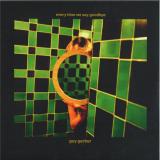
Underground mainstay and long-time melodic and progressive champion Guy Gerber is back on his own Rumors label with Every Time We Say Goodbye, a new EP that shows he continues to evolve his style without forgetting his signature.
Gerber has been a core part of the underground for years, heading the world's most revered clubs and festivals, bringing all new party concepts to Ibiza and serving up serene and synth heavy soundscape that move people physically and emotionally on labels like Cocoon, Italians Do It Better and of course Rumors.
Every Time We Say Goodbye (feat. Blanca) is light and melodic with shimmering pads and ethereal textures. Blanca’s treated vocals float effortlessly above rolling percussion and delicate synth melodies, delivering a warm, emotional energy that feels both modern and timeless.
The 18th Floor is a hypnotic journey built on dubby low-end grooves and fluid, meandering leads. Angelic, reverb-soaked vocal fragments drift through the mix, giving the track a dreamlike atmosphere that’s equally suited for peak-time or deeper, introspective moments.
On the flip is Under the same Moon, an introspective journey through deep emotion and atmospheric house. Under the same Moon is a sonic meditation, melancholic yet hopeful, with textures that evoke twilight memories and introspective dancefloor, lastly The Bigger Person takes a more laid-back approach, driven by warm guitar lines that showcase Guy’s instrumental finesse.
Acclaimed Scottish composer Craig Armstrong releases his new work Pacific via his own label CMA Records. Written for piano, cello, and electronics, the three-movement piece was originally commissioned in December 2024 by Christian Kellersman, a pioneering figure in contemporary classical and jazz music, for his new live event series Berlin Confidential, co-curated with Alexander Szlovák. The series aims to promote innovative new music projects, with a particular focus on emerging musicians and composers.
Armstrong was among the first artists invited to perform as part of Berlin Confidential, premiering Pacific at Berlin’s historic Meistersaal concert hall in March 2025. The concert featured Armstrong on piano alongside cellist Lena Angelina von Almen and producer and musician Guy Sternberg, combining acoustic instruments with live electro-acoustic treatments to create a rich and atmospheric sound world.
Recorded in May 2025 at Lowswing Studios in Kreuzberg, Pacific continues Armstrong’s ongoing exploration of blending acoustic and electronic sound in a natural, seamless way. Over several days in the studio, Armstrong, von Almen and Sternberg developed the work’s intricate textures and dynamic interplay, resulting in a recording that captures both the intimacy and expansiveness of the original live performance.
Speaking about the inspiration behind the piece, Armstrong says: “I wrote this work during a time of great instability in the world, I wrote “Pacific” as an Elegy dedicated to the many suffering in today’s conflicts and in the hope that peace will prevail.”
Across its three movements, Pacific 1 is elegiac in nature, with the main themes stated and developed throughout the piece, punctuated by recurring piano motifs. The movement is reflective and atmospheric, with subtle electronic interventions. The second movement is arrhythmic in nature, following shifting time signatures that reflect a sense of uncertainty - the music is searching and static, ending without resolution but leaving hope for one to come. Pacific 3 moves towards peace and resolution, bringing the work to a close with quiet strength and emotional release.
When speaking about the creative process and his collaborators, Armstrong said: “Lena’s beautiful playing , tone and expression worked so beautifully on Pacific, Lena was also a great collaborator and was always willing to experiment and try new musical approaches. Lena is such a natural musician and she brought so much emotion and beauty to the piece. I wish her all the best in her future musical journey.”
He continues: Guy is a unique combination of being a brilliant engineer and mixer and a prolific very talented musician/composer. I was very fortunate to spend time with Guy in his studio in Berlin. His sensitivity to the project and his electronic programming made a wonderful contribution to the composition. His collaboration and friendship made the days working in Berlin such a great experience I would like to thank Emma Ford for her dedication, enthusiasm and guidance on Pacific”
For both von Almen and Sternberg, the collaboration was equally meaningful. Von Almen reflects on the experience of recording the piece, saying: “As a musician, it is always a great privilege to work on a piece together with the composer, and of course I felt even luckier to go through the process of creating something new with an artist like Craig Armstrong. Figuratively speaking, it felt like knitting a silk scarf: using the finest materials and taking the utmost care during the recording, we have realised another beautiful and touching work by Craig, which will bring us and certainly many others great joy. I feel very honoured to have been part of this and to have experienced this warm encounter.”
Sternberg adds: “Diving into Armstrong’s music while working on this record felt like examining a diamond under a microscope, discovering endless beauty within simplicity. Perfection and complexity emerging from simplicity, where every note, tone, noise, and gesture has meaning. I’m deeply grateful to have been part of this process, and for the freedom Craig gave me to express myself through his music, to let our sonic visions merge into one. It’s been both a lesson in music-making and in setting the ego aside, if only for a moment.”
Reflecting Armstrong’s belief in the role of music as a force for empathy and reflection, proceeds from Pacific will be donated to charities working towards peace: Médecins Sans Frontières and the Red Cross.
The limited-edition vinyl release has been pressed on Eco Vinyl at SeaBass Vinyl, a sustainable plant near Edinburgh. The record features striking cover art by Dirk Rudolph, who has designed several of Armstrong’s previous releases.
Available on LP format - comes with Japanese obi-strip.
Jamaica's national treasure. Legendary Jamaican Jazz. Internationally acclaimed guitarist Ernest Ranglin with piano genius Leslie Butler in a dazzling quartet. Recorded in 1965. Ernest Ranglin is a guitar player who represents Jamaica as well as one of the forefront personals who took Jamaican music to the world. As an arranger and a musical director, he contributed with his talent in the development of Jamaican music, including Ska and Reggae, from the origins. Musicians who have started their career at the time, still look up to him as a mentor and pay their respects. The internationally acclaimed guitarist Ernest Ranglin is currently pursuing his career without any musical boundaries at the age of over 80.
---
Musicians:GUITAR: Ernest Ranglin, BASS: Stephen Lauz, DRUMS: Carl Mcleod, PIANO: Leslie Butler.
Produced by K. Khouri.
Recorded at Federal Studio.
- A1: Potent Product
- A2: Guilty As Charged
- A3: Angelic
- A4: Paid In Full (Feat. Rocxnoir)
- A5: Don't Be Long
- A6: Kitchen Counter (Feat. Rome Streetz)
- A7: Soirée
- B1: Favorite Episode (Feat. Daniel Son)
- B2: Stonecold
- B3: Powder2Cream
- B4: Things Change
- B5: Walking Dead
- B6: Pyrrhic Victory
A glimpse through the window into the mind of Ox Omni, No Prayers to the Devil is a declaration of war against all things ungodly—an unflinching, uncompromising statement from an artist who refuses to bow. Fully produced by 94Maax and mixed/mastered by Shiggy, the album weaves razor-sharp lyricism through haunting samples, crisp drumwork, and cinematic textures. Ox Omni blends street wisdom with introspective storytelling, delivering a project that is both raw and thought-provoking.
The album features carefully curated guest appearances that enhance its immersive atmosphere. RocxNoir joins on “Paid in Full,” Rome Streetz lends his presence to “Kitchen Counter,” and Daniel Son adds his touch to *“Favorite Episode.” Each collaboration amplifies the album’s dynamic range, seamlessly shifting between moments of darkness and revelation.
The striking album artwork, created by Stab Master Arson, reinterprets Friedrich August Moritz Retzsch’s classic painting Checkmate, reinforcing the album’s core themes of power struggles, fate, and the fight for one’s soul. Just as the painting portrays a man locked in a high-stakes chess match against the devil, No Prayers to the Devil finds Ox Omni navigating the trials of life with unwavering conviction.
With its eerie production, calculated lyricism, and masterful sequencing, No Prayers to the Devil is a gripping body of work that cements Ox Omni’s place in the modern underground scene.
- A1: Cookin&Apos; The Books
- A2: I&Apos;M Comin&Apos; Home To You (Feat Stella Angelico)
- A3: Only Words (Feat Natalie Slade)
- A4: No Bread For You
- A5: Away From My Heart (Feat Wilson Blackley)
- A6: Brighter (Feat Stella Angelico)
- B1: Ms Fat Booty
- B2: Give A Little Bit More (Feat Stella Angelico)
- B3: Phoenix
- B4: The World Is Cold (Feat Mantra &Amp; Jane Tyrrell)
- B5: New Yorker
Hot off the griddle, Cookin' The Books is the long awaited new album from Australia's kings of Hammond soul, Cookin' On 3 Burners. Their first studio LP in six years finds the trio in top form - deep in the pocket, wide in scope, and stacked with heavyweight collaborators. With a 27-year legacy, global tours, and over 2 billion streams (including the international smash This Girl), Cookin' On 3 Burners remain a defining force in vintage soul, funk, and groove.
Cookin' The Books features a collection of killer collaborators including electrifying live vocalist Stella Angelico, acclaimed soul artist Natalie Slade (Steve Spacek, Katalyst, Simon Mavin), hip hop mainstay Mantra alongside Jane Tyrrell (The Herd), rising alt-soul voice Wilson Blackley, and a sweeping string arrangement from composer/violinist Tamil Rogeon (Aloe Blacc, The Dandy Warhols).
Across the record, the group shifts seamlessly between gritty instrumentals and lush vocal cuts - from the cinematic funk of "Only Words", to the break-beat heavy title track "Cookin' The Books", the bumping bounce of "No Bread For You", and the introspective soul of "Phoenix". Every track reflects the group's deep funk DNA while carving out bold new territory.
With airplay from BBC6's Craig Charles, support from tastemakers (Wax Poetics, Dusty Groove, Rolling Stone Australia), and a world tour booked for 2026, this release is a must-stock for deep funk, soul, and cinematic groove audiences.
- A1: Dirann
- A2: Louise A-Dak
- A3: Marion Ar Fawed
- A4: Murs De La Honte
- A5: Zu Atrapatu Arte
- B1: Makukuti Kanaki
- B2: Lacri-Moged
- B3: Rock’n’roll Diggers
- B4: No Pasaran
D'ar gad ataw! (Always in Combat!) is the fifth album from Ramoneurs de Menhirs, these tireless punk bards who, for almost 20 years, have been making Brittany echoes in every town of France. They came back with 13 new tracks that give pride of place to compositions from an enraged "zone mondiale", often in Breton ("Marion ar Fawed", "Louise A-Dak"...) but also sometimes in French (No Pasarán...) or english (cover of Patty Smith "Rock'n Roll Diggers") relentlessly denouncing the forces that crush us ("Lacri-Moged" or the cover of Angelic Upstarts "Police Oppression"), the dictatorships in place as well as those that threaten ("Dirann").
NAIVE020 epitomizes what the Lisbon-based label, run by Violet, has become cherished for: imaginative yet timeless, soothing yet moody, melodic yet sonic music. Entitled 'Computer Hermetics', this new record is an EP by Berlin-based UrbnMowgli.
The opening track, 'Fast Love Life', is a 145 bpm electro-bred, breakbeat-driven emotive dancefloor banger. It features menacing stabs juxtaposed with beautiful pads and acid-drenched arpeggio motifs that lend it a oneiric quality. 'Oracle Algorithm' picks up the 303 spirit and delves into trippier territories, densening the dreamlike, expansive atmosphere while infusing the record with electro-driven grit. Closing side A is 'Warschauer Rush-Hour', a futuristik, high-tempo twisted electro banger that's both tough and playful.
'Immaterial Desires' inaugurates side B—an ode to adventurous drum programming and intricate sound design in the form of a percussion-punctuated curveball belter. 'Digital Dawn' brings it all back home to the heart and closes the record with its deepest, most immersive moment, giving us big bass lines that alchemically converse with angelic bleepy melodies as if soundtracking a soulful sci fi movie that doesn't exist yet.
Daniele Baldelli
Considered one of the first DJs in Italy, Daniele Baldelli began his career in 1969 mixing vinyl at the Tana Club in Cattolica (his hometown),
predating the birth of the modern DJ by several years. In the following years, he solidified his talent and technique at histor such as the Tabù Club, Baia degli Angeli, and Cosmic. From 1979 to 1984, Baldelli created his unique and eclectic style, blendi ic clubs ng seemingly distant sounds and musical styles, complementing them with tempo adjustments (bpm) and deliberately extreme equalization,
creating a truly distinctive sound, known as "Afro Disco." Soundscapes and tribal percussion blend with early electronic music experiments, and Baldelli's sets become truly mystical experiences, where, for the first time, the temples are replaced by the dance floor.
The documentary film "A Cosmic Life" has just been released, starring Daniele Baldelli alongside other illustrious guests from the nightclub scene, recounting the history and formation of this movement from the 1970s to the present.
Gaudi
A producer/musician among the most highly regarded on the international dub/electronic scene, over the past 30 years Gaudi, from his
London studio, has contributed significantly to expanding the boundaries of musical genres with high-profile releases and innovative
music production techniques. Recently nominated for a Grammy Award with 'Mass Manipulation', the album he produced for the reggae
band Steel Pulse, and also nominated for a World Music Award with his album 'Dub Qawwali' with Pakistani singer Nusrat Fateh Ali
Khan, Gaudi has collected a series of number 1s on the international charts: Billboard - with the album 'Heavy Rain' by Lee "Scratch"
Perry, 'Vessel of Love' by singer Hollie Cook and with 'Mass Manipulation' by Steel Pulse -, UK Chart n.1 with the album 'Prism' by the
band The Orb (with whom he has collaborated as a producer and keyboardist since 2008), with 'Blue Monday' - by Gaudi himself with
the band Dub Pistols -, UK Dance Chart n.1 with 'Jus Come rmx' produced with DJ Angelino for Cool Jack. He also reached no. 41 the UK charts with the album ‘Midnight Rocker’ by reggae singer Horace Andy (known to the general public for his hits with Massive in
Attack), no. 13 with the album ‘Dubwise 2’ by the band Dreadzone and no. 5 in the Italian charts with the song ‘Lasciala Andare’, written
by him for Irene Grandi. With 19 solo albums and 350 remixes and productions under his belt, Gaudi, with his artistic versatility, has
worked with Groove Armada, UB40, Simple Minds, Brian Ferry, Devo, Big Audio Dynamite, Damian Marley, Seun Kuti, Mad Professor,
Trentemøller, Grandmaster Flash ft KRS-One, Lamb, Don Letts, The Beat, Deep Forest, African Head Charge (in which Gaudi is a keyboardist and dubmaster), Elisa, Scientist, Dub FX, Roedelius, Caparezza, Caravan Palace, EMF, Sizzla, Jovanotti, Sly & Robbie, Piero Pelù, Youth of Killing Joke, and Maxi Priest, to name just a few. Capleton,
Daniele Baldelli & Gaudi
DJ Daniele Baldelli and producer Gaudi first met three years ago at the Jazz Cafe in London. Mutual respect and an innate need to
create new stylistic fusions were the catalysts for Baldelli and Gaudi, leading to a series of subsequent meetings that inevitably culminated in the need to create music together. The project began at Gaudi's Metatron Studio in London using analog equipment and later
moved to Baldelli's studio in Cattolica, where the two organically defined their sound, also inspired by Baldelli's precious record collection. The duo consolidated a powerful compositional symbiosis, and the project, born from a simple initial groove, later transformed
into an entire EP consisting of four original tracks and a highly innovative sound, featuring fusions of psychedelic-funk, tribal-dub,
electronic-disco, and, of course, "Afro-Cosmic"! Daniele Baldelli and Gaudi began their sonic collaboration without setting any stylistic
direction and with the intention of not creating pre-established goals to achieve; it is a project of pure artistic freedom guided by their
compositional instinct and their experience. Constantly active with their evenings and live concerts, Baldelli and Gaudi have performed
individually in many of the best international clubs and festivals.
- 1: Angelito
- 2: On Green Dolphin Street
- 3: Corcovado
- 4: Without You (Tres Palabras)
- 5: Ho-Ba-La-La
- 6: Something Latin
- 7: Manha De Carnaval
- 8: Latin Village
- 9: The Girl From Ipanema
- 10: Malaguena
- 11: Sugar Cane
- 12: Flying Down To Rio
In 1964, Martin Denny looked beyond the Hawaiian and Asian influences of his previous records to find another place to plant his umbrella in the sand, as well as in your drink: the sounds of Latin America. With this new sound to hang his exciting arrangements on, Latin Village has long been considered one of Denny's high-water marks, and Jackpot is thrilled to have this long-cherished LP back in print. This is an album that rips through what was considered "The Now Sound From Overseas," a sophisticated mash-up of sambas, bossa novas, and Latin jazz. From the first track, "Angelito" (the hit song written by Réne y Réne, later to also be covered by Trini Lopez & Herb Albert), all the way through to its closer, "Flying Down To Rio" (a song which Roxy Music later referenced in their 1972 song "Virginia Plain”), the album is a hypnotic listen. Latin Village also drops in some serious jazz numbers, with respected compositions such as "On Green Dolphin Street" by Kaper & Washington (which has been covered by Miles Davis, Bill Evans & Sarah Vaughn), "Malagueña" the sixth movement in Ernesto Lecona's Suite Andalucía & "Corcovado" by Antônio Carlos Jobim (who merged samba with jazz to create bossa nova). Latin Village is comforting in its familiarity within Denny's sonic world, but steps refreshingly out of the smoke-filled Tiki bars of his previous records and straight into the sunlight where this music still strolls around in a listener's heart, soul, and mind. “Latin Village is a triumph of Martin Denny’s search for a new style, post-exotica.” – ALLMUSIC, 4 stars.
- 1: Cucala
- 2: La Vida Es Un Carnaval
- 3: Sahara
- 4: Baila Yemaya
- 5: Toro Mata
- 6: Elegua
- 7: Quimbara
- 8: Bemba Colorá
- 9: Oya Diosa
- 10: Yemaya
- A1: Never 'Ad Nothin' (3:12)
- A2: Teenage Warning (3:27)
- A3: Solidarity (5:12)
- A4: Two Million Voices (2:48)
- A5: Last Night Another Soldier (2:36)
- A6: I Understand, I Hope You Do (5:54)
- B1: Woman In Disguise (3:54)
- B2: Kids On The Street (3:45)
- B3: England (4:27)
- B4: The Murder Of Liddle Towers (5:53)
- B5: I'm An Upstart (4:16)
- B6: White Riot (2:11)
In the late 1970s and early 1980s, South Shields, England's politically motivated punk band, The Angelic Upstarts, saw considerable chart success. Jimmy Pursey of Sham 69 produced their debut album, Teenage Warning (1979), which peaked at No. 29 on the UK Albums Chart and featured singles like "I'm An Upstart" (No. 31) and Teenage Warning (No. 29).
Their third album, 2,000,000 Voices (1981), reached No. 32, while their second, We Gotta Get Out of This Place (1980), peaked at No. 54. Angelic Upstarts Live (1981), a live album, did well as well, peaking at number 27.
Two of the Angelic Upstarts' singles made it into the Top 40, and seven of their singles made it into the UK Top 75. Their early work was marked by sociopolitical critique and unadulterated intensity.
‘Live at The Basins Nightclub’ recorded in 1987 represents a unique summary of that undertaking as well as capturing a rare snapshot of the Upstarts during one of the less well-documented periods of their history. Incl. Sleeve notes from Dick Porter.
- A1: Victory (0 19)
- A2: Stress (Feat Giggs) (2 38)
- A3: Angelic (2 40)
- A4: Foreign (1 41)
- A5: I Did That (1 39)
- A6: Come On Let's Go (1 48)
- A7: Landlord (3 44)
- B1: Mother Teresa (0 27)
- B2: Spirit To Cry (1 53)
- B3: Documents (Feat Nas) (2 50)
- B4: So You're Having My Baby (1 51)
- B5: Cuz I'm Here (2 01)
- B6: Matrix (0 16)
- B7: We're Not Losing (1 25)
- B8: Another Great Adventure (1 33)
Rick Wade is one of Detroit and house music's most consistent performers. He is a master of crafting tools that never miss on the floor but also have the sort of character that means they endure across the ages and remain impervious to passing trends. Art Is The Place has his latest, and it opens with the angelic vocals of 'Level Up' over a whimsical groove, then 'Big Ha Blues' gets more deep and zoned out with pillowy pads and wet claps. 'Intrusive Emotions' has a more grinding low end but stays slow and is softened by jazz keys, then 'Bitter Sweet brings some dust and grit. Another faultless outing from Wade.
“Is all that we see or seem but a dream within a dream?” This quote from a poem by Edgar Allan Poe sums up the lamenting, primal work that is "All That We See or Seem"; a project conceived between Finland, England and Brazil. The self-titled album consists of two long-form pieces of droning mysticism hailing from the trio of Gruth (concept, production, electronics), Ellen Southern (vocals, field recordings, percussion) and Johanna Puuperä (violin, modular synthesizer, additional vocals).
The album opens straight into a thousand yard stare with “Myrskymielellä", adapted from a 1891 poem by the Finnish national poet, Eino Leino, who wrote it at the tender age of 13. Here a blank distant droning of synths and the sounds of flowing water hover underneath like a dark river observed from the air. This is a sound and feeling that will stay constant for the entirety of the piece´s thirty minute duration. It is a trance-inducing composition that slowly unfolds elements of pagan ancestry into its own life. At first, faint female vocals are introduced as distant spatial elements, which gradually advance into waves of cries and anguish as the piece progresses and moves further into the storm. The tranquility of the first half is slowly morphed into a full blown ceremony as driving ritualistic percussion and a foreboding witch-like presence shifts the piece into a Dead Can Dance-like territory. Here a constant enveloping mixture of violins, modular synths, field recordings and vocal screams creates the feeling of a grande finale. It is an astounding piece of music that develops like a drone symphony for the beginning of time.
With the second piece, “A Dream Within A Dream”, from Edgar Allan Poe´s 1849 poem, you are transported to the shores of an undisclosed island; a place where it´s only you, your thoughts and the endless emptiness. The continual sound of waves is soon brought together with a cloud of synths and mourning violins that will keep a steady dreamlike state during most of the piece´s duration. This time the wordless vocals feel almost angelic in their pageantry. The composition flows like a slow caress of the soul and feels like the spirit twin of Gavin Bryars' “The Sinking of the Titanic” with its lamenting slow movements towards the unknown.
Truly a ghost of a record, “All That We See or Seem” is an experience hard to shake and feels like entering sacred ground. We are in a place surrounded by earth, both ancient and present. "Let loose, Vanha, the rage of an earthly storm! Detach the elements, completely open the sky! In the Earth, let an incessant storm prevail, so that in my chest I would not feel the miserable pain” - Eino Leino
„Farewell, Angelina“ ist das sechste Studioalbum der Folk-Ikone Joan Baez. Es wurde 1965 veröffentlicht,
erreichte Platz 10 der Billboard 200 und enthält traditionelle Folk-Klassiker sowie Songs von Bob Dylan,
Woody Guthrie, Pete Seeger und vielen anderen. Das Magazin No Depression lobte das Album als „die
vielleicht klangvollste Folk-Platte aller Zeiten“. Es wurde mit Hilfe des Lackschnitt-Verfahrens auf 180-
Gramm-Vinyl gepresst und befindet sich in einer Tip-On-Hülle. „Farewell, Angelina“ ist ab dem 3. Oktober
2025 überall erhältlich.