To say Fredfades and Jawn Rice are House music producers would be sneering at their efforts across genres like Hip Hop, Soul, and Jazz. The Mutual Intentions collaborators have forged a sound together in classic House, siphoning a myriad of influences through their intricate constructions in the studio as solo acts since first meeting in 2007. Becoming fast friends over a shared love of the dusty beats of an SP1200, Jawn Rice and Fredfades started working together while the Mutual Intentions collective gestated around them. Individual works by Jawn and Fred dot the collective’s back catalogue like various nodes of evolution through the course of MI’s output.
“We’ve always been sharing sketches,” explains Jawn Rice, “but I feel that these past years have been more productive in getting some of these sketches out as songs with Fredrik. It’s just a continuation of our friendship.” Emboldened by this friendship and with their finely tuned skills in the studio,
honed to near-perfection, they eventually started making music together. Following two seminal solo LPs – Fredfades’ Warmth and Jawn Rice’s Highlights – the pair consolidated their music as a duo in 2019, striking out with their electrifying debut, Jacuzzi Boyz. In a fusion between Jawn’s electronic inclinations and Fred’s soulful eccentricities, Jacuzzi Boyz established the duo as a new force workingNew Release Information within the broad scope of House music, with a sound imbued in the origin story of House and the genre’s hip-hop allegiances.
In 2020 they continue to pursue music together in the sophomore LP, Luv Neva Fades. Following the release of the title track and lead single, Luv Neva Fades finds the producers cementing their artistic voice and re-enforcing their commitment to a singular sound. Lush Rhodes keys and bouncing percussion lay the foundations for the album, while buoyant bass-lines and sparkling synthesisers provide
the catalyst for a crooning vocal or ruminating melody. It’s a record that thrives in a sultry mood; an LP that basks in the warmth of its analogue origins and cools in the shade of languid chord progressions.
Like Jacuzzi Boys, this album is an extended collaborative affair, as Mutual Intentions’ reach stretches across the Atlantic with guest appearances from Byron the Aquarius, Javonntte, Arthur Kay, Bendik HK and the SP1200 that started it all. Shimmering melodies, hazy harmonies and boisterous beats draw Fredfades and Jawn Rice out of the jacuzzi and onto the dance floor, moving under shimmering stars, where the duo cement what they started with Luv Neva Fades.
Buscar:a force
Five years ago, Cute Heels brought his unique blend to Schrödinger’s Box with Nepotism. The Colombian now returns to the Glasgow label, this time with a mini-LP packed to the rim with stone cold quality.
Steady kicks give way to juddering bass and epic strings in the dynamic changeling that is “Beyond The War.” Shadows are cast by the EBM stained “Er Ist Nitch Du” and the smoky “Present Images” under the alias of Syndikat Komando Klub 98. Yet, despite these darker shades, the 12” is filled with brighter tones also. As Victor M Lenis R, “Breath of Freedom” beams with synth-disco laden lines. “Strange Forces” takes a similar path, chords shimmering against aquatic pads that bask in warmth. An italo streak enters with the playful melody and sun- soaked keys of “The Awake (Mexico City Mix), radiant notes countered by strong pulsing percussion.
Beyond The War is a record as diverse as its creator. Traversing a spread of styles, Cute Heels has created a 12” that blurs perceived genres whilst maintaining the energy and zeal of the club.
Finally being back on his Exhibition imprint, Rico Puestel - without any detours - delivers some intensively uplifting moods within two melodic exhibits that have been circulating here and there over two years now. After ongoing requests about those tracks, these two ultimately join forces and go public on a hand-painted flip design, making this record a wholesome experience again.
Side A discovers the emotional magnitude, circulating and growing around the beauty of redundancy throughout a deeply immersive flute loop, nestled into a bouncing, analogue, almost archaic drum computer setting. Slowly building up over the course of half the track, Exhibit 3.1 emerges into a sphere of multi-layered synth harmonies and an oldschool bass arpeggio.
On the flipside, things suddenly become clear that Side A has just been the build-up to something even larger and stronger: A mechanical marrow-and-bone drum groove (one might not hear everyday) stomps away to spread the bed for one of Rico's possibly most captivating and flourishing synth melodies, spreading some blurry mysteries and clear sun-drenched bliss at the same time.
A vast scenery, unfurling in front of your ears and eyes, almost like smelling blossoms and fresh air
In 1976, seven Cabo Verdean musicians going by the name Voz Di Sanicolau gathered in a small recording studio in Rotterdam where they laid down an album of fearsome coladeira songs inspired by the music of their home island of Sao Nicolau.
The album took only a few days to record, which may explain the unexpected urgency that fires each track. Treble-soaked electric guitar lines snake back and forth through percussion-and-cavaquinho driven rhythms rooted in the sound of the islands established by the previous generation of Cabo Verdean emigres; subtle keyboards wash through the background, and the vocals, traded between Joana Do Rosario and To-Ze, alternately push the music forward and soar above it. The resulting album is both deeply felt and fiercely executed, and in its grooves one hears the sound of some of the finest Cabo Verdean musicians of their era locked in complete unity of purpose.
It should have been the beginning of something extraordinary; but the pressures of making ends meet forced the musicians back to their day jobs, and Voz Di Sanicolau vanished as quickly as they had appeared, leaving their lone album, Fundo de Mare Palinha, as sole proof of their existence. Forty-four years later the album sounds as fresh as it did the day it was recorded. It is unknown if dutch sound engineer Frans Rolland, who oversaw the recordings, knew he was helping to make history: during these sessions, Joana Do Rosario, whose majestic vocals were crucial to the sound of Voz Di Sanicolau, became the first Cabo Verdean woman ever to appear on a long playing record.
Alinka makes an eagerly anticipated return to Crosstown Rebels with the outstanding Control Transmission, her last appearance on the label featuring in 2016 collaborating with Shaun J. Wright. This solo release demonstrates her versatile sound that is inspired by her experience in scenes across the world.
Control Transmission begins with robust 909 drums as the claps resound with force. The bass, a razor-sharp, distorted and filtered charge is introduced commanding attention, further electro inspired samples and effects are layered in this powerful track. Day Zero captures the spirit of the Mayan jungles, with synth that propels with energy, ebbing and flowing with mystical chords that give a nod to the famous festival spearheaded by Damian Lazarus.
Born in Kiev, Alinka has a unique power on the decks and in the studio, influenced by the city of Chicago, with toes tipped in Detroit techno and Europe’s key cities. Immigrating to Chicago with her family as a child she immersed herself in the scene, digging for records and becoming resident for Justin Long’s Dotbleep party at Smartbar. In 2012 an impromptu meeting with former Hercules and Love Affair vocalist Shaun J. Wright changed her life. The pair launched their Twirl parties and label whilst continuing to evolve their collaboration.
The result has been an impressive catalogue of material from, with music featured on Jackathon Jams, Crosstown Rebels, Leftroom, The Classic Music Company and of course Twirl. Now living in Berlin, Alinka has used this base to play at parties across Europe including the likes Panorama Bar and Circo Loco, whilst regularly returning to the US to play for promoters such as Ladyfag. 2020 will she Alinka’s evolution continue, with a packed schedule of releases and her newly launched label Fantasy Life.
Unrelenting, industrial techno destruction from London-based, Portuguese polymath The Advent alongside an electro whirlwind collaboration with Zein, released on the ever dependable Suara.
‘Witches Spell’ lures you in with a hypnotic and hard hitting industrial onslaught before you flip the record over and are hit with ‘Live 98 Tour’ a warpspeed techno powerplay that could easily slot into a Jeff Mills or DJ Bone set. Last up The Advent joins forces with Zein for a Stingray-esque electro slammer in the form of ‘Same 4’.
The second volume of Nothing Is Real’s self-titled compilation builds on their towering reputation as leading lights within the global electronic music community. As the label’s first release distributed by the respected Dutch record label and store Bordello A Parigi, the collection is set to further establish their international presence and spread their eclectic sound far and wide.
Bringing together diverse influences from across the spectrum of electronica and into new wave and ambient music, Nothing Is Real stand at the forefront of modern dance music as sonic innovators that continue to push boundaries with each offering.
Curated by Alberto Iovine and Alessandro Fumagalli, also known under the stage name Modular Project, this four-track collection takes listeners on a journey through the outer atmosphere of techno, expanding and evolving the genre into new forms along the way.
Cantor’s opening track kicks things off with a hypnotic, driving groove built on acidic synths before Niv Ast & Roe Deers bring a human touch to the proceedings with a vocal-led heater that recalls classic ‘80s sounds. Dharma pairs shuffling rhythms with extraterrestrial soundscapes that recall Squarepusher and Aphex Twin, before Argia closes the record with force and momentum, surrounding voltaic synthesizers and tribal drums with expressive atmospherics.
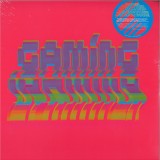
Following January’s acclaimed vinyl debut from Exterior and summer’s much-loved Kota Motomura EP, Edinburgh’s Hobbes Music label ends 2019 with its first album release, also a debut, from GAMING, a fresh new braindance electronica project straight outta Glasgow, from producer and musician Alan Bryden.
GAMING is a new solo outing that brings together a lifelong love of music and technology and creating left field, rhythmic electronica. It’s the sound of IDM, nineties techno and mensch maschine computer music that is as spontaneous as it is programmed.
“Scenes From A Deserted City is a collection of tracks that started as a set of riffs, loops, rhythms and grooves and unfurled around a sense of growing unease about the future of the urban environment around me.
It’s an album that started out as sound…and ended up as a way of telling stories about the age of anxiety we live in, how our world is changing, and how we find a way through that.
This is DIY electronica from Glasgow – it was made on a growing collection of digital and analogue synths and FX units, including a bunch of modular racks, each with its own idiosyncrasies and character that belies the assumption of the binary.
The studio where it was recorded – an abandoned, and often very cold, school building reclaimed by the community some twenty years ago – offered up stories of resilience, even when all seems lost. (I’m not sure what the mice contributed but they definitely climbed in and out of some synths).
This album is ultimately about my changing relationship with Glasgow, a city I’ve lived in for more than 25 years. It’s about how I feel now about the increasing sense of urban decay and how the city can be a very isolating place. It’s about how I reflect on my younger creative self trying to find a direction but mainly feeling a sense of dislocation and not fitting in. And it’s about the questions I have about how that relationship is changing, how it will be forced to move forward.
The result is a soundtrack for walking home on your own, in that headphone bubble when it’s just you focusing on that music that makes sense to you alone. It’s for early in the morning, after the night before, or going to work with the memories of that slipping and sliding inside your head. It’s about how it feels to be both elated and lonely, to be lost in the familiar, despairingly hopeful.”
ALAN BRYDEN (Glasgow, August ‘19)
French synth-pop talent Lucien & The Kimono Orchestra unveils his new solo piano album, a journey into cinematic soundscapes
Alone at the piano, Lucien takes us on a very personal album in a deep and quiet reverie. We spend a soft winter morning in his company, reminiscing about tender childhood memories.
Between previously unreleased tracks and revisited Kimono Orchestra pieces, "Piano Matinée" concludes a trilogy of recordings which have barely been released, while paving the way for a wider future. Universal, sensitive, cinematographic, the piano language spoken here by Lucien opens us to his musical world in a light that is both more authentic and accessible.
The album also tells us a personal story. That of a grandfather - an exceptional pianist but forced to give up his career when the Second World War broke out - who passed on to him a taste for music in his early childhood, before passing away.
Many years later, Lucien came across old cassette recordings of his eldest son, soon afterwards having a disturbing dream in which he swore he had had a dialogue with him and decided to go his own way. The self-taught musician spent a whole year honing his piano skills before deciding to freeze his performance in the summer of 2019 at the legendary Steinway at the Studios Saint-Germain.
Drawing freely on all his influences - jazz, funk, classical, cinema - Lucien's "Piano Matinée" is a special object, as intimate as it is melodious.
R.A. The Rugged Man and Atmosphere are two of the most important names in underground hip-hop history. Among the original architects of the independent hip-hop revolution, both of these iconic artists have defied the odds to thrive for decades in the ever-changing rap landscape.
Now, R.A. The Rugged Man and Slug of Atmosphere are joining forces for the first time ever to bring some much-needed joy to listeners during these trying times. Featuring a hook by famed singer Eamon, the historic collaboration "Golden Oldies" is a feel-good trip down memory lane taken from R.A. The Rugged Man's new album All My Heroes Are Dead".
This Ltd. Edition 7" Single gives fans the opportunity to experience the nostalgic anthem in all it's old-school glory.
Circoloco resident Luca Cazal teams up with Italian talent Andrea Fiorito as the pair deliver their ‘What Is Music’ EP on Infuse this June, backed by a remix from Mariano Mateljan.
An Ibiza mainstay, with regular appearances at DC-10 for Paradise and his long-standing global Circoloco residency, See Double boss Luca Cazal has established himself as a quality and consistent force within the minimal house scene and beyond. An avid digger with an innate ability within the studio, Cazal’s career has also welcomed sets at internationally renowned institutions including fabric and Club der Vissionare, with late June now welcoming a debut appearance on Infuse alongside fellow Italian Andrea Fiorito. An artist driven by idealism, with a sound palette that takes in influences and productions from experimental techno through to lighter more delicate and orchestral sonics, Bari-based Fiorito has himself served up material via the likes of Housewax, Broquade, Get Physical and Cynosure to date, and here we see the two talents combine for the very first time to offer up ‘What Is Music’, accompanied by Infuse talent Mariano Mateljan on remix duties.
A-side opener ‘Tornado Girl’ is a groove-fulled rolling production armed with slinking hats, evolving basslines and warping lead synths, whilst on the flip, title cut ‘What Is Music’ delves deeper into darker, more paired back afterhours aesthetics with slinking organic percussion and sci-fi electronics throughout. To close, Croatian favourite Mateljan’s lively interpretation welcomes sharp kicks, distorted vocal hooks and haunting melodies, punctuating the package in impressive fashion.
Two guitar legends - Eric Clapton and B.B. King - first performed together in NYC in 1967. Over 30 years later, in 1999, the two longtime friends joined forces to create a collection of all new studio recordings of blues classics and contemporary songs. The resulting album Riding with the King would be released in June 2000 and go onto sell over 4 million copies globally and win a Grammy Award for Best Traditional Blues Album.
To celebrate the 20th anniversary of this classic album, two additional previously unreleased tracks have been added: The blues standard “Rollin’ and Tumblin’” and a cover of Willie Dixon’s “Let Me Love You Baby.” Both tracks were recorded during the original sessions and were produced and mixed especially for this release by Simon Climie, who produced the original album with Clapton. The original tapes have been remastered by Bob Ludwig for release on 26th June via Rhino Records.
The 14-track collection will be available on 180-gram black double vinyl package and was mastered (vinyl) by Chris Bellman at Bernie Grundman Mastering in Los Angeles.
The album features four B.B. King originals, plus a selection of covers from writers as diverse as Isaac Hayes & David Porter (“Hold On I’m Coming”), Johnny Mercer & Harold Arlen (“Come Rain Or Come Shine”) and William Broonzy & Charles Seger (“Key To The Highway”). John Hiatt wrote the album’s title track.
Michal Jablonski strikes back on Binary Cells. Almost two years have passed since his last appearance and his banging remix of Casual Treatment's - 99 Reasons. This time the Warsaw based producer is back with his unique touch and we gladly present "Higgs", a flawless stomper 12".
A1 "Rain" is the intro track with a cinematic movie thriller approach driving us in a cold an uncertain atmosphere leading to "Higgs", a post-apocalyptic atmosphere gem combining mesmerizing and mechanic cuts clearly designed for dancefloors. The third gem of this side is "Fragile", an obscure story full of dark energies and shrill noises, transporting the audience into an obscure journey.
VSK and Kwartz decided to join their forces, showing their finest cuts on the B-side "Higgs" has been totally reinterpreted by VSK in a UK approach making it a stomping and flammable gem. Kwartz also added his vision to "Fragile", transforming it in a pure dark ritual.
A focal point for the unique punk-funk that was coming together in Bristol as the bridge from the 70s to the 80s arrived, Maximum Joy was formed by Glaxo Babies multi-instrumentalist Tony Wrafter and 18 year old vocalist Janine Rainforth. Soon they drafted in additional Glaxo Babies in the form of drummer Charlie Llewellin and bassist Dan Catsis, along with guitarist John Waddington, fresh from The Pop Group. The group set about making a one-of-a-kind mix of funk, punk, pop, jazz, dub, soul, afrobeat and reggae; creating a brilliant burst of danceable tunes wrapped around elastic basslines and complex percussion, punctuated by melodic horns and stabs of guitar, all of it highlighting Rainforth’s naturally enthusiastic vocal style. They immediately took their place on the rosters of influential labels like Y and 99 with iconic debut single Stretch, as the band had clearly captured something special.
Entering 1982, Kevin Evans had replaced Catsis as Maximum Joy set out to make what would be their only full length LP. Recording at Berry Street and The Lodge with producers Adrian Sherwood (On-U-Sound legend), Dave Hunt (Flying Lizards, Pigbag, This Heat) and Pete Wooliscroft (Kate Bush, Talk Talk, Peter Gabriel, OMD, This Heat) the band would mix practiced grooves with imaginative improvisation. The results were absolutely jaw-dropping.
Station M.X.J.Y. kicks things off with Dancing On My Boomerangand promptly sets forth the blueprint for bands like !!! and The Rapture to capitalize on nearly twenty years later. In fact, those bands can only dream of the mix of driving percussion and spectral shards of guitar that Maximum Joy has clearly already mastered. Do It Todayannounces itself immediately with Rainforth delivering a looping and infectious vocal melody that the others dance around playfully, as handclaps keep the stomping groove intact, leaving a dancehall hit for outer space circling your turntable.
If you ever wondered what it would sound like if ESG and The Slits combined forces, Let It Take You There has the answer for you. Llewellin periodically delivers a cascade of marching band percussion while Waddington’s classic R&B riffs are transformed into a slithering snake trying to keep pace with Evans locked in groove as Rainforth’s singsong vocals are reduced to whispered echoes. They close out side one with the delicious slab of pop that is Searching For A Feeling. Clearly pronouncing the band’s intention to find the positives in a dire time for England, they look to rally those around them to focus on making real change in the face of opposing voices via one of Rainforth’s most delightful deliveries.
Side two sees Wrafter stretching out on Where’s Deke?, showcasing what had already been obvious, as he is the band’s secret weapon, often coloring each tune with his horns, sometimes in several styles just seconds apart. He underlines that feeling with the raucous and bouncy Temple Bomb Twist, before they hit a straight groove in Mouse An’ Me, like a dub infected Train In Vain. Well, if The Clash had ever allowed themselves to properly lose their minds on the dancefloor.
A funky afrobeat flute and guitar battle breaks out (way cooler than it sounds) before Rainforth rallies the troops to not only fill up the disco, but also the surrounding streets in political resistance to Thatcherism via All Wrapped Up. It is entirely genuine and their activism has none of the menace of the others in their scene, but rather a feeling of sharp optimism amongst this danceable masterpiece. It is that optimism that always set Maximum Joy apart, and makes their grooves all the more irresistible today.
Sadly, the upward trajectory of the band was cut short as Rainforth left the group, and soon afterwards seemed to stop making music altogether. The reasoning seemed destined to remain a mystery, until earlier this year when she gave a brave interview to The Guardian where she revealed that an assault by someone in the industry caused her to retreat entirely from music for nearly three decades. Luckily, Janine has embraced music once again, and she refuses to let the magic that was Station M.X.J.Y. be lost as well.
Lascelle 'Lascelles' Gordon - the driving force behind Vibration Black Finger – astonishes us yet again with a magnificent second album. Once more his inspiration is drawn from the obscure spiritual jazz collectives of the 1970s where he employs a vast array of like-minded collaborators to create a listening experience infused with an ever-present undercurrent of personal expression and cultural empowerment that's as enriched with ideas as it is progressive in its form.
Having earned his chops as founding member of the Brand New Heavies, Campag Velocet and Heliocentric World, Lascelle's latest album Can You See What I'm Trying to Say bursts with energy and vivid contrasts, flowing effortlessly between beat-laden grooves, oscillating improvisations, soulful recitations, audio verité and moody atmospherics. The album drops like a post-hip-hop reimagining of foundational genres, with a prayer to the future.
''Can You See What I'm Trying to Say' is a quote from Marion Brown, the great alto saxophonist' explains Gordon. 'The album was put together over the last three years, not in the conventional way of going into the recording studio with musicians, but starting from ideas I had on various formats (cassettes, mini disc, DATs & reel to reel). I also used field recordings. I did a lot of home recording with long time musical friends Ben Cowen & Diana Gutkind, some of them going back 20 years. The voices of my nieces (heard on Law of the Universe) were recorded 25 years ago. 'Only in a Dream' and 'Empty Streets' are the only songs that were recorded live in the studio.'
'I was blown away by the New Life Trio 'Empty Streets' (from 1978) and was fascinated by the vocals' continues Lascelles. 'I always thought it would be great to cover this tune'. Such is the power of this song, it's used to open the album, with vocalist Ebony Rose turning in a thoroughly haunting vocal performance. While not a concept album as such, Lascelles has nonetheless conceived and presented Can You See What I'm Trying to Say to be heard as a complete listening experience, with each track blending into the next, resulting in a seamless expression of music.
Following 'Empty Streets', some instrumental interludes segue into a dimensional drift of beats, space synths, horns and electronics; there's a vocal reprise of 'Acting For Liberation', sung with gusto by Maggie Nichols, and then there's the album's momentous finale, 'Only In A Dream', which takes off as an ominous drone before a delicious bassline from the late Ken Kambayashi transforms it into an intense, soaring epic which finally descends onto another world.
In a career spanning several decades, Lascelle Gordon remains an omnivorous musical force, whether as DJ, collaborator or radio broadcaster. As amply demonstrated on Can You See What I'm Trying to Say, he refuses to rest on his laurels and continues to impress with music that is as rich, vital and contemporary as anything he's done before, covering an incredible amount of musical ground in the process.
For the second instalment of Subaltern’s 2020 program, we welcome one of the scene’s best-kept secrets – Imajika. The three hard-hitting tracks take listeners on a sonic journey through tribal rhythms, punchy drums and immaculate sound design. Calling upon ancient forces, Imajika makes a powerful statement with the Stagger EP.
Stagger
Ethereal glass chimes sing in the distance underneath an airy pulse to create an eerie intro until the groove enters to break the tension. We are offered a moment to breathe before being submerged by staggering drums driven by powerfully persistent bass-waves. Playful dubby FXs, gritty wobbles and naughty drum fills keep the head nodding throughout this stomper. After offering one last breath, the second drop hits with a relentless grunt that leaves us gobsmacked and then proceeds to devastate any sub to cross its path.
Unti Pundi
Mystical textures set a ghostly tone, overlaid by the meditative ‘Unti Pundi’. We are whisked through the caverns of time - space is created through reverbs and echoes of snares and droplets. A sinister pitch-oscillating synth takes your hand and as Imajika takes you deeper down the rabbit hole. Evolving basslines and masterfully placed drum fills add new depth to this monstrous beat before a shattering second drop wreaks havoc - Imajika shows no mercy.
Inside the Sycamore Root
Foreboding voices whisper in a secret language, seemingly summoning ancient spirits in a circular tree-based ritual. A cataclysmic drop fused with a tribal rhythm and propels us deep Inside the Sycamore Root. The spirits have been awoken. A gnarly bass pulsates as calls of the wild and menacing laser-synth stabs respond to the ancestral voices. The summoning continues and takes us even deeper into the wilderness as rumbling bass and tribal percussion take over - the descent into the great unknown continues.
Kajunga is proud to release unheard material from the wise and honorable Heckadecimal. “Critters” is a collection of 5 unique hardware built tracks that scurry from moody and contemplative to charged and frantic.
“Bat Silk Stunt” starts the record off with resonant acid bass lines creeping through a rich forest of analog drums. “D’etre” shifts the tone into a pool of moody progressions, dissonant sequences, and syncopated grooves. Living up to it’s namesake, “Acid Tenders” provides an exciting exploration of unbridled 303 energy. “Digital Foam” picks up the pace with frantic and squiggly textures that skitter about as a deranged synth-line takes command. “The Luminous Flesh of Giants” rounds out the journey with a 4/4 crawl through wistful melodies and iridescent chords.
Heckadecimal has been a fixture of the Minneapolis DIY electronic music scene since Time Untold, or around the turn of the century. He’s been an unwavering force and advocate for sonic experimentation, known for his energetic live sets of pure machine fun, from bouncy electro to breaky techno and acidic wiggles galore.
Heckadecimal has released on Great Circles, Electric Music Foundation, and his own label, Always Human Tapes, co-run with Ryan Wurst and TML. Past projects and collaborations include: The Worm, Two Human, noface, Clavin Klein, Joshua Michaels & Allen Smithee. Recently he’s dropped hours of live material via Bandcamp spanning 8 releases. He’s thinking of learning how to DJ
The premise for Quindi Records is simple – to represent music with a universality at its core.
Without adhering to specific genre tropes, the releases are intended to have a meaning and purpose in all kinds of situations – a social soundtrack as much as a stimulating experience,
feeding emotions and the psyche with a sentimental palette of sounds. Lovers’ music, loners’ music, music for friends and family alike.
Woo makes for a perfect choice to meet this loose concept head-on – the music of Clive and Mark Ives straddles disparate worlds and finds its own peculiar balance. On one hand it’s delicate synthesizer music with a minimalist bent, while on the other their joyous, twinkling harmonies have an immediacy that speaks to the soul. You can detect privacy in their craft – the brothers originally recorded their music in relative isolation in London in the 70s, 80s and early 90s. It’s only in recent years their sublime work has enjoyed a wider audience through an extensive run of reissues.
Arcturian Corridor ? presents a rare, previously unreleased piece of music from Woo – the expansive suite of the title track that unfurls across five parts. It’s an enchanting listen that shows a new breadth and depth to the duo – detailed drum programming and a broader palette of synth tones cascading in elegant unison. The name refers to Arcturus, the fourth brighteststar in the night sky. As Woo themselves explain, “The Arcturian Corridor is said to be a channel of light that brings unconditional love and wisdom from Arcturus to Earth.”
In addition to the 20-minute A-side piece, Woo also presents a new version of “Love On Other Planets”, a standout piece from their 1990 album ?Into The Heart of Love? . The fragile subtlety of the original has been embellished here with rich new passages that turn it into a kind of electronica epic, although still marked out with the sensitivity one expects from a Woo record.
Two remixes complete the set, both furthering Quindi’s modus operandi as a genre-agnostic force for cosmically charged music. Dublin’s Wah Wah Wino collective present their Wino Wagon manifestation for a tastefully strange house version of the fifth part of “Arcturian Corridor” that channels the freakiness of Pepe Bradock, the robo-funk of Metro Area and a soupcon of pop nous. British duo Ultramarine maintain the stylistic ambiguity as they channel decades of expressive experimentation between live band dynamics and machine soul on their version of the title track’s second chapter.
Oracolo is Skinshape’s second full length originally released in 2015 and now remastered for 2020. The album plays out like the soundtrack to a psychedelic Spaghetti Western. ‘Old Days’ is one of a handful of vocal-lead tracks on the release that along with ‘Summer’ and the cinematic album title track, ‘Oracolo’ conjure references to bands like Can, The Bees or modern pysch pioneers Tame Impala. The instrumentals peppered throughout like the Quentin Tarantino-esque gem ‘Mandala’ and Motown reminiscing ‘Rubber Gloves’ highlight Dorey’s superb talent as an arranger and composer. Don’t let the vintage sound fool you either. All of his magic is original, without a sample in sight. Every instrument either played by Dorey himself, or his array of guest friend musicians. For the Oracolo artwork, Skinshape joined forces with acclaimed New York based artist Jared Buschang. This is one of Buschang’s early pieces simply named ‘Untitled’. The Picasco-esqe style makes the perfect visual representation for the music within.
Hihats In Trees is the solo project of drummer Lander Gyselinck, 3 times in a row best musician for the Belgian Music Industry Awards.
Emerging out of the jazz/experimental music scene and beat-oriented music as well, Lander Gyselinck is the thriving force behind bands such as BeraadGeslagen, STUFF., LABtrio and more. He became widely known as one of the most exciting European drummers of the last few years.
Hihats In Trees is Lander his first solo record.
It's an anthology of beat compositions that is highly electronic in design yet consist of not one synthetic sound. Driven by the authenticity of the 'natural' human-driven sound from tangible objects such as wood, rubber, plastic... these 'real' textures serve as the molecular basis of these peculiar dance tracks.
It's his synthesis of the very physical and acoustic world of improvised music timbres colliding into the realm of electronic dance music and it's 40 years of sequencer-influenced beat vocabulary.
HHIT is a drum computer most poetic burnout.