Mit der Verve Acoustic Sounds Serie bietet Verve Vinyl-Fans in Zusammenarbeit mit dem bekannten
amerikanischen Acoustic-Sounds-Label seine erste audiophile LP-Serie. Die Fertigung erfolgt mit rein
analogen Produktionsschritten vom Erste-Generation-Masterband bis zur 180g-Pressung bei Quality Record
Pressings in den USA. Den luxuriösen Rahmen bieten laminierte Tip-On-Gatefold-Sleeves und wattierte Innenhüllen.
Multiinstrumentalist Roland Kirk, der 1977 mit nur 42 Jahren starb, war ganz sicher eines der skurrilsten Originale des Jazz. Dass er auch ein außergewöhnliches Händchen für betont groovige Musik hatte,
bewies er 1967 erstmals auf dem Verve-Album ”Now Please Don’t You Cry, Beautiful Edith”.
Search:a hand
- Karma
- Sturm
- Verstand
- Waffe
- Bilanz
- Dämon
- Urteil
- Vergebung
- Stein
- Familie
- Ignoranz
- Judas
- Real
- Stern
- Zeit
GLOW IN THE DARK VINYL[20,97 €]
Karma beginnt mit dem Verweis auf Schatten - den Opener von Licht. Eine Welt, die von ökonomischer Rationalität infiziert ist. Konsum, Ablenkung, Nebelkerzen, äußere Formen - die Menschen haben den Bezug zu sich selbst und zu ihrer Umwelt verloren. "Fühlst du nicht den einen Nerv, der richtig schmerzt, oder lässt der Schatten dich nur sehen, was er will?" Auf dem dritten Konzeptalbum dreht sich um das Prinzip Ursache und Wirkung. Wir werden sähen, was wir ernten. Im persönlichen Kontext, in unseren Beziehungen zu anderen Menschen und dem Planeten genauso wie auf der Metaebene in politischen und globalen Kontexten. Hass hört nie durch Hass auf. Nur Mitgefühl, Respekt und Vertrauen können uns einander näherbringen. Nur Demut, Rechtschaffenheit und Bescheidenheit können uns helfen, die Erde als lebenswerten Planeten zu erhalten. Wenn wir nicht mehr wissen, wer wir selbst sind, können wir keine bewussten Entscheidungen treffen. Wenn wir nicht mehr wissen, wofür wir stehen, können wir keine eigene Position mehr einnehmen. Wenn alles wichtig ist, ist nichts mehr wichtig. "Wer, wenn nicht wir? Wann, wenn nicht jetzt? Wo, wenn nicht hier? Ich nehme mein Leben in die Hand und fange neu an." KARMA ist deutlich. KARMA ist direkt. KARMA ist unumgänglich. TLUF halten der Gesellschaft den Spiegel vor und jedem Einzelnen. Musikalisch ohne Kompromisse. TLUF bringen auf KARMA ihren unvergleichlichen Sound erneut auf den Punkt.
Black Vinyl[19,54 €]
Karma beginnt mit dem Verweis auf Schatten - den Opener von Licht. Eine Welt, die von ökonomischer Rationalität infiziert ist. Konsum, Ablenkung, Nebelkerzen, äußere Formen - die Menschen haben den Bezug zu sich selbst und zu ihrer Umwelt verloren. "Fühlst du nicht den einen Nerv, der richtig schmerzt, oder lässt der Schatten dich nur sehen, was er will?" Auf dem dritten Konzeptalbum dreht sich um das Prinzip Ursache und Wirkung. Wir werden sähen, was wir ernten. Im persönlichen Kontext, in unseren Beziehungen zu anderen Menschen und dem Planeten genauso wie auf der Metaebene in politischen und globalen Kontexten. Hass hört nie durch Hass auf. Nur Mitgefühl, Respekt und Vertrauen können uns einander näherbringen. Nur Demut, Rechtschaffenheit und Bescheidenheit können uns helfen, die Erde als lebenswerten Planeten zu erhalten. Wenn wir nicht mehr wissen, wer wir selbst sind, können wir keine bewussten Entscheidungen treffen. Wenn wir nicht mehr wissen, wofür wir stehen, können wir keine eigene Position mehr einnehmen. Wenn alles wichtig ist, ist nichts mehr wichtig. "Wer, wenn nicht wir? Wann, wenn nicht jetzt? Wo, wenn nicht hier? Ich nehme mein Leben in die Hand und fange neu an." KARMA ist deutlich. KARMA ist direkt. KARMA ist unumgänglich. TLUF halten der Gesellschaft den Spiegel vor und jedem Einzelnen. Musikalisch ohne Kompromisse. TLUF bringen auf KARMA ihren unvergleichlichen Sound erneut auf den Punkt.
- Fiebertraum
- Sterne Tanzen
- Flieder
- Unendlichkeit X Jbs
- Sommerkleid
- Wie Weit
- Fall Für Dich
- Feuerroter Horizont
- Keine Luft
- Vielleicht Vielleicht X Jbs
- Kopf Über
- Schmetterling
- Manchmal
- Wer Ich Bin
Erfolg kommt selten über Nacht – so auch nicht bei MilleniumKid. Vor acht Jahren begann er, sich autodidaktisch das Produzieren von Musik beizubringen, verbrachte unzählige Stunden damit, sich als Singer-Songwriter und Produzent weiterzuentwickeln und veröffentlichte 2022 seine erste eigene Musik. Doch erst 2023 sollte sich für ihn alles ändern: Seine Single „Unendlichkeit" wird zum viralen Hit, steigt bis auf Platz 34 der Offiziellen Deutschen Singlecharts und ist der Beginn eines steilen Aufstiegs: Die folgenden Singles werden millionenfach gestreamt (allein „Vielleicht Vielleicht" hat über 60 Millionen Streams), seine erste Tour, bei der MilleniumKid zum ersten Mal überhaupt live auf der Bühne steht, ist sofort ausverkauft und im Sommer 2024 spielt er auf großen Festivals wie dem Deichbrand.
Den eigenen Schmerz herausschreien – die Songs von MilleniumKid haben etwas unglaublich Befreiendes. Die Stimmung ist oft düster, die Melancholie förmlich mit Händen zu greifen. Doch indem MilleniumKid seine Emotionen rauslässt, sie in gleißende Synthieflächen, treibende Produktionen und große Melodien kleidet, entfalten seine Songs eine befreiende Wirkung. Räume öffnen sich, und wo eben noch Schmerz war, kehrt so etwas wie Seelenfrieden ein. „Schmerz, Trauer und Sehnsucht sind drei Begriffe, die sich durch meine Lieder ziehen“, sagt MilleniumKid dazu, „Sehnsucht sollte man vielleicht etwas größer schreiben. Vielleicht ist die Sehnsucht sogar das Ergebnis oder die Voraussetzung für diesen Schmerz und die Traurigkeit, vielleicht ist es ein Pingpong-Spiel der Emotionen, die man in meiner Musik spürt.“
[a] Fiebertraum [Intro]
[n] Wer ich bin [Outro]
- Mood Indigo
- Don’t Smoke In Bed
- He Needs Me
- Little Girl Blue
- Love Me Or Leave Me
- My Baby Just Cares For Me
- He’s Got The Whole World In His Hands
- For All We Know
- Good Bait (Instrumental)
- Plain Gold Ring
- You’ll Never Walk Alone
- I Loves You Porgy
- Central Park Blues (Instrumental)
- African Mailman
"Little Girl Blue, released in 1957, was Nina Simone's first studio recording ever. It was originally issued on the Bethlehem label and features the singer/ pianist backed by bassist Jimmy Bond (who had been a member of the Chet Baker Quartet among other groups) and drummer Albert ""Tootie"" Heath, one of the celebrated Heath brothers (the other two being saxophonist Jimmy Heath, and bassist Percy Heath). Many of the tracks from this LP would become true classics, among them her perennial version of ""My Baby Just Cares For Me"".
THE COMPLETE ALBUM + 3 BONUS TRACKS - 180-GRAM VIRGIN VINYL -
LIMITED EDITION"
- A1: Pigs
- A2: How I Could Just Kill A Man
- A3: Hand On The Pump
- A4: Hole In The Head
- A5: Ultraviolet Dreams
- A6: Light Another
- A7: The Phuncky Feel One
- A8: Break It Up
- B1: Real Estate
- B2: Stoned Is The Way Of The Walk
- B3: Psycobetabuckdown
- B4: Something For The Blunted
- B5: Latin Lingo
- B6: The Funky Cypress Hill Shit
- B7: Tres Equis
- B8: Born To Get Busy
An exclusive 7" re-release of this psychedelic funk ballad from Tulsa's "Outback" Band. As featured on Now-Again's 'More Loving On The Flipside' compilation, "Strangers (In Our Homeland)" epitomises the expression of social & political change during an era of psychedlia infused music. In partnership with the two surviving members of Outback, both Symphonical & Now-Again are proud to showcase the voice of independent artists.
----------
The origin of "Outback" dates back to the late 50s, a five-piece blues outfit named "Little Lo and the Rest of Us" included music educator & bass guitarist Edward "Cha-Cha" Cherry, saxophonists Eugene "Buggy" Roach & James "Flab" Farley whom, alongside drummer Roscoe J. Dabney III "Roach", Ronnie Wilson on trumpet, guitarists Roy "Rochester" Walker & Michael Collins, would form The Magnificent Seven, the house band for Tulsa's 'Rose Room'.
Alumni of Booker T. Washington High School, The Magnificent Seven influenced & set the standard for the Tulsa sound, as demonstrated through their only single, recorded in 1966, the two part 'Pluck-A-Pluck'. 'The Sevenettes', the groups' female vocal trio, included the rotation of Lena Luckey Wilson, Gwendolyn French, Rose Brewer Lewis, Jeanetta Williams & Maxayn. The Magnificent Seven, led by "Cha-Cha", toured nationally throughout the 60s with their infectious, raw R&B sound, and were the platform for many of Tulsa's talent including Ronnie & Charlie Wilson who would later create the GAP Band.
Roscoe J. Dabney III, the first Black Panther to establish the Tulsa chapter in 1969 known as the NCCF (National Committee to Combat Fascism), proposed the name change to "Outback" in the early 70s. Their sound & formation was changing from R&B to Psychedelic, from the grit to the phase, epitomised by their unique line-up of having two bassists playing simultaneously, both Reggie Cherry & "Chilly" Willie Lewis, the musical foundation to their only recorded single, "Strangers (In Our Homeland)" & "Reggie's Thang".
Song writer & band affiliate, Maurice Pope, produced the lyrics to "Strangers (In Our Homeland)" and handed over the musical attributes to Willie Lewis & Outback to convey his message, as sung by Lena Luckey Wilson. Dabney recalls the song is based on religious scriptures, whilst highlighting the parallel of Black slavery in the U.S.
"Reggie's Thang", written by Dabney's cousin, bassist Reggie Cherry, provides a psychedelic instrumental, a sound which Lena recalls is what set apart Outback from other Tulsa groups. As well as playing clubs, the seated shows provided an environment for the group to showcase their musicianship to those who wanted to be immersed & listen.
Their single, released on Empathy, was recorded in 1972, and are the only known recordings by Outback. Recorded live onto 8-track at a studio located at on East Pine St in the heart of Tulsa's Black community, an independent & unknown studio located on a strip mall.
The Outback members who recorded are:
Lena Luckey Wilson - Vocals
Roscoe J. Dabney III "Roach" - Drums
"Chilly" Willie Lewis - Bass
Reggie Cherry - Bass
Edward "Cha-Cha" Cherry - Keys
Joyce Daws - Trumpet
Roy Walker "Rochester" - Guitar
Robert Luckey "Uncle Bobby"- Percussion
Fredy Berry "Freddy" - Tenor Sax
Band leader & group manager: Edward "Cha-Cha" Cherry
Booking Agent: Ernie Fields Sr.
In 1973 whilst performing in Ft. Worth, TX, Buck Ram approached Willie Lewis backstage and invited him to join The Platters, Lewis accepted. Supposedly, a recording deal was offered to Outback in exchange, which never happened.
The group continued in various formations after Lewis left, however as an integral member, the feeling never equalled their original form and soon after dissolved.
Leon Russell approached Lena Lucky Wilson in 1974 to go on tour with the GAP Band as their backing singer, upon returning Tulsa Lena moved to Los Angeles to pursue her musical career with Leon & Mary Russell amongst various others.
Dabney continued music and became a TV producer & director in 1976.
The only surviving members of Outback today are Lena Luckey Wilson & Roscoe J. Dabney III.
"SABLE, fABLE" ist das fünfte Album des Projekts von Justin Vernon und enthält eine Liebesgeschichte, die mit üppiger, strahlender Popmusik unterlegt ist. Während das Album mit der verletzlichen Entlastung der im vorangegangenen Herbst erschienenen "SABLE," EP beginnt, geht das Triptychon nahtlos in eine neue, neunsongige Saga über, in der aus einer Person zwei werden, Dunkelheit sich in lachsfarbene Schönheit verwandelt und Traurigkeit in unbändige Freude umschlägt. Während SABLE eine karge und einsame Abrechnung mit einem Schmerz ist, der lange die Vergangenheit bestimmte, blickt fABLE in eine lebendige Zukunft voller Licht, Sinn und Möglichkeiten. "SABLE, fABLE" wurde von Justin Vernon und Jim-E Stack produziert und hauptsächlich in Vernons April Base in Wisconsin aufgenommen, nachdem das Studio während einer Renovierung jahrelang still lag. Das Konzept für das Album entstand am 22.2.22, als Stack mit Danielle Haim dort eintraf. Mehrere Tage lang eingeschneit, vereinten sich Vernons und Haims Stimmen auf "If Only I Could Wait", einem Duett mit entscheidender Perspektive, in dem es darum geht, dass man nicht die Kraft hat, die beste Version von sich selbst außerhalb des Glühens einer neuen Liebe zu sein. Wenn SABLE der Prolog war, ein Prolog in der Dunkelheit, eine kontrollierte Verbrennung, die den Weg für neue Möglichkeiten ebnet, dann ist fABLE das Buch, das folgt. Wo SABLE, ein Werk der Einsamkeit war, ist fABLE eine ausgestreckte Hand. Strahlende, verschnörkelte Popmusik umspielt Vernons Stimme, während er sich auf eine neue und schöne Ära konzentriert. Bei jedem Lied sind seine Augen auf eine bestimmte Person gerichtet. Es ist Liebe, was bedeutet, dass in fABLE eine intensive Klarheit, Konzentration und Ehrlichkeit herrscht. Es ist das Porträt eines Mannes, der von dieser ersten Begegnung überflutet und überwältigt ist ("Everything Is Peaceful Love"). Es ist ein Tableau, das von Sex und unbändigem Verlangen geprägt ist ("Walk Home"). Ein Mann, voller Licht und Tatendrang, der eine ganze Zukunft vor sich sieht. Verliebtheit hat etwas unbestreitbar Heilendes an sich, und die intensive Klarheit, Konzentration, Ehrlichkeit und Feierlichkeit, die sie in diese Songs bringt. Doch der Schatten von SABLE liegt noch immer in der Luft, und alte Gefühle können zurückkehren, selbst wenn man sich die Mühe gemacht hat, neu anzufangen. Wie in einer Fabel vermittelt jeder Track eine Lektion, und in fABLE geht es um den selbstlosen Rhythmus, der erforderlich ist, wenn man mit einer anderen Person verstrickt ist. Der vorletzte Song - und im weiteren Sinne das ganze Album - ist ein Versprechen. Er ist bereit, diesen Rhythmus zu finden.
'In de verte, dit uitzicht’ is Abel Ghekiere's second album. It is a celebration of beauty and sudden bursts of euphoria and melancholy, hidden in the distinctive soft and fragile sound of Ghekiere's music. Much more personal than on his debut record, he calls out to the world.
Working with voice samples and field recordings, voice and improvisation take centre stage. Sounds from outside are subtly interwoven with instruments, while conversations and memories act as a thread running through the compositions. The music flows into the room, bringing with it remembered places and voices.
The music was recorded very nomadically, in different places, with different people. Most of the parts were written and played by Abel Ghekiere himself but with guest contributions from Vitja Pauwels, Nicolas Rombauts, Leo Adamov, & Jan de Vroede, among others, the record breaks open into a soft sound palette.
Lion_and the mean ecstasy of "You've Got A Woman," the B-side to their sole release_comprise a rare burst of psychedelic-Western soul from two names best known for Dutch progressive rock and new wave. Drummer Peter de Leeuwe, departing from the symphonic leanings of Dutch prog-fixtures Ekseption, penned it in 1975, layering syncopated explosions of hand-claps, vibraslap and slick drumwork with neutron-star density, with super-producer Hans van Hemert nearly bursting Glenn Robles' vocals through the fore. The "Shoes Subtle Edit" provides exactly that, gently teasing the organ- and requinto-hinted contours of the track to better suit the treasure within. Chicago-based septet Whitney have brought some attention to "You've Got A Woman" with a recent cover, and the faith with which they recreate much of the original instrumentation proves the extent of Lion's accomplishment.
PART 1/2[17,86 €]
"Petrol", one of Manu Kenton's most iconic tracks, makes its highly anticipated return in a limited edition that will appeal to both collectors and techno enthusiasts. This special version features not only the original track, but also exclusive remixes that reinterpret the piece from different angles, offering a diverse and exciting sonic palette.
Manu Kenton, staying true to his creative genius, revisits his own track by adding an energetic and catchy vocal, bringing a fresh new dynamic to the already electrifying atmosphere of the original.
The Gregor Size remix is a true powerhouse: dynamic, industrial, and powerful, it transforms "Petrol" into a heavy, punchy piece, with dark textures and irresistible rhythms that leave a lasting impression.
Greg Denbosa, on the other hand, delivers a progressive techno remix, with a dynamic and repetitive beat that builds tension, creating a hypnotic experience perfectly suited for the dancefloor.
Finally, Bestien offers a nervous, straight, and punchy version, ideal for the peak moments of a night. His explosive remix ramps up the intensity on the dancefloors, with raw energy and power that demands attention.
Visually, this vinyl stands out with its "Yolk" effect, a unique blend of white and white with luminous accents, creating a striking and modern design that will enhance any collection.
Français
"Petrol", l'un des morceaux les plus emblématiques de Manu Kenton, fait son grand retour dans une édition limitée qui séduira aussi bien les collectionneurs que les passionnés de techno. Cette version spéciale inclut non seulement la version originale du titre, mais aussi des remixes inédits qui réinterprètent le morceau sous des angles différents, offrant ainsi une palette sonore variée et excitante.
Manu Kenton, fidèle à son génie créatif, revisite son propre morceau en y ajoutant un vocal énergique et entraînant, donnant une nouvelle dynamique à l'atmosphère déjà électrisante de l'original.
Le remix de Gregor Size est un véritable tour de force : très dynamique, industriel et puissant, il transforme "Petrol" en une œuvre lourde et percutante, avec des textures sombres et des rythmes irrésistibles qui marquent les esprits.
Greg Denbosa, quant à lui, propose un remix techno progressif, avec un beat dynamique et répétitif qui crée une tension croissante, offrant une expérience hypnotique et parfaitement calibrée pour les sets dansants.
Enfin, Bestien livre une version nerveuse, droite et percutante, idéale pour les moments intenses d'une soirée. Son remix explosif fait monter l’intensité sur les dancefloors, avec une énergie brute et une puissance qui ne laisse personne indifférent.
Visuellement, ce vinyle se distingue par un effet "Yolk", un mélange unique de blanc et de rouge lumineux, créant un visuel frappant et moderne qui enrichira toute collection.
One of the most iconic labels in house music made a major return in 2024. King Street Sounds is celebrating its legacy with a series of re-releases that dive into its extensive back catalogue, showcasing some of its biggest releases. One of these being Dennis Ferrer’s iconic debut solo album The World As I See It from 2006. A body of work that sounds as good today as it did 19 years ago and, in that time, has gone on to become one of the greatest house music albums of the last 25 years. This release will be the first time all ten tracks from the album have been included in one vinyl package, and will include a frameable, double sided record sleeve sized poster. With copies of previous editions of the album costing close to £100 on the second-hand market, this limited sky blue vinyl edition will give a new generation of house & electronic music fans an opportunity to own this piece of dance music history.
Soul Jazz Records’ special new 20th anniversary one-off limited-edition heavyweight special-edition yellow coloured vinyl pressing (+ download code) exclusively for Record Store Day 2025 of their out-of-print classic ‘Sugar Minott - Sugar Minott at Studio One’.
Legendary singer, record producer and sound system operator who brought 'lovers rock' reggae to worldwide recognition with a string of massive hits in the 1970s and 80s. Minott is renowned as one of the most important and renowned reggae artists of all time.
This is the first retrospective of Sugar Minott at the label and most of these recordings have never been widely available outside Jamaica.
Long-out-of-print re-release of this classic Sugar Minott album on Soul Jazz Records bringing together the best of his groundbreaking material recorded at Studio One in the 1970s.
This definitive collection brings together all of Sugar Minott's hits at Studio One. Tracks such as Vanity, Never Give Up, Roof Over My Head laid down the template for much of Jamaican music that followed and signalled the arrival of dancehall around the world.
Soul Jazz Records’ special new 20th anniversary one-off limited-edition heavyweight special-edition yellow coloured vinyl pressing (+ download code) exclusively for Record Store Day 2025 of their out-of-print classic ‘Sugar Minott - Sugar Minott at Studio One’.
Legendary singer, record producer and sound system operator who brought 'lovers rock' reggae to worldwide recognition with a string of massive hits in the 1970s and 80s. Minott is renowned as one of the most important and renowned reggae artists of all time.
This is the first retrospective of Sugar Minott at the label and most of these recordings have never been widely available outside Jamaica. Long-out-of-print re-release of this classic Sugar Minott album on Soul Jazz Records bringing together the best of his groundbreaking material recorded at Studio One in the 1970s. This definitive collection brings together all of Sugar Minott's hits at Studio One. Tracks such as Vanity, Never Give Up, Roof Over My Head laid down the template for much of Jamaican music that followed and signalled the arrival of dancehall around the world.
Four artists with a taste for classic deep house infused with more than a touch of house line on the Silver Walker label's sixth release. Following releases on the likes of Local Talk, Balance, Traxx Underground, Mate, Quintessentials and upcoming projects on Nervous and NDATL, Shaka opens proceedings with a flurry of Hammond and plenty of exotic percussion, lie Alan Hawkshaw riffing with Underground Resistance. Glenn Davis (Wolf, Yore Records, Deeper Groove and Selections Records) delivers a deeper house workout on the A2 house track, the jazzy keyboard chords, fluttering flute and restless synths working real magic. One of the masterminds behind the Silver Walker label, Diego aka DFRA, comes on all perky with the saxes and soloing Rhodes, on the second side's opener, 'Nitewax'. Then we close with Damien aka Keymono (founder of several labels including Monocturne Records and Funkyshirts) laying on the handclaps of classic disco strings, the snippets of funk guitar and vibes the cherry on top.
Portland's Paul Dickow, the man behind the Strategy alias, is back with a new album that has been created with a 1989 model sampling keyboard. Exploring its limitations, he plays the sampler by hand and abandons sequencers for a more organic approach which apes a guitarist's connection to their instrument. The record delves into glacial, pensive soundscapes where experimental, ambient and dance music elements all come together with deliberate intention. Though Dickow crafts a sound rooted in ambient techno futurism it is one open to serendipitous, experimental outcomes which makes it a gently unpredictable listen and otherworldly charmer.
- A1: Martina
- A2: Expresso & Tschianti
- A3: Von Dir Ein Tattoo
- A4: Alles Klingt Nach Dir
- A5: Ring In Der Hand
- B1: Melodie Verlorn
- B2: Ich Gehör Repariert
- B3: Tickets Für Oasis
- B4: Wo Bist Du
- B5: Cordula Grün
Das erste Livealbum von JOSH. wurde am 7. November 2024 in der mit 11.000 Besuchern vollen Wiener Stadthalle aufgenommen. Der Abend war nicht nur ein Heimspiel für den mehrfachen Amadeus-Preisträger sondern auch der Abschluß eines immens erfolgreichen Livejahres, das JOSH. und seine Band quer durch Österreich und Deutschland geführt hat. Unter den zehn Songs des Abends, die es hier zu hören gibt, sind nicht nur die großen Hits wie „Expresso & Tschianti“ oder „Cordula Grün“ zu hören sondern auch akustische Versionen von „Alles klingt nach Dir“, „Ring in der Hand“ und „Melodie verlorn“, bei denen JOSH. und Band von der Vienna Stringforce begleitet wurden. Diese Versionen gibt es hier erstmalig auch auf einem Album zu hören.
- A1: Do U Fm
- A2: Novelist Sad Face
- A3: Green Box
- A4: Dusty
- A5: The Linda Song
- A6: Dm Bf
- B1: I Tried
- B2: Melodies Like Mark
- B3: Wildcat
- B4: How U Remind Me
- B5: Pocky
- B6: Bon Tempiii
- B7: Pt Basement
- B8: Alberqurque Ii
- B9: Mary's
Yellow Coloured Vinyl[29,37 €]
Kneading dough is tricky – you should know how it’s supposed to feel. If you try too hard you could make it worse. It’s a beautiful practice – creation with a gentle touch, to work at something so it can be left alone. “If it’s too drawn out it’s awful. It’s easy to give too much.” Dance in the mirror. Contemplate your veiny hands. Who do they remind you of?
You begin by mixing flour and water. “What happens when your people die? Why’d they move the rock to the other side of Ulster Park?” Eliza Niemi asks two seemingly unrelated questions in a rising melody with guitar accompaniment, like fingers playing spider up to the nape of your neck. Gentle pressure. Strands of gluten form to bind the mix. A new question lingers in the binding. When she admits “but I don’t know how to tell if I’m feeling it or not,” that question surfaces through the text. It is reiterated throughout the album. When I’m working with dough I think the same thing to myself.
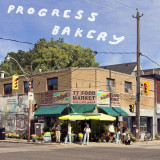
On Progress Bakery, her second album as a solo artist, Eliza knows to leave some questions alone – to let juxtaposition and tension be the proof. It doesn’t have to be hard. The feelings and revelations they provoke rise in the heat. The smell is sweet. Crispy on the outside and soft all the way through. She playfully slip-slides through words and sounds and images, delighting in surprise, skimming ideas like stones cast across clear water, touching down briefly with uncommon grace.
The question provoked between those opening lines resurfaces in the strands between songs – “Do U FM” is fully formed and beautifully layered, while “Novelist Sad Face” is a short, acapella rendering of gentle curiosity. What is holding these ideas together? Some songs demand more, seem to carry a whole load – eventually the skipping stone will halt to sink and resume its idle duty – while others drift in and out of focus, the way thoughts and dreams become interwoven before the mind is sunk into true sleep.
Music and words don’t always have to interact. Where she decides to keep them apart gives a new contour to where and how she puts them together. The kind of thing you’re supposed to take for granted with songs and their singers comes alive in Eliza’s hands – the little miracle of mixing, kneading, stretching, and stopping.
So often on Progress Bakery, Eliza teases out truth and meaning by asking questions. “Do I wanna be crying?” “Do you want me good or do you want me bad?” “Do I need an eye test?” “I’m writing songs in my head while you’re going over stuff with me — is that cruel??” In “Pocky” Eliza ends with a question that feels to me like the actual biography, succinct and revealing:
I don’t wanna be made to see
I just wanna ask “what’s that?”
Grace that ought to be rare, but in its care and precision is offered humbly, with great generosity, and without announcing itself. Eliza’s simple, miraculous music is given further form and shape by a group of collaborators – invaluable guest musicians Jeremy Ray, Evan Cartwright, Steven McPhail, Kenny Boothby, Ed Squires, Carolina Chauffe, Dorothea Paas, Louie Short, and Avalon Tassonyi. Together with Louie Short, who recorded, mixed, and produced the album along with Jeremy Ray and Lukas Cheung, Eliza has cultivated a richness in sound and texture that prods and provokes the ticklish ear. Barely audible guitar tinkering, a brief lo-fi field recording of trumpets, the harmonic clicking of a looped synthesizer, a flourish of reeds, a child’s conversation, each uncanny sound perfectly placed, rippling out under a soft breeze.
Lay in bed alone at night and ask aloud to the stillness,
“What were you doing at the Albuquerque Airport?
What were you doing there??”
And hear your question answered by a dream of swelling, undulating cellos. Try to grasp at the melody and structure. It’s not an answer (if there could be one), but it moves deeper, closer to the weird layer of fleeting moments and disconnected images, barely perceptible at its core. Wait for the dream reel to click into place.
Eliza took me for a ride in Nicole (her beloved Dodge Grand Caravan) and told me she’d been thinking of the album as an embodiment of transition – and I think every transition, known or unknown, carries the weight of new meaning, skittering off the surface tension of life as you know it, creating ripples, sometimes bouncing off and sometimes breaking through. There is a trick you can use to tell if a dough is glutinous enough. You’re supposed to stretch it out as thin as you can without breaking it and hold it up to the light. If you can see through, even if it renders the world murky and uncertain, you should leave it alone. I love this trick. It’s one that Eliza seems to know intuitively: work gently and ask questions and don’t always expect answers, and when you can, take a glimpse at something new, and then leave.
Kneading dough is tricky – you should know how it’s supposed to feel. If you try too hard you could make it worse. It’s a beautiful practice – creation with a gentle touch, to work at something so it can be left alone. “If it’s too drawn out it’s awful. It’s easy to give too much.” Dance in the mirror. Contemplate your veiny hands. Who do they remind you of?
You begin by mixing flour and water. “What happens when your people die? Why’d they move the rock to the other side of Ulster Park?” Eliza Niemi asks two seemingly unrelated questions in a rising melody with guitar accompaniment, like fingers playing spider up to the nape of your neck. Gentle pressure. Strands of gluten form to bind the mix. A new question lingers in the binding. When she admits “but I don’t know how to tell if I’m feeling it or not,” that question surfaces through the text. It is reiterated throughout the album. When I’m working with dough I think the same thing to myself.
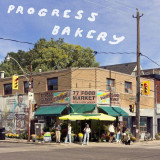
On Progress Bakery, her second album as a solo artist, Eliza knows to leave some questions alone – to let juxtaposition and tension be the proof. It doesn’t have to be hard. The feelings and revelations they provoke rise in the heat. The smell is sweet. Crispy on the outside and soft all the way through. She playfully slip-slides through words and sounds and images, delighting in surprise, skimming ideas like stones cast across clear water, touching down briefly with uncommon grace.
The question provoked between those opening lines resurfaces in the strands between songs – “Do U FM” is fully formed and beautifully layered, while “Novelist Sad Face” is a short, acapella rendering of gentle curiosity. What is holding these ideas together? Some songs demand more, seem to carry a whole load – eventually the skipping stone will halt to sink and resume its idle duty – while others drift in and out of focus, the way thoughts and dreams become interwoven before the mind is sunk into true sleep.
Music and words don’t always have to interact. Where she decides to keep them apart gives a new contour to where and how she puts them together. The kind of thing you’re supposed to take for granted with songs and their singers comes alive in Eliza’s hands – the little miracle of mixing, kneading, stretching, and stopping.
So often on Progress Bakery, Eliza teases out truth and meaning by asking questions. “Do I wanna be crying?” “Do you want me good or do you want me bad?” “Do I need an eye test?” “I’m writing songs in my head while you’re going over stuff with me — is that cruel??” In “Pocky” Eliza ends with a question that feels to me like the actual biography, succinct and revealing:
I don’t wanna be made to see
I just wanna ask “what’s that?”
Grace that ought to be rare, but in its care and precision is offered humbly, with great generosity, and without announcing itself. Eliza’s simple, miraculous music is given further form and shape by a group of collaborators – invaluable guest musicians Jeremy Ray, Evan Cartwright, Steven McPhail, Kenny Boothby, Ed Squires, Carolina Chauffe, Dorothea Paas, Louie Short, and Avalon Tassonyi. Together with Louie Short, who recorded, mixed, and produced the album along with Jeremy Ray and Lukas Cheung, Eliza has cultivated a richness in sound and texture that prods and provokes the ticklish ear. Barely audible guitar tinkering, a brief lo-fi field recording of trumpets, the harmonic clicking of a looped synthesizer, a flourish of reeds, a child’s conversation, each uncanny sound perfectly placed, rippling out under a soft breeze.
Lay in bed alone at night and ask aloud to the stillness,
“What were you doing at the Albuquerque Airport?
What were you doing there??”
And hear your question answered by a dream of swelling, undulating cellos. Try to grasp at the melody and structure. It’s not an answer (if there could be one), but it moves deeper, closer to the weird layer of fleeting moments and disconnected images, barely perceptible at its core. Wait for the dream reel to click into place.
Eliza took me for a ride in Nicole (her beloved Dodge Grand Caravan) and told me she’d been thinking of the album as an embodiment of transition – and I think every transition, known or unknown, carries the weight of new meaning, skittering off the surface tension of life as you know it, creating ripples, sometimes bouncing off and sometimes breaking through. There is a trick you can use to tell if a dough is glutinous enough. You’re supposed to stretch it out as thin as you can without breaking it and hold it up to the light. If you can see through, even if it renders the world murky and uncertain, you should leave it alone. I love this trick. It’s one that Eliza seems to know intuitively: work gently and ask questions and don’t always expect answers, and when you can, take a glimpse at something new, and then leave.