Search:a link

Styles
All
JIM O'ROURKE - HANDS THAT BIND (ORIGINAL MOTION PICTURE SOUNDTRACK)

In addition to his day job transforming pop music with his own records, as well as those of Gastr del Sol, Loose Fur and Sonic Youth over the past few decades, Jim O"Rourke has been contracted for several dozen film scores over the years as well. It makes sense - his abilities as an improviser, composer and producer allow him to interpret cinematic moments with a unique understanding for their construction and how they work. It doesn"t hurt that Jim"s a well-versed cineaste, a complete and total fan of watching films, which has given him a preternatural understanding of the role of music in movies. What doesn"t make sense is how Hands That Bind is the first film soundtrack of Jim"s to ever receive worldwide release! He"s worked with filmmakers of international repute, like Olivier Assayas, Allison Anders, Werner Herzog and Kôji Wakamatsu! He served as music consultant on Richard Linklater"s 2003 laff-fest, School of Rock! He"s played in ensembles of award-winning documentaries and films alike! Throw the guy an internationally-promoted soundtrack LP every more often, why doncha? It was left to the "suits" of Drag City Records to innovate, once again, by taking a leap on an O"Rourke work. Made for an indie film that"s been seen by festival audiences and not enough others, the soundtrack for Hands That Bind is a moody, atmospheric delight. Jim"s roots in composition via tape-editing have evolved into a sophisticated assembly of found-and-processed sounds that achieve highly musical, near-orchestral majesty as they hang in the very air of the drama that unfolds in Kyle Armstrong"s Hands That Bind. Described as a "slow-burn prairie gothic drama" set in the farmland of Canada"s Alberta province, and starring Paul Sparks, Susan Kent, Landon Liboiron, Nicholas Campbell, Will Oldham, and Bruce Dern, Hands That Bind is a spellbinding trip to the existential bone of rural working life in North America. As conflict rises over the hard-worked patches of land that provide a mere and mean existence, a desperate air settles in, as a series of mysterious, often supernatural occurrences rock the small community. O"Rourke"s vaporous, serpentine musical backdrops and atmospheres reflect the obsessions and distractions of the film"s principles; moods of all sorts seen or otherwise implied. Additionally, the music highlights cinematographer Mike McLaughlin"s closely observed accounting of the farmers" environment, as well as the striking widescreen images of the big sky country with unnerving flair. For fans of Jim"s ongoing steamroom series as well as collectors of soundtracks, Hands That Bind will provide hours of engrossing listening. And if you get a chance, see the movie projected in a movie house, please - farmers aren"t the only ones struggling these days!

pre-order now07.07.2023

expected to be published on 07.07.2023

26,85
Catz'n Dogz - Can’t Stand

Catz ‘n Dogz make a standout debut on Crosstown Rebels with two compelling new house tracks on ‘Can’t Stand’, complete with a remix from leftfield innovator Robag Wruhme.

A pairing whose renowned reputation has been built and shaped across an illustrious career, Polish duo Grzegorz Demiañczuk and Wojciech Tarañczuk, aka Catz’ n Dogz, have been serving up their own diverse and varied take on house for more than fifteen years. Founders of their own Pets Recordings imprint, in that time they have released on esteemed labels, from Diynamic to Defected, Glitterbox to Watergate and more, while playing at almost every major club and festival across the globe. Their fresh in-between sounds and knack for cooking up curious and impactful sounds have made them mainstays of the scene, and that run of stellar releases continues here with a debut appearance on Crosstown Rebels as they link with ZenSoFly for ‘Can’t Stand’ - with longstanding German favourite Robag Wruhme on remix duties.

Opener ‘Can’t Stand’ sees the pair reunite with vocalist ZenSoFly, a talent they’ve worked with on notable hits like ‘Wave.’ Her vocals bring soul and attitude over a tight, rubbery and sleazy house beat, underpinned with a heavy bassline - providing the sort of chunky cut to lock in a dancefloor and make it march in unison. Robag Wruhme has been a Pampa label mainstay and famously curveball producer for many years with his scintillating blend of minimalism, melody and unusual sound sources. That is the case again with this remix, a dark workout that hurries along on snappy drums, detuned vocals and scuzzed up, droning synths to ensure maximum impact.

The EP is closed out with ‘Wake Up’, a widescreen and atmospheric cut packed with detail. The bassline is taught, freaky vocals echo within the mix, and synths spray about to dramatic effect, delivering another full flavour house cut with a dark soul and futuristic designs.

out of Stock

Order now and we will order the item for you at our supplier.

14,50

Last In: 2 years ago
Soul Jazz Records Presents - YO! BOOMBOX – Early Hip Hop, Electro and Disco Rap 1979-83 LP 3x12" + 7"

Yo! Boombox is the new instalment of Soul Jazz Records’ Boombox series on the early days of hip-hop on vinyl and features some of the many innovative underground first-wave of early rap and disco rap records made in the USA in the period 1979-83.

The album includes the first releases of seminal groups such as Grandmaster Flash & The Furious Five and The Funky Four Plus One More through to a host of rarities and little-known obscurities such as the Carver Area High School band’s ‘Get Live 83’, an awesome record made at a Chicago high school.


The album is released as a deluxe triple LP complete with 3x full inner sleeves of extensive sleeve notes, exclusive photography and original label artwork. There is also a very-limited one-pressing only special deluxe version that comes with an extra bonus super-rare 7” single of ‘Magic’s Rap’ by Magic’s Trick, aka ex-marine Magic Fraga, a record that was only ever available on US military bases!


Yo! Boombox also features the stunning photography of Sophie Bramly, one of a very select group of photographers (alongside Henry Chalfant, Martha Cooper, and Joe Conzo) who were allowed full access to document the exciting early days of hip-hop in New York.
These first exuberant wave of innocent, upbeat, party-on-the-block rap records were the first to try and create the sounds heard in community centres, block parties and street jams that first took place in the Bronx in the mid-1970s. Where the first DJs – Flash, Kool Herc and Bambaataa – were back-spinning, mixing and scratching together now classic breakbeat records like The Incredible Bongo Band’s Apache or Babe Ruth’s The Mexican, these first pre-sampling rap records were all made using live bands, often replaying then current disco tunes.

As Chic’s ‘Good Times’ was to ‘Rappers’ Delight’, the songs here feature then-current dancefloor hits such as the Tom Tom Club’s ‘Genius of Love’, Cheryl Lynn’s ‘To Be Real’, MFSB’s ‘Love Is the Message’ while MCs rapped over the top, creating a unique new sound. In fact, the links between disco and rap date back earlier to the ‘party style’ MCing of figures such as the legendary DJ Hollywood or radio DJs like Frankie Crocker.

This new Soul Jazz Records collection
celebrates these first old-school rap
records, bringing together rare, classic
and obscure tracks released in the
early days of rap.

out of Stock

Order now and we will order the item for you at our supplier.

44,75

Last In: 2 years ago
Robs - Synchronicity

Roberto Costantino, aka Robs, releases his first solo EP. Four distinct tracks that differ in style but are linked by a personal journey.

From ethereal atmospheres to more upbeat and groovy melodies, this EP reflects the signature sound of the artist.

out of Stock

Order now and we will order the item for you at our supplier.

11,56

Last In: 17 months ago
Kool Keith & We Are The Horsemen - London Is the Place

The legendary Ultramagnetic MC touches down in London for a one-away collab with We Are The Horsemen, featuring the one and only Kaidi Tatham.


What you sayin’, Kool Keith...? Enter your spaceship for a transatlantic meeting of minds as the legendary Kool Keith links up with We Are The Horsemen (Outernational Sounds head honcho Harvinder Singh Nagi and producer Sub One) and the great Kaidi Tatham for a future-jazz flavoured trip through the great MC’s London adventures.

Kool Keith needs no introduction to hip-hop heads worldwide. As one of the greatest MCs ever to touch the mic, Keith has never stopped innovating and progressing. From his days in the seminal 1980s Bronx unit Ultramagnetic MCs, through his pioneering development of new conceptual characters and styles in the 1990s (Big Willie Smith, Dr. Octagon, Dr. Dooom, Black Elvis), to his continuous run of radically independent recordings in the 2000s and beyond, Kool Keith defines rap longevity and artistic originality. No one else in hip hop has a comparable record of continuous reinvention, conceptual boldness, and stylistic panache.

And after four decades in rap, Keith is still one of the hardest working rappers in the game, perpetually seeking new sounds to spit on and new collaborators from across the musical spectrum. Fresh off the acclaim for his new Black Elvis 2 release, the protean MC has touched down on Outernational Sounds for a unique collab with We Are The Horsemen and Kaidi Tatham. ‘London Is The Place’ finds Keith riding the Horsemen’s atmospheric, break-toughened riddim and reaching back in time to drop kaleidoscopic, stream-of-consciousness impressions of the Ultramagnetic MCs infamous 1989 tour, before flashing forward to the present in order to namecheck Honest Jons Records, saxophone star Nubiya Garcia and master keyboardist and broken beat pioneer Kaidi Tatham, who contributes trademark jazz keys and bruk steez to the AA side remix. The 12” is closed out by a third version, the Horsemen’s own Kool Jazz Mix, bringing see- sawing organ stabs and a neck-snapping Ultra-sampling hook.

Kool Keith, Kaidi Tatham and We Are The Horsemen, taking it higher and overcoming the pressure with ‘music so progressive’, to quote Keith himself! Limited press – don’t sleep on this one!!

out of Stock

Order now and we will order the item for you at our supplier.

18,91

Last In: 20 months ago
Linda Ayupuka - God Created Everything LP

Ghanas Linda Ayupuka spielt zeremonielle Fra Fra-Musik über schnelle Feuertempi und hypnotische Drumloops, die auf eine internationale Palette elektronischer Tanzstile verweisen, vom DJ-geführten Balani Show-Straßensound Malis über Electro-Acholi bis zu modernem Dancehall/R&B. Auf 'God Created Everything' fängt sie die Unmittelbarkeit früher Aufnahmen von Größen wie Oumou Sangaré und Rokia Traoré ein, um sich als neues westafrikanisches Gesangstalent zu präsentieren. Ihr Produzent Francis Ayamga (Top Link Studios), Live-Drummer von Ghanas King Ayisoba und Produzent der meisten Tracks auf dessen jüngstem Album für Glitterbeat, hebt Lindas Gesang mit seiner spielerischen Produktion von Laptop-DJ-Samples und abstürzenden Drum-Pads in den Himmel.

"(Linda) exists somewhere between the Malian singer Oumou Sangare´ and the lo-fi-to-the-future beats heard on the Nyege Nyege Tapes label." - NPR - All Songs Considered - Best Of 2022

"Combining traditional instrumentation and call-and-response vocals with sparkling synths, rapid-fire beats, and drum machine polyrhythms. Ayupuka achieves an electrifying syncretism on this album, giving Fra Fra gospel its rightful place on the global dance music stage." - BANDCAMP, Best Of 2022

"An uptempo blend of choral chants and sparkling, 80s electro synths." - THE GUARDIAN, Albums Of The Month

"Linda Ayupuka fait du gospel façon disco au Ghana et chante son amour de Dieu sur des synthés entêtants." - LE MONDE

"A mashup of gospel, disco and savannah sounds, produced with all the D.I.Y vim of Balani Show, Nyege Nyege Tapes and the Awesome Tapes roster." - PAN AFRICAN MUSIC - Best Of 2022

"Super interesting!" - GILLES PETERSON, BBC 6MUSIC

pre-order now30.06.2023

expected to be published on 30.06.2023

25,42
Black To Comm - Alphabet 1968 LP

Black To Comm

Alphabet 1968 LP

12inchCELL-05LP
Cellule 75
30.06.2023

Marc Richter aka Black To Comm released his debut record 20 years ago. In 2023 he is still busy releasing music under various disguises and is currently signed to the Thrill Jockey label. To celebrate this anniversary his own Cellule 75 label is re-releasing some classic out-of-print vinyl albums that originally came out on the defunct Type and De Stijl labels. The LP will feature a full-colour printed inner sleeve exclusive to this edition.

In 2009 the Type Recordings label run by John Twells had just released seminal records by Grouper, Jóhann Jóhannsson and Yellow Swans when they signed Richter and put out his breakthrough Alphabet 1968 album. The LP sold out within two weeks, receiving a glowing full-page review in The Wire Magazine by the late Mark Fisher (later reprinted in his book Ghosts Of My Life), was selected for Boomkat's Top 10 releases of the year (alongside debut albums by Leyland Kirby, Demdike Stare and Oneohtrix Point Never) and was greeted with universal praise in the underground blog network as well as established magazines such as The New Yorker and Pitchfork.

The music itself played with the notion of nostalgia without being nostalgic itself. It's the sound of half-remembered dreams, a surreal distorted vision of the past, an aural polaroid of long forgotten musics, a ghostly voice from a non-existent era.

From the original Type one-sheet:
"The mission statement for Alphabet 1968 was to write an album of "songs" for want of a better word. Short tracks which represented genre points, the milestones which stuck in Richter's mind when he thought back to his favorite records. What we arrive at is a breathtaking 10-track album which, over the course of 45 minutes, explores world music, techno, noise, avant-garde, ambient music and even exotica. Each track is linked with a loose thread of radio static or environmental sound, dragging you through the album, as if tuning in to a stray broadcast or a particularly adventurous mix. Richter has pieced the album together from hours of recordings made at his studio with home made gamelan, small instruments and loops gathered from a collection of ancient vinyl and 78 records. The scope of the album is admirable, but ignoring this, it is simply a shockingly arresting collection of experimental oddities, with references ranging from Moondog to Basic Channel by way of Bernard Herrmann. It's not hard to fall in love with Alphabet 1968, far harder would be to place exactly where the record should fit into your collection."

Mark Fisher in The Wire:
"But what if we were to take Richter's provocation seriously - what would a song without a singer be like? What would it be like, that is to say, if objects themselves could sing? It’s a question that connects fairy tales with cybernetics, and listening to Alphabet 1968, I’m reminded of a filmic space in which magic and mechanism meet: JF Sebastian’s apartment in Blade Runner. The tracks on the LP are crafted with the same minute attention to detail that the genetic designer and toymaker brought to his miniature automata, with their bizarre mixture of the clockwork and the computerised, the antique and the ultramodern, the playful and the sinister. Richter’s musical pieces have been built from similarly heterogeneous materials - record crackle, shortwave radio, glockenspiels, all manner of samples, mostly of acoustic instruments. ….. JF Sebastian's apartment was itself an update of older spaces in which science and sorcery co-existed: the workshops of ETA Hoffmann's inventor-magicians, or of Pinocchio's creator, Geppetto. I think, too, of Auguste Villiers de l'Isle-Adam's astonishing 1886 tale The Future Eve in which Edison, using the expertise he has recently acquired from inventing the phonograph, sets himself the task of constructing an artificial woman. But if there are songs here, they are sung by the gramophone and other recording and playback machines. Richter so successfully effaces himself as author that it is as if he has snuck into a room and recorded the objects as they played (to) themselves. Rather than simply automating his music, as in the case of Pierre Bastien and his mechanical machines, Richter makes us feel that he has merely recorded the unlife of objects. ….. Indeed, the impression of things winding down is persistent on Alphabet 1968. Entropy has not been excluded from Richter's enchanted soundworld. It feels as if the magic is always about to wear off, that the enchanted objects will slip back into the inanimate again at any moment."

pre-order now30.06.2023

expected to be published on 30.06.2023

23,91
Org - Org

Org

Org

12inchSTSLJN397
SMALLTOWN SUPERSOUND
30.06.2023
 
3

Selected by Jim O’Rourke for his Tone Glow list of 25 albums that “never got their due”, Org was founded in the early 90’s by Espen Jensen and Kjetil D Brandsdal who would later go on to variously record as Elektrodiesel, Noxagt and Ultralyd in the swirl of the highly active Norwegian underground. “Org" was the only album the pair recorded as a duo, pressed in a meagre edition of just over 100 copies which disappeared almost as soon as they were made, lodged in the memory of the select few who have managed to hear it in the years since.

Made up of three long tracks, the near 20-minute ‘001’ opens the album with an extended organ zone-out matched with scraping factory machinery saturated into a dense cloud of harmonic fuzz. There's something transcendental about the sound that intersects with microtonal Alice Coltrane (particularly the unfairly maligned organ-only edition of "Turiya Sings"), as well as Pauline Oliveros and Ramleh. It’s music that pulls you in subconsciously; before you know it, you're fixating on the uncomfortable grind of metal on metal, buried mechanical rhythms and liturgical organ vamps that wind between industrial cacophony and sacred ritual music. For its last few seconds, we go into a full death metal tearout that fades out before it takes full flight, a glorious wtf.

‘002’ connects between minimalist drone styles and shoegaze, distorting fuzzed organ into pliable, dreamlike warbles that end up sounding like Kevin Shields' ‘Loveless’-era glides, or even Sunn O))) at their most devotional. Never losing the numbing overdriven mettle, its a piece that sounds spiritually entwined with Matthew Bower's Skullflower - a minimalist re-reading of high-contrast guitar music that takes all the psychoacoustic power and none of the annoying posturing.

For ‘003’, subaqueous organ is joined by synth and drum machine, sounding like the inspirational spark for Religious Knives' screwed 'n chopped cosmic psychedelia. The choice of sounds links it to Antena's foundational electro samba recordings too, but the overwhelming drone - a constant on all three compositions - connects the music to minimalist spirituals that have simmered beneath the DIY/avant garde for decades.

‘Org’ sits heavy on the nerves with overproof levels of mulched amp worship and ungodly, palms-down organ chords and wheezing, bezonked lines of melodic thought. 25 years out of sight and marinading in the archives, with the benefit of hindsight we can better understand the role these sounds played in the development of music in the contemporary sphere. It’s an important piece of the puzzle, one that makes valuable connections that, over time, have looked progressively more faint.

pre-order now30.06.2023

expected to be published on 30.06.2023

27,94
Bjarte Eike & Barokksolistene - The Playhouse Sessions LP 2x12"

From Alehouse to Playhouse Bjarte Eike and his barnstorming Barokksolistene capture the vital spark of Restoration London’s entertainment scene with a captivating new recording for Rubicon Classics! The Playhouse Sessions will be released on 23 September 2022 to coincide with Barokksolistene’s concert double-bill at London’s Southbank Centre.

‘A smattering of Purcell, dances from Playford’s Dancing Master, shanties, reels and ballads succumb to a nine-piece ensemble drawing on Baroque, jazz and folk styles for a no holds barred hooley of riotous improvisatory give and take,’ (BBC Music Magazine review of The Alehouse Sessions, August 2019)

London’s musicians, pushed in the 1650s, to the margins of society by order of Oliver Cromwell, found room for new forms of entertainment in city-centre taverns and alehouses. They remained there long after the restoration of the monarchy, performing sets of dances, theatre songs and bawdy ballads to audiences glad to be free from Puritan constraints on pleasure.

Norwegian violinist Bjarte Eike and his Barokksolistene have restored the spirit and substance of those long-forgotten performances with their Alehouse Sessions, hailed by The Times as ‘irresistible’ and ‘fabulously unrestrained’ by The Guardian. Five years ago the Norwegian violinist and his band scored a best-selling album with The Alehouse Sessions on Rubicon Classics. They return to the label with another compelling collection of music and words of the kind on offer more than three centuries ago at Henry Purcell’s favourite Westminster watering holes. The Playhouse Sessions, set for release on Rubicon Classics on 23 September 2022, reflects the uplifting energy and engaging emotional contrasts of Barokksolistene’s Alehouse performances.

“The album contains a sort of inner narrative that runs through the recording,” says Bjarte Eike. “It has become like a play in its own right, with each track being a small tale within a larger story.” The recording’s tracklist includes Eike’s beguiling arrangements of music from Purcell’s semi-opera The Fairy Queen and his own original compositions on words from the play on which it is based, Shakespeare’s A Midsummer Night’s Dream; popular songs and ballads such as ‘The Irish Washerwoman’, ‘I often for my Jenny strove’ and ‘The Three Ravens’; tunes from Purcell’s welcome odes and stage shows, Come ye sons of art and Dido and Aeneas among them; the ‘Willow Song’ from Shakespeare’s Othello; Eike’s own voice in Puck’s monologue from Act 5 of A Midsummer Night’s Dream; and John Dowland’s sublime air ‘Can she excuse my wrongs’.

London’s theatres were closed at the start of the English Civil War in 1642 and remained shut until the Restoration. Alehouses offered redundant musicians, actors and dancers a place to scrape a precarious living and soon became their creative refuge. “Although a few surviving theatres reopened in 1660 with the return of Charles II, there was little money around to rebuild those that had been demolished,” observes Bjarte Eike. “And a generation of musicians had already found an audience in places like the Black Horse in Aldersgate Street. So popular were their alehouse sessions that Cromwell tried to abolish them! But they outlived him and became part of Restoration musical life.” The form of a Barokksolistene Alehouse, he adds, is like a creative room. “Within its framework I can frequently refurbish the show with new contents. The Playhouse project is likewise an extension of the ever-evolving Alehouse Sessions. Together they tell the story of music and theatre in London during Cromwell’s time and after the Restoration. Of course there’s an historical context to what we do. But there’s also the practical context – which is even more important to me – of connecting with a contemporary twenty-first century audience. An Alehouse / Playhouse performance is not something for the museum; it's about music made in the present moment, just as it was in the London alehouses of Purcell’s day -- with their playhouses annexed to the rear of the beer-drinking saloons. The encounter of musicians onstage and the audience in the hall is the real magic of it. We have to fuse the audience into the action of our performance!”

The Playhouse Sessions will be launched on Friday 23 September with a late-night concert at the Purcell Room and a post-concert Alehouse Session in the foyer of the Queen Elizabeth Hall. Soprano Mary Bevan is set to join Eike and his Alehouse Boys for the first half of their Southbank Centre double-bill, offering unique interpretations of songs from Purcell shows and other hits from the late seventeenth-century London stage. “The Southbank Centre is a direct descendant of concerts given in the 1650s in the alehouses of London,” notes Eike. “These alehouses after all staged some of the world’s first public concerts. Later, after the Restoration, it became common for promoters to advertise alehouse concerts in the press and offer subscription tickets. Purcell and his fellow musicians were thus just as at home performing there as they were in the chambers of the royal court or in London’s new theatres.”

Bjarte Eike launched his Alehouse Sessions in company with like-minded musicians 15 years ago. The ensemble comprises a core of regular performers, all of whom have committed to memory a huge setlist of up to four hours of music. Typically they meet a day or so before a concert tour to share a meal and make music together; then next day, re-grouping thirty minutes before the show, they discover Eike’s select-menu for the evening. “That ensures that every show is fresh,” he notes. “I make sure we never repeat the same programme twice. It’s therefore essential to work with people who share my outlook and dare to adventure. We’re into a high-risk sport, with lots of traps and places where the unexpected appears - for good or for ill. And so the audience knows we’re vulnerable. But our skill is seen in how we re-act on the hoof to the unpredictable. That’s authenticity and honesty - and above all it’s a performance that’s genuine.”

Armed with a classical training and a background in folk music and improvisation, Bjarte Eike was drawn naturally to Early Music in all its stylistic variety. “I never really felt at home with only one genre,” he recalls. “Early Music allowed me to study profound, complicated compositions, but performing it has also opened up the chance of rebellion and uproar! Early music offers wide, multi-faceted areas of musical exploration for me. You find, for instance, links to different types of music wherever you look in seventeenth-century English repertoire. And I am fascinated by all these connections. They offer a foundation for the Alehouse Sessions and for all Barokksolistene performance more generally. Every member of the group plays, sings, dances and improvises without limitation. We’re all interested in the many different fields of being a stage performer and pushing hard at the ‘normal’ boundaries of what it means to be a classical musician.”

pre-order now30.06.2023

expected to be published on 30.06.2023

32,98
VARIOUS - SSR RECORDS: IN RETROSPECT LP 2x12"

Hi Scores is beyond excited to present SSR Records: In Retrospect. This 2LP compilation album presented in a beautiful gatefold sleeve and through all digital platforms, wishes to highlight the immense and hard to grasp legacy of the Brussels based label. SSR Records was founded in 1988 by Marc Hollander as a sub label of his Crammed Discs and spanned the nascent years of house, acid, rave, trance, new beat, hip-hop, future jazz and broken beat, collaborating internationally and racking up close to 200 releases until it was put to sleep in 2002. Far ahead of their time, SSR Records released music of both European and North American artists that hadn’t broken through yet, such as those collected on this compilation: Move D, Nu Era, Gemini, Bjørn Torske, Glenn Underground or Matthew Herbert.

SSR Records was run by Crammed Discs chief Marc Hollander and Minimal Compact singer Samy Birnbach aka DJ Morpheus. SSR Records: In Retrospect comes with extended liner notes, exploring the pivotal milestones in the history of the adventurous label and zooming in on the origins of all records featured on the compilation.

All nine tracks on SSR Records: In Retrospect were selected by Hi Scores’s head honcho Kong DJ and have been remastered. Created between 1990 and 1996 and in the at the time pioneering spheres of house, breakbeat, electro and trance music, these treasures from the vast SSR catalog today stand as a stunning testimony to a truly remarkable and timeless musical legacy. Kong DJ: ‘While collaborating with Crammed Discs on the releases of Aksak Maboul in 2016 and Zazou / Bikaye in 2018 on Ensemble, I began to grasp the impressive catalog of the label and its sub labels, including SSR. Surprised by the tiny footprint SSR had left on the world wide web - often the case for labels ceased before the internet revolution - I wrote an article for British website The Vinyl Factory.

This would later prove to be the first step towards this compilation album, collecting favorites from the label as a kid in a giant candy store.’

out of Stock

Order now and we will order the item for you at our supplier.

30,21

Last In: 62 days ago
Skepta, Jammer, J Kolo, Ossie - Mas Murder / Touch Me

Skepta and fellow BBK member Jammer launch house label Más Tiempo, with the pair collaborating for the debut EP ‘Mas Murder’

The release sees the Mercury Prize-winning MC, songwriter, and producer showcase his house sounds ahead of the label launch party at London’s KOKO on 30th April 2023.

Skepta, the influential Mercury Prize-winning MC, producer, designer, director, and founding member of seminal British grime collective Boy Better Know, unveils his new label Más Tiempo on 28th April alongside instrumental LOTM founder and BBK mainstay Jammer, as the pair launch the house-centric project with their ‘Mas Murder’ EP.

Featuring London talents J Kolo and Ossie (Club Bad/Madhouse), the debut EP showcases a first glimpse of the musical direction of the label, with the imprint set to provide a platform for producers to ‘expand their current portfolio range’ - with Skepta building on his iconic DC10 debut for Circoloco last summer, plus forthcoming appearances in Milan, Ibiza and more.

“‘This generation rules the nation, with version’... that really resonated with us for the Más Tiempo journey. Musical Youth sampled on ‘Mas Murder’ was perfect to showcase the way we feel about giving people our spin on house production with instrumentals while paying homage to the ones that came before us.” - Jammer.

Collaborating on the lead cut, Skepta and Jammer’s ‘Mas Murder’ is a low-slung, heady house cut shaped for bustling terraces and built for clubs, fusing crisp percussion, a snaking bassline and eerie melodies for a heads-down effort. Handing over to Jammer, who links up with J Kolo and Ossie, ‘Touch Me’ draws from UK house influences for a skippy, slinking production.

Alongside the EP, Más Tiempo will also take over legendary London venue KOKO on 30th April, with the event being the first standalone show for the collective, having collaborated with The Martinez Brothers and Cuttin Headz at The Beams in December. Featuring performances from Benji B and DJ Maximum alongside sets from both label heads, the show will see Skepta return to the venue for the first time since 2016 following the release of his critically acclaimed LP ‘Konnichiwa’.

out of Stock

Order now and we will order the item for you at our supplier.

17,44

Last In: 21 months ago
SMOS & BABY BEE - PARTY FLYERS AND MORE (1993–2010)

Smos & Baby Bee: Party Flyers And More. Reminiscences Of A Unique Era In Belgian Nightlife Culture. (1993–2010)

Throughout 326 flyers and many stories from the personal archives of Baby Bee, Smos and a bunch of friends and fellow DJs, the story of the legendary duo was recreated.

Sad news shook up our scene in April 2020: Smos had passed away. Aged 53, the Antwerp based DJ was a key figure of our Belgian nightlife scene. As yin to yang, Smos was connected to Baby Bee. The inseparable duo - who have been lovers as well - has rocked dance floors all over Belgium and abroad for 20 years of which 18 as resident DJs in Café d’Anvers and four in the Motion room in Fuse in Brussels. Having started their DJ career in the early nineties,
their story is closely linked with the beginnings of Belgian DJ culture and the electronic music scene.

Smos & Baby Bee were prominently rocking the electronic music scene since its dawn, shortly after the infamous second summer of love in the UK during the late 1980s and the rising of a new youth culture, a pivotal point in music history when under the spell of XTC a large audience became enthralled by the exciting new style of music coming from American cities such as Detroit and Chicago. They were DJing all over Belgium and through their genuine approach and straight forward mentality bringing together scenes from Brussels, Ghent, Antwerp or Wallonia. They were a DJ duo, a constellation nowadays well known but at the time truly rare. And not to forget, Baby Bee was a female acting in a mostly male world.

The visual archive presented in this publication generates an important cache of a creative culture that has been going through ups and downs, but is still very much alive and kicking to this very day. The book wishes to commemorate Smos, who is missed by many and remains in our hearts forever.

Written by Koen Galle
Flyers photographed by Baby Bee from her and Smos’ archive
Photography by Benoit Meeus, Jockum Klenell, Baby Bee & Jamila De Backer
Designed by Otis Verhoeve

out of Stock

Order now and we will order the item for you at our supplier.

31,05

Last In: 2 years ago
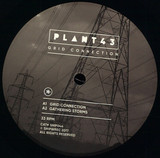
Plant43 - Grid Connection

Plant43

Grid Connection

12inchSHIP044
ShipWrec
19.06.2023

-2023 Repress-

Following his acclaimed Scars of Intransigence album of 2014, Emile Facey (Plant43) is back on terra Shipwrec. On skeletal rhythm supports strings and bass intertwine, link and disappear. Facey performs audio alchemy, transforming cold chords into organic warmth, transfiguring electrical impulses into palpable emotion. Frigid currents flow through bright bars, ephemeral percussion snap at heels of soaring keys as Plant 43 draws you deeper and deeper into the bare and beautiful brilliance of Grid Connection.

out of Stock

Order now and we will order the item for you at our supplier.

11,13

Last In: 2 years ago
30drop - Insight Into Mind And Space LP

'Insight Into Mind And Space' is the latest full length project from techno producer and label owner 30drop. It's a 10 track collection compiled out tracks previously released on Jeff Mills' Axis imprint in digital formats. The original albums 'Soroban' and 'Photosynthetic Zone Manifesto' have been released in the years 2020 and 2021 and will now be available on vinyl in a limited edition for the first time. The compiled album includes pieces that, like the mind, evolve as a consequence of each other in an orderly way. Starting with the early origins represented by the track 'Dunkelblau' with which the album begins, going through 'Accepting The Future', which represent the complexity reached by the human brain. 'Insight Into Mind And Space' portrays those hypothetical and alternative molecular combinations in the form of songs. Exposed to different chemical elements, gravitational and environmental conditions, dormant genes and signaling pathways are activated and uncannily combined. And just like the molecular events, sounds are combined in different ways, whether simple or complex, to create songs that provide an artistic vision to that scientific concept that opens a hypothesis to other types of intelligence that are far from human and that could exist in the vast out there. About 30drop. In his formative years, the artist responsible for 30drop discovered new synthetic and electronic sounds that would later influence his work. From the year 1996, his activity as a DJ powered his link with music, focused on Detroit Techno and Techno sounds that held the transgressive references of Birmingham, UK. These impressions saw 30drop magnetize toward an industrial, experimental, noise-based sound, particularly in the mid-2000s. After a creative pause, 2014 brought his new project, '30drop', at this time his label 30D Records of which he is the Manager and joint A&R with Angel Molina, was also born. The conceptual part of this project has been done in collaboration and with the supervision of Meritxell Rosell, PhD in biochemistry and molecular biology.

out of Stock

Order now and we will order the item for you at our supplier.

18,70

Last In: 4 months ago
BRUCE FLAKIAN - BRUCE FLAKIAN LP

Bruce Falkian is a world famous contemporary artist who exhibits at the world's most prestigious art galleries and fairs. Bruce Falkian moonlights as an agent of espionage against the Terrorism Industrial Complex. Wait... what?

To understand Bruce Falkian we first must understand the link between image and war. In the late 1800s the precursor to the video camera was invented. It was directly inspired by guns, specifically, Samuel Colt's Revolver. It borrowed not only its barrel mechanics, swapping bullets for exposures, but its terminology too. Load, point, scope, aim, shoot, flash. The camera and the gun, united by cordite, would go on to prove the most efficacious tools in shaping the modern world.

The 20th century was a laboratory when it comes to killing and image making, glorified through Hollywood and the Western genre. Propaganda would prove highly effective in creating and sustaining support for militaries fighting for ideological global control. Devised first in the aptly title 'Propaganda' (1928) by Edward Bernays, a nephew of Sigmund Freud, Advertising and Public Relations became the leading media industries, learning how to control the population through images, usually just to buy random crap they didn't need, but other times to overthrow democratically elected politicians in foreign countries. Eventually Western Liberal Democracy assumed domination, built of course on the enslavement of all peoples and nations who didn't fall in line with its specific ideas of living. The Red Scare inspired countless anti-leftist, anti-communist works of art throughout the Cold War, notably and most bizarre, funding the abstract expressionist movement as a non-ideological alternative to socialist realism art. When the Soviet Union fell, Western Liberal Democracy was able to promulgate its unhindered views around the world through its various media empires and actor states. Is it a coincidence that a third of the almost $85 billion dollar global camera equipment market is represented by the greatest propaganda beast the world has ever seen, the USA?

Guns are dangerous because of the obvious. Images are dangerous because we are bad at perceiving what is real (as any jump scare, deepfake, newsreel will attest to.) Videos aren't technically real, they are only a collection of rapidly changing static images which give the illusion of movement. It's easy for us to collectively decide that a video is real, because that's the way our brains perceive reality. People who lead the world of media understand this, which is how they are able to control us, make us invade foreign countries, vote for specific politicians, feel ugly or fat etc. However, ubiquitous as they are, it seems that the image is in crisis. It seems that we've run out of them. Or perhaps our understanding of an image is changing, with the aid of near instantaneous text-to-image AI technology. So what does this mean for guns? What does this mean for war? How will images be used as an aid to war in the 21st century? It remains to be seen, but Bruce Falkian will be a useful agent.

out of Stock

Order now and we will order the item for you at our supplier.

24,58

Last In: 2 years ago
Various - 28 Little Bangers fom Richard Hawley's Jukebox 2x12"

Ace Records freut sich, mit Singer-Songwriter, Ex-Pulp-Tour-Gitarrist und Sheffield-Legende Richard Hawley an diesem ersten Teil einer Compilation-Reihe mit von Hawley ausgewählten Lieblingssingles zusammenzuarbeiten. Dies ist eine Auswahl von 28 7inch-Singles, die Hawley auf seinen Tourneen gesammelt hat: Secondhand-Shop-Funde, Kneipen-Jukebox-Juwelen und alles dazwischen. Hawley bezeichnet den Klebstoff, der diese Auswahl zusammenhält, als "Little Bangers", da es sich bei allen um Mini-Handgranaten handelt; helle Lichter, die explodieren und verpuffen, einige große Namen, einige Raritäten, einige verlorene Seelen, einige Obskuritäten, einige von Künstlern, von denen er fast nichts weiß, außer dass sie ihn zum Tanzen bringen wollen. Viele sind Garagen-Instrumentals mit Gitarrenlinie als Lead-Melodie und der Kunst, eine Geschichte ohne Text zu erzählen. Eine 7inch-Single kann nur eine limitierte Menge an musikalischer Info enthalten - es muss knallen. The Shadows, Link Wray, The Troggs, The Champs, Jimmy Gordon und viele mehr zeigen wie das funktioniert. Kuratiert von Richard Hawley für CD und Doppel-LP mit umfangreichen, informativen Liner Notes.

pre-order now16.06.2023

expected to be published on 16.06.2023

29,62
Natural Information Society - Since Time Is Gravity LP 2x12"

The next chapter of the Natural Information Society is here. Since Time Is Gravity, credited to Natural Information Society Community Ensemble with Ari Brown, presents a newly expanded manifestation of acclaimed composer & multi-instrumentalist Joshua Abrams nearly 15 year, 7 albums &-counting flagship ensemble. Joining the core NIS of Abrams (guimbri & bass), Lisa Alvarado (harmonium) Mikel Patrick Avery (drums) & Jason Stein (bass clarinet) are Hamid Drake (percussion), Josh Berman & Ben Lamar Gay (cornets), Nick Mazzarella & Mai Sugimoto (alto saxophones & flute), Kara Bershad (harp) & Chicago living legend of the tenor saxophone Ari Brown. Recorded live to tape at Electrical Audio & The Graham Foundation, cover painting Vibratory Cartography: Nepantla, by Lisa Alvarado. 2xLP on Eremite USA, 2xLP & CD on Aguirre/Eremite Europe. Out 14-04.

Since first developing Natural Information Society in 2010, Joshua Abrams has been gradually expanding the group’s conceptual underpinnings, its musical references & the sheer number of the group’s members. Its music is, in a sense, an expansive form of minimalism, based in repeated & overlaid rhythmic patterns, ostinatos & modality. Its roots, its scale & its meaning become clearer in time. If time is gravity, it also allows us to carry more. Having begun as fundamentally a rhythm section with Abrams’ guimbri at its core, the version here can stretch to a tentet, including six horns.

Abrams has been expanding his minimalism gradually, but he has long understood a key to minimalism’s potential: the breadth of its roots in the late 1950s & early 1960s, ranging from the dissatisfaction of young European-stream composers with the limitations of serialism to the simultaneous dissatisfaction of jazz musicians with the dense harmonic vocabulary of bop & hard bop. The former began exploring rhythmic complexity & narrow tonal palates in place of harmonic abstraction (Steve Reich’s Drumming, Philip Glass’ Music with Changing Parts; perhaps above all Terry Riley’s In C & his late ‘60s all-night organ & loop concerts); the later reduced dense chord changes to scales (signally with Miles Davis' Kind of Blue, but rapidly expanding with John Coltrane’s vast project). In the 1950s the LP record opened the world with documentation of Asian & African musics, key influences on both minimalists & jazz musicians. If John Coltrane’s soprano saxophone suggested the keening shehnai of Bismillah Khan, the instrument was rapidly taken up by two key minimalists, LaMonte Young & Riley, similarly appreciative of its flexible intonation, the same thing that kept it out of big bands.

If the guimbri, the North African hide-covered lute that Abrams plays with NIS, involves a rich tradition of hypnotic healing music associated with the Gnawa people, Abrams’ music also touches on other musics as well — other depths, memories & healings, different drones, rhythms & modes. As the group expands on Since Time Is Gravity, he has made certain jazz traditions in the same stream more explicit as well. If there is a mystical & elastic quality involved in the experience of time, both in direction & duration, you will catch it here. The parts for the choir of winds expand on the roles of Abrams’ guimbri, Mikel Patrick Avery & Hamid Drake’s percussion & Lisa Alvarado’s harmonium: at times, the winds are almost looping in the tentet version, each hitting a repeating note in turn, at once drone & distinct inflection on temporal sequence. The brilliance of the work resides in Abrams’ compositions, the NIS’ intuitive execution & in Ari Brown’s singular embodiment of the great tenor saxophone tradition, including the oracular genius of Eddie “Lockjaw” Davis, & Yusef Lateef. The three pieces by the expanded NIS featuring Brown —the opening “Moontide Chorus” & “Is” & the ultimate “Gravity”— have an immediate impact, & togther might be considered a kind of concerto for tenor saxophone. Here Brown presses almost indistinguishably from composed melody to improvised speech, getting so close to language that he might have a text. Everything here is a sign. Note the tap of the Rhythm Ace that links “Moontide Chorus” to “Is”, the attentive heart always present, even when signed by a machine. There’s a link here to the methodologies & meanings of dub music & the linear & vertical collage of beats, textures & tongues: treated with reverence, a sample of a beat-box can be as soulful, as hypnotic, as a mbira or a tamboura. If those pieces with Brown are heard as a suspended concerto, the three embrace & enfold the other works, like the sepals of a flower. That placement will also touch on the mysteries of our perception of time.

Particularly in “Is”, but elsewhere as well, a phenomenon of transcendence arises in which time appears to be tripartite, at once moving backwards & forwards & standing still. This is an act of technical brilliance certainly, but also an illumination of music’s ability to represent temporal consciousness through polymetrics. This particular listener has only heard it before in a few places, including the horn shouts & bowed basses of Coltrane’s Africa, in moments of Charles Mingus’ The Black Saint & the Sinner Lady, in certain pieces where tapes were literally running backwards, & earlier still in Dizzy Gillespie’s Cubana Be, Cubana Bop, in which the composer George Russell & conguero Chano Pozo found a music that spoke at once in the voices of Stravinsky’s Rite of Spring & the vestigial rites, rhythms & songs of the Yoruba language & Santeria religion of inland Cuba.

In Joshua Abrams’ compositions & the realization of them by the NIS, in the time of one’s close listening & memory thereof, distinctions between the “natural” & the “social”, the “quotidian” & the “transcendent” are erased, suspended or perhaps irrelevant. Consider two of the ensemble pieces, one named for nature, the other social science. In “Murmuration” the repeated wind figures of flute & alto saxophone combine with the interlocking patterns of harp, guimbri & frame drum (tar) to create a perfect moving stillness, not an imitation but a witness to the miracle of the starlings’ astonishing collective art, a surfeit of beauty that might be the ultimate defense tactic.

“Stigmergy” takes its name & concept from the Occupy movement’s Heather Marsh, who proposes a social system based on a cooperative rather than competitive models, one in which ideas are freely contributed & developed as ideas rather than an individual’s property. In its form, Abrams’ “Stigmergy” is the closes thing to traditional jazz, a series of accompanied solos by each of the wind players. However, the composed accompaniment is a radically collectivist notion: a repeated rhythmic figure, call it ostinato or riff, in which the different winds each play only a note or two of the figure, a concept both more collectivist & individualistic in its conception than any typical unison figure. It suggests another of the underlying recognitions that propel the Natural Information Society, the group as social organism, the teleology of hypnotic anarchy, all parts in place, functioning systematically, evolving & expressing itself, its nature & society, as a transformative organism.

George Lewis has described music as “a space for reflection on the human condition”. This suggests that, rather than a “distraction”, at least some music might serve as a distraction from distraction. It’s a focus, a clarity, a awareness, an external invitation to interiority, as if music itself is a model for form & contemplation, an organism contemplating for us or as us. If that is a possibility, & I am sure I have heard such musics, than this music is among them. How many of our rhythms, melodies & harmonies (cultural, historical, biological, psychic) might such music carry, translate & transform in the particulate ecstasy of our own murmuration? (Stuart Broomer, April 2022)

out of Stock

Order now and we will order the item for you at our supplier.

33,15

Last In: 2 years ago
Delta Swamp Rock - Sounds From The South: At The Crossroads Of Rock, Country And Soul LP 2x12"
  • A1: Lynyrd Skynyrd – The Seasons (4.09)
  • A2: Barefoot Jerry – Smokies (2.14)
  • A3: Joe South – Hush (3.47)
  • A4: Bobbie Gentry – Papa, Won’t You Let Me Go To Town With You (2.34)
  • A5: Area Code 615 – Stone Fox Chase (3.17)
  • A6: Cher – I Walk On Guilded Splinters (2.32)
  • B1: Cowboy – Please Be With Me (3.48)
  • B2: The Allman Brothers – Ain’t Wastin’ Time No More (3.40)
  • B3: Link Wray – Be What You Want To (4.29)
  • B4: Boz Scaggs – I’ll Be Long Gone (4.08)
  • B5: Lynyrd Skynyrd – Comin’ Home (5.29)
  • C1: Bobbie Gentry – Seasons Come, Seasons Go (2.52)
  • C2: Leon Russell – Out In The Woods (3.37)
  • C3: Tony Joe White – Polk Salad Annie (3.42)
  • C4: Barefoot Jerry – Come To Me Tonight (4.43)
  • C5: Dan Penn – If Love Was Money (3.29)
  • C6: Linda Ronstadt – I Won’t Be Hangin’ ‘Round (2.59)
  • D1: Waylon Jennings – Big D (2.30)
  • D2: Big Star – Thirteen (2.37)
  • D3: Bobbie Gentry – Mississippi Delta (3.06)
  • D4: Travis Wammack – I Forgot To Remember To Forget (2.54)
  • D5: Johnny Cash & June Carter – If I Were A Carpenter (3.01)
  • D6: Billy Vera – I’m Leavin’ Here Tomorrow, Mama (4.13)
also available

Black Vinyl[29,62 €]


Long out of print (10 years!), this new edition of Soul Jazz Records' classic Delta Swamp Rock, features a killer all-star line-up of seminal artists who all first blended rock, soul and country together to create a stunning new sound of southern American music in the 1970s.

Featuring the Allman Brothers, Dan Penn, Leon Russell, Tony Joe White, Johnny Cash, Bobbie Gentry, Big Star, Link Wray, Area Code 615 and loads more!

This album comes as a superb limited-edition gold vinyl double vinyl release complete with extensive original sleevenotes, interviews and exclusive photography, all spread over a 12-page full-size magazine and two bespoke inner sleeves. The works!

Delta Swamp Rock is an interstate southern road-trip through the United States of America where country, rock and soul met at the crossroads - an exploration of the musical and cultural links between the cities of Memphis, Muscle Shoals and Nashville in the 1960s and 70s.

At the start of the 1970s, a new type of music emerged out of the southern states of Alabama, Tennessee, Georgia, Mississippi and Florida. Southern rock, the creation of young blue-collar white Americans, blended rock, soul, country and blues music together to present a new vision of the south – a post-civil rights southern identity complete with a celebration of the regions natural landscape and its way of life.

The Allman Brothers and Lynyrd Skynyrd epitomised the definitive southern rock groups – a mixture of blues-rock and country with a southern rebelliousness and attitude. Unfortunately both The Allman Brothers and Lynyrd Skynyrd were to be struck by tragedy, which would affect the movement’s rise and fall.

The backstory to southern rock is the fact that a number of the people involved in its creation had been central to the production of southern soul music in the 1960s mainly in Memphis, Tennessee, and the small town of Muscle Shoals (population around 10,000) deep within the bible-belt, liquor-free, deeply segregated state of Alabama, creating 100s of R&B hits on an almost daily basis.

Here in Muscle Shoals, with its proximity to Memphis and Nashville, an all-white group of in-house musicians, (famously referred to by Lynyrd Skynyrd in the song ‘Sweet Home Alabama’ as the ‘Swampers’), created countless classic soul records for the likes of Aretha Franklin, Wilson Pickett, Etta James, Clarence Carter and more during the 1960s.

This album charts the rise and fall of southern rock from its funky swamp roots in southern soul to its phenomenal success in the first-half of the 1970s, including its influence on Nashville’s ‘outlaw’ country and tracing it right back to the arrival of rock and roll in the 1950s - the first meeting of black and white American music at the crossroads.

pre-order now09.06.2023

expected to be published on 09.06.2023

31,89
Nova & Taiko - Cutcross 7

Introducing Cutcross, created to champion the melting pot of basscentric sounds teetering around 140 bpm. Heading up the concept are Sicaria & Mia Koden, two DJs who have set out to explore and expand on the possibilities of these sounds whilst spotlighting underground artists.Cutcross is therefore their next step in supporting the forwardthinking music that they've drawn for when curating sets.

CXT007 brings forth the final release on the label: linking up two UKbased favourites in the 140-sphere. With a heavy-weight solo track each - longtime Sicaria Sound set staple 'Gruffa' by Nova alongside Taiko's punchy 'Pastorius' - the flip of the record then introduces two dynamic collaborative efforts which perfectly interlace melody and bass.

out of Stock

Order now and we will order the item for you at our supplier.

11,72

Last In: 2 years ago
Items per Page:
N/ABPM
Vinyl