pre-order now24.04.2026
expected to be published on 24.04.2026
33,19 €
expected to be published on 24.04.2026

Fog On Mirror Glass introduces a new aesthetic amongst Donald Beaman albums. After four albums of varied full-band arrangements, this album emerged as an idea to present solo performances in conversation with full-band work. The bulk of the songs were recorded in the same place they were written: Beaman’s living room. Long time bandmate and producer Kirt Lind set up a makeshift studio at Beaman’s house to record the guitar parts in the same room where they were written, using the same guitars on which they were first played.
Unfurling with a measured pace, the resulting album combines elegiac lyrics with elemental arrangements played with an almost jazz-like reverential expressiveness, calling to mind the works of Cass McCombs, Will Oldham, and Jake Xerxes Fussell. Album opener “Glass Bottom Boat” sets the tone for the album with just Beaman and his guitar – written during the final months of a decade-long stay in New York City, the song was finished upon his arrival back in California. Meanwhile the title track, long a staple in live sets, lands near the middle of the album to recalibrate the mood, featuring the ghostly guitar work of longtime collaborator Ken Lovgren. “Old Universe” lifts things up a bit, propelled by the brushwork of drummer Michael Nalin and the jaunty bass playing of Kirt Lind. Finally, the album ends much the way it began, with Beaman and his guitar on album closer “Bamboo”.
“The dictionary definition of less is more.” - ---- Mojo
“His ability to carve universal empathy from mundane domesticity is remarkable.” - ---- RNR Magazine
“...a collection of evocative scenes and vivid emotions sung to sparse musical arrangements in Beaman’s distinctive sonorous tones” - Americana UK
“...pure and simmering, like a tattoo dedicated to a long lost friend, slightly fading from years in the sun, a memory that will always bring a tear in those quiet reflective moments.” - Psychedelic Baby Magazine
expected to be published on 24.04.2026
Venus er i håret is the third solo record from Norwegian multi-instrumentalist, composer and singer Espen Reinertsen and it arrives about ten years after his second solo record was released via Susanna Wallumrød’s SusannaSonata label. Simultaneously tender and powerful, Venus gives the impression of being, in itself, a complete system –– full of beautiful digressions and compositional trustfalls. Melancholic in the truest sense of the word, Reinertsen’s songs are ruminative, enveloping and uncanny. Venus er i håret seems to glow, gently. Espen Reinertsen is deeply embedded in the creative music scene in Norway, performing as a member of Christian Wallumrød Ensemble and Streifenjunko. As a saxophonist and collaborator, he a mainstay in Oslo’s experimental scene, performing with artists like Jennifer Walshe, Jenny Hval, Toshimaru Nakamura, Christian Wallumrød, and many more, in addition to offering his own exploratory pop compositions both solo and in collaboration.
expected to be published on 24.04.2026

Cathartic avant-rock, literate DIY folk & experimental composition exploring displacement, love, climate change, belonging & the places we call home - RIYL Jim O’Rourke, Richard Youngs, This Heat, Richard Dawson, Flying Nun. ‘Real Home’ is the new album by the Manchester-born, London-based artist Kiran Leonard. His sixth album proper (not including innumerable tour-only CD-Rs and short-run cassettes), since his precocious debut in 2013, ‘Real Home’ finds Leonard invigorated by inspiration and experience, making passionate, literate, and mercurial music that explores displacement, love, memory, climate change, connections to home and more. Encompassing songs recorded after moving to South London, ‘Real Home’ reflects on ideas of belonging and domesticity through folkloric, stream-of-consciousness songwriting. Across nine tracks, Leonard traces lived impressions of the household and the city, expressing sentiments of dislocation, alienation and stasis, but contentment too. Infusing the avant-rock effervescence, terraced dynamics and visionary lyricism of his music with what he defines as a greater sense of openness, Leonard is as versatile, fervent and imaginative as ever on ‘Real Home’, yet his music is somehow more intimate, affecting, and acutely expressive. Shaped by dual considerations of simplicity and formalism, ‘Real Home’ is by turns beautiful, allusive, and ruminative, an album on which Leonard considers what his songs have resembled in the past and what they mean now. In recent years, Leonard has crafted eloquent chamber music inspired by the likes of James Joyce and Clarice Lispector (‘Derevaun Seraun’), responded to contemporary politics and communication breakdown in the digital age (‘Western Culture’), and compiled solo works and ensemble recordings for a longform ode to Jonas Mekas and to one of Leonard’s enduring themes; home (‘Trespass On Foot’). On ‘Real Home’, Leonard reiterates this abiding thematic focus yet ascends to new, different heights, in music of cathartic delicacy and dissonance where all the myriad dimensions of his work to date seem to crystallize. There are sinuous songs about struggle and defying the pace of city life through drift and diversion (‘Pass Between Houses’), stirring songs of intense feeling and crescendo, described as a form of speculative detective fiction (‘Theatre for Change’). There are touching solo piano ballads (the title track), symbolic contentions with carbon capture and climate change (‘Utopia of Bog’), modes of experimental minimalism (‘Void Attentive’), and other profuse feats of compositional range, embroidered with wild tendrils of narrative and lyrical depth. A record to pore over, and get lost in. Exemplifying the vast aesthetic scope of Leonard’s music, lead single ‘My Love, Let’s Take The Stage Tonight’ is inspired by country lodestar Hank Williams, Russian poetry and a late period love poem by William Carlos Williams. Yet for Leonard, the song signals a sense of accessible materiality, and is the product of a more linear approach to writing songs: “My imitation of the great Hank Williams, in spirit if not in substance…This is one of the best efforts on Real Home at a song-as-object. Looking at it now I realise I was trying to write a song that made itself known as a song to the listener, and I wonder whether that’s crucial if you want a song to transcend its context. And that this is either accomplished through a total openness – by being inviting, by laying the tricks of the song out plain to see, as Williams and his many ghostwriters did so well – or by adopting a knowing aloofness, positioning oneself against the listener but letting it be known that that’s what it’s doing. In this song I try both, but mostly the former: as in, I wanted to write a song where every line follows on from the next.” Imbuing the endlessly elaborate and inventive qualities of his music with a newfound streak of candid, clear-cut melodicism, Leonard has reached a special place in his artistry, on a record that feels familial, and expresses closeness. Assembled with affiliates including Lauren Auder, Otto Willberg, Jasper Llewellyn (caroline), Tom Hardwick-Allan (Shovel Dance Collective), Magda McLean (caroline, The Umlauts), Alex Mckenzie (caroline, Shovel Dance Collective), Isabelle Thorn (Dear Laika) & more, the recording process had a significant influence on the subject matter of ‘Real Home’, in sessions defined by close-knit camaraderie and artistic eccentricity: “The theme of the home obviously recurs throughout the record; the album was mostly recorded in domestic spaces with friends, and the name of the album is Real Home. I like the qualifier ‘real’, like you’re getting past the cloak of the word and towards the thing-itself…also nearly all the percussion in this record was recorded on items from my dad’s shed (jam jars, sandpaper, blocks of wood, etc). Real home record!” ‘Real Home’, like anything by Kiran Leonard, is a record of dazzling multiplicity. Yet it’s a companionable prospect with a central premise; a collection of songs where listeners old and new can find a home. An album led by a scene; of Leonard standing at the threshold, ready to welcome you inside. “Exceptional songs that linger” - The Guardian // “An autodidact of amazing talent & energy” – Pitchfork // “A ridiculous amount of talent…confrontational, celebratory, provocative or perverse – he manages all of these emotions & more” - The Quietus /
expected to be published on 24.04.2026
Onna Last Live 1983 includes the final performance by the original line-up of Onna, the psych-rock project of revered Japanese manga artist, Keizo Miyanishi. Onna’s legend has largely rested, until now, on one self-released and self-titled seven-inch from 1983. Reissued by Holy Mountain in 2009, its rediscovery, along with several archival live and studio sets that leaked out across the 2000s, signalled to a wider audience the power of Miyanishi’s strikingly hypnotic songwriting. With Onna Last Live 1983, though, we hear the group’s perfect line-up performing at its peak.
While Miyanishi was the core member and conceptualist of Onna, the other members of the group would also go on to make significant contributions to the Japanese underground. Guitarist Michio Kurihara would eventually be known for his membership of YBO2, Ghost and White Heaven, and collaborations with the likes of Boris and Damon & Naomi. Drummer Ken Matsutani formed Marble Sheep & The Run-Down Sun’s Children and The Mickey Guitar Band, while also running the Captain Trip label. Joined by the late bass player Yasui Yutaka, to whom the album is dedicated, this quartet only performed live in 1983; the live set here was recorded at Silver Elephant.
It’s a different line-up to the Onna duo that’s documented on their single. After Miyanishi and fellow manga artist Mafuyu Hiroki recorded that material, Miyanishi decided he wanted to start playing gigs; Hiroki left, and Kurihara, Matsutani and Yutaka joined soon after. This line-up allowed Miyanishi to significantly expand Onna’s powers, leading to a sound that Kurihara once described to Ptolemaic Terrascope magazine as “repetitive and heavy, yet quite orthodox.”
The songs here are simple yet deeply effective in their repetitive power, generally revolving around two or three simply strummed chords for guitar. Bass and drums repeatedly lock into mantra-like grooves as Kurihara’s guitar scales the walls, with Miyanishi’s consumptive moans and sighs sent torquing through FX. The cumulative effect of the seven songs here is very heavy indeed; if the prologue “Always…” drifts beautifully through five minutes of placid, beseeching melancholy, the epilogue, “Never Seen A Light Like This”, spirals out into sixteen minutes of glazed-over psych-rock, completely monomaniacal and thrilling in its slow-motion tumult.
Throughout, you can hear Miyanishi and co. reaching for something ineffable, something beyond and between the notes. It’s a phenomenal performance; it’s also no surprise that the group disintegrated after this show, given its intensity. Matsutani and Yutaka left after the Silver Elephant show, with Miyanishi and Kurihara continuing through the first half of 1984 firstly as a duo, and then a trio with new drummer Yoshiki Ueonyama. Kurihara left soon after. But Onna Last Live 1983 is proof plenty of the powers of the original Onna quartet, sending their Rallizes/Velvets dream-mantras off into darkened, stormy skies.
This item has not yet been released. You can pre-order the product now.

expected to be published on 24.04.2026
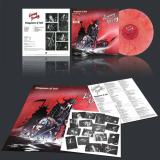
When asked about the founding fathers of German thrash metal, band names such as Kreator, Sodom, and Destruction come to mind. Perhaps even Tankard. The name Living Death is usually not among them. There is a simple reason for this. Similar to the Swiss band Hellhammer, Living Death from Velbert were simply a tad too extreme for most fans and the press. Thorsten “Toto” Bergmann's truly shrill vocals and the poor production of the first two (legendary) albums did not make it easy for the public to adequately assess the band's musical significance. Living Death was founded in 1981 by the two Kelch brothers, Reiner on guitar and Dieter on bass. In the early days, guest drummer Eric sat behind the drums. The line-up was completed by Frank Fricke on second guitar and the aforementioned singer Thorsten “Toto” Bergmann. Living Death recorded their first demo with three tracks in 1981, which earned them a deal with the Belgian label Mausoleum Records. A year later, their debut album “Vengeance of Hell” was released, which actually suffered from its very thin (and treble-heavy) production (in 1985, the record was re-released as a remix – with slightly improved results). However, the below-average production should not obscure the fact that “Vengeance of Hell” offers a few timeless thrash metal classics with “My Victim,” “Heavy Metal Hurricane,” “Hellpike,” and the title track “Vengeance of Hell.” The raw, unpolished sound of Living Death sounds more contemporary than ever today, 30 years after its initial release. This only proves that it took the music world three decades to catch up with Living Death.
expected to be published on 24.04.2026
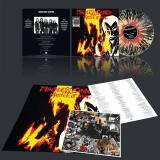
Purple Haze started out in Linköping in 1981. When singer Christer Göransson joined them towards the end of the year, they soon changed their moniker to Genocide (after the Judas Priest song of the same name) and supported local metal heroes Axewitch. A final name change was to follow: In August 1983, the band, now called Mindless Sinner, recorded a four-track demo entitled »Master Of Evil«, consisting of the title track, “Broken Freedom”, “Key Of Fortune” and “Screaming For Mercy”. This attracted Swedish label Fingerprint Records, and they in turn released the NWOBHM-inspired material as a mini-album with an awful cover and getting the band’s name wrong (spelling it Mindless Sinners). By then, the line-up of the band was Anders Karlsson (bass), Magnus Danneblad (guitar), Jerker Edman (guitar), Tommy Johansson (drums) and vocalist Christer Göransson. »Master Of Evil« originally saw the light of day on Fingerprint in January 1984. Christer Göransson takes us back to the early days of Mindless Sinner saying: “We wanted to record an album, but we couldn’t afford the studio cost. We were lucky to win a music contest, and the price money paid for the studio. I remember walking into the studio, and we thought it was like a spaceship in there, with all the buttons and flashing lights everywhere. We recorded the four songs that would become »Master Of Evil«. We then gave the tape to the Axewitch guys, and they played it to their record label at the time Fingerprint/Web Records and they liked it so much that they signed us as well.” Over the years, the music of Mindless Sinner has often been compared to the Tygers Of Pan Tang from England but Christer Göransson doesn’t see too many similarities: “We really love Tygers Of Pan Tang but I don’t think they were a big influence. It was more Judas Priest, Iron Maiden, Saxon, Black Sabbath, Ozzy, Dio etcetera. That kinda stuff.” In addition to the four tracks of the original edition of »Master Of Evil«, the current High Roller Records pressing also contains the five songs of the band’s first demo tape from early 1983 (including “Mindless Sinner”, “Higher And Higher”, “We All Go Back”, “Heavy Metal Will Never Die” and “City Games”). All nine tracks were mastered by Patrick W. Engel at his Temple Of Disharmony in November 2025. Cutting by SST Germany on Neumann machines for maximum quality on all levels ... The ultimate audiophile re-issue of this Swedish metal classic!
expected to be published on 24.04.2026
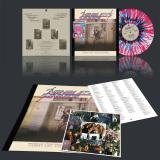
Purple Haze started out in Linköping in 1981. When singer Christer Göransson joined them towards the end of the year, they soon changed their moniker to Genocide (after the Judas Priest song of the same name) and supported local metal heroes Axewitch. A final name change was to follow: In August 1983, the band, now called Mindless Sinner, recorded a four-track demo entitled »Master Of Evil«, consisting of the title track, “Broken Freedom”, “Key Of Fortune” and “Screaming For Mercy”. This attracted Swedish label Fingerprint Records, and they in turn released the NWOBHM-inspired material as a mini-album with an awful cover and getting the band’s name wrong (spelling it Mindless Sinners). By then, the line-up of the band was Anders Karlsson (bass), Magnus Danneblad (guitar), Jerker Edman (guitar), Tommy Johansson (drums) and vocalist Christer Göransson. »Master Of Evil« originally saw the light of day on Fingerprint in January 1984. This was followed by the second album »Turn On The Power« in 1986 as Christer Göransson explains: “Well, »Turn On The Power« was actually recorded in October 1984, the same year as »Master Of Evil« was released. But the record label was almost out of business by 1985, so as a result »Turn On The Power« didn’t come out until January 1986, and shortly after the label went bust.” Just like on the debut, the cover was once again pretty weird. “Same story,” says the singer. “Blame the label again. We wanted a band photo for the cover but once more Fingerprint didn’t listen. We didn’t know who this girl was at all. And once again we saw the cover for the first time when we visited our local record store.” “I guess »Turn On The Power« was more of a straight heavy metal album compared to »Master Of Evil«,” describes Christer Göransson the band’s follow-up record, “better playing and better songs on »Turn On The Power«. Even though we love »Master Of Evil«. I guess it didn’t sell that much as the label went bankrupt, but the reactions were great.” Mindless Sinner played as much as they could in Sweden at the time but didn’t venture outside their home country. Over the years, their music has often been compared to the Tygers Of Pan Tang from England but Christer Göransson doesn’t see too many similarities: “We really love Tygers Of Pan Tang but I don’t think they were a big influence. It was more Judas Priest, Iron Maiden, Saxon, Black Sabbath, Ozzy Osbourne and Dio.” Shortly after the release of »Turn On The Power«, the band cut their name short to Mindless. According to Christer Göransson, this is why: “It was the sign of the times really. We wanted a more melodic kinda style and we just thought it was better to change the name to Mindless. But looking back now we should have stuck to our guns.”
expected to be published on 24.04.2026
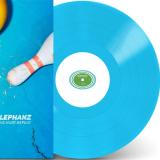
Fifteen years after their first album "Time for a Change", and drawing on the experience of two others ("Elephanz" 2017, and "Rien de personnel" 2023), ELEPHANZ now returns with a fourth album that carries the scent of first loves, the kind you sing from the heart with your hands gripping a guitar.
"Love. Hurt. Repeat." tells, across ten songs, the story of a return to oneself, like coming home after years spent roaming the world, only to realize that everything you needed to understand yourself was already there at the starting line.
To help you understand what this new album makes me feel, I'd like to tell you about my first meeting with Jon and Max in 2009, when I became the band's bassist. Sixteen years ago, I discovered these two young men and set off in their family Kangoo van on my very first tour.
Through our early rehearsals around the piano of their childhood, I discovered their love for pop music in all its breadth, always in search of harmonies and melodies that touch the heart in the simplest way and gently ease your sorrows along the way. With them, I learned to appreciate the mainstream hits I had previously dismissed on principle, and I discovered the demanding art of melody as I listened to them sing about love and friendship through unforgettable catchphrases.
Listening today to some of the songs from their new album, I think back to those two young men with a big-city rock look, shut away in the living room of their family home, talking only about leaving that dull countryside behind to live the big life in the capital (Streets of Rage). What I once took for a kind of revenge against the hostile environment of their adolescence was in fact an almost vital need to find their place among others, to feel understood in order to feel at ease in their own skin.
Today, I find them again with the same guitar and the same inexpensive Juno as back then, but with the confidence shaped by years of concerts, writing, studio encounters, and all kinds of experimentation. The music of this fourth album has never been so close to that of their earliest days, but their voices have been set free. They no longer sing about who they dreamed of becoming, but about who they have always been, their most distant concerns, sometimes even their darkest ones, yet always in search of the light.
It is as if ELEPHANZ had to travel all the way around the world to come face to face with themselves again. There is no longer any shame in being who you are, and it is even the best way to understand yourself, to exist and to heal. To heal from grief and heartbreak, to understand the child you once were and the one who carried them (Mother), to forgive yourself and finally learn to love yourself.
That is what makes this record as sensitive as it is powerful and strikingly truthful. It was written and recorded like a cry, live, in just a few weeks, using the instruments of their beginnings: sharp bass and drums, powerful guitars, and synthesizers that are at times soaring, at times carriers of liberating melodies. The art of ballads remains, as does that of universal pop songs.
There is a beautiful urgency here, the urgency of finding oneself again in order to understand oneself through both pain and beauty, and "Love. Hurt. Repeat." is its most perfect expression.
expected to be published on 24.04.2026
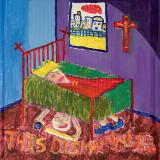
Venturing into “a limbo world between medieval tropes and modern-day decay”, New Orleans musician Urq (half of art punk duo Spllit) returns with a new solo offering. Recorded over a single, intense month, This Dismal Village is a homespun document that sits somewhere between jittery punk, dreary psychedelia, and hooky bedroom pop. Recorded to 4-track, the record embraces limitation as a creative engine, resulting in a sound that is raw, unsettled, and deeply atmospheric.
The album is set not in a fixed point in time or geography, but a liminal environment where dystopic visions and archaic fixtures exist side by side. In the dismal village, kings and witches share space with televisions, skyscrapers, and modern enterprise; organ fanfares echo down streets populated by disgruntled townsfolk and whispered gossip. It is simultaneously the dark ages, 1950s suburbia, and a 21st-century metropolis. Embracing anachronism was central to the project’s identity, an attempt to collapse history into a single, uneasy present.
Sonically and philosophically, the album sits firmly in the tradition of rough and raw cassette rock. Guided By Voices’ Bee Thousand looms large as an influence, particularly its ability to build an entire world through unpolished, first-take recordings. Robert Pollard’s idea of the “four P’s” (psych, punk, prog, and pop) serves as a neat summary of the artist’s musical instincts and each element can be traced right through the heart of This Dismal Village. Further inspiration comes from post-punk’s so-called “Calgary Sound,” a loose movement blending psych pop, post-punk, and math/prog elements with a home-recorded, unpretentious ethos.
The result is an album that unrolls like a place wandered through, uneasy, occasionally familiar, and impossible to pin down in time. All captured on tape before it could disappear like an apparition, like a dream only half-remembered.
expected to be published on 24.04.2026
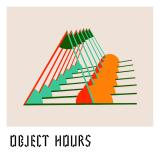
Leather-jacket krautrock? Indeed. Welcome to the world of Carrboro NC's Object Hours. These generous saviors consist of three Triangle scene lifers who all worship the riff but imagine what happens if the riff fell into the middle of your favorite CAN LP. Yes, it lives up to the hype.
"Solved By Walking" was recorded in the winter of 2025 at Betty's in the Chapel Hill woods, these are mighty rock slabs ready for all seasons. Rock believers have felt the ripples and knew the day was coming. Object Hours is a band that fits right in on stage alongside acts as varied as Kim Gordon and Tropical Fuck Storm, bringing the house down in these and similar moments. These are songs that groove, peel paint, sandblast, inspire unconscious movement, make your head bob - frequently all at the same time. These are the jams inspired by the time that you heard "Fun House" coming out of that dude's car with the windows down in the middle of the summer, the ones inspired by the kids who own 3 copies of "Daydream Nation," the ones who listen to the last 1:30 of Wire's "Too Late" over and over. This is the band that has a timer on stage so they don't keep each song playing for days on end, the band whose Bandcamp bio succinctly summarizes their approach thusly: "We try to keep songs under 25 minutes for your sake." Every word here should be inspiration for you to *want* and *need* to hear this record and every word here is true. Just you wait.
Real heads know and the rest of the heads are getting ready to find out. Get ready for Object Hours' "Solved By Walking".
expected to be published on 24.04.2026

It's with great pleasure that we present the 100th release of Quintessentials! Happy 100! Started in 2008, Quintessentials` slogan was and still is "deep, raw and real". On the way to the 100th release, we discovered talents like (just to name but a few...) Anton Zap, Baaz, Ugly Drums, Mat Chiavaroli, Simon Hinter or The Black Fan, as well as featuring established producers like Luke Solomon (as Lukatron), Borrowed Identity, Alton Miller, Simoncino, Soul of Hex, Felipe Gordon, Javonntte, KRL, Andy Ash or Ralph Session. Quintessentials has never just released stricly one type of music, but put together cool tunes from the House spectrum: Deep House, NY House, Detroit House, Acid House, Chicago House....or do we wanna call it just "House music"? This classic old school 6-track compilation features again a multi house culture and fuses present and past! Quite essential we think!
Order now and we will order the item for you at our supplier.

King Street Remixed – Dam Swindle revisits classic material from the legendary King Street Sounds catalogue, with Dutch duo Dam Swindle delivering three fresh interpretations of timeless house cuts.
Featuring vocals and productions from house mainstays Arnold Jarvis, DJ Pierre and 95 North, the EP blends classic King Street with Dam Swindle’s signature deep house sound.
Warm basslines, musical chords and groove-driven drums give these remixes strong crossover appeal between soulful house fans and modern deep house DJs, with all three cuts built for dancefloor play.
Importantly, this marks the first time these Dam Swindle remixes have been available on vinyl, making the release appealing for both DJs and collectors of the King Street catalogue.
Order now and we will order the item for you at our supplier.

'Matsuli Music is proud to announce the first vinyl reissue of Philip Tabane’s Sangoma ("Spiritual Healer") since its 1978 release. Remastered from the original tapes with lacquers cut by Frank Merrit and pressed on 180g heavyweight vinyl at Pallas in Germany, this definitive edition re-asserts the power of one of South Africa’s landmark recordings. Featuring new liner notes by cultural critic Kwanele Sosibo and artwork restoration by Siemon Allen, Sangoma returns in full force through an extended Malombo line-up, fronted by Tabane's spellbinding guitar - ancestral, timeless, and unbound.
'Philip Tabane (1934–2018), the mercurial guitar genius of South African music, forged a sound that was as rooted in the spirit world as it was in daily life. With the Malombo Jazzmen of the 1960s, Tabane disrupted Western notions of “jazz,” bringing the resonant rhythm of cowhide malombo drums into the foreground. While outsiders and the uninitiated often reached for labels like “primitive yet sophisticated,” Tabane and his collaborators named it more truthfully: “music of the spirit.”
'By the time of Sangoma, Tabane stood at a crossroads. Fresh from a period of three years’ touring in the United States where he graced the Newport Jazz Festival, and played alongside Miles Davis, Herbie Hancock, Pharoah Sanders and others, he brushed off comparisons with characteristic self-assurance: “No, I don’t play like Miles. Miles plays like me.” Back home in South Africa, and with a newly signed international distribution deal with WEA Records, he harnessed this momentum into a larger band setting, capturing a rare intensity.
'The result was Sangoma—an album that bridges contradictions: expansive yet intimate, celebratory yet haunted by exile and return. Tracks such as “Sangoma,” “Hi Congo,” and “Keya Bereka” are not simply performances but living testaments, songs that would remain in his repertoire for decades. Unlike the moody, immersive character of much of his work, here Tabane is on the move—urgent, restless, uncontainable. As he announces on the second track, “Maskanta wa tsamaya” (“something that kicks ass”).
More than four decades on, Sangoma is both an historical document and a timeless invocation. From his home in Mamelodi to the world and back again, Tabane’s spiritual healing endures—raw, electric, and unbowed.'
Order now and we will order the item for you at our supplier.

TAPE[17,23 €]
Backwoodz Studioz is excited to announce the release of Crayola Circles, a collaboration between rapper Fatboi Sharif and producer Child Actor. While both artists have long standing connections to Backwoodz, this album marks their first collaboration of any kind and breaks new artistic ground for all parties.
Sharif’s previous album, Decay, released on Backwoodz in 2023, was a haunting experimental rap masterpiece, an acid trip in a mental hospital. On Crayola Circles Sharif trades menacing psychedelia for a simmering stew of blacklight expressionism, his verses slipping effortlessly through the swells and tides of Child Actor’s masterful production. No matter how uneasy the waves grow, Sharif is at ease, a truth teller whispering anti-riddles in your ear. This album feels like a new chamber for Child Actor, as well. The producer has been on an impressive run since dropping CINE- a collaboration with rapper Cavalier- on Backwoodz in late 2024. Child Actor has shown up in the liner notes of everyone from Navy Blue (The Sword & The Soaring) to Earl Sweatshirt (Live, Laugh, Love) to ELUCID (Revelator) to Open Mike Eagle (Neighborhood Gods Unlimited), to Ghais Guevara (A Quest to Self-Mythologize), amongst others. On Crayola Circles Child Actor’s production is dynamic, shifting and sliding into new phases and movements in an instant. The beats are full and knotty, leaning into jazz and folk, while remaining tethered to the tender minimalism that is his signature. It’s a difficult balance for any producer, and here it is executed perfectly, placing us in a world of wood and brass, cowhide and undersea piano. On any other record, this soundscape would steal the show — and it very nearly does — but Sharif’s command never wavers, ever in control; a lucid dreamer in an induced coma.
There are no guests, no skits, and no interludes. There might not even be songs, instead Crayola Circles seems akin to a great river; singular, traversing forest and jungle, mountain and valley, running from mouth to endless sea.
Order now and we will order the item for you at our supplier.

For its third release, Honey Trap turns toward the instinctual. Ritmo Animal is a record driven by body memory, where rhythm becomes language and movement becomes communion. Vancouver- and Colombian-rooted duo Dosis weave club music with lived histories, drawing from punk ethics, soundsystem culture, and a deep commitment to collaboration.
Formed by Daniel Rincon and Zachary Treble, Dosis operates in the space between structure and looseness, where grooves feel hand-built and edges remain intentionally rough. Across five tracks, Ritmo Animal resists clean categorization. House mutates into dub-soaked psychedelia, vocals surface and dissolve, and percussion swings between discipline and abandon.
The A-side opens with “I Want To Be Your Dog”, a low-slung, hypnotic burner featuring Alien D, setting the tone through repetition and restraint. The title track, “Ritmo Animal,” anchors the record in motion, with saxophone lines from Dave Biddle threading through percussive momentum and grounding the track in something tactile and human.
On the flip, “Malibu” offers a softer pull, with Hannah Acton’s vocals drifting through warm, unhurried rhythm. “Humo,” featuring Hashman Deejay, leans deeper into smoke and sway, while closer “Sancocho” stretches time entirely, favoring communal simmer over destination.
Ritmo Animal is music made for shared space. It is not concerned with polish or purity, but with connection, between scenes, cities, and bodies on a floor. Another chapter in Honey Trap’s ongoing exploration of intimacy, pleasure, and rhythm as refuge.
Order now and we will order the item for you at our supplier.

Jorge Ben’s 1969 self-titled LP is a bright, energetic landmark of Brazilian music. Mixing samba, soul, and pop with effortless charm, the album captures Ben at a moment of bold creativity.
His warm guitar lines, catchy melodies, and rhythmic drive shape songs that feel both relaxed and full of life. This masterpiece helped define a modern, upbeat sound that influenced generations of artists. More than fifty years later, this LP still stands out for its simplicity, groove, and unmistakable style—an essential snapshot of an artist who transformed Brazilian popular music.
Order now and we will order the item for you at our supplier.

Order now and we will order the item for you at our supplier.

Francesco Skip's debut EP delivers a focused, club-ready sound that draws from contemporary UK club music while embracing the simplicity and raw energy of early 2000s techno and dubstep. Each track explores a different underground electronic direction and highlights include 'Ocean Explorer' with late-90s techno vibes and swingy dub stabs, 'Kronplatz', which is a dark, bouncy bass journey, 'Hondra B' a stripped-down jungle and drum & bass tool, and 'Wrong Glidez', a post-dubstep homage with 2-step drums. This great debut is also well mastered with bass depth and mid and high texture for loud deployment on peak-time systems.
Order now and we will order the item for you at our supplier.
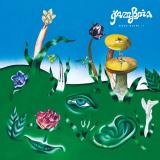
In 2021 September Jazzbois has released their second full length album "Jazzbois Goes Blunt II" - the album became the most listened album of the trio to this date
Jazzbois is a jazz-hiphop fusion trio from Budapest, Hungary. Their studio albums and live shows are all equally heavily rooted in improvisation and momentary self expression, each performance is absolutely unique and daring.
In the past 3 years Jazzbois has played SOLD OUT headline shows in: Melkweg Amsterdam NL, Jazz Café London UK, Village Underground London UK, Duc des Lombards Paris FR, La Hasard Ludique Paris FR, Gretchen Berlin DE, Knust Hamburg DE, Ekko Utrecht NL, Simplon Groningen NL x 2, Jassmine Warsaw PL x 2, AKvarium Budapest x 3
Played on festivals like: Montreal Jazz Festival CAN, Montreux Jazz Festival CH, SZIGET HU, X the Tracks London UK, Brick Lane Jazz festival UK, Jazz á Vienne FR, Istanbul Jazz Festival TR, Jazz Open Stuttgart DE, Blue Summer Festival PL, Jazz Around PL, Jazz in the Park RO, JAZZx RO…
Order now and we will order the item for you at our supplier.

For the last three years, Pomplamoose has shared the making of ‘Photogénique’, a lush and groovy French bossa-pop album produced by Jeremy Most (Emily King), Jack Conte and Philip Etherington (Lizzy McAlpine)
It’s a romantic, playful and deeply nostalgic coming-of-age story steeped in Dawn’s childhood memories of France and Belgium. Collaborations include legendary jazz organist Larry Goldings and French singer songwriter Laura Cahen.
Order now and we will order the item for you at our supplier.

Order now and we will order the item for you at our supplier.

expected to be published on 18.04.2026
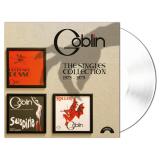
FOLLOWING THE SUCCESS OF “THE OTHER HELL”, GOBLIN ARE BACK FOR RECORD STORE DAY 2026 WITH AN EXCLUSIVE COMPILATION OF SINGLES RELEASED BETWEEN 1975 AND 1979!
For the very first time on vinyl, this compilation gathers together all the singles released by Goblin during their golden era between 1975 and 1979, a journey that begins with the explosive, legendary debut Profondo Rosso, a true chart phenomenon of its time, and reaches the rare Amo Non Amo, passing through unforgettable milestones of Italian film music and progressive rock.
The collection opens with Profondo Rosso and Death Dies, taken from the soundtrack of Dario Argento’s masterpiece that catapulted Goblin to fame, blending dark atmospheres, virtuosity, and a unique sense of cinematic tension. It continues with Roller and Snip Snap, drawn from the instrumental album Roller (1976), a record not tied to any film, yet considered a cult cornerstone of Italian progressive music for its intricate structures and expressive power.
Chi? and Chi? - Parte Seconda follow; two tracks originally composed as the theme for a 1976 RAI television show, which saw Goblin bring their unmistakable sound to a different medium, experimenting within a shorter, punchier format.
Next comes Suspiria with its haunting counterpart Blind Concert, from the soundtrack of Argento’s 1977 horror classic. This remains one of Goblin’s most iconic and unsettling works, where music becomes an active narrative force: hypnotic, percussive, and filled with eerie vocal layers that made it a cornerstone of horror soundtracks worldwide.
From Il Fantastico Viaggio del Bagarozzo Mark (1978) come Un Ragazzo d’Argento and Opera Magnifica, two tracks that highlight the band’s more conceptual and visionary side, a move away from cinema toward a self-contained narrative and progressive experimentation.
The single Yell stands as another late-decade gem. Originally composed as the opening theme for the RAI television series “Sette storie per non dormire” (1978), it captures Goblin’s ability to merge rock energy with electronic pulse, proving their versatility far beyond the horror realm.
The compilation closes with Amo Non Amo and Funky Top, taken from the soundtrack of the 1979 film Amo Non Amo, one of the group’s lesser-known but fascinating cinematic works.
Far more than a simple anthology, The Singles Collection 1975–1979 maps the evolution of Goblin’s sound, from the worldwide success of Profondo Rosso to their most mature and experimental phase. It finally restores to vinyl a body of work that had long been scattered across rare 45 rpm releases, offering fans and collectors a complete, vivid portrait of one of Italy’s most inventive and influential musical ensembles.
expected to be published on 18.04.2026

Amore Libero – Free Love marks the first film score composed by Fabio Frizzi, written in 1974 for the movie of the same name directed by Pier Ludovico Pavoni. Set against the exotic backdrop of the Seychelles, the film tells the story of Simo, a free-spirited young woman played by Laura Gemser in her cinematic debut, blending sensuality and the spirit of liberation so typical of the 1970s.
Frizzi’s score perfectly captures the film’s atmosphere, weaving together evocative melodies, funky grooves, and progressive textures — an elegant, psychedelic soundscape that reflects both the tropical setting and the film’s themes of freedom and desire. The recording features the Goblin in their classic line-up: Fabio Pignatelli (bass), Massimo Morante (guitar), Walter Martino (drums), and Claudio Simonetti (keyboards), with Vince Tempera handling arrangements and orchestral direction.
Long regarded as a true holy grail for collectors, now, for the first time ever, it is officially reissued on vinyl, bringing back to light a fundamental chapter in Italian film music and progressive sound. An essential record that merges Frizzi’s melodic genius with the visionary energy of the Goblin, Amore Libero – Free Love stands as a timeless document of an extraordinary era in Italian cinema and its music.
A Record Store Day 2026 exclusive / Pearly light blue vinyl edition / 30x30cm insert with extensive liner notes
expected to be published on 18.04.2026

SIMPLETON, the third album from multi-platinum indie-rock singer/songwriter YOT CLUB, dismantles the utopian view of the American suburbs, treating finely manicured life as a mirage. Across its 13 tracks, the LP wrestles with how curated feeds and predictable routines can blur, and even erase, empathy and responsibility, creating a world where difficult questions and harsh realities are easy to ignore. In 2019, Ryan Kaiser started Y ot Club in his college dorm, crafting a lo-fi, classically cool indie rock sound grounded under a dreamlike haze. Two years later, his breakthrough single “YKWIM?” quickly reached viral status on TikTok (today, it’s been streamed more than 1 billion times) and has since taken him around the world at festivals like T reefort, Kilby Block Party and Pitchfork Paris
expected to be published on 17.04.2026

Black Vinyl[23,11 €]
Anlässlich des 20-jährigen Jubiläums im Jahr 2025 ist das gleichnamige Debütalbum der besten Band aus Staten Island endlich wieder erhältlich! Mit einem luxuriösen Cover im „old style“ und einer vollständig analogen (AAA) Remastering-Version der Originalbänder – von Ryan Smith (Sterling Sound) – sieht diese legendäre LP besser aus und klingt besser denn je. Mit „Up From the South” und „Ghost Walk” ist dieses Album ein Muss für Fans von Daptone und den Budos!
expected to be published on 17.04.2026

Red Vinyl[23,11 €]
Anlässlich des 20-jährigen Jubiläums im Jahr 2025 ist das gleichnamige Debütalbum der besten Band aus Staten Island endlich wieder erhältlich! Mit einem luxuriösen Cover im „old style“ und einer vollständig analogen (AAA) Remastering-Version der Originalbänder – von Ryan Smith (Sterling Sound) – sieht diese legendäre LP besser aus und klingt besser denn je. Mit „Up From the South” und „Ghost Walk” ist dieses Album ein Muss für Fans von Daptone und den Budos!
expected to be published on 17.04.2026

Repress of the 1 st album of the fresh Afro funk sensation ! Recorded on analog equipment in Lyon in 2014 !
Peter Solo is a singer and composer born in Aného-Glidji, Togo, the birthplace of the Guin tribe and a major site of the Voodoo culture. He was raised with this tradition’s values of respect for all forms of life and the environment. With his new band, Vaudou Game, Peter Solo claims, and spreads this spiritual and musical heritage. Chants are at the heart of the Voodoo practice, but for times immemorial, harmonic instruments have never accompanied them. No balafon, no kora - only the “skins” support the singers. However, in 2012, Peter, along with his band based in Lyon, France, decided to explore and codify the musical scales that are found in sacred or profane songs of Beninese and Togolese Voodoo so they can be played easily on modern instruments. Peter composed the album Apiafo, using the two main musical scales of this tradition. The first musical scale on Apiafo leans towards raw Funk with a sound similar to the famous 70’s bands, L’Orchestre Poly Rythmo De Cotonou and El Rego. Funk, is the skeletal structure of this record, and provided the opportunity for Peter to invite his uncle, Roger Damawuzan - the famous pioneer of the 70s Soul scene - on two tracks. Their collaboration on “Pas Contente” is a highlight on this 100% analog album. Apiafo was entirely recorded, mixed and mastered with old tapes and vintage instruments. The second scale, which had never before been transposed for instruments, evokes deeper feelings and a sacred ambiance. The moving song Ata, an invocation to a supreme divinity is another highlight of this record. Even if some can recognize similarities between this scale and Ethiopian scales, they are in fact different. Peter, the only African band member, introduced the other musicians to the universal values of Voodoo and he taught them his native language. On the recording of Apiafo and during their live performances, the musicians all sing and answer Peter in the Mina language. The strive for authenticity, the analog sound and vintage looks don’t mean that Vaudou Game is looking backwards. This is Togolese funk, born in the post-colonial era but that never before explored its ancient roots so deeply and proudly.
Antoine RAJON
expected to be published on 17.04.2026

Opaque Red Vinyl[32,98 €]
Grounded in a season of life that has been earned rather than borrowed, Benjamin Tod speaks with the ease of someone no longer running from himself. There is joy now - a steadiness that comes from commitment. With the recent arrival of his son and a deep well of new music on the horizon, Tod is firmly rooted in both purpose and possibility. That clarity is evident in Vengeance and Grace, the Lost Dog Street Band frontman's forthcoming and most expansive solo album to date. Conceived as a "dual-version" release, the project presents two parallel worlds: (Alone) is a stripped solo-acoustic version, along with its full band counterpart.
Together, the two versions form the full range of what Tod is capable of: restraint on one side, force on the other. At the core of Tod's writing is a simple conviction: music should serve something larger than the moment. His writing speaks to mind, body, and soul, shaped by faith, discipline, and a hard-earned understanding of consequence. The darkness that once defined him is neither denied nor indulged. It is understood and no longer in control. Today, Tod moves with a sense of calm that wasn't always there. He is grateful, settled, and intentional, continuing to follow the compass that's guided him from the beginning. Rooted in traditional country and folk, his work stands firmly in the modern music landscape, shaped by experience, restraint, and the life he's built around it.
expected to be published on 17.04.2026
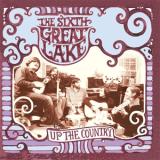
Originally released in 2001, Up The Country is the debut album by The Sixth Great Lake and a quietly revered title within the late-'90s / early-2000s indie scene. Rooted in jangly guitars, melodic songwriting, and a distinctly pastoral sensibility, the album sits at the intersection of indie pop, folk-rock, and classic guitar-driven pop. Although initially released with modest exposure, Up The Country steadily developed a loyal following, earning cult status among fans of understated, melody-focused indie. Its charm lies in its simplicity: clean arrangements, memorable hooks, and an unforced warmth that has allowed the record to age exceptionally well over the past 25 years. This 25th anniversary reissue presents an opportunity to reintroduce an overlooked catalogue gem to today's market, appealing both to original fans and to a new audience drawn to timeless, guitar-led indie records. With renewed interest in archival and heritage releases, Up The Country offers strong long-term catalogue potential beyond initial anniversary demand. A timeless, understated record with strong appeal for fans of melodic, guitar-driven indie.
expected to be published on 17.04.2026

»Vents d’aether« is the first collaborative album by sound artist Jérôme Bouve and composer-performer Delphine Dora. The six pieces are based on live improvisations on organ and harmonium. They were recorded in different churches on the Cotentin peninsula in France’s Normandy region and later enriched with additional field recordings by SA~RA. This adds an extra layer to compositions which were created both in and out of the moment and which quite literally resonate with the histories of the instruments and the buildings that were so integral to their emergence. »Vents d’aether« is to be understood as a dialogue between sound and space that takes place across time and place.
Bouve carried the idea of working with the organs and harmoniums that can be found in the churches and chapels in the Val de Saire in the Northeast of Cotentin around with him for years. When he got to know Dora, he found the perfect musical partner with whom to finally make a record »about the wind, the wood, the stones of the Val de Saire.« In September 2024, the duo embarked on a short but fruitful journey during which they stopped by at several different churches. They recorded hours-long improvised sessions dedicated to »capturing the moment, letting space and time shape gestures and sound, seizing fleeting epiphanies in their greatest simplicity,« as Dora notes in the album’s linernotes.
She took the lead behind the instruments, however Bouve assisted her on drawbars for the last two pieces on »Vents d’aether,« thus adding an even more unusual touch to the recordings. They formed the basis for an album that Dora calls »the testimony of a sensory quest, a collection of memories suspended in time.« Indeed, starting with the epic 20-minute-long titular piece up until the ringing of church bells near the end of the closing piece »Montfarville V,« this overwhelming yet intimate record blurs the boundaries between different times and spaces altogether.
expected to be published on 17.04.2026
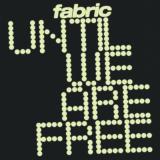
Until We Are Free is the debut album from fabric, a collective of musicians from diverse backgrounds united by a shared goal: to fuse irresistible rhythms and grooves with a direct, socially conscious message that draws vital attention to the contradictions of modern life. The project's name itself evokes the idea of a living, dynamic ensemble—a creative intertwining of different threads, from musical genres to founding musicians and guest collaborators, all actively woven into the social fabric.
The record blends funk, soul, and Afrobeat with a sharp, contemporary urban attitude, resulting in a sound that functions simultaneously as sonic resistance and an invitation to the dancefloor.
It finds its place in a lineage that runs from Fela Kuti and ESG to The Comet Is Coming, Sault and Jungle.
At its core is the conviction that music and civic engagement can coexist seamlessly without being didactic. While the lyrics—entirely in English—tackle themes of rights, equality, and freedom, the groove remains the heartbeat: constant, pulsing, and relentless.
Mixed by Tom Campbell (whose credits include Sault, Little Simz, Adele, Michael Kiwanuka, and Jungle) and featuring art direction by Raissa Pardini, Until We Are Free is a soundtrack for complex times. It is an invitation to refuse neutrality and isolation, and to imagine—together—new possibilities for movement, resistance, and the future.
fabric's singles "Taste This Sound" and "Fight!" have been featured in FIP's Spotify Playlists "FIP Radio (en live)" and KEXP's "New This Week" and "KEXP Rotation".
expected to be published on 17.04.2026

Artist and multi-instrumentalist Flaer embraces the search for quiet miracles on first full-length LP Translations.
In 2023, Realf Heygate - who makes music as Flaer - released his debut mini-album Preludes, composed on his mother’s piano and his childhood cello.Returning to ODDA for his debut full-length album, Heygate is now looking in another direction. A record that embraces transition and movement, Translations is in many ways more internal, less rooted to a single place and reflective of the process of laying new foundations in Cornwall.
Like Preludes, Translations is coloured with found sounds and field recordings, from the starlings which can be heard singing through the open window of his studio, to the brittle recordings of his mother, who was a linguist, learning Spanish on a set of language tapes. In both cases, Heygate embraced the translations and memories inherent to the sounds.
“When I digitised my mother’s tapes, they warped and stuttered in a very similar way to the starling’s song,” he explains. “They had this uncanny rhythm and pulse that I couldn’t quite decode, but was saying something." These decayed transmissions hint at loss, resisting clarity in favour of the ineffable.
Translations is also a record of ambiguities and in-betweens, suggested by the double meaning of the album’s opening track ‘Entre’. At once intricate and expansive, threaded with birdsong and acoustic guitar motifs, this and ‘Starling Descends’ (a reference to Vaughan Williams’ ‘The Lark Ascending’) act as a bridge away from the pastoral themes of Preludes towards a more assertive sound. At times intimate in its textured instrumentation and at others more overtly grand in orchestration, reflecting awider palette of influences.
“Flaer began in many ways when I picked up my mother’s instruments, seeking a form of reconnection. Where words evaded me, they became the tools through which I found a language for grief – and above all, for love.”
Recorded between 2023 and 2025 – what Heygate calls “A gradual process of sowing and harvesting ideas rather than a single intense creative period” - each track follows a rhythm similar to the small maquettes and sculptures he has been working on in his visual practice, whereby structures and melodies form intuitively in moments that are as rare as they are fleeting.
“It's that feeling of searching that I really enjoy,” Heygate continues. “I never know what the destination of the composition is going to be, and I never really find what it is."
Translations is released on limited edition off-white vinyl LP (500 copies worldwide) with one of five signed and numbered handmade risograph prints. It's also available as standard black vinyl LP and digitally.
Order now and we will order the item for you at our supplier.
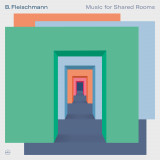
»Music for Shared Rooms« is B. Fleischmann’s eleventh solo album and his first since 2018. It is also not an album, or at least not in the conventional sense of the word. These 16 instrumental pieces provide a kaleidoscopic glimpse of a forward-thinking musician at home in many different musical worlds, including experimental and abstract music, pop and more classically-minded compositional forms. These pieces were culled from an archive of roughly 600 compositions for theatre pieces and films written throughout the past twelve years. The Österreichischer Filmpreis-awarded composer, however, aimed for more than simply documenting his extensive work in and with different media. To do so, he edited and re-mixed the individual recordings for this release, taking them out of their contexts and reworking them for an audience who can experience them in a different setting. »Music for Shared Rooms« makes it possible for its listeners to engage with the sounds and to fill the spaces they open up with their own imagination.
Roughly speaking, music for theatre or film can serve two functions: it either takes the lead, or underscores what is happening on stage or screen. The marvelous thing about these pieces is that they manage to do both. Fleischmann’s work as a prolific producer has always drawn on contrasts, at times combining pop sentiment with rigid experimentation, the seemingly naive with the intricate and complex. This approach also marks the tracks collected here: bringing together acoustic elements and electronic sounds, at times working with conventional structures but always de- and re-contextualising them, Fleischmann constructs a vivid dramaturgy out of discrete singular compositions, letting them interact across the record.
Take, for example, the opener »Träumerei« and the following »Brenne«: after the soothing acoustic sounds of the former, the latter quickly picks up speed with hard-hitting drum machine rhythms. It’s a stark contrast sonically and stylistically, however both tracks are tied together by a certain harmonic sensibility. This sort of dramaturgical interconnectedness of varied musical materials is the thread that runs through »Music for Shared Rooms«. A droney piece for string instruments like »Sehnsucht« is followed by a trip-hop beat, before »Schock« lives up to its title with skittering beats and piercing high frequencies. The differences between the pieces may be striking, but the progression from one to the other is subtle. It goes on like this through different moods and tempos. There’s soothing-yet-eerie piano pieces like the »Für Elise«-inspired »Der Lärmkrieg«, gentle house grooves, joyful synthesizer excursions and, finally, »Die Erde ist mir fremd geworden«, a collage of abstract textures and concrete sounds.
All these pieces create distinct situations through the juxtaposition of diverse musical elements, but are also bound together by a single vision. Writing music for theatre pieces or film requires a composer and his pieces to engage with people and their movements in space, which is exactly what Fleischmann offers on this record. He breaks down the fourth wall and invites his listeners into his world, a wide-ranging musical panorama. »Music for Shared Rooms« is indeed not an album in the conventional sense of the word, but more like a photo album in which each page opens up a new space to get lost in; recreates different scenes in which you can immerse yourself. These are shared rooms indeed.
Order now and we will order the item for you at our supplier.
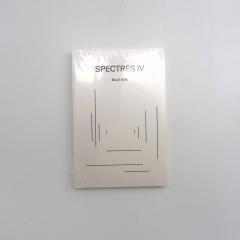
Fourth issue of Shelter Press' annual publication series »Spectres« (in association with INA GRM), this time themed around ›voice‹. Featuring contributions from/about François J. Bonnet, John Giorno, David Grubbs, Yannick Guédon, Lee Gamble, Sarah Hennies, Haela Ravenna Hunt-Hendrix, Stine Janvin, Joan La Barbara, Youmna Saba, Akira Sakata, Pierre Schaeffer, Peter Szendy and Ghédalia Tazartès.
The book includes an essay about the essence of improvisation by Joan La Barbara, Lee Gamble looking at neural networks and vocal simulation systems, an untitled anecdote from Ghédalia Tazartès (RIP) and Stine Janvin on the necessity of singing, plus much more.
»The voice is everywhere, infiltrating everything, making civilisation, marking out territories with infinite borders, spreading from the farthest reaches to the most intimate spaces. It can be neither reduced nor summarised. And accordingly, when taken as a theme, the voice is inexhaustible, even when seen in the light of its very particular relation with the sonic or the musical, as is the case in most of the texts collected in this volume. There is no point therefore in trying to circumscribe or amalgamate the multiple avatars of the voice. We must rather try to apprehend what the voice can do, to envisage its landscape, its potential effects.«
— Extract from the editors' foreword.
Order now and we will order the item for you at our supplier.

"Hayalet Kırıkları" unfolds like a diary of fragmented memories, where voices, textures and distant echoes blur into something both intimate and unsettling.
Hilal Can’s luminous presence meets Tzii’s raw sonic landscapes, creating a music that feels suspended—between memory and invention, absence and desire.
With the spectral violin of Ruben Tenenbaum, the record shimmers like a fragile world on the verge of dissolving.
Order now and we will order the item for you at our supplier.
Order now and we will order the item for you at our supplier.
Order now and we will order the item for you at our supplier.