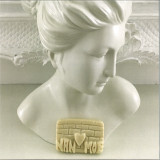
Perhaps a drum is a space wrapped in material.
With some excitement the space and the material interact to produce vibrations, which we hear. Separately, yPLO prepared some sounds in advance of a performance based on the components of a speculative drum kit
ob TRU was performed and recorded live on 6/8/18 at Cafe OTO. During this live performance yPLO used amplified mylar, floor tom bass drum, mixers, audio recordings and microphones.
The recordings were mixed and edited into 8 discrete tracks.
----
yPLO (Paul Abbott & Michael Speers) is a project about imaginary drums and rhythms, using acoustic percussion and synthetic sounds.
Michael Speers is a musician from Northern Ireland who works with various sound materials — using drums, computer, microphones, feedback — in performance, installation and composition. Other collaborators include John Wall, Louise Le Du, Olan Monk, Niklas Adam, Lee Fraser and Seijiro Murayama.
Paul Abbott is a writer, sound and performance artist. He has played at venues and festivals internationally and was a resident at Cafe OTO. He completed a PhD at the University of Edinburgh under the supervision of Florian Hecker and Nikki Moran, and is currently undertaking research at Royal Conservatoire in Antwerp. He is also the co-founder and editor of Cesura//Acceso, a journal for music, politics and poetics.
Suche:ab 18
A1 Lose It All… an 18 minute journey of epic proportions, crescendo after crescendo with high percussion sounds and chest pounding drum grooves. Medu’s signature low end control that rumbles under the swinging key rhythm which dominates the vibe is absolutely mesmerising. The finishing touch to this late night dance floor heavyweight sound is the combination of Odille Lima’s chopped up ad-libs, harmonies and story telling voice that keeps you moving with wonder. This track is laced with energy and excellence.
The B side comprises of 2 break beat inspired tracks that are mysterious and full of heavy hitting percussion, dusty grooves and dark driving basslines. Odille is on both tracks with her unique vocals that fit perfectly with this underground sound. A must EP have for any DJ or collector.
- A1: Mulatu Astatqe - Munaye
- A2: Mulatu Astatqe - Meche Dereshe
- A3: Tesfa Maryam Kidane - Yetesfa Tezeta
- A4: Mulatu Astatqe - Kasalefkut Hulu
- A5: Mulatu Astatqe - Tezeta
- B1: Bahta Gebre Hiwot - Ewnet Yet Lagegnesh
- B2: Mulatu Astatqe - Yegele Tezeta
- B3: Mulatu Astatqe - Bemgnot Alnorm
- B4: Mulatu Astatqe - Yekermo Saw
- B5: Tesfa Maryam Kidane - Heiwote
Reissue of the original ethiopian vinyl compilation. 180g vinyl + heavy cardboard cover.
"Ethiopians' deep-seated ethiocentrism, the legacy of a thousand years of history, has contributed in no small way to their music's strong national identity, particularly impervious to any African influences. Latin influences, so pervasive in the great musical centers of West Africa and the Congo, have been similarly rebuffed, despite the brilliant attempts of a musician like Mulatu Astatke. He was the first and for a long time the only Ethiopian to have studied music abroad (England and USA). In the late '60s, he brought back 'ethio-jazz', as well as a passion for Latin rhythms that was not readily shared by the Ethiopian audience. As early as 1966, he released a single and two LPs in the US entitled Afro-Latin Soul (and a third LP, Mulatu of Ethiopia in 1972), with his Ethiopian Quintet composed of American and Latin-American musicians (Worthy Records). That was three years before Fela's first American tour and six years prior to Manu Dibango's key breakthrough with the release of Soul Makossa in the Western 'pre-World music' market. All this goes to show how much the history of the African continent's musical modernity should be reconsidered in light of the Ethiopian adventure, even though this lone spark bore little relation, musically or ideologically to the musical revolutions initiated most notably by Ghanian highlife, South African jazz, Congolese rumba or, much later on, by Fela."
Debut album of heavy Colombian salsa by the obscure and short-lived El Clan Antillano. Founded in 1975 by singer Jacky Carazo and radio personality / composer Mike Char and backed by a studio orchestra comprised mostly of Fruko Y Sus Tesos band members. The record has been remastered from the original tapes, with an additional three bonus cuts taken from two rare 45 singles, including the sought after track ‘Alma’. First time reissue. 180g Vinyl.
El Clan Antillano was an obscure, short-lived salsa group started in 1975 by singer Jacky “El Caballo” Carazo, originally from Cartagena, and radio host / song composer Mike Char, from Barranquilla. The band was active only until 1977, with a mere two albums to its name. Carazo and Char, “los amigos costeños” (friends from the Caribbean coastal area) created El Clan Antillano as a fresh start after the previous group Carazo had been the lead singer for, El
Afrocombo, had become inactive.
Char primary passion was music, especially songwriting. One of his skills in this area was adapting foreign songs, often in a different language, rhythm, arrangement or genre, and refashioning the tune in an uptempo Caribbean dance mode as a salsa or cumbia. This formula, as well as his own original compositions, soon brought him success not only with costeño friends like Carazo and Vicentini, but also with Medellín’s Fruko, allowing him to make a name for himself with record labels in that city. It was at this juncture, in 1975, that El Clan Antillano was born. This is their first album and was recorded with local studio musicians. It’s been said that most on the first album were from Fruko Y Sus Tesos (the voice of Joe Arroyo can be heard on coro) as well as others involved with various groups like La Protesta (de Colombia) and Juan Piña’s La Revelación.
The album kicks off with ‘Donde ‘sta? Donde ‘sta?’, a medley of costeño lyrical phrases quoting various popular porros. Gradually changing the vibe, this is followed by Enrique Aguilar’s ‘El baile del
ratón’, a humorous cumbia that changes into a salsa halfway through. As if El Clan Antillano were not entirely confident about featuring purely salsa from the start, the same cumbia/salsa hybrid formula is used in the third piece, a faithfully rendered version of Eddie Palmieri’s ‘Mi cumbia’.
‘Estás equivocada’ rocks hard like the best Venezuelan salsa of the time. ‘Esta mañana’ is a cover version of an obscure bolero from Curaçao’s Erwin Castaneer with Super Combo Castaneer. ‘En la oscuridad’ is an interesting mashup of Puerto Rican bomba and New York style pachanga. ‘El despertar’ is a sunny sounding pop song reinvented as a Nelson y sus Estrellas style salsa/cumbia hybrid with a fantastic ‘montuno’ section.
Up next is a hard salsa jam in the ‘pregón’ (street vendor’s cry) genre, written by Fruko Y Sus Tesos percussionist Álvaro Velásquez (composer of ‘El preso’). The original album track list closes out with a fantastic rendition of Puerto Rican singer/composer Bobby Capó’s classic ‘El negro bembón’ that the world first leaned to love through Cortijo y Su Combo. Three bonus tracks have been added to the album as it was originally very short. Interestingly, there were four songs from two 45 singles cut by the band that were never included on either long play. While the ephemeral El Clan Antillano may not be as well known as the groups it’s related to, namely El Afrocombo and Fruko Y Sus Tesos, it certainly deserves credit as a worthy participant in the historical evolution of salsa colombiana.
Labi Siffre burst onto the UK’s blossoming singer-songwriter scene with his debut album in 1970, alongside contemporaries like Elton John, Bill Fay and Mike D’Abo. Featuring early hit “Make My Day” and
“A Little More Line”, the album was arranged and produced by Ian Green, noted 60s hit arranger.
This half-speed master edition is presented in its original sleeve, pressed on 180 gram heavyweight black vinyl, featuring an obi strip, and housed in a poly-lined inner sleeve, with all the lyrics and credits
on a new 4-page insert, as well as annotation by Alan Robinson based on a 2015 interview with Labi Siffre himself.
This new edition has been expertly mastered by Barry Grint at AIR Mastering from the original stereo tapes using precision half-speed mastering. Half-speed mastering is a vinyl cutting technique that
improves groove accuracy and transient information creating an incredibly detailed stereo image with a natural high frequency response.
Rees landed on Bordello A Parigi with a bang. His “Three Eyes” track left dancefloors slippy and listeners wanting more. Thankfully, the Middlesborough musician only too glad to comply. Dream Wave collects three tracks that are emblematic of Rees’ enviable ability. A serial cross pollinator, genre lines are blurred before being rewritten. “A Dream Wave” melts rich basslines and muscled percussion with a daringly upbeat counter melody. Kick drums usher in “The New Beat”. Flourishes float above the thump before Rees lets loose. Acid barbs, rave shouts and Eastern echoes coalesce in this unique work. Keeping bodies moving until the very end, Rees delivers “Electric Body”. Guitar strings and incising snares collide with a hypnotic synthline that adopts elements of synth pop and full bodied techno. A record that perfectly illustrates the versatility of this style shifting artist.
It's all aboard for Stasis' second 12" on De:tuned. Steve Pickton is widely regarded as one of the pioneers of the early UK techno scene. Here he returns with a new 3 track EP of carefully selected and previously unreleased DAT tape tracks from the heyday of 90s electronic music. On offer a uniquely lush and sentimental style that resonates with the 313 Motor City sound. Sweet memories are the greatest kind of nostalgia!
Kevin Foakes (Openmind, DJ Food, Ninja Tune) created all the graphic work. Mastered by Matt Colton at Metropolis and pressed on 180 gr vinyl. A separate digital release will also be available at the usual digital shops. Stay tuned!
POH (Point of Hue): It’s all about colors. Closet Yi sees the world in vibrant hues, as a sonic exploration of her kaleidoscopic vision. Seeing herself as more of an observer than a doer, she testifies her unique perspectives of the world in each track with all different hues and emotions.
Instinctively catchy and affecting, the four track dance EP is full of intricate textures, unexpected harmonies, and subtle sonic flourishes that reveal themselves with each listen. Written and mixed in her hometown, Seoul, the infectious EP is a collective of warm, floating yellow purple molecules in the air with introspective shades of cobalt and sage.
As much as she has a wide spectrum of taste, Closet Yi cements her core to its place where the most exciting and new coming artists are now.
Jaga Jazzists legendäres zweites Album, „The Stix“, kombiniert die digitale Dancefloor-Affinität ihres Debüts mit der Ausgelassenheit, Wärme und dem Fluss ihrer Live-Shows. Mit ihren stilvollen Produktionen, ihrer mitreißenden Bühnenpräsenz und ihren internationalen Einflüssen, die aus Hoxton über Oslo bis nach Berlin reichen, wurden sie schnell zu einer der beliebtesten Bands des erweiterten Jazz-Genres.
Im Jahr seit ihrem Debüt haben Jaga Jazzist weltweit einen großen Eindruck hinterlassen, insbesondere aber im vereinigten Königreich: die Debütsingle, „Going Down“, wurde damals vom NME zur 12“ der Woche gekürt, wurde u.a. vom jungen Gilles Peterson angepriesen und war eine von Muziks Singles des Jahres - und war folglich sofort ausverkauft. Und nun aber endlich wieder auf Vinyl erhältlich, en detail auf - wie bei Ninja Tune-Releases der Umwelt zuliebe seit einigen Jahren üblich - nicht auf 180 g sondern auf 140 g schwerem und rot-orange schimmernden Vinyl in einem 2LP-Gehäuse mit bedruckten Papp-Innenhüllen und einer 12" Reverseboard-Gatefold-Hülle.
Oliver Rosemann is a DJ and producer from Leipzig, who has been active since the 90’s. During this time, he has made his experience with timeless techno exactly in the time of its creation, which can be seen later in his productions and DJ Sets.
In the Leipzig scene he played numerous live sets in the early 2000s, including at the 1040, one of the legendary clubs of the time. Increasingly, he began to show himself in public not only as a pure live act but also as a track producer. With the collaboration with MasCon called "dualit" he had first big releases on labels like Earwiggle, CLR or Fith Wall Records and also international gigs e.g. in Antwerp.
To date, there are close to 180 tracks and remixes, including 3 LPs, released on labels such as MindTrip, MORD Records, Warm Up Recordings, Pole Group, Stockholm LTD and many more. Pfirter and Oliver started producing together in 2019 and presented their first joint 4 tracker “Alpha EP” in 2020 on MindTrip Music.
Whether as a live act or as a DJ, he knows how to create a dark, driving, ecstatic atmosphere on dance floors. He has already proven this in clubs like Tresor Berlin, Distillery, Institut für Zukunft, About Blanc and also in other countries in Europe. Numerous podcasts recorded by him or live cuts from parties, which were released over the years by renowned crews such as "Reclaim Your City" or "Staub", show this.
And now follows Oliver’s next release on NEXT DOOR with the ND006. The a side is Olivers side with A1-Surface- a track with deep impact and to dance. A2-your highscore- is Olivers remix, grandiosely interpreted to immerse yourself in the universe of patterns. The B side belongs to TC/CM or written out- the computer controlled minds. B1-your highscore- comes in the original danceable and playful at the same time from the turntable. B2-Surface- remix by TC/CM hammers through the PA straight onto the floor.
Repress.
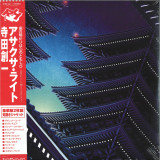
Back in 2015, Japanese DIY house pioneer Soichi Terada stepped back into the limelight courtesy of Rush Hour's 'Sounds From The Far East', a Hunee curated retrospective of material first released on his own Far East Recording label in the 1990s and early 2000s. Buoyed by the positive response and renewed interest in his work, Terada went back into studio to record his first new album of house music for over 25 years, Asakusa Light.
Developed over 18 months, Terada tried to recreate the mental and physical processes that led to the creation of his acclaimed earlier work. Those familiar with Terada’s celebrated, dancefloor-focused sound of the 1990s – a vibrant, atmospheric, and emotive take on deep house powered by the twin attractions of groove and melody – will find much to enjoy on Asakusa Light.
“I tried to recall my feelings 30 years ago, but when I tried it, I found it super difficult,” he explains. “I didn’t even know what I thought about myself five years ago, and the mental metabolic cycle seems to be faster than I thought. I tried different methods, including digging up my old MIDI data and composing by remembering old experiences. With the help of Rush Hour, I found some of the light from my heart that I had 30 years ago. I nicknamed the light I found in my heart, ‘Asakusa Light’.”
Produced using the very same synthesizers and drum machines that powered his 1990s work, the album is a joyous, colourful and life-affirming collection of timeless house music that not only recalls Terada’s own impeccable back catalogue, but also that of similarly celebrated contemporaries such as the Burrell Brothers or Ben Cenac (Dream 2 Science, Sha-Lor).
Terada, who has spent much of the last two decades writing video game music, has always had a gift for combining warm, undulating synthesizer basslines and perfectly programmed machine drums with stirring chords, smile-inducing melodies and mellow musical flourishes. It’s this immersive, sun-kissed and tuneful trademark style that takes centre stage on Asakusa Light, an album for the ages.
The set begins with the alien-sounding chords, soft-touch percussion and dawn-friendly warmth of ‘Silent Chord’ and ends on a high via the bouncing string stabs, starlight chords and thickset grooves of ‘Blinker’; in between, you’ll find a deluge of effortlessly feelgood music that’s the aural equivalent of a dopamine rush at sunrise.
There are subtle variations aplenty throughout the album – see the 8-bit lead lines and pulsing electronic textures of ‘Takusambient’, the vintage Tony Humphries flex of ‘Diving Into Minds’ and the effortlessly funky ‘Marimbau’ – but it’s the uniquely atmospheric, vivid and tactile nature of Terada’s loved-up sound that resonates. After well over 30 years in house music, the light in his heart is shining brighter than ever.
John Howard was one of the best and most creative DJs of the west coast house scene back in the 90’s. His mixes and productions were full of house groove, soul, breaks and jazzy rhythms. This new series on Repeat contains of three parts including Howard’s best productions. These tracks are all huge influence for many producers that later discovered these kind of psychedelic house grooves on European based DJ sets… John Howard was on his own journey much ahead of time and his music still sound absolutely incredible 25 years later… Mesmerizing release.
**Debut album from former 'Eighties Matchbox B Line Disaster' front man Guy McKnight's new band.** **ORANGE MARBLE COLOURED VINYL - VERY LIMITED!!** The DSM IV’s debut album, “NEW AGE PARANOIA,” is an impressive collection of stories, beats, guitars, and noise. The album seamlessly weaves together sobering but dream-filled songs that explore the ways in which our collective minds are influenced by mass media, entertainment industries, and social media. Formed by Guy McKnight of critically acclaimed and cult favourite The Eighties Matchbox B-Line Disaster. The DSM IV has a dark sound that blends noise-rock, synth-pop and industrial, that delivers a unique musical experience. Their music is cacophonous and epic, featuring rich textures and melodic hooks that keep listeners captivated. The band’s powerful soundscapes, combined with their thought-provoking lyrics, create a mesmerizing atmosphere that both entertains and encourages introspection. The album prompts important questions about our society, such as what’s driving the normalization of a narcissistic culture that prioritizes personal desires over altruism. It delves into the ways in which technology, social media, and mass media shape our collective psyche and affect our relationships with ourselves and each other. The DSM IV’s music offers a timely and compelling commentary on these issues. The DSM IV is a band that creates music with a powerful message that resonates with people who feel that a kinder world is possible. Their songs are both nasty and nice, reflective and entertaining. With “NEW AGE PARANOIA,” The DSM IV has crafted an album that will captivate and inspire listeners, while also prompting deeper reflection on our society’s values and priorities.
A certified maestro of his time, king of Cool Jazz with a penchant for unusual time signatures, Dave Brubeck is as prolific as they come. For their third release, Major Keys lovingly remaster and reissue three of his key pieces as The Dave Brubeck Quartet including the instantly recognisable ‘Take Five’ on 180g vinyl in a Major Keys sleeve.
On the A side one of the most famous jazz pieces of all time. Released in 1959 as part of the Quartet’s Time Out LP, which become the first jazz album to sell more than a million copies with the ‘Take Five’ single also taking that that coveted spot whilst going on to become the best-selling jazz single of all time. Accolades aside, it’s an intricate, absorbing and elating piece of jazz history, with one of the most recognisable melodies ever to be written. Timeless genius written by the quartet’s saxophonist Paul Desmond and performed by Dave Brubeck, Paul, Joe Morello and Eugene Wright, reissued for a new generation of listeners.
The B side sees ever more experimentation from the quartet, with the time signatures Dave heard on the streets of Istanbul providing the inspiration that gave birth to the lead track from Time Out - ‘Blue Rondo a la Turk’. As cool and complex as they get, stirring up those meters like a slick Manhattan. Rounding off the package, American jazz singer Carmen McRae’s 1962 vocal version of ‘Take Five’ gives an extra dose of sophistication to proceedings. All in all, a must have for any discerning music lover.
The Kyoto-based musician Yusaku Arai is known for his production work in the avant-garde scenes of Japanese hip-hop and R&B. On this solo album, though, he offers more lengthy, piano-centric meditations that use the techniques of musique concrète.
Arai’s compositions on the A-side emerged out of a reflection on the corporeal and interwoven relationship between his own body and things he encountered in the world—the ocean, a flower petal, a plastic sheet, a hand. His intent is to represent a process in which colors gently well up in inside of an object, pass through its entirety—and eventually permeate into the body itself. The B-side consists mostly of a long composition, which is about an unavoidable surplus that crops up in communication, whether of gestures or of language. This narrative work describes humans as beings torn between enthusiasm and emptiness.
The album’s artwork is by photographer Azusa Yamaguchi and designer Hejiro Yagi. Mastering by Sean McCann of Recital. An 18x24 inch poster is included.
*MILKY CLEAR VINYL - 300 COPIES ONLY FOR WORLD!!* Technology + Teamwork’s fizzling synths, interweaving textures and punchy rhythms are beguiling on their long-awaited debut album We Used To Be Friends. However, at the heart of it all it’s the connection between the group’s two members, Anthony Silvester and Sarah Jones, the friendship the much-travelled duo have managed to maintain for nearly 15 years and a showcase of the slow-burning construction of the electronic world that they’ve surrounded themselves with. We Used To Be Friends is ultimately the tale of two storied artists in their own right, holding onto each other through personal and career twists and turns, relocations and broader movements through respective phases of their lives. Silvester and Jones first met and then collaborated as part of biting post-punk five-piece XX Teens in 2008, eventually breaking off to forge their own path together even as the latter’s demand as a drummer grew. Performing with everyone from Hot Chip, Harry Styles and Bloc Party among many others, Jones has been a constant percussive presence across the sphere of alternative UK pop music – she’s also found time for her own solo project Pillow Person and played on records by the likes of Puscifer and Kurt Vile. Silvester meanwhile has performed in art galleries across Europe including: Fridericianum in Kassel, Kölnischer Kunstverein in Cologne, and Vleeshal in Middelburg, as well as providing sound design and composing work for several art films. Technology + Teamwork is the constant throughout all of that though. “Technology + Teamwork's name perfectly describes how we work” Silvester explains. “Sometimes the teamwork is between each other and sometimes it’s between us and the technology.” Although going by the name Technology + Teamwork as far back as 2014, two events conspired that pulled the project into focus for the pair of them: firstly, Silvester spent a year constructing a soundproof studio shed on the border of London and Essex where he lives. Secondly, inevitably, the pandemic brought the globe-trotting Jones back home to just seven miles away from her long-time collaborator and friend. “We probably hung out more than we had for a few years” says Silvester. “Also, after all her Pillow Person releases Sarah had gotten really good with recording vocals and knowing what did and didn’t work and had a really good home studio set up. We still worked separately though, exchanging ideas via email and WhatsApp.” As with many artists through 2020 and early 2021, working separately was a new necessity that they were forced to adapt to. However, it became clear that there were creative benefits to it. “It really changed our sound and our sounds became a lot more focused as a result” Jones says. “I wanted to use the same ideas of improvisation that I might use while playing the drums for myself and apply that to melodies and lyrics.” The album bristles with hyperpop modernity. You can hear it in the manipulated vocals most prominently on Big Blue’s disco strut and on Moving Too’s heady mix of pitched up voice and burrowing sub bass. However, the pair also looked to San Francisco and the West Coast synthesis movement of the 60s, Silvester inspired by the likes of Suzanne Ciani and Don Buchla. The plaintive lo-fi and melancholy of Amsterdam incorporates Mutable Instrument’s Marbles by Émilie Gillet which – inspired by Buchla’s own synthesis work – outputs random voltages to give the track an air of unpredictability. It’s something that occurs throughout the album, the duo revelling in the happy accidents that disrupt the flow of their hook-laden pop. “The ‘Buchlian’ ideas of music having randomness and uncertainty, completely freed us up” Silvester explains. “It felt a bit like having more members in the band, machines that didn't do what you expected or intended.” Perhaps more subtly, is the influence of 17th and 18th century Baroque music, with Silvester drawing a line between it and the 90’s R’n’B he and Jones both love – exemplified perhaps best on K+B’s percussive claps and sultry grooves. The portentous juddering synthpop of the title track, meanwhile, alludes specifically to Handel’s Sarabande. It’s typical of an album that only needs a scratch of its seemingly glossy surface to unearth a myriad of contorted touchstones and reference points that’ve fermented beneath it. Thematically there’s an anxious sense to the record, with tracks often balancing above a quiet sense of unerring tension even at their most bombastic. Moving Too is the result of an existential doubt that hit Silvester while out cycling, with the outro refrain "it's not enough to die you also have to be forgotten" a take on something Samuel Beckett once said. These worries are echoed on the album’s closing track What A Year, which borrows a lot of lines from the late drag performer and fashion designer Dorian Corey including the grimly defiant "you're gonna leave your mark somewhere in this world just by getting through it”. Those clouds offer a counter point to We Used To Be Friends, but then isn’t that what great pop albums do? Technology + Teamwork undoubtedly love the craft of the hook and the song, but they always position themselves left of centre, prepared to scuff things up, pull something out of shape or manipulate something to leave it sounding warped. Much like their friendship, nothing here is particularly linear – and it’s all the better for it. Bio: Anthony Silvester & Sarah Jones first collaborated as part of biting post-punk five piece XX Teens in 2008, eventually breaking off to forge their own path together even as the latter's demand as a drummer grew. Performing with everyone from Hot Chip, Bat for Lashes, Harry Styles and Bloc Party (among many others), Jones has been a constant percussive presence across the sphere of alternative UK pop music - she's also found time for her own solo project Pillow Person and played on records by the likes of Puscifer and Kurt Vile. Silvester meanwhile has performed in art galleries across Europe including Fridericianum in Kassel, Kölnischer Kunstverein in Cologne, and Wleeshal in Middelburg, as well as providing sound design and composing work for several art films. Technology & Teamwork is the constant throughout all of that though. "We Used To Be Friends" proves that Technology & Teamwork undoubtedly love the craft of the hook and the song, but they always position themselves left of centre, prepared to scuff things up, pull something out of shape or manipulate something to leave it sounding warped. Much like their friendship, nothing hear is particularly linear - and it's all the better for it.
Grammy Award Nominated 'Solace' LP pressed on 180gram vinyl with a gatefold jacket.
It is through this seamless transcendence of styles that their own sonic realm has unfolded; a landscape painted with the club culture of yesteryear and a poignant yet infectious ability to be ever in the moment.
The Age newspaper called Solace "a triumphant record", writing that "Electronic music is often thought of as harsh and unlistenable, but Solace is delicate and incredibly sophisticated in its production. The lyrics hinge on one central theme of yearning, whether that be for change, company or space."
In the fall 2021, Belgian saxophone player Robin Verheyen was invited by Kunstencentrum KAAP and W.E.R.F. records to play a solo concert during AMOK festival in the beautiful Bruges baroque church Walburga. The haunting concert was recorded in its entirety and additionally an extra recording session was scheduled in the Chamber Music Hall of the Bruges Concertgebouw. Both rooms have one thing in common: special acoustics. The playful dialogue Robin created with both spaces created an extremely unique sound and formed the basis for the title of this first solo album: Playing The Room.
Over the past two decades, Robin Verheyen has proven to be not only one of Belgium's brightest saxophonists of his generation, but also that he is a musical jack-of-all trades. Within his band with dEUS frontman Tom Barman - TaxiWars - he demonstrated his ability to rock, while with Bach Riddles he showed that he is no stranger to baroque music either. In his own bands he was often surrounded with illustrious American jazz greats like Joey Baron or Marc Copland, but with 'Playing The Room' Robin proves that he can hold his own as well and what an exceptional musician and improviser he is.
Playing The Room offers the listener a musical journey full of discoveries on the edge of spirituality and virtuosity. The album will be officially released on W.E.R.F records on Friday, May 5, and will be available in a limited edition on vinyl. An absolute must-have for any musical connoisseur.
Samuel L Session and Van Czar drop a four-track techno EP on Unrilis that showcases a deeper and more hypnotic sound with dystopian atmosphere and driving percussion. Rino Cerrone launched the Unrilis record label over 15 years ago, and part of the label's back catalogue is its iconic Rilis series. 2022 sees the relaunch of the Rilis series that has a focus on underground DJ tools with raw analogue sounds. The Rilis series was originally launched in 1999, and was restricted to a concept on only 10 releases, each pressing a limited run of vinyl. It was hugely popular with each one often selling out in only a week and picking up DJ support by people ranging from Jeff Mills to Richie Hawtin. Those first 10 releases were focused on Rino Cerrone's own music, but since his retirement from the industry, the revitalised Rilis series will welcome other artists whose sound matches the label's underground concept.
This latest release in the Rilis series features collaborative tracks by Samuel L Session and Van Czar who have previously teamed up for releases on other imprints ranging from Marco Bailey's MB Elektronics to Ben Sims' Hardgrooves. Both are also successful solo artists, Sweden's Samuel L Session being well-known for his headline DJ sets at clubs around the world, along with the music he has released via iconic imprints such as Slam's Soma, Shlomi Aber's Be As One, Len Faki's Figure and Emmanuel's ARTS plus his own imprints SLS, Cycle, New Soil, and Klap Klap Belgium's Van Czar is also an accomplished DJ who is well-established across Europe and he has also released music on respected record labels ranging from Kevin Saunderson's KMS Records as well as the classic imprint, Yin Yang.
'Air Raid' opens the release with its eerie pads, spine-tingling melody loop and machine-driven percussion. It's got a raw aesthetic with dramatic claps and snare fills that add to the building suspense.
'18-022' is a dark and stripped back track with modulating synth textures layered with fast-flowing high-end percussion. Its pounding kick drum and clap rhythms add rigid structure to its expansive atmosphere and dance floor focused groove.
'Route 200' has thrashing cymbals punishing claps and rippling pads that create a stripped back groove submerged in deep atmosphere. Rich with analogue textures and gritty sound design, its relentless energy is tailor made for club sound systems.
'Objectivism' closes out the release with it's funky bassline and bleeping melody. Whirling textures and fluttering percussion maintain an unrelenting tension that's driven forward by the pounding kick drum.
Falling by the Wayside – A Motown flavored uplifting, unmissable and irresistible new single.
Singer Paul Mac Innes and producer Mattias Axelsson share a great love for the timeless Motown sound that led them to write "Falling by the Wayside" sometime before the pandemic. The song was put on hold. But at a live performance, they chose to perform the song and then understood that the time had come to record this track for real. They booked the new studio Skeppet in Gothenburg and brought along some of the city's best musicians.
Support and rotation on Swedish National Radio P3 and P4 (Swedish equivalent to BBC)
“Tune of year for me. I played it on my weekly section of Lost and Found on WMBR in Boston in August and on the September Metropolitan Soul Show and I’m so pleased this is coming on vinyl!”
Simon White — Metropolitan Soul Show
“And there’s no stopping. Much to our delight, Paul has released a bonus B-side Instrument version! Now there are tears in my eyes!”
— Scandinavian soul
“…The sound is timeless, conceived sometime in Detroit - the implementation extremely competent and in all departments with the ability to give the joy of Motown a few more rounds….”
— Sonic Soul Reviews…