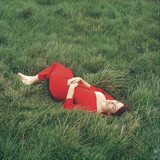
After a debut outing on International Black last year with his best friend Mallard, LT graduates onto Rhythm Section INTL with a stunning debut solo effort: FOREST FLOOR.Aged just 20 years old, Lewis Taylor aka LT is another prodigal talent from the north of England, whose association with Rhythm Section goes back to his school days. A fan of the label from an early age, Lewis regularly made pilgrimages to the pool hall as soon as he was old enough to do so. It was these visits with his old school friend Mallard (who had recently moved down to London from Derbyshire to study music) which proved to be a formative influence, prompting him to try his hand at production...It turned out he was quite the natural, with his second ever effort as an 18 year old making it onto this very EP. Sitting somewhere between electro, house and techno with a healthy dose of breaks - LT constructs complex arrangements with as much of a nod to the retro summer of love stylings of Lone as to the new age bounce of the Pender Street Steppers. The piano house stabs of 'Untitled (Chesney)' reverberate around chopped breaks and screaming samples, anchored down by bouncy organ bass and FM lead synth which really begs the question: 'How did LT develop such a rich lexicon of club culture references in such a short time' We'd be tempted to believe it was just pure luck, if this mastery of rave aesthetics wasn't repeated throughout the EP...
Mesosphere fizzes with arpeggiated energy before giving way to a magnificent yet subtle drop that will serve festival main stages as well as it will back room clubs. Before the EP is over, LT has one more trick up his sleeve in Forest Floor - the titular track which is the musical equivalent of watching the sun rise through a misty glade after a night spent alone in the wilderness. With this gentle touch, LT proves he's more than another kid on Ableton making bangers - he has breadth, incredible musicality and a rare ability to transcript sceneries into sounds. Finishing with 'North Circular' possibly a reference to the free Parties on the London Orbital or merely just a coincidence you decide.
We couldn't be happier to welcome LT onto the RS INTL roster in what feels like a fulfilment of destiny. It's such a great honour to have nurtured and now introduce the next generation via the Rhythm Section platform.
Поиск:ab 18
Все
incl. download card]
There is something to be majestic about stalwarts of a certain flock coming together to be creative. The harder side of Drum & Bass didn't have it's own power formation until today. It's as of this day that Czech producer Forbidden Society, formed an alliance with two of his most respected peers to create 3RDKND. Donny, Katharsys and FS all have a strong lean to rhythmic textures, tough drum cuts and experimental FX works. Just in time for the European festival season, the thunderous first effort has arrived; and it's going to turn some heads.
Purge EP is a work of experience, seeking for the outer bounderies of whats sonically possible. The title track is an electronic behemoth which revolves around boundary pushing drum programming and pure unfiltered energy. 'The Artifact' is a straight up dancefloor anthem which uses an ominous vocal of cinematic proportions to build up to the halftime body of heavy hitting drums. 'Fire And Blood' is an experimental work of the rhythmic endurance. The final track is a 3RDKND remix of an original track by Donny and FS. This is the final showcasing of the trinity's sonical excellence. 'Purge EP' will be released through Forbidden Society's self titled label
- 1: Intro
- 2: Octopussies - Don't Skip That
- 3: Octopussies - Future Classic (Feat. Mista Min)
- 4: Blockboy - World Against Us (Feat. Mista Min)
- 5: Primatune - King Kong Rap (Feat. Masta Ace)
- 6: Blockboy - Bunnybreak
- 7: John Pussner - Riesen Himbeer Bonbon
- 8: Big Mama's Boys - Müncheeen (Feat. Epi.kur)
- 9: Epi.kur - Bis Wann
- 10: Mike Sense - Grown As Man
- 11: Danny Decock - Mosca
- 12: Blockboy - The Renaissance
- 13: Blockboy - Runaway (Feat. Ethic)
- 14: Primatune - Primat City Radio
- 15: Primatune - Oleg, Oleg (Feat. Gasreiz & Thk)
- 16: Primatune - Primat City Radio Werbepause
- 17: Dharmabums - Wassn Dassn!!
- 18: Primatune - So Sieht's Aus (Feat. Wordsworth)
- 19: Epi.kur - Wohin Die Reise Geht
- 20: Mikzn70 - Keinsommertrack (Feat. E.p.eazy & Pat Riot)
- 21: Blockboy - Blasdudler
- 22: Octopussies - Slidin
- 23: Mike Sense - Green Gold (Feat. Declaime)
- 24: Blockboy - Well Wicked
- 25: Blockboy - Woodbox Sonata No. 4
- 26: Blockboy - E E E (Jon Kennedy Remix / Pussner Edit)
- 27: Blockboy - Apache Walk (Asagaya Remix / Pussner Edit) (Feat. Nahawa Doumbia)
- 28: Lippovic - C.u
At a time when on every street corner, adolescent wannabe gangstas believed they had to tell everyone and their dog about their greatness and the inferiority of all others, there was a cadre of Munich-based Hip-Hop artists producing incredibly fresh and imaginative music, inspired, of course, by the golden era of the 90s. They played gigs in small clubs in front of some dozens of people, spread mixtapes and Eps and were celebrated by their friends and the rest of the scene. The world took no notice - until now ! Tramp Records, specializing in unearthing forgotten pearls of musical art, documents with "Golden Hits", an era of Munich underground Hip Hop which flew completely under the radar, spanning ten years from 2005 to 2015. The musical bandwidth and quality of the tracks is astonishing, but so much more could have been possible. Much of this music remained fragmented or unreleased for a host of reasons, families, stressful jobs, musical reorientation, and even lost hard disks... but one story has a happy ending! When Masta Ace had a live show at the legendary Atomic Cafe, Primatune's Fid Rizz was able to hand over a CD with demo beats. Unfortunately the CD was blank by mistake! But the curiosity of Masta Ace had been piqued, and he got back to him, the rest is history. Features of other stateside rap heroes like Wordsworth or Declaime followed.
The very best of this era, including tracks never before heard and ideas remaining fragmented, has now been compiled by Tramp Records to take you for a fascinating listening journey.
Hip Hop, as it was since it's inception in the Bronx, fresh and real, and made with passion by neighborhood kids spitting truth about life and the struggle!
Key selling points:
- including many unreleased songs
- the vinyl LP comes with a full album download code
- A1: Te Digo Wayno (4:36)
- A2: E-Chango (3:12)
- A3: Algo (Feat La Yegros) (3:13)
- A4: Como Saber (1:24)
- A5: Pachama (Feat Iara Nardi) (4:05)
- B1: Pa Que Yo Te Cure (Feat Balvina Ramos Y Queen Cholas) (4:11)
- B2: Tierra De King Coya (Feat La Walichera) (4:59)
- B3: Dorremi (3:18)
- B4: Icaro Llama Planta (Feat Isabel Pinedo Rengifo) (5:16)
King Coya ist das digitale Alter Ego des argentinischen Musikers, Produzenten und Komponisten Gaby Kerpel. In den Neunzigern entwickelte Kerpel die furiose Theater-Performance "De la Guarda" mit, später setzte er seine Kreativität für das preisgekrönte Showprojekt "Fuerza Bruta" ein. Abgesehen davon ist er bekannt für die innovative Verbindung lateinamerikanischer Folklore mit moderner elektronischer Musik. Seit seinem 2009 veröffentlichten Solodebüt "Cumbias de Villa Donde" fertigte der König Remixe für Acts wie Amadou & Mariam, Brazilian Girls, Julieta Venegas, Luzmila Carpio, Chancha Via Circuito, Tom Tom Club, Petrona Martinez und Magin Díaz an. Weiterhin beteiligte er sich als Mitglied der Band Terraplén an den Aufnahmen zu "Tira Torito" (2010). Mit "Tierra de King Coya" setzt Kerpel den eingeschlagenen Pfad weiter fort. Zur Geltung kommen neben kolumbianischer Cumbia und argentinischem Folk insbesondere traditionell in den Anden gebräuchliche Instrumente wie das Zupfinstrument Ronroco oder die Schnabelflöte Tarka. Natürlich werden alle Sounds vom King so lange am Computer aufbereitet, verfremdet und geschichtet, bis sich explosiv-tanzbare Songs ergeben. Neun Stück sind es auf "Tierra de King Coya" geworden. Bei diesen wird er von La Yegros, Iara Nardi, Isabel Pinedo Rengifo, La Walichera, Balvina Ramos und Queen Colas am Mikrofon begleitet.
Next up on the ever-eclectic XVI Records, a shadowy figure steps into the spotlight: enter the mysterious Captain Over, whose dark yet soulful bruk-infused tracks soundtrack the next stage of their voyage towards the sun. For his debut outing, Captain Over calls on the abstract vocal stylings of the legendary Trim (Roll Deep, 1800 Dinosaur) on opening track 'SICK'.
Showcasing why he's one of the most iconic and forward-thinking MC's to grace the mic, Trim's dulcet tones twist through a jungle of shuffled beats and subterranean sub-bass, an eerie child-like melody drifting overhead.
Clack Clack and No One Ever Really Flies inhabit a more dancefloor friendly space, their unique syncopation, fierce instrumentation and relentless energy open up the dancefloor for some real get loose moments.
On the remix, they hand the controls over to XVI homestay Books (following on from the success of his previous 'Feel It In My Bones' and 'High Praise Edits Vol 1' releases which won praise from the likes of The Black Madonna, Moodymann, Gilles Peterson and Seven Davis Jr) Books expertly crafts a cosmic footwork jam, full of his trademark soulful chords and eerie midnight saxophone licks.
As he prepares to launch his forthcoming EP 'No-One Every Really Flies' into the cosmos ; Captain Over is beginning to cement his place as one to watch in the UK underground - a sequel EP featuring grime upstart Nico Lindsay is scheduled for release later in the year, with several more collaborative works in progress.
+++
No doubt, 'Sistema Lunar' is the masterpiece work to date of LA's producer Rigopolar. The best Giorgio Moroder hedonist style is totally present here but with a modern approach that makes of it an absolute instaclassic capable of burn up any dancefloor of the planet, this is a truly gem for any important collection. It arrives on 12 Maxi-Single EP format and produced in a ONE-OFF truly limited edition of 300 copies lacquered pressed on 180 gr. high quality solid color vinyl. All tracks have been specially remastered for LONG CUT vinyl by Eric Van Wonterghem
Benny Blanco debuts with a five-tracks "Staraya Ep" onto his Valkea Music. Every detail has been taken care, from mixing
to the master from the WHITE 180 GRAMS vinyl press to artwork. Following a short description about "Staraya EP"
STRY 1 by Ricky L Red "Is Not Dead Mix" intense and majestic, the track of rare and profound beauty.
STRY 2 "Original Mix" it's a tribute to Benny Blanco's origins and to the electronic/progressive sound of the mid nineties
that had great influence on him and became his trademark from the very beginning.
STRY 3 by Giammaria Coccoluto & Luca Vera "As Soul Sonic Remix" an ethnic rhythm full of grooves thanks to the addition
of percussive elements and a masterly used organ, which won't keep you still.
STRY 4 "The THC Revenge Remix" an atmosphere that captures and hypnotizes, where it extrapolates and magnificently
enhances the most melodic part.
STRY 5 "Erly Tepshi Dark Vision Mix" an esoteric and astral journey in the furthest and most remote corners of your mind.
This original project to the artwork that will in essence, satisfy your eyes and especially the ears.
Raga Abhogi
1) Alap
2) Jod
3) Jhala
Raga Vardhani
4) Alap
5) Jod
6) Jhala
Zia Mohiuddin Dagar : rudra veena
Annie Penta : tanpura
Concert recorded at the home of Shantha and Niranjan B. Benegal, Seattle, Washington 9 March 1986.
Recorded by Niranjan Benegal. Files obtained from Jeff Lewis.
Mastered & Cut by Rashad Becker at Dubplates & Mastering 1117 & 0318.
Liner notes by Renaud Brizard, edited by Stephen O'Malley & Ian Christe.
Front and back cover photos by unknown.
Interior photography by Niranjan B. Benegal, Dan Neuman & unknown, Seattle 1978-1980. .
Around ten years ago, deep into a cozy and hazy night following a concert with my sound brothers Daniel O'Sullivan and Kristoffer Rygg in London (as Æthenor), they graciously introduced me to a recording of rudra veena (a kind of noble deeper bass relative to the sitar, in a way) as performed by dhrupad master Zia Mohiuddin Dagar.
Dhrupad, for those who do not know, is a branch of Hindustani classical music said to "show the raga in its clearest and purest form". It's pacing concentrates heavily on the slow, contemplative alap section and works with specific microtonal gestures and deep characteristics of resonance ... in short I was hooked on this new (to me) and ancient form of music from the first listen, and feel that a more or less continual listening & reviewing of Zia Mohiuddin Dagar's recordings in the years that followed have influenced my own approach to music quite heavily (if, albeit, indirectly).
In early 2015 I was able to make contact with Zia Mohiuddin Dagar's son Bahauddin and some of his American students/disciples, primarily Jeff Lewis. Over time we developed a friendly and educational exchange, access a massive archive of recordings and developed these two paired titles for my label. It's been a long path to arrive at actually releasing them but also probably in many ways one of the most significant releases I've worked on. And I'm proud to be able to reveal these to date unreleased archival recordings of one of the masters of dhrupad, Z. M. Dagar, to the public for the first time.
Zia Mohiuddin Dagar was the nineteenth generation in a family tradition known as Dagar gharana, a rich lineage which continued and performed the musical form of dhrupad (Bahauddin Dagar continues the lineage as a master rudra veena dhrupad player of note today). Initially, dhrupad was a rigorous, austere, devotional genre that was sung in Hindu temples. But between the 16th and the 18th centuries, it became the preeminent genre in royal courts in North and Central India, and the Dagar gharana developed and continued publicly following the eventual loss of court patronage for dhrupad in the 19th century. The French ethnomusicologist Renaud Brizard covers the story of Zia Mohiuddin Dagar's life and teaching (a long story also in Seattle, my hometown!), the Dagar family and gharana, the rudra veena and more topics in an extensive set of liner notes in this release.
Ragas Abhogi & Vardhani were recorded in a private house concert in Seattle at the home of the Benegals in March 1986 (the week before the accompanying release SOMA029 Raga Yaman was recorded). The Benegals were friends (& Shantha Benegal was also a student) of Dagarsahib who sometimes hosted Hindustani music concerts in their home. It's a rare glimpse of a more intimate, personal and perhaps different kind of performance considering the form of dhrupad.
-Stephen O'Malley, March 2018, Paris, France
Stephen O'Malley would like to especially thank Bahauddin Dagar, Jeff Lewis & Jody Stecher for their enthusiasm, cooperation, patience, insight & advice toward developing these editions. Thank you also to Laurel Sercombe & John Vallier from the University of Washington Ethnomusicology Archives, Shantha Benegal, Philippe Bruguière, Dan Neuman, Ira Landgarten, Renaud Brizard, Ian Christe, Peter Rehberg, Rashad Becker, Daniel O'Sullivan & Kristoffer Rygg, all for their direct or indirect cooperation, assistance & patience.
First released in 1995 on Jonah's own Aba Christos Tafari Records,Intergalactic Dub Rockis a trip. While the 90s rave continuum buried down the hole of cosmic sci-fi culture, dub's fascination turned elsewhere after 80s touch-stones like Shaka'sBrimstone & FireandCaptain Ganja and the Space Patrol(re-issued by Bokeh last year). But Jonah takes things way far on this, his most adventurous outing: let your needle cruise along these bleeps and strings of 50s space travelling dreams, and the flutes and melodicas of planet earth, hear them clang with the hardest dub FX units the UK could buy at the time. It's one of the most righteous and outward-looking steppas LPs, now liberated from the hands of Discogs-types with a previously CD-only bonus track, 'White Nile'.
Inyotef, Bongoman, Jahman Dan, Kheru - Jonah Dan goes by many names and many trades - akete nyabinghi master, vocalist, producer and filmmaker. For many years he was the go-to studio percussionist for the UK dub scene, collaborating with basically everyone: Paul Fox, Jah Warrior, Robert Tribulation, Jah Fingers, Tony Roots, Alpha and Omega. Along with Bush Chemists (stars of BKV 020...) and Disciples, he toured the continent, spreading the message of UK dub and laying the seeds for a lot of the EU scene today. At some point his Aba Christos Tafari Records morphed into Inner Sanctuary, one of the greatest 90s labels still in operation, go check.
Raga Yaman
1) Alap
2) Jod
3) Jhala
4) Gat (Composition in Chautal)
Zia Mohiuddin Dagar : rudra veena
Manik Munde : pakhawaj
Gayathri Rajapur & Annie Penta : tanpuras
Recorded by unknown at the University of Washington, HUB Auditorium, Seattle, Washington 15 March 1986 , concert co-sponsored by the UW Ethnomusicology Division and Ragamala.
Original digitally processed audio recording made with Panasonic PV-9000 VCR, Sony PCM-F1, PZM mics. Mastered & Cut by Rashad Becker at Dubplates & Mastering 1117 & 0318.
Liner notes by Renaud Brizard, Stephen O'Malley & Ian Christe.
Front and back cover photos by Niranjan B. Benegal, Seattle Center Folklife Festival 1979. Elizabeth Reeke & Annie Penta on tanpuras.
Inner gatefold photography by Niranjan B. Benegal & Ira Landgarten.
Around ten years ago, deep into a cozy and hazy night following a concert with my sound brothers Daniel O'Sullivan and Kristoffer Rygg in London (as Æthenor), they graciously introduced me to a recording of rudra veena (a kind of noble deeper bass relative to the sitar, in a way) as performed by dhrupad master Zia Mohiuddin Dagar.
Dhrupad, for those who do not know, is a branch of Hindustani classical music said to "show the raga in its clearest and purest form". It's pacing concentrates heavily on the slow, contemplative alap section and works with specific microtonal gestures and deep characteristics of resonance ... in short I was hooked on this new (to me) and ancient form of music from the first listen, and feel that a more or less continual listening & reviewing of Zia Mohiuddin Dagar's recordings in the years that followed have influenced my own approach to music quite heavily (if, albeit, indirectly).
In early 2015 I was able to make contact with Zia Mohiuddin Dagar's son Bahauddin and some of his American students/disciples, primarily Jeff Lewis. Over time we developed a friendly and educational exchange, access a massive archive of recordings and developed these two paired titles for my label. It's been a long path to arrive at actually releasing them but also probably in many ways one of the most significant releases I've worked on. And I'm proud to be able to reveal these to date unreleased archival recordings of one of the masters of dhrupad, Z. M. Dagar, to the public for the first time.
Zia Mohiuddin Dagar was the nineteenth generation in a family tradition known as Dagar gharana, a rich lineage which continued and performed the musical form of dhrupad (Bahauddin Dagar continues the lineage as a master rudra veena dhrupad player of note today). Initially, dhrupad was a rigorous, austere, devotional genre that was sung in Hindu temples. But between the 16th and the 18th centuries, it became the preeminent genre in royal courts in North and Central India, and the Dagar gharana developed and continued publicly following the eventual loss of court patronage for dhrupad in the 19th century. The French ethnomusicologist Renaud Brizard covers the story of Zia Mohiuddin Dagar's life and teaching (a long story also in Seattle, my hometown!), the Dagar family and gharana, the rudra veena and more topics in an extensive set of liner notes in this release.
Raga Yaman was recorded at a public concert in Seattle at the HUB Ballroom at the University of Washington in March 1986 (the week after the accompanying release SOMA028 Ragas Abhogi & Vardhani was recorded) at the end of his last tour of the United States. Yaman was a special raga for Zia Mohiuddin Dagar, one of his signature raags. For centuries, Yaman has been considered as one of the most fundamental ragas in Hindustani music and is one of the first ragas which is taught to students. A deep knowledge of Yaman gives a key for understanding many other ragas. It's filled with tranquility, contemplation, pathos and spiritual yearning. .
-Stephen O'Malley, March 2018, Paris, France
- A1: Moment Of Collapse (Feat. Heidi Vogel)
- A2: Palmares Fantasy (Feat. Hermeto Pascoal)
- A3: Waltz For Hermeto (Feat. Hermeto Pascoal)
- A4: The Blonde
- B1: Montreux (Feat. Hermeto Pascoal)
- B2: Said (Feat. Hermeto Pascoal)
- B3: Tudo Que Voce Podia Ser (Feat. Sabrina Malheiros)
- B4: The Conversation (Feat. Hermeto Pascoal)
For his third album for Far Out Recordings, London based multi-instrumentalist and one of Europe's finest saxophonists Sean Khan ventures to Rio de Janeiro to collaborate with iconic Brazilian polymath Hermeto Pascoal. Taking its title from the escaped slave settlement 'Palmares' in the Northeast of Brazil during the 1600s, Palmares Fantasy is Khan's utopian jazz message for the world, and features Azymuth drummer Ivan 'Mamao' Conti, bassist Paulo Russo, guitarist Jim Mullen, and guest vocals from Brazilian chanteuse Sabrina Malheiros, and Cinematic Orchestra frontwoman Heidi Vogel.
Like Hermeto Pascoal, Sean Khan is a self-taught musician. Never able to afford his original dream of studying at Berklee, and having been turned away from Guildhall School of Music for being 'too raw', he became disillusioned with what he saw as the exclusivity, elitism and dangerous institutionalisation of the jazz world. Yet Sean's love for music and the drive to create never faltered.
Hermeto Pascoal, the man Miles Davis once dubbed the most impressive musician in the world', is a similarly independent artist. A true maverick whose ingenuity and freedom from conventional restraints is so great that he has essentially conceived his own musical language, made him the dream collaboration for Sean.
Aspiring to inclusivity and equality also informs the message in Khan's music. Inspired by the 17th Century settlement of Palmares in Brazil's Alagoas region, which was free from the Portuguese crown's murderous exploitation of South America for a century, Khan notes his fascination with the fact that while majoritively made up of escaped African slaves, many deserter conquistadors also joined the settlement.
Hearing the deep-grooving title track with this history in mind, the listener is transported to a futuristic musical eden, with Mamao's insatiable 10/8 rhythm back-boning Hermeto's wild improvised vocals, rhodes and whistles, while Sean's harmonically brilliant sax and flute add more layers of moody, characterful expression. 'Moment of Collapse' is Sean's poetic study on the uncertainties of modern day western civilisation, delicately presented by the gorgeous vocals of Heidi Vogel and drenched in lugubrious strings and Alice Coltrane-esque harp. The two covers on the album are of Hermeto's own 'Montreux' (on which Hermeto plays solos on a teapot and a pint of water), and an uplifting soulful jazz-funk take on Milton Nascimento & Lo Borges MPB classic 'Tudo Que Voce Podia Ser' featuring the vocals of pioneering nu-bossa voice Sabrina Malheiros.
The recording sessions for the album were part of an intensive and hugely productive eight-week excursion to South America for Far Out boss Joe Davis in the summer of 2016, which also saw the sessions for Azymuth's Fênix and a forthcoming album from Uruguayan fusion legend Hugo Fattoruso.
Fantastic' Gilles Peterson
Loving this!' Opolopo
Thank you!' Sassy J
Proper! Great track.' Colin Dale
this is great!' Yannick Elverfeld (RBMA / Needs Records)
I've enjoyed Sean Khan's earlier releases, but this really seems like he's grown into his fairly considerable talent.' Mark Sampson (Songlines)
His last album was his best so far, but I think this one may be even better.' Laurence Pragnell (Soul Brother Records)
dope!!!' Kyri (R2 Records)
this is great - really cool vibe!' Sam Redmore
wonderful track - can't wait to hear the lp.' Simon Harrison (Basic Soul Radio)
This is very tasty indeed.' Gavin Boyd (Soul Has No Tempo)
Stunning!!!' Mark Milz (Further In Fusion)
Oi Oi' Samuel Lloyd (Balamii Radio)
PRESS / ONLINE
VINYL FACTORY (UK) News (Anton Spice) 09/03/18 online
SOUNDS & COLOURS (UK) News (Gabriel Gahan) 09/03/18 online
THE WIRE (UK) Review confirmed (Joseph Stanard) print
EVENING STANDARD (UK) Review confirmed (Jane Cornwell) print + online
ECHOES MAGAZINE (UK) Review confirmed (Laurence Pragnell) print
LIBERATION (FR) Feature confirmed (Jacques Denis) print + online
MUSIC IS MY SANCTUARY (CA) Premiere confirmed (Mike Jones) online
JAZZ MAGAZINE (FR) Review confirmed (Frederic Goaty) print
SHINDIG! (UK) Review confirmed (Grahame Bent) print
MUSICA MACONDO (UK) Premiere confirmed (Tim Garcia) online
RAWCKUS MAGAZINE (USA) News (Randy Radic) online
KIND OF JAZZ (UK) Review confirmed (Fernando Rose) online
TONART MAGAZINE (DE) Review confirmed (Michael Moehring) print
WORLD MUSIC NETWORK (USA) Review confirmed (Raul Da Gama) online
BADD PRESS BLOG (USA) Review confirmed (Kevin Press) online
ORKESTER JOURNALEN (DK) Review confirmed (Patrik Sandberg) print
LIVE
WORLDWIDE FM (UK) Sean Khan live session confirmed (Gilles Peterson)
RADIO
BBC RADIO 6 (UK) Gilles Peterson - Palmares Fantasy (24/02/18) link
OTHER
BRITISH AIRWAYS On board BA flights (June 2018)
180gr Black vinyl, full colour sleeve. Our journey continues with an ep of pure ageless music for the dancing brain, four tracks dusted from the archives of this mysterious artist. Real name Alastair Johnson released only few eps and one album in the mid/late 90s and then almost disappeared, we are more than happy to have the opportunity to highlight this material. The other big great satisfaction is also to be able to involve the historical warp-affiliated duo B12 for a really deep and spacey interpretation. Have a good trip!
More from Art-Aud
2023 Repress Spice 1 is an undisputed West Coast legend, who first hit the scene after the N.W.A. and – closer to home – Too $hort explosion of the late ‘80s. As history showed, he continued that bloodline with finesse and authority. His nasal flow is menacing and strong, and fans have been consistently captivated by his ‘hood tales since his self-titled debut in 1992. If you want thematic range with your MCs, Spice isn’t that dude – he is all about crime tales and the perils of ghetto life. And he attacks that storytelling sweet spot with each new cut. Spice 1 boasted four singles by the time it was all said and done, and breezed to Gold status on the strength of cuts like the catchy “East Bay Gangster”; the heartfelt tales and truths of “Welcome To The Ghetto”; and the thick, grooving “In My Neighborhood.” He even produced the alcohol-themed “187 Proof,” another of the album’s singles, and the hands-down cleverest vocal outing on the LP. Sonically, the backdrops on Spice 1 range from plunky, keyboard-bassline funk to deeper, fuzzy ‘70s samples – and he sounds strong on top of both. “Break Yourself” is fueled with an electro-funk drive; “1-800 Spice” brings reggae flavor; and “Peace To My Nine” gets chunkier, with a well-placed P-Funk “One Nation Under A Groove” sample. Presented here on official retail vinyl for the first time since its initial release 26 years ago, Spice 1’s debut holds the test of time and carries the California gangsta flag with pride. Some colors just don’t fade.
180g
Hybris Is A State Of Dissoluteness, Of Loss Of Control, Of Greed And Of Lustfulness. Following That Motto, Wice Takes His Listeners On A Journey Through A Hybristic Process On His Second Steinlach Ep, Which Chooses An Enchanting And Euphemistic Entrance Into Hybris With Absent (no Aggression). Gentle Pads Create A Peaceful And Dreamy World That Is Turned Into A Fascinating Landscape Of Sound By Trippy Drums And Dopey Synths And So Pushes Wide Open The Gate To Hybris. The Threateningly Booming Hb11 Then Finally Enters The State Of Hybris: Synths And Drums Pump Adrenaline In Heads And Bodies, Dancing Turns Into Greed, The Complete Lack Of Control Sets In. That Lack Of Control Riots Towards Its Peak With The Eponymous Hybris, Which Tears The Listener In Technoid And Gritty Manner Into The Abyss Of Hybris And Holds Him Captive Down There. Hybris Is Followed By Nemesis, The Divine Punishment Ending In Death: Wice Interprets This Transition Towards Nemesis With Hertz, A Playful And Breaky Good-night Kiss, Which Feels Pretty Damn Good And Resonates Bittersweetly.
** Limited Edition 180gm Gold w/ Black haze LP w/DL.
* Kaziwa is the second collaboration between Iranian ambient experimental composer Porya Hatami and superlative sound designer Uwe Zahn's Arovane project.
* The album was originally released on limited compact disc via the Time Released Sound boutique label in July 2016 and now sees rerelease on n5MD. Each of Hatami and Zahn's collaborations has been vastly different from one another focusing on a feeling or technique. With Kaziwa the duo focused their attention toward nostalgic layered piano vignettes. The album's closer 'feer' was the first track they worked on and used it as their jumping off point. What began as a simple loop of piano morphed into something contemplatively fascinating. While that specific track features Hatami supplying most of the piano and Zahn creating the 'another time and place' atmospheres the two effortlessly switched off on piano duties all while transparently deviating from the current affectation of Frahm / Sakamoto style ambient piano clarity.
* This new version of Kaziwa will come on limited vinyl as well as on digital platforms for the first time.
Debütalbum der kanadischen Musikerin, Sängerin und Fotografin Tess Roby, langjähriges Mitglied des Chors Canadian Children's Opera Company. Auf den 8 Songs auf "Beacon" besticht die Künstlerin mit einem elektronisch-spirituellen Dream-Pop, aufgenommen mit Drum Machines und Synthesizern, der ihre klassische Ausbildung und ihren Sinn für Ästhetik verdeutlicht. LP auf deckend-schwarzem 180g Vinyl.
As the title suggests, Rejuvenate marks a rebirth for South London musician Paul White. Abandoning sampling altogether, White wrote, played and produced all of Rejuvenate's music himself, and the result is an album of playful, psychedelic pop.
It would have been far easier for White - previously described as a 21st century DJ Shadow, often compared to Madlib and best known as Danny Brown's go-to producer - to construct an album of loop-based, hip-hop-orientated beats. Instead, taking an ambitious left turn, he worked on honing his songwriting and instrument playing abilities and embarked on creating a totally original record worthy of sitting alongside those he'd usually sample.
Rejuvenate's broad sonic palette includes cosmic rock, ambient, electronic, jazz, folk and more. Retaining a groove-heavy, psychedelic aesthetic throughout, White successfully melds these various influences in to his most cohesive, fully-realised offering yet.
Paul White is joined on this sonic trip by a trio of likeminded souls; British-Jamaican singer Denai Moore adds heartwarming, crystalline vocals to the aptly named Set The Tone and See Through, Zimbabwean musician and poet Shungudzo (aka Shun) shares nuggets of wisdom on Spare Gold and dreamy, melting vocals for Ice Cream Man. White reunites with his sister, Sarah Williams White, and the pair draw on childhood memories for Laugh With Me and All Around.
Paul White's previous output includes a treasure trove of mostly instrumental solo records, plus collaborations with Charli XCX, Jehst, Homeboy Sandman, Guilty Simpson, Jamie Woon, Obongjayar, Eric Biddines (as Golden Rules) and Open Mike Eagle. More recently, White reconnected with frequent collaborator Danny Brown, producing most of the Detroit rap maverick's mind-blowing Atrocity Exhibition album.
td 80 copies. Numbered.
Music by Ayato
Serygraphied on 180GR glassed paper.
Visual by Raf & Chris with the help of Rom, Mathieu, Vestee, Virgi'.
I always loved Muslimgauze and Badawi's productions... This record is the result of loads of conversations with Ayato concerning these 2 musicians, who he is also feeling close to. Long time project, this finally comes out in a limited 100 copies edition, with hand made visuals from Bodega Absurd crew... With original letters and forms they created... A superb record for all oriental electro fans ! Enjoy !
180g
Perfect Records returns with a fully rounded release by Danny Scrilla. The A side, "Mirrors" features talented singer Alis beautifully tagging along on a very Scrilla trip to space. On the B side, "Can of Worms" is an intense, sub-heavy roller that's been blowing up soundsystems left and right. The final track on the EP, "Wipeout", is an absolute hoovery head-nodder for the dancefloor-inclined.
"The kind of melancholia I'm talking about, by contrast, consists not in giving up on desire, but in refusing to yield. It consists, that is to say, in a refusal to adjust to what current conditions call 'reality' - even if the cost of that refusal is that you feel like an outcast in your own time." (Mark Fisher, Ghosts Of My Life, Zero Books 2014, p. 24) In Ghosts of My Life: Writings on Depression, Hauntology and Lost Futures', the author Mark Fisher outlines - to put it in a big way - a resistant melancholy. This stands in contrast to leftist melancholy resignation', as well as something which Fisher does not talk about: its common masculine counterpart, habitual post-left cynicism - as in seen it all before'. Fisher calls this hauntological melancholy. Haunting, spooks, ghosts and apparitions are an almost constant presence on I Started Wearing Black', the second album by the Cologne-based artist Sonae (pronounced so-nah'). The term hauntology shares a fate with retro-futurism when it comes to inflationary overuse and abuse. It's a conceptual container that looks good and can hold a lot, indeed, too much. Furthermore, hauntology has its peak season behind it, a term on the threshold of its expiration date. Nevertheless, I would like to rehabilitate hauntology and use it properly to characterize I Started Wearing Black', because the term is rarely as compelling to describe music as is the case here. The most recent other example could be Asiatisch' by Fatma Al Qadiri, but with a completely different frame of reference. What are the ghosts of this music It rustles, crackles, ruffles, crunches, rattles, scrapes, sometimes a beat emerges from the constant noise, sometimes an obscure voice mumbles incomprehensibly, sometimes a melancholy piano figure is prevented by this noise from coming too much to the foreground. It definitely is eerie - to bring into play another term used by Fisher in the title of his latest book, The Weird and the Eerie'. In British pop-jargon, eerie first occurred to me more often when referring to particularly leftfield, spooky and... well... ghostly dub, a bass-heavy, echoing noise, from Augustus Pablo to Creation Rebel to Burial. Unlike the Wald & Wagner records by Wolfgang Voigt, Sonae is not a kind of neo-romantic veiling with a tendency for escapist nebula. It is more a noise of latency. The noise signals a latent - not necessarily acute - threat, a latent uneasiness about... yes... about what About a System Immanent Value Defect' That's the name of a track on I Started Wearing Black' where something that sounds like a French Horn (or a foghorn) battles for attention through or against the background noise. An email from Sonae: The piece 'System Immanent Value Defect' should actually be called 'I See Turkey'. I wrote it for my fellow student Elif - she is a pianist and Gezi Park activist from Istanbul. Through her I witnessed the inner conflict and agitation that political circumstances can create: her feelings of guilt when there was an attack, with her safe in Germany as a student, watching the events from afar. It was horrible. When her mother begged her not to come home because she feared for her safety, I felt a cold shiver run down my spine. I started with the piece from this mood, beginning with the piano, then the noise (modulated sinusoidal curves), which reminded me of waves and the then heatedly discussed Mediterranean sea: atmospheric, melancholy motifs. In contrast is the anger, the pressure, represented in corresponding sounds - hopefully audible! - During this time I started to think about world views as they can be found around the globe, in how far they held by societies and their political representation. I realized that I know of no political system that is actually about the people and what would do them good. It's always about positions, power, money. I thought that was a lot more frightening on a global scale than merely viewing Turkey in isolation. That's why the piece is called "System Immanent Value Defect", because our world suffers from precisely that. Everywhere, it's all about the wrong things.' Between the wrong things there are happy moments. In the title track, after 184 seconds of rattling and hissing, a beat is unleashed, like an arrow released from a spanned bow, a beatific relief, if there is such a thing. White Trash Rouge Noir' first meanders along spookily, then after 144 seconds it transforms itself into a distant cousin of Einstu¨rzende Neubauten's Yu¨ Gung', but there is no Big Male Ego to be fed here, and the black in the album title is a completely different type of black from that of the Neubauten. Furthermore, I Started Wearing Black' was finished long before the black dresses were worn at the Golden Globes as a sign of protest against sexual violence. Sonae writes that she herself started wearing black some time ago. Her reasons are so-called personal ones: ... resulting from an individual situation (lovesickness), I started to wear black (gaining weight and feeling ugly).' The political dimension of gaining weight, feeling ugly and therefore dressing in black in I Started Wearing Black' lurks within the noise and never becomes explicit and only rarely manifest - or a manifesto. Sonae writes about the track We Are Here': A piece for minorities... in this case, considering the current pop-feminist discourse, explicitly for women. Female artists have long been saying loud and clear that 'we are here' and 'electronic music is not a boys club!' But this pop-feminist moment should only be seen as one part of the dedication of the piece. It is for minorities, for the oppressed, who didn't belong enough.'
Klaus Walter