Hailing from Macclesfield, Cheshire, and growing up in Cheadle Hulme, John Mayall had already made a name for himself on the Manchester blues scene before relocating to London in 1963 at the urging of Alexis Korner.
Following the breakup of The Bluesbreakers in 1968, Mayall took a three week break in LA, and it proved an eye-opener for him. As a result, Blues From Laurel Canyon was a concept album of sorts, a view of a Brit Abroad at a time when it wasn't de rigueur to travel. 2401 especially is an incredible confection – acknowledging Cream, foreseeing Led Zeppelin; Mick Taylor's slide guitar would soon be heard in the Rolling Stones. Fly Tomorrow is a nine- minute blues- rock tour de force.This re-issue faithfully replicates the original 1968 Decca Records UK stereo release with gatefold sleeve and is pressed onto high quality 180g vinyl.
Поиск:ab 18
Все
With absolute electricity at every turn as well as the rough 'n' ready charisma of frontwoman Stacey Savage, Savage Master strutted and surged with a power and poise redolent of early '80s US metal. Uniquely, the hooded Louisville quintet put a concertedly occult spin on everything, making them stand out amongst all those trying to reignite a 'Metal Massacre'. Swift and succinct were the eight songs
across the half- hour 'Mask of the Devil'; for however much "star power" was already here early on, Savage Master knew that heavy metal ultimately lived or died on the strength of songs - and they were just beginning to realize their massive potential.
The Healer is a critically acclaimed album by the legendary blues musician John Lee Hooker. Released in 1989, it stands as a testament to Hooker's profound influence on the genre and his ability to evolve his sound while staying true to his roots. The album showcases his distinctive guitar style, gritty vocals, and masterful storytelling, creating an immersive and emotionally charged musical experience.
The Healer features an impressive array of guest artists, each bringing their unique talents to the table. Renowned musicians such as Carlos Santana, Bonnie Raitt, Robert Cray, Canned Heat, and Los Lobos join forces with Hooker, creating a rich tapestry of blues, rock, and soul.
On the title track Hooker's deep, resonant voice combined with Santana's searing guitar work creates an unforgettable blues anthem that speaks to the power of music as a healing force. The lyrics are introspective, introspective, and poignant, reflecting on the struggles of life and the solace found in the blues.
Throughout the album, Hooker explores a range of themes, from love and loss to societal issues and personal introspection. Tracks like "I'm in the Mood" and "Baby Lee" exude a raw sensuality, showcasing Hooker's ability to infuse his music with passion and desire. Meanwhile, songs like "Cry Baby" and "The Healing Game" delve into deeper emotional territory, capturing the pain and resilience of the human spirit.
Hooker was 73 years of age when The Healer came out and earned his first — of many future — Grammy accolades, winning Best Traditional Blues Recording for "I'm In The Mood." This edition features lacquers cut by Bernie Grundman, and pressing on 180-gram vinyl at Quality Record Pressings, for superior sound.
With its exceptional musicianship, thought-provoking lyrics, and powerful collaborations, The Healer remains a standout album in John Lee Hooker's discography.
- 01: Worldwide
- 02: Angel Strike
- 03: Damien Darhk
- 04: Limbo Genki Dama Feat. King Kakarot
- 05: Old Earth
- 06: Intergalaktus
- 07: Fonk Abyss
- 08: 4000 Ad Feat. Renelle 893
- 09: Inside
- 10: Dustman Feat. Jerré
- 11: ?££ For Beats!
- 12: The Essence
- 13: Blue
- 14: House Of Cards
- 15: Hollywood Feat. Fliptrix
- 16: Soul Calibur
- 17: Most Blunted
- 18: Virus World
- 19: Solar Flare Feat. Verb T & Moka Only
- 20: Infinitizm
- 21: Astro Children Feat. Hpblk, Ash The
- Author & Booda French
- 22: North Star Feat. Maddy
- 23: Deepspace Slime
- 24: Old Earth
The adequately titled ‘The Album To End All Alien Abductions’ sees UK stalwart
King Kashmere and producer/rapper extraordinaire Alecs DeLarge unite for a 24-
track ride through an epic space age boom bap odyssey.
“F**k with your boy Judas Ascariot, who came back swinging - whipping the
super chariot” declares a triumphant King Kashmere on the album opener ‘Angel
Strike’, proving he hasn’t lost a step since his last full length rap project,
#LP4080 dropped back in 2017.
Thematically Kash’s lyrics are routed in sci-fi and Jack Kirby era comic lore,
but on cuts such as ‘Old Earth’ (an ode to his Mother and coming of age on a
North London council estate and ‘House of Cards’ (an exploration of mental
health) the Iguana Man shows a rare glimpse into the man behind the freshly
pressed super suit.
Several cuts also see Alecs stepping from behind the boards to join Kashmere
on mic duties, a pairing best displayed on the dusty bubbler ‘Most Blunted’ in
which the duo trade verses in a puff puff pass of lyrical spliff boxing.
[a] 01 - Worldwide [Intro]
[i] 09 - Inside [Skit]
[k] 11 - £££ For Beats! [Skit]
[m] 13 - Blue [Instrumental]
[o] 15 - Hollywood Feat. Fliptrix [Skit]
[r] 18 - Virus World [Instrumental]
[x] 23 - Deepspace Slime [Outro]
[y] 24 - Old Earth [Remix]
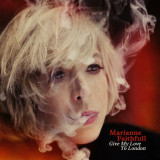
Die letzten vier Alben von Faithfull im 21. Jahrhundert waren alle stark, aber dieses übertrifft alle. Zu Marianne Faithfull's Autorenkollegen zählen Nick Cave, Anna Calvi, Ed Harcourt, Patrick Leonard und Tom McRae. Auch ihre Bandkollegen lesen sich durchaus als All-Star-Einheit, darunter Ed Harcourt, Adrian Utley, Dimitri Tikovoi, Rob und Warren Ellis. Nick Cave schrieb zusammen mit Faithfull einen Song (das zarte 'Deep Water') und einen für sie: das glorreiche 'Late Victorian Holocaust', wohl der Key-Track des Albums. 'Give My Love to London' ist ein so vollständiges Porträt der Künstlerin - zumindest seit den späten 70er Jahren - wie nie zuvor. Insgesamt zeigt es keine Abschwächung in ihrer kreativen Renaissance. Die limitierte LP-Neuauflage ist 180Gr. schwer und erscheint passend zum Artwork auf rotem Vinyl!
- A1: Lost (1 32)
- A2: Listen Here (4 18)
- A3: Hide Your Heart Away (4 52)
- B1: Send Me An Angel (4 48)
- B2: Leader Of The Band (4 29)
- B3: Yeah (4 46)
- C1: Please Help Me If You Can (4 20)
- C2: Let’s Hope Nobody Finds Us (4 42)
- C3: New Morning (5 45)
- D1: Say I Love You (4 43)
- D2: See My Way (4 01)
- D3: One More Mystery (4 49)
Lewis Taylor's legendary magnum opus: The Lost Album. "Now you're talking. That's my favourite LT album. Unlike all of the others, there isn't anything about it that embarrasses me." Straight from the genius's mouth. What can we say about this? Well, it's the most requested record ever at Be With Towers. The Lost Album was the intended follow-up to his first album but Island rejected it for fear of "confusing" the marketplace and its conception of Lewis as a soul artist. Their loss. It's a breezy sunset masterpiece.
The genesis of this incredible record needs unpicking a bit. Lewis stopped promoting the first album after a year and went home to record a completely different record that was the most un-R&B album you could probably ever hear: "I pushed in such an extreme direction the other way with what eventually became The Lost Album. It was a knee-jerk reaction to a perceived ‘trapped in R&B’ feeling I was going through at the time. Some people around me were in favour of it and others weren’t. In the end I think I lost confidence in it and did Lewis II instead." We did at least get Lewis II, which is a remarkable album, and he kept Island happy...for a bit. Not long after, Lewis was dropped. And what was to become The Lost Album could've been...er...lost. Forever.
Thankfully, however, Lewis and longtime partner Sabina Smyth revisited those scrapped demo tracks in 2003. They decided to re-arrange, re-record and then self-release them. So it was that the brand new version of The Lost Album finally dropped in late 2004. It's sheer perfection, and we don't say that lightly. The Lost Album was a fully 50/50 collaboration between Lewis and Smyth. As well as production, Sabina did a lot more writing on it, from the melody to "Listen Here" to the chord sequence for "Let's Hope Nobody Finds Us." Thankfully, Sabina is credited this time around.
No, it's not straight up "soul music" in the vein of his previous work. Yet, in its perfectly formed suite of one dozen songs, The Lost Album is dripping in soul. It's so warm, so effervescent and so alive with possibilities. It features deep, fresh imprints on well-loved, accessible sounds. It's a proper 70s style double album. Just one listen and the musical influences on The Lost Album are fairly self-explanatory, as Lewis recently told us, but it's always nice to hear that, in case we were in any doubt, he was definitely channeling Love, Yes, Brian Wilson, CSN, Laura Nyro and, of course, Todd Rundgren. The influences don't end there: "I’m particularly fond of my bass playing on that album, there’s a lot of Chris Squire going on which is cool."
Deep orchestral opener "Lost" is a sublime, harp-laced, string drenched gem, a cinematic, melancholic Axelrod-esque mini-epic that simply beguiles. Written by Smyth, it evokes Donny Hathaway's celestial "I Love The Lord, He Heard My Cry" from Extensions Of A Man. The only problem is the brief 90 seconds running time. It segues into the classic Brian Wilson-meets-power-pop-rock splendour of "Listen Here" which, with its outstanding extended harp-licked beatless intro, sounds like the younger cousin to Boston's "More Than A Feeling". We then drift into the ringing guitars of classic 70s rock anthem "Hide Your Heart Away". It's Lewis's personal favourite, "especially the multi-tracked guitar solo – I was listening to Boston at the time, which was fun." A-ha!
A new version of the heart-stopping, shoulda-been-a-massive-pop-hit "Send Me An Angel" opens Side B before the arrival of, in Lewis's completely correct words, "the clear standout, "Leader of the Band"; the perfect distillation of everything that album was trying to achieve." Soaring, piano-led Rundgren-esque power pop that makes the hairs on the back of your next stand on end. Truly, otherworldly. This is pure pop for now (and then) people. The simple jangly brilliance meets experimental prog-rock of "Yeah" sounds like simultaneously like prime CSNY and late 90s Radiohead (if they'd had a slightly more accessible bent and could write better tunes).
Oh, you wish The Beach Boys had continued writing amazing songs beyond Holland? Well, allow us to point you in the direction of the downlifting stunner "Please Help Me If You Can" and the warm textures and brilliant atmospherics of goosebump-inducer "Let’s Hope Nobody Finds Us". Words can't really describe the sheer beauty of these songs. So we'll stop trying. Just listen. Listen, listen, listen. Closing out this remarkable side of music, the accidentally Balearic "New Morning" should be blasting out at every sunrise set in Ibiza, this summer and forevermore.
The final side opens with the vaguely Beatlesey "Say I Love You". It's just classic, soaring pop-rock songwriting and should strictly be canonical. It's that good. The sassy, Stonesy swagger of "See My Way" injects enough rock'n'roll attitude to compensate for the rest of record's peace-loving, AOR sun-dappled vibe whilst album closer, "One More Mystery", emerging out of the rubble of the previous track, comes on initially like a Baroque-Pop George Harrison before piling crunching drums and screeching guitar solos atop the dreamy harmonies til close.
When asked what it means to have these records available on vinyl for the first time, Lewis is in no doubt: "It’s great and it’s really nice to be able to offer fans a different listening experience. There’s a whole other dimension with vinyl that taps into that whole nostalgia thing, well for me anyway. Something about the physical aspect of pulling it out of the sleeve and putting it on, it does tend to make you feel like you’re more engaged."
Lewis was adamant that he wanted all new artwork for The Lost Album vinyl sleeve and his brief was just the sort of classic tropical-beach-at-sunset you’d want to see on the front of a record that sounds like this. On the finished sleeve, the beach at sunset is just where we start out, before heading up through the painterly clouds and heading out into the stars. And yes, the lettering is a definite subtle nod to all those in-between-period Beach Boys bootlegs we all love. Simon Francis's sensitive mastering combines with Cicely Balston's precise cut for Alchemy at AIR Studios so the album sounds appropriately outstanding. The immaculate Record Industry double LP pressing will ensure this previously lost masterpiece stays forever found.
First Ever Vinyl Reissue (released in collaboration with the Numero Group)
180g BLACK vinyl limited to 500 copies (w/obi strip). Non-Returnable.
Little is known about the mythical band ‘Heart-Soul & Inspiration’ and their band leader, L.A. drummer and producer Vince Howard…The crooning Howard got his start in 1957 on Herb Newman’s Era label where he released a bunch of excellent Doo Wop, Funk & Soul singles. Over the ensuing decade Howard slowly began piecing together his “Orchestra” consisting of bassist Jimmy Soul, guitarist Ron Carr, and pianist John True.
Howard’s Heart-Soul & Inspiration Orchestra cut their self-titled (and only) album in 1974 for John Spriggs’ Los Angeles-based Viscojon concern under the watchful eye of R&B godfather Johnny Otis.
The result was the birth of an astonishing piece of art filled with playful sexy moans, climaxing grooves and soulful hooks. One of the many highlights on the album (and clocking in at an epic eleven minutes), Vince Howard’s “I’m Gonna Love You More” is a tantric reimagining of Barry White’s 1973 sexually charged classic. Where White was content delivering a subtle and syrupy innuendo, Howard transformed the break-heavy track into a meandering funk workout.
Sadly, after their Barry White/Isaac Hayes facsimile LP failed to gain traction, the group released their final recordings—“Funk on Down” b/w “Fallen Angel”—for Viscojon in 1975 which became a hit among prominent DJ’s in the nightclub circuit. This ushered in the end for Howard’s Heart-Soul & Inspiration project.
Heart-Soul & Inspiration was a true example of a bright light burning out way too quickly. Thankfully we are left with the unique (and very rare) document that is their self-titled album. Almost impossible to get ahold of…a well-deserved reissue has been long overdue. This is an album that deserves a prominent place in every serious Funk & Soul enthusiast’s record collection!
From Elvis in Memphis retains the distinction of being the most cohesive, passionate, mature, and emotionally invested record Elvis Presley ever made. Named one of the 500 Greatest Albums of All Time by Rolling Stone, the white-soul landmark features backing by "The "Memphis Boys" and teems with rhythm-heavy country, gospel, R&B, and blues. Lauded for its natural, open sonics, the 1969 set now comes across with remarkable clarity, presence, and warmth courtesy of a premium restoration befitting a king.
Mastered from the original master tapes, pressed on MoFi SuperVinyl at RTI, and strictly limited to 10,000 numbered copies, Mobile Fidelity's UltraDisc One-Step 180g 45RPM 2LP box set of From Elvis in Memphis unearths the ravishing inner detail, sticky rhythms, and brilliant arrangements of Chips Moman's inspired production. In short, this unparalleled reissue unlocks the spirit and gestalt of the recording and takes you inside American Sound Studio. It also brings you up close and personal with Presley's singing – widely considered by many to represent the finest of his career – located dead-centre amidst the instrumental hurricane. Equally impressive are the contributions of the aforementioned Boys, and how their Southern-brewed playing – a balance of leisure with swiftness, grandiosity with concision, freedom with control – dovetails with Presley's vernacular.
The lavish packaging and gorgeous presentation of the UD1S From Elvis in Memphis pressing befit its extremely select status. Housed in a deluxe box, it features special foil-stamped jackets and faithful-to-the-original graphics that illuminate the splendor of the recording. No expense has been spared. Aurally and visually, this UD1S reissue exists as a curatorial artifact meant to be preserved, pored over, touched, and examined. It is made for discerning listeners that prize sound quality and production, and who desire to fully immerse themselves in the art – and everything involved with the album, from the images to the finishes.
Sharing much in common with the full, rich, orchestrated Stax Records sound, From Elvis in Memphis oozes with choice nuances and distinctive flourishes that on this ultra-hi-fi edition not only arise with previously unheard transparency and sharpness, but complement and serve the whole. Take the specific tonalities and blending of violas, cellos, and horns that communicate mood and serve as counterpoints. Or lively performances of the backing quintet, and how the piano and Hammond organ trace the lines of the melodies and Presley's lead. Listen to the uplifting support provided by the cadre of backing vocalists (more than a dozen credited), unrivalled in Presley's canon and a precursor to the approach he'd soon adopt in Las Vegas.
Of course, From Elvis in Memphis precedes the icon's transition into his glitzy jumpsuit phase – and follows his merciful move away from the hoary soundtrack work that consumed nearly a decade of his creative life and prompted a rebirth that began in 1968. As the bridge between eras, the record seizes on Presley's rejuvenated attitude and commitment to quality, facets that drip from the fervency with which he delivers every word. For the same reasons, and for the fact it traces back to Presley's original roots and hip-shaking guise, the album further remains a cornerstone of American music history.
Writing about the work's 40th anniversary for Rolling Stone, James Hunter correctly observed: "From Elvis in Memphis represented the full-on immersion in the Memphis idea of Elvis Presley, the American singer second only to Frank Sinatra for the ability to conjure a particular sonic universe with his merest vocal utterance. And from the album's first song, in which a bluesy Elvis espies a woman 'Wearin' That Loved On Look,' to its last, in which a more straight-up-pop Elvis regrets the injustices of life 'In the Ghetto,' his fully engaged, newly energized voice finds its most logical album setting in years."
Incredibly, Presley and company completed more than two dozen cuts for From Elvis in Memphis. One, "Suspicious Minds," turned into the vocalist's final chart-topping single and lingers as one of his most beloved rock n' roll numbers. Even though it never formally appeared on the record, the non-album song is included here as a bonus track and attains newfound depth, energy, and swagger. Coupled with the other dozen tracks – including the sultry "Power of My Love," balladic take of Dallas Frazier's "True Love Travels on a Gravel Road," and driving cover of Hank Snow's I'm Moving On" – it makes for the finest Elvis listening experience available.
Santana's self-titled debut album announces the arrival of a new Guitar God. Made during the legendary bandleader's most fruitful and creative period, the classic 1969 set functions as an accessible entry point into the tangy worlds of Latin music by way of an intoxicating blend of Afro-Cuban percussion, jazzy tempos, exotic leads, bluesy riffs, and psychedelic accents.
Indeed, separation between Carlos Santana's fluid fills, spicy solos, and broiling grooves and pianist Gregg Rolie's soulful Hammond organ runs allows the music to come alive with a newfound freshness and radiance. Songs simmer, with each passage bursting forth with vibrant colour. Just like the equally essential follow-up Abraxas, Santana also lays claim to one of the biggest (and unfortunate) production gaffes in music history.
For nearly four decades, copies were produced with the left and right channels reversed, meaning that everything was placed in a backwards manner. This even extended to compilations on which individual songs from Santana were included. Rest assured that, in addition to boasting reference audiophile sonics, this 180g 45RPM 2LP set gets all the specifications exactly right. And with a record of this magnitude, you want everything to be perfect.
Bound by natural chemistry and earthy spirituality, the record's innovative synthesis of myriad styles goes beyond anything that came before – as well as nearly everything that's followed. Playing with the finest band that the iconic guitarist ever had, Santana doesn't water down any exotic roots or simply incorporate mainstream Western styles into a Latin framework. This is a true hybrid, responsible for opening up borders, transcending cultural divides, and, most importantly, exhilarating the senses.
Released just weeks after the band blew minds at Woodstock, the groundbreaking record stands alongside Miles Davis' Bitches Brew and Jeff Beck's Beck-Ola as a pillar of rock fusion. Featuring the Top Ten radio smash "Evil Ways" and jam favorite "Soul Sacrifice," it hasn't aged a day. Hear like never before why Rolling Stone says Santana is #149 on its list of the Greatest Albums of All Time.
Marc Richter aka Black To Comm released his debut record 20 years ago. In 2023 he is still busy releasing music under various disguises and is currently signed to the Thrill Jockey label. To celebrate this anniversary his own Cellule 75 label is re-releasing some classic out-of-print vinyl albums that originally came out on the defunct Type and De Stijl labels. The LP will feature a full-colour printed inner sleeve exclusive to this edition.
In 2009 the Type Recordings label run by John Twells had just released seminal records by Grouper, Jóhann Jóhannsson and Yellow Swans when they signed Richter and put out his breakthrough Alphabet 1968 album. The LP sold out within two weeks, receiving a glowing full-page review in The Wire Magazine by the late Mark Fisher (later reprinted in his book Ghosts Of My Life), was selected for Boomkat's Top 10 releases of the year (alongside debut albums by Leyland Kirby, Demdike Stare and Oneohtrix Point Never) and was greeted with universal praise in the underground blog network as well as established magazines such as The New Yorker and Pitchfork.
The music itself played with the notion of nostalgia without being nostalgic itself. It's the sound of half-remembered dreams, a surreal distorted vision of the past, an aural polaroid of long forgotten musics, a ghostly voice from a non-existent era.
From the original Type one-sheet:
"The mission statement for Alphabet 1968 was to write an album of "songs" for want of a better word. Short tracks which represented genre points, the milestones which stuck in Richter's mind when he thought back to his favorite records. What we arrive at is a breathtaking 10-track album which, over the course of 45 minutes, explores world music, techno, noise, avant-garde, ambient music and even exotica. Each track is linked with a loose thread of radio static or environmental sound, dragging you through the album, as if tuning in to a stray broadcast or a particularly adventurous mix. Richter has pieced the album together from hours of recordings made at his studio with home made gamelan, small instruments and loops gathered from a collection of ancient vinyl and 78 records. The scope of the album is admirable, but ignoring this, it is simply a shockingly arresting collection of experimental oddities, with references ranging from Moondog to Basic Channel by way of Bernard Herrmann. It's not hard to fall in love with Alphabet 1968, far harder would be to place exactly where the record should fit into your collection."
Mark Fisher in The Wire:
"But what if we were to take Richter's provocation seriously - what would a song without a singer be like? What would it be like, that is to say, if objects themselves could sing? It’s a question that connects fairy tales with cybernetics, and listening to Alphabet 1968, I’m reminded of a filmic space in which magic and mechanism meet: JF Sebastian’s apartment in Blade Runner. The tracks on the LP are crafted with the same minute attention to detail that the genetic designer and toymaker brought to his miniature automata, with their bizarre mixture of the clockwork and the computerised, the antique and the ultramodern, the playful and the sinister. Richter’s musical pieces have been built from similarly heterogeneous materials - record crackle, shortwave radio, glockenspiels, all manner of samples, mostly of acoustic instruments. ….. JF Sebastian's apartment was itself an update of older spaces in which science and sorcery co-existed: the workshops of ETA Hoffmann's inventor-magicians, or of Pinocchio's creator, Geppetto. I think, too, of Auguste Villiers de l'Isle-Adam's astonishing 1886 tale The Future Eve in which Edison, using the expertise he has recently acquired from inventing the phonograph, sets himself the task of constructing an artificial woman. But if there are songs here, they are sung by the gramophone and other recording and playback machines. Richter so successfully effaces himself as author that it is as if he has snuck into a room and recorded the objects as they played (to) themselves. Rather than simply automating his music, as in the case of Pierre Bastien and his mechanical machines, Richter makes us feel that he has merely recorded the unlife of objects. ….. Indeed, the impression of things winding down is persistent on Alphabet 1968. Entropy has not been excluded from Richter's enchanted soundworld. It feels as if the magic is always about to wear off, that the enchanted objects will slip back into the inanimate again at any moment."
Little Beat More is thrilled to announce the release of 'Bad Room Beats' EP by young and mysterious rough diamond of Italian beatmaking Nike Bongiorno, stashed somewhere among the woods and cliffs at the foothills of the Western Alps.
The work features four tracks, four little jewels of hip hop craftsmanship that range from a more street, underground sound, such as the opening track featuring Danish-based American rapper Blacc El, to more jazzy and chill vibes. Refined samples, beats and sounds that tell of superior taste and an eclectic and comprehensive musical culture, combined with masterful skills. Don't miss the absolute debut of this 'new cat' and his journey in search of the purest and smoothest hip hop sound essence!
Little Beat More is thrilled to announce the release of 'Bad Room Beats' EP by young and mysterious rough diamond of Italian beatmaking Nike Bongiorno, stashed somewhere among the woods and cliffs at the foothills of the Western Alps.
The work features four tracks, four little jewels of hip hop craftsmanship that range from a more street, underground sound, such as the opening track featuring Danish-based American rapper Blacc El, to more jazzy and chill vibes. Refined samples, beats and sounds that tell of superior taste and an eclectic and comprehensive musical culture, combined with masterful skills. Don't miss the absolute debut of this 'new cat' and his journey in search of the purest and smoothest hip hop sound essence!
- 1: Helplessly - Moment Of Truth
- 2: After You've Had Your Fling - The Intrepids
- 3: Welcome To The Club - Blue Magic
- 4: I Can't Move No Mountains - Margie Joseph
- 5: Supernatural Thing Part 1 - Ben E King
- 6: Mellow Me - Faith, Hope & Charity
- 7: Georgia's After Hours - Richard "Popcorn" Wylie
- 8: Date With The Rain - Eddie Kendricks
- 9: Just As Long As We're Together - Gloria Scott
- 10: Wendy Is Gone - Ronnie Mcneir
- 11: Got To Get You Back - Sons Of Robin Stone
- 12: Night Of The Wolf (Tema Del Lupo) - Ivano Fossati
- 13: Good Things Don't Last Forever – Ecstasy, Passion & Pain
- 14: Tell Me What You Want - Jimmy Ruffin
- 15: Keep It Up - Betty Everett
- 16: Free & Easy - Satyr
- 17: Each Morning I Wake Up - Major Harris
- 18: It's The Same Old Story - Act I
- 19: You Can't Hide Love - Creative Source
- 20: The Whole Damn World Is Going Crazy – John Gary Williams
- 21: If That's The Way You Feel - White Heat
- 22: Wake Up Everybody - Harold Melvin And The Bluenotes
Before there was Saturday Night Fever there was underground disco. DJs across America went out and found the music to play; dancers went out and found the clubs. At this point, in the early seventies, the disco was the venue and not a genre of music.
By the time Nik Cohn’s short story Tribal Rites of the New Saturday Night was published by New York magazine in June 1976, disco was the biggest genre of music on the charts and was about to get bigger still, becoming an all-enveloping cultural phenomenon. Cohn sold the film rights to Robert Stigwood, and his classic club yarn became Saturday Night Fever.
“Tribal Rites Of The New Saturday Night” is the soundtrack to Cohn’s story, where disco began; a 1975 score for the underground clubs of Brooklyn and Queens that played R&B, soul and Latin beats to people who lived for the weekend.
Bob Stanley has put this collection together, sourcing what was actually played in Brooklyn discos in 1974 and 1975. Only a few specific records were mentioned in Cohn’s feature, but two of them – Ben E King’s ‘Supernatural Thing Part 1’ and Harold Melvin’s ‘Wake Up Everybody’ - were cosmically great and both are included here, alongside underground favourites like Moment Of Truth’s Four Tops-like ‘Helplessly’ and Gloria Scott’s Barry White-produced modern soul classic ‘Just As Long As We’re Together’. Ivano Fossati’s incredible ‘Night Of The Wolf’ has fans in northern soul, disco and prog circles.
Without Cohn’s original story, it’s quite possible that disco would have remained an underground phenomenon – “Tribal Rites Of The New Saturday Night” paints a scene in full flower. Saturday Night Fever would eventually, if unintentionally, wreck the underground nature of this scene, and clubs like Studio 54 would destroy the democracy of the party, but for two or three years the scene was largely undocumented and magical. This album is the sound of disco before it was captured.
Originally released in 1993 on DJ Phantasy’s Liquid Wax label, it has now been repressed in conjunction with Vinyl Fanatiks on coloured vinyl – options red/white/blue.
DJ Phantasy co-production alongside his mate Simon aka DJ Kid Twist. This was produced at Jack Smooth’s studio and engineered by a young Alex Reece, who later found fame on Metalheadz.
This record, as with most of the Liquid Wax backcat, is sought after on original press so we are delighted to be able to get this repress out to you in a high quality gloss Liquid Wax housebag and white inner sleeve. Released on either red, white or blue 180g heavyweight vinyl.
Das 2007er Studioalbum "The Sum Of No Evil" von The Flower King ist das nächste Album der Wiederveröffentlichungsreihe, die in re-mastertern und teils neu abgemischten Versionen wieder erhältlich gemacht wird. Das 10. Studioalbum markierte die Rückkehr von Schlagzeuger Zoltan Csörsz und war ihr letztes, bevor sie eine 5-jährige Pause einlegten. Zum ersten Mal erhältlich auf Vinyl als Gatefold 180g 2LP+C
- 1: Big Hair (Live)
- 1: 2 Through The Night (Live)
- 1: 3 Nothing (Live)
- 1: 4 Give You What You Came For (Live)
- 1: 5 Attack (Live)
- 1: 6 Fire (Live)
- 1: 7 Heart Strings (Live)
- 2: 1 Trapped Inside (Live)
- 2: Right About You (Live)
- 2: 3 Driver (Live)
- 2: 4 Shake It (Live)
- 2: 5 Anyway I Find You (Live)
- 2: 6 River Flows (Live)
- 2: 7 Sacred Ground (Live)
180g double LPs, 45 RPM. Hot off the back of this year's critically-acclaimed new album 'New York City', Brooklyn punk institution The Men are back already with a Fuzz Club Session album due out digitally and on limited double LP vinyl June 23rd. Recorded live to tape at Brooklyn's Serious Business Studio by Travis Harrison, the live session sees the Men storm through three tracks from 'New York City', one from 'Devil Music', a cover of English punk band Blitz and nine-brand new tracks that have never seen the light of the day until now, ranging from blistering noise-rock and cathartic rock'n'roll to lo-fi country-rock and hypnotising drones. This is the 20th release in the Fuzz Club Session series from London-based label Fuzz Club, which has previously hosted the likes of A Place To Bury Strangers, Night Beats, Holy Wave, The Entrance Band and more.
- Strawman
- Blood In The Water
- The Title
- Otherside
- My America
- Living For The Fall
- Filthy
- Get High
- The Sky Is Crying
- On Two Feet I Stand
Der Seattle-Rocker Ayron Jones kündigt sein mit Spannung zu erwartetendes zweites Album an. Die 10- Track-LP, Chronicles of the Kid, erscheint am 23.06. über Big Machine/John Varvatos Records. Einen ersten Vorgeschmack auf das Album bietet Jones’ neue Single Blood in the Water”, die ab sofort auf allen Plattformen erhältlich ist, sowie das dazugehörige Musikvideo, das über YouTube gestreamt werden kann. ”Chronicles of The Kid ist die Geschichte der Wahrheit - meiner Wahrheit. Mit meiner Stimme als Stift und meiner Gitarre als Seite ist das Album ein Audio-Tagebuch der Selbstentdeckung, das von Versuchungen, Triumphen, Misserfolgen, Opfern und dem Preis des Ruhms erzählt.”
Jones ist derzeit auf Tournee, die am 18.03. mit internationalen Terminen im Vorprogramm von Daughtry beginnt.
- Villuminati
- Kerney Sermon (Skit)
- Land Of The Snakes
- Power Trip
- Mo Money (Interlude)
- Trouble
- Runaway
- She Knows
- Rich Niggaz
- Where's Jermaine? (Skit)
- Forbidden Fruit
- Chaining Day
- Ain't That Some Shit (Interlude)
- Crooked Smile
- Let Nas Down
- Born Sinner
”Born Sinner” ist das zweite Studioalbum des amerikanischen Rappers J. Cole. Es wurde am 18. Juni 2013 unter den Labels Roc Nation und Columbia Records veröffentlicht und erreichte doppelten Platinstatus sowie Platz 2 der US-Billboard 200. Zum 10- jährigen Jubiläum ab dem 16.06.2023 als 2LP verfügbar.
Smos & Baby Bee: Party Flyers And More. Reminiscences Of A Unique Era In Belgian Nightlife Culture. (1993–2010)
Throughout 326 flyers and many stories from the personal archives of Baby Bee, Smos and a bunch of friends and fellow DJs, the story of the legendary duo was recreated.
Sad news shook up our scene in April 2020: Smos had passed away. Aged 53, the Antwerp based DJ was a key figure of our Belgian nightlife scene. As yin to yang, Smos was connected to Baby Bee. The inseparable duo - who have been lovers as well - has rocked dance floors all over Belgium and abroad for 20 years of which 18 as resident DJs in Café d’Anvers and four in the Motion room in Fuse in Brussels. Having started their DJ career in the early nineties,
their story is closely linked with the beginnings of Belgian DJ culture and the electronic music scene.
Smos & Baby Bee were prominently rocking the electronic music scene since its dawn, shortly after the infamous second summer of love in the UK during the late 1980s and the rising of a new youth culture, a pivotal point in music history when under the spell of XTC a large audience became enthralled by the exciting new style of music coming from American cities such as Detroit and Chicago. They were DJing all over Belgium and through their genuine approach and straight forward mentality bringing together scenes from Brussels, Ghent, Antwerp or Wallonia. They were a DJ duo, a constellation nowadays well known but at the time truly rare. And not to forget, Baby Bee was a female acting in a mostly male world.
The visual archive presented in this publication generates an important cache of a creative culture that has been going through ups and downs, but is still very much alive and kicking to this very day. The book wishes to commemorate Smos, who is missed by many and remains in our hearts forever.
Written by Koen Galle
Flyers photographed by Baby Bee from her and Smos’ archive
Photography by Benoit Meeus, Jockum Klenell, Baby Bee & Jamila De Backer
Designed by Otis Verhoeve
Bruce Falkian is a world famous contemporary artist who exhibits at the world's most prestigious art galleries and fairs. Bruce Falkian moonlights as an agent of espionage against the Terrorism Industrial Complex. Wait... what?
To understand Bruce Falkian we first must understand the link between image and war. In the late 1800s the precursor to the video camera was invented. It was directly inspired by guns, specifically, Samuel Colt's Revolver. It borrowed not only its barrel mechanics, swapping bullets for exposures, but its terminology too. Load, point, scope, aim, shoot, flash. The camera and the gun, united by cordite, would go on to prove the most efficacious tools in shaping the modern world.
The 20th century was a laboratory when it comes to killing and image making, glorified through Hollywood and the Western genre. Propaganda would prove highly effective in creating and sustaining support for militaries fighting for ideological global control. Devised first in the aptly title 'Propaganda' (1928) by Edward Bernays, a nephew of Sigmund Freud, Advertising and Public Relations became the leading media industries, learning how to control the population through images, usually just to buy random crap they didn't need, but other times to overthrow democratically elected politicians in foreign countries. Eventually Western Liberal Democracy assumed domination, built of course on the enslavement of all peoples and nations who didn't fall in line with its specific ideas of living. The Red Scare inspired countless anti-leftist, anti-communist works of art throughout the Cold War, notably and most bizarre, funding the abstract expressionist movement as a non-ideological alternative to socialist realism art. When the Soviet Union fell, Western Liberal Democracy was able to promulgate its unhindered views around the world through its various media empires and actor states. Is it a coincidence that a third of the almost $85 billion dollar global camera equipment market is represented by the greatest propaganda beast the world has ever seen, the USA?
Guns are dangerous because of the obvious. Images are dangerous because we are bad at perceiving what is real (as any jump scare, deepfake, newsreel will attest to.) Videos aren't technically real, they are only a collection of rapidly changing static images which give the illusion of movement. It's easy for us to collectively decide that a video is real, because that's the way our brains perceive reality. People who lead the world of media understand this, which is how they are able to control us, make us invade foreign countries, vote for specific politicians, feel ugly or fat etc. However, ubiquitous as they are, it seems that the image is in crisis. It seems that we've run out of them. Or perhaps our understanding of an image is changing, with the aid of near instantaneous text-to-image AI technology. So what does this mean for guns? What does this mean for war? How will images be used as an aid to war in the 21st century? It remains to be seen, but Bruce Falkian will be a useful agent.