Cerca:ab logic

Generi
Tutto
Jura - Formality Jerne-Site LP 2x12"

Following the precursor singles of 2021, Formality Jerne-Site’s unveiling is finally cast upon her already-growing fanbase. Trained classically as a composer and completing a masters at the Royal Danish Academy of Fine Arts, Jura introduces a highly-anticipated playground of carefully sculpted characters, plots and lessons - sometimes charming, sometimes nefarious, always absolute and sincere. A fictional land opens its doors and roof to us. A trio of trans kids run amok in rural suburbia. Various sorcerers of the wild future enter the scene on some songs; on others, the mind is cast to sun-drenched drives and journeys of yesteryear. At the heart is a pop sensibility: yearning, reflections, vanity, guesswork, hope. Jura is adamant about practice and precision. Dead seriously she offers, about making music: ‘Nothing should be half-hearted or an accident.’ There’s a maturity and elegance to her compositions, arrangements that - although at first sound seem abstract - lean away from experimental, somehow. She sing-speaks in English, and somehow not typically theatrically for such a play of a record. The theatrics are all real. It’s a fantasy land for sure, but it's based on hard facts. Like academia subdivided into poetry. It’s that weird-ass specificity she mentioned. Opener ‘Someone’s Lifework’ introduces less a choir of voices, than a choir of personalities. The art of storytelling is at the center of the musical expression. A protagonist relinquishes control of chaos that’s bigger than them on a perilous journey on some vessel: they comfort their co-passengers. There’s a sense that the hero - or anti-hero - might be more canny and cunning than the sweetness they first sell to fellow players. 'Is this our getaway chance?’ sings fellow Copenhagener Ydegirl amongst swelling synths and reverb that become so definitely Jerne-Site as the quest continues. The search? For intimacy, perhaps. ‘Same late Age (dIcK bIfFeReNcE)’ imbibes at once, some further disorientation, perhaps a little hallucinatory feeling which may come over the listener. Through a synthesizing of political themes that work across time ‘Same Late Age (dIcK bIfFeReNcE)’ bears reminiscences of the musical expressions of anti-capitalism in the 1980es, although in a new body and context. “I have a feeling that music reconjures societal morals and ideas from the time in which it was written when we press play or hear a live performance. From the moment at a concert when the symphonic orchestra starts tuning in, the time traveling begins. So I imagined how it would be to be trans sitting there playing the first violin, having the job of producing that first tone that all the other musicians around me tune in ona, ” Jura explains. The listener yearns for more; and subsequent tracks deliver. On ‘How Intimate It Gets,’ Jura meditates on the futility of closeness, begging the audience to enter the blood and guts of their own entanglements, the blueprints of focusing entering. Jura sings richly about fingers being lines, pointing or bending, and we’re reminded of their own wicked ways we can’t control. A history of singing in choirs informs the harmony of myriad inner voices heard across the album. At once prophetic and enigmatic, some of the songs rearrange historical events out of pop musical language. The enormously entertaining ‘Pinot-Botticelli Toast to European Users’ conjures scenes of Cold-War world leaders stuck on a cruise in the Transatlantic vacuum, and the protagonist watches a devastating heartbreaker careen on into the picture, led by his own hips on ‘The Lasceaux Associate’. Finally, on title track ‘Formality Jerne-Site’, American English rises to the occasion like a verdict around the narrative of three trans teenagers in rural Colorado: language turns into something sensual and haptic, playing with the snare and sizzle of syllables. The words twist and bend, while the music follows its own synaesthetic logic: “around us pop culture made a vow to a normative desire, drawing in like water color percussion”. Anyines is a site of play and documentation, with a canon so far quite nice. Their future is one that envisions supporting the galaxies their dear friends embody, be it music, performance, video games or beyond. Highlights from their discerning back catalogue include myriad formats: live and digital, plus releases binded to physical artefacts that enhance the live experience such as sculptures and scents. Their history also includes disappearing time-sensitive shadow-tracked material and cross-disciplinary opportunities that reflect deep professionalism and a totally non-schooled semblance of sound and drama. Recent releases include a dance-theatre soundtrack, a traditional shiny pop record, and the acclaimed ML Buch sophomore, Skinned.

pre-ordina ora08.07.2022

dovrebbe essere pubblicato su 08.07.2022

13,99
Valentina Goncharova - Ocean

Valentina Goncharova's fundamental conceptual musical work released in full uncut form as part of Hidden Harmony Lost Tapes series (HHLTS01). Restored and mastered from the original 6.3 mm analog tapes. A large-scale work comprising eleven parts of varied, brooding, mystical reflection in which the author alters the instrumentation to fit both programmatic and musical character of each section.
Includes a 12-page booklet, which detailly explains the album's conceptual basis, background and creation context, and provides insights into unique sound recording and technical solutions adapted during the album recording in 1988. Created and written with direct involvement of V. Goncharova and I. Zubkov.

From the Liner notes:

"My task is to allow the listener to penetrate deeper into the music. The music is wholly improvisational. It has no concept in the rational sense of the word. It’s concept is purely intuitive. It presumes The Law of Analogies: “As above so below. Man is the same as the Universe. The Universe is the same as Man.” ("Emerald Tablet” by Hermes Trismegistus"). This intuition is a kind of rephrased logic which uses many more symbols which contain not only philosophical but also imaginative meanings/ visionary interpretations.

This music is a stream of consciousness in its purest form: not an imitation of a stream, as in the ‘suggestive poetry’ of the 20th century, but a stream where one flow is superimposed on another (a multilateral passage of recording). And, if we think this flow of music will be better understood under the influence of a verbal flow, then the verbal flow should also be more intuitive and associative, as objective for this short write-up you are currently reading.

Ocean did not appear within the coordinate system of logical scientific thinking of the last four centuries. It can be said that it is based on an intuitive concept of representations of the world which are captured in music figuratively. Similar to how myths were created in time immemorial with only partial support from verbal associations. Ocean is an experience of passing the Human Soul and Mind through the different states of the material world: birth, development, and achievement of perfection, transformation at the points of The Way and Silence, the manifestation of the harmony of the world (Om), which until then had remained in a latent state. It is averse to both mainstream contemporary physics and fringe scientific research. It exists outside their explanatory power.

Ocean is the source of all forms that can receive their life within time and space. Here it is. It has everything: beautiful and terrible, good and evil, self-sacrifice and betrayal. Boundless love and inspired creativity. But contact does not happen immediately. The memory of a bygone civilization is still fresh, and of the dearest things left with it."

Written, performed and produced by Valentina Goncharova
Composition A1 to C4 recorded in Kose subdistrict, Tallinn, Estonia (Recording period August-October 1988)
Composition D1 recorded in artist´s home studio in Lasnamäe subdistrict, Tallinn, Estonia (Recording period May 2021)

pre-ordina ora01.07.2022

dovrebbe essere pubblicato su 01.07.2022

30,04
Various - In Trux We Pux 04

140g Black vinyl LP – Printed inner sleeve – Sealed plastic sleeve


In Trux We Pux is an editorial project organized by the Porto based label and collective Favela Discos. Focusing on the city’s thriving experimental and improvised music scene, it sets out to portrait in a series of four volumes some of the characteristic sounds and collaborative practices that have been in development in Porto during the last few years.

In Trux We Pux 04 is the last in a series of four records organized by Favela Discos, set out to shine a light on Porto’s thriving experimental and improvised music scene. Throughout the collection the label tries to expose the eclectic sound and collaborative practices that have been in development in the last few years in the city by promoting the collaboration between artists and the creation of new collective improvisation pieces.

As the first album dwelled into the electronic spectre of the scene, this volume veers itself to the physical side of experimental and improvised explorations. Although there is space for outsiders manipulating the sound by electronic means, most of the music in this album is plucked, bowed, percussed or sung. The artists themselves are as varied as the music they played, among the 13 artists that collaborated for the creation of this album are many promising newcomers but also some of the more recognizable and relevant names in the scene, with the presence of the Sonoscopia founder Gustavo Costa, João Pais Filipe one of the most characteristic drummers in Portugal, and the DIY duo and underground staple Calhau!.

As we could suspect, the diverse selection of musicians, while providing us a view on the various kinds of musical languages that populate the city’s scene, also creates a dynamic collection of sounds. Spanning a large gamut of sub-sub-genres, from near-musique concrète to tribal noise, the album is a rollercoaster collage that miraculously achieves logic and cohesion, like a voyeur listener taking us on a journey through an abandoned mall where most of the bands in Porto rehearse, whose halls reverberate with a cacophony of music.

pre-ordina ora10.06.2022

dovrebbe essere pubblicato su 10.06.2022

12,81
Album Club - Album Club LP

Like a book club - only with albums.A simple, but beautiful concept

MJ McArthy (Zoey Van Goey) asked a small group of his pals to gather at The Laurieston – that mystical voodoo Glasgow boozer…that adored bar that defies all reason and logic – and they would talk about a record, track by track, and see what happens.They didn't know each other. There were theatre people:, Playwrite Douglas Maxwell, Isobel McArthur (actress and writer, the genius behind smash hit Pride and Prejudice Sort Of) and Cathy Forde (acclaimed YA novelist and playwright) and Rhona NicDhughaill who works for Gaelic arts company Theatre Gu Leor, as well as being an old band buddy of MJ's from their student days. Peter Geoghegan, award- winning firebrand political journalist and writer of the wonderful Democracy For Sale was there. And lastly - and slightly freaking them out on that very first night - were two actual Delgados: Emma Pollock and Paul
Savage.

And then…MJ had songs. MJ always has songs. And he started to wonder if this particular group of humans could, as well as talk about an album, make an album? For the musicians I don't suppose that was a particularly weird notion, but for the rest of the band it was quite a leap. However, MJ was adamant…let Album


Club become ALBUM CLUB. The Band!

pre-ordina ora13.05.2022

dovrebbe essere pubblicato su 13.05.2022

28,53
Other Joe - Blessings From Th Eheart

Other Joe is the pseudonym of producer, mastering engineer, and label-head Joe Buchan, an individual with a penchant for free-wheeling experimentation and genre-crossing musical tastes. Drawing upon a wide array of sounds that pay homage to his love of both the beautiful and the abrasive, Joe devours indiscriminately whatever sounds might cross his path, the result giving birth to the unique musical journey that is listening to an Other Joe record. After a few years spent playing in bands and releasing small bodies of work under different monikers, Joe released what many listeners know as his breakout record, Alien Haze, a beautiful collection of recordings that oscillate from collages of field recording and found sound, sublime balearic-era saxophone symphonies, and introspective neo-classical psychedelia. His latest work, blessing from th eheart (typo intentional), expands on Other Joe’s love for blending field recording and acoustic instruments with electronic processing. Beginning by reviewing the catalogue of creative notes he had archived since the release of Alien Haze in March 2019, Joe picked apart voice memos, Logic projects, iPhone videos and whatever else he could lay hands on. Says Joe, “looking over it all at once, the musical ideas I had been attracted to over the past eight or nine months started to make a bit more sense - I could see that there were instruments I was liking, or chord progressions that I kept coming back to, structures and forms that I had found engrossing. Sort of like putting together a jigsaw puzzle that I had made without realising.”

pre-ordina ora13.05.2022

dovrebbe essere pubblicato su 13.05.2022

25,92
Dead Head - Slave Driver LP

“Slave Driver” pushes the boundaries of Thrash Metal once again, intense and aggressive in its purest form available! Dead Head have been around since the late 80`s which was a golden and extremely fertile period for Thrash Metal, and it shows. Their style is just about as aggressive as Thrash can logically get before having to refer to them as death metal whilst thankfully managing to retaining a slight 80`s vibe. Everything about “Slave Driver” just ooozes unadulterated seething hatred, and aural violence. The raging, savage, heavy yet scything hyperfast guitar riffs are so crammed with maliciousness that you instantly realise that Slayer have in all reality been effectively dead for years. The vocals which easily rival any Thrash band in history for delivering snarling savage hatred, should show Kreator what they have been incapable of producing since Pleasure to Kill. The fast cannon like drumming is unrepentant, and forms a perfect malevolent percussive backing for this brutal aural bashing. The mix is just as professional as you could want from a Thrash album, the guitar tone is crunchy and vocals are just right: spitting hatred and virtue in the same breath. If the band’s previous albums haven’t cemented them into the annals of Thrashistory just yet, “Slave Driver” will seal the deal. It’s an impressive statement from an overlooked band. Dead Head have remained very consistant with their releasing of very high quality Thrash/Death music for over thirty years. Hail the best Thrash band around today, they have been criminally overlooked for far too long.

pre-ordina ora29.04.2022

dovrebbe essere pubblicato su 29.04.2022

31,05
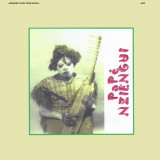
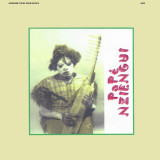
Papé Nziengui et son Groupe - Kadi Yombo LP 2x12"

Kadi Yombo, published in 1989, is the most successful album in the quest for a fusion between tradition and modernity in Bwiti harp music of the Tsogho people of Gabon. Combining beating rattles with a layer of synthesizers, Papé Nziengui blends in a contrapuntal dialogue characteristic of harp playing: male song in appeal and female choir in response, male voice of the musical arc and rhythms of female worship. But above all it’s Tsogho ritual music and modern studio orchestration. The result is an initiatory itinerary of 10 musical pieces which are all milestones likely to be simultaneously listened to, danced, meditated on, and soon acclaimed. In the years since, Nziengui has traveled he world from Lagos to Paris, from Tokyo to Cordoba, from Brussels to Mexico City to become a true icon, the emblem of Gabonese music.

Like Bob Dylan, "electrifying" folk and Bob Marley mixing rock with reggae, some purists have criticized Nziengui for having distorted the music of harp by imposing a cross with modern instruments. They even went so far as to claim that Nziengui was just an average harpist covering his shortcomings with stunts that were only good for impressing neophytes; like playing a harp placed upside down behind his back or playing two or three harps simultaneously. Sincere convictions or venomous defamations, in any case, Nziengui never gave in to such attacks, imposing himself on the contrary to pay homage to the elders (Yves Mouenga, Jean Honoré Miabé, Vickoss Ekondo) while instructing the maximum of young people. He is thus the promoter of many young talents, the most prominent of which is certainly his nephew Jean Pierre Mingongué. In a conservative society where the sacred is confused with secrecy, exposing the mysteries of Bwiti in broad daylight can be punished by exclusion or even execution.

Papé Nziengui has always claimed that he faces such risks because he never felt enslaved to a community that governs his life, that regulates his conduct, that has a right of censorship over his activities. Like Ravi Shankar, the famous sitarist, Papé Nziengui is a man of rupture but also of openness, a transmitter of culture. As proof, he has established himself in Libreville, Gabo’s capital, as the main harpist for sessions and concerts, accompanying the greatest national artists (Akendengué, Rompavè, Annie-Flore Batchiellilys, Les Champs sur la Lowé, etc.) as well as foreign artists (Papa Wemba, Manu Dibango, Kassav', Toups Bebey, etc.). In 1988, he was the first harpist to release an album in the form of a cassette produced by the French Cultural Center (Papé Nziengui, Chants et Musiques Tsogho). At the same time, he created his own group (Bovenga), combining traditional music instruments (musical bow, drums, various percussion instruments, etc.) in the framework of a true national orchestra, which gave the first concert and the first tours of a traditional music that was both modern and dynamic, thus "democratizing" the harp, to the dismay of certain purists.

On the other hand, in modern music, dominated by the logic of profit or even commercialism, artistic creation must often be adjusted for a specific audience based on reason rather than heart. But instead of allowing himself to be distorted, Papé Nziengui has always tried to produce music that is not a caricature, worthy in its expression as in its content, of the sacredness and transcendence of the music of the Origins. This is what makes Nziengui not only the musician, but the man someone whose age hasn’t altered any of his freshness or authenticity

pre-ordina ora08.04.2022

dovrebbe essere pubblicato su 08.04.2022

32,73
Papé Nziengui et son Groupe - Kadi Yombo LP

Kadi Yombo, published in 1989, is the most successful album in the quest for a fusion between tradition and modernity in Bwiti harp music of the Tsogho people of Gabon. Combining beating rattles with a layer of synthesizers, Papé Nziengui blends in a contrapuntal dialogue characteristic of harp playing: male song in appeal and female choir in response, male voice of the musical arc and rhythms of female worship. But above all it’s Tsogho ritual music and modern studio orchestration. The result is an initiatory itinerary of 10 musical pieces which are all milestones likely to be simultaneously listened to, danced, meditated on, and soon acclaimed. In the years since, Nziengui has traveled he world from Lagos to Paris, from Tokyo to Cordoba, from Brussels to Mexico City to become a true icon, the emblem of Gabonese music.

Like Bob Dylan, "electrifying" folk and Bob Marley mixing rock with reggae, some purists have criticized Nziengui for having distorted the music of harp by imposing a cross with modern instruments. They even went so far as to claim that Nziengui was just an average harpist covering his shortcomings with stunts that were only good for impressing neophytes; like playing a harp placed upside down behind his back or playing two or three harps simultaneously. Sincere convictions or venomous defamations, in any case, Nziengui never gave in to such attacks, imposing himself on the contrary to pay homage to the elders (Yves Mouenga, Jean Honoré Miabé, Vickoss Ekondo) while instructing the maximum of young people. He is thus the promoter of many young talents, the most prominent of which is certainly his nephew Jean Pierre Mingongué. In a conservative society where the sacred is confused with secrecy, exposing the mysteries of Bwiti in broad daylight can be punished by exclusion or even execution.

Papé Nziengui has always claimed that he faces such risks because he never felt enslaved to a community that governs his life, that regulates his conduct, that has a right of censorship over his activities. Like Ravi Shankar, the famous sitarist, Papé Nziengui is a man of rupture but also of openness, a transmitter of culture. As proof, he has established himself in Libreville, Gabo’s capital, as the main harpist for sessions and concerts, accompanying the greatest national artists (Akendengué, Rompavè, Annie-Flore Batchiellilys, Les Champs sur la Lowé, etc.) as well as foreign artists (Papa Wemba, Manu Dibango, Kassav', Toups Bebey, etc.). In 1988, he was the first harpist to release an album in the form of a cassette produced by the French Cultural Center (Papé Nziengui, Chants et Musiques Tsogho). At the same time, he created his own group (Bovenga), combining traditional music instruments (musical bow, drums, various percussion instruments, etc.) in the framework of a true national orchestra, which gave the first concert and the first tours of a traditional music that was both modern and dynamic, thus "democratizing" the harp, to the dismay of certain purists.

On the other hand, in modern music, dominated by the logic of profit or even commercialism, artistic creation must often be adjusted for a specific audience based on reason rather than heart. But instead of allowing himself to be distorted, Papé Nziengui has always tried to produce music that is not a caricature, worthy in its expression as in its content, of the sacredness and transcendence of the music of the Origins. This is what makes Nziengui not only the musician, but the man someone whose age hasn’t altered any of his freshness or authenticity

pre-ordina ora08.04.2022

dovrebbe essere pubblicato su 08.04.2022

10,29
Papé Nziengui et son Groupe - Kadi Yombo LP

Kadi Yombo, published in 1989, is the most successful album in the quest for a fusion between tradition and modernity in Bwiti harp music of the Tsogho people of Gabon. Combining beating rattles with a layer of synthesizers, Papé Nziengui blends in a contrapuntal dialogue characteristic of harp playing: male song in appeal and female choir in response, male voice of the musical arc and rhythms of female worship. But above all it’s Tsogho ritual music and modern studio orchestration. The result is an initiatory itinerary of 10 musical pieces which are all milestones likely to be simultaneously listened to, danced, meditated on, and soon acclaimed. In the years since, Nziengui has traveled he world from Lagos to Paris, from Tokyo to Cordoba, from Brussels to Mexico City to become a true icon, the emblem of Gabonese music.

Like Bob Dylan, "electrifying" folk and Bob Marley mixing rock with reggae, some purists have criticized Nziengui for having distorted the music of harp by imposing a cross with modern instruments. They even went so far as to claim that Nziengui was just an average harpist covering his shortcomings with stunts that were only good for impressing neophytes; like playing a harp placed upside down behind his back or playing two or three harps simultaneously. Sincere convictions or venomous defamations, in any case, Nziengui never gave in to such attacks, imposing himself on the contrary to pay homage to the elders (Yves Mouenga, Jean Honoré Miabé, Vickoss Ekondo) while instructing the maximum of young people. He is thus the promoter of many young talents, the most prominent of which is certainly his nephew Jean Pierre Mingongué. In a conservative society where the sacred is confused with secrecy, exposing the mysteries of Bwiti in broad daylight can be punished by exclusion or even execution.

Papé Nziengui has always claimed that he faces such risks because he never felt enslaved to a community that governs his life, that regulates his conduct, that has a right of censorship over his activities. Like Ravi Shankar, the famous sitarist, Papé Nziengui is a man of rupture but also of openness, a transmitter of culture. As proof, he has established himself in Libreville, Gabo’s capital, as the main harpist for sessions and concerts, accompanying the greatest national artists (Akendengué, Rompavè, Annie-Flore Batchiellilys, Les Champs sur la Lowé, etc.) as well as foreign artists (Papa Wemba, Manu Dibango, Kassav', Toups Bebey, etc.). In 1988, he was the first harpist to release an album in the form of a cassette produced by the French Cultural Center (Papé Nziengui, Chants et Musiques Tsogho). At the same time, he created his own group (Bovenga), combining traditional music instruments (musical bow, drums, various percussion instruments, etc.) in the framework of a true national orchestra, which gave the first concert and the first tours of a traditional music that was both modern and dynamic, thus "democratizing" the harp, to the dismay of certain purists.

On the other hand, in modern music, dominated by the logic of profit or even commercialism, artistic creation must often be adjusted for a specific audience based on reason rather than heart. But instead of allowing himself to be distorted, Papé Nziengui has always tried to produce music that is not a caricature, worthy in its expression as in its content, of the sacredness and transcendence of the music of the Origins. This is what makes Nziengui not only the musician, but the man someone whose age hasn’t altered any of his freshness or authenticity

pre-ordina ora08.04.2022

dovrebbe essere pubblicato su 08.04.2022

32,73
MOON DUO - OCCULT ARCHITECTURE VOL 1 LP

Meaning all things magick and supernatural, the root of the word occult is that which is hidden, concealed, beyond the limits of our minds. If this is occult, then the Occult Architecture of Moon Duo’s fourth album - a psychedelic opus in two separate volumes released in 2017 - is an intricately woven hymn to the invisible structures found in the cycle of seasons and the journey of day into night, dark into light.

Offering a cosmic glimpse into the hidden patterning embedded in everything, Occult Architecture reflects the harmonious duality of these light and dark ener¬gies through the Chinese theory of Yin and Yang.

In Chinese, Yin means “the shady side of the hill” and is associated with the feminine, darkness, night, earth. Following this logic, Vol. 1 embraces and embod¬ies Moon Duo’s darker qualities — released appropriately on February 3, in the heart of winter in the Northern Hemisphere.

According to guitarist Ripley Johnson, “the concept of the dark/light, two-part album came as we were recording and mixing the songs, beginning in the dead of winter and continuing into the rebirth and blossoming of the spring. There’s something really powerful about the changing of the seasons in the Northwest, the physical and psychic impact it has on you, especially after we spent so many years in the seasonal void of California. I became interested in gnostic and her¬metic literature around that time, especially the relationship between music and occult qualities and that fed into the whole vibe.”

Adds keyboardist Sanae Yamada, “the two parts are also intended to represent inverted components of a singular entity, like two faces on the same head which stare always in opposite directions but are inextricably driven by the same brain.”

pre-ordina ora04.04.2022

dovrebbe essere pubblicato su 04.04.2022

26,68
Moods - Music Ruined My Life LP

Dutch producer returns to Boogie Angst for instrumental sophomore LP

Rotterdam, The Netherlands - Boogie Angst proudly presents Music Ruined My Life, the brand new instrumental LP from Rotterdam-based artist and producer Moods.

Dropping in the wake of front runner singles 'Talk About It,' and 'Music Saved My Life',' the Dutchman's notorious fusion of soul, R&B, and alternative influences takes a whole new dynamic courtesy of his first fully live recorded offering.

Recorded live in the city of Leiden during the peak of the pandemic alongside a full band, the LP taps effortlessly into the balance of soulful and jazz-inspired undertones that have hallmarked the project since breakthrough single 'Love Is Real.' A tastemaker favorite and label staple, the LP shows a more intricate and uncaged spin on the Moods sound, which has been consistently hailed by tastemakers globally and sampled by the likes of Logic.

The supple guitar plucks and resonating brass of 'Deeper Water' sets the LP in motion, building towards the funkier and perkier swells of album cuts such as 'Ecstacy' and 'Push Pull.' Capped by 'Return To 4ever,' a sultry and deeply atmospheric fusion of jazz and contemporary soul sounds, the eight-track endeavour shows that for all his streaming and collaborative success, the rich musicianship of the Moods project has not waivered.

"There really wasn't a huge concept or target for this record, it was more about tapping into the pure joy of making and creating music," he explains. "The pandemic was such a weird time, there was a lot of uncertainty in all aspects of life. So it almost felt like the perfect time to try something new. Having the band together in one room was a real rush, I liked how the record came together and how each artist brought their own energy to the project.

"I enjoy working with vocals, and I think the vocalists I have worked with on projects so far have been amazing. But when you take that element out and focus more on the instrumentation and arrangement, it's a really different experience, and that's something I really enjoyed for Music Ruined My Life.

Moods garnered more than 30m+ streams globally for debut LP Zoom Out, and has continued to leap from strength-to-strength courtesy of his soulful take on the boundaries between electronic and contemporary R&B.

non in magazzino

Ordina ora e ordineremo l'articolo per te presso il nostro fornitore.

20,97

Last In: 4 years ago
Tülay German & François Rabbath - S/T & Hommage to Nazım Hikmet LPs

Remastered vinyl reissues of the two essential albums by Turkish folk singer Tülay German, starting with the self-titled release (1980) and followed by "Hommage to Nazım Hikmet" (1982) in early 2022.

Referring heavily on turkish poets and the tradition of aşıks (singer-poets and wandering bards) these two albums represent unique and modern interpretations of turkish folk songs unmatched to this day. A matured artist with full conviction at the height of her powers!
Back in the 60s Tülay German (*1935 in Istanbul, Turkey) shook the turkish music landscape with several 7" records. Most notably her first 7" record "Burçak Tarlası" (1964) is now considered the cornerstone of what was to become the Anadolu Rock/ Pop movement and underlines her rebellious nature and sense of justice.
But due to the increasing repression Tülay German and her lifelong partner and intellectual impetus Erdem Buri decided to leave Turkey a few years later. In fact, an impending prison sentence for Erdem Buri for translating Hegel's "Dialectic and Science of Logic" and
Plekhanov's "Fundamental Problems of Marxism" led the couple to emigrate to France.

In France Tülay German signs a major contract with Philips resulting in many 7" releases sung in french under her french moniker Toulaϊ. In the long run Tülay German doesn't feel quite comfortable with this major deal. And thus, despite the success and recognition she had
gained, she decides to quit the contract with Philips!
Later on she signs to independent world-music label Arion to pursue her actual artistic goals more in line with her origin and temperament. Back to her mother tongue, Tülay German records above mentioned albums for Arion under full artistic freedom, the only full-lenghths
in her 20+ years career. Alongside with double-bass virtuoso and turkophil François Rabbath (*1931 in Aleppo, Syria) the albums consist of aşık traditionals and intonated poems mainly
by Nazım Hikmet. Her passionate voice and the restrained arrangements of François Rabbath turn these centuries old melodies and poems into glowing manifestos for love and
justice. The fruitful collaboration of these artists-in-exile adds significantly to the rich heritage of turkish folk music.

The self-titled debut, which was awarded with the prestigious "Grand Prix du Disque" of Académie Charles Cros in 1981, is now seeing a vinyl reissue after 40 years.
Tülay German ended her musical career in 1987 and after the death of Erdem Buri in 1993 she retired from public life completely, leading a quiet life in Paris where she still lives to this day. In 2021 Tülay German was awarded with the Lifetime Achievement Award by the Istanbul Foundation for Culture and Arts, Turkey.

non in magazzino

Ordina ora e ordineremo l'articolo per te presso il nostro fornitore.

20,13

Last In: 4 years ago
Hefner - Breaking God's Heart

Nearly 24 years ago, on 7th July 1998, the first Hefner LP was released, it garnered some great reviews, ensured the band were to become one of Peel’s favourites (they had 5 entries in 1999’s festive 50!), and cemented their reputation as Britain's largest small band. NME - “truly independent, unassuming and painfully honest: the sound of thin, white indie dukes in spectacles.” Melody Maker - “heart-skeweringly astute” combination of “grimly sweet lyrics and delicate, tentative tunes.” Time Out - “awe-inspiring in their naked honesty” More recently, the album was number 25 in Pitchfork’s 50 greatest Britpop albums, above A Northern Soul (Verve), Fuzzy Logic (Super Furry Animals), Vauxhall and I (Morrissey) and Tellin’ Stories (the Charlatans) Breaking God’s Heart now gets the essential 20th anniversary vinyl re-issue, accompanied by some shows where Hefner frontman, Darren Hayman, will play the album in full Here’s what Darren has to say about the record now: Breaking God's Heart is an awkward, over confident start to my career. I have yet to get to grips with it again properly in preparation for these anniversary shows. It's so far away in my past that I have some difficulty in relating to the person who made it. Mostly when I hear it I'm just amazed at the confidence, and possibly arrogance, I had then. I insisted on mostly first takes being used, vocals being recorded live in the room with the instruments, a ban on any reverbs or ambience being used. It was like I was trying to sabotage my career at the first hurdle. Many of those decisions were based on half understood, interviews with my idols from the American Lo-Fi scene but I really didn't know what I was doing. It does make a bizarre and caustic record though, and I know there are plenty of people who think this is my best work and I never got back to the blunt energy of these recordings. I do see their point. Quotes - Hefner's is a bedsit world of spindly guitar and towering passions; of skewwhiff ideals and surprisingly smooth melodic surges; of awkward outbursts and slow-burning lo-fi for lovers… 'Breaking God's Heart' is all about sparkling melodies, twinkly-eyed poetry, intimate confessions, a thrillion knowing references to sex, soul and sadness and the sort of chipper attitude that says: 'This is a record you will relish for years to come'. So save yourself time, start treasuring it now. 8/10 NME // Hefner are running on the same rock-not-rock fuel as early Violent Femmes or The Modern Lovers, and like those groups are expert at building emotionally charged arrangements by adding or subtracting at precisely the right time. 8/10 Drowned In Sound

pre-ordina ora18.03.2022

dovrebbe essere pubblicato su 18.03.2022

24,33
Vladislav Delay - Anima 2x12"

Vladislav Delay

Anima 2x12"

2x12inchKEPLARREV09LP
Keplar
18.03.2022

2001’s »Anima« was the third album released by Sasu Ripatti under his Vladislav Delay moniker and marked a turning point in the stylistic development of the prolific producer. Clocking in at roughly 62 minutes, the single piece draws on dub aesthetics while working with Musique concrète-like methods through the liberal use of samples to create a dreamlike logic. Muffled voices, lush chords, subtle rhythms and indefinable sound events are not so much integrated into a composition with a predetermined outcome but rather engage with each other freely in a constant sonic flow, forming constellations in one moment before moving on to connect with other elements in the next one. »Anima« marked the first time Ripatti was using a DAW in his working process, creating a piece constantly in motion that subtly evolves over time. This vinyl reissue on the German Keplar label follows up on the 20th anniversary edition of 2000’s »Multila« and will be complemented by a ten-minute long version of the original piece, previously only available on the CD version released by the artist on his own Huume label in 2008.

After the release of his »Ele« and »Entain« albums in 1999 and 2000, respectively, Ripatti took the 1998 independent movie »Hurlyburly« as a conceptual starting point to experiment with different gear and production methods. »Until then I had worked with an old MSQ-700 MIDI sequencer and an Ensonic EPS16 sampler/sequencer that had one or two MB of sampling memory and mixed the music live on a Mackie, which was very limiting arrangement-wise,« says Ripatti. Loading a slightly shortened version of the film into his DAW however allowed him to play along to it with the DrumKAT MIDI controller, triggering and playing all the sounds that can be heard on »Anima« while also contributing synths, bass and other sounds during repeated playthroughs before mixing a total of six stereo tracks together. »This way, after I had edited out most of the few parts that had music in them, I was in the movie; almost like an extra character playing music,« explains Ripatti. »This was certainly the most organic way in which I have ever made music, and I have never again approached another record like this.«

While »Anima« sounded like an unusual Vladislav Delay record at the time of its release, it also prefigured many of the developments Ripatti would go through in the course of his long career. Combining visceral immediacy with a sense of abstraction, it is far more than a mere missing link in his discography but rather a conceptually and musically outstanding piece of work that remains as engaging as it was 21 years ago.

All tracks composed and recorded by Vladislav Delay.
Originally released on Mille Plateaux in 2001.
Remaster and cut by Kassian Troyer @ D&M.
Art direction and design by Marc Hohmann.
Text by Kristoffer Cornils.

non in magazzino

Ordina ora e ordineremo l'articolo per te presso il nostro fornitore.

23,15

Last In: 2 years ago
crys cole - A Piece Of Work

Sound can be a labyrinth, a twilight drift. Sound can truely unfold when it escapes logic or categorisation. For it is never really one thing or another, especially abstract, collaged or found sound, as it is always connected to a time and a place, or sometimes to an intention, or a notion, or – even more vague – to something as dubious as a feeling. So all this is inevitably inherent in a sound too. Sound is a fact but also an inbetween. In A Piece Of Work, concrete composer crys cole takes us on a journey through those inbetween places. Fragments collected over time in Oslo, Berlin, Vienna, Winnipeg, Melbourne and Lisbon were later arranged and assembled into an invented space, a story arc, a freeform poem. cole's work is one of dynamics and proximity, of complexity and sensitivity. One that embraces both montage and movement. Originally commissioned by Radiophrenia (Glasgow, Scotland), where it premiered in 2019, A Piece Of Work has been developed through live performances and studio sessions, naturally progressing over time and eventually leading to this final version presented here on vinyl.

Composed, performed and recorded by crys cole, 2019-21. With additional percussion by Oren Ambarchi and electronics by Seiji Morimoto. Mixed with Joe Talia at Good Mixture in Berlin, 2021. Mastered and cut by Anne Taegert at Dubplates & Mastering in Berlin, 2021. A Piece Of Work was commissioned by Radiophrenia in Glasgow, Scotland, and originally premiered in 2019.

pre-ordina ora04.03.2022

dovrebbe essere pubblicato su 04.03.2022

20,46
The Shivas - Feels So Good // Feels So Bad

"The core of confusion and upheaval that drove some of the band's most fiery earlier work, however, is replaced by a more stabilized undercurrent, a mentality that's reflected in songs not afraid to try new things and honestly explore uncomfortable feelings. When combined with exciting production and songwriting choices, that mindset helps make Feels So Good // Feels So Bad one of the Shivas' best albums.” - AllMusic "Portland, Oregon-hailing psych-surf band The Shivas accomplish another time-traveling, reverb-ridden sound that refuses to get boring. Jared Molyneux’s guitar work knows when to be bright or bashful at the right times, breaking into guitar solos that possess a late-’60s groove… The Shivas seem to blissfully flourish” - Paste "a consistent treat for the ears” - The Vinyl District "Though the psych-tinged guitar riff that drives 'Feels So Bad' was written while The Shivas were still on the road, its lyrics didn’t fall into place until the band was well into lockdown, unsure of when they’d be able to return to their most imperative true love: Live shows... Accordingly, 'Feels So Bad' permeates with a sense of urgent desperation, building off a chugging prog-rock instrumental.” - Consequence (on “Feels So Bad”) "They hooked the audience with their throwback rock sounds. The guitar strums and rhythmic drum beats were layered atop smooth and hallucinogenic vocals. The eyes can tell the take at times and there was a sparkle there that said that the band members just love doing live performances." - California Rocker "This single layers on the fuzz but keeps it dreamy, with an especially sticky guitar riff sure to lodge itself in your brain with minimal effort." - Portland Monthly (on “If I Could Choose”) “'My Baby Don’t' translates the genuine vibrant joy


of the live experience into the studio, bringing the band’s ‘60s garage rock roots, sharp pop vocal harmonies, and fervent performances along for the ride." - Under The Radar "Perfectly straddling the line between a solid-head bopping track and an introspective deep cut, The Shivas’ 'Undone' is a rock & roll gem. The track sounds straight out of the late 60s and fits seamlessly in the Portland band’s electrifying catalog." - The Luna Collective "The first time I clicked play on this track, I knew it was a yes for me." - Ear To The Ground Music (on “If I Could Choose”) "The harmonies would make the “Happy Together” Turtles blush, but the unsettling guitar doesn’t shy away from the woollier implications of the ’60s." - Willamette Week (on “If I Could Choose”) "'Undone' is just the perfect song for the good days and the bad ones." - GlamGlare "another hit" - Austin Town Hall (on “Undone”) "one of the best forthcoming albums of the year" - Austin Town Hall RADIO: #3 Most Added @ NACC - 50 official adds BIO Every working musician has had their life turned upside down by Covid-19. For The Shivas, who had recently released a new LP and normally keep a rigorous touring schedule, it was a particularly screeching halt. “We were about to go to SXSW, the following weekend was Treefort in Boise, and then we were going to open for our friends’ band on tour in the US before going to Europe,” Jared Molyneux remembers. Then everything just stopped. They were faced with a dilemma. “It forced us to adapt or just quit,” Molyneux says. “The reality is that shows are our job.” In truth, live shows aren’t just The Shivas job: they are the band’s greatest love. Shivas shows are bombastic, explosive and thoroughly communal live rock and roll experiences where barriers between the performers and their audience seem to dissolve into the sweat and sound. The stage—or the basement, or the living room—that’s The Shivas’ true element. It’s their raison d’etre. It’s their religion. The band’s live urgency may have been born in 2006, when the band’s young members—who began booking West Coast tours while still in high school—waited without fanfare on sidewalks or in parking lots, before being rushed onstage for their sets at 21-and-up clubs. Maybe it developed a little later, as The Shivas blasted their way through Portland’s storied and unsanctioned mid-aughts house show scene. Whatever the origin of their famously kinetic live experience, it’s the show that keeps them coming back after over 1,000 performances spread over 25 countries in 15 years. In those 15 years, The Shivas have grown tight-knit as a group. Guitarist/singer Jared Molyneux, bassist Eric Shanafelt and drummer/singer Kristin Leonard have all been with the band since its earliest days; guitarist Jeff City, another high school friend, joined in 2017. Together they’ve learned to thread a seemingly impossible needle: They’ve honed and tightened their performances without sacrificing the element of surprise that makes each show special. And despite touring and recording for most of their lives, they speak about their project with humility, in the DIY vernacular of their Pacific Northwest upbringing. They talk up their own favorite bands, play all-ages shows as much as possible, and bring a sort of blue-collar humanism to the live performances they relish so much. “We just want to make people feel good,” Molyneux says. “We want them to forget they have to work tomorrow.” Kristin Leonard elaborates, “The live show is all about that feeling of catharsis—in ourselves and in everyone who comes out. We’re creating this safe space where we can all let go. Where we can exhale. And it feels really good when we are able to facilitate that.” So when Covid hit, the band knew it was time for transformation. After a settling realization that live music would be grounded for the foreseeable future, The Shivas booked significant studio time with Cameron Spies, who also produced the 2019 Dark Thoughts LP. They also transformed their lives: three of the band’s four members found work with a local nonprofit serving unhoused Portland residents. They became engaged in protests and fundraisers for social justice. They spent a whole summer actually living in Portland, settling into the city they had always called home, but that sometimes felt like a temporary stop between tours. “We got into a more community-minded headspace,” Leonard says. “And that did give us some purpose. It felt cool to see everybody come together to stick up for what they believe in. It feels like an incredibly formative last twelve months.” The album that emerged from this new moment finds The Shivas reborn as a band that seems seasoned and perfectly at home with itself. There is a calm, even a hopefulness, to Feels So Good // Feels So Bad that sounds new. The Shivas didn’t write or record the album with a particular theme in mind, but one seems to have emerged: where Dark Thoughts was about confronting your demons with fearless self-examination, much of Feels So Good // Feels So Bad is about what happens once you find that peace: how being honest with yourself changes your relationships and your priorities. “I do think it’s about acceptance,” Leonard says. “There’s a weird relaxation that comes with being at peace with things you can’t control or have regrets about.” Maybe that’s why the squealing, riff-laden break-up song opener, “Feels So Bad,” is such a shock to the system. But it’s more of an exorcism than a melodrama: more a song about not being able to do the thing you love (in


this case, playing live shows) than splitting with a partner. “It’s like part of you goes to sleep,” Leonard says. As bandmates who are also in a long-term relationship, Molyneux and Leonard know that their songs might be seen as glimpses into their personal lives, but their songwriting is rarely autobiography. Leonard compares their process to something more akin to screenwriting. “There’s bound to be some autobiographical material in there,” she says. “But the common denominator is the exploration of universal feelings: ones that everyone experiences or can relate to.” The goal is to use the music to drill down into something genuine and sincere, beyond genre or stylistic affectation. That’s where The Shivas have arrived. Whatever growth led the band to Feels So Good // Feels So Bad, plenty of their fascinations remain. They’re still turning love songs into psychedelic, transcendent epics. “Tell Me That You Love Me” subverts doo-wop extravagance and dabbles in Flamenco rhythms. “Rock Me Baby” is a bubblegum anthem soaked in so much reverb that we might just be hearing it from the stadium nosebleeds. “Sometimes” is almost impossibly huge, like a witchy outtake from the Brill Building era. Those songs feel like logical expansions from a band that has always excelled at a timeless sort of rock and roll that tinkers with and explodes elements from every era. But on the towering and mournful “You Wanna Be My Man,” a slow-burning six-minute shoegaze prayer for a higher sort of love, there is a level of emotional nuance that feels like something altogether revolutionary. It’s there again in the stripped-down vulnerability of the album-closing elegy “Please Don’t Go.” Yes, Feels So Good // Feels So Bad is an album about acceptance. Sometimes that acceptance feels enlightened and sometimes it feels like the end result of a lot of kicking and screaming. The Shivas have adapted in both of those ways. With new tours scheduled and a new album on the way, they’re still hoping--like all of us--for a new era of vibrant, cathartic live music. The lessons they learned from having their normal upended, though, have only helped them grow

pre-ordina ora18.02.2022

dovrebbe essere pubblicato su 18.02.2022

23,91
Eiko Ishibashi - For McCoy

Black Truffle is pleased to announce For McCoy, a new work by Eiko Ishibashi dedicated to the widely loved character of Jack McCoy, portrayed by Sam Waterston in Law & Order. Following on from Hyakki Yagyō (BT064), For McCoy finds Ishibashi further exploring the unique space she has carved out in recent years, bringing together musique concrète techniques, ECM-inspired jazz, lush layers of synths and hints of pop into immersive and affecting structures crafted in her home studio, aided by a group of close collaborators.

Beginning with overlapping layers of descending flute lines, the expansive ‘I Can Feel Guilty About Anything’ (whose two parts stretch out over more than thirty minutes) unfolds with a free-associative logic, embracing dreamlike transitions and unexpected cinematic cuts. As a hovering cloud of synthetic tones and multi-tracked voices fans out from the spare opening moments, Joe Talia’s skittering cymbals settle into a gently propulsive groove, soon joined by melodic fragments performed by Daisuke Fujiwara on multi-tracked saxophone. As the drums cede to field recordings and ominous synth figures, the uncommon meeting of saxophone and electroacoustic techniques call to mind the more spacious moments of Michel Redolfi and André Jaume’s Synclavier-propelled oddity Hardscore or the early work of Gilbert Artman’s Urban Sax. As the piece continues on the LP’s second side, distant dialogue rumbles beneath a surface of processed flutes, blurring into a cavernously reverberant backdrop for stark ascending lines performed by MIO.O on violin. Eventually, the piece settles into a gorgeous passage of abstracted dream pop, where Ishibashi’s multitracked vocal harmonies glide atop synth chords, errant pings and snatches of outdoor sound.

Fragments of melodic material reappear throughout the spacious opening piece, finally stepping to the forefront on the closing track, ‘Ask Me How I Sleep at Night’. Here, over a shuffling groove supplied by Jim O’Rourke on double bass and Tatsuhisa Yamamoto on drums, layers of flutes, saxophones and guitars sound out melodies whose combination of twisting irregularity and soulful immediacy calls up prime Keith Jarrett, while their closely voiced harmonies suggest Kenny Wheeler or even Wayne Shorter’s Atlantis. In a classical gesture of closure, the web of melodic lines eventually leads back to the descending flute figures with which the record began. Presented in an immersive, impeccably detailed mix by Jim O’Rourke and arriving in a sleeve featuring Ishibashi’s beautiful drawings of Jack McCoy, For McCoy is an essential release for anyone following the enchanted and unique path being forged by Eiko Ishibashi.

non in magazzino

Ordina ora e ordineremo l'articolo per te presso il nostro fornitore.

18,95

Last In: 3 years ago
Chamberlain - Gardens II

Chamberlain

Gardens II

12inchCHAMB002LP
Chamberlain Music
18.01.2022

Mathieu Harlaut has always had the audacity to push his curiosity to its logical conclusion, conjuring up unique sonic spectres. Verging on strange, these apparitions aggregate a myriad of influences and approaches combining DIY, scholarly appropriation and pop arrangements. Chamberlain, his alias, embodies the project, where classical, jazz, electro and soundtracks merge to form innovative musical compositions. Chamberlain’s vision emerges as he takes these diverse territories to create completely new landscapes. Evocative postcards of journeys to come. A present where influences and inspirations offer up the ideal framework for creating new horizons.

With his characteristic attention to detail, Chamberlain is a skilled craftsman and an alchemist in turns. With him there is no apparent "timeline". No welded joints. No stiches. The overall impression of Chamberlain's music is enveloping, finding just the right points of balance and energy to evoke a particular atmosphere. But it doesn’t diffuse atmosphere, it’s more like an ambient perfume. Chamberlain's tracks are like the many notes of a fine fragrance, infusions that elicit subtle and contrasting emotions. Be it the music lover's indulgent solitude or the sensory exultation of a shared club experience.

non in magazzino

Ordina ora e ordineremo l'articolo per te presso il nostro fornitore.

16,77

Last In: 4 years ago
Deep Throat Choir - In Order to Know You LP

“I’m reeling, I’m restless,” sing Deep Throat Choir from the heart of their second album. That restlessness manifests in a set of tremendously abundant, original songs from the east London female and non-binary vocal collective, founded by Landshapes member Luisa Gerstein.

 Released via Bella Union, ‘In Order to Know You’ is a multi-layered assertion of freshly expansive range, driven by two core virtues: a sense of strength in unity and an open embrace of its singers’ personal experiences, shared through collective, supportive vocal expression.

 After 2017’s largely covers-based debut album, ‘Be OK’, the choir recognised the call to evolve. “Having been singing together for five-plus years, and having released an album of mostly covers, it felt like the logical next step to make our own music together,” says Gerstein. “This album is the alchemy of all the specific voices and players that make up the choir, and a collaborative process of writing and sharing music and ideas. Sonically, I wanted to move beyond just voices and percussion, to see what richness could be brought with acoustic instruments and electronics, and to transition from a choir that
does covers to a band with loads of vocalists.”

 ‘In Order to Know You’ heads towards its climax without seeming to touch the ground, from the title track’s devotional exhalation to the stealthy, smoky shimmer of ‘Unstitching’. Its lyrics drawn from a poem by Emma Cleave, the sublime ‘Field of Not Knowing’ closes the album in a vivid tapestry of folkgothic images (moon beams and pipistrelles) and serene-to-soaring arrangements, revelling in possibility: “It’s the place where I begin,” sing the choir.

 For Deep Throat Choir, the result is both an exquisite culmination of journeys taken so far and a lustrous, exquisite springboard for further adventures. Their travels began in 2013, when the collective took shape from a desire to strip music back to the basic elements of raw female voices and drums, united in a fashion that both honours and transmogrifies personal expression.

 A small group of four or five singers steadily expanded, with Zara Toppin’s drums providing a propulsive energy. Cathartic live shows and collaborations followed, ranging from team-ups with Peggy Sue, Stealing Sheep, Horse Meat Disco and Matthew E White, to performances at Green Man, Wilderness, the Southbank Centre’s WOW festival, London’s Scala and beyond. ‘Be OK’ provided a gutsy showcase for the band’s close, collective strengths, bolstered by weekly gatherings at a church in east London to blow
the roof off. A fruitful collaboration with techno-pop duo Simian Mobile Disco on the 2018 album ‘Murmurations’ followed: a testament to the choir’s alchemical abilities.

non in magazzino

Ordina ora e ordineremo l'articolo per te presso il nostro fornitore.

25,59

Last In: 4 years ago
Articoli per pagina:
N/ABPM
Vinyl