The “Vince Montana Tribute” (Louie Vega and Rick Wilhite from Detroit Rework) is a heartfelt and masterful production in which 2021 Grammy Award Nominee Louie demonstrates his appreciation for the disco sounds that he grew up on in the iconic borough of Bronx, NYC. The inspiration came about through an edit Rick sent to Louie. Louie added some of his own editing touches, and the resulting track got big response whenever Louie played it at his headlining sets. Given Louie’s longtime love and respect for Vince Montana, he decided to create an even bigger musical project. Bringing in Elements of Life band members Gene Perez (Bass), Axel Tosca (Fender Rhodes) and Luisito Quintero (Congas), and then adding a piano line himself, Louie was able to bring out the most authentic disco elements of this superlative groove but rework them so they are exactly in the pocket for today’s dancefloors worldwide.
Search:ab project
For the hotly anticipated third release on her critically acclaimed new record label Uppers and Downers, Dr. Rubinstein has tapped one of her favorite producers--Yerevan's Dave N.A.--to take the helm and deliver a smart and stunning rave EP pitched at the intersection of acid and jungle. A prolific producer, adventurous DJ, and co-founder of the ABC Community, Yerevan's collective hub for amplifying breakbeat,jungle, and drum & bass sounds in the Armenian rave community, Dave N.A. is no stranger to Uppers and Downers, just having contributed a vivacious, jungle influenced reinterpretation of Rubi's track "Extacid" to the label's second release, Rubi's Acid Spa Remixes. For the past decade, Dave N.A.'s productions have reliably offered a fresh, frenetic yet finely tuned take on classic rave genres and their acid-drenched antics while exploring the cutting edge of international experimental bass and hard rave idioms. 'XLSoundwaves' proves to be no exception, taking listeners on a boisterous yet atmospheric, tight yet sprawling sonic journey that combines acid, jungle, hard trance, breakbeat, and IDM influences amid a striking wash of captivating, high-definition ambient studio sound design.
'XL Soundwaves' kicks off with "BFLY," an expansive track that features tunneling hard trance 303 lines deftly weaving through bouncy jungle breaks at a sprightly 165, all emerging from and ultimately fading back into an ethereal plenitude of ambient pads punctuated by a soulful, resonant vocal refrain. Next up, "Radiance" offers an infectiously groovy, sidewinding jaunt through cheeky acid breaks that evolves into a crescendo of lush, eyes-to-the-sky ecstasy. "XL," the EP's third offering, brings the heat with fat basslines, frequent turntablist rave licks, and a freaky sense of humor, almost cinematically projected onto a vast horizon of sumptuous strings. The EP comes to closewith "A.I.R.," a thoughtful banger with a mischievous IDM sensibility that sets acid jungle adrift on an ocean of shimmering orchestral sampladelia and ambient synth radiance.
To some, Dave N.A.'s acid jungle opus might seem like an unexpected plot twist in thecuratorial trajectory of Uppers and Downers. Much to the contrary however, the 'XL Soundwaves EP' is a perfect early release, helping to establish the mission of Uppersand Downers as continuing the search across diverse international rave genres, traditions, and communities for producers and productions that resonate with Dr.Rubinstein's lifelong pursuit of soundtracking her ideal rave: one that offers ravers access to an ecstatic, joyful, affirmative, and inclusive sense of home, of feeling at homewith both oneself and one another through the music.
- 1: ) Indus Waves
- 2: ) Tinnitus Ætérnum
- 3: )They Worshipped Cats
- 4: ) Vi Borde Prata Men Det Är För Sent
- 5: ) Just One Time
- 6: ) White Week
- 7: ) War In The Street
- 8: ) 1,2,3,4 Morte
- 9: ) Back To Bagarmossen
February 2014 saw the band release their 'Back To Bagarmossen' EP on London/Stockholm indie label PNKSLM Recordings. The 10' vinyl received huge praise both internationally and at home, even picking up mainstream TV coverage on Sweden's TV4. Following the EP, Les Big Byrd are now preparing to unleash their debut full length release, 'They Worshipped Cats', on Anton Newcombe's A Records ,Anton has co written & plays 2 tracks on the album . They are supporting the Brian Jonestown Massacre on their European tour . When Anton recently visited Stockholm with his band The Brian Jonestown Massacre, the guys accidentally ran into each other at a local record shop, and started talking about music. Anton invited the band down to his studio in Berlin to record and jam for a few days and it was there that a big part of "They Worshipped Cats" was conceived and recorded. Les Big Byrd was formed in Stockholm by Joakim Åhlund and Frans Johansson a couple of years ago. They each eventually joined different rock bands that brought them out of Sweden and into a different world. Frans' band Fireside, got signed by Rick Rubin to his label Def American and Jocke had a taste of international success with 60's-influenced garage-pop outfit Caesars, as well as his other, more electronically flavored project Teddybears. They decided that they still - in spite of everything - had their love for music intact, and the dream in common to get the perfect band together and give it one more shot. They recruited Jocke's former bandmate, drummer Nino Keller and keyboardist Konie and started jamming and rehearsing. Joakim had been running a recording studio in Stockholm, writing and producing for Swedish and international artists, including Robyn and Håkan Hellström, and had also directed music videos for prominent Swedish exports such as Bob Hund, Refused, Broder Daniel and The International Noise Conspiracy. Keyboardist Konie also runs a studio in Stockholm, where he's been recording a number of film scores as well as many of Swedens most interesting black metal acts.
- Qaqqari La Târi Part 1
- About The Culture Of Death (Kerretu Mahrû)
- Im Lelya (Ft. Tomer Damsky)
- The Diviner's Prayer To The Gods Of The Night (Ft. Nina Saeidi)
- Ahanu Ersetum
GOLD VINYL[24,58 €]
After two years in the making, Wyatt E. seals their long-awaited return in 2025 with the highly anticipated narrative sequel to "al beluti darû": zamaru ultu qereb ziqquratu Part 1 (Music from inside the Ziggurat); is the first chapter of a set of 2 concept albums in which the band deepens its exploration of ancient Babylon with an almost mythical approach through the eyes of the exiled captives from Jerusalem. Featuring contributions from 7 international collaborators, zamaru ultu qereb ziqquratu is poised to become one of the most ambitious projects in the doom scene in terms of production & conception and will be released by the finest label in the genre: Heavy Psych Sounds. The album pushes sonic boundaries by featuring two drummers recorded simultaneously, creating the immersive effect of distant crowds. An eclectic mix of instruments, including the saz, viola, sitar, and bugle, blend with both analog and digital elements to enrich the soundscape. A nod to Turkish composer Faz?l Say is also present, with a quotation from his symphony Mesopotamia. For the first time, two vocal tracks appear alongside the instrumental pieces. Iranian singer Nina Saiedi lends her ethereal voice to "The Diviner's Prayer to the Gods of the Night," sung in Akkadian, while Jerusalem's choir conductor, Tomer Damsky delivers a captivating performance of Im Lelya in Aramaic adding a deep vocal layer to the album. The final mix, crafted by renowned producer Tim De Gieter, known for his work with Amenra, Brutus, and Absent in Body, brings everything together with a masterful touch.
Gold vinyl, limited to 550 copies. After two years in the making, Wyatt E. seals their long-awaited return in 2025 with the highly anticipated narrative sequel to "al beluti darû": zamaru ultu qereb ziqquratu Part 1 (Music from inside the Ziggurat); is the first chapter of a set of 2 concept albums in which the band deepens its exploration of ancient Babylon with an almost mythical approach through the eyes of the exiled captives from Jerusalem. Featuring contributions from 7 international collaborators, zamaru ultu qereb ziqquratu is poised to become one of the most ambitious projects in the doom scene in terms of production & conception and will be released by the finest label in the genre: Heavy Psych Sounds. The album pushes sonic boundaries by featuring two drummers recorded simultaneously, creating the immersive effect of distant crowds. An eclectic mix of instruments, including the saz, viola, sitar, and bugle, blend with both analog and digital elements to enrich the soundscape. A nod to Turkish composer Faz?l Say is also present, with a quotation from his symphony Mesopotamia. For the first time, two vocal tracks appear alongside the instrumental pieces. Iranian singer Nina Saiedi lends her ethereal voice to "The Diviner's Prayer to the Gods of the Night," sung in Akkadian, while Jerusalem's choir conductor, Tomer Damsky delivers a captivating performance of Im Lelya in Aramaic adding a deep vocal layer to the album. The final mix, crafted by renowned producer Tim De Gieter, known for his work with Amenra, Brutus, and Absent in Body, brings everything together with a masterful touch.
February 2014 saw the band release their 'Back To Bagarmossen' EP on London/Stockholm indie label PNKSLM Recordings. The 10' vinyl received huge praise both internationally and at home, even picking up mainstream TV coverage on Sweden's TV4. Following the EP, Les Big Byrd are now preparing to unleash their debut full length release, 'They Worshipped Cats', on Anton Newcombe's A Records ,Anton has co written & plays 2 tracks on the album . They are supporting the Brian Jonestown Massacre on their European tour . When Anton recently visited Stockholm with his band The Brian Jonestown Massacre, the guys accidentally ran into each other at a local record shop, and started talking about music. Anton invited the band down to his studio in Berlin to record and jam for a few days and it was there that a big part of "They Worshipped Cats" was conceived and recorded. Les Big Byrd was formed in Stockholm by Joakim Åhlund and Frans Johansson a couple of years ago. They each eventually joined different rock bands that brought them out of Sweden and into a different world. Frans' band Fireside, got signed by Rick Rubin to his label Def American and Jocke had a taste of international success with 60's-influenced garage-pop outfit Caesars, as well as his other, more electronically flavored project Teddybears. They decided that they still - in spite of everything - had their love for music intact, and the dream in common to get the perfect band together and give it one more shot. They recruited Jocke's former bandmate, drummer Nino Keller and keyboardist Konie and started jamming and rehearsing. Joakim had been running a recording studio in Stockholm, writing and producing for Swedish and international artists, including Robyn and Håkan Hellström, and had also directed music videos for prominent Swedish exports such as Bob Hund, Refused, Broder Daniel and The International Noise Conspiracy. Keyboardist Konie also runs a studio in Stockholm, where he's been recording a number of film scores as well as many of Swedens most interesting black metal acts.
- A1: The Sweet Vandals – Too Much
- A2: Diesler – Revelations (Jazzinvaders Remix)
- A3: The Bamboos Feat Ohmega Watts – Get In The Scene
- A4: Naomi Davis & The Knights Of Forty First Street – Forty First Street Breakdowne
- A5: Eli Goulart E Banda Do Mato – Sunny
- B1: Daddy-O Of Stetsasonic – Drumma Man
- B2: The Supersonics – The Chosen One
- B3: Sharon Jackson & The Soul Destroyers – Fakin' It
- B4: Carlton Jumel Smith And Cold Diamond & Mink – Remember Me
- B5: Jay Are Feat Tiffany Page – It's Jay Are
This Is DJs Choice Vol. 4 brings you a great selection of Funk, Soul, Latin and Hip Hop.
Five years after the last installment of the series, Volume 4 is compiled by Gu, a long-time friend and DJ partner of Unique label founder Henry Storch, and the tracks represent the two decades they have known each other and played records together, as well as the music they enjoyed.
All choices are originally 7 Inch records from Gu's crates put together like a DJ-Set for you to enjoy: The Soul of The Sweet Vandals and Carlton Jumel Smith, the Deep Funk of Naomi Davis & The Knights Of Forty First Street, The Supersonics and Sharon Jackson & The Soul Destroyers, the Latin sounds of Diesler and Eli Goulart E Banda Do Mato and the Hip Hop grooves of Jay Are (aka J.Rawls and John Robinson), The Bamboos featuring Ohmega Watts and Daddy-O of Stetsasonic.
This compilation is a celebration of music from beginning to end.
About This Is DJs Choice:
The series started as a friendship project by Henry Storch, who wanted to immortalise friends and allies from the DJ scene, who picked vinyl as their format of choice. The genre didn't matter, as long as the vibe was right. In 2008 Vol. 1 featured a selection of organic Club Sounds and Break Beats put together by Soulinus & Pun, followed by Keb Darge & Lucinda Slim and their favorite Rhythm & Blues, Rockabilly and 60s Soul tunes on Vol. 2 in 2009. In 2019 Les Intouchables aka Marc Hype and DJ Suspect presented a variety of funky and soulful music with an addition of the occasional Boogie, Reggae and Hip Hop track.
About Gu:
Gu is a DJ, musician, label owner, producer, writer and producer from Northern Germany. His dedication to music started in his pre-teens in the late eighties and he is playing vinyl ever since. Over the years he has worked with a number of his favorite DJs and artists like Keb Darge, Andy Smith, Snowboy, The New Mastersounds, Osaka Monaurail, The Sweet Vandals, The Allergies, Andy Cooper of Ugly Duckling, Daddy-O of Stetsasonic and Chuck D of Public Enemy to name a few. His DJ career took him all over Europe again and again.
In 2005 he started Our Label Records with his brother Tom to release new Funk music on 7 Inch vinyl and added the Hip Hop 45 imprint Origu in 2015. Since 2009 and he is on air every week with his radioshow Home Diggin', which was also picked up by Chuck D's Rapstation in 2019. Additionally he is lead singer/rapper for the Songcore duo Sorry We're Closed and the Hip Hop outfit Alder Ego. He also does readings of his book of one-liners and competing on Slam Poetry stages.
- A1: Jimmy Carter & Dallas County Green - Travellin
- A2: Mistress Mary - And I Didn't Want You
- A3: Plain Jane - You Can't Make It Alone
- A4: Dan Pavlides - Lily Of The Valley
- A5: Angel Oak - I Saw Her Cry
- B1: Kathy Heidiman - Sleep A Million Years
- B2: Deerfield - Me Lovin' You
- B3: Arrogance - To See Her Smile
- B4: Jeff Cowell - Not Down This Low
- B5: Kenny Knight - Baby's Back
- C1: The Black Canyon Gang - Lonesome City
- C2: Allan Wachs - Mountain Roads
- C3: Mike & Pam Martin - Lonely Entertainer
- C4: Bill Madison - Buffalo Skinners
- D1: White Cloud - All Cried Out
- D2: Ethel Ann Powell - Gentle One
- D3: Sandy Harless - I Knew Her Well
- D4: Fj Mcmahon - The Spirit Of The Golden Juice
- D5: Doug Firebaugh - Alabama Railroad Town
Over 19 tracks, Wayfaring Strangers: Cosmic American Music mines gold from dollar bin country-rock detritus to reconstruct events as seen from the genre's wild west - Americana's vast private press substructure. As progenitor and contemptuous poster boy for the music that came to be Cosmic American, Gram Parsons found himself mired in a recording career spent mostly in scouting the perimeters of chart success. "He hated country-rock," Parsons collaborator Emmylou Harris would later reflect. "He thought that bands like the Eagles were pretty much missing the point." Parsons had been orbiting the idea of Cosmic American Music for some time. In 1968 he'd parted ways with the Byrds and was looking to take air with a new project. "It's basically a Southern soul group playing country and gospel-oriented music with a steel guitar" he told Melody Maker, on the subject of The Flying Burrito Brothers. So it was that when A&M's Burrito Brothers debut The Gilded Palace of Sin made it to shelves in February of 1969, early adherents to the Cosmic American gospel were already echoing its message from areas flanking Gram Parsons' Southern California hills and canyons. There was F.J. McMahon in coastal Santa Barbara, Mistress Mary further inland in Hacienda Heights, and Plain Jane of Albuquerque, New Mexico, each responding by committing their own private readings to tape before day one of the 1970s. Parsons himself might've disdained them, had he even been aware of such minor ripples, shimmering at the edges of his desert oasis. But these were true believers all the same, given over fully to his roots music concept, each filling vinyl grooves with non-rock instrumentation like fiddle, banjo, and pedal steel guitar, the last undoubtedly Cosmic American Music's most distinguishing stringed signifier. Only too predictably, big labels did the grunt work of confining and defining the movement, as ABC, United Artists, RCA, and more played catch-up with Asylum's raptor rock juggernaut, via backwoods crossover also-rans with names like Gladstone, American Flyer, and Silverado. Twang reigned, the shitkickers kicked shit, and the vaguely western-sounding guitar records piled up. Country-rock became "the dominant American rock style of the 1970s," as Peter Doggett's comprehensive Are You Ready for the Country put it much later. Wayfaring Strangers: Cosmic American Music picks up and dusts off golden ingots from the dollar-bin detritus of that domination, to reconstruct events as seen from the genre's real Wild West-America's one-off private press label substructure.
The Acidboychair music project started in the early noughties as a commentary on what journalist Simon Reynolds would summarise a few years later as Retromania. Initially conceived by Thomas Baldischwyler and Andreas Diefenbach as a performative revival travesty with large-format drum computers and synthesizers reconstructed from cardboard, everything took a surprising turn when DJ Mooner (the man behind the now defunct Munich music label Erkrankung Durch Musique) took an interest in the adventurous audio material produced by Baldischwyler. In 2005, the LP 1987 (EDM1016), produced almost exclusively with long-forgotten software (SoundEdit 16, RB-338, etc.), was released on Mooner's label. As a result of the growing number of bookings, Baldischwyler had to think about improving the performability of his intentionally amateurish productions. Fortunately, the Ableton Live programme became a DAW with a MIDI sequencer and support for VST plug-ins as early as 2004 - and this made it easier for him to execute his intuitive, error-friendly version of acid house. This can be heard on the first two sample-heavy tracks on the A-side of Come Down Easy, which were recorded in 2005 and 2006 respectively at Acidboychair gigs at Hamburg's Golden Pudel Club and Munich's Registratur. The first two tracks on the B-side (produced sometime between 2006 and 2008) were actually supposed to be part of a solo release on the Acido label run by Dynamo Dreesen, but this never materialised. However, the final tracks and the 133.3 BPM lock grooves that follow are the title and central to this catalogue number TBG123: Through ethno-musicologist Arthur Boto Conley, who had already released a one-sided 12 on his label with material from one of Baldischwyler's audio installations, he met Florian Meyer (Don't DJ) and Marc Matter (Spoken Matter), who introduced him to their collaborative project Institut F?r Feinmotorik (IFFM). Baldischwyler's attempt to approach the sound aesthetics of IFFM led to the tape 60 Minutes Of Barely Modified Lock Grooves (TCCC06), recorded in Rome in 2018. A buyer of this tape introduced him to the Detroit collective Pure Rave, which he immediately contacted and introduced to the work of the IFFM. It was important for Baldischwyler to have an analogue update made and so both the Detroiters and IFFM, who now live in Berlin, were given 8 copies of EDM1016's backstock to remix the material in their own way. At their jam in Detroit, Pure Rave opted for the almost identical material that IFFM had also used for a live performance in the Hamburg project space Beek. The dominant jumps in both arrangements come from the track Eightyseven, produced in the early 2000s for the LP 1987, an awkward remix of the Spacemen 3 track Come Down Easy, which is also referred to in the liner notes on the inner sleeve of TBG123. The almost two-decade-old revival idea thus turns into false memory syndrome and runs into a - in keeping with our times - clean-cut (endless) groove. Kassem Mosse (The KM of MM/KM) on Come Down Easy after a first listening session: I think it all works very well as a mix, no matter where you start it carries you further forward back in the loop. if I understand the liner notes correctly, it's about the music's turn from tradition preservation (doing everything right) to ecstatic delusion (not doing everything right when intoxicated). Now that I'm reading again instead of listening, the titles give me a different understanding of the connections; how the skipping belongs together, which playtime is connected. Now I can name my favourites. Thank you for the journey!
“My introduction to “noise” came from a record shop in Lake Worth, Florida ran by a musician named Kenny 5. Kenny had left Detroit sometime in the mid nineties and had begun selling used records and CD’s from the downtown strip of this tiny southern Florida city in a humble shop sandwiched between a deli and a dog grooming business. Kenny previously was on labels like Amphetamine Reptile and timeSTEREO, and the records and videotapes that would be on repeat at his shop were a vast sonic expanse that spoke to the eclecticism of his experience as a touring musician participating and adjacent to American noise culture through the early to late 90’s. In 1998, I was eleven years old and I would order a pizza with him and watch VHS tapes of Japanese noise and deathmatch bootlegs, as well as any other sonic and subcultural rarities that far outstripped my age to comprehend (notably the RRR “Journey Into Pain” compilation and various Vanilla Tapes videos). This widecast net of information formed an introduction to a reality that did not fall deaf on me, but it took many years later for me to reorient the specific freedoms of what this dense and cathartic sound culture had imparted on my life and would continue onward to.
What does this have to do with this selection of choice recordings from the Secret Boyfriend catalog for the enmossed label? For the uninitiated, Secret Boyfriend is the long running moniker of Ryan Martin, North Carolina musician and label proprietor of the Hot Releases imprint. For over a decade from this writing I have watched Secret Boyfriend, and Hot Releases by extension as a curatorial and archival effort, embodying the multiplanal capacity that noise loosely functions from as an umbrella ideology and formalist avenue for sound creation. For anecdotal purposes, from (before) 2006 until roughly 2023 the East Coast of the United States showcased a vibrant network of eclectic regional festivals that saw wide swaths of artists addressing and negotiating the notion of what qualified “noise” from a conceptual and ideological perspective. Some festivals honed in on particularities in aesthetics and tropes, and others had a kind of “catch-all” implementation that allowed for a salvation of the sort of alienated and singular artistry that was amassing throughout these territories. While clear guidelines had been set from regional predecessors as to how noise with a capital “N” should maneuver, Secret Boyfriend is emblematic in the spirit of fluidity that was either implicitly coupled to the notion of the genre, or grew to evolve towards or devolve from.
Within Secret Boyfriend performances, I have seen and admired a mirroring from a ravenous appreciator of this culture at large back towards itself. Typical of a Secret Boyfriend set is an interchangeable narrative arc wherein blistering feedback laden scrap metal improvisations are forayed into naive ambient or “pop” songs, or skipping CDs, or mixer feedback play, or delayed Roland 707 drum workouts all at once and in a unique hegemony. Secret Boyfriend's stylistic mastery of each endeavor is at once an homage to a history of loving listening and enacting, while a brave step into the realm of actualizing the unique fluidity of his own practice. In performance and the action of network engagement, Secret Boyfriend operates a survey of that which he sought to hear and that which he cultivates around his work. His operations are mirrors, and the project (alongside his other peers) is a reflection on the ethos of his time.
Conversely his recording practice narrows in on these moments and allows for a different kind of intimacy or alienation for the non live listener. This record of selected “pop songs” (let's call them that) is particularly poignant at a time when the culture Martin mirrors is at a strange crossroads with itself. The aforementioned festival networks necessarily change and shift. The onlookers become the artists, the artists find new horizons, and the spaces for these cycles fade into locales of a distant memory. It seems, from my perspective, that audiences currently yearn for a more bottlenecked experience, searching for some ontologically vetted manifestation of an idea, of a sound and less for an experience that functions in opposition to our collective banalities. This makes sense in the face of general global catastrophism that plagues us. We need certainty of what something is somewhere, don’t we? Noise as an idea has expanded and contracted to so many iterations of itself it is hard to tell what it even is, and it is particularly difficult to identify in the absence of solid network activations a moment to reflect on its own complexities and nuances. In the face of so much change, I argue that the language of noise culture at large has on one hand become increasingly didactic and predictable, and laughably inclusive and non linear on the other. Probably has always been this way, but now we are in the midst of a moment of extreme access and indexicality, which somehow cauterizes expansion and naivety and chance.
This record highlights the Secret Boyfriend that obscures didacticism by highlighting output that opens up for more challenging catharsis and emotive signal processing. It provides an entry to the materialism of a cultural field full of ecstatic complexity and beautiful inconsistency. In these muted moments Secret Boyfriend has given us over his career we have an argument for evolving languages that further challenge our notions of what is supposed to happen and how it is supposed to be presented. In his more song oriented expansiveness, we can punctuate the ability to think in new modalities. Listening to these recordings reminds me of the polarity of sitting in the record store as a kid and understanding that His Name Is Alive is on 4AD and (gasp!) timeSTEREO. This trite early impression that nothing is really as different as our imaginations might want them to be, and that we can do whatever we want mostly within the creative realms we work through is an important filter to look through Secret Boyfriend as a project and a vessel. If we can achieve abandon and vulnerability through our artistic endeavors, then we have a sound model for, maybe, new potentialities. If that’s too much projection, or just complete liberal bullshit, I am fine with that. Secret Boyfriend's oeuvre at best offers us moments of reprieve to ponder these complexities, or at least a moment to zone out on a drive through North Carolina Highway 54.
You have one pocket of life that you must do whatever you want to inside of. Secret Boyfriend does it affectionately, in a variety of forms, and always with deep sentimentality. These recordings are a wonderful set of songs to begin further investigation from. Thank you Ryan for allowing as many avenues as possible to continue a broad cultural exchange and conversation that intersect and refract while being the kind of artist that is brave enough to not phone in the effort.”
- Nick Klein , May 2024
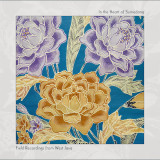
"We are delighted to be able to bring you these gorgeous field recordings from the Sumedang Province of West Java which, over their 50 minutes, present two distinct sides of Sundanese musical and devotional culture.
Although West Java is a Muslim country, these recordings highlight currents of pre-Islamic animist beliefs and practices that continue to flourish in the small towns and villages of the highlands of West Java. The recordings showcase two forms of trance music that are essential to the spiritual life of the Sundanese people in the highland regions.
Tarawangsa trance music is a traditional ceremonial genre known for its deep spiritual and hypnotic qualities. This music is made using only two instruments, the tarawangsa, a two-stringed fiddle, accompanied by the jentreng, a seven-stringed zither, creating a unique blend of resonant, droning sounds. Historically, tarawangsa music has been performed as part of sacred rituals and agricultural celebrations to honor local deities and ancestors, particularly associated with the Sunda culture. The minimalist, repetitive melodies gradually build, guiding participants and listeners into a meditative, trance-like state, during which dancers can be possessed by the spirits of ancestors or deities from the spirit realm, the music serving as a link between the two worlds.
In stark contrast to the calm, medititive sound of tarawangsa, we also present here two long pieces from Panca Buana Reak Group. Sundanese Reak trance music is like the punk rock of Sunda folk music, combining powerful and driving rhythms played on a number of hand drums and percussion instruments with the buzzing sound of the tarompet, a double reed wind instrument often amplified through whatever mobile speaker system might be at hand. Sometimes the group will play gamelan gongs, as heard on the first piece on the album, although this remains a music that is popular mainly with the working class youth of the rural villages, many of whom will also be fans of Indonesia's burgeoning metal and punk scenes. Reak performances are often wild, anarchic events that feature masked dancers, costumes, public trancing and spirit possession.
These recordings were made by Xenia At during her travels through West Java earlier this year. The tarawangsa recordings were made in a home in the village of Rancakalong on the evening of 17th January 2024, while Panca Buana Reak Group were recorded during rehersals in the village of Cinunuk on 19th and 20th January 2024."
Limited edition of 100 copies.
The musicians:
Overture (played by Panca Buana Reak Group, musicians: Rian Hidayat, Daffa, Rendi, Haswa, Doni, Aconk, Bayu, Zidan, Iwan Uwak, Mahadewa Sehu, Bebet, Adi, Bebet).
Reundeu - Master Yayat (kacapi), Tedi Kurniadi (tarawangsa).
Degung - Master Yayat (kacapi), Teguh Permana (tarawangsa).
Pamapag__Gelar Mataram__Panimang__Limbangan - Akbar Nendi (kacapi) & Tedi Kurniadi (tarawangsa).
Reak Lugay Pusaka Pajajaran (played by Panca Buana Reak Group, musicians: Aconk (tong), Rendi (brung), Hendrik (tarompet), Ade (kecrek), Riki (bedug), Doni (talingtit), Adi (badublag).
Xenia would like to extend gratitude to:
Master Yayat, Tedi Kurniadi, Akbar Nendi, and Teguh Permana for their incredible talent that turned this recording into a magical experience.
Ibrahim Adi Surya for technical support.
The Juarta Putra and Panca Buana Reak groups for explaining the cultural significance of local traditions.
Anggun Tresnasari for sharing her deep knowledge of regional music traditions.
Igor Moskalenko, Kate Snap, Stasya Frolova, Roman Gold, Misha Maltsev, Ilona Popychko, Galih Muhammad, Wildan Wiliansyah, Rizalu Ramadhan, Rahi Rahmat, Fahmi Solihin and Muhammad Ismael whose unwavering belief made this project possible.
Hive Mind would like to thank Luigi Monteanni (Artetetra) and Palmer Keen (Aural Archipelago) for their invaluable work and research in this region.
- 1: The Spanish Master
- 2: Cesca
- 3: Tigris
- 4: First Light
- 5: Village Of The Sun
- 6: Ted
Village Of The Sun return today with the announcement of their highly anticipated debut LP “First Light”. Due out 4th November on heavyweight vinyl via London analogue specialists Gearbox Records, the record follows their widely acclaimed double A-side single “Village Of The Sun / “Ted”. Village Of The Sun is an enigmatic collaboration between UK jazz virtuosos Binker Golding & Moses Boyd and electronic music legend Simon Ratcliffe of Basement Jaxx fame. Born out of a shared passion for improvised instrumental music, the new project sees all three of the artists steps into relatively new territory, combining their respective sensibilities to create something all at once atmospheric and danceable. Evocative of some of Simon’s inspirations such as Alice Coltrane, Airto Moreira and Masters at Work, Village Of The Sun embodies a hybrid of electronic beats, heady jazz improvisation, and sheer, raw energy, breaking ground between pseudo-Samba rhythms, dreamy ambient textures, and explosive sax and percussion. The new single “The Spanish Master” is a total embodiment of what Village Of The Sun is at it’s heart. Combining atmospheric synth lines with percussive electronics, which gently ebb around Boyd’s intricate drumming and Golding’s expressive sax. With tension building around every element the track careens into a movement of frenetic drumming, electronic idiosyncrasies, and fervent sax breakouts, which find the trio performing at their energetic, adrenaline-fuelled best. The album is truly a project of passion and exploration, and one that refuses to follow just one path. Tracks such as “Cesca” and “Tigris” emphasise Ratcliffe’s ability to weave shapeshifting keys and electronics around Golding and Boyd’s interplay, changing the mood and direction of the track at a moment’s notice. Whereas the title track “First Light” channels the sound of the current UK jazz scene with Ratcliffe imbuing a sense of dramatic tension and release with electronic atmospherics and keys that ferment alongside the almost shamanic, semi-free sax lines and uncomprimising drums. As part of one of British dance music’s biggest ever acts, Basement Jaxx, Ratcliffe and collaborator Felix Buxton led the progressive house sound in the 90s/00s with ground-breaking albums Remedy and Rooty, and by releasing a string of Top 10 singles including Red Alert, Rendez-Vu, Romeo, and Where’s Your Head At?. Ratcliffe’s own solo work includes the 1995 EP City Dreams and the 2011 EP Dorus Rijkers - both releases prove his musical versatility and virtuosity. Speaking about the Village of the Sun collaboration, Simon says, “I’ve always liked improvised instrumental music. It has this intensity and eccentricity that takes me places.
Twisted Records is delighted to announce a different kind of collaborative mini album by two musicians highly esteemed for decades in the electronic music scene, Simon Posford and Raja Ram.
‘Improvisations for Piano & Flute’ is, as the title suggests, a series of fully improvised compositions by the two legendary musicians. The 44-minute flow of this album is more contemplative and analog in nature than anything in the pair’s previous output in their three decades of collaborative work, yet equally mesmerising and consciousness-expanding.
In the early 1990s, Simon Posford was working as an engineer at Butterfly Studios when he first met Raja Ram, an Australian conservatory-trained jazz flautist who had been in the 60s/70s band Quintessence and who was at the time of their meeting part of the electronic music group known as The Infinity Project. After collaborating on many of the latter band’s productions, Posford and Raj (as he is affectionately known) in 1996 created the first track under the project name Shpongle, Rumours of Vapours.
Less dance-focused and more atmospheric than their previous electronica tracks, this was the first of many creations under the Shpongle moniker, included on their now iconic first album Are You Shpongled? in 1998. Since then, they have produced six albums and performed elaborate live sets with an 17-member band around the world, including three sold-out shows at the iconic Red Rocks theatre in Colorado and three sold-out appearances at The Roundhouse in London.
This album is a significant departure from their usual output in its focus on the interplay of Raj’s lyrical flute playing and Simon’s noodling at the piano, with almost imperceptible synthesized atmospheric support that seamlessly unites analog and digital realities.
These improvisations were recorded in Posford’s living room instead of the usual studio because the musicians found that it provided more of the desired ambience. With a synthesizer placed atop an antique Bluthner piano, either Raj or Simon would begin playing and the other would join in - nothing prepared, decided, or arranged: just live, in-the-moment inspiration. This spontaneity infuses each track with such magnetic energy that the listener is inevitably drawn into each note, phrase, and piece.
The whole album is supremely chill and introspective, with a grand arc to the storyline of 8 tracks that Shpongle fans will recognize from the dynamic duo’s internationally prized discography.
‘Improvisations for Piano & Flute’ is a salve for the soul, providing an atmospheric antidote to the relentless stress and fast pace of our increasingly complex world - a great way to kick back, tune in, and refresh.
- A1: Killer Line (Opening Titles) Feat Adam Evald
- A2: Put Love Into Your Heart Feat Adam Evald & Jimi Tenor
- A3: The Sound Of Love Feat Hard Ton
- A4: Love Myself But I Can’t Make It Love
- B1: Footsteps Feat Alina Royz
- B2: In The Countryside Feat Lena Tronina
- B3: I Can Make My Happiest Life Feat Celebrine & Mutafrukt
- B4: Vacation Song
- B5: Reka Feat Moral Kiosk
- C1: Blue Plastic Bag In The Sea Of Green Feat Mutafrukt
- C2: Wasted Feat Mutafrukt
- C3: Before Music Dies Feat Hard Ton & Mutafrukt
- C4: Absent Ascent Feat Lovvlovver
- D1: Sleeping With Tv On
- D2: Over The Rainbow Feat Celebrine
- D3: Shorespotting Feat Adam Evald
- D4: Lovers (End Credits) Feat Kito Jempere Band
yellow vinyl 180g[23,95 €]
From a club-friendly chrysalid onto deploying his wings as a full fledged pop artist in recent years, Saint Petersburgs Kito Jempere has enjoyed a journey unlike any other and his newest album, Part Time Chaos Part Time Calmness live-documents the chameleonic changes / game-changing paradox experienced this year between his life both as a musician and as a family man.
Better known for his work as a house producer which has earned him accolades from prominent dance music outlets throughout well over a decade of intense work both into and outwith the limelights, Kito has for all that never been focussed on writing solely discoid material, throwing as much effort over the years into multi-faceted parallel ventures, far and apart from strictly dance floor-oriented functionality. Yet, from this partition between various projects and mindsets, this is through a radical shift towards downtempo pop and out of the 4x4 loop that Kito got to fully assert himself as a musician, embracing the rejoicing variety of tone and mood of his tender loves, secret and not. The movie Ive never made but have the soundtrack for, Part Time Chaos Part Time Calmness is the fruit of change as much as change itself. A return to the simple means of his young self, his old trusty guitar from his late teens serving as the backbone to Killer Line and Love Myself But I Cant Make It Love, and the natural development to last years Green Monster, which
initiated these deep tectonic movements in Kitos approach to his art, PTCPTC is an intimate trip down the kaleidoscope of his present life. Joined up by an impressive cast of artists, including Jimi Tenor, Adam Evald and Hard Ton, Kito didnt just bin his old persona, he took it back to where it belongs. From the low-slung emotional folk of the opener, Killer Line, to the eerie flamenco-jazz hybrid Before Music Dies. via the broken soulfulness of Put Love Into Your Heart and anthemic 80s balearic breaks meets coastal synthwave vibe of Sounds of Love, the album pulsates with a refreshingly genre-unbound vision. To the naive, laid-back sonic bokeh of Footsteps,
succeeds the left-of-centre cinematic narrative of In The Countryside, which includes some fun nods to fictional brands taken from Tarantinos imaginarium (Red Apple cigarettes) or other movies like High Fidelity, after Nick Hornbys eponymous novel.
Freed from gridlocked programming and impersonal tropes, PTCPTC showcases a wide array of songs, beats, grooves old and new, some dating back to 2018 and improvised sessions with his 9-people Kito Jempere Band, all of which were finished within the same timeframe and with this all-inclusive momentum in mind. Through the epic synths of Absent Ascent. in revamping the universal classic Over The Rainbow with Celebrine, on the appeasing ballad Shorespotting feat. Evald or in the waves-ready closing cut Lovers, Jempere tells a tale of hard-earned emancipation and life-affirming freedom.
- A1: Kito Jempere Feat. Adam Evald - Killer Line (Opening Titles)
- A2: Kito Jempere Feat. Adam Evald & Jimi Tenor - Put Love Into Your Heart
- A3: Kito Jempere Feat. Hard Ton - The Sound Of Love
- A4: Kito Jempere - Love Myself But I Can’t Make It Love
- B1: Kito Jempere Feat. Alina Royz - Footsteps
- B2: Kito Jempere Feat. Lena Tronina - In The Countryside
- B3: Kito Jempere Feat. Celebrine & Mutafrukt - I Can Make My Happiest Life
- B4: Kito Jempere - Vacation Song
- B5: Kito Jempere Feat. Moral Kiosk - Reka
- C1: Kito Jempere Feat. Mutafrukt - Blue Plastic Bag In The Sea Of Green
- C2: Kito Jempere Feat. Mutafrukt - Wasted
- C3: Kito Jempere Feat. Hard Ton & Mutafrukt - Before Music Dies
- C4: Kito Jempere Feat. Lovvlovver - Absent Ascent
- D1: Kito Jempere - Sleeping With Tv On
- D2: Kito Jempere Feat. Celebrine - Over The Rainbow
- D3: Kito Jempere Feat. Adam Evald - Shorespotting
- D4: Kito Jempere Feat. Kito Jempere Band - Lovers (End Credits)
180g Black Vinyl[23,95 €]
From a club-friendly chrysalid onto deploying his wings as a full fledged pop artist in recent years, Saint Petersburgs Kito Jempere has enjoyed a journey unlike any other and his newest album, Part Time Chaos Part Time Calmness live-documents the chameleonic changes / game-changing paradox experienced this year between his life both as a musician and as a family man.
Better known for his work as a house producer which has earned him accolades from prominent dance music outlets throughout well over a decade of intense work both into and outwith the limelights, Kito has for all that never been focussed on writing solely discoid material, throwing as much effort over the years into multi-faceted parallel ventures, far and apart from strictly dance floor-oriented functionality. Yet, from this partition between various projects and mindsets, this is through a radical shift towards downtempo pop and out of the 4x4 loop that Kito got to fully assert himself as a musician, embracing the rejoicing variety of tone and mood of his tender loves, secret and not. The movie Ive never made but have the soundtrack for, Part Time Chaos Part Time Calmness is the fruit of change as much as change itself. A return to the simple means of his young self, his old trusty guitar from his late teens serving as the backbone to Killer Line and Love Myself But I Cant Make It Love, and the natural development to last years Green Monster, which
initiated these deep tectonic movements in Kitos approach to his art, PTCPTC is an intimate trip down the kaleidoscope of his present life. Joined up by an impressive cast of artists, including Jimi Tenor, Adam Evald and Hard Ton, Kito didnt just bin his old persona, he took it back to where it belongs. From the low-slung emotional folk of the opener, Killer Line, to the eerie flamenco-jazz hybrid Before Music Dies. via the broken soulfulness of Put Love Into Your Heart and anthemic 80s balearic breaks meets coastal synthwave vibe of Sounds of Love, the album pulsates with a refreshingly genre-unbound vision. To the naive, laid-back sonic bokeh of Footsteps,
succeeds the left-of-centre cinematic narrative of In The Countryside, which includes some fun nods to fictional brands taken from Tarantinos imaginarium (Red Apple cigarettes) or other movies like High Fidelity, after Nick Hornbys eponymous novel.
Freed from gridlocked programming and impersonal tropes, PTCPTC showcases a wide array of songs, beats, grooves old and new, some dating back to 2018 and improvised sessions with his 9-people Kito Jempere Band, all of which were finished within the same timeframe and with this all-inclusive momentum in mind. Through the epic synths of Absent Ascent. in revamping the universal classic Over The Rainbow with Celebrine, on the appeasing ballad Shorespotting feat. Evald or in the waves-ready closing cut Lovers, Jempere tells a tale of hard-earned emancipation and life-affirming freedom.
- A1: Ouverture
- A2: Opéra Sirocco
- A3: Il Était Une Fois
- A4: L'envol
- A5: L'ascenseur
- A6: Un Petit Tour
- A7: Le Cadeau
- A8: L'ile Aux Mariés
- A9: Le Deltaplane
- A10: Orage
- B1: Berceuse Flashback
- B2: Terres Interdites
- B3: Duel
- B4: Le Souffle De Vie
- B5: La Marelle
- B6: Le Souffle Magique
- B7: Le Passage
- B8: Les Adieux
- B9: Le Royaume De Sirocco
« Most aresting, however, is the film's use of sound and music, which give each scene an atmospheric lilt. »
Maya Phillips
In order to celebrate the first anniversary of Sirocco and the Kingdom of Winds, the animated film by benoît Chieux, Stereo Rônin Records partners with Cristal Publishing, Sacrebleu Production, Take Five, and Ciel de Paris to offer a limited vinyl edition of the original soundtrack composed by Pablo Pico.
The soundtrack of Sirocco and the Kingdom of Air Currents, composed by Pablo Pico, stands out for its melodic richness and immersive atmosphere. It accompanies the journey of Juliette and Carmen through a fantastical world. The music blends traditional instruments with modern sounds, creating a nostalgic yet dynamic ambiance. The themes evoke adventure, discovery, and magic, enriching the film’s visual narrative. With his captivating compositions, Pablo Pico captures the essence of the story, providing an auditory experience that perfectly complements the film's universe.
Synopsis
Juliette and Carmen, two fearless sisters aged 4 and 8, discover a secret passage to the Kingdom of Air Currents, their favorite book. Transformed into cats and separated from each other, they must show courage and daring to reunite. With the help of the singer Selma, they will try to return to the real world by confronting Sirocco, the master of winds and storms... But is he as terrifying as they imagine?
“Being able to release this magnificent soundtrack composed by Pablo Pico is a great pride and a real pleasure. I want to open our catalog to unique works and universes. Being able to do this from our second published title, with a first foot in the world of animation, with Sirocco is an important shift for the label”
Frédéric Claquin – Stereo Ronin
“Sirocco’s music is like a deep breath. It was inspired by the fantastic universe of the film, the epic breath and the fantasy of the characters. I hope that with this vinyl edition, you will be able to relive the adventures of Juliette and Carmen and that the songs of Selma will take you far to the Kingdom of Air Currents”
Pablo Pico – Composer
“Cristal is a music publishing house, specializing in music for images, committed to working alongside composers for over 25 years. Our mission is to highlight the emotions sought in audiovisual productions, we choose our projects carefully, Sirocco was a real favorite, both on the subject and on its treatment, where music has its place, and becomes a real actress in the film. The talent of Pablo Pico brings this accuracy to the story”
Eric Debègue – Cristal Group.
Acclaimed musicians Nitai Hershkovits and Daniel Dor will release their highly anticipated album, “The Garden Suite”, on Circus Company. Following their previous collaboration on Daniel Dor’s debut album, “Four Petals”, this new project sees the duo exploring uncharted musical territory with an innovative, Moog-based sound.
Inspired by the groundbreaking work of synth pioneer Malcolm Cecil, “The Garden Suite” marries electronic textures with the richness of orchestral sound. Drawing from a vast range of influences, including the works of Benjamin Britten and Fredrick Delius, Hershkovits and Dor meticulously composed each track, layering Moog synthesizer melodies to emulate various instruments from the orchestra - from French horn to percussion, guitar, brass, and woodwinds. The result is a sound that is lush yet light, deeply textured yet not dense.
“The Garden Suite” marks a significant evolution in the partnership between Hershkovits and Dor, with their new compositions shifting from the rhythmic focus of “Four Petals” to a more texture-driven approach. The album showcases their ability to create genre-defying soundscapes, blending Daniel’s rhythmic system, “The Flower,” with lush, ambient layers of sound created on the Moog.
Nitai Hershkovits, known for his extensive work in jazz and classical music, began his musical journey as a clarinetist before transitioning to piano at the age of 15. His early passion for improvisation and jazz earned him several jazz competition awards in Tel Aviv. Nitai’s career highlights include his fiveyear tenure with the Avishai Cohen Trio, and his numerous projects as a solo artist, including work with ECM and his band Apifera.
Daniel Dor, a drummer and multi-instrumentalist, was born into a family of musicians in Tel Aviv. He began exploring rhythm at the age of 10, building his first drum set out of household objects. His innovative rhythmic method, “The Flower”, gained attention with his debut solo piano album, “Four Petals”, which led to his collaboration with Hershkovits. Daniel has performed with notable artists such as NOA, Avishai Cohen, and Chano Dominguez, and regularly lectures on rhythmic symmetry and music.
With “The Garden Suite”, Hershkovits and Dor offer a unique listening experience that challenges traditional genre boundaries. Their seamless fusion of rhythm, melody, and texture creates a soundscape that is as experimental as it is captivating.
Since ever great fans of DJ Ralf's music, both Marcellino and I decided of dedicang a tribute to him... a record that could
always feature him in his DJ sets!
There was a video on YouTube with an interview with the "uncle from Italy" who told a li$le about his career... with
various anecdotes...
We therefore thought of "building" him a musical ou&it specifically so that he could play it himself...
Groove, great rhythmic bass, and a very Old Skool sound that recalled the Chicago and Detroit periods... we therefore
gave life to the project (ino)2 (Walterino & Marcellino and Keller)
We took the most interesng phrases from the interview, and looped the phrase... Ralf, Ciao Ralf, thus giving the song the
tle!
- Unperson
- Apparition 3
- Bruise
- Blackmail
- The Itself Of Itself
- Study For Tape Hiss And Other Audio Artefacts 11.58
- Apparition 5
Steven Wilson is no stranger to composing music that appears to counter everything else before it in his catalogue. Bass Communion, his long running solo electronic project, is no exception to this perverse streak that apparently likes to turn all expectations upside down. The Itself of Itself, Bass Communion's first album for 12 years, skilfully pays testament to this. Long established as a purveyor of mostly atmospheric or ambient textures, the seven cuts that represent The Itself of Itself take detours from this approach in order draw as much from musique concrete, noise music, abstract electronics and uneasy listening. Whilst still rippled with the same shades of light and dark that can be found throughout all of Bass Communion's work, The Itself of Itself reveals a fascination with analogue sounds and, more importantly perhaps, 'unwanted' analogue artefacts like tape hiss, wow and flutter, static noise, and sonic break-up, taking the music into a space at once different yet familiar. 'Apparition 3' presents a stark nod to Wilson's established command of shifting textures steeped in penumbral gauze, while 'Bruise' is akin to a space probe adrift and headed towards a white dwarf as all communication is reduced to a disturbing and indecipherable crackle. Between the other five cuts we witness fragmented, garbled and buried voices, vast vacillating banks of grainy hum, what sounds like the dying gasps of an oboe, spooky swirls from an indiscernible source, swathes of tape hiss, moody drones, and spiralling slivers of noise. Meanwhile on the title track, a mellotron flute rusts and collapses in on itself in a way that renders it the very antithesis of the one deployed on 'Strawberry Fields Forever'. Everything adds up to a dynamic listening experience where unease, dread and comparatively claustrophobic torrents of sound make (un)natural bedfellows to moments of enchantment and serenity. Above all, The Itself of Itself sees Steven Wilson cutting his teeth on an album that's at once cinematic and moody whilst proving him to be a master in electronic music craftsmanship. It's an album that might surprise some of those who have thus far been paying attention to his work as Bass Communion, but setting out to please everyone was never part of his raison d'etre. The Itself of Itself catches Bass Communion spreading its weatherbeaten wings to embrace new strategies and a strong desire to journey elsewhere. Arriving in a wonderful Carl Glover designed deluxe cover also comprising a 24pp. booklet of his photographs and an obi strip, this version of The Itself of Itself arrives in December on Lumberton Trading Company as a 2LP pressed in an initial run of 1000 copies.
- Feather Lighter
- Breezy
- Owl
- Both Sides
- Burning Bowl
- Radiance
- Wasichu
- Greasy Grass
- Raven
- Is What It Is
Dieses Album ist ein "slow grower" und auch nach 10 Jahren klingt dieses dunkle Werk des New Yorker Duos noch frisch und berührend. Vor 10 Jahren kam das raus, nun legt das Label BB*ISLAND das lange vergriffene Vinyl in einer limitierten Sonderedition nochmal auf. Gepresst auf "Sparkling Starlight" Vinyl, verpackt in einem DeLuxe cover. Dazu gibt's ein gefaltetes Poster mit den Lyrics und eine Postkarte mit Downloadcode. Der Download beinhaltet neben den Albumtracks auch noch einen exklusiven 1-stündigen Interviewpodcast mit Shee Keeps Bees. She Keeps Bees, aus Booklyn, sind die Singer/Songwriterin/Gitarristin Jessica Larrabee und Schlagzeuger/Produzent Andy LaPlant, die seit 2006 über selbstproduzierte Aufnahmen und zahlreiche Konzerte zu einer besonderen Einheit zusammengewachsen sind. Ihr Ausgangspunkt war ein roher, soulful Bluesrock, in der Presse wurden Vergleiche zu Patty Smith, White Stripes (...in reverse" :Guardian), The Kills, PJ Harvey oder Cat Power gezogen. Die geben eine erste Ahnung wo's lang geht, hinken dann aber doch, ob der ganz eigenen Chemie und Qualität dieses Duos. Schönheit durch Reduktion, Direktheit, Leidenschaft, Intimität In diesem Sinne ist den beiden nun ein besonders eindringliches Album gelungen. Eight Houses schwelgt in der rohen Kraft des Subtilen. Ruhe und Raum finden sich hier auch im kontrollierten Chaos, wenn Larrabee's Gitarrenriffs krachen und über LaPlant's stoische Beats schwappen. Dann wieder sind Ihre Kompositionen knapp koloriert, mal mit hageren Piano Linien, mal mit ein paar Bläsern, die sich kurz aus dunstigen Ecken erheben, eine warm rollende Orgel wischt durchs Bild, ein Synthezier zirpt fern. Das Album lebt von Understatement und Spannung, dunkel, bewegend, kraftvoll, erlösend. Ganz im Mittelpunkt steht Jessica Larrabee's Stimme - lakonisch, von besonderem Ausdruck. "she has one of the best voices I have ever heard and she has more soul in one finger than most female singers have in our scene." meint Sharon Van Etten, die hier auch bei zwei Songs, "Is What It Is" und "Owl", backing vocals beisteuert. Für Eight Houses hat das Duo erstmals mit einem externen Produzenten zusammen gearbeitet, Nicolas Vernhes (Deerhunter, The War On Drugs, Dirty Projectors, Wye Oak, Lia Ices, etc.).