Search:abiodun oyewole

Styles
All
  • 1
Abiodun Oyewole - Gratitude

Abiodun Oyewole

Gratitude

12inchAFAR004LP
AFAR
04.02.2022

Gratitude is the eagerly anticipated new solo album from Abiodun Oyewole, the poet, teacher and founding member of The Last Poets. The album liner notes include an extensive new interview with Abiodun himself, detailing the writing process of the album.

Looking back, the Last Poets are often referred to as the godfathers of rap, and by listening to their early recordings; it’s easy to hear why. Their words encompass revolution, sex, death, drugs, and Black Power - they own their words. From their mouths – words are a sense of pride, a statement, and a feeling of empowerment. There’s no self-conscious hang-up with the Last Poets using words as an art form. On May 19th, 1968 (in celebration of Malcolm X’s birthday), The Last Poets performed their first ever concert in Mount Morris Park (in Harlem), now called Marcus Garvey Park. Their debut album was released in 1970 including poet/singer Abiodun Oyewole.

Now AFAR is proud to present a whole new way of thinking socially, politically, emotionally, and humanly – via the perspective of Abiodun Oyewole of The Last Poets with his new solo album ‘Gratitude’ - it's not a protest album, it's an inspirational LP/CD via the inclusive words and God-like voice of Abiodun - this is not an angry man, but an older wiser man - reflecting on his life and spiritual quests. Rappers love him for coining the phrase "Party and Bullshit" decades ago - but this is not that - this is a sacred journey with a universal message for all people regardless of their background and nationality.

“ONE OF THE MOST INFLUENTIAL SPOKEN-WORD GROUPS THAT PIONEERED HIP-HOP” NPR

“EXPERIMENTING WITH STREET POETRY AND PERCUSSIVE SOUND, THE MUSIC OF HARLEM’S LAST POETS HELPED LAY THE GROUNDWORK FOR HIP-HOP” ROLLING STONE

pre-order now04.02.2022

expected to be published on 04.02.2022

29,12
Various - When There Is No Sun Vol. 3

From Detroit’s techno resistance to Berlin’s elastic minimalism, Lusaka’s ancestral futurism to Chicago’s house communion, When There Is No Sun is a recording project, uniting visionary electronic music producers to reimagine the universe of Sun Ra. One of the most radical musical pioneers of the 20th century, Sun Ra used jazz, electronics, poetry, and performance to expand the possibilities of sound, identity, and imagination. Commissioned by Omni Sound and curated by Ricardo Villalobos, the series brings together Underground Resistance, Chez Damier & Ben Vedren, Calibre, A Guy Called Gerald, She Spells Doom, Barış K, and Ricardo Villalobos himself. Drawing from Omni Sound’s recordings of Living Sky by the Sun Ra Arkestra and My Words Are Music of Sun Ra’s poetry, the producers pull fragments of sound and text into their own creative orbits, passing through the portal that Sun Ra opened into a realm where the impossible is possible. Saul Williams, Tunde Adebimpe, Mahogany L. Browne, Abiodun Oyewole, Anthony Joseph and Tara Middleton are the featured voices that turn rhyme into rhythm and revelation into resistance Rooted in deep reverence for Sun Ra’s legacy, yet reaching forward as a living, generative force, When There Is No Sun is not a tribute but a continuum, balancing the pulse of electronic music with the spirit of experimentation, embodying Sun Ra’s promise that ‘there are other worlds’ if you are willing to see them.

In Stock

On Stock and ready to ship

20,97
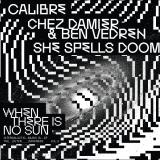
Various - When There Is No Sun Vol. 2

From Detroit’s techno resistance to Berlin’s elastic minimalism, Lusaka’s ancestral futurism to Chicago’s house communion, When There Is No Sun is a recording project, uniting visionary electronic music producers to reimagine the universe of Sun Ra. One of the most radical musical pioneers of the 20th century, Sun Ra used jazz, electronics, poetry, and performance to expand the possibilities of sound, identity, and imagination. Commissioned by Omni Sound and curated by Ricardo Villalobos, the series brings together Underground Resistance, Chez Damier & Ben Vedren, Calibre, A Guy Called Gerald, She Spells Doom, Barış K, and Ricardo Villalobos himself. Drawing from Omni Sound’s recordings of Living Sky by the Sun Ra Arkestra and My Words Are Music of Sun Ra’s poetry, the producers pull fragments of sound and text into their own creative orbits, passing through the portal that Sun Ra opened into a realm where the impossible is possible. Saul Williams, Tunde Adebimpe, Mahogany L. Browne, Abiodun Oyewole, Anthony Joseph and Tara Middleton are the featured voices that turn rhyme into rhythm and revelation into resistance Rooted in deep reverence for Sun Ra’s legacy, yet reaching forward as a living, generative force, When There Is No Sun is not a tribute but a continuum, balancing the pulse of electronic music with the spirit of experimentation, embodying Sun Ra’s promise that ‘there are other worlds’ if you are willing to see them.

out of Stock

Order now and we will order the item for you at our supplier.

20,97

Last In: 25 days ago
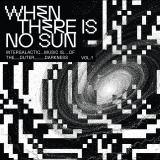
Various - When There Is No Sun Vol. 1

From Detroit’s techno resistance to Berlin’s elastic minimalism, Lusaka’s ancestral futurism to Chicago’s house communion, When There Is No Sun is a recording project, uniting visionary electronic music producers to reimagine the universe of Sun Ra. One of the most radical musical pioneers of the 20th century, Sun Ra used jazz, electronics, poetry, and performance to expand the possibilities of sound, identity, and imagination. Commissioned by Omni Sound and curated by Ricardo Villalobos, the series brings together Underground Resistance, Chez Damier & Ben Vedren, Calibre, A Guy Called Gerald, She Spells Doom, Barış K, and Ricardo Villalobos himself. Drawing from Omni Sound’s recordings of Living Sky by the Sun Ra Arkestra and My Words Are Music of Sun Ra’s poetry, the producers pull fragments of sound and text into their own creative orbits, passing through the portal that Sun Ra opened into a realm where the impossible is possible. Saul Williams, Tunde Adebimpe, Mahogany L. Browne, Abiodun Oyewole, Anthony Joseph and Tara Middleton are the featured voices that turn rhyme into rhythm and revelation into resistance Rooted in deep reverence for Sun Ra’s legacy, yet reaching forward as a living, generative force, When There Is No Sun is not a tribute but a continuum, balancing the pulse of electronic music with the spirit of experimentation, embodying Sun Ra’s promise that ‘there are other worlds’ if you are willing to see them.

out of Stock

Order now and we will order the item for you at our supplier.

24,16

Last In: 25 days ago
Dead Prez - Let's Get Free LP 2x12"

Dead Prez

Let's Get Free LP 2x12"

2x12inch19802826781
GET ON DOWN
21.03.2025

Repressed for the first time in 2 years, Note price change. Sermonizing Black Nationalism, Pan-Africanism and the benefits of a healthy and just lifestyle during the height of the Bad Boy/Roc-AFella era of nihilistic excess in the late 90's, Dead Prez also signed to a major label (Loud/Columbia) despite leaning much more towards the burgeoning indie aesthetics of the day. But this was a good thing – using major label muscle to wake up righteous hip-hop fans who might have fallen asleep at the wheel. The group itself – consisting of MCs stic.man and M-1, who produced or co-produced most of the duo’s music – was formed in Tallahassee, Florida in the early 1990's.

By later that decade, the duo had started making significant waves, having their music heard on the soundtracks to “Soul In The Hole” and “Slam,” as well as appearing on albums by Big Pun and The Beatnuts. By 1998, they released their first official single, the serious, stark “Police State,” on Loud, appropriately brought to the label by Lord Jamar of Brand Nubian. After building a solid rep over the next two years with fiery live performances, in 2000 they unleashed their debut album, Let’s Get Free.

The album was a welcome return to provocative and often radically political rhetoric that hearkened back to hip-hop forebears including The Coup, Public Enemy and KRS-One (as well as poetic descendants like the Last Poets and Watts Prophets). Let’s Get Free was critically acclaimed and benefited from multiple singles, including the infectious, thick analog drive of “Hip-Hop” “It’s Bigger Than Hip-Hop,” with a remix co-produced by a young Kanye West; “Mind Sex” (with Abiodun Oyewole of the Last Poets); and the poignant “I’m An African.”

But the singles weren’t the only worthy songs, as just about every cut here has deeper meaning than most full albums by their early 2000's peers. Highlights: the thought-provoking, anti-drug album opener “Wolves”; “We Want Freedom” “They Schools” and “Propaganda” . All in all, this is one of the more underrated and possibly Top 5 fully-realized political hip-hop albums of all time.

out of Stock

Order now and we will order the item for you at our supplier.

24,24

Last In: 4 months ago
The Last Poets & Tony Allen feat. Egypt 80 - Africanism LP

"This is the time that we, who have benefitted from the Last Poets shouldbe able to say, 'it's the Last Poets. It's them we should be honouring, because we did not honour them for so many years_"

KRS One wasn't just addressing the hip hop fraternity when he uttered
those words by way of introducing the video for Invocation - a poem
written thirty years ago, around the time of the Last Poets' last significant comeback. He was speaking to everyone who's been affected by the word, sound and power issuing from the most revolutionary poetry ever witnessed, and that the Last Poets had introduced to the world outside of Harlem at the dawn of the seventies.

In 2018 the two remaining Last Poets, Abiodun Oyewole and Umar Bin
Hassan, embarked on another memorable return with an album -
Understand What Black Is - that earned favourable comparison with theirseminal works of the past, whilst showcasing their undimmed passion andlyrical brilliance in an entirely new setting - that of reggae music. Trackslike Rain Of Terror ("America is a terrorist") and How Many Bullets demonstrated that they'd lost none of their fire or anger, and their essential raison d'etre remained the same.

"The Last Poets' mission was to pull the people out of the rubble o f their lives," wrote their biographer Kim Green. "They knew, deep down that poetry could save the people - that if black people could see and hear themselves and their struggles through the spoken word, they would be moved to change."

Several years later and the follow-up is now with us. The project started when Tony Allen, the Nigerian master drummer whose unique polyrhythms had driven much of Fela Kuti's best work, dropped by Prince Fatty's Brighton studio and laid down a selection of drum patterns to die for. That was back in 2019, but then the pandemic struck. Once it had passed, the label booked a studio in Brooklyn, where the two Poets voiced four tracks apiece and breathed fresh energy, fire and outrage into some of the most enduring landmarks of their career. Abiodun, who was one of the original Last Poets who'd gathered in East Harlem's Mount Morris Park to celebrate Malcolm X's birthday in May 1968, chose four poems that first appeared on the group's 1970 debut album, called simply The Last Poets. He'd written When The Revolution Comes aged twenty, whilst living in Jamaica, Queens. "We were getting ready for a revolution," he told Green. "There wasn't any question about whether there was going to be one or not. The truth was many of us still saw ourselves as "niggers" and slaves. This was a mindset that had to change if there was ever to be Black Power." He and writer Amiri Baraka were deep in conversation one day when Baraka became distracted by a pretty girl walking by. "You're a gash man," Abiodun told him. The poem inspired by that incident, Gash Man, is revisited on the new album, and exposes the heartless nature of sexual acts shorn of intimacy or affection. "Instead of the vagina being the entrance to heaven," he says, "it too often becomes a gash, an injury, a wound_" Two Little Boys meanwhile, was inspired after seeing two young boys aged around 11 or 12 "stuffing chicken and cornbread down their tasteless mouths, trying to revive shrinking lungs and a wasted mind." They'd walked into Sylvia's soul food restaurant in Harlem, ordered big meals, then bolted them down and run out the door. No one chased after them, knowing that they probably hadn't eaten in days. Fifty years later and children are still going hungry in major cities across America and elsewhere. Abiodun's poem hasn't lost any relevance at all, and neither has New York, New York, The Big Apple. "Although this was written in 1968, New York hasn't changed a bit," he admits, except "today, people just mistake her sickness for fashion." Umar is originally from Akron, Ohio, but had arrived in Harlem in early 1969 after seeing Abiodun and the other Last Poets at a Black Arts Festival in Cleveland. That's where he first witnessed what Amiri Baraka once called "the rhythmic animation of word, poem, image as word- music" - a creative force that redefined the concept of performance poetry and stripped it bare until it became a howl of rage, hurt and anger, saved from destruction by mockery and love for humanity. When Umar's father, who was a musician, was jailed for armed robbery he took to the streets from an early age where he shined shoes and raised whatever money he could to help feed his eight brothers and sisters. By the time he saw the Last Poets he'd joined the Black United Front and was ready to join the struggle. Once in Harlem, Abiodun asked him what he'd learnt in the few weeks since he'd got there. "Niggers are scared of revolution," Umar replied. "Write it down" urged Abiodun. That poem still gives off searing heat more than fifty years later. In Umar's own words, "it became a prayer, a call to arms, a spiritual pond to bathe and cleanse in because niggers are not just vile and disgusting and shiftless. Niggers are human beings lost in someone else's system of values and morals." And there you have it. It's not just race or religion that hold us back, but an economic system that keeps millions in poverty and living in fear - a system born from political choice and that's now become so entrenched, so bloated on its own success that it's put mankind in mortal danger. It was many black people's acceptance of the status quo that inspired Just Because, which like Niggers Are Scared Of Revolution, was included on that seminal first album. Along with their revolutionary rhetoric, it was the Last Poets' use of the "n word" that proved so shocking, but it would be wrong to suggest that they reclaimed it, since it never belonged to black people in the first place. There's never any hiding place when it comes to the Last Poets. They use words like weapons, and that force all who listen to decide who they are and where they stand. Umar's two remaining tracks find him revisiting poems first unleashed on the Poets' second album This Is Madness! Abiodun had left for North Carolina by then where he became more deeply enmeshed in revolutionary activities and spent almost four years in jail for armed robbery after attempting to seize funds related to the Klu Klux Klan. Meanwhile, the 21 year old Umar was squatting in Brooklyn and had developed close ties with the Dar-ul Islam Movement. A longing for purity and time-honoured spiritual values underpins Related to What, whilst This Is Madness is a call for freedom "by any means necessary," and that paints a feverish landscape peopled by prominent black leaders but that quickly descends into chaos. "All my dreams have been turned into psychedelic nightmares," he wails, over a groove now powered by Tony Allen's ferocious drumming. Those sessions lasted just two days, and we can only imagine the atmosphere in that room as the hip hop godfathers exchanged the conga drums of Harlem for the explosive sounds of authentic Afrobeat. Once they'd finished, the recordings and momentum returned to Prince Fatty's studio, since relocated from Brighton to SE London. This was stage three of the project, and who better to fill out the rhythm tracks than two key musicians from Seun Anikulapo Kuti's band Egypt 80? Enter guitarist Akinola Adio Oyebola and bassist Kunle Justice, who upon hearing Allen's trademark grooves exclaimed, "oh, the Father_ we are home!" Such joy and enthusiasm resulted in the perfect fusion of Nigerian Afrobeat and revolutionary poetry, but the vision for the album wasn't yet complete. He wanted to create a new kind of soundscape - one that reunited the Poets with the progressive jazz movement they'd once shared with musicians like Sun Ra and Pharoah Sanders. It was at that point they recruited exciting jazz talents based in the UK like Joe Armon Jones from Mercury Prize winners Ezra Collective, also widely acclaimed producer/remixer and keyboard player Kaidi Tatham, who's been likened to Herbie Hancock, and British jazz legend Courtney Pine, whose genius on the saxophone and influence on the UK's now vibrant jazz scene is beyond question. The instrumental tracks on Africanism are in many ways as revelatory and exciting as the Last Poets' own. It's important to remember that the kaleidoscope of styles and influences we're presented with here aren't the result of sampling but were played "live" by musicians responding to sounds made by other musicians. That's where the magic comes from, aided by Prince Fatty's peerless mixing which allows us to hear everything with such clarity. Music fans today have grown accustomed to listening to all kinds of different genres. Their tastes have never been so broad or all- encompassing, and so the music on this new Last Poets' album is as groundbreaking as their lyrics, and perfectly suited to the era that we're now living in. John Masouri

pre-order now06.12.2024

expected to be published on 06.12.2024

27,52
Dead Prez - Let's Get Free LP 2x12"

Dead Prez

Let's Get Free LP 2x12"

2x12inchGET51311LP
GET ON DOWN
30.06.2024

Repressed for the first time in 2 years, Note price change. Sermonizing Black Nationalism, Pan-Africanism and the benefits of a healthy and just lifestyle during the height of the Bad Boy/Roc-AFella era of nihilistic excess in the late 90's, Dead Prez also signed to a major label (Loud/Columbia) despite leaning much more towards the burgeoning indie aesthetics of the day. But this was a good thing – using major label muscle to wake up righteous hip-hop fans who might have fallen asleep at the wheel. The group itself – consisting of MCs stic.man and M-1, who produced or co-produced most of the duo’s music – was formed in Tallahassee, Florida in the early 1990's.

By later that decade, the duo had started making significant waves, having their music heard on the soundtracks to “Soul In The Hole” and “Slam,” as well as appearing on albums by Big Pun and The Beatnuts. By 1998, they released their first official single, the serious, stark “Police State,” on Loud, appropriately brought to the label by Lord Jamar of Brand Nubian. After building a solid rep over the next two years with fiery live performances, in 2000 they unleashed their debut album, Let’s Get Free.

The album was a welcome return to provocative and often radically political rhetoric that hearkened back to hip-hop forebears including The Coup, Public Enemy and KRS-One (as well as poetic descendants like the Last Poets and Watts Prophets). Let’s Get Free was critically acclaimed and benefited from multiple singles, including the infectious, thick analog drive of “Hip-Hop” “It’s Bigger Than Hip-Hop,” with a remix co-produced by a young Kanye West; “Mind Sex” (with Abiodun Oyewole of the Last Poets); and the poignant “I’m An African.”

But the singles weren’t the only worthy songs, as just about every cut here has deeper meaning than most full albums by their early 2000's peers. Highlights: the thought-provoking, anti-drug album opener “Wolves”; “We Want Freedom” “They Schools” and “Propaganda” . All in all, this is one of the more underrated and possibly Top 5 fully-realized political hip-hop albums of all time.

out of Stock

Order now and we will order the item for you at our supplier.

35,25

Last In: 5 years ago
The Last Poets - Understand What Dub Is

Last year saw The Last Poets celebrate their 50-year anniversary with the righteous, politically-charged poetic record, "Understand What Black Is". Now to continue the party, Brighton production-maestro Prince Fatty has reworked the album with a fresh twist and blend of smooth, dub-delights. Set to land on the 29th March, the revolution marches on - this is "Understand What Dub Is".

After Prince Fatty's involvement in the production of the original project, he was the perfect person to help update the record with five decades of experience for a new audience to enjoy. The ten tracks of "Understand What Black Is" depict a relevant, historical philosophy of identity and race that has followed The Poets over the last 50 years. Since the origins of the civil rights movements back in the late 60's, Abiodun Oyewole and Umar Bin Hassan (two of the longest-standing group members) have provided social commentaries and a voice to African-American consciousness that has now been heard on a global scale.

Their raps, exploitations and insights quickly evolved into the origins of hip-hop in Harlem, New York back in 1968, and now in 2019 they continue to voice their dedication to the cause with the backing of slick rock-steady infused beats to keep things moving. Having had their work sampled by the likes of NWA, Dr Dre, Kanye West, Snoop Dogg and countless others is just a testament to the timeless sounds and prophecy they have created, and now Prince Fatty has stepped up to put his stamp on it.

Prince Fatty's ever-reliable work gives "Understand What Black Is" another lease of life as he maintains an undeniably slick groove throughout. Both therapeutic and warm, the soulful rhythms of "Understand What Dub Is" provide the perfect platform for The Last Poets to delve into everything from Trump's inauguration, nods to Biggie Smalls and respect to Prince. The calm, collective and downright thought-provoking words go hand-in-hand with the roots-driven reggae medleys with ease - this is dub in its rawest form.

Not only do these songs explore personal struggles and individual endeavours, they also represent a collective of deprived aspects of humanity and socialism, that perhaps now need to be pointed out more than ever. Although there is a variation of sound, the overlying topics remain a constant - it is time to "Understand What Black Is" once more.

out of Stock

Order now and we will order the item for you at our supplier.

20,63

Last In: 7 years ago
The Last Poets - Understand What Black Is

On The 50th Anniversary Of The Band's Inception At An Event In Harlem, Ny To Commemorate Malcolm X's Birthday On 19 May 1968, Influential Spoken Word Artists, Poets And Commentators The Last Poets Are Set To Make A Glorious And Relevant Return With Their First Album In Over 20 Years, 'understand What Black Is'.

Produced By Ben Lamdin (nostaglia 77) And Brighton Legend Prince Fatty, Whose Speciality Is Traditional Reggae And Dub Production's, 'understand What Black Is' Is A Ten-track Album Which Speaks Of A Revolutionary Struggle Defined By Both Race And Identity, That Has Never Sounded More Relevant. Released On Studio Rockers, There Will Also Be An Accompanying Single Featuring Remixes Of The Title Track "understand What Black Is" By Mala (south London Collective Digital Mystikz) And Uk Dance Music Innovators Dego And Kaidi.

Since The Initial Line-up Of Dahveed Nelson, Gylan Kain And Felipe Luciano Formed In East Harlem's Marcus Garvey Park, The Last Poets Have Produced Under Various Guises Over The Subsequent Years. However, It Was Their Seminal Output, Namely 1970's 'the Last Poets' Under Both Umar Bin Hassan And Abiodun Oyewole That Secured Their Legacy, Becoming One Of The Most Important Influences In Early Hip Hop.

Throughout The Last 20 Years, The Band Have Remained Largely On Hiatus. But Their Influence Could Still Be Felt With Their Tracks Being Sampled By The Notorious B.i.g, Nwa, A Tribe Called Quest, Dr.dre And Snoop Dogg. Umar Has Recorded Various Solo Albums And Featured On Common And Kanye West's Grammy Nominated 'the Corner'. Abiodun Appeared On The Red Hot Organization's Album, Stolen Moments Which Was Named "album Of The Year" By Time. He Also Conducts Weekly Open House Poetry Readings, Where He Constructively Critiques Upcoming Poets, Helping To Nurture Them. He Has Also Conducted Classes At Columbia University, Where He Teaches Creative Writing.

The Inauguration Of Donald Trump As Us President In 2016 Inspired Hassan And Oyewole To Resurrect The Group To Create A Brand New Record, Modern And Edgy, And Deeply Relevant And Reflective Of Our Times.

Tracks On 'understand What Black Is' Include 'how Many Bullets', Which Bridles With Defiance As Oyewole Works Through A Litany Of Injustices Suffered By Black People In The Us: " You've Tried

To Blow My Brains Out With Bigotry, Chopped Off My Wings, So I Couldn't Fly Free, And Dared Me To Be Me, Took My Drum, Broke My Hands, Yanked My Roots Right Up Out Of The Land, And Riddled My Soul With Jesus" 'what I Want To See' Describes A Utopia - A Refuge From Hurt And Those Who'd Make "our Vision Blurred, And Our Faith Obscure", Whilst The Title Track 'understand What Black Is' Aims To Transcend Ethnicity: "understand What Black Is....it's The Source From Which All Things Come...black Is A Hero, Not A Villain."

The Album Even Takes Reference From Prince's 2003 Album Of Instrumentals, 'news', Which Hassan Drew Comparisons From With His Own Childhood Experiences: "that Poem Took Me About A Year To Write....i Just Kept Writing And Writing But Not Getting Too Far And Then I Heard That Album And The Musicianship Was Amazing. I Was Left Wondering If It Was Jazz, Classical, Rock Or Maybe Something New But All Those Images That I Write About Came To Me From Listening To That Album. I Loved Prince In That Movie Purple Rain Because My Father Was A Talented Musician But He Was Into Brutalising Mama At Times And In The Movie There's A Jerome And My Name Is Jerome, So It Was Like He Was Telling My Life Story As Well."

The Album Acts As A Body Of Work Between Individual Members Each Speaking Of Their Own Personal Journeys, But Feeding Into The Much Larger Narrative Of Struggle And Oppression, Alongside A Fervent Hunger For Social Change. These Are Struggles And Tests Of Personal Resolve That Have Directly Shaped And Moulded The Bands' Unique Sound Over The Course Of An Impressive 50 Years, And Their Powerful And Influential Commentary Remains As Relevant As Ever.

out of Stock

Order now and we will order the item for you at our supplier.

27,69

Last In: 7 years ago
  • 1
Items per Page:
N/ABPM
Vinyl