Samosa Records quickly follows up the first volume of Afrikano treats with Volume 2; a veritable melting pot of Afro beats and rhythms packed in to an exceptional four tracker.
Kicking the EP off on the A-side is Vincent Galgo and J’ngolo. This hypnotic Afro sizzler takes full advantage of the effortless bass, congo beats, African horns and (subtle) funky guitar. Add the mesmerising chanting and you have a perfect ‘Bunny Chow’ of a tune that will tantalise the tastebuds for a long time after the music has stopped. Second helpings? Why not?
A2 unleashes ‘Zaire’ by the supremely talented Matalo! Dark and broody beats take centre stage with this one, as you’re slowly enveloped in a ritual you never knew you were part of but now you can’t help sway with the rest of the worshippers. ‘Zaire’ is one of those rare tracks that you feel could create fire if you let it. With sweeping synths, tribal chanting and a detached sense of being, this monster lives under your bed and waits for lights out. Beware!
On the B-side Leslie Lello ups the tempo with ‘Alcyone’. Solid, punchy bass, driving guitar and gorgeous piano riff and vocal combine with a synth lead you absolutely need in your life. The track morphs and transforms into a full-on (almost housey) stomper; nailing its tribal colours to the mast with intent. A real beast of a tune.
Closing this superbly diverse EP is label boss De Gama and ‘E.T.A’. You know De Gama doesn’t mess about. You know De Gama wants to hit you with all he has and with ‘E.T.A’ he unleashes his ‘inner Chief. Indigenous beats pound, roll and build up to a Ramkie guitar infused chorus that’s as joyful, uplifting and inspiring as the dawn itself. A genuine, incredible slice of Afrikano from a master of the genre.
Afrikano Vol. 2 proves once again that Samosa Records know this genre like no other label out there. If this isn’t in your record box on release day, then we simply can’t be friends.
Search:abou naïm
Ninja Tune favourite and sometime lo-fi house pin-up DJ Seinfeld continues to prove he was always about so much more with a new collab alongside Confidence Man that he describes as "quirky, naive and an ode to all the summer flings out there". It came about after the pair hung out a few times and enjoyed each other's company and the tun itself has already been something of a mini classic during festival season. As well as the original with its catchy drum loops, pop leaning vocal hooks and lush strings, there is a cheeky UK garage version that has even more irresistible bump and a Carlita remix that reworks into something different but equally essential.
the EP FACE I is an evolution from the previously released album JAHRE. it fits into the narrative of urban life and our own personal development. both chronology and emotions are explored here and adapted with lyricism and atmospheric digital and analog sound.
it starts with 1984, beginning of our emotional journey and also literary (GEORGE ORWELL) fixpoint of the electronic adaptation. we feel a kind of lightness in our society, upswing and freedom determine everyday life for a large part of germany. we are free, everything seems possible! almost we move through an utopia. new prosperity and contentment let us blossom, no digital friends and in-between worlds alienate our seemingly naive and peaceful being.
in TMV a first individual emotional world comes to the fore, the mood is mixed and seems fragile. euphoria and melancholy mix to an undefined state of emotional and musical confusion. LYRIK gets a first big space here and carries from the part of confusion into a part of detachment. despite the ambivalence of the first moment, the scene ends in a transcendental, positively driving state of letting go and rest ...
the next part takes us away from the familiar and seemingly peaceful MOMENTS. we jump into the year 2184! 200 years later we are sitting here now, society has turned into an emotional desert like in ORWELLS fiction. a lonely CYBORG sits in the ruins of our once joyful cathedrals and sings about his tearing apart. he can't be without, but also can't be with his own anymore. like a cursed of two worlds he sits stranded in space and time.
the conclusion is made by TMVA, here we get into a very intimate emotional farewell to a lost and unfulfilled love. the calm tempo lets everything flow out that has confused and driven us for years. who or what do we want to become emotionally? are we even capable of letting ourselves fall after decades of searching and disruption? are we already dying? in the end only art and the love of it remains to save us.
ALL LOVE
AMAS_DHE / AMAS_PHI
Fresh from DOTT’s “Puppy Luv EP” and Rudoh’s “Vinland In Space EP”, Jugaar Records is back and this time with a full-length, double-pack vinyl, and digital compilation bringing together friends from Asia and Europe. The record is testament to the healthy place the Asian electronic music landscape finds itself in and those intrepid producers who are willing to explore new scenes and sounds. It's energy-crew from the off - with UK beatmaker Joe Koshin’s “Astro Wax”, a techy electro work-out that conjures images of futuristic cityscapes and dense urban mazes. Up next, Pakistan-born and label co-boss Rudoh maintains the electro vibe with cut-up hip-hop vocals sprinkled on top of a pulsating bassline in his “KOF”. His records are being picked up by global tastemakers from Emerald to Roza Terenzi to DJ Masda. Don’t sleep!
Moving to the B-side, German-born, London mainstay Voigtmann shuffles and deals a steppy drum pattern and intricate synth-work, with a bassline drenched in that particular brand of funk to get the party going even at the most ungodly hour. Observatory resident Nic Ford closes this disk with an ambient excursion that summons spiritual rave voices from the deep laid atop a lilting synth loop. It’s typical of his ambient performances which have gained much notoriety in Vietnam of late.
Opening the second record is Egyptian gem Hassan Abou Alam whose recent outings on Naïve and Banoffee Pies have gained him much and well-deserved attention. Here, his “Gloom” combines twinkling IDM modes with heavy sub bass experiments primed to stop the most idiosyncratic dancefloors in their tracks. Up on C2, the Version, 3024 and Phonica Records graduate Yak adds breaks to the equation. His “Disk Full” brings together a haunting gated synth and razor-sharp beat programming to devastating effect. Melbourne based, Salt Mines Records honcho Shedbug concludes this side with his hopeful “A Lil Piece” whose soaring synth line will hit all the right emotional chords at all the right times.
On the final side Bangkokian Chalo reminds us why he is one of the masters of this increasingly fully formed scene. His Depth Charge is a muggy dub-laden, electro jam capable of rattling the weightiest sound systems in some of the most twisted raves at the end of some of the darkest Sois. The record is completed by New Delhi linchpin and Boxout.fm resident Monophonik, whose techno/electro “Tumbi” journeys out of the night into a euphoric sunrise moment that will be setting the dancefloors alight come festival season.
Percussionist Jamie Muir was a member of King Crimson during the recording of Larks' Tongues In Aspic, in 1973. Staying less than a year with Robert Fripp, the Scot had already cut his teeth with another master guitarist, Derek Bailey, as part of the Music Improvisation Company, along with Evan Parker, Hugh Davies and Christine Jeffrey, whose eponymous 1970 album was one of the first releases on ECM. Muir and Bailey recorded Dart Drug eleven years later, in 1981.There's no shortage of great percussionists in the brief history of free improvised music but on the strength of Dart Drug alone Jamie Muir deserves a place at High Table. Unlike for example Han Bennink and John Stevens, though, you can't hear echoes of any particular jazz drummer in Muir's playing, even if he has expressed appreciation for Milford Graves (who himself sounded like nobody else who'd come before him).What on earth did Muir's kit consist of Some instruments are clearly identifiable (bells, gongs, chimes, woodblocks); others could be... well, anything. Old suitcases thwacked with rolled up newspapers Tin cans and hubcaps inside a washing machine Who cares It sounds terrific - but if you're the kind of person who faints at the sound of nails scraping a blackboard, you might want to nip out and put the kettle on towards the end of the title track.Dart Drug is consistently thrilling, and often very amusing - but it's certainly not easy listening. In music we talk about playing with other musicians, whereas in sport you play against another opponent (or with your team against another team). Why not play against in music, too That's precisely what happens very often in improvised music, and Bailey was particularly good at it. How can a humble acoustic guitar hope to compete with a Muir in full flight Sometimes Bailey's content to sit on those open strings, teasing out yet another exquisite Webernian constellation of ringing harmonics and wait for the dust to settle in Muir's junkyard, but elsewhere he sets off into uncharted territory himself.'The way to discover the undiscovered in performing terms is to immediately reject all situations as you identify them (the cloud of unknowing) - which is to give music a future.' Bailey evidently concurred with this spoken statement by Muir, including it in his book Improvisation.Derek Bailey is no longer with us, of course, and Muir gave up performing music back in 1989. All the more reason for seeking out this magnificent, wild album.
- Sea Ceremony (With Karen Vogt)
- Coral And Bones (With Laryssa Kim)
- Heartsea (With Vargkvint)
- Naiade (With Mt Fog)
- Moon And Mirrors (With Elska)
- Daughter Of The Abyss (With Singer Mali)
- Serpentine (With Nightbird)
- Their Voices Rise Above The Waves (With Yellow Belly)
- For All The Sea-Girls (With Nadine Khouri)
- Ondine (With Astrid Williamson)
- Coda (With Camilla Battaglia)
Oceanine, Jolanda Moletta’s third album and her first for Beacon Sound, is a powerful and ethereal statement of artistic community. Expanding on her previous work, each track represents a collaboration with a different female vocalist, with the foundational elements being generated entirely by her own voice. By turns haunting, enchanting, and inspiring, you won’t want to come up for air once you’ve been pulled under. Representing a
musical practice that is distinctly feminist, this is an album with a longer view in mind, to an age when the altars were to goddesses and women were centered as powerful beings representing the earth’s cycles of regeneration and renewal. Oceanine then, in all its beauty, can be viewed as an album of survival. It is deeply transportive, accessing something that lies within all of us. As the late, great Lithuanian folklorist and archaeologist Marija Gimbutas noted, “We must refocus our collective memory. The necessity for this has never been greater as we discover that the path of 'progress' is extinguishing the very conditions for life on earth.”
Jolanda Moletta is a multimedia artist and one-woman electronic choir. She creates wordless compositions through extended vocal techniques, integrating wearable-controlled live processing, alongside symbolic visuals. Moletta considers her performances to be a collective ritual and creates her Sonic & Visual Spells following the cycles of nature and the moon. Jolanda's 2022 critically acclaimed album Nine Spells was released on the Ambientologist label, followed by Night Caves on Whitelabrecs in 2025. Moletta’s artistic practice is a radical and spiritual journey through sound art, ritual, and the symbolic archaeology of the feminine.
Oceanine is inspired by sirens, water nymphs, and the timeless call of the sea. At its core lies Jolanda’s deep, lifelong connection to the Mediterranean Sea and to the ancient and modern myths and folklore that have emerged from its waters. Growing up by the Mar Ligure, Jolanda was surrounded by stories carried by salt, wind, and waves: legends of sirens, echoes of ancient voices, and the sea as both origin and oracle. This intimate relationship with the Mediterranean is not merely a backdrop, but a living source that shapes Oceanine’s emotional, symbolic, and sonic world.
Each track features a different female vocalist, creating a rich tapestry of voices, styles, and perspectives. This artistic choice not only broadens the album’s sonic palette, but also deepens its narrative core: celebrating the power, beauty, and mystique of feminine energy through myth, history, and sound.
The entire album is built exclusively from the human voice, processed and layered, yet always remaining voice, and nothing else. For each piece, Jolanda invited every vocalist involved to contribute a raw stem: a short, unedited melodic fragment of just a few seconds, inspired by the album’s themes. These intimate vocal seeds became the foundation of each track: the guest artists’ voices appear as brief, melodic stems, while the entire surrounding “orchestral” fabric is created solely from Jolanda’s own layered and processed voice. In this way, Jolanda’s voice becomes the Ocean itself, embracing, absorbing, and carrying the sirens’ calls within a vast, immersive soundscape. Every song is a unique expression of the feminine experience, revealing its depth, complexity, and emotional range, echoing the call of the sea and the many faces of the siren archetype.
The figure of the siren has transformed across centuries. In myths of Ancient Greece and Rome, sirens were hybrid beings, part woman, part bird, whose irresistible songs lured sailors to their doom. During the Middle Ages, the image shifted toward the half-woman, half-fish figure, often associated with temptation and danger. Historically, the voice of women has often been feared. Sirens were considered harbingers of misfortune not simply because they seduced or destroyed, but because they were powerful liminal beings.
In Ancient Greek, sirens functioned as psychopomps: figures who existed between worlds and guided souls, especially between life and death. Their songs were believed to carry forbidden knowledge, including prophetic insight and the ability to reveal truths about fate and the future. The danger of the sirens lay in what they revealed: knowledge that humans were not meant, or ready, to hear.
Oceanine confronts this legacy head-on. The voices heard throughout the album are not merely beautiful: they are dark and luminous, wild and enchanting, magical, soothing, dreamy, and at times fractured or distorted. They whisper, lament, beckon, and enchant. Like sirens, they skim the surface of the water and sink into its depths, hovering on the edge between tenderness and danger, vulnerability and power. They rise toward the sky, dissolve into mist, and return as echoes charged with raw, elemental emotion: voices that seduce, warn, mourn, and remember. They refuse to be reduced to decoration.
Alongside the album’s release in May, Oceanine will also unfold as a visual and performative work through a short art film. The film includes a live session recorded inside a sea cave facing the Mar Ligure, the very coastline where Jolanda spent her childhood, dreaming of sirens and listening to the sea as if it were speaking directly to her. This site-specific performance reconnects the music to its place of origin, allowing the voice to resonate within stone, water, and air, and transforming the cave into both a sanctuary and a threshold between myth and reality.
What if the sirens’ songs were considered dangerous because they carried another truth, an ancient truth long forgotten?
Oceanine embraces the idea that we are still deeply woven into myth. Though we may see ourselves as rational and modern beings, our world is saturated with ancient symbols and archetypes, often distorted, simplified, or stripped of their original meaning. And if those symbols are allowed to shift, if the mirror once held by the siren becomes an invitation to look beyond appearances and into what has been obscured, then we may finally uncover a deeper truth and reclaim the voice that was always ours.
Oceanine is not just an album. It is a reclamation, a spell, and a call from the depths.
- A1: Träumerei 02 31
- A2: Brenne 06 02
- A3: Taxi Driver 04 57
- A4: Sehnsucht 05 30
- B1: Entwurf Einer Ballade 05 06
- B2: Schock 04 17
- B3: Flüchtlingswalzer 05 13
- B4: In Die Disko 03 13
- C1: Der Lärmkrieg 04 46
- C2: Liebe Emmi 05 51
- C3: Im Atelier 03 54
- C4: Take The Red Pill 04 15
- D1: Ashley Smith 04 13
- D2: Zweites Vierteljahr 04 54
- D3: Da Fliegt Die Rakete 02 30
- D4: Die Erde Ist Mir Fremd Geworden 03 16
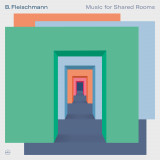
»Music for Shared Rooms« is B. Fleischmann’s eleventh solo album and his first since 2018. It is also not an album, or at least not in the conventional sense of the word. These 16 instrumental pieces provide a kaleidoscopic glimpse of a forward-thinking musician at home in many different musical worlds, including experimental and abstract music, pop and more classically-minded compositional forms. These pieces were culled from an archive of roughly 600 compositions for theatre pieces and films written throughout the past twelve years. The Österreichischer Filmpreis-awarded composer, however, aimed for more than simply documenting his extensive work in and with different media. To do so, he edited and re-mixed the individual recordings for this release, taking them out of their contexts and reworking them for an audience who can experience them in a different setting. »Music for Shared Rooms« makes it possible for its listeners to engage with the sounds and to fill the spaces they open up with their own imagination.
Roughly speaking, music for theatre or film can serve two functions: it either takes the lead, or underscores what is happening on stage or screen. The marvelous thing about these pieces is that they manage to do both. Fleischmann’s work as a prolific producer has always drawn on contrasts, at times combining pop sentiment with rigid experimentation, the seemingly naive with the intricate and complex. This approach also marks the tracks collected here: bringing together acoustic elements and electronic sounds, at times working with conventional structures but always de- and re-contextualising them, Fleischmann constructs a vivid dramaturgy out of discrete singular compositions, letting them interact across the record.
Take, for example, the opener »Träumerei« and the following »Brenne«: after the soothing acoustic sounds of the former, the latter quickly picks up speed with hard-hitting drum machine rhythms. It’s a stark contrast sonically and stylistically, however both tracks are tied together by a certain harmonic sensibility. This sort of dramaturgical interconnectedness of varied musical materials is the thread that runs through »Music for Shared Rooms«. A droney piece for string instruments like »Sehnsucht« is followed by a trip-hop beat, before »Schock« lives up to its title with skittering beats and piercing high frequencies. The differences between the pieces may be striking, but the progression from one to the other is subtle. It goes on like this through different moods and tempos. There’s soothing-yet-eerie piano pieces like the »Für Elise«-inspired »Der Lärmkrieg«, gentle house grooves, joyful synthesizer excursions and, finally, »Die Erde ist mir fremd geworden«, a collage of abstract textures and concrete sounds.
All these pieces create distinct situations through the juxtaposition of diverse musical elements, but are also bound together by a single vision. Writing music for theatre pieces or film requires a composer and his pieces to engage with people and their movements in space, which is exactly what Fleischmann offers on this record. He breaks down the fourth wall and invites his listeners into his world, a wide-ranging musical panorama. »Music for Shared Rooms« is indeed not an album in the conventional sense of the word, but more like a photo album in which each page opens up a new space to get lost in; recreates different scenes in which you can immerse yourself. These are shared rooms indeed.
Longtime friend of the label Eraserhead returns after over a decade away from producing music due to his surreal MS Paint work as 'Jim'll Paint It' becoming an unexpected cultural phenomenon. With his debut full-length, 'Violence', Eraserhead presents a truly eclectic electronic LP featuring collaborations with established producers such as Om Unit, Enduser, and Brain Rays, as well as the vocal talents of Nadia Rose, Beans (of Antipop Consortium), and Cadence Weapon. An album held together by theme and tone rather than style or tempo, 'Violence' is the culmination of a bitter wave of inspiration, initially conceived in the wake of a personal tragedy that quickly grew into a broader polemic about the state of the world.
Originally linking up with Love Love in its breakcore netlabel infancy with his refined, breaks-heavy breakcore/gabba, Eraserhead's flair for tight, intricate productions was evident in his finely tuned tracks of controlled chaos. This time around, his work is a darker, more expansive evolution of his sound, with the scale upsized and the stylistic scope massively broadened, remaining unfaithful to any single genre, but with firm nods to Breakcore, Grime, Drum & Bass, Techno, Rave, Dubstep, and Footwork, all chewed up with a hard industrial edge and cinematically framed by a backdrop of apocalyptic synths.
Opening with the cold tech-noir of 'Shining Brainless Beacon' to set the tone, the album quickly locks in with the blistering spoken-word headrush of 'Hurricane With Teeth' alongside rapper Beans, before Om Unit lends his expertise on the sharp groove and clinical bass blasts of 'Operation Hardtack'. The album shifts and morphs constantly throughout the runtime, moving from the raw and urgent acid techno of 'Crowd Control' to the crunching military march of the Gore Tech collaboration 'No More Worlds' and the tribal sci-fi footwork of the Brain Rays collaboration 'Night Visions'. 'Monolith' provides a final burst of catharsis, channelling Underworld by way of Nine Inch Nails, complete with writhing screams from Amée Chanter of sludge-punk-noise-rock duo Human Leather, before the heart of the album is laid bare with the painfully bleak closing dirge of 'Animal'. In its final moments, 'Violence' leaves the listener suspended between devastation and awe - an unflinching portrait of an uncaring world.
Longtime friend of the label Eraserhead returns after over a decade away from producing music due to his surreal MS Paint work as 'Jim'll Paint It' becoming an unexpected cultural phenomenon. With his debut full-length, 'Violence', Eraserhead presents a truly eclectic electronic LP featuring collaborations with established producers such as Om Unit, Enduser, and Brain Rays, as well as the vocal talents of Nadia Rose, Beans (of Antipop Consortium), and Cadence Weapon. An album held together by theme and tone rather than style or tempo, 'Violence' is the culmination of a bitter wave of inspiration, initially conceived in the wake of a personal tragedy that quickly grew into a broader polemic about the state of the world.
Originally linking up with Love Love in its breakcore netlabel infancy with his refined, breaks-heavy breakcore/gabba, Eraserhead's flair for tight, intricate productions was evident in his finely tuned tracks of controlled chaos. This time around, his work is a darker, more expansive evolution of his sound, with the scale upsized and the stylistic scope massively broadened, remaining unfaithful to any single genre, but with firm nods to Breakcore, Grime, Drum & Bass, Techno, Rave, Dubstep, and Footwork, all chewed up with a hard industrial edge and cinematically framed by a backdrop of apocalyptic synths.
Opening with the cold tech-noir of 'Shining Brainless Beacon' to set the tone, the album quickly locks in with the blistering spoken-word headrush of 'Hurricane With Teeth' alongside rapper Beans, before Om Unit lends his expertise on the sharp groove and clinical bass blasts of 'Operation Hardtack'. The album shifts and morphs constantly throughout the runtime, moving from the raw and urgent acid techno of 'Crowd Control' to the crunching military march of the Gore Tech collaboration 'No More Worlds' and the tribal sci-fi footwork of the Brain Rays collaboration 'Night Visions'. 'Monolith' provides a final burst of catharsis, channelling Underworld by way of Nine Inch Nails, complete with writhing screams from Amée Chanter of sludge-punk-noise-rock duo Human Leather, before the heart of the album is laid bare with the painfully bleak closing dirge of 'Animal'. In its final moments, 'Violence' leaves the listener suspended between devastation and awe - an unflinching portrait of an uncaring world.
- 1: Carrion Crawler
- 2: Contraption / Soul Desert
- 3: Robber Barons
- 4: Chem-Farmer
- 5: Opposition
- 6: The Dream
- 7: Wrong Idea
- 8: Crushed Grass
- 9: Crack In Your Eye
- 10: Heavy Doctor
What's the first thing you think of when someone mentions Thee Oh Sees? Probably their riot-sparking live show, right? Visions of a guitar-chewing, melody-maiming John Dwyer careening across your cranium, rounded out by a wild-eyed wrecking crew that drives every last hook home like it's a nail in the coffin of what you thought it meant to make 21st-century rock 'n' roll? Yeah, that sounds about right. But it misses a more important point-how impossible Thee Oh Sees have been to pin down since Dwyer launched the project in the late '90s as a solo break from such sorely missed underground bands as Pink and Brown and Coachwhips. (While Dwyer still records songs on his own, Thee Oh Sees is now a five-piece featuring keyboardist / singer Brigid Dawson, guitarist Petey Dammit, drummer Mike Shoun and multi-instrumentalist / singer Lars Finberg.) That restlessness extends to everything from the towering, thirteen-minute title track of 2010's Warm Smile LP to the mercurial moods of 2008's The Master's Bedroom Is Worth Spending a Night In. Now, Thee Oh Sees chase the home-brewed symphonies of Castlemania with the scrappy, high-wire hooks of Carrion Crawler / The Dream. Originally envisioned as two EPs, it was cut live to tape in less than a week at Chris Woodhouse's Sacramento studio in June, reflecting the battering-ram bent of the band's live show better than any bootleg ever could. "As I'm sure most would agree," explains Dwyer, "Castlemania was more of a vocal tirade. This one's meant to pummel and throb." That it does, whether one blasts the slow, speaker-bruising build of "The Dream," the sunburnt organs and dovetailing guitars of "Crack in Your Eye" or the interstellar instrumental "Chem-Farmer," a perfect example of what happens when one takes a well-oiled machine-a gang of rabid road warriors, really-and adds a second, groove-locked drum set to the mix. To listen is to realize that Dwyer's music is as manic as the underground comic inclinations of his artwork; colorful and confusing in a way that's more than welcome. It's downright refreshing, like a slap in the face at 5:00 in the morning. Or, as Dwyer puts it, "You have to leave a mark somehow."
- A1: Ali Ou Hayani
- A2: Ana Sahraoui
- A3: Nihayat Hob
- A4: Angham Chaabia
- A5: Dikrayat
- A6: Alach Yayouni
- B1: Layali Fass
- B2: Lobna
- B3: Tanger L'été
- B4: Taksim Abdou
- B5: Hanan
- B6: Interlude
Abdou El Omari was born in 1945 in Tafraout, south of Agadir -- a village suspended between the pink granite peaks of the Anti-Atlas and the waves of the Atlantic. A landscape already musical in itself. He grew up in the dry mountain light, surrounded by the rhythms of nature and Berber's culture. Very little is known about the man -- a veil of mystery still surrounds his life, only deepening the fascination. In the 1970s, as Morocco was transforming, Abdou El Omari shaped a sound of his own -- a visionary blend of spiritual jazz, psychedelic funk, Moroccan traditions, and early electronic experimentation. Today, his work is resurfacing, rediscovered by a new generation of listeners in search of lost horizons. This record stands among its rarest and most precious fragments. At twenty-two, he founded his first group, Les Fugitifs, which gained him local fame. Soon after, he released records and cassettes on labels such as Cléopâtre, Hassania, Boussiphone, Hilali, and his own, Al Awtar, while performing on RTM (national radio and television). He also composed for artists like Naima Samih, Laila Ghofran, and Aicha El Waad. In 1976, through the label Gam, he released his only vinyl album, Nuits d'été -- a record that would become cult decades later, reissued in 2017 by Radio Martiko. In the 1980s, his music grew quieter, more secret. He tried to recover his old tapes from the studios he had recorded in, but gradually withdrew from the scene and returned to hairdressing. A pioneer of musical fusion, he opened paths that would remain unexplored for years. He passed away in 2010, never witnessing the rediscovery of his music by diggers, bloggers, and collectors online. One day, his close friend and poet Aziz Essamadi, rescued a cardboard box from the trash -- a box containing Abdou El Omari's personal archives. It was later entrusted to Casablanca based collector Ahmed Khalil, founder of the label Dikraphone. Inside were treasures preserved by chance: demos, rehearsals, private recordings, unseen photographs -- and a stunning, almost forgotten cassette. Here, El Omari sounds bolder than ever, exploring territories where pop, cosmic disco, electric blues, and Moroccan tradition merge without boundaries. Armed with his ARP Odyssey synthesizer, hypnotic grooves, and the celestial layers of his Farfisa, he expanded the dialogue between deep roots and electronic exploration. This album is the continuation of a vision -- a music of the Moroccan future: rooted, but reaching for the unknown. Colorful, magnetic and timeless, here is music for dancing as much as for dreaming.
- LP 1: A Fever You Can’t Sweat Out (20Th Anniversary Remaster) A1. Introduction
- A2: The Only Difference Between Martyrdom And Suicide Is Press Coverage
- A3: London Beckoned Songs About Money Written By Machines
- A4: Nails For Breakfast, Tacks For Snacks
- A5: Camisado
- A6: Time To Dance
- A7: Lying Is The Most Fun A Girl Can Have Without Taking Her Clothes Off
- A8: Intermission
- B1: But It’s Better If You Do
- B2: I Write Sins Not Tragedies
- B3: I Constantly Thank God For Esteban
- B4: There’s A Good Reason These Tables Are Numbered Honey, You Just Haven’t Thought Of It Yet
- B5: Build God, Then We’ll Talk
- LP 2: A Fever You Can’t Sweat Out (Demos) C1. The Only Difference Between Martyrdom And Suicide Is Press Coverage (Demo)
- C2: London Beckoned Songs About Money Written By Machines (Demo)
- C3: Nails For Breakfast, Tacks For Snacks (Demo)
- C4: Camisado (Demo)
- C5: Time To Dance (Demo)
- D1: Lying Is The Most Fun A Girl Can Have Without Taking Her Clothes Off (Demo)
- D2: But It’s Better If You Do (Demo)
- D3: I Write Sins Not Tragedies (Demo)
- D4: I Constantly Thank God For Esteban (Demo)
- D5: There’s A Good Reason These Tables Are Numbered Honey, You Just Haven’t Thought Of It Yet (Demo)
- D6: Build God, Then We’ll Talk (Demo)
Die Standard-Doppel-LP-Version enthält das Remaster zum 20-jährigen Jubiläum und die A Fever You Can't Sweat Out (Demos).
Nach ihrem aufsehenerregenden Auftritt beim When We Were Young Festival in Las Vegas feiern Panic! At The Disco weiterhin die zwei Jahrzehnte seit der Veröffentlichung ihres bahnbrechenden, mit Mehrfach-Platin ausgezeichneten Debütalbums mit der Ankündigung der A Fever You Can't Sweat Out (20th Anniversary Deluxe) Edition.
Das wegweisende Album, hervorgehoben durch den neu mit Diamant-Status ausgezeichneten Hit „I Write Sins Not Tragedies“, katapultierte die Band aus Las Vegas zum Rock-Star-Ruhm und etablierte sie als eine der prägendsten Acts ihrer Generation.
Entdeckt von Pete Wentz von Fall Out Boy, als die Bandmitglieder noch Teenager waren, explodierten Panic! At The Disco mit der Veröffentlichung von A Fever You Can't Sweat Out im Herbst 2005 in die Musiklandschaft. Das Album erreichte die oberen Ränge der Billboard 200 und feierte Mehrfach-Platin-Erfolge.
Die Breakout-Single der Veröffentlichung, „I Write Sins Not Tragedies“, wurde zu einem der bekanntesten Songs dieser Ära, erreichte die Top 10 der Billboard Hot 100 und wurde ein Radiohit in verschiedenen Formaten. Die ikonische Hymne findet weiterhin großen Anklang bei Musikfans und erhielt kürzlich eine RIAA Diamant-Zertifizierung für über 10 Millionen Streams/Verkäufe.
Angetrieben von Hymnen wie „Build God, Then We’ll Talk“, „The Only Difference Between Martyrdom And Suicide Is Press Coverage“ und „Lying Is The Most Fun A Girl Can Have Without Taking Her Clothes Off“, hat das Album bis heute Verkäufe von über 5 Millionen Alben und fast 4 Milliarden globale Streams generiert.
- A1: I'm 9 Today (2019 Remaster)
- A2: Smell Memory (2019 Remaster)
- B1: There Is A Number Of Small Things (2019 Remaster)
- B2: Random Summer (2019 Remaster)
- B3: Asleep On A Train (2019 Remaster)
- C1: Awake On A Train (2019 Remaster)
- C2: The Ballað Of The Broken Birdie Records (2019 Remaster)
- C3: The Ballað Of The Broken String (2019 Remaster)
- D1: Sunday Night Just Keeps On Rolling (2019 Remaster)
- D2: Slow Bicycle (2019 Remaster)
- E1: The Ballað Of The Broken Birdie Records (Ruxpin Remix Ii)
- E2: Smell Memory (Bix Remix)
- E3: There Is A Number Of Small Things & The Ballað Of The Broken Birdie Records (Μ-Ziq Straight Mix)
- E4: The Ballað Of The Broken Birdie Records (Biogen Mix)
- F1: Smell Memory Kronos Quartet
- F2: Random Summer Hauschka
- F3: The Ballað Of The Broken String Sóley
In 1999, on December 23 to be precise, the electronic music landscape changed forever. On that day, the now legendary Icelandic band múm released their debut album “Yesterday Was Dramatic – Today Is OK”. The thing is though, back in the day, hardly anybody realized. It was Christmas after all, people were busy with potentially more important things and didn’t pay attention to some kids selling records on Reykjavík’s high street. Little did those shoppers know.
Thankfully, those 10 tracks weren’t overlooked for long. On the contrary: the album went on to become one of the most influential building blocks of what back then was called electronica and today is considered an art form playing a crucial and important role in shaping and defining the rich electronic music culture of the 21st century. Now, 20 years after the record dropped onto planet Earth, Morr Music is re-issuing the remastered album with its original artwork, adding newly commissioned re-works: A note-for-note representation of “Smell Memory“ by Kronos Quartet (with additional drums by múm’s Samuli Kosminen), a gentle reinterpretation of “Random Summer” by acclaimed pianist and composer Hauschka and an otherworldly new version of “Ballad Of The Broken String” recorded by label mate Sóley. Additionally, four remixes produced in the early 2000s are made available for the first time ever on vinyl here.
In 1999, electronic music was in full bloom. The dance floors were thriving worldwide.Yet the concept of using electronic sounds in acoustic-based productions (or vice versa) was still in its infancy. Many producers were trying, most of them failed. The results felt often forced, fabricated, unimaginative, random and forgettable. New ideas require new mindsets after all. With “Yesterday Was Dramatic – Today Is OK”, múm established a new approach in music production. Instead of setting a fixed agenda and working with a distinct hierarchy for their sonic palette, Gyða Valtýsdóttir, Kristín Anna Valtýsdóttir, Gunnar Örn Tynes and Örvar Smárason let each instrument and sound source be true to itself, creating an ever-evolving universe of sonic bliss. Listening to the album in 2019 still makes every music lover’s heart jump. Combining Drill-and-Bass-inspired beat-chopping, future-informed DSP-programming, ethereal vocal work, indie rock’s boominess, folk music’s soulful brittleness and a lofty feeling for melody and arrangement, the album is a rare example of musical transcendence and remains impossible to categorize.
Many of the ideas formulated and recorded for the album quickly became an integral part of the canonical self-conception musicians around the world were and still are aspiring to. How these ideas really came about, though, is not known – the dynamics, the struggles, the qualms, the sudden realization of having achieved something which might actually stick. Maybe that is a good thing. Örvar Smárason remembers that most of the album “was recorded in a tiny, sweaty room in the summer of 1999 with carpenters banging nails around us, but sometimes we put on headphones so we couldn’t hear them.” It is a good thing they did. As is often the case with classics, all one can do is listen closely and let the magic sink in – again and again.
The duality of "man" is a subject that has been explored in art for centuries, from writings of the Bible to Descartes, all the way up to filmmakers like Lynch, Cronenberg, & Carpenter. Who is your "true self" & what do they want? With their sixth studio album "Wish Defense" (again for longtime home Trouble In Mind Records), Chicago trio FACS take a good, long look in the mirror to face themselves. The return of original member Jonathan Van Herik - who stepped away from the group just before their debut album "Negative Houses" was released in 2018 - replacing longtime bassist Alianna Kalaba brings renewed vigor & a marked angularity from the band's more recent output. The songs still hit hard, but the approach is sideways - the roles have changed since Van Herik's original tenure & his previous time with Case & powerhouse drummer Noah Leger in Disappears; now on bass, Van Herik was originally the group's guitar player and features on the debut, while current guitarist Brian Case played bass. This role reversal has helped the band's dynamic, offering up a different musical perspective than before, now revisiting the trio's long-going collaboration with some distance and time. Case notes that the lyrics on "Wish Defense" revolve around doppelgängers or "doubles", tackling the idea of facing yourself and observing your ideas and motivations. Look no further than the album's title track; "Enter the mirror / Double walker / An intimate / Wish defense / Is it real? / You beside me / The detail / Terrifying / Abject self / Your grief / A public / Performance". Case lays out the entire album's theme in one stanza; Are your actions & emotions your true self? Or are they a performative aspect of that "other" person you put forward? Case says that ultimately the sentiment is "_don't let the bastards get you down, there's something beyond this moment, like hope - but not in the naive belief that ultimately people are good". "Wish Defense"s artwork is also a subtle reference to "Negative Houses"' art, returning to that album's black & white starkness & minimalism. The album's checkerboards everywhere are offset reflections of themselves, mirrored with the album's lyrics printed front & center on the cover. Everything is out in the open. A final note; "Wish Defense" is the last album engineered by Steve Albini. Two days were recorded at Electrical Audio in early May of 2024 before Steve's untimely passing, with renowned engineer & friend Sanford Parker stepping in to finish the session 24 hours later, tracking the last bits of vocals and overdubs. Longtime collaborator John Congleton mixed the album as Albini would have; in Electrical Audio's A room, off the tape, using Albini's notes about the session.
The stunning debut album by Peki Momés is back in store after selling out the first edition in a few weeks! This 2nd pressing has a different label design. Featuring twelve outstanding original tunes. Turkish psychedelic, global disco and outernational!
Peki Momés is a Turkish artist living in Germany - who only started to record music by accident in 2024. Blessed with style and intuition rather than formal education, her fresh and uncompromisingly authentic approach to music took hearts and ears by storm.
Ever since her debut 45 on Mocambo Records, Peki Momés has become a little sensation in and outside the organic groove scene: turntablist DJ Koco played doubles of "Göc Mevsimi" in his set, Iggy Pop announced "Rüya" on his "Iggy Confidential" show on BBC and the second vinyl single surprised everyone with a mesmerizing cover of Marco Valle's much loved "Estrelar" in the turkish language. Both records sold out quickly and are in the bags of tastemakers like Coco Maria.
Peki Momés' music is an eclectic mix of sounds from the global underground, tastefully crafted by producer Dustin Braun and a troupe of ridiculously talented jazz musicians. Dirty disco, fuzzy funk, anatolian rare grooves, experimental synth, library music and japanese city pop all blend naturally with her distinct vocals to create a unique ethereal outernational sound that is all her own.
Once dubbed as 'turkish discodelic', Peki's songs have a dreamlike, enchanted and psychedelic quality and instantly take the listener on a journey. In a poetic way, she approaches topics like "dreams and a naive fear of losing or not fulfilling them" or expresses "worries about our weary world and call for solidarity from all" - always with an outlook of hope. You do not have to speak turkish to understand - the message is transported by a universal language.
With her debut album, Peki Momés is now telling her full story. Displaying a young Peki on the cover, the artwork hints at the freshness and enthusiasm of the project. We should consider ourselves lucky that Peki chose to disrespect rules in favor of self-empowerment and made this wonderful longplayer that you never knew you needed.
'Kizaki Ondo' is a folk song from Nitta Kizaki town in Gunma, north of Tokyo. Played annually by local performers at the Bon-Odori traditional summer dance festival, it features unabashed lyrics about prostitution along with a rhythmic drive sure to appeal to fans of contemporary electronic genres as well as aficionados of traditional musics. The first track is a wildly echoing vocal version recorded in 1980, redolent of humid summer nights; the second track, recorded in 1981, is an instrumental version, both by the Kizaki Ondo Preservation Society. The other two tracks are extensions of tradition, with Tokyo-based producer Clark Naito's 2018 revisions of 'Kizaki Ondo', providing trap-inspired interpretations, with a vocal version using the original lyrics, along with a sweet instrumental take. This release, the third edition of the EM Records Japanese folklore series, directed by Riyo Mountains, is available on LP & CD, with English lyrics and notes, and rare photos. Evocative cover art by Shinsuke Takagi (Soi48).
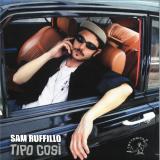
Italian producer, musician, DJ, and groove architect Sam Ruffillo drops his long-awaited debut album Tipo Così on Toy Tonics – a sun-drenched, genre-blurring statement that blends classic house with Mediterranean flair, romantic funk, and tongue-in-cheek Italo vibes. Over 11 expertly crafted tracks, Ruffillo delivers a dancefloor-ready, emotionally rich LP that connects deep musicality with irresistible rhythm and light-hearted elegance.
After three acclaimed EPs and collaborations with revered artists such as Barbara Boeing, Kapote, and Fimiani, Ruffillo has firmly cemented himself as a core artist on the Berlin-based label. Known for his unmistakable signature sound — a warm mix of vintage disco, 90s house, and Italian vocals — Sam’s music has garnered widespread DJ support from tastemakers like Gerd Janson, Palms Trax, Seth Troxler, and DJ Tennis, while becoming a staple on Italian airwaves. His infectious summer anthems like Danza Organica and Perfetta Così have soundtracked countless club nights and festivals, creating a loyal following that eagerly awaited this full-length debut.
Tipo Così is the natural culmination of a musical journey that’s both playful and profound — a travel diary written in grooves, synth stabs, and melodies that feel like postcards from a parallel Mediterranean universe. The album expands and deepens Ruffillo’s world into a fully immersive experience: lush emotional chords meet tight syncopated grooves, vintage synth textures collide with irresistibly catchy pop refrains, and the boundary between sincerity and playful irony is exquisitely blurred.
Entirely written, produced, and recorded in Italy, in his beloved hometown of Bologna, the album finds Ruffillo at the helm on keys, drum machines, and production, supported by a talented cast of musicians contributing live bass, guitar, and other organic elements — further enriching his trademark fusion of electronic grooves and natural instrumentation. There’s a tactile warmth in these tracks, a hands-on feel that adds soul and depth to every beat.
This album also marks Ruffillo’s heartfelt return to singing in Italian, with standout tracks like House Tipo Così, Mi Fa Volare, Ancora, and Dentro Di Me, where romantic naïveté meets pulsing club energy in a way that feels both timeless and refreshingly new. The vocal performances add an intimate, human touch to the music, reinforcing the personal stories woven into each song. There’s poetry in the casual, a bittersweet elegance in the way the lyrics float over groove-heavy production.
Having toured extensively across Europe, Australia, Indonesia, New Zealand, and Mexico — with sets at iconic venues like Panorama Bar and festivals such as Sónar Barcelona — Ruffillo has fine-tuned much of this album in front of live audiences. The real-world testing ground infused the record with a dynamic energy and immediacy that only comes from genuine crowd interaction. These songs weren’t just made in the studio — they were lived on dancefloors around the world.
Tipo Così is not just a collection of tracks. It’s a philosophy — playful, stylish and unmistakably personal. A modern club album bursting with heartfelt emotion and sophistication. Music for dancers with taste; for lovers of beauty, rhythm, and the little imperfections that make things feel real.
But what exactly is Tipo Così? More than just a phrase, it’s a way of being. It’s about embracing elegance without effort, mixing irony with sincerity, and letting nostalgia slip into the room without taking over the party. It’s Sam Ruffillo’s signature language: relaxed, confident, meticulous yet never rigid — where a chord progression can say as much as a lyric, and every beat carries intention.
The album’s visual identity complements this vision perfectly. The artwork and promotional materials lovingly reference Italian design from the ’80s and ’90s, combining bold graphic elements with playful pop culture nods. This aesthetic mirrors Ruffillo’s music — a fusion of vintage warmth and contemporary freshness, delivered with authenticity and charm.
Sam Ruffillo belongs to a new generation of European artists who are reshaping electronic music by blending past and present, analog and digital, groove and emotion — without nostalgia or pose. His artistic universe is coherent, vibrant, and alive; a rich tapestry of sound, images, and stories that coexist with lightness, precision, and a distinctive voice.
Reflecting on his artistic journey, Sam describes music as a vital, deeply human impulse — a tribal connection to rhythm and body that has driven him since he was a teenager. His creative process balances meticulous planning with room for spontaneity, usually sparked by clear melodic ideas that evolve naturally. Collaborations with close friends, especially vocalists like Ninfa, add warmth and authenticity, exemplified in tracks like “House Tipo Così.” For Sam, music is honest self-expression — crafted for listeners who crave memorable melodies and rhythms imbued with genuine feeling.
While technical perfection is tempting, Sam prioritizes emotion, knowing that what truly resonates is the soul behind the sounds. His long-standing partnership with Toy Tonics has been key in nurturing his vision, offering a blend of creative freedom and professional support. Looking ahead, Sam Ruffillo is excited to broaden his live performances, and release new projects that continue to blend electronic grooves with organic, heartfelt sounds — maintaining the delicate balance between playful irony and sincere emotion that defines Tipo Così.
Kurzversion:
Italian DJ, producer and musician Sam Ruffillo drops his debut album Tipo Così on Toy Tonics - a sunny blend of house, funk, Italo and pop, full of groove and emotion. Written and recorded in Bologna with live instruments and Italian vocals, it’s a playful, elegant journey shaped on dancefloors worldwide. A stylish, sincere club album where nostalgia, irony and rhythm meet in perfect harmony.
- Mi Fa Volare
Road-tested across continents and now finally released, “Mi Fa Volare” channels 90s uplifting euphoria with big breakbeats, lush chords, and Italian vocals built to stick. Somewhere between balearic bliss and piano house nostalgia, it’s a feel-good club weapon made for peak-time moments - already sung back by crowds after just one listen.
- Ancora
“Ancora” is a vibrant hi-NRG track inspired by 80s Italo disco, sung entirely in Italian. It blends driving rhythms with dreamy melodies, capturing the radiant spirit of the decade. This fresh yet nostalgic song delivers euphoric vibes and timeless energy, making it a perfect fit for both dancefloors and reflective listening moments worldwide.
- Dentro Di Me
“Dentro Di Me” channels ‘90s sensuality through a fast-paced, UK house-inspired lens. Entirely in Italian, it’s a bold and contemporary dance track where hypnotic vocals meet high-energy grooves. Blending nostalgic textures with forward-thinking production, the result is a seductive and euphoric trip - equal parts emotional and club-ready.
- Amigo
“Amigo” blends Latin groove, acoustic guitar-driven rhythm, and Mediterranean flair into a warm, magnetic, cross-cultural dance anthem. Sung in Spanish and Italian, it celebrates connection, inclusivity, and the joy of moving together - whether stranger or friend. With its unstoppable rhythm and vibrant energy, it’s a feel-good track with a unifying spirit.
- Ma Sei Fuori
“Ma Sei Fuori” is a tongue-in-cheek dancefloor bomb blending raw house energy with catchy vocal phrases and a nod to classic French touch. Driven by hypnotic vocal lines and a playful attitude, it doesn’t take itself too seriously - while still proving serious club impact. Built for late-night moments, it’s bold, bouncy, and impossible to ignore.
2025 Repress
Loose Grooves & Bastard Blues is Tommy Guerrero's sublime debut. Of this beloved masterpiece, the legendary skater himself says: "my 1st album. It was never meant to be released. I was just recording for the fun of it.. still my fave. Oh so naive..." And you know what? It's definitely Be With's fave too. An astonishingly great record. A chill, blissful, deeply moving album, it was rightly garlanded as an instant classic.
A laidback, fusionistic ride replete with loopy drum tracks underpinning Tommy's trademark reflective guitar stylings, Loose Grooves & Bastard Blues remains powerfully evergreen. Originally released in 1997, there's elements of jazz, trip hop, rock and downtempo groove. All shot through with a heavy dose of soul. Thirteen tracks of lo-fi (mostly) instrumental freshness fused with Cuban, Latin and blues, it's a must for fans of Money Mark, J Dilla, RJD2, DJ Shadow and Pete Rock. As ever with Tommy's records, the title sums up the music contained within most aptly. And writing about his songs, his vibes, is one of the trickier things to do, it has to be said. It's just all gorgeous!
A total vibe throughout, to blast Loose Grooves & Bastard Blues is a majestic experience, one that suits a start-to-finish listen and renders the picking out of highlights totally redundant. Featuring nagging, deeply melodic guitar lines - both electric and acoustic - over simple rhythms with such sumptuous elegance, the hypnotic playing against unrushed percussion releases a crystal clear stream of healing frequencies. It's ust divine. This album laid the blueprint from which Tommy Guerrero would subsequently explore further on A Little Bit of Somethin' and Soul Food Taquiera.
Meticulously remastered and cut by both Simon Francis and Cicely Balston respectively, it has been pressed to the highest possibly quality at Record Industry in Holland. The original and iconic sleeve, designed by Natas Kaupas, has been restored here at Be With HQ as the finishing touch to this long overdue re-issue.
Misty Lane paves a path to Dark Entries to deliver some quirky Quebecois disco pop. In 1983, producers Michel Bibeau, perhaps best known for his work on Pluton & Humanoids’ “World Invasion,” and Fitz Roy aka Ralph Mashats teamed up with singer Elaine Desjardins, the eponymous Misty Lane.
Mashats reminisces about bringing his Roland TR-808 and TB-303 to Michel’s Studio 21 in St. Eustache, two units he regretted later selling for “a slice of bread.” Michel added hooks with his Roland Jupiter 4 and various studio effects. Their sessions produced “Energy” and “Contrôle,” two cuts of slinky synthpop with French-Canadian flair. “Energy” pops off with proto-house vibes thanks to snappy 808s and Desjardin’s naive-but-enthusiastic vocals, and would fit right into a mid-80s WBMX Radio mix. “Contrôle” is a mid-tempo groover with tropical atmospheres, sitting perfectly next to to Junior Byron’s “Dance to the Music,” which was another Bibeau production.
Energy comes in a sleeve featuring Elaine at The Chivas Club in Montreal. Fans of Italo, Canadian disco, and oddball wave will rejoice in these artfully produced gems.
First Word Records are proud to present the debut single from Above The Clouds (aka kidkanevil & Magic Manfred) with their instrumental take on an MF DOOM classic, 'Arrow Root'
One of the original First Word roster, UK Producer/DJ and all-round laptop music geek kidkanevil has developed a distinctive and progressive sound over the years, gleefully exploring the beats and bleeps of the electronic music universe to international recognition. Leeds born, sound system bred and raised on a (un)healthy diet of video games and anime, his solo work inhabits the curious space between bass frequencies and otaku culture. But as a devoted teenage backpack rap nerd, somewhere in the back of kid's mind was a lingering desire to reconnect with his first love, hip hop.
Not long after moving to Berlin he joined a studio space in graffiti plastered Kreuzberg, where he met multi instrumentalist wizard Magic Manfred; a disciple of all things boogie, disco, funk and soul. Born and raised in Berlin, and currently a touring musician for many an act, Manfred's musical map joins the dots from piano lessons at four, to starting a band with his teenage friends, leading him to his true calling - the bass - via the club vibrations of his hometown, which introduced him to the world of DJing and production, and a stint studying in the explosive London jazz scene to finalise his Jedi training.
Bonding over their mutual love of '90s hip hop, a friendship and musical kinship developed, coupled with a desire to honour past eras but push things forward, Above The Clouds was born; named after their joint favourite DJ Premier beat, with a touch of irony regarding their basement based studio of a windowless variety.
kidkanevil explains "We did a number of covers to sort of get warmed up and in the pocket, of which 'Arrow Root' was one. I actually interviewed DOOM once, mask and all, and I always regretted I forgot to ask him about the original sample. It's been one of my favourite DOOM beats forever and it came up in conversation one day, then manifested pretty quickly into a session. It came together with relative ease and quickness, which is usually a good sign. Manfred worked out the chords and I remade the drums in about the same time frame. Mario is an exceptional saxophone player based in Berlin, so a few text messages later she came by the studio and nailed the entire thing on her first take. And that was that, our humble tribute to the supervillain!"
This one is backed up on the flip side with 'Tram Delay Beat'; a low slung neck-snapper teasing more of what's to come.
This is the first single from the duo, with a long player now in the works…
Above the crowds, above the clouds, where the sounds are original, infinite skills create miracles…