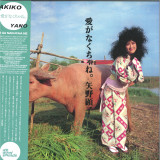
Wewantsounds continues its Akiko Yano series with the reissue of her cult classic 'Ai Ga Nakucha Ne' recorded in 1982 and co-produced by Ryuichi Sakamoto. Featuring Japan, the album includes additional recording in Tokyo with YMO and is mixed by Steve Nye and Shinichi Tanaka. It is the first time the album is released outside of Japan and the deluxe LP features the original artwork with gatefold sleeve and a lavish 24-page colour booklet with sessions photos by Pennie Smith (famous for The Clash's London Calling photo). The reissue also includes a new introduction by Mac DeMarco and a dual interview with Akiko Yano and Steve Jansen by journalist Paul Bowler. The audio remastered from the Original tapes by Mitsuo Koike.
'Ai Ga Nakucha Ne' ('there must be love' in Japanese) is Akiko Yano’s 6th studio album and follows 'Tadaima' in 1981. It continues exploring the electro-pop sound of its predecessor, hot on the heels of her touring with Yellow Magic Orchestra between 1979 and 1980. For this album, Akiko decided to try something new; she enrolled English fellow musicians Mick Karn, Steve Jansen and David Sylvian from Japan and booked the Air Studios in London under the supervision of engineer Steve Nye. Over a couple of weeks, the musicians created a fascinating soundscape full of catchy pop tunes, sung in both Japanese and English. Reminiscing about the studio sessions, Steve Jansen notes "Our music’s different but we maybe had a similar process of working. It was a great environment because the studio was a great place to work. It was very insular. There were four studios and there were always groups working in there 24/7."
The eleven tracks featured on "Ai Ga Nakucha Ne," mostly composed by Akiko - are a great collection of catchy tunes featuring her distinctive vocals and accompanied by the Japan musicians. As Akiko explains about the creative process, "I didn’t think to imitate or to make another Tin Drum. But I had Steve Jansen and Mick Karn, these excellent musicians. They were eager to understand the songs, then they put in everything they had. I knew the material was different from what they usually played in Japan. But it was a great experience working with them.
There are many highlights on the album, from the pop edge of "Aisuru Hito Yo" to the avant groove of "Another Wedding Song", each song is memorable and the album ends with the superb “Good Night” sung by Akiko and David Sylvian.
The original 1982 LP release included a 24 page booklet featuring many photos by Pennie Smith and Japanese photographer Bishin Jumonji. The booklet is reproduced in its entirety here and the album on top of contributions by Mac DeMarco, a longtime fan of the album, Akiko and Steve Jansen making this release of 'Ai Ga Nakucha Ne' a unique testament to Akiko Yano's greatness.
Cerca:about 2
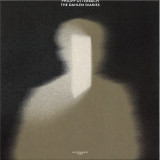
The new LP by Krefeld-born, Berlin-based artist Philipp Otterbach entitled 'The Dahlem Diaries'.
Recorded in a little-visited corner of the German capital, 'The Dahlem Diaries' is a convergence of ideas, sketches and tracks, both old and new, most of which were produced between 2020-2022. Whilst eerie atmospheres, electronics and drums have played a pivotal role in Philipp’s earlier releases, his latest is a rather more introspective affair, in which the guitar takes a leading role. A role Otterbach uses to quietly bring light and hope to his music.
Speaking about his writing process, Philipp explains that, based around his original compositions, “Friends were nice enough to contribute additional parts on their instruments which I then reworked, put together and re-contextualized. The recordings encapsulate a very specific moment in time, one that would have sounded perhaps very different the day before or after.”
Combined with a strong use of effects and field recordings, 'The Dahlem Diaries' feels somewhat like a scene or fragment from a story, in which the narrative remains undefined. It is a playful album that is something of a blurred underwater adventure, sounding as bright as it is hazy, even psychedelic at times, yet with an almost melancholic positivity. In Philipp’s own words: “It could be an album about friendship and being at one with myself, whilst at the same time bringing a certain seriousness to my music, but not necessarily to myself; there is also a playful humour hidden in there. ”
- A1: Captain Parade 3 25
- A2: Mountain Echoes 4 09
- A3: Discowboy 2 42
- A4: Tombola Time 1 2 10
- A5: Tombola Time 2 2 08
- A6: Space Fiction 1 21
- A7: Mountain Trumpet 0 58
- A8: Tambours Parade 1 42
- B1: Deer Forest 4 32
- B2: Charly Guitare 3 01
- B3: Magic Lake 1 2 45
- B4: Magic Lake 2 2 45
- B5: Pop Fiction 1 43
- B6: Damnation Space 2 38
Pierre Dutour's infamous Top Fiction is the epitome of a 5-tracker. Coming to light in 1979 on Tele Music, its collection of environmental themes are *all astounding*. We're talking all-time heavy hitters, here. They come recommended as tracks you'd choose to elegantly elevate deep selector sets or mixes.
Skip the irritating whistle-laced marching-band funk of "Captain Parade" and head straight to the glistening synths and proud horns of beatless ambient wonder "Mountain Echoes". Arguably worth the price of admission alone. It's that good. The sci-fi atmospherics of "Space Fiction" are definitely sampleable whilst the proud horns of "Mountain Trumpet" definitely contain blasts that could be of creative use. "Tambours Parade" is more marching-band funk, only this time the drums go hard and there's a lot to like about this one.
Truly, it's all about the B-Side. A real B-Side for the ages, in fairness. It opens with the gorgeous "Deer Forest". It's one of the most beautiful songs you'll ever hear. Like something off Brian Bennett's Voyage, it rides dreamily melodic synths, and comes on, as one fan claimed "like something Angelo Badalamenti would have co-written with Final Fantasy composer, ???? Nobuo Uematsu". It's jaw-dropping. Be instantly beguiled by the deep eerie nostalgia and pretty delicate piano of "Magic Lake I" and the whistling-synth-augmented "Magic Lake II". The almost-title-track "Pop Fiction" is another hidden gem, containing dreamy, glistening arpeggios that are just begging to be sampled with a heavy knocking beat behind it. The set closes with "Damnation Space", 2 minutes of spooky Musique concrète.
So, 5 absolutely incredible tracks and 2-3 good ones. An excellent ratio for a library album, I think we can all agree. Trust us when we say that the heavy hitters are just absolute gold, rendering this one an essential, buy-on-sight purchase. Go listen and discover for yourselves...
The audio for Top Fiction has been remastered by Be With regular Simon Francis, ensuring this divisive release sounds better than ever. Cicely Balston's expert skills have made sure nothing is lost in the cut whilst the original space-age sleeve has been restored here at Be With HQ as the finishing touch to this long overdue re-issue.
- A1: Rythmiques N° 4 2 03
- A2: Rythmiques N° 5 2 03
- A3: Rythmiques N° 6 2 10
- A4: Rythmiques N° 7 1 48
- A5: Rythmiques N° 8 3 50
- A6: Rythmiques N° 9 2 45
- A7: Piano + Piano 2 30
- B1: Auto Rythmiques 3 45
- B2: Rythmiques N° 10 2 00
- B3: Rythmiques N° 11 2 10
- B4: Océan Horizon 2 45
- B5: Super Carrousel 1 40
- B6: Gay Shopping 2 10
- B7: Suspense N° 1 3 50
Part of Tele Music Reissue Campaign, 2023 first time reissue, 140g vinyl
Wow! Pierre-Alain Dahan & Mat Camison's Rythmiques is another iconic release in the hallowed Tele Music catalogue. First appearing in 1973, it features tense funk, blunted jazz and heavy breaks all the way. Considered the rightful sequel to Continental Pop Sound, it's a vital album for producers and DJs; and you can probably guess that RHYTHM is central to the record's presentation. And you can really taste what's rhythm, to borrow a phrase. French drummer, percussionist and composer Pierre-Alain Dahan was a key member of the legendary Arpadys, Disco & Co, Voyage, Tumblack (with Wally Badarou, Mallia et al!) and Jef Gilson Septet whilst his partner here, Mat Camison, was a pioneering synth LORD. So, you know this Be With reissue is absolutely crucial.
The album picks up from where Continental Pop Sound left us, opening with the tense, stabbing thriller-funk of "Rythmiques N° 4". The dubbier "Rythmiques N° 5" is no less electric and definitely has a spacey air of wonky funk about it with the slightly off-kilter rolling piano. "Rythmiques N° 6" is more percussive-focussed with a brilliantly hypnotic opening that really stretches the drama out. “Rythmique N° 7” alternates between fast-paced, skipping drums and slo-mo funk, always with the clavinet high up in the mix. Wicked. The dope jazz of “Rythmique N° 8” truly mesmerises with licks of electric piano, funky bass flourishes and varied percussion. “Rythmique N° 9” has great, sloppy-yet-hard intro drums which sound like something Daft Punk could've pilfered circa Human After All, punctuated by a guitar rock refrain that repeats til the end but is never overdone. The A-Side closes with the beautiful, melancholic "Piano + Piano", a reflective jazzy piano track which could easily open a wide-ranging set this autumn and many after it. Stunning.
Opening Side B, "Auto Rythmiques" is a hectic yet compelling funk workout but it's all about the frankly devastating breakbeats on “Rythmiques N° 10 & N° 11” with effortlessly twisted funk bass lines over open drum breaks and enough tension and rhythmic switch-ups to keep your neck-snapping and your mind lifted. Downright essential. Taking leave from the heavy funk break action, the pastoral "Océan Horizon" is perhaps an unfairly overlooked highlight. A gorgeous, softly-aquatic, ambient gem, it's gently percussive with warm, floaty keys decorating the mellow rhythmic bed. The mercifully brief "Super Carrousel" is harmless fun-fair-funk but perhaps best skipped over whilst the intriguingly titled "Gay Shopping" is another throwaway exercise in inexcusable jaunt whilst. To close out this memorable set, thankfully, we're left with "Suspense N° 1" to get us back on course with its unsurprisingly tense mix of urgent stringed instruments that flirt with rhythm and melody yet the longer the track goes on. Deep.
One of the very best French drummers ever, Pierre-Alain Dahan began his career at the Blue Note in Paris with Sonny Stitt, Dexter Gordon and Daniel Humair. Some start, eh?! He also participated in the recording of Serge Gainsbourg's cult album 'La Ballade de Melody Nelson' before going on to make countless KILLER library funk records and be a key member in the legendary Arpadys, Disco & Co, Voyage, Tumblack (with Wally Badarou, Sauveur Mallia et al), Jef Gilson Septet (alongside Henri Texier) and many more. Some pedigree.
The audio for Rythmiques has been remastered by Be With regular Simon Francis, ensuring this release sounds better than ever. Cicely Balston's expert skills have made sure nothing is lost in the cut whilst the original, iconic Tele Music house sleeve has been restored here at Be With HQ as the finishing touch to this long overdue re-issue.
Black cloud is descending – Black Magic Six set to release their fifth album in September, new single Blood of Babylon out now The title of Black Magic Six’s upcoming album Black Cloud Descending really sums up the mood and thoughts of its creators during the album making process. It tells stories of constant escaping, accepting defeat, destinies of outcasts, failures, and drunks. Tales of the wiser, exaggerated lies, vague rumours, fuzzy states of mind and suspicious circumstances – even the thought in the back of your head about the possibility of redemption while standing on the edge of the cliff right before falling in; it’s all there. The album’s first single Blood of Babylon is a garage rocking song about Sam Berkowitz’s relationship with Sam Carr’s speaking dog. Lyrical themes of the upcoming album are moving between reality and the imaginary world; remembering the moments at Belo Horizonte, how to use the powder that protects you from the evil eye, how it felt to wonder in the same alleyways with the werewolf of Istanbul or diving to safety to the bottom of a pond in Northern Savo. Listen Blood of Babylon here: https://youtu.be/S7mEujUIlrw Musically the album is on a narrow path. All the sounds heard on Black Cloud Descending are produced by Taskinen and Motherfuckin’ Japa. Sure, there are two exceptions; the gong heard in the end of Werewolf of Istanbul was recorded by Sakke Koivula at his home and the church bells in the outro of Full House Blues are ringed by unknown. Previous albums of BM6 had lots of guests playing guitar, percussions, harmonica, and visiting singers. People that one could call actual musicians. These past albums have had a softer, more versatile, and maybe even a livelier touch to them. This time around there’s only the core; the percussionist and the singing guitar player. The result is more raw, rugged, and rougher than before. Black Cloud Descending is out on September 1st on vinyl, CD, and digital platforms. The album was produced, recorded, and mixed by Mitro Kylliäinen at Kung Fu Audio along with BM6 during 2022-2023. Original art used for the album cover was made by Greger Grönholm. The band will play selected live shows to celebrate the new album in Finland, Germany, Denmark, and Spain. Dates of these gigs will be announced closer to the release date of the album.
YMO DRUMMER YUKIHIRO TAKAHASHI'S SOPHISTICATED CITY FUNK CLASSIC FROM 1978 CO-PRODUCED BY RYUICHI SAKAMOTO AND FEATURING HARUOMI HOSONO, MINAKO YOSHIDA AND TATSURO YAMASHITA. RELEASED FOR THE FIRST TIME OUTSIDE OF JAPAN - WITH REMASTERED AUDIO, LP COMES WITH OBI AND FOUR PAGE INSERT
Wewantsounds is delighted to announce the release of Yukihiro Takahashi's debut solo album 'Saravah!'. One of the key Japanese albums of the 70s, it was released in 1978 at a key time when, following his tenure with Sadistic Mika Band, Takahashi had just joined the nascent line up of Yellow Magic Orchestra. A sophisticated mix of Disco Funk, synth Pop, Ambient, French Exotica and Bossa Nova, the album has the stylish feel of a night out clubbing in Paris circa 1978. It’s the missing link between the City Pop scene of the late 70s and the synth sound of YMO which was about to revolutionise the world. Newly remastered by renowned engineer Mitsuo Koike, the LP features original artwork with photos by Masayoshi Sukita (David Bowie's Heroes), a 4-page insert and a new Introduction by Benjamin Barouh (Saravah records).
The month before recording the YMO debut album that would help alter the course of music, Yukihiro Takahashi entered the studio with his fellow band-members Ryuichi Sakamoto and Haruomi Hosono to record 'Saravah!' together with the cream of the Japanese scene. He drew his inspiration from globe-trotting French musician Pierre Barouh who had introduced Bossa Nova in France in 1966 with "Samba Saravah" (featured in soundtrack the Oscar Winner A Man And A Woman which he co-wrote) and subsequently launched Saravah Records.
'Saravah' starts off with a couple of French and Italian exotica classics ('Volare' and 'C'est Si Bon') with delicious touches of synth while 'Saravah!' a nod to Pierre Barouh, is a languid Bossa Nova with beautiful soulful strings arranged by Ryuichi Sakamoto. The album gets hotter with 'La Rosa' a superb mid tempo ambient funk featuring Takahashi's beat backed by Haruomi Hosono's bumping bass line, Sakamoto's Hammond Organ and Shigeru Suzuki's fluid guitar.
The first side ends with an amazing exotica-synth version of the standard 'Mood Indigo', announcing the midi revolution that was to come before things get funkier on Side Two starting with Ryuichi Sakamoto's superb up-tempo Disco instrumental ‘Elastic Dummy’ featuring soulful strings and horns with solos by Sakamoto and guitarist Tsunehide Matsuki. The album then moves on to the ambient synth pop of ‘Sunset’ before switching back to Disco Funk with 'Back Street Midnight Queen’ which. like 'Elastic Dummy' has become a dancefloor cult classic over the years.' Saravah! ends on a perfect note with the beautiful 'Present' a perfectly crafted pop song which Takahashi wanted to do in a City Pop mode, featuring a superb melody and high-class arrangements. The perfect soundtrack to an early morning stroll in the Paris streets as illustrated by Masayoshi Sukita's photos featured on the album cover.
A sophisticated album full of glitz and fun, 'Saravah!' gives a unique insight into the versatility the YMO musicians and how funky they could play under Yukihiro Takahashi's influence. This was a key time when the three musicians were just transitioning to a sound that would be dominated by synthesizers and 'Saravah' catch them just at that fascinating moment.
RYUICHI SAKAMOTO'S LANDMARK 1981 ALBUM REISSUED FOR THE FIRST TIME IN DECADES OUTSIDE OF JAPAN. THE ALBUM WILL BE REISSUED IN ITS RARE JAPANESE EDITION TOGETHER WITH A 2-LP LIMITED EDITION FEATURING THE ALBUM PLUS A 2ND LP FEATURING ITS NEVER-RELEASED FULL INSTRUMENTAL MIX, ALL REMASTERED BY BERNIE GRUNDMAN.
Wewantsounds is proud to announce the reissue of Ryuichi Sakamoto's third solo album "Hidari Ude No Yume" (Left Handed Dream), originally released in 1981 on the Alfa label. Save for a small-scale Dutch vinyl release in 1981, it is the first time the album's original Japanese edition is released outside of Japan (the European release on Epic Records included significantly different tracks and mixes). Newly remastered from the original tapes by renowned engineer Bernie Grundman, this LP edition comes with original artwork featuring a striking cover shot by famous photographer Masayoshi Sukita (sourced from the original negative), OBI strip and 4-page insert with new introduction by journalist Anton Spice. The album will also be released as a 2-LP limited edition gatefold including the album's full instrumental mix.
Ryuichi Sakamoto's third album, "Hidari Ude No Yume" was recorded at the legendary Alfa Studio 'A' in Tokyo during the Summer of 1981. it came after "B-2 Unit" in 1980 and his debut album "Thousand Knives Of" in 1978, the very year Sakamoto was invited by Haruomi Hosono to join Yellow Magic Orchestra alongside Yukihiro Takahashi. In the process, they became global stars as the group rewrote the rules of electronic pop and toured around the world, yet Sakamoto was keen to remain active as a solo artist.
?In 1981, the musician decided to record an album rooted in Pop, following "B-2 Unit" which had a more of an experimental edge and his landmark electro debut from 1978. For this new album entitled "Hidari Ude No Yume," Sakamoto invited British producer Robin Scott, who had had huge hit with 'Pop Muzik,' to co-produce. They entered the Alfa studio in July 1981, accompanied by a handful of musicians. These included his fellow YMO musicians Haruomi Hosono and Yukihiro Takahashi, keyboard programmer extraordinaire Hideki Matsutake who'd been on Sakamoto's first two albums and became YMO's unofficial fourth member, violinist Kaoru Sato, saxophonist Satoshi Nakamura and American guitarist Adrian Belew who'd played with David Bowie, The Talking Heads' "Remain In Light" and more recently, Tom Tom Club’s debut (co-writing 'Genius Of Love').
?Together, they created a fascinating mix of pop, ambient and electronic music with elements of avant garde and traditional Japanese music, the whole firmly rooted in a solid groove. Sakamoto wanted to give the album a spontaneous feel and decided to let ideas flow and evolve organically during the sessions as musicians would develop them together. From the funk of 'Relâché' to the new wave feel of 'Venezia' and the ambient minimalism of 'Slat Dance,' the album is remarkably consistent while displaying a wealth of global influences as shown by the diversity of instruments featured on the credits: Marimba, didgeridu, traditional Japanese instruments such as the Sho and Hichiriki flutes.
?The album was released in Japan in 1981 and Epic Records picked it up for Europe a year later but decided to release it in a significantly altered version. The sequencing was completely reshuffled and two tracks, 'Saru No Ie' and 'Living In The Dark' were completely dropped while three others, ‘Relâché’, ‘Tell 'em To Me’, ‘Venezia’ were heavily remodelled with english lyrics and became 'Just About Enough', 'Once In A Lifetime' and 'The Left Bank'. Last but not least, a new English-sung track, 'The Arrangement,' was added, making the album nine tracks instead of ten for the Japanese edition.
Altogether this International version called "Left-Handed Dream" was a very different album from the Japanese one and although both were successful at the time and further established Ryuichi Sakamoto as a global solo artist, the Japanese edition of "Hidari Ude No Yume" remains largely unknown to international ears.
Wewantsounds is now delighted to release this original Japanese edition for the first time in decades as a single LP together with a 2-LP limited-edition set adding, as a bonus, its fascinating instrumental mix, discovered in the label's vaults a few years ago (Note that 'The Garden Of Poppies', 'Slat Dance' and 'Saru No Ie' are instrumentals but for the consistency of the album we kept them on the Instrumental Mix). "Hidari Ude No Yume" is an essential album in Ryuichi Sakamoto's rich discography. It is now available in its purest original Japanese form.
- A1: Intro
- A2: Conant Garden
- A3: I Don't Know Feat Jazzy Jeff
- A4: Jealousy
- A5: Climax (Girl Shit)
- A6: Hold Tight Feat Q-Tip
- B1: Tell Me Feat D'angelo
- B2: What's All About Feat Busta Rhymes
- B3: Fourth And Back Feat Kurupt
- B4: Untitled (Fantastic)
- B5: Fall In Love
- C1: Get Dis Money
- C2: Raise It Up
- C3: Once Upon A Time Feat Pete Rock
- C4: Players
- C5: Eyes Up
- D1: 2U 4U
- D2: Cb4
- D3: Go Ladies
- D4: Thelonious (Bonus Cut)
- D5: Fall In Love (Remix-Bonus Cut)
The contributions of the late Detroit producer James DeWitt Yancey -better known to the world as J Dilla- to the world of hip-hop can't be overstated, and nowhere is his legacy more apparent than his work as a member of Slum Village. A founding member of the trio, (Alongside rappers T3 and Baatin) Dilla provided the group's distinctly esoteric, free-wheeling sound, built around winding basslines, quirky drumbeats, subtle low-end frequencies, and classic jazz & soul samples. Against the backdrop of Dilla's rich production, T3 and Baatin's free-flowing style of rhyming would also earn wide critical praise, leading to comparisons as the successors to A Tribe Called Quest. (A label they themselves have rejected.) After the success of Slum's 1997 studio debut, Fan-Tas-Tic Vol. 1, the group went to work on their follow up. Though the project was completed in '98, label turmoil kept the project on ice until 2000. By the time Fantastic Volume II hit Dilla was well on his way to his status as a hip hop legend having produced cuts for Common, Busta Rhymes, Erykah Badu, A Tribe Called Quest and many more. Later works from Slum Village may have had more of an impact sales-wise (in the immediate) but Fantastic Vol. 2 had fans and many critics saying that Slum Village, and Dilla in particular, may single-handedly save rap music.' Perhaps that statement is hyperbole but many consider Fantastic Volume II to be Slum Village's finest work ever to this day. Ne'Astra Media Group now presents the album reissued on vinyl, for the first time in several years. Every wobbling bass note of J Dilla's production has been preserved to maintain the legacy of this hip hop rap classic and maintain the legend of one of hip-hop's greatest beatsmiths.
Under the alias 4E, producer Can Oral created his own unique sound of raw, futuristic acid-electro. The A-Side tracks "Ask Isadora" and "Conga Banana" first appeared on the album, Blue Note, released on Home Entertainment in 1996. On the flip are two unreleased tracks picked from his extensive archive and edited by FIT Siegel. These were also recorded during this era, which Can describes below:
"In the 90s I moved to NYC to start a band with Jimi Tenor. I had a small flat in the East Village with the apartment number 4E and that became my artist name for the downtempo and electro material I was working on. The style I called Futuristic Electro because I didn't want to relate to the old school with this. I had my studio on the kitchen floor and pretty much only used EMU SP-1200, TB-303, TR-808 and SH-101 by good ol’ Roland. In a way NYC was still developing because it was all about house music. In 1995, I opened Temple Records in Manhattan with Dr Walker from Air Liquide and DJ DB from Smile Communications. The record shop was inside the Liquid Sky clothing store. After a fire in the shop, along with a falling out with the owner I decided to talk to a fortune teller to find out what the future held. Her name was Isadora, and she had a TV show called "Ask Isadora." She told me on live television to move out, have my own shop and be independent, so I did. Thanks Isadora!"
“Upopo Sanke“ means “Let's sing a song" in the Ainu language. Umeko Ando (1932-2004) was one of the best-known artists of the Ainu, an indigenous, long-suppressed community in northern Japan. She sings their traditional songs together with Oki Kano on the Tonkori harp, who also recorded the album. The two are supported by members of the female vocal group Marewrew as well as Ainu percussionists, a string player and a male singer who provides rhythmic shouts and also throat singing. The call-and-response structure of many of the songs is performed with a mantric quality in a vocal style that is perhaps best described as elastic and breathing. There seems to be a gentle smile in every note and syllable. This music softly hits the heart.
Upopo Sanke was recorded on a farm in Tokachi in the summer of 2003. We hear dogs barking, a distant thunderstorm and voices imitating animals. The liner notes that accompany the 2LP release gather the anecdotal memories of Umeko Ando and Oki Kano about the stories of the 14 songs. Oki Kano is a musical ambassador of the Ainu culture who tours worldwide with his Oki Dub Ainu Band and also gives solo concerts, always playing the Tonkori, the five-stringed Ainu harp.
The Ainu have suffered from the oppression of their culture and language by Japan, especially since the 18th and 19th centuries. Only recently, in 2008, were the Ainu officially recognized again as an indigenous people culturally independent of Japan. As a result of the marginalization, there are now only a few hundred native speakers of the Ainu language left, making it a particularly worthy object of preservation.
"Upopo Sanke" was mixed again in part by Oki Kano, before being mastered and cut to vinyl by Kassian Troyer. The 2LP plays on 45rpm and it sounds fantastic. This album was the second album by Umeko Ando, the follow-up to „Ihunke" and also re-released in 2018 by Pingipung together with Oki Kano.
- A1: Fred Und Luna "Intro (Future Sounds Of Kraut)
- A2: Baikonour "Oben Beg (Mk2)
- A3: Musiccargo "Ich Geh Den Weg Mit Dir
- A4: Abrão "Intensidade (Rina Remix)
- B1: Listening Center "Portable Electronic Musical Instrument
- B2: Higamos Hogamos Presents Spacerocks "Elkamonious Split
- B3: Gilgamesh Mata Hari Duo "Florian Schneider-Esleben
- B4: Kosmischer Läufer "In Der Stadt Und Auf Dem Land
- B5: Sankt Otten "Hymne Der Melancholischen Programmierer
- C1: Pyrolator "Die Geschichte Vom Heißgelaufenen Reißwolf
- C2: I Cube "Vantableu
- C3: Organza Ray "Preen Scene
- D1: Sula Bassana "Tropfsteinhöhle
- D2: Halwa "Drehwurm
- D3: Lionel, Julien, Marceau Et Rainer "Reise
- D4: Fred Und Luna "Outro (Auf Wiederhören)
16 moderne krautige elektronische Tracks inspiriert von Kraftwerk, CAN, Neu, Rother Klaus Schulze und Konsorten. Kuratiert und kompiliert von Compost Künstler Fred und Luna. Seine Auswahl (mit sechs exklusiven Stücken!) zeigt, wie gut jüngere Künstler die Kraut-Szene beleben. Die langjährig Bekannteren wie Pyrolator, Sankt Otten, I:Cube, sowieso. Und Vol. 2 ist auch schon in der Mache, folgt im Winter 2023. Die Collage auf dem Cover ist von der fantastischen Künstlerin Norika Nienstedt extra für die FSOK angefertigt worden. Sie lebt in der Kraut Metropole Düsseldorf.
Intro: Future sounds of Kraut, what’s it all about? Keine Ahnung, I don’t know. Überraschung, where we go...Alles andere als einfach oder im Grunde unmöglich, die Begriffe „Krautrock“ oder „Kraut“ zu definieren. Dennoch begeben sich Compost Records und Fred und Luna auf eine Zeitreise, um die unterschiedlichen Elemente deutscher elektronischer Musik der 1970er und 1980er Jahre und ihre Auswirkungen auf die neuere deutsche und weltweite Musikszene zu entdecken. Auf „Future Sounds Of Kraut, Vol. 1“ präsentieren die beiden Kuratoren Fred und Luna als erste „Forschungsergebnisse“ hauptsächlich Bands, die vom repetitiven Charakter vergangener deutscher Elektronika à la Kraftwerk, Can, Neu!, Harmonia und Cluster, beeinflusst sind.
Viel Vergnügen und erfolgreiches Krautifizieren!
Ocela can be a dance album if you want it to be, but above that, it is an album about dancing. The second instalment in a planned trilogy, it regards dance as a form of pathmaking, a physical chronology of a journey. Its voyager is the eponymous Ocela // an invented feminine form of the word steel // who wields both strength and brittleness. While the first album (Spojky Čiary) focused on Ocela's inception and youth, here she is mature // on a resolute trajectory between birth and passing away.
Ocela is not a concept album // unless you want it to be // but it is an album built around beats. While there is a loose precedent for rhythms in the two-piece project Jamka, the trilogy also marks Daniel Kordik's solo return to melodical composition. On this record, Ocela dances on her orbits in patterns that are harmonious but always slightly elliptic. Each song on the album travels with its own varying velocity, before it abruptly finds itself at the subjective beginning. Then it goes through further revolutions, with determination bordering on a lack of choice.
Recorded live onto a 4-track before mixing, Ocela is unlike its predecessor in that it shuns any form of field recording, and was instead made using only hardware (Elektron Octatrack MK1, Elektron Digitone, Jomox Mbase01).
Daniel Kordik, also known as Iskra, is one half of Jamka, member of the Urbsounds Collective, co-founder of Earshots Recordings and Ocela is his second release on the melodramatic label Weltschmerzen.
In 1972, a foursome of design students set out to make a record. This was, in many ways, a strictly creative endeavor. The quartet — composed of Dave Pescod, Alan Lewis, Phil Rawle, and Ted Rockley — were all trained, not as musicians, but as creatives. Art school heavyweights, the four were well-versed in the methodology of intentional experimentation, in the delicate balance of pushing the limits without completely unmooring oneself from a guiding creative intention. Emboldened by a high-brow familiarity with thoughtful experimentation and all the non-conviction of non-musicians, Bowes Road Band’s stint in the world of popular music yielded a record that is as much mind-melting as it is a direct product of its time. Their sprawling LP “Back in the HCA” embodies the exigence “art for art’s sake,” but it is for art’s sake that this record, however off the deep end it seems to travel (hear: “Doctor, Doctor”), remains a unified, and stunning, body of work. The LP’s do-ityourself garage rock noisemaking meets highfalutin creative processes. “Back in the HCA” is warbling psychedelic freakout (“Two Fingers,” “Doctor, Doctor”), Donovan-esque English countryside folk stylings (“Inside My Head,” “Goodbye to Rosie”), and avant-garde jazz improvisions (“Grass is Grass,” “Tomorrow’s Truth”) in one luminous release.
Originally an 9-track LP, Jakarta, Uno Loop, and Bowes Road Band decided to mine the six most cohesive tracks for the reissue, though the extras may be released somewhere down the line. Cohesion efforts aside, “Back in the HCA” stands alone in its singular conception of a genre-bending continuum — it evades definition. That said, the LP can easily be situated in the sonic environment in which it was conceived. By the end of the 60s, England was crawling with blues-based rock outfits that were starting to venture into prog rock territory. You can hear this popular dint cast over the folkier side of the LP. But Bowes Road Band was armed with their non-musicianship: they existed completely liberated from the motivating yet ultimately paralyzing lust for stardom. Enjoying this liberation, Bowes Road Band was utterly free to make noise. This freedom meant drawn out sax interludes amidst sweetly folk stylings (“Grass is Grass”) and Shaggs-like fuzzed-out freakouts that spiral into a void (Doctor, Doctor). This freedom also meant straight-forward tuneful cuts like “Goodbye Rosie” that conspicuously introduce heavily distorted auto-organ accompaniment mid-track amidst poignant lyricism. Bowes Road Band crafts a unified sound and then cracks it open.
With a completely off-the-radar status, Bowes Road Band could only press 50 copies of the record — 10 for each of them and 10 for the school. The band’s lifespan was to end there, or so they thought. “Back in the HCA” was the accidental fruit of a Berlin flea market treasure hunt by Jannis Stürtz, DJ and co-founder of Habibi Funk and Jakarta Records. After finding and sharing the LP with a few colleagues, Stürtz managed to get in touch with the band, get ahold of the master tapes collecting dust in Ted Rockley’s attic, and start the reissuing process. The record is still adorned with its original cover art designed by Alan Pescod, both reminiscent of bygone school days and the Zoom calls of yesterday — in short, reunion. Its re-discovery was happenstance and ought to be listened to as such. That is, “Back in the HCA” was not made to be listened to on a broad scale, or, at least, was not made with this goal in mind; it is neither in its time nor of its time. Of course, the group explicitly cites the folk tunes of the English countryside, the distorted rock groups that reigned during the record’s conception, and the fringes of psychedelic music that only the uber-underground might recognize (e.g., “Dreaming of Alice”). Yet still with these obvious influences, “Back in the HCA” always existed beyond the domain of both traditional musicianship and conventional commodification. Bowes Road Band’s DIY musicality beams through in technicolor across “Back in the HCA.” The vinyl includes an 8-page booklet detailing the albums creation and interviews with the band.
Lead single “Grass is Grass,” out July 14 along with album pre-order, encapsulates the record’s range: the track unfurls into a sprawling sax-driven trip following a sundrenched, Donovan-esque intro w/ lyrics “naively about parks and gardens, not marijuana!” The keyed-down folk cut “Goodbye to Rosie” is single 2 and elevates stripped-down acoustics with golden tinges, out August 4th. Focus track “Tomorrow’s Truth” constructs the fuzzed-out underbelly of acid folk. Listen for echoes of late Beatles, Mark Fry, and Donovan (if they were armed by an unshakabele willful naiveté). Like Sgt. Pepper’s on a shoestring budget—take a trip to the underground with LP “Back in the HCA,” available everywhere physically and digitally on September 1st via Jakarta Records and Uno Loop.
Besides online promotion from label profiles, the album will be further promoted by external agencies within the UK and US.
Los Angeles rapper Earl Sweatshirt releases his new project SICK!, out now via Tan Cressida / Warner Records. The new 10-track project includes previously released singles "2010," "Tabula Rasa (feat. Armand Hammer)," and "Titanic" and features collaborative contributions from artists and producers Zelooperz, Nak-el Smith, Armand Hammer, Black Noi$e, and The Alchemist.
Speaking about the new project, Earl says:
"SICK! is my humble offering of 10 songs recorded in the wake of the worldwide coronavirus pandemic and its subsequent lockdowns. Before the virus I had been working on an album I named after a book I used to read with my mother ('The People Could Fly'). Once the lockdowns hit, people couldn't fly anymore. A wise man said art imitates life.
People were sick. The People were angry and isolated and restless. I leaned into the
chaos cause it was apparent that it wasn't going anywhere. these songs are what happened when I would come up for air. Peace and love to Zelooperz the enigma, The Armand Hammer, and my good friends Alchemist and Black Noi$e. Peace and love to u."
Following the project's release, Earl Sweatshirt will embark on his North American 2022 NBA Leather Tour later this month with Action Bronson, and The Alchemist with Boldy James. The 19-date run will see stops in Los Angeles, Chicago, and New York City before wrapping up in Austin in February. Tickets are available here.
Listen to SICK! above and find full album details and upcoming live dates below. Stay tuned for more from Earl Sweatshirt coming soon.
- A1: Wildlife
- A2: A Single Tear
- A3: Murk & Marrow
- A4: Eye Of The Quarrel
- A5: Under Duress
- A6: Trigger
- B1: Broken By Light
- B2: Arkhipov Calm
- B3: I Can Tell You About Pain
- B4: Cannibals
- B5: Thousands Of Miles Between Us
- B6: The Dusk In Us
- B7: Reptillian
- C1: Permanent Blue
- C2: Eve
- C3: Churches And Jails
- D1: Melancholia
- D2: Beautiful Ruin
i am fortunate to play with amazing musicians - always have had my ear to the 6 winds to assess players and their strengths and the music we would make...
electric or acoustic, 2 or 5 people, country, folk, blues, string players, grass,
rocking, quiet or loud - WHATEVER the category does not matter (as it is just a category) - there has always been a group of great musicians near to help me get there - and yes, i am lucky
on this recording MATT FLINNER (mando and banjo), SHAD COBB (fiddle)
and BRYN DAVIES (double bass) & ALL folks on vocals and me on dobro/piano/banjo and guitar -mostly ben bullington's 1933 D18- we had been playing anytime a festival wanted a fiddle/banjo/mando/double bass/acoustic guitar instrumentation sound from me- in one way, it can easily be called "bluegrass" -( not a big stretch )- i kinda think "string band " is as good or a better name (certainly less used)... so enter this DARRELL SCOTT STRING BAND
(a rose by any other name)
HERE'S HOW THIS RECORD CAME ABOUT- we had 2 consecutive weekend gigs (arkansas and colorado) and rather than sending us... more
Although Miles Ahead was Miles Davis' first recording with the Gil Evans Orchestra, it was certainly not Evans and Davis' first collaboration. Gil and Miles' 1948-49 recordings both in the studio and broadcasted live from the Royal Roost in New York are among the true jewels of jazz history. The same can be said about Miles Ahead, a completely refined product in which the arrangements, the repertoire and the mood of every improvisation were carefully selected.
Phil Upchurch is the kind of guitarist who makes a strong point by what he chooses not to play. There are speedier chopsmeisters, players who undertake more daring intervallic leaps, those who navigate trickier lines, but it would be hard to imagine a more soulful guitarist than Upchurch. From his laidback phrasing on Nat Adderley's bluesy boogaloo "Jive Samba" to his buttery-smooth vocal inflections on Steely Dan's "Jack of Speed" and on the bluesy title track, Upchurch's understated approach on Tell the Truth! is more about pure feeling than technique. And yet he's holding in that department too, as he so capably demonstrates on Roland Vasquez's "Long Gone Bird" and on his own stunning arrangement of Paul Desmonds' "Take Five," done up in a similar fashion to his arrangement for that tune on George Benson's crossover smash hit from 1976, Breezin'. His unaccompanied rendition of "St. Louis Blues" is another guitaristic highlight, showcasing what Upchurch calls his stride guitar technique: incorporating bass, chords and melody lines simultaneously, a la Joe Pass. The prolific studio guitarist covers a lot of basses and blows his own horn in fine style on his Evidence debut.
The record is both a wonderful evolution in Tom's songwriting, and perhaps his most personal, heartfelt work so far. Inspired by pivotal moments, the album examines everything from family strife to heartbreak and abandonment, and exhibits some of the most confident, refined songwriting of his career. Set against lush soundscapes of beautifully textured guitars, agile strings and bright piano notes, these songs delve into the wonders of new love; reach out to a beloved sister; celebrate a close friend's good news. "I've touched on things in this record that I've never spoken about before," he says. "It's without doubt my most personal to date."Title track 'Love & Light' is dedicated to Speight's older sister, Cathy. Like "Tomorrow", it reaches out to a loved one with an emotional acuity that is startling for its candour. "My sister was the one who gave me my first guitar," he explains. "She used to pick me up from school... sometimes she'd forget and be a bit late, but I didn't mind." The song (like the album) is full of unconditional love, powerful enough that it stays with you long after the final note.
Love Is a Four Letter Word is Jason Mraz's fourth studio album, acclaimed for its introspective lyrics and acoustic-pop sound. Released in 2012, it reached number 2 on the Billboard 200 chart and sold over 1 million copies worldwide, showcasing Mraz's musical versatility and emotional depth.


