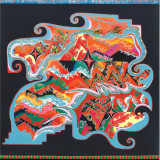
Bruce Falkian is a world famous contemporary artist who exhibits at the world's most prestigious art galleries and fairs. Bruce Falkian moonlights as an agent of espionage against the Terrorism Industrial Complex. Wait... what?
To understand Bruce Falkian we first must understand the link between image and war. In the late 1800s the precursor to the video camera was invented. It was directly inspired by guns, specifically, Samuel Colt's Revolver. It borrowed not only its barrel mechanics, swapping bullets for exposures, but its terminology too. Load, point, scope, aim, shoot, flash. The camera and the gun, united by cordite, would go on to prove the most efficacious tools in shaping the modern world.
The 20th century was a laboratory when it comes to killing and image making, glorified through Hollywood and the Western genre. Propaganda would prove highly effective in creating and sustaining support for militaries fighting for ideological global control. Devised first in the aptly title 'Propaganda' (1928) by Edward Bernays, a nephew of Sigmund Freud, Advertising and Public Relations became the leading media industries, learning how to control the population through images, usually just to buy random crap they didn't need, but other times to overthrow democratically elected politicians in foreign countries. Eventually Western Liberal Democracy assumed domination, built of course on the enslavement of all peoples and nations who didn't fall in line with its specific ideas of living. The Red Scare inspired countless anti-leftist, anti-communist works of art throughout the Cold War, notably and most bizarre, funding the abstract expressionist movement as a non-ideological alternative to socialist realism art. When the Soviet Union fell, Western Liberal Democracy was able to promulgate its unhindered views around the world through its various media empires and actor states. Is it a coincidence that a third of the almost $85 billion dollar global camera equipment market is represented by the greatest propaganda beast the world has ever seen, the USA?
Guns are dangerous because of the obvious. Images are dangerous because we are bad at perceiving what is real (as any jump scare, deepfake, newsreel will attest to.) Videos aren't technically real, they are only a collection of rapidly changing static images which give the illusion of movement. It's easy for us to collectively decide that a video is real, because that's the way our brains perceive reality. People who lead the world of media understand this, which is how they are able to control us, make us invade foreign countries, vote for specific politicians, feel ugly or fat etc. However, ubiquitous as they are, it seems that the image is in crisis. It seems that we've run out of them. Or perhaps our understanding of an image is changing, with the aid of near instantaneous text-to-image AI technology. So what does this mean for guns? What does this mean for war? How will images be used as an aid to war in the 21st century? It remains to be seen, but Bruce Falkian will be a useful agent.
Search:abs
INDUSTROLLUTION: The lethal audio toxin of rhythmic machinery.
Drivetrain (Detroit, USA)
“Spin The Record”
Functional, purposeful and guaranteed to ignite any dance floor; put the needle on the record and wait for the climatic twist.
Jay Strata (Glasgow, Scotland)
“Heart Strings”
Drenched in rich, creamy chords, the seduction of a deep, melodic rapture, effortlessly takes control.
Teknobrat (Ottawa, Canada)
“Acid Barnako”
With elements known and beyond integrating in acid oscillation, the magnetic chorus refrain pushes the frequecy spectrum.
DJ Mourad (Tunis, Tunisia)
“Illegal Alien”
A mysteriously abstract high-tech warning signal clouds the atmosphere while the unforgiving thunder-pulse clears the air.
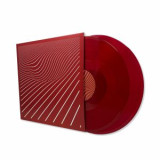
Thanks to this lovingly presented reissue from Past Inside The Present, you can own The Lower Lights by 36 in just about whatever coloured vinyl you wish: This is the Past Inside The Present translucent red version with others also available on Juno. It's an album first put together by the label back in 2019 shortly after 36 had finished a year-long 'Audio Diary' project. Not all of the tracks they wrote in that time make the cut, but the best 10 do. They are direct, absorbing and energetic ambient soundscapes that are emotionally charged and demanding of your attention.
- A1: Madman (4 22)
- A2: Keep Right On (5 30)
- A3: Reconsider (3 51)
- B1: When Will I Ever Learn 2 (3 44)
- B2: Out Of My Head Is The Way I Feel (3 05)
- B3: Carried Away (3 32)
- C1: Stoned Part 2 (4 13)
- C2: Positively Beautiful 2 (4 09)
- C3: Throw Me A Line (3 42)
- D1: Shame 2 (3 34)
- D2: Won’t Fade Away (4 05)
- D3: Keep On Keeping On (4 47)
Part 1[30,21 €]
Stoned Part II is Lewis Taylor's pure, perfect dance-pop album. His second self-released album and fourth album proper, it initially appeared on his own label Slow Reality in 2004. It's been licensed to Be With for this long-awaited double LP release, its first ever vinyl edition. Gravely misunderstood at the time by hardcore fans and the music press alike, it has aged quite magnificently. An experiment in the sounds of contemporary pop and dance music, Lewis's wonky take on funky pop would annihilate anything kicking around the charts, then or now. If only it were given half a chance.
Stoned Part II is brimming with Lewis's trademark soul, his singing as beautiful as ever, but the rhythms throughout are more upbeat, the overall sound a more smooth and slicker dance-funk presentation. Roughly half the tracks are absolutely essential, fascinating re-workings of tracks from the eternal Stoned Part 1, as Lewis explains: "When we were doing Stoned we were trying different approaches with everything so we ended up with more than one version of nearly all the songs which left us with more than an album's worth of material. There was a lot of really cool house tunes around at the time which we were both really into and that shaped the sound and production, some songs more directly than others." Amen to that.
The swoonsome, string-drenched opener "Madman" is quite the departure, a bleepy, bumping soulful disco-house record with a bassline to die for. Is there anything he can't do? It's followed by another huge dancefloor stomper, "Keep Right On" again riding another killer bassline over funky drums and featuring Lewis's dazzling vocals. There's no let-up with the sparkling "Reconsider" which sounds an awful lot like Daft Punk meets Nile Rodgers (prescient as ever, our Lewis). The wide-eyed French filtered house vibe is to the fore here, and how this wasn't picked up by someone like Kylie and taken wholesale to the top of the charts is something we'll never understand.
Opening the B-Side, "When Will I Ever Learn 2" really slaps, presenting a breezier, more upbeat funk take on the brilliant original and incorporating "From The Day We Met" from Stoned Part I. "Out Of My Head Is The Way I Feel" is absolutely fantastic and one of Lewis's very best songs. The vocals, self-harmonising and virtuoso playing are next level. To close out the side, "Carried Away" is a real standout, Lewis's gorgeous falsetto riding a quasi D&B groove to begin with before adorning a more classically funky 2-step rhythm. The marriage of undulating synths and guitars is stunning, giving way to Lewis indulging his goosebump-inducing Brian Wilson harmonies.
The funky, Rhythm King drum machine soul of "Stoned Part 2" refashions the original in the style of an unearthed Sly Stone classic, circa There's A Riot Going On. Yes, it's that good. On we then glide to "Positively Beautiful 2" which, if it's even possible, manages to be better than the original. The epic, orchestral opening truly captivates before Lewis truly gets down with kaleidoscopic dancefloor-slaying Philly soul-funk. It's surely tracks like this which help explain why he was soon to be tapped up by Dangermouse and Cee-Lo for the musical director role with Gnarls Barkley. "Throw Me A Line" closes out the side
"Shame 2" is a blissful, restrained version of the massive original, without the crazy psych-soul wig-out. Definitely more radio-friendly, that's for sure. The gorgeous mellow vibe continues with "Won't Fade Away", featuring more Beach Boys harmonies over a barely-there pulse (a version of which later pops up in an altered state on The Lost Album). The album bows out with - you guessed it - a psych-soul wig-out! "Keep On Keeping On", a real highlight, opens with looped sampled drums a la Massive Attack and Lewis's multi-layered self-harmonising again very much high in the mix. It amps up gradually to feature vocals dripping with tune and bite before screaming guitars and crashing drums really blast this whole set into the stratosphere.
Simon Francis’s vinyl mastering, approved by Lewis himself, presents the twelve tracks over a double LP so it sounds exactly as it should. The records have been cut by Cicely Balston at Air Studios and pressed at Record Industry. Allow Lewis Taylor to get you Stoned, Part II.
'Yesterday Today 1999 - 2003' ist die Fortsetzung in der Reihe von Re-Releases der Studioalben dieser Brit Pop-Institution als umfangreiche LP-Boxsets. Hier nun enthalten: 'One From The Modern', das vierte Album der Band. Ein nachdenklicherer, gefühlvollerer und pastoraler Sound sowie eine politischere Botschaft, wenn auch mit einer psychedelischen Note, die an die Byrds, Small Faces oder späteren Beatles erinnert. Das fünfte Album 'Mechanical Wonder' (erstmalig seit 2001 wieder als LP erhältlich) kommt inkl. Tracks wie 'Up On The Downside', 'If I Gave You My Hear' und 'Mechanical Wonder', und ist eine Fortsetzung des beliebten Ocean Color Scene-Sounds. Den Abschluss bildet 'North Atlantic Drift', das zum ersten Mal seit seiner Erstveröffentlichung auch auf Vinyl erscheint. Alle drei enthaltenen Alben wurden in voller Abstimmung mit der Band von Phil Kinrade bei Alchemy Mastering gemastert. Sie erscheinen nun in den jeweiligen Farben Grün, Gelb und Rot in dieser formschönen und optisch ansprechenden Box.
We brake, always,
The rules of our ego,
Of the esteem for ourselves.
We leave the room,
to any kind of influence,
that pull us into eddies without exit.
We allow our minds,
Not to believe anymore who we are,
Not to recognise anymore themselves,
Until the point to not distinguish,
The live, from the die.
We are conscious of what we see,
What we listen, continuously;
Undaunted, we proceed,
In a promised decline.
In the outline of a dry future,
We recognise ourselves, enthused;
In a dark path,
We leave our existences end,
Sure, of tomorrow's absence.
- A1: Wie Immer
- A2: Emanuela
- A3: Soll Das Alles Sein?
- A4: Die Meisten Meiner Feinde
- A5: Yasmin
- B1: Lauterbach
- B2: Kuba (Feat. Alex Prince)
- B3: An Tagen Wie Diesen (Feat. Finkenauer)
- B4: Glaub Dran (Feat. J-Luv)
- B5: Falsche Entscheidung
- C1: Emanuela (Ad/Al 23 Edit)
- C2: Lebensgefahr
- C3: An Tagen Wie Diesen (W/O.o.d) (Absturz City Rmx)
- C4: Auf Dem Dach (Julian Williams & Fb)
- C5: Liebe Glaube Hoffnung
- D1: Big Bad Boris (Lauterbach Remake)
- D2: Was In Der Zeitung Steht
- D3: Schrotteimer
- D4: Ich Bin Müde
- D5: Trotzdem
- D6: Fussball Ist Immer Noch Wichtig (Mit Bela B, Carsten Friedrichs, Marcus Wiebusch)
Wie gerne spielen Fettes Brot mit Bedeutungen? Ihr Album-Titel "Am Wasser gebaut" birgt bspw. zwei offensichtliche Ebenen. Entweder er meint: dir kommen schnell die Tränen. Oder: du kommst aus einer Hafenstadt. Ausgangspunkt 1 ging mit dem Plan konform, eine Art neuer Hip Hop Soul Music zu erschaffen. Wer sich starke Feelings leistet, macht sich natürlich auch verletzlich. Ausgangspunkt Numero 2 bedingte konsequenterweise den auf dem Artwork in den vielen s/w-Bildern gezeigten Hafenarbeiterlook - u.a. im großen Hamburger Blohm & Voss-Dock fotografiert. FB hoben damit auf den legendären Marlon Brando-Spielfilm "On The Waterfront" ab und auf Dexys Midnight Runners in deren früher "Soul Rebels"-Phase.
"Am Wasser gebaut" war das erste Fettes Brot-Album auf dem bandeigenen Label FBS. Mit "Emanuela" und "An Tagen wie diesen" protzt die Platte gleich mit 2 Smash Hits. Auf der vorliegenden Trockendock-Edition sind zudem 11(!) Bonussongs (B-Seiten, Outtakes, Single-only Songs) verewigt. Dazu gibts Presseclippings und Linernotes der Band und ihrer Gäste wie Bela B, etc., sowie ein umfangreiches Artwork-Update.
Since the release of Surprise Chef's 2022 album, Education & Recreation, they have been touring across the US, Europe, and Australia selling out shows and cementing themselves as a force to be reckoned with. Releasing three albums and a string of successful 7" singles since 2019, their output is nothing short of prolific and they show no signs of slowing down with the announcement of their new Friendship EP. Friendship is a six song 12" EP recorded during the Education & Recreation sessions that stands as "a humble monument to the most crucial principle of our band: that the love we share for one another is, at all times, the most important thing".
Surprise Chef holed up for a marathon of a recording session and laid down more tracks than would fit on an album. Here now, we dig in the vault from those sessions and share some absolute gems. The EP opens with "Rosemary Hemphill", a nod to David Axelrod that takes the listener through a myriad of musical changes and moods in proper cinematic soul fashion.
"Friendship Theme" is a bouncy and energetic number with an infectious and driving clavinet topline that is sure to move dancefloors around the globe. "Over The Moon" is pure mood music that puts Surprise Chef's restraint and tasteful use of space front and center while "Spiky Boi" is a frantic upbeat number drenched in percussion and keyboards.
SC have a heavy touring schedule for the rest of 2023 and will be finishing up the recording of their next album which is due out in 2024 in between runs. UK shows: May 29 Pink Room - Manchester, May 30 Village Underground – London. Also Available From Surprise Chef: Money Music 7", Education & Recreation LP / CD, Velodrome7”
Cinthie joins the Heist fam with an EP full of lush, epic house music with 3 originals and a St. David remix.
Cinthie is the kind of artist who seems to be everywhere all at once. In the past years, we’ve seen her compile a lush DJ Kicks compilation, release numerous EP’s on labels such as Aus music, run one of Berlin’s finest record stores (Elevate Records), tour the world fiercely, and create an all-new live show. Her EP for Heist has been in the works for a long, long time and it’s an absolute pleasure to finally present the ‘Music for Discotheques’ EP. Spoiler alert: It’s a no holds-back, ‘all killers, no fillers’ record. Just the way we like it.
In classic Cinthie fashion, this EP has the Berlin-based artist explore various sides of house music, starting with the vocal cut ‘Won’t u take me’. Lush pads, shuffling snares and a dreamy female vocal work together to bring a warm and classy house track with a clear nod to 90’s US house, but with its feet firmly rooted in the present.
Piano heaven takes you on an Italo-meets-deephouse excursion straight into…Drum roll…: Piano heaven. A driving 909 groove and a deceptively simple bass form the foundation of the track, but it’s the keys (and strings) that bring this track to its full peak-time potential. The energy in this track is of the ‘hands-in-the-air / screaming-out-loud’ type and it has already become one of the biggest tracks in Cinthie’s live-show.
On the flip, Cinthie explores the pacier electronic side of the dance spectrum, with the footwork inspired jam ‘Masterplan’. Think classic 808’s, loopy synths and a cheeky spoken word piece that lifts the song to a level where it’s extremely danceable and quite simply put; really fun.
The final track of the EP is the expertly crafted remix by Italian house maestro St. David; an artist Cinthie has always been a big fan of. He’s made a dazzling rework of ‘Piano Heaven’: A deep and driving deephouse version that’s layered in sweeps, fx and bleeps for an altogether mesmerizing effect.
We’re thrilled that we can share Cinthie’s music on the label and have her join the family after having played so many shows together and having spoken about doing something together for such a long time. As always, play it loud and dance, dance, dance!
Yours Sincerely,
Maarten & Lars
- A1: Could Not Make It Up
- A2: Walking Backwards
- A3: Days Of Lantana
- A4: Life In The Time Of Captivity
- A5: Moonraker
- A6: Richmond Avenue
- A7: Interim Of Sense
- A8: Total Eclipse
- A9: Spirit
- A10: Little Plant
Blue Vinyl[31,30 €]
BRIT Award & Ivor Novello Award Gewinner Ben Howard veröffentlichte bereits die erste Single „Couldn’t Make It Up” aus seinem kommenden Album “Is It?”. Nun legt er mit seiner zweiten Single „Walking Backwards“ nach und bietet seinen Fans damit einen weiteren vielversprechenden Vorgeschmack auf sein bald erscheinendes Album.
„Is It?“ wird sein fünftes Studioalbum sein, welches insgesamt 10 Songs umfasst. Es entstand in der Zeit, als der Brite ganz unerwartet zwei kleine Schlaganfälle erlitt. Ben Howard selbst beschreibt diese Zeit als „verwirrend“. Diese Verwirrung schlägt sich in den unterschiedlichen Nuancen nieder, die auf dem Album zu finden sind.
Howard sagt dazu: ”Ich fand es unmöglich, nicht über die Absurdität nachzudenken, dass man mit einem winzigen Klumpen alle Fähigkeiten verlieren kann. Das hat sich wirklich in das Schreiben der Platte eingebrannt”. Der englische Singer-Songwriter kann bis heute beeindruckende 800 Millionen Streams (über alle DSPs) verzeichnen. Ben wird diesen Sommer auf mehreren Festivals in der EU und Großbritannien auftreten und hat kürzlich seine großen Shows im Londoner Alexandra Palace Park für Juli angekündigt. Im Juli dieses
Jahres wird er außerdem auch drei Shows in Berlin, Hamburg und München spielen.
BRIT Award & Ivor Novello Award Gewinner Ben Howard veröffentlichte bereits die erste Single „Couldn’t Make It Up” aus seinem kommenden Album “Is It?”. Nun legt er mit seiner zweiten Single „Walking Backwards“ nach und bietet seinen Fans damit einen weiteren vielversprechenden Vorgeschmack auf sein bald erscheinendes Album.
„Is It?“ wird sein fünftes Studioalbum sein, welches insgesamt 10 Songs umfasst. Es entstand in der Zeit, als der Brite ganz unerwartet zwei kleine Schlaganfälle erlitt. Ben Howard selbst beschreibt diese Zeit als „verwirrend“. Diese Verwirrung schlägt sich in den unterschiedlichen Nuancen nieder, die auf dem Album zu finden sind.
Howard sagt dazu: ”Ich fand es unmöglich, nicht über die Absurdität nachzudenken, dass man mit einem winzigen Klumpen alle Fähigkeiten verlieren kann. Das hat sich wirklich in das Schreiben der Platte eingebrannt”. Der englische Singer-Songwriter kann bis heute beeindruckende 800 Millionen Streams (über alle DSPs) verzeichnen. Ben wird diesen Sommer auf mehreren Festivals in der EU und Großbritannien auftreten und hat kürzlich seine großen Shows im Londoner Alexandra Palace Park für Juli angekündigt. Im Juli dieses
Jahres wird er außerdem auch drei Shows in Berlin, Hamburg und München spielen.
Die Folk-Pagan-Metal-Instanz ARKONA kehrt zurück und präsentiert ihr neuntes Album Kob‘, das am 16. Juni 2023 via Napalm Records erscheint. Ein weiteres Mal tauchen die Musiker in die Philosophien
und Zukunftsansichten von Sängerin Masha ab und rücken die moderne Gesellschaft in den thematischen Fokus.
Seit der Veröffentlichung ihres letzten Albums Khram (2018) haben ARKONA aufmerksam das Weltgeschehen verfolgt und spiegeln auf den acht neuen Tracks jeweils ein Problem der modernen Gesellschaft
als auch den Abstieg in die Hölle wider.
„Kob‘“ (DE: Die Zauberei) gräbt die längst vergessene Vergangenheit aus. Melodische Synthie-Einstreuungen und bedrohliche Gitarrenspiele untermalen die Aussage des Songs, dass die Menschheit nicht aus den Fehlern der Geschichte gelernt hat sondern in einem Teufelskreis steckt und besagte Fehler immer wieder erneut
begeht. Auf ”Razryvaya plot’ ot bezyskhodnosti bytiya” (was im Deutschen so viel heißt wie: Einer hoffnungslosen Existenz das Fleisch vom Knochen reißen) gibt sich Sängerin Masha einem emotionale Keyboard-Solo hin, das Bände spricht. Kriege, religiöse Überzeugungen und Umweltprobleme läuten die letzten Stunden ein während nachdenkliche Flöten- und akustische Gitarreneinlagen das letzte bisschen Vernunft ausdiskutieren. Obgleich Kob’ tief im Pagan Metal der frühen Tage verwurzelt ist, richtet es sich durch seine moderne Produktion und Diversität nicht nur an langjährige Fans, sondern gleichermaßen an neue Zielgruppen.
The next chapter of the Natural Information Society is here. Since Time Is Gravity, credited to Natural Information Society Community Ensemble with Ari Brown, presents a newly expanded manifestation of acclaimed composer & multi-instrumentalist Joshua Abrams nearly 15 year, 7 albums &-counting flagship ensemble. Joining the core NIS of Abrams (guimbri & bass), Lisa Alvarado (harmonium) Mikel Patrick Avery (drums) & Jason Stein (bass clarinet) are Hamid Drake (percussion), Josh Berman & Ben Lamar Gay (cornets), Nick Mazzarella & Mai Sugimoto (alto saxophones & flute), Kara Bershad (harp) & Chicago living legend of the tenor saxophone Ari Brown. Recorded live to tape at Electrical Audio & The Graham Foundation, cover painting Vibratory Cartography: Nepantla, by Lisa Alvarado. 2xLP on Eremite USA, 2xLP & CD on Aguirre/Eremite Europe. Out 14-04.
Since first developing Natural Information Society in 2010, Joshua Abrams has been gradually expanding the group’s conceptual underpinnings, its musical references & the sheer number of the group’s members. Its music is, in a sense, an expansive form of minimalism, based in repeated & overlaid rhythmic patterns, ostinatos & modality. Its roots, its scale & its meaning become clearer in time. If time is gravity, it also allows us to carry more. Having begun as fundamentally a rhythm section with Abrams’ guimbri at its core, the version here can stretch to a tentet, including six horns.
Abrams has been expanding his minimalism gradually, but he has long understood a key to minimalism’s potential: the breadth of its roots in the late 1950s & early 1960s, ranging from the dissatisfaction of young European-stream composers with the limitations of serialism to the simultaneous dissatisfaction of jazz musicians with the dense harmonic vocabulary of bop & hard bop. The former began exploring rhythmic complexity & narrow tonal palates in place of harmonic abstraction (Steve Reich’s Drumming, Philip Glass’ Music with Changing Parts; perhaps above all Terry Riley’s In C & his late ‘60s all-night organ & loop concerts); the later reduced dense chord changes to scales (signally with Miles Davis' Kind of Blue, but rapidly expanding with John Coltrane’s vast project). In the 1950s the LP record opened the world with documentation of Asian & African musics, key influences on both minimalists & jazz musicians. If John Coltrane’s soprano saxophone suggested the keening shehnai of Bismillah Khan, the instrument was rapidly taken up by two key minimalists, LaMonte Young & Riley, similarly appreciative of its flexible intonation, the same thing that kept it out of big bands.
If the guimbri, the North African hide-covered lute that Abrams plays with NIS, involves a rich tradition of hypnotic healing music associated with the Gnawa people, Abrams’ music also touches on other musics as well — other depths, memories & healings, different drones, rhythms & modes. As the group expands on Since Time Is Gravity, he has made certain jazz traditions in the same stream more explicit as well. If there is a mystical & elastic quality involved in the experience of time, both in direction & duration, you will catch it here. The parts for the choir of winds expand on the roles of Abrams’ guimbri, Mikel Patrick Avery & Hamid Drake’s percussion & Lisa Alvarado’s harmonium: at times, the winds are almost looping in the tentet version, each hitting a repeating note in turn, at once drone & distinct inflection on temporal sequence. The brilliance of the work resides in Abrams’ compositions, the NIS’ intuitive execution & in Ari Brown’s singular embodiment of the great tenor saxophone tradition, including the oracular genius of Eddie “Lockjaw” Davis, & Yusef Lateef. The three pieces by the expanded NIS featuring Brown —the opening “Moontide Chorus” & “Is” & the ultimate “Gravity”— have an immediate impact, & togther might be considered a kind of concerto for tenor saxophone. Here Brown presses almost indistinguishably from composed melody to improvised speech, getting so close to language that he might have a text. Everything here is a sign. Note the tap of the Rhythm Ace that links “Moontide Chorus” to “Is”, the attentive heart always present, even when signed by a machine. There’s a link here to the methodologies & meanings of dub music & the linear & vertical collage of beats, textures & tongues: treated with reverence, a sample of a beat-box can be as soulful, as hypnotic, as a mbira or a tamboura. If those pieces with Brown are heard as a suspended concerto, the three embrace & enfold the other works, like the sepals of a flower. That placement will also touch on the mysteries of our perception of time.
Particularly in “Is”, but elsewhere as well, a phenomenon of transcendence arises in which time appears to be tripartite, at once moving backwards & forwards & standing still. This is an act of technical brilliance certainly, but also an illumination of music’s ability to represent temporal consciousness through polymetrics. This particular listener has only heard it before in a few places, including the horn shouts & bowed basses of Coltrane’s Africa, in moments of Charles Mingus’ The Black Saint & the Sinner Lady, in certain pieces where tapes were literally running backwards, & earlier still in Dizzy Gillespie’s Cubana Be, Cubana Bop, in which the composer George Russell & conguero Chano Pozo found a music that spoke at once in the voices of Stravinsky’s Rite of Spring & the vestigial rites, rhythms & songs of the Yoruba language & Santeria religion of inland Cuba.
In Joshua Abrams’ compositions & the realization of them by the NIS, in the time of one’s close listening & memory thereof, distinctions between the “natural” & the “social”, the “quotidian” & the “transcendent” are erased, suspended or perhaps irrelevant. Consider two of the ensemble pieces, one named for nature, the other social science. In “Murmuration” the repeated wind figures of flute & alto saxophone combine with the interlocking patterns of harp, guimbri & frame drum (tar) to create a perfect moving stillness, not an imitation but a witness to the miracle of the starlings’ astonishing collective art, a surfeit of beauty that might be the ultimate defense tactic.
“Stigmergy” takes its name & concept from the Occupy movement’s Heather Marsh, who proposes a social system based on a cooperative rather than competitive models, one in which ideas are freely contributed & developed as ideas rather than an individual’s property. In its form, Abrams’ “Stigmergy” is the closes thing to traditional jazz, a series of accompanied solos by each of the wind players. However, the composed accompaniment is a radically collectivist notion: a repeated rhythmic figure, call it ostinato or riff, in which the different winds each play only a note or two of the figure, a concept both more collectivist & individualistic in its conception than any typical unison figure. It suggests another of the underlying recognitions that propel the Natural Information Society, the group as social organism, the teleology of hypnotic anarchy, all parts in place, functioning systematically, evolving & expressing itself, its nature & society, as a transformative organism.
George Lewis has described music as “a space for reflection on the human condition”. This suggests that, rather than a “distraction”, at least some music might serve as a distraction from distraction. It’s a focus, a clarity, a awareness, an external invitation to interiority, as if music itself is a model for form & contemplation, an organism contemplating for us or as us. If that is a possibility, & I am sure I have heard such musics, than this music is among them. How many of our rhythms, melodies & harmonies (cultural, historical, biological, psychic) might such music carry, translate & transform in the particulate ecstasy of our own murmuration? (Stuart Broomer, April 2022)
Vienna impact on RFR! PELETRONIC blesses us with his own unique blueprint of abstract house.
„Riddim & Bassline“ are the main ingredients for the opener of his
„Honey Badger EP“. A rumbling, buzzing and funk loaden predator digs his way into our ear canal.
„Sry I’m dazed AF“ - words we‘d sometimes like to address our supervisor with, especially after a serious weekend night out. A grating, distorted Miami Bass variant on a Deep House bouquet that lives up to his title.
„True Brew“ also starts wonderfully imperfect. Blustering beats and scruffy hi hats are being perfectly paired with a piano harmony. Bring us another two or twenty of this special drink!
Last but not least we got a remix by none other than DMX Krew, who provides a bubbly finish to „Riddim & Bassline“. There is not much left to say, cos if you got Ed DMX on your record, really everything has been said.
Since we've known him, Robert Lloyd has made quite clear his enormous affection for the songs and sounds of Freakwater, the duo of Janet Beveridge-Bean and Catherine Irwin who've been wrongly denied their place as rightful and willful progenitors of alt-country's 'movement', which (frankly) is to their credit. Their genius in offering absolute authentic to the sound old-time Appalachian folk music with a modern façade that in no way negates tradition (one of their albums is titled Feels Like The Third Time) is unparalleled within the genre, and Freakwater remain under-appreciated. After the start of Covid, Robert dared approach Janet with the idea of recording together. Over the course of the long pandemic, songs were bandied about for months, and when recording was finally practical, a band was assembled with dates set up for a recording session in Valencia, Spain. Robert and Janet were joined by Robert's long-time ally, Pete Byrchmore, the musical foil for Robert's solo album on Virgin and a former Nightingale, Mark Bedford, the bassist for Madness and Terry Edwards' Near Jazz Experience, and Pablo Roda, Spanish mystery drummer, couldn't have worked out more perfectly. Tracks were selected without regard for collective presentation, just the goal of walking out of the studio with an album of perfect gems. Forget Lee & Nancy or George & Tammy, Rob and Janet have an immediate chemistry that only sounds long-lived - and too uniquely them to merit any comparison. The title track, Black Cat, Dark Horse is the sole Lloyd / Bean / Byrchmore composition and one of the record 's highlights. Jim Elkington, collaborator with Jeff Tweedy and Richard Thompson, contributes Heavy Reckonings and a song written with Janet, The True Lovers' Knot And The Lie, while Robert adds reworkings from past releases - Sweet Georgia Black and Black Country (with Pete) - not to mention the unreleased Eggs And Bacon. Janet brought One Shot and the unheard Freakwater song Arc Of A Smile. Covers of tunes from Dion and The Monkees and a magnificent Jon Langford song, "Tears Like Stars" round out the album. We daresay the album is among the finest you'll hear in 2023. That it doesn't fit perfectly into any preconceived genre is a testament to its quality. "Songcraft" is a word used infrequently today, yet Black Cat, Dark Horse will show that good songs endure. We're proud that Robert and Janet will find some new admirers through this album's release. The Michael Cumming / Stewart Lee film King Rocker made a case for Robert Lloyd-as-losthero; this album furthers that idea and shows a compelling side of Janet's talent and abilities which will be a surprise to her fans and serve as an entry point to exploring her many other compelling projects.
Weekend Recovery are back with a brand-new album ‘Esoteric’. Mixing equal measures of in-yer-face vox, overdriven guitars and straight-talking lyrics, it’s this mix that’s seeing the Sheffield indie-pop trio into editorial playlists on Apple, Deezer and YouTube alongside shows at Kendal Calling, Bingley Weekender and sell out dates including Corporation Sheffield. The first cuts from the record ‘Chemtrails’ and ‘No Guts All The Glory’ hit the airwaves with a bang, amassing plays on BBC Radio 1 Introducing (Gemma Bradley, Nels Hylton), BBC 6 Music (Steve Lamacq, Chris Hawkins, Fresh on the Net), Radio X (John Kennedy), Kerrang! Radio (Johnny Doom), Amazing Radio (Charlie Ashcroft, Shell Zenner, Frankie Francis), Absolute Radio (Frank Skinner), Planet Rock (Wyatt Wendels), BBC Sheffield (Christian Carlisle, Ellie Colton), BBC York (Jericho Keys), RTE 2 Ireland and as far as KEXP, Seattle and national USA station Sirius XM (Rodney Bingenheimer). The latest single ‘No Saint’ features Joel Arthur from local bandmates Hydeout and represents the harder edge in their third studio album.
Following on from the Bergisch-Brandenburgisches Quartett’s anarchic Live ’82 (BT095), Black Truffle continues its deep dive into the archives of legendary drummer/accordionist/photographer/composer/conceptual prankster Sven-Åke Johansson with Scheisse ’71. Recorded in November 1971 during the Berliner Jazztage at a heavy-hitting concert that also included the Spontaneous Music Ensemble and groups led by Peter Brötzmann, Manfred Schoof, and Masahiko Sato, Scheisse ’71 is the only document of a wild, otherwise unrecorded quintet featuring Johansson on drums, accordion and oboe d’amore, legendary free jazz vocalist Jeanne Lee, her husband Gunter Hampel on vibes, flute and bass clarinet, live electronics pioneer Michael Waisvisz on modified Putney (VCS 3) synthesizer, and the unknown Freddy Gosseye on electric bass. Part of a festival centred on giants of jazz like Duke Ellignton and Dizzy Gillespie, the radical performance shocked its audience, who can be heard heckling and yelling abuse at points, including the titular exclamation of ‘Scheiße!’ Clocking at just over half an hour and recorded in raw but detailed stereo by Johansson himself, the music burns with intensity while also making room for spacious passages and frequent dynamic movement. Beginning with Lee’s voice, Hampel on flute and Johansson on oboe d’amore in a bird-like game of call and response, the unexpected entry of Waisvisz’s tortured, squelching synth bursts prompts the first of many changes in energy and instrumentation, as Gosseye’s busy, roving bass enters and Johansson moves to the kit, his swinging cymbal work and juddering toms extending the approach of Sunny Murray or early Milford Graves. The presence of synthesizer, electric bass, and Lee’s highly amplified voice moves the quintet away from conventional free jazz textures, at times pushing into zones of abstract free sound reminiscent of what groups like MEV, AMM or Johansson’s MND were exploring in the same years. But the energy and joyful melodicism of the music keep it rooted in the tradition of American fire music and its European inheritors. Capable of changing gears in an instant from ferocious blow outs to fragile tapestries of chiming vibes and fizzing synth, the music finds space for Lee’s post-bop free scat (which integrates shrieks and howls just as a post-Ayler saxophonist might), Gosseye’s virtuosic bass runs (a rare attempt to apply the classic free jazz style of players like Alan Silva or Henry Grimes to the electric instrument), Johansson’s folkish accordion interjections, and even a sustained passage of unison bass clarinet and electric bass riffing in its second half. Special mention should be made of Waisvisz’s Putney performance, one of the earliest documents of this under-recorded instrument inventor and player, here playing a major role in giving the music its wildly exploratory, primordial air, his buzzing glissandi and bubbling filter sweeps at times howling like a distressed monkey. Arriving in an austerely stylish sleeve with beautiful black and white photographs by Johansson, Scheisse ’71 is an essential recording that adds yet another layer to our appreciation of this golden era of radical free music.
Die mit dem Mercury-Preis ausgezeichnete britische Rapperin Speech Debelle meldet sich mit einem neuen Album zurück. "Sunday Dinner On A Monday" ist eine Studie über Familie, Freunde, Abstammung und die DNA der Vorfahren durch den Blick des Afro-Futurismus. "Es geht darum, wie wir uns unsere eigene Zukunft vorstellen und dann erschaffen", sagt Speech. "Das Album handelt von unserer Reise durch das Leben, auf der wir aus Erfahrungen lernen, die unsere Sinne erweitern. Wir lernen inneres Management und kommen der Leichtigkeit näher. Manche von uns werden sogar genährt, wie von einer guten Mahlzeit. Darum geht's auf diesem Album. Corynne Elliot (geboren am 17. März 1983 in London, England), besser bekannt als Speech Debelle, ist britische Rapperin, die bei dem Plattenlabel Big Dada unter Vertrag steht. Für ihr Debütalbum Speech Therapy wurde sie 2009 mit dem Mercury Prize ausgezeichnet. Im Jahr 2012 veröffentlichte sie ihr zweites Album Freedom of Speech und 2017 ihr drittes Album Tantil Before I Breathe. Debelles Single aus Speech Therapy, "Spinnin", wurde von Tinchy Stryder und Dionne Bromfield überarbeitet und diente als eine der offiziellen Hymnen der Olympischen Sommerspiele 2012 in London. Die neuen Singles/Videos "Atlantis", "101010" und "Come Your Way" kündigen das im Juni erscheinende Album an!
The second album in a planned trilogy for Students of Decay, Theodore Cale Schafer’s “Trust” follows 2019’s “Patience,” building upon its motifs and compositional strategies to arrive at a potent document of artistic and personal growth. Recorded between 2020 and 2022, a period in which Schafer relocated to New York City, these arrangements feel like they bear the mark of a change in scale, not abandoning the private, diaristic sensibility of his earlier work so much as imbuing it with a charged atmosphere of vivid, slow-blooming intensity. These songs find the artist tightrope-walking between drama and austerity, narrative and abstraction. Such is the case on both “Luck,” in which a captivating wash of baroque strings slowly recedes into a bed of inky, flickering ambience, and “Best Friend,” wherein snatches of conversation are halted by entrancing piano motifs and hovering drones. This is an album that develops aspects of Schafer’s previous output– the patiently meted out, barely-there piano melodies, the unexpected resonance of off-the-cuff location recordings– working them like raw materials into robust, lyrical compositions. At times almost drifting into the romantic realm of the orchestral, “Trust” is the most generous and expansive offering we’ve heard from Schafer in his young career.
Theodore Cale Schafer (b. 1994) is a musician based in New York City. Informed by his occupation as an audio engineer, his work combines digitally sourced audio and manipulated self-recordings to create music that is equally influenced by Playstation OSTs, modern classical composition, confessional narrative, and spoken word. Recently, he has collaborated with Natalia Panzer, Angelo Harmsworth, Claire Rousay, Sydney Spann, and picnic, participated in the Neo-Pastiche: Changes in American Music Festival at the Black Mountain College Museum, and curated the “Casualism” mix series with Retreat Radio in Malmö, Sweden.