Recorded in concert at the University of Sheffield in March 2025, Reality Is Not A Theory is the first collaboration between Mark Fell and Pat Thomas. Major figures in British experimental music since the 1990s, Fell and Thomas have developed their rigorous practices from radically different backgrounds and perspectives: where Fell’s singular take on synthetic abstraction emerged from Sheffield’s electronic underground, Thomas is a virtuoso improvising pianist steeped in jazz and modernist art music who has simultaneously worked with sampler-based electronics for decades. As the record’s wonderfully academic subtitle explains, we are presented here with two sides of ‘algorithmic and improvised music for computer and piano’, exemplifying both players’ insatiable search for new (and sometimes uncomfortable) playing situations.
The performance begins with Fell’s electronics close to the timbres of acoustic percussion, attacks that suggest wood, metal or glass threaded along a rapid pulse while Thomas focuses on the lowest registers of the piano, deadening the strings. As Fell’s electronics start to ring out and occupy more harmonic space, Thomas turns to wide, repeated clusters, which slowly expand into patterns of chords. Like in his recent solo recordings and his trio work with Joel Grip and Anton Gerbal, Thomas’ playing combines extreme dissonance with a deep lyrical sense. Fell’s work gradually shifts its focus toward drum sounds, drawing on the microtemporal processes that have characterized his practice in recent decades. Heard together with Thomas’ probing piano, the computer sounds call up unexpected associations with the klangfarben antics of improv drummers like Paul Lovens or Tony Oxley. Throughout its second half, the music grows increasingly frenetic, as Thomas sounds out rapid, irregularly repeated figures and beautifully sour chords in the upper register, while Fell’s percussion develops into angular pan-pipe-like feedback and waves of glissandi.
With great confidence and patience, Fell and Thomas often let their individual contributions remain rhythmically distinct and unsynchronised, allowing unexpected correspondence and coincidence to guide the music’s development. Recorded in a hall named after Sheffield steel manufacturer and Master Cutler Mark Firth, the location might suggest a model for understanding how Fell and Thomas interact here: two workers in the same workshop, each immersed in their own part of the production process. Arriving in a striking sleeve designed by Mark Fell, with liner notes by Francis Plagne, Reality Is Not A Theory is an invigorating document of the meeting of two mavericks of contemporary music.
quête:abstract man
DOUBLE VINYL
The full album on vinyl for the first time, packaged with the classic original Designers Republic artwork
ABOUT
To celebrate the 20th anniversary, Collabs 3000: Metalism, the original classic pure techno album and first full-length collaboration between techno innovators Chris Liebing and Speedy J, is remastered and reissued via NovaMute.
Originally launched by Speedy J (aka Jochem Paap) as a platform for 12" collaborations with other artists, the Collabs series laid the groundwork for what would become one of techno's most compelling partnerships. The first release with Chris Liebing, Collabs 300 (featuring 'Trick_' / 'Treflon_'), landed in 2004 to a rapturous response; its machine-funk intensity and unmistakable breakdowns helped define the sound of early 2000s techno whilst revealing a writing and production chemistry that demanded a larger playground for their work.
That creative spark ultimately manifested in Collabs 3000: Metalism, a landmark record for techno. Combining the pair's mastery of subversive electronics and peak-time techno, the album remains a career highlight for both artists: a smouldering collision of taut techno rhythms, sonic abstraction, and, as the title suggests, robust metallic beats.
The 20th anniversary edition of this timeless techno masterpiece has been fully remastered by Liebing himself and is available on CD and for the first time on vinyl across 2 discs.
- Oh!
- Color Coordinator (Feat. Eleanor Friedbgerger)
- Do You Like So So
- Wandering Eye
- Characters
- The Fiction Writer
- Purple On Time
- Moonface
- Floor Length
- All The Things That Feel Good
- Walking
NYC electronic music collective P.E. return with their third and final album Oh!, due October 3 on Wharf Cat Records. Oh! Is the sound of a startled exclamation punctuating an exit, and the embodiment of the music within: fun and fluorescent, fluid and flirty, dirty and a little dangerous. From their conception in 2017 through the NOPE Tape series, P.E. existed as an experiment in co-conspirited collaboration. Oh! continues to cast a wide net, featuring an expanded lineup from their original formation, including Eleanor Friedberger of The Fiery Furnaces on the lead single "Color Coordinator". The resulting music ranges wide as ever, from the jubilant grooves of the title track and "Color Coordinator" to "The Fiction Writer" - a tender duet between Veronica Torres and Jonny Campolo - through the city pop sounds of "(Do You Like) So So?" and "Purple On Time", and into the abstracted beyond. This isn't a goodbye, but a "see you around". A tear falls down the cheek of a stranger, dancing as they catch your smile in the reflection of a glass building. Ceremoniously, serendipitously, they sidewalk surf away, stepping on something sharp - "Oh!" - leaving a teardrop on the city pavement. Following the last P.E. show, Jonny Campolo fully embraced his persona of The Grayscale Clown. You can hear him crooning in pets (along with Nick Campolo and Chase Ceglie) and droning in Microfibers (featuring Keegan & Eugene of Decor). His brother Nick Campolo successfully uploaded his consciousness to the cloud. He & his simulacrum perform in the aforementioned pets and solo as Nick Nun Ca. Ben Jaffe was in a freak nuclear waste accident when his DNA merged with a puma - he is now known as The Puma Man. You can catch him prowling around NYC with Sleaze Generator and as a sax beast for hire. Bob Jones went on a silent meditation and forgot how to speak. He now quietly releases music under the name R.A. Jones (as on his recently released Whispered to A Child), and as Scythe with David West (on A Colourful Storm). Jonathan Schenke disappeared for six months without a trace; when he returned he had developed a nervous tic anytime he heard a 909 rimshot or a saxophone. His recent solo album Passages (on No Gold) features neither of the above, nor does his project Gift Horse with Matthew Hord. Veronica Torres headed west to pursue her studies, developing a ceramic polymer whose beauty has caused madness in certain individuals. Her band Cha Cha 9 is a darling of the Minneapolis scene. P.E. would like to say thank you from the bottom of our hearts to everyone who listened to our records and danced at our shows - your love is felt. Thank you so much to Wharf Cat Records for all of the support over the years. Thank you to the fans. Thank you Pill and Eaters. Mitwirkende
- 01: Two Former Friends (Original)
- 02: Dance Of The Silver Beetles (Original)
- 03: Miniature White Deer (Original)
- 04: All The Goodbyes (You Tried To Defer)
- 05: Regretful Polar Bear (Original)
- 06: Anxious Shadow Puppets (Original)
- 07: Failed Space Walk (Original)
- 08: Devils (Original)
- 09: A Leopard With No Spots (Original)
- 10: Abandoned Boy (Left In Charge Of The Family Business)
- 11: Metal Mosquitos (Original)
- 12: A Cat Left To His Own Devices (Original)
- 13: Well-Heeled Human Driftwood (Original)
- 14: Flamingo With Bandaged Neck (Original)
Chris Menist pares his sound right back for A book of imaginary beings, his fourth Awkward Corners outing with a project of electronic and abstracted global grooves. Experimenting with simple melodies and uncluttered arrangements, as well as taking inspiration from the Borges' short stories alluded to in the title, the project took shape in the early part of 2025, in the shorter days and dark evenings of January.
The initial challenge was to knock a basic track into shape each evening after work, then refine it later. There's a melancholy in the air in late winter, compounded by the creeping threat of national and geopolitical instability. Ulla, Natural Information Society, Jabu, Torso and Dawuna formed some of the background soundtrack as each tune took shape.
The track titles came after sitting with the sounds for a while, giving shape to images of people, creatures and their stories for a book that is yet to be written.
Two former friends sets the tone for the album perfectly as a minimal electronic piece with a slowly simmering synth bassline underpinning the groove whilst the trademark Awkward sound of the Shahi Baaja enters drenched in effects. It's the first demonstration of Chris' unique ability to create a world from apparently very little.
Dance of the silver beetles is completely unique in that we can hear chopped up Illimba samples seemingly playing backwards and forewords sometimes alone, sometimes together in duet with Chris' conga rhythms. Add to that a more conventional Illimba melody and added shaker percussion and you have one of A book of imaginary beings most curious chapters.
Anxious shadow puppets is closer to the Awkward Corners sound from previous albums as electronic pulses move around the arrangement with the urgency that the track title suggests. Chris' percussive roots move to the fore with the congas that tie down the Paradise Bangkok Molam International Band's sound. Here, the bassline is more playful and works together with one of Chris' many African Illimbas.
Fans of Chris' adventures on his Roland 808 will dig A leopard with no spots, although the minimal mood continues to flow through on this track. The lolloping, but hard-hitting rhythm track provides the grounding for strange and twisting feedback-sounding tones to work the soundscape.
Abandoned boy (left in charge of the family business) is Awkward Corners at his atmospheric best. Drift off to the sublime sounds of Chris exploring the Shahi Baaja, whilst a soft, repetitive synth line and abstracted pads give the listener that feeling of meditation and peace.
Flamingo with bandaged neck is A book of imaginary beings' perfect coda and is exclusively Shahi Baaja draped in reverbs and delays. It feels like the resolution and the closing of a book that – as of yet – remains unwritten.
Awkward Corners is Chris Menist, a musician, DJ and writer. It started life as a small project in Islamabad, where Chris was living at the time. Initial recordings were made with local musicians in Pakistan and then subsequently in Thailand. This culminated in the Sweet Decay LP that came out on Finders Keepers' Disposable Music in 2014, and in turn led to a limited tape release on Boomkat/Reel Torque of original compositions and re-edits of Thai 45s the same year. Chris released – Dislocation Songs – his second LP proper with Shapes of Rhythm in May 2020, collaborating on many of the tracks with award-winning performer Sarathy Korwar. The LP was picked up by many radio stations including NTS, Resonance FM, BBC 6 Music, Balamii and many more. It made Tom Ravenscroft's LPs of 2020. Amateur Dramatics, Chris' second LP arrived just a year later in 2021 and was a more ambitious project featuring more jazz-focussed compositions and featuring Tamar Osborn and Kitty Whitelaw. Shortly after that came another pivot with the heavier, dancefloor-friendly EP Somebody Somewhere. Somebody Somewhere is Dancing in a Field brought the House (yes House!) vibes, whilst Hector Plimmer turned in a remix of No Words in the same club mood.
As one of NTS Radio's longest-standing presenters, Chris continues to hold down the Paradise Bangkok show. Playing drums and percussion since he was a kid, Chris is the percussionist for The Paradise Bangkok Molam International Band as well as co-founding the record label of the same name. Chris has curated compilations for labels such as Finders Keepers, Soundway and Dust-To-Digital. He has been featured on the Boiler Room, Vinyl Factory Collections, played at the Four Tet curated Nuits Sonores festival, and has put together an edition of Volumes which featured unreleased Awkward Corners compositions.
[d] 04: All the Goodbyes (You Tried to Defer) [Original]
[j] 10: Abandoned Boy (Left in Charge of the Family Business) [Original]
Returning with its final instalments, Die Schachtel's Decay Music series extends its explorations of inspired contemporary experimental efforts of the ambient, ethereal, and emotively abstract with Luigi Turra and Elio Martusciello’s “Liminale” and Sergio Armaroli and David Toop’s “And I Entered Into Sleep”, two astounding electroacoustic gestures of blurred space and time, plumbing complexity of meaning bound to sonority. Creatively groundbreaking and inspired, radically rethinking the terms of what ambient music can be perceived to be, they stand among the most striking efforts to appear within the series to date.
Reconfiguring the notion of bridge building on a multitude of terms, it feels fitting that the tenth and final installment of Die Schachtel’s Decay Music series, Sergio Armaroli and David Toop’s “And I Entered Into Sleep”, was co-created by an artist whose work featured in the first suite of LPs issued by Brian Eno’s Obscure Records in 1975, the groundwork toward which Decay Music’s own efforts nod. Since that auspicious debut, “New and Rediscovered Musical Instruments” — his split with Max Eastley — David Toop has been regarded as a pioneer in British experimental and improvised music: a sonic voyager who has continuously challenged the sources and materiality of sound through rigorously thoughtful performances, a vast catalog of recordings, and a steady flow of highly influential texts. Be it as a member of Alterations, his group breaking group with Peter Cusack, Terry Day, and Steve Beresford that ran between 1977 to 1986, or through is noteworthy work with artists like Rie Nakajima, Thurston Moore, Paul Burwell, Rhodri Davies, Lee Patterson, Ryuichi Sakamoto, Akio Suzuki, Elaine Mitchener, and numerous others, collaboration has always played a central role within Toop’s singular practice, but few can claim the sprawling sense of beauty and intimacy that’s achieved by “And I Entered Into Sleep”, his first recorded outing with Sergio Armaroli.
A composer, percussionist, vibraphonist, and multidisciplinary artist, Armaroli has been issuing radical and forward-thinking musical gestures for decades, working as one of Italy’s most noteworthy interpreters of composer’s like Giacinto Scelsi, John Cage, Franco Evangelisti, Giancarlo Schiaffini, and Walter Branchi, as both a solo performer and member of the highly regarded Rib Trio, as well as forging a singular practice as a composer, intertwining his efforts as a painter, concrete percussionist, fragmentary poet and sound artist, within a total art, rooted “within the language of jazz and improvisation” as an “extension of the concept of art”. Like Toop, Armaroli’s career has been populated by many collaborators, notably with Riccardo Sinigaglia, Alvin Curran, and Walter Prati, among others, setting the stage for a remarkable meeting between the pair.
Featuring Armaroli on vibraphone and prepared vibraphone and Toop on electronics, “And I Entered Into Sleep” is “a sonic journey, a Proustian suggestion à la Recherche, into the unconscious between electronic and acoustic sounds”. Using a bell that sounds at the beginning of Proust’s “À la Recherché du Temps Perdu”, which reappears more than 3,000 pages later — signaling a transition of phases, as well an auditory trigger of memory — as a departure point, as an association to the percussive vibraphone pulses that thread the album’s two sides, the pair weave a striking interior world of immersive psychological depth. Feeling almost subaquatic at times, like captured glimpses of rumbling, shadowy ecosystems lost within murky ambiences, before washing ashore in a series of pointillistic, highly detailed alien landscapes of the mind, each artist’s markedly different sound-sources, and treatment of the subsequent material elements, dance in abstract grace, incorporating subtle nods to minimalism, free jazz, and musique concrète within its seamless total form of sparse texture and tone.
Easily one of the most striking and memorable releases by either artist to appear in recent years, Sergio Armaroli and David Toop’s “And I Entered Into Sleep” traverses uncharted realms at the borders of literary reference, sound art, ambience and abstraction through delicately musical sounds, revealing new depths at every turn. Issued as the tenth and final album in Die Schachtel’s Decay Music series, highlighting inspired contemporary experimental efforts of the ambient, ethereal, and emotively abstract.
- A1: Cadux Plectere I
- A2: Lacinia Off Axis
- A3: Maris Stella Plectere Ii
- A4: Ere
- B1: Arborea Plectere Iii
- B2: Eve
- B3: Sidereus Plectere Iv
- B4: Lacinia In Axis
- C1: Veris Plectere V
- C2: Nova Pt I
- C3: Eve For String Orchestra
- C4: Nova Pt Ii
- D1: Matrix Plectere Vi
- D2: Maris Stella Plectere Vii
- D3: Lacinia Off Axis
- D4: Cycle Plectere Viii
Returning to Die Schachtel with his fourth full-length with the label, the Genoa born, Bologna based, guitarist and electroacoustic composer, Stefano Pilia, delivers “Lacinia”, a new, immersive cycle of compositions, delving deeper into the realm of metaphysical, spiritual, and divine meaning, weaving astounding arrangements of sonority from a palette of synths, strings, brass, organ, various electroacoustic instruments, and percussion. Resting at a refined intersection of the acoustic and electroacoustic, drone, and chamber music - overwhelmingly beautiful, delicate, and bold, - “Lacinia” stands as a high-water mark in Pilia’s already remarkable and forward-looking career.
Since its founding in Milan during the early years of the new millennium, Die Schachtel has occupied a singular place in the landscape of experimental music, issuing a carefully curated body of reissues and archival releases by historically significant figures and projects like Christina Kubisch, Luciano Cilio, Marino Zuccheri, Prima Materia, Claudio Rocchi, Lino Capra Vaccina, Gruppo di Improvvisazione Nuova Consonanza, Roland Kayn, and numerous others, balanced against bristling contemporary counterparts by the likes of Jim O'Rourke, Giovanni Di Domenico, Nicola Ratti, Luigi ArchettI, Valerio Tricoli, etc. Running like a spine through the label’s output is a deep dedication to the work of the Italian guitarist and electroacoustic composer Stefano Pilia. Now Die Schachtel returns with “Lacinia”, Pilia’s forth full-length with the label and their first release of 2024. Building on the ground of deeply personal engagement with metaphysical, spiritual, and divine meaning, explored within his previous LP with Die Schachtel, 2022’s “Spiralis Aurea”, “Lacinia” encounters the composer working in close calibration with various ensembles, including the Bologna based Ensemble Concordanze and Comunale di Bologna String Orchestra, weaving synths, strings, brass, organ, various electroacoustic instruments, and percussion into an astounding reconfiguration of immersive, contemporary minimalism that stands among Pilia’s most noteworthy releases to date. Issued by Die Schachtel in two special double vinyl editions and a CD edition, “Lacinia” features artwork by Bruno Stucchi/Dinamomilano, and is an absolute marvel that draws you in and doesn’t let go.
First emerging during the early 2000s, over the past two decades – via solo releases and numerous collations with artists like Oren Ambarchi, Valerio Tricoli, Alessandra Novaga, Z'EV, Andrea Belfi, David Grubbs, and numerous others - the Genoa born, Bologna based, guitarist and electroacoustic composer, Stefano Pilia has presented a singular voice within Italian experimental music, harnessing visceral energy and hands-on immediacy within delicately woven tapestries of sonority, each investigating the sculptural properties of sound and illuminating its relationship to space, memory, and the suspension of time. “Lacinia”, Pilia’s forth solo venture with Die Schachtel, encounters the composer reentering his longstanding practice of collaboration with various ensemble forms, including the Bologna based Ensemble Concordanze, for the albums central piece, “Lacinia Off Axis”, spinning stunning string confirmations by Pietro David Carami and Elena Maury on violin, Alessandro Savio on viola, and Mattia Cipolli on cello.
A new, important cycle of compositions by Pilia, “Lacinia” (meaning "lace" in Latin) builds upon the exploration of the metaphysical, spiritual, and divine dimensions through numbers, geometry, and the creation of tonal forms explored by 2022’s “Spiralis Aurea”, mirroring archetypal, immutable forms at the juncture of the abstract realm of mathematics and architectural structures in the physical world, expands the poetics and compositional ideas featured in its predecessor. Regraded by Pilia as both a series of individual compositions and a single work, “Lacinia” was conceived to “define a circular path (a sort of "rhizomatic lace") where the beginning and end touch, suggesting the concept of time not only as linear but also cyclical and ritualistic—an eternal return, a process of transformation where matter changes, its state changes, but without altering the invisible internal principle of mutation”, embarking upon a a series of “steps, degrees, and energetic quanta in a progression of archetypal whole numbers and transcendent creation.”
The resulting 16 tracks unfold as a series of complex sonic meditations. While deeply resonant with the minimalism of composers like Arvo Pärt, LaMonte Young, Pauline Oliveros, and Eliane Radigue, Pilia digs deep and moves far beyond the predictable tonal relationships and structures of that idiom, echoing the ancient liturgical and devotional music of composers like Gesualdo da Venosa, Monteverdi, and John Dowland, at a refined intersection of the acoustic and electroacoustic, drone, and chamber music.
Fascinatingly structured as a whole to include a number of motif returns, across which we encounter works like “Lacinia Off Axis” appearing in slightly different rendering, states, or evolutions three times, and compositions like “Eve” appearing twice in subtly different forms and arrangements - first for four oscillators, guitar and voice and then for string orchestra - as well “Maris Stella”, which similarly makes two appearances, first for horn trio, organ and percussion, and then for string orchestra, with “Lacinia” Pilia delves further into the world of chamber music than ever before, creating a deeply inward, mediative body of work the totality of which, guided by its rich string arrangements of arching, sorrowful tone, feels almost like a mass for some unproclaimed loss; simultaneously locked in the nuances of a moment, while managing to suspend time.
Perhaps most remarkable is Pilia's ability to create a remarkable sense of sonic cohesion while using such a varied number of ensembles and instrumentation. From the sprawling string arrangements delivered by Comunale di Bologna String Orchestra, under the direction of Paolo Mancini, and Ensemble Concordanze, and a flute trio (Cadux / Plectere) brilliantly played by Manuel Zurria, to pieces for sax, organ and percussion, violin duo and percussion, organ and percussion, Pilia manages to create a sense of singular, encompassing world that flows forward like a shifting stream.
Overwhelmingly beautiful, delicate, and bold, “Lacinia” is unquestionably a high-water mark in Stefano Pilia’s already remarkable, forward-looking career. Nothing short of a marvel of contemporary Minimalism that, through its shifting arrangements of harmonics, tonality, and texture draws flickering images of ancient forms of music into the present day, “Lacinia” is Issued by Die Schachtel in two special editions on double vinyl and a CD edition, featuring artwork by Bruno Stucchi/Dinamomilano. This is an immersive all-consuming listen that can’t be missed.
Released by Hegoa Records and Night School Records.
Greatest Heads is the fourth album by the radical Basque- Berlinesque group Al Karpenter. A deconstruction of structured “rock” music, here Al Karpenter re-imagine “the band” to explore the intersection between Free music, afro-beat, the avant garde and gonzo rock.
If Theodore Adorno wrote “To Write Poetry after Auschwitz is Barbaric” in 1949, Al Karpenter attempts to answer the difficult question today; what kind of music can be done in the face of a genocide? Álvaro Matilla, Marta Sainz, Enrique Zaccagnini & Mattin’s response to the planet’s slipping into a vortex of hate is to create a music ecstatic, a music of protest bursting with multiple musical languages and glossaries, full of overlapping histories and thrilling tensions.
Greatest Heads posits a plurality of musics both in opposition and intertwined: Al Karpenter play rock instruments pulled apart in the studio in post-production. Distorted rhythm chunks bit-crushed and dissipated, segments of freedom oppressed by waves of sound invading from every direction. The interplay between the chief instrumentalists and renowned, storied sound artist Mattin creates something akin to ESP freedom-seekers Cro Magnon playing in Miles Davis’ early 70s groups, The Los Angeles Free Music Society tightening up into a clenched fist of plunderphonics and runaway percussion.
We Are All Karpenters opens Greatest Heads with the most straight-forward song refrain of the record accompanied by a band that soon crash into eruption, imagining Sun City Girls in full free rock mode.
The modulating synth sound soon sucks the band into its wake to create a spine-chilling climax of distorted sound, made fully orgasmic with mastering engineer Rashad Becker’s attention to detail. On Izugarrizko Buruak (Greatest Heads), Matilla intones in Basque over a mangled distorto-beat. A Brand New Astraphobia creates a black space for a heavily processed guitar to blow up before falling to earth at night, a gentle figure serenading the coming end.
On Side B, the band begins by being masticated by a brutal phaser, squelching and stretching the music into new territories. The overt message of Stop The Genocide! is besieged by violence before Worm City aggressively samples the ghosts of soul music, mixing in noise bursts, prepared piano and swiping, abstracted sound. Epic closer Perfect Love feels like a beat poetry performance on a burnt world, still grasping for community, for home, for some sort of human love. A Mad love, then; an angry love fuelled by solidarity and collaboration.
The band’s cascading layers of references and polyglottal musics attempt to create the perfect lover, alive with rage and disorientating ecstasy: Al Karpenter.
'The story of IDM in the USA begins in Miami’ - Fact Mag
Control Freak Recordings are thrilled to be launching its new reissue sub-label with Soul Oddity’s Tone Capsule - a seminal electro/IDM classic from mid-90s Miami.
Originally released as a series of 3 EPs, the reissue compiles these into an album, newly remastered by Keith Tenniswood (Radioactive Man) - available digitally and, for the first time, on 2x12" LP album.
Soul Oddity marked the first outing for a pair of musicians who were instrumental in bringing the UK's post-rave IDM scene to the US. Having bonded over a love for the Warp output at the time, the pair fused this influence with the sound of their native Miami, where hip-hop, breaks and bass soundtracked a lively party scene.
A masterpiece of machine-driven, emotionally abstract storytelling, Tone Capsule rivals some of the best of 90s leftfield electronica. Twitchy beats and gloopy synth-funk are melded into jams that make for a seriously otherworldly listen - as forward-thinking now as it was in 1996.
This record kickstarts our new reissue sub label Capsule Freak - marking the beginning of our dive into the rich past of dance music history which has brought the scene we love to where it is today. We can’t think of a more fitting time capsule to begin this journey with - over two years in the making, we hope you find this release as wild and intriguing as we do.
Itara is the debut solo album by Paul Pèrrim—guitarist, composer, and anthropologist—featuring a set of guitar-driven compositions that blend hallucinatory acid folk, abstract blues, mutant Eastern jazz, surreal ambient, and free improvi-sation into a vivid and distinctive sonic tapestry.
With a background in ethnomusicology and a degree in Music Education, Pèrrim’s work bridges popular and experi-mental music. He contrasts the acoustic guitar’s austerity with the expansive possibilities of the electric guitar, drawing from late ’60s folk traditions, contemporary fingerstyle, sound collage, drone, psychedelia, and improvisation.
A key figure in the Canary Islands’ experimental scene, he released two albums in the 2010s under The Transistor Arkestra, a Catalan collective merging free jazz and psychedelia. As Transistor Eye, his solo project, he merges ana-log electronics with guitar, using vintage synths and effects.
In 2022, Pèrrim gained wider recognition through his appearance on Manos Ocultas (Philatelia Records) and the in-ternational tribute Solstice: A Tribute to Steffen Basho-Junghans (Obsolete Recordings). That same year, he founded GUITARRACO, a contemporary guitar festival in Tarragona, where he has shared the stage with Joseba Irazoki, Buck Curran, and Raphael Roginski.
Itara will be released in July 2025 via Keroxen. Recorded and produced by Pèrrim, the album features liner notes by critic Bill Meyer, who writes:
“While it’s common to call music cinematic these days, Pèrrim goes split-screen. One might say he composes econo, jamming scenes and sounds to psychedelic effect. But economy does not equate with poverty. Pèrrim draws upon a rich bank of musical notions, all of which he makes his own through the alchemy of recombination and transmutation.”
WRWTFWW Records is very excited to announce its third release from visionary Japanese ambient/experimental/environmental composer/producer Yutaka Hirose, this time with brand new album Voices, available on limited edition heavyweight-sleeved double LP as well as double CD, both with liner notes from the artist.
Voices finds Yutaka Hirose expanding his signature spatial layering into a three-dimensional videography of sound, blending field recordings, electronic manipulations, and abstract narratives. The 12-track album is a journey through a crumbling library where books whisper, history collides, and sonic textures weave new realities. Chaos, memory, and transformation – Hirose’s voices echo throughout the space, creating a fully immersive sonic experience.
The pioneering experimental and abstract electronic piece with deep hints of ambient and IDM is beautifully represented by the original artwork by Koji Shiroshita and Mifuku gracing the double LP and double digipack CD sleeves.
Voices marks Yutaka Hirose’s third full-length release on WRWTFWW Records, following his kankyõ ongaku classics Nova + 4 (an expanded version of his genre defining Soundscape 2: Nova album) and archival compilation TRACE: Sound Design Works 1986-1989, both available in vinyl, CD, and digital formats.
Since its founding back in 2014, Blume has carved a unique place in cultural landscape, issuing free-standing works, spanning the historical and contemporary, that represent singular gestures of creativity within the field of experimental sound. Joining their broad efforts in building networks of context and understanding that already includes the works by Werner Durand, Sarah Hennies, Bruce Nauman, John Butcher, Jocy de Oliveira, Mary Jane Leach, Valentina Magaletti, Alvin Curran, Julius Eastman, Alvin Lucier, and following the first ever vinyl release to attend to James Tenney's legendary Postal Pieces, the label now presents the first LP published by the visionary Swiss composer Jürg Frey. Drawing from the transformative power of breath and resonance, this release represents one of the most profound explorations of musical metamorphosis to emerge from the contemporary experimental landscape.
The completed work represents a "conjunction of these two artists" that has "activated a transformative form of experimentalism." These renderings "dance with an airy lightness, humour, and play, imbuing them with a beauty and emotiveness that can be rare within experimental music." They exist as "breaths, carrying the curiosities of life, belonging to no time and all time, to no one and everyone: a human music to be inhaled and pondered, for which the outcome remains unknown." In this liminal space between composition and interpretation, between breath and resonance, Zurria and Frey have created something that transcends the boundaries of experimental music itself, offering what might be called a metaphysical cartography of sound in its most essential form. As Bradford Bailey observes in his penetrating liner notes, "music is rarely a fixed entity," existing instead in a state of perpetual flux, "taking on the influences of its interpreters and performers." This fundamental truth finds its most eloquent expression in the transformative collaboration between Italian flutist Manuel Zurria and Frey, longtime member of the Wandelweiser Group. Where conventional recordings might preserve a definitive version, this release activates what Bailey calls "states of unknowing and continued experimentation," allowing Frey's compositions to evolve into entirely new dimensional territories. The original string quartet and piano works dissolve into breath-carried architectures of sound, where "the original remains in a constant dialogue with its transformation." This is not mere arrangement but ontological metamorphosis - an alchemical process through which crystalline harmonies are reborn as atmospheric phenomena.
The metaphysical dimensions of this transformation become clear through detailed analysis of the musical result. Where Frey's original compositions operate through what he calls "basic confidence in the clear and restricted material," Zurria's interpretation activates entirely new perceptual territories. Space holds almost atomic sense of weight against the airy punctuations of timbres, textures, and tones, creating "suspensions of time within which questions and identities posed by instrumentation fade." The Extended Circular Music pieces - each comprising "a small number of bars to be repeated an undetermined number of times" - become organizations of sound that defy being definitive or fixed. Originally scored for different combinations of violin, viola, cello, and piano, these works now exist as pure phenomena of breath and resonance, where "hanging, breath-length utterances dance and intertwine amongst complex harmonic clusters and conjunctions."
The philosophical implications of this transformation illuminate a lineage of composers who have moved "away from abstraction and responding to the need to create" something beyond mere technique. Drawing parallels to Morton Feldman's understanding of non-functional harmony, Zurria's approach represents "a transformative form of experimentalism" that activates what Frey calls the "thaumaturgic power" of music - its capacity to heal and transform consciousness itself. The result is "a radical reimagining of ambience: sprawling sonorities and resonances adrift in space, carrying the liberated traces of the work's former incarnations and their truths." In Zurria's interpretation, Frey's String Quartet n.3 becomes something approaching "an organ played in slow motion, its seals leaking," while the Extended Circular Music pieces transform into "glacial chords from a diverse palette of voicings, harmonies, timbres, and tones."
Performed by Manuel Zurria. Recorded and mixed by Zurria at BigCardo, Catania between 2022-2024, with mastering by Bruno Germano at Vacuumstudio, Bologna, this Blume release represents a profound exploration of musical transformation.
Salamanda is the collaborative alias of South Korean producer/DJ duo, and close friends, Uman Therma (Sala) and Yetsuby (Manda). Together they create avant-garde electronic music inspired by minimalist concepts, harmonious rhythms and the work of American composer Steve Reich.
Across the eight tracks of Sphere, their debut for Small Méasures, the pair conjure spherical worlds inspired by bubbles, refracting light and planet earth. Soundscapes laden with percussive elements ebb and flow as arpeggiated stanzas cede to misty synths and shimmering plates, conjuring images of solitary temples sat in vast open plateaus.
“For Sphere, we came up with an abstract concept and image to explore more diversity and encourage imagination. Each track is related to different kinds of sphere we found or imagined. From the big round planet embracing every creature to dancing little bubbles underwater, fragments of ideas floating around, exploding tomatoes, and movement of lights flashing and tickling the eyes…
Or the tracks can be about completely different types of spheres in other people's perspective. We hope Sphere can unleash the imagination and take you on a delightful journey of music.’’
The discovery of Doris Dennison's score represents a genuine musicological breakthrough—what once would have been "a tree falling in the woods" thirty years ago now holds the potential to render "a thunderous clap in our minds." While researching Anna Halprin's lesser-known collaborators, scholar Tom Welsh uncovered the archives of AA Leath, one of Halprin's principal dancers. Buried within these materials was Dennison's handwritten score for Earth Interval, dated May 1956. Born in Saskatchewan, Canada, in 1908, and raised near Seattle, Dennison (1908-2009) encountered John Cage while teaching Dalcroze eurythmics at the Cornish College of the Arts. She joined Cage's earliest percussion quartet—alongside Margaret Jansen, the composer and his wife Xenia—in the group widely regarded as having performed the first complete concert of percussion music in the United States. This historic December 1938 concert was followed by tours and the landmark May 1941 performance at the California Club, comprising Cage and Lou Harrison's Double Music, the premiere of Cage's Third Construction, and Harrison's 13th Simfony.
As Bradford Bailey observes in his extensive liner notes, Earth Interval demonstrates "an extraordinary balance of elements that imbues the piece with a sense of clarity, directness, and constraint that is both distinct and ahead of its time." The work's most remarkable innovation lies in its approach to extended techniques, particularly Dennison's notation for the central movement: "In 2nd movement, 1st player lowers + raises a gong into a tub of water while beating." This technique, absorbed from Cage's experimental vocabulary, generates what Bailey describes as "fields of acoustic abstraction that bend and warp time through sustained resonances, beat, and space." The temporal sophistication of these manipulations anticipated Karlheinz Stockhausen's Mikrophonie I (1964) and Annea Lockwood's water-based sound investigations by over a decade. After joining Mills College as dance accompanist, Dennison maintained crucial connections to the Bay Area's experimental scene, collaborating with figures like Merce Cunningham and programming Cage's music throughout the 1950s.
Comprising three movements—Land Form, Air Tide, and Earth Play—Earth Interval is scored for recorder, drums, gongs, maracas, muted gongs, and bowl gongs. In total, the piece is just under eight minutes: "a fleeting glimmer of moment in time, a life spent at the cutting edge, and a singular creative vision that packs a powerful punch." When viewed in historical context, placed in contrast to roughly contemporaneous avant-garde percussion works by Cage, Harrison, Louis Thomas Hardin (Moondog), and Harry Partch, or important precursors like Edgard Varèse's Ionisation (1931) and Henry Cowell's Ostinato Pianissimo (1934), it's clear that Dennison was following her own path. Earth Interval is not derivative. It is a precursor to what was yet to come, alluding to developments of avant-garde and experimental music that wouldn't begin to appear on the cultural landscape until the 1970s and '80s, with the emergence of Post-Minimalism and more idiosyncratic artists and ensembles like Midori Takada, Ros Bandt, Peter Giger, Frank Perry, Christopher Tree, Michael Ranta, Gamelan Son of Lion, and Niagara.
This recording by Chicago's Third Coast Percussion, captured in March 2022, represents the first complete documentation of this pioneering work. The ensemble's interpretation reveals the piece's remarkable contemporaneity while maintaining its historical specificity. Where Cage, Harrison, and Partch employed "self-consciously off-kilter polyrhythms," Dennison's rhythmic sensibility anticipates minimalist developments by nearly a decade, yet integrates "forceful rests, as well as sharp shifts in sonic character, tempo, and meter, that break the momentum and breathe a sense of life into the piece's structure." This positions her work closer to Post-Minimalism decades before its emergence. The architectural approach demonstrates Dennison's understanding that "the composer almost entirely disappears" in favor of phenomenological listening experience, creating what might be called an egoless music that places its realities and meaning entirely in the ear of the beholder. The present recording, realized by Chicago's distinguished Third Coast Percussion ensemble, represents a significant achievement in experimental music scholarship and performance practice. As specialists in the Cage tradition and contemporary percussion repertoire, Third Coast Percussion approached Earth Interval with the historical sensitivity and technical precision required to illuminate Dennison's subtle compositional innovations. The March 2022 recording sessions, engineered by Colin Campbell, capture both the work's intimate chamber music qualities and its bold exploration of extended techniques. The ensemble's interpretation reveals the piece's remarkable contemporaneity—its ability to speak directly to current musical concerns while maintaining its historical specificity.
This recording serves multiple scholarly functions: it provides the first complete documentation of Dennison's compositional voice, offers insight into the broader network of experimental music practitioners surrounding Cage and Harrison, and demonstrates the sophisticated level of compositional thinking that was occurring within the Bay Area's dance-music collaborations of the 1950s. The work's emphasis on phenomenological listening—what might be called an "egoless" approach to musical experience—places it within a lineage of American experimental music that prioritizes perceptual process over compositional personality. The work's original obscurity—limited to AA Leath's performances at venues like the 1957 Pacific Coast Arts Festival at Reed College—paradoxically allowed it to remain "entirely on its own terms," free from the constraints of historical categorization. Drawing on Jacques Derrida's Archive Fever, the argument emerges that "the archive can acknowledge, celebrate, and resurrect" overlooked voices, transforming our understanding of experimental music history. The present Blume edition, featuring Third Coast Percussion's authoritative interpretation, includes a lavishly illustrated 16-page booklet designed by Bruno Stucchi / dinamomilano, containing complete scholarly apparatus, historical photographs, and detailed production notes. This recording enables "cross-temporal intersectionality," allowing Dennison to "belong to a newly formed and more dynamic understanding of the present and past," demonstrating how forgotten voices can reshape entire historical narratives when given proper scholarly attention and performance advocacy.
- 1: Coyote
- 2: Amelia
- 3: Furry Sings The Blues
- 4: A Strange Boy
- 5: Hejira
- 6: Song For Sharon
- 7: Black Crow
- 8: Blue Motel Room
- 9: Refuge Of The Roads
Mobile Fidelity's UltraDisc One-Step 180g 45RPM 2LP Set Plays with Authoritative Tonality, Airiness, and Clarity:
Pressed on MoFi SuperVinyl and Strictly Limited to
3,000 Numbered Copies
1/4” / 15 IPS Dolby A analogue master to DSD 256 to analogue console to lathe
Joni Mitchell is the only artist who could’ve made Hejira. The legendary singer-songwriter said as much when discussing the album decades after its release. Yet that fact seemed obvious from the moment the gold-certified effort streeted in fall 1976. An adventurous travelogue, probing narrative, and offbeat homage to freedom, Hejira remains an inimitable entry in the catalog of recorded music — a spare, gorgeous, meditative series of sonic vignettes comprised of floating harmonic pop, cool jazz, soft rock, and sensitive vocal elements that beckon feelings of motion, discovery, and self-examination.
Sourced from the original analog master tapes, pressed at Fidelity Record Pressing on MoFi SuperVinyl, and strictly limited to 3,000 numbered copies, Mobile Fidelity's UltraDisc One-Step 180g 45RPM 2LP set presents the record ranked the 133rd Greatest of All Time by Rolling Stone with definitive detail, richness, accuracy, and directness. Marking the first time the revered LP has received audiophile treatment, it's one of six iconic 1970s Mitchell records Mobile Fidelity is reissuing on vinyl and SACD.
Playing with a virtually nonexistent noise floor, dead-quiet surfaces, and superior groove definition, this collectible reissue reproduces in enveloping fashion the tones, textures, and craftsmanship that help Hejira function as the equivalent of a liberating trip down an open road with nothing but blue sky, natural landscape, and fresh air in the immediate vicinity. Passages bloom, carry, decay as they do amid an acoustically optimized environment. Soundstages extend far, wide, and deep, with black backgrounds and pinpoint images adding to the realism.
The reference-grade immediacy, airiness, and presence put in transparent perspective Mitchell’s dense strings of words, stream-of-conscious-like phrasing, and unhurried albeit forward momentum. Likewise, the instrumental contributions of her A-list support musicians — a cast that includes L.A. Express members John Guerin, Max Bennett and Tom Scott, plus Neil Young, Victor Feldman, and Abe Most — emerges with breathtaking clarity and dimensionality.
While Mitchell, whose intimate vocals and abstract guitar parts center everything, Mobile Fidelity's restoration of Hejira further reveals the visionary breadth of guitarist Larry Carlton and bassist Jaco Pastorius. Though heard on only four tracks, Pastorius' fretless bass epitomizes the fluid, subtle, flexible, roomy, and shape-shifting characteristics of songs that often appear to transpire out of nowhere akin to the formation of a puffy cumulus cloud overhead. In sync with Mitchell’s voice, Pastorius’ fusion hovers and floats, suspended in a fog you want to deeply inhale. The "grace notes" Mitchell desired on Hejira can now be heard in full. Ditto the luxurious tapestries of alinear lines, fills, and supplements unreeled on Carlton’s six-string.
Visually, the packaging of this UD1S set complements its identity as the copy to own. Housed in a deluxe slipcase, the LPs come in foil-stamped jackets with faithful-to-the-original graphics. This version is for listeners who desire to become immersed in everything about Hejira, including the unforgettable album cover — a pastiche of 14 different photos Mitchell used a Camera Lucida to assemble into one image that’s anchored by a portrait of her in a stoic pose — and the interior shots of Mitchell skating on a frozen Wisconsin lake wearing a pair of black skates, black shirt, and fur cape.
The notion of skating, feeling an awakening wind whipping against your face, and losing yourself to the surroundings are extremely apt for Hejira, which Mitchell wrote after a sequence of trips and relationships prompted her to reflect on the complicated conflicts between independence and marriage, success and satisfaction, duty and desire — and, more specifically, “the cost of being a woman.” The Canadian native delved into such themes before. But never as she does on Hejira, whose liberating, running-away aura doubles as another of Mitchell’s rejections of tradition as well as a suggestion of a better alternative.
At once observational and personal, expansive and insular, cheerful and poignant, Hejira spans a sea of human conditions, emotions, and circumstances. It addresses drifting, isolation, pleasure, place, time, and surroundings with strikingly poetic discourse matched with music that, save for the crooned ballad “Blue Motel Room,” forgoes conventional structures and choruses.
The jazz-based arrangements, marked by scaled-down percussion and all manner of bent, rounded, and unsettled notes, hint that Mitchell has no exact destination in mind. Excursions such as the moody “Furry Sings the Blues,” funky “Coyote” and edgy “Black Crow” throw open previously locked doors to possibility and journey. They signal it’s time for a welcome departure from norms and the past, one that leads to a heightened sense of clarity and perspective. Or, as Mitchell said upon choosing the album title, it’s time for “leaving the dream, no blame.”
There’s a reason they call it deep House. On 'The New Jersey' EP, DJ Romain doesn’t just nod to his roots, he digs into them, scooping out a warm, rhythmic core that pulses with sweat, memory, and reverence. This is not a revival or a pastiche; it’s a love letter etched in drum machines and delay, from a producer who’s lived the lineage.
A fixture of late-’90s NYC dance floors, Romain cut his teeth in the city’s thumping underbelly, learning from the likes of Todd Terry and later carving his own signature into the genre’s sidewalk. Across these four freshly cut tracks, Romain channels the same urgency that once drove dance crews, celebrities, and nightlifers alike into motion, and still does.
Lead track “Hello New York” is a no-nonsense DJ tool, a serrated slice of big room energy built around snapping snares, a jackhammer kick, and a spoken word vocal that bristles with pride and uplift. “Put more cut in your strut… pride in your stride” - it’s part mantra, part mission statement. “But It’s Alright” flips the vibe, conjuring up basement jazz sessions through dusky chords and a muted, plucked bassline that slinks like a late-night subway ride.
On “Check Your Pockets,” the energy turns inward and abstract, a woozy, psychedelic House jam that feels like dancing through a heatwave haze. He wraps the record with “Deep Inferno,” a peak-time burner full of sticky Afro-funk polyrhythms, clashing vocal chops, and steam-pressure percussion. It’s unhinged, hypnotic, and gloriously raw.
Having revisited his archive with ‘The Lost D.A.T.S.' series, Romain returns to Hard Times not as a nostalgia act but as a flamekeeper - still innovating, still sweating, still firmly on the floor. The New Jersey EP is a love letter, yes, but it’s also a reminder: House never left. It just got deeper.
In celebration of its 10th anniversary, Aesthetical Records is honoured to reissue Peau Froide, Léger Soleil, the groundbreaking collaboration between Finnish electronic music luminary Mika Vainio and French experimental music pioneer Franck Vigroux. Originally released in 2015, this new edition revives a work of unparalleled sonic intensity and textural exploration. The album is set to release on double vinyl and CD on May 24, 2025.
This iconic album is the result of a three year recording process that began after Vainio and Vigroux’s first live performance in Paris in 2012. Their collaboration serves as an intricate balance of minimalist meditations and maximalist energy, pushing electronic music into radical new directions. Peau Froide, Léger Soleil is a journey through psychic resonance and spatial abstraction, constructed through Vainio’s intense, brutalist grooves and Vigroux’s explorations in tonal extremities. Spanning a total of nine tracks, the album unfolds like an odyssey, densely layered yet free from structural limitations, traversing vast emotional landscapes where each sound feels at once intimate and tectonic.
Beginning with the ominous, bass-heavy textures of “Deux,” Vainio and Vigroux establish a dynamic atmosphere, setting the stage for the intense soundscapes to follow. “Mémoire” introduces ghostly voices that weave through thick waves of sub-bass and distorted noise, while “Souffles” explores uncharted sonic territories with its microtonal landscapes and spectral ambiance. Vigroux’s mastery over spatial abstraction comes to life in “Le Souterrain,” adding an atmospheric weight reminiscent of Ennio Morricone’s stark loneliness or Neil Young’s Dead Man soundtrack. In contrast, tracks like “Parabole” and “Le crâne tambour” unleash fierce, maximalist grooves, making them some of the most aggressive and memorable moments in Vainio’s discography.
Peau Froide, Léger Soleil represents a landmark in its sonic identity, embodying a vision of uncompromising, avant-garde sound design. This anniversary reissue on Aesthetical honours that legacy while inviting new listeners into Vainio & Vigroux’s collaborative universe—a space where electronic music becomes both weapon and sanctuary.
The 10th-anniversary edition promises a fresh listening experience, preserving the legacy of two artists who have redefined the boundaries of sound.
Pioneering British electronic musician Mark Van Hoen is set to release his latest solo album, The Eternal Present, on 23 May 2025 via Dell'Orso, a remarkable collection of tracks spanning nearly three decades of recordings from 1998 to 2024.
The Eternal Present embodies its philosophical title, inspired by Joseph Campbell's concept that "Eternity isn't some later time... Eternity is that dimension of here and now that all thinking in temporal terms cuts off." The album explores music as the ultimate expression of existing in the present moment, transcending time and creating a sonic experience that is simultaneously "spectral, ghostly, melodic, harmonic, and decayed."
An influential contemporary of Aphex Twin, Autechre, LFO and Boards of Canada, Van Hoen is best known for his solo work as Locust in the mid-'90s, which helped push post-rave electronic music into newly challenging realms. His extensive discography spans releases on influential labels including R&S, Touch, and Editions Mego. Van Hoen has worked on numerous collaborations throughout his career, including with Nick Holton and Neil Halstead of Slowdive under the moniker Black Hearted Brother—their album Stars Are Our Home was released in 2013.
The Eternal Present continues the lineage of Van Hoen's most significant works, with artwork by Ian Anderson (Designers Republic) reflecting the album's "eternal present" concept with a mysterious visual approach, allowing listeners to form their own imaginary landscapes. The mastering by Stefan Betke (Pole) enhances this document of the evolution of the artist over the years as he continues to hone his signature sound. Using a host of instruments including analogue synthesisers and employing various recording approaches, Van Hoen's equipment changed dramatically over the years—from early DSP processing used on his first solo record on Apollo ‘Playing With Time’ to various synthesisers, modular systems, tape machines, and digital workstations—contributing to the album's rich sonic diversity.
Throughout The Eternal Present, ideas are woven together through spoken word quotations and abstract vocals featuring notable collaborations from Rachel Goswell on the Slowdive cover "Shine" (from 1998), Megan Mitchell (Cruel Diagonals) on "Somewhere", and session vocalists Clare Dove and Dorothy Takev on "No-One Leave" and "It's Not You (In A Way)" respectively. The use of cleverly assembled vocal samples from an "undisclosed but very famous female vocalist" on "Multiplex" (2016) and the indistinct vocalisations on the Cabaret Voltaire-influenced "Only Me" (2017), constantly challenges and disorientates the listener through fluctuating, ever-changing musical elements.
The album was recorded across multiple locations including Somerset, London, Los Angeles, and New York—even beginning compositions during flights and in airport lounges—reflecting Van Hoen's changing personal circumstances, environments, and situations throughout the years.
Of Indian-Jamaican descent, Van Hoen was born and raised in England, absorbing diverse musical influences from his neighbors—African-Jamaican on one side and Punjabi Indian on the other. "Each family played their own music frequently, and I absorbed it." His musical foundations include Brian Eno, Kraftwerk, OMD, Tangerine Dream, Japan, Cabaret Voltaire, and Cocteau Twins, later finding inspiration in My Bloody Valentine, LFO, and '90s producers Robert Leiner and CJ Bolland.
These eclectic influences are evident on The Eternal Present, which contains snapshots of different periods in his life, with changing circumstances across decades creating a variety of textures and sounds. As Mark explains: "It holds the same sonic signature as many of my solo releases and early Locust albums. It's a natural development that has taken place in the last few decades. It's even related to the earliest music I made as a teenager, although perhaps more sophisticated."
“What a remarkably affecting, majestically broad and captivating work it is..what strikes you most is the album’s myriad diversity. Outstanding” (Electronic Sound)
“Whether channelling mid- 70’s Eno, early Aphex Twin or Neu! his vivid sounds shimmer with emotional weight” (Mojo 4*)
"Musically, Van Hoen belongs to a distinguished family tree. Originally influenced by the likes of Brian Eno and Tangerine Dream, and later presaging both Autechre's glitch and Boards of Canada's pastoral IDM." (Pitchfork)
- L Ron Hubbard Was Way Cool
- Long Distance Conjoined Twins
- Sewn Together From The Membrane Of The Great Sea Cucumber
- The Scienti_Ic Classi_Ication Of Stingrays
- Assisted Harakiri
- The Old Country
"I Became Birds feels like emo once again flipping the switch on its eternal energy source." - PITCHFORK // "One of the most arresting and interesting rock albums in recent memory." - SPIN // "Composed of self-deprecating wails, crashing guitar riffs, and a flicker of lyrical hope that almost feels naive _ in other words, the perfect foundation for classic emo catharsis." - STEREOGUM //// With I Became Birds, Florida's Home Is Where push their unique blend of whirlwind hardcore aggression and warm, open-hearted folksy melancholy to even further heights. Frontperson Brandon MacDonald's Dylan-esque eccentricities are on full display here, from the occasional blast of harmonica (like on early standout "Long Distance Conjoined Twins" or the disaffected, despondency-soaked closer "The Old Country") to their knack for abstractly evocative neurosis-as-poetry. But far from being a copycat act, Home Is Where's wearily raw-throated aesthetic and dynamically vivid compositions feel idiosyncratic and vital. The bittersweet folk melodies seep deeply into the band's DNA, adding an element of accessibility and immediate nostalgia to otherwise churning and angular song structures and sonic assaults. Vocals range from an intimate, gentle, and disarming croon to a full-bodied expectoration of the soul, oftentimes in the same song (like "Sewn Together from the Membrane of the Great Sea Cucumber," which splits the difference between mournful, gothic post-punk and staccato-heeled screamo with aplomb). A devastating rhythm section and nimble, versatile, yet powerful guitar work assist with the record's genre-bending, which ranges from maniacal chemical mixtures to gymnastic flips, twists, and turns. And yet, even amid the din, Home Is Where find ample time for hooks-- the oddball effervescence of lead single "Scientific Classification of Stingrays" and the shimmering, propulsive, delightfully off-kilter late-album stunner "Assisted Harakiri" are more than proof of that. Ultimately, I Became Birds shows Home Is Where hitting an early high-water mark. A brisk record-- six songs in roughly 17 minutes-- it never takes a dip in enthusiasm and inventiveness. Home Is Where's inexhaustible creativity and restless energy is bound to serve them well, and I Became Birds is all the proof anyone needs.
- Away Out On The Sea
- Rocks And Trees
- Spite And Love
- Ever Lovin Need To Know
- All The Saints
- Hearts And Bones
- Gentleman's Bulldog
- Cool Of The Day
- Thanks And Sorry
- I'd Like To Be A Train
With two solo CDs and another three with Cahalen Morrison behind him, today he's become the master folk troubadour he was destined to be, and we're all the richer for it. The Pacific Northwest singer- songwriter met his wife, his beloved father has passed away, and his two children now shape his world around him. With age comes wisdom and, for master musicians, clairvoyance. His third album, The Shape of a Sway, reflects just that: A master telling tales of life lived honestly, amid paradox and reason, injected with change and growth, bruises and enlightenment: Life not just worth living, but worth lifting up in song. Gifted as a writer, singer, and instrumentalist (guitar, mandolin, banjo, pedal steel), West gets support from his equally stellar regulars, fiddler Patrick M'Gonigle and bassist Forest Marowitz. All three share intertwining harmony vocals. The Shape of a Sway, he says, "is an honest inventory of my life, possibly all of our lives, presented possibly with enough abstraction that listeners will see something of themselves, of their lives."
On the latest instalment of his VALA series, Finnish techno explorer Kaspiann tunnels into heads-down, mind-warping rhythm tracks of the highest order. Alongside his appearance on respected platforms such as Delsin Mantis and Optic Portal (alongside Spekki Webu), VALA affords Kaspiann the space to explore the depth and breadth of his sound with steely focus. The four tracks on VALA 4 are teeming with tactile textures and intricate detail that feel familiar and abstract all at once, perhaps best described by the titles that indulge in a little Finnish word play. ‘Sammalkämmen’, literally translated as ‘moss palm’, feels like a fitting reflection of the spongy mid-range matter on the opening track, while the humid, dense atmosphere of B1 cut ‘Suohunaja’ could indeed conjure a sense of ‘swamp honey’. From ‘Sienikieli’s tunnelling rhythmic intrigue to the intricately arranged, expressive percussion of ‘Niin Vain’, Kaspiann continues to broaden his vocabulary within the language of deep techno, triggering ineffable sensations from carefully sculpted sonic forms and strapping them to incisive rhythms.
Senselessness 1/2 is the very first solo issue of the Swiss electronic composer Robin Félix, on his own label De l’Aube (Of Dawn), the occasion for him to prove that field recordings can be (or should be?) an integral part of the global matter, when so often they are just something hovering in the background because it’s “nice” or reminds the artist of a place he loves.
Throughout the length of these four tracks, they are litterally central; moreover, they are electronically transformed, manipulated, skewed and twisted in order to form some sort of framework, a backbone on to which sounds and genres intertwine. On Cluster, violins and cellos (recorded in the gardens of the Venice Biennale) are soon transmuted into the abrasions of the electroacoustic realm, until the pulse of a relentless bass introduces a pure and pristine electronic music that knows and uses the roots of dub, drum’n’bass and the meticulousness of Jan Jelinek’s Glitch aesthetics. A tad “housy”, Chi comes as a second pulse where a modified didgeridoo and African percussions (recorded in a Swiss forest) lead the listener to a sort of tribal mode, as suited to dancers than to those who prefer inner journeys; here, the spatial dub of King Tubby moves from background to foreground.
The more abstract Boiler verges on the IDM and the heady, elegant and spartan Detroit techno – headphones reveal its numerous minute and delicate details. Based on the recording of insects, of which one can hear the actual rubbing of elytras, the closing Swarm ends the record with and intricate blend of ambient, which in some way winks to the Aphex Twin and The Future Sound Of London. Overall Senselessness 1/2 is a mesmerising and concise update of the famous Deutsche elektronische musik of old, that gathered on its way the other genres that made Robin Félix tick. Since field recordings have hardly been that meaningful, one wonders where Senselessness 2/2 will lead us to
This is a new project for Spooky’s Duncan Forbes on 49North.
Together with internationally acclaimed violinist Jonathan Hill, the duo have produced a ten track album that is a blend of beautiful atmospheric electronica combined with analogue sonics, treated piano and live strings.
Each track is accompanied by an abstract film created by Matthew Le Maistre Smith alongside Duncan.
This is one for fans of Erased Tapes, Nils Frahm, Brian Eno and Hania Rani.
Editions Mego reissue the 2001 release Asuma by Finnish artist Ilpo Väisänen. Originally released on CD this is the first ever vinyl issue, remastered by Rashad Becker. 2001 is a landmark year for the artist following a wave of success from the notable outfit Väisänen formed alongside Mika Vanio, Pan Sonic (as they were now known then). Following a string of highly acclaimed and influential releases such as “Vakio”, “Kulma”, “A’ and “Aaltopiiri” Pan Sonic had toured the globe extensively leaving a trail of blown expectations and rumours of all manner of objects in venues cracking or falling apart due to the immense sound the duo concocted with their unique instruments.
Taking a break from the ecstatic cacophony of Pan Sonic, Väisänen retreated to work on a solo release which conjured the spirits of the former outfit whilst simultaneously carving out a more personal take on these new electronic forms.
Asuma is a precise study of drones, rhythms, clicks, ambience and gentle confusion. Whilst inhabiting a zone of abstraction the results also move in a natural field as Väisänen’s native Finland permeates these recordings as much as the idea of experimentation itself.
Autioitu 1 opens the album as delicate pinball rhythms bounce across the spectrum as a hairy drone hovers underneath. The mood is both intriguing and unsettling. Tukahduttaja is a delightfully disorientating sound sculpture that is hard to pinpoint what it actually is. Klikki is comparable to a microscopic version of Pink Floyd’s “Several Species Of Small Furry Animals Gathered Together In A Cave And Grooving With A Pict”. Asumaton is a foreboding miniature acting like a segway to Vallitseva which embraces the icy clicks that punctuates much of the Pan Sonic output. Arvioimaton Ongelma is an audio riddle whilst Jaettu jitters around a dancefloor crawl. Autioitu closes proceedings as a gentle ambient thumper. Asuma is awash with contradiction and mystery. This is time wrapped in twisted turns and rewards a neat payoff for those interested in the absolute fringes of electronic ‘dance’ music.
The hypnagogic haze of purling, refractive dub is strong on Sleepdial’s debut for West Mineral, introducing a crafty new name to the scene after a teasing preview on that Peak Oil x NWAQ radio show, delivering a heavy-lidded dose of tattered ambient dub inversions.
Sleepdial chases a frayed thread of thought thru the fractal echo chambers of ‘RV Lights’, only their 2nd full-length under this alias, and first on vinyl. The 9-part album is optimised for getting smudged on sunny daze with its pursuit of elusive dub sprites that connote subaquatic or vaporous etheric themes in their elemental diffusions and world-building ecologies.
In equilibrium of ambient and dub-as-method, they tenderly tease the senses with a fine grasp of deferred gratification, oscillating abstract spatial navigations and ephemeral moments of heart-in-mouth euphoria. Where sometimes this stuff can err to a pleasant mess, the dub ballast here anchors proceedings in a rugged groove that really pushes the right buttons and elevates the whole thing in its own air.
Blessed with a compelling sensuality, tracks follow a course from the compressed contrails of ‘Purview’ to the helical shapes of ‘Dovetailing’ and thru beautifully pill-bellied sensations on ‘Icarus Rising’, into ruggeder, insectoid dub in ‘Blue August’ to short circuit agitated and soothing feels. That fractured sort of duality manifests at its most anxious yet enchanted in the unpicked strings and astral scree of ‘Lightplay’, and in the title and feel of ‘Lean Angst’, gently keeping heads on toes into the swirling pressure system of album sign-off ‘Airtank’.
- Intro
- Oracle Bone Script
- Mosquito
- Thief And The Bell
- Horse Accupuncture (Ft. Agung Mango & Nakama.)
- The Well
- Haste
- Interlude
- Dragon Tail
- Minesweeper
- Tiger And The Ceiling
- Snake Head
- Crabs
- Iron Butterflies
- Grace
- Libations/Roots
This is what you get when an emcee/producer is fed on a diet of abstract hip-hop, Southeast Asian samples, and Taoist folklore. Together with the Clementi Sound Appreciation Club (a five-piece band of up-and-coming musicians schooled in jazz from the local scene in Singapore), Mary Sue melts samples with live instrumentation on 'Porcelain Shield, Paper Sword.' At the core of the album is the tale of a time-traveling oracle, struggling to find meaning in the modern world-where ancient wisdom feels fragile, and truth is ever-shifting. A reinterpretation of idioms shapes its journey, where spiritual pursuits feel performative, and where the weight of the past clashes with an uncertain future. The music mirrors this tension: phrases of Gamelan music dissolve into smoky brass, spectral melodies unravel over off-kilter drums, and time bends through layered textures. 'Porcelain Shield, Paper Sword' is both a reckoning and a dream, where echoes of the past find new life in the chaos of now. A porcelain shield shatters on impact; a paper sword folds before it cuts. It's about the constant, fragile push-and-pull between aesthetics and money, tradition and progress, meaning and spectacle. "Like the oracle, we're all stuck in a world where spiritual longing gets tangled up with consumerism, where authenticity is blurred by performance, and where finding real meaning feels shakier than ever," rapper and producer Mary Sue explains. "'Porcelain Shield, Paper Sword' lives in that field of tension. The album drifts between beauty and collapse, truth and illusion, and past and present, without ever landing on solid ground."
- Velkommen Inn 04:07
- Det Gror 04:15
- Viktorianske Blomster 04:23
- Din Indre Sommer 05:21
- Jord På Knærne 01:58
- Fauna Av Fabler 08:39
- Å Bringe Og Bære Frukter 02:30
- Solhatt 03:59
- God Natt, Frostnatt 05:13
Welcome to the world of Vinterhagen. A sphere where songs grow, sounds expand, and ideas branch into a musical ecosystem where one can dream away into infinity, a world filled with moments of contemplation, whimsy, lazy day shuffling, mercurial abstraction and manic interplay, driving groove, moody atmosphere, chaingang stomps, and happy resignation. Liv Andrea Hauge, Fredrik Luhr Dietrichson, and Andreas Skår Winther have developed a fruitful and dynamic interplay where strong songs and good melodies are underpinned by solid craftsmanship, exploratory improvisations, and creative arrangements.
With over 2 decades of formal exploration and exhilarating abstraction Get On is, somewhat surprisingly, only the fourth solo Pita full length. Peter Rehberg has always been vouched for pushing the very limits of the technology du jour, be it software or in recent years a complex modular set. Rehberg’s motives are one of unbridled exploration often resulting in extreme and exhilarating audio works.
Having spearheaded the contemporary electronic sound with his uncompromising explorations of noise, rhythm and extreme computer music, he has also worked with numerous experimental musicians in collaboration. Rehberg stands in the wake of a sonic revolution, once fringe, which transformed over time into the sound of a generation of experimental geeks and club freaks worldwide.
Get On follows on from the 2016 release Get In. As with other titles in his ‘Get’ series we have an unwieldy blend of noise, abstraction, gnarled rhythm and blurred melody. Both analogue and digital tools are deployed as a means of expressing something outside of everyday electronics. ‘AMFM’ launches proceedings with some delightfully disorientating ricocheting electronics setting off a subversive sonic spectrum. ‘Frozen Jumper’ presents some ugly skittering electronics which rotate into exquisitely mangled forms before launching into an unsettling euphoria. The last piece ‘Motivation’ is a towering sensitive work, simultaneously haunted and emotionally moving. Get On marks another monumental work in the ongoing evolution from one of the ground zero pioneers of contemporary radical electronic music. As uncompromising as ever this is Pita in his prime. Emotion rung from the most twisted of frames.
- 1: Intro
- 2: I Was Disconnected Feat Sam Castell Ward
- 3: Mystery Man Feat Sebastian Golgiri
- 4: Intense Love
- 5: Credits Side A
- 6: On Connection
- 7: We Are All Human
- 8: Are You A Lost Sock? Part 3 ( K Edit)
- 9: Credits Side B
- 10: All Aboard (Digital Only)
- 11: The Aliens Have Arrived (Digital Only)
- 12: New York Shuffle (Digital Only)
- 13: We Are Connected (Digital Only)
Robyn is doing brilliant and important work - the world needs more music like this. Just one word: listen!" Giles Peterson “Even aside from her skills on her instruments and unique approach to music, Robyn devoted an immense quantity of emotional resources to the delivery of this record, and seemed to take its challenges on as a chance for personal growth. It was consistently clear that the personal input of the players was welcome in a fundamental way, and we all responded to Robyn’s efforts that went to the limits of her capacity and her love for bringing her project to you, the listener” Alabaster DePlume “It has been such a joy to work with Robyn, especially when entering the fascinating world of Robyn’s Rocket and Avant Garde jazz. We had our fun moments, like when the fire alarm went off during our recording session of Mystery Man, and we just rolled with it and kept it in. It’s like nothing matters. It’s such an honour to be part of the world of Robyn’s Rocket and to listen to the many stories, expressions and colours that shine throughout the album.”Sebastian Golgiri What happens when you bring together familiar faces at London experimental music venue Café OTO, Charles Hayward (drummer Abstract Concrete, This Heat) and John Edwards (double bass), and the Total Refreshment Centre (hub of new london jazz scene recording studio ) like Alabaster DePlume (singer and saxophonist) and Danalogue (synths from Soccer96, The Comet is Coming), and the learning disability autism art scene like singers/spoken word artists Sebastian Golgiri and Dean Rodney Jnr (Fish Police), on a magic carpet with space trumpeter Robyn Rocket? The answer materialises in the groundbreaking collaboration 'Robyn Rocket and People You May of Heard of'. Recorded across three days in three different studios connected to the three communities Robyn Rocket calls home, each session brought together musicians from these diverse backgrounds—many meeting for the first time. Together, they improvised and created a musical journey that transcends conventional boundaries.
This cosmic voyage features more than 20 musicians and a dog ( Taz from lost socks), gliding through free jazz, danceable tunes, loopy vistas and spoken word doors into different ways of seeing the world. At its heart lies a profound message about community as a vital part of existence and difference as something to embrace and value. The project culminates in the final single and focus track 'We Are All Human', featuring a poignant speech by Rocket from her night 'Robyn's Rocket - a residency at cafe OTO featuring experimental music and live visuals by artists with and without Learning Disabilities/ autistic and non autistic artists ' in the speech rocket talks about supporting each other—words she actively lives by and encourages others to embrace. Like many autistic people, Rocket has experienced abuse, bullying, isolation and feeling unwelcome in the world. “This project is like my nights but you can carry it around with you”, she explains. “I started my own night to share my work. I also recognised, it was a privilege to have my own night, I wanted to help other artists share their work too, and create an environment where people with and without learning Disabilities/Autistic and non autistic people as audience and performers could come together and get to know each other”. Historical Context
WOW. Daniel O'Sullivan's transcendent new album, Eros, is one of the greatest things we've ever heard. A simply stunning song cycle of hypnotic, experimental contemporary chamber music composed for a 14-piece ensemble. Combining minimalism, complex syncopation, detailed acoustic textures, weird intervals and samurai precision, this record will elegantly blow your mind. When Daniel first sent us this, he pitched it as “Liquid Swords meets Michael Nyman”. Trust us, he wasn't wrong. A "unique hybrid orchestral music", it presents a confluence of Daniel's longstanding fixations; indeed, there's elements of Nyman, Antonio Carlos Jobim, Magma, Aaron Copland and RZA. But this is wholly O'Sullivan's. Originally commissioned for the Sonoton Music Library in Munich, Eros now receives a deluxe vinyl release courtesy of Be With Records, bringing this meticulously crafted work to a wider audience. Limited to just 500 copies for the world, these are gonna fly.
An English composer and multi-instrumentalist, Daniel O'Sullivan’s career has been marked by versatility and innovation. In addition to his work with Sonoton, he has composed extensively for the legendary KPM music library, contributing to its storied legacy of production music. As a deep virtuoso and collaborator, O'Sullivan has also played in a number of influential projects, including Ulver, Sunn O))), This Is Not This Heat, Grumbling Fur and Miracle (with Steve Moore), leaving an indelible mark on the contemporary experimental music landscape.
O’Sullivan’s first foray into classically informed chamber music, Eros is a culmination of his long-standing fixations and expansive musical influences. The album features arrangements that are as detailed as they are emotionally resonant, showcasing his unparalleled ear for intervals and mastery of counterpoint. The music brims with complex rhythmic syncopation and a sensitivity to texture and space, resulting in a soundscape that is both intoxicating and dauntingly precise.
Recorded June 2023 and February 2024, in Brussels, London and Carmarthenshire, Wales, Eros features members of Echo Collective (Neil Leiter and Margaret Hermant), Thighpaulsandra (from seminal post-industrial band Coil), and jazz pioneer Oren Marshall. Daniel's sonic weapons of choice, in his own inimitable words, were "Big Bad Drum, Pee Anne Oh, Low End Brass, Willowy Winds & Samurai Strings." You get the picture. As a cyclical suite, this is a record that really needs to be heard in its entitreity, from start to finish, to truly appreciate the genius at work here.
A jaw-dropping statement of intent, the minimalist "Golden Verses" sets the tone with its complex cue which has your neck snapping right when it feels like it needs to. Listen and you'll understand. A syncopated tangle of sharp strings, crunchy bass, drums percussion and bright piano and mallets vie for position with French horn and woodwind melody in the most compelling and unexpected ways. Quite simply, it's one of the finest album openers I've ever heard. It's followed by the atmospheric rippling minimalism of "Lyre Lyre", a gorgeous gem with shimmering chimes, bright melody, human percussion and syncopated pizzicato strings. It kinda comes on like a less-abstract Boards Of Canada, bursting with typical wonderment. The piano and string-drenched "Dolorous Stroke" effortlessly builds its warm, pastoral orchestration with flowing piano arpeggio, steadfast drums, expressive string quartet, rich low brass, woodwind and lyrical flute. Just sublime.
The insistent frenetic propulsion of "Plain Paper" is utterly beguiling, featuring a determined string motif, urgent drums and percussion, driving low brass and breathless, energetic flute. The haunting, interweaving string arpeggios that propel "Grapes Draped" presents a claustrophobic minimalism for chaos and darkness, with growling low woodwind and brass, spiky harpsichord, skittering flutes and tight drums. Up next, "Xanix Annum" is a stately minimalist waltz with expressive lyrical string quartet and delicate woodwind, anchored by drums and percussion. "Painting Rose" is a bouncy stop-start track with angular syncopated strings and a piano pulse underneath bright harpsichord and flutes. "Rotunda Garden" presents ethereal textural minimalism for landscapes and reflection with flowing string arpeggios, warm, low woodwind drones, floating choir and cymbal swells. Closing out this extraordinary side of music, the glowing, flowing minimalism of "Flowry Orb" features urgent organ, piano and woodwind arpeggios, half-time drums with shimmering cymbals, a soaring, beautiful violin solo and hypnotic vocal chant.
Side 2 opens with "Theia Mania" a determinedly off-kilter, angular track featuring low wind, brass and drum stomp in dialogue with lively string trio, woodwind and solo horn. The light, airy minimalism of "Painting Percy" is built around an interplay of rhythmic motifs for piano, low brass, bassoon, fluttering flutes, urgent strings, drums and percussion whilst "For Archetypes" is a delicate, gently syncopated chamber cue for nostalgia, nature, reflection and moments of calm, with steady piano motif, intimate woodwind and French horn, and warm, graceful strings. The urgent Ars Memoriae is a propulsive march for progress, processes and industry, underpinned by driving tuba, with determined strings, resolute drums, and vivid, expressive flute, clarinet and French horn.
The syncopated energetic minimalism of "Mirrored Seven" presents layers of melodic and cyclical piano, drums, low brass, harp, flute and strings. "Pure Ornament" follows, a slowly evolving chamber cue with flowing clarinet, string and harp arpeggio, plodding tuba and percussion, fluttering flute and graceful, lyrical solos. Stunning! Up next, "Brave Boy" moves from its tender, warm, lullaby-like intro with lyrical flute, clarinet and strings before opening into a playful backend driven by a bouncy tuba riff and syncopated piano, woodwind, string trio, and drums and percussion. Rounding out this astonishing piece, "Waxen Waned" is a warm, pastoral chamber cue with light lyrical woodwind, tender French horn and subtly pulsing string trio.
The album's title is a reference to Plato’s conception of Eros, which is more than romantic or physical desire. It is a dynamic and creative force that drives individuals to seek perfection whether in art, relationships, philosophy or the pursuit of truth. Wholly appropriate, here, we think. When asked what his influences were in making this astounding record, he answered thusly: "Non-musical: Householding, Pythagoras, Goethe, Grail romances, Hermeticism, Doctrine of Signatures (Parcelsus, Bohme, Pliny), Eric Rohmer, John Stezaker, Yasujiro Ozu. Musical: Duke Ellington (late suites), Smile-era Brian, early RZA, Wagner (Parsifal Overture), Magma, Mancini, Axelrod, YMO, Hildegard, Nyman, Penguin Cafe Orchestra, Jobim (Stone Flower), Alessandro Alessandroni, Tavener, Moondog, Orthodox Music, Secular Music." That's some pretty deep shit. Makes you want to dive in, no?
Mastering for this vinyl edition was overseen by Be With regular Simon Francis, and it was cut by the esteemed Cicely Balston at Abbey Road Studios to be pressed in the Netherlands by Record Industry. Truly, Eros is a work of extraordinary depth and sophistication. It invites listeners to immerse themselves in its intricate layers, to lose themselves in its hypnotic rhythms, and to marvel at the precision of its execution. With this release, O’Sullivan reaffirms his position as one of the most inventive and uncompromising voices in contemporary music. Do. Not. Sleep.
- It's Luxury
- Instinct (Backtosense)
- Under Glass
- Memories Of Skin And Snow
- The Spirit Behind The Circus Dream
- The Ghost Never Smiles
- A Second Breath
- Everybody Is Christ
- Disintegrate
Cindytalk is the mercurial, expressionist outlet of Scottish artist Cinder, inspired by the crossroads of exploratory UK post-punk and early European industrial. Her work thrives on chance and transformation, collaging elements of noise, balladry, soundtrack, catharsis, and improvisation. "We were trying to find our own space," says Cinder of the formative period Camouflage Heart emerged from, amidst a move from Edinburgh to London and Cinder's evolving exploration of gender identity, well before culture at large was equipped to understand. With contemporary discourse we see that the project manifested her transgender ideas as visceral music. The guttural, feral sound marked a notably darker turn from The Freeze's sixyear run on the fringes of punk. Changing the project's name became vital, not just because they kept hearing the former was already taken, but the desire to embody the spiritual and sonic shift, "to uncover new pathways_to feminize it," she says. Cinder, with bandmates David Clancy and John Byrne, arrived at Cindytalk, a winking nod to Sindy, the British fashion doll rival to Barbie known then for its pull-string talking mechanism. "The goal was to have a more interesting narrative, more interesting dialogue. Music was ultimately my only way of talking to people. That was my conversation with the world, an abstracted conversation_an attempt to make some kind of tiny, tiny mark, if possible, you hope somebody will notice." Over the years, Cinder has heard from fans who did pick up on the signals and find refuge in Camouflage Heart. Camouflage Heart plays with tension and pace, from creeping to feverish to claustrophobic. The percussion moves between restless marches and barely-there pulses; for some parts, they scratched and hit a tin bath, among other objects. Guitar lines vibrate and stab as Cinder contorts her voice freely. She pulls poetry from a cerebral abyss, like "make the snake in your eye, pierce the camouflage heart" on the slow-droning centerpiece "The Spirit Behind the Circus Dream." In that register is raw power, both vulnerable and menacing, an ability to locate something deep and emotionally charged within. "I still remember that person who was way too intense for their own good," Cinder reflects. "I couldn't make a record like that now, certainly not vocally, while that anger hasn't dissipated; there's still a kind of warrior." For all the destruction and disintegration of Camouflage Heart, Cinder maintains the objective was never full-on fatalistic; these songs seek not to destroy but to poke and provoke, to transform and heal, to find cracks of light in a crumbling world. She points to the last lines of the opening track, "It's Luxury": "Don't look down," the lyric pines through static and rhythm. Cinder extrapolates, "I'm essentially saying, just keep fucking going. As time went on, for me, that falling became flying. Camouflage Heart is the beginning of believing in flight."
- The Tower
- Divine Appalling
- The Hound
- Blood On The Trail
- The Dead Won't Mind
- A Knife Between Us
- The Pulse Of Bliss
- Sleepwalkers
- Lost Among Liars
- Blood Don't Eliogabalus (Bonus Track)
The Tower is the third studio album by Norwegian hard rock band Vulture Industries. Originally released by Season of Mist on February 24, 2017, the vinyl edition has been sold out for years and sought after by many fans. Known for their mix of progressive metal, dark rock, and theatrical elements, the album continues the band's exploration of complex and atmospheric soundscapes. It combines intricate, sometimes dissonant riffs with elements of black metal, post-punk, and art rock, often switching between atmospheric, melodic sections and more aggressive, intense passages. Lyrically, the album delves into themes of personal conflict, societal decay, and existential despair. The title track, "The Tower," captures the essence of the album with its metaphorical exploration of isolation and oppression. The lyrics are abstract and poetic, inviting listeners to reflect on the human condition and the psychological weight of modern life. The album's concept is built around these dark, thought-provoking themes, creating an immersive experience. Critically, The Tower was praised for its ambitious and multi-faceted approach, with many highlighting its blend of progressive structures and emotional depth. It marked a progression for Vulture Industries in terms of musical maturity, as they refined their sound and further distanced themselves from traditional metal tropes. The album resonated with fans of avant-garde metal, drawing attention for its blend of challenging music and poetic, introspective lyricism.
Kindred spirits Passepartout Duo and Inoyama Land embody the essence of play - charting a new chapter and reinvigorating the environmental music and electronic landscape.
Passepartout Duo is formed of Nicoletta Favari (IT) and Christopher Salvito (IT/US), who since 2015 have been on a continuous journey travelling the world's corners, engaged in a creative process they term "slow music". Having been guests of many notable artist residencies and with live performances in cultural spaces and institutions, their evocative music escapes categorisation. With no fixed abode their musical pilgrimage brought them to Japan first in 2019, which prompted a deep connection to Kanky? Ongaku 'environmental music', a genre in which Inoyama Land is often associated with, soundtracking the duo's first immersive experience. In 2023 the duo revisited Japan and set out to reconnect in particular with the music of Inoyama Land, performed by Makoto Inoue and Yasushi Yamashita. The highly revered album 'Danzindan-Pojidon' (1983) produced by Haruomi Hosono amongst other well publicized and acclaimed reissues (Light in The Attic Records' Grammy-nominated compilation 'Kanky? Ongaku'), produced a global resurgence and admiration of the environmental music movement. Nicoletta took the lead to seek out Inoyama Land and in making contact successfully their intrigue and eagerness to meet was warmly reciprocated, and the group scheduled to meet in the form of a spontaneous improvisation session. "We're deeply concerned with what it means to be a duo, and what it means for people to connect through music."
Radio Yugawara is a unique one-off transmission from a specific place and point in time, unlikely to ever occur again. The respective duo's approach can really be described as "tuning in", a tuning into each other, to themselves, and to the surrounding nature of Yugawara. Like waves that travel off-world, sounds travel through the universe and can be lost forever if we don't seek them out. In finding a harmonic affinity within their instruments and a spiritual kinship in their interwoven performance, Radio Yugawara at its core is an interpretation of feeling, of close human interaction and the true essence of discovery.
"The album is both a transmission from a location, but also a tuning into the surroundings and to each other. Music in this kind of ephemeral moment is much less about active creation and more about discovering something which is already there in the air."
- A1: Submarinobambino
- A2: Frontera Extraterrestre
- A3: Elafuhr Oliasson (Defog Remix)
- A4: Vltimodespiroriuita
- A5: Vltimodespiroriuita (The Exaltics Digital Zen Remix)
- B1: Submarinobambino (The Exaltics Double Groove Treatment - Slow) 04 48
- B2: Submarinobambino (The Exaltics Double Groove Treatment - Fast) 04 21
Many of the greatest artists of all time found inspiration in their dreams... and pdqb is known to be an absolute pro when it comes to creatively exploiting the REM cycles.
Recently, for example, he dreamed of Gunnar, who had witnessed the rise and fall of electronic dance music, which had once held simple-minded creatures in its thrall. The beats had a peculiar effect on them, drawing them into euphoric trances. But Gunnar, allergic to its hypnotic frequencies, stood apart, unaffected. However, eventually, in a hidden enclave in the highlands of Reykjavík, he met Dr. Amara El-Amin, a neuroscientist fascinated by his unique immunity. Together, they discovered that Gunnar's resistance was a gift, offering insights into human consciousness and the power of music. With this knowledge, Gunnar inspired a global movement celebrating frequencies that resonate...differently. Though EDM had become a relic, Gunnar Oliasson remained a legend - a bad taste survivor who embraced a symphony of pure electrical potential, a language of circuits and oscillations beyond sound.
He woke with a jolt, the phantom music still echoing in his mind. He scribbled furiously, equations and diagrams mixing with strange, abstract notations. The dream, he knew, was a glimpse into a world where his inventions would dance, not just function.
For Synaptic Cliffs, it is an extraordinary honor to be able to offer you, dear listeners, the soundtrack of pdqb's world-changing dream: Four beautiful genre-defining Electrocognition tracks, embracing the depths of the human wetware. And three jaw-dropping sonic remodels from a human-like being called The Exaltics.
Berlin-based French-Irish multimedia artist Zoe Mc Pherson levels up on their third full-length "Pitch Blender", mangling years of experience DJing and performing live into a tight set of cybernetic soundsystem experiments that flicker between the rave and the art space.
Cast your mind back to February 2020 for a moment, when Mc Pherson released their last album "States of Fugue". The world seemed less tangled somehow, and yet Mc Pherson's precision-engineered fusion of exploratory sound design and visceral club pressure seemed to hint at a cataclysmic event none of us were really expecting. Only a few weeks after its release the world changed forever, and the majority of us were grounded - forced to consider our lives and the movement (or lack thereof) surrounding us. The philosophy of this extended time period is welded into the bones of "Pitch Blender", Mc Pherson's supple third album. They have learned plenty in the last two years, and infuse all of that anxiety and spiky emotionality into a spread of tracks that sound as powerful in headphones as they do over a well-tweaked soundsystem, soldering vocals, environmental recordings and instrumental flourishes to unpredictably pneumatic, cybernetic beats.
Anyone that's caught one of Mc Pherson's energetic live performances over the last few months will have an idea of what "Pitch Blender" is made of. They're an artist who's somehow able to match the raw energy of post-punk and no-wave music with the brain-altering potential of the best experimental club tracks, vocalizing an incongruous post-lockdown reality over beats that sound as if they're in a permanent state of flux. 'On Fire' splutters to life in a frenetic patter of drums that blur into oddly soothing hoover sounds, snaking lysergically towards a drop that's teased constantly, and never comes. We're forced to wait until 'The Spark' for that, fighting through choppy, pitch-mangled guitar and rolling beats until a gruesome kick drum forces its way through the psilocybin mists and heaving Bristol-inspired bass clonks. Backed up with just the inverted traces of recognizable breaks, this vigorous pulse lies at the heart of "Pitch Blender", the driving force that powers Mc Pherson's sound even when it's only hinted at.
'Blender' is the moment where Mc Pherson show their full hand, using crackling sound effects, ghost vocals and uneven rhythms to build a textural landscape that's so evocative you can almost taste it. Squealing modular synth effects sound like gameshow buzzers being triggered in another dimension and propel the track forward - it's club music, just about, but Mc Pherson's motivation is world-building, and their world is colorful, abstract, and dizzyingly surreal. "Obsolete user," their voice echoes over driving airlock kicks. But they take a swift left turn with 'Lamella', reducing the kinetic club rhythms to a longing simmer and letting loose with powerful vocals, intoning with robotic, gender-fluxed intensity. On 'Wait', New York City's clacking crosswalk signal - already an effective club track on its own - is transformed into a reminder to slow down, juxtaposed with booming sub-heavy kicks, acidic synths and effervescent percussion that rattles in time with the vibrations. It's foley rave, built for pure psychedelic intensity to blur the line between real life and sonic fiction.
One of the album's most galvanic tracks, 'Power Dynamics' curves a double-time rhythm around breathless HQ sound design squiggles until it hits a polyrhythmic crescendo, striking a queasy balance between rave hedonism and ritualistic hand drum energy. It all builds towards eerie closing track 'Outside' that acts as an important wind down, spotlighting Mc Pherson's ability to operate outside of the rhythmic spectrum, using cinematic scrapes and flickering neon synths to create music that's tense but never terrifying. The track feels like the end credits of a particularly bewildering movie - something between the cyberpunk dystopia of "Ghost in the Shell" and the vivid, sky-scraping beauty of "Koyaanisqatsi". Mc Pherson has managed something special with "Pitch Blender": mashing together genres with rare focus, and sharpening their engineering skills to a fine point, they've concocted an antidote to contemporary malaise - a wakeup call that's begging us to loosen our limbs and move.
Beyond the Bridge proudly presents the latest EP from Dutch sonic architect Spekki Webu, titled "Neural Network," set to release on April 15, 2025. As the founder of Mirror Zone, Webu masterfully conjures a spectral world where time collapses and frequencies bend, inviting listeners on a mind-expanding journey through sound. His ritualistic compositions transcend conventional boundaries, merging past, present, and future into a singular, fluid moment. The eight-track EP delves into an abstract landscape of high-intensity frequencies and textural flux. Webu's sonic manipulations challenge linearity, evoking cyclical movements that oscillate between chaos and order. Each track serves as a kinetic force, pulsating with raw energy and enveloping the listener in immersive sonic architecture. The release also features two transformative remixes from Beyond the Bridge label head K.O.P. 32 and acclaimed producer Feral, each expanding the boundaries of interpretation into new dimensions. credits releases April 15, 2025 All tracks written, produced, and mixed by Spekki Webu at Into The Unknown in The Hague. Additional production by Feral and K.O.P. 32. Mastering by K.O.P. 32 at Pacific Sound Network in Seoul. Visuals by Anton Braun. ? Beyond the Bridge 2025.
Rocket Recordings’ new Black Hole Series is a place where the unorthodox, otherworldly and esoteric can flourish, and there could be no more fitting first release for it than the most powerful metaphysical travelogue yet from Moundabout. Journeying still further into and beyond the landscapes from which this duo have unearthed inspiration, ‘Goat Skull Table’ is a transmission to give flight to spectral visions and include trance-states in abundance.The vibrations and manifestations of the duo of Paddy Shine(GNOD) and Phil Langero (Los Langeros, Damp Howl, Bisect) has always resonated within a very specific sense of place, transcending linear narratives and astral planes in a quest to unite timeless spirits with inner space. This third release for Rocket Recordings sees them colluding with
the landscape of their surroundings, transcending linear narratives and astral planes in a quest to unite timeless spirits with inner space.The title track marks a focal point here; a Shamanic rite on which Langero’s charismatically charged mantras collude with an audial landscape somewhere on the map between the abstract spell-casting of Nurse With Wound and the druidic gnosticism of Julian Cope. This is Moundabout at their darkest and most ritualistic. Elsewhere, the hypnotic repetition of the twin ten-minute extrapolations ‘Blood On My Blanket’ and ‘Wagon’, and the potent incantatory chants of ‘Am I Not’ and ‘Brave New World’ glow with a rugged and
charged dynamism redolent of the Swedish Psychedelia of Träd, Gräs & Stenar, uniting a minimal aesthetic with maximal impact.
Dauntless, feverish, and reaching new heights of primal intensity ’Goat Skull Table’ is a formidable field guide to the earthen and other
- A1: Saft 02:55
Vinylpostcard
Buenoventura is the alter ego of the Viennese musician Bernhard Hammer (Elektro Guzzi, Monochord, Maraskino), with whom he implements his musical ideas as a solo artist.
The fictional character Buenoventura is an ex-sailor* born in the Bahamas, punk, raver and music lover who performs in a colorful one-man show. As Buenoventura, Bernhard Hammer can switch between genres with ease and intuitively let his ideas run free.
Bernhard Hammer has found a companion in Buenoventura with whom he can break through stylistic conventions and redefine genre boundaries for himself.
Saft is a foretaste of Buenoventura´s debut album Gelb. He chose the electric guitar as the central means of expression and used it to combine abstract sound patterns, hypnotic guitar melodies, with repetitive (poly)rhythms. The music is organic, minimalist and ritualistic.
- Innominate Nº I
- Innominate Nº Ii
- Innominate Nº Iii
- Innominate Nº Iv
- Innominate Nº V
- Innominate Nº Vi
- Innominate Nº Vii
- Innominate Nº Viii
Crystal Clear[29,20 €]
BIG|BRAVE"s preternatural instincts and depth of skill as musicians are on full display on their most naked and austere record to date, OST. The trio entered the studio with broader concepts and themes in mind, but no preconceived music. The overarching concept was to make a film score for a film that had yet to be created, to use minimal instrumentation, or more specifically not their standard band instruments, and to improvise within these parameters. OST was fully written and recorded in the studio. The band was free to enter the live room and record a take with whatever instrument was at hand. Once they had a good foundation for a song, Ball, Wattie, drummer Tasy Hudson and even engineer/producer Seth Manchester would each build on it, layering takes, from instrumental improvisations to abstract vocals, until they felt it was a completed piece. Wattie"s voice seamlessly blends with the instrumental flourishes made from "The Instrument", a Wurlitzer, prepared piano, synths and a very limited amount of electric guitar. Additionally, there is a sprinkling of flute by Melissa Guion (MJ Guider). The performances of each player are tactile and ardent, even at their most subtle and effected. Following OST"s completion, BIG|BRAVE contacted director/ visual artist Stacy Lee to visually score the record. Director Lee and BIG|BRAVE, having previously collaborated, had established an artistic understanding which allowed BIG|BRAVE to give Lee no instruction, no limitations: the creative process synthesized across film and music. Select screenings with live performances are in the works.
Tornamented Walls is the first result of a collaboration that began in 2022. The album is a freeze-frame of emergence: personal preparations prior and minor aside, the album was live and improvised. Rosa Anschütz sings, speaks, plays harmonium, and utilizes a looper as an instrument in itself. Her symbolic prose is at the heart of the music, emotionally direct yet haunted by a translucent potential of meaning. In lockstep with the voice, Tennota dissolve the dense rhythmic complexity of their recent work into a creeping mantra, the material interrogated until the patina of the sound is the music itself.
Tornamented Walls floats on top of a wave of slow-motion techno influences, a deepened ambient and experimental perspective, and a feel of subtle and subdued lyricism not strictly limited to its vocal parts. It is a record of darkly ambient and abstracted techno pop, listening music to be played loud. More disenchanted than dark, it is confrontational through its fearless incorporation of a widely varying set of different states of mind.
Tennota are Tom Wheatley & Grundik Kasyansky. Since 2019, they have been reimagining the relationship between physical and digital worlds through music, using gut strings, sine waves, tree sap, and feedback, and flexing them over contemporary technologies into an elemental suspension. Not futuristic, but rather an alternative present.
Rosa Anschütz is an artist and musician whose sound-based practice is framed by sculpture, installation, and scenography. Her meditative and sometimes haunting compositions combine the dark ambiance of post-punk and cold wave with ethereal polyphony, synth-driven melodies, and spoken word.
Теnnota & Rosa Anschütz will be touring in April, stopping over in Eupen on April 18th for a concert night at the Galerie vorn und oben. Further on the bill that night will be Tristwch Y Fenywod.
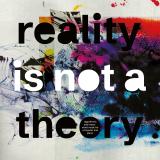


![Ilpo Väisänen - Asuma [2025 Remaster]](https://www.deejay.de/images/l/3/8/1144938.jpg)