A Paris resident of Minsk origin, Lina Filipovich’s ‘Music for an imaginary dancefloor’ explores the liminal space between club music and something altogether weirder, elusive, and abstract. Nervous, varied and amplified by various delays, the LP was written from improvisations on analogue synthesizers between June and December in 2022.
Atonal drones and atmospheric textures convey imagery of charcoal skies and silk tapestries; an idealised parallel world untethered from reality and bodies, towards something more ethereal – floating freely in red carpet lined corridors.
“In my previous works, I used pre-existing sounds to create new pieces. I was interested in the appropriation and decontextualization of materials from various traditions and contexts. However, in this album, I don't deconstruct; instead, I attempt to co-write with the machines, relying on their aesthetics and my imagination.”
Lina's LP trickles down the spine, pulse-raising and gooseflesh on tender skin, analogous to the aftermath of a sweaty fever dream. Speaking the language of spirits in the allure of the dark.
Press release by Asmi Shetty
Search:abstract reality
Next up on BPitch sublabel UFO Inc. is an essential linkup from two rising Berlin-based talents, Linn Elisabet and Stina Francina. Bringing with them two distinct approaches to music production but a shared vision of techno's weirder corners, Linn and Stina go all in on their first joint release together, fusing sonic abstractions into a release that never loses sight of the club. With a classically trained musical background, Linn explores reverberant soundscapes and complex arrangements with a learned ear, but a firm rejection of the rigid forms that often taint formal musicality. Promoting a sense of non-compliance in their sonic palettes, they offer a contemporary and transgressive interpretation of techno that strives to reimagine reality and desire. Having fostered her passion for electronic music in intimate, underground spaces, Stina's approach to production is rooted firmly in affect; carefully weaving fragile emotional narratives with a generous sensitivity. With a particular penchant for old school trance, her sound is often coloured by a feeling of melancholy and hope.
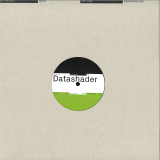
Datashader emerges from the shadows with a striking breaks- and bass-heavy debut release that challenges the fabric of our digital existence. Replete with a Dopplereffekt remix, it nods to the legacy of revered anonymous acts such as Scopex, Drexciya and Underground Resistance, pushing the boundaries of both electronic music exploration and its conceptual underpinnings. As a critique of the erosion of genuine human connection in the digital age, Datashader delivers a barrage of billowing subs, infectious electro, recontextualized jungle, and techno, serving as a poignant counterbalance to current dance floor-centric norms. It’s a contemporary anti-soundtrack that offers a haunting mirror to the societal costs of technological convenience.
In a world engulfed by the digital realm, where social media platforms thrive and dominate every aspect of our lives, the enigmatic project known as Datashader was founded to reflect on the pervasive erosion of authentic human connection through various virtual realities. Artistically, Datashader seeks to critique the impact of technology on human identity and relationships, breaking with an archetype of digital conformity and expressing a profound disillusionment with the superficiality of online interactions through music. Genuine human connection and art cannot be quantified by likes, comments, or followers but rather thrives in the visceral realm of shared sonic experience and human emotion. This idea is at the core idea of Datashader, whose artistic expression ranges from avant-garde composition and electronic experimentations to art, installation, film and more.
Expressed within the varied contexts of diverse artistic mediums, Datashader explores the concept of “technological gentrification”, which describes the gradual displacement of human interaction by technology. Just as gentrification alters the urban landscape, driving out communities and cultures, digital gentrification transforms the social landscape, replacing genuine connection with curated online personas.
Musically, Datashader’s practice confronts this dystopian reality, highlighting the alarming consequence of people becoming mere nodes in a network, reduced to a collection of data points. This is manifested sonically by a blistering assault of breaks, recontextualized IDM, abstract electronics and otherworldly synthscapes, conceived as the aesthetic counterbalance to much of contemporary electronic music’s dancefloor focus.
Datashader dives deep into genres and influences which stand for a form of sonic resistance: A contemporary anti- soundtrack – a sonic mirror of the price we pay for convenience and instant gratification. A self-image in constant flux. No false technological idols.
“An uplifting, tender, fun and imaginative music journey”
Warren Ellis, musician/composer (Nick Cave & The Bad Seeds, Dirty Three, Blonde)
“Carly’s score brings together both humour and haunting emotion, well crafted for this unique story”.
Martin Phipps, composer (The Crown, Napoleon)
Hear the soundtrack to British filmmaker Carol Morley’s spellbinding Typist Artist Pirate King by BAFTA nominated composer Carly Paradis.
Carly scores BBC’s Line of Duty and since 2022 plays live keyboards for Nick Cave and the Bad Seeds.
The atmospheric score beautifully balances witty percussion and angelic voice for a road journey that Audrey Amiss, the typist, artist, pirate king herself, takes in the film, elegantly reflecting her expanded sense of reality and the uncanny delights of her abstract art.
The music features the experimental vocal group SHARDS led by Kieran Brunt, percussion extraordinaire Joby Burgess and Anna Drysdale on other-worldly horn alongside prepared piano and a one-holed flute.
Paying homage to the yellow electric car at the centre of the film, it’s pressed onto transparent yellow vinyl, with art design by Jane Pollard and Iain Forsyth (20,000 Days on Earth) and examples of Audrey’s art on the label and sleeve.
For a few years Leo Robinson was the sort of hidden secret you sometimes come across in local music scenes. First in Manchester and now in Glasgow, he’d pop up regularly on DIY bills or as local support to a touring act, quietly blowing them off stage with his rich baritone vocal and homespun lo-fi tales of folklore and animism. With The Temple – his debut on PRAH Recordings – he looks set to cross over from being a cult concern.
“There's a spectrum within the album between fully mythologising or symbolising my lived experience, and just stating it in very matter of fact terms - that push and pull between the need to abstract and the need to break through the abstraction and have an honest moment with oneself” he explains. “This is one of the themes of the album as well as part of the process. The aim was to take all these anecdotal or symbolic elements and merge them into one narrative and one world, in a way that you can find your way through the record as if it were a landscape or language with its own logic.”
The record takes on a pastoral, slightly baroque nature that Robinson partly attributes to a friend screening a lot of ‘70s BBC material in his book shop that they used to hang out at. There are also elements of jazz, flickering to life in “The Spring”’s piano-led finale and coda.
Thematically, Robinson likens it to a Jungian ‘Hero's Journey’, his voice possessing a character who goes through several defined stages of consciousness. From conception and the beginning of an earthly life, the first half of the album recognises the development of the protagonist’s narrative and identity, before “The Pink Light”’s freeform departure from the hitherto more song-based suite devastatingly shatters this. The second half of the album then sees the protagonist witness “the uncontainable” water; learning that true divinity lies not in the individual self or lofty notions of gods and temples, but in the unremarkable nettles, insects and dogs on the roadside riverbank - referenced on tracks “The Cormorant” and “The Spring”.
Although now residing north of the border, The Temple was written while Robinson was finding his feet in Manchester, having moved there to go to art school as a teenager (as a visual artist, he has exhibited at the Tiwani Contemporary in London and Cardiff’s Chapter Arts Centre). As a result, many of the tracks bear out the shadows of his experiences in the northern city – at their most visible and explicit on the beautifully fragile storytelling of “The Pavement”. Written the day after the Manchester Arena Bombings, it recalls Robinson waking up to go to work on a hot summer’s day to discover that his street had been blocked off for terrorism investigations; it then progresses through the rest of his day, amidst the grimly surreal aftermath of the previous night.
Having written the chords, melodies and lyrics to the album, Robinson fleshed out the tunes by scoring out parts for the additional instrumentation, but it was only when a friend sent a demo to PRAH that he was able to fund its full recording. Guitars, vocals, piano and French Horn (the latter recorded by Lauren Reeve-Rawlings) were put down at Green Door Studios in Glasgow. Microphones were placed around the room and the sound of the musicians stepping on creaky floorboards and opening creaky doors were left audible to further the record’s live feel. The harpsichord heard on “The Serpent”, meanwhile, came from University of Glasgow lecturer David McGuinness. Strings were then recorded at PRAH Studios by Francesca Ter-Berg and Raven Bush, the Social Singing Choir adding their choral vocals to “Temple II”.
The result is an album that feels both luscious and yet intimately raw; as grand as Richard Dawson at his most panoramic but containing the rough edges and skeletal looseness of a Calvin Johnson work. At times Robinson lyrically moves towards the surreal, but ultimately this is a record grounded in reality; a true showcase of Robinson’s skill as a lyricist and songwriter.
I am thrilled to share with you the upcoming release of Live Life and Tell Stories, the new album by Figub Brazlevic & John Robinson set to release in the spring of 2023. This album is a celebration of John Robinson's love for storytelling, which has been evident since he was a young child, and his passion for hearing epic storytelling from many of his favorite emcees of the golden era of hip hop.
The connection between Figub Brazlevic and John Robinson is far from a fly-by-night or simply another international internet collaboration. The two met in 2009 during Robinson’s first time touring in Germany, and shortly after, Figub remixed J.R.’s group Scienz Of Life’s Leviathan album for the love and respect of the music. The remixes, which have yet to be released, impressed J.R. and his SOL crew, and he knew he would work together in the future with Figub. That time has come, and the message is clear: Live Life and Tell Stories is a seamless blend of Robinson’s thought-provoking narratives and Brazlevic’s abstract jazzy boombap soundscapes.
This album promises to take listeners on a sonic journey of dope grooves and ill storytelling, where Robinson's unique storytelling abilities are masterfully interwoven with Brazlevic's jazzy, boombap beats. From start to finish, Live Life and Tell Stories is sure to captivate audiences and keep them grooving to its infectious beats.
In an era where the music industry is dominated by short-lived trends, it is refreshing to see two seasoned artists come together to create music that is both timeless and meaningful. This album is a perfect example of what can happen when artists come together to create something truly unique, and I can't wait for its release in the spring of 2023.
So mark your calendars, because Live Life and Tell Stories is set to release in the spring of 2023. This is an album you won't want to miss, so be sure to push play and let Figub Brazlevic & John Robinson take you on a sonic journey of dope grooves and ill storytelling. Let's go!
2023 Repress
Music beamed through Dimensional Waves by Abstract Thought. 3 unnamed Abstract Thoughts taken from the original project tapes from 2003, recorded around the same time as the wellknown full length album release. Sonic expressions that will need your own interpretation to lead to a reality-oriented conclusion.
This new FRANKIE-45 is more raw, primitive, philosophical, fuzzy and dissonant than you'd expect! The theme of this 45 (and most of the upcoming album) is fear.. Perfect for Halloween. However, this record is a not a record about spooky skeletons and ghouls but rather a record about deep and day-to-day fears. The first song "Panick Attack" depicts the inner emotions and experience of a panic attack. The next track "Agnost" is more philosophical, wandering into the most abstract of thoughts. In this land of ambiguity you easily spook yourself and try to seek comfort in the thought that existential questions about infinity and reality are just too big for a tiny human brain and that's what that song is all about. The last track is "Time", the devourer of everything is both relative and an unstoppable force that will turn everything to nothing. Filled with paradoxes that'll bend reality itself. This song is about the fear of being late, but humorously instead of blaming oneself, the blame is put on the boss for expecting to control such an uncontrollable power of the universe. So, after FRANKIE's first release, which was more folky and upbeat, this 45 is primitive, fuzzy and straight from the raw emotion that is fear! If you like: The MUSIC MACHINE, BOHEMIAN VENDETTA, THE SEEDS, SYD BARRETT and are into TRITONES... this is the 45 for your youACHINE, BOHEMIAN VENDETTA, THE SEEDS, SYD BARRETT and are into TRITONES... this is the 45 for you
Memory is malleable. The day you met the person you love, what color shirt was she wearing? At precisely what angle did the sunlight strike his face? How exactly did they glow? These little details are precious, but the strange thing is, the more you cherish them, the more they change. Each recollection is another potential touch point where stories can shift—each replay degrades the truth. Reality's rough edges smooth, with time. Objectivity is a myth: cameras and recording devices all contort image and sound. There's no way to know exactly how things were. And yet we still tell the stories, to try to capture how things felt, even though the truth is always slipping through our fingers.
Lemon Quartet's second albumArts Festseems to unconsciously circle this thematic territory. Full of loose, yet lush repetition, it seems to function like memory—each dizzy melody recalling and rewriting what came before, subtly shaping each piece as time passes. Not that they seem especially concerned with the passage of time anyway. They space out, they work in the realm of feelings, scribbling melodious abstractions that feel familiar. Rich with compassion, harmony, and gestures toward ecstatic—if not objective—truth, it's full of the sort of pieces that demand you return to them, but sound a bit different each time, new details overtaking familiar comforts. Are you hearing them for the first time? Or just for the first time in a long time? Either way, drift away, and try to remember…
Bush Tetras have made punk music at the fringes for over four decades. Flashes of reggae, bursts of noise, guitars that rattle, shake and snake, born out of a gutter behind CBGBs. Over the years they have respawned time and time again, contorting their sound, tweaking the vision, remaining singular and indispensable. In the late 2010s the group-Pat Place, Cynthia Sley, and Dee Pop-reformed again, releasing an EP, Take the Fall, in 2018. It was their first offering of new music in over a decade. A few years later in, 2021, they released a career spanning box set called Rhythm and Paranoia. The New York Times called the box set an artifact that "proves for decades that Bush Tetras continued to evolve in surprising yet intuitive directions." Around the same time, the band began working on a full length record, writing sessions during the pandemic over Zoom. Right before the release of the box set, beloved drummer Dee Pop passed away. Determined to complete the record to honor his memory, the Tetras went into the studio to finish what they'd started, once the timing was right. They brought in a new drummer, Sonic Youth's Steve Shelley, who also served as producer. Enter They Live in My Head. The band's 3rd official LP (a misleading fact when viewed along - side a catalog as expansive as it is influential), They Live in My Head is a collection of songs that sometimes reflect on the past and sometimes reckon with our current reality. From "Ghosts of People," on which Pat Place's legendary guitar meanders through closed doors and portals, to the scorching "2020 Vision," a matter- of-fact call to arms to get on the streets and get something done, the album addresses new and old, in both abstract and specific terms. But whether they're looking forward or backward, Bush Tetras have always been a political band, a band that calls out all kinds of bullshit. And, in that sense, They Live in My Head is absolutely no exception.
Prague based sound foundry Moving Pictures is introducing its latest vinyl release from Japanese singer and electronic music producer Junko Yoshida, also known as "Juterus". Hailing all the way from the "Land of the Rising Sun", Junko showcases her unique style of utilising and manipulating her voice alongside self-produced grooves. Two original tracks are accompanied with 2 remix cuts by label's founders, Roman Rai and Täino, transcending original productions into more abstract dimensions.
Dennis White, Charlie May, and Dave Gardner return with their second outing as Quiet Places on A Strangely Isolated Place, expanding upon their deep and suitably hypnotic long-form compositions across four continuous sides of wax.
Minimal in context and retaining the untitled track approach, the trio of producers, well versed in a variety of music styles between them, leave the music and the subliminal messages contained within as the descriptor.
Finding moments of melody amongst the wide landscape of abstract sounds and samples, is the only glimpse of reality you’ll find down here.
El Nido: a welcoming embrace in uncertain times. The world changed forever in the second quarter of 2020. The life we were used to ceased to be, as we were overcome by constant fear, distrust in all that surrounded us and a fatalist attitude towards the world we lived in. With the pandemic came lockdown, mandatory isolation for months, empty streets, face masks, hand sanitizer, the fear of going out, an absurd roll call of Covid fatalities, the daily tension of not knowing when it would all end and the urge to "get back to normal," something that certainly never happened. Out of that pandemic saturation and that urge for "normality" came El Nido ("The Nest"), the third album by Italy-based Colombian producer Montoya, who describes this record as "becoming virgins of destiny again, facing up to that fatalist world and creating that longing for tranquility. Savoring that moment prior to the pandemic, that instant when the most important thing wasn't the immediate reality or the global situation." Montoya sees El Nido as that quiet place that you think of when you close your eyes; it is a beach or a mountain, a sunrise or a sunset, a wave in the sea refreshing your body, or an almost-whispering wind that immediately silences everything around you. On his previous records, Iwa in 2015 and Otún in 2019, his work as a producer prevailed, feeding the growing wave of Latin American electronica, fusing IDM and techno with indigenous root music, Andean folklore and rhythms from the tropical Caribbean coast and ancestral Pacific in terms of instrumentation. But on El Nido Montoya splits the balance, offering us five merely instrumental tracks and six collaborations with Latin American artists, including Colombians Nidia Góngora on "Soñé," Montañera on "Sierra" and Pedrina on "Nubecita." It also features Mexican artist Pahua on "Flor del Mar," the Peruvian Lara Nuh on "El Faro" and the Franco-Venezuelan La Chica on "Palosanto." Starting from the name itself ("The Nest"), an evocation of home, El Nido is also a Filipino municipality on the island of Palawan, a place that turned out to be Montoya's last live experience before the pandemic. That place with crystal clear seas and white sand became the scene and starting point for this work, reflecting on the abstraction of a chaotic world and proposing blurred destinations with each song, like places that exist within memories when we close our eyes, letting us inhabit them, for a couple of minutes at least. On the other hand, it's a record that approaches love; as a yearning and a refuge, as a guide and an anchor, but also as a rhetorical figure that makes us vibrate and elevates us, while at the same time keeping us grounded and letting us settle in the place that we can use as our shelter.
Bruce Falkian is a world famous contemporary artist who exhibits at the world's most prestigious art galleries and fairs. Bruce Falkian moonlights as an agent of espionage against the Terrorism Industrial Complex. Wait... what?
To understand Bruce Falkian we first must understand the link between image and war. In the late 1800s the precursor to the video camera was invented. It was directly inspired by guns, specifically, Samuel Colt's Revolver. It borrowed not only its barrel mechanics, swapping bullets for exposures, but its terminology too. Load, point, scope, aim, shoot, flash. The camera and the gun, united by cordite, would go on to prove the most efficacious tools in shaping the modern world.
The 20th century was a laboratory when it comes to killing and image making, glorified through Hollywood and the Western genre. Propaganda would prove highly effective in creating and sustaining support for militaries fighting for ideological global control. Devised first in the aptly title 'Propaganda' (1928) by Edward Bernays, a nephew of Sigmund Freud, Advertising and Public Relations became the leading media industries, learning how to control the population through images, usually just to buy random crap they didn't need, but other times to overthrow democratically elected politicians in foreign countries. Eventually Western Liberal Democracy assumed domination, built of course on the enslavement of all peoples and nations who didn't fall in line with its specific ideas of living. The Red Scare inspired countless anti-leftist, anti-communist works of art throughout the Cold War, notably and most bizarre, funding the abstract expressionist movement as a non-ideological alternative to socialist realism art. When the Soviet Union fell, Western Liberal Democracy was able to promulgate its unhindered views around the world through its various media empires and actor states. Is it a coincidence that a third of the almost $85 billion dollar global camera equipment market is represented by the greatest propaganda beast the world has ever seen, the USA?
Guns are dangerous because of the obvious. Images are dangerous because we are bad at perceiving what is real (as any jump scare, deepfake, newsreel will attest to.) Videos aren't technically real, they are only a collection of rapidly changing static images which give the illusion of movement. It's easy for us to collectively decide that a video is real, because that's the way our brains perceive reality. People who lead the world of media understand this, which is how they are able to control us, make us invade foreign countries, vote for specific politicians, feel ugly or fat etc. However, ubiquitous as they are, it seems that the image is in crisis. It seems that we've run out of them. Or perhaps our understanding of an image is changing, with the aid of near instantaneous text-to-image AI technology. So what does this mean for guns? What does this mean for war? How will images be used as an aid to war in the 21st century? It remains to be seen, but Bruce Falkian will be a useful agent.
As the siren’s song echoes out of systems worldwide, perhaps we are (re)turning to the liquid age of dance; with natural ephemera such as moss, sentiments for ecology such as swamps, and mercurial aspects of water all absorbing the aesthetic forefront. A return to nature, a deep dive under the lily pads. Here Marijn with her debut EP guides our plunge, a trip previously taken via her podcasts on Kulture Lab, where you can also find her previously released music.
Whispers from the ethereal plane drift around the headspace, a rumble in the distance of sound traversing the water, voices to guide and to keep you from floating too far from the line. Audio hallucinations are aplenty when submerged, a serenity of space, yet distant growls assure that peace is not always 2 be found. The melancholia within the daydream, the pang of loss caught in reflections, internal and from the water, with the lily pads floating above as a guiding entity, an anchor, something to hold. Under the lily pads we rumble.
On the flip everyone’s fav casual breaks n rave hooligan Luca Lozano asks the recurring thought within dance music, a question we quest, yet rarely want the answer. Abstraction via squeaks and tweaks, you better bop your bleepin’ head to this 1.
‘Leave A Message’ leaves the tranquil waters disturbed and rippling to the outer edges, providing jumps for the lily pads to ride on the incoming tide, with the ebb and flow making way for a storm surge. Aka big beats are the best, a notion the directly honest final track ‘Made (Drums)’ follows, bringing a twisted jack attack logic to a deranged assembly of samples, a manic orchestra of tumbling drums who have conspired to freak out, albeit with cute bubbles underneath to revel in the allure of sonic mania.
‘Where is Agartha? What is the specific region in which it lies? Along what road, through what civilizations, must one walk in order to reach it?.’ Saint-Yves d’Alveydre in 1886
Agartha, the debut full-length album by Japanese producer Wata Igarashi, is a mysterious, divine thing. Named for the mythical secret kingdom, understood as a complex maze of underground tunnels, perhaps designed by Martians who colonised the Earth tens of thousands of years ago, it’s a similarly mystical, perhaps even cosmic trip – but this time, exploring an inner, deeply personal cosmos. Beautifully detailed and bustling with rich incident, it takes Igarashi’s music to new places, which still retaining his unique sonic imprimatur; in this respect, it’s perfectly at home with Kompakt, a label that’s always encouraged artists to make the visionary music they need to create, to take risks and make sideways steps into uncharted territory.
An eloquent producer and DJ, Igarashi has been releasing techno for eleven years now, appearing on such imprints as The Bunker NY, Delsin, Midgar, and Time To Express; he has also self-released his productions via his WIP net label. Throughout, Igarashi has consistently explored his unique approach to techno and electronic music, one that’s eloquent and poised, even when it shifts into more psychedelic terrain; he’s a master at balancing the sensual and the functional, and he has an unerring ear for the right texture, the right tone, at the right time. He brings all of this into Agartha, his most thorough-going expression of self to date.
For Agartha, Igarashi had a strong concept he wanted to explore. Visualising specific scenes from an imaginary film based on the titular secret kingdom, he created soundtracks for those scenes, spending time during the pandemic in his studio, working away carefully at the ten tracks here. Given his background in creating music for television and advertisements, Igarashi is well-placed to explore the marriage of the sonic and the visual in such intimate ways, but freed from commercial concerns, he let his imagination run riot. He also drew on a rich palette of musical influences – techno is in there, of course, but you can also hear the smoky, improvised jazz of the likes of Miles Davis (to whom the album’s title is an indirect nod), and the minimalism and systems music of Steve Reich.
The latter is particularly pronounced on the gorgeous, beatless drift of “Floating Against Time”, where an arpeggiated sequence lingers, lovingly, around your ears for nine blissful minutes, coasting across swooning drones and waves of ambient noise. “Ceremony Of The Dead”, originally composed as part of a Sony 360 Reality Audio spatial sound concert, is a deep pass into systems composition, with various patterns overlaid and interlocking, before a wordless vocal rises from the depths, a gorgeous counterpoint to the swarming textures that gather across the track. On the other hand, tracks like “Burning” and “Subterranean Life” nudge toward Fourth World territory, painting deluxe dreamscapes of uncertain provenance; the title cut is an abstract drift-world, Igarashi painting an alien tableau dotted by shape-shifting creatures.
Agartha’s conceptual framework means that everything on the album sits perfectly together; listening to it in one sitting is a dizzying, lush experience. Its imaginings of inner landscapes recall, in some respects, the nautical, aqueous mythologies of the Drexciyan universe, though from different perspectives. But the result is Igarashi’s own creation, a deluxe, enchanting trip through the visionary Agartha of this unique producer’s cinematic mind’s-eye.
Wo liegt Agartha? In welcher spezifischen Region liegt es? Auf welchem Weg, durch welche Zivilisationen muss man gehen, um dorthin zu gelangen?'
Saint-Yves d'Alveydre im Jahr 1886
Agartha, das Debütalbum des japanischen Produzenten Wata Igarashi, ist ein geheimnisvolles, göttliches Ding. Benannt nach dem mythischen, geheimen Königreich, das als ein komplexes Labyrinth unterirdischer Tunnel verstanden wird, die vielleicht von Marsmenschen angelegt wurden, die vor Zehntausenden von Jahren die Erde kolonisierten, ist es eine ähnlich mystische, vielleicht sogar kosmische Reise - aber dieses Mal erforscht es einen inneren, zutiefst persönlichen Kosmos. Wunderschön detailliert und voller reichhaltiger Begebenheiten, führt es Igarashis Musik an neue Orte, die dennoch seine einzigartige klangliche Handschrift bewahren. In dieser Hinsicht hat es bei Kompakt ein perfektes Zuhause gefunden - einem Label, das Künstler immer ermutigt hat, jene visionäre Musik zu machen, Risiken einzugehen und seitwärts Schritte in unbekanntes Terrain zu tun.
Der eloquente Produzent und DJ Igarashi veröffentlicht seit elf Jahren Techno auf Labels wie The Bunker NY, Delsin, Figure und Time To Express; außerdem hat er einige Produktionen über sein Label WIP net selbst veröffentlicht. Dabei hat Igarashi stets seinen einzigartigen Ansatz für Techno und elektronische Musik verfolgt, der kontrolliert und ausgeglichen ist, selbst wenn er sich in psychedelisches Terrain begibt; er ist ein Meister der Balance zwischen dem Sinnlichen und dem Funktionalen und hat ein untrügliches Gespür für die richtige Textur, den richtigen Ton zur richtigen Zeit. All das bringt er in Agartha ein, dem bisher umfangreichsten Ausdruck seiner selbst.
Für Agartha hatte Igarashi ein starkes Konzept, das er erforschen wollte. Er stellte sich bestimmte Szenen eines imaginären Films vor, der auf dem titelgebenden geheimen Königreich basiert, und schuf Soundtracks für diese Szenen. Während der Pandemie verbrachte er Zeit in seinem Studio und arbeitete sorgfältig an den zehn Tracks. Mit seinem Hintergrund als Komponist von Fernseh- und Werbemusik ist Igarashi prädestiniert dafür, die Verbindung von Klang und Bild auf solch intime Weise zu erforschen, aber frei von kommerziellem Dünkel ließ er seiner Fantasie freien Lauf. Er schöpfte auch aus einer reichen Palette musikalischer Einflüsse - Techno ist natürlich dabei, aber man hört auch den rauchigen, improvisierten Jazz von Miles Davis (an den der Titel des Albums eine indirekte Anspielung ist) und den Minimalismus und die Systemmusik von Steve Reich.
Letzteres ist besonders ausgeprägt in dem wunderschönen, beatlosen "Floating Against Time", wo eine arpeggierte Sequenz neun Minuten lang liebevoll um die Ohren fliegt und über schwelende Drones und Wellen von Umgebungsgeräuschen gleitet. "Ceremony Of The Dead", ursprünglich als Teil eines Sony 360 Reality Audio-Raumklangkonzerts komponiert, ist ein tiefes Eintauchen in eine Systemkomposition, bei der sich verschiedene Muster überlagern und ineinander greifen, bevor sich ein wortloser Gesang aus der Tiefe erhebt, ein wunderschöner Kontrapunkt zu den wimmelnden Texturen, die sich über den Track legen. Andererseits bewegen sich Tracks wie "Burning" und "Subterranean Life" in Richtung der Vierten Welt und malen luxuriöse Traumlandschaften ungewisser Herkunft; der Titeltrack ist eine abstrakte Scheinwelt, in der Igarashi ein außerirdisches Tableau malt, das von formwandelnden Kreaturen übersät ist.
Der konzeptionelle Rahmen von Agartha ermöglicht, dass alles auf dem Album perfekt zusammenpasst; es in einem Zug durchzuhören ist eine schwindelerregende, opulente Erfahrung. Wata's Vorstellungen von inneren Landschaften erinnern in gewisser Hinsicht an die nautischen, wässrigen Mythologien des drexciyanischen Universums, wenn auch aus einer anderen Perspektiven betrachtet. Aber das Ergebnis ist Igarashis ureigene Schöpfung, ein luxuriöser, bezaubernder Trip durch das visionäre Agartha dieses einzigartigen Produzenten mit seinem cineastischen Blick.
After the success of their first full length album Midnight Ensemble, it's now time for a massive remixpack divided in 2 EP's; Part 1 followed by Part 2 (which will be follow soon after this).
The Dynamic duo asked some of their close friends, label residents and inspirators to rework all of the tracks taken from the original album.
On Part 1 you will find remixes from DJ Nobu, Rrose, Jeroen Search on the 12" added by 2 Digital Bonus tracks bij Pyramidal Decode and Hitam.
Expect a diverse range of techno cuts and ambient drones as you are used to
from Dynamic Reflection.
Puce Moment is part of the French contemporary music scene. Their music is climatic, often inhabited by a strong emotional power. A procession of harmonic structures organized in a ritual way, sometimes close to trance. It can be written or improvised, vocal or instrumental. The electronic and electroacoustic arrangements summon new spaces and abstract landscapes, which can go from the purest sound to the most raw distortions. Vast, slower, deeper - distant echoes of half-faded things - and when we are lost, voices appear. Voices whose only reference would be the timeless SeeFeel.
Nicolas Devos and Pénélope Michel are visual and sound artists, one trained at the Beaux-Arts and the Fresnoy studio national des arts contemporains and the other a classically trained cellist, singer and multiinstrumentalist. They created Puce Moment, envisaged as a sound research laboratory open to experimentation, to multi-disciplinary encounters and to decompartmentalization. Their work is akin to a fictional ethnology expressed through protean projects and mutant visual, sound and musical creations.
»Epic Ellipses« is their 4th album.
They have composed the original soundtracks of more than a dozen dance performance, fiction or documentary films, virtual reality in variable formats (Christian Rizzo, Mylène Benoit, Vania Vaneau, Benjamin Nuel, Laurent Pernot, Carolina Gonçalves). Or in the form of film-concerts including David Lynch's cult film 'Eraserhead' with which they have toured intensively since 2012 in France and Europe, and since 2019 »Koyaanisqatsi«, the cult experimental documentary by Godfrey Reggio.
Issued by Leo Fegin's visionary record label in 1993, this refreshed and revised reissue collection of Hungarian composer Tibor Szemző's chamber pieces with spoken text – composed at 1980s for the legendary GROUP 180 – is unlike anything else of its kind.
No one has survived life. Everyone has died from it so far. Man must realize that He is responsible for His own life and fate and must insist upon this responsibility beyond all limits. And since Man has dissociated Himself from the sphere of irrationality, He has no way of getting in touch with death, or of establishing control over it. How we achieve the final result is merely of secondary importance. If the vision is clear to everyone, there is no need at all to look back. In a time of complete mental disturbance, only one chance remains to us: crystal-clear thinking. This leads us back to total mental disturbance, which everyone has died from so far. (Pavel Havliček – Miklós Erdély – Tibor Hajas)
Text and Music | Language and Speech | Sound and Music
The common basis of the three works by Tibor Szemző heard on this album is the inalienable relationship to text – as an a priori principle. Text and music: the formal attributes of significance, intentions, and levels of meaning inherent in verbal communication as it is transformed into audible code. Language and speech: the structural level of communication, where it becomes purposeful expression, acoustic statements of variable modality. Vocalization as sublimation. Sound and music: By becoming an auditory signal, communication is deprived of its sense and reduced to musical articulation and abstraction.
Skullbase Fracture: Shards of reality – senseless, disconnected fragments of recorded “living speech” – simultaneously disintegrate and merge to create meaning through the musical process, while it is degraded and stylized to represent a single layer of the ambient noise one would hear in a hospitality setting.
Optimistic Lecture: The theses – like a practical, everyday user’s manual to cognitive tendencies and aims as they apply to the entirety of existence – convey their meaning through simplified rhythmic speech, galvanized into commands. As a counterpoint to recited prayers, they comprise a uniform soundscape.
The Sex Appeal of Death: The head-on simplicity of communication creates such extremely reductive musical interrelations that they cannibalize themselves in a necessary and inevitable fashion. And, in this manner, the text as well