
Сделать предзаказ27 июн 2025
он должен быть опубликован на 27 июн 2025
14,83 €
он должен быть опубликован на 27 июн 2025

он должен быть опубликован на 02 дек 2024

Black Vinyl[44,50 €]
Coloured Vinyl[20,80 €]
White/Blue Splatter Vinyl[25,42 €]
The Blues and the Abstract Truth is not just a landmark album in Oliver Nelson's career but in the history of jazz itself
The album features an incredible ensemble of top-tier jazz musicians, often referred to as a "supergroup": Oliver Nelson (alto saxophone, tenor saxophone), Freddie Hubbard (trumpet), Eric Dolphy (alto saxophone, flute), George Barrow (baritone saxophone), Bill Evans (piano), Paul Chambers (bass), Roy Haynes (drums). The early 1960s were marked by a shift from the hard bop of the 1950s to more experimental forms, including modal jazz, free jazz, and the incorporation of avant-garde elements. Musicians like John Coltrane, Ornette Coleman, and Charles Mingus were all pushing the boundaries of jazz, and Oliver Nelson's work fits within this broader movement: in this album there's a perfect combination of modern compositional techniques, virtuosic performances, and emotional depth make it an essential listening experience for any jazz fan. It captures the moment when jazz was evolving into new, exciting directions while staying connected to its roots in the blues. The Blues and the Abstract Truth is considered one of the essential albums in modern jazz where Oliver Nelson's compositional style blends hard bop, modal jazz, and blues influences with sophisticated harmonic structures and striking arrangements. The album is noted for ts rich orchestration despite having a relatively small ensemble with use of textures and colours, particularly in tracks like "Stolen Moments," created a new standard in azz arranging.
он должен быть опубликован на 29 ноя 2024

Black Vinyl[44,50 €]
Coloured Vinyl[20,80 €]
White/Blue Splatter Vinyl[20,59 €]
Blues And The Abstract Truth is Oliver Nelson’s triumph. Featuring his all-time classic ‘Stolen Moments’, Nelson assembled one of the most potent modern jazz sextets ever. Lead trumpeter Freddie Hubbard is at his peak of performance, while alto saxophonists Nelson and Eric Dolphy (Nelson doubling on tenor) team to form an unlikely union that was simmered to perfection. Bill Evans (piano), Paul Chambers (bass) and Roy Haynes (drums) can do no wrong as a rhythm section. Verve’s Acoustic Sounds Series features transfers from analog tapes and remastered 180-gram vinyl in deluxe gatefold packaging.
Оформить предзаказ

Coloured Vinyl[20,80 €]
White/Blue Splatter Vinyl[25,42 €]
White/Blue Splatter Vinyl[20,59 €]
Blues And The Abstract Truth is Oliver Nelson’s triumph. Featuring his all-time classic ‘Stolen Moments’, Nelson assembled one of the most potent modern jazz sextets ever. Lead trumpeter Freddie Hubbard is at his peak of performance, while alto saxophonists Nelson and Eric Dolphy (Nelson doubling on tenor) team to form an unlikely union that was simmered to perfection. Bill Evans (piano), Paul Chambers (bass) and Roy Haynes (drums) can do no wrong as a rhythm section. Verve’s Acoustic Sounds Series features transfers from analog tapes and remastered 180-gram vinyl in deluxe gatefold packaging.
он должен быть опубликован на 25 июн 2021

Black Vinyl[44,50 €]
White/Blue Splatter Vinyl[25,42 €]
White/Blue Splatter Vinyl[20,59 €]
Blues And The Abstract Truth is Oliver Nelson’s triumph. Featuring his all-time classic ‘Stolen Moments’, Nelson assembled one of the most potent modern jazz sextets ever. Lead trumpeter Freddie Hubbard is at his peak of performance, while alto saxophonists Nelson and Eric Dolphy (Nelson doubling on tenor) team to form an unlikely union that was simmered to perfection. Bill Evans (piano), Paul Chambers (bass) and Roy Haynes (drums) can do no wrong as a rhythm section. Verve’s Acoustic Sounds Series features transfers from analog tapes and remastered 180-gram vinyl in deluxe gatefold packaging.
он должен быть опубликован на 25 июн 2021

This collection brings together rarities from well-known artists like Abstract Truth, Suck, Otis Waygood, Freedom's Children, John & Philipa Cooper, McCully Workshop and Hawk, as well as lesser known acts like Buzzard, The Fireflies, The Idiots, Tidal Wave, and The Invaders. Although the South African rock movement of the late sixties and early seventies was not a major commercial success, its participants heralded an exciting new age in South African rock and started a movement aimed at changing the musical tastes of fans in a spectacular way. Stadium concerts became the vehicle for feeding the youth with heavier rock sounds, and behind studio glass were producers like Clive Calder, Billy Forrest, Graham Beggs and Selwyn Miller who acted as change agents to transform conventional pop into heavier 4 to 5 minute songs. The movement's struggle for recognition through airplay remained unanswered and only the true fans of rock knew about their existence. Licensed by the Fresh Music label in South Africa and available on vinyl for the first time, complete with insert and liner notes.
доступно для дозаказа без гарантии

Melody As Truth and Future Days Radio present ‘At the Emerald Pool’, an album by Tomo Katsurada and Jonny Nash.
Netherlands-based artists Tomo Katsurada (Ex-Kikagaku Moyo / Future Days Radio) and Jonny Nash (Melody As Truth) combine forces for an exploration into the sonic potential of the guitar duo, rooted in their experiences performing together over the last 12 months.
Friends and admirers of each other’s work for a decade, their musical collaboration began in 2024 with Katsurada asking Nash to contribute guitar to his debut EP ‘Dream Of The Egg’. Sensing the need to explore this further, they spent the following year performing together in different configurations, with Nash joining Katsurada’s trio and Katsurada in turn playing with Nash as a duo, across a wide spectrum of spaces, from churches and temples to concert halls, theatres and outdoor festivals. With new ideas developing organically out of these performances, recording new material became the next logical step. A short period of three days was set aside with a clear goal: to capture the essence of their fluid, intertwining melodies and guitar playing in a way that felt as direct and unfiltered as possible. Working from a handful of pre-existing sketches, they left ample room for experimentation to unfold within the process.
The results are presented on ‘At The Emerald Pool’, a collection of ten pieces that offer the listener a full immersion into the pair’s sound. With guitar as the primary instrument for both artists, it is no surprise that the core of the album lies here, specifically in the fluid interplay between the two players. Layers of gentle, delay-soaked fingerpicking often make it almost impossible to distinguish where one player ends and the other begins. As soloists, both Katsurada and Nash have a gift for crafting melodic lines that feel open and ascending, expressive and hopeful without becoming saccharine. Longer, more abstract pieces are counterbalanced by a series of shorter songs, with five vocal tracks appearing across the album. The decision to share vocal duties lends the record a unique quality and a strong sense of variation, bringing a wide expressive range out of a deliberately focused musical framework.
‘At The Emerald Pool’ represents the first chapter in an ongoing musical dialogue, an attempt to capture a moment of connection, openness and discovery, laying the foundation for what continues to unfold.
Готово к отправке

"After being praised as one of the best releases of 2025 by multiple platforms, the highly praised debut album from Obeka lands on vinyl via YUKU.
The rhythmic dynamics and emotive attitudes of A World No More captures the density of soundsystem culture in Obeka's ancestral roots. YUKU presents the Bermudians debut album capturing a Neo-Colonial dystopia, protest and Afro-Futurism hyperextended through decaying sonic structures of a dark past and its grievances which very much exist today.
Growing into adulthood within the walls of British and European Colonial systems meant the disconnection and lostness in a new country hid me from the world at a young age. Unlike London's vast and culturally engaging migrant communities, the industrial milling town of Stockport introduced a coldness towards people from other countries I experienced in my first year after relocating from Bermuda. I couldn't understand why. Whether cold words thrown towards me or actions upon other people who look like me, it has shown to be a dooming societal virus with no cure. The most comfort was found through what was familiar - drums and rhythmic spirituality of my homeland. It was a safe-haven, a place to empty the anger and confusion. It's been 15 years since relocating and as my sound evolved, it seems classism, racism, oppression and civil control of ethnic peoples has become worse - even now more legalised and normalised. Ogun (a powerful Yoruba deity associated with anger, justice and war) acts as the opening sequence of the record and its symbolism. Using distorted bass frequencies and dissected Regga-Dub immersed in live-sampled ghostly voices of the lost ones. This sonic exercising is also applied in Drillaman - a stampede of industrial framework and metallic instruments wielded over moody Dancehall MC'ing, magnifying two parallel worlds in cocooned evolution. The resurrection of Transatlantic African cultures and identity have never been silenced, rather carried elsewhere through trade routes of enslavement, which was pivotal when composing and completing the album upon returning home to the Caribbean for the first time ever. After reconnecting with my heritage my blurred vision of what's wrong in the world became so clear. Guidance in empty plains seek truth throughout the pain - A statement of finding oneself expressed on the poetic closing track A World No More.
On Fawohodie (A West African Adinkra symbol that represents independence, freedom, and emancipation stamped on the album cover) the motive and atmosphere begins to change. Afro-Caribbean idealism which refers to the philosophical concept that emphasizes the interconnectedness of individuals and the importance of community, often contrasting with Western individualism, begins to take shape in a new universe. We can co-exist. The track framework uses machine-led software forming frequencies we have no control over, then manipulated through decomposing soundscapes, scattered hand-drums and human-made weapons of control - exposing the hidden disparity that's been carried over generations whilst balancing hopeful and musical foundations towards equality and peace. On Pressure and Kuduro! the writing direction attempts to wake people up. Not settling for a composed approach like in past projects, quite the opposite. A call for native sonic awareness, dismantled vocals of protests, eroded percussion using chains, gears and motorised harmonies sculpted in challenging abstract behaviors far outside my comfort zone. A direct abrasiveness and weight I want people to feel, whilst finding hope and solace through enchanting choirs and hypnotic basslines in complete synchrony.
"Purity in sound manifests when you least expect it. The smallest memory or feeling grows from a seed into a sonic language that you, and only you can interpret and release back into the world." "
Готово к отправке

Where music resists becoming personal confession, it creates its own narrative - abstract, precise, and unbound by outside noise. Vibraform by Berlin-based hardware and live artist Peryl provides an analytical yet deeply instinctive view on music. It reflects the duality between flow and restraint, between self-exploration and the healthy act of setting limits. At its core lies a certain nonchalance - a refusal to act on voices and trends while maintaining full commitment to sound itself. Meticulous sound design, unpredictable, morphing basslines and an intentional timeless aesthetic offer a rare window into Peryl's creative state of mind. Even as he tries to sidestep personal narratives, emotions inevitably surface in the music, subtly shaping its character. The result is not a confessional piece of work, but an abstraction that remains universal rather than private, while still carrying a trace of personal truth. Four tracks that are striking a rare balance between novelty, grace and aggressive functionality, including a remix by R?dh?d, offer to find purpose in the act of believing that sooner or later art reveals a logic of its own. ? 2025 The Third Room All tracks written & produced by Dennis Strobel B2 remixed by Mike Bierbach Mastered by Ahmet Sisman Artwork by Daniel Bornmann & Lennard Makosch (STUEDIO.XYZ) Distribution by Clone Pressing by Matter Of Fact
Готово к отправке

Several years after a 12” for the Unrelatable imprint, Marco Passarani opens a new chapter with F.F.O.M., a work of extra-terrestrial tales that feel grounded, where the hard, dirty work of the people continues on a different planet. The scenery changes, but the story stays the same: broken dreams on arid ground.
Linking back to his early Nature Records releases, Passarani blends experimentation with an unshakable sense of groove, weaving a more abstract narrative without losing the dancefloor pulse. While distinct from his Studiomaster output, the project shares the same DNA, fusing digital and analog textures until the boundaries dissolve.
True to the raw spirit of pure techno and imbued with the unmistakable nuances of the Roman school, F.F.O.M. is both a nod to the past and a step into uncharted territory, where Martian dust meets earthly sweat.
Each track paints a fragment of this imagined frontier: Tales Of Truth reveals shadowy landscapes hiding the real nature of the so-called new promised land; Alone in the Depth drifts through liquid scenery, a classic TR-808 pulsing deep beneath unknown oceans; Clouded Shore distills the numeric essence of groove in a subtle nod to Kraftwerk; Dominion erupts into the fierce struggle for supremacy over the new territories; Passione Orbitale tells of love for the unknown and voyages toward otherworldly sunsets; Exploration Noises echoes the spirit of Ixora from Passarani’s first Nature Records release, with manic, melancholic SH-101 lines riding electro rhythms.
The digital edition includes two exclusive miniatures, fleeting transmissions from the edge of this Martian settlement.
Готово к отправке

TechnoIdm BeatsAmbientBreak-Beat
I turned the page and will never forget what I then saw.
The fountain pen scratched against the paper, whistling like fur on an abandoned tire in the
middle of the night at the centre of the universe in the core of whatever it is I’m trying to believe.
I am a patient human and I live and breathe. I know this for sure.
I read about a whispering stillness of the Stadsnacht as my blood levels gradually even out again. Beneath the ink, the words take shape. This is a secret correspondence with the Book of Change – a dialogue not meant for eyes or ears, but for the soul. Are you still with me?
The Snake Rope tightens, its Coils Dive into the deep well of patience, where waiting is an art, a
dance with the unseen. The Scientists Say we should measure, predict, contain—but here, in
the shadow of the deepest of nights, the only truth is the Celebration of Ignorance. Love is the
force that binds as it untangles the invisible thread that refuses to sever. The next page quotes the mystical figure Daim: “Never Dissever Us.”
There, in the dawning light, the Dageraad reveals the Icequeen in her frigid throne, the Topiary Man standing guard in his sculpted silence. In this quiet landscape, I wait. I continue to wait, for I have good fortune on my very hands.
If You Won’t, I Will.
Can we exhibit the power to possess conformity? Can we redeem the benefits of crossing the water? Yes. The choice, the act of breaking through the barrier of convenience, is both a burden and a liberation.The words swirl, abstract and concrete, like action and inaction. The Book of Change is a paradox to puzzle over.
The evening cool rests its shoulders on my fluffy neck. I inhale as my pen lifts itself from the
paper once more, shedding ink as though it were tears of joy. I know that I have touched the
edge of something vast, something that moves beyond the grasp of reason into the heart of the
I Ching, the ever-turning wheel of change. This is the correct orientation. This is the vivid
imagery of clouds falling from the heavens and into our laps. This was never meant for your
ears. This was meant for you to feast on as the seasons bestow upon us
Готово к отправке

Since Interstellar Space, John Coltrane's posthumously released duo album with Rashied Ali, the combination of sax and drums has received an aura of sublime spiritual ambition. It is where tireless truth seekers come together to aim for something transcendental. Something too big for words. Of course, a lot has happened in the meantime.
The available options - philosophically, stylistically, temperamentally - are endless. Musicians are aware of those historical turning points, yet they also try to add their own twists and interpretations. Some of them succeed. One of reed player Mattias De Craene's many projects - MDC III - is a project involving drums and saxophone. A striking difference: De Craene invited two drummers (Simon Segers, Lennert Jacobs), that have been active in the worlds of jazz, pop, free improvisation and experimental music. They are the ideal foil for De Craene's vision, which seems to exclude no opposites. While the use of a recorder, electronics and percussion steers the music beyond the classic acoustic limitations, the result becomes strikingly rich with contrasts. What is abstract and introspective the first moment can switch - gradually or abruptly - to moments of fierce ecstasy the next.
The music feels free (free from limitations, free to choose its own logic), but also invites. Shifting moods and textures are combined with intricate rhythmical patterns, as the drummers lock together in dense, complex and/or ritualistic grooves. A minimal pulse, accompanied by murmuring hisses of brushes and a serenading sax is contrasted with moments of exuberance. The result is many things at once, but despite these wildly varying colors, sounds, textures, rhythms and moods, they are all linked, part of a generous, iridescent whole.
The trance-inducing trio MDCIII is back. And that equals yet another delicious load of modular drums, wildly processed saxophone sounds, improvisation & pulsating grooves.
After their first EP, MDCIII ft. Sylvie Kreusch, and their subsequent first (internationally) acclaimed album 'Dreamhatcher', the 'double drums' saxophone trio with Mattias De Craene, Simon Segers & Lennert Jacobs is all set to show what angle rock 'n roll can really come from. On their new album 'Drawn In Dusk' (release: end of September via W.E.R.F records) the trio delivers a whole new palette of sounds that are just as mystical, energetic and wild as 'Dreamhatcher'.
Готово к отправке

Trumpeter, rapper and sonic wanderer Pan Amsterdam has carved out one of the most distinctive voices operating at the intersection of jazz and hip-hop today.
Pan Amsterdam is a musical enigma wrapped in an enduring riddle. His creator is a jazz musician from Houston who’s found fame working with Detroit punk rock God, Iggy Pop, and British indie royalty, Metronomy, and now makes shapeshifting, adventurous hip hop out of the music’s spiritual home, New York.
He’s an irreverent character born out of frustration and named after a misunderstanding, yet one who’s on the verge of releasing his fifth album of truth-slaying, genre-crossing rhymes and beats. The result is a catalogue that feels both deeply rooted in Black American musical tradition and completely untethered by convention.
Pan Amsterdam returns with ‘Panarama’, his fourth full length album and a bold reassertion of his hip hop identity, released via Def Pressé. Created by Houston-born, New York-based musician and composer Leron Thomas, the record finds Pan Amsterdam embracing the harder edges of his sound while continuing to blur the lines between jazz improvisation, abstract rap, punk attitude, and experimental production
Written as a response to contemporary life and the endless cycle of information, conflict and distraction that defines modern culture, ‘Panarama’ unfolds as a stream of consciousness journey through hyper-normalised realities. Across sixteen tracks, Thomas navigates social commentary, personal reflection, absurdist humour, and cultural critique, delivering his observations with the same spontaneity and freedom that have become central to the Pan Amsterdam project
Lead single ‘Szechuan Beef’, produced by acclaimed collaborator 1FS, serves as one of the album’s defining statements. Built around Thomas’ signature free-flowing delivery, the track explores the overwhelming nature of contemporary life, where domestic conflict, social division, entertainment scandals and political discourse become flattened into a constant stream of content.
In Thomas’ own words: “My stream of consciousness style comes quite naturally to me due to the conditioning of scroll down culture where everything, no matter how minor or extreme, is hyper normalised.”
Elsewhere, the track ‘Vanilla Ice’ was written in response to widely publicised ICE killings and the speed at which tragedy is absorbed and forgotten within online culture. Thomas channels the anxiety and emotional disorientation of endlessly consuming information, allowing his thoughts to unfold in real time as social commentary collides with everyday digital noise. The result is both deeply personal and sharply observational, reflecting the fragmented reality of modern life. Other album highlights include the cinematic, Interpol-esque opener - ‘Old Friend’ complete with shimmering guitar lines and an far-reaching introspective, no-filter vocal as Thomas teams up with Nick Zinner (Yeah Yeah Yeahs) and Brad Truax (Interpol) across multiple tracks, often the production traverses left-field indie territory, but always maintaining Pan Amsterdam’s unique musical identity throughout. For the hip hop purists and beats lovers there are plenty of riches to discover from the clever nostalgic sample flips of ‘Cutlery’, the sleepy lofi of ‘Shuriken’ and the wonky LA beat scene / early Flying Lotus era beats of ‘Drunken Noodles’ - all boasting quick witted lyricism. ‘Deep Fried Shiney Things’ explores early electro and industrial sonics while album finisher is an upbeat new wave / indie band cut which sees Thomas take a break from rapping, but of course never letting up on the sharp observations nonetheless
While his previous record explored more alternative territory, ‘Panarama’ marks a deliberate return to rap, as Pan Amsterdam explains:
“I just wanted to do a rap album again.I enjoyed making my last album, but I felt like rapping again. I like to have the freedom to move in between musical worlds that suit the current state I’m in. Frequency accommodating frequency.”
This philosophy runs throughout the album. Tracks move effortlessly between jazz-inflected arrangements, experimental beats, punk energy and underground hip hop aesthetics, allowing ideas to evolve organically rather than conforming to traditional structures. Thomas describes himself as an improviser first and foremost: “I think like an improvisor. That’s how my albums pretty much move. It’s improvisation.”
Featuring additional contributions from Spice Programmers, AnOtter and Mr. Shn, ‘Panarama’ presents a wide-ranging cast of collaborators while remaining firmly rooted in Thomas’ singular creative vision. The record embraces contradiction, humour and unpredictability, capturing fleeting thoughts and observations with the same freedom and spontaneity that define jazz improvisation itself.
A musical enigma wrapped in an enduring riddle, Pan Amsterdam has built a reputation as one of contemporary music’s true outsiders. The project emerged from frustration, experimentation and artistic freedom, with Thomas drawing equally from his background as a jazz musician and his collaborations with artists including Iggy Pop and Metronomy. Operating from New York while carrying the spirit of Houston’s musical heritage, Pan Amsterdam has developed a distinctive voice that sits comfortably between avant-garde jazz, underground hip hop and experimental music.
Reuniting with Def Pressé for ‘Panarama’, Thomas explores what he describes as the more hardcore side of his artistic identity:
“They let me do anything and everything I wanna do so long as it’s on audio, and I need that freedom. What may verbally be perceived as vulgar to one group of people may be very thoughtful and a poignant description of the times that we’re presently in, so I’m glad that I’m part of a label home that understands that.”
он должен быть опубликован на 16 окт
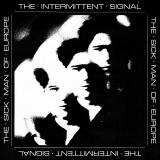
Black Vinyl[27,10 €]
“Man has such a predilection for systems and abstract deductions that he is ready to distort the truth intentionally, he is ready to deny the evidence of his senses only to justify his logic”
Fyodor Dostoevsky - Notes from Underground (1864)
The Intermittent Signal is the sound of resistance.
In the year since The Sick Man Of Europe’s debut album was released, the world has moved on. Steady hands have slipped from the levers of power, logic has shifted underground and the message grows more urgent with every passing day.
Repetition has been relearned and the machine rhythms repurposed, this time with increased intensity. Arrangements have moved beyond the bare bones economy of the first record and there’s a newfound melodicism in places. Clarity and conviction ring true through the static and noise, while utopian ideas to remodel a broken system gain traction. This is a rejection of the attention economy and a call to reconnect through community and organisation. Those simple acts that were once commonplace have become increasingly radical as new fractures emerge.
“Through repetition the message has gained weight and become something more urgent,” The Sick Man Of Europe explains. “The vehicle for this message needed to evolve, grow to gain the strength to carry it. We’ve landed on something more expansive, immediate and immersive. Less is more. Until it isn't.”
он должен быть опубликован на 25 сен
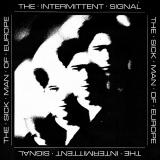
WHITE VINYL[29,83 €]
“Man has such a predilection for systems and abstract deductions that he is ready to distort the truth intentionally, he is ready to deny the evidence of his senses only to justify his logic”
Fyodor Dostoevsky - Notes from Underground (1864)
The Intermittent Signal is the sound of resistance.
In the year since The Sick Man Of Europe’s debut album was released, the world has moved on. Steady hands have slipped from the levers of power, logic has shifted underground and the message grows more urgent with every passing day.
Repetition has been relearned and the machine rhythms repurposed, this time with increased intensity. Arrangements have moved beyond the bare bones economy of the first record and there’s a newfound melodicism in places. Clarity and conviction ring true through the static and noise, while utopian ideas to remodel a broken system gain traction. This is a rejection of the attention economy and a call to reconnect through community and organisation. Those simple acts that were once commonplace have become increasingly radical as new fractures emerge.
“Through repetition the message has gained weight and become something more urgent,” The Sick Man Of Europe explains. “The vehicle for this message needed to evolve, grow to gain the strength to carry it. We’ve landed on something more expansive, immediate and immersive. Less is more. Until it isn't.”
он должен быть опубликован на 25 сен

o Standard Edition black heavyweight vinyl
o 44 tracks from the 2025 sci-fi RPG
o Each disc covers one of the game's major factions
o Art Nouveau-inspired artwork
o Widespined outer sleeve
o Printed inner sleeves
Obsidian Entertainment, Xbox, and Laced Records present the official vinyl release of The Outer Worlds 2 Original Soundtrack, a sanctioned audio record of Arcadia's most influential systems, ideologies, and approved listening experiences.
The specially mastered tracks span three LPs presented in deluxe Art Nouveau-inspired packaging. The collection captures daily life in the colony-where progress is monitored accordingly, optimism is responsibly distributed, and deviation is resolved through established channels.
Volume 001: Truth, Justice, & Dispute Resolution introduces the sound of arrival of the Earth Directorate. Sweeping orchestral themes and restrained electronic textures underscore exploration, investigation, and the reassuring sense that Arcadia's instability is both anticipated and accounted for.
Volume 002: Wireless Free Arcadia represents Auntie's Choice at peak efficiency. Bright melodies, big band swing, and relentlessly cheerful compositions promote comfort, productivity, and sustained consumer confidence. Freedom is included. Continued satisfaction indicates proper use.
Volume 003: Mental Enlightenment & Refreshment pairs the Protectorate and the Order of the Ascendant. The Protectorate asserts control through ceremonial authority, rigid rhythms, and formal arrangements devoted to discipline, doctrine, and public order. The Order of the Ascendant follows with colder, more abstract compositions focused on empirical certainty, controlled experimentation, and outcomes unburdened by sentiment.
Composed by Oleksa Lozowchuk, Antonio Gradanti, and Jim Bonney, the soundtrack of The Outer Worlds 2 blends cinematic scoring, period-inspired styles, and sanctioned cultural messaging to reflect a colony guided by ambition-and the systems entrusted to manage it.
он должен быть опубликован на 10 июл

‘Confession' is an album of quiet upheaval. An album about closeness that arrives late and unexpectedly. About stability rubbing up against desire. About the way friendship can suddenly tilt into something charged — and how that charge unsettles everything around it. Where earlier work often observed from a distance, Confession turns inward. The voice is closer, warmer, less shielded. “This wasn’t the album I intended to make,” says Carla dal Forno. “I originally wanted something veiled and abstract, but I realised I couldn’t hide behind abstraction — the songs only worked when I leaned into emotional truth.”
This is dal Forno’s fourth LP, written and recorded over several years in a small country town, in a studio housed inside a partially abandoned hospital. Long corridors, humming lights, emptied rooms — a place built for care and waiting, now quiet enough for thoughts to echo. That stillness shapes the record: intimate, watchful, unadorned. “I live in a small country town that offers a stillness my life didn’t previously have,” she explains. “In that quiet, feelings I might’ve ignored in a busy city grew loud.” Dal Forno sings plainly and conversationally, with an emotional precision that sharpens the everyday into something quietly unsettling.
The album moves through paired states: going out and staying in, wanting and withholding, devotion and distraction. Domestic calm set against private unrest. A long-held relationship offers safety and routine, while a newer connection opens emotional fault lines — longing, jealousy, fantasy, self-exposure. “At the heart of the album is a friendship that became emotionally charged in an unexpected way,” dal Forno says. “That shift brought daydreaming, jealousy, tenderness, confusion, self-awareness — and eventually acceptance.”
The drama here is internal, incremental, lived. Musically, Confession feels lighter on its feet than its subject matter suggests. Melodic basslines anchor the songs while guitars, harmonies, and gently off-kilter rhythms move around them. There’s a looseness, even a playfulness — “like the sensation of tension lifting once you finally admit something to yourself,” as dal Forno puts it. The album traces a subtle arc: attraction blooming where it shouldn’t; obsession quietly taking hold; fantasy overtaking reality; clarity arriving slowly, sometimes painfully. Visually and emotionally, Confession returns to modest spaces: backyards, beds, night streets, overgrown paths. “The record exists in that contrast,” dal Forno reflects. “Peaceful surroundings, unsettled interior.”
Like all of dal Forno’s work, Confession resists clean conclusions. It doesn’t moralise desire or romanticise restraint. Instead, it lingers in the in-between — where love is stable but not total, where yearning teaches as much as it hurts, where solitude becomes a form of care. Plain-spoken but emotionally complex. Rooted and restless. Held together by bass, breath, routine, weather. An album about admitting what you feel —and living with what that admission changes.
Последняя поставка 51 день назад
доступно для дозаказа без гарантии

"The Outfit release career defining new album, Preservers of the Pearl, asserting themselves as messengers of the new wave of underground rock and roll, pushing the movement forward alongside fellow trailblazers Mystery Lights, Sheer Mag, Shadow Show, Uni Boys + more.
Everything has been leading here. Daniel Romano shifts from his position as sole writer, opening the floor to Outfit stalwarts Ian Romano and Carson McHone, and welcoming into the fold longtime friend and legendary Canadian rock-n-roller, Tommy Major. The band is functioning as a true collective — multiple voices and perspectives — all serving one creative pulse. The result is both a new beginning and a homecoming, a complete and fearless statement.
Tracked to tape at their own Camera Varda studio, the album captures the band live in the room — breathing, musing, and believing. It’s the sound of human hands and hearts at work, in a shared moment of co-creation, preserved in real time in stunning hi-fi.
Here is music as communion — rock n roll as experience. Preservers of the Pearl rejects the flattening forces in modern times — what the band calls “the mono-agriculture of the mind.” In a “target culture”, condemned to homogeny and banality, The Outfit refuse polish and uniformity, embracing imperfection as truth, and promoting curiosity through creativity. At the center of it all is a deep spiritual current — what The Outfit calls Rock & Roll Magick: the belief that music is a sacred act, a force that can reconnect the individual to what is larger.
The Outfit are making music that is purposeful and profoundly urgent. Preservers of the Pearl is an invocation - it’s fearless in a time of great compromise, and resolute in an age of peripheral bullshit. Here is a band serving something greater than themselves."
он должен быть опубликован на 13 мар

"The Outfit release career defining new album, Preservers of the Pearl, asserting themselves as messengers of the new wave of underground rock and roll, pushing the movement forward alongside fellow trailblazers Mystery Lights, Sheer Mag, Shadow Show, Uni Boys + more.
Everything has been leading here. Daniel Romano shifts from his position as sole writer, opening the floor to Outfit stalwarts Ian Romano and Carson McHone, and welcoming into the fold longtime friend and legendary Canadian rock-n-roller, Tommy Major. The band is functioning as a true collective — multiple voices and perspectives — all serving one creative pulse. The result is both a new beginning and a homecoming, a complete and fearless statement.
Tracked to tape at their own Camera Varda studio, the album captures the band live in the room — breathing, musing, and believing. It’s the sound of human hands and hearts at work, in a shared moment of co-creation, preserved in real time in stunning hi-fi.
Here is music as communion — rock n roll as experience. Preservers of the Pearl rejects the flattening forces in modern times — what the band calls “the mono-agriculture of the mind.” In a “target culture”, condemned to homogeny and banality, The Outfit refuse polish and uniformity, embracing imperfection as truth, and promoting curiosity through creativity. At the center of it all is a deep spiritual current — what The Outfit calls Rock & Roll Magick: the belief that music is a sacred act, a force that can reconnect the individual to what is larger.
The Outfit are making music that is purposeful and profoundly urgent. Preservers of the Pearl is an invocation - it’s fearless in a time of great compromise, and resolute in an age of peripheral bullshit. Here is a band serving something greater than themselves."
он должен быть опубликован на 13 мар
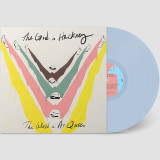
'The World in Air Quotes' is a genre-shifting style-melting kaleidoscope of art-rock, jazz, techno, folk & industrial. The God In Hackney sound like very little else from the early 2020's and whilst 'The World In Air Quotes' innovative progenitors are manifold - Eno, Coil, The Durutti Column, 1980s ECM jazz to name a few - it sounds beholden to none of them.
The God In Hackney's first album 'Cave Moderne' was Andrew Weatherall's album of the year for NTS Radio.
The God In Hackney's second LP, 'Small Country Eclipse', was album of 2020 for critic Sukhdev Sandhu of The Colloquium for Unpopular Culture: "Mordant music: stuttering, dread, black humour. A record that felt truly independent, beholden to no genre, out of step with all centres and signposted nodes."
'The World In Air Quotes' is The God In Hackney's 3rd album and their most musically emotive and lyrically inventive to date. It's an album that resonates with feelings about climate change, isolation, extinction, the social impact of technology, the flattening of history—and illuminates the darkness with imaginative rhythm, melody, noise & poetry. Songs range from widescreen, anthemic rock, to strange intricately arranged jazz-influenced songs, to abstract, textural electronic pieces. There's a strain of dark and surreal comedy too that runs through the lyrics and some of the choices the band makes in their sounds and arrangements.
The core God in Hackney quartet of Andy Cooke, Dan Fox, Ashley Marlowe and Nathaniel Mellors has expanded to include American multi-instrumentalists and composers Eve Essex (Eve Essex & The Fabulous Truth, Das Audit, Peter Gordon & Love of Life Orchestra, Peter Zummo, Liturgy) and Kelly Pratt (Father John Misty, David Byrne/St Vincent, Beirut, and Lonnie Holley among many others), signalling a new and ambitious direction for the band.
The album cover features original artwork by Iranian-American artist Tala Madani, recently the subject of a career survey exhibition at the Museum of Contemporary Art, Los Angeles.
Advertising:
The Wire, Maggot Brain
Reviews & features:
Maggot Brain - forthcoming feature
Hi-Fi+ Magazine - album review in April 2023 issue
Dereck Higgins (You Tube review)
Sonosphere - interview / feature
Weirdo Shrine - interview
It's Psychedelic Baby - interview
Spettacolo (Italy) - feature.
Ghettoblaster Magtazine (USA) - feature
Airplay:
Gilles Peterson - BBC Radio 6 Music
Steve Lamacq - BBC Radio 6 Music
Dublab - playlisted & featured in Dublab Recommends (Los Angeles)
Cian Ó Cíobháin - RTE Raidió na Gaeltachta (Ireland)
WFMU - playlisted
Resonance FM - The Wire presents Adventures In Sound & Music
Human Pleasure Radio (New Zealand)
Pete Wiggs & James Papademetie - The Seance (Repeater Radio, Sine FM & others)
Peter Hollo's Utility Fog - FBI Radio (Australia)
Jonathan Lethem & Sam Sousa on Radio Free Aftermath (KSP Claremont 88.7)
Life Elsewhere
WRPB Princeton
In Memory of John Peel
Mike Watt's Watt from Pedro Show
Последняя поставка 8 месяцев назад
доступно для дозаказа без гарантии

Blue Vinyl[24,58 €]
The brilliantly named duo - formed by Adam Morrow and Jamie Sego - might be based in "the hit recording capital of the world", Muscle Shoals, Alabama, but somehow, they have made a concept album about the ancient religious outpost off the coast of northeast England. It's a stunning record that mixes fuzzy guitars with folk horror and fantastic melodies - for fans of Ride, Slowdive, Galaxie 500, Talk Talk, Yo La Tengo and The Clientele. Despite its lyrical inspiration lying thousands of miles away, it comes imbued with the soulfulness of their surroundings - not least because it was recorded in the old Muscle Shoals Sound studio by the Tennessee River, now Portside Sound, which is run by Jamie. "The story of Lindisfarne gave us a framework for what were otherwise very abstract ideas and emotions," explains Adam. "It became a way to make sense of our own moment in history. We really want our lives and societies to always get better, and to be left alone to make that happen. But we are stuck in these cycles of progress and regression, and I think most people are really driven to make sense of it and assign meaning. Lately, we've lived through a global pandemic, a devaluation of truth and reality, and a resurgence of far-right politics into the mainstream. Not really what I expected out of life in 2025." He is keen to point out that, despite the seriousness of its inspirations, the duo had a lot of fun making the album and really want it to be "a living and breathing thing". "We want people to be able to engage with it regardless of whether they care about it as a concept record," he says. "For me, it's just another reason to expand the pedalboard," concludes Jamie. "We hope you enjoy it. Peace, love and reverb from Alabama." Coloured Vinyl LP, and Bonustrack CD available, this version is `Lindisfarne Sky' Blue & White Vinyl and adds a postcard.
он должен быть опубликован на 14 ноя 2025
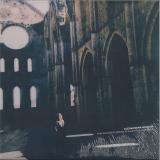
Furthering the passionate exploration of cinema that has guided her two previous LPs - 2017’s ‘Fassbinder Wunderkammer’ and 2020’s ‘I Should Have Been a Gardener’ - the Milanese guitarist/composer, Alessandra Novaga, returns to Die Schachtel with ‘The Artistic Image Is Always a Miracle’, two sides off shimmering, tense compositions – culminating as one of her most creatively ambitious and conceptually rich outings to date – freely inspired by the life and work of the Russian director Andrej Tarkovsky and the music of Johann Sebastian Bach.
Classically trained at the Musik Akademie in Basel, Switzerland, over the last decade Alessandra Novaga has emerged as one of the leading figures within northern Italy’s thriving new, experimental, and improvised music scene, rendering striking solo efforts, in addition to collaborations with Loren Connors, Stefano Pilia, Elliott Sharp, Nicola Ratti, Paula Matthusen, Sandro Mussida, Kid Millions, Travis Just, Francesco Gagliardi, and others. Remarkably ambitious and forward thinking, her approach to the guitar embarks upon a relentless deconstruction and rethinking of her instrument’s unique properties through distinct applications of structure, resonance, space, and tone, creating in a deeply personal and emotive music, seeking narrative and meaning within the abstractions of sound.
In 2017, with the LP, ‘Fassbinder Wunderkammer’, issued by Setola Di Maiale, Novaga embarked upon the exploration of her love of film. Having begun with Rainer Werner Fassbinder, this was followed in 2020 by Die Schachtel’s release of ‘I Should Have Been a Gardener’, a deeply intimate mediation on the life and work of Derek Jarman. Rather than focusing on a fixed point of inspiration or a single film to work from, these pieces achieve a form of abstract portraiture, distilling elements drawn from these filmmaker’s life and work into ambient networks of texture and tonality. ‘The Artistic Image Is Always a Miracle”’ freely inspired by the Russian director Andrej Tarkovsky and the music of Johann Sebastian Bach, finds Novaga radically expanding her sonic palette within this approach.
The seeds of ‘The Artistic Image Is Always a Miracle’ can be traced to a conversation that Novaga had with Alan Licht (contained in the highly regarded Common Tones: Selected interviews with artists and musicians 1995–2020, Blank Forms, 2021), relating to the connections between music and cinema, which led her to consider Andrej Tarkovsky’s use of Bach's music within a symbiotic framework: how the music illuminates the imagism of the films, and the film illuminates new dimensions of the music. Slowly developing over the subsequent years, the resulting album comprises six individual works, some of which draw directly upon pieces of Bach’s music that Tarkovsky used in his films – specifically 'Erbarme dich, Mein Gott', 'Das alte Jahr vergangen ist', and 'Ich ruf zu dir, Herr Jesu Christ' - while others draw upon the sensibilities and moods evoked in the imagination by the director’s films.
As a point of departure and illumination into the process and spirit that underscored the creation of the album, Novaga points toward a passage in Tarkovsky’s "Sculpting in Time”:
“Art is born and takes hold wherever there is a timeless and insatiable longing for the spiritual, for the ideal: that longing which draws people to art. Modern art has taken a wrong turn in abandoning the search for the meaning of existence in order to affirm the value of the individual for its own sake. What purports to be art begins to look like an eccentric occupation for suspect characters who maintain that any personalized action is of intrinsic value simply as a display of self-will. But in artistic creation the personality does not assert itself, it serves another, higher and communal idea.”
‘The Artistic Image Is Always a Miracle’ can be understood as a realisation of the collectivism of which Tarkovsky speaks, in the service of something far beyond the expression of self. Encountering Novaga moving into fairly uncharted waters, three of the album’s pieces incorporate the human voice we encounter the voices of others: that of the poet Arsenij Tarkovsky, the director’s father; a singer from Bach’s ‘Erbarme dich, Mein Gott’, capturing a broadcast in an underground parking lot, and Novaga’s own, rendering the melody from Bach’s “Ich ruf zu dir, Herr Jesu Christ”. Roughly alternating between solo excursions on guitar and bristling electroacoustic pieces, over the course of the album’s two sides Novaga weaves one of her most abstract and ambitious bodies of recordings to date, shifting between the complex tonal mediations generated by the six strings of her instrument, and phycological densities activated by the expanded pallet of sonority made possible by the tactics and approaches of musique concrète.
An immersive, deeply engaging meeting of beauty and melancholy within a labyrinth of voices and ideas, ‘The Artistic Image Is Always a Miracle’ transfigures the life and work of Andrej Tarkovski – one of the greatest auteurs in the history of cinema – into a singular, experimental statement of collective truth. Belonging to recent, ambitious stream of contemporary new music releases on Die Schachtel that’s already included Novaga’s ‘I Should Have Been a Gardener’, Stefano Pilia’s ‘Spiralis Aurea’, Jim O'Rourke & Giovanni Di Domenico’ ‘Immanent In Nervous Activity’, Claudio Rocchetti’s ‘Labirinto Verticale’, and Damāvand’s ‘As Long As You Come To My Garden’, among others, ‘The Artistic Image Is Always a Miracle’ is available on as a limited edition of 300 dark turquoise vinyl LPs released on June 21, 2024. The LP, designed by Bruno Stucchi / dinamomilano, comes with an 8-pages insert illuminated by Alessandra’s text as well as the lovely and intense photographs of Matilde Piazzi.
Последняя поставка 12 месяцев назад
доступно для дозаказа без гарантии

Since its founding back in 2014, Blume has carved a unique place in cultural landscape, issuing free-standing works, spanning the historical and contemporary, that represent singular gestures of creativity within the field of experimental sound. Joining their broad efforts in building networks of context and understanding that already includes the works by Werner Durand, Sarah Hennies, Bruce Nauman, John Butcher, Jocy de Oliveira, Mary Jane Leach, Valentina Magaletti, Alvin Curran, Julius Eastman, Alvin Lucier, and following the first ever vinyl release to attend to James Tenney's legendary Postal Pieces, the label now presents the first LP published by the visionary Swiss composer Jürg Frey. Drawing from the transformative power of breath and resonance, this release represents one of the most profound explorations of musical metamorphosis to emerge from the contemporary experimental landscape.
The completed work represents a "conjunction of these two artists" that has "activated a transformative form of experimentalism." These renderings "dance with an airy lightness, humour, and play, imbuing them with a beauty and emotiveness that can be rare within experimental music." They exist as "breaths, carrying the curiosities of life, belonging to no time and all time, to no one and everyone: a human music to be inhaled and pondered, for which the outcome remains unknown." In this liminal space between composition and interpretation, between breath and resonance, Zurria and Frey have created something that transcends the boundaries of experimental music itself, offering what might be called a metaphysical cartography of sound in its most essential form. As Bradford Bailey observes in his penetrating liner notes, "music is rarely a fixed entity," existing instead in a state of perpetual flux, "taking on the influences of its interpreters and performers." This fundamental truth finds its most eloquent expression in the transformative collaboration between Italian flutist Manuel Zurria and Frey, longtime member of the Wandelweiser Group. Where conventional recordings might preserve a definitive version, this release activates what Bailey calls "states of unknowing and continued experimentation," allowing Frey's compositions to evolve into entirely new dimensional territories. The original string quartet and piano works dissolve into breath-carried architectures of sound, where "the original remains in a constant dialogue with its transformation." This is not mere arrangement but ontological metamorphosis - an alchemical process through which crystalline harmonies are reborn as atmospheric phenomena.
The metaphysical dimensions of this transformation become clear through detailed analysis of the musical result. Where Frey's original compositions operate through what he calls "basic confidence in the clear and restricted material," Zurria's interpretation activates entirely new perceptual territories. Space holds almost atomic sense of weight against the airy punctuations of timbres, textures, and tones, creating "suspensions of time within which questions and identities posed by instrumentation fade." The Extended Circular Music pieces - each comprising "a small number of bars to be repeated an undetermined number of times" - become organizations of sound that defy being definitive or fixed. Originally scored for different combinations of violin, viola, cello, and piano, these works now exist as pure phenomena of breath and resonance, where "hanging, breath-length utterances dance and intertwine amongst complex harmonic clusters and conjunctions."
The philosophical implications of this transformation illuminate a lineage of composers who have moved "away from abstraction and responding to the need to create" something beyond mere technique. Drawing parallels to Morton Feldman's understanding of non-functional harmony, Zurria's approach represents "a transformative form of experimentalism" that activates what Frey calls the "thaumaturgic power" of music - its capacity to heal and transform consciousness itself. The result is "a radical reimagining of ambience: sprawling sonorities and resonances adrift in space, carrying the liberated traces of the work's former incarnations and their truths." In Zurria's interpretation, Frey's String Quartet n.3 becomes something approaching "an organ played in slow motion, its seals leaking," while the Extended Circular Music pieces transform into "glacial chords from a diverse palette of voicings, harmonies, timbres, and tones."
Performed by Manuel Zurria. Recorded and mixed by Zurria at BigCardo, Catania between 2022-2024, with mastering by Bruno Germano at Vacuumstudio, Bologna, this Blume release represents a profound exploration of musical transformation.
он должен быть опубликован на 01 авг 2025

This is what you get when an emcee/producer is fed on a diet of abstract hip-hop, Southeast Asian samples, and Taoist folklore. Together with the Clementi Sound Appreciation Club (a five-piece band of up-and-coming musicians schooled in jazz from the local scene in Singapore), Mary Sue melts samples with live instrumentation on 'Porcelain Shield, Paper Sword.' At the core of the album is the tale of a time-traveling oracle, struggling to find meaning in the modern world-where ancient wisdom feels fragile, and truth is ever-shifting. A reinterpretation of idioms shapes its journey, where spiritual pursuits feel performative, and where the weight of the past clashes with an uncertain future. The music mirrors this tension: phrases of Gamelan music dissolve into smoky brass, spectral melodies unravel over off-kilter drums, and time bends through layered textures. 'Porcelain Shield, Paper Sword' is both a reckoning and a dream, where echoes of the past find new life in the chaos of now. A porcelain shield shatters on impact; a paper sword folds before it cuts. It's about the constant, fragile push-and-pull between aesthetics and money, tradition and progress, meaning and spectacle. "Like the oracle, we're all stuck in a world where spiritual longing gets tangled up with consumerism, where authenticity is blurred by performance, and where finding real meaning feels shakier than ever," rapper and producer Mary Sue explains. "'Porcelain Shield, Paper Sword' lives in that field of tension. The album drifts between beauty and collapse, truth and illusion, and past and present, without ever landing on solid ground."
он должен быть опубликован на 13 июн 2025

WOW. Daniel O'Sullivan's transcendent new album, Eros, is one of the greatest things we've ever heard. A simply stunning song cycle of hypnotic, experimental contemporary chamber music composed for a 14-piece ensemble. Combining minimalism, complex syncopation, detailed acoustic textures, weird intervals and samurai precision, this record will elegantly blow your mind. When Daniel first sent us this, he pitched it as “Liquid Swords meets Michael Nyman”. Trust us, he wasn't wrong. A "unique hybrid orchestral music", it presents a confluence of Daniel's longstanding fixations; indeed, there's elements of Nyman, Antonio Carlos Jobim, Magma, Aaron Copland and RZA. But this is wholly O'Sullivan's. Originally commissioned for the Sonoton Music Library in Munich, Eros now receives a deluxe vinyl release courtesy of Be With Records, bringing this meticulously crafted work to a wider audience. Limited to just 500 copies for the world, these are gonna fly.
An English composer and multi-instrumentalist, Daniel O'Sullivan’s career has been marked by versatility and innovation. In addition to his work with Sonoton, he has composed extensively for the legendary KPM music library, contributing to its storied legacy of production music. As a deep virtuoso and collaborator, O'Sullivan has also played in a number of influential projects, including Ulver, Sunn O))), This Is Not This Heat, Grumbling Fur and Miracle (with Steve Moore), leaving an indelible mark on the contemporary experimental music landscape.
O’Sullivan’s first foray into classically informed chamber music, Eros is a culmination of his long-standing fixations and expansive musical influences. The album features arrangements that are as detailed as they are emotionally resonant, showcasing his unparalleled ear for intervals and mastery of counterpoint. The music brims with complex rhythmic syncopation and a sensitivity to texture and space, resulting in a soundscape that is both intoxicating and dauntingly precise.
Recorded June 2023 and February 2024, in Brussels, London and Carmarthenshire, Wales, Eros features members of Echo Collective (Neil Leiter and Margaret Hermant), Thighpaulsandra (from seminal post-industrial band Coil), and jazz pioneer Oren Marshall. Daniel's sonic weapons of choice, in his own inimitable words, were "Big Bad Drum, Pee Anne Oh, Low End Brass, Willowy Winds & Samurai Strings." You get the picture. As a cyclical suite, this is a record that really needs to be heard in its entitreity, from start to finish, to truly appreciate the genius at work here.
A jaw-dropping statement of intent, the minimalist "Golden Verses" sets the tone with its complex cue which has your neck snapping right when it feels like it needs to. Listen and you'll understand. A syncopated tangle of sharp strings, crunchy bass, drums percussion and bright piano and mallets vie for position with French horn and woodwind melody in the most compelling and unexpected ways. Quite simply, it's one of the finest album openers I've ever heard. It's followed by the atmospheric rippling minimalism of "Lyre Lyre", a gorgeous gem with shimmering chimes, bright melody, human percussion and syncopated pizzicato strings. It kinda comes on like a less-abstract Boards Of Canada, bursting with typical wonderment. The piano and string-drenched "Dolorous Stroke" effortlessly builds its warm, pastoral orchestration with flowing piano arpeggio, steadfast drums, expressive string quartet, rich low brass, woodwind and lyrical flute. Just sublime.
The insistent frenetic propulsion of "Plain Paper" is utterly beguiling, featuring a determined string motif, urgent drums and percussion, driving low brass and breathless, energetic flute. The haunting, interweaving string arpeggios that propel "Grapes Draped" presents a claustrophobic minimalism for chaos and darkness, with growling low woodwind and brass, spiky harpsichord, skittering flutes and tight drums. Up next, "Xanix Annum" is a stately minimalist waltz with expressive lyrical string quartet and delicate woodwind, anchored by drums and percussion. "Painting Rose" is a bouncy stop-start track with angular syncopated strings and a piano pulse underneath bright harpsichord and flutes. "Rotunda Garden" presents ethereal textural minimalism for landscapes and reflection with flowing string arpeggios, warm, low woodwind drones, floating choir and cymbal swells. Closing out this extraordinary side of music, the glowing, flowing minimalism of "Flowry Orb" features urgent organ, piano and woodwind arpeggios, half-time drums with shimmering cymbals, a soaring, beautiful violin solo and hypnotic vocal chant.
Side 2 opens with "Theia Mania" a determinedly off-kilter, angular track featuring low wind, brass and drum stomp in dialogue with lively string trio, woodwind and solo horn. The light, airy minimalism of "Painting Percy" is built around an interplay of rhythmic motifs for piano, low brass, bassoon, fluttering flutes, urgent strings, drums and percussion whilst "For Archetypes" is a delicate, gently syncopated chamber cue for nostalgia, nature, reflection and moments of calm, with steady piano motif, intimate woodwind and French horn, and warm, graceful strings. The urgent Ars Memoriae is a propulsive march for progress, processes and industry, underpinned by driving tuba, with determined strings, resolute drums, and vivid, expressive flute, clarinet and French horn.
The syncopated energetic minimalism of "Mirrored Seven" presents layers of melodic and cyclical piano, drums, low brass, harp, flute and strings. "Pure Ornament" follows, a slowly evolving chamber cue with flowing clarinet, string and harp arpeggio, plodding tuba and percussion, fluttering flute and graceful, lyrical solos. Stunning! Up next, "Brave Boy" moves from its tender, warm, lullaby-like intro with lyrical flute, clarinet and strings before opening into a playful backend driven by a bouncy tuba riff and syncopated piano, woodwind, string trio, and drums and percussion. Rounding out this astonishing piece, "Waxen Waned" is a warm, pastoral chamber cue with light lyrical woodwind, tender French horn and subtly pulsing string trio.
The album's title is a reference to Plato’s conception of Eros, which is more than romantic or physical desire. It is a dynamic and creative force that drives individuals to seek perfection whether in art, relationships, philosophy or the pursuit of truth. Wholly appropriate, here, we think. When asked what his influences were in making this astounding record, he answered thusly: "Non-musical: Householding, Pythagoras, Goethe, Grail romances, Hermeticism, Doctrine of Signatures (Parcelsus, Bohme, Pliny), Eric Rohmer, John Stezaker, Yasujiro Ozu. Musical: Duke Ellington (late suites), Smile-era Brian, early RZA, Wagner (Parsifal Overture), Magma, Mancini, Axelrod, YMO, Hildegard, Nyman, Penguin Cafe Orchestra, Jobim (Stone Flower), Alessandro Alessandroni, Tavener, Moondog, Orthodox Music, Secular Music." That's some pretty deep shit. Makes you want to dive in, no?
Mastering for this vinyl edition was overseen by Be With regular Simon Francis, and it was cut by the esteemed Cicely Balston at Abbey Road Studios to be pressed in the Netherlands by Record Industry. Truly, Eros is a work of extraordinary depth and sophistication. It invites listeners to immerse themselves in its intricate layers, to lose themselves in its hypnotic rhythms, and to marvel at the precision of its execution. With this release, O’Sullivan reaffirms his position as one of the most inventive and uncompromising voices in contemporary music. Do. Not. Sleep.
он должен быть опубликован на 23 мая 2025

Julek ploski’s ‘Give up Channel’ is on mappa. It’s the follow-up to the Poland-based FL Studio demon’s ‘Hotel *’, released via Orange Milk in 2023.
It’s an album that wrestles against a shadow self. It’s about shelter from the hailstorm of unwanted memories and guilt pangs and serrated blades of thought. It’s about clinging on to some semblance of hope, knuckles taut and teeth gritted.
The fragmented drift of opener ‘Naysayer’ flows forward like an anxious daydream, pad eddies and piano plinks anchored by Trapaholics drops and bursts of guaracha drums. It’s a mess of mind: the bleakness of ‘Truth’ is punctuated by gun cocking and bullet spray and sudden jester-like blasts of unhinged, schizo-whimsical melody. An internal war without a clear winner.
Shame snakes through this music like venom through an emaciated body. Blue screenlight in a dark bedroom, pulsating temples, lockjaw. ‘Titanic’ hits like the thrashing resistance of a being built for love grappling against the scalding vengefulness it’s forced to contend with, the song’s abstracted rave synths giving way to warped voices and spiralling derangement. ‘Hollywood’ is a scarred battleground, the martial bludgeoning of a tightly wound hardstyle stomp blistering and shredding a delicate piano-and-string arrangement.
This music is about deep solitude, a meditation on simmering, slow-marinating hatred. But it’s ultimately about prevailing. It doesn’t revel in negativity, it roils and twists and writhes against it. Dots of light in oppressive darkness. Clarity and purpose against chaos and filth. It’s a struggle worth waging.
h I Was #AllAlone Movements V - VIII
[i] Economy [Movements I - IV]
Последняя поставка 7 месяцев назад
доступно для дозаказа без гарантии

List of Demands, Damon Locks" first foray into creating an entire album from spoken and text-based work, finds the Chicago-based musician and educator collecting cultural abstractions and reorganizing them into a firm truth. The album lays out a vision of Black liberation and transmits it outward as a song cycle of bite-sized MF DOOM-meets-Nikki Giovanni rhythm experiments. The sample-based constructions are steeped in a lifetime of not only keen cultural observation, but direct communal participation in the culture. Locks" decades-long resume connects the dots between experimental improvisation, sample based hip hop, punk, and poetry - each done at the highest level and with a list of collaborators that could spin the head of even the most jaded listener. And that seems to be the point. To jump-start the entire personality spectrum into action. Ecstatic positivity examined via his nuanced grasp of reality, all working toward that ever-evasive concept of what could be.
Последняя поставка 20 месяцев назад
доступно для дозаказа без гарантии

While 1995's Washing Machine LP moniker was a thinly-veiled jab at the corporate aesthetic ("no, you cannot turn Sonic Youth into a household appliance brand", the band even considered changing its name to Washing Machine but settled on the album title instead), their major label relationship was indeed a curious buzzpoint of talk on the street after their intake to DGC in 1990. It wouldn't be fair to say that this state of existence propelled the band to reinforce its independent mindset by releasing a series of opaque-looking, French-language-dipping, highbrow-looking releases on their own that focused on the more abstract improv/compositional side of the band; in all truths they had been heavily steeped in self-releasing spillover material prior to that. But after a pressure pot of the early 90's indoctrination into a new operational mode for the band and its visibility, and the forces around it attempting to shape their direction, it seemed like a good time to create a strong show of radical concept.
The Anagrama EP became the first in a series of the SYR label's Perspective Musicales releases seemingly cementing Sonic Youth's connectivity to an increasing public awareness in experimental composers of the 20th century (French or otherwise). The irony was that many of those original avant composers being rediscovered by the indie audience (Partch, Neuhaus, Reich, Messaien) often found themselves on major labels anyway! So, perhaps this reverse approach was a necessary concept/comment given the music biz climate of the 90's. Regardless of how apples and oranges fell in Xenakian probability/theory, it was clear that both Sonic Youth's stature in progressive music, aided by now unlimited taperoll time thanks to a home base studio downtown established after their Lollapalooza stint, gave the band plenty of trailblazing time for their self examination of untraveled avenues.
"Anagrama" unfolds into nine minutes of delicate textures, starting with thick drone segueing into moments reminiscent of the post-crescendo flutter/comedown of "Marquee Moon's" trail-out; Thurston, Lee and Kim's guitars all circling round each other taking delicate pokes and stabs before drifting into some post-rock rhythmic moves tapered with delicate percussive guidance from Steve Shelley. "Improvisation Ajoutée" reaches further out into dissolve with whirring oscillations, guitars hissing and clanking radiator-style in a short blast format that continues into "Tremens" and a spooked-out landscape of gelatinous notes snaking up slowly. The sparseness of attack is colorful, textures emit and linger, silent spots shine, all flanked by tasteful drumming that provides the thread to all the abstraction. Shelley's approach here is interestingly sideways to any kind of usual rock action, it's tempered, mutant and metronomic simultaneously. The finale track "Mieux: De Corrosion" is a real pedal-palatte showcase. Here, Plutonian guitar wash flanges upwards to buoy a myriad of colorful eruptions of amp-spuzz, chopped up tone blasts and general confusion. Out of the blue, some metallic one-note choogle kicks in and threatens to explode into some Judas Priestly motion, before it all sputters into aural glass showers, clang, and finally a ferocious wave of more flange hiss that crashes down on a dime.
This initial foray into SY's Perspectives Musicales series continued onward with releases featuring other co-conspirators, peaking with the ambitious 2CD Goodbye 20th Century that finally connects the band into full-on interpretations of other composers' pieces (as well as displaying their own new ones). The whole series is not so much an outlet for another "side" of the band, but a run that went hand in hand building new approaches of songcraft onto their own, more overground direction which included Jim O'Rourke (who hopped on during SYR3), adding additional density to A Thousand Leaves and other LPs of his era. Fans of the '86 Spinhead Sessions as well as the recently-exhumed later jams of In/Out/In will take in the sounds of SYR1 with glee.
Последняя поставка 20 месяцев назад
доступно для дозаказа без гарантии
we will be wherever the fires are lit, a sort of sequel to Tashi"s first DC release Stateless, takes the torch and storms forward, with ten improvised acoustic guitar anthems. These musical thoughts are torn from the fabric of Tashi"s life and music. "Strumming in opposition to the towers" (as he puts it) is part of an existence that is always political, even in its most abstract iterations - a truth laid bare in these deep, raw performances.
он должен быть опубликован на 22 ноя 2024
Cassette[17,23 €]
We Will Be Wherever The Fires Are Lit, a sort of sequel to Tashi"s first DC release Stateless, takes the torch and storms forward, with ten improvised acoustic guitar anthems. These musical thoughts are torn from the fabric of Tashi"s life and music. "Strumming in opposition to the towers" (as he puts it) is part of an existence that is always political, even in its most abstract iterations - a truth laid bare in these deep, raw performances.
он должен быть опубликован на 22 ноя 2024

INSIDE is the third album (and second in a row on Brixton Records) by the respected ten-piece group from Barcelona that fuses Jamaican music and jazz. DROP COLLECTIVE bravely faces the so-called third album syndrome and makes a sincere declaration of principles, a public manifestation of their musical identity. The two sides of the album are clearly identified. Side A is Inside-Out, displaying five own-penned compositions, including three songs sung in Catalan and two in English, in which DROP COLLECTIVE make it clear what they like to do and what they are capable of offering. The album opens with "Com Estimo Jo" (The Way I Love), a reggae ballad composed by Andreu Domènech (baritone sax) that is dedicated to the growth and learning we do when we love. It is followed by "Let Us Dance", a fluid ska with Latin airs and an invitation to dance, which recaptures the sound of some of the most celebrated passages from their previous album. "Estel" (Star) is a melancholic reggae song, sung in Catalan, in homage to someone who is no longer here - "now you are the star that watches over us from up there, bright, bright". Prior to the release of this LP, four advance tracks have been published on digital platforms, but "Life's Too Short" is, perhaps, the album's single. This resounding reggae with a powerful brass section could have easily taken more elaborate instrumental and studio developments, however, the band has preferred to produce a compact track brimming with strength and lasting less than three minutes. “Ombra" (Shade) closes this side of the album with solemn roots sonorities. The B-side is Outside-In, four reinterpretations of jazz classics that DROP COLLECTIVE internalize, make their own and, therefore, also form part of their identity. The choice of pieces is hair-raising, because of the risks they take. "Yearnin'" is a cover of the song originally included in one of the most epic albums in the history of jazz, "The Blues and the Abstract Truth", by saxophonist Oliver Nelson. DROP COLLECTIVE take the song to their own territory with the skill and freshness of expert ska-jazzers and with the special collaboration of trumpeter Joan Mar Sauqué, they make one of the most famous riffs in jazz sound unashamedly contemporary and... Caribbean. "Day by Day" is an adaptation of the standard from the late forties of the last century that was part of the regular repertoire of, among others, Frank Sinatra. The result is a swinging ska love themed, sugary and romantic, with an exquisite interpretation. And to close the album, two extraordinary trials by fire for Maria del Rio, the band's vocalist, which she solves with total ease and mastery of the situation. "What a Little Moonlight Can Do", a composition by Harry Woods that the legendary Billie Holiday recorded in 1935 and which, after 90 years, still sounds fresh in up tempo ska mode, and "Sinnerman", a traditional spiritual from the early 20th century made popular worldwide by Nina Simone, becomes a lively ska-jazz with soulful touches and an infectious organ solo by Daniel Ferruz. INSIDE is an album with a compact, solid, and synchronous sound, but full of details, which gives a total sense of permanence and singularity to their skareggae- jazz mastery, in which many universes fit.
он должен быть опубликован на 12 июл 2024

"Remembering is not the opposite of forgetting," Casey MQ sings at the start of Later that day, the day before, or the day before that, his new LP and Ghostly International debut. It's a phrase fittingly misremembered from something the LA-based, Canadian-born composer came upon as he spiraled into unconscious and subconscious-led writing sessions at the piano. Casey's known for his 2020 breakthrough release babycasey, which gave voice to songs seen through the lens of childhood, various film score work and collaborations with artists such as Oklou (who returns here), Eartheater, and Vagabon. His gifts as a producer and songwriter are rooted in textural world-building and the excavation of personal truth. With Later that day... he questions what is true entirely, understanding our mind's tendency to bend and project onto pictures of the past. Across vivid, baroque pop balladry, Casey MQ reorients his recording project and point of view under the notion that memories are malleable. All the joy, pain, love, and loss housed within remembrance is open to interpretation and deconstruction, which he does deftly, with curiosity and complete artistic freedom. "It's a memory album," Casey puts it simply, winding up for the deeper unpacking, "and it might be a breakup album, too_there are more questions than answers." Engaging his dreams and sitting with sheet music at his newly acquired piano, he looked to new and old inspirations including the works of Claude Debussy, Joni Mitchell, and Joe Hisaishi's beloved Studio Ghibli film scores. "Since I was young, I always wanted to write a piano album." babycasey's studied electronic sound isn't wholly abandoned on Later that day... instead, it comes through like an atmosphere, giving Casey's more spacious, minimal arrangements a distinct luster and sheen. The textures and tones shift from song to song as if mirroring the way our minds constantly recontextualize, remember, and forget. Cathartic opener "Grey Gardens" _ its title derived from a dream abstractly related to the Toronto restaurant, but not the 1975 film, which he cites as another coincidental false memory _ presents the record's plaintive, haunted feeling. "Even if not reading into lyrics, sonically I wanted it to feel like you're being pulled into a universe. Not fantasy or otherworldly per se, something more tangible, of the body and mind," Casey says. "Hearing it back, I realized this track was the key to unlocking it." His tender falsetto hovers above ambient washes and echoed keys, each word falling carefully in the crevices. "Asleep At The Wheel" unfolds on arpeggiated synth before a burst of symphonic color; the synth returns inverted to harmonize with the outro, "I love a car crash, I love a story, I love a memory, I swear it's real..." Casey leans into digital imagination on the warm, introspective "Me I Think I Found It." Subdued, stuttered percussion underscores the singer as he cycles through pixelated imagery _ screenshots, smiles, streetlights _ searching for higher meaning through love. Built on ascendent chord distortions, "Dying Til I'm Born" gives the record one of its boldest pulses of emotion. The back half stretches out; "Is This Only Water" is sparse and foggy, "Baby Voice" is intimate and desperate for something to remain. "Words For Love" grooves on guitar, and "Tennisman9" aches in heartbreak. French musician Marylou Mayniel, aka Oklou, appears as the collection's only guest for the closing duet, "The Make Believe," a bright and buoyant send-off that gives Later that day... both a sense of resolve and cyclical-motion. "We are young, under the sun," they sing together, a parting image brimming with lightness.
он должен быть опубликован на 07 июн 2024

"Remembering is not the opposite of forgetting," Casey MQ sings at the start of Later that day, the day before, or the day before that, his new LP and Ghostly International debut. It's a phrase fittingly misremembered from something the LA-based, Canadian-born composer came upon as he spiraled into unconscious and subconscious-led writing sessions at the piano. Casey's known for his 2020 breakthrough release babycasey, which gave voice to songs seen through the lens of childhood, various film score work and collaborations with artists such as Oklou (who returns here), Eartheater, and Vagabon. His gifts as a producer and songwriter are rooted in textural world-building and the excavation of personal truth. With Later that day... he questions what is true entirely, understanding our mind's tendency to bend and project onto pictures of the past. Across vivid, baroque pop balladry, Casey MQ reorients his recording project and point of view under the notion that memories are malleable. All the joy, pain, love, and loss housed within remembrance is open to interpretation and deconstruction, which he does deftly, with curiosity and complete artistic freedom. "It's a memory album," Casey puts it simply, winding up for the deeper unpacking, "and it might be a breakup album, too_there are more questions than answers." Engaging his dreams and sitting with sheet music at his newly acquired piano, he looked to new and old inspirations including the works of Claude Debussy, Joni Mitchell, and Joe Hisaishi's beloved Studio Ghibli film scores. "Since I was young, I always wanted to write a piano album." babycasey's studied electronic sound isn't wholly abandoned on Later that day... instead, it comes through like an atmosphere, giving Casey's more spacious, minimal arrangements a distinct luster and sheen. The textures and tones shift from song to song as if mirroring the way our minds constantly recontextualize, remember, and forget. Cathartic opener "Grey Gardens" _ its title derived from a dream abstractly related to the Toronto restaurant, but not the 1975 film, which he cites as another coincidental false memory _ presents the record's plaintive, haunted feeling. "Even if not reading into lyrics, sonically I wanted it to feel like you're being pulled into a universe. Not fantasy or otherworldly per se, something more tangible, of the body and mind," Casey says. "Hearing it back, I realized this track was the key to unlocking it." His tender falsetto hovers above ambient washes and echoed keys, each word falling carefully in the crevices. "Asleep At The Wheel" unfolds on arpeggiated synth before a burst of symphonic color; the synth returns inverted to harmonize with the outro, "I love a car crash, I love a story, I love a memory, I swear it's real..." Casey leans into digital imagination on the warm, introspective "Me I Think I Found It." Subdued, stuttered percussion underscores the singer as he cycles through pixelated imagery _ screenshots, smiles, streetlights _ searching for higher meaning through love. Built on ascendent chord distortions, "Dying Til I'm Born" gives the record one of its boldest pulses of emotion. The back half stretches out; "Is This Only Water" is sparse and foggy, "Baby Voice" is intimate and desperate for something to remain. "Words For Love" grooves on guitar, and "Tennisman9" aches in heartbreak. French musician Marylou Mayniel, aka Oklou, appears as the collection's only guest for the closing duet, "The Make Believe," a bright and buoyant send-off that gives Later that day... both a sense of resolve and cyclical-motion. "We are young, under the sun," they sing together, a parting image brimming with lightness.
он должен быть опубликован на 07 июн 2024

ACxDC—full name Antichrist Demoncore—are anything but subtle. So to make sure that their message is heard loud and clear, they take things a step further, smashing these ambiguous, sophisticated, and abstract notions into a pulp and shoving them down throats. What’s left are sharp, caustic, and unabashedly vicious bits of truth and poisonous tongue-in-cheek propelled by bursts of powerviolence, metallized hardcore, and grindcore. Over the seventeen short songs, the music closely follows these themes.
он должен быть опубликован на 26 апр 2024

Delphine Dora is a prolific composer, improviser and musician who has released on a plethora of labels including Recital, Morc, Sloow Tapes, Feeding Tube, Okraïna and more, and ‘Le Grand Passage’ is her Modern Love debut, a stunning set of songs for piano and voice, recorded in one take without overdubs or edits.
In an act of pure expression, Delphine Dora recorded the 8 songs of ‘The Great Passage’ in a single take, succumbing to a whirlwind of inspiration that transported her beyond the material world. Baroque paradigms bleed into fragile, introspective mantras, expressed through a made up language of existential yearning and channeled through piano and voice. It’s music that caresses the sublime, made without any premeditation.
Delphine was nearing the end of a three-day prepared piano residency when an technician stepped in to tune her grand piano for her final performance. He removed the objects from the strings and fixed the pitch, leaving Dora with a freshly tuned instrument. Mesmerised by its new sound, she proceeded to switch on her recorder and pour out her soul, channeling, in her own words, "something greater than myself".
The result is some of the most unusual but elevated material the prolific composer, improviser and multi-instrumentalist has ever recorded, rooted in a deep understanding of European musical history but willing to push at its boundaries, questioning the earthly logic of life and death, asceticism and impiety. Glistening imperfections lash 'The Great Passage' to the physical world, but Dora - seemingly possessed as she quivers in a fictional dialect - lets her fantasies intensify her spirit, lifting the music towards the heavens. It's not sacred music, per se, but it is unashamedly mystical.
On the luxurious, languid opening, Dora dissolves eerily familiar romantic piano motifs into an attentive ceremony, singing with charged emotion. Her words aren't really decipherable, but their resonance vibrates beyond language; it's striking to hear how confident she is in vulnerability. She lets the piano wrap into her voice, connecting us directly to a unique mode of emotional expression by urging us - the listener - to project our own meaning onto her abstracted words.
Dora refers to the act of improvisation itself as a way to indicate "the fragility of being”, and as her words blur in and out of focus, dipping from a hoarse croak to a choking wail, she places herself at the very edge of musical formality, questioning strictures put in place to suffocate self-expression. Her music has often been labeled "outsider", but here she sounds intimate and interconnected, more self-consciously candid than anything traditional might have allowed. She conjures affecting, plainspoken poetry, like a bedside diary written in a hypnagogic, delirious state: a stream-of-unconsciousness, channelling the beyond.
The album title connects to a book dedicated to French philosopher and activist Simone Weil, who famously pored over global religions to ascertain spiritual truths. To Weil, meditation was a passage to access mystical experience, or a bridge between humanity and divinity. In Dora's hands, this idea is a corridor between herself and the listener, a liminal place where she's able to address feelings without making anything explicit. The title, of course, also refers to life, its impermanence, finitude, and fragility, presenting the complex, multi-dimensionality of being through one of the most undiluted, unbridled set of songs imaginable.
он должен быть опубликован на 19 апр 2024

Violist, violinist and singer-songwriter Marla Hansen returns to Karaoke Kalk with "Salt", her second full-length album to date. Building upon the sonic palette the Berlin-based musician established with her debut "Dust" in 2020, "Salt" takes the delicate mixture of acoustic instruments such as viola, violin, piano and guitar combined with subtle electronics to the next level. The new album is both a remarkable departure and at the same time sheds a new yet reassuring light on Hansen's work and creativity. "Salt" features numerous collaborations with like-minded musicians and friends, e. g. producer and composer Simon Goff, The Notwist's drummer Andi Haberl and the renowned artist DM Stith.
The "Dust" has settled. After having recorded her solo debut of that name, in 2020 the world came to a grinding halt, leaving Marla Hansen left to her own devices in her adopted home of Berlin. For Hansen, who previously had lent her talent to many creative minds such as The National, Sufjan Stevens, The Hidden Cameras, Jay-Z and Ravi Coltrane, the collaborative aspect of writing and producing music had always played a crucial part in finding her own path as a solo artist.
"I started to explore synthesizers and electronic production myself," she remembers of the time when meeting other musicians in person was out of the question. "I am proud that I accomplished many of the electronic elements of the new album by myself, and otherwise laid the groundwork for the final electronic structures through my own experiments. I always wanted to record a 'big' record, one that has a lot of power and sound, and this one is 'bigger' than anything I have done so far."
"Salt" is big, indeed. The opener "Chains" is driven by a gliding bass line, bobbing 808 snares, deep chords and a mesmerizing chorus doubled by luscious strings, marking the beginning of a new chapter in her creative journey. A stark statement, both musically and lyrically. Meanwhile, the title track of the album is an almost abstract sounding ambient miniature, sketch-like, dark and haunting, showcasing Hansen's voice in a shy, brittle and fragile state. If This Mortal Coil/The Hope Blister were ever to record another album, these songs should be high up on the shortlist of tunes to pick. "The One Time" - a duet with Hansen's long-time friend DM Stith - gently meanders between a Philip Glass-inspired piece for chamber orchestra and a vocal ensemble performing on Top Of The Pops. In this range of styles and approaches, Hansen's vision is more present than ever.
For refining and finishing the songs, Hansen turned to Simon Goff, who produced the album and engineered much of the recording, merging Hansen's newly-found songwriting approach with the artistic delicacy which made her debut album an exceptional piece of work. Features include among others: Alice Dixon (Oriel Quartett) on cello, Kyle Resnick (The National, Beirut) on trumpet, Benjamin Lanz (The National, Beirut) on trombone and tuba, and Miles Perkin on bass. And then there is The Notwist's Andi Haberl, who "crafted perfect drum and percussion parts to move the songs wherever they needed to go, either into their driving grooves, slow-build explosions or gentle swells of feeling."
But what are songs actually about? "The themes revolve around a feeling of being trapped. Having to stay inside during the pandemic, with all the silence and stillness coming with it. Simultaneously, I was caught up in a professional situation that was not working for me, yet it required a lot of energy and time. I was thinking a lot about how to break old habits and patterns. Patterns in my life, patterns I saw my friends and loved-ones stuck in. There are a lot of ways that people can be trapped, and breaking out of that requires a lot of courage and energy - on all levels. The title 'Salt' seemed to fit, ocean themes showed up naturally in some of the songs, and I thought often about the quote: 'The cure for anything is salt water: sweat, tears or the sea.' Maybe I was just dreaming of the ocean, since it was inaccessible for the first time! But I wanted a cure for this feeling of being trapped, in a time of uncertainty and anxiety, salt as a remedy seemed to have some truth in it: sweat, tears or the sea."
Perseverance and the urge for freedom prevailed in the end. "Salt" is a bold artistic achievement, with songs as big as the biggest waves imaginable. With melodies as alluring as the most comfortable breezes. Perfect from start to finish.
он должен быть опубликован на 15 мар 2024

Memory is malleable. The day you met the person you love, what color shirt was she wearing? At precisely what angle did the sunlight strike his face? How exactly did they glow? These little details are precious, but the strange thing is, the more you cherish them, the more they change. Each recollection is another potential touch point where stories can shift—each replay degrades the truth. Reality's rough edges smooth, with time. Objectivity is a myth: cameras and recording devices all contort image and sound. There's no way to know exactly how things were. And yet we still tell the stories, to try to capture how things felt, even though the truth is always slipping through our fingers.
Lemon Quartet's second albumArts Festseems to unconsciously circle this thematic territory. Full of loose, yet lush repetition, it seems to function like memory—each dizzy melody recalling and rewriting what came before, subtly shaping each piece as time passes. Not that they seem especially concerned with the passage of time anyway. They space out, they work in the realm of feelings, scribbling melodious abstractions that feel familiar. Rich with compassion, harmony, and gestures toward ecstatic—if not objective—truth, it's full of the sort of pieces that demand you return to them, but sound a bit different each time, new details overtaking familiar comforts. Are you hearing them for the first time? Or just for the first time in a long time? Either way, drift away, and try to remember…
он должен быть опубликован на 15 сен 2023

HouseElectronicaSlowBreaksTranceTrance
A long-in-the-works project of ours, here comes A Tribe Called Kotori's first foray into full-length territories, as the immensely talented Rampue takes us on a melancholy-riddled ride across his phantasmatic mindscapes. A true sound explorer, deftly steering his ship down the junction of electronica, abstract and balearic-infused prog house, the Berlin-based vibist has us transfixed and elevated throughout the twelve cuts that form the backbone to this lushly textured promenade in sound - at times understatedly euphoric, at others rivetingly exotic.
Of the creative process that lead to 'Bubblebath Trance', Rampue explains "It all started and ended in the same moment: my cherished feline companion, my laptop awash with an unintended bath, and alas, a dearth of backups. The resultant calamity, an echo of chaotic tranquility." Under the generous layer of irony lies some unaltered truth about Rampue's debut long-player for A Tribe Called Kotori: this sense of serenity that goes with stepping into this warm and bubbling primitive chaos of sorts infuses the listening experience far and wide. Distantly emulating the "euphonious strains" of iconic PS1 video games soundtracks from his youth days, the album has us surfing a constant paradox of emotions, wistful but not abandoning itself to sorrow, dynamic yet suspended in some sort of mind-expanding stasis. As if you were looking at the world beneath you in exploded view, conscious of all thing, slowly moving up the many layers of our atmosphere towards uncharted skies.
A paragon of Rampue's most poignant take on classic electronica tropes, 'Harmonie' blazes with a poetic fire that engulfs about everything in its wake. Just figure yourself riding a chocobo across the sand-covered expanse of North Corel (toasting to the FFVII nerds here) as this blasts out in the distance. From this trancey bubblebath emerge lots of musical shades and nuances, from the nicely dubbed-out, brass-heavy coastal jazz of 'Schattenschranz' to the choppy, trip-hop-adjacent future electronics of 'Inside', via the exuberantly joyous mess of faux-organic number 'Tripomatic' and cinematic charisma of 'Ich hasse Sonne' high-flying orchestrations.
Connecting the dots between that trance-indebted ebullience and further downtempo-friendly attraction, 'Verfahren' perhaps encompasses best what 'Bubblebath Trance' is about: gracefully walking the tightrope in-limbo nostalgia-soaked inner movements and a powerful outward thrust, burning to let the feelings ooze out from the shell that holds them.Clad in purely 90s-compatible breaksy motion, 'Salz' is another attempt to reconcile emotional and physical dissonance, like kneading all states - solid, liquid and vaporous - into an impossible mega-vibe of its own; malleable, strong and enveloping in equal measure. Borrowing from two-step and UK garage, 'Take Away' is a definite high in Rampue's master unfolding of musical twists and turns, summoning a Boarder Community-esque atmosphere and clashing it alongside floor-ready footwork motifs to fascinating effect.
An ode to his studio companion, 'Buchla Trip' finds Rampue's exploring his machinic friend's quirky yet soulful array of electronic potentialities - making it sound like a conversation you'd have with R2-D2 in the heart of a Sandcrawler, whereas 'Kajal' beams us up to a fragmented headspace, halfway altered PC-Pop and arps-loaded electronica on amphetamines. Effusive and transporting, the title-track 'Bubblebath Trance' could well figure as the album's no.1 medley in essence: a bountiful lucid dream of dancing forms, colours and sentiments to wrap your head around, confidently drifting from a liminal state of consciousness down the rapids of one's troubled inner workings.
Rounding off the package, the languid ambient finale of 'Die Leiden des hungrigen Fruehstuecks' rubber-stamps the feeling that 'Bubblebath Trance' belongs to that rare category of albums. The ones that mint their own alphabet aside from typical norms and expectations, teaching you the ropes of their new language as it unreels between your ears - real and unreal, elusive to any other meaning than the one your guts and brains will be inclined to give it to, in real time. A crystal-pure object if you will, that shall not reveal its secrets, even after a thousand listens and just as many wowing moments.
Последняя поставка 2 года назад
доступно для дозаказа без гарантии
It contains all the signatures of her best lyricism: delicate and precise phrasings, moments that flicker between beauty and banality, meaning that forms through the accretion of observations, memories, and unexpected adages. This is an album that is at once post-theistic and devoted to a relationship with the divine, each song blinking in and out of "the fragile plane," a place Krieger describes as "a middle ground in the universe," both abstract and peaceful, where time, bodies, and names don't exist.
Krieger initially collaborated with Luke Temple and Jeremy Harris to record her vocals and guitar to tape at Panoramic Studios in West Marin, CA. As the album continued to form, Krieger envisioned instruments - like the French and English horn (Nancy Ranger and Priscilla Reinhart), electric guitar (Jacob Drab), and pedal steel (Kevin Copeland) - as characters which would walk in and out of the soundscape. What emerged from conversations with composer Sammy Weissberg, are brass parts that have a dark, almost surreal logic: horns arise to emphasize a word or phrase, fall out completely, only to rush back with dissonant orchestrations that gesture simultaneously toward deterioration and generation.
While Krieger takes inspiration from Elliot Smith's honesty, Judee Sill's cosmic reaching, and Joni Mitchell's sharp noticing, the dream-like association, harmonic dissonance, and angular melodic ascensions in each song are singularly and delightfully Krieger's.
"I Keep My Feet on the Fragile Plane" is a daring collection of songs by an artist who scries with both the cold glass eye of truth and the beating heart of empathy; who portrays life in all its twisted complexities.
он должен быть опубликован на 08 сен 2023