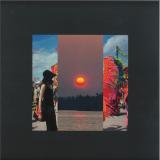
Black 180g vinyl, limited to 200 copies. A decade has passed since the debut album Finnmark left a solid northern Norwegian mark on the rock and hardcore scene, and eight years since Natur pushed both genre boundaries and the listener's limits. Now, the Kirkenes-based band Ondt Blod returns with their third full-length album, Bauta. Here, the band distills the blend of hard-hitting hardcore and strong melodies they've become known for. The opening track "AUX" kicks the door in with a desire to tear down the established order, while songs like "Kembo" and "Flamma" (featuring guest vocals from Ida Maria) reveal a more nostalgic and melodic side of the band. Throughout their career, Ondt Blod has held firmly onto their northern Norwegian identity and Sámi roots. This has taken them from Kirkenes to stages across Europe and Japan, earning them both Norwegian Grammy (Spellemann) nominations and a loyal fanbase. Bauta confirms that the band still has plenty to say.
quête:ac
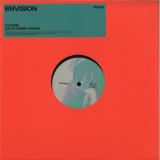
Anywhere, Anyway captures a selection of club tools that Makèz and their close circle have tested, refined and played across dance floors worldwide. Each track carries that familiar equilibrium the duo keeps guard over, a steady pull between raw club energy and moments meant for intimate listening.
Much like their recent album on No Art, the EP took shape while traveling, moving from session to session with artists from different musical worlds. Those encounters left their marks, subtle shifts in rhythm, harmony and texture, shaping the edges of the EP. The Amsterdam duo keeps seeking creative impulses from unexpected angles, letting ideas find them wherever they are. Anywhere, anyway.
- 01: Maanitus &Amp; Tšiižik
- 02: Markka
- 03: Melkutus
- 04: Letška
- 05: Kuuen Parin Hoirola
- 06: Brišatka
- 07: Tšiižik
- 08: Kirkonkellot
- 09: Kirkonkellot Korkea
- 10: Hoirola, 3 Parin
- 11: Lippa
- 12: Kyngäkiža
- 13: Ristakondra
- 14: Vanha Polkka
- 15: Viistoista
- 16: Vanha Valssi
- 17: Kiberä
- 18: Maanitus Kuokan Kanteleella
- 19: Tuuti Lasta Nukkumahe
Vinyl[22,65 €]
Death Is Not The End present a further volume of Arja Kastinen's eerie amalgamations of 110 year old wax cylinders with her own meticulously transcribed takes, this time focussing in on Armas Otto Väisänen's field recordings of kantele player Iivana Mišukka (b. 1861 d.1919).
"Ivana Mišukka (1861–1919) was one of the Karelian kantele players recorded by the folk music researcher Armas Otto Väisänen on wax cylinders in 1916 and 1917. In the early 20th century, the remote areas of Border Karelia were undergoing the final phase of a transformation in musical culture, with the ancient runo song tradition giving way to newer forms of music. This transition is reflected in Mišukka's repertoire and choice of instrument. The ancient small kantele, hollowed out of a single piece of wood, was already rare at the turn of the century. Mišukka's kantele was a new type of instrument with 26 strings, constructed of several parts, but he played it using the traditional plucking technique. Like other Border Karelian kantele players, his repertoire consisted of music rooted in runosong culture, as well as newer dances and songs from the east and west. Most of the recorded material falls into the latter category.
Ivan Bogdanov Mišukka was born out of wedlock in Suursara village, Suistamo, on 1 May 1861. He began playing the kantele at the age of five or six, quickly mastering the instrument. In adulthood, he was considered one of the area's best master players. Mišukka was landless for most of his life and lived in different parts of the Suistamo parish. His first wife, Tekla Markintytär, died in 1897 at the age of 40, and his second wife, Jevdokia Filipintytär Jeminen, died in 1907 at the age of 50. Seven children were born from the first marriage, two of whom died young. The third wife, Maria Ignatintytär Gurnan (Kuurnanen), was a well-known master of lamentations. Together with Maria, Iivana Mišukka worked as a tenant farmer in the village of Suursara. Mišukka suffered from rheumatism, which prevented him from participating in physical work like Maria. This was apparently partly the reason why Iivana Mišukka went to earn extra money by playing the kantele on gig trips. He often had other traditional artists from Suistamo as his travelling companions, such as the runosingers Konstantin Kuokka and Iivana Onoila. Iivana Mišukka died in Leppäsyrjä village, Suistamo, on 18 May 1919 at the age of 58, and his kantele was donated to Teppana Jänis.
Mišukka only used 14 of the 26 strings on his kantele, playing the same tunes either a fourth higher or lower. He tuned his kantele to the major scale using fifths, except for a low seventh scale degree on the upper strings, but not below the fundamental. Since he did not use the seventh note of the scale on the upper strings at all, he could use the major scale both lower and a fourth higher with this tuning. According to Mišukka, the sound of higher, or 'finer', strings is 'more beautiful', while that of lower ones is 'greater'. Among runosingers, the size of the thirds varied, ranging from major to minor to neutral. A similar phenomenon can be observed in kantele tunings, where the third, sixth and seventh scale degrees vary in a comparable way.
During a meeting, Väisänen suggested that Mišukka play the smaller kantele belonging to Konstantin Kuokka. The idea was to bring it closer to the horn to improve the recording quality. However, the kantele was completely out of tune, and now Mišukka tuned it to the Lydian scale (track 18).
Using the old plucking technique, Mišukka placed his right middle finger on the fundamental tone, his right index finger on the second scale degree, his left middle finger on the third scale degree and his left index finger on the fourth scale degree, and his right thumb on the fifth. The thumb also played the notes above the fifth note of the scale. As Mišukka remarked to Väisänen: 'Peigaloll' tuloo enemb ruadoa' (the thumb has to do more work). However, he did not use the seventh note of the scale on the upper strings at all. Below the fundamental note, he played the seventh and sixth notes of the scale with his right middle finger of and the fifth note of the scale with his right ring finger. This fifth scale degree below the fundamental is almost always used as a drone. Sometimes, when the melody required it, Mišukka, like other players, also varied the fingering. He would also occasionally strike the same string with the side of his fingernail after plucking it.
The wax cylinder recordings of Karelian kantele players are kept in the archives of the Finnish Literature Society in Helsinki, Finland. Copies were made of them onto reel-to-reel tapes in both the 1960s and 1980s. The 1960s copies are mono and the 1980s copies are stereo. However, not all kantele recordings from these decades have survived.
The sound of the kantele is difficult to hear in wax cylinder recordings due to its low volume, and it occasionally becomes completely obscured by noise. During the copying process, the cylinder sometimes rotates unevenly, resulting in breaks or jumps in the music. Additionally, the rotation speed of the cylinder in the copies does not correspond to the performance speed of the original music, which alters the pitch. However, since Väisänen's precise notes are available in the archive, it is possible to deduce the melodies, their speed, and the tuning level of the kantele in the recordings. Of the copies of the original recordings from the 1960s and 1980s, I have selected the one that best met the requirements of this publication and adjusted the speed of the recording to align with Väisänen's notes. To enhance the listening experience, I have replayed the songs, which now partly overlap the old recordings on this release."

— Arja Kastinen
- 01: Maanitus &Amp; Tšiižik
- 02: Markka
- 03: Melkutus
- 04: Letška
- 05: Kuuen Parin Hoirola
- 06: Brišatka
- 07: Tšiižik
- 08: Kirkonkellot
- 09: Kirkonkellot Korkea
- 10: Hoirola, 3 Parin
- 11: Lippa
- 12: Kyngäkiža
- 13: Ristakondra
- 14: Vanha Polkka
- 15: Viistoista
- 16: Vanha Valssi
- 17: Kiberä
- 18: Maanitus Kuokan Kanteleella
- 19: Tuuti Lasta Nukkumahe
Tape[16,39 €]
Death Is Not The End present a further volume of Arja Kastinen's eerie amalgamations of 110 year old wax cylinders with her own meticulously transcribed takes, this time focussing in on Armas Otto Väisänen's field recordings of kantele player Iivana Mišukka (b. 1861 d.1919).
"Ivana Mišukka (1861–1919) was one of the Karelian kantele players recorded by the folk music researcher Armas Otto Väisänen on wax cylinders in 1916 and 1917. In the early 20th century, the remote areas of Border Karelia were undergoing the final phase of a transformation in musical culture, with the ancient runo song tradition giving way to newer forms of music. This transition is reflected in Mišukka's repertoire and choice of instrument. The ancient small kantele, hollowed out of a single piece of wood, was already rare at the turn of the century. Mišukka's kantele was a new type of instrument with 26 strings, constructed of several parts, but he played it using the traditional plucking technique. Like other Border Karelian kantele players, his repertoire consisted of music rooted in runosong culture, as well as newer dances and songs from the east and west. Most of the recorded material falls into the latter category.
Ivan Bogdanov Mišukka was born out of wedlock in Suursara village, Suistamo, on 1 May 1861. He began playing the kantele at the age of five or six, quickly mastering the instrument. In adulthood, he was considered one of the area's best master players. Mišukka was landless for most of his life and lived in different parts of the Suistamo parish. His first wife, Tekla Markintytär, died in 1897 at the age of 40, and his second wife, Jevdokia Filipintytär Jeminen, died in 1907 at the age of 50. Seven children were born from the first marriage, two of whom died young. The third wife, Maria Ignatintytär Gurnan (Kuurnanen), was a well-known master of lamentations. Together with Maria, Iivana Mišukka worked as a tenant farmer in the village of Suursara. Mišukka suffered from rheumatism, which prevented him from participating in physical work like Maria. This was apparently partly the reason why Iivana Mišukka went to earn extra money by playing the kantele on gig trips. He often had other traditional artists from Suistamo as his travelling companions, such as the runosingers Konstantin Kuokka and Iivana Onoila. Iivana Mišukka died in Leppäsyrjä village, Suistamo, on 18 May 1919 at the age of 58, and his kantele was donated to Teppana Jänis.
Mišukka only used 14 of the 26 strings on his kantele, playing the same tunes either a fourth higher or lower. He tuned his kantele to the major scale using fifths, except for a low seventh scale degree on the upper strings, but not below the fundamental. Since he did not use the seventh note of the scale on the upper strings at all, he could use the major scale both lower and a fourth higher with this tuning. According to Mišukka, the sound of higher, or 'finer', strings is 'more beautiful', while that of lower ones is 'greater'. Among runosingers, the size of the thirds varied, ranging from major to minor to neutral. A similar phenomenon can be observed in kantele tunings, where the third, sixth and seventh scale degrees vary in a comparable way.
During a meeting, Väisänen suggested that Mišukka play the smaller kantele belonging to Konstantin Kuokka. The idea was to bring it closer to the horn to improve the recording quality. However, the kantele was completely out of tune, and now Mišukka tuned it to the Lydian scale (track 18).
Using the old plucking technique, Mišukka placed his right middle finger on the fundamental tone, his right index finger on the second scale degree, his left middle finger on the third scale degree and his left index finger on the fourth scale degree, and his right thumb on the fifth. The thumb also played the notes above the fifth note of the scale. As Mišukka remarked to Väisänen: 'Peigaloll' tuloo enemb ruadoa' (the thumb has to do more work). However, he did not use the seventh note of the scale on the upper strings at all. Below the fundamental note, he played the seventh and sixth notes of the scale with his right middle finger of and the fifth note of the scale with his right ring finger. This fifth scale degree below the fundamental is almost always used as a drone. Sometimes, when the melody required it, Mišukka, like other players, also varied the fingering. He would also occasionally strike the same string with the side of his fingernail after plucking it.
The wax cylinder recordings of Karelian kantele players are kept in the archives of the Finnish Literature Society in Helsinki, Finland. Copies were made of them onto reel-to-reel tapes in both the 1960s and 1980s. The 1960s copies are mono and the 1980s copies are stereo. However, not all kantele recordings from these decades have survived.
The sound of the kantele is difficult to hear in wax cylinder recordings due to its low volume, and it occasionally becomes completely obscured by noise. During the copying process, the cylinder sometimes rotates unevenly, resulting in breaks or jumps in the music. Additionally, the rotation speed of the cylinder in the copies does not correspond to the performance speed of the original music, which alters the pitch. However, since Väisänen's precise notes are available in the archive, it is possible to deduce the melodies, their speed, and the tuning level of the kantele in the recordings. Of the copies of the original recordings from the 1960s and 1980s, I have selected the one that best met the requirements of this publication and adjusted the speed of the recording to align with Väisänen's notes. To enhance the listening experience, I have replayed the songs, which now partly overlap the old recordings on this release."
— Arja Kastinen
p:m is delighted to welcome Kumarachi to the fold - a Nottingham-based artist with a deep catalogue steadily built over the past 11+ years. For the label’s first 10” vinyl cut, Kumarachi teams up with his old friend, the wonderful Liam Bailey, for some rudeboy pressure on the a side, while flying solo for the b.
Tracklist:
A. On Sight: snappy snares, snarling bass, and shifting percussion meet the dulcet tones of Liam Bailey, who turns in a different kind of original dancehall style vocal that gets people skanking and swaying.
B. Cast No Shadow: a heavy-hitting track of pummelling breaks and beats, heavy bass, dub fx, and synth stabs, reminiscent of Star Wars’ X-wings in space.
In Kumarachi’s own words: “On Sight was just a loop when I sent it to Liam, then arranged and built around his vocals. I played it to a couple of people for feedback and to test out, it luckily found its way to DJ Flight via Sweetpea, so a big thanks to her too. Both myself and Liam felt play:musik is the perfect label for On Sight, with what Flight stands for musically and culturally, there’s a definite alignment within the lyrical content aswell. It’s a perfect fit. Cast No Shadow was written later and specifically for this release to contrast and complement the flip. It actually came together quite quickly - referencing classic combinations, whilst hopefully sounding fresh for 2026.”
- 01: Dune
- 02: Kundela Mawedi
- 03: Paco
- 04: Cameo
- 05: Cacopoulos
- 06: Khettara
- 07: Hell Dorado
- 08: Papambra
- 09: Porpora
Killer Groove Records proudly presents the self-titled debut album by Italian cinematic funk trio Atabasca. A sonic journey where funk, psychedelia and desert groove merge into a timeless narrative suspended between rhythm and vision.
"Atabasca" marks the debut release from the cinematic funk trio, dropping March 27th on limited edition LP, CD digipack and digital formats, the latter featuring an exclusive bonus track. This is a project built on evocative imagery: each song unfolds as an open scene, an emotional landscape where listeners can step inside and write their own ending.
Lap steel, kalimba, percussion and guitars interweave with bass and drums, striking an original balance between tradition and experimentation that evokes unwritten soundtracks for worlds at once distant and familiar. The record navigates between melancholy and irony, tension and release, with a sharp focus on dynamics and sonic narrative.
Deserts, seas, imaginary villages, getaways, pursuits and collective rituals: "Atabasca" emerges as a collection of musical landscapes that unfolds through vivid, evocative imagery.
Jazz-funk, world music, afrobeat, psychedelia and the Italian Golden Age of movie soundtracks merge into a singular emotional geography: warm, analog and deeply human.
The musical journey opens with "Dune", a melancholic statement that leaves room for imagination, before igniting with "Kundela Mawedi" and its cascading lap steel over haunting vocal chants. "Paco" tips its hat to classic westerns, tracing a bandit's trajectory, while "Cameo" drifts back to childhood through minimal rumba and shimmering kalimba. The cinematic imagery continues in "Cacopoulos", a nod to Spaghetti westerns and Eli Wallach, built on raw drum patterns and distorted guitars. Intensity builds in "Khettara", where afrobeat rhythms and Middle Eastern textures intertwine, before "Hell Dorado" tears off in pursuit of the American dream's funk-fueled mirage. "Papambra" weaves hypnotic polyrhythms between kalimba and lap steel, while "Porpora" delivers a sensual, visceral tango of passion and tension. The digital edition closes with "Reprise", a sequel that stretches the album's central theme into an expansive, meditative interpretation.
The tracks were recorded in single takes, capturing the raw energy and natural atmosphere of the performance. Artistic production was handled by the trio alongside Andrea Fabrizii (digger, musician, producer and catalogue curator for CAM Sugar), while Riccardo Ricci mastered the album at Velvet Room Mastering Studio in Brighton.
Like a desert blooming within the evergreen forests of the planet's far north, a unique, alien, disruptive environment. This is the vision behind Atabasca, the project of Luca Mongia (guitars, lap steel, keyboards, vocals), Paolo Mazziotti (bass, keyboards, vocals) and Valerio Pompei (drums, percussion, vocals).
Individually active for over twenty years on both the national and international scenes, the three Italian musicians came together in 2023 to create a project that merges experience, experimentation and creative freedom. Their music is imaginative and at times dreamlike, blending the classic concept of the instrumental trio with the worlds of film scoring and sound design.
Atabasca's sound moves through jazz-funk, world and cinematic territories, weaving together afrobeat, desert and psychedelic influences into a personal and timeless language. Each piece is a scene; each sound, a fragment of a world, a journey between reality and imagination where groove, texture and organic timbre merge into a singular sonic ecosystem: a perpetually shifting balance that generates new inner landscapes.
For fans of Khruangbin, Surprise Chef and instrumental psych-funk!
- Stahlwerk Ruhr + Blocco Schengen
- Planlosneu - Derpolier
- The Eschaton - Plague Pits
- Autoscooter Abfahrt - Kühle Matroasen
- She's Gone - Veinspine
- Die Feuerwehr Kommt Nicht - Age O.p.f
- Mondlandschaft - Bêtes Sauvages
- Stromschlag - Der Fotograf
- Keine Gnade - Pleasue Victim
- Immergleich, Immer Stumm - Ruhr
- El Baile De Las Goticas Feas - The Berlangas
- Plastik Fantastik - Weltklang Feat. Akkumuller
- I Wanna Shit - Nuke Kanata
Schmitz is a cool guy. He dreams of meeting the ruler of the universe. One day, his dream comes true: he meets the electro goddess Irma. The compilation is a kind of audiobook in 13 acts, danceable and cool, fast and loud, an homage to all space cats. The LP comes with a booklet introducing the bands and telling the story.
London Based Deadbeat is a techno label founded in 2000 as an outlet for the more eclectic, risk taking and aggressive elements of the genre. Dedicated to unveiling forward thinking new talent, championing cult underground producers and celebrating established global acts the label has created a loyal fan base and now after more than two decades presents its first vinyl release, a massive six track EP that covers a lot of creative ground and features three artists well known for pushing boundaries while delivering face melting, dancefloor destroying beats.
Sane ( Don't Recordings / Fun In The Murky ) is a Uk based producer and techno DJ who has featured multiple times on the 'Best electronic music on bandcamp' pages. Described there by music journalist Joe Muggs as 'Filthy, dirty, vile and brilliant. His techno will tear the top off your head and make soup with the contents. It screeches, it blurts, it whistles, and it roars. Above all, it crashes and clangs like a dancing mech warrior, crushing all before it. What more do you need to know?'
TSR ( Analog Records / Hörspielmusik ) are a highly regarded creative force of Swedish musical mentalists, a crazed, technologically berserk band of electronic wizards who relentlessly conjure up the most brilliant, silliest, toughest, most dance bootable funky techno on this train of existence. Known for high-energy, raw, and sometimes humorous tracks they have released to high acclaim on many notable labels and played all over the world.
DJ Ze MigL ( Djax-Up-Beats / Minimalistix ) is first and foremost a DJ, but also a producer & a Dude! Creating crazy, funky and sometimes brutal techno mayhem. Residentially from Portugal, he’s been the one of most prolific Portuguese techno producer/ DJ during the last 25 years. Producing and Spinning his own special brand of honkin’ techno, not changing a single cowbell. Never too serious or dark, always with proper party ON!
The record additionally features full sleeve artwork by Ed Twist ( of the influential 'Ugly Funk' label ) and is pressed on yellow vinyl.
- A1: A Perfect Storm
- A2: Etyd
- A3: Against The Dying Of The Light
- A4: For Every Dusk
- A5: Sheet
- A6: Pajarito
- A7: Losing Game (Sick)
- B8: Ay Querida
- B9: U / Rawls Slöja
- B10: Gymnasten
- B11: Just A Rock
- B12: You & We
- B13: Joy (Can’t Help But Sing)
Black Vinyl[26,85 €]
José González has delivered a new album, Against the Dying of the Light, a companion and further meditation on the themes of his critically acclaimed album, Local Valley. Where Local Valley turned inward toward place, language, and personal reflection, this new record widens its gaze, becoming an urgent call to preserve the light of humanity with all its flaws, at a moment when, technology increasingly shapes how we think, feel, and relate to one another.
While José has always embraced technological advancement, he questions the assumption that every new possibility must be pursued to its maximum potential, especially when progress comes at the expense of human flourishing, attention, and empathy.
Keeping in the tradition of folk music as protest, José’s new single — sharing its title with the forthcoming album — urges listeners to resist systems that dehumanize and divide: “Disconnect from every algorithm, every perverse incentive that drags you down. Let’s rebel against the replicators, against the dying of the light. Kill the codes that feed the hate, keep the codes that make you thrive, celebrate the **king fact that we’re alive.”
Across the album, González works within a deliberately minimal framework, pushing his familiar palette to new heights through subtle variation, restraint, and detail. Each song unfolds with its own distinct character, proving how much emotional and musical range can be achieved within self - imposed limitations. Written in English, Swedish, and Spanish, the record reflects his Swedish - Argentine roots and frames its humanist message as a global one rather than a purely personal or political statement.
José González is one of the most quietly influential artists of our generation. The Swedish - Argentine artist has built a singular musical world from hypnotic, minimal guitar work and his unmistakably gentle voice — a sound that has become deeply personal to millions of listeners worldwide. With billions of streams across platforms and hundreds of thousands of physical records sold, González’s songs often act as emotional landmarks. Ask almost anyone, and they can name at least one of his tracks tied to a defining moment in their lives.
- A1: Everybody Ready?!
- A2: Earn The Crown
- A3: A Song For The Outcast
- A4: Minus Celsius
- A5: Pigs For Swine
- A6: One Sound
- A7: Say When
- A8: Year By Year
- A9: Friends
- A10: Be Myself And I
- A11: You Tell Me You Love Me You Lie
Backyard Babies was formed in 1987 in Nässjö and can by rights be called Sweden’s most influential glam punk act. Between 1994 and 2019 they released eight studio albums of which Stockholm Syndrome is their fifth. Here we have another collection of bangers brought to you by the babies with reckless abandon. This time they invited a whole slew of guest musicians such as the Ramones, Danko Jones, The Cardigans, Turbonegro, and The Hellacopters, elevating the whole affair to another level with no signs of stopping. This is the first time the album is available again on vinyl since ten years and features the songs "Minus Celsius", "A Song for the Outcast", and "Everybody Ready?!". Stockholm Syndrome is available as a limited edition of 1000 individually numbered copies on crystal clear & black marbled vinyl and includes a 4-page booklet with lyrics.
- 01: De Alegria Raiou O Dia
- 02: Tudo Era Lindo
- 03: A Cruz
- 04: Hello Mr. Wonder
- 05: Bem Querer
- 06: Pra Que Vou Recordar O Que Chorei
- 07: Zé Marmita
- 08: Bichos E Crianças
- 09: O Metr?
Carlos Dafé (born October 25, 1947) is a singer and songwriter from Rio de Janeiro, recognised as one of the iconic voices of the Brazilian samba-soul era. Born into a family of musicians and trained at the conservatory, he rose to prominence in the 1970s alongside Tim Maia, Cassiano, and Hyldon, shaping the sound of Rio Noir with his warm baritone voice and soulful phrasing. His 1977 album, Pra Que Vou Recordar, became a cult classic among collectors and DJs worldwide, earning him the title of "Prince of Brazilian Soul." Still active today, Carlos Dafé remains an essential reference for artists exploring the boundaries between samba, soul, and MPB (Brazilian Popular Music). Released in 1977, Pra Que Vou Recordar reveals Carlos Dafé at the peak of his art, blending samba-soul, MPB, and the warm groove of the 1970s Rio de Janeiro scene. Surrounded by some of the city's finest musicians, Dafé showcases his baritone voice in deeply melodic arrangements and a series of songs that have become fan favourites. An album imbued with soul and elegance. The sound of BrazilianBlack music at its most sincere and timeless.
- A1: You Got The Love - The Retrosettes Sister Band
- A2: Onward - Mark Kozelek
- A3: Third And Seneca - Sun Kil Moon
- A4: Des Pas Sur La Neige - Préludes (Book 1) - Claude Debussy
- B1: Cavatina "Figlia, Ti Scuoti" From Virginia (Act I) - Saverio Mercadante
- B2: À Ma Manière - Maria Letizia Gorga
- B3: Reality - The Retrosettes Sister Band
- B4: Can't Rely On You - Paloma Faith
- C1: Ceiling Gazing - Mark Kozelek
- C2: Dirty Hair - David Byrne
- C3: Berceuse - Igor Stravinsky
- D1: Just (After Song Of Songs) - David Lang / Trio Medieval
- D2: Simple Song #3 - David Lang / Sumi Jo (Soprano) And Viktoria Mullova (Violin Solo)
- D3: Mick's Dream - David Lang
- D4: Wood Symphony - David Lang
Youth (original Italian title La Giovinezza) is a 2015 comedy-drama film written and directed by Paolo Sorrentino, starring Michael Caine and Harvey Keitel. Set in a luxurious Swiss Alps hotel, the story follows two lifelong friends: Fred Ballinger, a retired composer who has turned his back on performance, and Mick Boyle, an aging film director determined to finish what he hopes will be his final screenplay. While navigating the quirks of hotel life and revisiting the milestones of their own pasts, the film explores themes of nostalgia, personal legacy, affection, and mortality.
The soundtrack of Youth is a blend of original score by David Lang, and a selection of other carefully chosen pieces, ranging from classical works to contemporary songs. The centerpiece, “Simple Song #3,” performed by soprano Sumi Jo, captures the film’s themes of beauty, loss, and reflection. Alongside Lang’s compositions, the music features “Can’t Rely on You” by Paloma Faith, the classical piece Debussy’s “Préludes: Des pas sur la neige”, and “Third and Seneca” by Sun Kil Moon, amongst others, creating a rich, genre-spanning soundtrack that blends contemporary, classical, and indie influences.
The soundtrack of Youth is available as a limited edition on transparent vinyl and includes a 4-page booklet with liner notes.
- 1: The Awakening - Mode For D.d. (4.47)
- 2: Doug Carn - Higher Ground (5.06)
- 3: Calvin Keys - Aunt Lovey (7.22)
- 4: Roland Haynes - Eglise (3.06)
- 5: The Awakening - Slinky (6.0)
- 6: Walter Bishop Jr. - Coral Keys (5.33)
- 7: Rudolph Johnson - Diswa (6.34)
- 8: Henry Franklin - Blue Lights (6.57)
- 9: Kellee Patterson - Maiden Voyage (5.17)
- 10: Chester Thompson - Power House (6.33)
- 11: The Awakening - March On (5.31)
- 12: Walter Bishop Jr. - Soul Village (6.16)
- 13: Rudolph Johnson - The Highest Pleasure (7.36)
This album brings together some of the finest music ever released on Black Jazz Records which in its short four-year history, between 1971 and 1975, released over 20 superlative albums which all successfully blending spiritual jazz, funk and soul jazz of the highest calibre. Similar to other independent jazz labels at the time, including Strata-East Records and Tribe Records, Black Jazz focussed on a number of key artists, most of whom first established their career during this period, and all of whom are featured here. Featuring The Awakening, Doug Carn, Walter Bishop, Chester Thompson, Kellee Patterson and more. Black Jazz Records was founded in Oakland, California, by pianist Gene Russell and percussionist Dick Schory.
The label released twenty albums between 1971 and 1975. Artists who recorded for Black Jazz Records included Cleveland Eaton (bassist for Ramsey Lewis), keyboardists Doug Carn and Chester Thompson, vocalist Kellee Patterson, saxophonist Rudolph Johnson, bassist Henry Franklin, and spiritual fusion group The Awakening. The label was distributed and financed by Ovation Records, based in Chicago. Schory founded Ovation in 1969, shortly after leaving RCA. Schory was a Grammy-nominated percussionist who was also known for his development of the stereo recording techniques including Dynagroove and RCA Victor’s Stereo Action. Schory also pioneered quadrophonic sound, and a number of Black Jazz Records were in quadrophonic and other formats such as ¼” tape and 8-track.
Black Jazz launched in 1971 with Gene Russell’s ‘New Direction’. Russell was the creative force behind the label, acting as producer, engineer and A&R and focussed on developing new solo artists. The most successful of these was Doug Carn, who released four albums featuring his wife, Jean Carn, as vocalist. She later changed her name to Jean Carne and became a successful soul singer signed to Gamble and Huff’s Philadelphia International empire.
- A1: Intro 6.1
- A2: Phase 2
- A3: Trns
- B1: Blurred
- B2: Aquarius
- B3: Durability
- C1: Rain 1
- C2: Syndrome
- D1: Fractal
- D2: Defect
Following two 12-inch singles released via the self-run label Plastic & Sounds, which launched unexpectedly this past July, the culmination of their work to date—the album Silent Way, comprising ten tracks—will be released on 27th March as a coloured vinyl 2LP (gatefold sleeve/33RPM/limited press) and digitally.
Mastering and record cutting by Rashad Becker in Berlin. The artwork centres on photographer Yusuke Yamatani's work, with Satoshi Suzuki—who handles all P&S releases—constructing the overall aesthetic.
Last October, they appeared on Resident Advisor's popular series “RA Podcast”, with audio from their world premiere live performance in April 2023 released. They held the “Plastic & Sounds” label launch party at Shibuya. In January 2026, they performed a live set of their acclaimed album “Haet” at the venue's New Year's party.
This release comes amidst growing international acclaim, with their previous album ‘Discipline’ featured in Pitchfork's ‘The 30 Best Electronic Albums of 2025’, and one of their signature tracks, ‘Butterfly Effect’, selected for RA (Resident Advisor)'s ‘The Best Electronic Tracks of 2000-25’.
Melchior Productions Ltd. returns to his own My King Is Light imprint with a brand-new 12″—this time alongside Romanian-Russian pianist-producer Mischa Blanos, one third of the acclaimed Amorf trio, Jupiter Tracks pt. 1 is a beautiful record, deep and emotional, as if beamed in from another world—yes, Jupiter.
Across “Push,” “First Eva,” and “Spirit Of 23,” the pair interlace meticulous programming and crystalline sound design into an ever-shifting strain of minimal house. Dispensing with overt drama, the EP zooms in on nuance: textures flicker between digital shimmer and tactile grit, while Melchior’s trademark restraint leaves ample space for Blanos’s melodic Midas touch to radiate quietly.
Yellow Vinyl
Blue Lake reveals his most ambitious album yet, which finds its visionary creator Jason Dungan harnessing the collective alchemy of his band, with ten spirited tracks that resonate with a powerful directness, evoking an ecological connection to the wider world.
The solo project (Blue Lake), now on its fifth album, found its name and inspiration via Don Cherry's 1974 live album, sparking a creative epiphany in Dungan, who set off on a path into his own untapped sonic world, guided by what he cited as the emotional potential found within non-lyrical composition. With a newly inspired ethos aimed toward creating direct and simple instrumental music imbued with a deep sense of feeling, Jason began combining an array of musical elements that gave rise to his highly revered album 'Sun Arcs' (2023), with its "ornate, zither-led lattices" (Pitchfork, Best New Music). Conceived in the blissful isolation of a Swedish cabin set in the woods, this was music that soundtracked spring in full bloom. Then, in contrast to the solitary approach of 'Sun Arcs', the highly lauded mini-album 'Weft' (2025) began to set the tone for a more band-oriented approach to delivering the Blue Lake sound. Jason had by this time experienced a special collective energy with his band during a swathe of live performances, which he then sought to harness and distill on 'The Animal', leading him to take the project into a traditional recording studio (The Village) and its limitless potential along with his gifted cohorts.
'The Animal' at its core vividly celebrates human collaboration and is deeply rooted in a sense of community and non-hierarchical connectivity. The group's creative alchemy transcends outwards and beyond the musicians performing together, to summon an inclusive, existential and ecological connection to the wider world and its inhabited spaces. The album contemplates the idea of the human as an animal as Dungan explains: "I'm quite fascinated in thinking about humans more as part of the animal environment and not as something that's so separated into a "human" realm, or sitting on top of a hierarchical pyramid. So the Animal is also me, or us - that we are just living, existing, in the same way as a piece of moss or a sparrow or a cow.
'The Animal' is a form of musical metamorphosis, still acoustic, yet more amplified, elevating it to new dimensions. The Blue Lake project takes on a new lease of life to encompass collaboration with Jason Dungan bound in a universal connectivity, resulting in his most ambitious album to date. A harmonious rejoicing that cements his reputation as a transformative presence in contemporary music.
- A1: Intro
- A2: Off The Turnpike
- A3: Tripleback Tuck
- A4: New Dance Show (Feat. Boldy James)
- B1: Youngblood Priest
- B2: Just The Three Of Us
- B3: Large Step! (Feat. Blu)
- B4: Perceived Merits
- C1: Calculated Risks (Feat. Theravada)
- C2: Coffee Into Coins (Feat. Dreamcastmoe)
- C3: Thx-1138 (Feat. Genevieve Artadi)
- C4: Flick Of The Wrist (Feat. Grip)
- D1: The Amazing Randi (Feat. Kool Keith & Fatboi Sharif)
- D2: This Or That
- D3: Tell Me Something Different
Real Bad Man and YUNGMORPHEUS are excited to announce their new album The Chalice & The Blade is out now. The album features Boldy James, Kool Keith, Grip, Blu, Fatboi Sharif, and more.
YUNGMORPHEUS is a highly innovative rapper that consistently endeavors to redefine the boundaries of originality and elevate the art of lyricism. Earlier this year, YUNGMORPHEUS dropped his critically acclaimed album “From Whence It Came” which received praise from The FADER, NPR, SPIN, and was hailed by QUIP Mag as “Everything you need from a hip-hop record.”
Since 2020, Prolific LA-based producer and designer Adam Weissman (Real Bad Man) has been on a sensational run releasing albums with Boldy James, Smoke DZA, and Pink Siifu. The Chalice & The Blade will be Real Bad Man’s third album of the year following his remarkable collaborations with Blu (“Bad News”) and Kool Keith (“Serpent”).
The Chalice & The Blade showcases a unique ambiance marked by a stoney and atmospheric quality, interspersed with elements of funk. Real Bad Man explains the album making process, "I always tailor the music to the artist I’m collaborating with. I sent Morpheus a bunch of beats that he’d sound good over and once he started picking them, that set the path. We’d record and I’d make more beats, and move stuff around, get rid of some songs and record new ones. It was a good process. I like being able to adjust as we go, I think that makes for a good album. We left some songs on the cutting room floor. Cream rises."
YUNGMORPHEUS discussing the new album, “‘The Chalice & The Blade’ is an album primarily rooted in dichotomies; contemplation of action vs action itself, inner locus vs outer locus, pursuit for self vs pursuit for others. Honesty is always the centerpiece. Play if you want cause I’m not!”
On The Chalice & The Blade, the seamless synergy between Real Bad Man and YUNGMORPHEUS takes center stage, showcasing an extraordinary chemistry that elevates every track to new heights of musical innovation.
long content, you may need to expand row to see all... Mutant freut sich, in Zusammenarbeit mit Milan Records das offizielle Soundtrack-Album zu Edgar Wrights Sci-Fi-Action-Thriller The Running Man zu veröffentlichen.Das Album enthält die Original-Filmmusik des Oscar-Preisträgers Steven Price (Gravity, Last Night in Soho, Baby Driver). The Running Man, bei dem Wright als Co-Autor und Regisseur fungierte, handelt von einem Vater aus der Arbeiterklasse, der alles daran setzt, seine kranke Tochter zu retten. Er nimmt an einer tödlichen TV-Gameshow teil, in der die Kandidaten 30 Tage lang überleben müssen, während sie von Profikillern gejagt werden. Durch seinen Instinkt, seinen Widerstand und seine Entschlossenheit wird er zum unerwarteten Publikumsliebling – und zu einer Bedrohung für das gesamte System.Wir sind große Fans von Edgar und Steven und freuen uns sehr, dass sie uns erneut ein fantastisches Kinoerlebnis bescheren. Steven Prices Score für The Running Man ist eine schillernde Mischung aus treibenden Beats, brodelnden Synthesizern und traditionellen orchestralen Elementen, die vor Einfallsreichtum und Stil nur so sprühen. Das Hauptthema besitzt eine elegante, zeitlose Qualität mit üppigen, beruhigenden Streichern, die eine hypnotische Melodie weben. Im Gegensatz dazu stehen die Titel der Gameshow-Sequenzen, die wirklich unterhaltsam, bombastisch und im Retro-Stil gehalten sind – was wiederum einen Kontrast zu den düstereren, dystopischen Stücken bildet, die im gesamten Werk verteilt sind. Im Film wirkt die Musik wie ein weiterer Charakter, der die Geschichte vorantreibt. Als eigenständiges Hörerlebnis ist sie fesselnd, dynamisch, macht großen Spaß und fängt die vielen Facetten und Stimmungen des Films perfekt ein.Die Vinyl-Edition mit dem Artwork von Luke Preece ist auf zwei farbige 140g-LPs gepresst. Sie enthält ein „The Truth“-Zine als Replika aus dem Film mit exklusiven Liner Notes von Edgar Wright und Komponist Steven Price.Ebenfalls auf CD erhältlich.
Following the success of the first vinyl release from the Moroccan label Sotor Records, featuring Zadig, Perc & Oscar Mulero, Sotor writes a new chapter in its discography with its second vinyl release. Meaning "lines" in Arabic, Sotor reflects its commitment to championing the diversity of the techno genre.
The label's ninth release, "Processing Range," is a musical ode to the lines of space-time. With four original tracks from the Portuguese producer, Sotor invites you on a techno journey between mental tension and physical release.
The album opens with DJ Dextro's "Controle," which delivers a massive, sharp rhythm, dystopian synths, and a true immersion into a techno black hole.
The journey continues with the second track on side A. This time, DJ Dextro unleashes an uncompromising version of "Blue Dot," achieving a precarious balance while showcasing his signature percussive style. The Portuguese artist delivers the perfect track to unleash a crowd.
On the B-side, DJ Dextro offers us the eponymous track, "Processing Range." We're quickly drawn into an allegory of this decadent modern world where humanity is rushing towards its own destruction. Expect dusty techno rhythms and that sumptuous synth that sounds like the end of times. Probably a future classic!
And you'll finish on a gentler but no less dynamic note from DJ Dextro. He concludes the EP with "31 Atlas," which will leave you weightless with its galloping bassline and abyssal synth.
Complimenting his singular debut LP, 2025’s ‘Light Months Will Fly Over Us’, singer-songwriter and producer Addy Weitzman sees his thoughtful artrock and new wave aesthetic expanded by The Time & Space Machine for a limited three-track 12".
The long-running alias of British DJ, archivist and acid pioneer Richard Norris, this trio of remixes from The Time & Space Machine’s central processing unit finds Norris in a jubilant raving mode, his trademark psychedelia contributing to Slacker at its best and baggiest. The initial mix captures Weitzman’s songwriting in full, including his portentous vocal hook – “No man is a prophet in his own land” – a proverb first found in the gospels, blessed with the innovative Norris’s application of hypnotic groove, fat low-end and a ton of percussion.
The B-side sees Norris stripping things back in two directions: the Shango Dub draws focus on the higher vibrations found in the track’s beautifully intertwined percussive and synth elements, while the Riddim Mix reduces the frequencies further still, with a phased, slightly fried drum workout primed to spin heads as the night gets deeper and darker.
Reissue of a lost hit by the British composer Kevan Frost, now championed and given a brand-new Dub Mix by Mark Grusane. Up for pre-order now and due late-March on our RSS series!
Kevan Frost grew up in Jos, Nigeria where he became a self-taught musician and developed a deep understanding of rhythm and melody. In the 90's, Frost was a session musician for many studios in London, one of these was unable to pay him so they gave him a few free days in the studio and the result was "Give It Up" as he explains:
"I went in and recorded all the music in a day, and the vocals and mix on day two. This was the days of only having 24 tracks available on tape so I programmed the drums, bass and keyboard parts on C-Lab which was only available on the Atari computer and the samples I made on my Akai S-1000 sampler. Full of floppy disks I went in early on day one and printed all of this on tape. I then recorded the guitar parts. Day two was me layering the lead vocals and Backing vocal parts as quick as I could before starting to mix."
However, the track fell into obscurity with no major label backing or marketing budget. A friend of Mark Grusane’s came across it in Brooklyn at the African Record Centre and it eventually ended up in Mark's hands and from there he edited the original track to a more stripped-back dub mix and began playing it out to great effect on dancefloors.
After a bit of digging, we tracked down Kevan and a fully licensed reissue is due on Rush Hour in late March 2026, including a brand new ‘Dub Mix’ from Mark Grusane.
- A1: Think
- A2: Tropea
- A3: The Call
- A4: Ruby
- A5: Take Me To The River
- A6: Aliaa
- B1: Picture You
- B2: Think (Lido Pimienta Remix)
- B3: Think (Boom Bip Remix)
- B4: Think (Actress Remix)
Kaleida are Christina Wood (vocals) Cicely Goulder (keys, production). Their demos of Think and Tropea racked up over a million plays on Soundcloud and YouTube between them in early 2014. The Knife’s mixing engineer, Christoph Berg, has fine tuned the demo versions of Tropea and Aliaa for their debut with four additional tracks including a cover of Al Green’s Take Me To The River, delivered as android soul.
- 1: Aeva
- 2: Daemon
- 3: Archaeans
- 4: Aennihilator
- 5: Asaese
Debut solo album from leader of legendary psych band Föllakzoid, Available on white color vinyl! RIYL: Föllakzoid, Beatrice Dillon, Huerco S., Arca, Amnesia Scanner, SOPHIE, Kaitlyn Aurelia Smith. Musician and filmmaker Domingæ is probably best known as the founder of experimental psych band Föllakzoid. Written whilst stranded in Mexico and Tokyo on her way to a world tour with Föllakzoid, her new debut solo album Æ has taken the decompositional system she devised for the band and added the depth of inner exploration and a symbiotic relationship with musical craft. The resulting sound is as groovy and hypnotic as the best Föllakzoid tracks but with a seductive and darkening electronic texture. She has become a channel in which the shadows inhabit. Domingæ's sounds and formats are articulated via depuration, expanding in time and space via the subtraction of shifting elements. The process of unlearning and uninstalling previously established creative softwares in order to achieve dissolution has always been a central focus in her creative pursuit. Æ is a result of said experimentation, the dissolution of preconceived notions to create a minimal sound yet rich in textures.
- 01: Ces Gens La
- 02: Aujourd&Apos;Hui C&Apos;Est La Fête Chez L&Apos;Apprenti Sorcier
- 03: Bivouac (1Ère Partie)
- 04: L&Apos;Espionne Lesbienne
- 05: Bivouac (Final)
- 06: De Temps En Temps
- 07: La Route Aux Cyprès
- 08: Le Cimetière Des Arlequins
Ange (lit. 'Angel') is a French progressive rock band formed in September 1969 by the Décamps brothers, Francis (keyboards) and Christian (vocals, accordion, acoustic guitar and keyboards).
Since its inception the band's music has been inspired by medieval texts, fantasy and the music of Procol Harum and King Crimson. Their music was quite theatrical and poetic.
- 01: Bêle, Bêle Petite Chèvre
- 02: Sur La Trace Des Fées
- 03: Le Nain De Stanislas
- 04: Jour Après Jour
- 05: Ode A Émile
- 06: Ego Et Deus
- 07: J&Apos;Irai Dormir Plus Loin Que Ton Sommeil
- 08: Aurélia
- 09: Les Noces
- 10: Le Marchand De Planètes
Ange (lit. 'Angel') is a French progressive rock band formed in September 1969 by the Décamps brothers, Francis (keyboards) and Christian (vocals, accordion, acoustic guitar and keyboards).
Since its inception the band's music has been inspired by medieval texts, fantasy and the music of Procol Harum and King Crimson. Their music was quite theatrical and poetic.
- 1: Dreams
- 2: Falling
- 3: Johanna’s Blues
- 4: Feel Inside
- 5: Only Love Is Real
- 6: Things
Tour-Maubourg returns with a new 6-track EP, Dreams, further cementing his place as a key figure in today’s electronic music scene. Known for blending soulful house with rich jazz influences, the French-Belgian producer showcases both his DJ sensibility and refined production skills on this long-awaited release for French deep house label Noire & Blanche.
Nearly four years after Floating on Silence - his acclaimed EP for the label that quickly became a staple in DJs’ sets and underground all-night club sessions - Dreams follows the same inspired path while raising the bar even higher. Joined by a carefully selected group of collaborators, including American producer Kareem Ali (praised by Rolling Stone, Pitchfork, and Boiler Room), pop/R&B soul singer Nic Hanson, and Lithuanian producer and musician Cyan Lu, Tour-Maubourg blurs the lines between jazz and house. The result is a deeply musical, immersive EP that reinforces a sound signature now unmistakably his own, designed for both intimate listening and late-night dancefloors.
crédits
Record 1 of the Cartulis Music 15th Anniversary compilation, marking fifteen years of
independent activity across club culture, events, and releases.
Cartulis 15th Anniversary Compilation — 15 years of rhythm, risk, and reverie. Still
dancing, always forward.
Mastered by Alberto Pretto
Artwork by Samantha Millows
Berlin Based DJ & Producer Johannes Klingebiel returns to Claptrap with “Dolce” a four-track EP served sweet, rich, and ready for peak-time indulgence.
Three original cuts and a heavyweight remix combine for a release that’s equal parts playful and potent. Consider this your sugar rush warning.
The title track, “Dolce,” is a warm and irresistible disco-house groover. Creamy acoustic drums lay the foundation while spicy xylophones and syrupy flute lines weave through the mix, striking a perfect balance between sophistication and pure dancefloor pleasure. It’s smooth, infectious, and built to move bodies.
Next up, “Follow The Line” blends shuffled house rhythms with 303 basslines and grainy vocal stabs. On paper, it’s an unlikely combination, on the floor, it locks tight. The result is hypnotic, driving, and effortlessly smooth.
On the flip, “Pink Forest” ventures into more mysterious territory. Built around an elusive, shifting time signature (one that even jazz-trained drummer Johannes struggles to explain), the track somehow feels both unpredictable and deeply groovy. It bends perception without losing momentum, a heady but danceable excursion into the unknown.
Closing the EP, Sun Damage delivers a remix of “Follow The Line” that both sharpens and distorts the original’s trajectory. Chunkier, weightier, and slightly off-kilter, this rework injects a tougher edge while maintaining the track’s hypnotic core, primed for late-night floors and heavy systems.
“Dolce” is indulgent yet refined, a release that balances musicality with movement, sweetness with punch.
Consume responsibly.
- A1: Dance... (4:47)
- A2: Beat Up Chanel$ (3:18)
- A3: Cannibalism! (2:47)
- A4: Old Technology (2:39)
- A5: Crank (2:55)
- A6: Gas Station (3:38)
- A7: Yes Goddd (2:39)
- B1: Unknown Loverz (3:19)
- B2: Old Fling$ (3:37)
- B3: I'm Actually Kinda Famous (2:36)
- B4: $T. Loser (3:25)
- B5: What Is It Like, To Be Liked? (2:18)
- B6: *Prayer* (0:37)
- B7: Brittany Murphy. (3:44)
Liva K and OVEOUS unite for transcendent new single, ‘Blessings’, on Crosstown Rebels. Out on 27th March 2026, the Greek producer and NYC-based artist deliver a hypnotic journey of spiritual rhythm and soulful energy.
A groove-driven journey arrives on Crosstown Rebels on 27th March, with Greek DJ/producer Liva K and New York DJ/producer and vocalist OVEOUS guiding the way. Their label debut, ‘Blessings’, emerges as a meeting of instinct and intention. Crafted from Liva K’s fusion of sounds and textures, the track flows with captivating suspense, while OVEOUS’ voice carries a magnetic, ritualistic weight. The result is a record that exists in both body and mind, designed to move crowds while resonating on a deeper, spiritual plane.
Liva K has quietly carved his own path since emerging onto the international scene, weaving melodic house and techno, and Afro-infused rhythms into sets and productions that pulse with movement and depth. From his debut album ‘1994’ to recent material on Defected, Black Book Records, and When Stars Align, he balances studio craftsmanship with spontaneity while creating moments across venues from Hï Ibiza to Miami’s Factory Town. Meanwhile, OVEOUS brings his HYPER SOUL and Hyper Ancestral sound to every stage and recording, merging house, afro-soul, and ritualistic energy. As a DJ, producer, and poet, his voice and presence cut through tracks with spiritual weight, turning grooves into experiences that are simultaneously sensual, reflective, and kinetic. providing moments that resonate long after the lights come up.
Riva Starr returns to Rekids with the ‘Shine A Light’ EP
The Snatch! Records boss follows up 2022’s appearance on the label with Mark Broom as Star B.
Italian producer and DJ Riva Starr returns to Rekids with the ‘Shine A Light’ EP, arriving 27th March 2026. It marks his solo debut for Radio Slave’s flagship label, succeeding his ‘Love Will Remain’ EP together with Mark Broom as Star B in 2022. Active for more than two decades, Starr has been a consistent force within House music, known for building infectious loops, weighty basslines, and hook-led vocals into timeless club records. His catalogue spans his own Snatch! Records alongside labels such as Hot Creations, Cajual, Crosstown Rebels, and Factory 93, with releases regularly topping digital charts.
Riva Starr’s ‘Shine A Light’ EP starts with 'Can't Stop The Feeling’, setting the tone with a bold, elastic House groove, driven by funky bass, smart filter work, and diva-style vocal stabs designed to lift the room. ‘Shine A Light (On Me)’ follows with even greater impact, pairing wall-rattling drums with belting vocals that bring gospel intensity to a hands-in-the-air anthem. ‘Tryin’’ digs deeper, keeping the pressure on with a sleazier bassline underpinning male vocal cries and smooth choral touches built for peak-time reactions. Closing things out, ‘Can’t Stop The Feeling (Beat-A-Pella)’ strips the groove back, rounding off a high-impact, emotionally charged EP of modern house craftsmanship.
Roberto Zanetti, better known as Savage or Robyx, is without a doubt a fully realized artist. When he stepped into the world of dance electronics in 1983, success came instantly. Not only across Italy, but far beyond its borders. Alongside his own chart-defining run as Savage, Zanetti was simultaneously shaping the scene from behind the desk, developing talent and refining a signature sound that would define an era. By the late ’80s, Robyx was already an established powerhouse producer. Around that time, he wrote three tunes for Maurizio Felici, performing under the alias Wilson Ferguson. These tracks carried all the hallmarks of Zanetti’s late-’80s aesthetic: lush melodies, smooth, flowing arrangements and high-energy grooves built for the dancefloor. In Europe, where house music was rapidly taking over, this sound faced tougher competition, but in Japan, where Eurobeat was exploding into the mainstream, these productions were untouchable. Felici’s rich, throaty vocal delivery gave the tracks an unmistakable emotional weight and identity.
Responding to long-standing requests from fans, Vintage Pleasure Boutique now revisits the most melancholic and emotionally charged of these three recordings: “I’m Singing Again”, a bittersweet tale of lost love told through the language of Italo disco. It’s a perfect fusion of Savage’s late-’80s sonic elegance and a truly distinctive vocal performance.
For this new release, the story is pushed one step further with a fresh remix, slightly faster in BPM and clearly nodding to Robyx’s classic Eurobeat instincts, a version built to move bodies while keeping the original’s emotional core intact.
- Spacetime
- Phase
- Composer
- Earthling
- Next 2 Me
- Rendezvous
- Future See Millenium
- Ghost Train
- Smoke Machine
- Holding U Closer
- How Did I Know
- Over End
- Only An Emotion
- Tenzillionlightyears
- Chasing Storms
- Tsechu
- A Thousand Stars Breathing
- Phoenix
- Forever
- Tangerine
- Arp80
- Crushed
- Almost Had It All
- Time Travel
Logistics makes a highly anticipated return after a three-year hiatus, with a whopping 24-track album.
Released across four 12 inch records, housed in spined sleeves, and presented in a premium two-piece lift-off box with scratch resistant matt laminate, matt varnish, and with fully printed packaging throughout. It is a beautiful presentation of this new LP from a Hospital Records legend.
Dropping almost out of the blue, the current reception from fans, artists & industry heads off the back of the 'ambush' announcement has been incredible. The album campaign is illusive, but rewarding to fans who have been waiting so long for brand new music from Logistics, they've now got 24 brand new tracks to get stuck into!
- 1: Brand New Heartache
- 2: Long Ride
- 3: The Lie
- 4: Barroom Feather (Radio Edit)
- 5: Blind
- 6: Nothing New
- 7: One To One Another
- 8: Always Almost
- 9: Barroom Feather
Good As True (2026), the 12th studio album from Yonder Mountain String Band, leans into a warm, expressive sound — bluegrass shaped with an indie edge, rock undertones, and a hint of country. Recorded live in the studio, its eight original tracks trace romantic, personal, and societal relationships and the work it takes to stay connected. The lead single “Brand New Heartache” pairs rock-driven verses with a bluegrass-lifted chorus as it follows the fallout of a breakup and the uneasy hope of starting again, while “Blind” opens with a striking instrumental riff that lingers long after the song ends, while its lyrics confront regret, mental health struggles, and the pull to become something better. “Long Ride” delivers a sharp, sarcastic look at life in a touring band; “Nothing New” and “The Lie” confront political rigidity and division; “One to One Another” and “Always Almost” pull toward quieter emotional corners; and “Barroom Feather” drifts into indie-folk terrain with one of the album’s most atmospheric jams. Across Good As True, Yonder moves between high-tempo runs, layered harmonies, and moments that breathe — a reminder that nearly three decades in, they’re still charting new ground.
- 1: Missionary Of Mercy
- 2: Puppet Regime
- 3: Canary
- 4: Blaze Of Obscurity
- 5: Retaliate!
- 6: Hypochondriac
- 7: Enemy Within
- 8: The Brotherhood
Pariah’s cult album re-issued! “Blaze of Obscurity” brings you pure Thrash Metal fury! Satan changed their name to Pariah in 1988-1989. There’s Heavy Metal, Power Metal, Thrash Metal, Death Metal, the list seems almost endless. Sub-genres are important in metal and bands are quickly classified and labeled. Pariah (the last re-incarnation of Satan) is one of few bands that are difficult if not impossible to classify. Is it Heavy metal? NWOBHM? Thrash Metal? Pariah did not make it easy to describe their sound. It might be too sophisticated to simply label it Heavy Metal, which in its infancy was a rather simple affair.
They don’t sound like any Metal band out there, perhaps discounting some of the more aggressive and technical ones, and then the signature NWOBHM sound is added. The guitar playing by Russ Tippins and Steve Ramsey is undeniably what defines Pariah as well as Satan in the past. Undeniably, Satan has gone a long way; from humble NWOBHM beginnings, to Experimental/Melodic Mettal (in Blind Fury) and something that could be described as a NWOBHM/Thrash Metal hybrid (“The Kindred”). It’s as if they’ve been experimenting trying to find their identity, and theyfinally found it. Stylistically, “Blaze of Obscurity” could be seen a step back to “Suspended Sentence”, but this time around they got everything right, down to the last note. Those who have heard Satan know what to expect: great guitar playing.
And sure enough, “Blaze of Obscurity” is a demonstration of guitar mastery and is overall a very guitar-driven album, with plenty of mind-boggling riffs and solos are all over the place, but more importantly, it’s a demonstration of some amazing songwriting as well. This is easily Pariah/Satan’s creative peak and one of the most consistent albums I’ve ever heard, featuring eight great and conceptually perfect songs with lyrics that come across as sophisticated and thought-provoking. It is not fair to put the entire spotlight on Tippins and Ramsey though since the drumming and bass work from Sean Taylor and Graham English really shines. The rhythm is fast and tight, keeping it focused, aggressive and intense till the end. Vocalist Michael Jackson (yes, that’s his name) has to be commended too as this is easily his careers best performance.
The verdict: “Blaze of Obscurity”: the level of musical genius expressed here, along with near flawless songwriting, is more than enough to skyrocket it to heights reserved only for classics. Probably not your choice for some light listening those quiet Sunday evenings, but those who take a more serious, intellectual approach when selecting their music will find very much to appreciate here.
Tracklisting
- 1: Taste For Damnation
- 2: Italian Dark Sound
- 3: Slaughter
- 4: M.i.m. Mayhem
- 5: Hypnopriest
- 6: Cellar
- 7: The Lost Son Of Sylvester Anfang
- 8: Mountain Devil
DYING VICTIMS PRODUCTIONS is proud to present MIDYRASI’S KULT’s highly anticipated debut album, Italian Dark Sound, on CD and vinyl LP formats. MIDRYASI'S KULT are revolutionary and uncompromised. Featuring veterans from such Italian doom stalwarts as Doomsword, Midryasi, Agarthi, and Fiurach, their unique blend of elements from the NWOBHM, doom metal, and early black metal – all fused in their distinctive national dark-sound tradition, which includes such cult legends as Black Hole and Death SS – results in an obscure, hypnotic, and exciting formula. In March 2025, after just one week on Bandcamp, MIDYRASI’S KULT were intercepted by Caligari Records, who released on cassette their debut demo, Mountain Devil. Featuring three songs in a concise 15 minutes, this demo reaped international acclaim for its originality and attitude. But that was but a foretaste of darker delights to come. Witness the first full-length of MIDRYASI’S KULT, Italian Dark Sound.
Truly titled, Italian Dark Sound is an intoxicating spelunk into catacombs both idiosyncratic and indefinable. Totaling 32 time-/mind-expanding minutes, the eight primary tracks here – the outro is titled “The Lost Son of Sylvester Anfang,” which should offer an obvious clue to the black-metal-minded out there – each offer something different from the next, and yet all add up into a shadowy experience that’s both rocking and atmospheric. In fact, if one were to single out an aspect between the demo and album, it’s that MIDYRASI’S KULT exude more energy on this full-length without sacrificing any of their occult aura. But, just like that demo, Italian Dark Sound features supremely pro production – gritty, earthy, and yet kaleidoscopic in texture – under the guidance of Gabry "The Way" Strada, head of RDF Studio and who’s now collaborating on the upcoming Doomsword new album. In the vein of an open artistic project, all the artwork is made by vocalist / bassist Geilt himself, and up to 11 musicians have been involved in these recordings
- 1: Dead Undead
- 2: Strange Companion
- 3: Fiend In You
- 4: Like A Beast
- 5: Obscene Cult
- 6: Denied By The Reaper
- 7: Harlot’s Spell
- 8: Return Of The Axe
- 9: Gallows
DYING VICTIMS PRODUCTIONS is proud to present AGGRESSIVE PERFECTOR’s highly anticipated second album, Come Creeping Fiends, on CD and vinyl LP formats. Released in 2019 via DYING VICTIMS, AGGRESSIVE PERFECTOR’s Havoc at the Midnight Hour debut album introduced this British power-trio with no small amount of sleazy, Satanic fanfare. While their background may jointly lie in black metal, the three un-gentlemen of AGGRESSIVE PERFECTOR held high heavy metal done the ancient way: classic Tank, early Raven, Warfare, and of course the almighty Venom as well as modern torchbearers like Midnight, Whipstriker, and Power From Hell. Unsurprisingly, the album garnered international acclaim. Eclipsing that feat is the band’s second album, Come Creeping Fiends.
Truly titled once again, Come Creeping Fiends comprises nine tracks of heavy metal for the insane, forged in the Manchester morgue. Raging like a ravenous beast, summoning ancient ones, and agonizing with morbid doom, AGGRESSIVE PERFECTOR cover a lot of ground here, but like the rotting undead that inspired it, this second album somehow holds together. The same black magic that made Havoc at the Midnight Hour a highlight six(-six-six) years ago is here again, only this time with a higher kill count and hit rate. Cleaner and crisper in execution but somehow darker and dirtier in its content, Come Creeping Fiends offers highlights at every crooked turn; tunes like “Strange Companion,” “Fiend in You,” and lead track “Dead Undead” will have all the witches dancing. Needless to say, fans of maniacal, EVIL heavy metal music and horror movies will find a lot to love. The wait for AGGRESSIVE PERFECTOR’s second album might have been long, but Come Creeping Fiends will prove to be worth it…