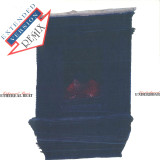
Elements of Life brings a full on boogie disco tune with some 80s synth goodness. The backgrounds are provided by an all star cast of singers including Cindy Mizelle, Audrey Wheeler, Anané, Dawn Tallman, and Ramona Dunlap. The song is penned by Nico Vega, just at 19 years old writing lyrics with the soul of a person who’s been through various experiences in life. It isa statement song coming from an adolescent stating where we are in the world today with war, and encouraging all to stop fighting, “no more war”,“Let Us Shine Bright As Day”, “Let Us Find A Peaceful Way”, “Let Me Hear You Say”, these words are crying out to the world.
Remixes by Josh Milan on the Josh Milan Honeycomb versions, feeding us an early 80s tune reminding us of the seminal label West End Records. The Louie Vega mixes stay true to the Elements Of Life sound mixed with some Detroit bass groove and synth overtones. A bonus track also added to the release featuring Axel Tosca on keyboards is entitled “Los Tonos Sagrados” which means The Sacred Tones.This instrumental has the early afrobeat rhythm with Axel Tosca ripping through with an organ solo and snare hits accenting the drums and music.Take a listen and enjoy the sounds of “Let Us Shine” and “Los Tonos Sagrados” and it’ll sure to have you with your arms up and eyes closed singing along with the choon in no time!! Available soon at all streaming and digital outlets, with vinyl coming too!!
Search:accent
Impex Records is celebrating the 35th anniversary of this seminal audiophile classic with our final and finest collaboration with long-time partner and raconteur Jennifer Warnes. This ultimate authorized production of Famous Blue Raincoat is getting the complete Impex 1STEP treatment! After Bernie Grundman cuts the last lacquers, Jennifer's analogue master tapes will return to her personal vault for good.
Impex has always treasured our work with Ms. Warnes, from the original Famous Blue Raincoat 45 Box, The Well, The Hunter, and her latest LP, Another Time, Another Place. Each of these releases celebrates Jennifer's singular legacy of musical excellence combined with exceptional craft in coordination with the original production team of Jennifer, C. Roscoe Beck, and Bernie Grundman.
For FBR's ultimate release, Impex returned to Jennifer's first-generation analog "slave" master tapes and let Bernie work his magic within the laborious 1STEP mastering process on BG Mastering's tube-cutting lathe. We will cut as many refs and test pressings as needed to get the quietest surfaces and intimate detailing. Final discs will be pressed at RTI on VR-900 super vinyl, illuminating every note and nuance of this cherished masterwork.
The three 1STEP LPs and the elegant new 24-page booklet are housed in a deluxe four-sleeve Monster Pack tip-on jacket and booklet with metallic accents and spot gloss applications. Even if you have every version of this pop classic, you will find considerable value and new benefits from this unbeatable production!
The 1STEP Process:
The Impex 1STEP process relies on short, tightly controlled runs that require a new lacquer after each run of 500 pressings. This unforgiving format has the lacquer skipping the regular father-mother process, going right to a single convert and then pressing. Though this dramatically increases mastering and production costs, it also assures each run is more consistent from disc to disc, with less noise, clearer details, and deeper bass.
Reducing production complexity to just a single "convert" disc between the lacquer and the press greatly improves groove integrity, diminishes non-fill anomalies, and increases signal integrity from the master tape to your system.
Sourced from the Original Master Tapes and Presented in Audiophile Sound for the First Time: Mobile Fidelity’s Numbered-Edition 180g SuperVinyl LP Plays with Riveting Detail
Three decades before he released The Philosophy of Modern Song — an insightful book devoted to 66 tunes that both impacted his career and the music world at large — Bob Dylan issued Good As I Been to You. The under-heralded 1992 album, Dylan’s first solo acoustic album in nearly 30 years and first all-covers effort in nearly 20 years, can be seen as a prophetic prelude to what has become the Nobel Laureate’s celebrated late-career arc. It’s also an absorbing continuation of the custom Dylan has embraced since he first picked up a guitar.
Sourced from the original master tapes, pressed at RTI, and housed in a Stoughton jacket, Mobile Fidelity's numbered-edition 180g SuperVinyl LP of Good As I Been to You reveals the immediacy, detail, and stripped-down nature of recording sessions that took place in Dylan’s garage studio in California. Simple, raw, and unplugged, the record presents Dylan in peak form — and showcases a diversity of vocal phrasing, soulful chording, harmonica accents, and close-up ambience that on this reissue emerge like never before. As the first-ever audiophile edition of this almost-lost classic, this LP also benefits from SuperVinyl’s extraordinary properties: a nearly inaudible noise floor, superb groove definition, and dead-quiet surfaces among them.
Recorded and mixed by Micajah Ryan, and supervised by Debbie Gold, Good As I Been to You took shape at Dylan’s home shortly after the singer-songwriter completed sessions in Chicago with a full band. Unaccompanied, he again gravitated to existing works — in this case, traditional folk music — and, with Gold serving as a trusted advisor, performed the songs in multiple keys and tempos until he arrived at what he desired. That careful, determined albeit loose, organic approach emanates from this reissue, on which each note, movement, and space come across more directly, fully, and immediately than on the original formats. It helps draw a through-line to Another Side of Bob Dylan (1964) as well as the similarly themed follow-up, World Gone Wrong (1993) and immersive old-world storytelling of Tempest (2012) and Rough and Rowdy Ways (2020).
Well before Dylan made those renowned 21st century LPs, however, he needed to find a way out of a funk that — save for his 1989 collaboration with Daniel Lanois, Oh Mercy — followed him for years. As author Clinton Heylin reported Dylan admitting in 1997: “My influences have not changed — and any time they have done, the music goes off to a wrong place. That’s why I recorded two LPs of old songs, so I could personally get back to the music that’s true for me.”
Truth: Few, if any, concepts better encapsulate Good As I Been to You. It resonates with the same originality, honesty, resolve, and age- and time-defying relevance as the seminal Anthology of American Folk Music that fired Dylan’s imagination as a kid in small-town Minnesota and, later, per Greil Marcus’ That Old Weird America book, informed Dylan and the Band’s Basement Tapes sessions. This record also contains the type of music Dylan was playing during his acoustic sets at his period Never Ending Tour shows; within a year of the record’s release, Dylan would play half the album’s songs live.
As for those songs: Rife with strange mystery, common circumstance, and epic adventure, the stories appeal to our base instincts. Their themes — jealousy, temptation, sacrifice, love, revenge, identity, opportunity — operate on a fundamentally human level immune to trends, generations, or eras. They’re ancient and modern, serious and comical, open and disguised, simple and multi-layered. They talk of vengeance and justice (“Frankie & Albert”; “Jim Jones”), romance and tenderness (“Tomorrow Night,” “Froggie Went a Courtin’”), the troubled and trouble-free (“Hard Times,” “Sittin’ on Top of the World”). They lend voice to lovers scorned and freed (“Blackjack Davey”), the used and users (“Diamond Joe”), the powerful and powerless (“Arthur McBride,” “Canadee-I-O”), the followed and followers (“Little Maggie”). And akin to much of Dylan’s finest output, things are not always what they appear to be.
Spanning country, folk, sea shanty, bluegrass, and blues motifs, Good As I Been to You re-confirms Dylan’s position as an elite interpreter and sculptor — not of just structure but emotion. Dylan delivers the tunes as if he’s known them forever. He plays with a subtle sense of mischievousness and retains a largely upbeat demeanour; his eyes seemingly twinkle as he sings and picks. His guitar serves as the guidepost for shuffles, boogies, ballads, and mess-arounds while his innate feel for each specific arrangement and melody helps inform pacing, tone, attack.
Like a great author, he understands the importance of adhering to concision, luring an audience, holding their attention, and maximizing the impact of details, actions, and unexpected turns. Though already coarse and ragged, his voice feels ideal for the subject matter and his phrasing — from the clever ways he stretches syllables to underline meanings on the surprise twists of “Canadee-I-O” to the sheer delight he gets from singing “rowdy-dow-dow” on the protest song “Arthur McBride” — outstanding.
Notorious B.I.G. will never be forgotten, and now the iconic Hip-hop legend can be celebrated in the most ULTIMATE way!
This 7” scale highly articulated Notorious B.I.G. ULTIMATES! figure looks just like you might have found him back in the day hanging out in Bed-Stuy, sporting his signature leather jacket, boots, and hat.
Including multiple interchangeable heads & hands, a champagne glass, cane, sunglasses, gold chain, two hats, and a microphone, and packaged in a collector-friendly deluxe slipcase style box with gold foil accents, this made-to-order Notorious B.I.G. ULTIMATES! figure is a must-have collectible for any Hip-Hop fan!
Accessories:
o 3x Interchangeable Heads: Neutral, Rapping, Expressive
o 8x Interchangeable Hands: 2x Gripping, 2x Fists, 2x Open, 1x Champagne, 1x Alt grip
o 1x Cane
o 1x Champagne glass
o 1x Designer sunglasses
o 1x Gold chain
o 1x Newsboy cap
o 1x Fedora hat
o 1x Microphone
o Materials: Injected Plastic & Paint
- 1: Old Brown Case (Intro)
- 2: Old Brown Case - (1941 Martin D-8 Herringbone)
- 3: Southern Flavor (Intro)
- 4: Southern Flavor (2007 Martin D-1 Porter Wagoner Custom Signature Model)
- 5: Sourwood Ridge (Intro)
- 6: Sourwood Ridge (198 Martin D-28)
- 7: White Horse Breakdown (Intro)
- 8: White Horse Breakdown (1992 Mossman Texas Plains Model)
- 9: Old Minor Joe Clark (Intro)
- 10: Old Minor Joe Clark (1948 Martin D-28)
- 11: Little Rosewood Casket (Intro)
- 12: Little Rosewood Casket (1959 Martin D-28 E)
- 13: Tom Rock Twist (Intro)
- 14: Tom Rock Twist (1997 Stelling Rhd-125)
- 15: Foggy Mountain Top-Lonesome Road Blues (Intro)
- 16: Foggy Mountain Top-Lonesome Road Blues (1899 Martin 0-28 Herringbone)
- 17: Little Brown Jug (Intro)
- 18: Little Brown Jug (1957 Silvertone)
On Gary’s forthcoming solo acoustic guitar concept album, each song is shot/recorded with a different vintage acoustic guitar of Gary’s private very rare collection. The instruments range from Martin 0-1898 Herringbone to Gary’s “Main Axe” (over the last 4 decades) Martin D28 1941 Herringbone and 7 other significant guitars for this project entitled “Gary Brewer’s House of Axes”. This is a “getting back to his roots” type feel likened unto Leo Kottke’s 1969 album 6- and 12-String Guitar, with a very stripped down/pure raw microscopic view of the essence and soul of these vintage instruments without the blurring accents of other instrumental accompaniments (in our best efforts to capture the true energy this album was cut with no overdubs, and each song was captured in the first take). There are 9 songs with the last song being a moving tribute to Gary’s late Father Finley Brewer whom he lost to cancer in late 2020. Each of these songs have short introductions that tell about each guitar and the song briefly.
Fourth studio album by the British metalcore band Bring Me the Horizon. The album features three singles, 'Shadow Moses', 'Sleepwalking' and 'And the Snakes Start to Sing'. The x11 trk album, the title of which means 'everlasting life', entered the UK Albums Chart at #3. To mark the decade of an album with a heritage and sonic veracity still firmly intact, a special 10th anniversary vinyl pressing has been carefully fashioned to emphasise the music and underline the enigmatic artwork still steeped in symbology and mystique. A picture disc edition hosts the album's opulent and iconic flower of life design, with a colour inversion of the album's original palette further accentuating the ornate beauty of this album. Stock is limited & will be allocated. Promo & marketing activity across all media outlets.
Two years after his debut album under the moniker Aboukir, Ralph Maruani returns with a new record titled “Change”. Fitting title for a record that was written and recorded during a period of great turmoil in his life. The intimacy of these songs are reflected in the music itself.
Whereas “Digital Introversion” was floating in a sea of psychedelic infused echoes and reverb, “Change” is much more stripped down, sporting a singer-songwriter ethos. The album was recorded between December 2022 and March 2023 in Paris, France almost entirely by Maruani except for the drums which were recorded by Louis McGuire in Berlin, Germany and pedal steel by Reggie Duncan in Mississippi, USA.
The album opener “Alright” is an upbeat number with guitars reminiscent of John Fogerty’s Creedence Clearwater Revival, Strawberry Fields inspired Mellotron and Stereolab aesthetic on the outro, assuring that whatever may come next, everything will be alright. Then followed by “Release” the track that makes a direct link with “Digital introversion”, an 8 minutes Floydesque hazy jam. “Rolling on” shows a different side to Aboukir’s music as it opens up to folk/country accents in a 1970s singer-songwriter vibe. “Croz” is Maruani’s immediate reaction to David Crosby’s passing. A tribute to one of his lifelong influence and inspiration.
The album then unveils itself going back and forth between more stripped down tunes and psychedelic ones, eventually reaching its climax with “Changes”.
Baiana (pronounced By-Anna) is the alias of powerhouse Liverpool-born Brazilian jazz artist, Laura Doyle Following on from performances at Love Supreme, the Manchester Jazz festival, world famous jazz clubs The 606 and Pizza Express as well as an unprecedented 12 weeks on the A- list of the Jazz FM playlist, with her breakthrough single "Saudade Samba" Baiana's highly anticipated self- titled debut album is finally here. Produced by the legendary UK Latin percussionist, Snowboy, 'Baiana' features 11 finely crafted songs covering a huge range of Brazilian styles from fiery Sambas to Bossa Nova, Jazz Fusion to Baiao and everything in-between. Singing in both Portuguese and English, Laura evokes a vocal style reminiscent of the great romantic torch singers of the 40's and 50's such as Julie London and Peggy Lee and yet one can clearly also feel the passionate expression of Portuguese Fado and the Brazilian greats such as Elza Soares, Gal Costa and Elis Regina as she sings of love-lost and broken hearts. An unexpected candidate for Brazilian jazz with her Scouse accent and fiery red hair denoting her Irish roots, Laura became enraptured by Brazilian music after living in Rio de Janeiro where she was seconded as "first lady" with the Italian diplomatic service.
Ruff Stuff teams up with Bress Underground for a long-awaited return to SB... a new collection of Deep House tracks of the highest order from these Italian House Heads. 'Foundations' is a steam roller of a track calling on Ruff Stuff’s love for Mr.G, with some tasty French House accents adding a nice funk factor. 'Sliding Sine' makes us wanna go felt pelt on an Autobahn with its rich bass stabs under late night synth echoes with tough drum programming.
Bress Underground comes aboard to collab on the next two tracks and makes his presence felt. 'The Community' is a punchy gospel House cut with crackling vocal samples and trippy chord patterns. 'Something About It' closes the EP with expertly chopped vocals and jacked out grooves, more catchy chords, and some irresistible rolllllling London style bass.
A hard one to put in a box when it comes to genre, floating somewhere between italo and synth pop, originally released in Switzerland in 1985. Written by German pop group Hongkong Syndikat, both tracks with a very distinct and soothing sound that's hard to forget.
"Underboard" is very cool paced downtempo number that builds up with layers of subtle percussion lusciously adorned by some heavy saxy reedsmanship and mysterious vocal accents with no real message - 100% chill o'clock served on ice.
Cedar Of Lebanon picks up the tempo a notch, once again setting the scene for the reeds to shine as the catchy melody is presented, beautiful 80's instrumentalism from a golden age, clearly not made in Ableton. B side features a respectful DJ tool style remix by Anatolian Weapons. Remastered at Manmade mastering in Berlin.
Record number 3 from Unveiled Nuance brings a new confidence in the further developed sound of owner Means&3rd. A continued eye for detail as well as a roughness that breathes dark soul into the production aesthetic that we have yet to hear from the artist.
“Hardship Repackaged As Growth” Opens the EP with boomy, rugged low end and grainy driven synth lines with sharp hits of wide sonic impact and a depth of layered atmosphere, placed on a bed of dense percussion until its break point exposes contorted, abrasive stabs just surviving the crunch of their processing, that then take the forefront. “Countenance” replies to the previous track with a more calculated, rounder and organic palette of audio that focuses on a cadenced synth line that breaths with the arrangement, fizzing to break point and engaging the deeper listen. Swung percussion keeps the groove providing a propulsive backing that sits on ganrled bass hits before the focus returns on the charged lead line.
“Character Ethic” carries deep suspense from the off, with filtered menace being teased below the surface, warping atmospheres are stacked and build the apprehension against a militant 16th shaker before an almost vocal like modulated synth reveals itself and is left to dance prominently across the stereo field. Layers of energy providing percussion complete the picture for a mesmerising trip. “Desperate And Relevant” the most driving of the 4 cuts takes an effectively reduced stand where square wave accents build new levels of intensity. Propulsive low-end and cohesive percussion writhe through the track’s arrangement closing out the EP with a powerful ending, a blistering siren sees the track’s breakpoint provide a release worthy of the pressure built.
Black Vinyl[21,13 €]
Bathed in a green haze, the crowd oozed to the mutant rock and roll roaring from the basement's dusty depths — everything and everyone was sweaty and sticky. But as Speedy Ortiz crammed into the back corner, their grins just inches away from ours, D.C.’s Dougout became a moshed-and-sloshed sauna of 20-somethings delirious on rock euphoria.
After spending much of the new millennium bored out of my skull by network soap indie, Speedy Ortiz — not to mention its pals in Pile, Ovlov, Grass is Green and the rest of New England’s burgeoning basement scene — was rock's wild howl. The songs were unpredictable, yet weirdly memorable, swaggering with a winky and wry sense of self. Riffs would twist with a topsy tenderness, then slam a ruptured discord. Sadie Dupuis' sphinxian-yet-sensitive lyrics were not only matched but accentuated by her coil-sprung vibrato. How could Speedy Ortiz not immediately become my new favorite band?
What began as a short-lived solo project recorded in Dupuis' off-hours as a rock camp counselor became a four-piece band in Northampton, Mass., by the end of 2011: Dupuis on guitar and vocals with drummer Mike Falcone, bassist Darl Ferm and guitarist Matt Robidoux. They made cool mixtapes, cracked inside jokes and gushed about teenagers that opened for them on tour. They freaked out (via LiveJournal) when they met the bassist from Polvo or Helium's Mary Timony, but also rolled their eyes at '90s indie-rock comparisons. The band's first single — the gender-bending got-laid grunge yowler "Taylor Swift'' — elicited that rare response of the simultaneous giggle and headbang. The Sports EP amped up the taut yet rubbery riffery.
Released July 9, 2013, Major Arcana is filled with wedding chapel exorcisms, oiled-down attractants and criminally twisted puny little villains — this is Dupuis' haunted lexicon as she scales the toxic Aggro Crag of a breakup. And while Dupuis wrote these songs, the band's convulsing arrangements and diverse influences sprawled the squigglier edges of feedbacked fuzz to mete out matters of the heart. Falcone — who, it's worth noting, has a knack for vocal harmony — swung as much as he smashed the drums. In easily tipoverable songs, Ferm's burly bass and percussive overdubs gave the unruly glee its momentum. Robidoux ripped skronky guitar solos and countered Dupuis' riffs with decorative splatter. Over a four-day marathon session at Sonelab in Easthampton, recording engineer Justin Pizzoferrato sparked the studio imagination of Speedy Ortiz — not only leaning into gritty tones but layer-caking dense dynamics that made these songs pop and pulverize.
For all her sweet-toothed seething, Dupuis was not easy on herself. Everyone's allowed the idiot growing pains of your 20s and the misery that follows, but I can only imagine the emotional exhaustion that playing these songs on the road, night after night, must have wrought. "But you left something on my lips: a mark so sick," she repeats over the doomy destruction that ends the album. Thinking back to the many Speedy Ortiz shows I caught in those early years, including an unofficial after-after party for my own wedding, "MKVI" often served as the noisy down-and-out closer — heads would bang in solidarity as the crowd became co-authors in the chaos, the biting phrase now a hex, Speedy Ortiz forever our coven. —Lars Gotrich
To celebrate the 10th Anniversary of Major Arcana, Speedy Ortiz release a remastered edition on Carpark Records.
Black Truffle is thrilled to present a previously unheard performance by rudra veena master Ustad Zia Mohiuddin Dagar, recorded in the North Indian city of Vrindavan at the Druhpad Samaroh festival in 1982. Z.M. Dagar was a nineteenth-generation descendant of the Dagar family of musicians, famed for their profoundly meditative approach to the tradition of Hindustani court music. Perhaps the most revered members of the family were the brothers Mohinuddin and Aminuddin Dagar, who played a key role in reawakening interest in dhrupad in the mid-20th century. The great exponents of the tradition from whom Z.M. Dagar descended were all singers, and dhrupad is essentially vocal music. However, as Z.M. Dagar explained, the veena family of instruments plays an important role in the education and practice of dhrupad singers, especially as an aid to mastering the fine microtonal nuances of pitch essential to the genre. Introduced as a child by his father to the rudra veena, a large and low-pitched veena amplified by two enormous gourds, Z.M. Dagar became the first modern dhrupad musician to perform with it as an instrumental soloist, giving his first recital at the age of 16. Devoted to the instrument throughout his life, he made innovations to its design and materials, as well as introducing novel techniques (such as playing without the use of the traditional wire plectrum, resulting in the remarkable warmth of his tone). In the great Dagar family tradition, his approach to the various ragas that make up the dhrupad repertoire was stately, slow, and considered, with a great emphasis on the alap, the heavily improvised exposition section. True to form, in this recording of Dagar performing the night raga Yaman Kalyan, the alap section stretches out to more than forty minutes of slow-motion bliss, a frozen tanpura drone hovering above Dagar’s gracefully bent notes and elegantly twisting phrases. In the alap’s first half, Dagar’s figures are so intently focused on the lower reaches of the rudra veena’s range that they register more as shudders and moans than melodic patterns. As the performance continues, he slowly climbs in pitch, though continuing with the same intent focus on the articulation of single notes and subtle microtonal variations. This leads to the jod section of the performance, which, though still accompanied only by the tanpura, gradually takes on a more rhythmic character. Developing almost imperceptibly over the course of nearly thirty minutes, the jod moves from the stillness of the opening alap to a rapid pulse that announces the closing section of the piece, where Dagar is joined by Shrikant Mishra on the pakhawaj (a double headed hand drum). Where many performers use the final section of the raga as an exercise in unrestrained virtuosity, Dagar and Mishra subtly weave a web of finely shifting accents and hypnotic melodic variations, bringing the recording to a fitting conclusion while remaining within the meditative space occupied by the performance as a whole. Adorned with beautiful archival photographs of Dagar taken by Swedish percussion legend Bengt Berger and accompanied by detailed notes from Bradford Bailey, Vrindavan 1982 is a stunning document of music unmatched in its patient focus and mysterious emotional depth. .
“A piece of music never truly comes to An end. Revisiting a theme illustrates this idea that life goes on.” These are the words of Wayne Shorter, uttered in 2018 upon the release of Emanon, his final opus. On this record, the octogenarian uses dusky hues to shade in the passions of his youth - drawing and science-fiction, as well as the causes he has defended all his life - the fight against ecological upheaval and structural racism. This sentiment did not fail to resonate with Julien Lourau, who has reached a stage in life where he has begun to look back over certain pages written by the man he has always considered one of the masters of his trade. Five years later, this Parisian native has also chosen to revisit his glory days, offering reworked versions of specific tracks composed by his titular elder throughout the 80s. “When I play this music, I find myself back in my teenage bedroom. These are my standards, and they remind me of autumn in Rambouillet.” At that time, after practising his scales, Julien would also play Dungeons & dragons, and immerse himself in SF as well as heroic fantasy - epic influences which are not without a certain connection to the dreamworlds Shorter conjured up, as another fan of landscapes beyond the grasp of reality.
This album features four themes taken from Atlantis, which came out in 1985, and two from Joy Ryder, released three years later. To these, he has added a composition penned at around the same time for Sportin’ Life, the penultimate LP by Weather Report. This is rounded off by a tune taken
from Native Dancer, the record which, ten years earlier, in 1975, brought together this saxophonist who learnt his trade alongside Art Blakey, before joining Miles’ second quintet, and Brazilian Milton Nascimento.
“Between Native Dancer and Atlantis, Shorter did not release anything under his own name, but he took the time and care to really perfect his writing. Upon his return, he injected a very Brazilian form of subtlety into his compositions, especially rhythmically. And from a harmonic point of view, these themes are extremely sophisticated, and reveal truly singular colours. In fact, he decided to display the score as if it constituted the liner notes of Atlantis.”
Julien Lourau is a fan of every Wayne Shorter era, from his Blue Note days, where Mr Gone defined the bases of a truly unique repertoire, all the way to his final quartet - a reference like no other. He decided to focus on this “highly electric” period, which is not necessarily Shorter’s best known, nor his most widely appreciated - despite being a unanimous reference, Shorter has nonetheless never had a direct descendent. In Lourau’s line of sight there lies a desire to focus on typically South American tonic accents which characterise this repertoire, twinned with the ambition to switch up their actual sound “by attempting to open up onto a production highly influenced by eighties fusion". However, he admits that modifying the structures of these most unique of worlds constituted a fresh challenge. “There’s this labyrinthine harmonic system where you’ve no idea how it holds together, but where it’s actually impossible to touch the slightest element without the whole edifice wavering. It is in fact a very difficult thing to achieve!”
In order to successfully transcribe all this creativity free of obstacles, Julien Lourau once again called upon the help of Mathieu Debordes. From January 2023 onwards, Mathieu endeavoured to break down all the musical elements, on paper, before creating any actual music. The record was therefore constructed on the faith of these scores, without necessarily transiting through a creative residency - just two live gigs, to make sure the setup worked. Besides Mathieu Debordes and his synthesisers, Julien Lourau has assembled an ad hoc team by his side. On the bass, according to the track, we can hear erstwhile companion Sylvain Daniel or a new acolyte on the fretless bass, Joan Eche Puig.
Stéphane Edouard, on percussion, even dives headfirst into an unlikely proto-rap of sorts, on Pearl On The Half Shell (where, on the original version, Bobby McFerrin adjusted his interventions in a rather madcap style). Aesthete and drummer Jim Hart as well as pianist Leo Jassef also figure on this release - both were present on previous project devoted to label
CTI. “At sixteen, I wanted to sound like Michael Brecker rather than Ben Webster - that was equated with modernity in those days”, adds Julien with a smile, as for him, all this rings out a little like a logical next step, a joyful immersion into the fountain of youth. And if, for this record, he plays the soprano more than ever, the saxophone Shorter set in his sights on, he never tries to replicate an unattainable ideal note by note. What would be the point?
“Wayne Shorter is not just a saxophonist’s saxophonist. In fact, I don’t know a single person who has risen to challenge of his solos. I have not done it myself either, but on the other hand, I have retained a lot of his phraseology. His way of approaching the instrument reveals a more evanescent language, a work on colour and shape. Keeping this in mind has allowed me to gravitate towards certain elements, that in hindsight, I find echoes of in my work, even in Groove Gang.” Shorter etches out these phrases, creating a groove within which Lourau had traced subtle punctuation, managing, from a highly written base, to create fresh apertures, promises of a great escape. Emblematic of this standpoint, his regal version of Ponte de Areia, originally a wonderful dialogue between Milton Nascimento and Wayne Shorter. Here, the Frenchman takes liberties with the original melodies, without ever growing distant from the original spirit, extending one section with delicacy, offering a rubato development and then a groove “like a little suite”. Julien Lourau also renews with an accomplice from last century, Magic Malik, who lends his high-pitched vocals to the track. Though they had not recorded together for more than twenty years, the two of them got on as if they had only ceased collaborating yesterday, everything flowed naturally. The track was wrapped up in just one take, much like other themes, such as opener Who Goes There where the flautist deploys smooth, enchanted and smoky wisps.
Fundamentally, reflecting of the sleeve which features a child playing with a ball, image that could symbolise the sun just as much as the moon, Julien Lourau manages to translate the ambiguous candour which characterizes Shorter’s work - solar and crepuscular at the same time, that of a visionary and poet definitively situated outside of all chronology, but with whom Julien shares surprising and ‘timely’ coincidences. Shorter was born August 25, 1933, the same day as Julien’s father, “if we take time zones into account”, and who died on Lourau’s birthday, March 2, 2023. Should we take this as a random fact? Or could we not see here the sign of a destiny connecting the agnostic Frenchman to the man who, as a fervent Buddhist, believed in the transmission of his spiritual flow ?

Straight Outta Caledonia is the first commercially available “Greatest Hits” of the outsider songwriter Jackie Leven, an artist
who has largely remained in obscurity in his native Scotland despite being one of the greatest wordsmiths – and singers – it ever
produced. A well-travelled musician who began making psychedelic, progressive music in the late 60s before emerging as an
epic storyteller full of pathos, humour and humanity in the 90s, Leven lived and wrote like many of the fragile, gregarious
characters of his songs; large, full of life and empathy. Leven passed away in 2011 after recording 30+ albums under different
guises or with his briefly successful New Wave band Doll by Doll. Straight Outta Caledonia is a compilation collated by Night
School Records on its Archival label School Daze that seeks to introduce Leven’s music to new generations.
In an age of isolation, alienation and loss of visceral experience, Jackie Leven’s music can be massive and welcoming. It feels
connected to some universal humanity and vibrates with vitality. His songs are often full of tragedy and comedy simultaneously,
cutting straight to the heart, often plugging directly into the nervous system of the listener. His lyrics are rich, dense with imagery
that can veer from apocalyptic to the comically banal in a sentence, with a songwriting panache that can be heavy handed to
almost bursting point before skewering the song with a clownish, warm punchline. His productions ranged from Bob Dylan’s
Rolling Thunder Revue style rock band orchestrations with strings and organ as on the epic Ancient Misty Morning or they could
be pared down to the purest form of folk song as on Poortoun: Leven on stage alone with an acoustic guitar, albeit played with a
mastery of the instrument that he often only hinted at. Musically his sound can bend traditional structures or stay completely
confined within them yet still forever push towards an ecstatic release, as on the cinematic Snow In Central Park.
The most exciting, jaw-droppingly effective tool at Leven’s disposal was his voice. A multi-octave instrument that, though
damaged during a savage assault in Fife, he used with flair; he had both a brazen disregard for the rules and a deep humility, all
of which is evidenced with every phrasing. A baritone that could flit up through the register – always touched by his gentle
Kirkcaldy accent – it’s the prime delivery method for his songs. Leven’s voice enabled him to inhabit the characters in his songs to
an uncanny degree, a skill that in turn enables the listener to empathise with them and, subsequently, the singer. It’s most evident
in stand out song The Sexual Loneliness Of Jesus Christ, a breathtaking re-telling of the life of its protagonist, not as a pure,
sinless messiah but as a sexually frustrated, solitary man condemned to an existential loneliness no one else will ever feel. In
many ways the track is the archetypal Jackie Leven song. Produced by Pere Ubu’s David Thomas, what strikes the ear first –
after the samples of unemployed workers in Glasgow following the closing of the Clyde shipyards – is the audacious, rhythmic
tremolo effect Leven employs through the verses before the production opens up to allow Leven’s vocal to lift into a soar, a
freeing glide powered both by the force of the singer’s chutzpah and the inherent, doomed destiny of the protagonist. With any
other singer such subject matter could come across as gauche or worse, pretentiously sonorous, but Jackie Leven’s genius was
such that he could be this cinematic and brazen while touching something elemental and true in the beholder. It’s a skill evident in
every song on Straight Outta Caledonia, the trademark of a songwriter who revelled and excelled in intensity with a lightness of
touch.
In his lifetime, Jackie Leven toured, wrote and recorded at a ferocious rate. He recorded under aliases to avoid record contract
restrictions, played house shows in Europe after or instead of official concerts, events which were often spoken word story telling
masterclasses as well as performances of his often bewilderingly dense songbook. His music has traditionally been catalogued
as “folk” music and has been largely banished to a small, dedicated group of international fans and apostles both private and well
known, like author Ian Rankin or Glenn Matlock. Since his passing in 2011 however, there has been a growing recognition
amongst a newer generation, with artists like James Yorkston or Molly Nilsson publicly stating the influence of the unsung
troubadour on their own craft. Jackie Leven’s fairytales for hard men are often forensic deconstructions of masculinity, sad and
ecstatic, light and shadow, always endlessly rich, a resource as bountiful as Leven himself’s human spirit undoubtedly was.
Blue Vinyl[37,40 €]
Van Morrison veröffentlicht am 3. November sein 45. Studioalbum ”Accentuate the Positive”. Wie schon auf dem diesjährigen Album ”Moving On Skiffle” kehrt Van Morrison auch auf ”Accentuate The Positive” zu einer der Leidenschaften seiner Kindheit zurück: dem Rock’n’Roll. Als er kurz nach dem Zweiten Weltkrieg in Belfast aufwuchs, wurde er von den berauschenden Klängen des Blues und des Rock ’n’ Roll des 20. Jahrhunderts stark inspiriert. Er hörte Künstler wie Fats Domino, Chuck Berry und die Everly Brothers und es dauerte nicht lange, bis Van diese Klänge mit seiner eigenen Band in den Lokalen seiner Heimatstadt intuitiv neu interpretierte.
Mehrere Jahrzehnte später nimmt sich Van Morrison nun des Genres an, indem er einige seiner persönlichen Lieblingssongs für ”Accentuate The Positive” neu interpretiert und diese zeitlosen Songs mit einer Energie versieht, die die Traditionen immer wieder herausfordert und erweitert. Vans unnachahmliche Stimme, kombiniert mit hervorragenden Arrangements, verleiht so großartigen Songs wie ”Lonesome Train” von The Johnny Burnette Trio, ”Shakin’ All Over” von Johnny Kidd & The Pirates und Big Joe Turners bahnbrechendem Rock ’n’ Roll-Hit ”Flip, Flop and Fly” neuen Schwung. Zu den Mitwirkenden des Albums gehören der verstorbene Jeff Beck (E-Gitarre) und Chris Farlowe (Gesang) bei ”Lonesome Train” sowie Taj Mahal (Gitarre) bei ”Lucille” und ”Shake, Rattle and Roll”.
Black Vinyl[36,09 €]
Van Morrison veröffentlicht am 3. November sein 45. Studioalbum ”Accentuate the Positive”. Wie schon auf dem diesjährigen Album ”Moving On Skiffle” kehrt Van Morrison auch auf ”Accentuate The Positive” zu einer der Leidenschaften seiner Kindheit zurück: dem Rock’n’Roll. Als er kurz nach dem Zweiten Weltkrieg in Belfast aufwuchs, wurde er von den berauschenden Klängen des Blues und des Rock ’n’ Roll des 20. Jahrhunderts stark inspiriert. Er hörte Künstler wie Fats Domino, Chuck Berry und die Everly Brothers und es dauerte nicht lange, bis Van diese Klänge mit seiner eigenen Band in den Lokalen seiner Heimatstadt intuitiv neu interpretierte.
Mehrere Jahrzehnte später nimmt sich Van Morrison nun des Genres an, indem er einige seiner persönlichen Lieblingssongs für ”Accentuate The Positive” neu interpretiert und diese zeitlosen Songs mit einer Energie versieht, die die Traditionen immer wieder herausfordert und erweitert. Vans unnachahmliche Stimme, kombiniert mit hervorragenden Arrangements, verleiht so großartigen Songs wie ”Lonesome Train” von The Johnny Burnette Trio, ”Shakin’ All Over” von Johnny Kidd & The Pirates und Big Joe Turners bahnbrechendem Rock ’n’ Roll-Hit ”Flip, Flop and Fly” neuen Schwung. Zu den Mitwirkenden des Albums gehören der verstorbene Jeff Beck (E-Gitarre) und Chris Farlowe (Gesang) bei ”Lonesome Train” sowie Taj Mahal (Gitarre) bei ”Lucille” und ”Shake, Rattle and Roll”.
Run-D.M.C. leaves no doubt about its intent on King of Rock. The New York trio's hard-hitting sophomore album begins with a statement of purpose ("Rock the House") that serves as a stereophonic primer for the title track, a hybrid warning-anthem-theme song that swarms with justified boasts, heavy metal riffs, booming beats, cowbell accents, and dance-worthy grooves. The back-to-back tunes set the tone for a 1985 record that largely established the blueprint for the hip-hop that would follow for the next two decades – and which helped make rap a mainstream currency via the previously off-limits channels of radio, TV, and the national stage. "It's not Michael Jackson/And this is not Thriller," the group broadcasts early on in the record. Truer words – and music recorded with such honesty, pride, rawness, and integrity – have seldom been committed to tape.
Run-D.M.C.'s Raising Hell remains the turning point at which hip-hop crashed through mainstream barriers and never left. Anchored by the crossover smash "Walk This Way," the 1986 blockbuster still sounds like a revolution unfolding in real time. It has everything – hard-rock riffs, turntable scratching, itchy rhythms, hit singles – not the least of which are the trio's invigorating raps and inseparable chemistry. And now it's the first rap record afforded audiophile treatment, courtesy of Mobile Fidelity.
Sourced from the original master tapes and pressed on MoFi SuperVinyl, the reissue label's numbered-edition 180g 33RPM SuperVinyl LP elevates Raising Hell to sonic heights on par with its musical and cultural significance. Ranked the 123rd Greatest Album of All Time by Rolling Stone, 43rd on Pitchfork's Greatest Albums of the 1980s, one of the Top 100 Albums of All Time by TIME – and included on "Best of" lists by Spin, Paste, XXL, Entertainment Weekly, and basically every other significant media outlet – the triple-platinum effort rocks the house.
Benefitting from the ultra-low noise floor and groove definition of SuperVinyl, Raising Hell unleashes a torrent of massive dynamics and tsunami of frequency-plumbing details underlined by Rick Rubin's taut, crisp, albeit raw and streetwise production. Just as the Queens-based group both defined what hip-hop could represent – and displayed just how big it could get – Rubin's work melded ear-worm hooks, savvy drum loops, metal-leaning guitars, and, of course, Run and D.M.C.'s cross-fire lyrical interplay into watertight frameworks bursting with ideas, tones, samples, and beats. Heard anew on Mobile Fidelity vinyl, Raising Hell is in every regard the aural equivalent of a direct-to-console 1970s classic. And it sounds as fresh as hell.
As for the music, it ranks among the most influential, inventive, and invigorating ever released – rap or otherwise. Vanguard artists such as Ice-T, Eminem, Jay-Z, and Public Enemy's Chuck D – who declared it his all-time favorite and "the first record that made me realize this was an album-oriented genre" – have testified on behalf of its brilliance. And never mind the presence of the Top 5 single "Walk This Way," whose power helped make Aerosmith's Steven Tyler and Joe Perry relevant for the first time in nearly a decade – and literally put Run-D.M.C. in bedrooms ranging from the Bronx to Bartlett to Bad Axe.
Look instead to the rest of the entirely filler-free set, be it the corkscrew turns, slippery wordplay, and "My Sharona"-meets-"Mickey" mixology of the boisterous "It's Tricky," the fat-but-minimized bass grooves and warped turntable wobble of the hysterical "You Be Illin'," chimes-accented inertia and boombox-on- shoulder thunder of the now-iconic "Peter Piper," or voice-as-percussion attack of the funky "Is It Live." With Raising Hell, the answer to the question is always affirmative – a sensation bolstered by the fact the group always had something to say.
The definition of Golden Age Hip-Hop in every way, Run-D.M.C. avoids the negativity and misogyny that later plagued the style, spinning assertive tales about identity (the biographical and culture-changing "My Adidas"), work ethics ("Perfection"), and, most notably, pride (the Harriet Tubman- and Malcom X.-referencing "Proud to Be Black"). Pavement-packed inner cities, tree-lined suburbs, and cornfield-rimmed rural areas would never again be the same. And rocking a rhyme that's right on time would become trickier than ever.
Techno House Connoisseurs are back with another storming EP of various artists for dance floors worldwide. This V/A features some big hitters in Phoreski and Felix Dickinson as well as San Diego's Terry Jasinto, Seattle's Lock and Hammer and LA's Praus. Lots of ground covered here with unusual and unique stylings in the realm of acid and cosmic.
Phoreski's Kyoto Dawn leads the way with it's deep and euphoric vibe floating along leaning deep and etherial in all the right places.
Felix Dickinson follows up with his remix of Phoreski's track bringing the 303/acid into the forefront building it into a monster chugger complete with droning synths and 808 accents. Look for a sweaty frenzy at the climax of the track!
San Diego's Terry Jasinto makes his THC label debut with a tech house gem that pumps and weaves with it's dynamic drums and synth stabs. With several nice subtle layers of acid throughout, it is perfect for a high energy dancefloor.
LA's Praus continues to produce deep and complex tracks for THC records showing he has an ear for unique programming. His release, "Heedful" quickly gets your attention delivering haunting synths and beautiful acid lines in the cosmic fashion only Praus can deliver.
Seattle's own Lock and Hammer rounds out the EP with an unusual and quirky burner that intrigues and delights in a wealth of analog glory. Built for a warehouse, the artist has let loose a track that will glimmer on any loud system doing a number on your head/psyche in the early hours.