A command across genres has distinguished Yasushi Ide’s work as a DJ and producer since emerging from the multiscene spawning big bang that was Tokyo’s highly influential club milieu of the 1980s. His productions draw variously from hip-hop, dub, house, punk, jazz dance, exotica and electronic music - and at their most expressive, synthesize sensibilities within a single track. The respect Ide’s earned is well evident in the impressive roll call of collaborators he’s accrued over the years - Masters At Work, Tom Verlaine, Don Letts, James Chance, DJ Krush, Pharaoh Sanders, U-ROY, and Bongo Herman, just to name a legendary few.
Now available for worldwide distribution from Love Injection Records in both digital and 7-inch 45 vinyl formats, the Yasushi Ide “A Place In the Sun (Kaoru Inoue Remix)” is paired with the equally gorgeous “A Place In the Sun (Dub).” On the former, Inoue’s treatment largely strips away the track’s beats, anchoring it to a subtle percussion pulse that emphasizes the composition’s irresistible melodic qualities. The latter finds Yoko Ota at the controls restoring and pushing reverb-soaked drums to the forefront of the mix, accentuating Ide’s affection for the sound system aesthetic while exercising just the right amount of spacial arrangement flourishes to inject some brawn amidst the beauty.
These serendipitously rediscovered renditions of a back catalog deep cut are just the latest examples of Yasushi Ide’s artistic reach. In addition to recording such acclaimed albums as 2020’s Cosmic Suite and its 2022 sequel (for which Love Injection has remixed a track), his work has spanned music supervision of some 200+ compilations for major labels, artist management, his Grand Gallery shop/gallery proprietorship, and books showcasing the depth of his archival sensibilities, including vintage t-shirt and ephemera curation. Perhaps most inspiring, however, is that Ide is still winning new appreciators and collaborators in unexpected ways four decades into a revered career that continues to evolve and expand.
Buscar:accent
Harry Romero returns to Crosstown Rebels as he links with vocalist Shyam P for ‘Mind Games’.
With a catalogue as rich as any and continuing at the top of his game two decades after his emergence within New York’s fabled nightlife scene, Harry Romero continues to serve up his own take of Latin-inspired and percussive- driven house music via a long list of the industry’s leading imprints. Having previously remixed Chilean favourite Francisco Allendes on the label last year alongside his collaborative ‘It Hurts’ EP with Jessica Eve in 2021 and his contribution to the ‘Spirits III’ compilation before that, the Bambossa Records head honcho is back on Damian Lazarus’ revered Crosstown Rebels for his latest EP project, uniting London-bon, Dubai based singer/ songwriter Shyam P for the excellent ‘Mind Games’.
Crafting a slick and heady groove before launching into a hypnotic haze accenting by a bubbling bassline, ‘Mind Games’ is an infectious and vibrant house cut as Shyam P’s alluring vocals take hold amongst emotive builds and breaks. Nest, ‘Mira’ is a classic Romero offering as the focus shifts to crisp organic percussion arrangements, carnival-esque whistles and hooky Latin vocals for a bustling terrace number, before ‘Analog Bugz’ takes cues from its title as crisp drum shots and sharp stabs unite to create a no-nonsense builder made for the main room.
Established in 2016, Little Giant Records is the Brooklyn-born label founded by Anna Cavazos that specializes in the kind of deep house sounds that belong in the dark and sweaty basements of underground clubs. Anna is a DJ, producer, and vocalist who has played out across the globe for over 15 years mixing and blending the deep house sounds of Chicago, New York, and Berlin. . Her discography includes original compositions, remixes, and collaborations with the likes of Satoshi Tomiie and Eli Escobar.
The EP kicks off with the original of ‘Love Interlude’ - melancholic and piano-heavy with an ultra-deep baseline embellished with warm pads and soulful drums. Anna’s soulful vocal floats above the melody creating an emotional and moving interlude. Next up Matthias Vogt delivers a deep-house masterpiece adding extra keys, drum accents, and a well-placed baseline that is weaved neatly into the vocal hook while Vogt delivers the warm, jazz-flecked vibrations he is well known for.
Up next Rick Wade weighs in with some ever so classy house laced with flashes from the Motor City of Detroit. Warm electro piano, glowing synths, and vocal parts contrast with the deep sub baseline. Closing out this EP Rissa Garcia draws heavily on her New York house inspirations. Organ riffs and a funk-inspired bass line lead the charge dropping in and out between vocal harmonies and subtle synth work. Percussive accents bring it all home making this closing cut one dancefloor destroying, peak-time bomb.
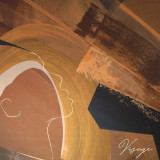
Visage006, Ready, set, go! Parisian imprint visage puts forward those 3 magicians from Romania, Los Bastoneros. They simmered us a delicious potion, club banger with Alien, which is also accentuated with great spices from Sepp, that other wizard we don’t have to introduce anymore. Lucky brings us something smoothy, comfortable track to make your trip into space really pleasant. Note that the cover from Wosehere has also evolved to something warmer, as that new EP you can now enjoy"
- A1: Top Boy Theme
- A2: But Not This Way
- A3: Damp Bones
- A4: Cutting Room I
- A5: Floating On Sleep's Shore
- B1: Beauty And Danger
- B2: Beneath The Sea
- B3: Afraid Of Things
- B4: Waiting In Darkness
- B5: The Fountain King
- B6: Washed Away In Morocco
- C1: Overground
- C2: Watching The Watcher
- C3: Sweet Dark Section
- C4: Sky Blue Alert
- D1: Delirious Circle
- D2: Cutting Room Ii
- D3: Dangerous Landscape
- D4: The Good Fight
Top Boy is the British television crime drama series, created and written by Ronan Bennett. The story follows two seasoned drug dealers return to the gritty streets of London, but their pursuit of money and power is threatened by a young and ruthless hustler. It stars Ashley Walters, Kane Robinson, and the
2020 BAFTA Rising Star Award-winning Michael Ward. The first two seasons aired between 2011 and 2013, but following interest from rapper Drake, Netflix announced in 2017 that it would revive the series. Co-produced by the Hotline Bling-rapper, the third and fourth season of Top Boy launched in 2019 and 2022.
In the captivating Netflix series Top Boy, Brian Eno’s transcendent music serves as a vital companion, molding the narrative’s essence with its ethereal power. With a masterful touch, Eno’s atmospheric compositions effortlessly transport us into the gritty world of crime, friendship, and survival in East London. From delicate ambience to pulsating beats, his sonic tapestry envelops every scene, elevating the storytelling and evoking a range of emotions. Eno’s singular ability to capture the struggle, hope, and inner strength of the characters accentuates the raw authenticity of Top Boy, leaving an indelible mark on its viewers. His haunting melodies and intricately crafted soundscapes symbolize the unyielding resilience amidst chaos, making Brian Eno’s music an integral and unforgettable component of this groundbreaking series.
Vargmal Records continues to explore immersive, thought-provoking techno with an abstract spirit by presenting Corners EP from the emergent collaborative UK project Terrain. The Kosovo-based label was launched in 2022 with a considered balance of classic and contemporary techno, featuring Italian techno pioneer Leo Anibaldi and commissioning attendant remixes by contemporary Italian maestro Donato Dozzy.
Continuing the label's embrace of subliminal sounds for adventurous dance floors, Terrain deliver four tracks of snaking, subtle rhythms pivoting away from rigid structures towards a more fluid kind of techno. It's a sound the duo of Joe Baker and Voytek Stanley channeled on their debut release and they expand on the principles from that record in superlative style on Corners.
The EP opens up with the weighted pressure of 'Blind Spot', a dense workout pivoting on a fractured kick punching out underneath interwoven sheets of texture and atmosphere. 'Vintage' develops this theme with dubby chord washes which bloom out over the fine detail of the deceptively complex beat configuration. 'Corners' meanwhile adjusts the temperature from cooly meditative to subtly fierce accents Terrain edge into their sound.
It's an elegant fusion that remains at ease with the overall mood of the EP, but a noticeable shift in energy for the B side. 'Singularity' completes the picture with additional input from Localhost, welcoming layers of noisy melodics which sit comfortably on top of Terrain's dubby pulses. More open and searching than the introspection which holds sway elsewhere, it's a tonal shift that opens the sound of Terrain out and brings a sense of balance to their assured second record.
Walter De Buck, oprichter van de Gentse Feesten, volkzanger en beeldhouwer, liet tijdloze volksmuziek in het Gents na. Violist en componist Guido Schiffer en zanger Pieter-Jan De Smet namen het initiatief om die liedjes een frisse injectie te geven. BUCK – wat zowel de naam van de groep als van de plaat is – koos voor evergreens uit het De Buckboek, maar vist ook prachtige minder bekende nummers op. De muziek is kleurrijk, met vaak een heerlijke mix van strijkers en blazers. En vol plezierige en sprekende accenten. Gentenaar en muzikant Pieter-Jan De Smet zingt in een onvervalst en smakelijk Gents, met veel inlevingsvermogen en expressie. De aanstekelijke arrangementen van Guido Schiffer en Reinhard Vanbergen, laten de teksten herleven. Je ontdekt ze opnieuw. En vooral, ze geven het oeuvre van Walter De Buck en ook het Gentse dialect een plaats in onze tijd. Bij BUCK is het erfgoed van Walter De Buck in goede handen. (Karel Van Keymeulen)
After spending countless days and weeks in the studio tysher is coming up with another 3 track ep on his own imprint. All tracks are accentuating his signature sound which you would define as melodic, moody, vibey & forward pushing melodic techno.
This EP is showing up Tysher’s progress of developing his productions constantly. 3 tracks with different moods to be played in the right moment. Create a memorable atmosphere on the dancefloors worldwide with Tysher 02.
After spending countless days and weeks in the studio tysher is coming up with another 3 track ep on his own imprint. All tracks are accentuating his signature sound which you would define as melodic, moody, vibey & forward pushing melodic techno.
This EP is showing up Tysher’s progress of developing his productions constantly. 3 tracks with different moods to be played in the right moment. Create a memorable atmosphere on the dancefloors worldwide with Tysher 02.
'Water Temple' is the debut album of the Berlin-based group Property. Comprised of Marijn Degenaar (NL) and Vivant de Non (AUS), the group use the theme of hydromancy to straddle the poetics of reverb from a post-punk perspective. The album wanders through dense end-of-world sensations without keeping away from piercing melodic instrumentation. As hazy as 'Water Temple' can get, Property just as easily trade the murky side of their post-punk sound for analogue synthesisers that feel almost celestial. Used to striking effect on 'Water Temple', the chorus-heavy bassline is interwoven with a strident melody that punctures the rhythm and accents the Neue Deutsche Welle energy that the pair play on at certain moments. Similarly, the vocals on 'Water Tempel' flirt with our cracked times from another angle, rendering a remarkable first transmission from this new duo. Foggy synthesisers fill the cavities of every track, though the driving leads ensure the ambience never overtakes the song-structures across the album. This tendency is best captured on the downer-anthem Blood Cube with its sharp drum machine rhythm, just as Clear Boys reprises this rowdy pop edge for a forceful album closer. The burning melancholy of 'Water Temple' is as shadowy as it is enlivening Track list: 1. Empty Leather Spell 2. Diet Of Worms 3. Water Tempel 4. Sea Wall 5. Blood Cube 6. Verbreek d Eed Niet 7. Het Oerslijm 8. Clear Boys
One of those tracks you simply can't forget - perhaps because it's a hard one to put in any specific genre category - laying somewhere in between the realms of synth pop and italo disco with hints of even new beat, this Austrian diggers delight has been haunting Discogs want-lists for years. Aesthetically smooth and sexy (as it shares chord changes with non other than “Careless Whisper”) but with accents of less orthodox production techniques in the “Wunderbar” mix emphasize a uniquely charming playfulness. Originally released as a 7” single, THANKYOU brings it back to your record collections now in a 12” format with an additional extended cut by Castro for those of you who might have thought the original was just a little too short. Remastered by Man Made Mastering.
An elusive producer comes back with a new mantle: Ruff Cherry, last seen on the label in 2017, returns with an EP of shredded halftime drum & bass with jungle accents that etches out a dominating stance in the producer’s first foray outside the thresholds of techno. Hugely distant from a meager first stab at the genre, the Cork-based producer’s ‘Phantom Fortress’ EP proficiently demarcates a sparse battleground for conflicting and rhythmically harmonic drum flairs, enveloping bass, and taut sound design that is as compelling as it is exhilarating.
Force Placement's AEROBICIDE EP is a killer workout of afterhours acid and galaxian breakbeat.
Four hypnotic bangers from Los Angeles with remix support from DJ Manny, D.I.E., and Martyn Bootyspoon
Los Angeles – Following releases on 100% Silk, Clave House, BANK NYC and Lost Soul Enterprises, FORCE PLACEMENT arrives on EVAR Records with four tracks of naughty squelching acid and breakbeat techno hypnotically calling you to the afterhours, backed by a trio of remixes from Martyn Bootyspoon, Detroit In Effect, and DJ Manny, representing North American excellence in techno, electro, and footwork, respectively.
A longtime friend of the EVAR crew from renegade breakcore parties in Santa Barbara to underground experimental electronics happenings in Los Angeles, Into the Woods and The Black Lodge resident Jason "Force Placement" James taps into his love of weird trippy atmospherics, rhythmic complexity and DIY punk/noise aesthetics to create this quartet of mystic, mysterious bangers, crafted with the MPC1000, Elektron's Octatrack sampler, the Korg minilogue, and Ableton.
The AEROBICIDE EP begins its killer workout with "Yeeks," a cabalistic ass-mover driven by a haunted female vocal sample floating atop locomotive bass and shakers – a factory's worth of industrial sounds and eerie accents move in and out of the mix, adding intrigue and interest.
Moving to the main room of the rave, "Balloon Animal" shoots you through an inflatable tube of squelchy acid techno as knives cut the air around you, while "Upsetter" adds a shuffling breakbeat rave bounce into the acid mix. "Quartered" chops it up with Clone-style dark analog electro that gets increasingly deconstructed by dirty, stretched percussion and rivulets of synth reverb raining down the walls.
Rounding out this occult aerobics class, some of North America's most compelling forces in dance music are called in for remix duty. Unsung electro hero Detroit In Effect aka D.I.E. – the man behind such classics as "RU Married" and "Get Up" – leans deep into the classic Motor City palette, pairing lush, spacey pads with that hard-swung Detroit bounce to create a mellow groover that will keep you going all night. Montreal's world-class party starter M. Bootyspoon recalls Substance Abuse-era Hawtin and mid-'90s Midwest techno on his "Balloon Animals" remix, with nasty claps and concentric loops of hard acid bleeps and squelches. And who better to tackle "Upsetter" than Southside Chicago's footwork futurist DJ Manny? The Teklife king eschews the romantic R&B tones of his recent Planet Mu album for a tough-as-nails rework that ups the tension and the tempo to create an otherworldly saga for the dance circle.
Lee Burridges’ All Day I Dream Presents Jim Rider’s Fantastic New EP, The Final Straw
The UK-Producer Revives the Labels’ Heavier Melodic Sensibilities Across 4-Originals
The title track opens an EP led by intention, accenting a time in the producer’s life where he was disillusioned with his day job and intent on pursuing music full time once again. “The Final Straw'' includes a romantic, husky narrative delivered by Namibian vocalist “Black Soda” (AKA Annely Ickua). Here we find him pulling from his musical upbringing - melodic elements afforded to him by his Mother, a folk musician and singer, and his focus on percussion fueled by his background as a drummer.
“Rascals” is a follow up to “Fools” from Jim’s 2021 Beatport category #1 EP “Popcorn & Politics”. It pays homage to the classic 1950s American TV show “Little Rascals” with eccentric keys and playful percussion alongside dazzling, eccentric elements from keys to tropical-inspired marimbas. “Los Que Caen,” as the name suggests, is inspired by Rider’s love of latin music and percussion and includes a heavy bass guitar riff, bouncy synths and a harp-led rhythm section. EP closer “The Cypriot” blends lead flute lines with plucky synths and a driving bassline while sporadic haunting vocal ad-libs and delayed keys add decoration to the track.
Following up to Rob Belleville's inaugural delivery, Fluid Electronics returns in 2021 with a new collaborative EP courtesy of Dutch veteran Jarno, the man behind Trouw's infamous Below evenings, and Fluid Electronics' co-founder and owner Shirazi, back in full swing after a ten-year break from production. The EP features remixes from Amsterdam's Love Over Entropy and seminal Rotterdam-based duo, Duplex.
The A-side finds Shirazi and Jarno dishing out a vaporous dub with the focus track, "Late Night Thoughts". Engineering a mix of reverb-drenched atmospheric techno laced with hedonistic house accents and mystique-imbued melodies on a dreamy tip. Upping the tempo and overall vibe of the track, Love Over Entropy's remix propels its listener in a blazing corridor of synth arpeggios and luminous chords.
The flip side sees Shirazi go solo on the ethereal "Continue Learning", all in evocative spaciousness and textural finesse, as it merges the immersive depth of Basic Channel-esque envelopes with further straightforward floor dynamics. Clone-affiliated duo Duplex provides a tighter, jacking match to the original's vaster headspace, tweaking it into a proper clinical club-ready weapon.
Das italienische Acid Duo ist zu unserer Freude mit der „Vax Of Love“ EP zurück bei BPitch, die beiden veröffentlichten hier 2019 die „909 Therapy“ EP und davor schon das erfolgreiche „Drops In Heaven“, damals ihr Debut bei BPitch. Sie setzen ihre Experimente mit industriellem Sound und der quirligen, zeitlosen Roland TR-303 fort. Was wir hier hören ist der Sound Turins einer der italienischen „Motor Cities“, der Geist verlassener Fabriken ist in jedem Beat und jeder Bass- und Acid-line präsent.
Three Supple Creations Mark The Start Of The Znr Series By Long-established Lisbon Producer And Dj, Zenner. The Walking Bass And Whimsical Accents On "solstice" And "nightingale Symphony" Recall Golden Age Losoul Or Ben Nevile, While "god Disturbs" Provides Daring Finale: A Hyped-up Broken Beat Formed Of A Whole Cupboards Worth Of Percussion, Around Which Jazzy Bass And Sharp Pads Do A Nimble Dance. Expect The Unexpected As The Znr Series Continues To Unfold.
They don't get much more anthemic than Idris Muhammad's 'Could Heaven Ever Be Like This' and who better to rework it than edit royalty, Late Nite Tuff Guy. Subtle in his touches yet incorporating a more DJ friendly, dancefloor orientated beat and tension building intro which teases elements of this classic, before that instantly recognisable bass riff and staccato guitar chords come into play.That subtlety is key when it comes to handling a record as epic as this, elements are accentuated and looped, delicate effects are woven in, but the soul and feeling of Idris' music is lovingly maintained by LNTG.
And for the purists out there, the flip houses the original mix so you've got two paths to heaven to choose from.
repressed !
Ben Rau has had a great start to 2018, successfully launching his new label META , and recently returning from his latest tour of Australia.
It is obvious Ben soaked up the sun drenched culture and musical inspirations down under, as his latest INKAL release "Systéme Solaire" showcases Ben's diversity in the studio, and a more melodic side to Ben's sound that perfectly balances musicality while maintaining underground credibility, amounting to what is arguably Ben's strongest work yet.
With multiple represses on each INKAL release so far, the momentum is building for Ben and INKAL004 will only serve to enhance his ever-burgeoning reputation as a purveyor of dancefloor-ready weapons.
The EP kicks off with the title-track A-side "Systémes Solaire", a track which displays all the trademark influences Ben Rau has become synonymous for , as expert drum programming glitchy percussion and a rolling funk bassline combine to provide the groove.
"Systéme Solaire" has hooky elements in abundance, as a combination of chord work and constantly evolving synths team up to create a memorable, peak-time bomb. The B-side, "Expand", continues in the same vein, as a short, bubbling bass stab drives the track forward and modulates to provide an acid vibe, joined again by luscious piano chords and licks and the Expand' vocal, which switches up from a whispering atmospheric to a heavily effected, pitched tone that keeps interest throughout. All the while accentuated by fractured groovy percussion, piano licks and open hats that shine over the whole track.
With big hitter support on the EP already both INKAL and Ben Rau's career continue to go from strength-to-strength. Grab your copy of 'Systémes Solaire' when it drops
- A1: Hìeratico
- A2: Litho Non-Danse
- A3: Blue Hymne (Feat Limpe Fuchs)
- A4: Cuerda De Piedra
- A5: Aranha
- A6: Tombal (Feat Pierre Bastien, Massimo Silverio &Amp; Marco Baldini)
- B1: Boku Ga (Feat Adele Altro)
- B2: Meridiana (Feat Giuseppe Ielasi)
- B3: Lode (Feat Natalia Rogantini &Amp; Jonas Torstensen)
- B4: Sospire (Feat Roberto Musci)
- B5: Muracetra (Feat Vipera &Amp; Dròlo Ensemble)
- B6: Vessel (Digital Bonus Track)
Like its cover, Nicolas Remondino's Hìeratico plays in the rich shades of crepuscular spaces. A night-tuned, percussion led album where prepared drums are accompanied by flickers of spoken word, acoustic instruments and muted electronics,
The title translates to 'hieratic', for Remondino a "black and gold" term laden with dualities and complex connotations. A sense of teetering between sparkling light and richly coloured darkness imbues the music, the compositions simulating a sense of heightened acuity as they convey us through a spooky elemental soundworld. The opening title track begins with a metallic shimmer, a drum skin activated in a way that sounds like it's being smelted. A cushioned rhythm enters, a smothered timbre akin to hearing something lurking around the garden. On "litho non-danse", percussion cracks like branches and dried foliage under foot.
Remondino recorded initial outlines for the pieces at Giuseppe Ielasi's studio in Milan, before fleshing out these ideas with his own additional instrumentation and contributions from a globe-spanning network of collaborators. On "blue hymne", chiming percussion equal parts jubilant and sinister heralds spoken word from Limpe Fuchs. "Tombal" opens with Massimo Silverio whispering in the Carnic dialect, a minority language from the Carnic Alps. Around, Marco Baldini, Pierre Bastien and Remondino construct a somber soundscape that cranks and sighs in the crevices.
Hìeratico is an album of hybrids. Diverse voices, accents and dialects deliver its lyrics, the instrumentation underpinning it crosses idioms. The drumkit at its core is modified to amplify its resonant tones and harmonics. Inspired by natural substances and phenomena: stone, wood, wind, earth, metal, grass, rain, clouds and bark, Remondino explores how percussion could evoke their materiality, treating drums as lucid textural instruments as much as rhythmic timekeepers. It gives the album a finely shaded depth and clarity as it conjures the vibrancies that reside in darkened corners. Hìeratico dwells in a sensation that crosses borders, the speckles of light in the oblique night sky. Listening is an aural equivalent to stepping into a pitch black forest and waiting for your eyes to adjust, a lightless void turning into a spectacular tableau of shadows and glows. Daryl Worthington
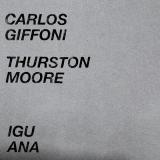
Carlos Giffoni reconnects with Thurston Moore for two sides of loose-limbed axe noise, oscillator worship and hard-phased, Spacemen 3-style feedback.
Giffoni’s been on a roll recently. Since the No Fun founder returned to the scene with »Vain¡, a genius set of synth mutations that appeared in iDEAL back in 2018, he’s been slowly ramping up the activity, dropping the celestial »Dream Walker« on Stephen O’Malley’s Ideologic Organ in 2024 and following it with »Pendulum«, a bumper compendium of collaborations, just a few weeks back. For those who remember Giffoni’s first trip round the block, he was always able to hold his own chopping it up in person, not just by mail.
Just scrub through his early catalog and you’ll see collabs with Nels Cline and Chris Corsano, Merzbow, Jim O’Rourke and Lasse Marhaug, and of course, Thurston Moore. The two rekindle their thing on »IGUANA’« picking up where 2001’s fabled »4 Guitars Live« performance left off. Here, Giffoni straddles a tabletop synth and FX while Moore attacks his signature Jazzmaster with a drumstick and a screwdriver – vibes fully intact.
Moore is on blistering form, sounding as if he’s taken a step back to refresh his approach since the early ‘00s when he could be spotted moonlighting on any number of basement-adjacent noise sides. Sawing at his strings and turning the guitar into a shrieking resonator, he leaves only faint vapours of the classic Sonic Youth sound as opiating accents on his animalistic wails and rumbles. On the opening half, his whammy – assisted shreds are balanced out by Giffoni’s off-world whirrs and airlocked vibrations, building a dense wall of noise towards an unexpectedly elegiac conclusion. At some point, Giffoni’s rasping churr transforms into a simmering shudder and Moore’s into hymnal drones – squint a bit and you could almost call it pretty.
Of course, they ramp things up on the flip, dissolving the melancholia with smokey white noise and twangy, post-Derek Bailey chimes that Giffoni accompanies with aggy oscillations. Like every great taped noise set, the recording quality is crucial - »IGUANA« was captured from the pit by Guillermo Hernandez Avendano, the dad of Lia Miranda who provides the cover photo. It’s that kinda show.
- Fire Back About Your New Baby's Sex
- The Peter Criss Jazz
- Haven't Lived
- Afro Pop
- You Drink A Lot Of Coffee For A Teenager
- Ones All Over The Place
- I Never Liked You
- Details On How To Get Iceman On Your License Plate
- A Lot Of People Tell Me I Have A Fake British Accent
- Lets Face It Pal, You Didn't Need That Eye Surgery
- Fire Back About Your New Baby's Sex
- Haven't Lived
- Afro Pop
- The Peter Criss Jazz
- Ones All Over The Place
- I Never Liked You
- Details On How To Get Iceman On Your License Plate
- Let's Face It Pal, You Didn't Need That Eye Surgery
Maui Blue & Orchid Vinyl. Nachdem wir American Don mit (Steve) Albini fertiggestellt hatten, waren wir kurz davor, dass die Spannungen zwischen uns so groß wurden, dass wir uns trennen mussten. Ich (Eric) war überzeugt, dass wir bei den Aufnahmen die wahre Essenz der Songs verloren hatten. Es war keine einstimmige Entscheidung, mit Steve aufzunehmen. Wir haben das Album komplett mit Gitarrenloops geschrieben, und Team Storm & Stress wollte im Studio mit Pro Tools weitermachen, was sowohl zu dem passte, was wir machten, als auch zu dem, was wir erreichen wollten. Steve hatte gerade den großartigen A-Raum bei Electrical fertiggestellt, und Damon bestand darauf, dass wir dort die Drums aufnehmen würden. Er gab in dieser Frage nicht nach. Sobald wir dort ankamen, wurde uns klar, dass alle Songs, die wir mit unseren Pedalen in mehreren Overdubs geschrieben hatten, nur Mono-Gitarrenaufnahmen zuließen. Wir haben das Problem gelöst, indem wir die Songs zu einem einzigen Loop gespielt und alle Gitarren später überlagert haben, sodass ein volles Stereofeld entstand, das zu den grandiosen Drum-Aufnahmen von Steve passte. Dieser Ansatz hat unsere Spielweise total verändert. Das hat zwar magische Momente der Improvisation ermöglicht (Peter Criss Intro), aber als das Album fertig war, klang es aufgebläht und die Darbietungen waren träge. Ich war mir immer sicherer, dass der Sound des Akai Headrush und die Tempi, die er für Damon vorgab, das Herzstück dieser Songs waren. Ian stimmte mir zu. In einem gewagten letzten Versuch hatte ich die Idee, Greg Norman (der für Steve arbeitete!) anzurufen und ihn zu fragen, ob wir nach unseren nächsten Shows heimlich in sein Studio in S. Chicago kommen und das Album LIVE neu aufnehmen könnten. Es war ein riesiger Schritt, der niemals hätte funktionieren können, aber wie durch ein Wunder waren alle einverstanden, und wir versuchten es. Greg hat uns persönlich und professionell in unserer heißesten Phase eingefangen. Die Tempi sind schneller, und niemand hält sich zurück. Diese echten Live-Bänder zeigen die Songs genau so, wie wir sie auf Tour gespielt haben, wo sie zwischen Juni 1999 und Juli 2000 entstanden sind. Jetzt, 25 Jahre später, wurden die Greg-Norman-Aufnahmen entstaubt und digitalisiert. Mit Hilfe moderner Restaurierungswerkzeuge und dem Fachwissen von Sir Bob Weston konnten wir diese Aufnahmen zum ersten Mal neu abmischen und mastern. - Eric Emm, Bassist
- 1: Ride
- 2: Ain't That Right
- 3: Hot Cookin
- 4: Can't Go Back To Jersey
- 5: Missing My Baby
- 6: Holla!
- 7: Banger
- 8: Thanks And Praise
- 9: Let The Music Play
- 10: Free
- 11: Beautiful
- 12: Rainbow
- 13: Breakin' Up
- 14: Still Hangin' Around
- 15: Sneakster
This double LP yellow vinyl 20th anniversary release of G. Love's "Lemonade" celebrates one of his most beloved and successful records. The release accentuates G. Love’s unmistakable blend of blues grit, hip-hop cadence, and sun-kissed songwriting and captured a creative peak that welcomed an all-star cast of collaborators including Jack Johnson, Ben Harper, Marc Broussard, Blackalicious and more. Critics praised its warmth and ease, often calling it one of G. Love’s most effortlessly joyful projects, and fans have carried its songs with them for two decades.
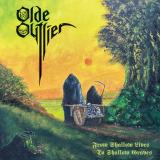
In many ways, OLDE OUTLIER rise from the legacy of Australia’s late Innsmouth — a cult band whose 2014 debut Consumed by Elder Sign endures as an underground classic. The connection is more than symbolic: guitarist Askew, vocalist Appleton, and bassist Greenbank all passed through Innsmouth’s ranks, while Beau Dyer now leads this new incarnation after years spent shaping the sound of Innsmouth and the earlier project Grenade.
From Shallow Lives to Shallow Graves marks OLDE OUTLIER’s recorded debut, a four-track, thirty-five-minute descent into their own cavernous realm. While faint echoes of Innsmouth’s inspirations — Armoured Angel and early Samael — linger, the band draw from a broader and far more obscure constellation. Shades of Amon Goeth, Martyrium, Head of the Demon, and Florida’s Equinox collide with the spectral drift of Ophthalamia and early Katatonia and Tiamat, all eroded and blackened into something untraceable.
Despite these depths, OLDE OUTLIER avoid any sense of technical indulgence. Their sound carries a rough, deliberate simplicity — a raw and smoky power that pushes each of the four long tracks forward with unhurried certainty. The songwriting unfolds through patient repetition and subtle shifts, allowing motifs to seep into place and gradually hypnotise. Appleton’s low gutturals bring a grim, expressive edge reminiscent of early Septic Flesh or Thou Art Lord, while the more open, lead-driven riffing imparts a distinctly archaic heavy metal aura that separates this band from their origins.
At many moments, that union of grit and atmosphere surpasses even Innsmouth’s achievements. Accented by well-placed clean and chorused guitar lines, From Shallow Lives to Shallow Graves becomes an immersive and strangely timeless work — a glimpse into an ancient, dimly lit world where OLDE OUTLIER feel less like a new formation and more like something unearthed from a forgotten past.
COLORED VINYL[29,20 €]
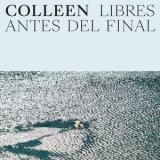
The compositions of Colleen, aka multi-instrumentalist CeIücile Schott, are as richly varied as they are precise. Each of Colleen"s albums are shaped by her predetermined distinct instrumentation and parameters, including works composed entirely of music boxes, pocket synthesizers, and antiquated stringed instruments. The connective essence of Schott"s music is in her ability to create pieces within this transcendent specificity that are both expansive and imbued with profound emotions. Libres antes del final is an album that reaches for the hope and desire to be truly freed from unnecessary suffering and harmful thoughts before reaching the end of one"s life cycle. Schott composed and performed Libres on the Moog Matriarch, centering the record on a pulse-driven, bubbling energy with constant momentum. She then reamped the music in one of her favorite spaces in Barcelona, Casa Montjuic, accentuating the album"s sense of movement. The reamping process adds a literal physicality to the album, as carefully chosen and placed microphones (including the famous Neumann KU100 binaural head) capture both the venue"s PA sound itself and the venue"s acoustics. Colleen"s music translates snapshots of Schott"s life into singular pieces, often instrumentally transmuting a dense web of sensations into wondrous sonic terrain. Schott"s deft manipulation of the Moog Matriarch makes each subtle adjustment feel monumental.
Black Vinyl[26,68 €]
The compositions of Colleen, aka multi-instrumentalist CeIücile Schott, are as richly varied as they are precise. Each of Colleen"s albums are shaped by her predetermined distinct instrumentation and parameters, including works composed entirely of music boxes, pocket synthesizers, and antiquated stringed instruments. The connective essence of Schott"s music is in her ability to create pieces within this transcendent specificity that are both expansive and imbued with profound emotions. Libres antes del final is an album that reaches for the hope and desire to be truly freed from unnecessary suffering and harmful thoughts before reaching the end of one"s life cycle. Schott composed and performed Libres on the Moog Matriarch, centering the record on a pulse-driven, bubbling energy with constant momentum. She then reamped the music in one of her favorite spaces in Barcelona, Casa Montjuic, accentuating the album"s sense of movement. The reamping process adds a literal physicality to the album, as carefully chosen and placed microphones (including the famous Neumann KU100 binaural head) capture both the venue"s PA sound itself and the venue"s acoustics. Colleen"s music translates snapshots of Schott"s life into singular pieces, often instrumentally transmuting a dense web of sensations into wondrous sonic terrain. Schott"s deft manipulation of the Moog Matriarch makes each subtle adjustment feel monumental.
Another Squid inks its way into existence. The new project from northern operator
Accented Measures, whose synth tower stacks taller than the horizon it’s aimed at. A self
made groove patroller, Aqua Surf releases four well swung jewels of power, an ode to
motion, pressure, and late night systems thinking.
Each track is cut from the same cloth but bent at a slightly different curve, offering a
focused glimpse into the Aqua Surf orbit. You’ll find heavy nods to the Quasimidi
classics, early Korg rompers, quirky Roland workstations and lost dub style vocal
fragments strung throughout the EPs play through. Ultimately, the record is a multi
planetary trip built on MPC sequences, where swing does the steering and texture does
the talking.
Functional but curious, these are tracks designed to travel through rooms, through
bodies, through time slots where the lights stay low and the floor stays sweaty.
- A1: Devil In My Closet
- A2: Angel Of Sorrow
- A3: Wild Streak
- A4: Couldn't Do Nothin
- A5: Tiny Coffin
- B1: World Of Trouble
- B2: Voodoo Edge
- B3: Person To Person
- B4: Take Me Down
- B5: One Believer
One Believer, the Elektra debut by the late bluesman John Campbell, was outside of virtually every trend on major labels and in pop at the time. Other than Chris Whitley's Living with the Law, it was the only roots record issued on a major label in 1991.
A deeply atmospheric record full of subtle shimmering organs and warm guitar textures that accent the dreamy spooky side of the blues more than the crunchy stomp and roll that Campbell was known for in the clubs and displayed on his follow-up Howlin' Mercy. Tracks like "Angel of Sorrow," "World of Trouble," and "Wild Streak" offer shimmering ambient textures from which the blues emanate from the ether. Campbell was living and working in New York and his music was certainly influenced by that late-night environment. These are beautiful songs, tempered in shadow and restraint while baring their teeth at all the right moments. On "Couldn't Do Nothin'," "Devil In My Closet," and "Person to Person the roadhouse magic comes out. The album's last two tracks "Take Me Down" and the title track are menacing in their conviction and creepy swampy in execution.
One Believer is available as a limited edition of 750 individually numbered copies on blue vinyl and contains an insert.
Having transitioned between London, Lisbon and back again as a DJ and producer, as well as across the world as the drummer in beloved pop group, Metronomy, Anna Prior remains an essential and independent force in alternative and electronic music culture. The current epicentre of this creativity is undoubtedly Prior’s own label, Beat Palace. Established in 2021, it has showcased the talent and diversity of FLINTA producers carving an esoteric space within alt-pop and electronic music.
Returning to the imprint for the first time since its inception, Anna Prior utilises this vital platform to refine her own craft across the five-track ‘Firefly’ EP, exploring new moods and styles, balancing playfulness with vulnerability, shadow and light. Prior describes ‘Firefly’ as, “a collection of moments - some fleeting and some stubbornly lingering.... Each track came together almost by accident, but now feels to me like they've always belonged together.”
Lead single ‘True For You’ pulsates with soft euphoria, as Prior weaves softly cascading synths with her own earnest declarations, composing a sensual, sophisticated drama about “letting other people's differing truths sit alongside your own” that nonetheless carries a distinct club energy. In contrast, title track ‘Firefly’, written alongside co-producer Matt Karmil, unfolds as a spoken-word piece, investigating memory, “the tricky mirror that reveals more than it conceals”. Throughout, Prior’s inquisitive, native Yorkshire accent anchors a wide-eyed soundscape that gradually, impressively escalates into the cinematic.
Centerpiece track ‘Silence’ turns this approach inside out, escalating the tempo and revealing a DnB-influenced shade of Prior’s work that is certain to surprise and impress, scattering elegant syllables amongst serious soundsystem pressure as Prior navigates the feeling of being ghosted; by friends, lovers and even her own work. ‘No More Drama’ returns to pop, presenting a bold cover of Mary J. Blige’s classic that inverts the original’s unmatched intensity for a more serene, but no less affecting rendition.
Finally, ‘Beside You’ delivers one last, sublime blend of Prior’s songwriting and sequencing instincts, a simple pop incantation that coaxes dancers into a soft trance while concluding with a reminder from Prior that “amid life’s unanswered calls and fleeting highs, there is always space to feel safe and unjudged.” Concluding this sublime EP, Prior finds new ground to settle into her talents.
- A1: Give It To Me Baby
- A2: Ghetto Life
- B1: Make Love To Me
- B2: Mr. Policeman
- C1: Super Freak
- C2: Fire And Desire
- D1: Call Me Up
- D2: Below The Funk (Pass The J)
Rick James Blends Brazen Attitude, Fearless Sexuality, and Shrewd Charisma on Street Songs:
Punk-Funk Album Aims for the Hips and Head, Includes the Timeless Hit “Super Freak”
Sourced from the Original Master Tapes and Strictly Limited to 4,000 Numbered Copies:
Mobile Fidelity’s 180g 45RPM 2LP Set Presents 1981 Smash in Audiophile Sound for the First Time
1/4” / 30 IPS analogue master to DSD 256 to analogue console to lathe
“Punk funk” was a relatively unknown concept before 1981. But once Street Songs took the charts by storm that year, the world soon knew about what became Rick James’ signature style. And how. True to its name, Street Songs blends outspoken sexuality, brazen attitude, and edgy commentary amid contagious R&B-fueled arrangements that simultaneously aim for the hips, head, and various nether regions. And it’s never sounded better.
Sourced from the original master tapes, strictly limited to 4,000 numbered copies, pressed at Fidelity Record Pressing, and housed in a Stoughton gatefold jacket, Mobile Fidelity’s 180g 45RPM 2LP set presents James’ platinum-certified effort in audiophile quality for the first time. Playing with crisp dynamics, lively textures, airy headroom, and revealing clarity, this collectible edition of the record that stayed at the No. 1 spot on the R&B Album Charts for 20 weeks invites you to get closer to music that beckons you to turn your space into a private dance floor.
Then again, you’ll likely be so taken by how the taut bass lines, snappy rhythms, and four-on-the-floor beats — all rendered in stunning detail and with full-bodied architecture — come across with such accuracy and presence, you might stay pinned to your seat. On this pressing, the soundstaging, imaging, and lit-fuse energy of Street Songs reach new heights. Everything from the rubbery feel of the guitar lines to the depth of James’ temperature-raising vocals to the scale of the horn charts emerges as if James and his ace session crew set up in your room.
The Buffalo native and his ensemble waste no time getting their message across. On the album-opening “Give It to Me Baby,” James and company lay down a mix of sleek funk and pulsing disco that practically activates the bright lights of a discotheque and stimulates the libido of anyone within earshot. Having reached No. 1 on the Billboard Hot Soul charts, the song is pure sex — and just one of the carnal delights on a record that embraces the subject as fearlessly as James does his identity.
Of course, the most famous of James’ erotic excursions — the timeless “Super Freak” — hit No. 1 on Hot Dance Club Play charts, No. 16 on the Hot 100, and, later, No. 153 on Rolling Stone’s list of the Top 500 Songs of All Time. Bolstered by a quavering keyboard theme and electro riffs, the much-sampled track worms itself inside your muscles with smile-inducing subject matter, gliding vocals, nimble movements, a hot tenor-saxophone solo, and backing vocals by the Temptations.
The iconic Motown group isn’t the only celebrated guest artist on the Grammy-nominated Street Songs. James’ then-labelmate, Stevie Wonder, lends harmonica to the frank sociopolitical narrative on “Mr. Policeman,” a protest tune that also manages to stroll ’n’ strut via simmering organ, staggering brass accents, and James’ gritty vocal performance. In addition to contributing backing vocals on several cuts, Teena Marie turns in one of the album’s signature moments on “Fire and Desire,” a romantic old-school duet with James that impresses with smoothness, sensitivity, and smokiness.
High-profile colleagues aside, James remains the undisputed star, a figure whose leather-and-latex attire, braided hair, and natural swagger made him misunderstood by some in the mainstream and embraced by everyone in the know as a true original. As a testament to his magnetism and skills, his charisma and rawness seemingly seep through every note, whether on the balladic sweep of the risqué “Make Love to Me” or strident, poke-and-prod persuasion of the moonwalking “Call Me Up.”
On the closing “Below the Funk (Pass the J),” an uptempo autobiographical tale that addresses the visionary musician’s second-favorite love, the singer acknowledges his upbringing and inseparable connection with his roots — an homage to where he began and a toast to where he’s gone.
Rick James, keepin’ it real on Street Songs, still as real as it gets.
The sunshine of Andalucía has come to the Bordello. The musical magpie that is Daniel Monaco arrives with just a hint of a Spanish accent and a daring record under his arm. Known for finding the intersections of boogie, disco, italo and house, Monaco is going that bit further with Manuel Rodriguez for the Flamenca EP. Melting the percussive drive of his machines with the spirit of Southern Spain, the four tracks on offer are a journey into a sound and style that is inspiringly original. Ruffled hi-hats and smooth basslines are the foundation for the title piece. The soul of the Sierra Nevada and the warmth of Granada pour forth through Rodriguez’s unparalleled performance. The claps of Chicago are reimagined as an interplay of melody and rhythm awakens; the traditions of Flamenco married with a modern groove. Talent and technique are coupled with pure passion in the intense instrumentation of “Fantasia” before the flip shifts with “Sìnteme.” The culture of Italy and Spain combine, taut string plucks peppered in handclaps before the Only Bee’s vocals descend. Ardent, the lyrics tell of our shared humanity through the dialect of Ischitella from the southern tip of Italy. The homes of our musicians are the inspiration for the finale. Blending the decadent splendour of Napoli with the old-world romance of Granada, Rodriguez’s guitar is the focus of “Granapoli.” Bitter-sweet, blissful and sorrowful, a lone beat wandering through the winding melody that twins these great cities. From Italy and Andalucía to Amsterdam, a 12” like few others.
- Blink
- Waiting Game
- Telling Me
- Lonely Rose
- Sweet Time
- Tides
- Like This
- What Would I Do
- Without Her Loving You
- Missing Out
- Resting Blues
British singer-songwriter Lucy Kitt unveils her highly anticipated second album, Telling Me, a deeply personal collection that shifts focus from introspection to storytelling, capturing the lives and struggles of those closest to her. Drawing from her love of 70’s Laurel Canyon folk, 90’s indie rock, and country music, Kitt crafts narratives that blend her own experiences with compassionate observations of loved ones. Based on a raw acoustic “three chords and the truth” style of songwriting that ripples throughout, the album expands with full-band arrangements that give a huge range and richness to the sound.
Though influenced by American musical traditions, the Essex-native maintains her distinctive voice and authenticity, ensuring the music remains unmistakably her own. Following her 2018 debut Stand By, this new record represents a more mature approach to songwriting, written during her early 30s and completed in the 2021 lockdown – a storybook of songs capturing that moment in time.
Musically, Telling Me showcases Kitt's stripped-down acoustic foundations, while incorporating fuller arrangements that blend her love of Nick Drake, Bob Dylan, Gram Parsons, Joni Mitchell and Joan Baez, with music she loved as a teenager such as The Lemonheads and Veruca Salt. The album features collaborations with an impressive roster of musicians, including Jay Starkey on drums, Nashville-based pedal steel virtuoso Spencer Cullum, Treetop Flyer’s Sam Beer and longtime collaborator Pat Kenneally on drums and piano.
Recorded between 2021-2023 at London's Lightship 95 studio at Trinity Buoy Wharf, the album was co-produced and engineered by Dave Holmes, with some musicians contributing remotely from Nashville and London.
Kitt's commitment to authenticity extends to every aspect of the album, from the down-to-earth, home-based album artwork which represents her life right now as a musician and a working mum, with all the wonderful chaos that comes along with it. Also her decision to maintain her natural accent throughout her vocals. "I have always retained my authentic self in my songs," she explains. "Always singing with my own accent, despite the influences of all the bands and artists over the years."
Kitt has been songwriting and performing for over 20 years, starting in a riot grrl band in her teens in her hometown of Romford, Essex, before evolving into the thoughtful folk storyteller she is today. A semi-finalist at the BBC Young Folk Awards in the early 2000s, she has performed at major festivals including Glastonbury and Cambridge Folk Festival, building a reputation for intimate, lyrically-focused performances.
Telling Me is a resplendent collection of songs, capturing the human experience with great empathy, honesty and musical sophistication that has become Lucy Kitt's signature.
Hot Creations latest Vinyl Sampler featuring four of the Hottest recent release on Hot Creations.
The A Side features two notable figures in the electronic scene: Steve Bug and Denney, who team up with Mikey V creating an old-school house gem which has been going down a storm on dance floors. Next up is Collier’s rework of Joshwa ‘Bass Go Boom’, Collier comes in hot and heavy with booming low-ends and snaking bass grooves, infusing 'Bass Go Boom' with a quirky funk and a deep, dubby bounce!
On the flip and Vintage Culture & Vinter ‘High”, huge anthem finally gets a vinyl release. This hot as hell house anthem is an essential weapon! Finally Hot Since 82 ‘Sonedo’, dives deep into a lush bass-driven groove that envelops the senses, with rhythmic builds and playful percussion accents transporting listeners into an all-night hypnosis.
- A1: Design - Premonition
- A2: Vision - Lucifer’s Friend
- A3: Richard Bone - Alien Girl
- A4: John Howard - I Tune Into You
- A5: Ian North - We’re Not Lonely
- A6: Selwin Image - The Unknown
- B1: Harry Kakoulli - I’m On A Rocket
- B2: Rich Wilde - The Lady Wants To Be Alone
- B3: Billy London - Woman
- B4: Alan Burnham - Science Fiction
- B5: The Microbes - Computer
- B6: The Goo-Q - I’m A Computer
- C1: Gerry & The Holograms - Gerry & The Holograms
- C2: The Warlord - The Ultimate Warlord
- C3: Die Marinas - Fred From Jupiter
- C4: Dee Jay Bert & Eagle - I Am Your Master
- C5: Peta Lily & Michael Process - I Am A Time Bomb
- C6: Sole Sister - It’s Not What You Are But How
- D1: Alasdair Riddell - Do You Read Me?
- D2: Karel Fialka - Armband (The Mystery Song)
- D3: John Springate - My Life
- D4: Idncandescent Luminaire - Famous Names
- D5: Disco Volante - No Motion
- D6: Dream Unit - A Drop In The Ocean
2025 REPRESS ON TRANSPARENT GREEN VINYL
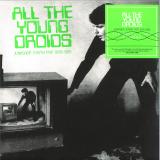
Compiled by Philip King “And then came the rise of synth pop : blokes with dodgy haircuts hunched over keyboard-operated machines stuffed with wires and do-it-yourself tone oscillators making sounds like a brood of geese passing gas in a wind tunnel. Whoopee! This is the way the ‘70s ended : not with a blood-curdling bang bang but with a cheap, synthesized, emasculating whimper.” NICK KENT, NME. All The Young Droids: Junkshop Synth Pop 1978-1985 is a new compilation that charts the underbelly of the epoch-defining sound of the synthesiser in 80s popular music. Compiled by Philip King (previously seen compiling All The Young Droogs, Glitterbest and Boobs - The Junkshop Glam Discotheque), the music here connects the dots between DIY synth enthusiasts grappling with new, cheap synthesisers at the tail-end of punk and wannabe, jobbing songwriters enthral to the new music pioneered by Gary Numan, Depeche Mode and Daniel Miller’s Mute Records. Featuring rare tracks of auto-didactic progressive pop music, proto-techno punk, shoot-for-the-stars-land-in-the-gutter chart flops and heralded, underground synth classics, School Daze paints a picture of beautiful failure. Complete with extensive sleeve notes written by King and never before seen imagery, all 24 tracks were remastered by RPM in-house engineer Simon Murphy, many from vinyl copies due to lost master tapes. The story told on All The Young Droids is one of the dawning opportunity presented by both the emergence to the market of cheaper analog synthesisers and the distribution networks plus indie labels that exploded with the advent of punk music in 1976. While the music that sprouted out all over the globe in the wake of these factors was decried as fake, plastic, a refutation of punk’s guitar-led revolution, it’s telling that much of the music on All The Young Droids.. was created in bedrooms, ramshackle studios and home-made set ups with often borrowed equipment. In the era of record labels jumping to capitalise on the success of The Sex Pistols, The Clash (both on major labels, of course) these artists struggled to stand out from a new gold-rush with next to no budget or PR team. With radio and labels desperate for the new Yazoo, what resulted was a testament to necessity being the mother of invention. At the time, the synthesiser was the music of the future, a shiny new machine that could paint like an orchestra with a single finger and a 4-track. In the hands of Manchester avant-pranksters Gerry & The Holograms it’s a pulsing, sardonic weapon.. the only instrument on the Messthetics classic lampooning of New Wave fashion. In Hamburg, a 16 year old Andreas Dorau used it to write and record (with his female classmates on vocals) a global smash in Fred Vom Jupiter (later licensed to Mute Records). The hard-to-find English version (Fred From Jupiter, natch) is included here. Many artists with alreadystoried careers caught the bug and recorded synthesiser-fuelled peons to space, computers, the future and, of course, love-interests. Harry Kakoulli, late of Squeeze, recorded a solo album in 1979 that included the incredible power-synth-pop smash-that-never-smashed I’m On A Rocket. Similarly, Ian North of Neo and American Power Pop stalwarts Milk ’n’ Cookies bought a Korg MS20 and used a tape machine to record We’re Not Lonely, an absolute lost-classic of minimal synth pop. We’re Not Lonely also features on the Junkshop Synth Pop sampler 7” twinned with John Howard unreleased track You Will See, released April 12th 2025. There are plenty of compilation debuts in evidence. Sole Sister were a mysterious trio who were featured on the Scaling Triangles compilation of female-fronted, queer-adjacent post-punk / underground music that also featured The Petticoats. Selwin Image were from San Francisco and featured members of the recently defunct power pop/punk group The Pushups. Their stupidly catchy The Unknown fizzes with New Wave energy - think XTC to Sparks but remains unreleased until now. Dream Unit’s A Drop In The Ocean is an early synth wave cut, positively teaming with Joy Division instrumentation, previously only released on a long-forgotten and super rare, self-released EP. Incandescent Luminaire’s Famous Names belies an archetypal struggle of a small-town trying to make it in a cruel industry but is a thrilling New Romantic-Synth Wave cross over with a OMD gloominess that’s a joy to hear. Feminist Minimal Wave track I Am A Time Bomb by performance artist Peta Lilly and Michael Chance is a revelation destined for new found cult status. It was released on 7” and lost until now. The flipside to the subterranean, never-made-it synth pop mentioned above are the ambitious, even fruity attempts at success that have a perennial elegance to their confidence. New Jersey-ite Billy London (real name Ed Barth) tried to cash in on the synth boom with Woman, released by a major label, a lurching new wave track built on the Louie Louie rhythm and a wonderfully camp Lou Reedstyle sleazy vocal before exploding in the synthesised chorus. The song bombed but with a chorus like this, you have to wonder why? Ex-Glitter Band member John Springate’s My Life is truly epic, with doomed chord progressions and massive sounding drums turning into at least 3 different songs in the course of the track. Before you wonder what’s going on the song resolves with a glorious return to the main refrain. The dry-ice-dressed dance floor is well catered for too. Design’s Premonition and Vision’s Lucifer’s Friend are stone-cold minimal synth bangers, well loved but given a new lease of life here. The Warlord’s The Ultimate Warlord was released in 1978, a homespun proto Hi NRG banger that was later re-recorded by The Immortals in Canada who had a club hit with it. One-man- band Disco Volante’s No Motion was re-issued by Synth wave label Medical in 2012 but makes its first vinyl compilation appearance here. Close your eyes and you can imagine what Lawrence of Felt would have sounded like with some cheap Korgs a little earlier in his career. Gibraltar-based trio The Microbes imagined a computer programming people to dance - how prescient - and ended up with a propulsive, robo-funk track with splendid rubbery bass playing over a tectonic drum machine. Previously picked up by Belgian label Stroom TV, Dee Jay Bert & Eagle’s heavily Euro-accented I Am Your Master demands the listener to “come to paradise!” In a frankly terrifying manner. All The Young Droids is the first compilation to peel away from the narrative that dour, Minimal Synth and Cold Wave were the only musical children of the first rush of synth pop. Philip King and School Daze Records describe a much more complicated world: along with the austere, Brutalist children of Daniel Miller (who produced Alan Burnham’s Bowie-Low-influenced Science Fiction here) was a plethora of desperate cash-ins, accidental mainstream hits, ambitious pop dramas and major label punts that went nowhere. Crucially, the compilation blurs the line between junk and treasure. What if the two things are interchangeable. What if it’s all science fiction?
The Swedish underground legends return with a brand new album. Let this reddit user take over …
“Listening to Brainbombs has been one of my weirdest experiences with music. Brainbombs are most definitely a band. I guess at the core they’re a hardcore punk/noise rock hybrid I guess? But… It's so unlike anything I’ve ever heard and I still don’t know if it's good or bad. I saw the edgelord Ed Gein album cover, and it intrigued me, so I listened to their biggest song and it was easily THE WORST thing I had EVER FUCKING HEARD. I shut it off as soon as it got to the vocals. I was shocked by the fact that it had almost a half million streams. But, a few hours later, I clicked on it again and didn’t know why.
Over the past few days, I’ve listened to all of their discography and looped a lot of it. And I don’t even think I like them. The music is abysmal, it's the same single riff and verse repeating for 5 minutes. To make it worse, the vocals are just a guy with a swedish accent awkwardly talking about murder and rape. That sounds awful right? It is awful. But at the same time I want to keep listening? It’s so childishly edgy and obnoxiously repetitive but so.. intriguing? Catchy? I’m not even sure. It's one of if not the weirdest experience I’ve ever had with music and I don’t know how to feel about it.”
Swan Song
The vinyl LP at the heart of this éthiopiques 31 tracks 2 to 11 was one of the very last vinyl records ever released in Ethiopia. But above all it represents, we felt, the absolute masterpiece of the Ethiopian Groove – the Swan Song of Swinging Addis. The album leaves a clear idea for posterity of the level of sophistication and mastery that modern Ethiopian music had achieved, before being crushed under the Stalino-military heel of the Derg – as the bloody revolution that was unfolding came to be called.
Ethiopia1976.
The Revolution that broke out in February 1974 rolled on in a ruthless march. The whole of Ethiopian society was utterly stunned. The bouquets of flowers handed joyfully to the first tanks of the coup d'état were to wilt very rapidly. From September 1976 to February 1978, 18 months of Red Terror (the name given by the junta itself) spilled blood throughout the country. This fratricidal conflict took its heaviest toll among students and youth. The shift from feudalism to a cruel and primitive Stalinism left the country's citizens deeply traumatised, and snuffed out any pretence of activism, whatever the sector of society. This ice age was to last for seventeen long years.
ሙሉቀን፡መለሰ Mulukèn Mellèssè Muluqän Mälläsä
It was three tracks by Muluken that served as the opener for éthiopiques-1 more than 25 years ago. Seven more tracks appeared on éthiopiques-3 and 13, all accompanied by The Equators, which was soon to become the Dahlak Band.
The first track, Hédètch alu, also the very first piece that Muluken ever recorded, left audiences both unsettled and amazed. Reflecting the singer's extremely young age (he was just 17 at the time), this angelic voice mystified many, who thought they were in fact listening to a feminine voice. He was not yet 22 when he released his last vinyl record in 1976 with Kaifa Records (KF 39LP), one of the very last to be issued in Ethiopia, before the cassette tape became the dominant medium for music distribution – and before the new revolutionary regime put a stop to all independent musical life, via an unspeakable barrage of prohibitions and other persecutions.
Mulu qèn, literally, “A well filled day”. This tender maternal intention wasn't enough to ward off the cruelty of fate. His mother's premature death drove Muluken to leave his native Godjam, in northeast Ethiopia, to live with an uncle in Addis Ababa. Born Muluken Tamer, he took his uncle's last name – Mèllèssè.
The spelling Muluken appeared in his administrative records. Transcription of Amharic to the Latin alphabet, both in Ethiopia and for scholars, gives rise to controversies and quibbles that can never be neatly settled. French allows for a closer approximation of the original pronunciation, thanks to its battery of accent marks, confusing as they may be to anglophones.
Between rather accommodating administrative record-keepers and the various versions that pop up in interviews given by the artist, Muluken's year of birth oscillates between 1953 and 1955…
1954? One thing is certain: the artist's talent made itself known very early indeed, because he got his start in 1966-67, at the age of 13 or 14. Photos from the period attest to his extreme youth. It's a strange sort of initiation for a very young teenager to become a sensation in the heart of Addis's nightlife at the time, Woubé Bèrèha – the Wilds of Woubé. And what's more, in the club of the Queen of the Night, the Godjamé Assègèdètch Alamrèw herself, the very same that was portrayed by Sebhat Guèbrè-Egziabhér in his novel-memoir Les Nuits d’Addis Abeba2… The legendary female club owner who is remembered to this day by the capital's ageing boomers.
Muluken first tried his hand at the drums, before he grabbed the microphone. He emigrated briefly to the Zula Club, across the street from the old Addis Post Office, one of the ground-breaking bars of the burgeoning musical scene, before joining the Second Police Band in 1968, for around three years. He spent a few months with the short-lived Blue Nile Band founded by saxophonist Besrat Tammènè. As the musical scene grew increasingly successful, and pulled slowly but decisively away from its institutional ties, Muluken released his first 45rpm single in February 1972 (Amha Records AE 440). It was included in two LP Ethiopian Hit Parade compilation albums in September of the same year. All in all, Muluken released eight two-track 45s and the same number of original cassette tapes between February 1972 and 1984, the year that he departed for permanent exile in the USA. After converting to Pentecostalism in 1980, Muluken gradually abandoned all secular musical activity. In 1985, at the end of a concert in Philadelphia, he decided to quit concerts and recording for good. Mèlakè Gèbré, the historic bass player from the Walias band who was playing with him that night, recalls that everything appeared so irredeemably diabolical in Muluken's eyes, that it was to be the end of his contribution to Ethiopian Groove.
The end of the story, the beginning of a legend.
Dahlak Band, forgotten by History
Aside from his personal history and vocal talents, it must be remembered that Muluken Mèllèssè was one of the biggest names in the musical innovations that marked the end of the imperial period. These éthiopiques aim to convince those who are just discovering this hidden gem... As for Ethiopians themselves, they are to this day captivated by this singular and atypical figure in the Abyssinian pop landscape – even though he withdrew from public life some 40 years ago. Incorrigible devotees of poetic twists, of more or less hidden meanings, Ethiopians appreciate above all the care Muluken took in choosing his lyrics and the writers who penned them, such as Feqerte Haylou, Alemtsehay Wodajo and, here, Shewalul Mengistu (1944-1977). Love songs, written by women, a far cry from the conventional drivel that pleases sappy sentimentalists.
Muluken is equally acclaimed for his perfectionism when it came to music, the opposite of the overly casual approach that is all too common. He remained a faithful partner of musicians who came from a lineage that borrowed from several inventive and pioneering bands (Venus, Equators, Dahlak). Amongst them were certain artists who began their musical lives with Nersès Nalbandian at the Haile Sellassie Theatre and who come of age in around 1973 – at just the wrong time, you might say. Among them were the pillars Shimèlis Bèyènè (trumpet), Dawit Yifru (keyboards) and Tilayé Gèbrè (sax & flute). Most notably Tilayé Gèbrè, certainly one of the most important musicians, composers and arrangers of his generation, of the end of the imperial era, and of the early years of the Derg.
It was only in 1981 that a miraculous opportunity arose for Tilayé to escape the Stalinist paradise of the dictator Menguistou Haylè-Maryam. Once again it was Amha Eshèté (1946-2021) who provided a solution. The spirited and courageous producer, who had been in exile in Washington since 1975, succeeded, thanks to his incredible perseverence, in bringing the Walias Band to the USA. It was, in fact an extended Walias Band comprising ten musicians3, six of whom chose to slip away after a few concerts and the recording of an LP (The Best of Walias, WRS 100). Tilayé Gèbrè was one of these. He has been living in the USA ever since. There he joined the then-nascent Ethiopian diaspora, which lived largely unto itself, and was making only very modest headway in the American musical market. It seems unfair that Tilayé Gèbrè and the Dahlak Band were not able to benefit earlier from the public recognition that they do deserve.
A similar draining away of the top-rate talents would lead to the reorganization of the major groups of the “Derg Time”. The remaining artists spread themselves around between Ibex Band (renamed Roha Band), Ethio Star Band and a remodeled Walias Band. That spelled the end of the Dahlak Band.
With this record, produced by the essential Ali Abdella Kaifa a.k.a. Ali Tango, we can appreciate everything that the Derg not only destroyed, but also prevented from flourishing. This gem of Ethiopian-style afrobeat came out in 1976 (and, by way of a parenthesis, before the FESTAC 1977 in Lagos, which was attended by an impressive delegation of Ethiopian musicians — although Fela was already personna non grata in his own country). Despite everything that might distinguish this ethio-groove from Fela’s music – no colonial axe to grind, no question of political confrontation with the authorities, no claims to negritude or Africanism for the Ethiopian musicians, and less extrovertion! –, this LP fits beautifully into the saga of intense and electrified soul of the new “African” groove that Fela and Manu Dibango embodied so well from that point onwards.
In restoring this record to its place in the afrobeat epic, it can be seen that, if nothing else, the timeline bestows a legitimate pedigree and a historical primacy to works that had no international impact when they were originally released.
Warning! Masterpiece!
- 1: Intro
- 2: Simple Things
- 3: Forever
- 4: Road To Braemar
- 5: Before & After
- 6: Mirrors
- 7: Days Of Lily
- 8: Stepping Stones
- 9: Hope
- 10: Bravery
- 11: Chances
- 12: Stepping Out
Drawing from her constant searching for her own unique sound she filters her love of rhythm and groove through her Nordic sensibility to create an accessible, compelling blend of excitement and introspection. Growing up on the island of Saaremaa in her native Estonia, Britta Virves was a keen piano student playing a strictly classical repertoire. A chance encounter introduced her to jazz: "I wanted to learn guitar. So I went to my teacher Tit Paulus, and he told me to stay with piano, and introduced me to Keith Jarrett, Herbie Hancock, Bill Evans - my mind was blown - a new world opened up." Britta immersed herself in the music and her talent soon attracted attention.
Moving to Sweden to further her studies, she was soon touring Europe with the acclaimed Norrbotten Big Band, under the direction of Joakim Milder, working closely with featured guest vocalist Genevieve Artadi and accompanying Artadi on a duo tour opening for Louis Cole. Each tune on the album draws inspiration from an aspect of Britta's own life. "Simple Things" has the directness of a pop song married to the depth of jazz, as Genevieve Artadi's ethereal vocals float over an insistent backbeat that supports limpid depths of harmony.Other tracks include "Bravery", whoch showcases the subtlety and dynamic control of the rhythm team and is one of Britta's favorite tracks on the album - "I feel it's like a big waterfall that's rushing down and making its path just by flowing naturally." By contrast, "Chances" plays with a neatly delivered set of accents that tie the roots effortlessly
The Finnish imprint Vuo Records continues its exploration of deep dub techno textures with Split Dubs Vol. 2, an essential follow-up to the series that bridges timeless atmospheres and dancefloor-focused grooves. This time, Gradient, Star Dub, and label-head Tm Shuffle join forces for four heavyweight cuts that perfectly capture the label’s raw, analog spirit.
Gradient opens the record with “Stone Jungle”, a masterclass in restraint and tension, the kind of dub techno that feels alive in its own pulse, crafted from only the bare essentials yet rich in texture and movement. Tm Shuffle’s Housedubreshapes the original with reverb-soaked accents and elastic low-end energy, turning it into a deep, head-nodding trip tailor-made for late-night systems.
On the flip, Star Dub delivers “Rubber Dub”, a funk-infused roller driven by breaky percussion, floating echoes, and a deep-rooted bassline that vibrates straight through the chest. Once again, Tm Shuffle takes the controls for the remix, pushing the dub dimension even further: thick layers of delay, washed-out atmospheres, and sub-heavy pressure built for those endless outdoor jams and sweaty basement sessions.
Split Dubs Vol. 2 embodies everything Vuo Records stands for, authentic, handcrafted dub techno from Finland’s underground. Warm, analog, and irresistibly groovy, this record continues the label’s commitment to pushing deep frequencies into new, soulful territory.
- A1: Garden Of Eden
- A2: Construction
- A3: Pass The Time
- A4: Survival
- B1: The Fool And His Harem
- B2: Nothingness
- B3: Near Death
- B4: Beasts Of This Earth
- C1: Fall Into Time
- C2: Folie À Deux
- C3: Screams At The Edge Of Dawn
- C4: Divorce
- C5: Three Windows
- C6: Touristsd1 - Shame
- D1: Shame
- D2: Tower Of Sin
- D3: Club Kapital
- D4: Volver
- D5: Spirit
- D6: Muse
It's been 10 years since Pomegranates - Nicolás Jaar's unofficial/alternative soundtrack to Sergei Parajanov's 1969 film The Color of Pomegranates - was first released, and to highlight this occasion we are reissuing the album on vinyl, with the first edition (a collaboration with the label Mana) having long been out of print.
Longer and slower-releasing than his other albums, Pomegranates often parallels the cinematic epic on which it’s based, with ideas pursued over long timelines and across dark landscapes, assembling elements and moods from the aesthetic and folkloric landscapes of Armenia. Jaar’s identity is perceived within this, folding in his heritage as Palestinian and Chilean as he attempts to build a musical architecture outwards that frames as much of the mess and sprawl of life as possible; using a language that investigates the movement and fluctuation of his own artistic career and character similarly to the film’s tracing of the coming of age of the young poet, Sayat-Nova.
At times, Pomegranates feels profoundly intimate, as though looking through the archive of a friend’s music and discovering the accent and common currency that lives within each of these tracks. Much of Jaar’s most elegant and touching melodic work is nestled here, its power residing in its simplicity and willingness to speak to the heart and not the mind of the listener.
In the text document included in the first freely distributed version of the album in 2015, Jaar writes that the album was conceived during a moment of change, and that the pomegranate became an icon that heralded that passage of time. The physical publication of Pomegranates closes one door whilst opening another, keeping promises and marking a significant point in the career of an artist who restlessly reinvents himself, with a document that illustrates a common language of lyricism, freedom, and emotional resonance linking his many paths and projects
- Feeling Good
- Can’t Take My Eyes Off You
- Souvenirs
- Don’t Stop The Music
- Something Stupid
- One For My Baby
- That’s Life
- Everybody Loves Somebody
- I Can’t Help Falling In Love
- Accentuate The Positive
- Watermelon Sugar
- My Way
Dennis van Aarssen gibt uns einen Einblick in seine Gefühlswelt des neuen Albums 'Souvenirs': „Dieses Album ist mein bisher ambitioniertestes Projekt. Die Songs auf diesem Album sind allesamt musikalische Souvenirs, die ich im Laufe meines Lebens gesammelt habe. Jeder einzelne davon ist mir wichtig und weckt wertvolle Erinnerungen. „Souvenirs“ ist mehr als nur eine Sammlung von Songs, die mir etwas bedeuten; es ist ein wichtiger Teil meiner Mission, die großen Crooner am Leben zu erhalten. Ich habe all das, was ich über die Jahre gelernt habe und all mein Herzblut in die Musik dieses Albums einfließen lassen und versucht einige meiner Lieblingslieder, meine liebsten musikalischen Souvenirs, im Crooner-Stil in die Gegenwart zu bringen. Mit meinen Versionen wollte ich diesen Geist aufgreifen und ihm eine neue Note verleihen. Strahlender. Swingender. Als würde man an einem sonnigen Morgen die Fenster aufreißen und sagen: „Her damit, Welt!“. Alles, was man hört, ist echt. Eine Live-Big Band, Weltklasse-Musiker, kein Schall und Rauch. Nur Handwerkskunst, pure Freude und jede Menge Herz. Eine Hommage an die Großen, die vor uns kamen, aber mit einem jungen Geist und meiner eigenen Stimme.“