Bruno Berle, the young songwriter and poet originally hailing from Maceió, the capital of Brazil’s Alagoas state, crafts songs that are simple, direct, and full of tender nuance. With his first album No Reino Dos Afetos (which translates to "In the Realm of Affections” and was released in 2022), Berle firmly established himself as a unique and important voice in the burgeoning scene of new Brazilian artists making a global impact, including peers like Ana Frango Elétrico, Tim Bernardes, Bala Desejo, Sessa and more. Now back with his second album, No Reino Dos Afetos 2, he stretches that further.
Bruno Berle’s music lives between two worlds – a traditional Brazilian folk talent steeped in history, and a contemporary, dreamy electronic pop; the result is songwriting that’s genre-bending, intentional, iconoclastic and consuming, spacious and sinewy and singular, a striking reflection of its composer while leaving space for the listener to settle in. The album follows Bruno’s relocation to São Paulo, and the songs are a reflection of his past and present. A rebuke of former categorizations of his work in Brazilian music scenes, and an idea of where his music can move, unfettered.
Berle’s music is purposeful in being a true portrait of himself, and a reflection of the music, art, and fashion scenes he personally moves through. Berle aims to provide an entrypoint for Black queer joy in his music, in his storytelling, in his presence and vision as a creative. For him, it feels subversive to be playing MPB laced with dubstep and lo-fi, a sort of intentional sacrilege, capturing a dialogue of modernity in traditional music.
Berle wrote most of the arrangements and co-produced his new album, Reino Dos Afetos 2 with longtime friend and musical partner Batata Boy, who is also from Maceió; the album was recorded in Rio de Janeiro, Maceió, and São Paulo, his new home, and picks up the conversation begun in 2022 on Berle’s debut album No Reino dos Afetos. Both records are the result of a nonlinear but coherent seven-year music creation process culminating in these albums, holding hands across space and time.
“Tirolirole,” the first single from the record, was released at the end of 2023; sun-soaked rhythms and soft voice coat the song, the lilting refrain of “Tirolirole” throughout – hushed, gentle, but somehow almost tactile, a golden-hour moment unlocked in the mind. “Tirolirole” is a triumphant future classic about the temporality of a blossoming love, with Bruno’s stunning vocal soaring over melodies which ebb and flow like the waters on the Atlantic shore. Of the track, Berle explains: “Despite ‘Tirolirole’ being an expression that evokes my childhood, just like the light words about nature, the harmony, and the poetry are epic, carrying a great hope for love.”
In fact, the guiding theme of No Reino dos Afetos 2 is a relationship, unfolding in the arc of a weekend. It traverses the innocence of an early young love, how that can be formative, can stretch on to take new shapes, or shape you. The album happens at the genesis of meeting someone and falling for them, before the relationship is thrown into overdrive – set in a big city, against a backdrop of major life changes, rising energy, the sound of São Paulo.
Something transcendental emerges in “Dizer Adeus,” with an arrangement that echoes a gospel atmosphere (evangelical and Catholic environments were pivotal to Berle’s upbringing). On “É Só Você Chegar,” piano and flute gracefully intertwine, a dance, while “Quando Penso” skews sparser, the voice-and-guitar minimalism somehow cultivating an entirely different shape – somehow both cozy and melancholy, with the background sound of a rainy day. Coupled with the lo-fi aspects that shape much of the album’s personality in the vocals and the production, No Reino Dos Afetos 2 is meticulously elaborated by Berle’s sonic alchemy, like on the mid-album instrumental “Sonho,” which feels like floating. “It’s the apex. It’s when lovers are sleeping together,” Berle explains of the feeling he wanted to encapsulate in the song.
On “Love Comes Back” Berle interprets Arthur Russell, the late Iowa musician who only reached greater visibility after he died in 1992. “His way of making music is similar to mine,” Berle explains. “He sings in a more fragile way, has more of an experimental way of recording, letting ‘chance’ appear in the final work.”
Even so, Berle doesn’t want his music to be buried in sentimentality – and the purposefulness of his craft serves as a sort of north star. The production, the arrangements, his restraint and intentionality in crafting his songs feel just as vital as their emotional cores. His songwriting is amorphous, fluid, an encompassing genre-bending movement in-and-of-itself, quietly daring. The songs are often in conversation with other works – drinking in fountains as diverse as the filmmaking of Ingmar Bergman, the poetry of Walt Whitman, the rhythm of Djavan, and the painting of Maxwell Alexandre. Musically he weaves together a rich tapestry of Brazilian folk, UK 2-step garage/dub, trip hop and sun soaked west coast songwriters; something akin to the worlds of Milton Nascimento, Arthur Russell, James Blake, Feist, and Sade colliding into one. But even then No Reino Dos Afetos 2 floats separately, a romanticism driven by a simplicity and intimacy, an open-ended possibility, Berle’s singularity as an artist at the helm of the ship.
Suche:acr
Significant Other unveils a new project: Pain Management. A new imprint presenting music and visual media across a variety of formats. The outlet launches with an original 4 track EP: When It Rains.
Christening the label with his first full length release since 2021, the subversive producer steps out from behind the curtain with a batch of tracks guaranteed to soothe psychic woes and challenge sound systems alike.
True to the name of the label, this debut release delivers a healthy dose of leftfield club weight. Tough and tender in equal measure, it’s a record that explores in-between zones. A fever dream of narrative experiments at the outer edges of club music, packing enough punch to shake a dancefloor, but enough delicacy to soundtrack the ride home. The final product is a meeting of outsider sonics and sleazy dance tropes, body music for restless minds.
The record begins with the lead single ‘RPG’ (A1). A smoked out, drug chug power ballad featuring fellow NYC underground alum James K. Anchored around a growling 4/4 battle beat, swells of dub and inchoate vocal cries rise intermittently from the haze. Within the fever dream fugue of thuggish sub weight and engine-room crud, a tender, sustained warmth shimmers.
A2’s ‘I Get Such Bad Headaches’ is a twisted club thumper built around a questioning vocal refrain. It’s a tongue in cheek nod to the label’s origins that takes shape in a sleazy beat track with some serious club weight. Slowed n’ chopped to the maximum, it’s a low slung sleeper-hit with attitude. DJ Screw meets Tylenol PM, a bass-boosted anthem for the neural punishment enjoyer.
The B-side opens with the title track, ‘When It Rains (It Pours)’, a droned out mess of distant voices and textural grit. Anchored around the titular looping axiom, the track has a deathly, abyssal weight to it. A claustrophobic hymn of surrender, faithful to its stark refrain.
‘Bad Blood’ wraps the record on a tender note. A sluggish heartbeat pumps beneath the fog of dub delays and distortion, propelling forward a lethargic rhythm. Out of nowhere a blissed out synth line pierces the tension. A sharp, emotive melody disrupting the paramnesia with something new. If the record’s title track suggests a downward spiral through some psychic storm, then ‘Bad Blood’ shows the outline of dry land coming slowly into focus.
Art Direction by Ciaran Birch
CROWNSHIFT – born as a longtime idea of four friends, is a new high standing metal act from Finland. The members familiar from the ranks of Finland’s finest export titans like Nightwish, Children Of Bodom & Wintersun, are thrilled to start a new journey together and spread their authentic sonic print across the globe. Covering seamlessly a diversity of styles, the quartet has a unique signature on their modern sound. Hypnotizing melodies paired with ripping riffs, from moody mid-tempo songs to a fierce prog-death-metal opus, CROWNSHIFT was born to be master of all trades. The debut album is a showcase of relentless ambition that will take you through a wide musical spectrum with no compromises or boundaries, assuring the band is on a quest of putting a massive mark on the map.
This collaboration is full of synchronicities that go all the way back to 2020, when The Galaxy Electric (Jacqueline Caruso & Augustus Green) started conjuring the melodies and arrangements for this project - without knowing what it would be for. Their obsession with Retro Sci-Fi films & TV shows was thoroughly indulged during the COVID lockdown: "It was our “escape” out of reality. Shows like The X-Files, Dr. Who, and movies like Forbidden Planet and Clockwork Orange were our strange bedfellows guiding us to create music like we’d never made before." The result was a mix of electronica, psych pop and retro-futurism blending together to form music fit for the Korova Milkbar. As they emerged from this cocoon of sci-fi isolation, Jacqueline & Augustus began reaching out, connecting online with other obsessives: "Through our shared love of BBC Radiophonic Workshop Sound FX Records, we connected instantly and deeply with Drew Mulholland. Across time zones and land masses, our connection sparked creative collaboration like we’ve never known, and this new project was re-born. We knew in an instant that those forgotten ideas were meant for this moment. And thus began the files flying back and forth - until the synchronicities became fully manifest into what is now Muzak for the Korova Milkbar..Drew may tell it differently, but the sense of nostalgia, deja vu & mystical connection remains the same. A project we could have never set out to produce on our own, and that was always meant to be created with Drew. A dream fulfilled."
Produced by Ross Hamilton (Buzz Killer), 'Island.' gives the band an opportunity to take their sound to new heights, boasting an incredible fusion of gargantuan altrock with undeniably contagious 80s inspired choruses. For the band, Island. represents 'a dreamlike state or place where you feel no fear.
Negative or toxic influences are silenced. Your wildest dreams and aspirations become your reality. Waves of anxiety that would previously crush you cannot reach you. Ultimately it's a place where you take control.' and this sentiment can be distinctly felt across lead singles 'Fear', 'Waves' and 'Block Out The Noise'.
Spread between Scotland, the Midlands and South England, DAYTIME TV released their debut album nothing's on but everyone's watching in 2022, recorded with GRAMMY-nominated producer Romesh Dodangoda (Bring Me The Horizon, Twin Atlantic, Lower Than Atlantis).
- A1: The Urinals - I'm A Bug (1.11)
- A2: The Normals - Almost Ready (2.20)
- A3: The Angry Samoans - Right Side Of My Mind (2.08)
- A4: Nervous Eaters - Just Head (1.59)
- A5: The Nubs - Job (1.48)
- A6: The Controllers - Neutron Bomb (2.05)
- A7: Electric Eels - Agitated (2.10)
- B1: The Randoms - Let's Get Rid Of New York (2.43)
- B2: The Bizarros - Ice Age (5.03)
- B3: Iggy Pop And The Stooges - Gimme Some Skin (2.44)
- B4: Tuxedomoon - Joeboy The Electronic Ghost (2.58)
- C1: X_X - You're Full Of Shit (2.02)
- C2: Flamin' Groovies - Dog Meat (4.04)
- C3: The Deadbeats - Kill The Hippies (2.04)
- C4: Theoretical Girls - U.s. Millie (3.03)
- C5: The Skunks - Earthquake Shake (2.48)
- D1: Crash Course In Science - Cakes In The Home (1.31)
- D2: The Pagans - Not Now No Way (2.44)
- D3: Pastiche - Flash Of The Moment (3.54)
- D4: The Lewd - Kill Yourself (2.07)
- D5: The Heartbreakers - Chinese Rocks (2.55)
Soul Jazz Records’ new 10th anniversary one-off limited-edition heavyweight special-edition orange coloured vinyl pressing (+ download code) exclusively for Record Store Day 2024 of their long out of print Punk 45: Kill the Hippies! Kill Yourself! Soul Jazz Records’ debut Punk 45 album charts the rise of underground punk across the United States of America in the years 1973-1980. This album is fully remastered, relicensed with new tracks exclusively for RSD 24 and includes new tracks from Iggy & The Stooges, Nervous Eaters, The Angry Samoans and more!
The Punk 45 album features a collection of seminal, classic, obscure and rare punk and proto-punk 45 singles from the likes of Electric Eels, The Pagans, The Deadbeats, The Randoms, The Lewd and many more - a lightning-rod journey across the states of America - Cleveland, Detroit, Los Angeles, Akron, New Orleans, Philadelphia – tracing the rise of punk music in these various towns and cities. The album comes complete with extensive text, biographies on each of the bands, exclusive photos and original record artwork.
The only proved efficient time traveling method to date is through listening to music, particularly evident when indulging in Jona Jefferies' latest EP released by Spanish house specialists Apersonal Music. It's a refreshing nod to the golden era of 90s electronic music. Across its three tracks, Jefferies masterfully blends elements of ambient, downtempo, and electronica, evoking a sense of nostalgia as if plucked from a bygone era. In contrast to today's TikTok-dominated landscape of short, immediate singles, this EP harkens back to a time when music was crafted with depth and complexity. Drawing inspiration from legendary acts like Boards of Canada and Underworld, it seamlessly transports listeners to the Gen-X decade, when acts like Daft Punk, Orbital and The Chemical Brothers reign supreme and exploited the electronic scene during the MTV era.
On the A side, "Es Camp" embodies the seamless influence of British electronic music on the Balearic scene of the 90s, and viceversa. Feels like Moby’s “Porcelain” if the film "The Beach" had been set in Ibiza. Max Essa's "Romantic Breaks Mix" elevates the track to pure Balearic bliss, setting the perfect mood for any sunset terrace around the globe.
Side B, tailored for the dance floor, runs through “Lost in Paradise”, a track that channels euphoria reminiscent of the underground rave culture during the final years of the 20th century. Apersonal's trusted remixer, Eddie C, delivers an extended rendition of the track that continually evolves, echoing Jim Morrison’s words: 'the music was new, black polished chrome, and came over the summer like liquid night.'
Warehouse Find!
As we hurtle towards our 200th Freerange release the quality output you've come to expect from Freerange shows no sign of faltering with Bas Amro bringing you an absolutely stellar EP entitled You And Me. Dutch wunderkind Bas has built himself a solid reputation through only a handful of releases on labels such as Wolfskuil, Kutchuli and most notably his 2011 EP Ten on Freerange which has gone onto become a stone-cold classic in the deep house mecca of Johannesburg. This long awaited follow up delivers on every level and if early feedback and crowd
response is anything to go by looks set to push Bas further into the spotlight where he deserves to be.
You And Me starts in a deceptively understated manner wrapping you in a shroud of warm, dubby stabs underpinned by a rolling groove that can't fail to draw you onto the dancefloor. Things stay deep with hints of Chandler and echoes of Basic Channel until the breakdown arrives, the filters roll up and the whitenoise
shines through bringing a new energy and dynamic to the track. A classic, timeless vibe which we're proud to be bringing you on Freerange. As with his previous release Ten, Bas works hard to deliver not one but two faultless originals so flip over for Across The Street featuring the vocals of Jennifer and you won't be disappointed. A simple, repeating six-measure synth hook drives the track and brings with it a lovely looseness and lack of obvious
structure. Kennifer's sparse, almost improvised sounding vocal drops heighten the sense of space and freefall effect making such a refreshing change to most of todays formulated and conventional house music. Last up is an amazing remix of You and Me from rising start Matt Karmil who brings his own unique and refreshing sound to the EP. Karmil's recent LP on PNN
won rave reviews from all corners and with just two other releases on Beats In Space and International Records Recordings he seems to have burst from out of nowhere but has certainly become hot property in the last 12 months. His forthcoming remix for John Talabot and Axel Boman under their Talaboman is immense and here he treads a similar path focusing on a raw percussion-heavy sound with very minimal tweaks and effects adding subtle colour and interest. These days it's very hard to breakthrough with an original, new approach to house
but Matt Karmil seems to have done it with ease.
Warehouse Find!
You Lost It brings the undiluted filter funk - loose, rolling disco beats with a weaving synth string bringing the tension and build. Doughnut Jam (Who Took It Out) sees Guillaume in playful techno mode as he weaves his magic across a jacking groove, subtly tweaking as things progress, little sounds and motifs appearing and disappearing before you've noticed. We
absolutely love this. Finally, Sutra goes super deep. Seriously deep. It's 11 minutes long and you'll find yourself wishing it was twice that. It's that good.
As Freerange hits number 201 we couldn't wish for a better release to encapsulate and sum up where we've come from and where we're going. Enjoy.
Vol. 2[26,01 €]
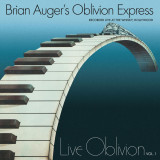
Live albums are often a ‘hit or miss’ affair but ‘Live Oblivion’ 1 & 2 buck that trend, Recorded across 2 nights in 1974 at the Hollywood venue The Whisky A Go Go. The group were finishing off a huge US tour that had roared down the east coast then across the Midwest and by the time they hit LA, as Brian recalls “we were all absolutely performing at our height. So I decided that I really needed to record the band live at that point”. Utilising the Wally Heider Mobile Truck, the scene was set for one of the greatest jazz-fusion live recordings to be made. The show opens with a hyper fast version of Beginning Again due to drummer Steve Ferrone being almost an hour late and running high on adrenaline, Brian remembers thinking “I don’t even know if I can play it that fast!” Fortunately, he and the Oblivion Express including stellar vocalist Alex Ligertwood rise to the challenge and the result is akin to some frenetic jazzy drum & bass but also pushes the group onto another level altogether for the rest of the show. Across both volumes there are no fillers and the highlights are many - Bumpin’ On Sunset, Freedom Jazz Dance, and Inner City Blues are all stunning, but especially the epic version of Maiden Voyage which Mos Def sampled on his 1997 'If You Can Huh! You Can Hear', and both DJ Mitsu in 2004 and 2017 Crimeapple both dipped into Live Oblivion to sample that fire for their own projects.
- A1: 53°31’41 2”N 9°58’25.7”E
- A2: 28°05’53 3”N 37°49’34.2”W
- A3: 31°46’29 9”N 32°31’22.1”W
- A4: 35°04’50 5”N 34°13’24.0”W
- A5: Wildness Of Waves I
- A6: 38°24’10 8”N 28°27’19.4”W
- A7: 38°36’07 4”N 28°49’43.5”
- B1: 34°55’35 4”N 36°16’14.3”W
- B2: 17°01’15 0”N 61°45’41.2”W
- B3: 30°53’47 0”N 46°52’31.8”W
- B4: 25°22’17 8”N 54°09’20.2”W
- B5: Wildness Of Waves Ii
- B6: 32°24’23 2”N 41°13’35.9”W
- B7: 54°53’17 8”N 8°18’06.4”E
- B8: 17°01’11 5”N 61°45’35.3”W
Drawing from her compositions for Helena Wittmann's film DRIFT (2017), Nika Son creates a sonic journey across the Atlantic Ocean. Following a weekend at the North Sea, one of Wittmann's two protagonists embarks on a journey across the Atlantic to the Caribbean, during which unpredictable waves and deep sleep foster a transformative experience. Capturing the essence of this cinematic encounter through sound, Nika Son's compositions allow the water itself to become a storyteller, immersing listeners in the resonating body of the boat and plunging them into the profound depth of the ever-shifting ocean. Whether illuminated by daylight or veiled by night, the nature of this material world emerges through an exploration of the ocean as a distinct and tangible space, inviting contemplation of its transformative power. The line between reality and imagination blurs, and the waves echo the emotions of the voyage.
Lapell's deft lyrics jostle with love song tropes, grappling with love's finitude and the irony of how codependency and longing are revered in popular music. A ghost story is woven through the album: waltzing in the dusty barroom country of "Blue Blaze," buried in the superstitious lyrical streak of "Rattlesnake" and audible in a wheezing organ as it shuts down at the end of "Footsteps."
Still, "Anniversary" emerges as an earnest celebration of commitment. Earworms like "Anniversary Song" and "Someone Like You" showcase intricately layered harmonies, while closer "Stars" affirms that there's no place the speaker would rather be than with the one she loves. Dekker and Lapell assembled a stellar cast of musicians to support Lapell's powerhouse vocals, piano, harmonica and signature fingerstyle guitar.
The core band includes Dan Fortin on bass, Jake Oelrichs on drums, and Tania Gill on the church's piano, harpsichord and organ. Rounding out the ensemble's sensitive orchestral arrangements are Rebecca Hennessy (trumpet), Rachael Cardiello (viola), Michael Davidson (marimba and vibraphone) and Joe Lapinsky (pedal steel), who also engineered and mixed the record. Abigail Lapell has garnered three Canadian Folk Music Awards, hit number one on Canadian folk radio and reached a staggering 40 million + streams across digital services. She has toured widely across Canada and the U.S, and will be touring internationally (UK, EU, AUS and more) in 2024.
Tulsa, Oklahoma's Unwed Sailor have been on a tear over the past few years. Following a quiet phase through much of the 2010s, they reëmerged with the aptly titled Heavy Age (2019), and two more full-lengths, Truth Or Consequences (2021) and Mute The Charm (2023), that chart a remarkable evolution of their bass-led, pop-leaning post rock. On Underwater Over There - their ninth LP overall - a current of 80s goth and jangle-pop runs beneath a litany of memorable hooks and compositional left turns, creating a propulsive and intricate world of sound. The band worked collectively on all elements of mixing and production to craft a meticulously layered environment, while maintaining an air of spontaneity and experimentation across the set. Early standout, "Final Feather", drifts through varying landscapes of airiness and haze on a high-neck bass hook, while the hum of voices adds a contrast of angelic comfort. Bearing influence from New Order and The Cure in particular, its balance of gravitas and shimmer is the result of founding member Johnathon Ford's intuitive writing method: the lead bass line comes first, followed by supporting melodies, drums, guitars, keys, and final detailing. "Dusty" is a prime example of this process, as Ford's powerful, low-end groove anchors a full-spectrum array of guitars, bells, and arpeggiations along with Matt Putman's energetic drum section. Its fluid pacing provides a perfect establishing shot, with shifting moods that gather into a coda guided by David Swatzell's harmonized, glittering guitar riffs - a sunrise after a moonless night. In quick succession, "Blue Tangier" widens the aperture with a pounding percussive refrain, vibrant bass tone and an unforgettable, fuzzed-out melodic motif. Sprawling centerpiece, "Junko", is a loose callback to 2003's The Marionette and The Music Box, its deliberate stride and interwoven melodies evoking the hands of a mechanical clock, and the anticipation of something long-awaited but nebulous. It drifts effortlessly from innocence to intrigue, expands into a mesmerizing howl, and vanishes abruptly into mist. While honoring their forebears in winks and nods, Unwed Sailor remain totally inimitable in their approach and style, twenty-five years into an acclaimed career. The band's clear vision for Underwater Over There has yielded some of their most indelible work, and their inventive, passionate approach gives a strong sense of plenty more beyond the horizon.
Nick Llobet (they/them) was ready to throw in the towel. Llobet, who grew up in South Florida, learned to play guitar at a very young age, dabbling in everything from classical, blues, classic rock, and flamenco. They'd spent much of their early 20s searching for their voice as an artist and as an individual, as well as for a musical community Llobet would eventually move to Brooklyn, but after three years of looking for a hopeful artistic breakthrough, they spent much of their time in seclusion, consumed by social anxiety and imposter syndrome-and they were considering abandoning songwriting completely. One day, while commuting through Penn Station en route to their partner's family home in Virginia (that would also lead to the crucial purchase of a secondhand Tascam cassette recorder), they noticed Patti Smith sitting alone, waiting for a train. The typically shy Llobet decided to approach the icon, who was, in turn, delighted to see that Llobet was carrying a guitar. At the end of their interaction, Smith offered some parting wisdom: "She wished me luck and said, 'Practice hard, Nick.'" Llobet took her advice to heart, and this chance encounter kicked off a personal and artistic rebirth. They started performing as youbet, a play on their last name, and began "changing their vision for what a song could be." youbet's debut, Compare & Despair, a delightful gem of a record that showcases Llobet's propensity for freewheeling whimsy and emotional intensity. In May 2019, inspired by a song-a-week writing group that produced Compare & Despair, Llobet started a second club in which contributors would upload that week's song to a private Bandcamp. Invigorated by this small musical collaboration, the feedback, and the accountability, Llobet wrote 18 songs throughout the duration of the club, twelve of which became Way To Be. After this songwriting marathon, Llobet spent 2020 focusing on instrumental guitar work and political engagement. By the summer of 2021, they were ready to revisit the Way To Be tracks. Over the next year-and-a-half, Llobet worked on the record relentlessly, refining the lyrics, recording, and arrangements from their apartment. Llobet self-produced Way To Be and describes the process as an enormous, labor-intensive undertaking that felt akin to "making a whole film." Along the way, Llobet was joined by collaborators, including Julian Fader (Ava Luna), Adam Brisbin (Buck Meek), and Daniel Siles. Across Way To Be's 12 delightfully off-kilter tunes, Llobet uses wordplay and tongue-in-cheek humor to obliquely explore dysfunctional relationships, regret, self-confidence or the lack thereof, queerness, and self-discovery. Fuzzy at the edges and filled with playful, kinetic arrangements, Way To Be is a bridge into the entrancing world of youbet. You won't want to leave.
Electro duo Human Rebellion delves into the timeless conflict between light and darkness. As our world gradually descends into shadow, they emerge as advocates of free will. Their mission: to infuse the digital landscape with a distinctly human essence, like flowers growing in a digital wasteland. Their latest creation, the "Light and Shadow" EP (LDI012), is not just an electro release. It is a sonic manifesto. A testament to their vision. As their story unfolds, American artist Terrestrial Access Network provides the final twist: A remix that echoes across the binary expanse.
From multiple Emmy Award-winning creators David Benioff and D. B. Weiss (Game of Thrones), and Emmy-nominated Alexander Woo (The Terror: Infamy, True Blood) comes 3 Body Problem, a thrilling story that redefines sci-fi drama with its layered mysteries and genre-bending high stakes. Based on the acclaimed, international bestselling book trilogy, The Three-Body Problem. A young woman's fateful decision in 1960s China reverberates across space and time to a group of brilliant scientists in the present day. As the laws of nature unravel before their eyes five former colleagues reunite to confront the greatest threat in humanity's history.
The anticipated series features a score by the multiple award-winning composer Ramin Djawadi, who is best known for scoring memorable themes and dynamic pieces for films and series including Game of Thrones, House of the Dragon, and Westworld. The acclaimed composer has received two Primetime Emmy Awards, was nominated for five more, and received three nominations for a Grammy Award.
3 Body Problem is available as a limited edition on translucent blue coloured vinyl, includes an insert and sticker sheet.
1981, the leaden years are over, the socialist left is in power in France and the first wave of punk seems a long way off. However, the youth of the day had not said its last word, and bands were springing up all over the place, free radio stations were opening up, fanzines were being published, concerts were being staged on the fly and little by little a scene was forming, a motley crew of kids in revolt, radical activists and just plain old folk passing through.
After having cut their teeth in a variety of more or less confidential bands, in which you'd come across a good number of players from this up-and-coming alternative scene, the members of Guernica moved up a gear, determined to blow on the still-glowing embers of rebel rock. With the shortage of venues the rule at the time, they began by scouring the suburban MJCs, putting on wild concerts and eventually meeting up with the squatters of the Couronnes commune and the members of V.I.S.A., with whom they played an active part in organising concerts in squatted buildings in these relegated areas of the capital.
In February 1983, the V.I.S.A. association and the Abattoir art collective (which included some members of Guernica) organised a concert at the Usine Pali-Kao. That evening, two groups took to the stage in succession: Guernica and a fledgling duo, Bérurier Noir. The evening will go down in the history of alternative rock as one of the key turning points of the period. After the departure of Loran, who played guitar with both bands, Fabrice Benoît joined Guernica on guitar, and the gang continued for a few more months, ending on a high note with a chaotic concert at the Eldorado in Paris.
Until now, it's been impossible to get your hands on any of the band's recordings unless you're lucky enough to own the Paris Mix compilation, the Guernica/Bérurier Noir split or the V.I.S.A. Usine Cascades 1982 cassette. This vinyl, a perfect record of the era, brings together the six tracks recorded by the band at the time.
Nick Llobet (they/them) was ready to throw in the towel. Llobet, who grew up in South Florida, learned to play guitar at a very young age, dabbling in everything from classical, blues, classic rock, and flamenco. They’d spent much of their early 20s searching for their voice as an artist and as an individual, as well as for a musical community. Llobet would eventually move to Brooklyn, but after three years of looking for a hopeful artistic breakthrough, they spent much of their time in seclusion, consumed by social anxiety and imposter syndrome—and they were considering abandoning songwriting completely. One day, while commuting through Penn Station en route to their partner’s family home in Virginia (that would also lead to the crucial purchase of a secondhand Tascam cassette recorder), they noticed Patti Smith sitting alone, waiting for a train. The typically shy Llobet decided to approach the icon, who was, in turn, delighted to see that Llobet was carrying a guitar. At the end of their interaction, Smith offered some parting wisdom: “She wished me luck and said, ‘Practice hard, Nick.’” Llobet took her advice to heart, and this chance encounter kicked off a personal and artistic rebirth. They started performing as youbet, a play on their last name, and began “changing their vision for what a song could be.” youbet’s debut, Compare & Despair, a delightful gem of a record that showcases Llobet’s propensity for freewheeling whimsy and emotional intensity. In May 2019, inspired by a song-a-week writing group that produced Compare & Despair, Llobet started a second club in which contributors would upload that week’s song to a private Bandcamp. Invigorated by this small musical collaboration, the feedback, and the accountability, Llobet wrote 18 songs throughout the duration of the club, twelve of which became Way To Be. After this songwriting marathon, Llobet spent 2020 focusing on instrumental guitar work and political engagement. By the summer of 2021, they were ready to revisit the Way To Be tracks. Over the next year-and-a-half, Llobet worked on the record relentlessly, refining the lyrics, recording, and arrangements from their apartment. Llobet self-produced Way To Be and describes the process as an enormous, labor-intensive undertaking that felt akin to “making a whole film.” Along the way, Llobet was joined by collaborators, including Julian Fader (Ava Luna), Adam Brisbin (Buck Meek), and Daniel Siles. Across Way To Be’s 12 delightfully off-kilter tunes, Llobet uses wordplay and tongue-in-cheek humor to obliquely explore dysfunctional relationships, regret, self-confidence or the lack thereof, queerness, and self-discovery. Fuzzy at the edges and filled with playful, kinetic arrangements, Way To Be is a bridge into the entrancing world of youbet. You won’t want to leave.
With words as weapons and public infrastructure as his blank slate, John Fekner's City Squad are always questing for the ineffable, even as they yearn for concrete change - Make no mistake, Idioblast is a serious party where everyone is welcome.
Released in 1984, Idioblast is a lost classic, a future shock narrative ahead of its time, and yet completely of its era, like few artifacts before or since. The cover tips you off from the jump--a crude but effective collage featuring classic Fekner slogans like Toxic Junkie, Growth Decay and Soft Brains Watch The Screen And Buy The Jeans. In an uncanny and tragic coincidence, the very first lyric on the album--"The place to be is on the space shuttle/if you're brave enough to get on it"--seems to anticipate the Challenger disaster just two years later.
But for the most part, the tracks on Idioblast directly reference the concepts that inspired Fekner's visual art. Musically, "Rapicasso" utilizes pneumatic pounding with an industrial edge as Fekner equates the great and controversial painter with risk-taking graffiti kids bombing trains and billboards across the city. Art is in a constant state of exploding--forms, paradigms, outdated ideas.
Splitting the difference between hip-hop and new wave, the Santaniello-sung "The Beat" is like Thomas Dolby meets Run-DMC and should've been a radio staple for at least one sticky summer. It could soundtrack either a couples roller skate or a drug-fueled evening out. Channeling Fekner's slogan-stencil aesthetic, "Travelogue The 80's" is a tour de force reminiscent of Negativland's experiments in audio culture jamming. As Fekner details, "I grabbed all of the sounds via a shortwave radio picking up transmissions from LaGuardia airport and the TV. I recorded and edited on a Sony Pro Walkman and an Aiwa dual cassette deck."