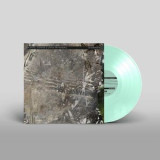
The British producer Alex Smalley (aka Olan Mill) has been active for more than a decade building his signature through nature as the central theme across emotional journeys through beautiful ambient melodies. Moments at the Re-engage —his first publication in Umor Rex— was created for a performance in Thüringen, Germany. On the night, while the audience was floating in mineralized neon water, the sound was being diffused across submerged speakers. Multiple synthesizer layers were mixed with processed guitar. Later, additional acoustic sounds, field recordings, voice, and violin were added and processed.
While the recordings were made in the German winter, the mixing took place on the Island of Koh Phangan in Thailand. Nature, plant medicine ceremonies, meditation, and jungle hikes somehow guided the sound-arranging process. Moments at the Re-engage reach an experience when time and reality dissolve into a single point of complete sedation.
Produced and mixed by Alex Smalley.
Maria Smalley: Voice.
Jane Wild: Violin.
Mastered by Porya Hatami. Artwork by Daniel Castrejón.
Поиск:across the water
Все
- A1: Announcement
- A2: Blue Moon
- A3: All Of Me
- A4: My Man
- A5: Them Their Eyes
- A6: I Cried For You
- A7: What A Little Moonlight Can Do
- A8: I Cover The Waterfront
- A9: Detour Ahead
- A10: Trav'lin' Light
- B1: Billie's Blues
- B2: Lover Come Back To Me
- B3: Blue Turning Grey Over You
- B4: Be Fair With Me Baby
- B5: Rocky Mountain Blues
Though she had been performing professionally since the late 1920s, as a teenager in Harlem, during its Renaissance, the immortal Billie Holiday didn't play a single night on the European continent until 1954. It was in that year that the great journalist and musician Leonard Feather, and a Swedish promoter organized the Jazz Club U.S.A. tour, named after Feather's wildly popular radio program. Featuring Red Norvo, Sonny Clark, and more, the centerpiece of Jazz Club U.S.A. was, undoubtedly, Lady Day. Recorded at various dates across the tour, Lady Love shows Holiday still had it, despite the turmoil, and drug and alcohol abuse, her voice remained strong, a stunning document of one of America's greatest treasures on her first ever tour of Europe.
Dire Straits' arresting self-titled debut arrived in the midst of punk's reign but couldn't have been further removed from the era's slash-and-burn style. Recorded in West London in February 1978, the band's tasteful, jazz-inflected set embraces folk, blues, and pub rock while also tracing a direct line back to the beat-oriented sound of early rock n' roll. Country and roots accents further distinguish the British quartet's stripped-down music from any 1970s peers, as does the transparent production, which has remained revered among audiophiles the world over – and which has never been better than on this meticulous pressing.
Mastered from the original master tapes and pressed at RTI, Mobile Fidelity's 180g 45RPM 2LP version of Dire Straits features natural tonalities, superb balances, you-are-there imaging, deep-black backgrounds, and pristine clarity. Even if you've heard this album hundreds of times before, you've never experienced it with such lifelike sonics and premium richness. This numbered-edition collector's set immerses you within the smoky, laidback atmospherics of every song. This is how all vinyl should sound.
Crucial to every arrangement, Mark Knopfler's winding guitar lines emerge with supreme transparency and multi-hued textural detail. His intricate playing comes across as if it's being transmitted via his 60s-era Fender Vibrolux amplifier placed right before you. The cleanliness, dimensions, and live feel are that good. His bandmates, too, benefit from the extra groove space afforded by this 45RPM edition. Rhythms skate and swirl; percussive effects resonate with crispness and attack; the leading edges of notes naturally decay.
Dire Straits' strong, well-edited batch of original material further enhances the overall enjoyment and makes the record one whose pleasures go far beyond the organic sonics. Just as Knopfler's narratives pour forth with poetic and surrealist texts, the musical settings – an intoxicating combination of easygoing shuffles, back-hall boogies, and pop-honed ballads – mirror the old-fashioned soulfulness inherent in the classic recordings of the late 50s and early 60s. The lyrics are equally captivating.
Drawing from his time as a youth in Newcastle, Leeds, and London, Knopfler invests tunes with an autobiographical slant and emotional connectivity that become obvious the moment he opens his mouth to sing. "Down to the Waterline," "Wild West End," and "Lions" all feature colloquial touches that add to their reach. By extension, "In the Gallery" functions as a tribute to Leeds sculptor Harry Phillips (father of future Knoplfer collaborator, Steve Phillips) while the record's breakout smash, "Sultans of Swing," pays homage to struggling bar bands.
Through it all, Dire Straits performs with a subtle cool and clever poise that no band ever matched. Just how good is the chemistry? Bob Dylan heard the quartet and invited Knopfler and drummer Pick Withers to play on Slow Train Coming. But even Dylan himself didn't hear Dire Straits sound this magnetic back in its original heyday. Now, everyone can.
Drop a needle on Psyché's debut album and you'll see visions, or rather Mediterranean visions, be they of waves of heat shimmering above dunes of sand, or of women dancing around a bonfire on a rocky plain, or of bushy cliffs overlooking emerald-green and turquoise sea. The name Psyché is of course ancient Greek for 'soul' or 'mind', signifying the band's love of psychedelic funk, but also the wide range of Mediterranean influences – from Southern Europe to the Balkan Peninsula, and from Anatolia to the Maghreb – that provide an endless source of inspiration for their hypnotic sound and minimalist style.
Psyché members Marcello Giannini (Guru, Nu Genea, Slivovitz), Andrea De Fazio (Parbleu, Nu Genea, Funkin Machine) and Paolo Petrella (Nu Genea) have been active in the Naples music scene for almost two decades, most notably during the first wave of the new Neapolitan Power movement (Slivovitz, Revenaz Quartet). Over the years they have often crossed paths and collaborated on side projects in various genres (math-rock duo Arduo and, more recently, synth-pop duo Fratelli Malibu), before working together as the rhythm section of Nu Genea's live band. Following their first tour with Nu Genea in 2018, they started Psyché with the intent of exploring more minimalist styles and making music with just a few elements.
A unique combination of psychedelia, groove and improvisation, the music of Psyché goes back to the roots of our future; it evokes visions of a mythical past, blending centuries-old music traditions and mixing them with modern genres. Like a warm Mediterranean breeze, it travels across lands, seas and eras, distilling essential rhythms and cosmic pulsations.
The album's opener "Kuma" (titled after the first ancient Greek colony on the Italian mainland, now an archeological site near Naples) is like a vibrant, magical wave. With its deliberately simple harmony and sharp guitar riffs, it travels across the Mediterranean from Italy to North Africa, first lapping gently on Greek and Turkish shores – with some compositional elements reminiscent of Italian pop legend Lucio Battisti – and then speeding up and landing on the driving, syncopated rhythms of afrobeat. While listening to it your eyes fill with images of small white houses shining in the sun, of fig trees heavy with fruit, of spice bazaars and colourful medinas, and you can almost feel the desert wind blowing in your hair.
The journey continues with two examples of Psyché's bold and elegant approach to contemporary afrobeat and cumbia fusion: "Cumbia Mahàre" and "Amma". The former combines minimal synths and exhilarating rhythmic patterns of drums, percussion, guitar and bass, drawing us into the movements of an imaginary ritual dance (the term mahàre was used in Southern Italian dialects to indicate witches). Next is the cinematic and mysterious ambiance of "Angizia" (a snake goddess worshipped by the Marsi in ancient Italy), another fascinating mixture of different sonic traditions and cultures where hip-hop/funk drums are blended with Maghreb influences, Balkan echoes, and hypnotic, Theremin-like synths that have sort of a sci-fi movie quality to them.
The title track "Psyché", with its uptempo afro-rhythms, ethereal vocalizations and refined percussion, is almost a manifesto of the band's style and confirms the freshness of their minimalism, which is not afraid of taking in the sun of lands confined between the sea and the desert. The following "Manea" (named after the Roman-Etruscan goddess of the dead) is an afro-funk number with smooth and introspective dreamy jazz touches, and with an arrangement dominated by a guitar that, dripping notes like drops of water, creates a delicate, cinematic sound. Next, we come to "Hekate" (the Greek goddess of magic, witchcraft and crossroads), a track that fuses psychedelia, spacious Latin guitars and a fast, tight groove. The album comes to a close with the exquisite melodic ballad "Kelebek", which seamlessly combines hip-hop drums and dreamy guitars, and whose warm, flowing sonorities and evocative atmospheres conjure the image of a butterfly (which is what kelebek means, in Turkish) floating over the Mediterranean and, from there, the world.
Irish-born, Manchester-based Kerrie is a multi-disciplinary artist, incorporating live sets, DJing, producing and running her label Dark Machine Funk across her repertoire of work. Now, Kerrie follows up last year's 'Raw Regimen' (BP063) with a second EP for James Ruskin's seminal Blueprint Records.
Having garnered a rich musical education through working at and holding a DJ residency for one of the UK's most respected record shops Eastern Bloc, Kerrie's in-depth knowledge and unwavering dedication to music shines through her notable back catalogue and bolshy, unforgiving DJ and Live sets. Honing her craft for over a decade, Kerrie has played worldwide in celebrated venues such as Tresor, Berghain, fabric, FOLD, Elsewhere NYC and festivals including Freedom Medellin, Freerotation, Drift and Basilar.
First learning to mix via her brother's turntables in the early 2000s, it wasn't until 2009 that Kerrie invested in her own set-up and built an extensive record collection, covering everything from ambient, electronic, house, EBM, acid, electro, and her go-to genre, techno. Kerrie delivers tough moods from the turntables, as conveyed in her mixes for Reclaim Your City, Bassiani, SLAM and Crack, where she carefully blended high-energy styles of UK, Detroit, and European techno, many of which stem from the 90s and the 00s. It's frequent to hear Kerrie weave broken elements into her mixes too, chopping up the 4/4 groove at just the right moment to keep things propulsive. Kerrie's Live sets are fast becoming renowned for their trippy motifs and high impact on the dancefloor, applauded by Berlin's long-running club Tresor, where she made several appearances with her Elektron machines. Kerrie's Live set at Freerotation in 2019 was one of the festival's most talked-about debuts, and this year, Kerrie will return to and debut at multiple festivals and clubs across Europe and the Americas.
Following well-received releases on labels such as Don't Be Afraid, Cultivated Electronics, I Love Acid and Symbolism, Kerrie launched her imprint Dark Machine Funk DMF in 2020. The label homes her distinctly raw aesthetic and honours her love for dark, gritty, metallic and industrial sounds melded with elements of funk, heavily influenced by second-wave Detroit artists, UK techno and music by some of her favourite artists; James Ruskin, Blawan and Surgeon. Kerrie's first release on DMF, 'Inner Space PT1', was praised by Resident Advisor, who credited her ability to make "lean, fierce techno that knows how to groove."
2022 was a watershed year for Kerrie's productions. She debuted on the monumental UK techno label Blueprint with her EP 'Raw Regimen', which landed acclaimed reviews. Truly welcomed to the Blueprint family, Kerrie shares her second EP on the label in May and joins the crew at Blueprint showcases around the globe. This year marks the release of Kerrie's 10th EP on vinyl, and considering her consistent output on DMF, Blueprint and many more labels, the producer shows no sign of slowing down.
Coming to international prominence in more recent years, regardless of her decade-long tenure in Manchester's vibrant scene, Kerrie is deeply invested in the culture of electronic music, starting from her teenage era as a raver in Ireland up to her innovative projects today. In 2017, she founded Eastern Bloc's in-house event space to nurture local talent, which remains at the heart of Manchester's music community. Having ended her 11-year stint at the shop in 2023 to fully commit to the studio and accommodate her increasingly busy tour schedule, Kerrie is forging a long-lasting path fuelled by drive, passion, authenticity and a community-first way of thinking.
Since relocating to Brazil some years back, Needs Music co-founder Lars Bartkuhn has returned to his long-held love of musical improvisation. Although it’s a product of his jazz roots and classical training, the German producer has constantly found new ways to apply it to his work in the sphere of electronic music.
‘Dystopia’, his first solo album for almost nine years, was born out of two interlinked ideas: a desire to create improvised music without the aid of computer sequencers or an electronic drum set, and a deeply held love of storytelling through sound. Bartkuhn set to work improvising with modular synthesizers, acoustic instruments and hand percussion, later adding light-touch overdubs to a handful of pieces. When he listened back to the recordings, an aural narrative emerged, and you’ll hear it if you listen to the album from start to finish, as is intended.
As you’d expect from a musician and composer of Bartkuhn’s undoubted ability, ‘Dystopia’ is a stunning album – an undulating, expansive ambient journey packed with emotional resonance. While Bartkuhn naturally sees it as a logical progression of his previous ambient-leaning work with Kabuki as The First Minute of a New Day (and particularly their self-titled 2020 album Séance Centre), ‘Dystopia’ also features subtle nods to many of his long-held musical loves, including John Hassell’s ‘fourth world’ recordings, the impossible-to-pigeonhole 1970s catalogue of deep jazz imprint ECM, and the far-sighted American minimalism of Terry Riley and Steve Reich.
The album’s emotional depth is evident early on, with the slow-burn title track – all bubbling electronics, billowing chords, clarinet-style notes and gently strummed guitars offering the most melancholic and bittersweet of openings. The becalmed ‘A Drop Of Water In The Ocean’ follows, with discordant aural textures and hand percussion mimicking the rolling ocean, before ‘Largo (Calm Before The Storm)’ hints at unsettling times ahead.
‘Water and Warm Air’, the only track on the album whose starting point was not Bartkuhn’s cherished modular set-up, bleeps and bubbles across the sound space, adding a starry and otherworldly slant to proceedings, while ‘Disembodied Journey (Parts 1, 2 and 3)’ is a sublime, slowly unfurling journey in three movements – all Tangerine Dream style synthesizer motifs, Pat Metheny-esque guitars and jazz-fusion instrumentation.
So the album continues, with the poignant warmth and looped motifs of ‘Still Existing’ and the sparse, dubbed-out minimalism of ‘Do You Know How To Get Out?’ – a kind of 21st century jazz-fusionist’s take on sparse electronic hypnotism – giving wat to closing cut ‘Into The Waves’, a gentle combination of undulating electronic arpeggios and echoing instrumentation that offers a hopeful and undeniably picturesque conclusion.
Fittingly, the album cover features a painting by the late Dutch artist Franz Deckwitz (1934-94), whose images of alien landscapes were used by Phillips on a series of music concrete compilations. The image featured on the cover of ‘Dystopia’, depicting a deep blue ocean and shoreline, was painted by Deckwitz in Amsterdam in the late 1970s and inspired by a trip to the island of Ponza, Italy.
Matt Anniss
Clear Vinyl
* Eomac has injected a new level of consciousness into beat making by recording water drips and drops. This edge of real life and water frequencies feels like opening a door in your mind and taking a rhythmic sound shower, finding tiny minimal melodies within the water itself.
*Distorting reality, in the most beautifully crafted and playful manner, Eomac’s Water Tracks are made with natural sounds of water and they not only make your body want to dance, they are a joy for the minds ear; sound design full of life and character, refreshing for the soul too. If hyper-real Techno was a genre - perhaps Eomac has invented it here - the idea to use micro melodies found in drips, drops and sploshes of water feels clever and inventive, Swimming up-stream against the standardized sound of Techno’s machine-made Electronic presets.
* Eomac is a project from Irish composer and producer Ian McDonnell, releasing genre-spanning electronic music via Planet Mu, The Trilogy Tapes, Bedouin Records, Killekill, Phantom Limb, Emika Records and more. Eomac’s sound draws from obscure samples and raw sound design in a continuing exploration of the furthest reaches of intense, visceral music for body and soul. He digs deep into light and dark mysticism for the dancefloor, as experienced in numerous performances at festivals and clubs across the globe.
Distorting reality, in the most beautifully crafted and playful manner, Eomac’s Water Tracks are made with natural sounds of water and they not only make your body want to dance, they are a joy for the minds ear; sound design full of life and character, refreshing for the soul too. If hyper-real Techno was a genre - perhaps Eomac has invented it here - the idea to use micro melodies found in drips, drops and sploshes of water feels clever and inventive, Swimming up-stream against the standardized sound of Techno’s machine-made Electronic presets.
- A1: Oceana 4D
- A2: Key Of Youth
- A3: Old Bones
- A4: Emerald Nights
- A5: Banana Boat And The Kalo Sanctum
- A6: Key Of Life (Feat. Justice A. Gonzalez)
- A7: Splendid Macaw And The Rotan Initiative
- A8: By Firelight In The Dead Of Night
- A9: Mother Moon And The Mangrove Midnight
- A10: Enigma Of Sator
- B1: Zarzus And The Lotus Eaters (Smugglers Bay)
- B2: Towers Above The Mist
- B3: The Fountains Of Living Water
- B4: In The Land Of Vision (Silkwinds)
- B5: The Sower Sows The Wheel With Effort
- B6: Mysteries From The Wild Ones
- B7: Temple Of The Shark Hunter
- B8: Polyhedron Of Minos
- B9: The Dance Of Pythia
- B10: Unto The Harvest The Feast That’s Sown
Over a decade since its inception, Wave Temples continues to refine and refract the project’s visionary mythopoetic exotica. Panama Shift presents a 20-track kaleidoscopic star map inspired by “the euphoric cults, both then and now, that come and go in the vast ritual of night.” Bleached keys, devotional synth, and driftwood percussion align in minimalist vignettes shaded by tape hiss and field recordings of streams, waves, wind, and birds.
Dedicated to the late Japanese-born American anthropologist Yosihiko H. Sinoto (whose portrait graces the cover), famed for his excavations throughout the Pacific and French Polynesia, the album embodies a similarly voyaging spirit: “chasing ancient mysteries… and rekindling with the esoteric journey of the human spirit.” This is music of forgotten shores, sea air, and saltwater shrines, echoing in shells scattered across the altars of Atlantis.
Coherence is overrated. Especially if keeping things hazy, and not smoothing away all the rough edges, and allowing all the seeming contradictions to find their own unique harmony with each other in their own time can result in the heady magic of Lock Eyes & Collide, the second EP from South London-based quintet Moreish Idols. Across these four tracks, Moreish Idols deal in tangles of hyper-melodic guitar, sleepy-eyed murmurs glowing with unassuming poetry, blossoms of wise saxophone, rhythms that pulse and purr to their own inarguable logic. You could spend days trying to define what exactly it is they are doing over these fifteen or so minutes, but you’d be wiser to just lose yourself within Lock Eyes & Collide’s laser-guided twists and turns.
Pulling into focus. They passed tracks from initial collaborative song-writing sessions along to Dan Carey, who signed Moreish Idols to his Speedy Wunderground label and produced their first release on the label, the Float EP, in the summer of 2022 (they’d released a pair of self-released 7”s before lockdown). Restless, jerky, jagged and rhythmically centred, many of Float’s energetic pleasures bore the influence of their earlier flirtation of post-punk, but the ruminative When The River Runs Dry spelled deeper treasures lay within, while the erratic, wonderful Speedboat spoke to Moreish Idols’ essential gift for mystery. Lock Eyes & Collide is something else altogether, though – a looser constellation of ideas, a clearer hint of the group’s future.
The elements that compose the EP – swooning tremolo guitars, prickly melodic riddles, erudite saxophone improvs, loose and flexible rhythms – make perfect sense together, on vinyl if not on paper, sounding like Watery, Domestic-era Pavement one second and some bucolic Canterbury Scene prog the next, but always, always like Moreish Idols most of all.
The future that is undefined is limitless. If Lock Eyes & Collide captures Moreish Idols’ present, what do they see in their future? “If we’d just made Float II for our second EP, people would be, ‘Oh, they’re the band that does that,” says Tom. “I’m so glad we’ve made this weird alter-ego of our first EP; now we feel we can do whatever we want.”
Los Angeles based pianist, producer, and songwriter John Carroll Kirby traveled to Pietrasanta, Italy in the summer of 2018 on a self-imposed writing trip. During his stay he composed Tuscany, a two side-long solo piano exploration of this particular geographical envelope, a place where nature is shaped into form.
Kirby would cycle 12 kilometers each day to Cascata di Malbacco, a waterfall with jade pools and silver stone, and the inspiration for Side A of Tuscany. His own Cascata di Malbacco tumbles and shimmers along the piano as a gorgeous eighteen-minute-long improvised piece, some of it polished and some moments left raw.
On a ride to Sant’Anna, twenty-something kilometers away, Kirby took a wrong turn and got lost among the hills, where he encountered several monuments memorializing the victims of the Sant’Anna di Stazzema massacre. The dark history of an abandoned mill house served as the inspiration for the album’s haunting Side B, a eulogy for all of those forgotten by time.
Although Side A is inspired by the natural beauty of a waterfall, and Side B by the cruelty that people can inflict upon others, both pieces revolve around the same seven-note bassline. The idea Kirby is iterating on is the realization that darkness exists inside light, and vice versa; Tuscany is an inquiry into this duality and its consequences.
John Carroll Kirby has recently released records on Leaving Records, Outside Insight and Pinchy & Friends. In the studio and on the road, he’s produced and/or played with Connan Mockasin, Blood Orange, Sebastian Tellier, Shabazz Palaces and Solange.
He recently signed to Stones Throw Records.
Patience is a new outlet for exploring further beyond the break than usual. Inspired by the music perpetually on rotation at HQ – with E2-E4 representing the format’s high tide mark – each release will be one artist’s deep dive down one inspirational wormhole spread across two sides of vinyl, or two side-long sojourns making full use of a round 12” piece of plastic. Set and forget, zone out to tune in.
Over the course of a nearly 50 year romantic and creative partnership sound artist Annea Lockwood and the late pioneering electronic composer Ruth Anderson have shared space on a number of significant releases of early electronic and tape music, including Charles Amirkhanian’s trailblazing 1977 anthology of women electronic composers New Music for Electronic and Recorded Media, a 1981 split LP on Opus One, a 1997 CD for Phill Niblock’s XI imprint, and 1998’s Lesbian American Composers compilation on CRI. The couple additionally taught a course on the history of women’s music-making, at Hunter College, called Living Women, Living Music. Throughout their time together, they co-authored a number of Hearing Studies designed for people with no formal musical training, which were collected for a 2021 book publication by Open Space Music. They spent most of their private life between Crompond, NY and the house they built themselves at Flathead Lake, Montana. Although Ruth passed away in 2019, the composers’ dialogue continues today with Tête-à-tête, a collection of unreleased archival and new material spread across an LP and a single-sided 10” record.
It all began with a telephone call. In 1973, Ruth Anderson was seeking a substitute to cover a yearlong sabbatical from her position as the director of the Electronic Music Studio she had founded at Hunter College in New York City. Her friend Pauline Oliveros too was on sabbatical, but recommended Ruth call Annea Lockwood—then living in London—about the post. Already drawn to America by the work of the visionary composers with whom she would soon be labelmates on Lovely Music, Annea jumped at the opportunity and within days of meeting in person the pair were, in her words, “joyously entangled.”
Over the next nine months, while Ruth was living in Hancock, New Hampshire, the couple would speak daily by phone in between visits. Ruth recorded these phone calls and, in 1974, surprised Annea with a cassette containing “Conversations,” a private piece she composed by dexterously collaging fragments of their conversations alongside slowed and throwed snatches of old popular songs: “Yes Sir, That’s My Baby”; “Oh, You Beautiful Doll”; and “Bill Bailey.” The centerpiece of Tête-à-tête, this side of intimate musique concrète extends to its listeners a rare invitation to eavesdrop on the halcyon phenomenon of two people falling in love. Tender and playful throughout, “Conversations” comes to its zenith with a cut-up of relentless laughter of a contagious beauty that is, for once, properly convulsive.
“For Ruth” is Annea’s elegy to her life partner. In 2020, Annea returned to Hancock as well as to Ruth’s resting place at Flathead Lake to make field recordings, which she wove together with further excerpts of the couple’s 1974 conversations for a commission presented as part of the 2021 Counterflows Festival in Glasgow. A consummate field recordist, Annea imbues the simple sounds of church bells, birds, wind, and the bodies of water that permeated her time alongside Ruth with an otherworldly depth and sense of narrative akin to that of her celebrated sound maps of the Hudson, Danube, and Housatonic rivers. An oneiric, subtly tonal evocation of a meeting at the shores of existence.
The collection opens with “Resolutions,” Ruth’s last completed electronic work, from 1984. A meditation for the individual listener composed as the result of her study of Zen, it’s a rigorous, process-driven piece that charts the very slow, smooth descent of a 5th from the octave above middle C down to sub-bass frequencies. Minimalist in execution, yet powerful in effect, it glides by almost imperceptibly, with new tones arriving and hovering or levitating upwards, seemingly out of nowhere. A healing piece, it harnesses the highly focused energy of pure tones as a means to, in Ruth’s words, “further wholeness of self and unity with others.”
Tape transfers by Maggi Payne, master by Giuseppe Ielasi and lacquers cut at Dubplates & Mastering, with domestic photos and liner notes provided by Annea Lockwood.
Russell and Craig have collaborated on several site specific projects over the years (Cotton Goods & Wist), notably sharing a graphic score concept for the production of their Atlantic Cable release. The album Diagenesis represents a change in their working process through which the materiality of field recordings is somewhat privileged over musicality. This work was created through a process of exchange - passing tracks back and forth, each layer of sound buried a little deeper beneath the next.
Diagenesis: The watery interactions, microbial activities, alterations, compactions, and chemical transformations of sediments slowly converting to rock.
Russell Burden (Being) is a sound and visual artist living on the south coast of the UK. His practice develops work that explores qualities of ambient perception, most often through the lens of hydrological, geological or biological processes. He has delivered gallery exhibits in various mediums including live cymatic feed, and dark space installation. Russell was also a member of The Humble Bee & Players and last year as artist in residence for a site specific project produced a set of drone works on his own imprint, riverwork press.
Craig Tattersall (The Humble Bee) works across music and visual art with an interest in their intersection, and often works collaboratively producing art objects and sound works which have been released on numerous labels. His main focus is with environment(s) and his own interactions within. He has curated a number of micro-labels including cotton goods, mobeer:: | moteer::, our small ideas and now co-curates umbrella publishing.
Ayami Suzuki is a Japanese singer and sound artist who uses her voice and field recordings to create ambient experimental mindmelts. Her new LP, Umbilical, hears the virtuoso team up with Brazilian musician Carlos Ferreira, who normally stays rooted in meditative styles from drone to post-rock.
The pair take up equal weight space on this calming, umbral new cassette album, which was made remotely between Japan and Brazil. Few know how these two masterminds met, but what we do know is that the LP evokes a usually very difficult-to-pin mood - its course makes us imagine the feeling of encountering some otherworldly nymph, or half-divine fairy, in a baroque outdoor bathhouse on one sunny May morning.
Aiming to reflect Suzuki and Ferreira’s intimate and close connection across the distance that separated them, it is (not by coincidence) certainly a gap-bridging album, spanning everything ethereal, REM-sleepy, and stretched-out.
An onslaught of determined rhythms interlace in a glorious cacophony for the dance floor on Kim Dürbeck's latest. The Norwegian/Vietnamese artist unleashes a formidable din of percussion across six new pieces for Lek records.
A club record that takes furtive glances at the experimental, Lek003 is hardly an exercise in restraint as it carves its way through jungle and drum n bass to find its place on today's impetuous DJ booth where a new youthful energy has seen tempos reach heady heights.
As ever Dürbeck's Vietnamese heritage is strong as he weaves esoteric textures through the tapestry of monstrous kick drums and snares. The record eschews the conformity of a four to the floor, for something more assertive. From the familiar Amen constructions of a track like "Phu Yen Flow" to the more extreme outer edges of IDM with a track like "Wipeout", each track utilises the break beat in different adaptations throughout.
At the other end of the spectrum, Patås tames of "Nuoc Mam is my holy water" for a more tempered version and lets our head up for air, before Dürbeck brings the ruckus with his army of irreverent drum machines. There is no quarter given with perfunctory designs on the dance floor and the club context.
lack Marble Vinyl! High Vis were formed in 2016 from the ashes of some of the UK's best hardcore bands. Gild-toothed frontman Graham Sayle's anguished lyrics about life in working class Britain were familiar to fans of Tremors' full-throttle thrash, but alongside his former bandmate Edward `Ski' Harper and veterans of Dirty Money, DiE and The Smear, High Vis sought to transform that energy and intensity into something entirely new.Like scene-mates Chubby and the Gang did by pulling in unlikely source material from classic doo-wop or Micromoon have by combining everything from psychedelia and metal into their high potency mix, High Vis' 2019 debut album, No Sense No Feeling showed the band were never going to be constrained by any sense of genre rules or regulations. Its claustrophobic rattle bore traces of Joy Division, Bauhaus, Crisis, The Cure and Gang Of Four lurking in the shadows. 2020's synth-driven EP, Society Exists, was further evidence of the band's restless creative MO.High Vis' second album Blending sees them open their viewfinder wider than ever before.
Alongside longstanding favourites such as Fugazi and Echo and The Bunnymen; Ride and even Flock Of Seagulls were shared reference points as the band worked on the album together.From the anthemic sweep of opener "Talk For Hours", through the title track's psychedelic swirl and "Fever Dream"'s baggy groove, it sees High Vis' sound blossoming into something with an unlimited richness. The hazy drift of "Shame" or the melodic jangle of "Trauma Bonds" may take them until uncharted waters, but they still have all the power and bite that made No Sense No Feeling so remarkable.Lyrically, the album represents another leap forward too. Talking frankly about poverty, class politics, and the challenges of everyday life, Sayle's lyrics have always addressed the downtrodden and discarded communities across Britain slipping below the waterline. This time around, Sayle's lost not of that social consciousness, but he's looked at himself and his own emotional landscape, and in the process created something that feels more universal, that reaches a hand-out to people and ultimately gives a message of hope."To me, the lyrics are less selfish," reflects Sayle. "In the past, I couldn't see past whatever was going on with me.
It's about accepting things and being open to conversations and learning to talk to people rather than just thinking that we're all doomed."The song "Talk for Hours" is a prime example of that. Born out of an afternoon meeting up with an old group of mates "repeating the same thing and not actually learning anything about each other" it offers to actually break the cycle and to listen and speak frankly about shared feelings and experiences. "Trauma Bonds", meanwhile, traces the broken lines of those living in lost communities, but ultimately realises that despite our shared scars, there's still hope to move on to a better future."The message of the album is you're not who you're told you are," Sayle summarises. "You're not your class background. Whatever it is, you're not that. Don't resign yourself to thinking you can't be this and you can't be that."It's a vitally important message right now, and one that could be the motto for not only Blending, but for High Vis themselves.
(Note: Same tracklist on A & B Sides)
Across 8 concise vignettes, Chantal Michelle alchemizes acoustic instrumentation with a spectrum of layered feedback and field sounds, depicting fractured beauty amongst a precarious reality.
Chantal’s work is characterized by intoxicating juxtaposition and enriched with an array of source material to construct immersive narrative. Much of the work here was recorded during her time in New York City, perhaps a pre-requisite to the heightened tension at play.
Opening with lucid choral vocals, a mysteriously seductive anaesthesia disseminates before evaporating into surging feedback, vocals dissolving as quickly as they appeared.
It’s this oscillation between states that permeates throughout the work. Whether it’s the esoteric rumbling of acoustic drones, or the radiant fusion of distorted chords amongst the warming sounds of tropical atmospheres, moments of serenity are conjured up in a space so bliss that their endings incite an immediate nostalgia. Fleeting melodies are pierced by shattering cries of feedback; gossamer tones engulfed in saturated noise.
Amongst the instrumentation, buzzing field sounds tremor with hyperreal peculiarity and hallucinations shape noise into sounds of the familiar; the rumbling of an overheard aeroplane or the whirring of distant grasshoppers. Similarly, recurring motifs elicit a false sense of security in their subliminal familiarity, soon exposed as echoes, a reverberation of what was left behind.
At the approaching climax, the blissful onset anaesthesia has worn off, interrupted by a powerful chorus of deep, gothic synthesis that fuels post-apocalyptic fever dreams, an unnerving and mesmerising symphony. The unresolved tension leaves us in a state of delirium, questioning if the tranquillity we experienced was ever really there.
Chantal was immersed in Fleur Jaeggy’s The Water Statues whilst recording, and its imprint is woven into the sonic fabric of Broken to Echoes; a sublime liminal dream-state, pervaded by haunting visions. It’s a view of the world captured from inside the enclosure of a cell membrane. Through translucent mesh, we see the billowing tension of our surroundings, protected only by the most delicate walls.
Chantal Michelle is a sound artist, musician, and composer based between the United States and Europe. She works with acoustic instrumentation, synthesis, field recordings, and voice to form densely textured aural landscapes. Her work is characterized by tension, disparate sounds, and non-linear arrangements. It has been realized as multichannel installations, live performances, and recorded material.
She has released three albums to date: Pulse, Puls-ar, Procession (Dinzu Artefacts, 2022), Night Blindness (Quiet Time, 2021) and the collaborative Aunis (Injazero, 2019), all to critical acclaim. The Wire called Night Blindness “a dynamic and engrossing narrative,” and Aunis received praise in The Guardian as “a virtually unprecedented palette of synth sounds.”
She’s out of this world…
Maltese musician & producer Joon’s galactic debut arrives on our shores fully formed a decade after she first set sail. 12 cuts of uniquely addictive Synthesized Pop twist & turn on the rocky waters of life.
Her story begins after a life-changing car crash on the streets of Malta many moons ago. She was lucky to walk away in one piece. “That car crash was a wake-up call,” she says. “It made me realize how precious life is & I started living the life I felt was worth living.” Inspired to finally pursue her love of music full time, she began collecting instruments. Starting with a Stylophone& a vintage rhythm box, she started documenting ideas. Returning home to Malta after a few years in London, she only met one other woman making electronic music on the island. Driven by the desire to make music possible & accessible for the next generation, Joon co-founded the Malta Sound Women’s Network.
Ten years later, she sends us messages in a bottle from across the Mediterranean Sea. Armed with a Moog & her ethereal voice, she transmits hope & joy from a bedroom somewhere between Sicily & North Africa. Her music is right at home alongside outsider pioneers like Fever Ray, Grimes, Laurie Anderson & Molly Nilsson. Dream Again glides across heavy rhythms & eclectic electro. Telling stories of alienation with a throbbing heartbeat & space-age melodies, she lets us into her ultra-vivid world where anything is possible. Produced by Johnny Jewel, the album shines bright like comet orbiting the label’s dark sky, a much-needed vision of light on the horizon.
“Even if I’m sad or heartbroken, I remain optimistic. I want to grow old with no regrets.”
It’s time to Dream Again…
PURPLE VINYL
A Wednesday song is a quilt. A short story collection, a half-memory, a patchwork of portraits of the American south, disparate moments that somehow make sense as a whole. Karly Hartzman, the songwriter/ vocalist/guitarist at the helm of the project, is a story collector as much as she is a storyteller: a scholar of people and one-liners. Rat Saw God, the Asheville quintet's new and best record, is ekphrastic but autobiographical and above all, deeply empathetic. Across the album's ten tracks Hartzman, guitarist MJ Lenderman, bassist Margo Shultz, drummer Alan Miller, and lap/pedal steel player Xandy Chelmis build a shrine to minutiae. Half-funny, half-tragic dispatches from North Carolina unfurling somewhere between the wailing skuzz of Nineties shoegaze and classic country twang, that distorted lap steel and Hartzman's voice slicing through the din. Rat Saw God is an album about riding a bike down a suburban stretch in Greensboro while listening to My Bloody Valentine for the first time on an iPod Nano, past a creek that runs through the neighborhood riddled with broken glass bottles and condoms, a front yard filled with broken and rusted car parts, a lonely and dilapidated house reclaimed by kudzu. Four Lokos and rodeo clowns and a kid who burns down a corn field. Roadside monuments, church marquees, poppers and vodka in a plastic water bottle, the shit you get away with at Jewish summer camp, strange sentimental family heirlooms at the thrift stores. The way the South hums alive all night in the summers and into fall, the sound of high school football games, the halo effect from the lights polluting the darkness. It's not really bright enough to see in front of you, but in that stretch of inky void - somehow - you see everything. The songs on Rat Saw God don't recount epics, just the everyday. They're true, they're real life, blurry and chaotic and strange - which is in-line with Hartzman's own ethos: "Everyone's story is worthy," she says, plainly. "Literally every life story is worth writing down, because people are so fascinating." But the thing about Rat Saw God - and about any Wednesday song, really - is you don't necessarily even need all the references to get it, the weirdly specific elation of a song that really hits. Yeah, it's all in the details - how fucked up you got or get, how you break a heart, how you fall in love, how you make yourself and others feel seen - but it's mostly the way those tiny moments add up into a song or album or a person.
Tape
A Wednesday song is a quilt. A short story collection, a half-memory, a patchwork of portraits of the American south, disparate moments that somehow make sense as a whole. Karly Hartzman, the songwriter/ vocalist/guitarist at the helm of the project, is a story collector as much as she is a storyteller: a scholar of people and one-liners. Rat Saw God, the Asheville quintet's new and best record, is ekphrastic but autobiographical and above all, deeply empathetic. Across the album's ten tracks Hartzman, guitarist MJ Lenderman, bassist Margo Shultz, drummer Alan Miller, and lap/pedal steel player Xandy Chelmis build a shrine to minutiae. Half-funny, half-tragic dispatches from North Carolina unfurling somewhere between the wailing skuzz of Nineties shoegaze and classic country twang, that distorted lap steel and Hartzman's voice slicing through the din. Rat Saw God is an album about riding a bike down a suburban stretch in Greensboro while listening to My Bloody Valentine for the first time on an iPod Nano, past a creek that runs through the neighborhood riddled with broken glass bottles and condoms, a front yard filled with broken and rusted car parts, a lonely and dilapidated house reclaimed by kudzu. Four Lokos and rodeo clowns and a kid who burns down a corn field. Roadside monuments, church marquees, poppers and vodka in a plastic water bottle, the shit you get away with at Jewish summer camp, strange sentimental family heirlooms at the thrift stores. The way the South hums alive all night in the summers and into fall, the sound of high school football games, the halo effect from the lights polluting the darkness. It's not really bright enough to see in front of you, but in that stretch of inky void - somehow - you see everything. The songs on Rat Saw God don't recount epics, just the everyday. They're true, they're real life, blurry and chaotic and strange - which is in-line with Hartzman's own ethos: "Everyone's story is worthy," she says, plainly. "Literally every life story is worth writing down, because people are so fascinating." But the thing about Rat Saw God - and about any Wednesday song, really - is you don't necessarily even need all the references to get it, the weirdly specific elation of a song that really hits. Yeah, it's all in the details - how fucked up you got or get, how you break a heart, how you fall in love, how you make yourself and others feel seen - but it's mostly the way those tiny moments add up into a song or album or a person.